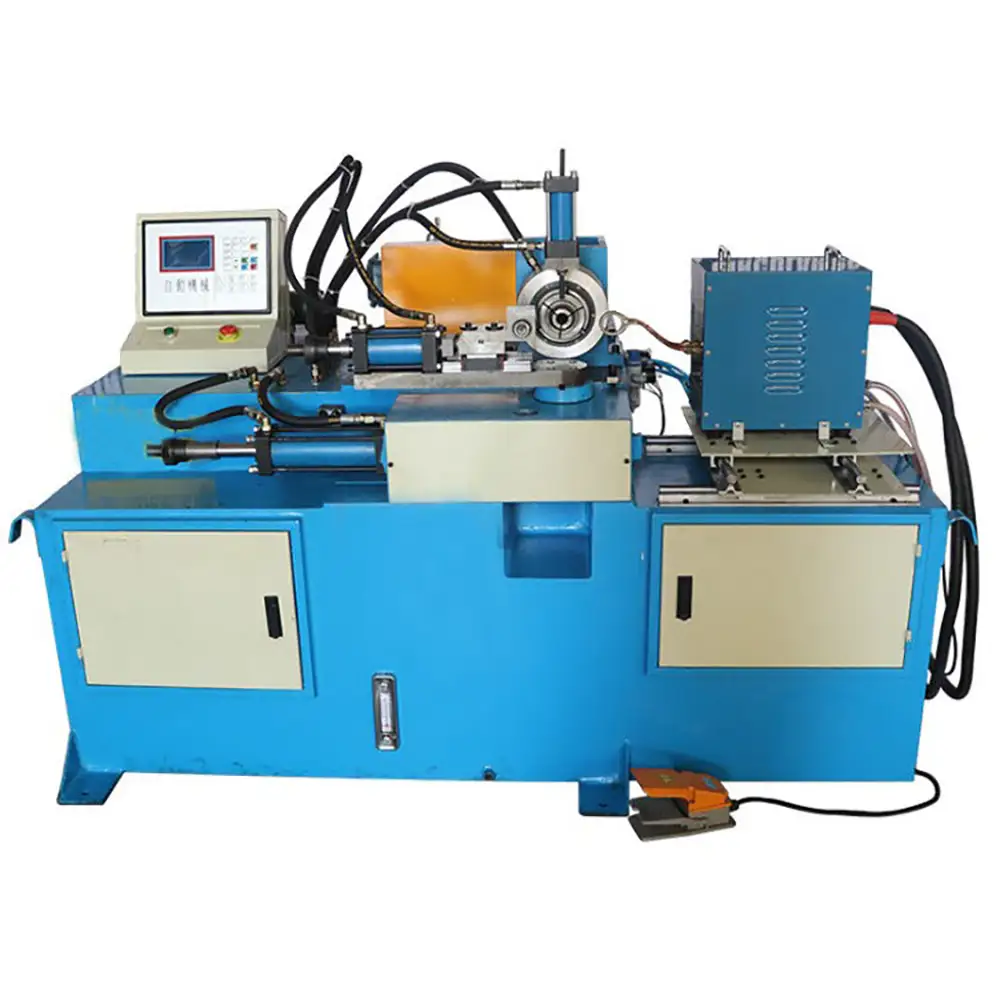
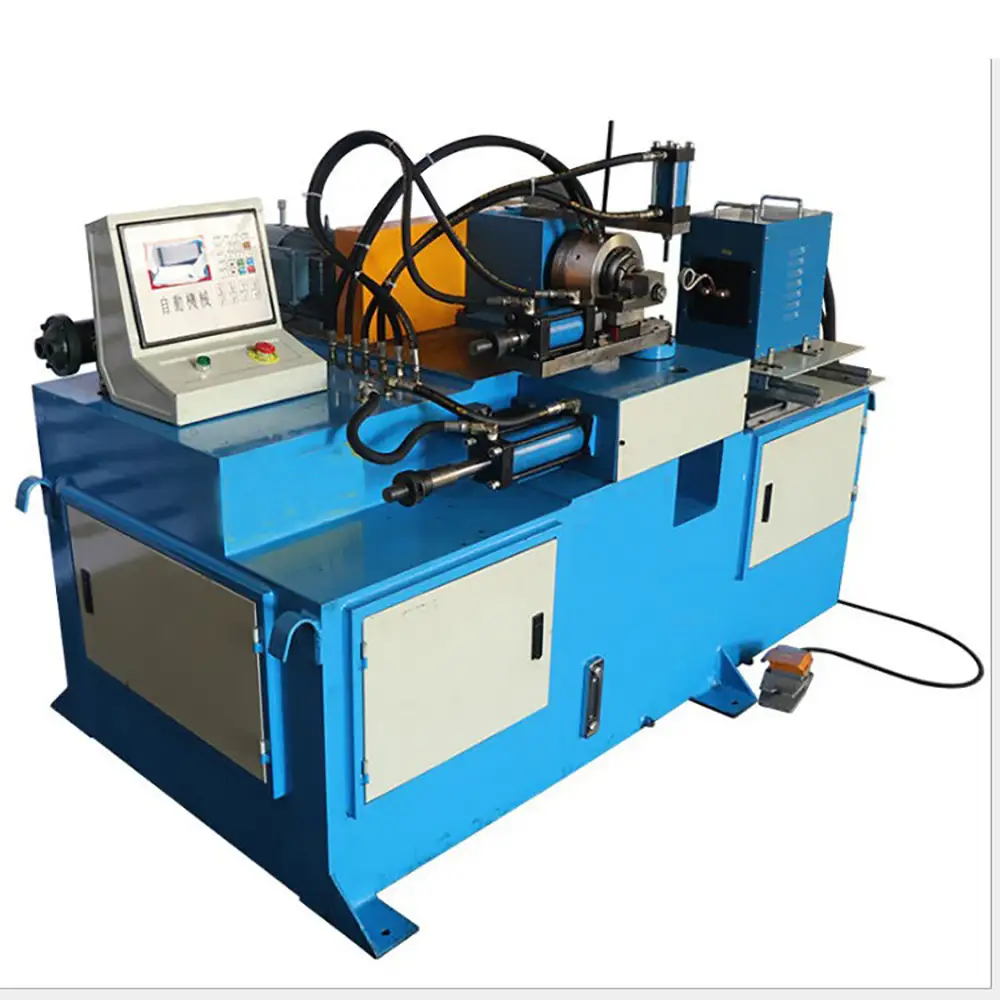
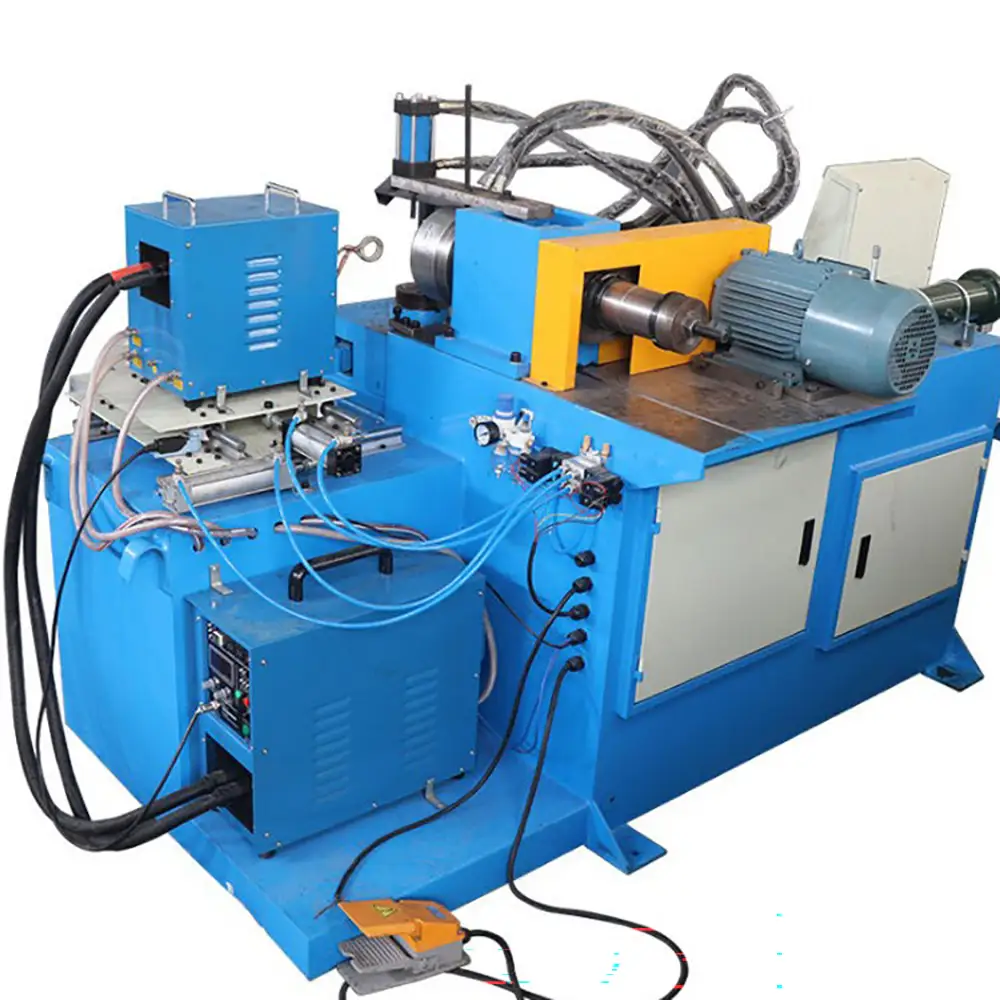
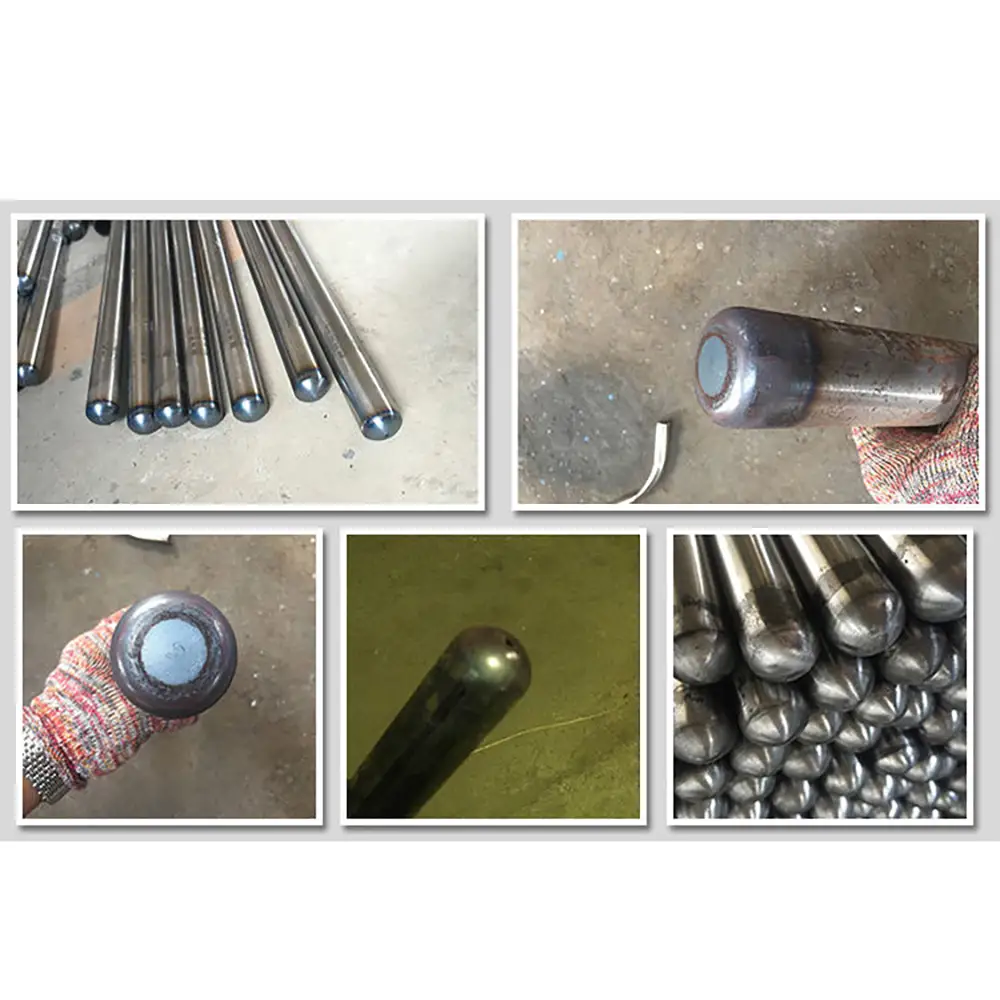
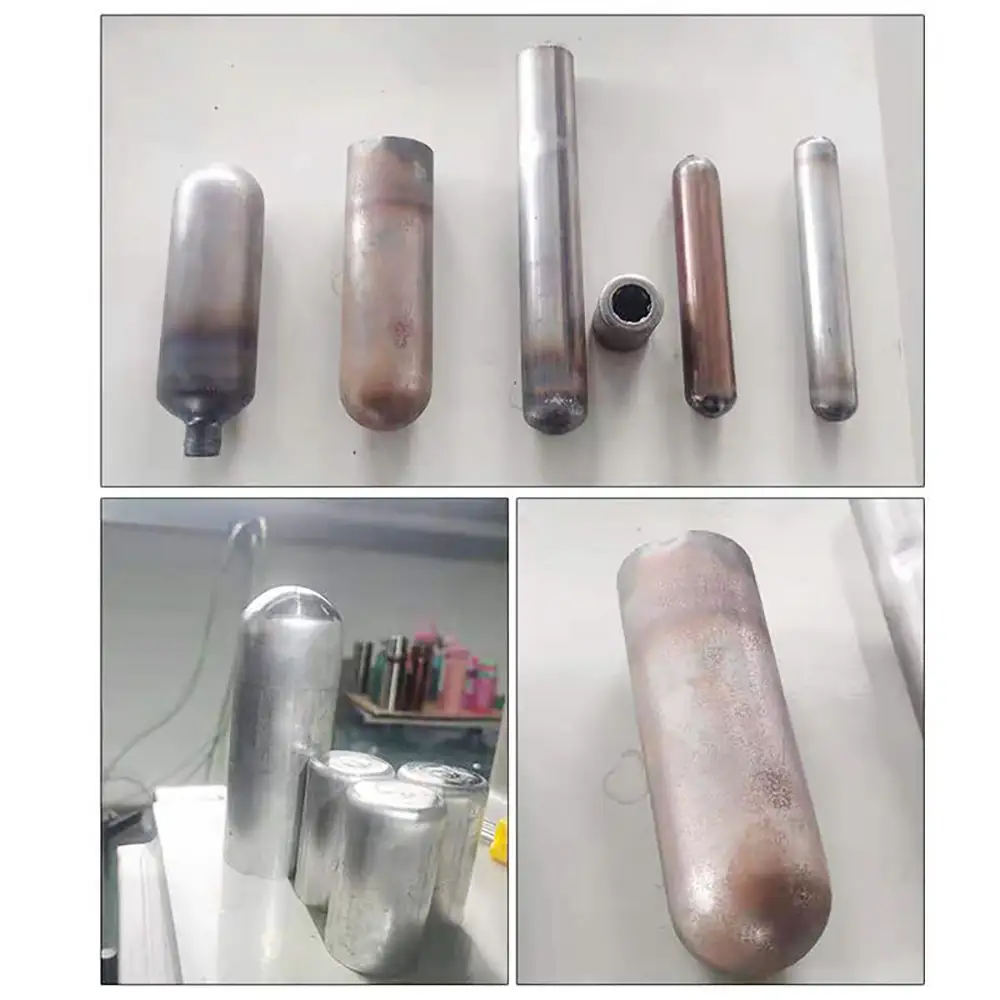
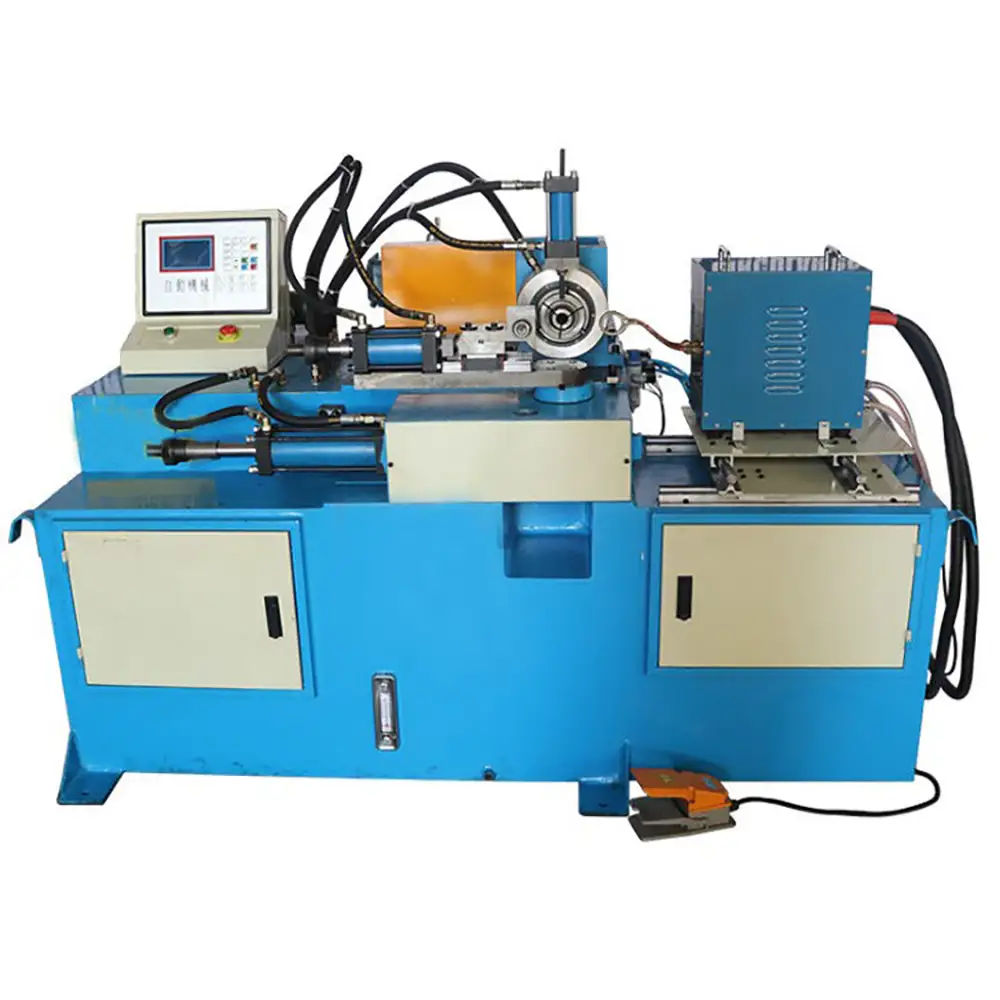
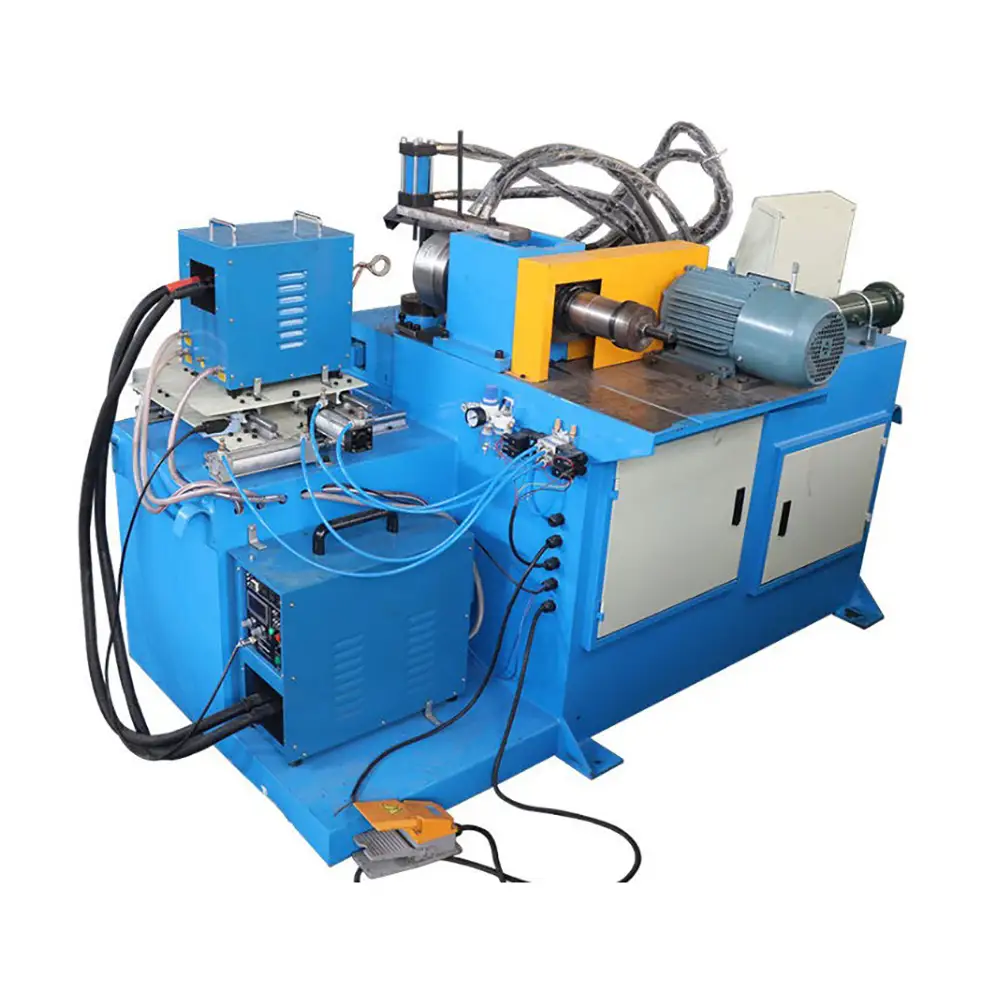
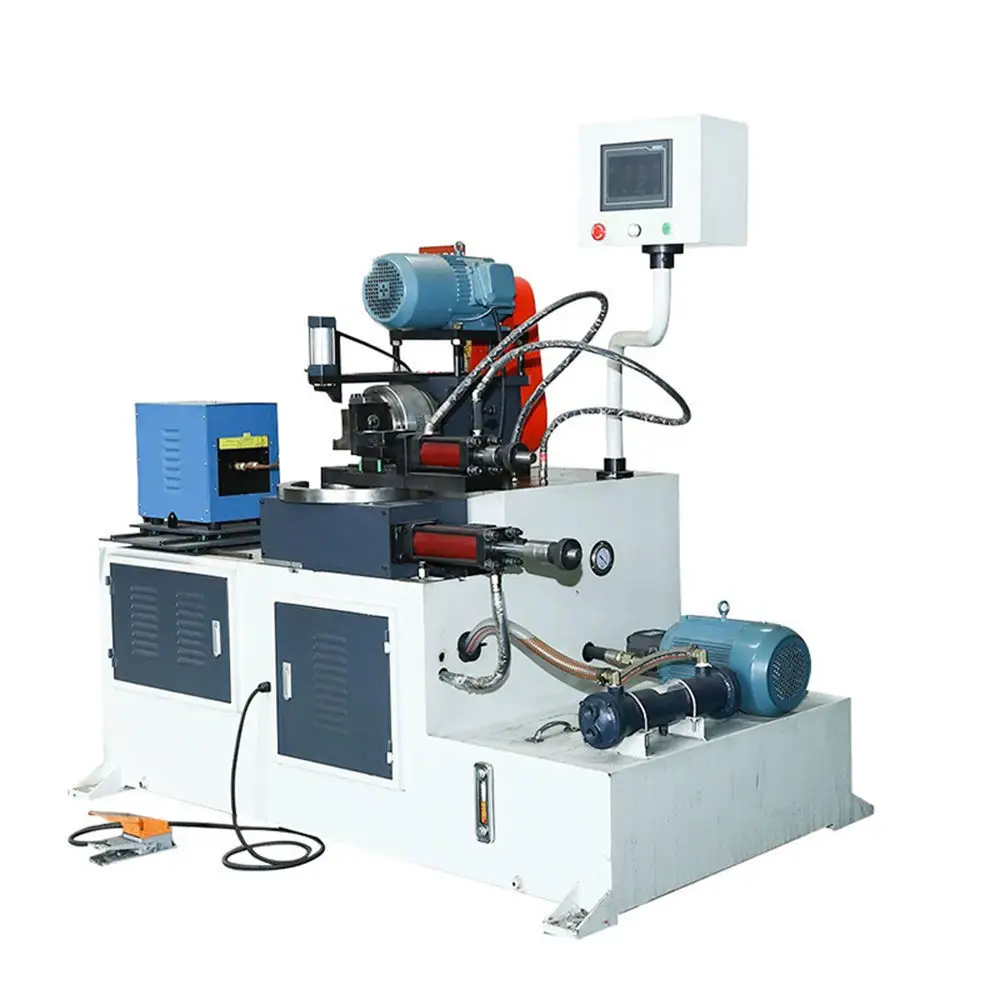
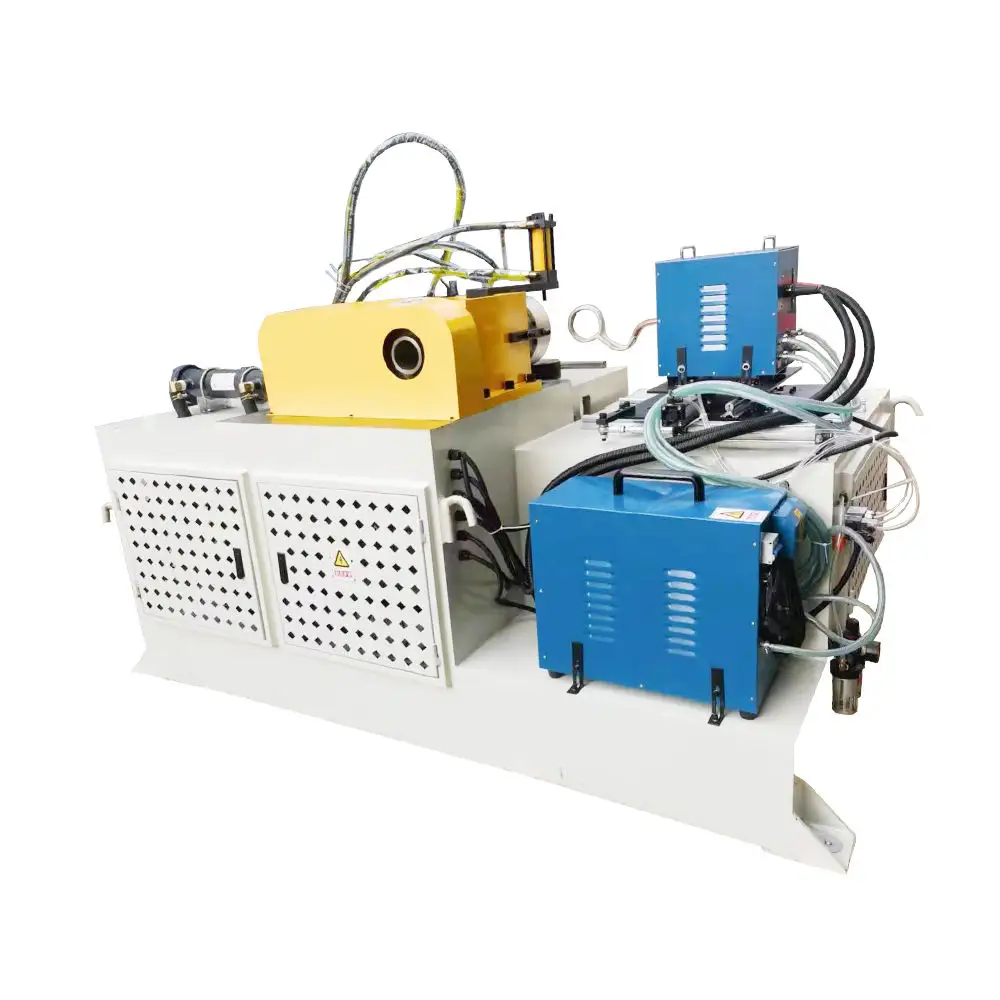
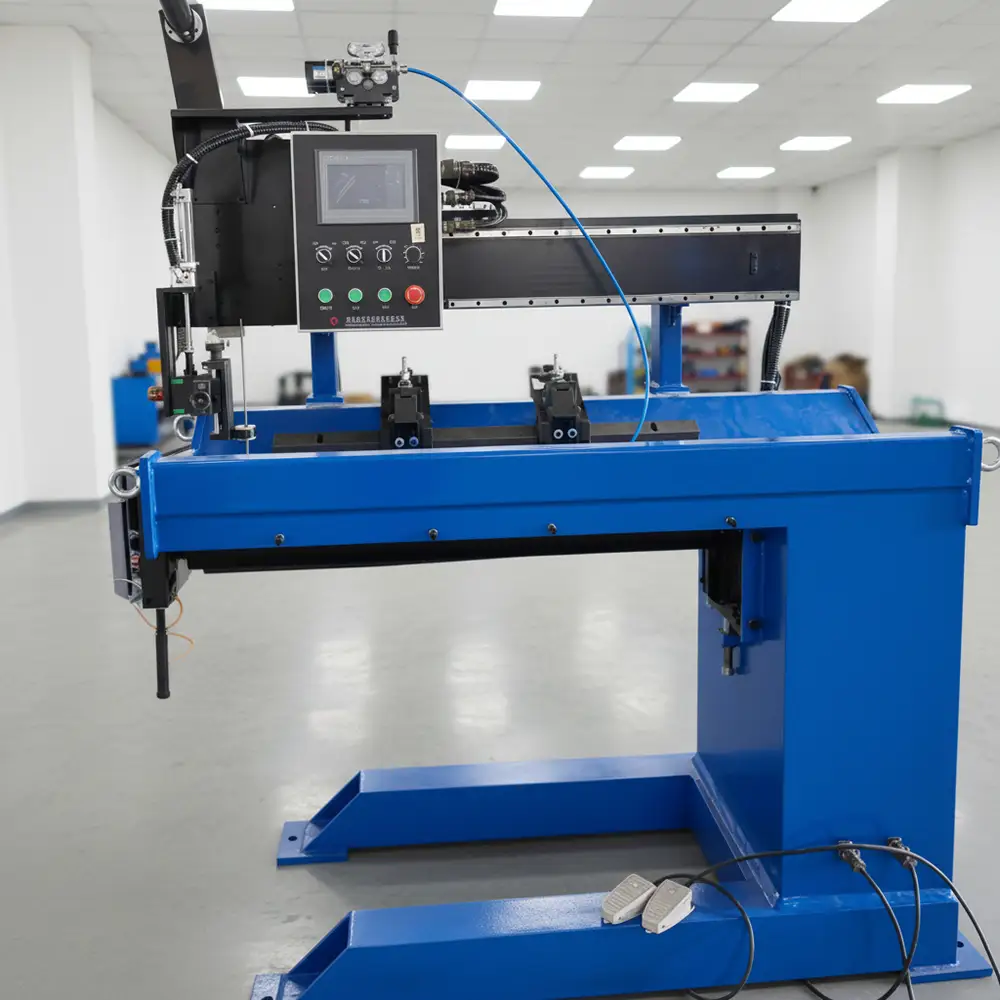
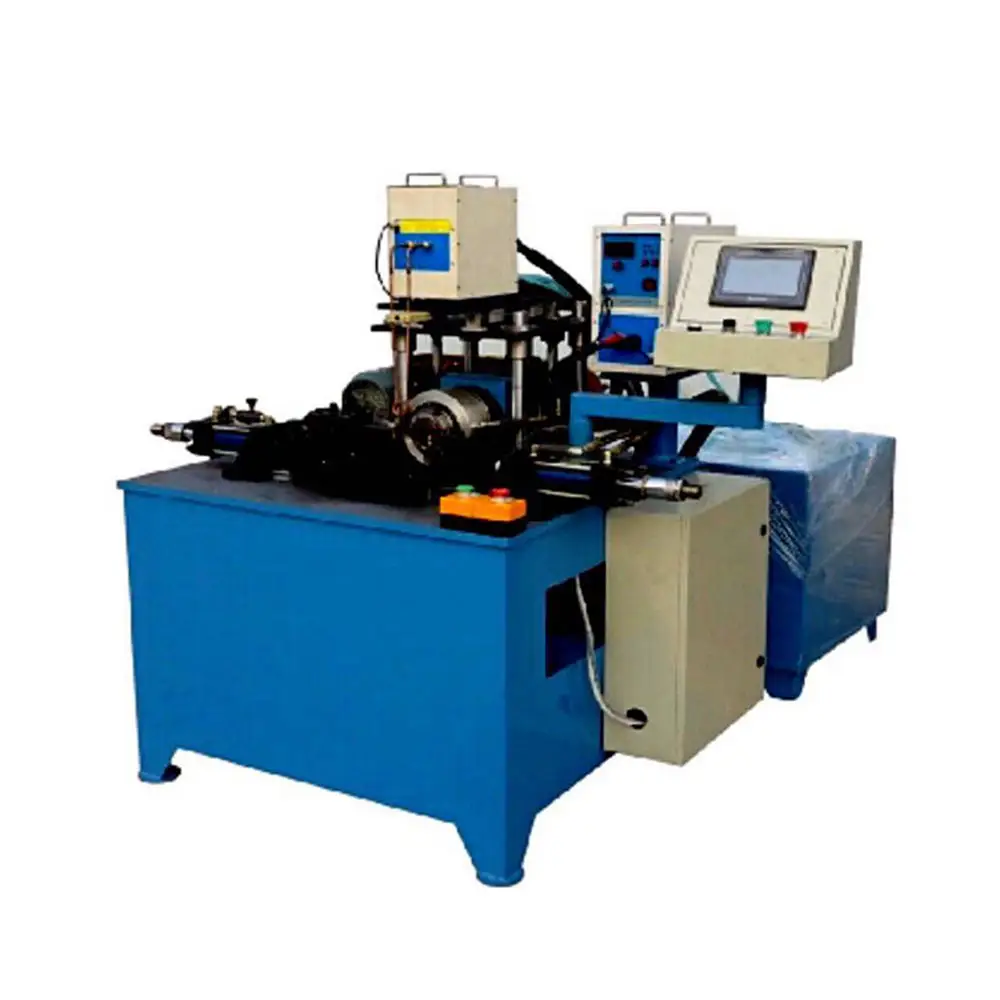
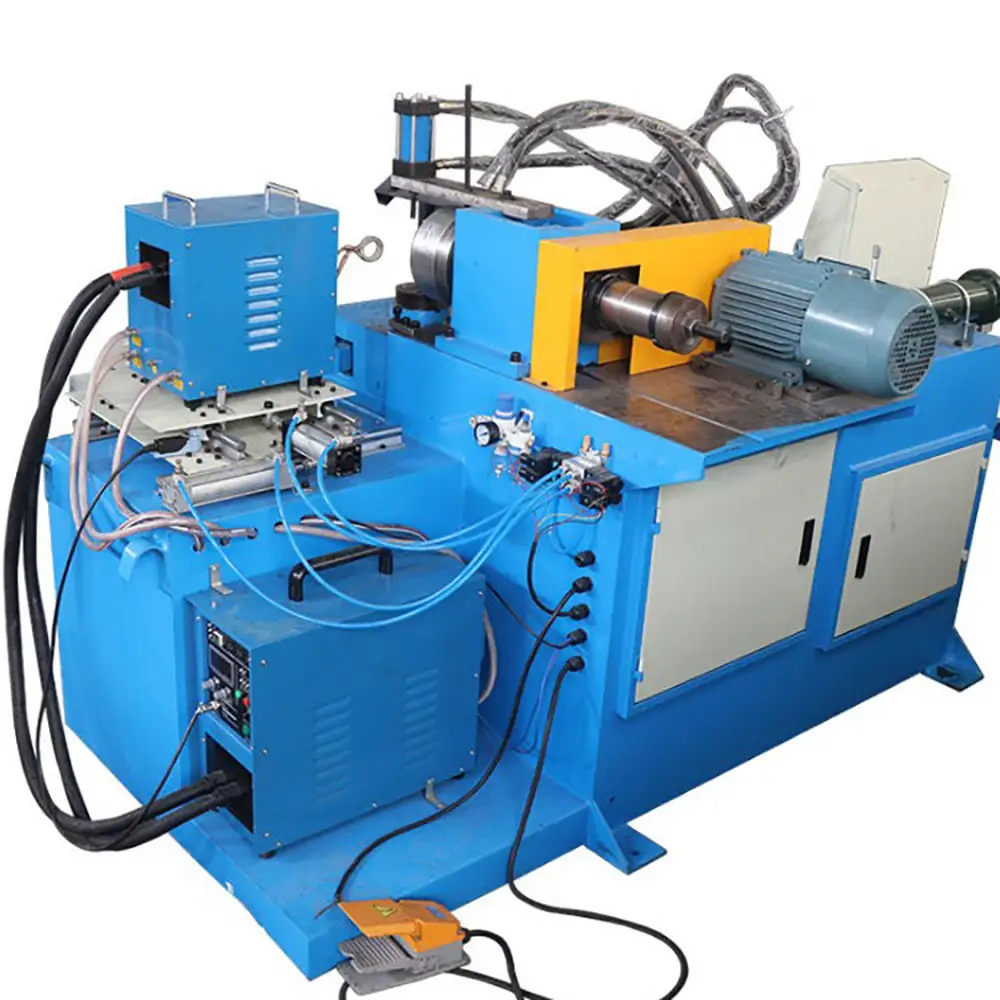
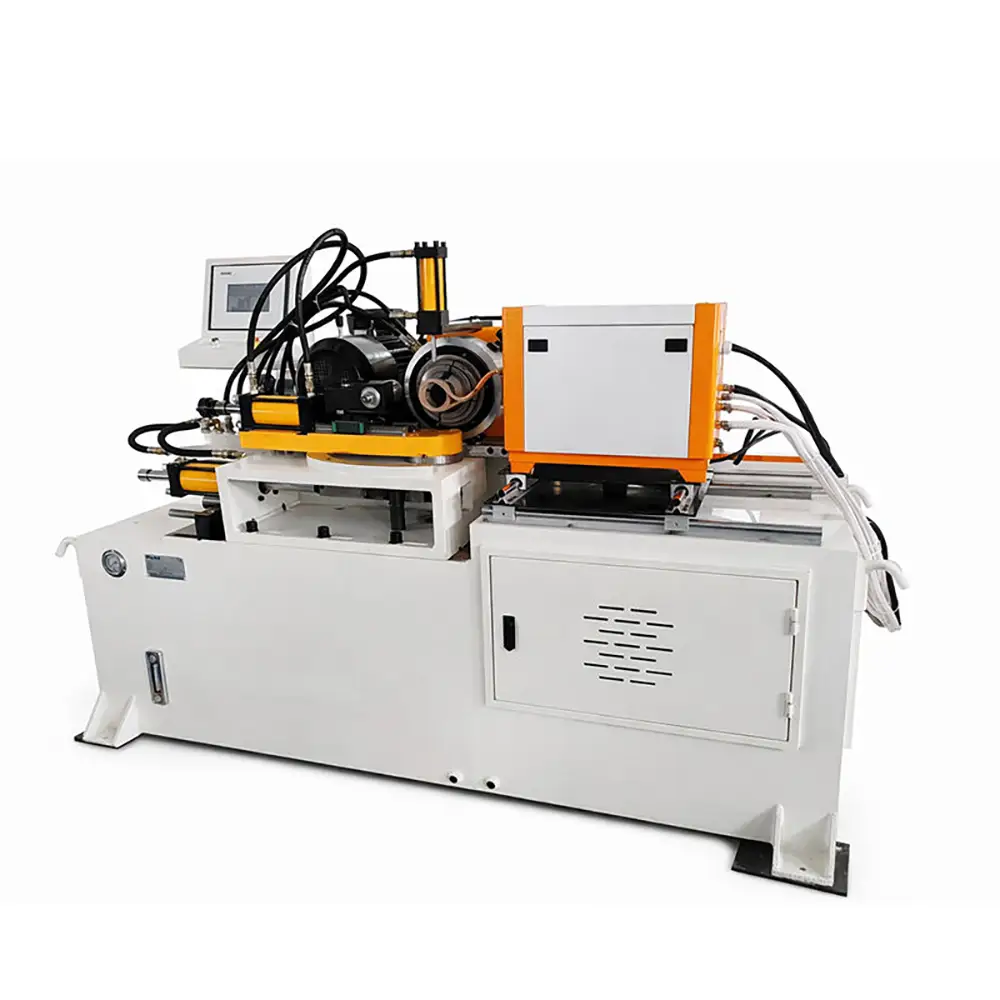
Product feature: 1 Suitable for carbon steel, stainless steel copper and other metal pipes.
2 High frequency heating, automatic rotary sealing.
3 Sealing,positioning and Brake stop accomplish at one time.
4 Pneumatically control the movement of high frequency heater.
Products Description
|
Item |
Specification |
|
Processing range of diameter |
8-70mm |
|
Thickness of pipe |
1-3mm |
|
Pipe length |
50-6000mm |
|
Processing speed |
85 degreed/S |
|
Main motor |
3kw |
|
Pump motor |
4kw |
|
High frequency heater |
25kw |
|
Machine measure |
2700x850x1100mm |
|
Weight |
1000kg |
Pipe End Forming Machine for Metal and Steel Tube Pipe Processing
The Pipe End Forming Machine is designed for controlled end processing of metal and steel pipes and tubes. It can be used for suitable tube-end forming,closing,sealing,reducing,and shaping applications where manufacturers require consistent and repeatable processing of tubular components.
Tube and pipe end forming is widely used in automotive manufacturing,furniture production,refrigeration equipment,heat exchangers,construction components,industrial machinery,and general metal fabrication. By applying controlled mechanical force through dedicated forming tooling,the machine can reshape the end of a tube according to the required product design.
The exact processing capability depends on the machine configuration,forming method,tooling,pipe material,diameter,and wall thickness. Customers should provide technical drawings or samples when a specific tube-end profile is required.
Metal and Steel Tube End Forming
Metal tubes can require different end geometries depending on their final application.
A tube may need to be reduced for insertion into another component,closed before welding,formed for connection,or shaped for decorative and structural purposes.
The machine can be evaluated for suitable carbon steel,mild steel,stainless steel,and other compatible metal tubes.
Steel tube end forming is commonly used in structural components,automotive parts,furniture frames,industrial products,and fabricated assemblies.
The forming force and tooling should be selected according to the material strength,outer diameter,wall thickness,and required finished shape.
Pipe End Closing
Pipe end closing is a common tube-processing operation in which an open tube end is mechanically reduced or closed.
The process can be used to create a closed end,prepare a tube for welding,or produce a specific end profile for subsequent assembly.
Depending on the machine design,the closing operation may use forming dies,rollers,mandrels,or other tooling.
The finished geometry depends on the tooling design and the material properties of the tube.
For thin-wall tubing,careful control of clamping and forming force is important to minimize unwanted deformation.
Tube End Sealing
Tube end sealing generally refers to closing or preparing the end of a tube so that the opening is reduced or closed according to the product design.
The machine can be configured for suitable end-sealing applications involving metal and steel tubes.
Where the finished component must contain fluid or withstand pressure,the end-forming process should be followed by appropriate application-specific inspection or leak testing.
The machine itself performs the mechanical forming process; final sealing performance depends on the finished geometry,material,and any additional joining or sealing process used in the final product.
Pipe End Reducing
End reduction is another important application of tube and pipe end forming equipment.
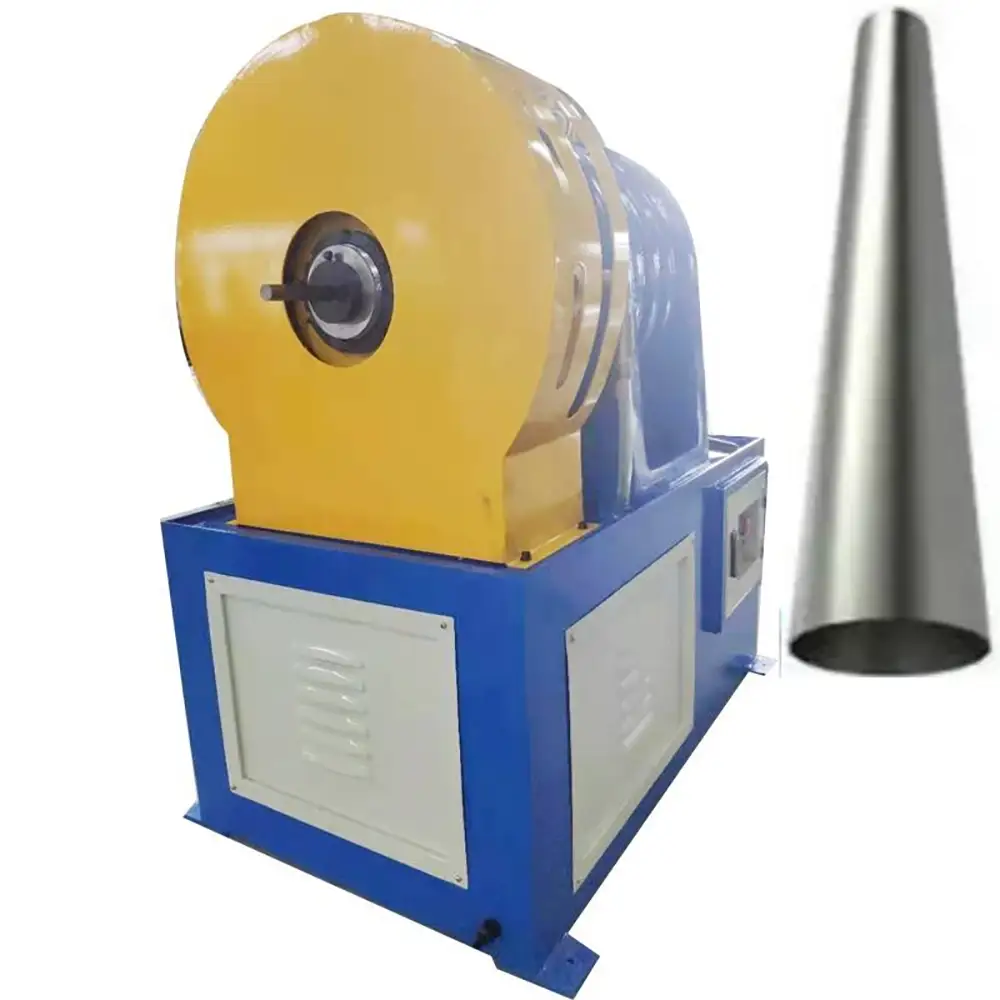
The diameter of the tube end can be reduced to create a smaller section for insertion,connection,or subsequent assembly.
End reduction can also be used to create tapered or stepped tube profiles.
The amount of reduction that can be achieved depends on the material,wall thickness,initial diameter,and forming-tool design.
Customers requiring a specific reduction ratio should provide the original and finished dimensions when requesting a machine configuration.
Flexible Forming Tooling
Tooling is one of the most important factors affecting tube-end forming results.
Different tube diameters and finished shapes may require different forming dies,mandrels,rollers,fixtures,or inserts.
For manufacturers processing multiple tube sizes,the machine can potentially be supplied with interchangeable tooling where supported by the design.
Custom tooling can also be considered for special profiles.
Customers can provide 2D drawings,3D CAD files,finished-product samples,or dimensional specifications so the required forming geometry can be evaluated.
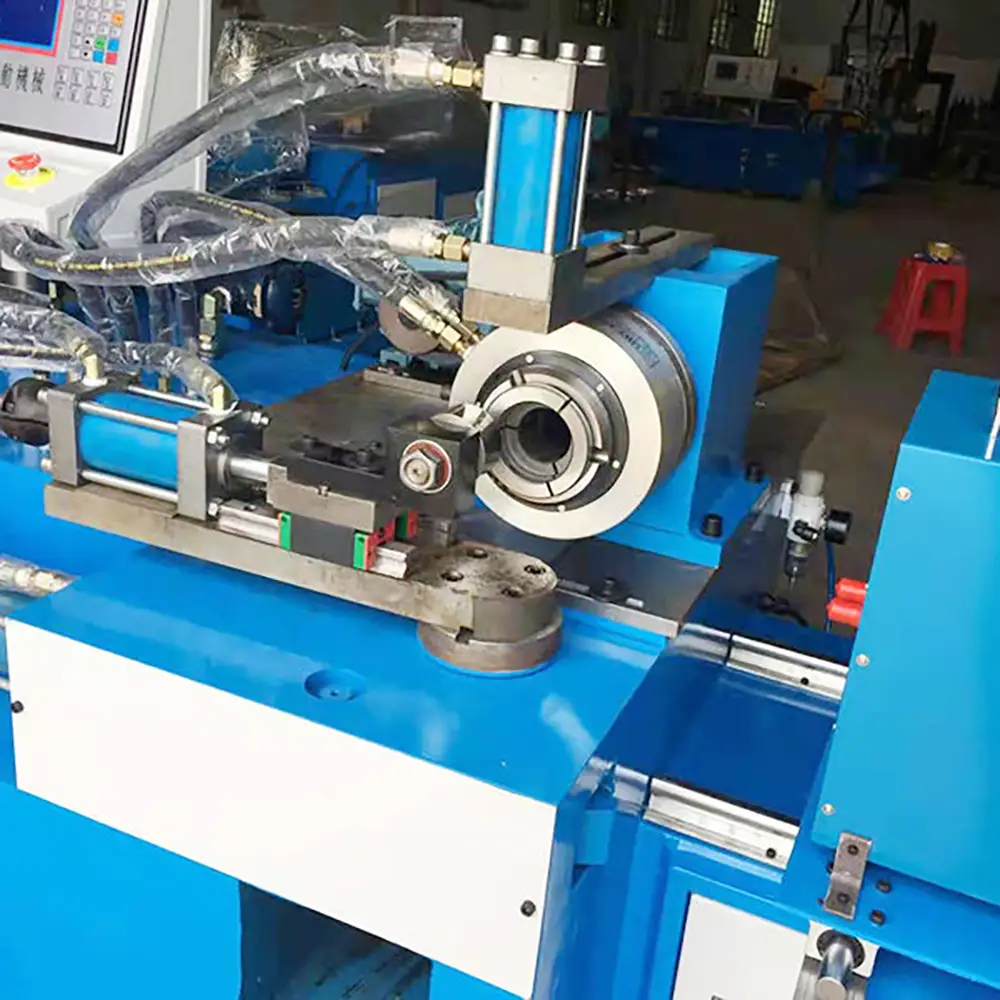
Stable Tube Clamping
Workpiece stability is essential during pipe-end forming.
A suitable clamping system holds the tube securely while the forming tool applies mechanical force to the end.
Correct positioning helps reduce movement and supports consistent end geometry between workpieces.
Clamping requirements depend on tube diameter,wall thickness,material,and tube length.
For thin-wall steel or aluminum tubes,appropriate fixture design is particularly important because excessive clamping force can cause unwanted deformation.
Different Metal Materials
Depending on the machine configuration,the equipment may be suitable for various metal tube materials.
Typical materials may include:
Carbon Steel
Mild Steel
Stainless Steel
Aluminum
Copper
Alloy Steel
Each material has different forming characteristics.
Steel generally requires different forming conditions from aluminum or copper. Stainless steel grades can also vary significantly in strength and formability.
The actual material range should therefore be confirmed based on the customer's tube specifications and required finished-end shape.
Industrial Applications
Pipe end forming machines are used across many industrial sectors.
Typical applications include:
Automotive Components
Motorcycle Components
Exhaust Components
Metal Furniture
Chair And Table Frames
Refrigeration Equipment
Heat Exchangers
Hydraulic Components
Construction Products
Industrial Machinery
Appliance Components
General Metal Fabrication
The machine can serve as an individual tube-processing station or potentially form part of a larger manufacturing line.
Production Efficiency
Mechanized tube-end processing can help reduce repetitive manual forming operations.
For batch production,the machine can provide a more standardized process for positioning and forming similar tube components.
Actual production output depends on tube dimensions,material,forming geometry,tooling,loading and unloading,tool changes,and operator workflow.
For higher-volume manufacturing,the machine can potentially be combined with tube cutting,automatic feeding,bending,welding,inspection,and other processing equipment.
Production-line integration should be evaluated according to the required workflow and automation level.
Finished Product Quality
Consistent tube-end quality depends on several factors.
Important considerations include:
Material Grade
Tube Diameter
Wall Thickness
Tooling Design
Clamping Stability
Forming Force
Machine Alignment
Forming Speed
Surface Condition
Finished parts should be inspected for end diameter,overall length,concentricity,wall deformation,surface marks,and other application-specific requirements.
For components requiring close dimensional tolerances,the first processed parts should be measured before continuing full production.
Maintenance and Safety
Pipe end forming equipment contains moving mechanical components and forming tooling,so appropriate operating procedures are required.
Depending on the machine configuration,safety features may include guards,emergency-stop functions,electrical protection,and controlled operating systems. Actual safety features depend on the specific model and applicable local requirements.
Routine maintenance may include cleaning metal debris,checking forming dies,inspecting clamping components,lubricating designated moving parts,and checking hydraulic,pneumatic,or electrical systems where applicable.
Worn tooling should be inspected and replaced or serviced as needed to maintain consistent tube-end quality.
OEM and Custom Pipe End Forming Solutions
Different customers may require different tube sizes,materials,end profiles,and production volumes.
The machine can therefore be evaluated for customized applications.
OEM and ODM options may include custom dies,mandrels,fixtures,clamping systems,feeding arrangements,hydraulic or pneumatic systems,and control configurations.
For an accurate quotation,customers should provide tube material,outer diameter,wall thickness,tube length,required finished-end shape,production volume,and desired automation level.
Drawings or physical samples are highly recommended for applications involving customized tube-end geometry.
Why Choose Us
Versatile Pipe End Forming
Designed for suitable metal and steel tubes requiring end forming,closing,sealing,reducing,and shaping.
Metal & Steel Tube Processing
Suitable configurations can be evaluated for carbon steel,stainless steel,aluminum,copper,and other compatible materials.
Multiple End-Processing Functions
Supports different tube-end operations depending on the machine configuration and tooling.
Flexible Tooling Solutions
Forming dies,mandrels,fixtures,and other tooling can be selected or customized for different tube-end profiles.
Stable Workpiece Clamping
Proper positioning helps maintain consistent tube alignment during the forming operation.
Production-Friendly Design
Mechanized forming can reduce repetitive manual processing and support batch manufacturing.
Wide Industrial Applications
Suitable for automotive,furniture,refrigeration,heat exchanger,construction,and general fabrication applications.
OEM & ODM Support
Customized machine configurations and tooling can be evaluated according to specific production requirements.
FAQs
1. What is a pipe end forming machine?
A pipe end forming machine is equipment used to reshape,reduce,close,seal,or otherwise form the end of a metal pipe or tube.
2. Can it process steel tubes?
Yes. Suitable carbon steel,mild steel,and stainless steel tubes can be processed when the machine and tooling are correctly configured.
3. Can it close the end of a metal tube?
Yes. With appropriate tooling,the machine can perform tube-end closing operations according to the required finished shape.
4. Can it seal pipe ends?
It can perform mechanical end closing or forming for suitable sealing applications. Final sealing performance depends on the finished geometry and any additional sealing or joining process.
5. Can the tube diameter be reduced?
Yes. Suitable tooling can reduce the diameter of a tube end for insertion,connection,or tapered forming applications.
6. What materials can be processed?
Depending on the configuration,the machine may process carbon steel,stainless steel,aluminum,copper,and other suitable metal tubes.
7. Can different tube sizes be processed?
Yes. Different tube sizes can generally be handled with suitable tooling. The actual size range depends on the machine model.
8. Does each tube size require different tooling?
Different diameters and end profiles generally require appropriately sized tooling. Interchangeable tooling can be considered where supported by the machine design.
9. Can custom tube-end shapes be produced?
Yes. Custom dies and forming tools can be developed or selected for special tube-end geometries based on drawings or samples.
10. Is the machine automatic?
The operating method depends on the selected configuration. Machines may be manual,semi-automatic,or equipped with automated feeding and control functions.
11. Can it be integrated into a production line?
Depending on the configuration,it can potentially be integrated with tube cutting,feeding,bending,welding,inspection,and other tube-processing equipment.
12. What information is needed for a quotation?
Provide tube material,outer diameter,wall thickness,length,required end shape,production volume,and desired automation level. Drawings or samples are recommended for customized applications.
Prev:
Automatic Spinning Machine Closing and Rolling Groove Machine
Next:
Furniture Chair Sofa Legs Cone Pipe Tube End Diameter Reducing Taper Forming Rotary Shrinking Swaging Cone Machine
TAG:
Pipe Diameter Reducing Machine,
Tube Diameter Reducing Machine,
Pipe End Processing Machine,
Automatic Tube End Forming Machine,
Tube End Processing Machine,
Industrial Tube End Forming Machine,
Industrial Pipe End Forming Machine,
Exhaust Pipe End Forming Machine,
Automotive Tube End Forming Machine,
Carbon Steel Pipe End Forming Machine,
Metal Pipe Forming Machine,
Metal Tube Forming Machine,
Stainless Steel Pipe End Forming Machine,
Tube End Forming Equipment,
Pipe End Forming Equipment,
Pipe End Reducing Machine,
Tube End Reducing Machine,
Tube End Forming Machine,
Pipe End Forming Machine,
Hydraulic Tube End Forming Machine,
Hydraulic Pipe End Forming Machine,
Metal Tube Processing Machine,
Pipe Processing Machine,
Tube Processing Machine,
Pipe Fabrication Machine,
Tube Fabrication Machine,
Steel Pipe Forming Machine,
Metal Pipe End Forming Machine,
Exhaust Tube End Forming Machine,
Precision Tube End Forming Machine,
Related Category:
Pipe End Forming Machine,Tube End Forming Machine,Pipe End Closing Machine,Tube End Closing Machine,Pipe End Sealing Mac China, suppliers, manufacturers, factory, customized, wholesale, quotation, made in China