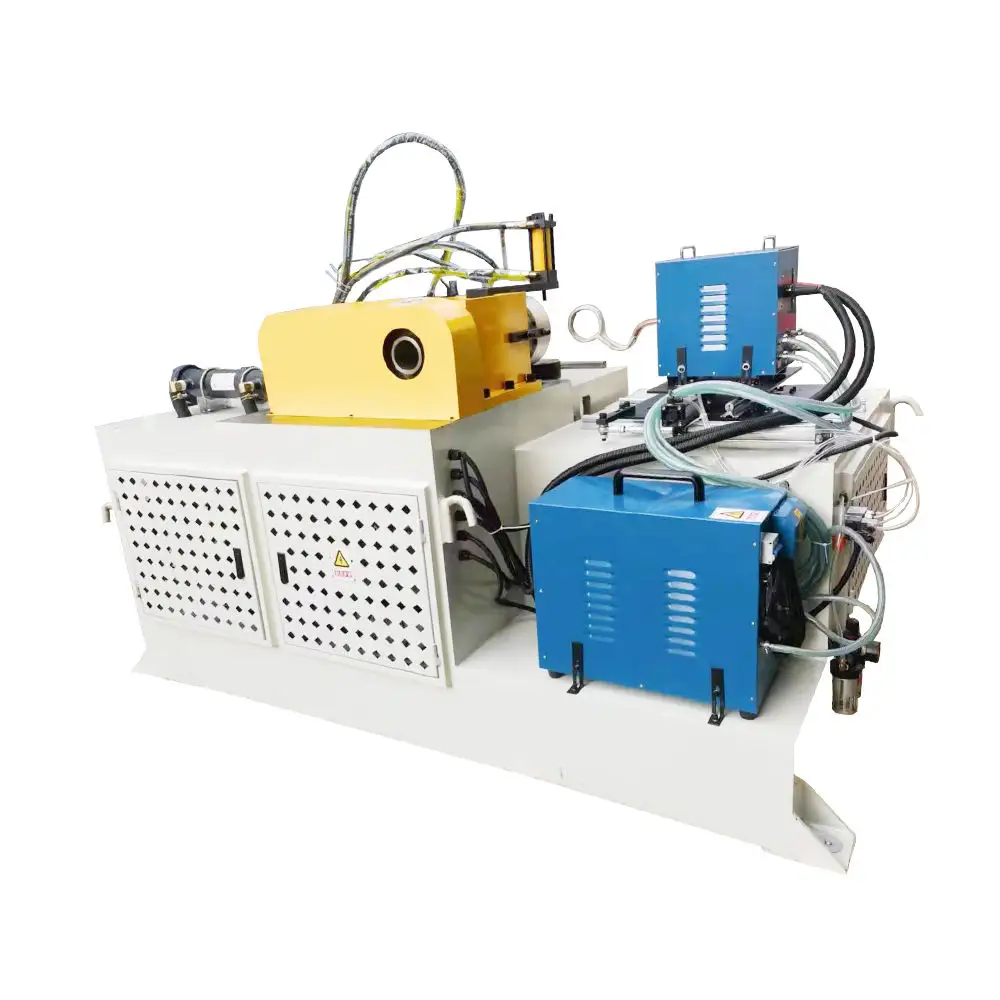
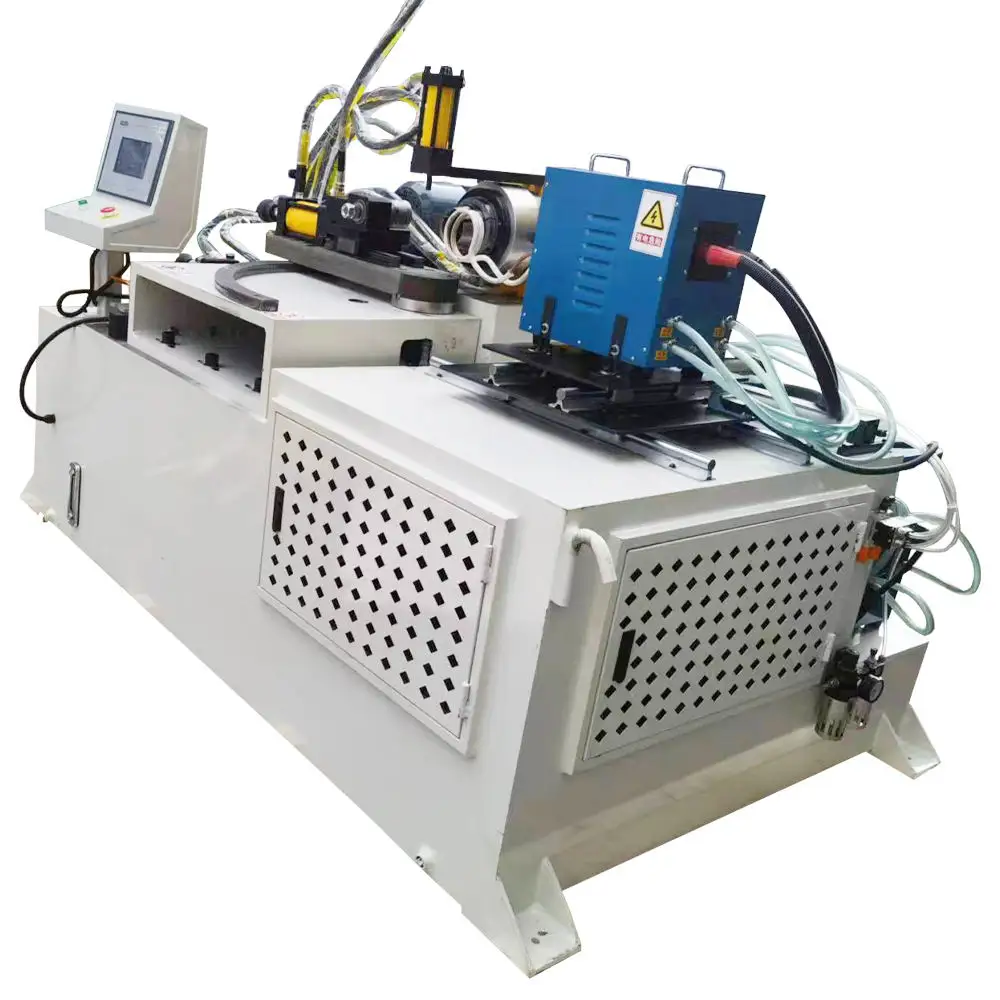
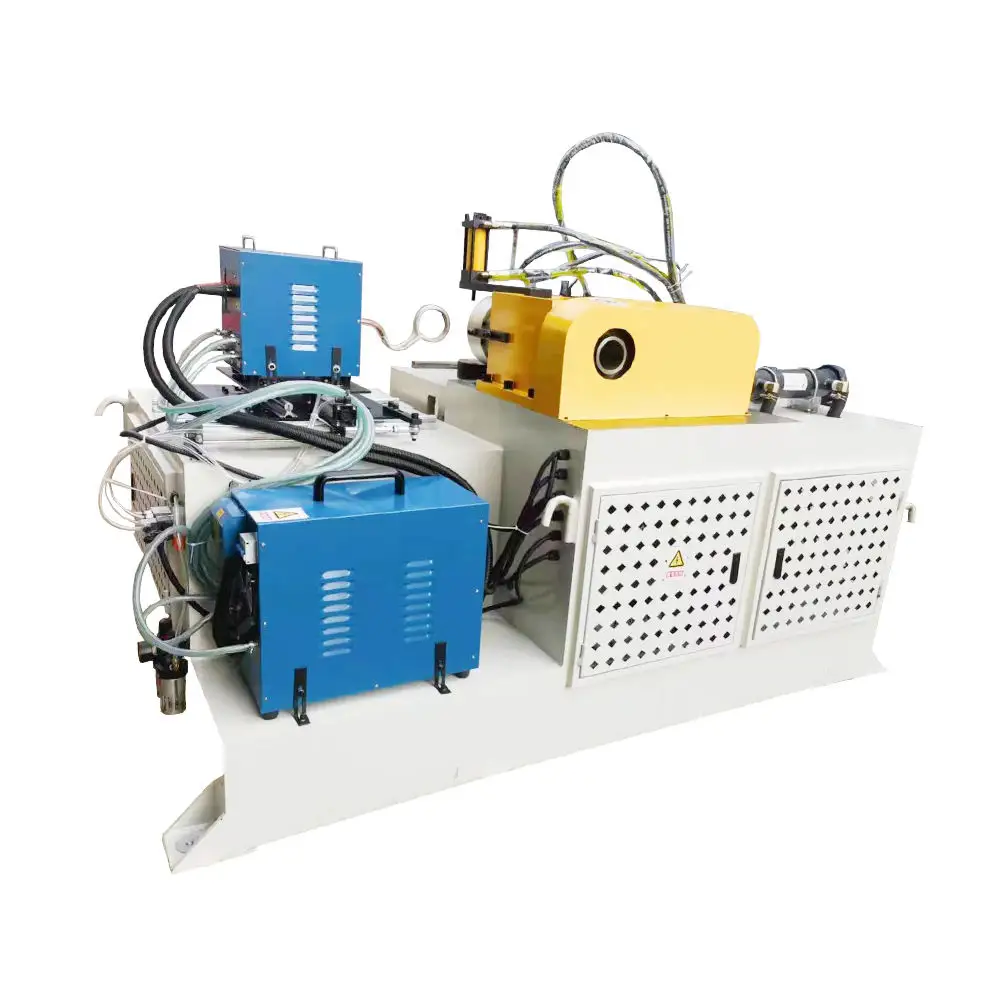
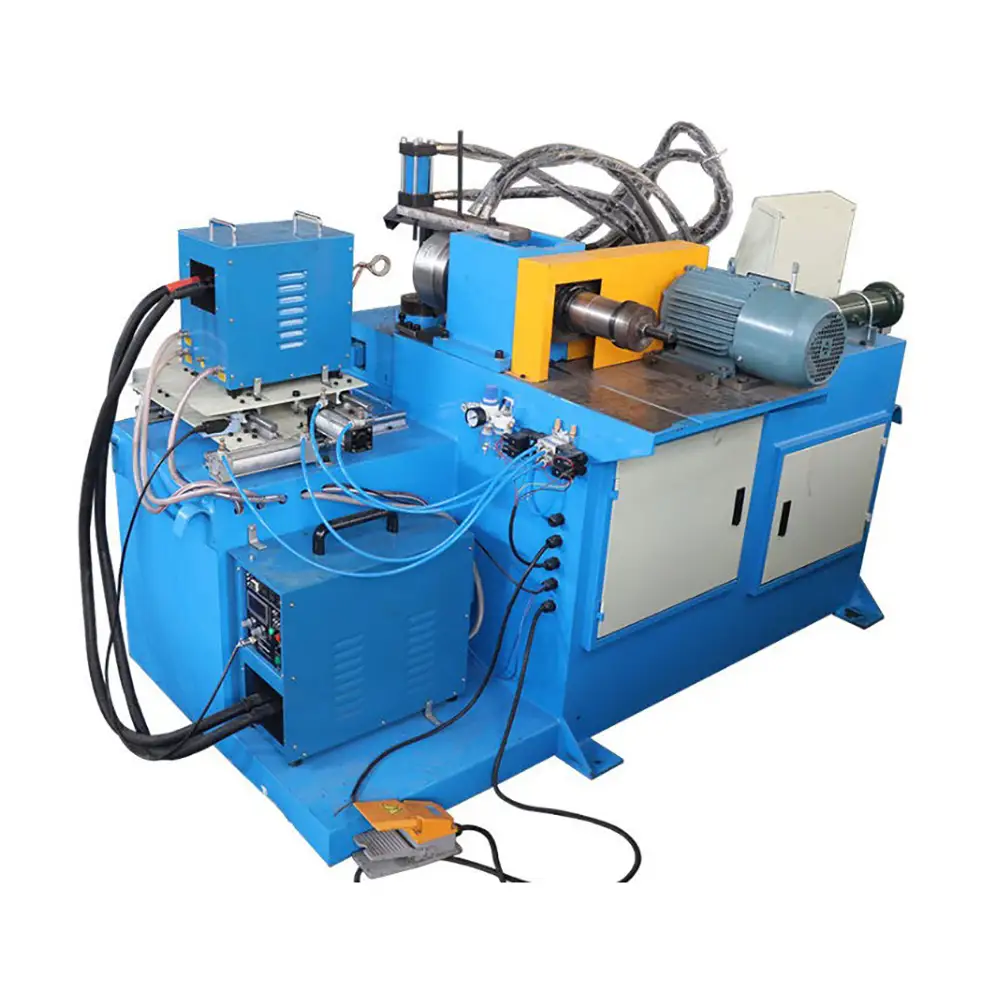
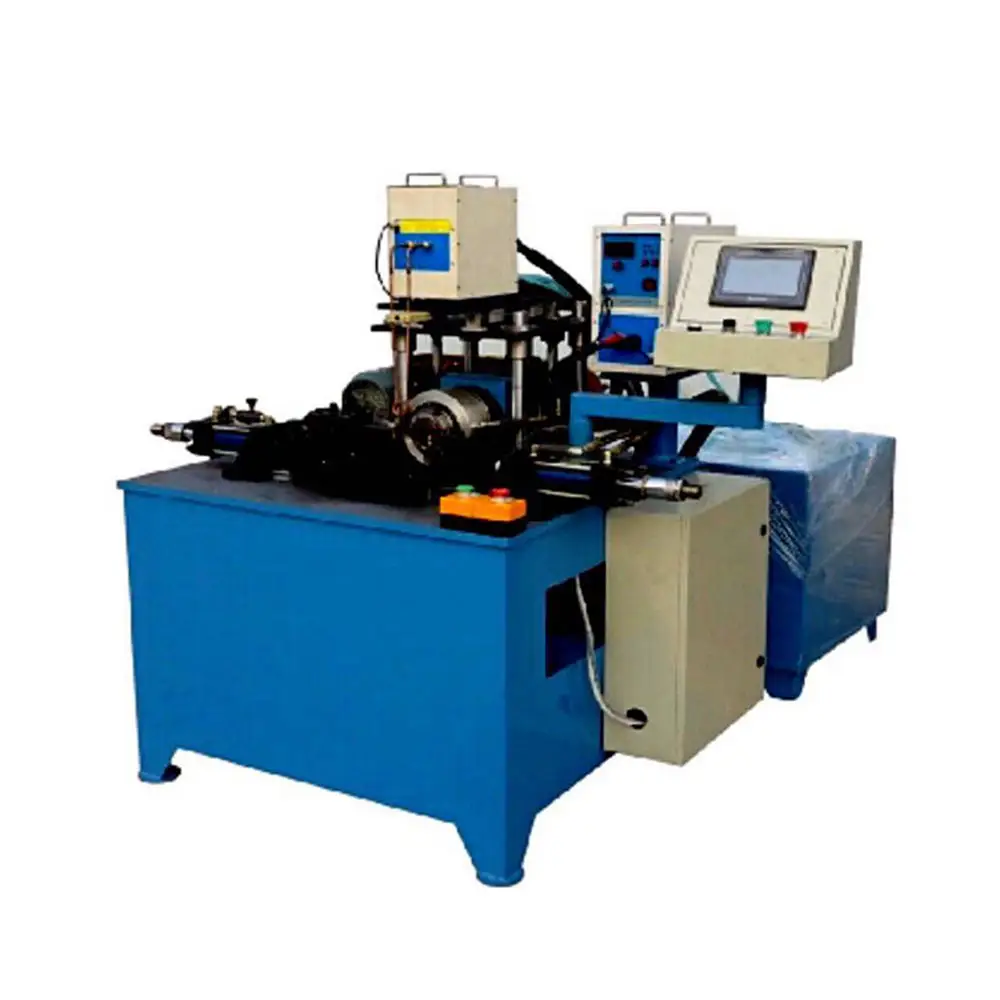
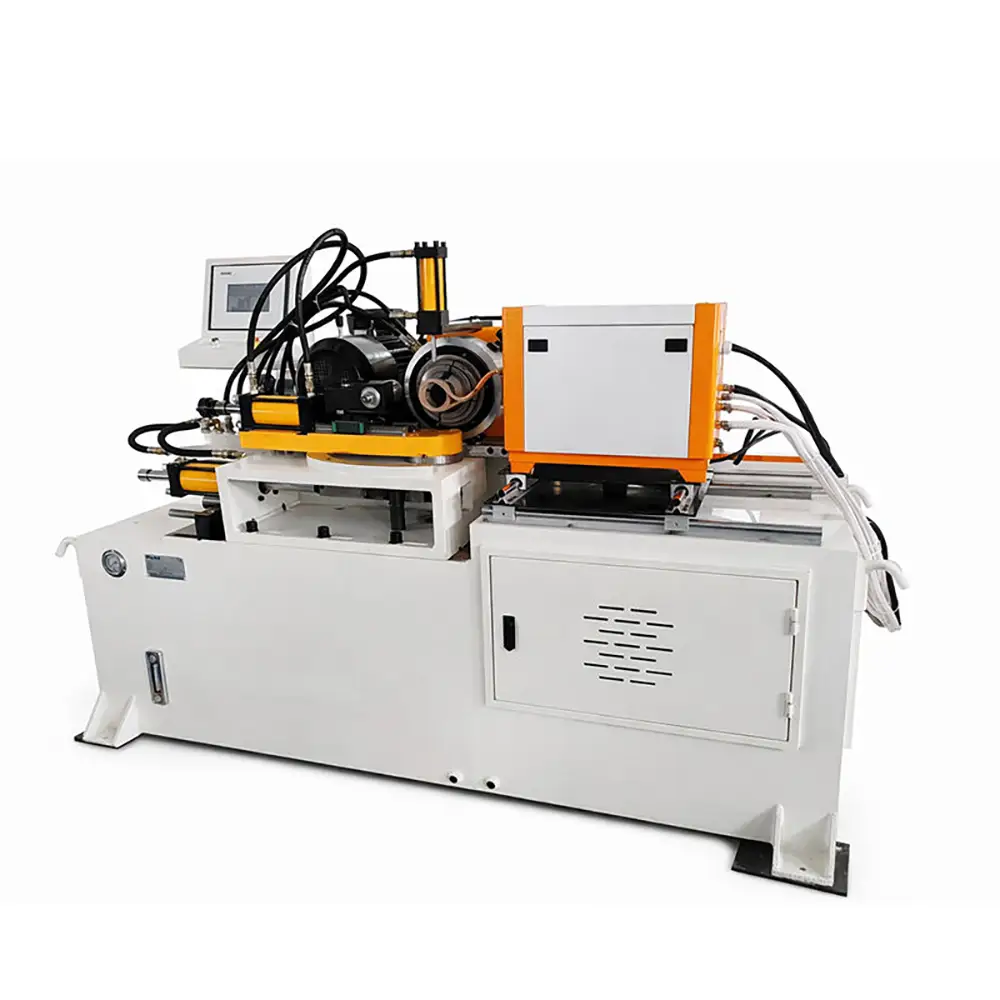
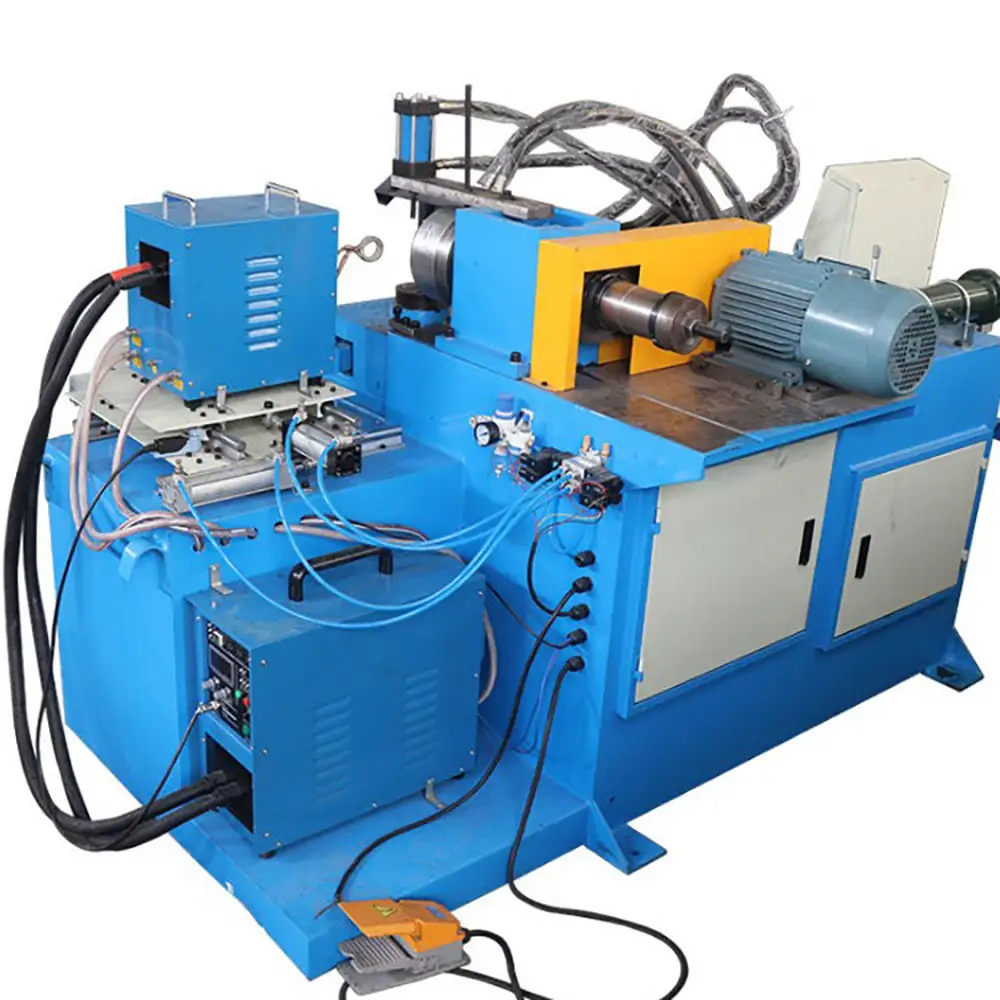
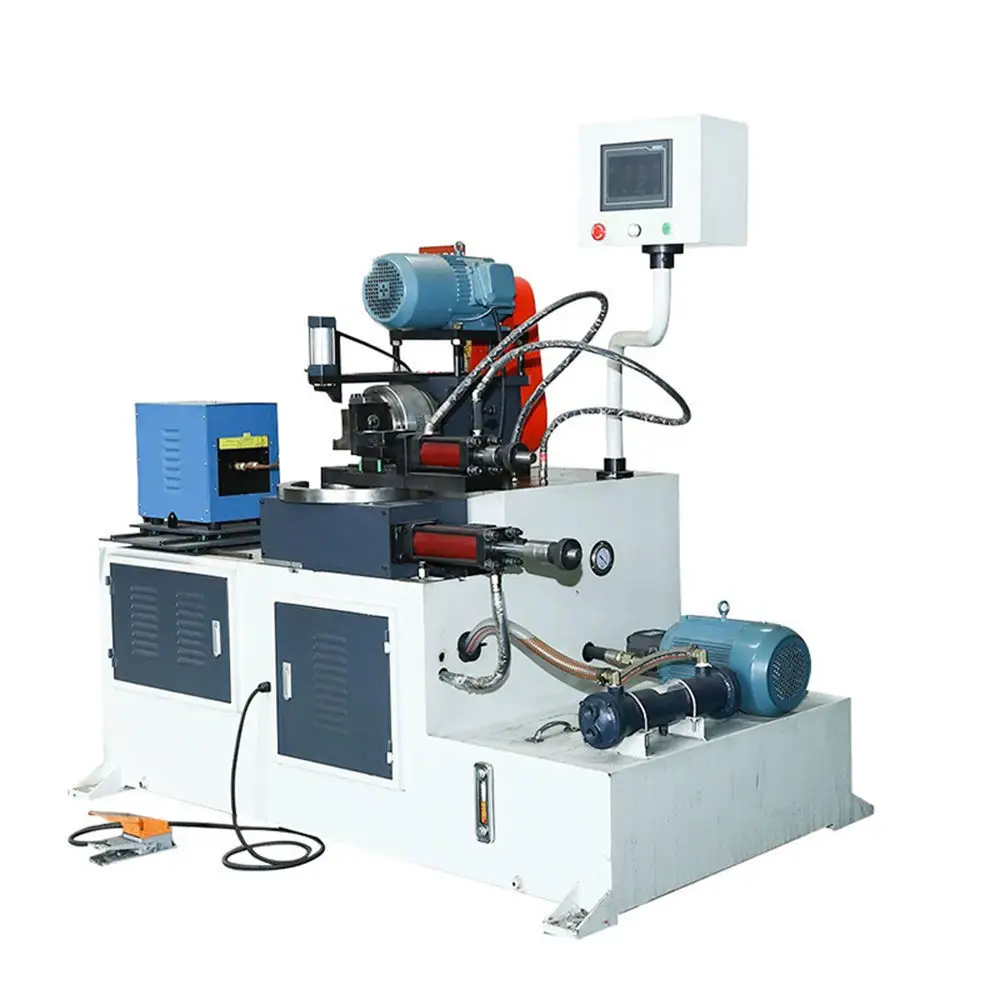
Product feature: 1 Suitable for carbon steel, stainless steel copper and other metal pipes.
2 High frequency heating, automatic rotary sealing.
3 Sealing,positioning and Brake stop accomplish at one time.
4 Pneumatically control the movement of high frequency heater. Products Description
|
Model |
40NC |
70NC |
|
Hydraulic motor power |
4 kw |
4kw |
|
Rotating motor power |
3.3kw |
3.3kw |
|
Ultrasonic high frequency machine |
15kw |
25kw |
|
Maximum applicable pipe |
¢40 * 2.5mm |
¢62 * 3mm |
|
Maximum pipe length |
1.5m |
1.5m |
|
Hydraulic pressure |
12MPa |
12MPA |
|
Size |
2100 x 1400 x 1200 mm |
2700 * 1400 * 1200 mm |
Weight |
750kg |
1000kg |
Automatic Pipe Tube End Closing Sealing Machine
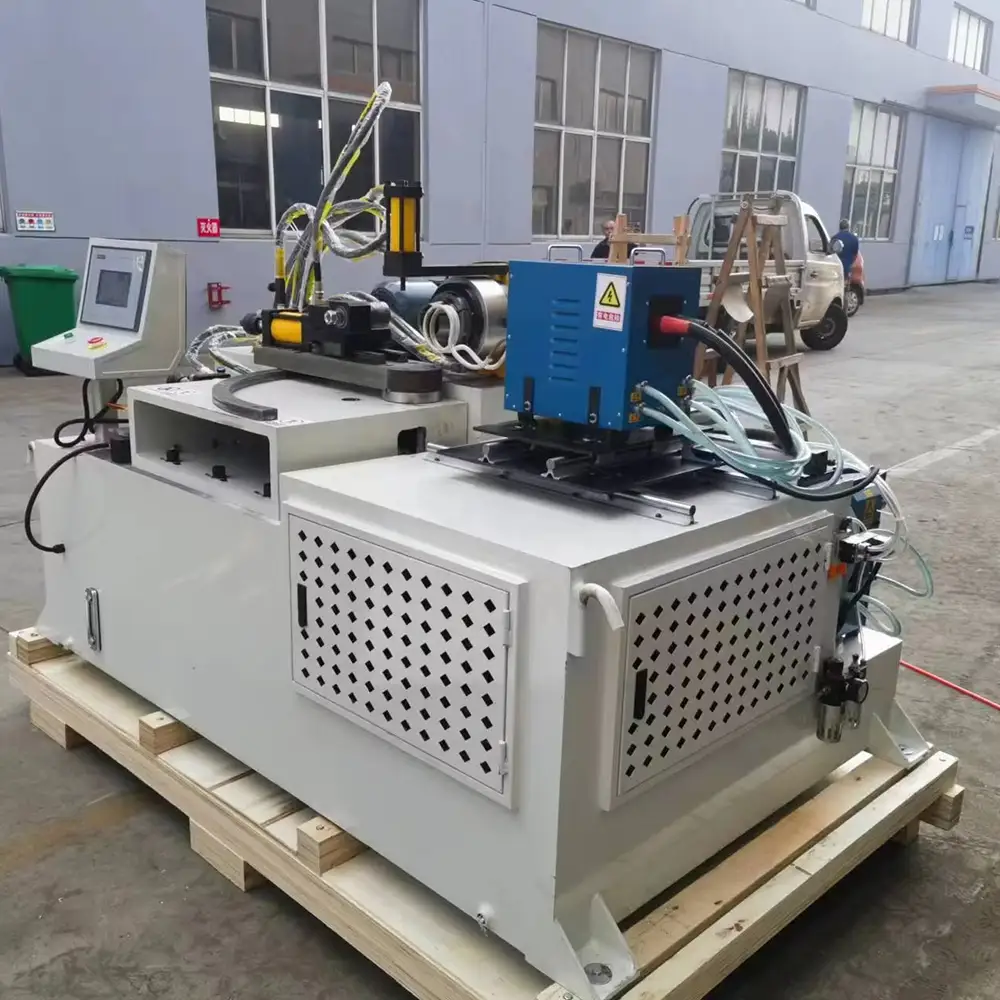
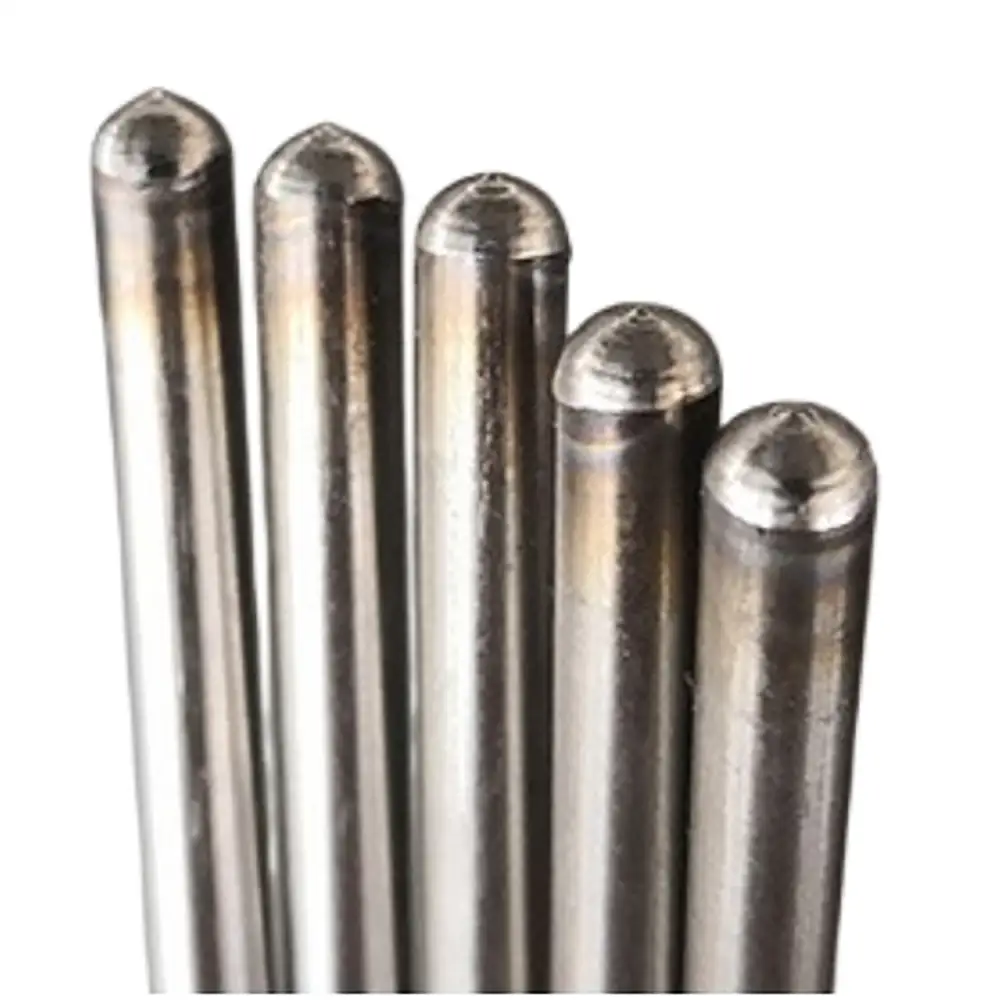
The Automatic Pipe Tube End Closing Sealing Machine is a specialized metal tube processing machine designed for pipe and tube end closing,sealing,reducing,and forming applications. It provides a controlled mechanical forming process for suitable metal tubes,helping manufacturers create consistent end geometries for assembly,connection,sealing,and downstream fabrication.
Tube-end processing is widely used in automotive components,exhaust systems,HVAC equipment,heat exchangers,refrigeration systems,furniture,appliances,construction products,and general metal fabrication. Instead of relying entirely on manual tube forming,the machine uses dedicated tooling and controlled movement to process the tube end according to the required product design.
The actual forming capacity depends on tube material,outside diameter,wall thickness,length,end geometry,tooling,and machine configuration. Customers should provide these details when selecting equipment.
Automatic Tube End Closing Process
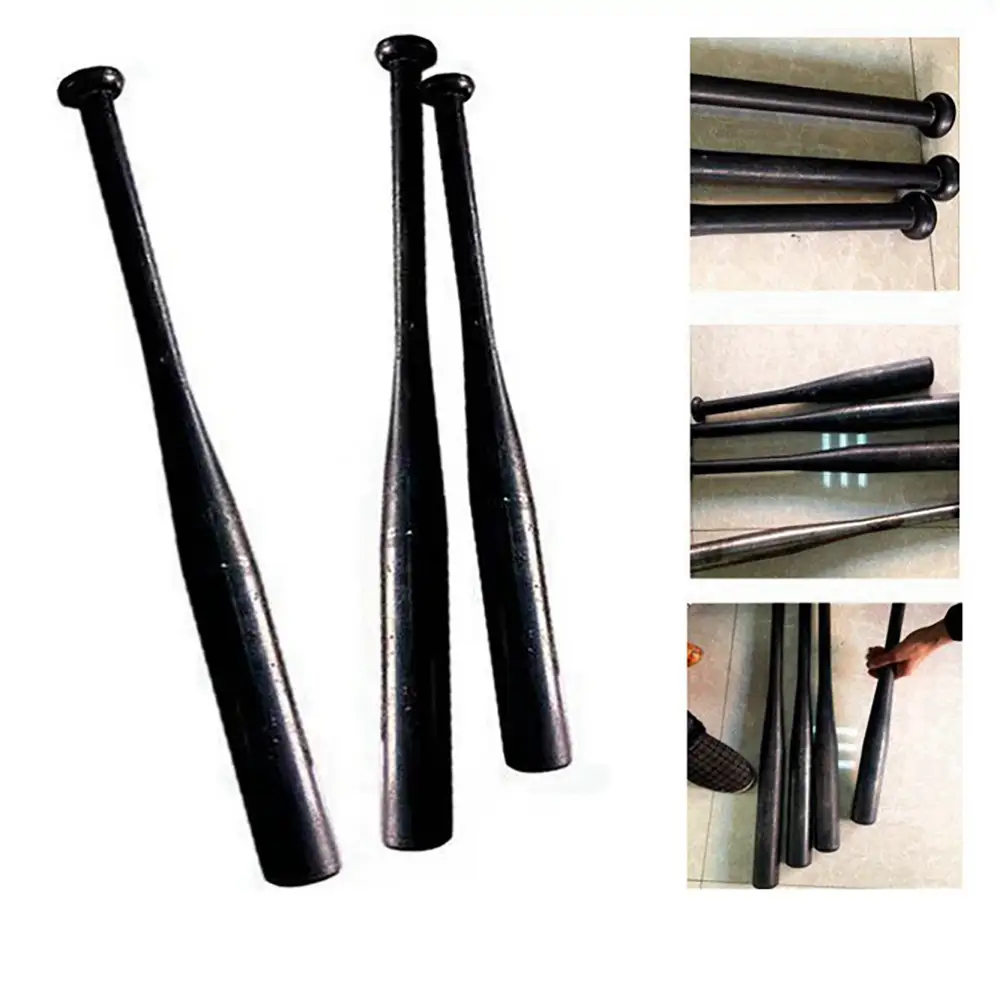
Tube end closing involves reducing or shaping an open tube end to create a smaller,closed,or otherwise specified profile.
The automatic machine positions and clamps the tube before applying forming force through dedicated dies or forming tools. Depending on the configuration,the process can produce different end geometries without requiring separate manual forming operations.
Typical tube-end processes may include:
Tube end closing
Pipe end sealing
End diameter reduction
Tube necking
Tube end shrinking
Tube end shaping
Partial end closing
Formed tube transitions
The final geometry is determined by the forming tooling and product requirements. For special shapes,drawings or physical samples are recommended before production.
Metal Pipe and Tube End Sealing
End sealing is an important application when a tube needs to be closed or prepared for a subsequent sealing or connection operation.
Depending on the tooling,the machine can reduce the tube opening or form the end into a specific profile. The resulting end may then be welded,connected,clamped,or used as part of another assembly process.
The machine does not necessarily create a pressure-tight seal simply through mechanical forming. Whether additional welding,brazing,plugging,or sealing operations are required depends on the final product design.
This distinction is important for applications involving pressure-containing components or fluid systems.
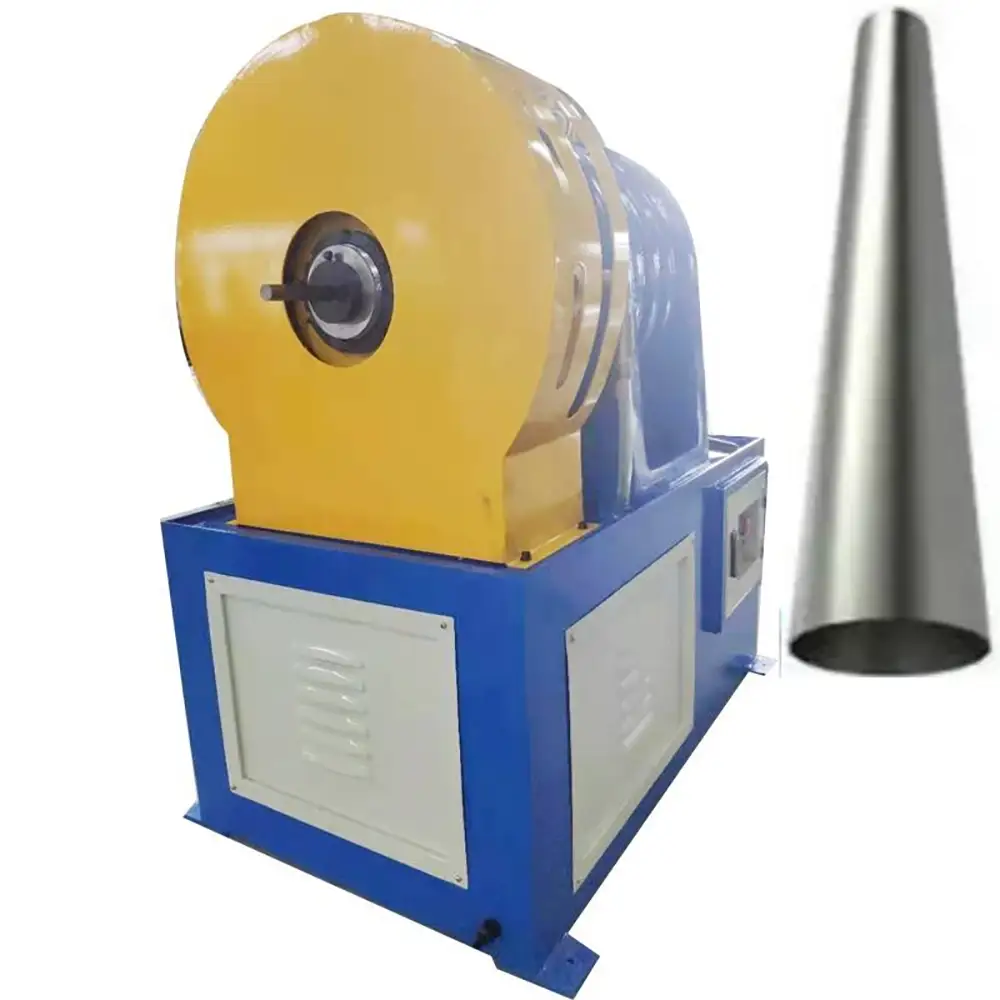
Tube End Reducing and Necking
Tube end reducing decreases the diameter of a selected tube section. This process is commonly used when one end of a tube must connect to a smaller-diameter component.
Necking can also create a controlled transition between two different tube diameters. Proper tooling helps control the deformation and maintain the required shape.
The achievable reduction depends on material ductility,wall thickness,original diameter,forming method,and tooling design. Excessive reduction in a single operation may cause wrinkling,cracking,or unwanted deformation,so the forming sequence should be selected according to the workpiece.
Suitable Metal Materials
The Automatic Pipe Tube End Closing Sealing Machine can be configured for various metal tubes and pipes.
Potential materials include:
Carbon steel
Mild steel
Stainless steel
Aluminum
Copper
Brass
Alloy steel
Each material has different mechanical and forming characteristics. Stainless steel may require different forming force and tooling from mild steel,while aluminum and copper generally require careful control of deformation to maintain surface quality.
Material grade,hardness,outside diameter,wall thickness,and required end profile should be considered before selecting the machine and tooling.
Automotive and Exhaust Tube Applications
Automotive and exhaust manufacturing commonly require tube-end processing before welding or assembly.
Exhaust pipes and related tubular components may require diameter reduction,necking,closing,or shaped ends for connection with other components. The automatic machine can provide a repeatable forming process for suitable tubes.
For exhaust production,the tooling can be designed around the required tube diameter and final end geometry. The machine may be integrated with other processes such as tube bending,cutting,welding,and inspection.
Actual suitability depends on the exhaust tube material,dimensions,and product drawing.
HVAC and Heat Exchanger Applications
Tube end forming is also used in HVAC,refrigeration,and heat exchanger manufacturing.
Copper,aluminum,stainless steel,and other suitable tubes may require end reduction,closing,flaring,or shaping during component production.
A controlled end-forming machine can help manufacturers prepare tube ends for joining,assembly,connection,or sealing operations.
For heat exchanger or refrigeration components,the final dimensions may be important for subsequent brazing,welding,or connection. Customers should therefore provide the required end profile and dimensional tolerances when evaluating the machine.
Furniture and General Fabrication
Metal tube end closing is not limited to industrial piping applications. It can also be used in furniture,display systems,fitness equipment,frames,railings,and other fabricated metal products.
Tube ends may need to be reduced,closed,or shaped for appearance,assembly,or connection purposes.
For furniture applications,the finished tube end can be designed to accept a connector,foot,cap,fastener,or other component. The appropriate forming method depends on the tube material,diameter,wall thickness,and desired appearance.
Tooling and Dies
Tooling is one of the most important components of a tube end closing machine.
Different tube diameters and end profiles normally require corresponding forming dies or tooling. Depending on the machine design,the tooling may include closing dies,forming punches,mandrels,rollers,and clamping fixtures.
Proper tooling helps control the deformation of the tube and can reduce problems such as cracks,wrinkles,excessive thinning,and surface marks.
For OEM projects,customers should provide tube drawings and finished end dimensions. Samples can also be useful when developing customized tooling.
Automatic Production and Repeatability
Automatic operation can reduce repetitive manual work and help maintain a consistent production sequence.
Depending on the configuration,the machine may support automatic feeding,positioning,clamping,forming,and unloading. However,the exact level of automation varies between machine models.
Production efficiency depends on tube size,material,forming complexity,cycle sequence,loading method,tooling,and operator workflow.
For high-volume manufacturing,the machine can be integrated with upstream tube cutting or bending equipment and downstream welding,assembly,or inspection processes.
Forming Quality and Inspection
The finished tube end should be inspected according to the product requirements.
Important quality factors may include:
End diameter
Formed length
Wall thickness
Concentricity
End profile
Surface condition
Cracks and wrinkles
Dimensional repeatability
Material properties and tooling condition can influence the final result. For new products,the first pieces should be inspected before continuing full production.
For applications requiring tight tolerances,customers should provide technical drawings and inspection specifications so the appropriate forming method can be evaluated.
Machine Maintenance and Safety
Routine maintenance helps maintain stable machine operation and forming quality.
Operators should regularly inspect forming dies,clamps,mechanical components,hydraulic systems where applicable,electrical connections,and lubrication points.
Tooling should be kept clean and inspected for wear. Damaged or worn tooling can affect tube dimensions and surface quality.
Because the machine contains moving forming components,operators should keep hands away from the forming area during operation. Guards,emergency-stop functions,and other safety features may be provided depending on the machine configuration. Operators should follow the manufacturer's instructions and applicable local safety requirements.
OEM and Custom Tube Forming Solutions
Different tube products require different end profiles and forming processes. The machine can therefore be customized or configured according to the customer's application.
Possible options may include forming dies,mandrels,clamping systems,automatic feeding,positioning systems,hydraulic components,control systems,and unloading arrangements.
For OEM and ODM projects,customers can provide the tube material,outside diameter,wall thickness,length,finished end dimensions,production volume,and required automation level.
Product drawings or physical samples are especially useful when a customized tube end shape or special sealing profile is required.
The equipment is suitable for manufacturers,automotive suppliers,exhaust factories,HVAC producers,heat exchanger manufacturers,furniture factories,metalworking companies,machinery distributors,and industrial buyers.
Why Choose Us
Automatic Tube End Processing – Designed for controlled and repeatable pipe and tube end closing operations.
Multiple Forming Functions – Suitable for end closing,sealing,reducing,necking,shrinking,and shaping with appropriate tooling.
Flexible Material Compatibility – Can be configured for suitable carbon steel,stainless steel,aluminum,copper,and other metal tubes.
Application-Specific Tooling – Forming dies,mandrels,clamps,and other tools can be selected according to the finished tube profile.
Repeatable Production – Controlled positioning and forming can help improve consistency between workpieces.
Wide Industrial Applications – Suitable for automotive,exhaust,HVAC,heat exchanger,furniture,and general metal fabrication.
Production Line Integration – Can be evaluated for integration with tube cutting,bending,welding,assembly,and inspection processes.
OEM & ODM Support – Machine configuration and tooling can be customized according to tube dimensions,material,production requirements,and end-forming specifications.
FAQs
1. What is an automatic pipe tube end closing machine?
It is a machine designed to mechanically reduce,close,seal,or shape the end of a suitable metal pipe or tube using dedicated forming tooling.
2. What is the difference between end closing and end sealing?
End closing refers to mechanically reducing or closing the tube opening. End sealing describes the resulting closed or sealed condition,which may require additional welding,brazing,plugging,or sealing depending on the application.
3. What materials can the machine process?
Depending on the machine configuration,it can process suitable carbon steel,mild steel,stainless steel,aluminum,copper,brass,and alloy steel tubes.
4. Can it reduce the tube diameter?
Yes. Suitable forming dies can reduce the diameter of the tube end or create a necked transition.
5. Can it completely close a pipe end?
It can be configured for partial or substantial end closing depending on the tube material,dimensions,and tooling. The required finished geometry should be confirmed before purchase.
6. Can it process stainless steel tubes?
Yes. Stainless steel can be processed when the machine force,tooling,and forming parameters are appropriate for the selected grade and tube dimensions.
7. Can it process copper and aluminum tubes?
Yes. Suitable copper and aluminum tubes can be processed with properly selected tooling and forming parameters.
8. Is the machine fully automatic?
The automation level depends on the selected configuration. Automatic clamping,feeding,forming,and unloading functions may be available on certain models.
9. What determines the forming capacity?
Tube outside diameter,wall thickness,material strength,required reduction,finished end shape,tooling,and machine forming force all affect the practical capacity.
10. Can it be used for exhaust pipes?
Yes. Suitable exhaust tubes can be processed for end reduction,closing,and other forming operations according to the product design.
11. Can the machine be customized?
Yes. Tooling,clamping systems,feeding mechanisms,controls,and other components can be configured or customized for specific tube-processing requirements.
12. What information is needed for a quotation?
Provide the tube material,outside diameter,wall thickness,length,finished end dimensions,required closing or sealing profile,production volume,and automation requirements. Drawings or samples are recommended.
Prev:
Tube Pipe End Closing Machine Steel Pipe Sealing Machine
Next:
Multifunction Heating High Frequency Pipe Tube End Closing Sealing Machine
TAG:
Pipe End Processing Machine,
Automatic Tube End Forming Machine,
Tube End Processing Machine,
Industrial Tube End Forming Machine,
Industrial Pipe End Forming Machine,
Exhaust Pipe End Forming Machine,
Automotive Tube End Forming Machine,
Carbon Steel Pipe End Forming Machine,
Stainless Steel Pipe End Forming Machine,
Pipe Beading Machine,
Tube Beading Machine,
Pipe End Reducing Machine,
Tube Swaging Machine,
Pipe Swaging Machine,
Pipe Necking Machine,
Tube Necking Machine,
Tube End Reducing Machine,
Tube End Shrinking Machine,
Pipe End Shrinking Machine,
Tube End Forming Machine,
Pipe End Forming Machine,
Hydraulic Tube End Forming Machine,
Hydraulic Pipe End Forming Machine,
Automatic Tube Swaging Machine,
Industrial Tube Forming Machine,
Industrial Pipe Forming Machine,
Metal Tube Processing Machine,
Metal Furniture Tube Forming Machine,
Metal Pipe End Forming Machine,
Exhaust Tube End Forming Machine,
Related Category:
Automatic Pipe Tube End Closing Sealing Machine,Automatic Pipe End Closing Machine,Automatic Tube End Sealing Machine,Pi China, suppliers, manufacturers, factory, customized, wholesale, quotation, made in China