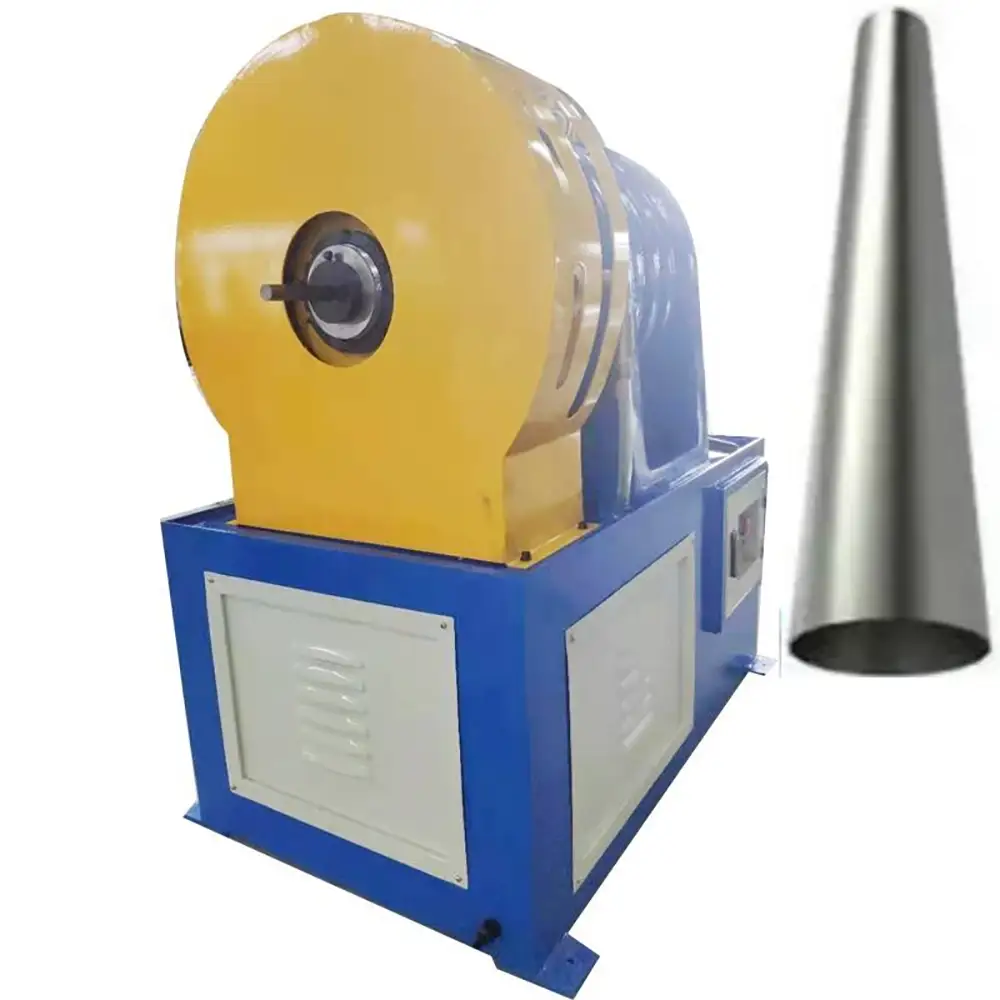
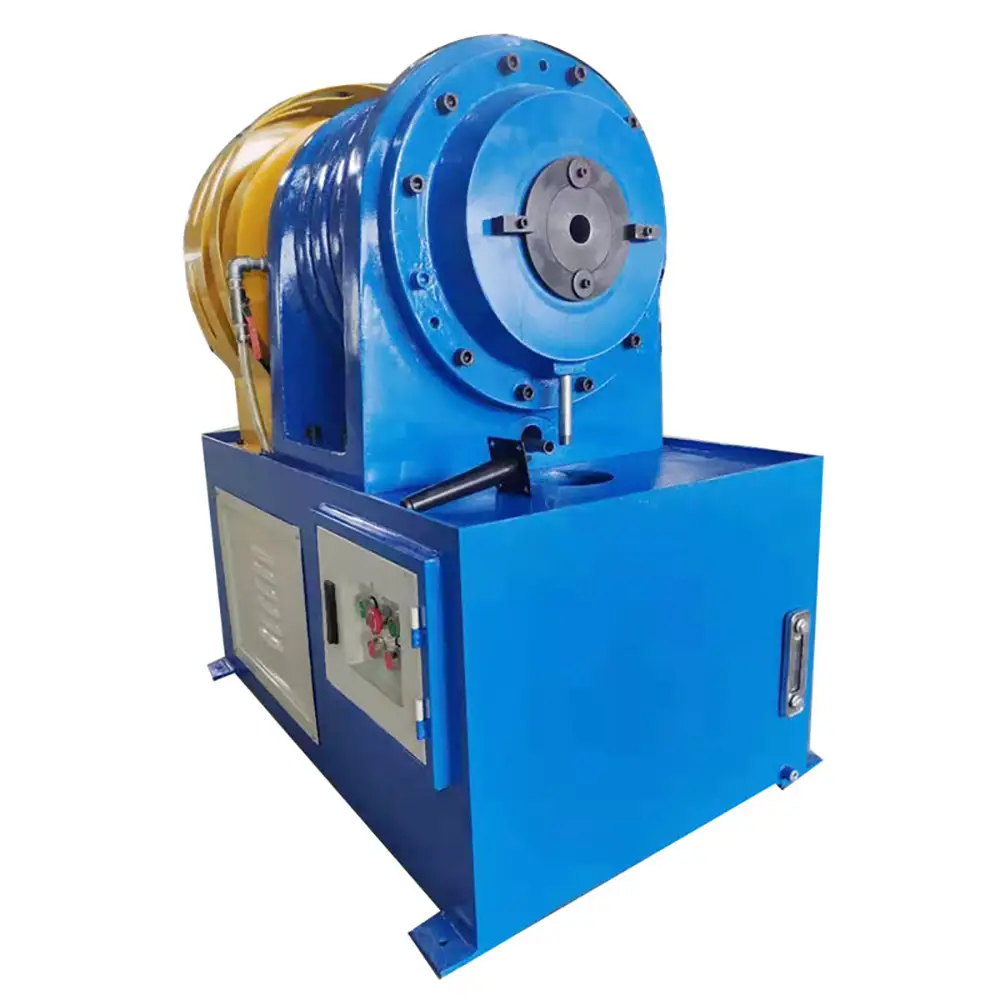
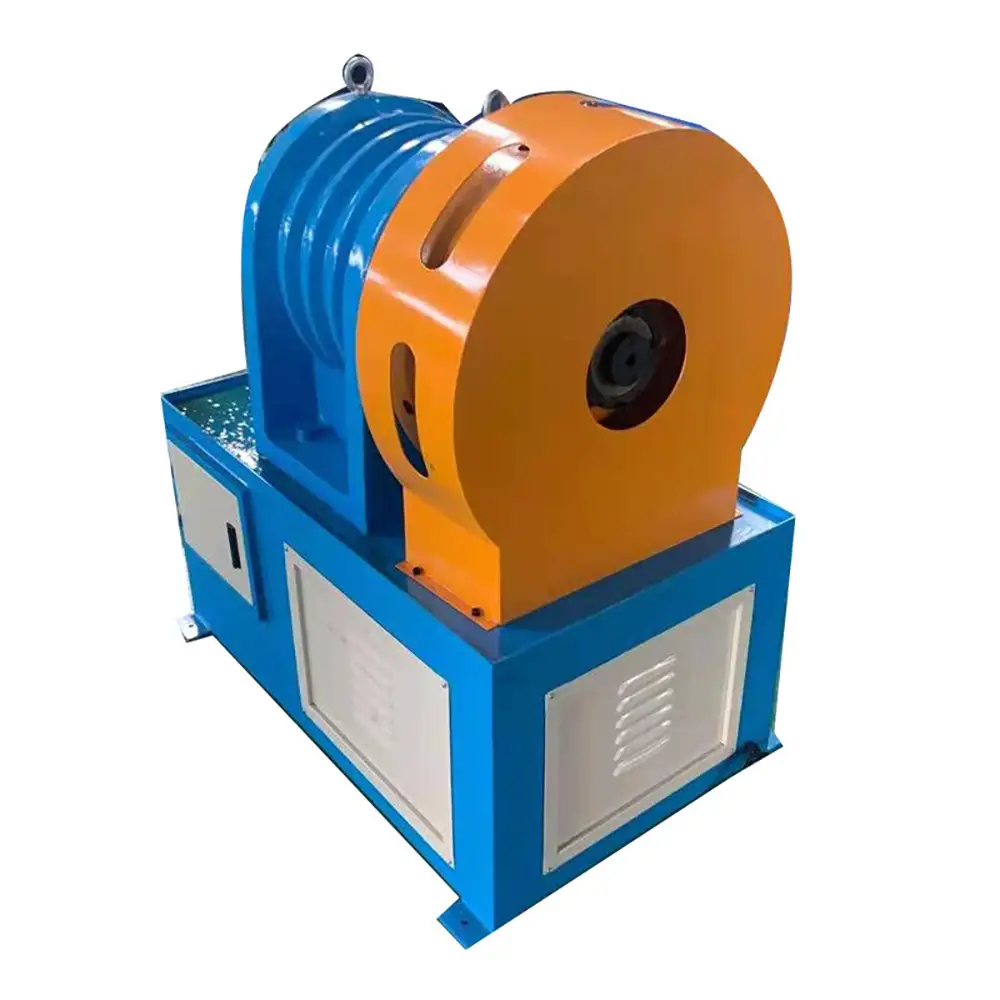
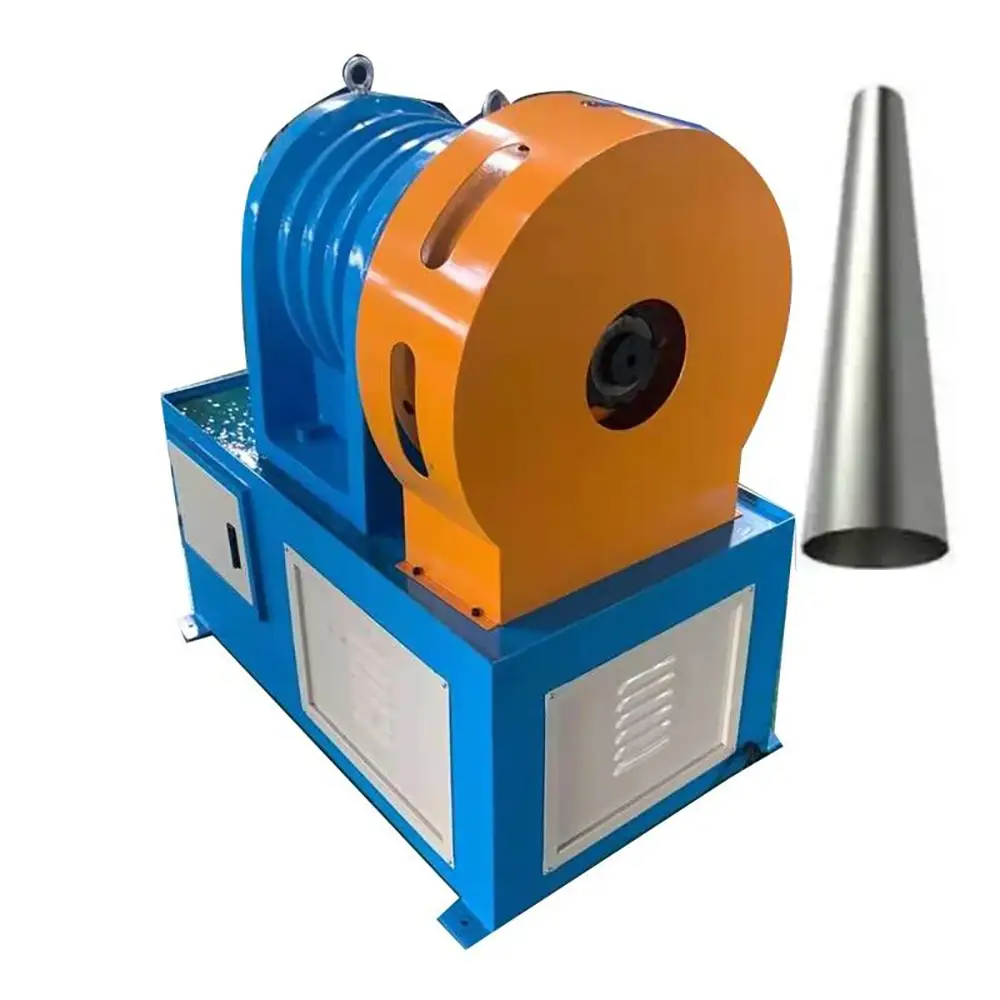
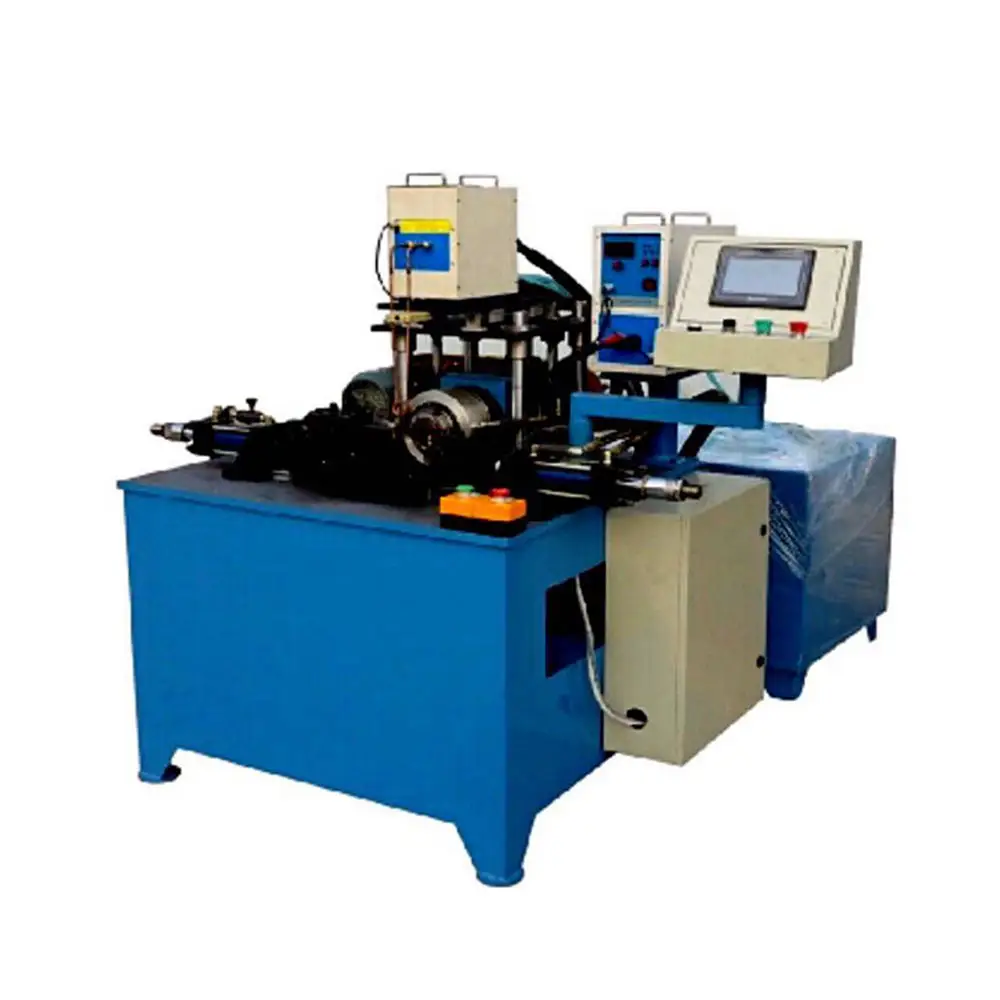
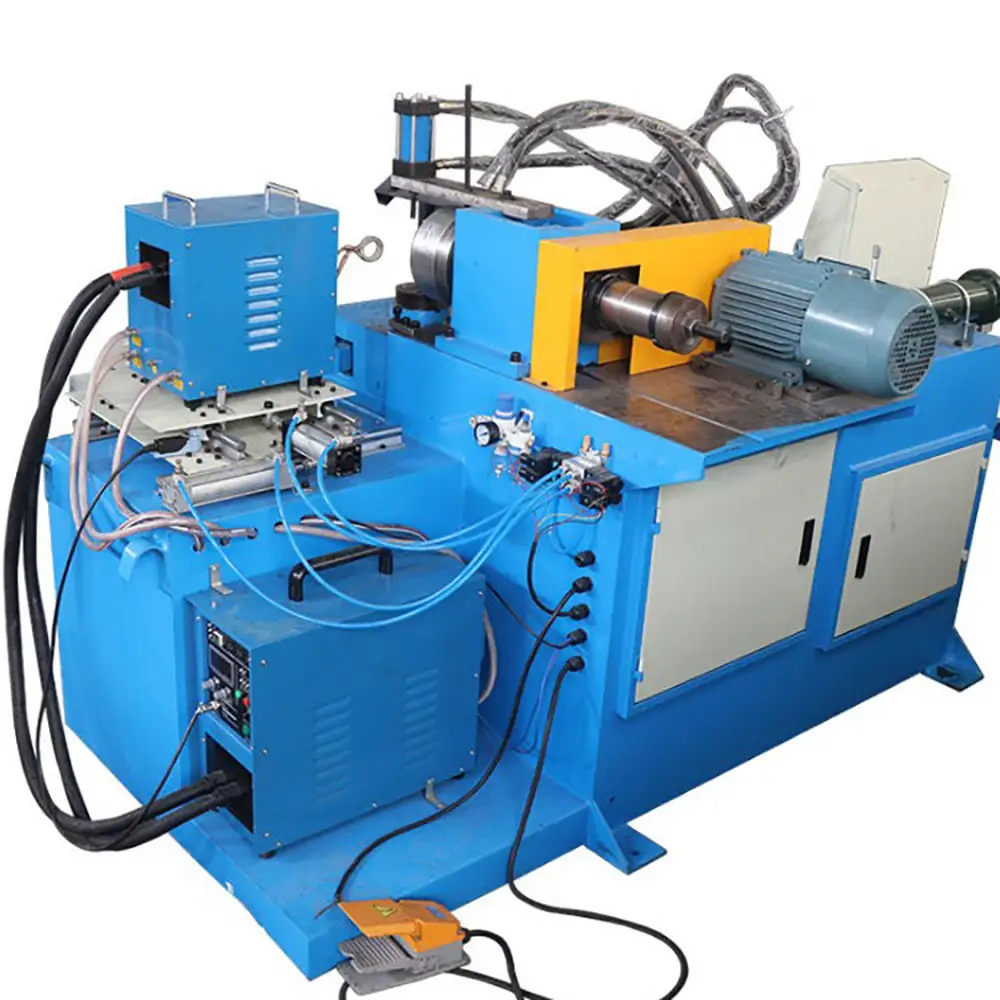
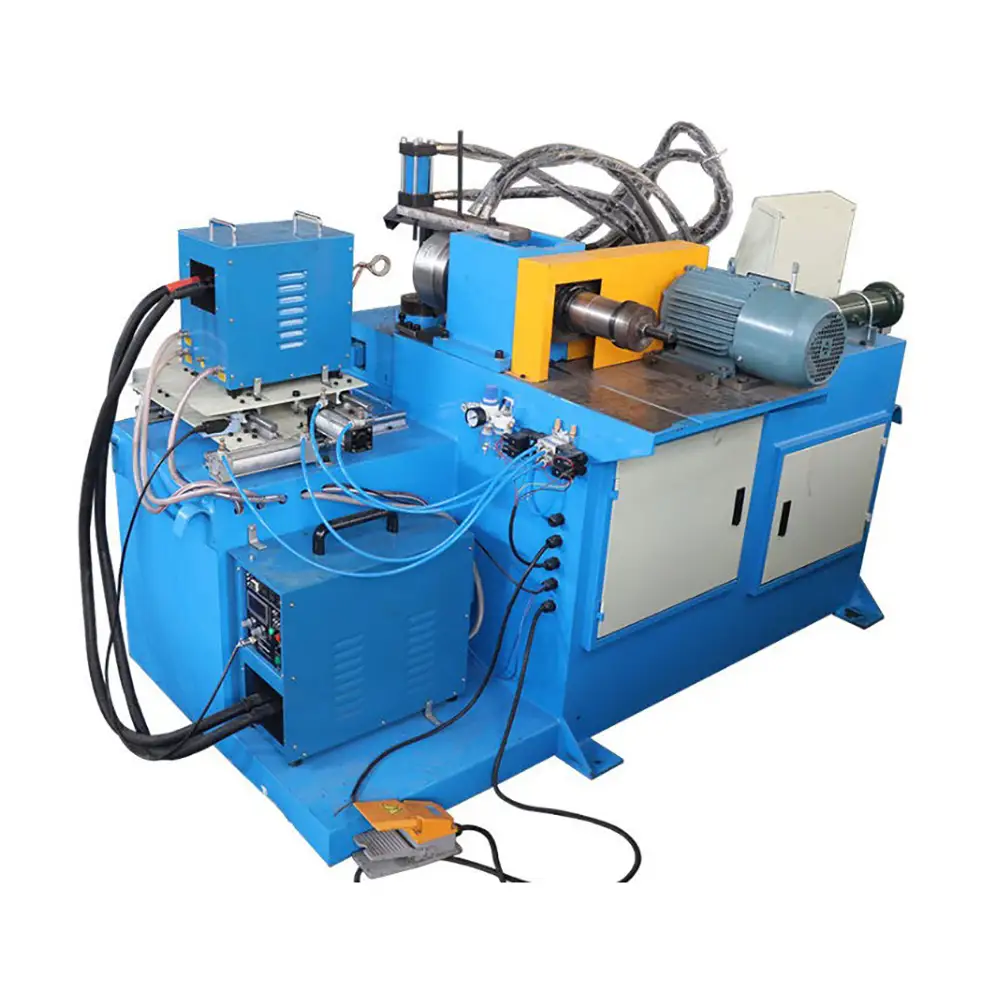
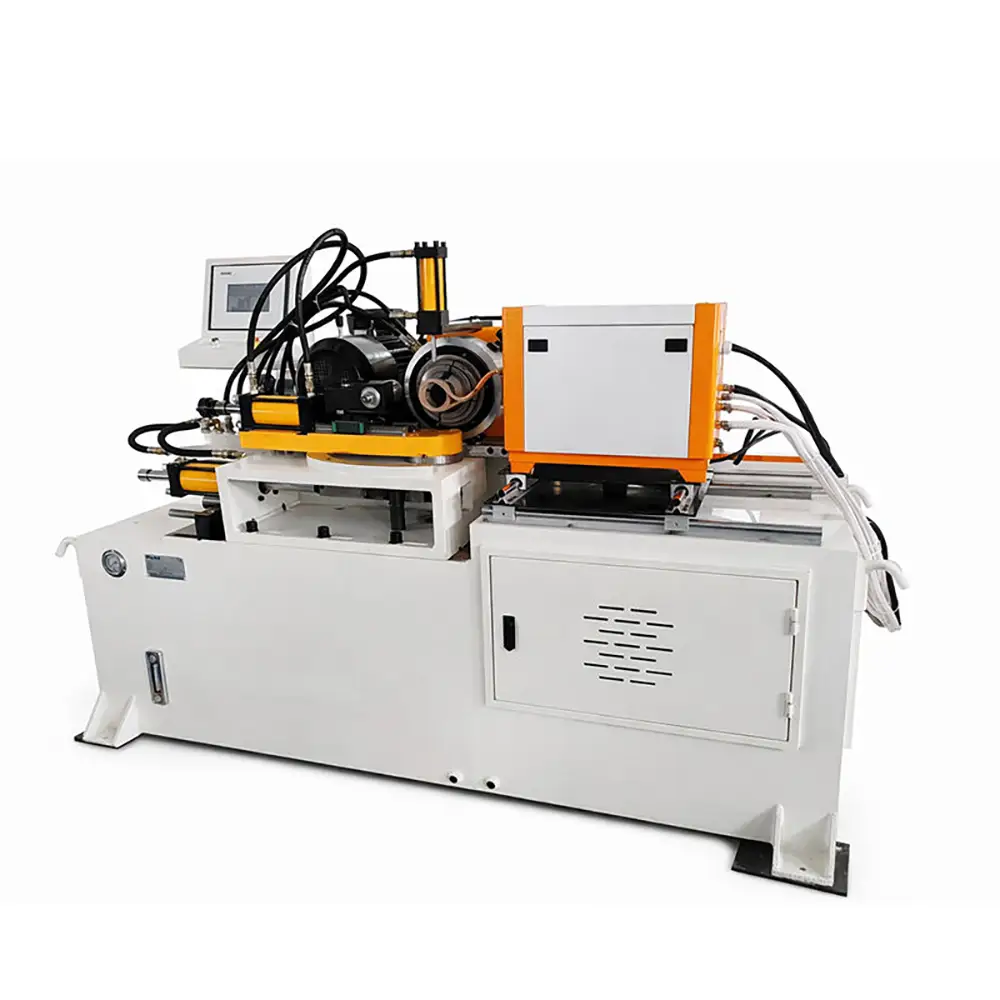
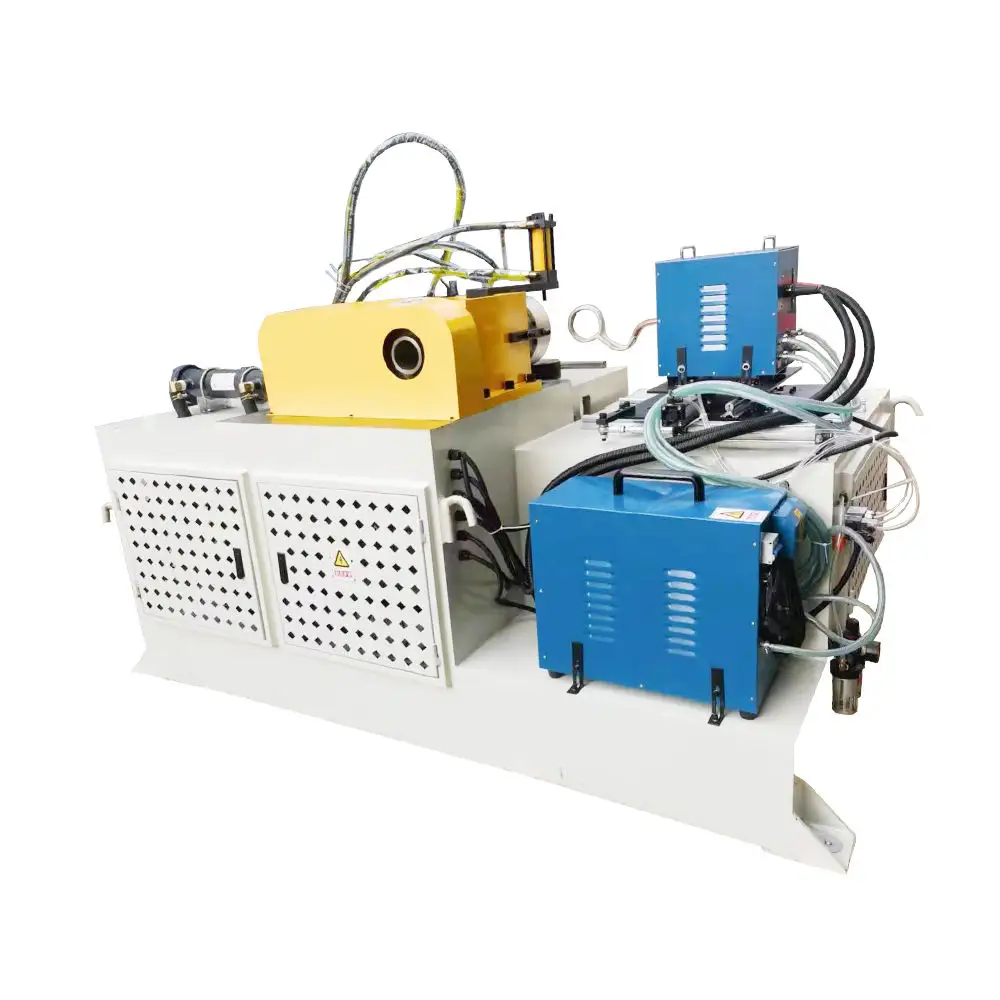
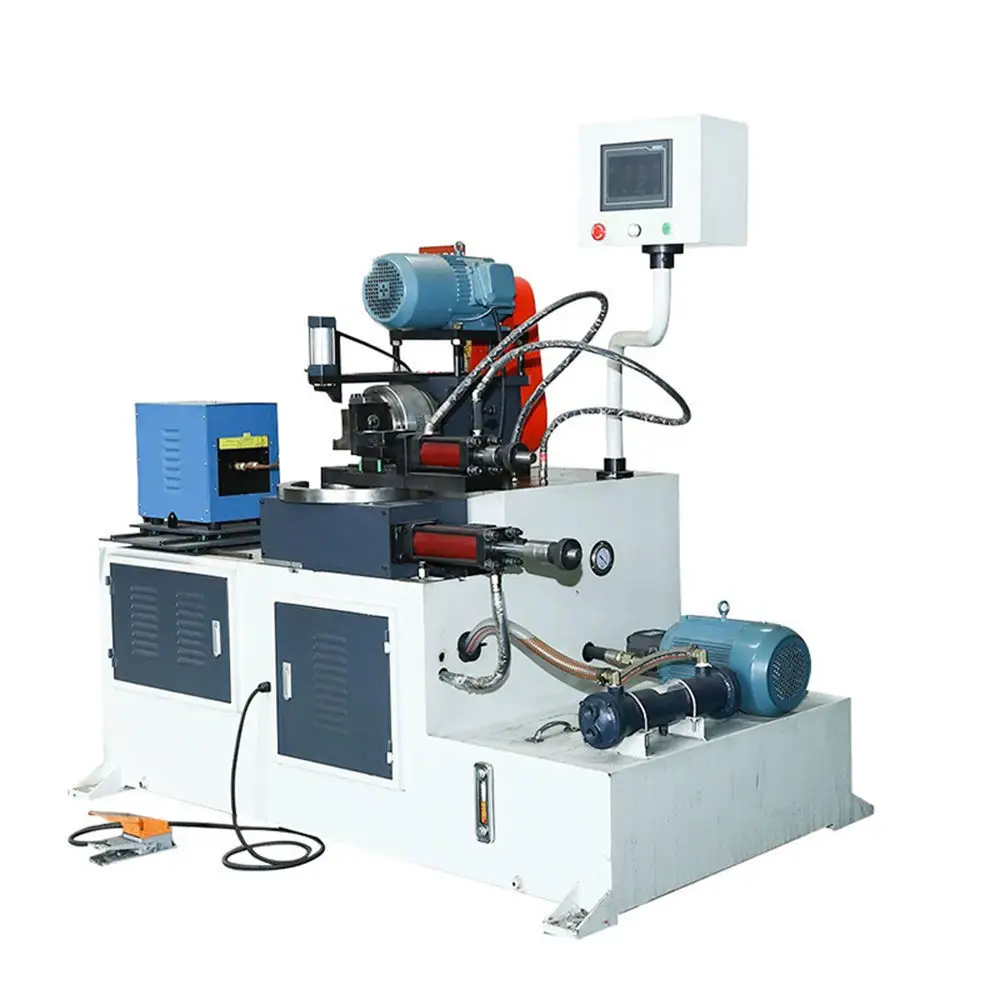
Furniture Chair Sofa Leg Tube End Reducing and Taper Forming Machine
The Furniture Chair Sofa Leg Tube End Reducing Machine is designed for manufacturing metal furniture legs and other tubular components that require controlled end diameter reduction,taper forming,rotary shrinking,or swaging. The machine provides a practical solution for processing suitable round metal pipes and tubes into tapered or reduced-end components used in chairs,sofas,tables,and other furniture products.
Furniture manufacturers often require metal legs with different visual profiles and connection geometries. A straight tube may need to be reduced at one end,formed into a cone,or gradually tapered to achieve the required appearance and assembly function.
This type of tube forming equipment uses dedicated tooling and controlled mechanical forming to change the geometry of the tube end. The exact finished shape depends on the material,tube dimensions,tooling,and machine configuration.
|
Maximum cone diameter |
Φ38mm×300 |
Φ50mm×450 |
Φ76mm×800 |
|
Maximum length of cone tube |
300mm |
450mm |
800mm |
|
Mold size |
300×32×44mm |
450×32×44mm |
800×32×44mm |
|
Spindle speed |
177rpm |
177 rpm |
177 rpm |
|
Parameter shift production |
About 3000 pieces |
about 3000 pieces |
about 3000 pieces |
|
Motor power |
5.5KW |
5.5KW |
5.5KW |
|
Oil pump motor power |
0.75KW |
0.75KW |
0.75KW |
|
Molding time |
6-15sec/time |
6-15 seconds/time |
6-15 seconds/time |
|
One-time shrinking capacity |
300mm |
400mm |
400mm |
|
Mold opening and closing volume |
2mm |
2mm |
2mm |
|
Working voltage: |
3 phase 380V 50Hz or customized |
3 phase 380V 50Hz or customized |
3 phase 380V 50Hz or customized |
|
Mould material |
Cr12mov |
Cr12mo |
Cr12mo |
Tube End Diameter Reducing
Tube end diameter reduction is one of the primary applications of the machine.
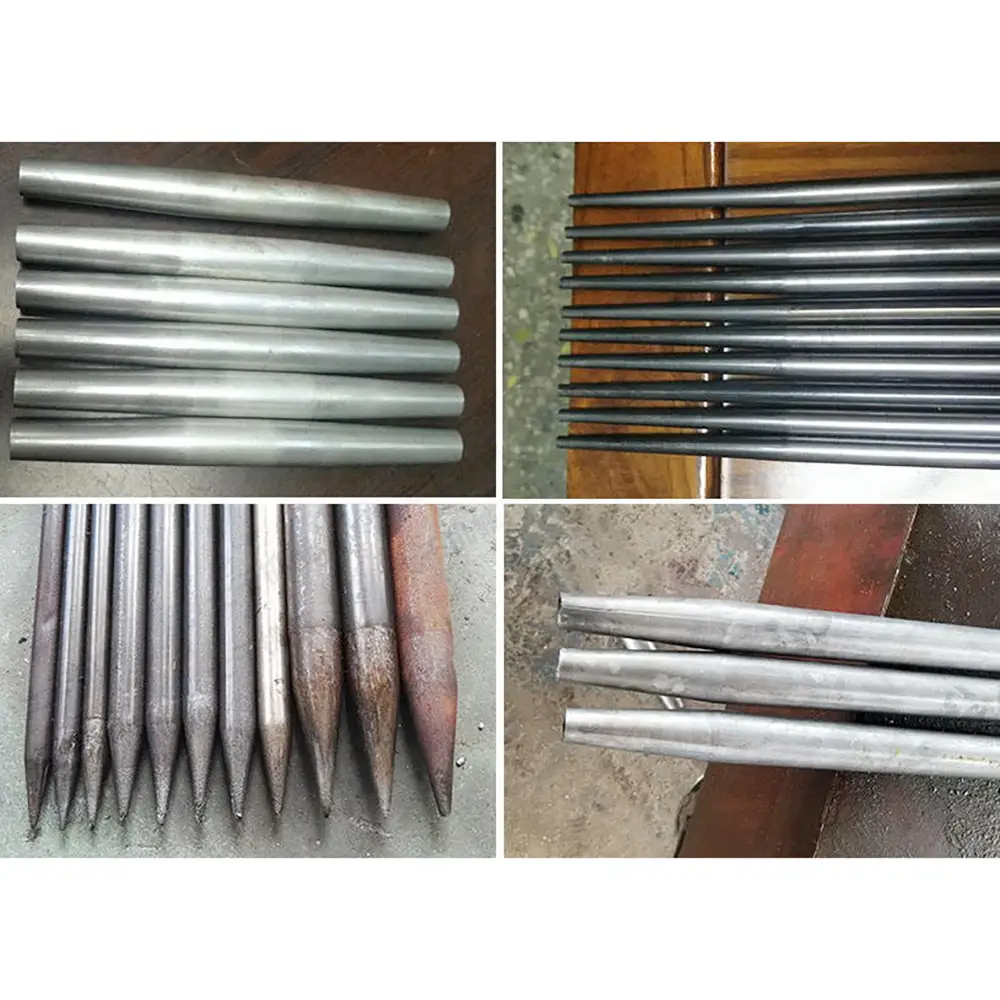
The process reduces the diameter of a selected section of a round tube to create a smaller end or transition area. This can be useful when a furniture leg needs to connect to a smaller component,fit into another tube,receive a mounting component,or achieve a tapered decorative appearance.
The actual amount of diameter reduction depends on the tube material,wall thickness,starting diameter,and forming tooling.
For production requiring precise dimensions,customers should provide drawings showing the original tube diameter and required finished-end dimensions.
Rotary Shrinking and Swaging
Rotary shrinking and swaging are common tube-forming methods for changing the geometry of metal tube ends.
During rotary forming,the tooling applies controlled mechanical force around the tube to gradually reshape the material. Compared with a single large forming operation,controlled progressive forming can be useful for achieving specific tube-end geometries.
The appropriate process depends on the material,wall thickness,diameter reduction,and required surface appearance.
Swaging can be used to reduce or reshape the tube end and create a transition between different diameters.
The actual forming method used by the machine depends on its mechanical design and tooling arrangement.
Taper Forming for Furniture Legs
Tapered metal furniture legs are widely used in modern and traditional furniture designs.
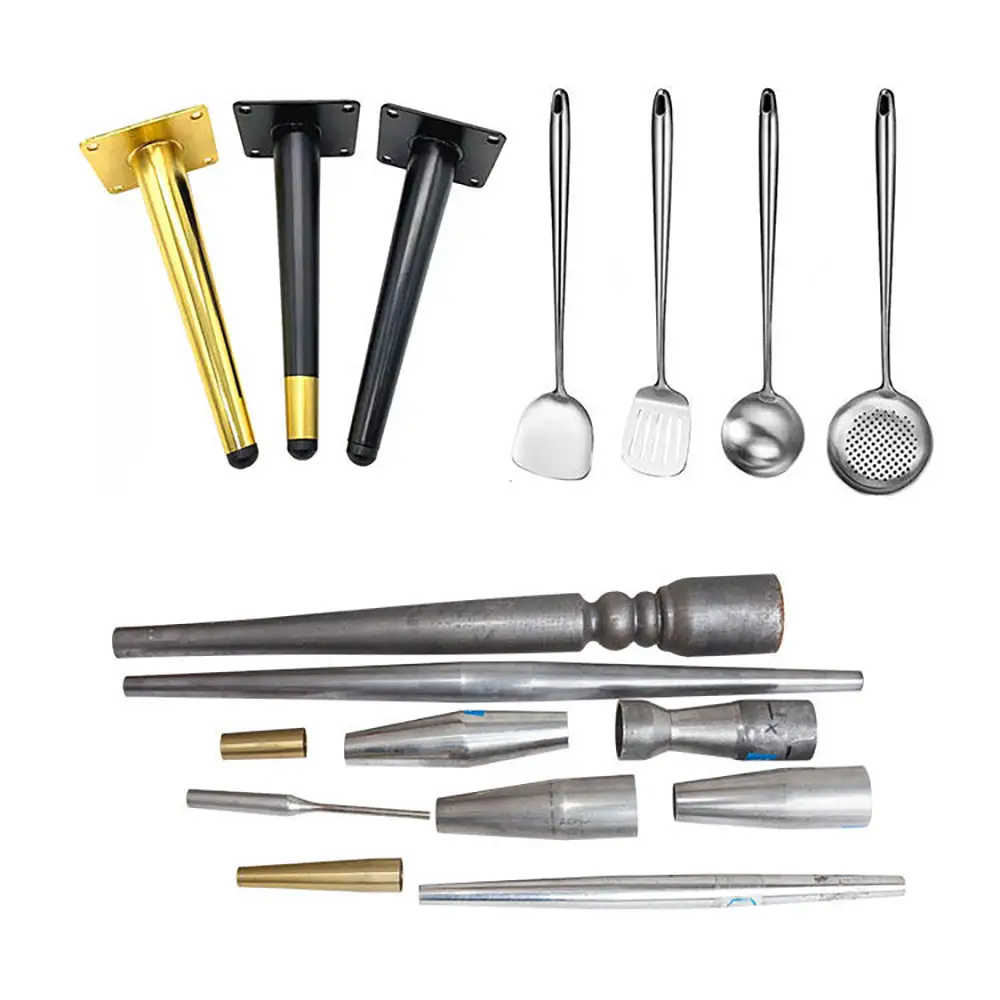
The machine can be configured for suitable tubes that require a tapered or cone-shaped end. This allows manufacturers to create furniture components with a gradual change in diameter rather than a simple straight tube.
Potential products include:
Chair Legs
Sofa Legs
Table Legs
Cabinet Legs
Furniture Frames
Bed Frame Components
Decorative Metal Legs
Adjustable Furniture Components
Metal Support Tubes
Custom Furniture Tubes
The final taper angle and geometry depend on the forming tooling and tube specifications.
Cone Pipe and Cone Tube Forming
Cone-shaped tube ends can provide both functional and decorative benefits.
A conical transition can help connect different tube sizes,create a visual taper,or prepare the component for another assembly operation.
The machine can be evaluated for suitable carbon steel,stainless steel,aluminum,and other compatible tube materials depending on the tooling and forming process.
For furniture applications,the finished surface is often important because the tube may remain visible after painting,powder coating,plating,or other surface finishing.
Proper tooling alignment and forming parameters can help reduce unwanted marks and deformation.
Furniture Chair Leg Manufacturing
Chair legs are a common application for tapered and reduced-diameter metal tubes.
A straight metal tube can be processed at one end to create a smaller mounting section or tapered profile. The formed end may then be combined with brackets,feet,threaded components,plastic caps,welded assemblies,or other furniture hardware.
For manufacturers producing different chair models,the ability to change tooling can provide flexibility for different leg designs.
The machine can be incorporated into a broader furniture component manufacturing process that may include tube cutting,bending,punching,welding,grinding,and surface finishing.
Sofa Leg Manufacturing
Metal sofa legs may use tapered or reduced tube designs to achieve a specific appearance and mounting configuration.
The tube-end forming machine can process suitable tubular blanks before subsequent machining,welding,or assembly operations.
Depending on the furniture design,the reduced section may be used for connecting a mounting plate,bracket,threaded component,or another structural part.
The required tube diameter,wall thickness,and finished geometry should be confirmed before selecting the forming tooling.
Rotary Tube Forming Process
Rotary tube forming distributes forming action around the circumference of the workpiece.
This type of processing can provide a controlled way to reduce or reshape the end of a tube while maintaining the basic tubular structure.
The actual forming sequence depends on the machine design. Factors such as tube material,diameter,wall thickness,tool geometry,rotational movement,and forming force influence the finished result.
For production applications,testing with the actual material and tube dimensions is recommended before finalizing tooling.
Materials for Tube End Forming
Depending on the machine configuration,suitable materials may include:
Carbon Steel
Mild Steel
Stainless Steel
Aluminum
Alloy Steel
Other Formable Metal Tubes
Different materials require different forming conditions.
Aluminum and copper-based materials may require careful control because of their material characteristics,while stainless steel may require greater forming force depending on grade and wall thickness.
Material hardness,temper,diameter,and wall thickness should all be considered when selecting the forming method.
Tooling and Forming Dies
Tooling is critical to the final shape of a furniture tube or metal pipe.
Different tube diameters and taper profiles require appropriate forming dies,mandrels,rollers,or other tooling components.
For manufacturers producing several furniture leg designs,custom tooling can be considered for different end diameters and taper geometries.
Customers can provide CAD drawings,finished samples,or dimensional specifications so the required tooling can be evaluated.
Tooling should also be designed with consideration for the desired surface appearance,especially when the formed furniture leg will receive decorative finishing.
Production Efficiency
Mechanical tube-end forming can help reduce repetitive manual forming operations in furniture component manufacturing.
For batch production,the machine can provide a repeatable forming process for similar tube blanks.
Actual production efficiency depends on tube dimensions,material,required reduction,forming method,tool changes,loading and unloading,and operator workflow.
For higher-volume furniture production,the machine can potentially be combined with tube cutting,bending,drilling,welding,and automatic feeding systems.
Finished Product Quality
The quality of a tapered or reduced tube end depends on the complete forming process.
Important factors include tube material,wall thickness,initial diameter,tooling alignment,forming force,rotation,clamping,and machine adjustment.
Finished components should be inspected for:
End Diameter
Taper Profile
Overall Length
Concentricity
Surface Condition
Deformation
Cracks
Dimensional Repeatability
For visible furniture components,surface appearance should also be checked before painting,plating,or powder coating.
Maintenance and Safety
Tube end forming machines use mechanical force and moving tooling,so appropriate safety procedures are required during operation.
Depending on the configuration,the machine may include guards,emergency-stop functions,electrical protection,and controlled operating functions. Actual safety features depend on the specific model and applicable local requirements.
Routine maintenance may include cleaning metal debris,checking forming tools,inspecting bearings and moving components,lubricating designated parts,and checking hydraulic or electrical systems where applicable.
Worn tooling should be replaced or serviced when necessary to maintain consistent forming results.
OEM and Custom Furniture Tube Forming
Furniture manufacturers may require different tube diameters,end reductions,taper angles,and finished profiles.
The machine can therefore be evaluated for customized production requirements.
OEM and ODM options may include custom forming dies,fixtures,tooling,feeding systems,control arrangements,and other application-specific components.
For an accurate quotation,customers should provide tube material,outer diameter,wall thickness,tube length,required end diameter,taper profile,production volume,and finished-product drawings or samples.
Why Choose Us
Furniture Leg Tube Forming
Designed for suitable metal chair legs,sofa legs,table legs,and other tubular furniture components.
Tube End Diameter Reduction
Provides controlled processing for reducing suitable tube ends to a smaller diameter.
Rotary Shrinking and Swaging
Suitable configurations can support rotary tube-end shrinking,swaging,and related forming applications.
Taper and Cone Forming
Tooling can be designed for suitable tapered and cone-shaped tube-end profiles.
Multiple Metal Materials
Configurations can be evaluated for carbon steel,stainless steel,aluminum,and other compatible materials.
Flexible Custom Tooling
Forming dies and fixtures can be customized for different furniture leg designs.
Production-Friendly Processing
Mechanical forming helps reduce repetitive manual tube-end shaping for batch production.
OEM & ODM Support
Custom machine configurations and tooling can be developed according to furniture component requirements.
FAQs
1. What is a tube end reducing machine?
A tube end reducing machine is equipment used to reduce or reshape the diameter of a tube end through controlled mechanical forming.
2. Can it make furniture chair legs?
Yes. Suitable metal tubes can be processed into reduced or tapered chair-leg components according to the required design.
3. Can it be used for sofa legs?
Yes. The machine can be evaluated for metal sofa legs that require tapered,reduced,or swaged tube ends.
4. What is rotary shrinking?
Rotary shrinking is a tube-forming process in which mechanical tooling progressively reduces or reshapes a section of the tube.
5. What is tube swaging?
Tube swaging is a mechanical forming process used to reduce or reshape the diameter or profile of a tube section.
6. Can the machine make cone-shaped tube ends?
Yes. Suitable forming dies can be designed for tapered or cone-shaped profiles according to the finished product requirements.
7. What materials can be processed?
Depending on the machine configuration,it may process carbon steel,mild steel,stainless steel,aluminum,and other suitable metal tubes.
8. Can different tube diameters be processed?
Yes,when suitable tooling is available. The actual diameter range depends on the machine model and forming-tool configuration.
9. Can the end diameter be customized?
Yes. Custom forming tooling can be considered for different finished-end diameters and taper profiles.
10. Does the machine require special tooling?
Different tube diameters and end shapes generally require suitable forming tooling. Tooling requirements should be confirmed according to the product design.
11. Can it be integrated into a furniture production line?
Depending on the machine configuration,it can potentially be combined with tube cutting,bending,punching,welding,and other furniture component processing equipment.
12. What information is needed for a quotation?
Provide tube material,outer diameter,wall thickness,length,required end diameter,taper shape,production volume,and finished-product drawings or samples.
Prev:
Pipe End Forming Machine Tube Pipe End Closing Sealing Machine for Metal Steel
Next:
Metal Tube End Sealing Machine with Pneumatic Feeding and Hydraulic Oil Circuit for Steel Aluminum Pipe End Forming
TAG:
Pipe Diameter Reducing Machine,
Tube Diameter Reducing Machine,
Pipe End Processing Machine,
Automatic Tube End Forming Machine,
Tube End Processing Machine,
Industrial Tube End Forming Machine,
Industrial Pipe End Forming Machine,
Chair Leg Tube Forming Machine,
Sofa Leg Tube Forming Machine,
Table Leg Tube Forming Machine,
Furniture Leg Tube Forming Machine,
Furniture Tube End Forming Machine,
Pipe End Reducing Machine,
Tube Swaging Machine,
Pipe Swaging Machine,
Tube End Reducing Machine,
Pipe Shrinking Machine,
Tube Shrinking Machine,
Tube End Shrinking Machine,
Pipe End Shrinking Machine,
Tube End Forming Machine,
Pipe End Forming Machine,
Hydraulic Tube End Forming Machine,
Hydraulic Pipe End Forming Machine,
Metal Tube Processing Machine,
Tube Swaging Equipment,
Pipe Swaging Equipment,
Metal Pipe End Forming Machine,
Furniture Tube Forming Machine,
Automatic Pipe End Forming Machine,
Related Category:
Furniture Chair Sofa Leg Tube End Reducing Machine,Cone Pipe End Reducing Machine,Tube End Diameter Reducing Machine China, suppliers, manufacturers, factory, customized, wholesale, quotation, made in China