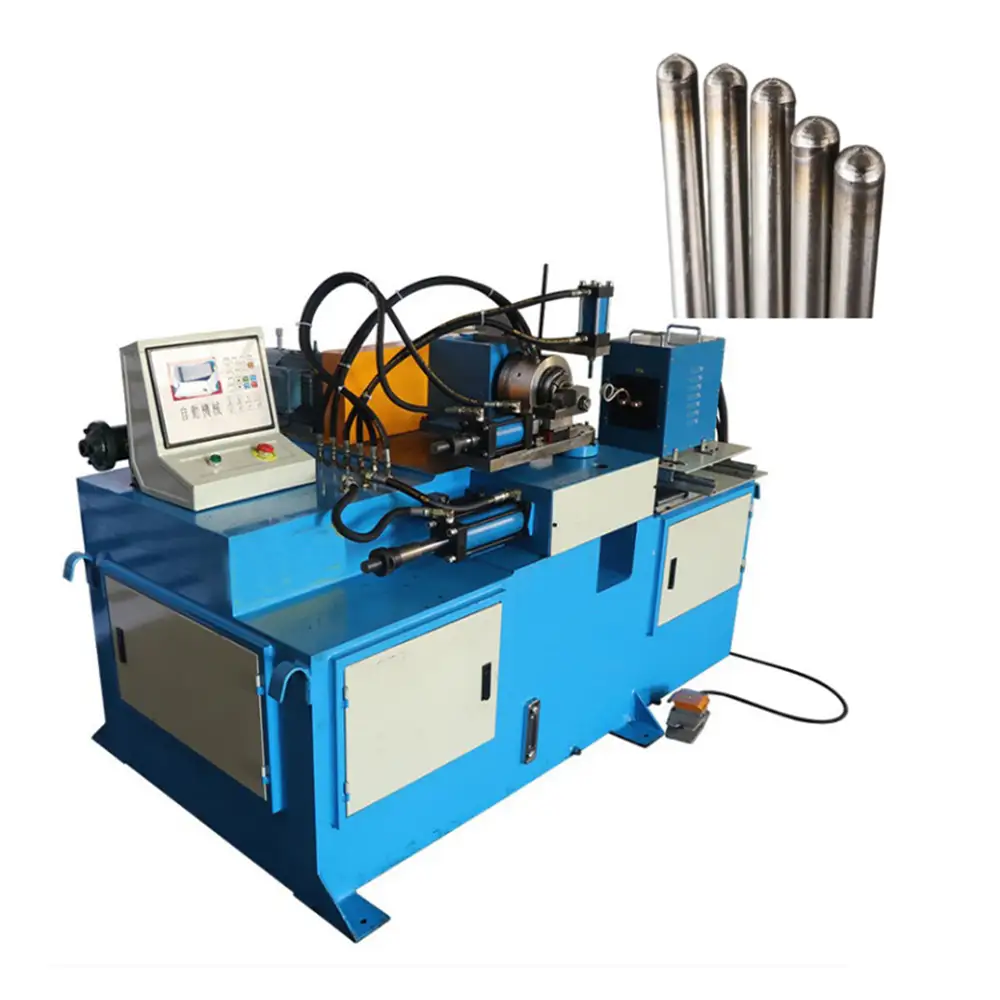
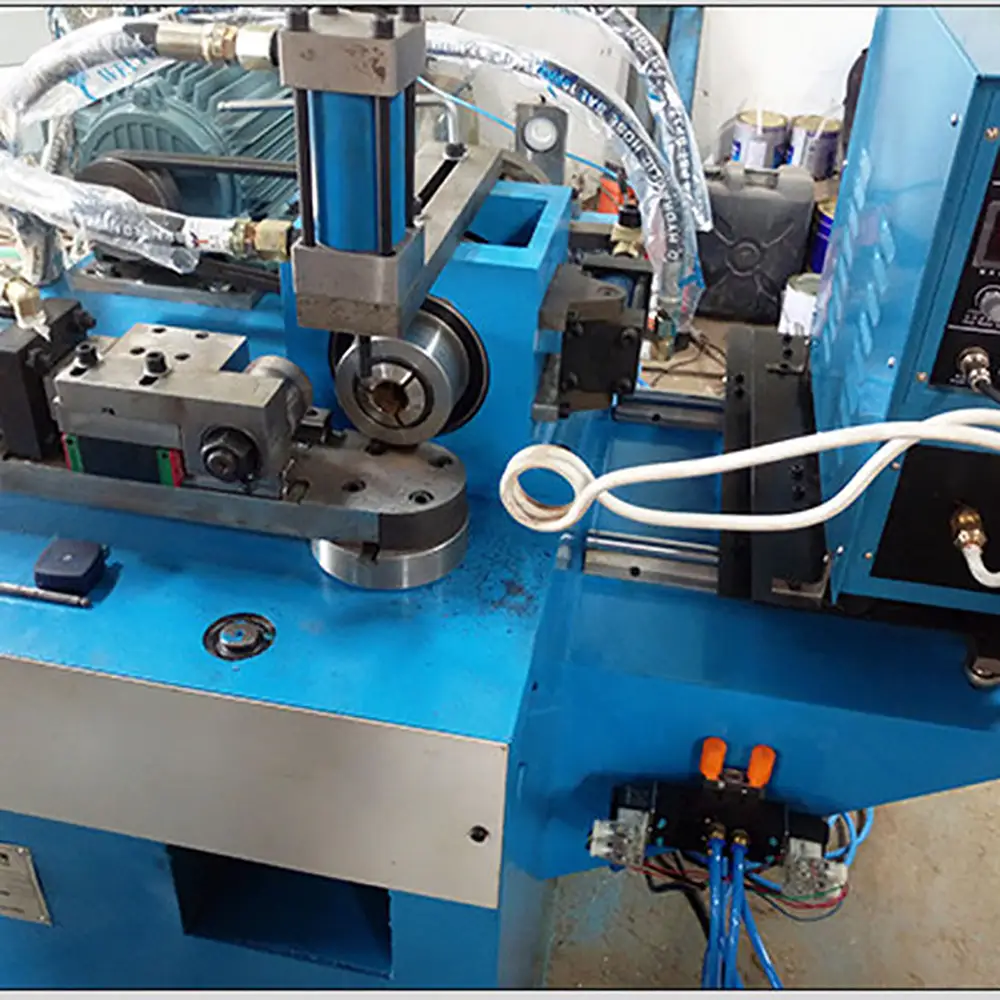
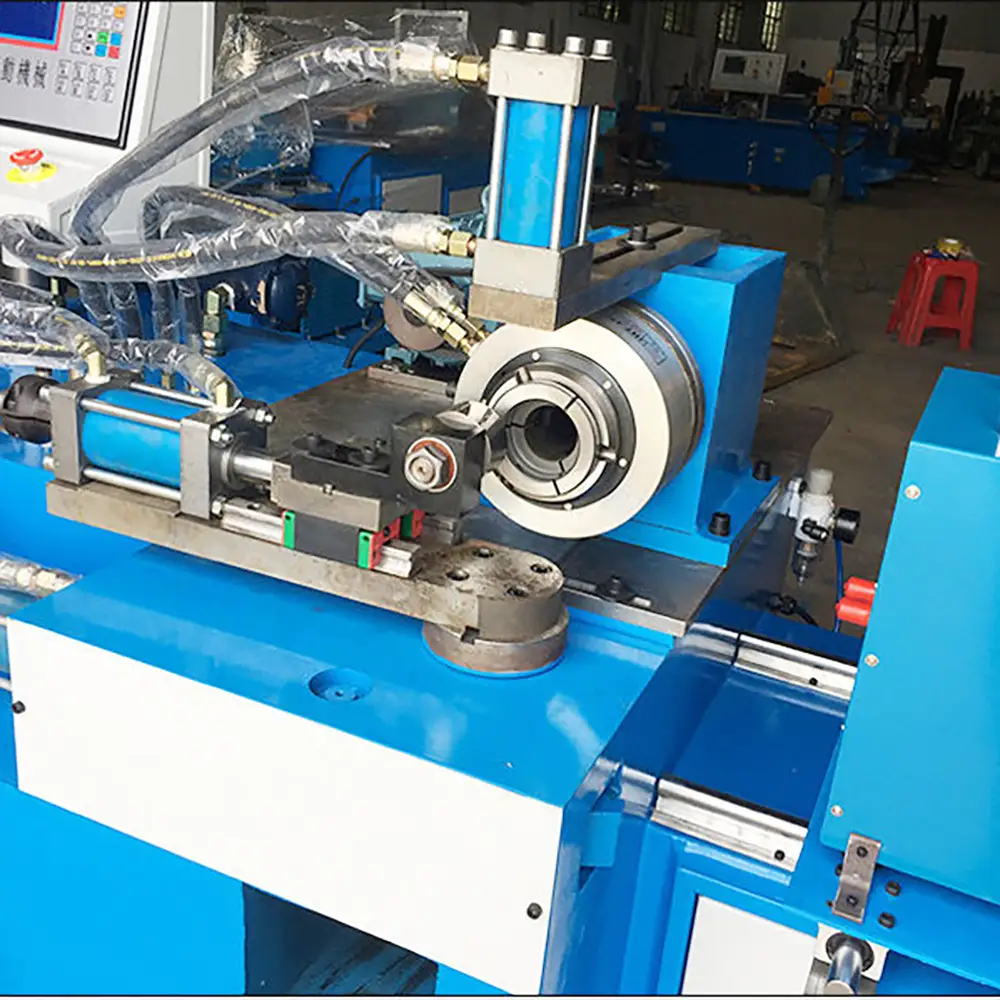
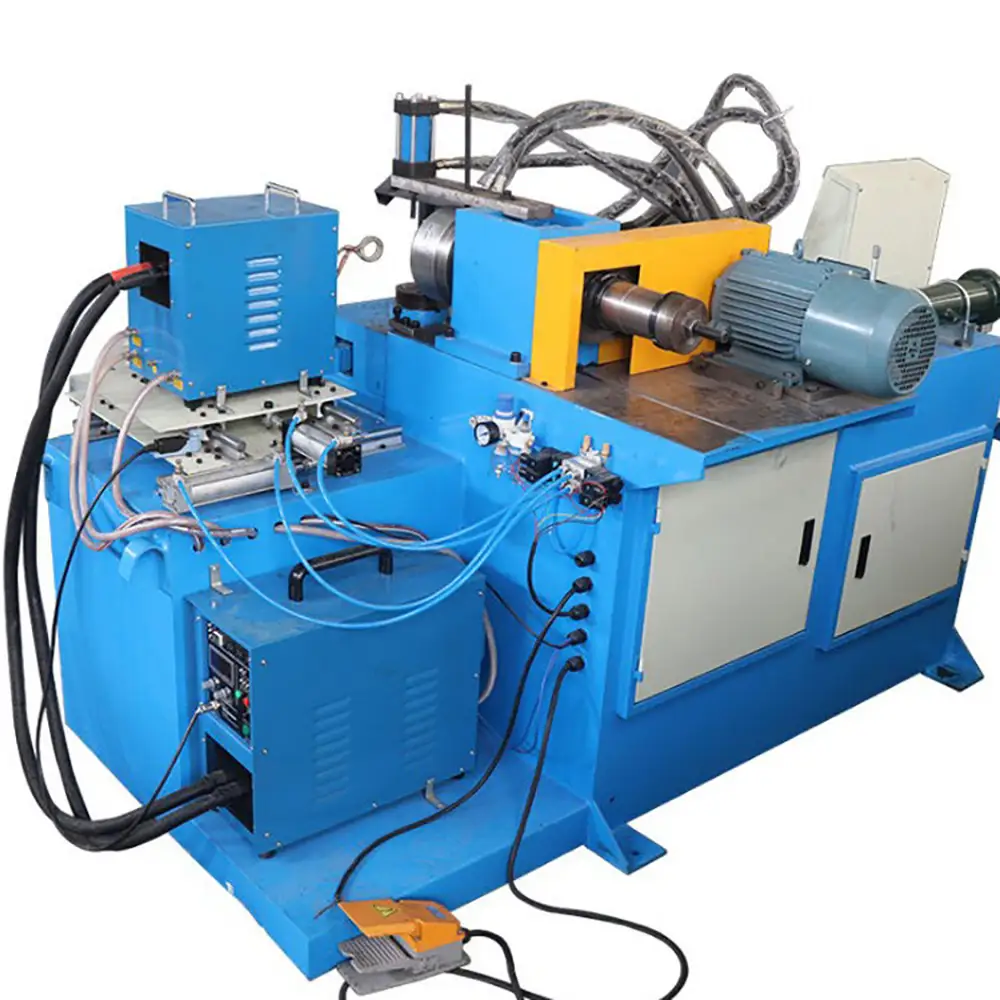
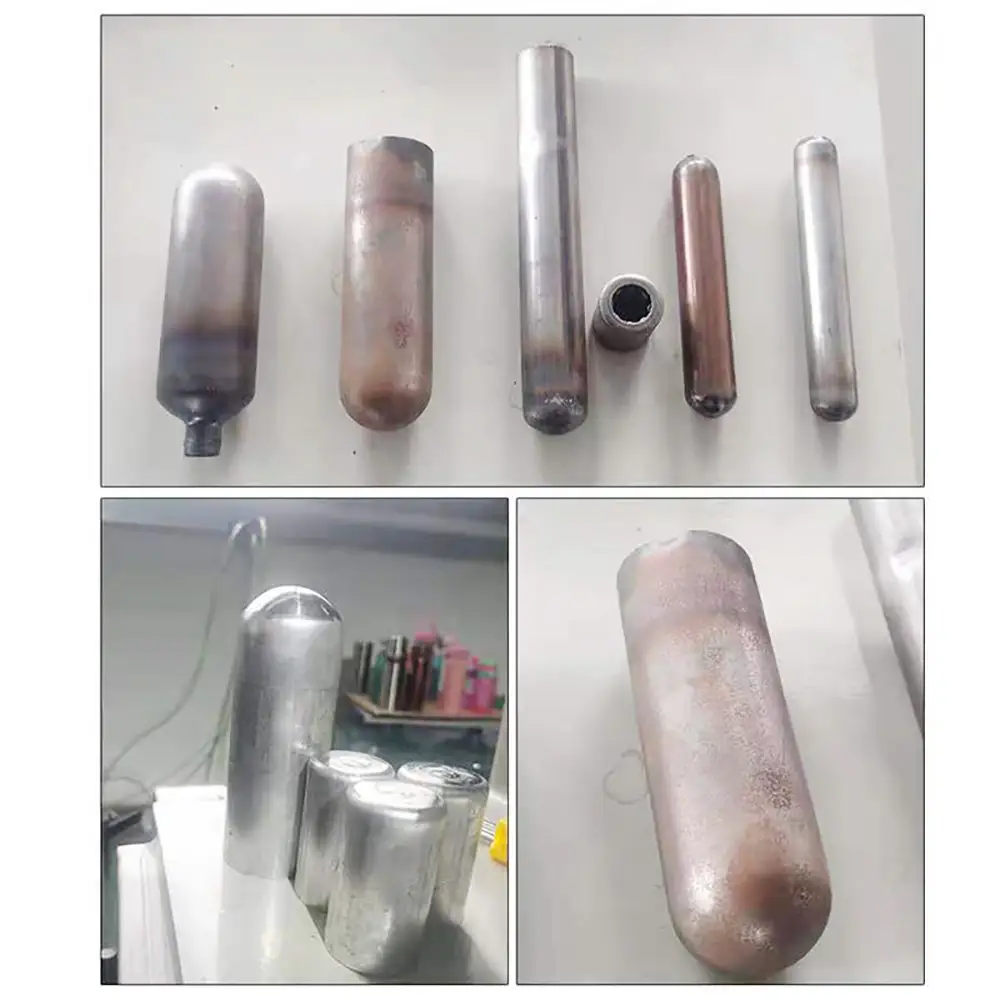
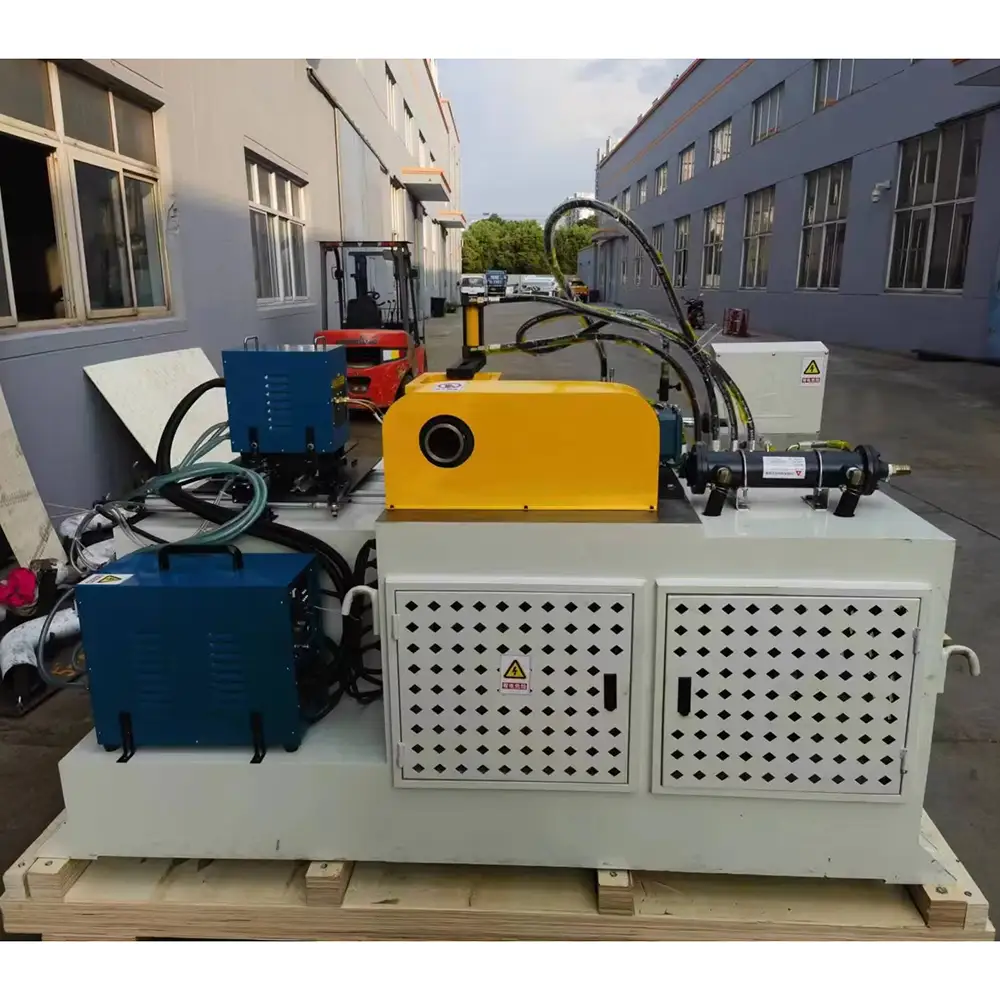
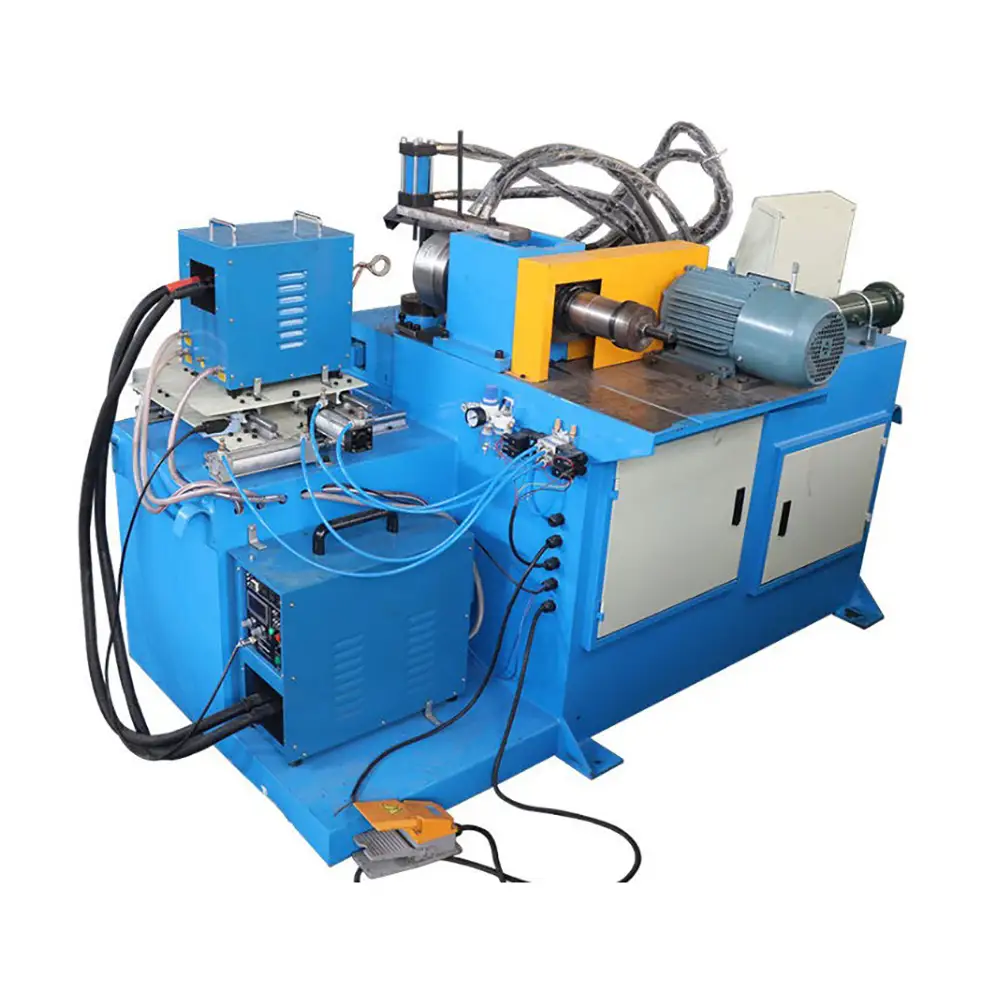
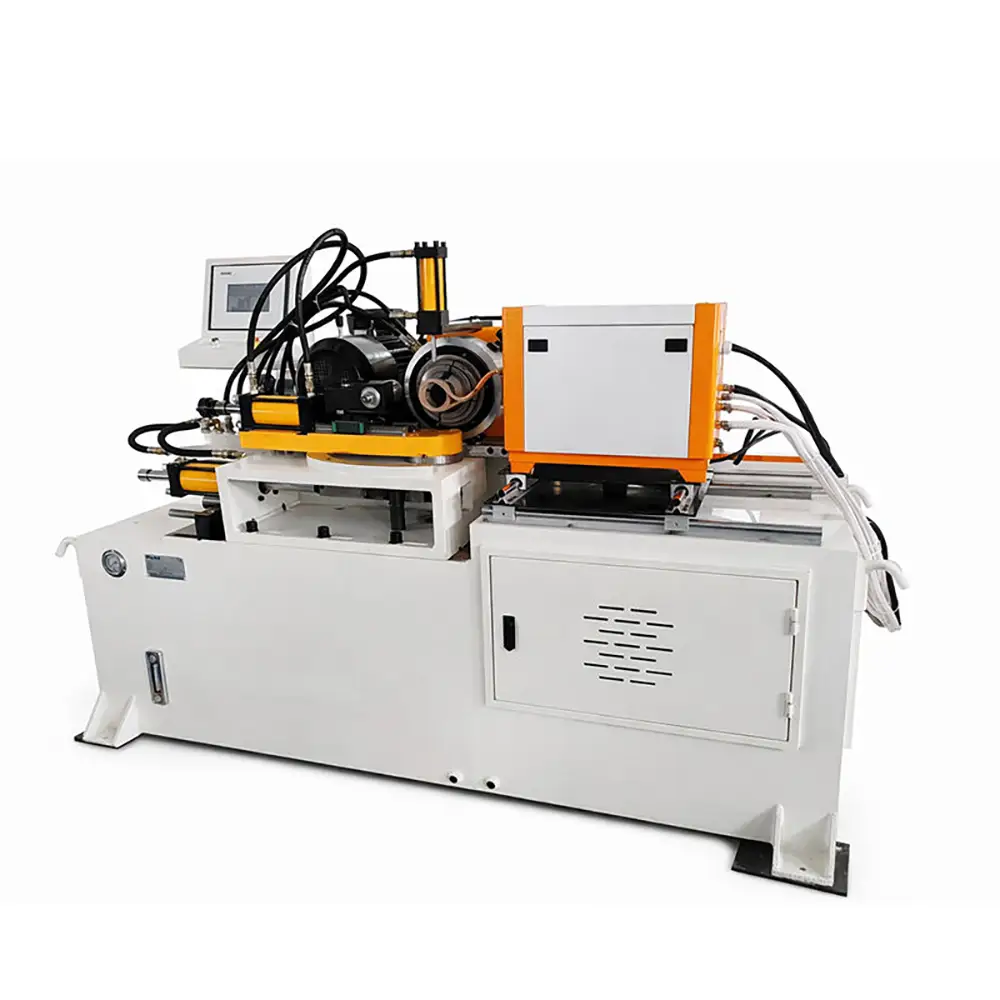
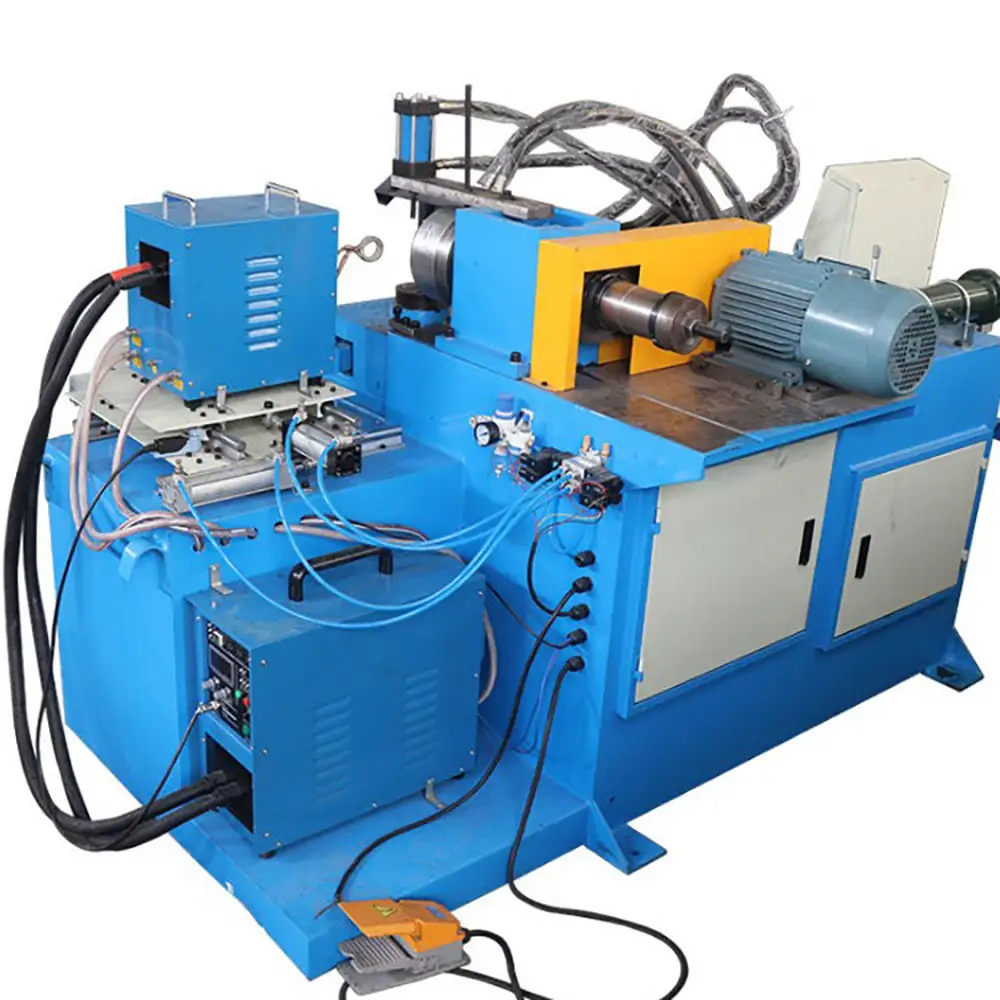
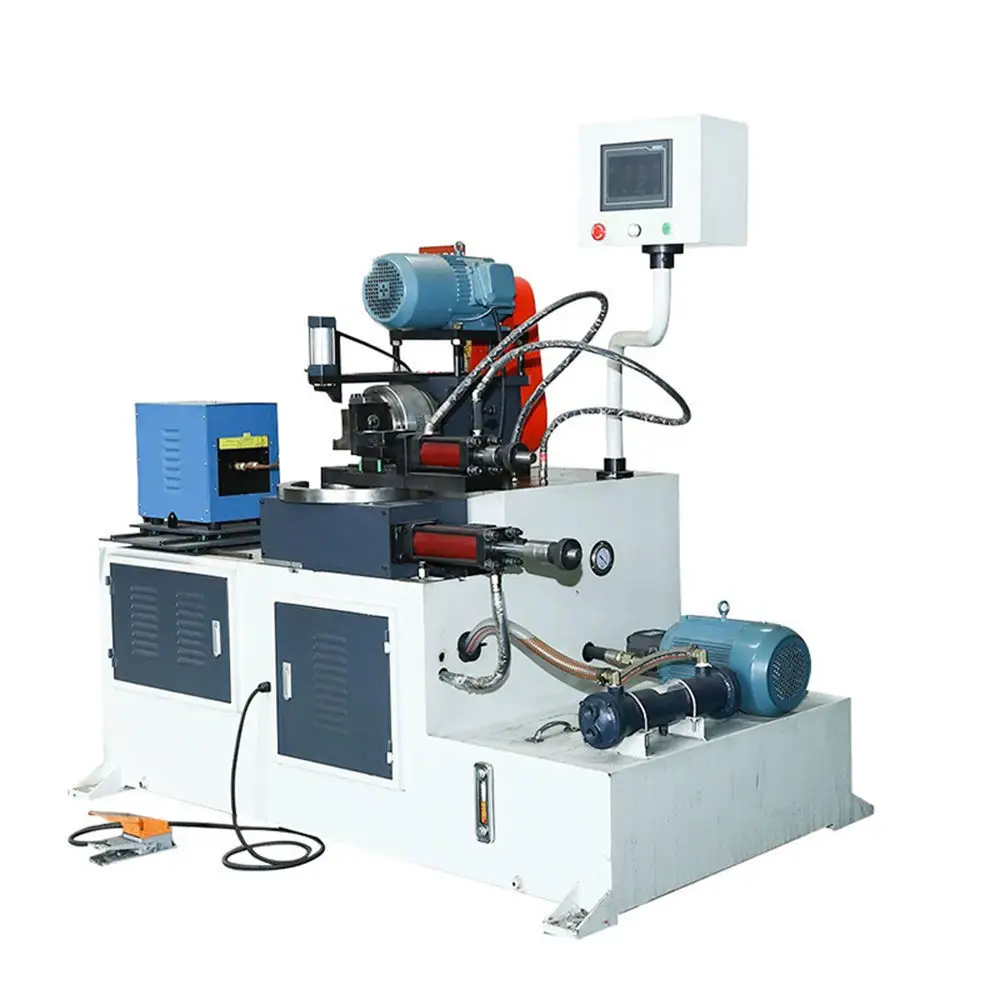
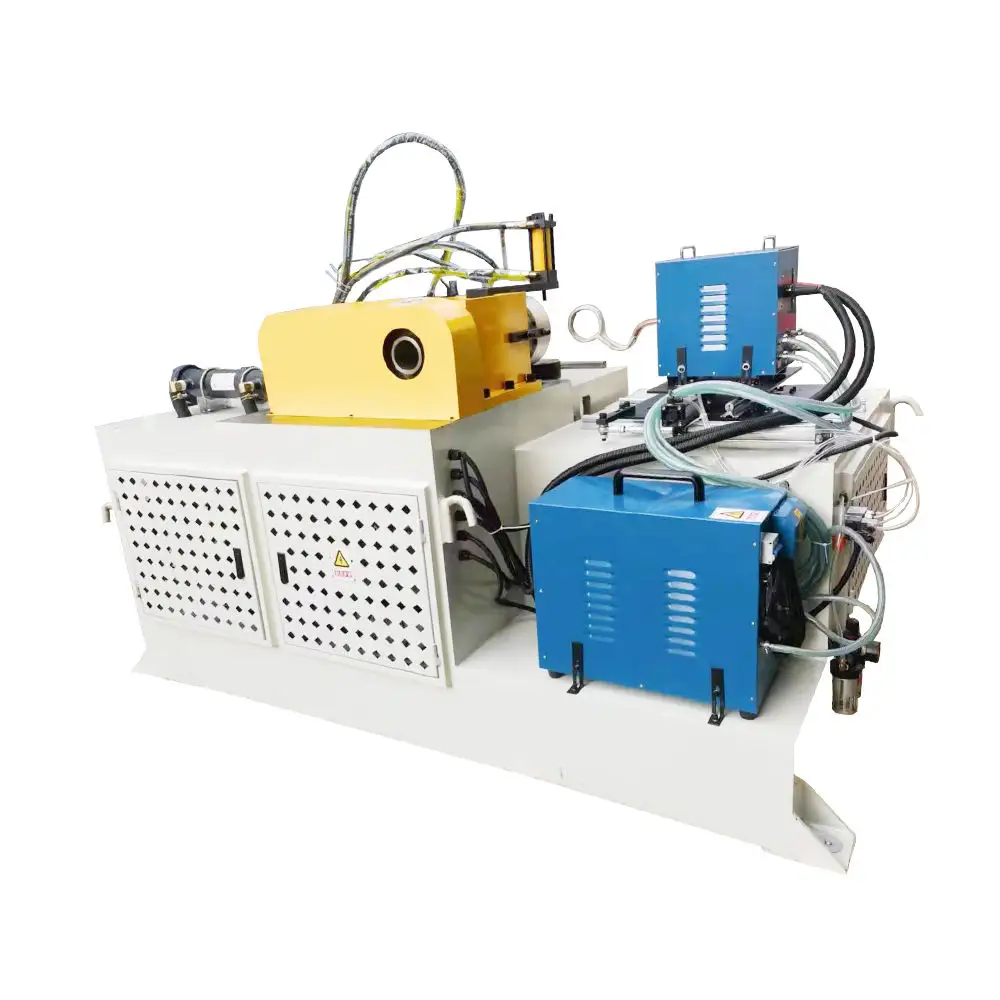
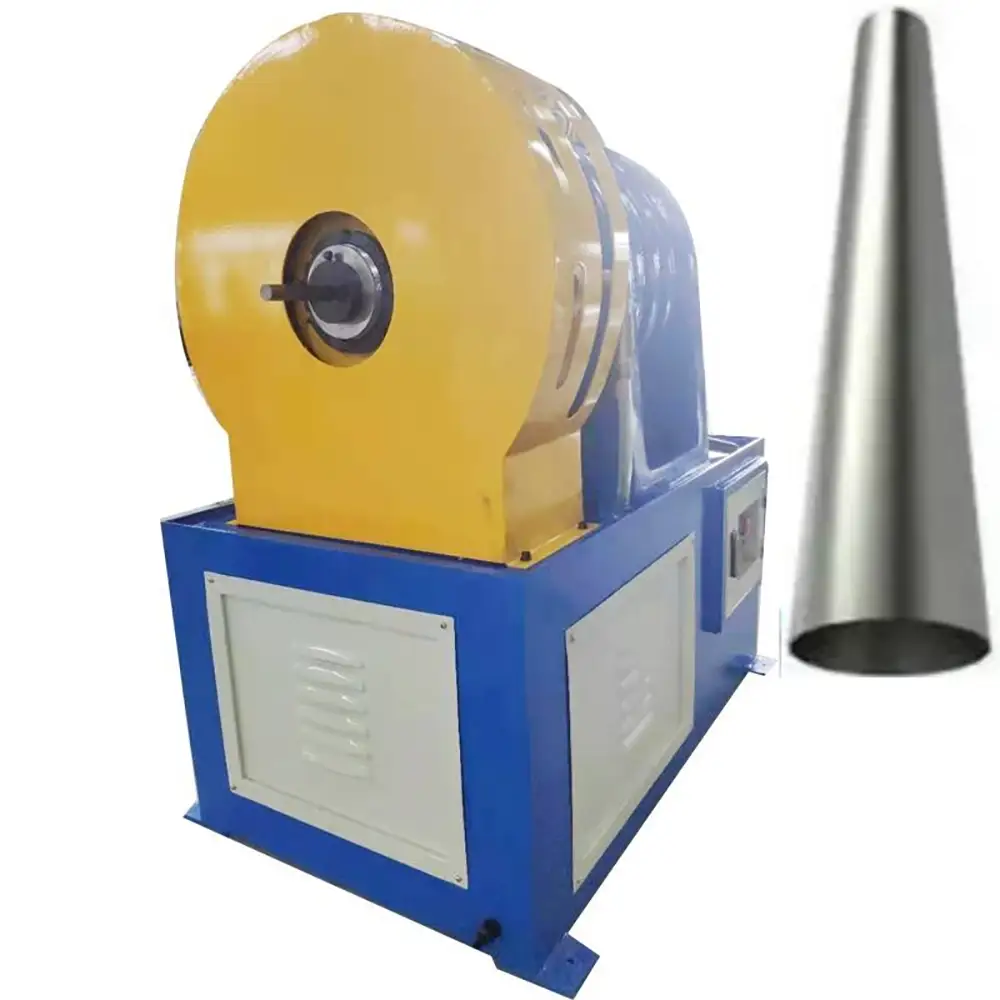
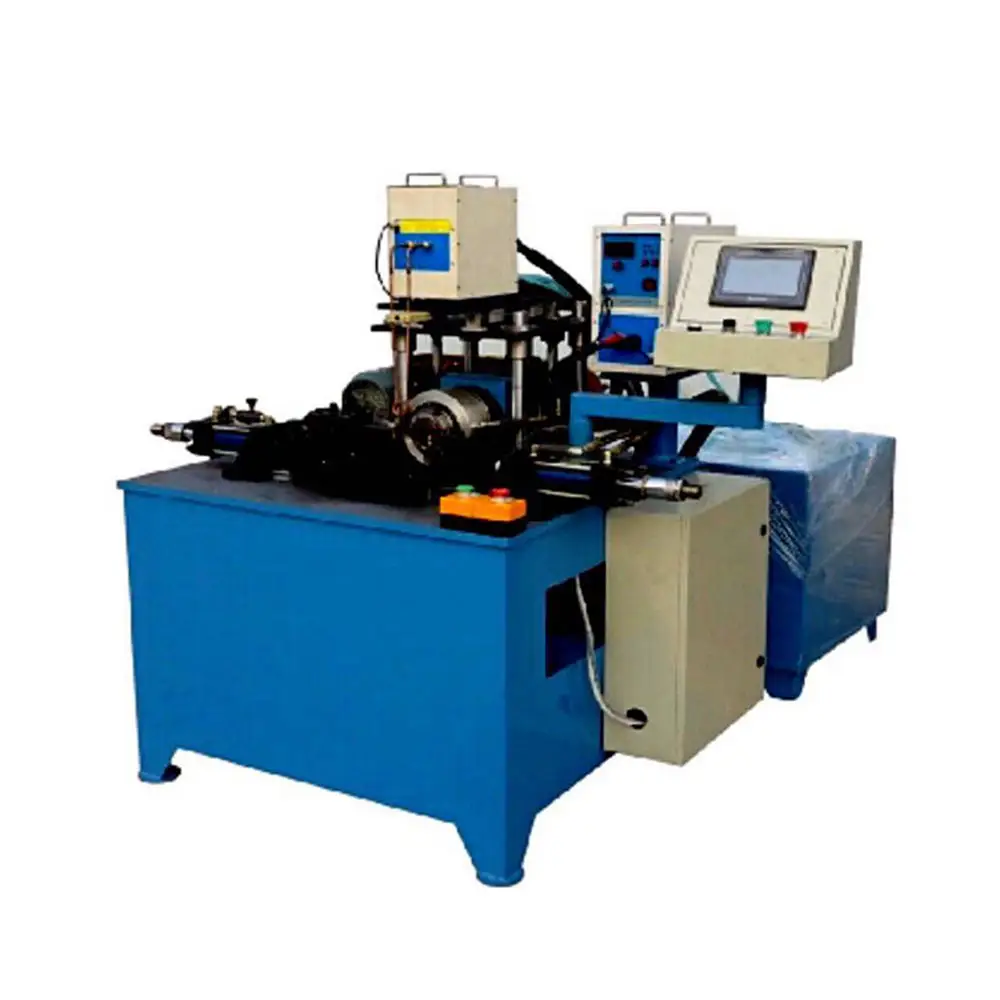
Product feature: 1 Suitable for carbon steel, stainless steel copper and other metal pipes.
2 High frequency heating, automatic rotary sealing.
3 Sealing,positioning and Brake stop accomplish at one time.
4 Pneumatically control the movement of high frequency heater.
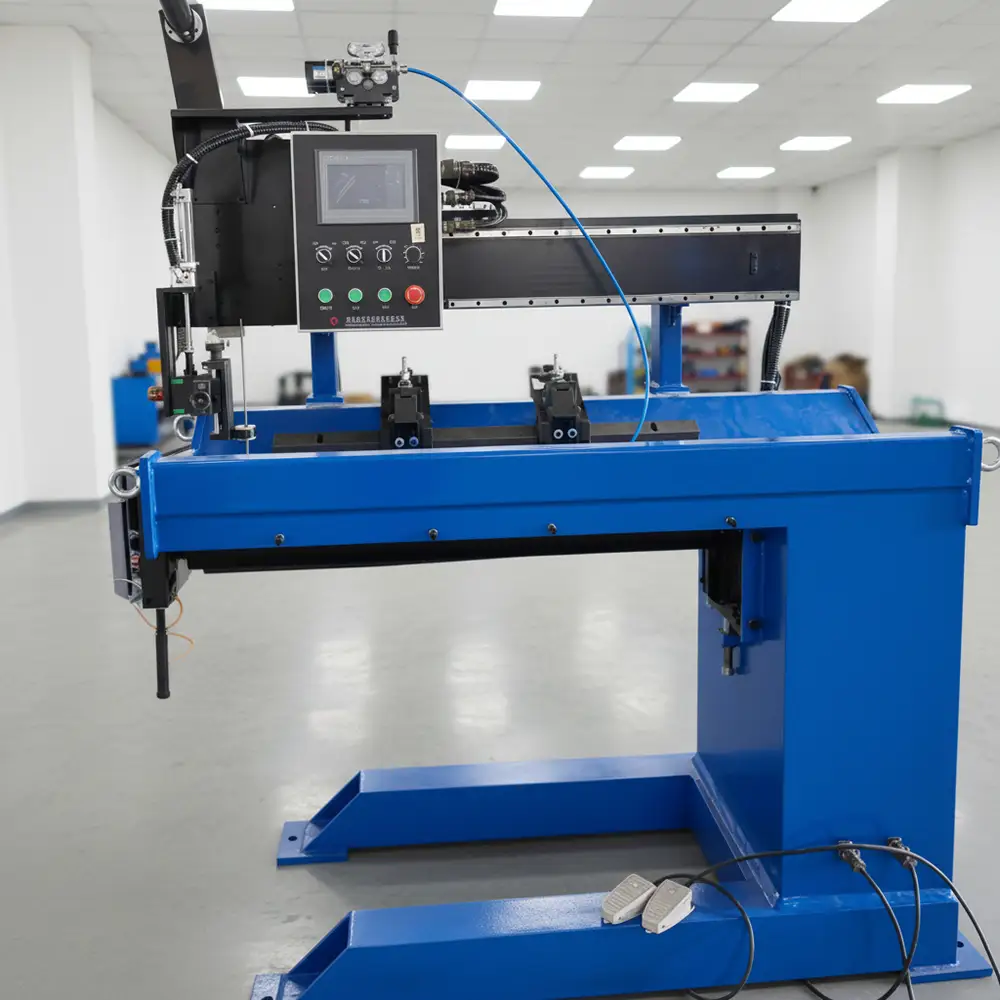
Multifunction High Frequency Heating Pipe Tube End Closing Sealing Machine
The Multifunction High Frequency Heating Pipe Tube End Closing Sealing Machine is a specialized metal tube processing solution designed to combine controlled high frequency heating with pipe and tube end closing,sealing,and forming operations. The heating process softens suitable metal sections before mechanical forming,helping produce specific tube-end shapes for industrial manufacturing.
This type of equipment can be used for applications where conventional cold forming may require excessive force or where localized heating can make tube-end deformation easier to control. Depending on the machine configuration,the system may support end closing,reducing,necking,sealing,shaping,and other tube-end forming processes.
The machine is suitable for manufacturers processing carbon steel,stainless steel,copper,aluminum,and other compatible metal tubes. Actual material compatibility depends on the heating system,forming tooling,tube dimensions,and required final geometry.
Products Description
|
Item |
Specification |
|
Processing range of diameter |
8-40mm |
|
Thickness of pipe |
1-3mm |
|
Pipe length |
50-6000mm |
|
Processing speed |
85 degreed/S |
|
Main motor |
1.5kw |
|
Pump motor |
3kw |
|
High frequency heater |
15kw |
|
Machine measure |
1900x900x1600mm |
|
Weight |
680kg |
High Frequency Heating for Tube End Processing
High frequency heating uses electromagnetic induction to generate heat in a selected conductive metal area. Instead of heating the entire tube,the heating system can be configured to concentrate heat around the section that requires forming.
Localized heating can be useful when the tube end needs to be reduced,closed,expanded,or reshaped. By heating only the required area,the process can support more controlled material deformation and may reduce the forming force required by downstream tooling.
The actual heating temperature and heating time depend on material type,tube dimensions,wall thickness,induction coil design,and machine configuration. These parameters should be optimized for each production application.
Pipe and Tube End Closing
Tube end closing is an important application for this type of machine. During the process,the selected tube section is heated and then mechanically formed toward the required end geometry.
Depending on the tooling,the machine may be used for:
Tube end closing
Pipe end sealing
Tube end reducing
Pipe end shrinking
Tube necking
End diameter reduction
Tube end shaping
Partial tube closing
Formed tube transitions
The final geometry is determined by the forming die,mandrel,roller,clamping arrangement,and other tooling components. Customers should provide drawings or samples when a specific end shape is required.
High Frequency Heating and Forming Process
The typical production process begins with positioning the metal tube in the machine. The workpiece is securely clamped before the heating system applies localized high frequency induction heating to the required area.
Once the tube reaches the appropriate forming condition,the end-forming mechanism applies controlled force through dedicated tooling. The heated section can then be reduced,closed,shaped,or otherwise formed according to the product design.
After forming,the component can be cooled and transferred to the next manufacturing stage.
The exact process sequence varies according to the machine design and application. Some configurations may integrate heating,clamping,forming,and other functions into a coordinated production cycle.
Multifunction Tube End Forming
The multifunction design allows one machine platform to support different tube-processing requirements through suitable tooling and process settings.
For example,a manufacturer may use different forming tools to produce reduced ends,closed ends,necked sections,or sealing profiles. This flexibility can be valuable for factories producing multiple tube products.
Tool changes and setup requirements depend on the machine structure. For production involving several tube specifications,customers should consider the required tooling sets and changeover process when selecting the equipment.
Metal Materials and Tube Applications
The machine can be configured for various conductive metal tubes,depending on the heating and forming requirements.
Potential materials include:
Carbon steel
Mild steel
Stainless steel
Copper
Aluminum
Brass
Alloy steel
Different materials respond differently to induction heating and mechanical forming. Copper and aluminum have high electrical conductivity and may require different induction parameters from carbon steel. Stainless steel grades also have different heating characteristics depending on their composition.
Material grade,outer diameter,wall thickness,length,and required end geometry should therefore be confirmed before machine selection.
Automotive and Exhaust Applications
Tube end forming is widely used in automotive component manufacturing. Exhaust pipes and other tubular components may require end reduction,closing,necking,or sealing before welding and assembly.
High frequency heating can be useful when a tube material or geometry requires localized heating before forming. The controlled process can help prepare the tube end for subsequent welding,connection,or assembly operations.
The actual suitability for exhaust components depends on the tube material,diameter,wall thickness,and required finished geometry.
HVAC,Refrigeration and Heat Exchanger Applications
The machine can also be used for suitable tubing used in HVAC,refrigeration,and heat exchanger production.
Copper and aluminum tubes may require end forming or closing during component manufacturing. Stainless steel and other materials can also be processed when the heating system and tooling are properly configured.
Tube ends may be formed for connection,positioning,sealing,or preparation for subsequent joining processes.
For specialized refrigeration or heat exchanger applications,the required dimensional tolerances and sealing requirements should be provided when selecting the machine and tooling.
Tooling and Forming Dies
The forming tooling has a direct influence on the finished tube-end geometry.
Depending on the application,the machine may use forming dies,mandrels,clamping fixtures,closing tools,rollers,or other dedicated components.
Proper tooling design helps control the deformation of the heated tube section and can reduce problems such as excessive thinning,wrinkles,cracks,or uneven forming.
For custom applications,customers should provide a technical drawing showing the original tube dimensions and finished end profile. A physical sample can also help during tooling development and testing.
Production Efficiency and Repeatability
High frequency heating combined with mechanical end forming can provide a repeatable production process for suitable tube products.
A controlled heating cycle can reduce variations associated with manual heating,while dedicated tooling can help maintain consistent end dimensions between workpieces.
Production efficiency depends on heating time,forming time,loading and unloading,material dimensions,tooling complexity,and machine configuration.
For higher-volume manufacturing,the machine can be integrated with automatic feeding,positioning,transfer,or unloading systems where supported by the selected configuration.
Quality Control
Tube end forming quality depends on heating conditions,forming force,tool geometry,material properties,and workpiece positioning.
Important inspection points may include:
End diameter
Overall formed length
Wall deformation
Groove or sealing profile
Concentricity
Surface condition
Cracks or wrinkles
Dimensional consistency
For new products,the first formed pieces should be inspected before full production. Customers requiring tight dimensional tolerances should provide drawings and inspection requirements so the appropriate process can be evaluated.
Maintenance and Safe Operation
High frequency heating equipment involves electrical energy and elevated temperatures,while tube forming machinery includes moving mechanical components. Operators should follow the manufacturer's operating instructions and applicable safety requirements.
Routine maintenance may include inspection of induction coils,cables,cooling systems,forming tools,clamping components,hydraulic or mechanical systems,and electrical connections.
The heating system should be kept properly cooled where required. Forming tools should be inspected for wear or damage because worn tooling can affect the finished tube geometry.
Operators should use appropriate protective equipment and keep hands away from heated and moving components during operation.
OEM and Custom Tube Processing Solutions
Every tube product can have different end-forming requirements. The machine can therefore be evaluated for customized applications based on material,tube dimensions,heating requirements,and final geometry.
Customization may involve induction coils,forming dies,mandrels,clamping fixtures,feeding systems,control systems,cooling arrangements,and automation functions.
For OEM and ODM projects,customers can provide tube drawings,samples,material specifications,end dimensions,production volume,and desired processing sequence. These details allow the machine configuration and tooling to be evaluated more accurately.
The equipment is suitable for tube manufacturers,automotive suppliers,HVAC manufacturers,refrigeration component producers,heat exchanger factories,metalworking companies,and machinery distributors.
Why Choose Us
High Frequency Heating Technology – Uses localized induction heating to prepare suitable metal tube sections for controlled forming.
Tube End Closing and Sealing – Designed for end closing,reducing,necking,sealing,and other tube-end processing applications.
Multifunction Processing – Suitable for different tube-end geometries when matched with appropriate forming tooling.
Localized Heating – Heating can be concentrated around the forming area rather than requiring the entire tube to be heated.
Multiple Metal Materials – Can be configured for suitable steel,stainless steel,copper,aluminum,and other conductive metal tubes.
Industrial Applications – Suitable for automotive,exhaust,HVAC,refrigeration,heat exchanger,and general metal tube manufacturing.
Custom Tooling Support – Forming dies,mandrels,induction coils,and fixtures can be selected according to the required tube-end profile.
OEM & ODM Manufacturing – Machine configuration can be adapted to tube dimensions,material,production volume,and specific end-forming requirements.
FAQs
1. What is a high frequency tube end closing machine?
It is a machine that uses high frequency or induction heating to heat a selected tube section before mechanically closing,reducing,or forming the tube end.
2. Why is high frequency heating used before tube forming?
Localized heating can soften a suitable metal section and make deformation easier to control while potentially reducing the forming force required.
3. What materials can be processed?
Depending on the configuration,the machine may process carbon steel,stainless steel,copper,aluminum,brass,and other suitable conductive metals.
4. Can it close a metal pipe end?
Yes. With suitable forming tooling,the machine can perform pipe and tube end closing operations within its configured processing range.
5. Can it perform tube end sealing?
It can be configured for tube-end closing or sealing-related forming operations. The exact sealing profile depends on the tooling and product design.
6. Can it reduce the tube diameter?
Yes. Suitable forming dies can be used for tube-end diameter reduction,necking,or shrinking applications.
7. Can it process stainless steel tubes?
Yes,provided the heating system and forming tooling are appropriate for the selected stainless steel grade and tube dimensions.
8. Can copper and aluminum tubes be processed?
Yes. Copper and aluminum tubes can be processed when suitable induction parameters,forming tools,and machine configuration are selected.
9. What determines the heating temperature?
Material type,tube size,wall thickness,induction coil design,heating power,heating time,and machine configuration all affect the heating process.
10. Is automatic feeding available?
Automatic feeding and material handling can be available on selected configurations. The exact automation system should be confirmed according to production requirements.
11. Can the machine be customized?
Yes. Induction coils,forming dies,mandrels,clamping systems,controls,feeding systems,and other components can be customized or selected for specific applications.
12. What information should I provide for a quotation?
Provide tube material,outside diameter,wall thickness,tube length,finished end dimensions,required sealing or closing profile,production volume,and preferred automation level. Drawings or samples are recommended.
Prev:
Automatic Pipe Tube End Closing Sealing Machine
Next:
Automatic Spinning Machine Closing and Rolling Groove Machine
TAG:
Pipe End Processing Machine,
Automatic Tube End Forming Machine,
Tube End Processing Machine,
Industrial Tube End Forming Machine,
Industrial Pipe End Forming Machine,
Exhaust Pipe End Forming Machine,
Automotive Tube End Forming Machine,
Pipe End Reducing Machine,
Pipe Necking Machine,
Tube Necking Machine,
Tube End Reducing Machine,
Tube End Shrinking Machine,
Pipe End Shrinking Machine,
Tube End Forming Machine,
Pipe End Forming Machine,
Hydraulic Tube End Forming Machine,
Hydraulic Pipe End Forming Machine,
Metal Tube Processing Machine,
Precision Tube End Forming Machine,
Automatic Pipe End Forming Machine,
Metal Pipe Processing Machine,
Metal Tube Heating Machine,
Pipe Processing Equipment,
Tube Processing Equipment,
Automatic Pipe Processing Machine,
Tube Forming Equipment,
Pipe Forming Equipment,
Aluminum Tube End Forming Machine,
Pipe End Sealing Equipment,
Tube End Sealing Equipment,
Related Category:
Multifunction High Frequency Heating Machine,High Frequency Pipe End Closing Machine,High Frequency Tube End Sealing Mac China, suppliers, manufacturers, factory, customized, wholesale, quotation, made in China