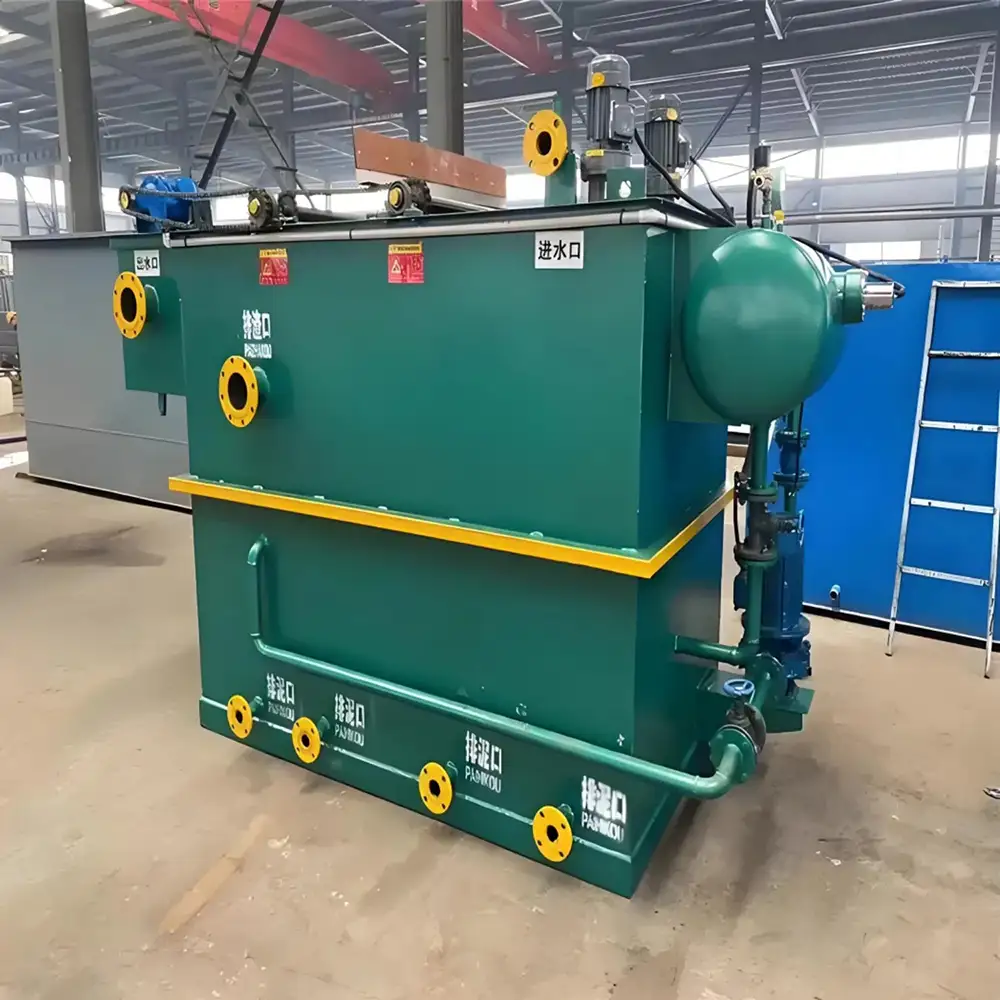
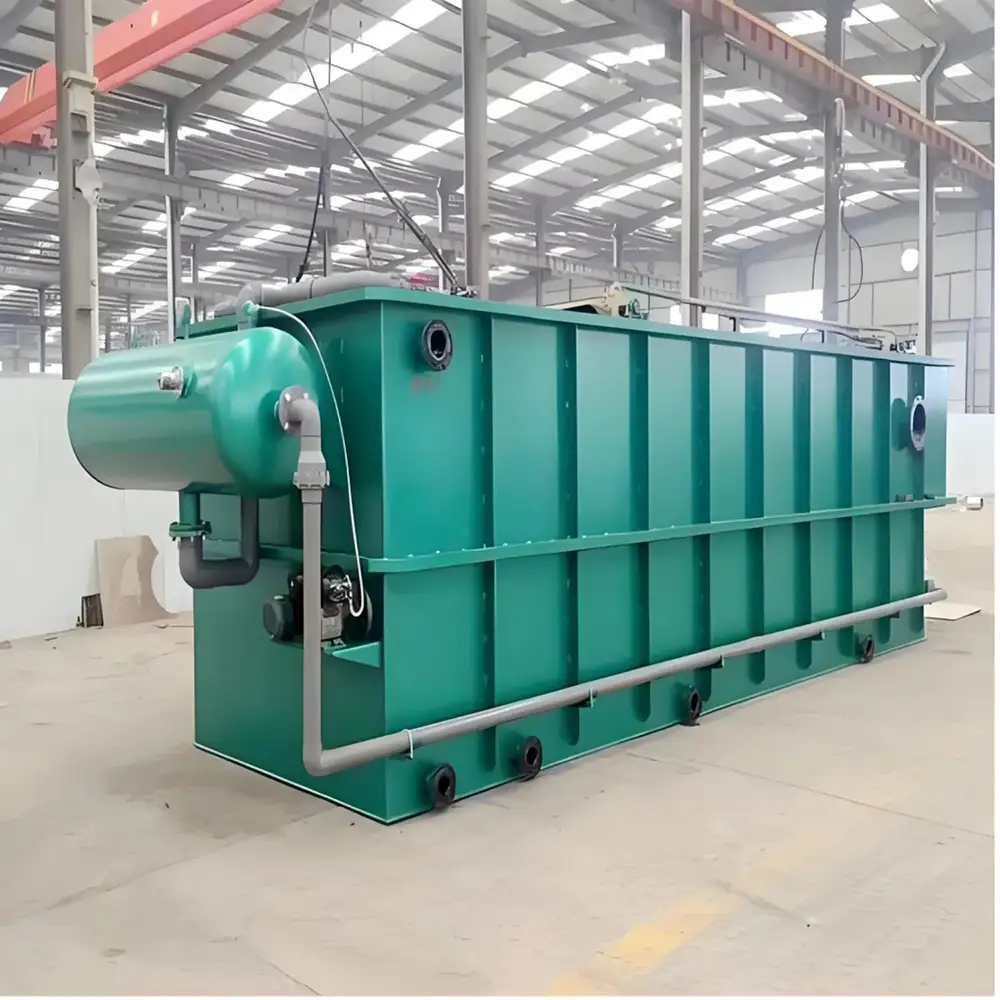
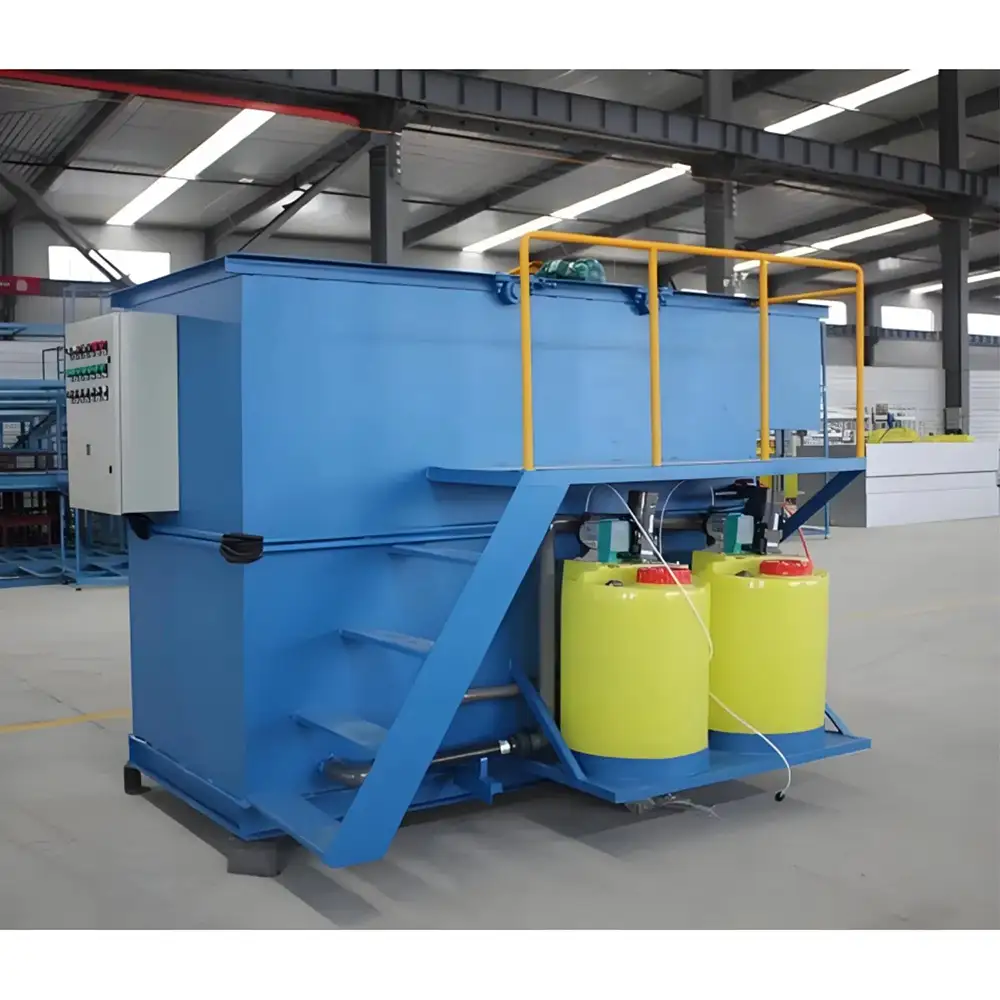
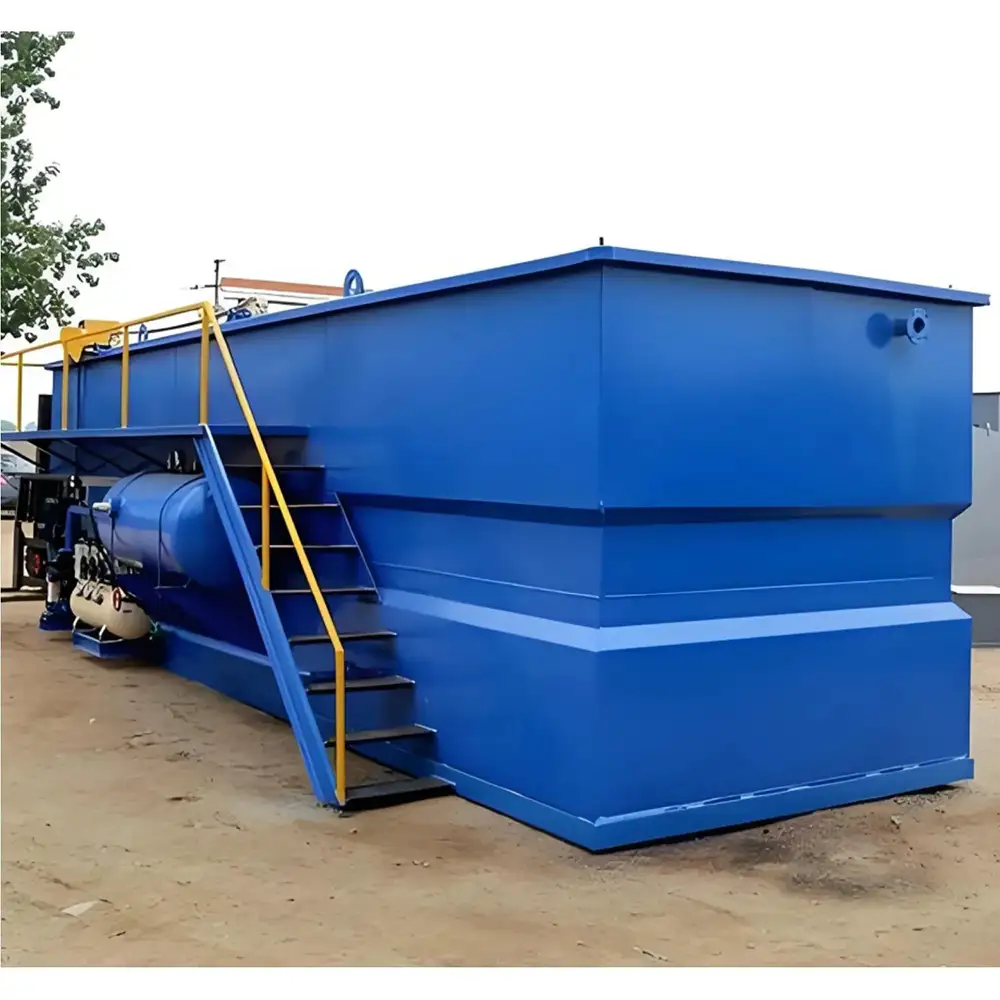
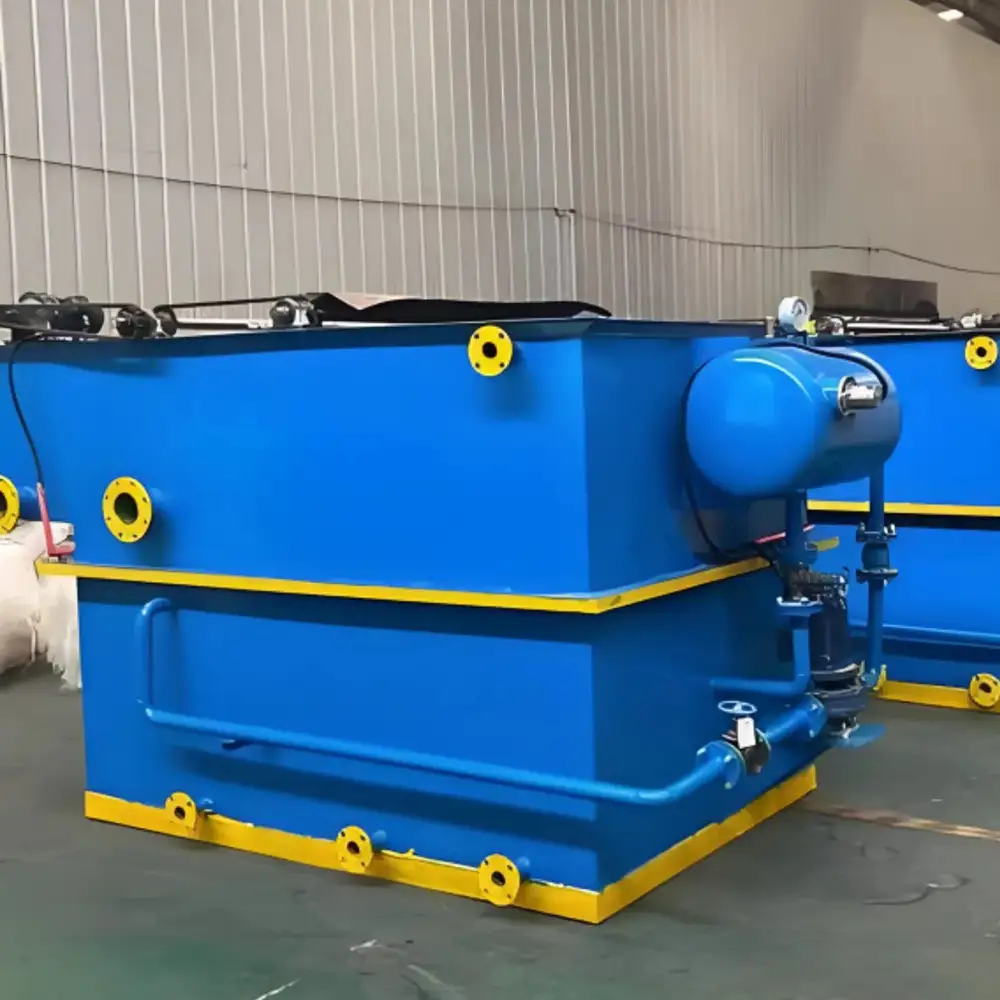
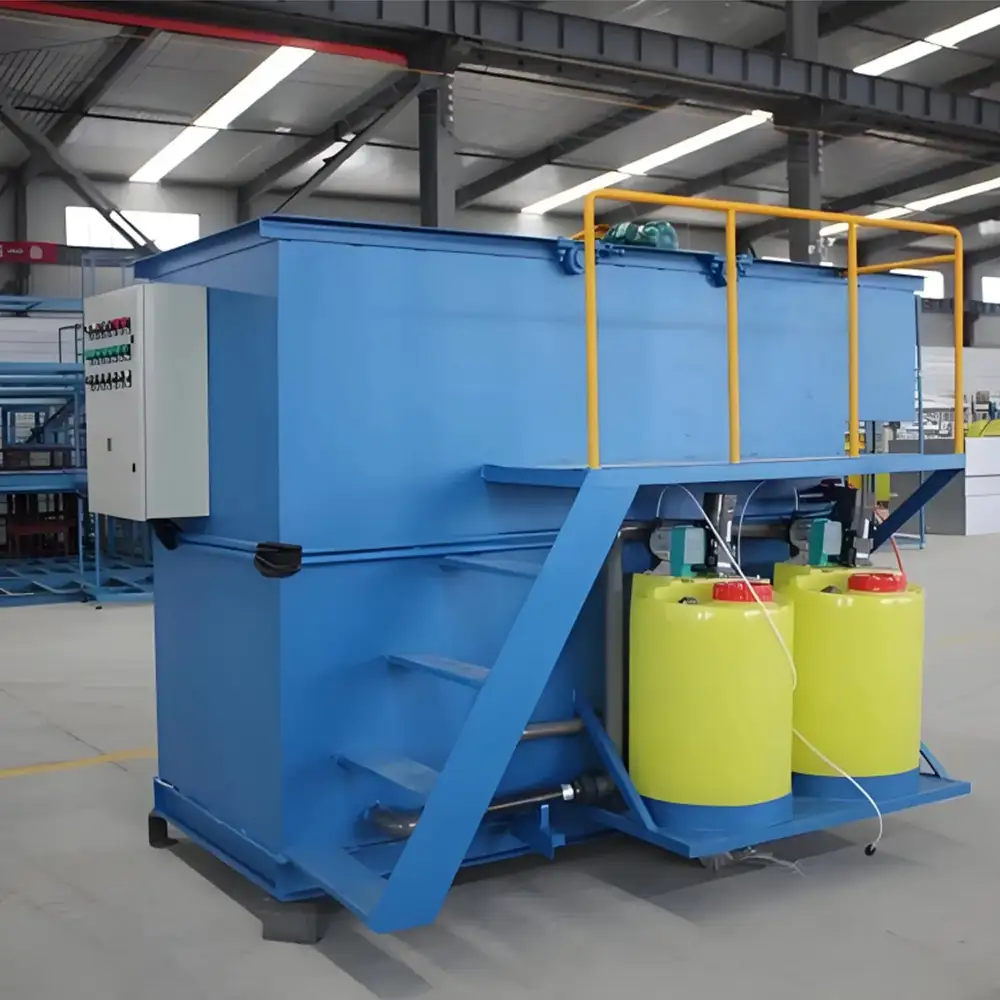
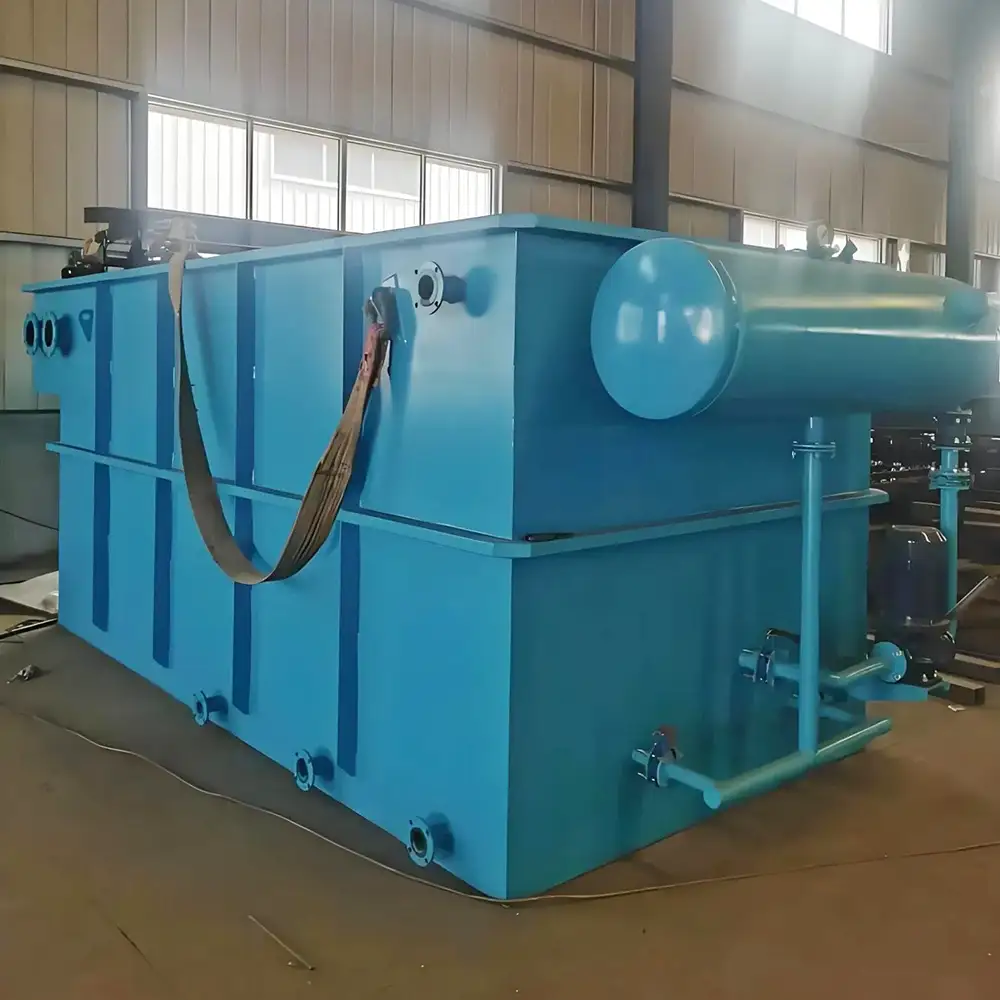
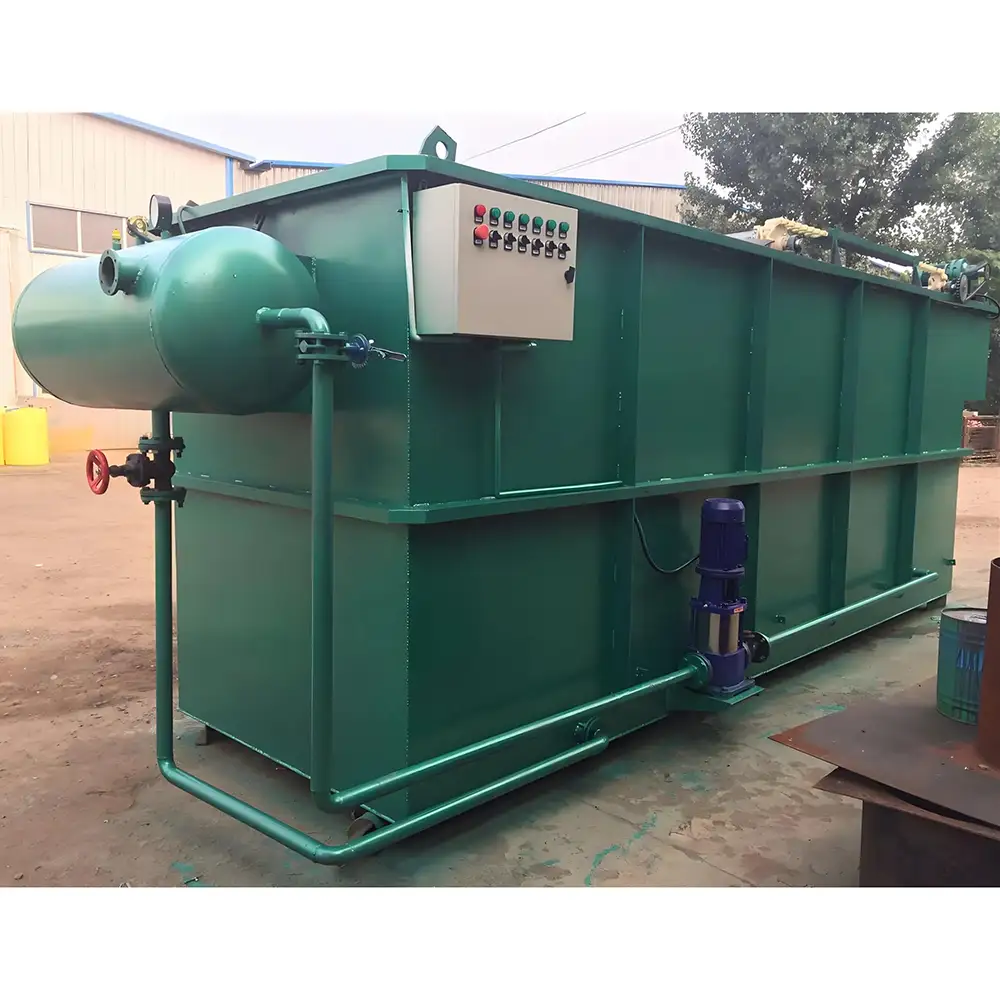
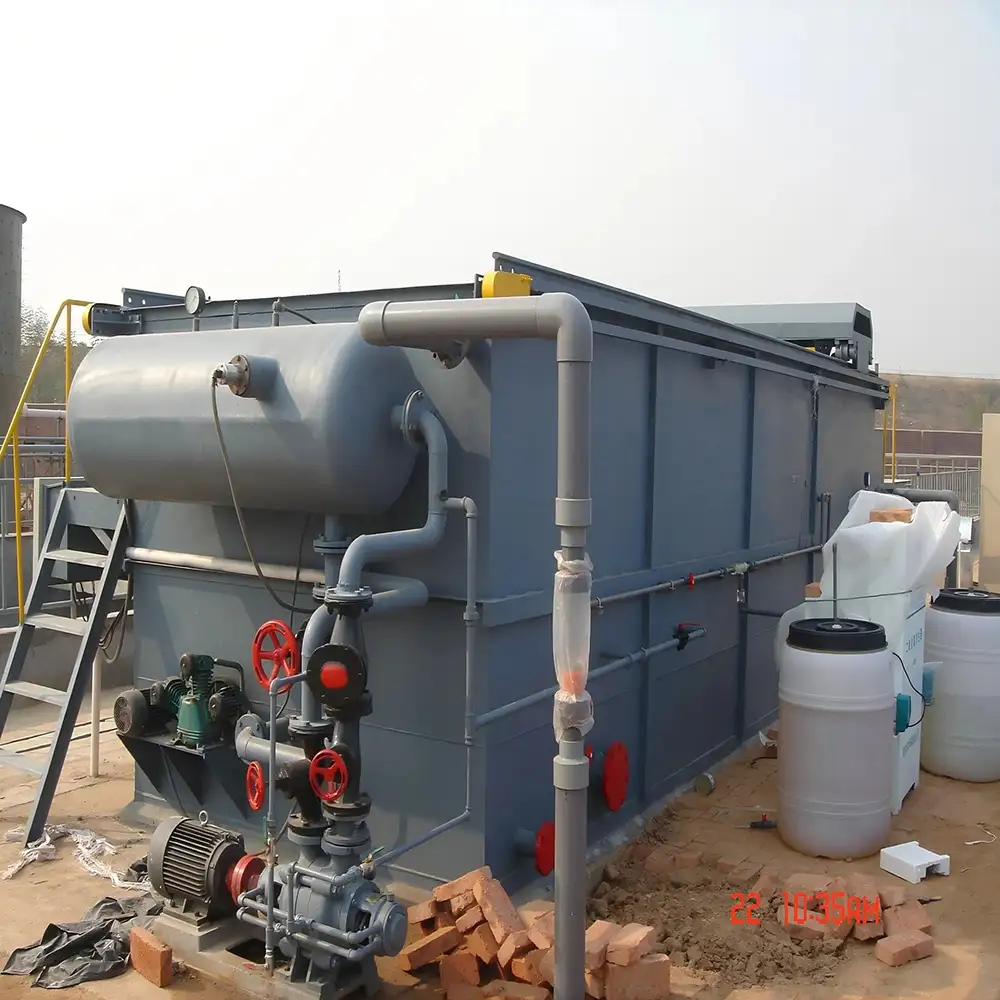
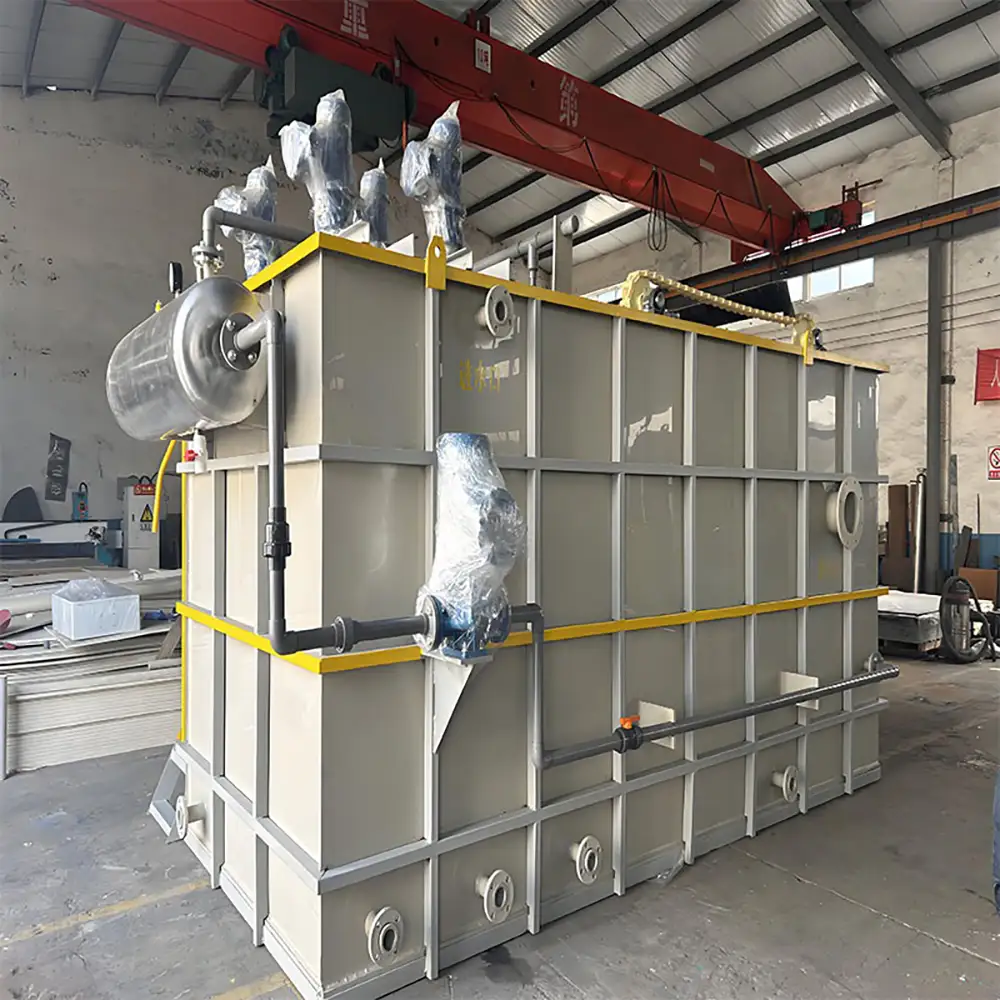
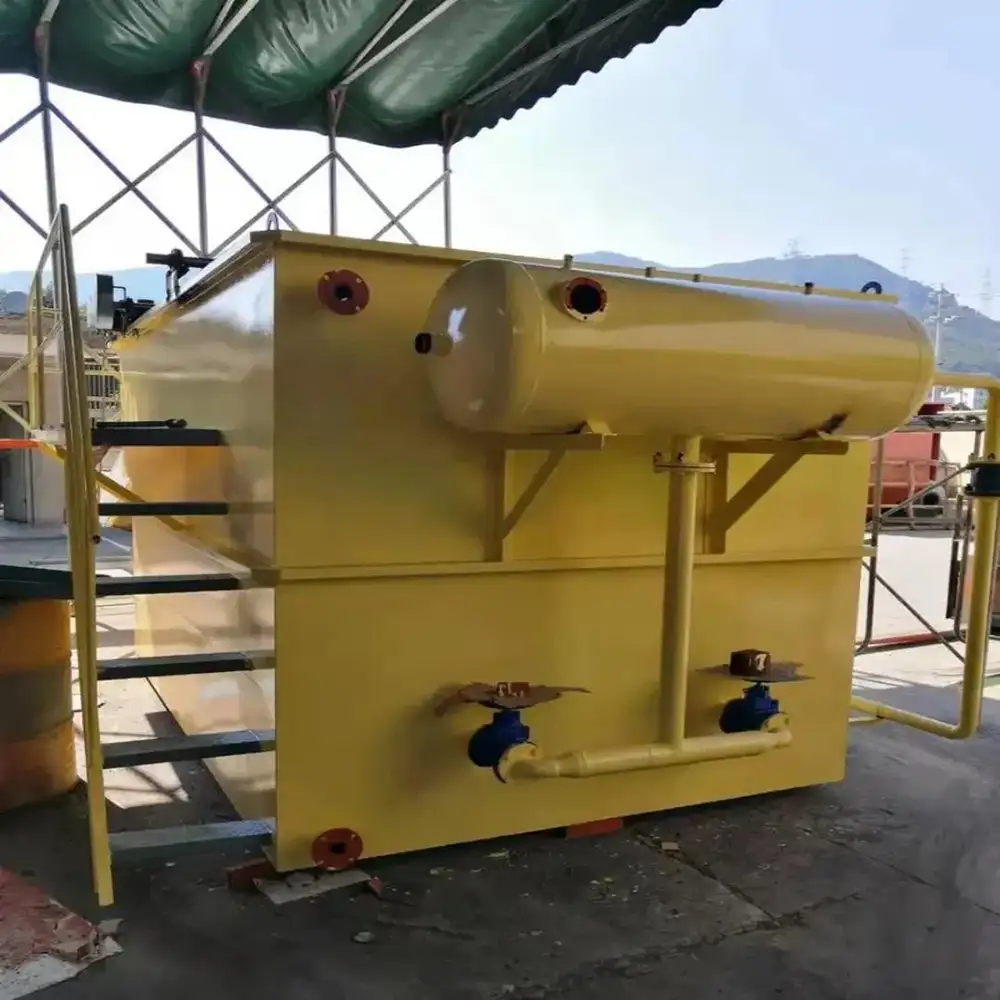
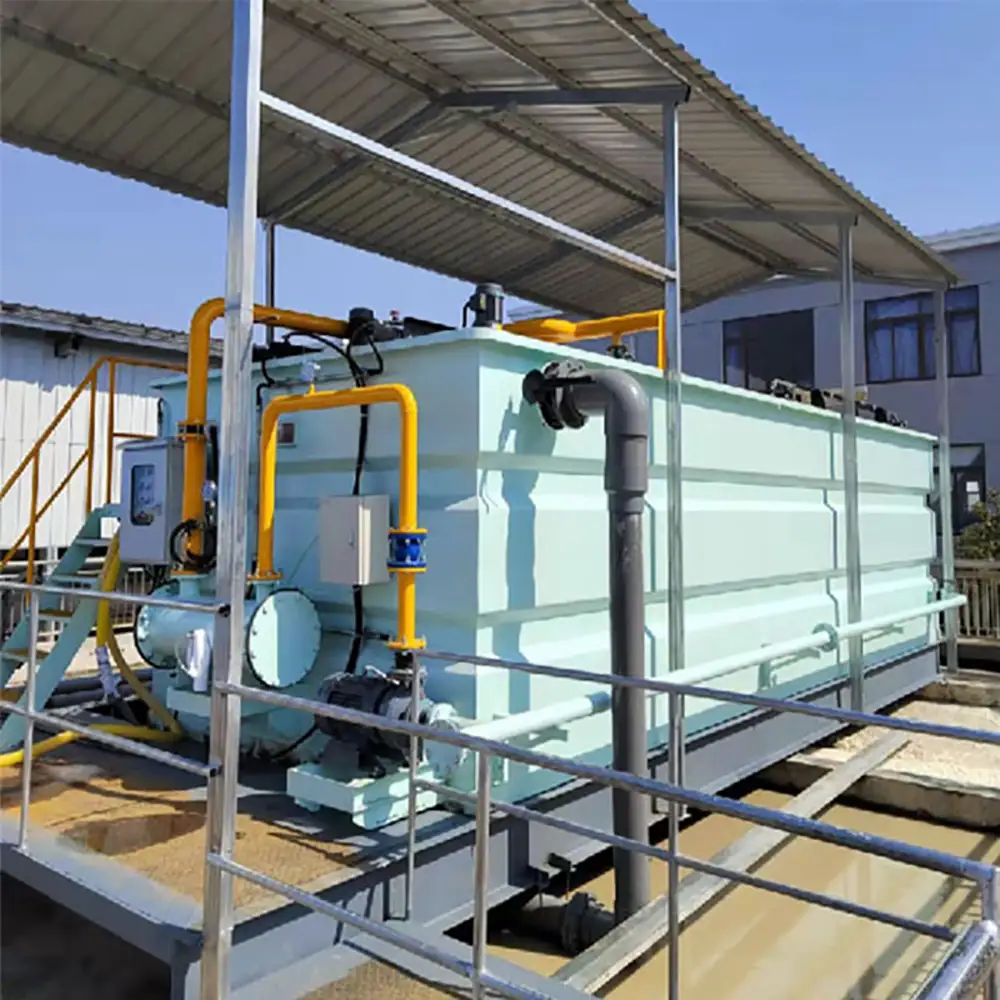
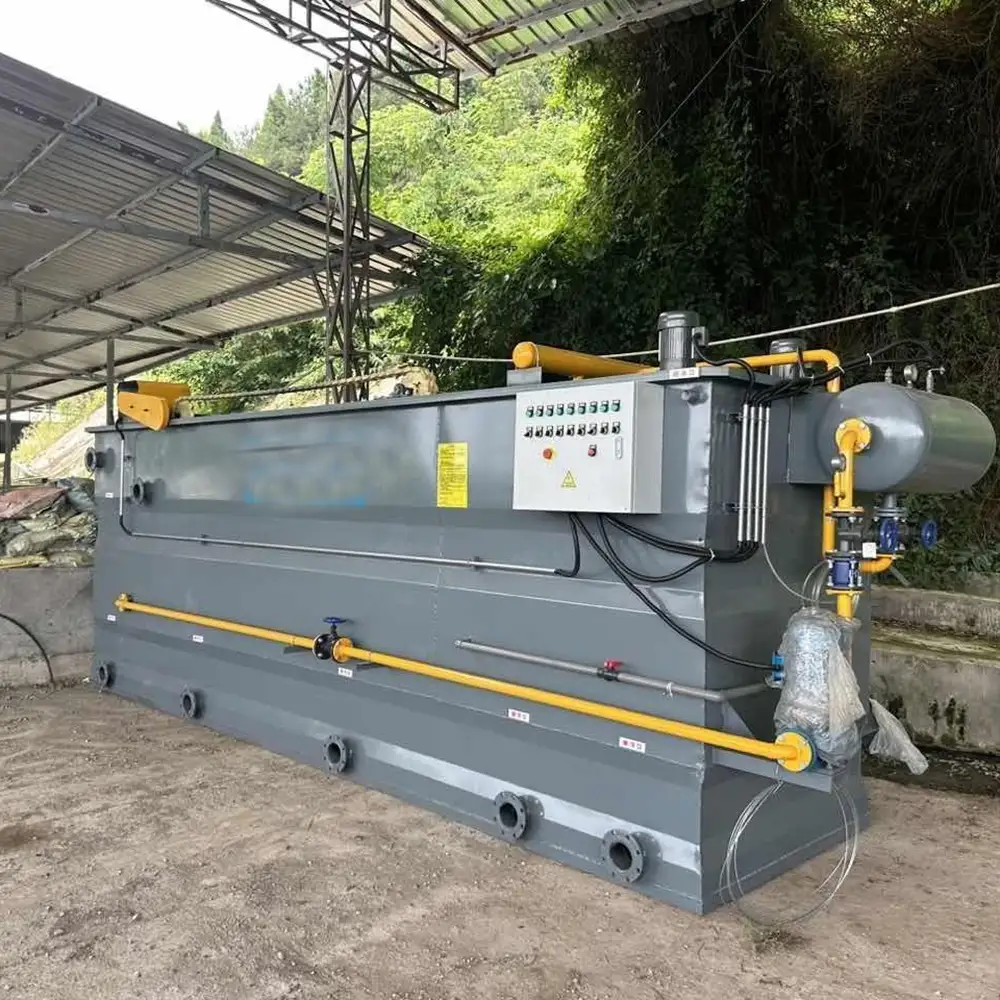
Industrial Agriculture DAF Wastewater Treatment and Dissolved Air Flotation Unit
Industrial and agricultural wastewater can contain suspended solids, organic particles, fats, oils, grease, colloidal matter, and other pollutants that require effective separation before biological treatment, discharge, or reuse. A DAF Wastewater Treatment Unit uses dissolved air flotation technology to separate floatable and suspended contaminants from wastewater and can serve as a primary or pretreatment stage in a complete wastewater treatment process.
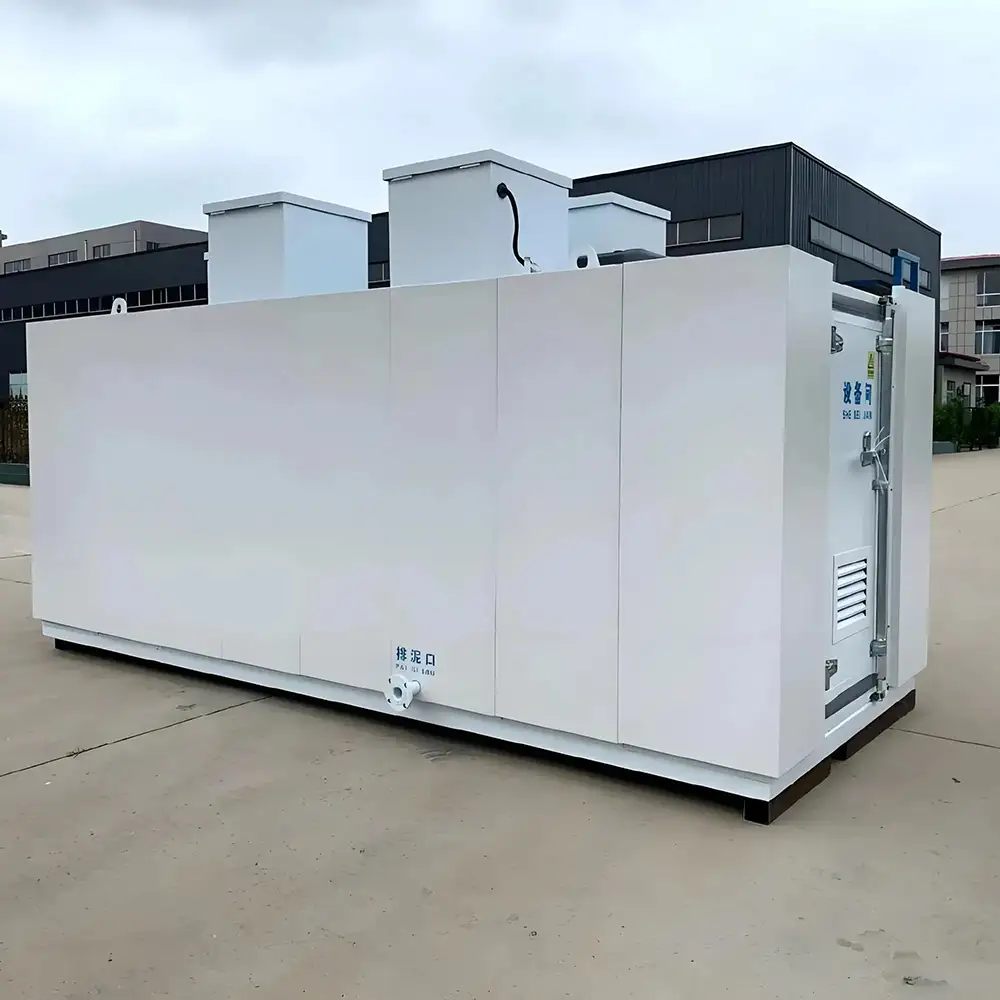
The equipment configuration represented by this keyword combines industrial and agricultural wastewater treatment, dissolved air flotation, packaged equipment, plastic film wrapping, and LCL export transportation. Available product specifications for this type of flotation equipment indicate applications across industrial, agricultural, food-processing, slaughterhouse, chemical, printing, dyeing, mineral, and other wastewater treatment scenarios.
The DAF process itself is based on generating fine air bubbles in a pressurized recycle stream. When pressure is released, dissolved air forms small bubbles that attach to suspended particles and flocs. The resulting aggregates float to the water surface, where a skimming mechanism removes the concentrated float sludge.
Dissolved air flotation sewage treatment plants are usually used for primary sewage treatment, and the front can be used together with grilles(bar screen). The compact sewage treatment plant is the second treatment, and the disinfection system (sodium hypochlorite, chlorine dioxide) is tertiary. Dissolved air flotation can remove suspended solids very well, and can be used for breeding, food consumption, slaughtering, food processing, plastic washing, dyeing, and car washing sewage treatment.
It has the characteristics of low price, small footprint, low operating cost and long service life.
Our company has been focusing on the production of air flotation equipment for more than 20 years, with domestic and foreign markets and a good reputation.
|
Model NO. |
DAF |
Handling method |
physicochemical treatment |
|
Usage |
Industrial, agricultural, food factories, slaughterhouses |
Trademark |
Wanze Shengshi |
|
Types |
Package, Compact, Small, Mini |
Applications |
Industrial, Municipal, Domestic, Medical, Ship |
|
Craft |
Flocculation sedimentation method |
Features |
Water Clarification, Filtration, Purification |
|
Service Life |
20 Years |
Operation |
Automatic |
|
Steel Plate Thickness |
>8mm |
Function |
Remove Suspended solids |
|
Voltage |
220V/ 380V/ Customerized |
Installation Type |
On ground |
|
Colour |
Grey/Silver/Blue/Balck/Customerized |
Use for |
Mineral, Printing, Chemical, Dyeing, Starch |
|
Material |
Carbon Steel, Stain Steel, FRP, PE, PP |
Certificate |
SGS, ISO |
|
Transport Package |
Container Standard Packing |
Specification |
Carbon steel anti-corrosion |
|
Production Capacity |
1000 Sets/Year |
Origin |
China |
What Is a DAF Flotation Unit?
DAF stands for Dissolved Air Flotation. It is a physical-chemical wastewater treatment process designed to separate suspended and low-density materials from water.
Unlike conventional sedimentation, which relies primarily on gravity to move particles downward, DAF uses microscopic air bubbles to increase the apparent buoyancy of particles. This makes the technology useful for wastewater containing materials that settle slowly or have a tendency to float.
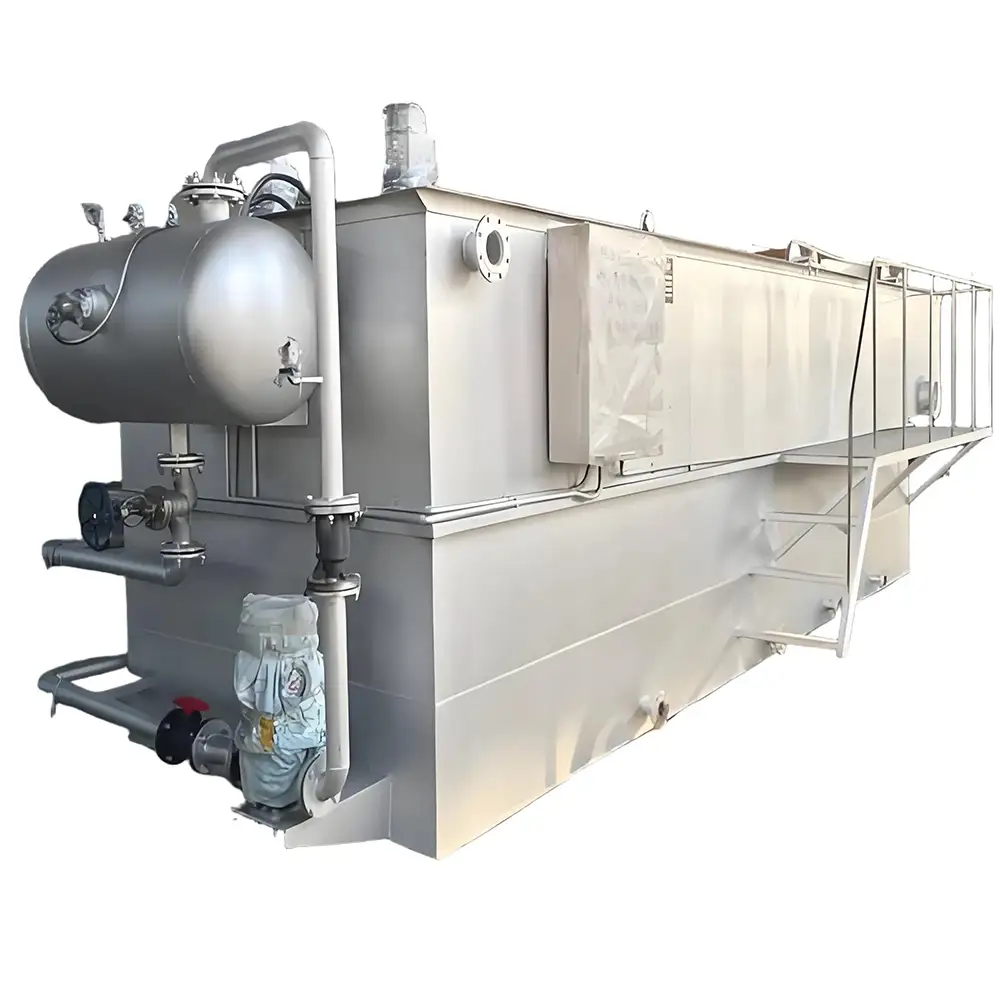
A typical DAF unit can include:
Wastewater Inlet
Equalization Connection
Coagulation System
Flocculation Chamber
Recycle Pump
Air Dissolution System
Pressure Release Device
Flotation Tank
Surface Skimmer
Sludge Collection Chamber
Treated Water Outlet
Electrical Control Cabinet
The exact equipment configuration depends on wastewater characteristics, flow rate, pollutant loading, required treatment performance, and the downstream treatment process.
DAF Working Principle
The dissolved air flotation process normally consists of several stages.
1. Wastewater Inlet
Raw wastewater enters the treatment system after preliminary screening or other pretreatment. Large debris should normally be removed before the DAF unit to protect pumps and internal components.
2. Coagulation
If the wastewater contains fine suspended particles or colloids, a coagulant may be added. The chemical destabilizes small particles and helps them form larger aggregates.
3. Flocculation
Gentle mixing promotes the formation of larger flocs. The size and structure of the flocs are important because they influence how efficiently air bubbles can capture and float them.
4. Air Dissolution
A portion of water is recycled and pressurized with air. Under pressure, air dissolves into the recycle stream.
5. Bubble Formation
When the pressurized water enters the flotation chamber and pressure is reduced, microscopic air bubbles are released.
6. Flotation
The bubbles attach to suspended solids, oil droplets, grease, and flocs. The combined particles become buoyant and rise to the surface.
7. Sludge Skimming
A mechanical scraper moves the floating material toward a sludge collection area.
8. Clarified Water Discharge
The treated water exits the DAF chamber and can continue to biological treatment, filtration, membrane treatment, disinfection, or another downstream process.
Agricultural Wastewater Treatment Applications
Agricultural wastewater can vary considerably depending on the operation. DAF systems can be integrated into treatment processes for different agricultural and agro-industrial applications.
Potential applications include:
Livestock Farm Wastewater
Dairy Farm Wastewater
Poultry Farm Wastewater
Pig Farm Wastewater
Animal Processing Wastewater
Slaughterhouse Wastewater
Agricultural Processing Wastewater
Food Processing Wastewater
Vegetable Processing Wastewater
Fruit Processing Wastewater
Agricultural Product Washing Wastewater
Organic Wastewater
High-Suspended-Solids Agricultural Effluent
DAF can be especially useful when wastewater contains suspended solids, fats, oils, grease, or other materials that can be separated through flotation.
For agriculture-related wastewater, the DAF unit can be installed as a standalone physical-chemical treatment stage or integrated with biological systems such as MBBR, SBR, activated sludge, or MBR.
Industrial Wastewater Treatment
Industrial wastewater may contain more complex pollutant combinations than typical agricultural wastewater. Depending on the industry, the water may contain suspended solids, oil, grease, emulsified materials, pigments, chemical residues, organic matter, and other contaminants.
DAF technology is commonly considered for wastewater generated by:
Food Processing Plants
Chemical Processing Plants
Slaughterhouses
Dairy Plants
Meat Processing Facilities
Printing And Dyeing Plants
Mineral Processing Plants
Pharmaceutical Facilities
Petrochemical Operations
Industrial Manufacturing Plants
The actual suitability of DAF should be determined from wastewater testing because different pollutants require different treatment mechanisms.
DAF Pretreatment for Biological Treatment
One major advantage of a flotation unit is its ability to act as pretreatment before biological treatment.
For example, a complete wastewater treatment process may be configured as:
Screening → Equalization → pH Adjustment → Coagulation → Flocculation → DAF → MBBR/SBR/MBR → Filtration → Disinfection → Discharge or Reuse
Removing suspended solids, oils, grease, and other floatable materials before the biological stage can reduce the loading on downstream equipment.
DAF can therefore be used as one component of a larger wastewater treatment project rather than being treated as a universal solution for every contaminant.
Oil, Grease and Suspended Solids Removal
DAF is particularly useful when wastewater contains materials that can be captured by flotation.
Potential target pollutants include:
Suspended Solids
Fine Suspended Particles
Oil
Grease
Fats
Colloids
Flocculated Solids
Some Organic Particulate Matter
Floating Debris
Chemical conditioning can improve separation when wastewater contains very fine or emulsified particles.
However, DAF does not automatically remove all dissolved contaminants. Dissolved salts, many dissolved organic compounds, ammonia, nitrate, and other specific pollutants may require biological, chemical, membrane, adsorption, or advanced oxidation processes.
Packaged and Compact DAF Design
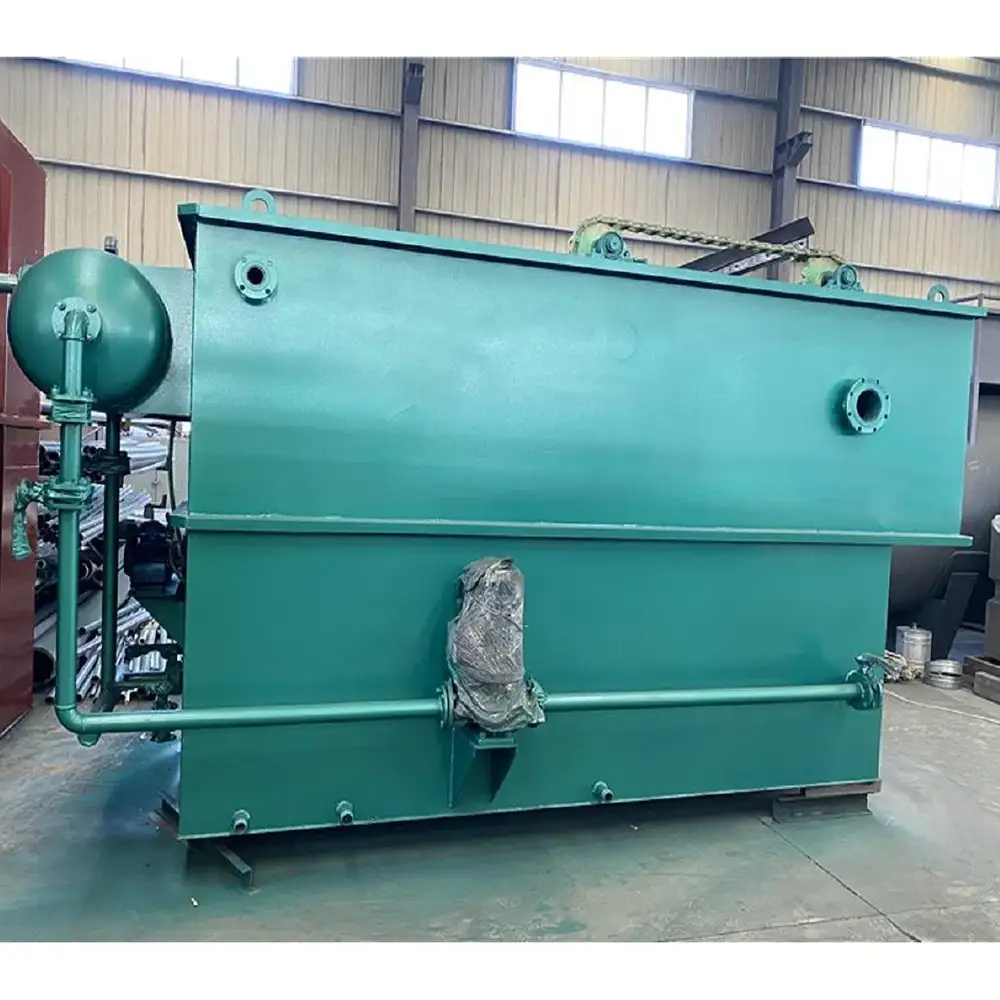
Packaged DAF units can provide a compact treatment solution where installation space is limited.
Depending on the model, the equipment can be supplied as a compact, small, mini, or packaged flotation system. Current product listings for this equipment category describe automatic operation and multiple construction-material options, including carbon steel, stainless steel, FRP, PE, and PP.
A compact configuration can reduce field installation work and simplify connection with upstream and downstream treatment equipment.
For agricultural facilities, food plants, and smaller industrial wastewater projects, a packaged flotation unit may be particularly convenient when a complete large-scale civil structure is not practical.
Automatic Control System
An automatic DAF system can use a PLC control cabinet to coordinate major operating functions.
Depending on the configuration, automatic control can include:
Recycle Pump Operation
Air Pressure Control
Skimmer Operation
Sludge Pump Operation
Chemical Dosing
Water Level Monitoring
Alarm Protection
Automatic Start And Stop
Interlocking Protection
Automation can reduce repetitive operator work and provide more consistent operating conditions.
Equipment Materials
The selection of construction materials should be based on the wastewater chemistry and installation environment.
Possible materials include:
Carbon Steel: Suitable for many general industrial applications when appropriate anti-corrosion protection is provided.
Stainless Steel: Useful where improved corrosion resistance and hygiene are required.
FRP: Can be considered for applications where corrosion resistance and lightweight construction are important.
PE And PP: Suitable for selected chemical-resistant components and applications.
The material should be selected according to the actual wastewater composition rather than simply the industry name.
Plastic Film Wrapping and LCL Export Packaging
For international B2B equipment transportation, Plastic Film Wrapping + LCL is an important logistics feature of this type of product.
Plastic film wrapping can provide an additional protective layer around the equipment during transportation and handling. Depending on the machine size and shipping requirements, additional protection may include:
Waterproof Film
Foam Protection
Pallet Support
Wooden Case Packaging
Steel Frame Reinforcement
Moisture Protection
Component Separation
LCL means Less Than Container Load. It can be suitable when the equipment does not require an entire shipping container.
The actual export packing method should be selected according to equipment dimensions, weight, transportation route, port handling requirements, and destination regulations.
Key Advantages
Efficient Flotation Separation
Fine air bubbles help separate suspended and floatable materials from wastewater.
Wide Industrial Applications
The system can be applied to agricultural, food, slaughterhouse, chemical, mineral, printing, dyeing, and other industrial wastewater applications.
Compact Configuration
Packaged DAF units can provide a practical solution where installation space is limited.
Automatic Operation
PLC-based control can automate major pumps, skimmers, valves, and dosing equipment.
Flexible Material Selection
Carbon steel, stainless steel, FRP, PE, and PP options can be considered according to wastewater conditions.
Easy Project Integration
The flotation unit can be connected with screening, equalization, biological treatment, filtration, sludge treatment, and disinfection systems.
Operation and Maintenance
Regular maintenance is essential for reliable DAF performance.
Operators should inspect the recycle pump, pressure system, air supply, release device, skimmer, sludge pump, valves, sensors, and control cabinet.
Chemical dosing should also be monitored because excessive or insufficient coagulant or polymer can reduce flotation performance.
The floating sludge should be removed regularly. Excessive accumulation can affect the separation process and reduce available flotation capacity.
Operators should also monitor wastewater flow, pH, suspended solids, oil and grease, sludge characteristics, and treated-water quality.
Why Choose Us?
We focus on practical industrial and agricultural wastewater treatment configurations based on the actual wastewater characteristics and project requirements.
Our DAF solutions can be developed as compact standalone flotation units or integrated into complete wastewater treatment plants.
Key advantages include:
Industrial And Agricultural Applications
Dissolved Air Flotation Technology
Compact Packaged Equipment
Automatic PLC Control Options
Multiple Construction Materials
Coagulation And Flocculation Integration
Sludge Skimming And Collection
Flexible Upstream And Downstream Integration
Export Plastic Film Wrapping
LCL Shipping Support
International Wastewater Treatment Project Experience
For customers requiring agricultural wastewater treatment, industrial wastewater treatment, or a complete DAF-based treatment project, the system can be configured according to flow rate, wastewater composition, treatment objectives, available space, and shipping requirements.
FAQs
1. What is a DAF wastewater treatment unit?
A DAF wastewater treatment unit uses dissolved air flotation to separate suspended solids, oil, grease, and other floatable or chemically flocculated materials from wastewater.
2. What does DAF stand for?
DAF stands for Dissolved Air Flotation.
3. Can DAF be used for agricultural wastewater?
Yes. DAF can be incorporated into treatment systems for livestock, dairy, poultry, slaughterhouse, food-processing, and other agricultural or agro-industrial wastewater applications.
4. Can DAF treat industrial wastewater?
Yes. It can be used for various industrial wastewater streams, including food, chemical, mineral, printing, dyeing, and manufacturing wastewater.
5. What can a DAF unit remove?
It can help remove suspended solids, oils, grease, fats, colloids, and flocculated particles. The exact removal performance depends on wastewater characteristics and process design.
6. Does DAF require chemical dosing?
Not necessarily, but coagulation and flocculation are often used when fine suspended particles, colloids, or emulsified materials need improved separation.
7. Can DAF be combined with MBBR or MBR?
Yes. DAF can be used as pretreatment before MBBR, SBR, MBR, activated sludge, or other downstream biological processes.
8. Is the DAF system automatic?
Automatic configurations are available. PLC control can coordinate pumps, skimmers, dosing equipment, valves, alarms, and other operating components.
9. What materials are available?
Depending on the project, equipment may use carbon steel, stainless steel, FRP, PE, PP, or combinations of these materials.
10. What does Plastic Film Wrapping + LCL mean?
It refers to protective plastic film wrapping for export transportation combined with LCL, or Less Than Container Load, shipping when a complete container is not required.
11. Can the DAF unit be used in a food processing plant?
Yes. DAF is commonly considered for food-processing wastewater containing suspended solids, fats, oils, grease, and other organic particulate matter.
12. How is DAF sludge removed?
A surface scraper collects the floating sludge and transfers it to a sludge collection or subsequent dewatering system.
13. How is the correct DAF capacity selected?
The selection depends on wastewater flow, peak flow, suspended solids, oil and grease concentration, chemical characteristics, required treatment performance, and downstream process requirements.
Prev:
Automatic Ao+ MBR Modular Wastewater Treatment STP Machine
Next:
DAF Chemical Industry Processing Water Treatment Project Waste Water Dissolved Air Flotation
TAG:
Agricultural Water Treatment,
Industrial Water Treatment System,
Industrial Wastewater Treatment Equipment,
Suspended Solids Removal,
Dairy Wastewater Treatment,
Livestock Wastewater Treatment,
Food Processing Wastewater Treatment,
Agricultural Wastewater Treatment,
Agricultural Wastewater Treatment System,
Industrial Wastewater Treatment System,
DAF Wastewater Treatment System,
Dissolved Air Flotation Wastewater Treatment,
Industrial Wastewater Treatment,
Pig Farm Wastewater Treatment,
Farm Wastewater Treatment,
Industrial Wastewater Treatment Plant,
Farm Wastewater Treatment System,
Wastewater Treatment Equipment,
Wastewater Treatment Plant,
Wastewater Sludge Treatment,
Industrial Water Treatment Plant,
Wastewater Treatment System,
Industrial Water Treatment Equipment,
Industrial Water Treatment,
Farm Wastewater Treatment Equipment,
Wastewater Pretreatment Equipment,
Process Wastewater Treatment,
Industrial Process Water Treatment,
Poultry Wastewater Treatment,
Slaughterhouse Wastewater Treatment,
Related Category:
Agricultural Wastewater Treatment,Industrial Wastewater Treatment,Dissolved Air Flotation,DAF Wastewater Treatment China, suppliers, manufacturers, factory, customized, wholesale, quotation, made in China