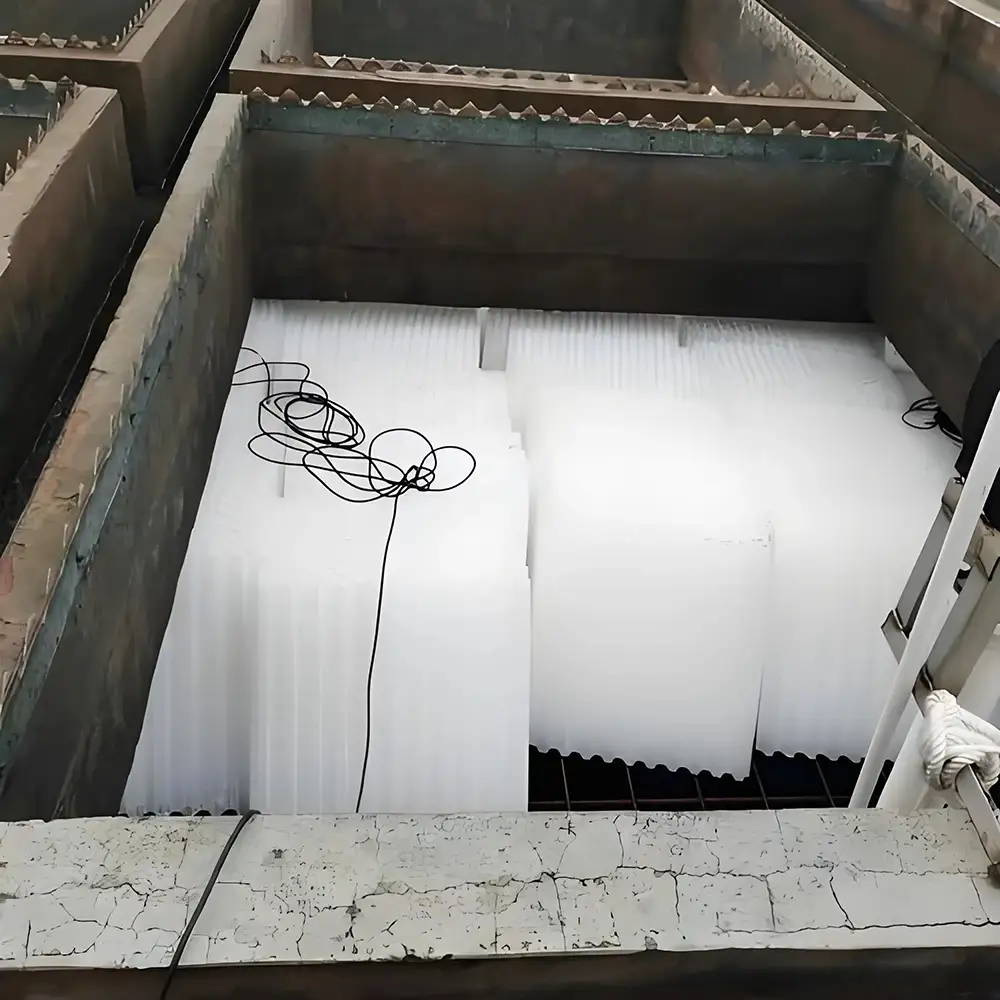
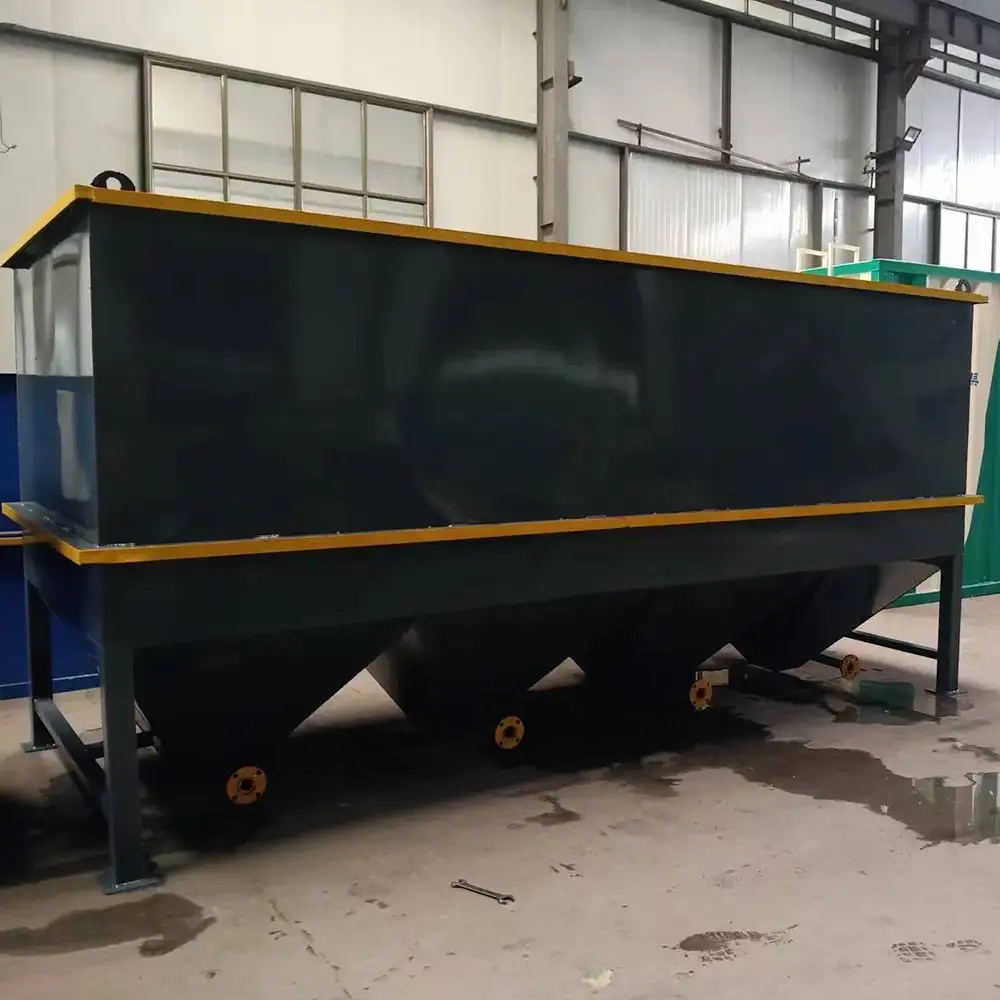
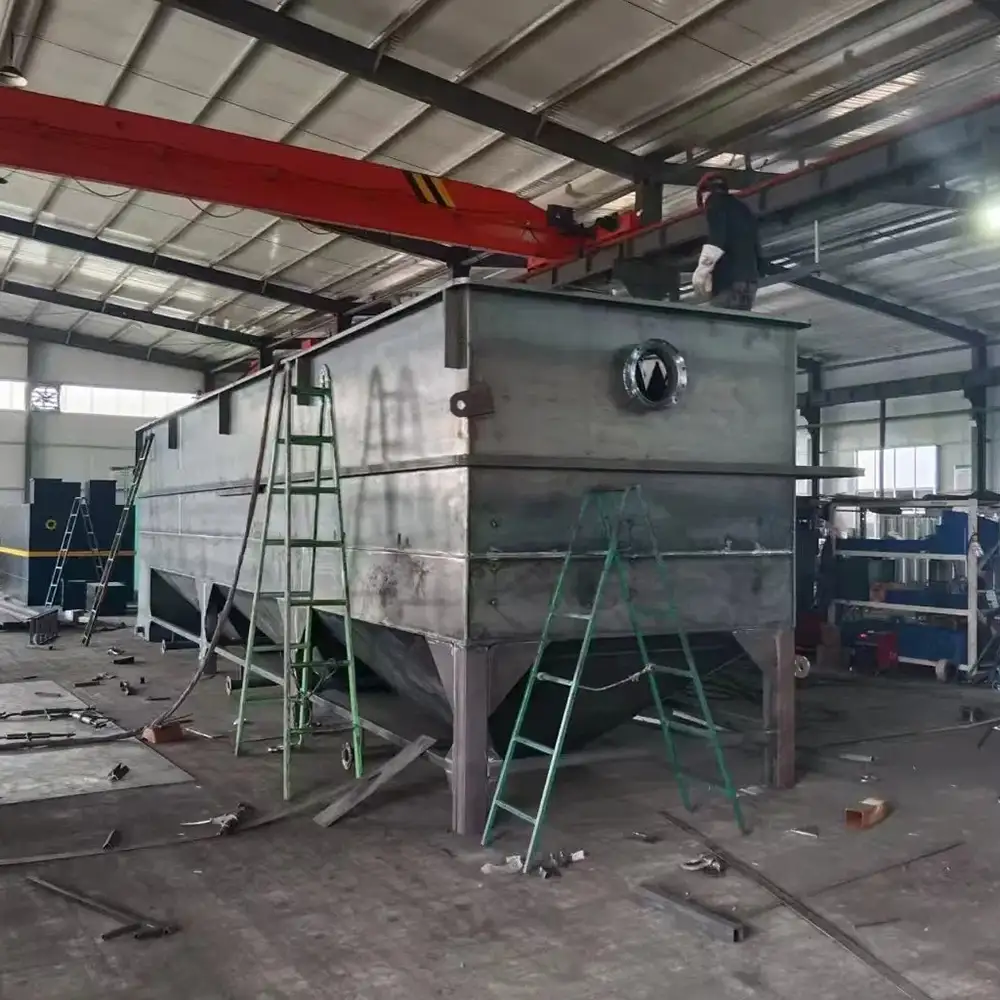
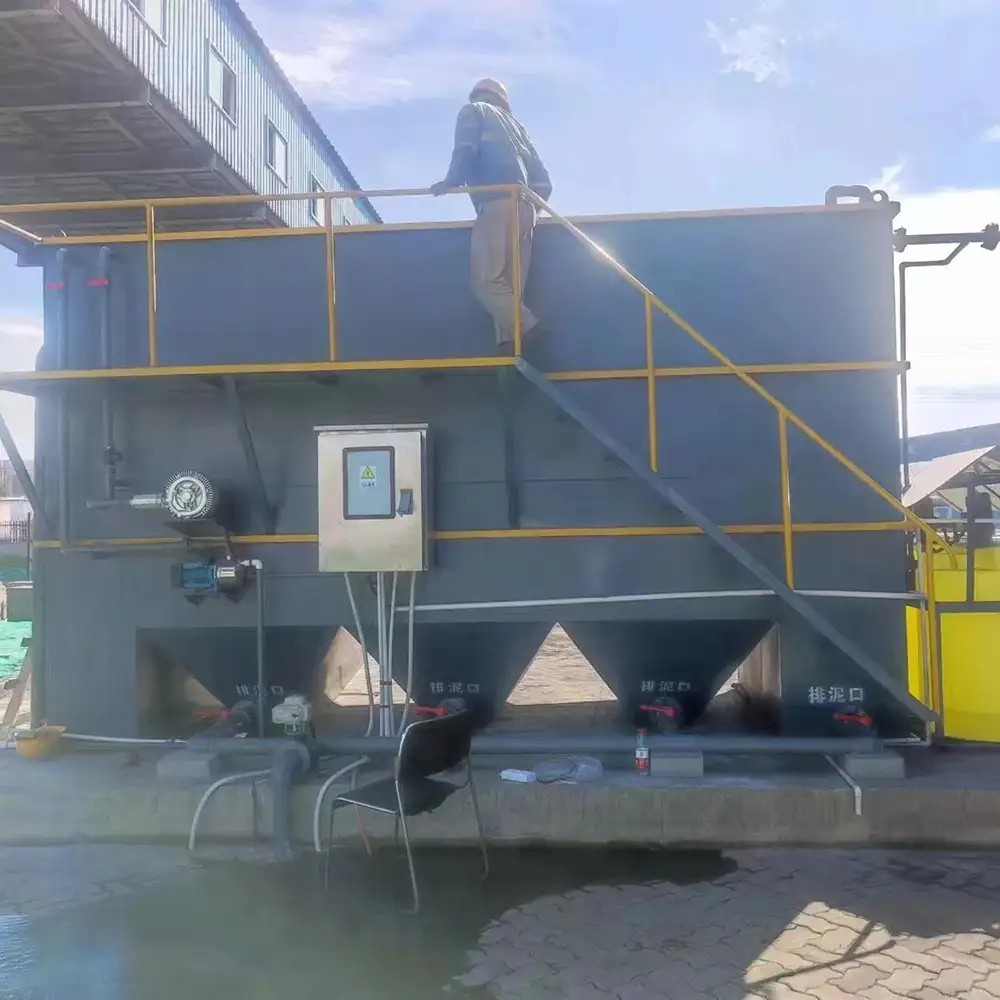
1. The spacing between the inclined plates (tubes) is generally not less than 50mm, and the length of the inclined plates (tubes) is generally about 1.0-1.2m;
2. The upper layer of the inclined plate should have a water depth of 0.5-1.0m, and the bottom buffer layer height is 1.0m. The wastewater distribution area is under the inclined plate (tube), which is generally not less than 0.5m high, and the lower part of the water distribution area is the sludge area;
3. The pool effluent generally uses multi-row perforated pipes to collect water, and the holes should be 2cm below the water surface to prevent floating objects from being carried away;
4. The flow rate of wastewater in the inclined pipe depends on different wastewaters. For example, the flow rate is 3-5mm/s for treating domestic sewage.
5. The inclined plate (tube) is at an angle of 60° to the horizontal plane, and the clear distance of the inclined plate (or the aperture of the inclined tube) is generally 80-100mm
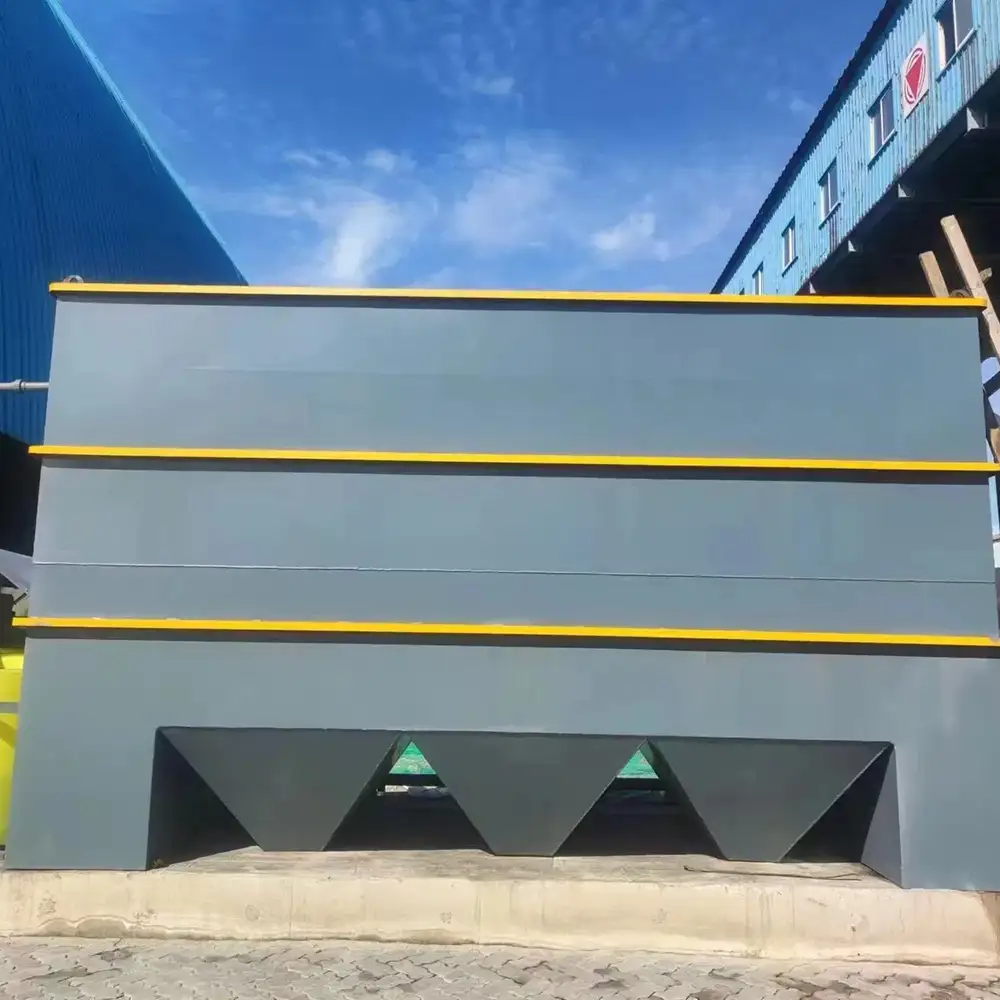
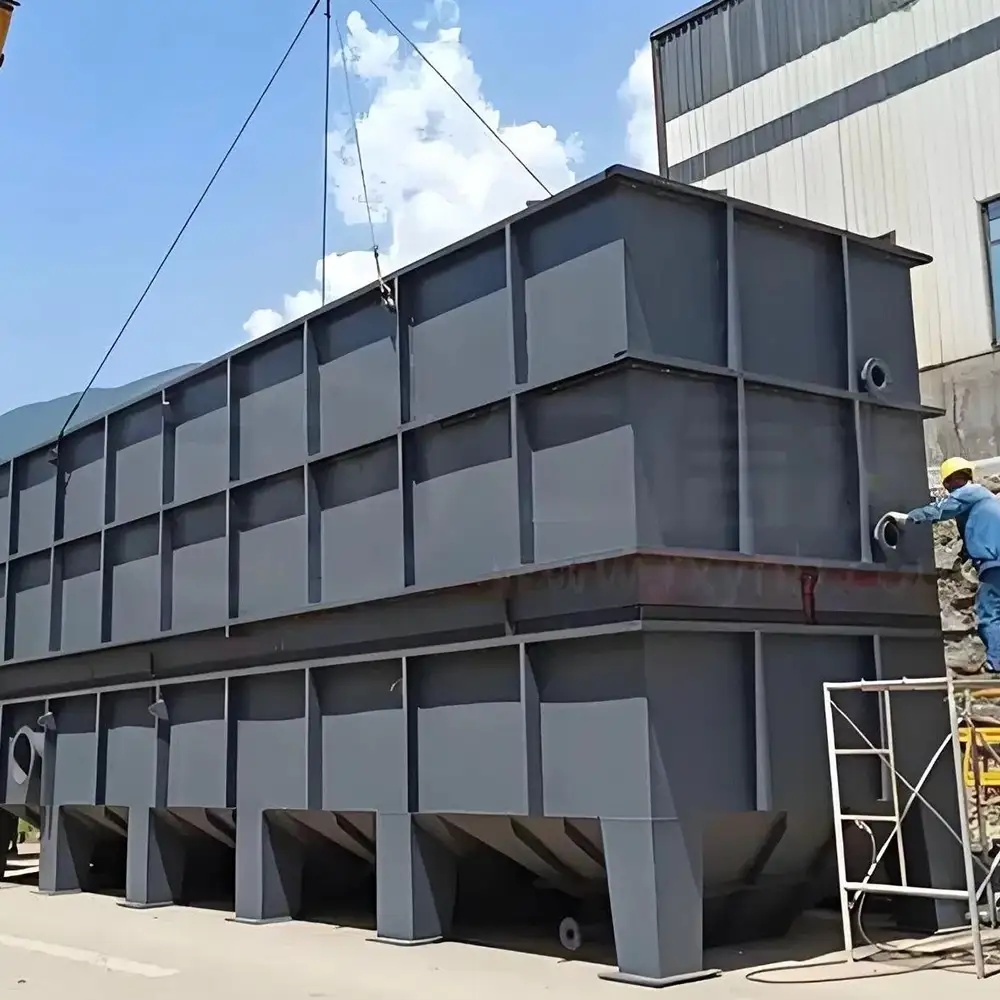
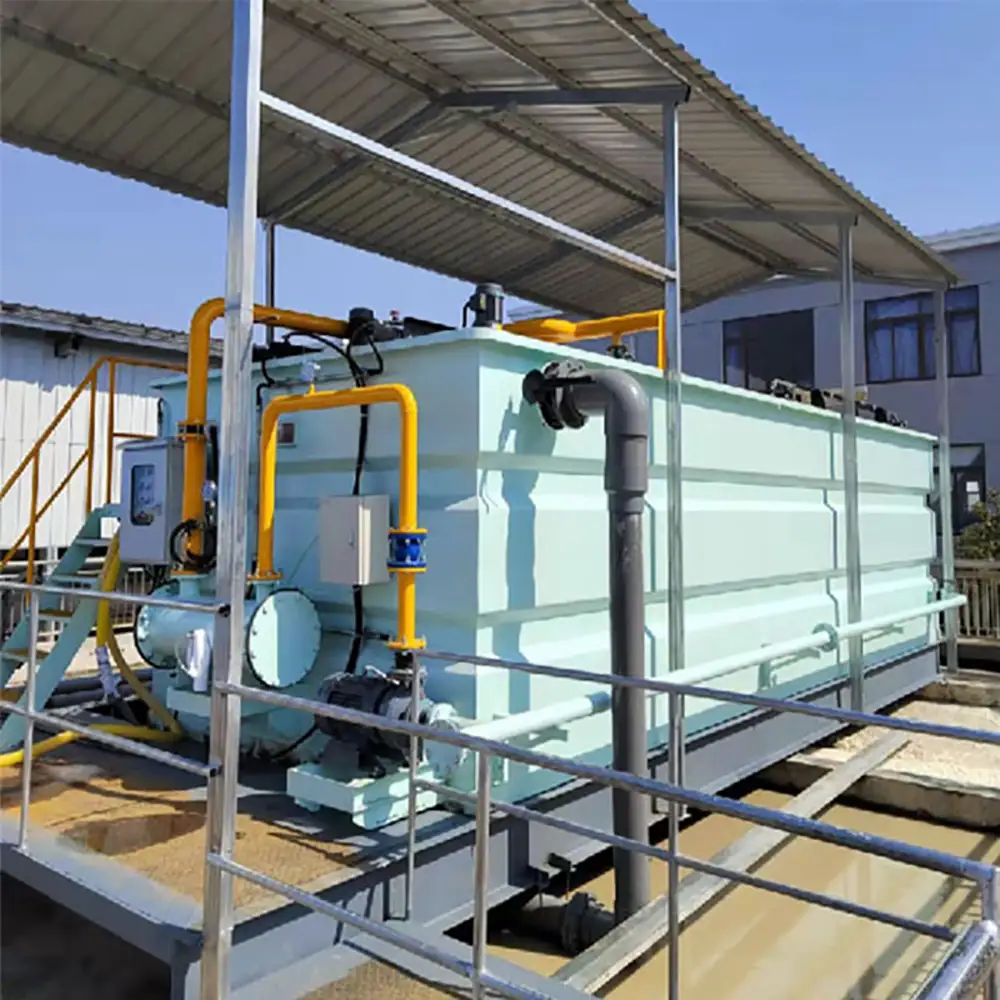
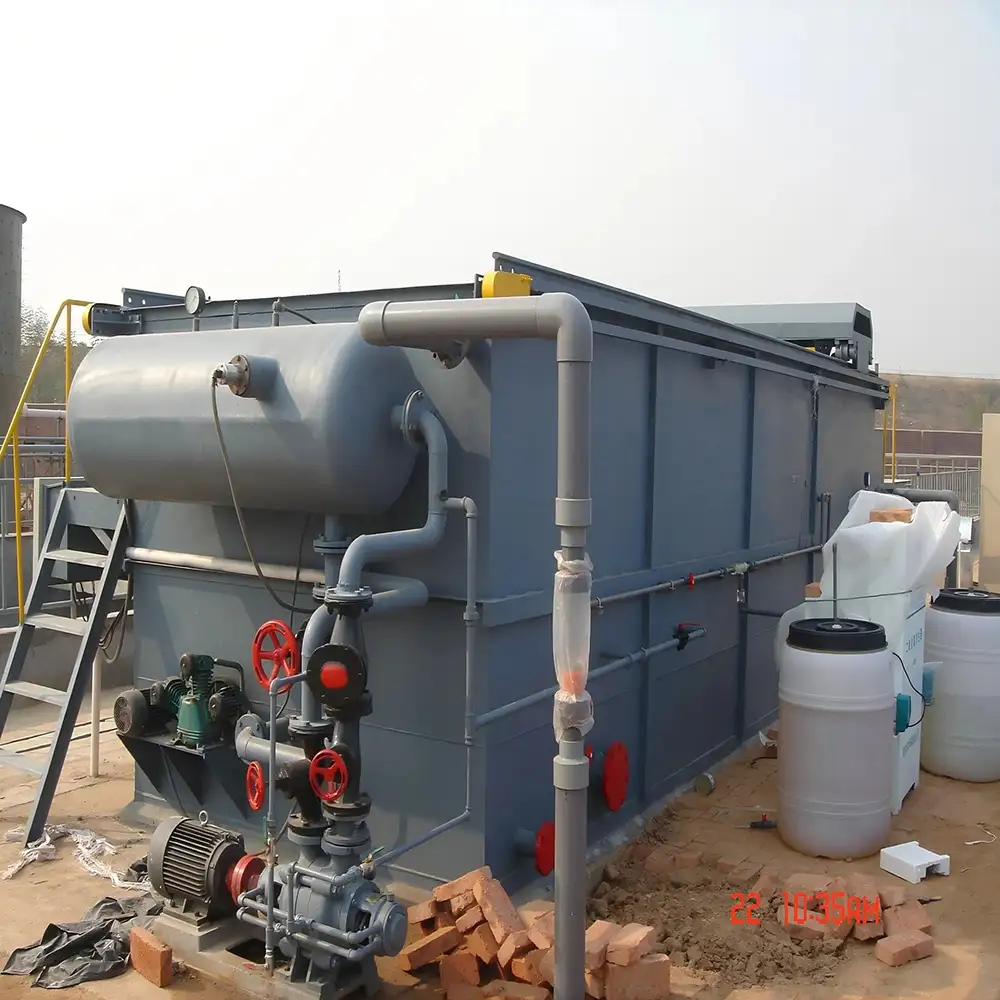
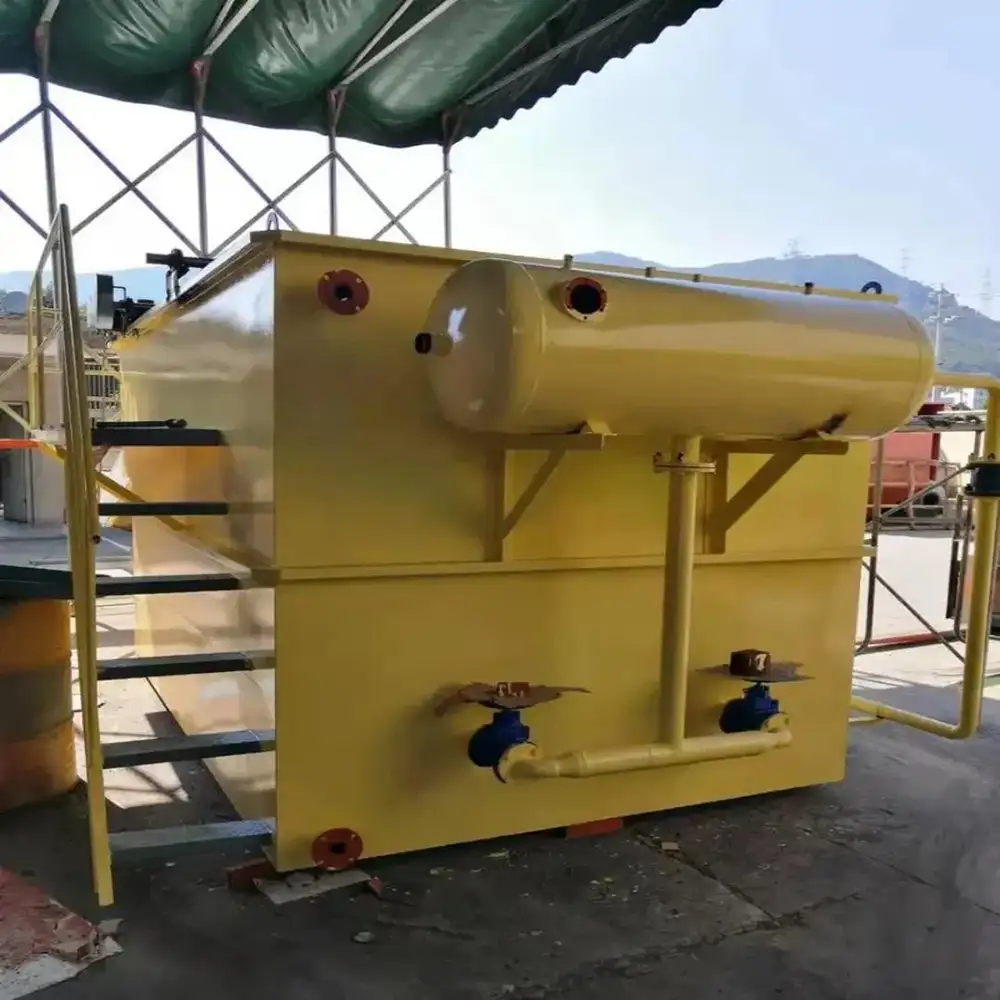
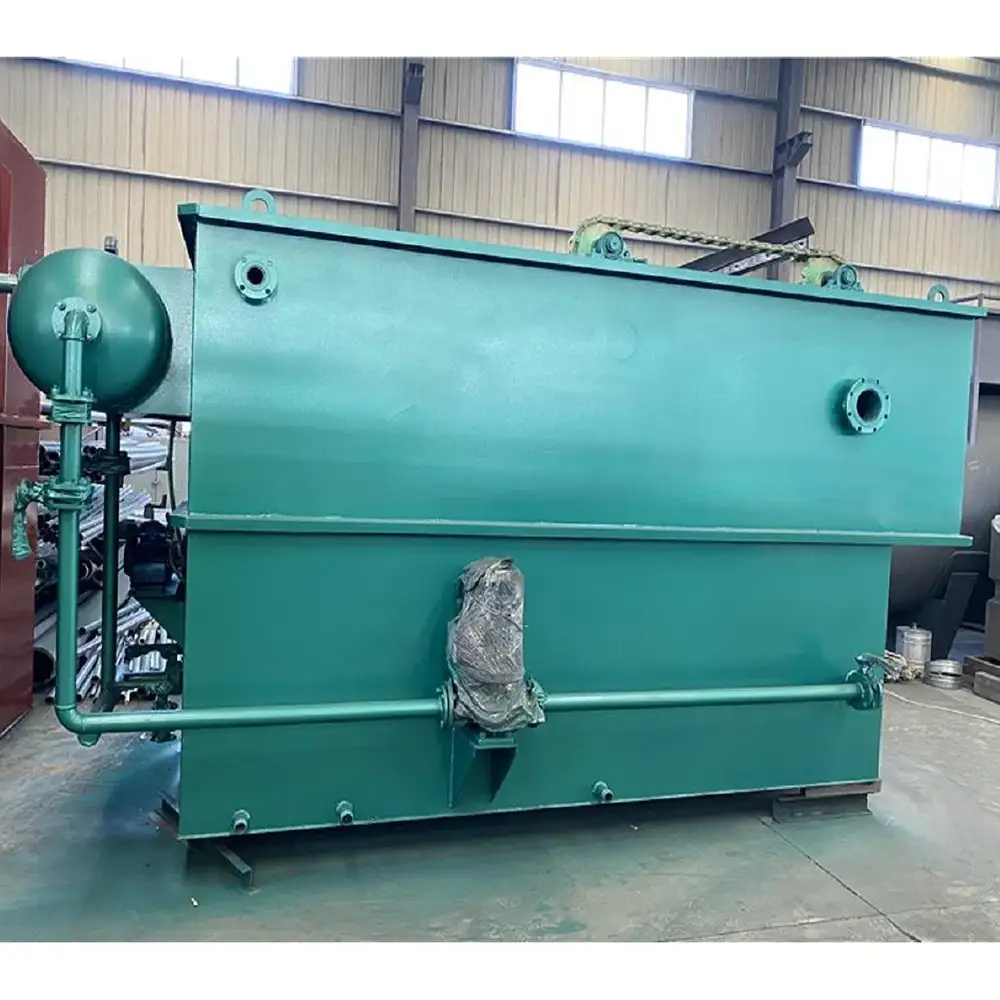
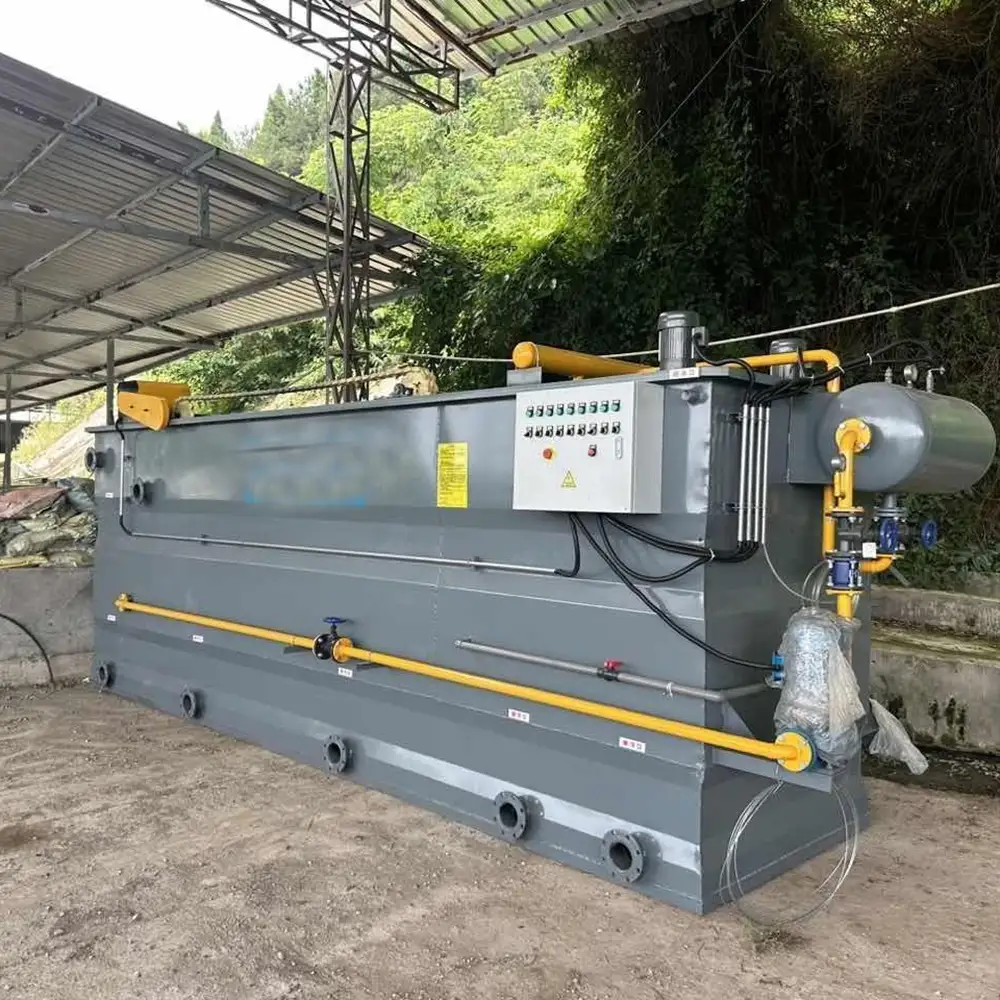
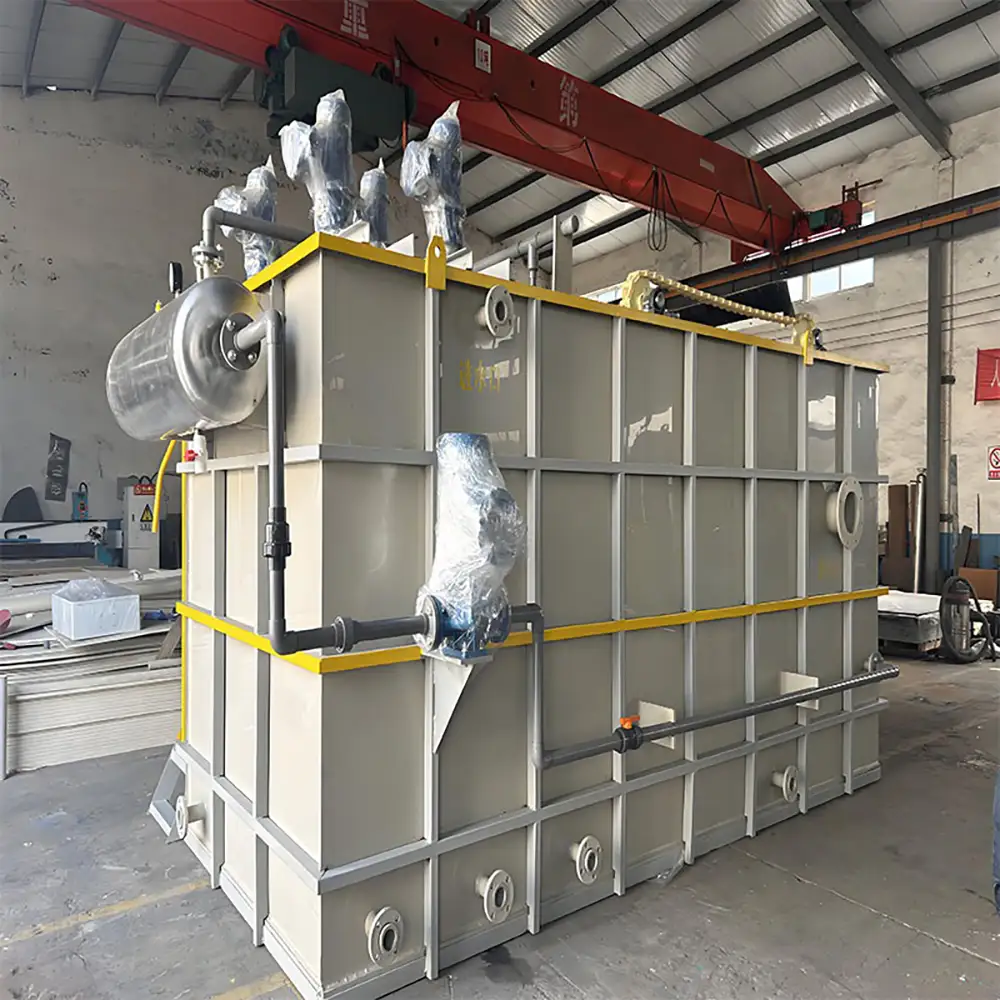
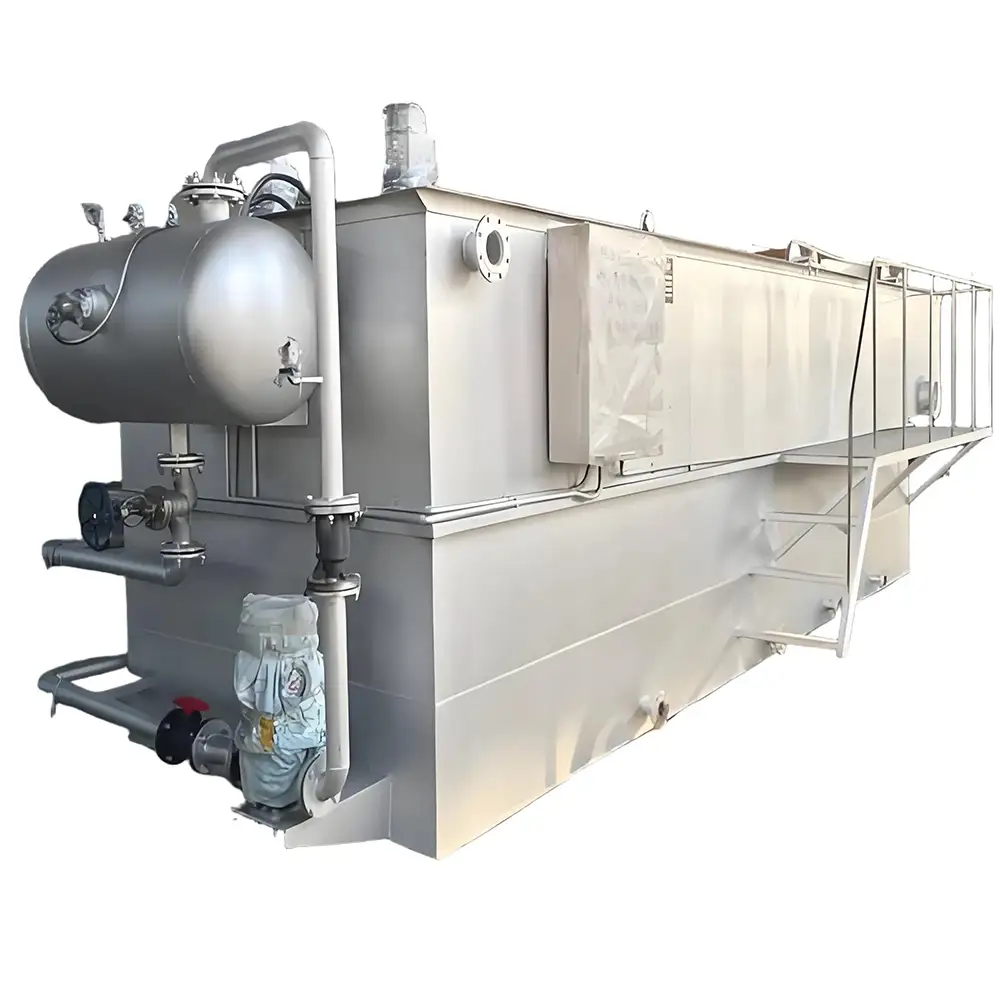
Integrated Sewage Treatment High-Efficiency Sedimentation Tank
The Integrated Sewage Treatment High-Efficiency Sedimentation Tank is a compact solid-liquid separation system designed to remove settleable and flocculated suspended solids from sewage and industrial wastewater. By combining optimized hydraulic distribution, sedimentation space, sludge collection, and high-rate settling components, the system provides an efficient clarification stage while requiring less footprint than many conventional settling arrangements.
Sedimentation is a fundamental wastewater treatment process. In a conventional primary clarifier, wastewater is maintained in a relatively quiescent condition so heavier solids settle by gravity while floating materials can be separated from the water. The clarified liquid then moves toward the downstream treatment process.
For applications where space is limited or higher hydraulic loading is required, inclined tube or plate settling technology can be integrated into the tank. These modules increase the effective settling area and reduce the distance particles need to travel before contacting a settling surface.
Working Principle
The wastewater first enters the inlet distribution section of the High-Efficiency Sedimentation Tank. Proper hydraulic distribution helps reduce turbulence and promotes relatively uniform flow through the settling zone.
When coagulation and flocculation are included upstream, small suspended particles can combine into larger flocs that settle more readily. The wastewater then flows through the inclined tube or lamella settling modules.
As water moves upward through the inclined passages, suspended particles migrate toward the settling surfaces. Once captured, the solids slide downward along the inclined surfaces under gravity and accumulate in the sludge collection zone. Clarified water continues upward and is collected through an outlet weir or collection channel. This upward-flow and downward-sludge movement is characteristic of inclined tube clarification.
High-Efficiency Sedimentation Design
The main advantage of an integrated high-rate sedimentation system is the increased effective settling area within a relatively compact tank.
Traditional sedimentation tanks depend primarily on the horizontal surface area of the basin. Inclined tubes and plates create many additional settling surfaces inside the same overall footprint. EPA technical references describe high-rate settlers as offering significant compactness compared with conventional gravity settling units.
Depending on wastewater characteristics and project requirements, the system can use inclined tube settlers, lamella plates, or other high-rate clarification modules.
The inclined modules are generally positioned at a suitable angle to encourage settled solids to move downward. Proper hydraulic design is important because excessive flow velocity can carry solids through the clarification zone instead of allowing them to settle.
Main Components
A typical Integrated Sewage Treatment Sedimentation Tank may include:
Inlet Distribution System:
Distributes incoming wastewater evenly and reduces short-circuiting and turbulence.
Coagulation and Flocculation Section:
Optional chemical treatment can improve the formation of larger and denser flocs before sedimentation.
Inclined Tube or Lamella Modules:
Provide a large effective settling area within a compact installation.
Clarified Water Collection System:
Weirs, channels, or collection pipes gather treated water from the upper clarification zone.
Sludge Collection Zone:
Settled solids accumulate at the lower portion of the tank for controlled discharge.
Sludge Outlet:
A gravity or pumped sludge outlet removes accumulated solids from the system.
Access and Inspection Components:
Covers, inspection openings, platforms, or access structures can be incorporated according to installation requirements.
Key Advantages
Compact Footprint
High-rate sedimentation technology can provide more effective settling area within a smaller physical footprint than conventional settling arrangements. This makes the equipment suitable for wastewater treatment plants where available land is limited.
Efficient Suspended Solids Separation
The system is designed primarily for separating settleable and flocculated suspended solids from wastewater. It can be used as a primary clarification or as a downstream clarification stage after biological or chemical treatment.
Integrated Treatment Configuration
Inlet distribution, settling modules, clarified-water collection, and sludge collection can be integrated into one treatment unit, reducing the need for multiple independent structures.
Improved Hydraulic Utilization
The use of inclined tubes or plates reduces the effective settling distance required by individual particles. This allows high-rate clarification equipment to achieve greater hydraulic loading than a conventional tank of similar surface area when properly designed.
Flexible Process Integration
The sedimentation tank can be installed together with screening, coagulation, flocculation, biological treatment, filtration, disinfection, sludge dewatering, or other wastewater treatment processes.
Applications
The Integrated Sewage Treatment High-Efficiency Sedimentation Tank can be used in:
Municipal sewage treatment plants
Domestic wastewater treatment
Industrial wastewater treatment
Food processing wastewater
Textile wastewater treatment
Chemical industry wastewater
Mining wastewater treatment
Coal processing wastewater
Metal processing wastewater
Paper and pulp wastewater
Pharmaceutical wastewater
Sludge clarification
Primary sedimentation
Secondary clarification
Tertiary solids removal
Wastewater recycling systems
For industrial applications, wastewater characteristics should be evaluated before equipment selection because particle size, density, floc characteristics, viscosity, and chemical composition can significantly affect settling behavior.
Coagulation and Flocculation Integration
Fine particles may remain suspended for long periods because of their small size or surface characteristics. In these cases, chemical coagulation and flocculation can be used before sedimentation.
Coagulants destabilize fine particles, while flocculation promotes contact between particles and formation of larger aggregates. The resulting flocs are easier to separate through gravity sedimentation.
The appropriate chemical dosage should be determined through wastewater testing and, where appropriate, jar testing rather than using a fixed dosage for every application. EPA references also note that chemical coagulants may be added to improve sedimentation performance.
Sludge Collection and Management
Sedimentation concentrates suspended solids into a sludge stream. Efficient sludge removal is therefore an important part of system operation.
The inclined surfaces help direct settled material downward toward the sludge collection zone. Depending on the design and solids loading, sludge can be removed periodically or continuously.
Sludge may subsequently be transferred to a sludge thickener, filter press, belt filter press, centrifuge, drying system, or other dewatering equipment.
Regular sludge removal helps prevent excessive accumulation that could interfere with hydraulic performance or cause solids carryover.
Operation and Maintenance
Routine maintenance should include inspection of inlet and outlet structures, inclined modules, sludge discharge points, valves, pumps, sensors, and associated equipment.
Inclined tube and lamella surfaces can accumulate biological growth or solids under certain wastewater conditions. EPA process-design references note that periodic cleaning may be necessary when buildup restricts the settling passages.
Operators should monitor influent flow, turbidity, sludge accumulation, chemical dosage where applicable, and effluent suspended solids. Sudden changes in flow or wastewater characteristics should be evaluated because excessive hydraulic loading can reduce clarification performance.
System Selection
The correct Wastewater Sedimentation Tank should be selected according to:
Average and peak wastewater flow
Influent suspended solids concentration
Particle size and density
Floc characteristics
Required effluent quality
Upstream coagulation and flocculation
Sludge production
Available installation area
Operating temperature
Installation environment
Required automation level
A pilot test or laboratory evaluation can be useful for difficult industrial wastewater because actual settling behavior can vary substantially between applications.
Why Choose Us?
We provide integrated wastewater treatment equipment designed around practical process requirements rather than a single standard configuration. Our high-efficiency sedimentation solutions can be configured for municipal sewage, industrial wastewater, chemical clarification, sludge separation, and other solid-liquid separation applications.
The system can be integrated with coagulation and flocculation, inclined tube settlers, lamella clarification, sludge collection, filtration, and downstream treatment equipment. Dimensions, hydraulic capacity, materials, automation, and supporting equipment can be selected according to project conditions.
Our focus is on compact equipment layout, stable hydraulic performance, convenient sludge removal, straightforward maintenance, and reliable integration into complete wastewater treatment plants.
FAQs
1. What is a high-efficiency sedimentation tank?
It is a clarification tank designed to improve suspended solids settling efficiency while using less space than many conventional sedimentation systems.
2. What is an inclined tube settler?
An inclined tube settler consists of multiple inclined passages through which wastewater flows. Solids settle onto the surfaces and move downward toward the sludge collection area.
3. What is the difference between a sedimentation tank and a clarifier?
Both perform solid-liquid separation by settling. “Clarifier” often refers to equipment specifically designed to produce clarified water while collecting settled solids.
4. Can this tank remove suspended solids?
Yes. Its primary function is the gravity separation of settleable and flocculated suspended solids.
5. Does coagulation need to be installed before the tank?
Not always. Coagulation and flocculation are recommended when fine or colloidal particles require chemical conditioning to improve settling.
6. Can it be used for industrial wastewater?
Yes. It can be applied to many industrial wastewater streams when the solids have suitable settling characteristics or can be conditioned through coagulation and flocculation.
7. What are the benefits of inclined tubes?
They increase the effective settling area and shorten the settling distance required for particles, allowing a more compact high-rate clarification design.
8. How is sludge removed?
Settled sludge accumulates in the lower collection zone and can be discharged through gravity or a sludge pump depending on the system design.
9. Can the sedimentation tank be integrated into an existing plant?
Yes. It can be incorporated into new treatment plants or used as an additional clarification stage when hydraulic and structural conditions permit.
10. Does the system remove dissolved pollutants?
Sedimentation primarily removes suspended and settleable solids. Dissolved salts, many dissolved organic compounds, and other dissolved pollutants generally require additional treatment technologies.
11. How should the capacity be selected?
Capacity should be based on average and peak flow, influent solids concentration, settling characteristics, required effluent quality, and the selected hydraulic loading conditions.
12. How often should the inclined modules be cleaned?
Cleaning frequency depends on wastewater characteristics and solids accumulation. Regular inspection is recommended to prevent excessive buildup or blockage of settling passages.
Prev:
Pig, Cattle and Sheep Breeding Sewage Treatment Equipment Efficient Air Float Machine
Next:
Coal Mine Wastewater Treatment /Industrial Equipment/ Water Treatment Equipment
TAG:
Industrial Wastewater Treatment Equipment,
Suspended Solids Removal,
Industrial Wastewater Treatment,
Wastewater Treatment Equipment,
Sludge Separation Equipment,
Solid Liquid Separation Equipment,
Industrial Water Treatment Equipment,
Suspended Solids Removal Equipment,
Wastewater Solid Liquid Separator,
Wastewater Treatment Plant Equipment,
Sewage Treatment Equipment,
Integrated Sewage Treatment System,
Integrated Sewage Treatment Equipment,
Compact Wastewater Treatment Equipment,
Wastewater Clarification System,
Wastewater Clarification Equipment,
Wastewater Sludge Separation,
Integrated Sewage Treatment,
Municipal Wastewater Treatment,
Municipal Sewage Treatment,
Industrial Wastewater Clarifier,
Modular Wastewater Treatment,
Sewage Treatment Plant Equipment,
High Efficiency Wastewater Treatment,
Wastewater Clarifier,
TSS Removal Equipment,
Solid Liquid Separation,
Water Treatment Clarifier,
Water Clarification System,
Wastewater Sludge Removal,
Related Category:
Integrated Sewage Treatment High-Efficiency Sedimentation Tank,High-Efficiency Sedimentation Tank,Sewage Treatment Sedim China, suppliers, manufacturers, factory, customized, wholesale, quotation, made in China