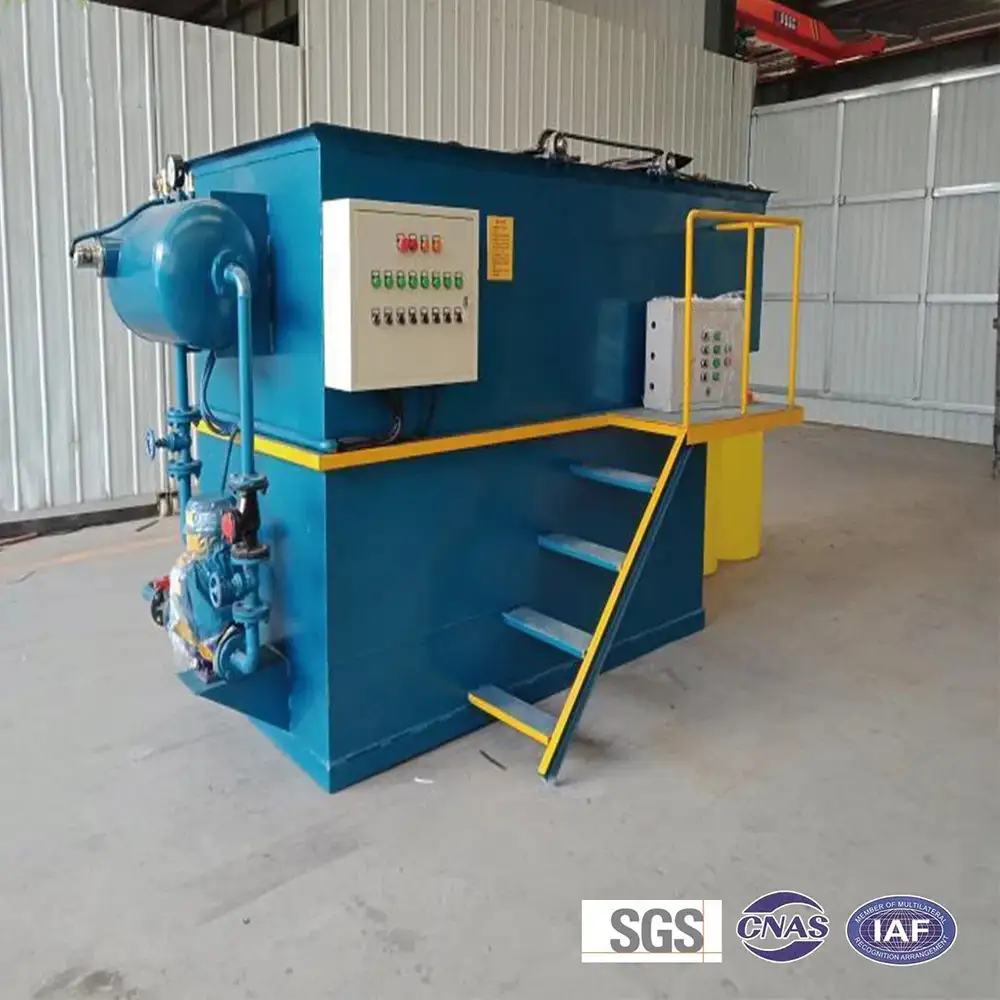
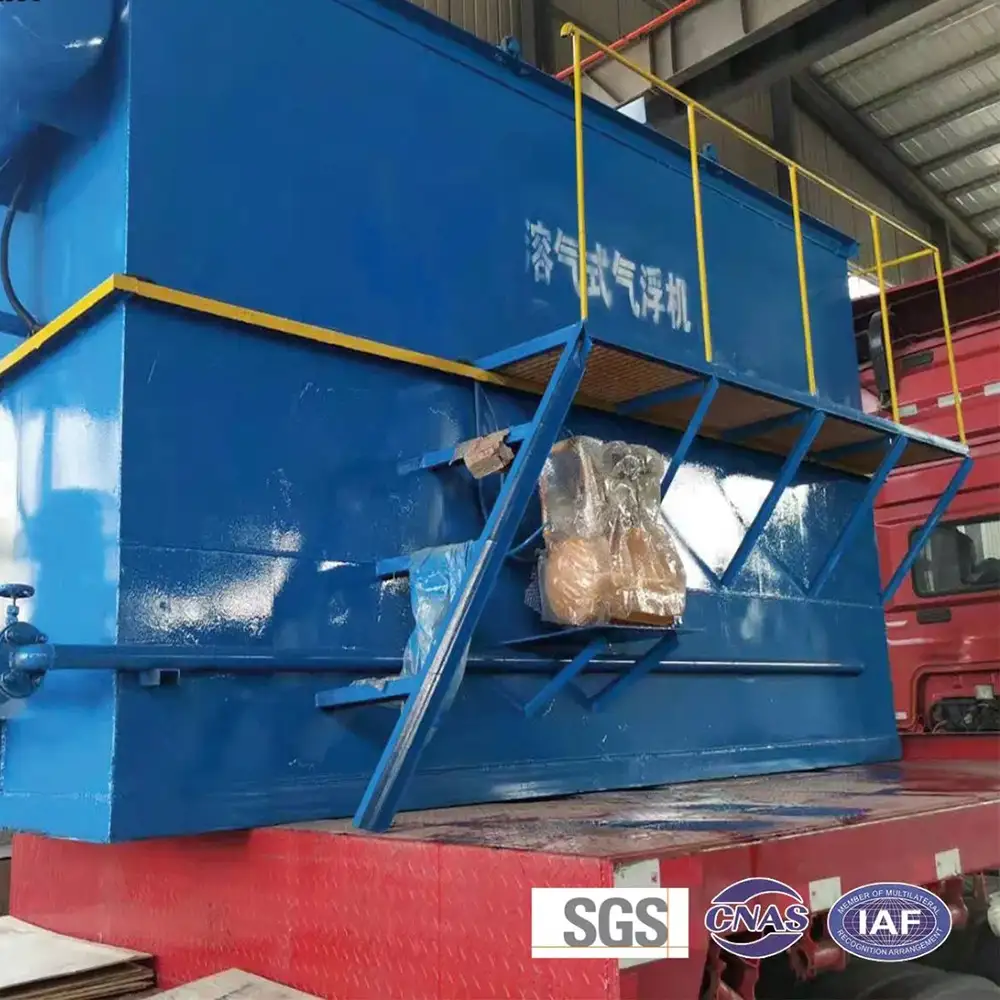
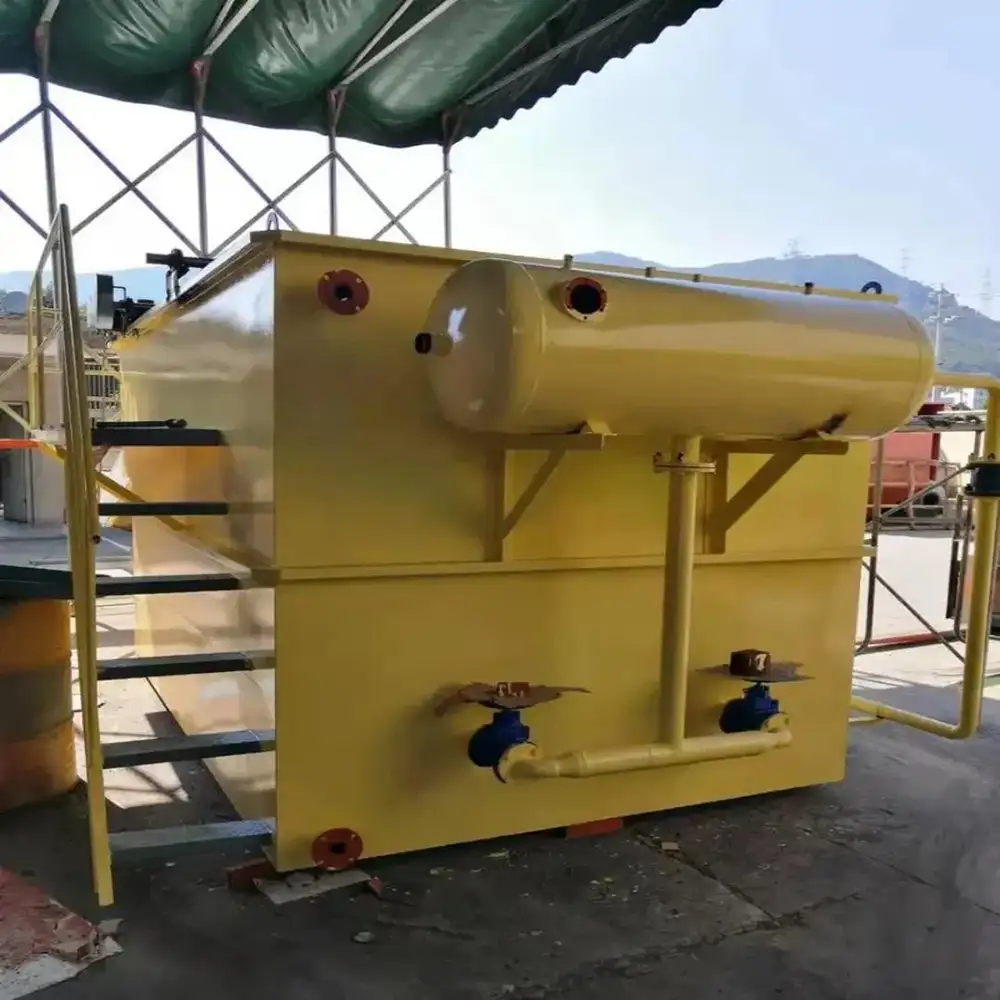
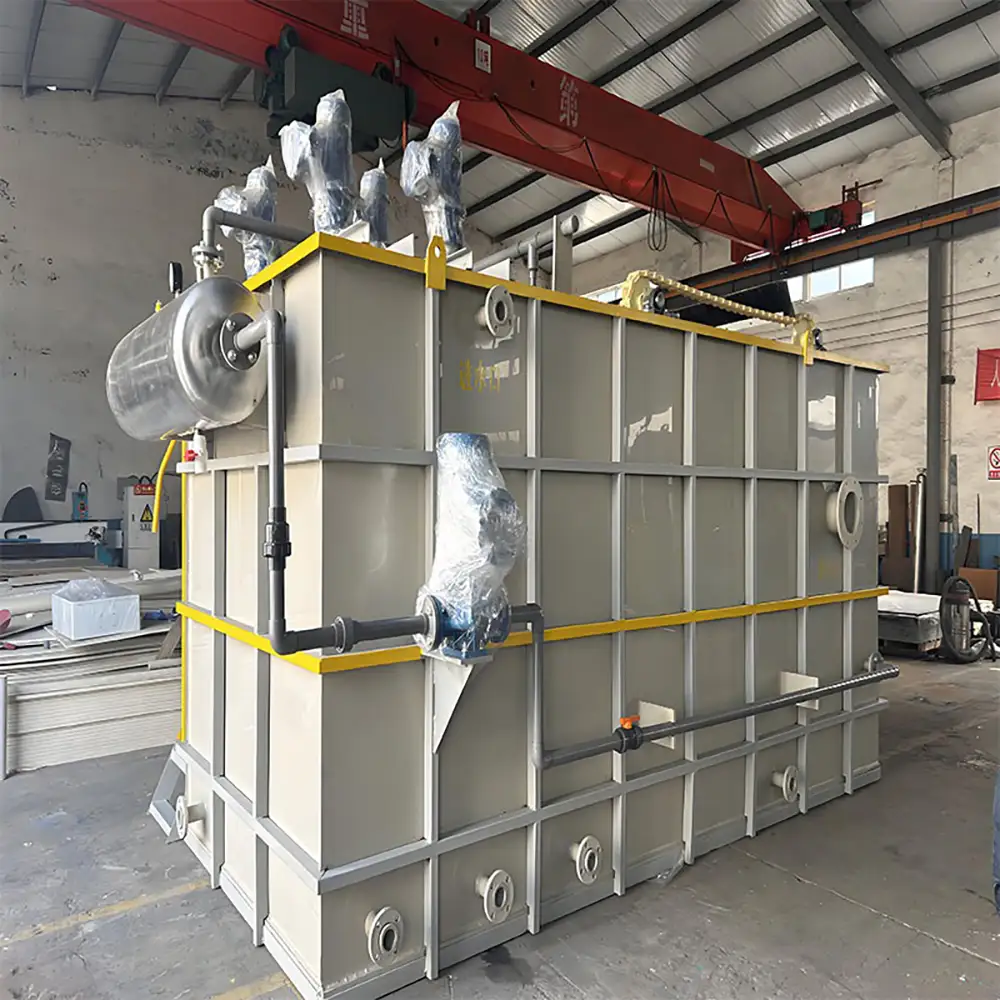
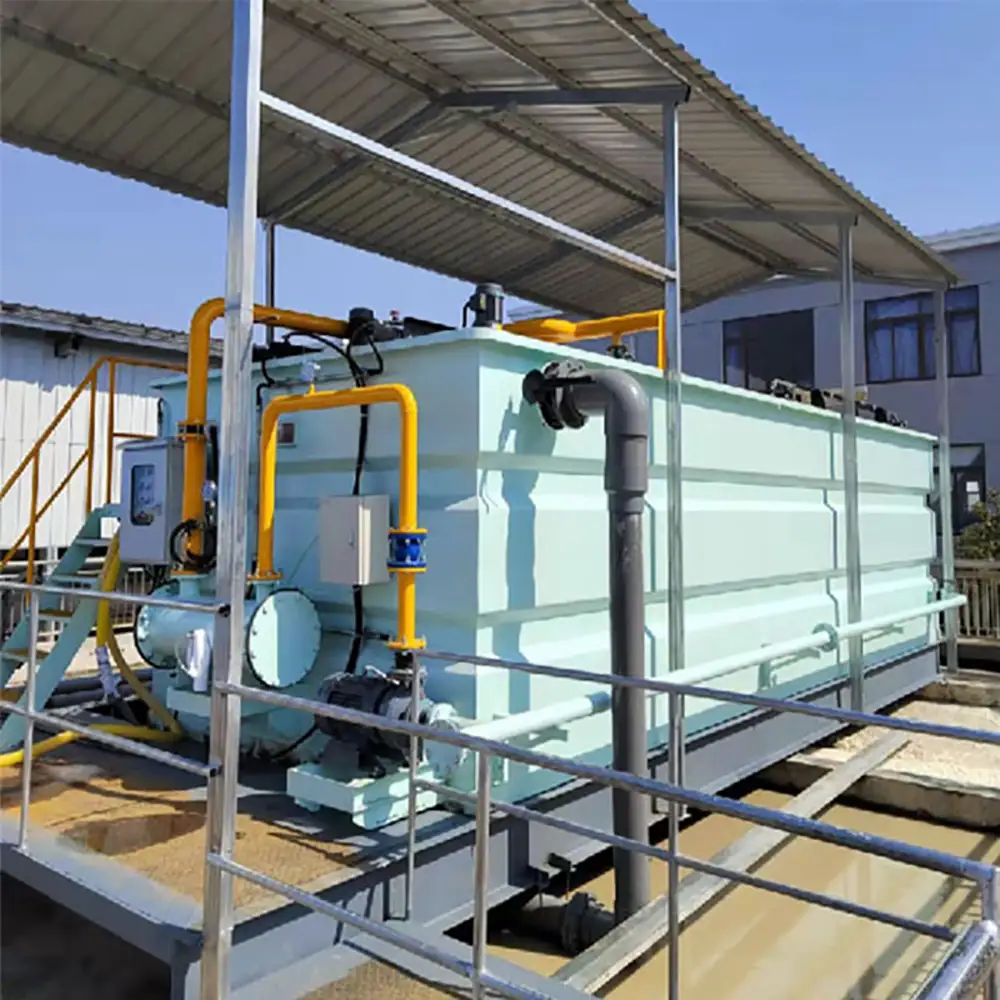
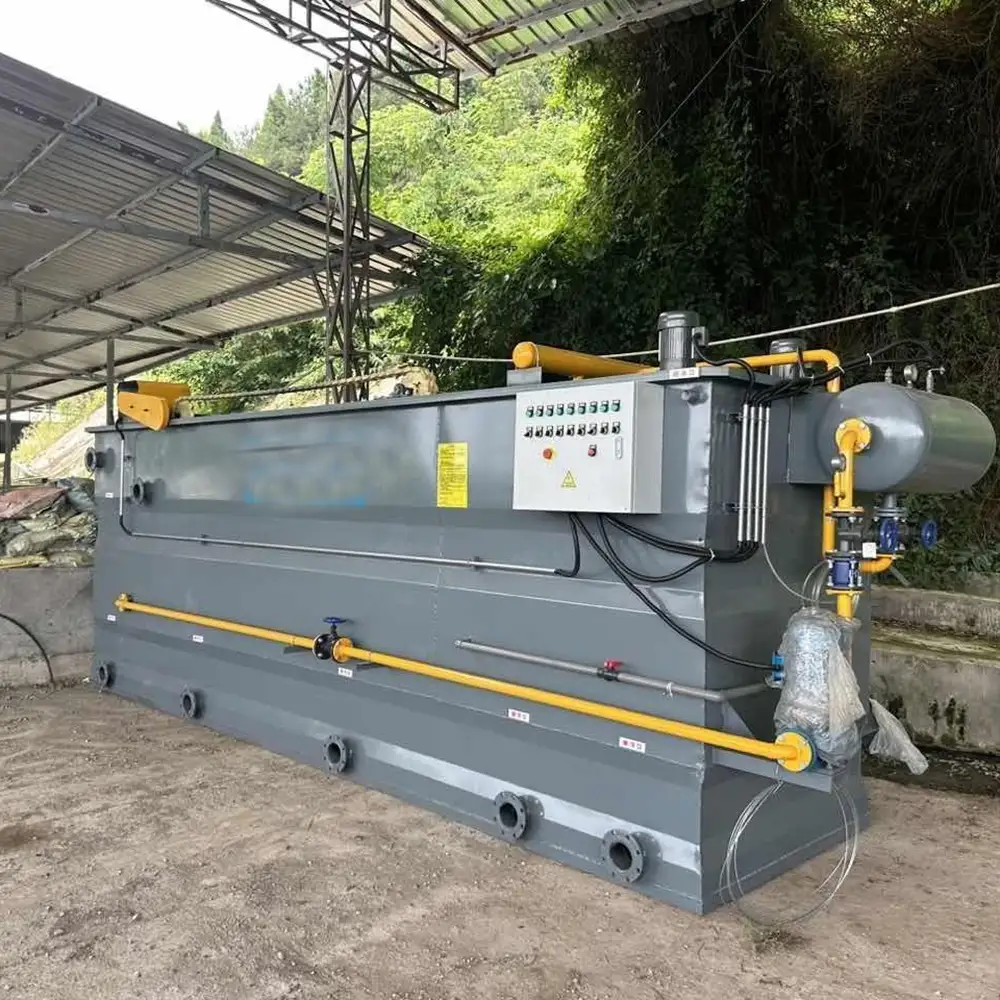
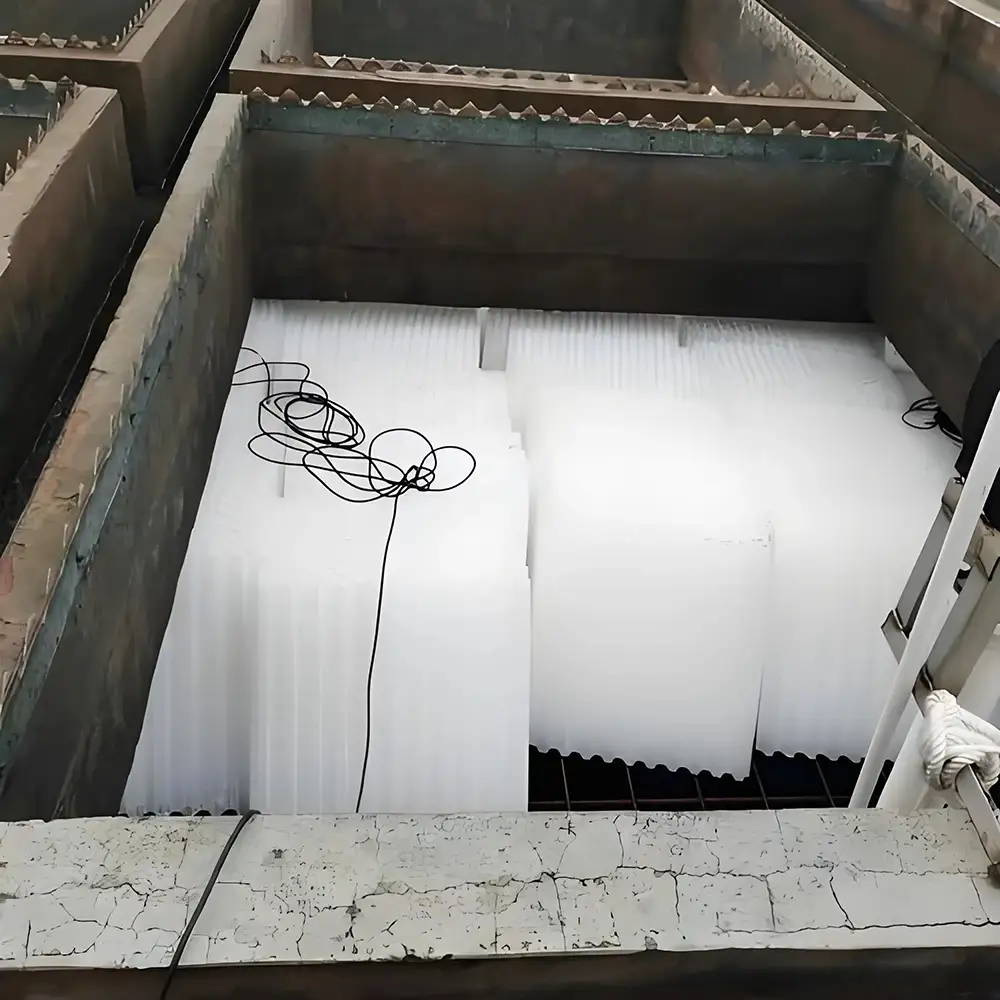
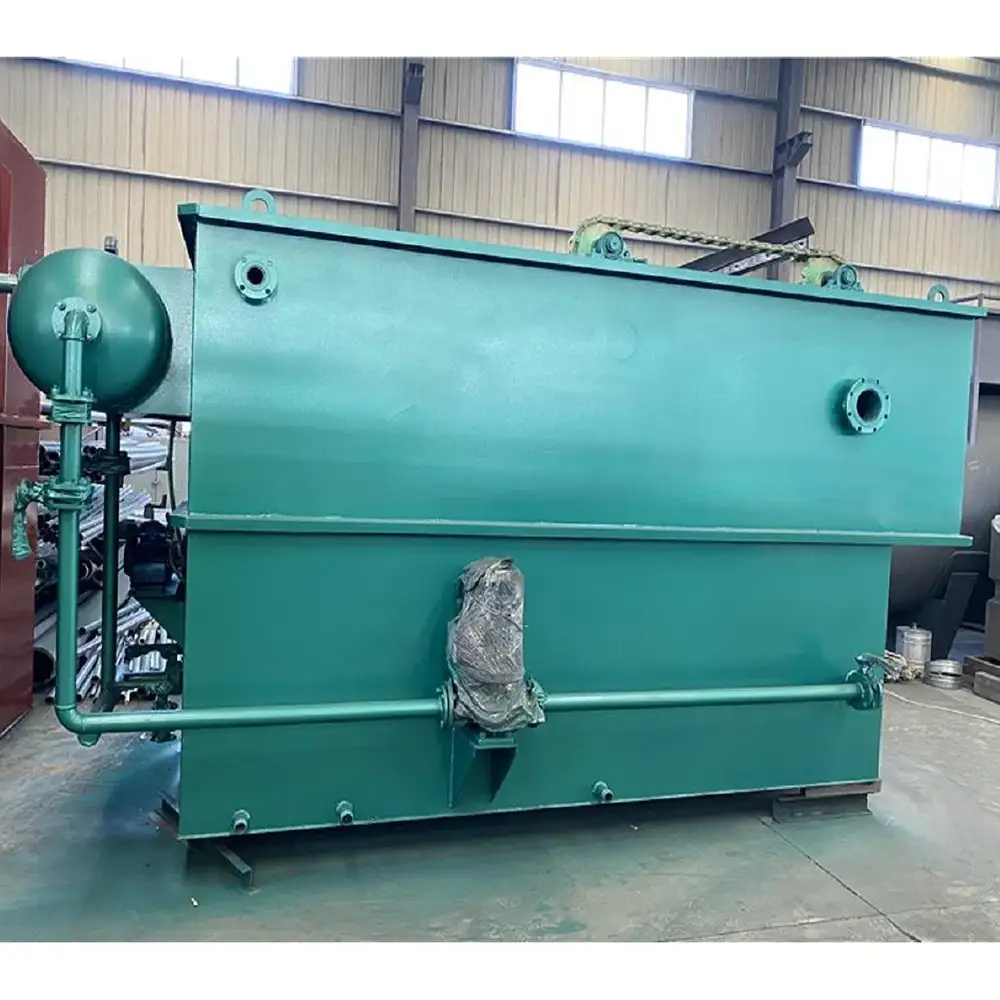
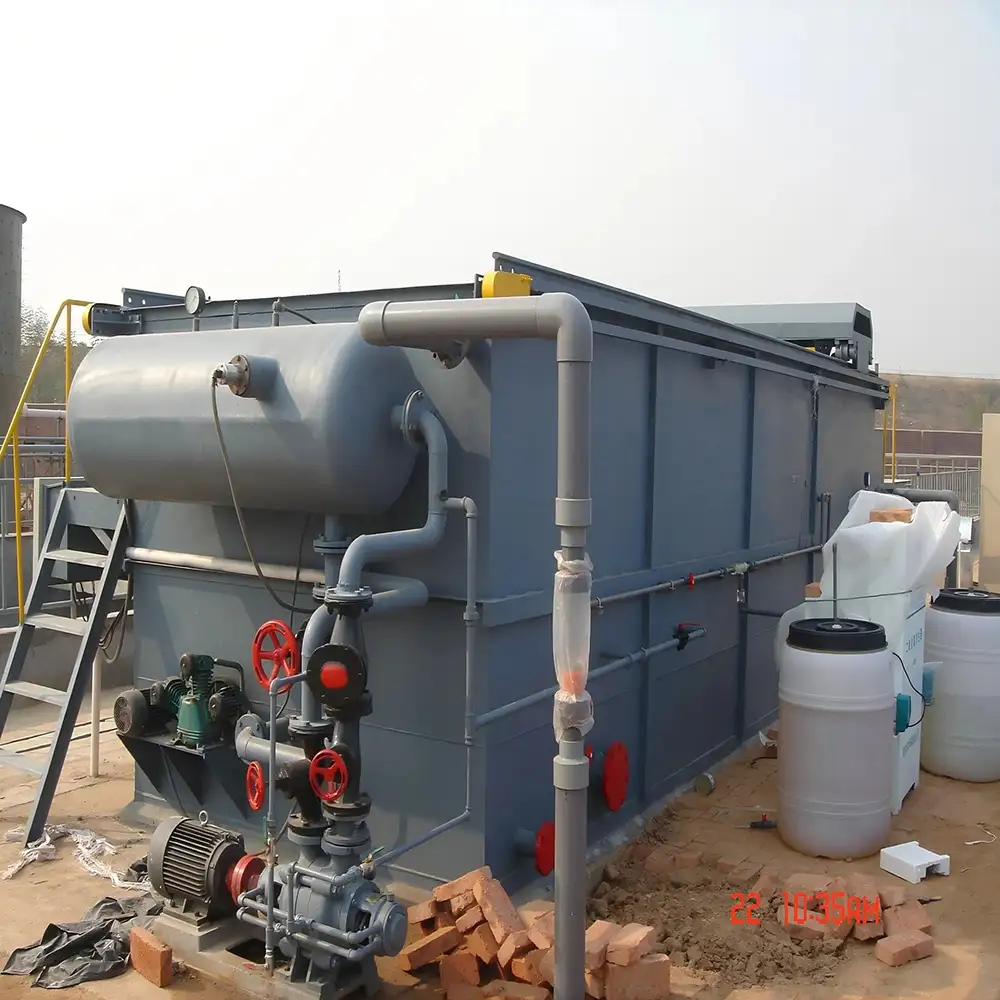
Industrial Water Treatment Air Float Equipment / Water Treatment Plant
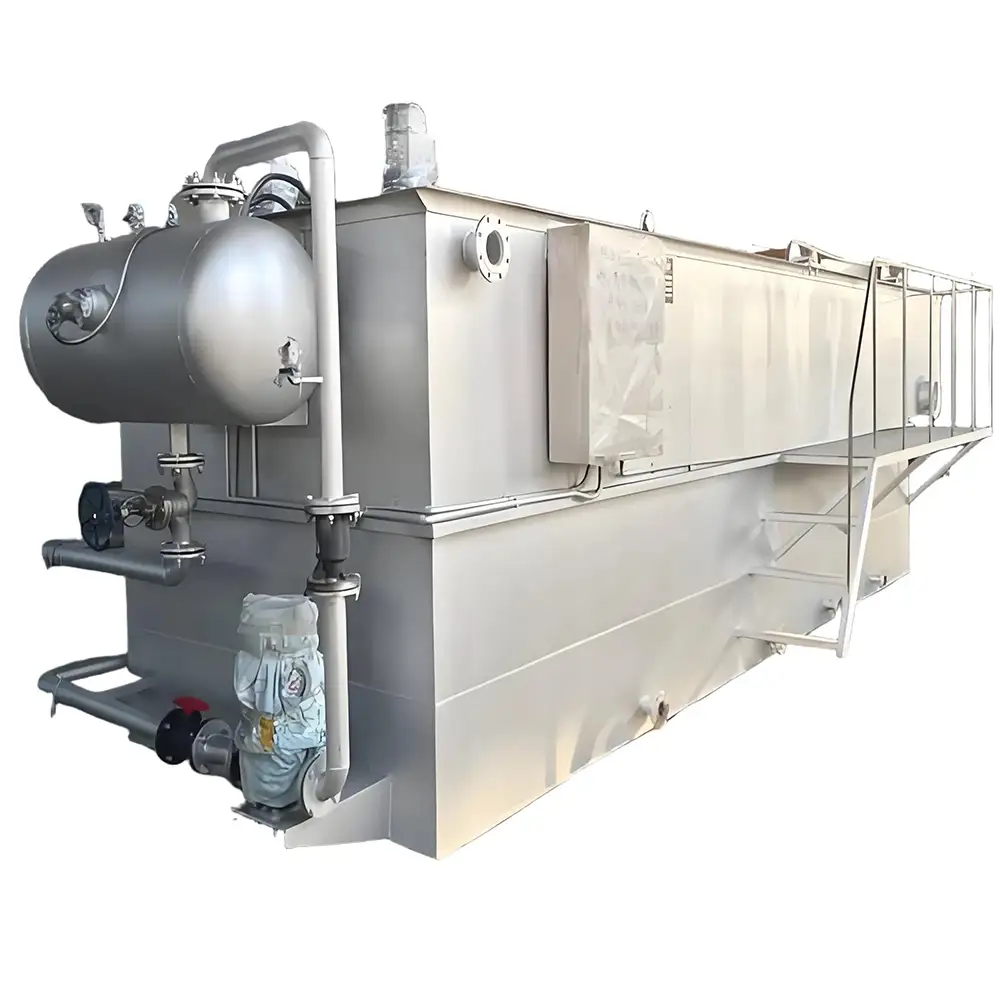
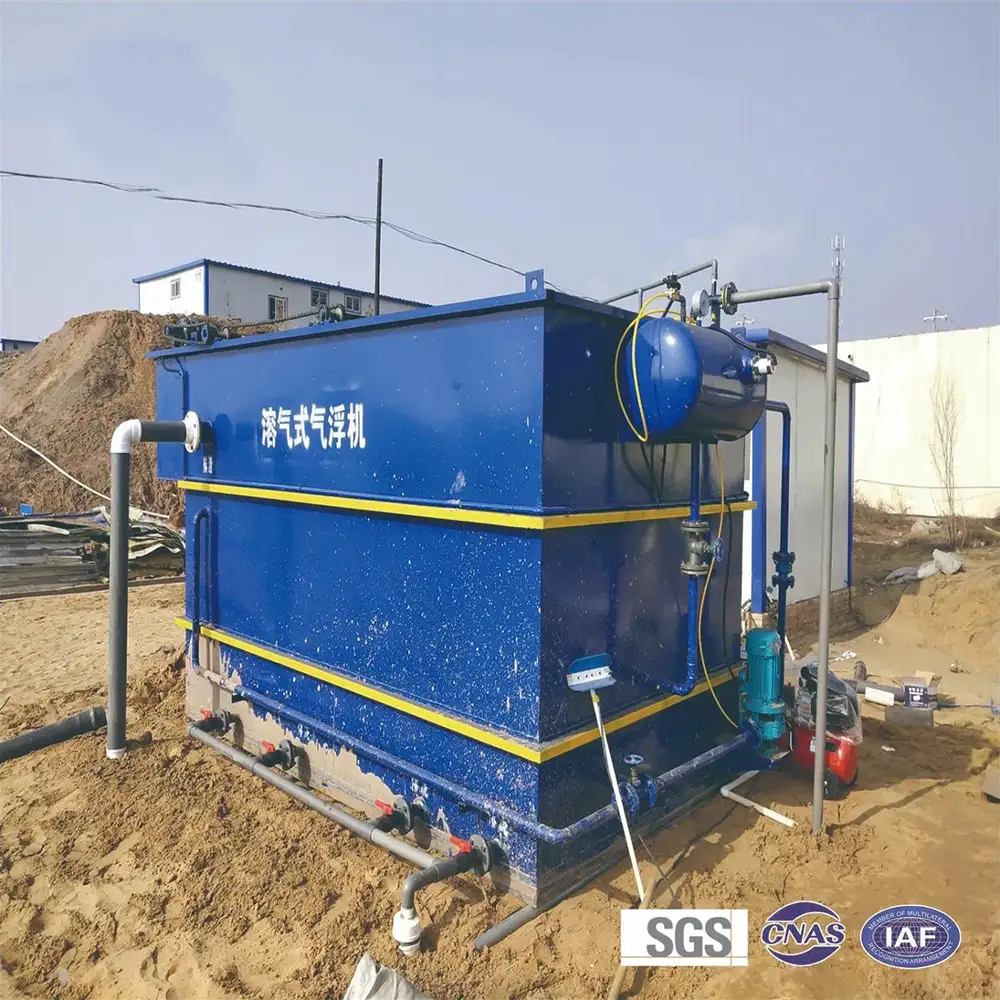
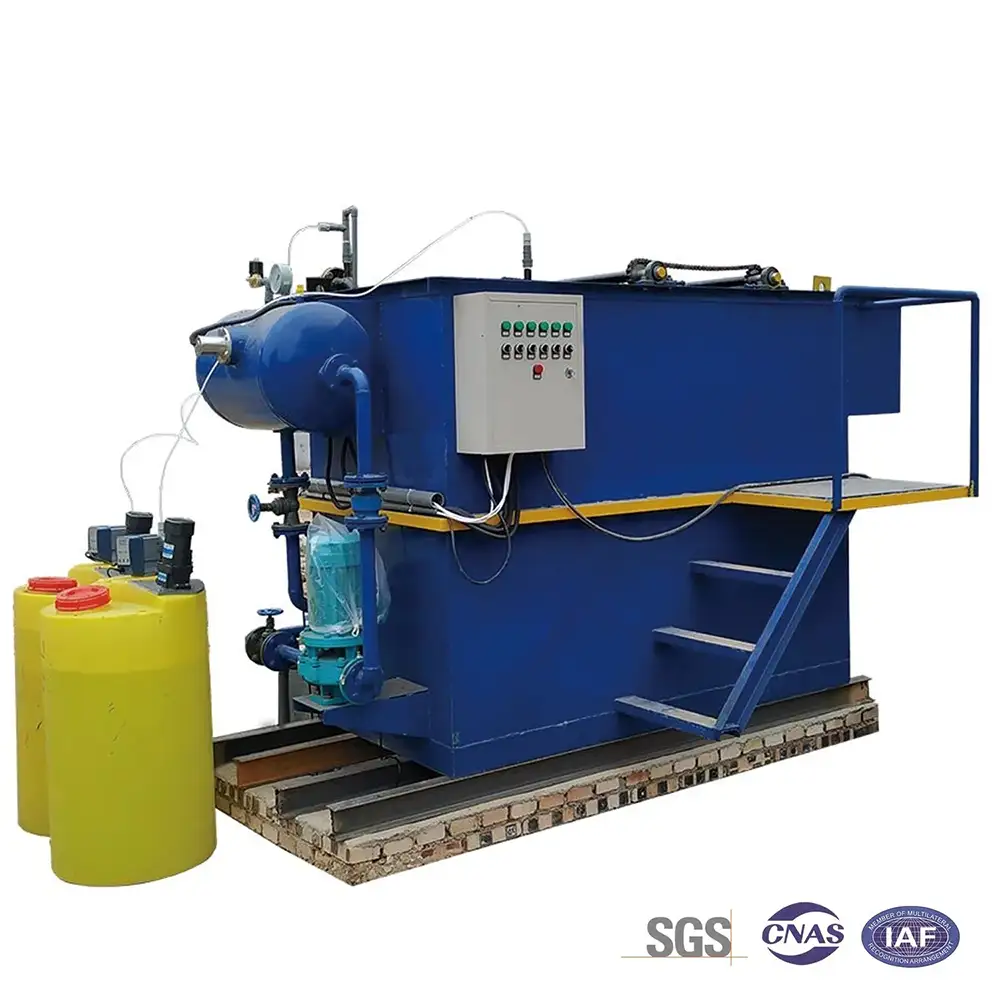
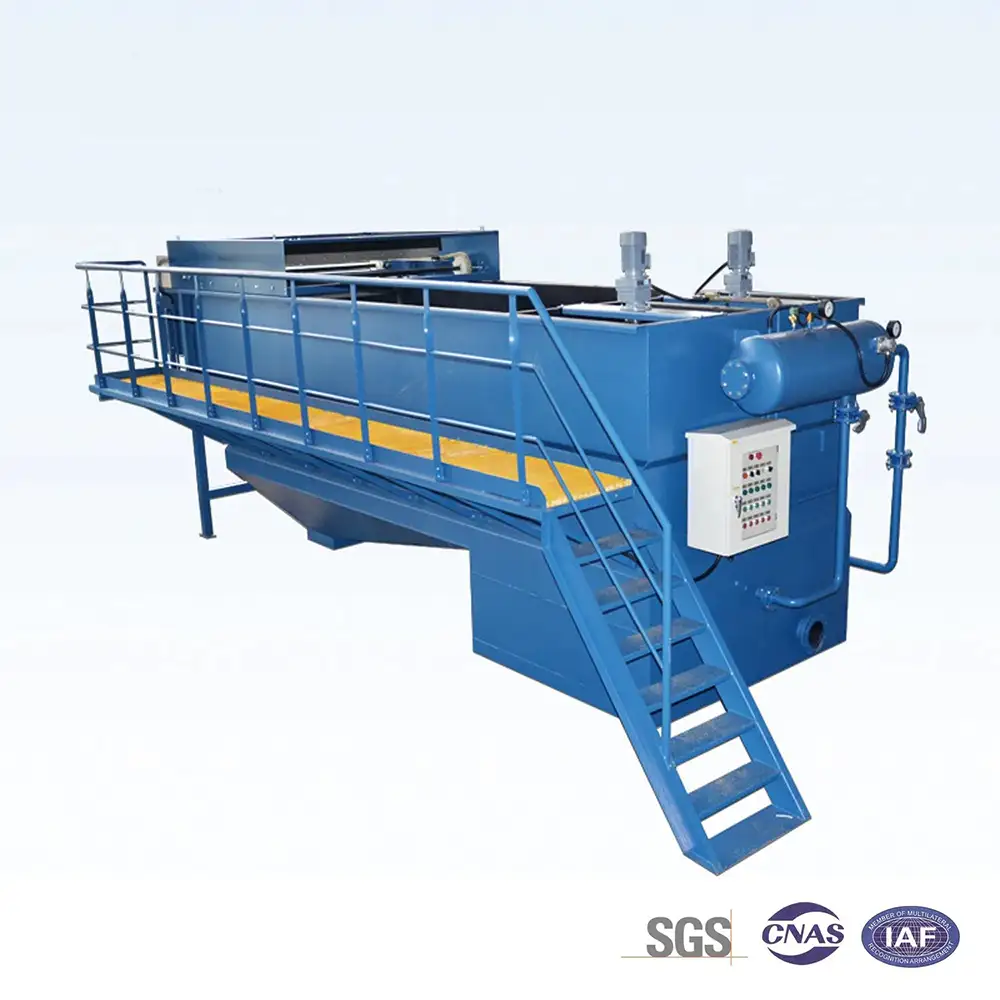
Industrial Water Treatment Air Float Equipment is an efficient flotation-based solution for wastewater clarification, suspended solids removal, oil and grease separation, and industrial water purification. Commonly known as Dissolved Air Flotation (DAF) equipment, the system uses fine air bubbles to attach to suspended particles and floating contaminants, increasing their apparent buoyancy so they can be separated from the treated water.
DAF systems are widely used as a physical-chemical treatment process in industrial wastewater applications. The process is particularly useful when wastewater contains fine suspended solids, oil, grease, or particles that settle slowly by gravity. EPA technical references describe DAF as a process in which air is dissolved under pressure and then released, producing microscopic bubbles that attach to suspended particles or flocs and carry them toward the water surface.
|
Model NO. |
GSRF |
Handling method |
physicochemical treatment |
|
Usage |
Industrial, agricultural, food factories, slaughterhouses |
Trademark |
|
|
Types |
Package, Compact, Small, Mini |
Applications |
Industrial, Municipal, Domestic, Medical, Ship |
|
Craft |
Flocculation sedimentation method |
Features |
Water Clarification, Filtration, Purification |
|
Service Life |
20 Years |
Operation |
Automatic |
|
Steel Plate Thickness |
>8mm |
Function |
Remove Suspended solids |
|
Voltage |
220V/ 380V/ Customerized |
Installation Type |
Onground |
|
Colour |
Grey/Silver/Blue/Balck/Customerized |
Use for |
Mineral, Printing, Chemical, Dyeing, Starch |
|
Material |
Carbon Steel, Stain Steel, FRP, PE, PP |
Certificate |
SGS, ISO |
|
Transport Package |
Container Standard Packing |
Specification |
Carbon steel anti-corrosion |
|
Production Capacity |
1000 Sets/Year |
Origin |
China |
Industrial DAF Water Treatment Plant
A complete industrial water treatment plant can combine air flotation with equalization, coagulation, flocculation, sedimentation, filtration, biological treatment, sludge dewatering, and other processes. The exact configuration depends on the wastewater source and the required treated-water quality.
The DAF section is often positioned after screening and equalization and may be preceded by chemical dosing. Coagulants and polymers can help destabilize colloidal particles and form larger flocs that are easier for microbubbles to capture.
After flotation, a surface skimmer continuously or periodically removes the floating sludge layer. The clarified water leaves the flotation chamber and can move to downstream treatment or reuse. Some systems also include bottom sludge collection because a portion of solids may settle rather than float.
How Dissolved Air Flotation Works
The operating principle is based on pressure-induced air dissolution and controlled pressure release.
A portion of the wastewater or clarified recycle water is pressurized and saturated with air. When the pressurized stream enters the flotation chamber and pressure is reduced, the dissolved air comes out of solution as numerous fine bubbles.
These bubbles attach to suspended particles, oil droplets, grease, and chemical flocs. The resulting bubble-particle aggregates become more buoyant and rise to the surface. A mechanical skimmer then moves the floating material into a collection trough or sludge tank.
EPA references identify pressurizing pumps, air injection equipment, pressure vessels or saturation systems, pressure-release components, and flotation tanks as typical DAF system components.
Recycle Pressurization
Industrial DAF plants may use full-flow or recycle-flow pressurization. In a recycle configuration, part of the clarified effluent is returned, pressurized, saturated with air, and then released into the flotation chamber.
This approach can reduce the amount of raw wastewater that must be pressurized. EPA technical documentation notes that pressurizing only the recycle stream can reduce the energy required compared with pressurizing the entire influent flow.
Recycle DAF can therefore be attractive for industrial systems where energy consumption, equipment sizing, and stable flotation performance are important considerations.
Main Features
Efficient Solid-Liquid Separation: DAF is designed for suspended solids and floatable contaminants that may be difficult or slow to remove by conventional gravity settling.
Fine Bubble Flotation: Microscopic bubbles provide a large contact area for attaching to suspended particles and flocs.
Oil And Grease Removal: DAF is commonly applied to wastewater containing free or dispersed oil, grease, fats, and other floatable materials.
Compact Treatment Footprint: Flotation can provide high-rate clarification and may require less land area than some conventional settling processes.
Chemical-Assisted Treatment: Coagulant and polymer dosing can be integrated when improved floc formation is required.
Automatic Skimming: Surface scrapers continuously or intermittently remove floating solids and concentrated sludge.
PLC Automation: Pumps, valves, skimmers, dosing systems, sensors, alarms, and operating parameters can be controlled through an automated system.
Modular Configuration: Individual DAF units or complete treatment trains can be configured according to wastewater flow and project requirements.
Industrial Applications
Industrial Water Treatment Air Float Equipment can be used in many wastewater treatment applications, including:
Food Processing Wastewater
Meat And Poultry Wastewater
Dairy Wastewater
Slaughterhouse Wastewater
Beverage Processing Wastewater
Petrochemical Wastewater
Oil And Gas Wastewater
Refinery Wastewater
Textile Wastewater
Printing And Dyeing Wastewater
Pulp And Paper Wastewater
Metal Processing Wastewater
Automotive Wastewater
Mining Wastewater
Chemical Industry Wastewater
Municipal Pretreatment
DAF can also be used for sludge thickening and product or material recovery in selected industrial processes.
DAF With Coagulation And Flocculation
For wastewater containing very fine suspended particles or colloids, physical flotation alone may not provide the desired separation. In these cases, coagulation and flocculation can be installed upstream of the DAF unit.
A rapid-mixing tank disperses the coagulant, while a flocculation chamber provides controlled mixing so destabilized particles can form larger flocs. The flocs then enter the flotation tank where microbubbles lift them to the surface.
Chemical selection and dosage should be determined through wastewater testing or jar testing rather than using a fixed dosage for every application. EPA documentation identifies chemical pretreatment as an important factor affecting DAF performance under variable influent conditions.
Water Treatment Plant Integration
A complete industrial water treatment plant may use the following process sequence:
Screening → Equalization → pH Adjustment → Coagulation → Flocculation → Dissolved Air Flotation → Biological Treatment → Filtration → Disinfection → Water Reuse
Not every project requires every stage. For example, an oily wastewater stream may require oil separation and DAF as pretreatment, while food-processing wastewater may require DAF followed by biological treatment.
For advanced water reuse, DAF can also serve as pretreatment before ultrafiltration, reverse osmosis, or other membrane processes. Removing suspended solids and oil upstream can help protect downstream equipment from excessive fouling.
Sludge Handling
DAF generates a concentrated floating sludge or scum layer. The skimmer transfers this material to a sludge collection system. Depending on the application, the sludge may then be thickened, conditioned, or dewatered using a filter press, screw press, belt filter press, or other suitable equipment.
Proper sludge removal is important because excessive accumulation on the water surface can interfere with flotation performance. EPA references also note that DAF systems can generate a secondary sludge stream that requires appropriate handling and disposal.
Maintenance
Routine maintenance should include inspection of the pressurization pump, air-dissolution system, pressure-release components, flotation tank, skimmer, sludge pump, chemical dosing equipment, sensors, valves, and control cabinet.
Operators should monitor flow, pressure, recycle rate, water quality, sludge characteristics, and chemical dosage. Filter screens and nozzles should be cleaned when necessary, while mechanical skimmer components should be checked for wear and alignment.
Because wastewater characteristics can change significantly during industrial production, operating parameters may need to be adjusted according to actual influent conditions.
System Selection
When selecting Industrial Water Treatment Air Float Equipment, buyers should consider:
Wastewater flow rate
Suspended solids concentration
Oil and grease concentration
Particle characteristics
pH and alkalinity
Temperature
Required treated-water quality
Chemical treatment requirements
Desired water-reuse target
Sludge handling method
Installation space
Automation requirements
A representative wastewater analysis is strongly recommended before final equipment selection. DAF performance depends on wastewater characteristics, bubble generation, chemical conditioning, hydraulic loading, and operating conditions.
Why Choose Us?
We provide industrial DAF water treatment solutions designed around the actual wastewater characteristics and treatment objectives of each project. Instead of offering a generic flotation machine, we can configure the complete treatment process with equalization tanks, chemical dosing, coagulation and flocculation, dissolved air flotation, sludge handling, filtration, disinfection, and water-recycling equipment.
Our systems can be designed for compact industrial installations as well as larger water treatment plants. Equipment materials, tank construction, pump configuration, control systems, skimmer design, and treatment capacity can be selected according to project requirements.
The goal is to provide reliable solid-liquid separation, stable operation, convenient maintenance, and practical integration with upstream and downstream wastewater treatment processes.
Frequently Asked Questions
1. What is Industrial Water Treatment Air Float Equipment?
It is flotation equipment used to separate suspended solids, oil, grease, and other floatable contaminants from wastewater. The most common industrial configuration is Dissolved Air Flotation, or DAF.
2. How does a DAF water treatment system work?
Air is dissolved into a pressurized water stream. When pressure is released, fine bubbles form and attach to particles or flocs, causing them to rise to the surface for mechanical removal.
3. What contaminants can DAF remove?
DAF is commonly used for suspended solids, oil, grease, fats, floatable solids, and particles with poor settling characteristics.
4. Can DAF remove dissolved salts?
DAF is primarily a physical-chemical separation process and does not generally provide significant removal of dissolved salts. Membrane, ion exchange, or other technologies may be required.
5. Can chemicals be used with DAF?
Yes. Coagulants and polymers can be used to improve floc formation and flotation performance when wastewater contains fine or colloidal particles.
6. Is DAF suitable for oily wastewater?
Yes. DAF is widely used for oil and grease separation, particularly when oil droplets and suspended solids are suitable for flotation.
7. Can DAF be used as pretreatment for RO?
Yes. When appropriately designed, DAF can reduce suspended solids, oil, and other foulants before downstream membrane treatment.
8. What is recycle pressurization?
It means a portion of clarified effluent is recycled, pressurized, saturated with air, and returned to the flotation process. This can reduce the amount of wastewater that must be pressurized.
9. Does DAF produce sludge?
Yes. Floating solids and concentrated sludge are removed from the surface and may require further thickening or dewatering.
10. Can the system operate automatically?
Yes. PLC controls, automatic valves, pumps, skimmers, dosing systems, sensors, alarms, and monitoring instruments can be integrated.
11. How is DAF capacity selected?
Capacity depends primarily on wastewater flow and treatment requirements, together with solids loading, oil concentration, particle characteristics, chemical conditioning, and hydraulic design.
12. Can the complete water treatment plant be customized?
Yes. DAF can be combined with screening, equalization, coagulation, biological treatment, filtration, disinfection, sludge dewatering, and water-reuse systems according to project requirements.
Prev:
DAF Units in Food Processing Wastewater Recycling Systems for Sewage/Wastewater Treatment System
Next:
Energy Saving Air Float/Efficient Removal of Sewage Impurities /Wastewater Treatment Plant
TAG:
Industrial Water Treatment System,
Suspended Solids Removal,
Dairy Wastewater Treatment,
Meat Processing Wastewater Treatment,
Industrial Wastewater Treatment,
Food Wastewater Treatment,
Industrial Wastewater Treatment Plant,
Water Purification Equipment,
Wastewater Treatment Equipment,
Wastewater Treatment Plant,
Solid Liquid Separation Equipment,
Chemical Wastewater Treatment,
Metal Processing Wastewater Treatment,
Industrial Water Treatment Equipment,
Industrial Water Recycling,
Suspended Solids Removal Equipment,
Industrial Solid Liquid Separator,
Water Treatment Plant,
Industrial Water Purification,
Water Purification System,
Wastewater Recycling System,
Water Reuse System,
Industrial Water Reuse,
Industrial Effluent Treatment,
Process Water Treatment,
Poultry Wastewater Treatment,
Slaughterhouse Wastewater Treatment,
Oil Water Separator,
DAF Sludge Removal,
Petrochemical Wastewater Treatment,
Related Category:
Industrial Water Treatment Air Float Equipment,Industrial Dissolved Air Flotation Equipment,DAF Water Treatment Plant China, suppliers, manufacturers, factory, customized, wholesale, quotation, made in China