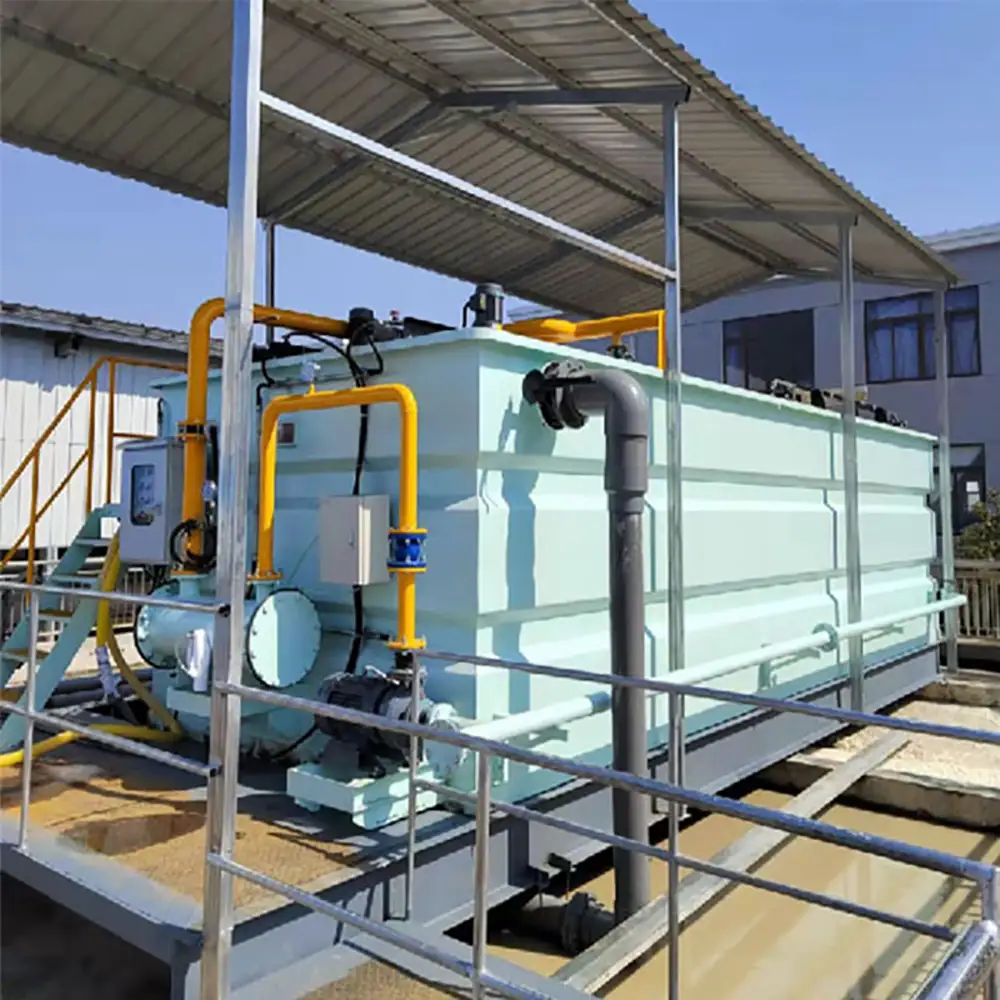
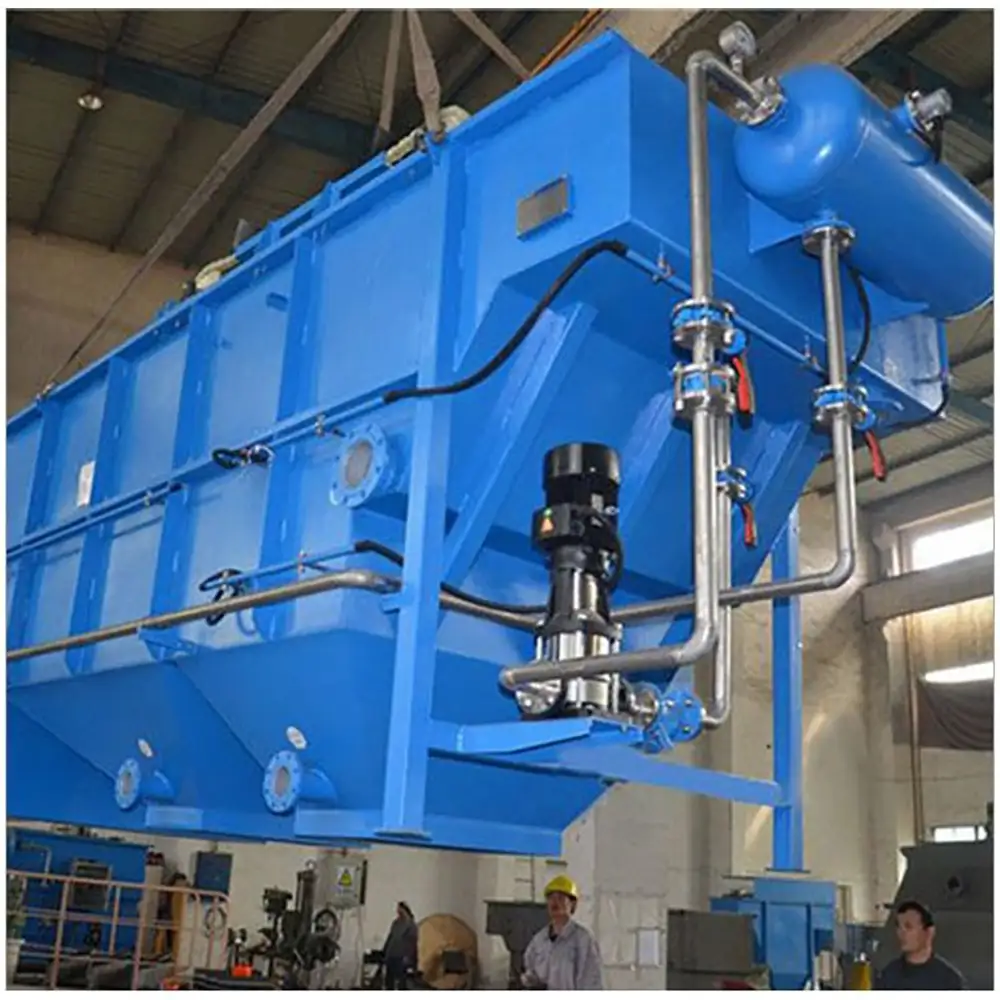
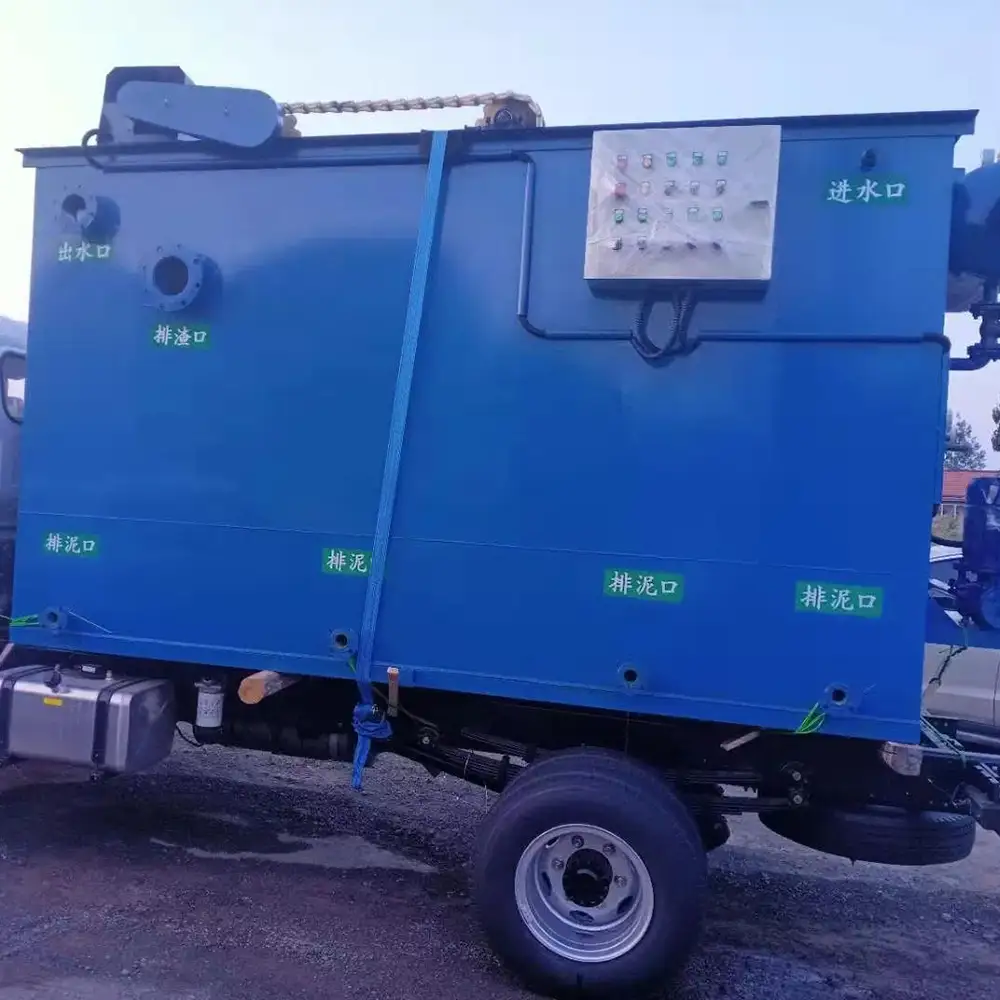
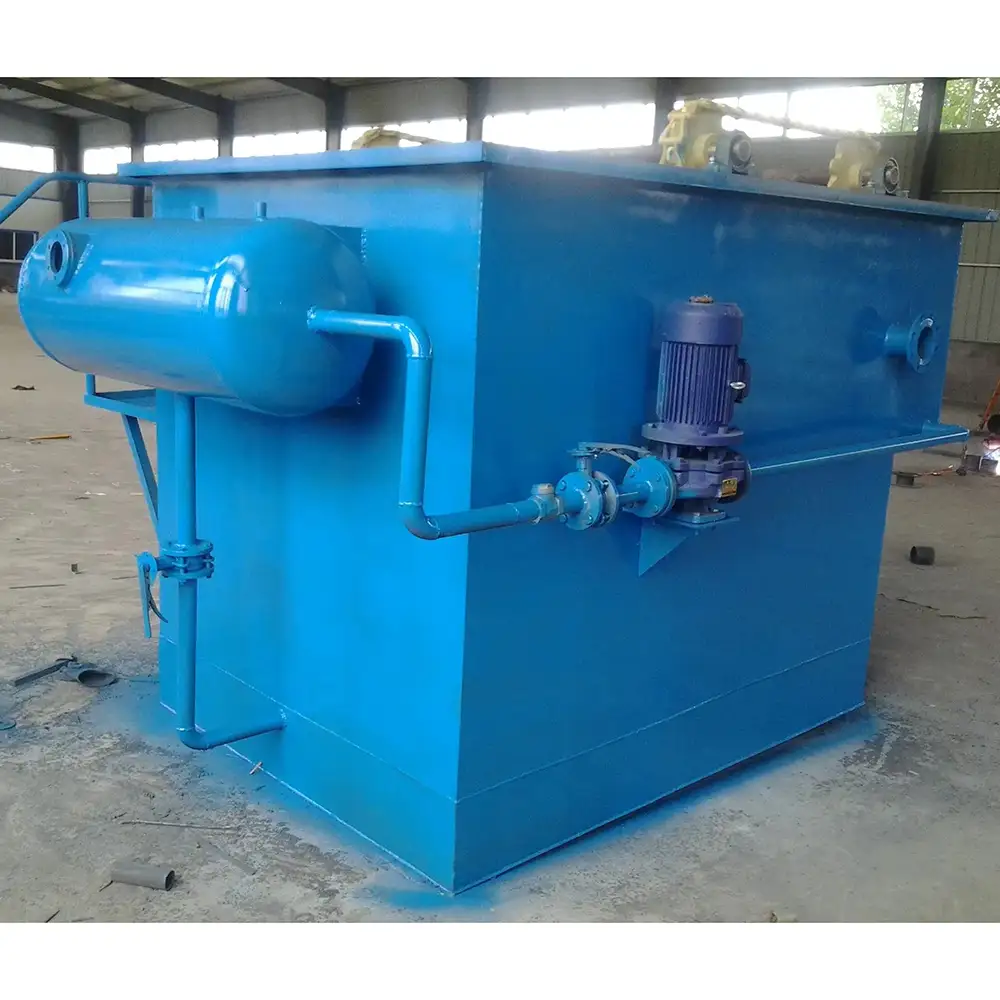
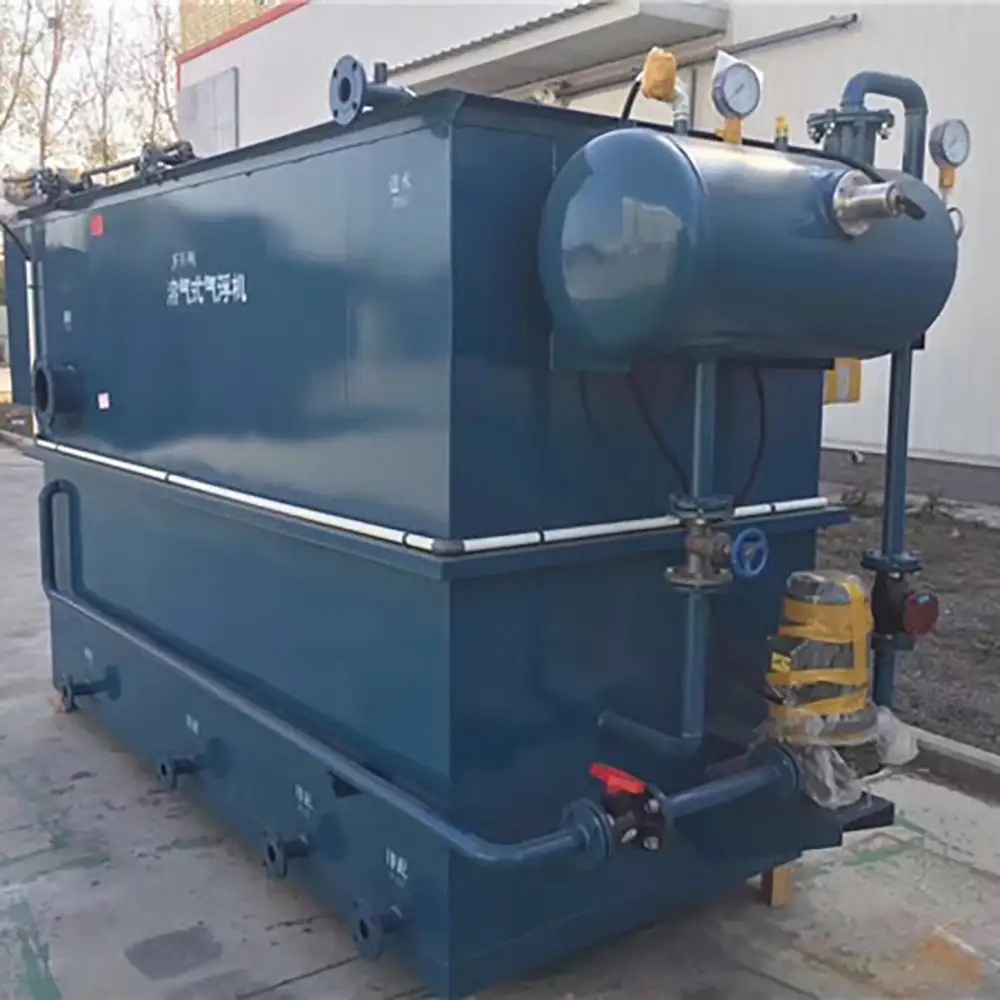
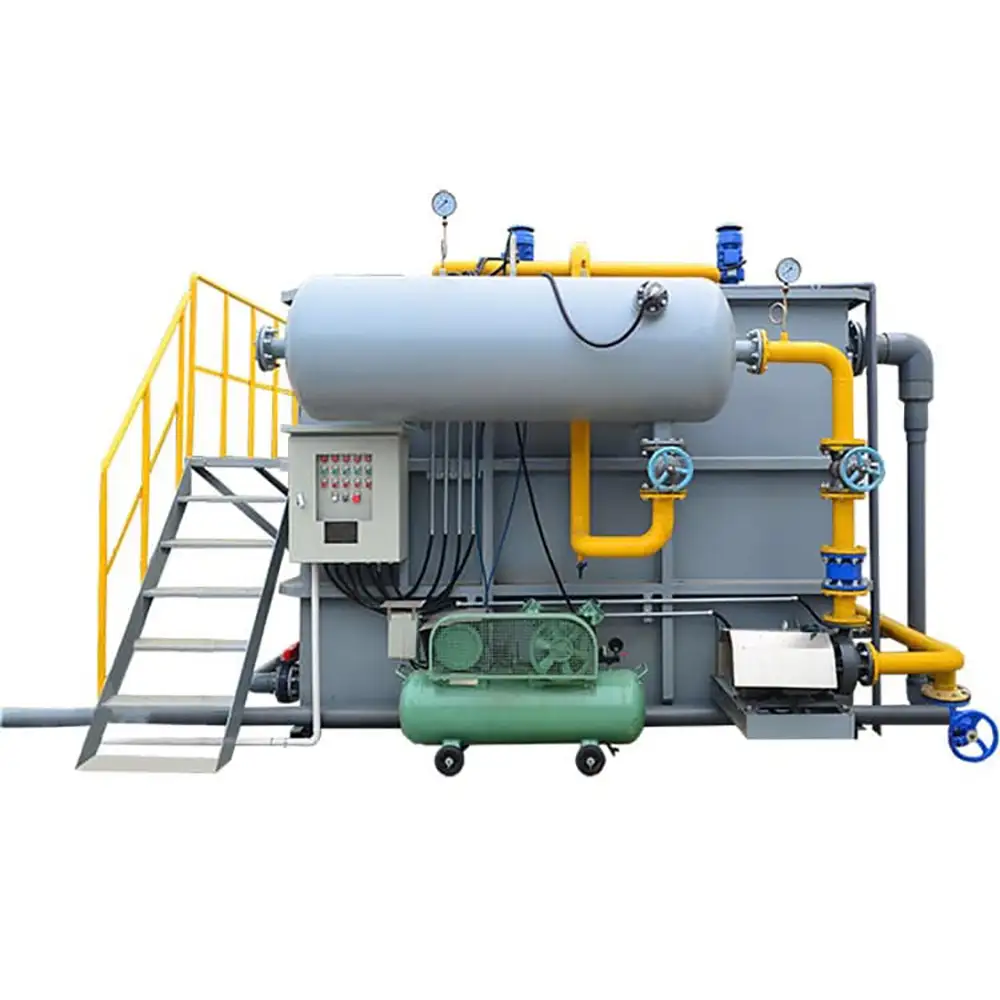
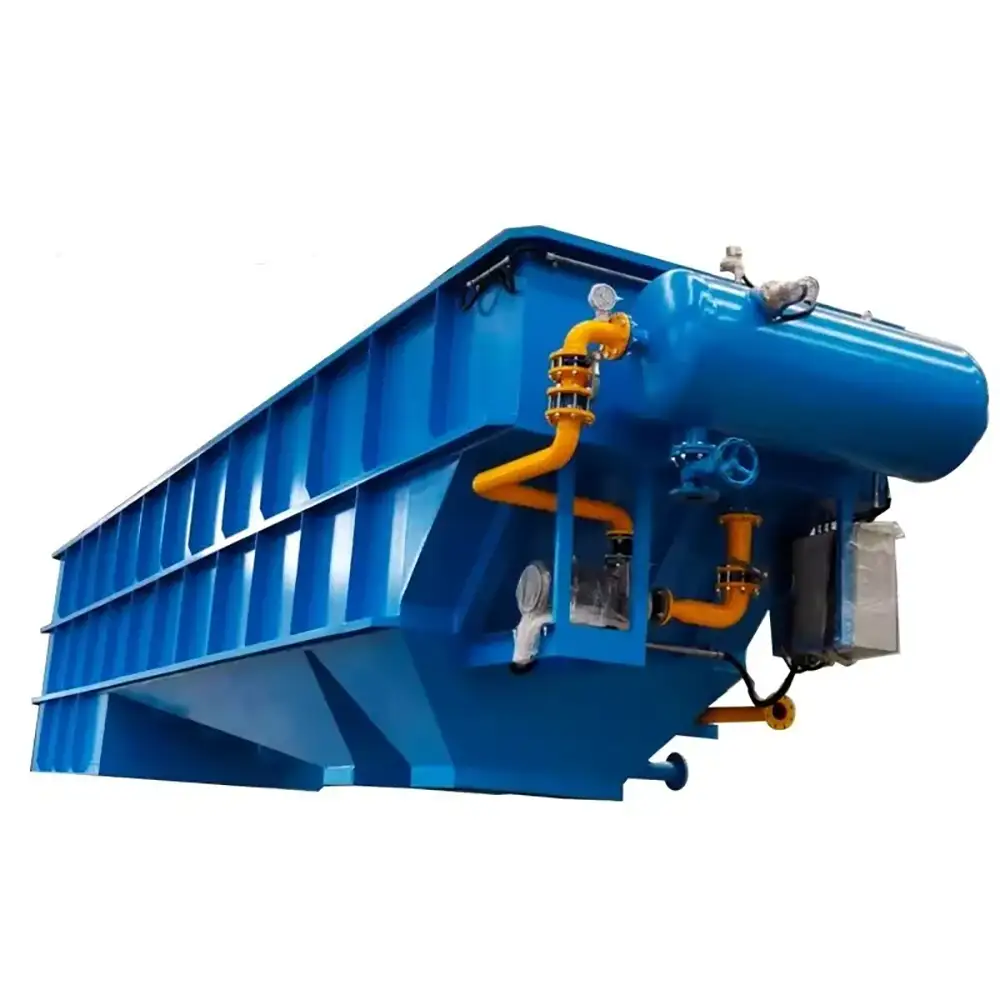
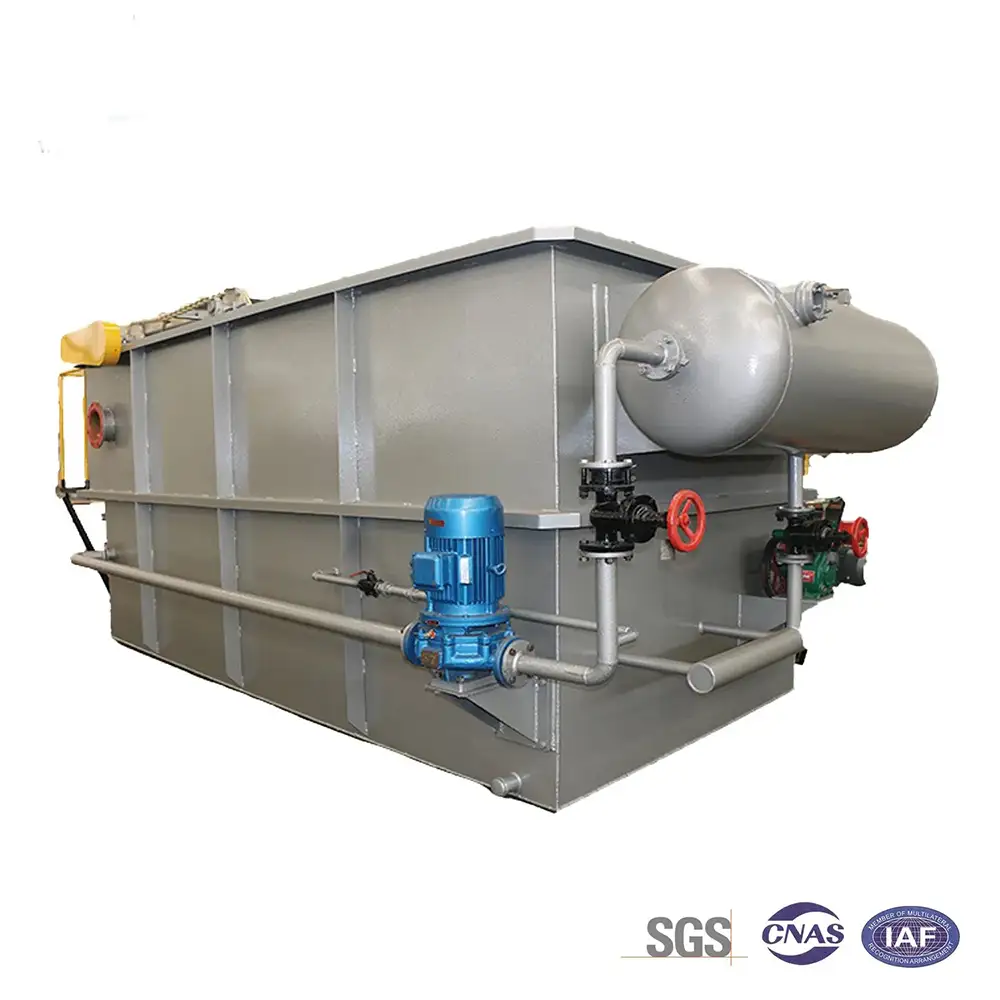
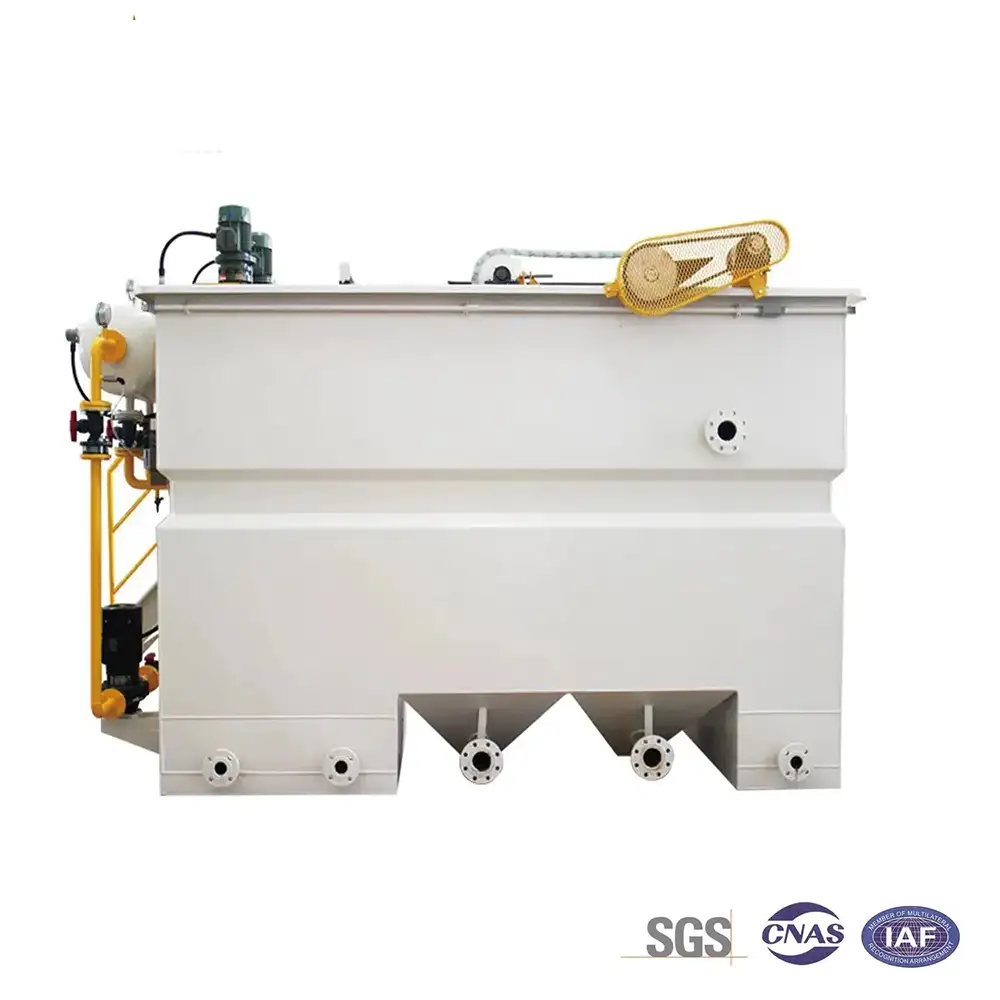
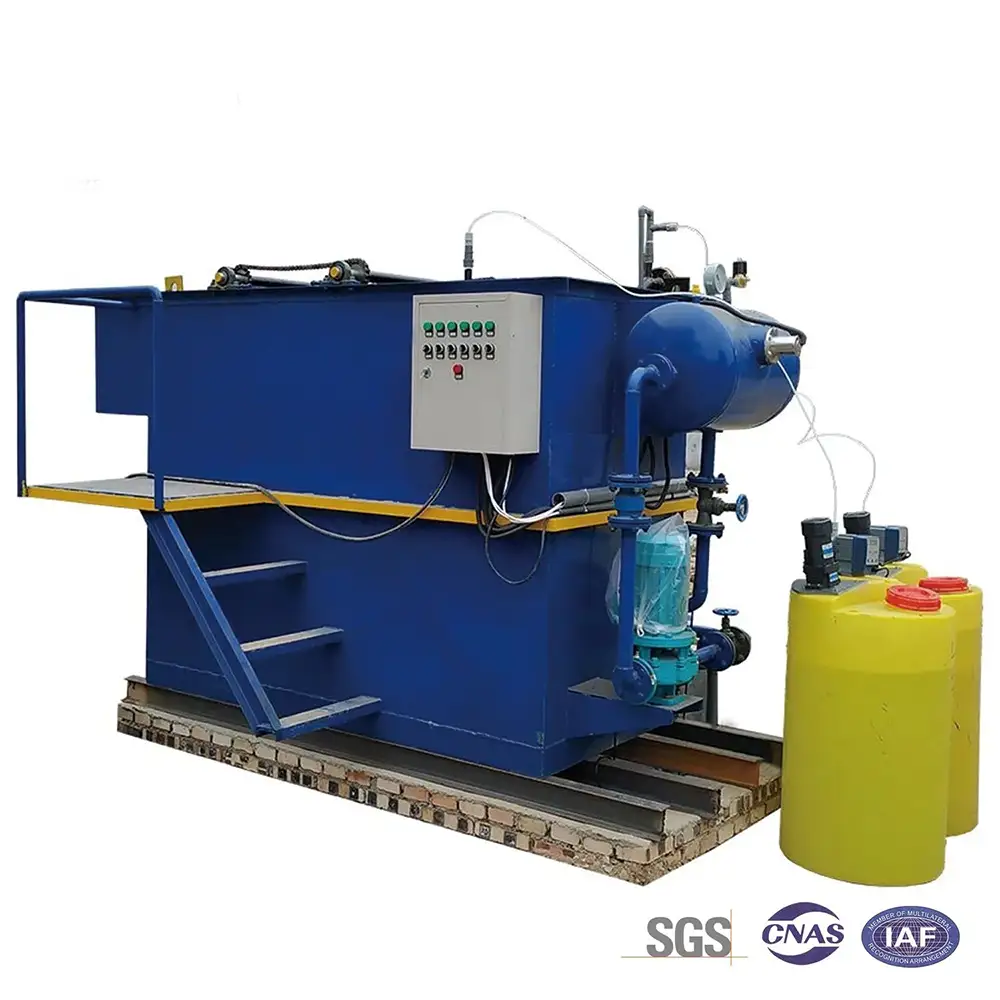
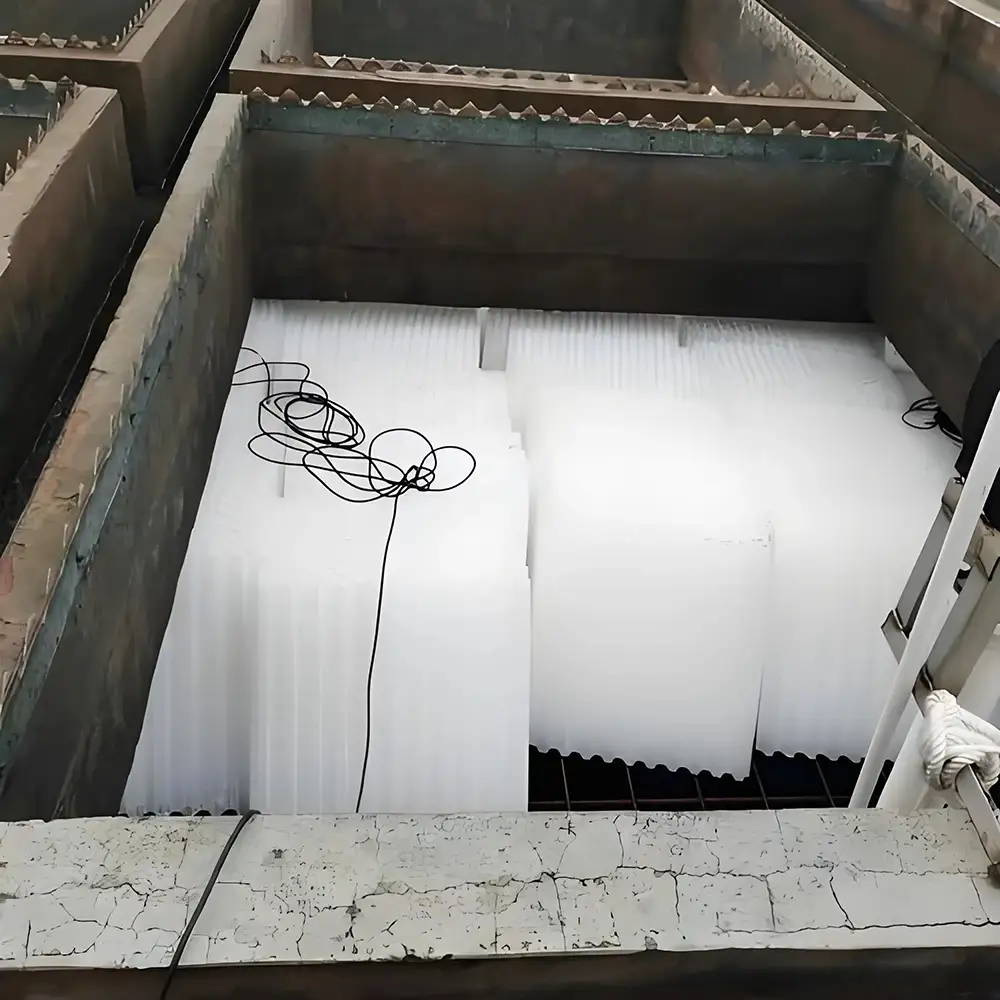
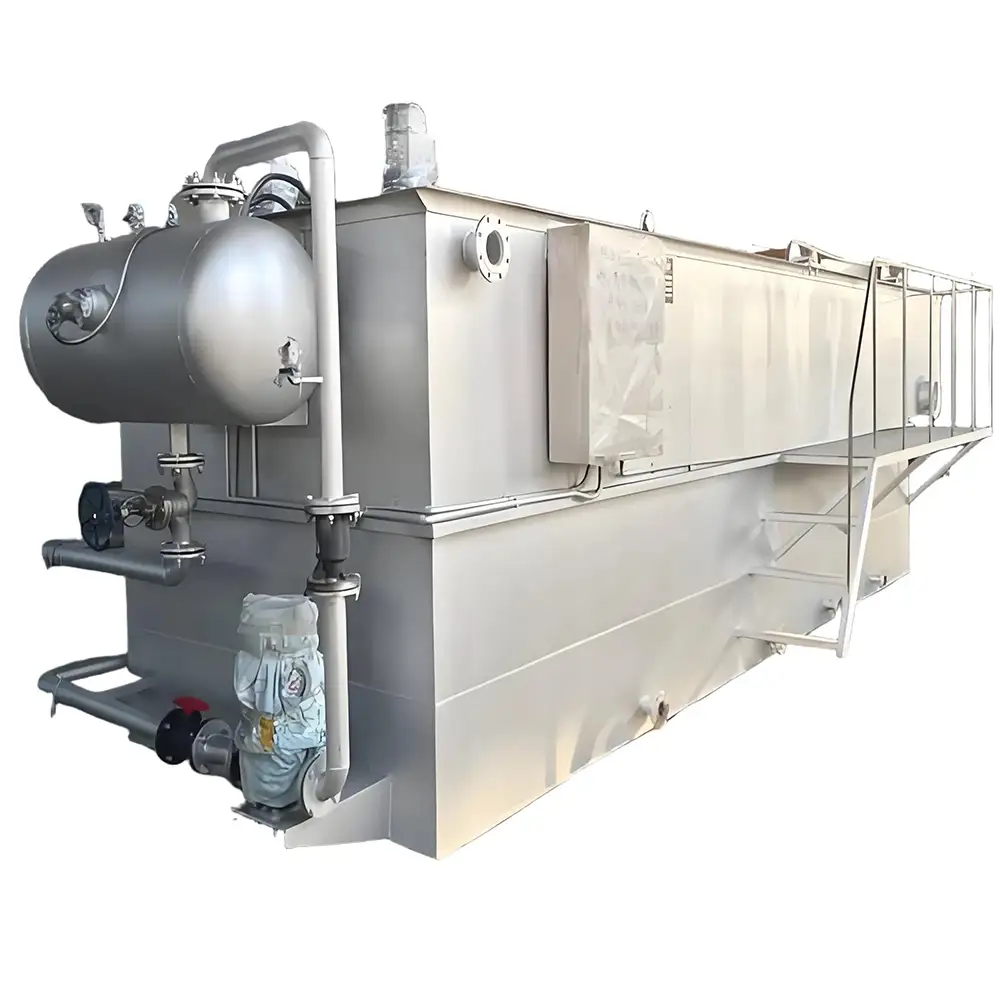
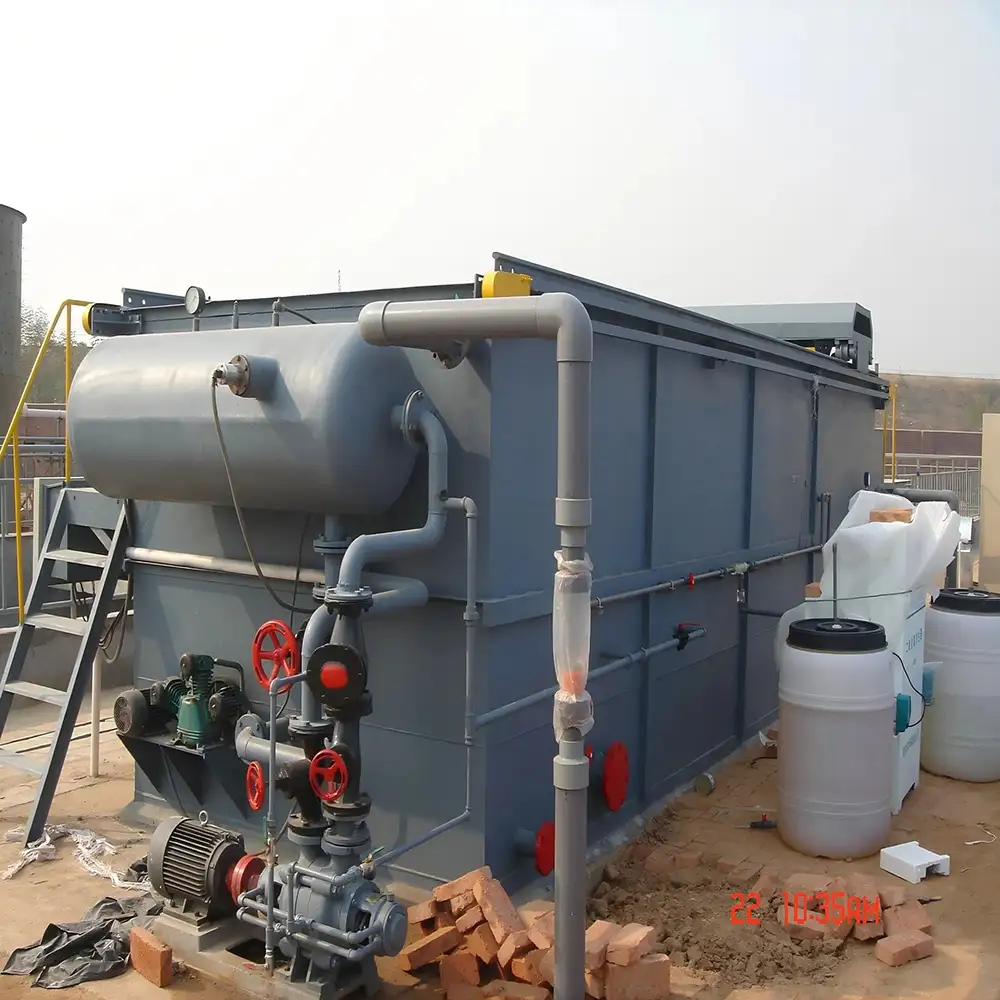
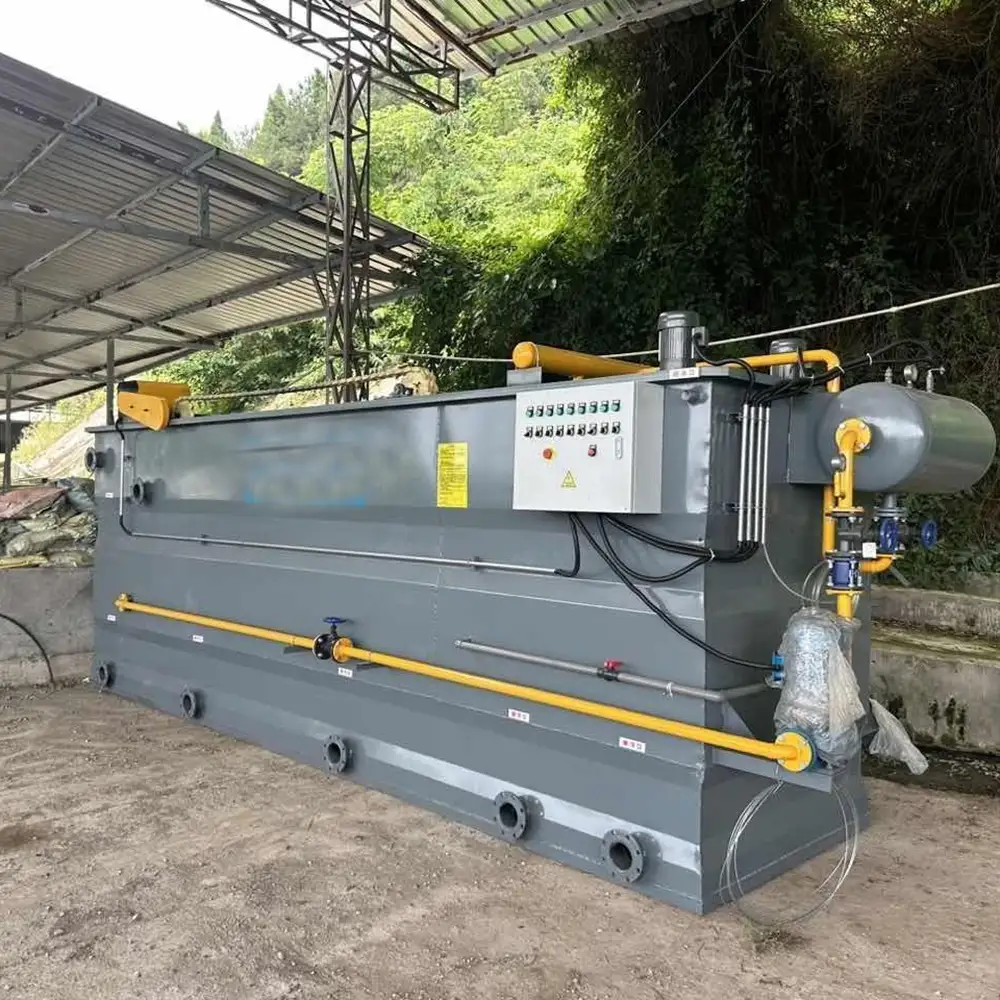
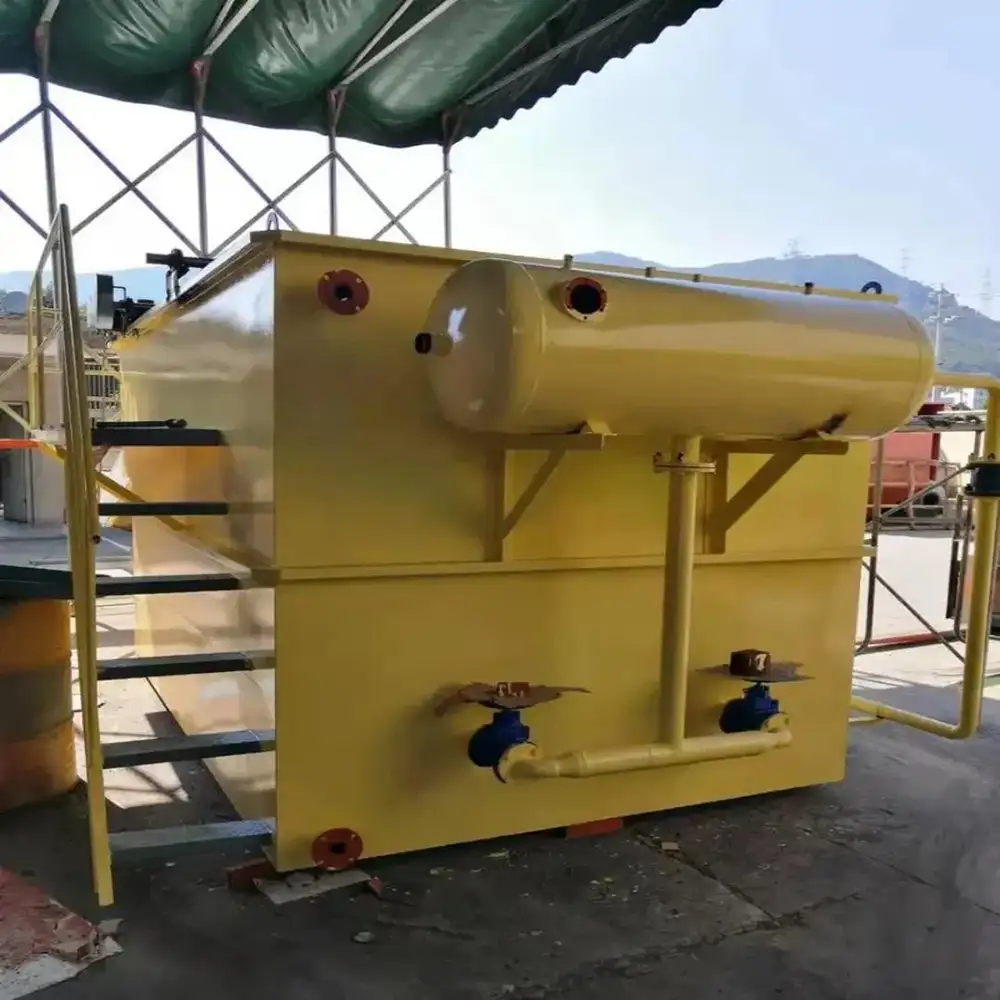
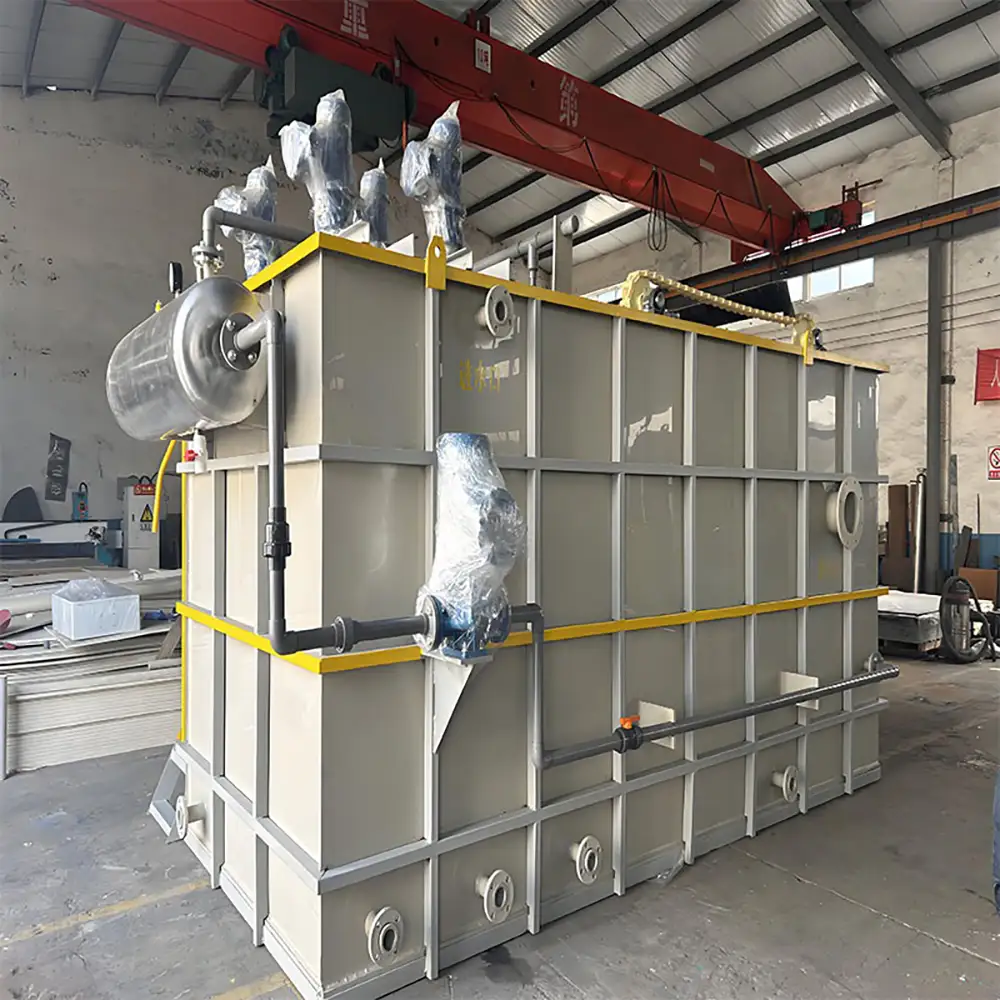
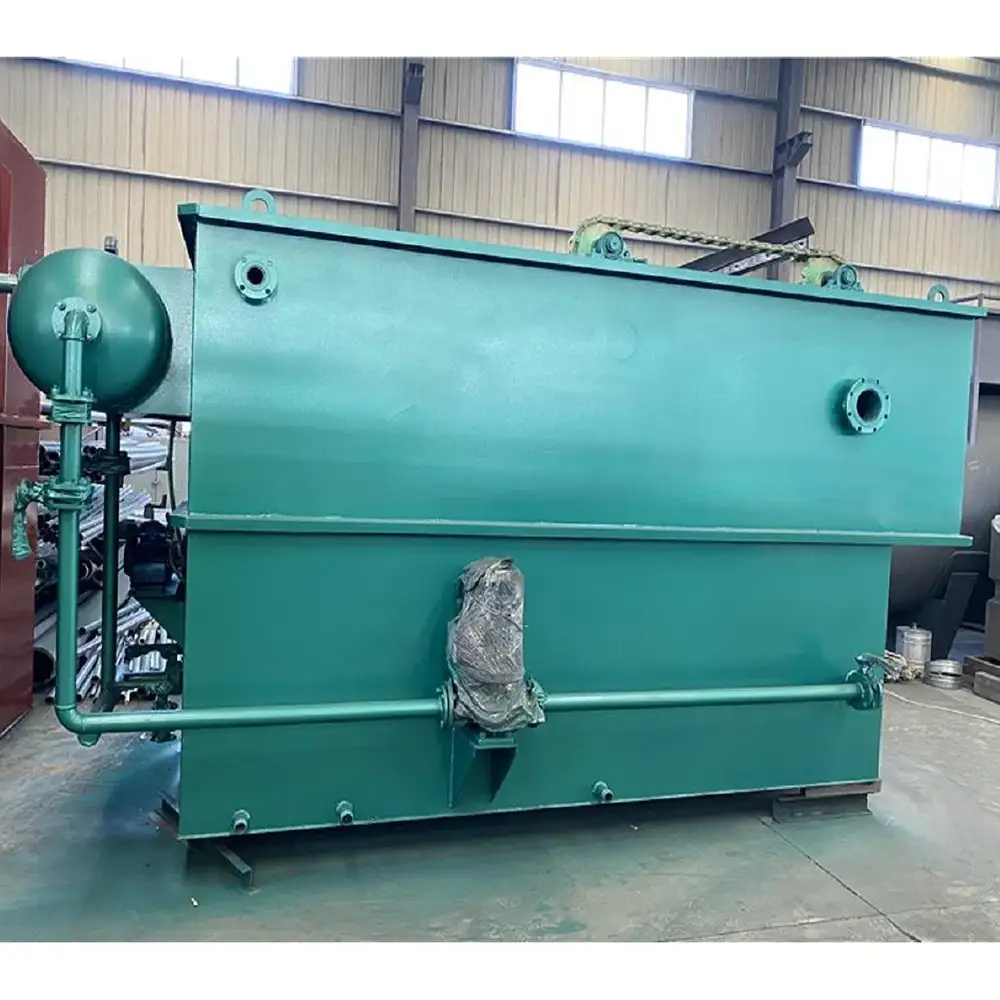
DAF Units in Food Processing Wastewater Recycling Systems
DAF Units in Food Processing Wastewater Recycling Systems are designed to provide efficient solid-liquid separation and wastewater clarification in food processing plants. Food manufacturing operations can generate wastewater containing suspended solids, fats, oils, grease, proteins, food particles, colloidal matter, and other organic loads. If these materials are not removed effectively, they can interfere with downstream biological treatment, filtration, membrane processes, and water recycling systems.
Dissolved Air Flotation (DAF) is a proven flotation technology that uses fine air bubbles to attach to suspended particles and flocs, causing them to rise to the water surface where they can be removed by a mechanical skimmer. DAF is particularly useful for removing small or light particles and grease that may settle poorly through conventional gravity sedimentation. EPA technical documentation identifies DAF as an important treatment technology for suspended solids and grease removal in meat and poultry wastewater applications.
For food processing wastewater recycling, DAF can serve as a primary treatment or pretreatment stage before biological treatment, filtration, membrane treatment, disinfection, or other advanced processes.
Air flotation technology has been widely used in water supply, drainage and wastewater treatment in recent years. It can effectively remove the light floc which is difficult to precipitate in wastewater. With decades of technical experience accumulation and strong independent research and development ability, the company has devoted itself to developing a new type of air float, with stable effect, lower failure rate, easier operation and maintenance, and lower construction and operating costs.
2. Application
(1) Remove oil and TSS.
(2) Separate small particles and algae in groundwater.
(3) Recover valuable products in industrial sewage such as paper pulp.
(4) Act as secondary sedimentation tank to separate and concentrate suspended particles and sludge.
3. Features
(1) Large capacity, high efficiency and small occupying space.
(2) Compact structure, easy operation and maintenance.
(3) Silt expansion elimination.
(4) Aerate to the water while air floating, it has an obvious effect to the elimination of active agent and foul smell in water. Meanwhile, the increased dissolved oxygen provides a favorable condition to the follow-up process.
(5) It can achieve the best effect in adopting this method when disposing the water with lower temperature, lower turbidity and more algae.
Suitable area:
slaughtering, starch, pharmaceuticals, papermaking, printing and dyeing,
leather and tannery, petrochemical industry, domestic wastewater, etc.
Food Processing Wastewater Treatment With DAF
Food processing wastewater varies significantly according to the production process. Meat and poultry plants may generate wastewater containing blood, fats, proteins, grease, and suspended organic solids. Dairy plants can produce wastewater containing milk residues, fats, proteins, and cleaning chemicals. Food, beverage, vegetable, fruit, and seafood processing facilities may produce different combinations of suspended solids, organic matter, oils, and biodegradable contaminants.
Because of this variation, a DAF system should be designed according to actual wastewater characteristics rather than relying on a standard configuration.
A typical wastewater recycling process may include:
Screening → Equalization → pH Adjustment → Coagulation → Flocculation → DAF → Biological Treatment → Filtration → Disinfection → Water Reuse
Not every facility requires all of these stages. The final process depends on the wastewater composition and the quality required for discharge or reuse.
How DAF Units Work
The DAF process begins by preparing a pressurized water stream containing dissolved air. In a recycle configuration, a portion of clarified DAF effluent is pumped into a pressurization system where air is dissolved under pressure.
When the pressurized recycle water enters the flotation tank and pressure is released, the dissolved air forms a large number of fine bubbles. These bubbles attach to suspended solids, oil, grease, and chemical flocs, increasing their buoyancy.
The resulting bubble-particle aggregates rise rapidly to the surface and form a floating sludge layer. A mechanical scraper or skimmer removes the float from the surface and transfers it to a sludge collection system. Clarified water is collected from the lower section of the flotation chamber and sent to the next treatment stage.
Why DAF Is Suitable for Food Wastewater
One of the key advantages of DAF in food wastewater treatment is its ability to remove relatively small or lightweight particles that may not settle efficiently in a conventional clarifier.
Food processing wastewater can contain grease and organic particles with densities close to water. These contaminants may be difficult to remove efficiently by gravity settling alone. DAF provides an alternative separation mechanism by attaching fine bubbles to the particles and carrying them to the surface.
DAF is therefore commonly considered when a food plant needs effective removal of:
Suspended solids
Fats
Oils
Grease
Food particles
Fibers
Floatable organic solids
Colloidal particles
Chemically formed flocs
Coagulation and Flocculation
For wastewater containing fine suspended solids or colloidal particles, chemical pretreatment can improve DAF performance.
A coagulant can destabilize small particles, while a flocculant or polymer can help form larger flocs. These flocs provide more surface area for microbubble attachment and can therefore improve flotation and separation.
Chemical dosage should be determined through wastewater testing or jar testing. There is no universal chemical dosage suitable for every food processing facility because wastewater composition, pH, temperature, organic loading, and particle characteristics can vary.
EPA documentation notes that chemical pretreatment can significantly affect DAF performance and that coagulants and polymers may be used to enhance particle agglomeration.
Water Recycling System Integration
DAF can be an important part of an industrial water recycling system. After flotation removes a significant portion of suspended solids, fats, oils, and grease, the clarified water can proceed to additional treatment.
Depending on the intended reuse, downstream treatment may include biological treatment, multimedia filtration, activated carbon, ultrafiltration, reverse osmosis, UV disinfection, or other polishing technologies.
For example, a food processing plant seeking process-water reuse may use DAF as an initial separation stage, followed by biological treatment and membrane filtration. The final treatment train should be established according to the required water quality and intended application.
DAF effluent has also been investigated as a feed stream for advanced food-industry water recycling processes, demonstrating that flotation can serve as part of a broader water-reuse treatment train.
Recycle Pressurization
Recycle DAF is particularly useful for industrial wastewater treatment because only a portion of the clarified water needs to be pressurized and saturated with air.
The pressurized recycle stream is returned to the flotation chamber and mixed with the incoming wastewater. This approach avoids pressurizing the entire influent flow and can reduce the hydraulic and energy requirements of the pressurization system.
EPA technical documentation identifies recycle pressurization as a common DAF configuration for larger wastewater flows.
Main Features
High-Efficiency Flotation: Fine air bubbles promote rapid separation of suitable suspended and floatable contaminants.
Food Industry Application: Suitable for meat, poultry, dairy, beverage, fruit, vegetable, seafood, and other food-processing wastewater applications.
Fats, Oils and Grease Removal: DAF is especially useful where wastewater contains grease and other floatable organic materials.
Compact Design: Flotation can provide high-rate separation while requiring relatively limited floor area.
Chemical Integration: Coagulation and flocculation systems can be integrated upstream.
Automatic Skimming: Surface skimmers continuously or intermittently remove concentrated float sludge.
Water Recycling: Clarified DAF effluent can be directed to downstream treatment for potential reuse.
PLC Control: Pumps, valves, skimmers, chemical dosing, sensors, and alarms can be controlled through an automated system.
Sludge Handling
DAF produces a concentrated float sludge containing the separated fats, oils, grease, suspended solids, and chemical flocs. Proper sludge collection and handling are essential for reliable system operation.
The floating material is removed by the skimmer and transferred to a sludge tank. Depending on the plant configuration, the sludge may then be thickened or dewatered using a filter press, belt filter press, screw press, or other suitable equipment.
Some solids may settle to the bottom of the flotation tank, so selected DAF designs may also incorporate bottom sludge removal.
Applications
DAF Units in Food Processing Wastewater Recycling Systems can be used for:
Meat Processing Wastewater
Poultry Processing Wastewater
Dairy Wastewater
Slaughterhouse Wastewater
Seafood Processing Wastewater
Beverage Processing Wastewater
Fruit And Vegetable Processing Wastewater
Edible Oil Processing Wastewater
Food Manufacturing Wastewater
Rendering Wastewater
Food Plant Wash Water
Industrial Organic Wastewater
Food Industry Water Recycling
Industrial Wastewater Reuse
Maintenance
Routine maintenance should include inspection of the recycle pump, air saturation system, pressure-release components, flotation tank, skimmer, sludge pump, chemical dosing system, sensors, valves, and control cabinet.
Operators should monitor influent flow, recycle flow, pressure, chemical dosage, sludge characteristics, and treated-water quality. Skimmer blades and sludge collection components should be checked for wear and buildup.
DAF performance can change when food production schedules change. Sudden increases in grease, solids, cleaning chemicals, or hydraulic loading may require adjustment of operating conditions and chemical dosing.
System Selection
Before selecting DAF Units for Food Processing Wastewater Recycling Systems, buyers should evaluate:
Wastewater flow rate
Suspended solids concentration
FOG concentration
COD and BOD loading
pH and temperature
Food production process
Chemical cleaning wastewater
Required treated-water quality
Water reuse target
Sludge handling requirements
Installation space
Automation requirements
Pilot testing or representative wastewater testing can help determine chemical requirements, flotation performance, hydraulic loading, and the most appropriate downstream treatment process.
Why Choose Us?
We provide integrated DAF wastewater treatment solutions designed specifically around industrial wastewater characteristics and water-recycling objectives. For food processing plants, the system can combine screening, equalization, pH adjustment, coagulation, flocculation, DAF flotation, sludge handling, biological treatment, filtration, disinfection, and advanced membrane treatment.
Our DAF units can be configured for different capacities and production environments, from compact food-processing wastewater systems to larger industrial wastewater treatment plants.
We focus on practical process integration, reliable flotation, convenient sludge removal, automated operation, and compatibility with downstream water-recycling technologies. Each system can be configured according to wastewater analysis, required capacity, treated-water quality, installation conditions, and operational requirements.
Frequently Asked Questions
1. What are DAF units used for in food processing wastewater?
DAF units are primarily used to remove suspended solids, fats, oils, grease, food particles, and other floatable or poorly settling contaminants.
2. Why is DAF suitable for food industry wastewater?
Food wastewater frequently contains grease, light organic solids, and fine suspended particles that may not settle efficiently by gravity. DAF uses microbubbles to float these materials to the surface.
3. Can DAF remove FOG?
Yes. DAF is widely used for fats, oils, and grease separation when the contaminants are suitable for flotation.
4. Can DAF remove COD and BOD?
DAF primarily removes suspended and floatable material. Some COD and BOD associated with those solids may also be removed, but dissolved organic pollutants generally require additional biological or advanced treatment.
5. Can DAF wastewater be recycled?
Yes. DAF can be used as a pretreatment stage in a broader water-recycling system. Additional treatment may be necessary before reuse.
6. Does food wastewater require coagulation before DAF?
Not always, but coagulation and flocculation can significantly improve the separation of fine particles and colloids in many applications.
7. What happens to DAF sludge?
The floating sludge is collected by the surface skimmer and can be transferred to a sludge tank for further thickening, dewatering, disposal, or potential recovery.
8. Can DAF be combined with MBR?
Yes. DAF can be used as pretreatment before biological treatment or MBR to reduce suspended solids, grease, and other fouling materials entering the membrane process.
9. Can DAF be combined with RO?
Yes. DAF can serve as an upstream pretreatment stage before filtration and RO, although additional treatment is normally required to protect RO membranes and achieve the desired water quality.
10. Is DAF fully automatic?
DAF systems can be equipped with PLC control, automatic valves, pressure monitoring, chemical dosing, skimmer controls, alarms, and other instrumentation.
11. How is DAF capacity selected?
Capacity is determined by wastewater flow, solids and FOG loading, particle characteristics, treatment objectives, hydraulic loading, and the selected flotation design.
12. Can the DAF system be customized?
Yes. Tank dimensions, treatment capacity, recycle system, skimmer design, chemical dosing, materials, controls, sludge handling, and downstream treatment can be configured for specific projects.
Prev:
Physical and Biochemical Sewage Treatment Equipment/Integrated Sewage Treatment Equipment
Next:
Industrial Water Treatment Air Float Equipment/Water Treatment Plant
TAG:
Suspended Solids Removal,
Food Industry Wastewater Treatment,
Dairy Wastewater Treatment,
Meat Processing Wastewater Treatment,
Food Processing Wastewater Treatment,
Food Wastewater Treatment,
Industrial Wastewater Treatment Plant,
Solid Liquid Separation Equipment,
Industrial Water Recycling,
Suspended Solids Removal Equipment,
Wastewater Recycling System,
Water Reuse Treatment System,
Fats Oils And Grease Removal,
Slaughterhouse Wastewater Treatment,
Food Plant Wastewater Treatment,
Food Processing Effluent Treatment,
Food Factory Wastewater Treatment,
RO Pretreatment,
DAF Sludge Removal,
Industrial Sewage Treatment System,
Primary Wastewater Treatment,
DAF Coagulation System,
DAF Flocculation System,
Microbubble Flotation,
Oil And Grease Removal,
Industrial DAF System,
Industrial DAF Equipment,
Industrial Wastewater DAF,
DAF Equipment,
DAF System,
Related Category:
DAF Units in Food Processing Wastewater Recycling Systems,Food Processing Wastewater DAF System,DAF Wastewater Treatment China, suppliers, manufacturers, factory, customized, wholesale, quotation, made in China