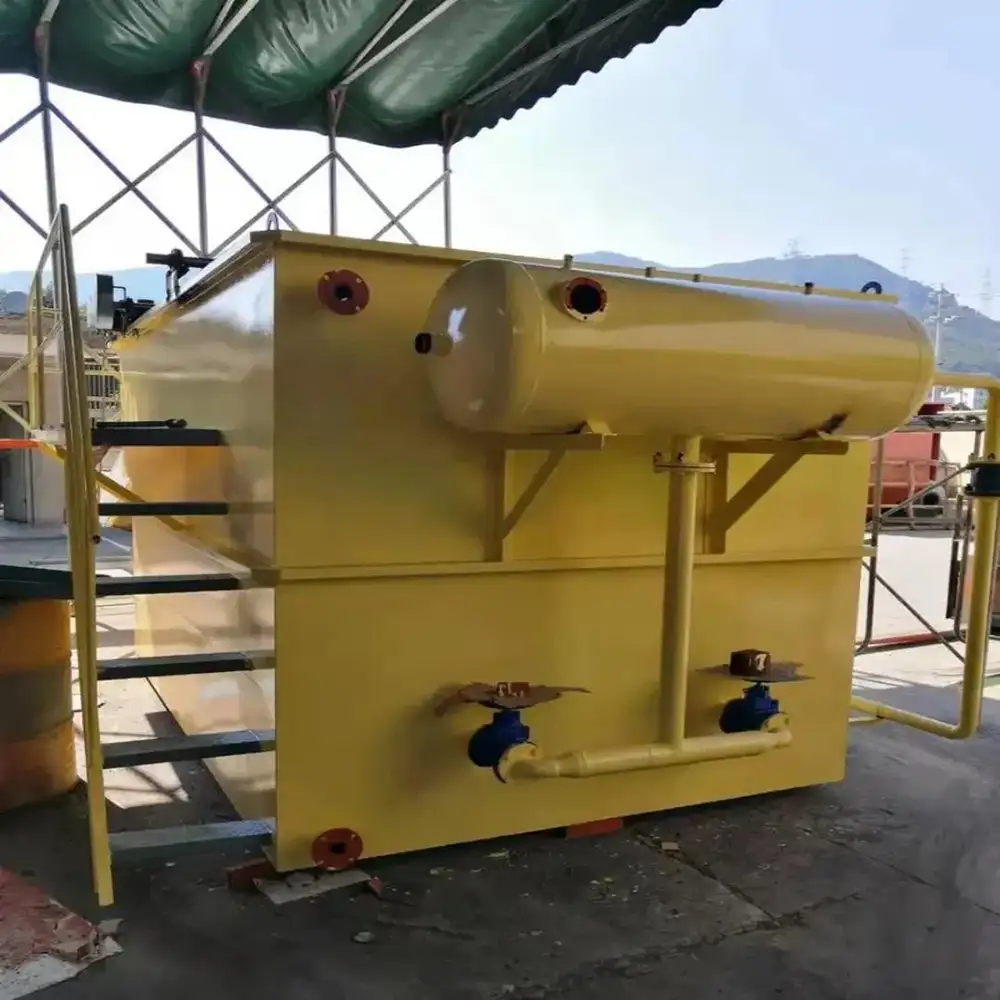
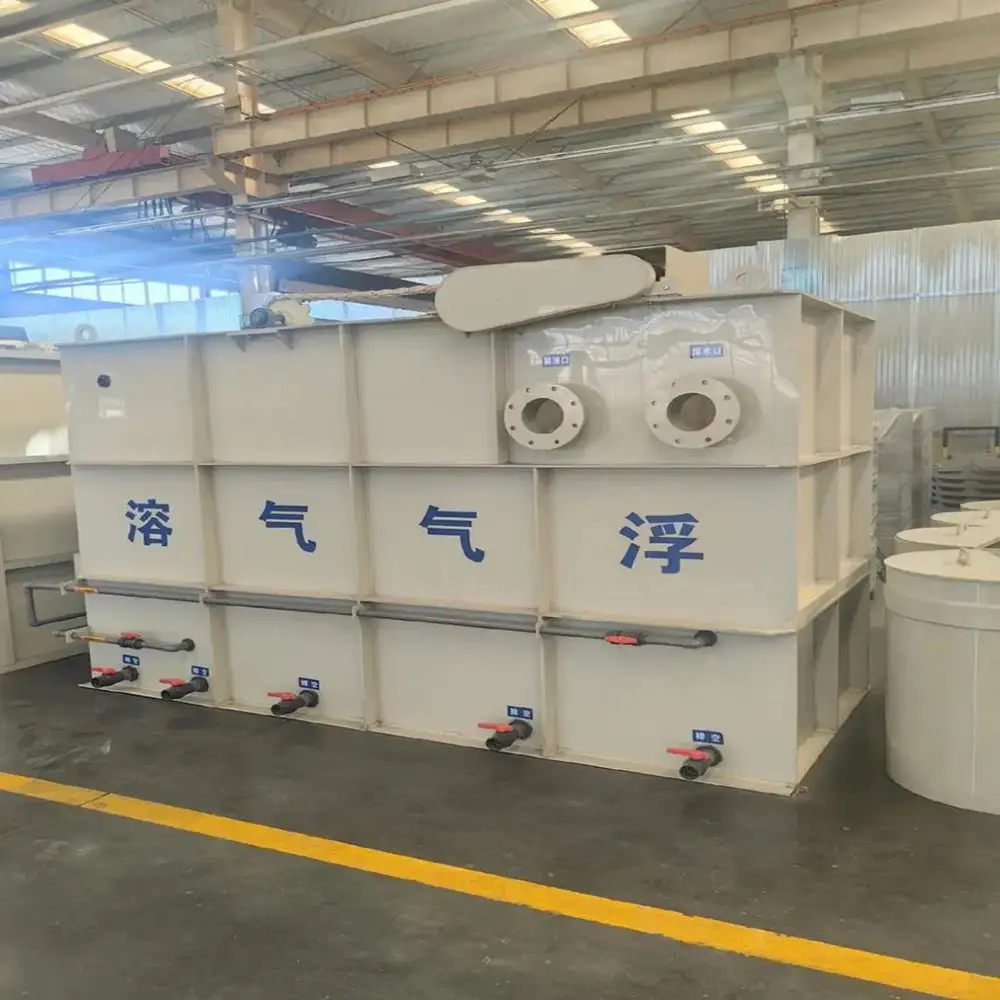
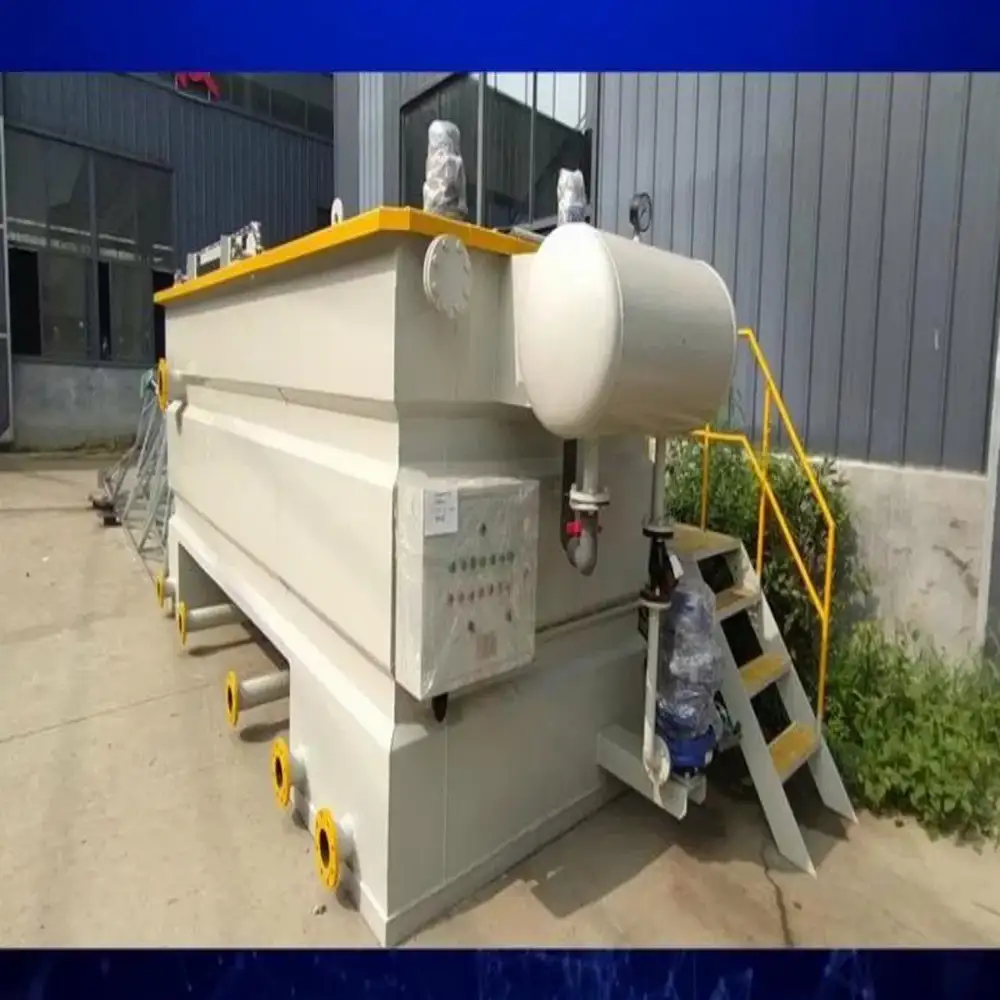
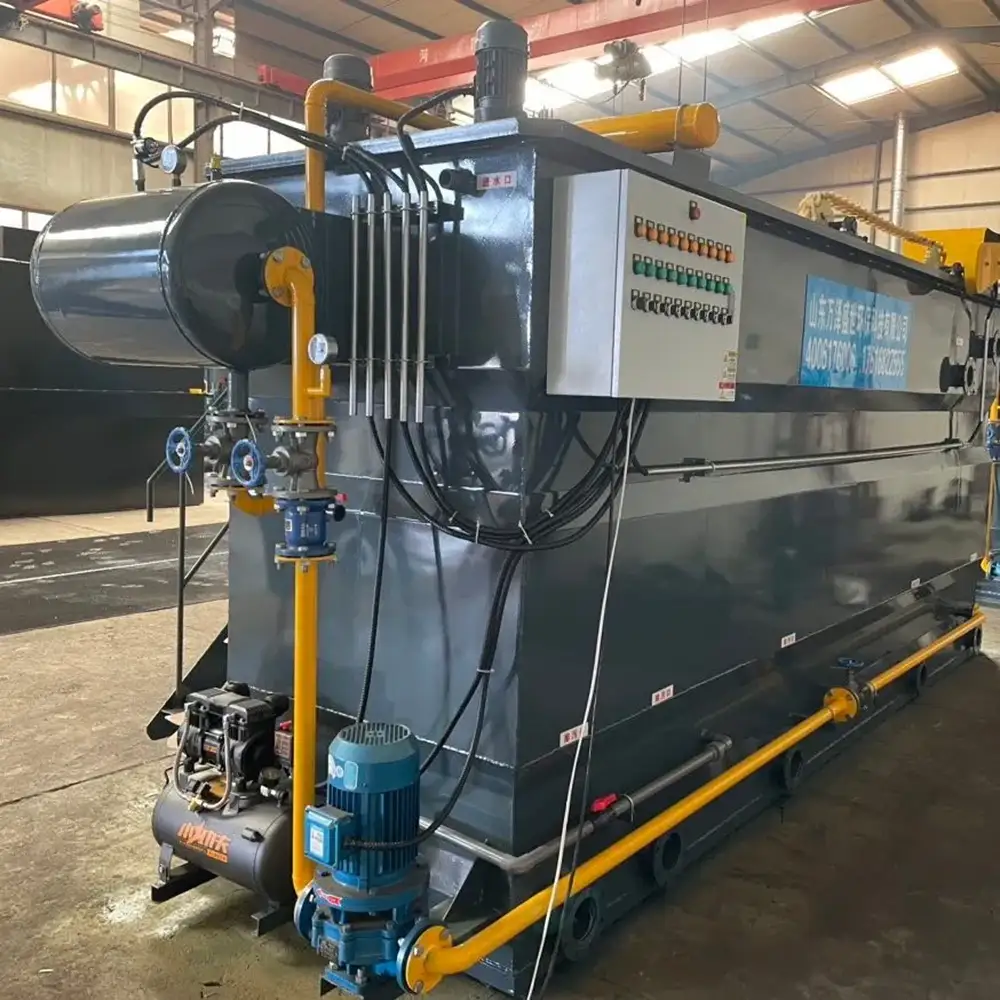
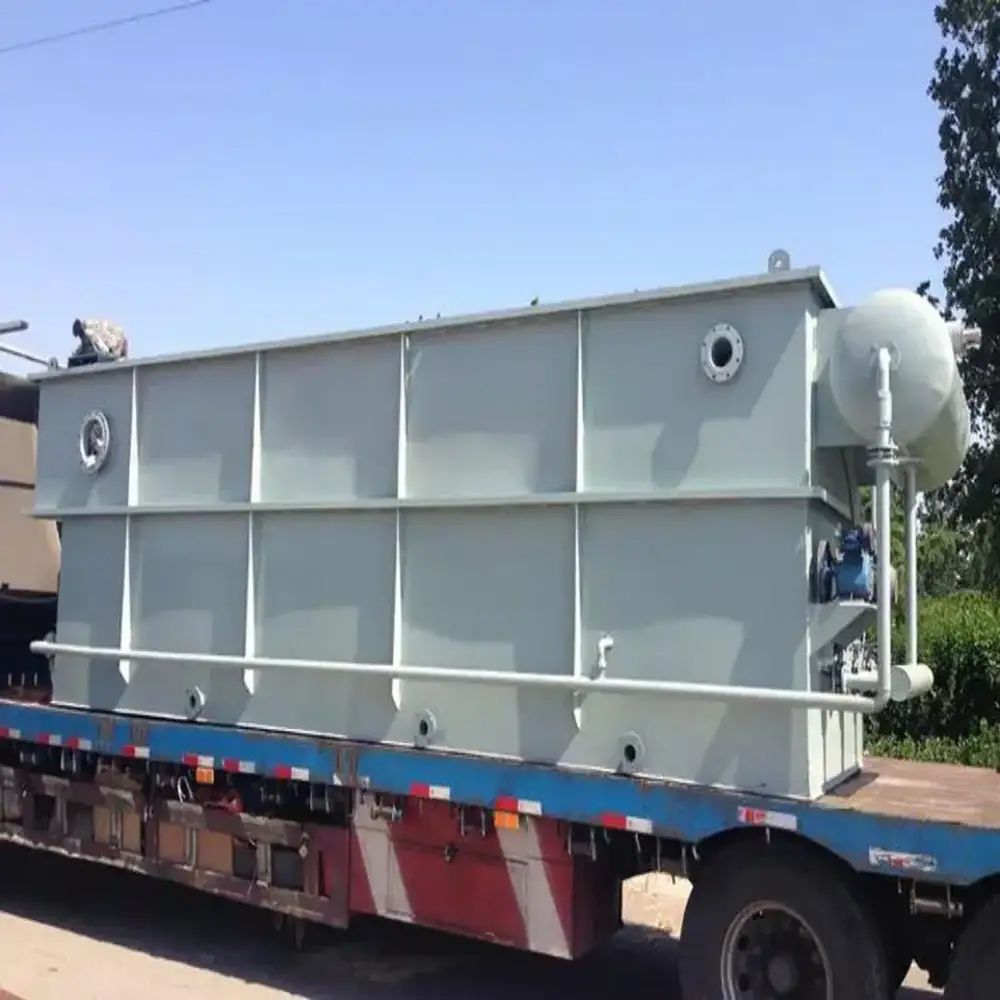
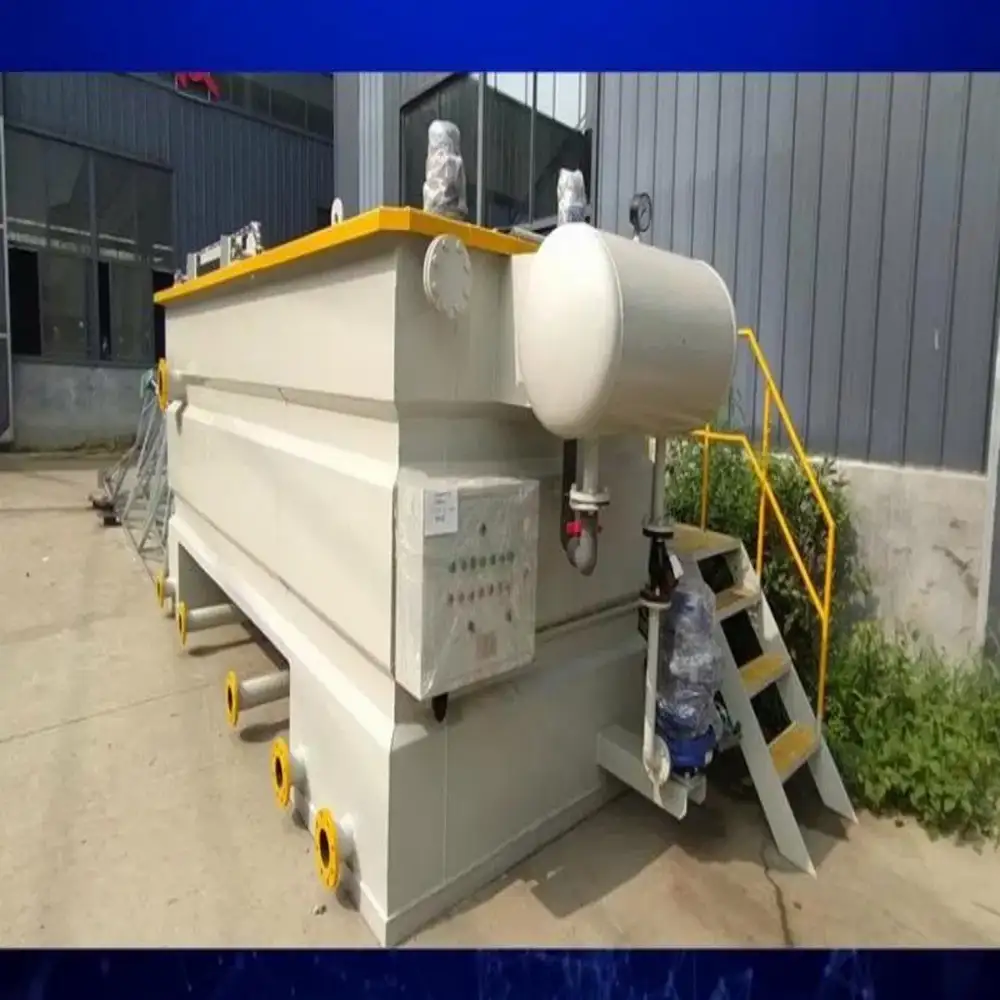
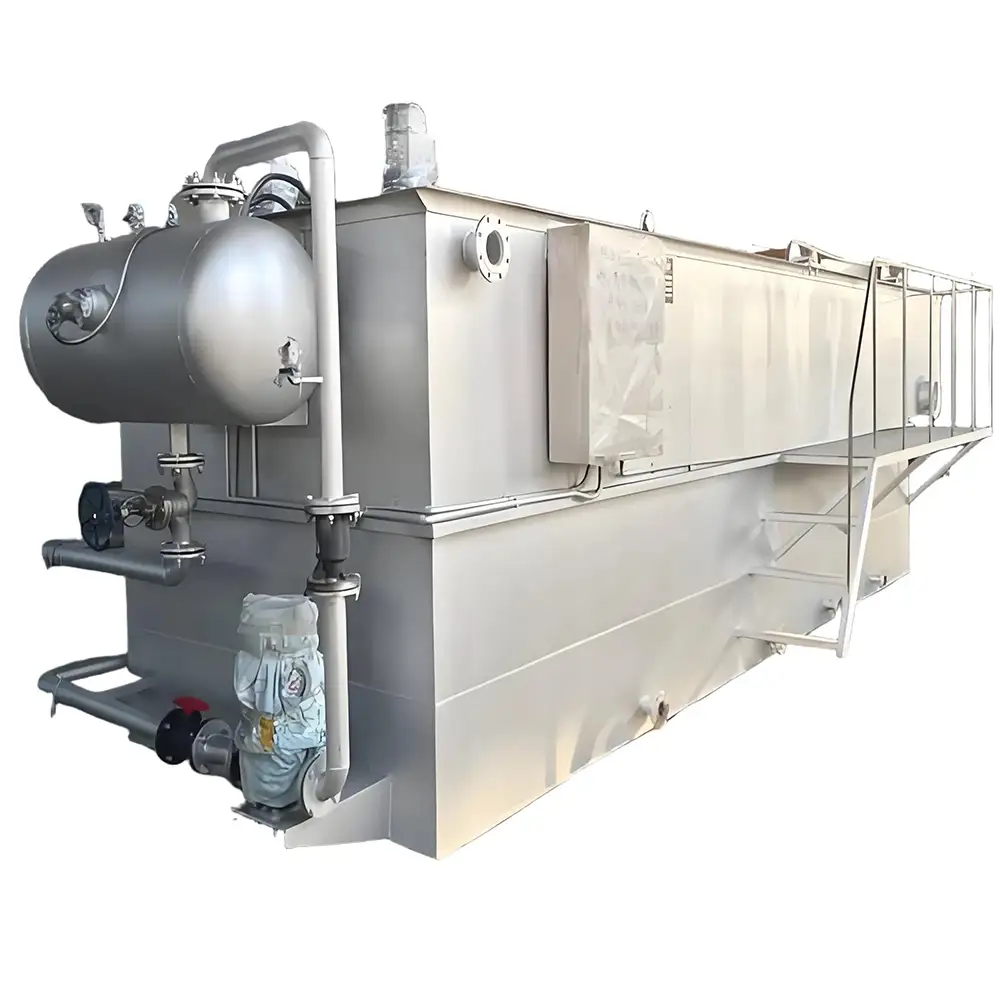
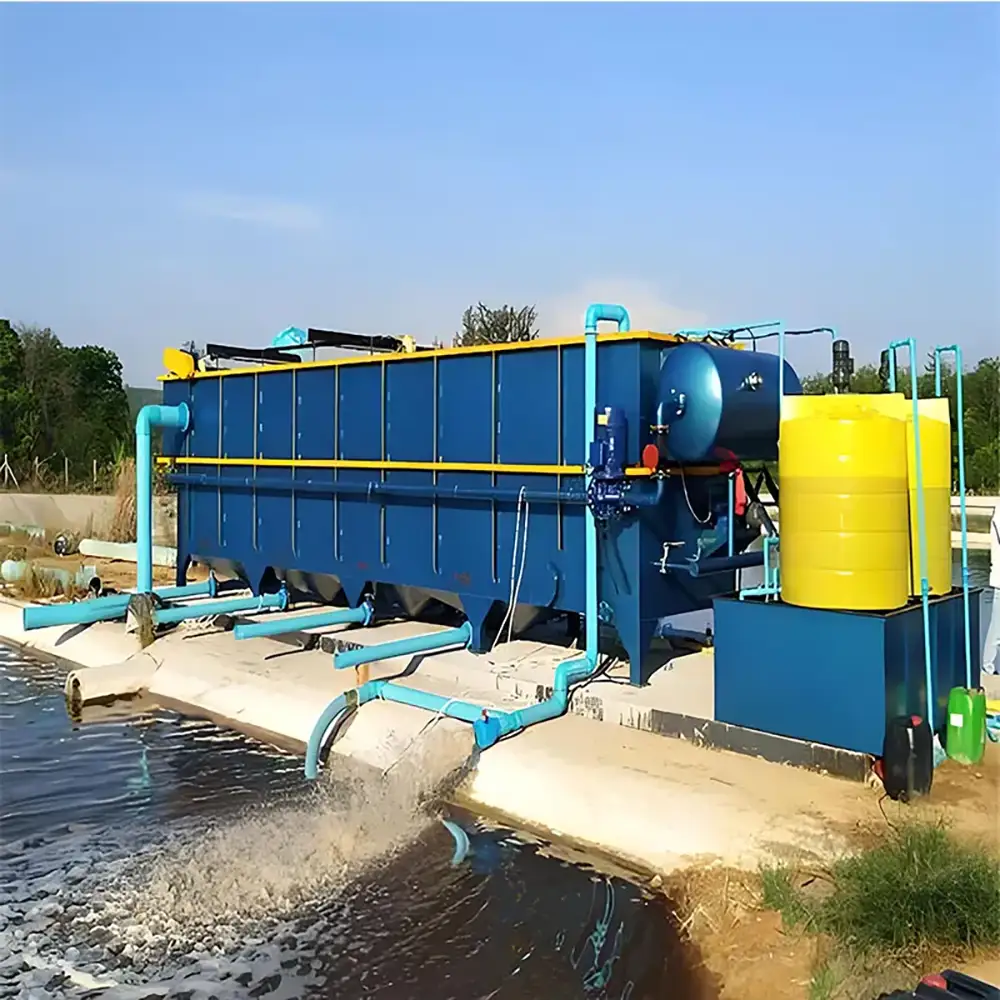
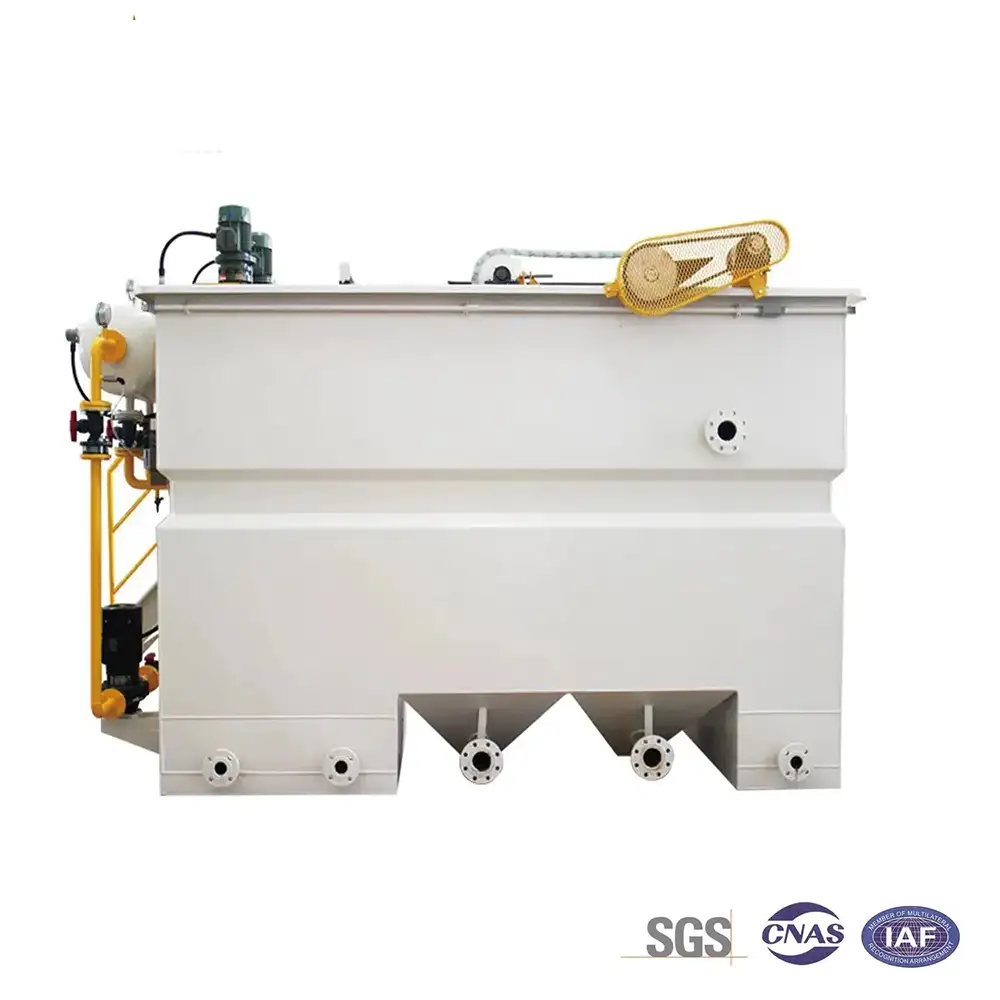
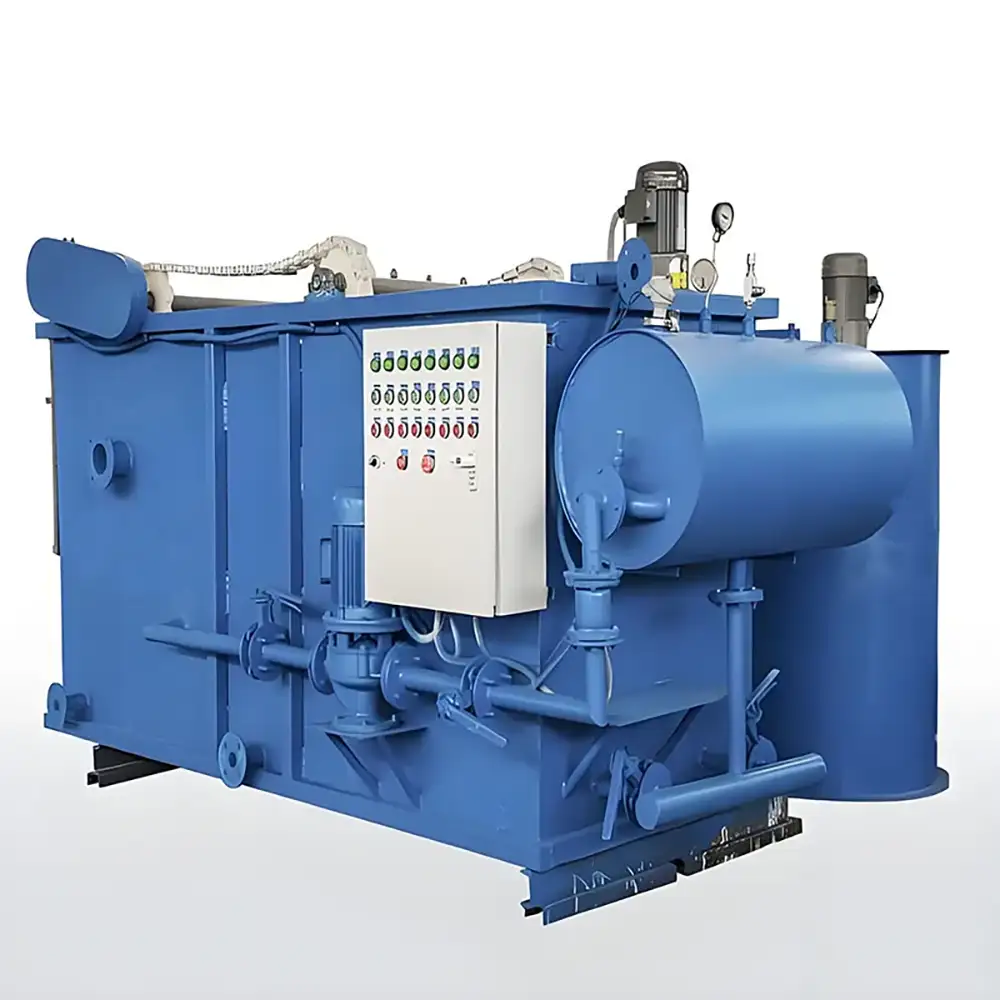
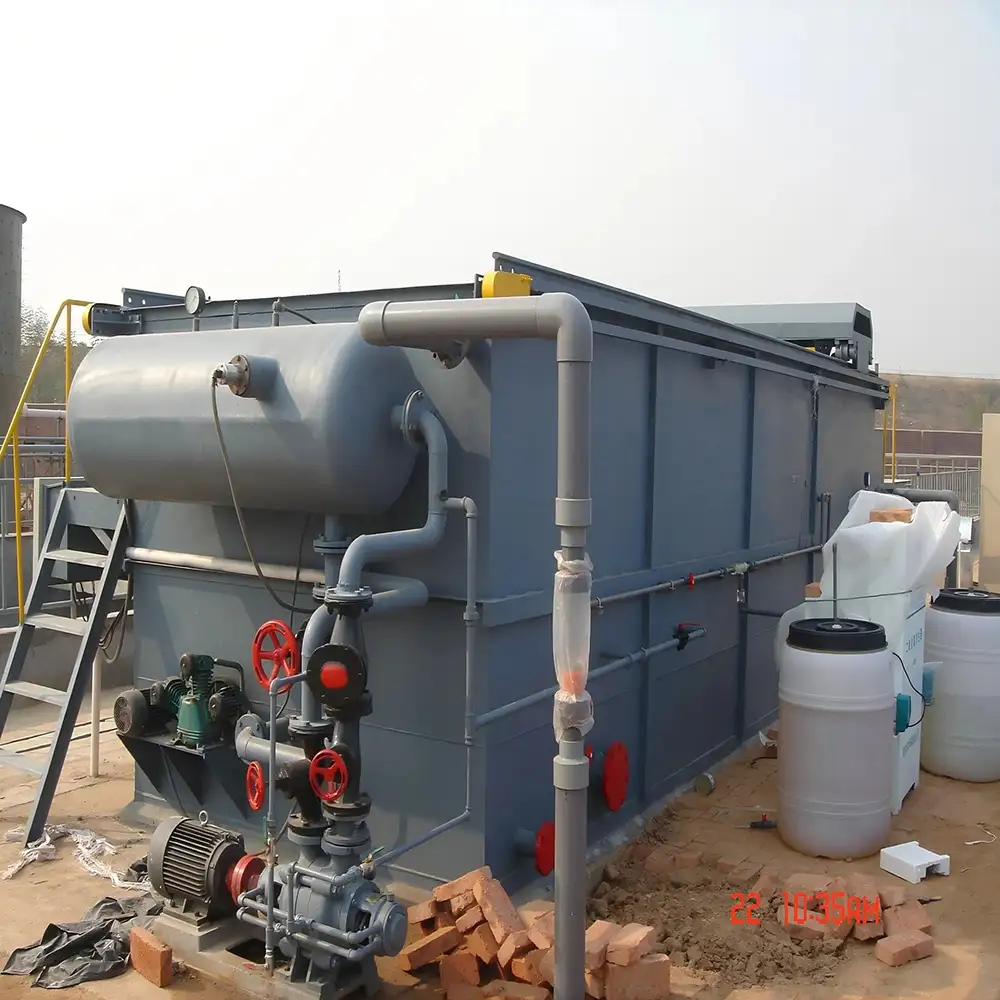
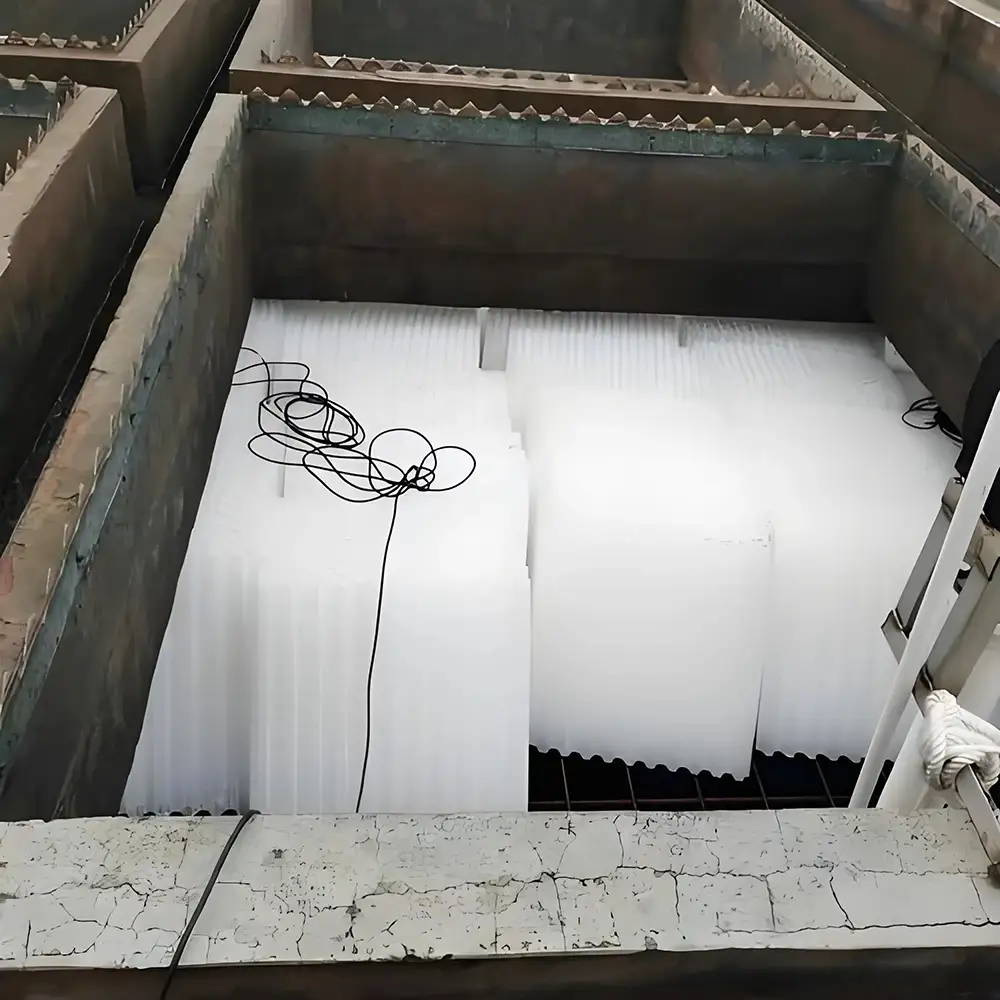
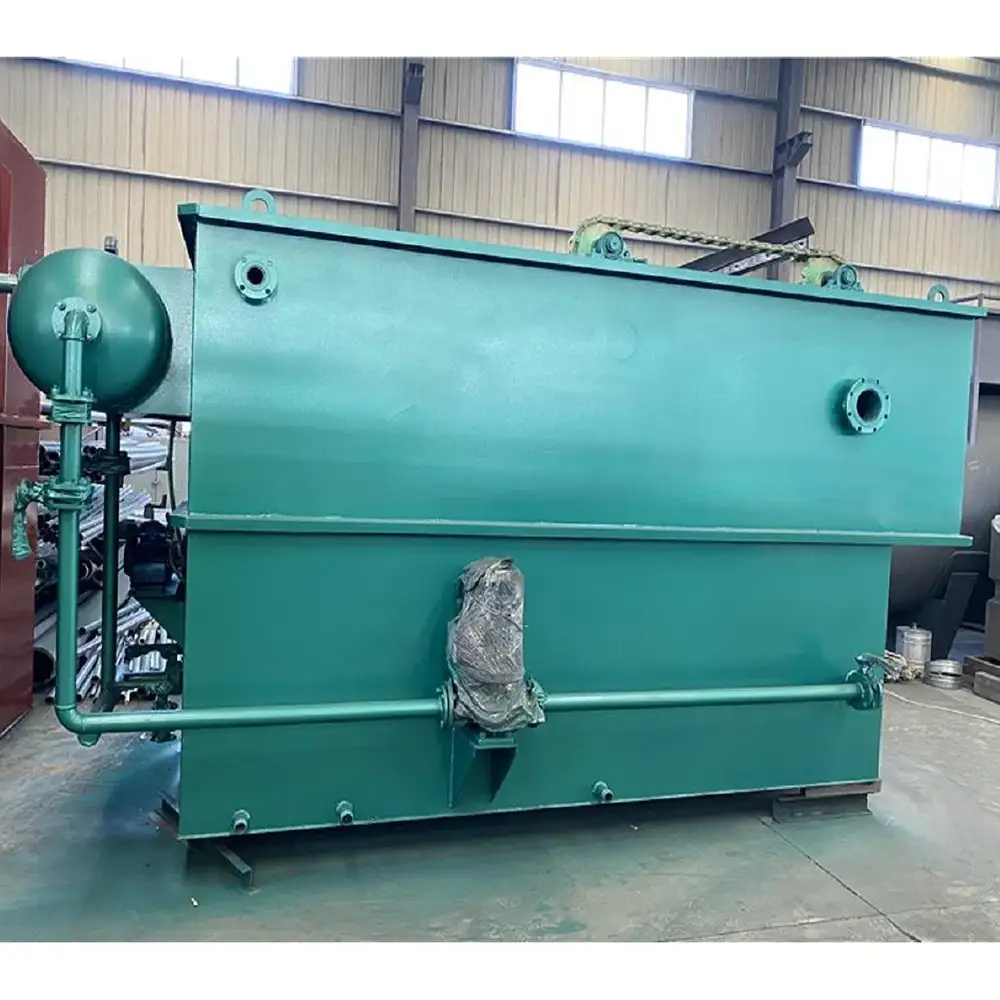
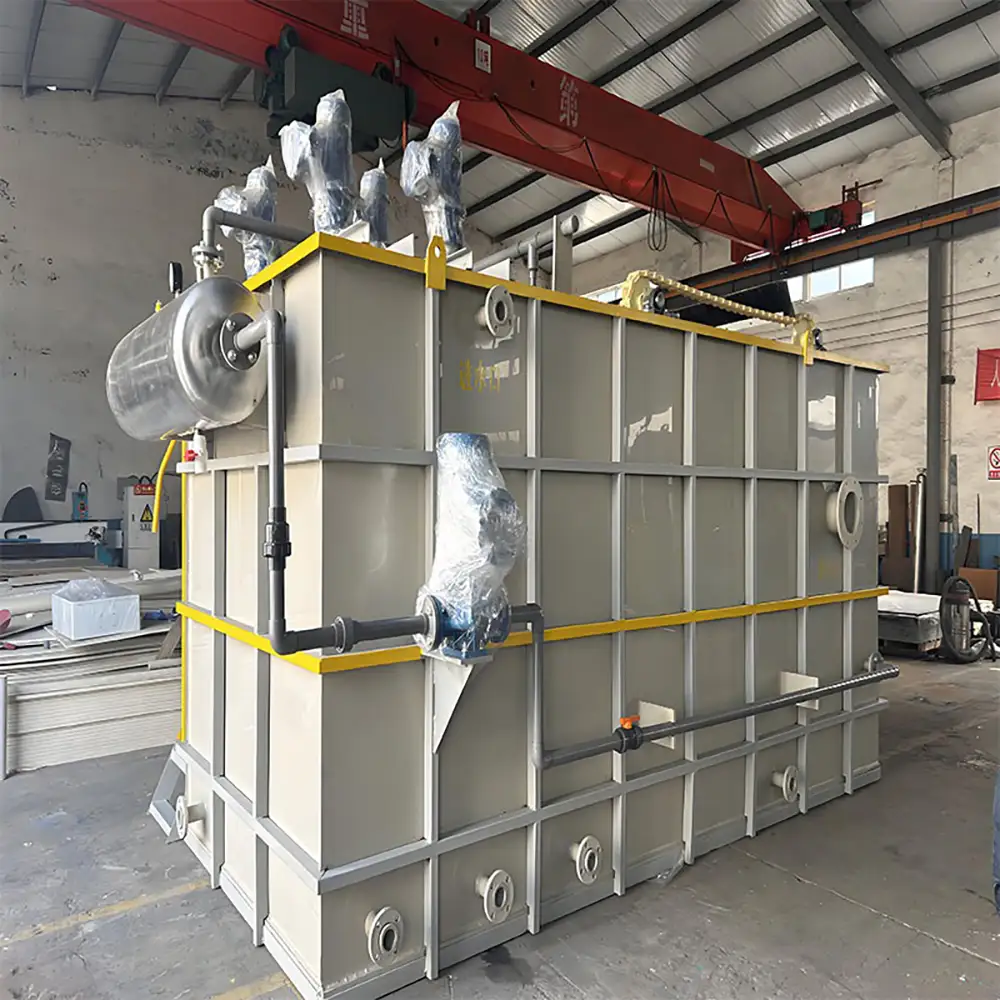
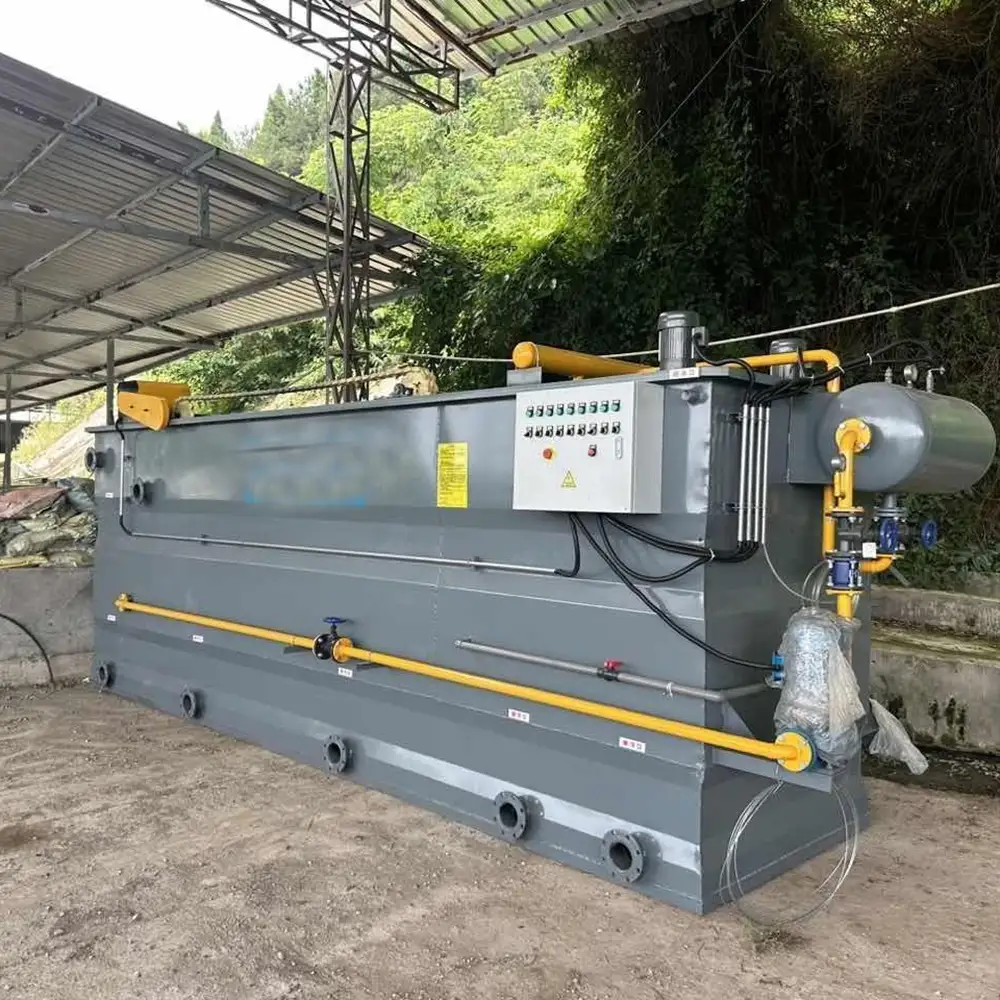
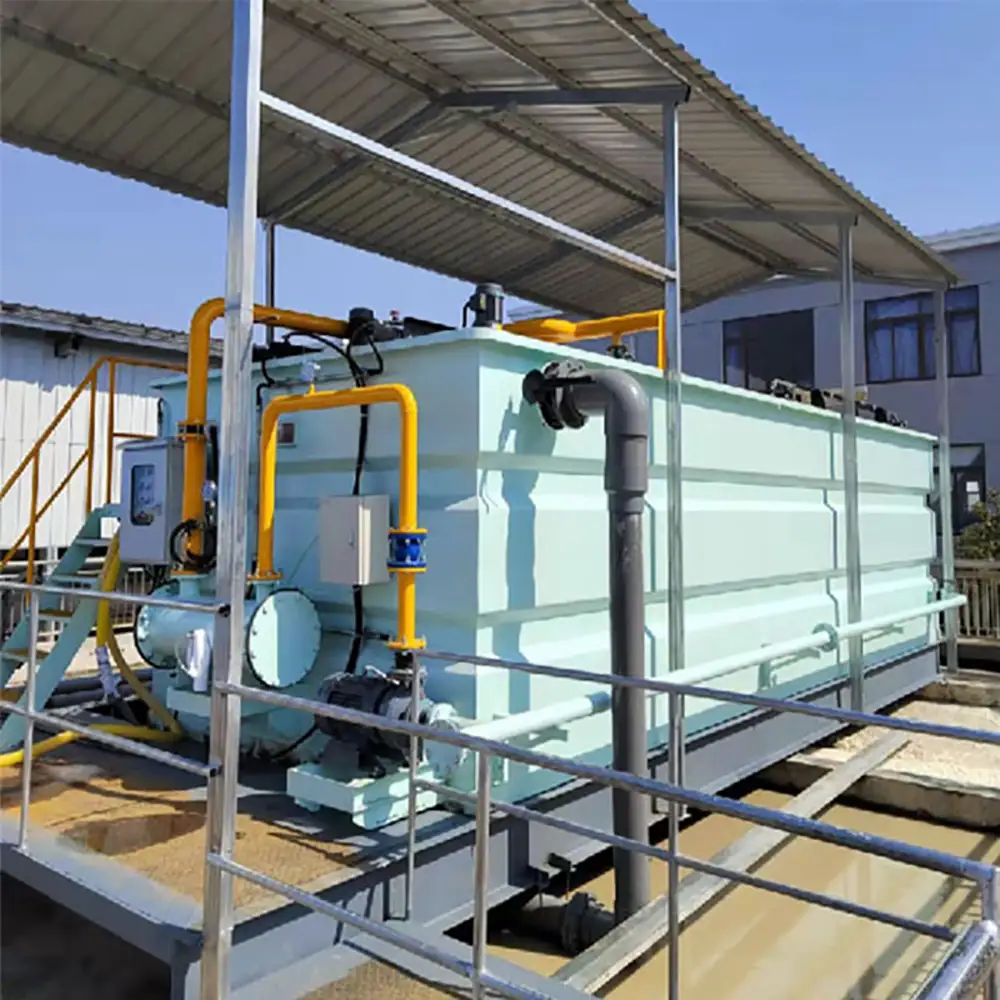
DAF Suspended Solids Wastewater Treatment Equipment
DAF Suspended Solids Wastewater Treatment Equipment is a dissolved air flotation system designed to remove suspended solids and other floatable contaminants from sewage and industrial wastewater. The equipment uses fine air bubbles to attach to suspended particles, reduce their apparent density, and transport them to the water surface for mechanical removal.
Dissolved air flotation is widely used as a physical-chemical wastewater treatment process, particularly for wastewater containing fine suspended solids, oil, grease, colloidal particles, and materials that are difficult to remove efficiently through conventional gravity sedimentation. EPA technical documentation describes DAF as a process in which microscopic air bubbles attach to particulate matter and carry it to the surface, where skimmers remove the floated material.
The DAF system can be used as primary treatment, pretreatment, clarification, or sludge thickening depending on the wastewater characteristics and overall treatment process.
|
Model NO. |
GSRF |
Handling method |
physicochemical treatment |
|
Usage |
Industrial, agricultural, food factories, slaughterhouses |
Trademark |
|
|
Types |
Package, Compact, Small, Mini |
Applications |
Industrial, Municipal, Domestic, Medical, Ship |
|
Craft |
Flocculation sedimentation method |
Features |
Water Clarification, Filtration, Purification |
|
Service Life |
20 Years |
Operation |
Automatic |
|
Steel Plate Thickness |
>8mm |
Function |
Remove Suspended solids |
|
Voltage |
220V/ 380V/ Customerized |
Installation Type |
Onground |
|
Colour |
Grey/Silver/Blue/Balck/Customerized |
Use for |
Mineral, Printing, Chemical, Dyeing, Starch |
|
Material |
Carbon Steel, Stain Steel, FRP, PE, PP |
Certificate |
SGS, ISO |
|
Transport Package |
Container Standard Packing |
Specification |
Carbon steel anti-corrosion |
|
Production Capacity |
1000 Sets/Year |
Origin |
China |
How DAF Removes Suspended Solids
The basic DAF process starts with wastewater entering the treatment system after preliminary screening. Depending on the wastewater composition, coagulation and flocculation may be used to combine fine particles into larger flocs that are easier to float.
A portion of the treated or clarified water is pressurized and saturated with compressed air. When this pressurized water is released into the flotation tank, the sudden pressure reduction causes dissolved air to form numerous fine bubbles.
These bubbles contact suspended particles and flocs in the wastewater. Through bubble-particle attachment and bubble entrapment within flocs, the combined particles become more buoyant and rise toward the surface.
The floated solids form a concentrated layer at the top of the DAF tank. A scraper or skimmer continuously or periodically removes this float material, while clarified water flows toward the treated-water outlet.
This principle allows DAF to separate suspended solids more rapidly than conventional settling for certain particle types, particularly particles with densities close to water.
Main Components
A complete DAF suspended solids treatment system may include:
Flotation Tank
Dissolved Air Saturation System
Recycle Pump
Air Compressor
Pressure Release Valve
Coagulation Tank
Flocculation Tank
Chemical Dosing System
Surface Skimmer
Sludge Collection System
Treated Water Outlet
Electrical Control Cabinet
Piping and Valves
The exact configuration depends on wastewater flow, suspended solids concentration, particle characteristics, required removal performance, and downstream treatment requirements.
Efficient Suspended Solids Removal
One of the primary advantages of DAF is its ability to target fine or lightweight suspended particles that may be difficult to settle by gravity. EPA documentation identifies DAF as a technology commonly used to remove suspended solids and dispersed oil and grease from wastewater.
DAF can be particularly useful when wastewater contains:
Fine Suspended Solids
Colloidal Particles
Floating Solids
Oil And Grease
Organic Flocs
Fatty Materials
Light Solids
Oil-Wet Particles
When chemical coagulation and flocculation are incorporated, small particles can be destabilized and aggregated into larger flocs, improving their interaction with flotation bubbles.
DAF Wastewater Treatment Applications
DAF suspended solids treatment equipment can be applied to many industrial and municipal wastewater treatment projects.
Typical applications include:
Food Processing: Removes suspended food particles, fats, oils, grease, and organic solids.
Dairy Wastewater: Helps separate milk solids, fat, grease, and suspended organic matter.
Slaughterhouse Wastewater: Suitable for separating blood solids, fats, oils, grease, and suspended organic particles.
Meat Processing: DAF can provide primary treatment before biological wastewater treatment.
Chemical Industry: Used for separating suspended solids, precipitated materials, and selected oil-containing contaminants.
Petrochemical Wastewater: Can be used for oil, grease, and suspended solids separation.
Textile Wastewater: May be used as a pretreatment or clarification stage depending on wastewater composition.
Paper and Pulp Wastewater: Suitable for recovering or removing suspended fibers and other solids.
Agricultural Wastewater: Can be incorporated into treatment systems for livestock, food-processing, and agricultural wastewater.
Municipal Sewage: DAF can be considered when the wastewater contains floatable or difficult-to-settle solids and when the overall treatment design supports flotation.
DAF Compared With Gravity Sedimentation
Gravity clarifiers depend primarily on particle settling. DAF uses buoyancy generated by fine air bubbles to move target particles upward.
This difference makes DAF attractive for certain wastewater streams where particles have low settling velocities or densities close to water. EPA documentation notes that flotation can be particularly useful for particles that are difficult to remove through gravity sedimentation.
DAF may also provide a compact treatment configuration because flotation can achieve high separation rates within a relatively limited tank area.
However, DAF is not automatically the best solution for every wastewater. Proper process selection should consider particle density, wastewater chemistry, flow variation, solids concentration, oil and grease content, and required effluent quality.
Chemical Coagulation and Flocculation
For wastewater containing very fine or colloidal suspended solids, chemical conditioning can improve DAF performance.
A typical process may include rapid mixing, coagulation, flocculation, and then dissolved air flotation. Coagulants destabilize suspended particles, while polymers or other flocculants can help form larger, stronger flocs.
The correct chemical program depends on the actual wastewater. Jar testing is often useful for evaluating chemical dosage and floc formation before full-scale equipment selection.
EPA technical documentation reports that DAF suspended-solids removal can vary substantially depending on whether chemical conditioning is used, demonstrating the importance of process-specific design and operation.
Automatic Operation
The DAF system can be equipped with an automatic control system for convenient operation.
Depending on project requirements, automatic functions may include:
Recycle Pump Control
Air Compressor Control
Skimmer Operation
Chemical Dosing
Water Level Control
Pressure Monitoring
Flow Monitoring
Alarm Management
Sludge Discharge
System Start And Stop
PLC-based control can help coordinate the different components and maintain stable operating conditions.
Operation and Maintenance
Regular inspection is important for reliable DAF performance. Operators should monitor wastewater flow, pressure, recycle ratio, chemical dosage, bubble formation, float thickness, sludge removal, and treated-water quality.
The flotation tank should be kept free of excessive solids accumulation. Skimmer blades, pumps, valves, air equipment, pressure components, and chemical dosing equipment should be inspected according to operating conditions.
Maintaining stable air-to-solids conditions is also important. EPA documentation notes that insufficient or excessive air can affect flotation performance and effluent quality.
Project Selection
Before selecting DAF suspended solids wastewater treatment equipment, the following information should normally be evaluated:
Wastewater Flow Rate
Peak Flow Rate
Suspended Solids Concentration
Particle Size
Oil And Grease Concentration
pH
Temperature
COD And BOD
Chemical Requirements
Required Effluent Quality
Available Installation Space
Downstream Treatment Process
Pilot testing or laboratory testing may be recommended for complex wastewater streams to determine suitable chemical dosing, flotation conditions, and expected separation performance.
Why Choose Us?
Our DAF wastewater treatment equipment is designed around practical industrial and sewage treatment requirements. We focus on integrating the flotation unit with the complete wastewater treatment process rather than treating DAF as an isolated piece of equipment.
Key advantages include:
DAF Suspended Solids Removal Solutions
Complete Dissolved Air Flotation Systems
Flexible Treatment Capacity
Integrated Coagulation And Flocculation Options
Efficient Oil And Grease Separation
Automatic Control Options
Compact Equipment Configuration
Easy Integration With Existing Treatment Plants
Industrial And Municipal Applications
Project-Based Process Configuration
Whether the DAF system is required as primary treatment, pretreatment, clarification, or sludge thickening, the equipment configuration can be selected according to the actual wastewater characteristics and treatment objectives.
FAQs
1. What is DAF wastewater treatment equipment?
DAF stands for Dissolved Air Flotation. It uses fine air bubbles to float suspended solids, oil, grease, and other separable contaminants to the water surface for removal.
2. What suspended solids can DAF remove?
DAF is suitable for many fine, lightweight, floating, and difficult-to-settle suspended solids. Particle characteristics should be evaluated for each wastewater application.
3. Can DAF remove oil and grease?
Yes. Oil and grease are common targets for DAF systems, particularly in industrial wastewater treatment.
4. Does DAF require chemicals?
Not always. However, coagulation and flocculation chemicals can improve the separation of fine or colloidal particles in many wastewater applications.
5. Can DAF replace a sedimentation tank?
DAF can perform a clarification function and may replace or supplement conventional sedimentation in suitable applications. The decision depends on wastewater characteristics and process requirements.
6. Can DAF be used for industrial wastewater?
Yes. DAF is widely applied to industrial wastewater containing suspended solids, oil, grease, and other floatable contaminants.
7. Can DAF treat sewage?
Yes. DAF can be integrated into sewage treatment systems when flotation is appropriate for the wastewater characteristics and treatment objectives.
8. How are floated solids removed?
A mechanical surface scraper or skimmer moves the floated solids toward a collection area for discharge and subsequent sludge handling.
9. Can DAF be automated?
Yes. PLC-based controls can be used for pumps, air systems, skimmers, chemical dosing, alarms, and other operating functions.
10. What determines DAF capacity?
Flow rate is a major design parameter. Suspended solids concentration, particle characteristics, oil and grease, chemical conditioning, recycle flow, and required effluent quality are also important.
11. Can DAF be used before biological treatment?
Yes. DAF can serve as pretreatment or primary clarification to reduce suspended solids and other contaminants before downstream biological treatment.
12. Is DAF suitable for food processing wastewater?
Yes. DAF is commonly considered for food, dairy, meat, and other organic-rich wastewater streams where suspended solids, fats, oils, and grease need to be separated.
Prev:
DAF Air Float, Integrates Cutting-Edge Technology/Wastewater Treatment Equipment
Next:
Sewage Treatment System Daf Dissolved Air Flotation Solid-Liquid Separation Unit
TAG:
Industrial Wastewater Treatment Equipment,
Suspended Solids Removal,
Dairy Wastewater Treatment,
Meat Processing Wastewater Treatment,
Food Processing Wastewater Treatment,
Agricultural Wastewater Treatment,
Industrial Wastewater Treatment System,
DAF Wastewater Treatment System,
Industrial Wastewater Treatment,
Sewage Treatment Plant,
Industrial Sewage Treatment,
Wastewater Treatment Equipment,
Wastewater Treatment Plant,
Chemical Wastewater Treatment,
Wastewater Treatment System,
Industrial Water Treatment,
Suspended Solids Removal Equipment,
Wastewater Separation Equipment,
Wastewater Pretreatment Equipment,
Pharmaceutical Wastewater Treatment,
Process Wastewater Treatment,
Sewage Treatment Equipment,
Sewage Treatment System,
Slaughterhouse Wastewater Treatment,
Oil Removal Wastewater Treatment,
Industrial Sewage Treatment Equipment,
Suspended Solids Separation,
Wastewater Solid-Liquid Separation,
Sewage Pretreatment Equipment,
DAF Sludge Removal,
Related Category:
DAF Suspended Solids Wastewater Treatment,DAF Wastewater Treatment Equipment,Dissolved Air Flotation Equipment,Suspended China, suppliers, manufacturers, factory, customized, wholesale, quotation, made in China