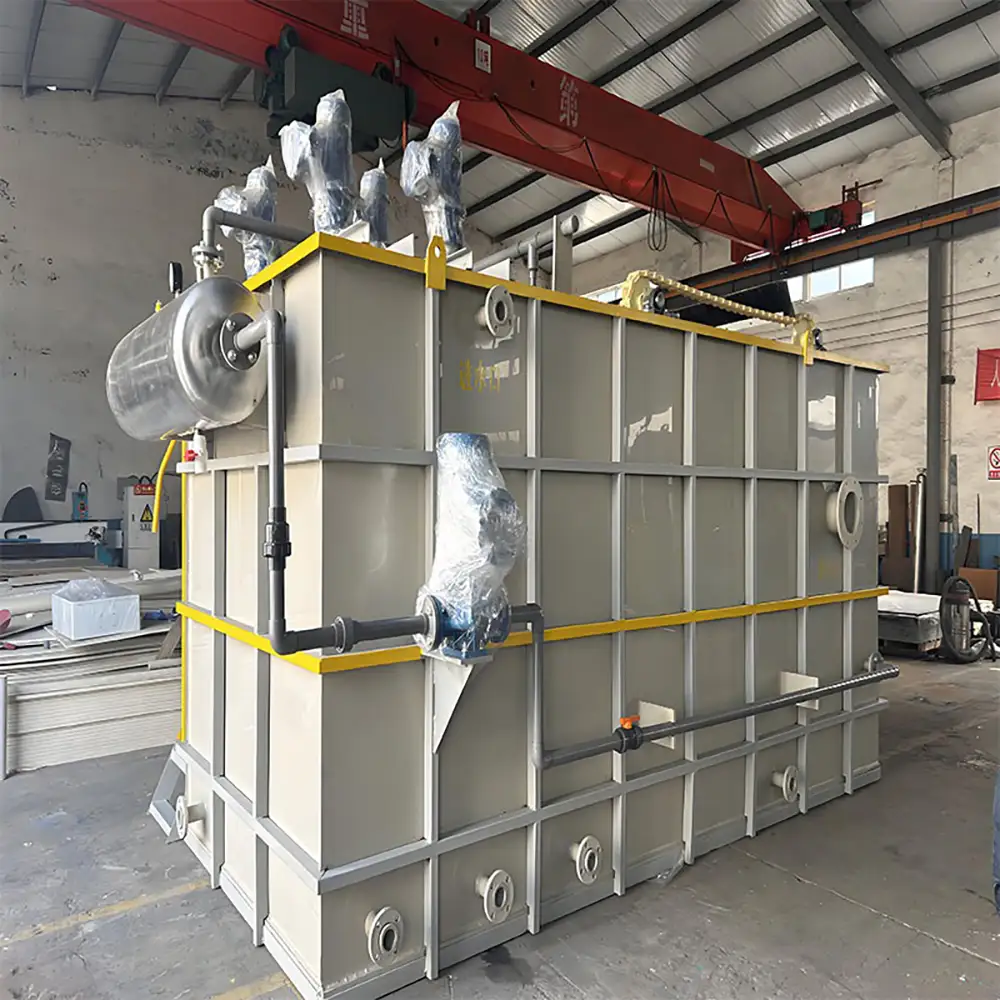
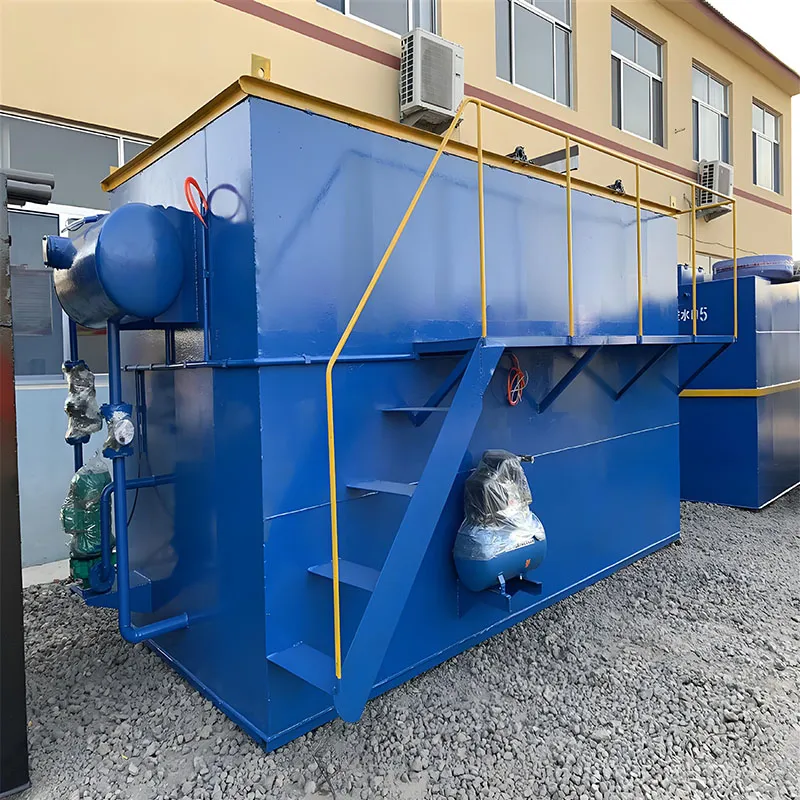
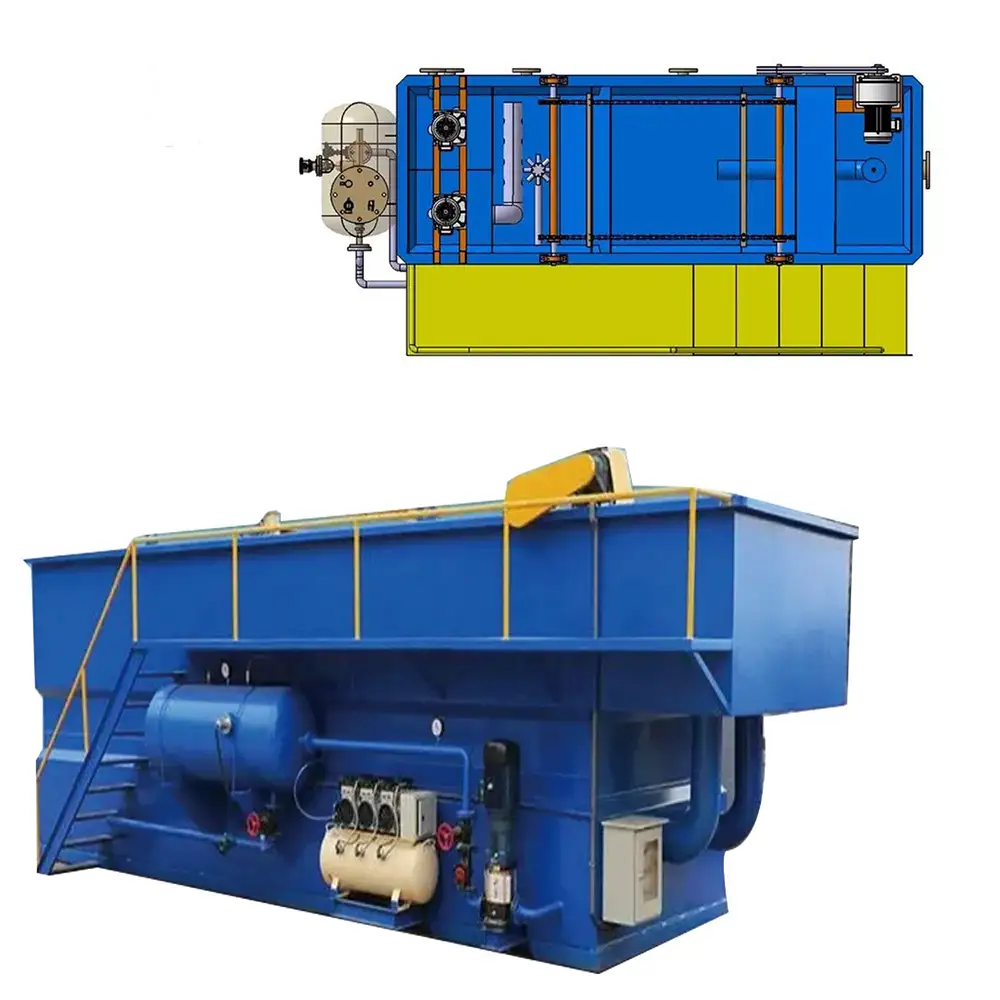
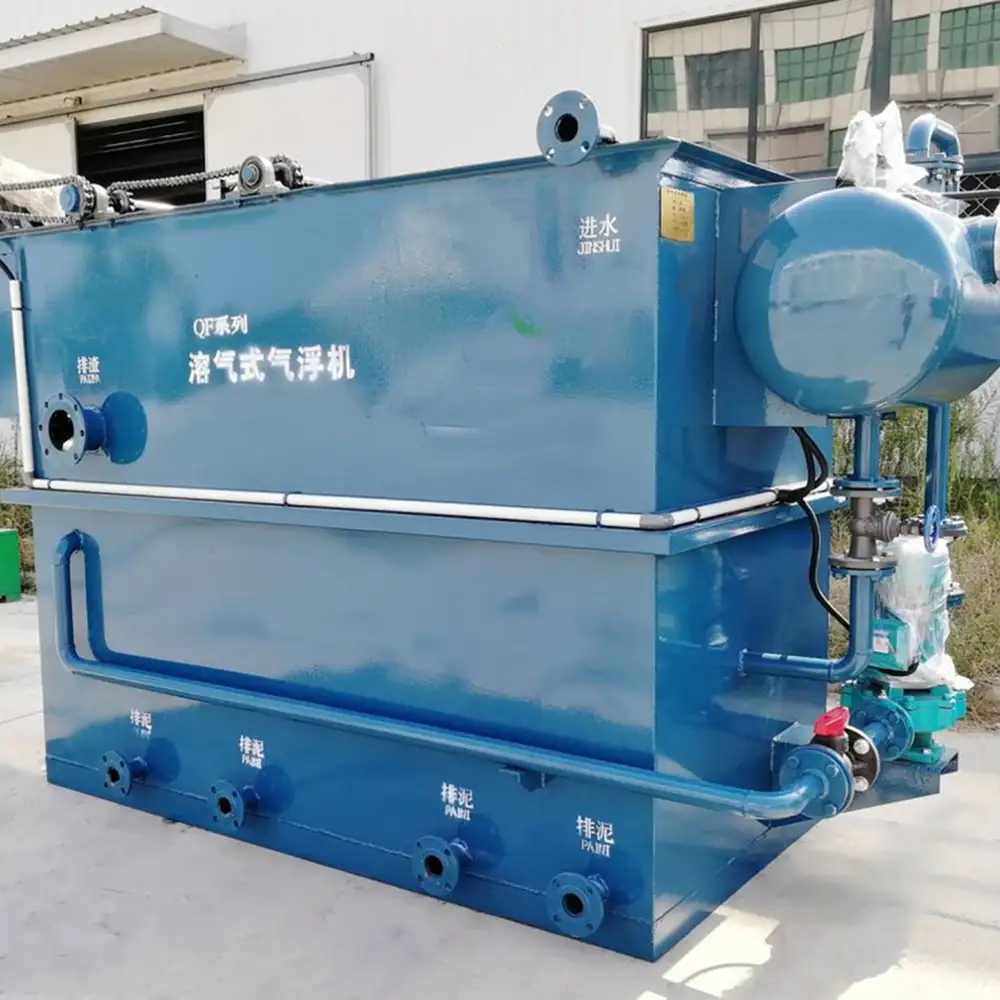
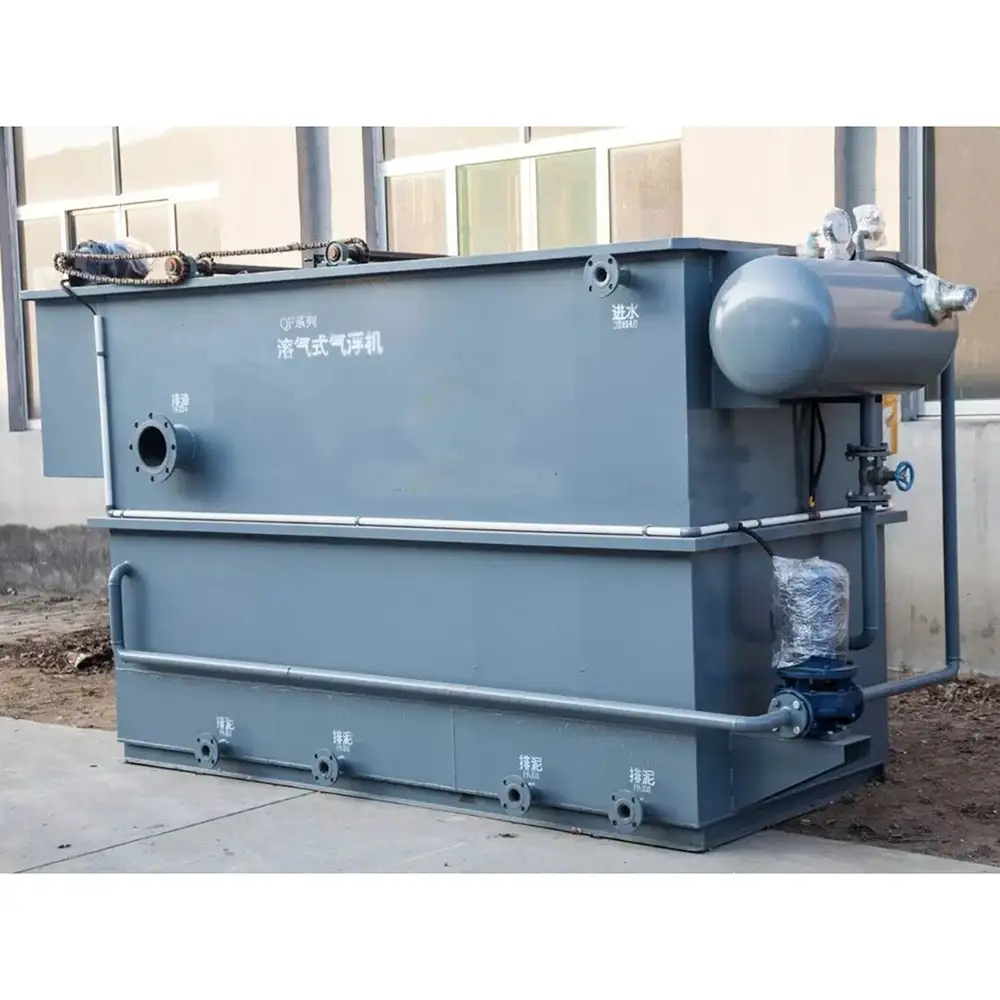
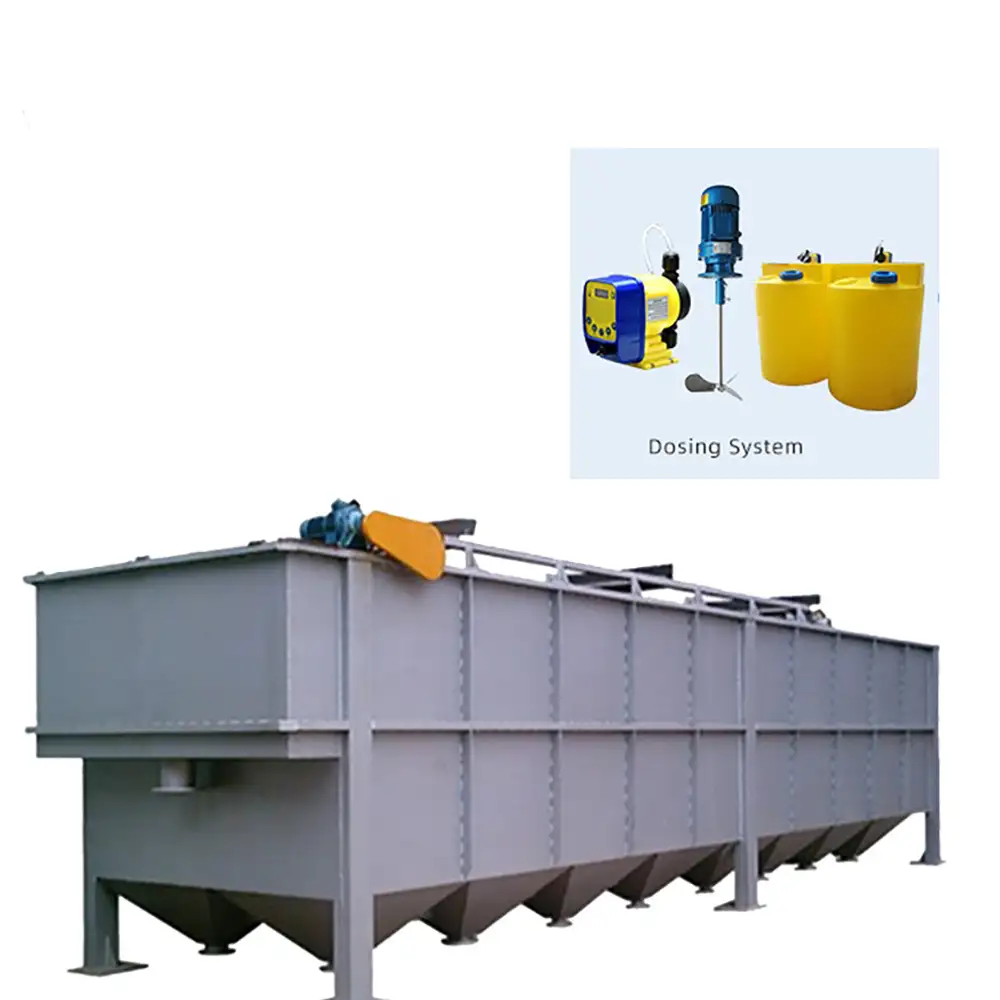
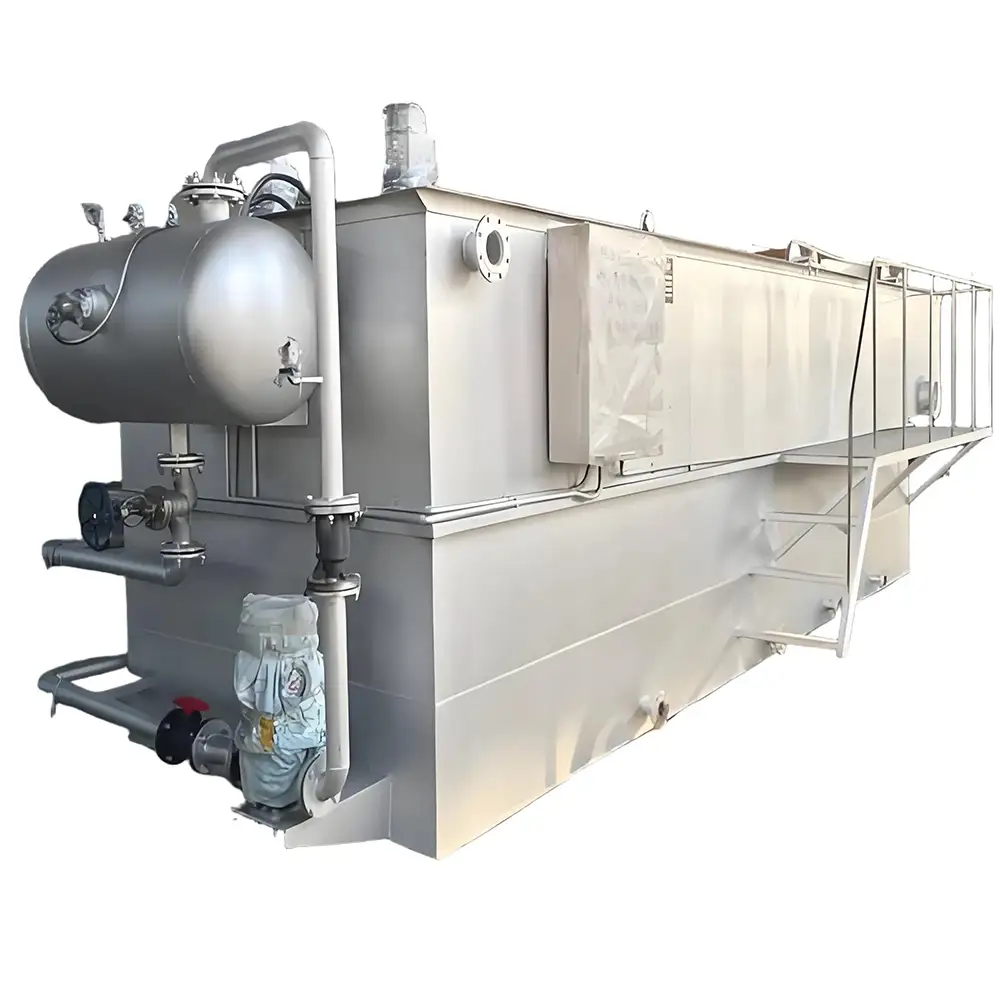
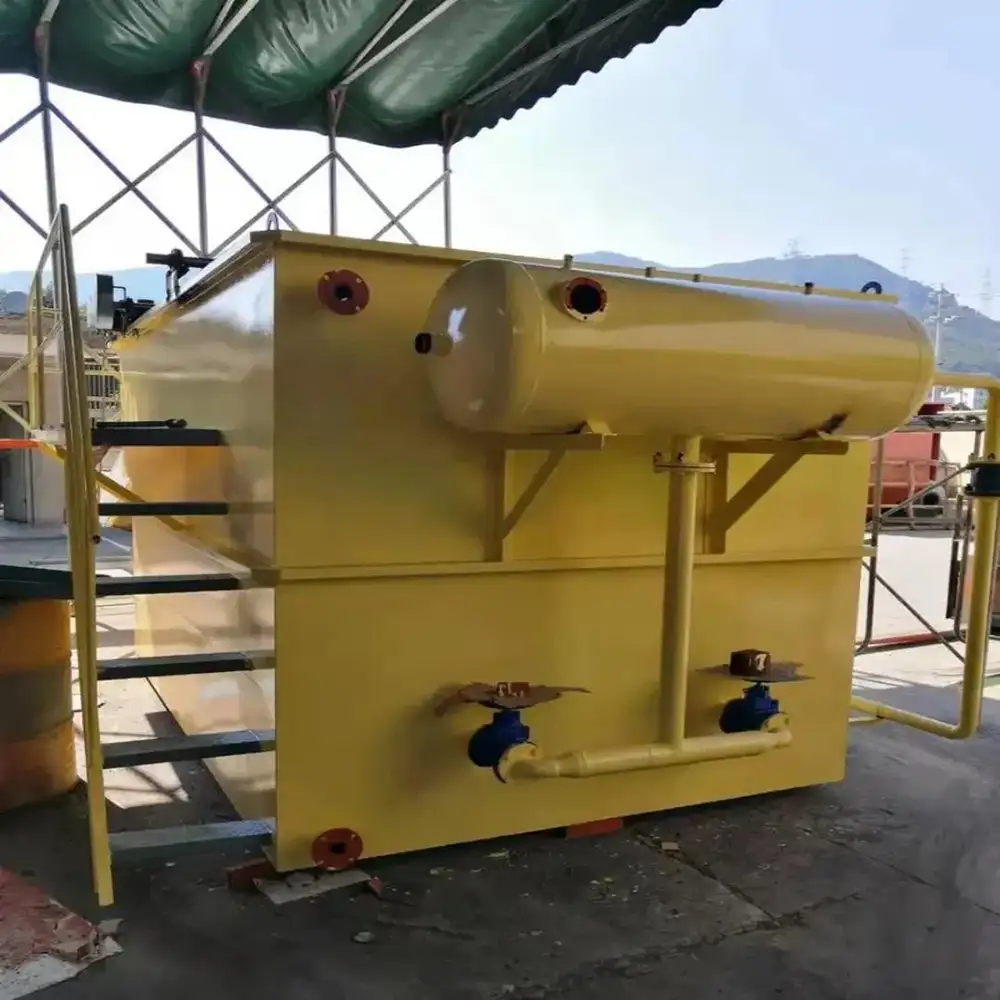
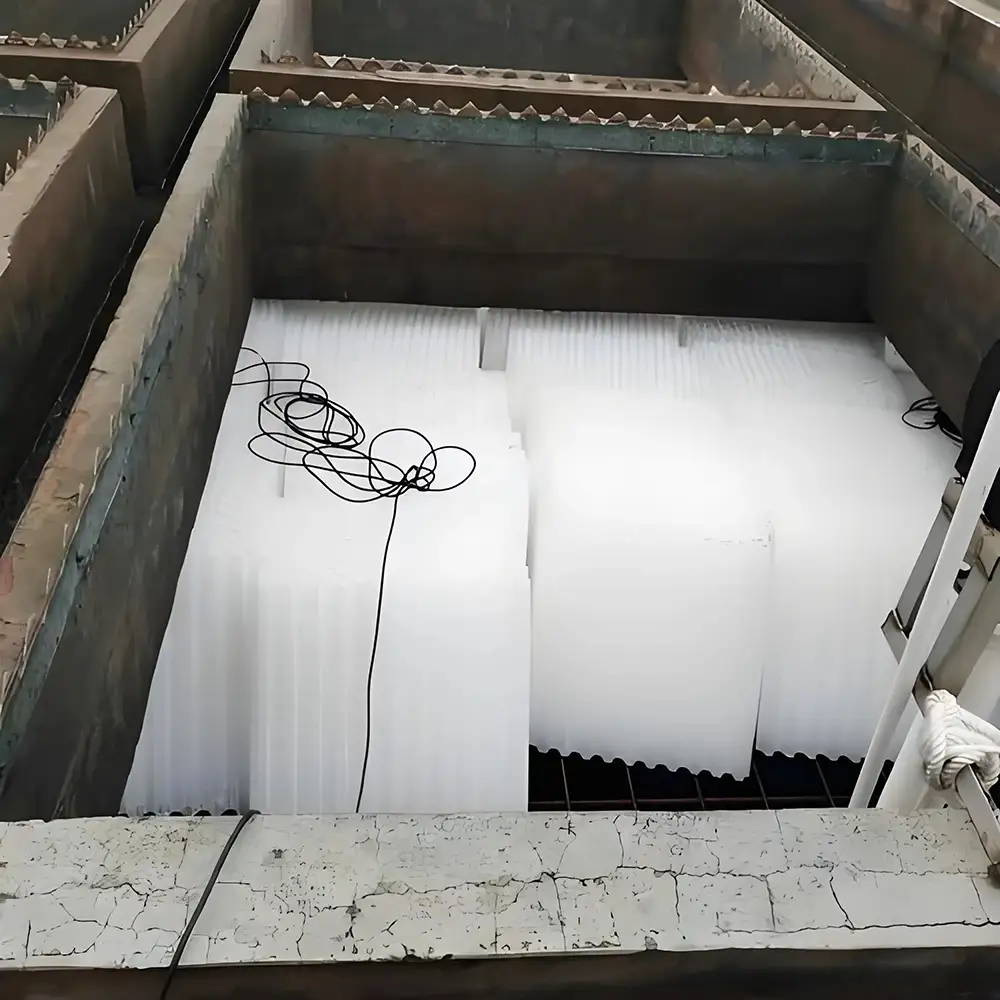
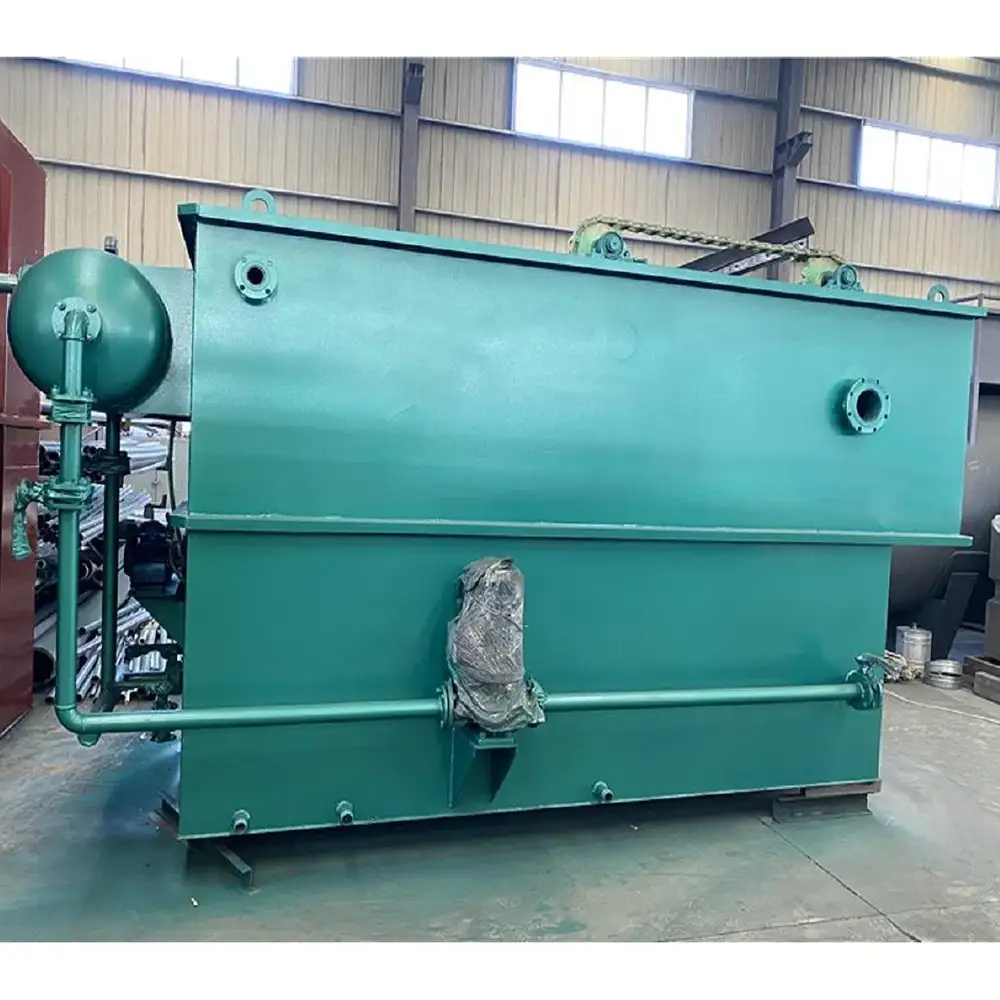
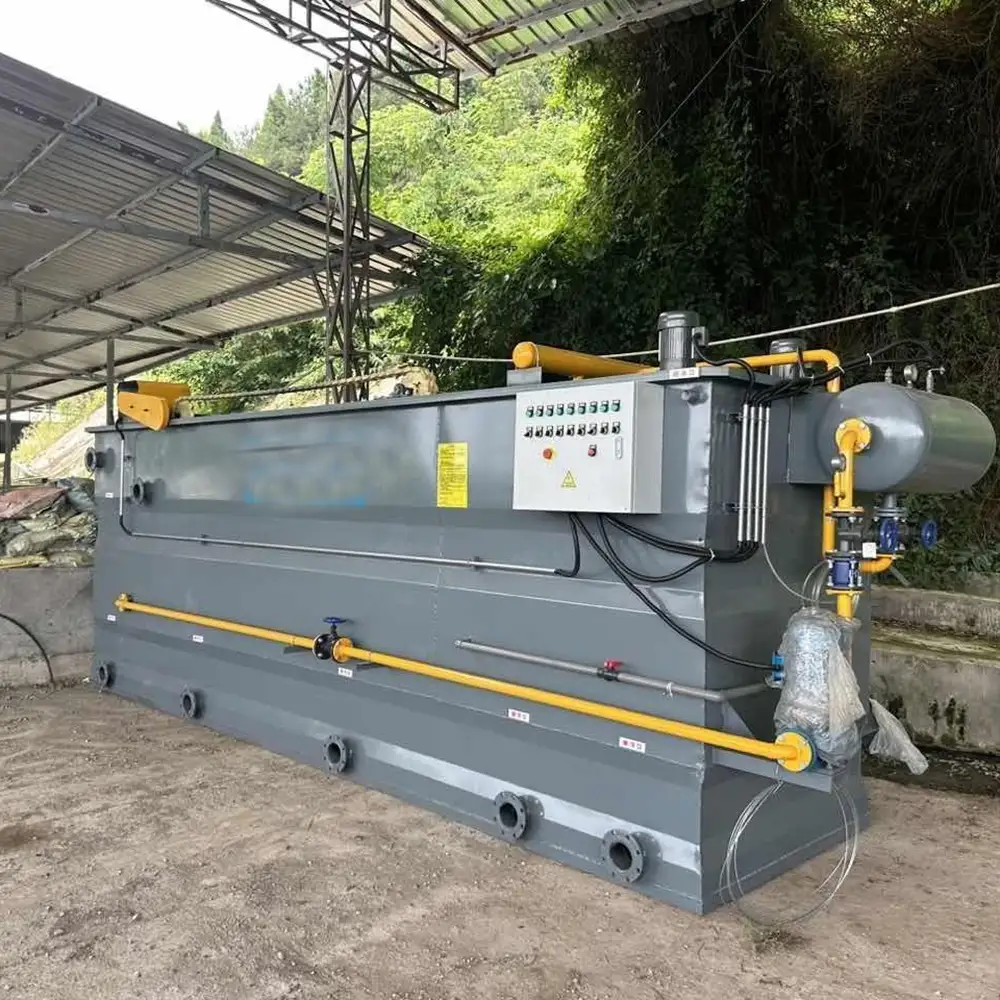
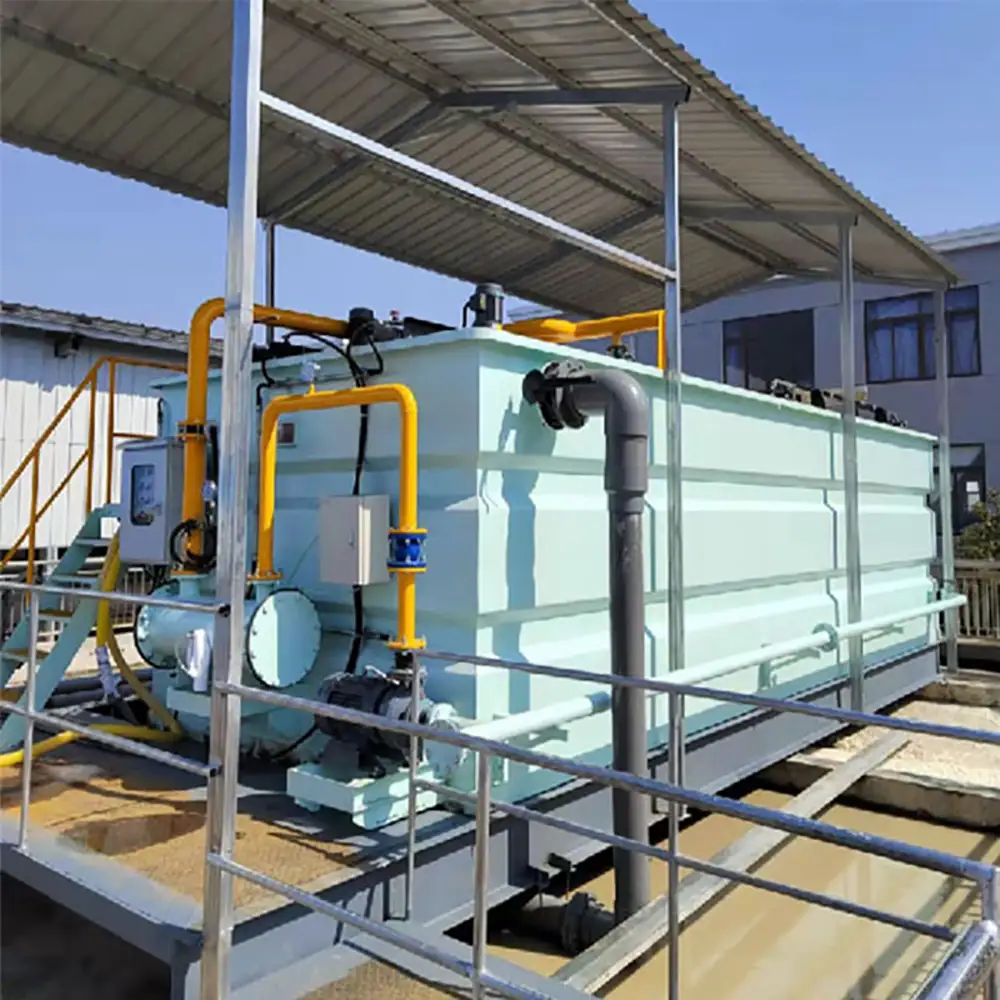
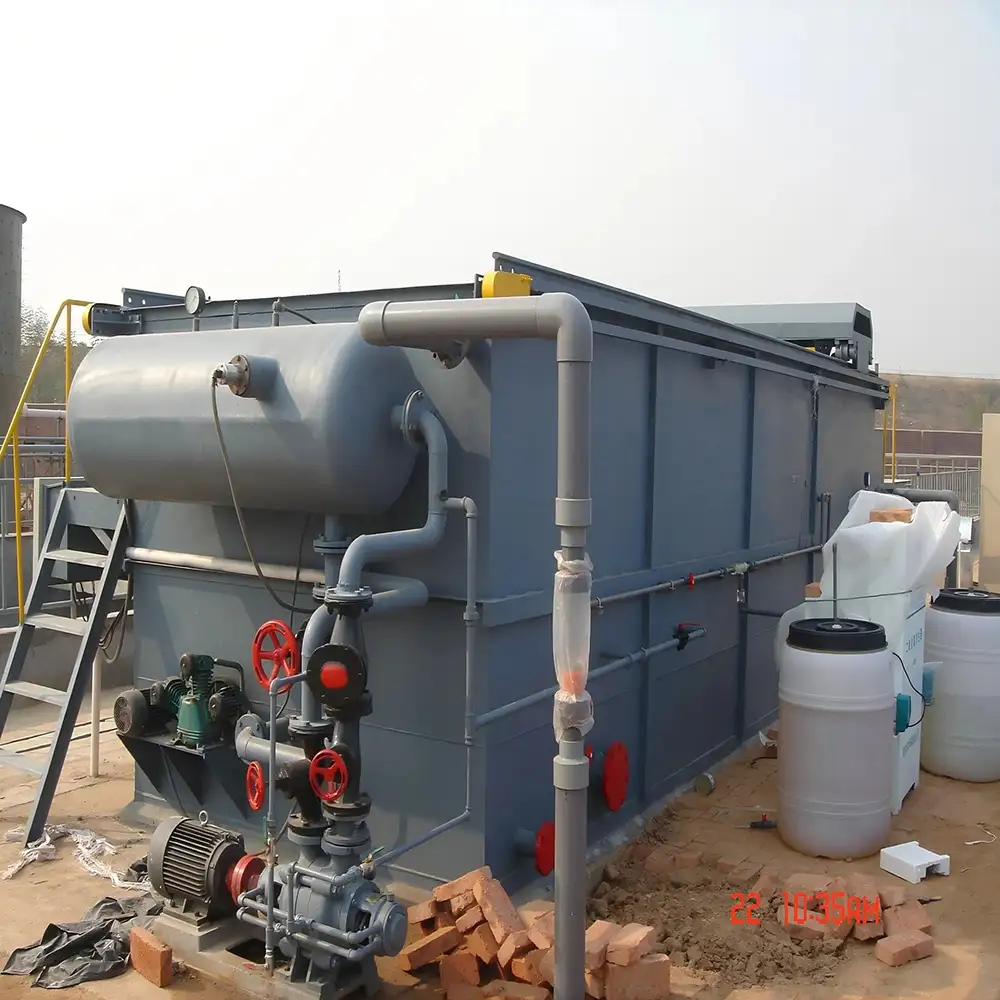
The dissolved air flotation machine is a new type of sewage treatment equipment. It uses compressed air as a power source to flocculate suspended matter in the water into tiny particles and thereby separate it from the water.
In the sewage treatment process, the air flotation machine can flocculate and settle suspended matter in the water. It mainly consists of a pressure dissolved air tank, an ejector, a dissolved air releaser and an air flotation tank. First, the sewage to be treated flows into the pressure air dissolving tank, and air is introduced through the ejector for air dissolving. Then, the air dissolved in the sewage is released through the dissolved air releaser to form tiny bubbles. These tiny bubbles combine with pollutants such as suspended solids, grease and various colloids in the water to form scum. Finally, the scum is separated from the water through an air flotation tank.
Dissolved Air Flotation and Activated Carbon Combined Equipment
Dissolved Air Flotation and Activated Carbon Combined Equipment combines two complementary treatment technologies into one integrated water and wastewater treatment process. Dissolved air flotation provides physical-chemical separation of suspended solids, colloids, oil, grease, and other floatable contaminants, while activated carbon provides adsorption treatment for selected dissolved organic compounds and other contaminants that remain after clarification.
This combined treatment configuration is suitable for industrial wastewater, process water, water reuse, and advanced pretreatment applications where conventional clarification alone cannot achieve the required water quality.
DAF operates by dissolving air into a pressurized recycle stream and releasing the water into a flotation tank. Fine bubbles attach to suspended particles and cause them to rise to the water surface, where a mechanical skimmer removes the floated material. EPA technical information identifies DAF as a useful treatment technology for lighter suspended materials and oil and grease, particularly when particles have densities close to water.
Activated carbon works through adsorption rather than flotation. Its porous structure provides a large surface area for capturing many organic compounds and other target contaminants. Combining these processes creates a treatment train in which DAF handles the bulk separation load while activated carbon provides additional polishing.
How Does the DAF and Activated Carbon System Work?
A typical system begins with wastewater collection and equalization. Equalization helps reduce sudden fluctuations in flow, pollutant concentration, pH, and temperature before the main treatment stages.
The wastewater can then pass through coagulation and flocculation. Coagulants destabilize colloidal particles, while polymers can help form larger flocs that are easier to float.
The conditioned wastewater enters the DAF unit. A portion of clarified water is pressurized with air and recycled into the flotation chamber. When the pressure is released, dissolved air forms fine bubbles. These bubbles attach to suspended particles, flocs, oils, and grease and transport them to the surface.
The floating layer is removed by a mechanical scraper. The clarified DAF effluent then flows to the activated carbon treatment stage.
Depending on the project, activated carbon may be installed as granular activated carbon (GAC) in fixed beds or powdered activated carbon (PAC) may be introduced as part of a chemical-adsorption process. The appropriate configuration depends on wastewater composition, target contaminants, carbon consumption, regeneration requirements, and operating conditions.
Why Combine DAF With Activated Carbon?
The two processes target different pollutant fractions.
DAF is particularly effective for suspended solids, floatable material, oil and grease, and particles that can be destabilized through coagulation and flocculation. Activated carbon is more useful for selected dissolved contaminants that are not efficiently removed through flotation.
This separation of treatment functions can reduce the contaminant burden entering the carbon stage. When excessive suspended solids and oils reach an activated carbon bed, they can occupy adsorption sites and increase pressure drop or carbon replacement requirements.
A real industrial case used a process consisting of equalization, free-oil removal, chemical treatment, DAF, and activated carbon after emulsified oil was found to be overloading the existing carbon system.
Suspended Solids and Oil Removal by DAF
The DAF stage is the primary clarification section of the combined system.
Depending on wastewater characteristics and chemical conditioning, DAF can remove:
Suspended solids
Fine particulate matter
Colloidal particles
Oil and grease
Fats and oils
Floatable organic solids
Flocculated contaminants
Some particulate phosphorus
Particulate organic matter
EPA data show that DAF performance can improve significantly when chemicals are used to enhance particle separation, with reported removal ranges for suspended solids and oil and grease varying according to the application and operating conditions.
Actual performance should always be determined through wastewater testing, jar testing, pilot testing, or process-specific design calculations.
Activated Carbon Adsorption Stage
After DAF clarification, the treated water enters the activated carbon stage.
Granular activated carbon is commonly installed in pressure vessels or gravity-contact beds. Water passes through the carbon media, allowing target contaminants to contact the carbon surface and become adsorbed.
Activated carbon can be useful for treating selected:
Dissolved organic compounds
Color-causing compounds
Odor-causing compounds
Taste-causing compounds
Residual organic pollutants
Certain industrial chemicals
Selected trace contaminants
The actual adsorption capacity depends on carbon type, pore structure, influent concentration, contact time, pH, temperature, competing compounds, and contaminant characteristics.
Activated carbon should therefore not be presented as a universal removal process. Specific contaminant removal claims should be confirmed through laboratory or supplier performance data.
DAF and Activated Carbon for COD Reduction
DAF can reduce COD associated with suspended and floatable organic matter. Activated carbon can then target selected dissolved organic compounds that remain in the clarified water.
Research on refinery wastewater investigated powdered activated carbon in a DAF process and reported improved BOD and COD removal with activated carbon dosing under the tested conditions.
This illustrates an important distinction: DAF and activated carbon can complement each other because flotation primarily separates particulate or floatable contaminants, while adsorption can address part of the dissolved organic fraction.
However, total COD is not a single contaminant, and activated carbon performance varies depending on the composition of the COD.
Typical Treatment Process
A complete DAF Activated Carbon Water Treatment System may be configured as:
Raw Wastewater → Screening → Equalization → pH Adjustment → Coagulation → Flocculation → DAF → Clarified Water Tank → Activated Carbon Filter → Disinfection → Reuse or Discharge
For more demanding applications, additional processes may be installed:
DAF → Activated Carbon → UF/MF → RO → Disinfection → Water Reuse
The final process should be selected according to wastewater characteristics and the required effluent or reuse standard.
A published industrial water reclamation study evaluated a DAF-AC-RO process consisting of coagulation/flocculation, DAF, activated carbon, microfiltration, and reverse osmosis, demonstrating the potential of this type of multi-stage treatment train for water reclamation.
Granular Activated Carbon vs Powdered Activated Carbon
The combined system can use different forms of activated carbon.
Granular Activated Carbon (GAC) is typically installed in a fixed bed or carbon filter vessel. It is suitable for continuous polishing applications and can be removed for regeneration or replacement.
Powdered Activated Carbon (PAC) is introduced directly into the treatment process. After adsorption, the carbon-containing solids need to be separated, commonly through clarification or flotation.
The choice between GAC and PAC depends on wastewater flow, target contaminants, carbon consumption, contact time, operating cost, sludge handling, and system configuration.
Main Equipment Components
A complete system may include:
Equalization tank
Coagulation tank
Flocculation tank
DAF flotation tank
Dissolved air recycle pump
Air saturation system
Pressure release system
Surface sludge scraper
Sludge collection hopper
Activated carbon filter
Granular activated carbon media
Backwash system
Carbon replacement or regeneration system
Chemical dosing system
Flow meters
Pressure gauges
Level sensors
PLC control cabinet
The equipment can be supplied as individual process units or as an integrated treatment package.
Industrial Applications
Dissolved Air Flotation and Activated Carbon Combined Equipment can be used for:
Food Processing Wastewater
Meat Processing Wastewater
Dairy Wastewater
Beverage Industry Wastewater
Petrochemical Wastewater
Refinery Wastewater
Chemical Industry Wastewater
Pharmaceutical Wastewater
Textile Wastewater
Printing And Dyeing Wastewater
Paper Mill Wastewater
Metal Processing Wastewater
Industrial Process Water
Industrial Water Reuse
Wastewater Reclamation
Surface Water Treatment
RO Pretreatment
The process is particularly attractive when wastewater contains both a significant particulate/floatable fraction and a dissolved organic fraction requiring additional polishing.
Water Reuse and Advanced Treatment
For water reuse applications, DAF can provide the initial clarification stage while activated carbon provides adsorption polishing.
Depending on the reuse objective, additional membrane or disinfection processes can follow the carbon stage.
For example:
DAF → Activated Carbon → UF → RO → Disinfection → Reuse
DAF reduces suspended solids and oil loading, activated carbon targets selected dissolved organics, UF provides fine particulate and microbial separation, and RO addresses many dissolved salts and other dissolved contaminants.
This multi-barrier configuration should be engineered according to the actual source-water chemistry rather than assuming every application requires every stage.
Advantages of the Combined System
The major advantages include:
Complementary treatment mechanisms
Efficient suspended solids separation
Oil and grease removal
Reduced solids loading on carbon media
Additional dissolved organic contaminant control
Improved clarification
Flexible process configuration
Suitable for industrial wastewater
Compatible with membrane pretreatment
Suitable for water reuse applications
Automated operation options
By placing DAF before activated carbon, the system can protect the adsorption stage from excessive suspended solids and floatable pollutants.
Operation and Maintenance
Regular maintenance is essential for stable operation.
For the DAF unit, operators should inspect the recycle pump, air saturation system, pressure controls, skimmer, sludge discharge system, and chemical dosing equipment.
For activated carbon filters, pressure drop, flow rate, influent and effluent quality, adsorption performance, and carbon breakthrough should be monitored.
Activated carbon does not have unlimited adsorption capacity. Once the available adsorption sites become sufficiently occupied, contaminant breakthrough can occur. Carbon should then be replaced or regenerated according to the system design.
Backwashing may be required for GAC filters to control pressure loss and remove accumulated solids.
Why Choose Us?
Our Dissolved Air Flotation and Activated Carbon Combined Equipment is designed to provide complementary clarification and adsorption treatment in one coordinated industrial wastewater solution.
We can configure DAF capacity, flotation tank dimensions, chemical dosing, sludge removal, activated carbon vessel size, carbon type, contact time, backwash arrangement, automation, and downstream membrane or disinfection equipment.
For demanding industrial wastewater projects, the treatment train can be expanded with equalization, biological treatment, UF, RO, advanced oxidation, or other polishing technologies.
We focus on matching the treatment configuration to actual wastewater characteristics and target contaminants. Where specific removal guarantees are required, laboratory testing, carbon adsorption testing, or pilot trials can be used to validate the proposed process.
FAQ
1. What Is DAF and Activated Carbon Combined Equipment?
It is a treatment system that combines dissolved air flotation for physical-chemical clarification with activated carbon adsorption for additional treatment of selected dissolved contaminants.
2. Why Is DAF Installed Before Activated Carbon?
DAF removes suspended solids, oil, grease, and floatable contaminants before the carbon stage, helping reduce the contaminant load placed on the activated carbon.
3. What Does DAF Remove?
DAF can remove suspended solids, colloids, oil, grease, fats, and other floatable or flocculated materials.
4. What Does Activated Carbon Remove?
Activated carbon can adsorb many types of dissolved organic compounds, color-causing compounds, odor-causing compounds, and selected industrial contaminants. Performance depends on the specific contaminant and carbon characteristics.
5. Can the System Reduce COD?
Yes, the combined system can reduce certain COD fractions. DAF primarily targets particulate and floatable organic matter, while activated carbon can adsorb some dissolved organic compounds.
6. Can DAF Remove Oil and Grease?
Yes. DAF is widely used for oil and grease separation, particularly when the contaminants can be floated efficiently.
7. What Is the Difference Between GAC and PAC?
GAC consists of larger carbon particles normally used in fixed beds or filters. PAC is powdered carbon that is added directly to the treatment process and subsequently separated with the treated solids.
8. How Often Does Activated Carbon Need to Be Replaced?
There is no universal replacement interval. Carbon life depends on contaminant loading, flow rate, contact time, carbon type, temperature, and adsorption capacity. Breakthrough monitoring is the preferred basis for replacement planning.
9. Can DAF and Activated Carbon Be Used Before RO?
Yes. DAF and activated carbon can be used as part of RO pretreatment when they address the specific contaminants that could otherwise affect downstream membrane performance.
10. Can the System Treat Industrial Wastewater?
Yes. Applications include food, dairy, meat processing, petrochemical, refinery, chemical, textile, pharmaceutical, and other industrial wastewater streams.
11. Can the Equipment Be Fully Automated?
Yes. PLC control can manage DAF pumps, chemical dosing, sludge skimming, carbon filter valves, backwashing, alarms, and process monitoring.
12. Can the DAF and Carbon System Be Customized?
Yes. DAF capacity, carbon filter size, carbon media, chemical dosing, sludge handling, automation, skid configuration, and downstream treatment can be customized according to the project.
Prev:
Dissolved Air Flotation and Ultrafiltration Combined Equipment
Next:
Intelligent Monitoring Dissolved Air Flotation Wastewater Equipment
TAG:
Industrial Water Purification System,
Industrial Water Treatment System,
Industrial Wastewater Treatment Equipment,
Suspended Solids Removal,
Dairy Wastewater Treatment,
Meat Processing Wastewater Treatment,
Food Processing Wastewater Treatment,
Industrial Wastewater Treatment System,
DAF Wastewater Treatment System,
Industrial Wastewater Treatment,
Industrial Wastewater Treatment Plant,
Wastewater Treatment Equipment,
Wastewater Treatment Plant,
Printing And Dyeing Wastewater Treatment,
Industrial Wastewater Purification,
Chemical Wastewater Treatment,
Wastewater Treatment System,
Industrial Water Treatment Equipment,
Industrial Water Treatment,
Industrial Water Recycling,
Suspended Solids Removal Equipment,
Suspended Solids Removal System,
Industrial Water Purification,
Wastewater Recycling System,
Pharmaceutical Wastewater Treatment,
Industrial Water Reuse,
Wastewater Purification System,
Process Water Treatment,
Activated Carbon Adsorption,
RO Pretreatment System,
Related Category:
Dissolved Air Flotation and Activated Carbon Combined Equipment,DAF Activated Carbon Water Treatment System China, suppliers, manufacturers, factory, customized, wholesale, quotation, made in China