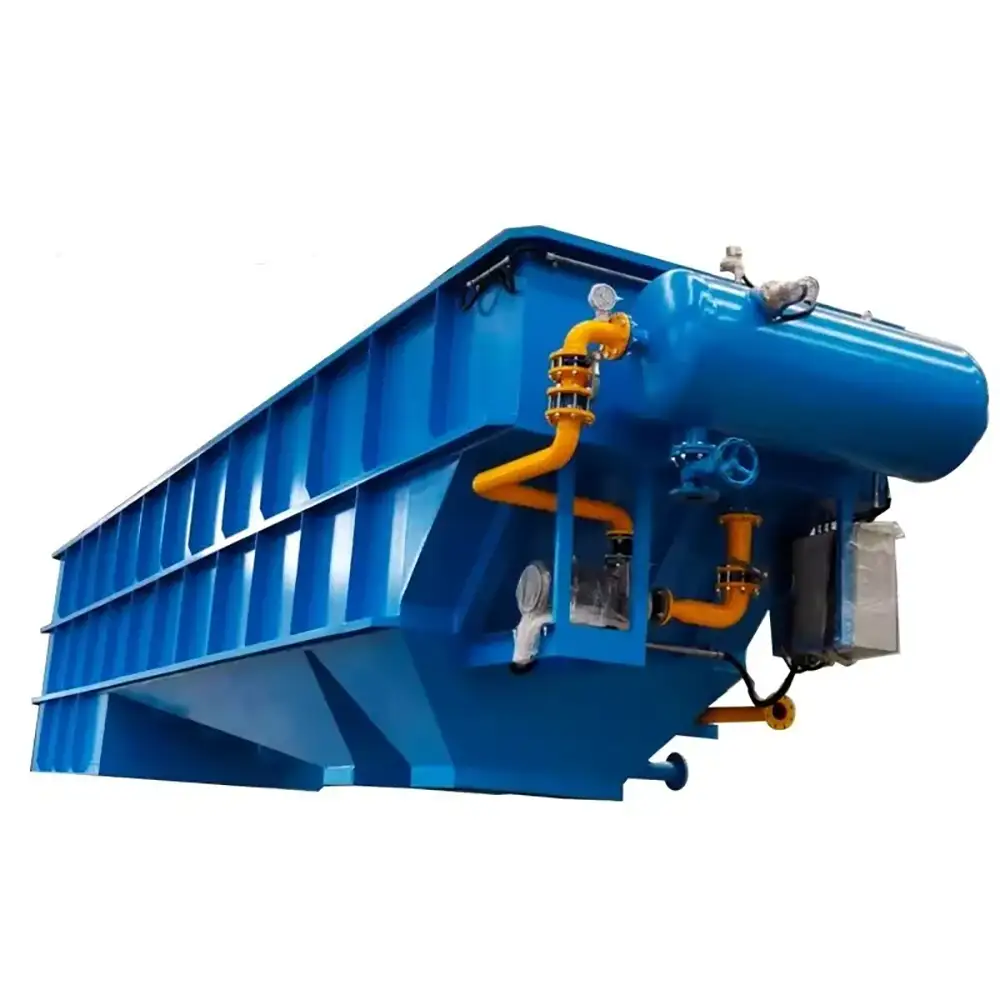
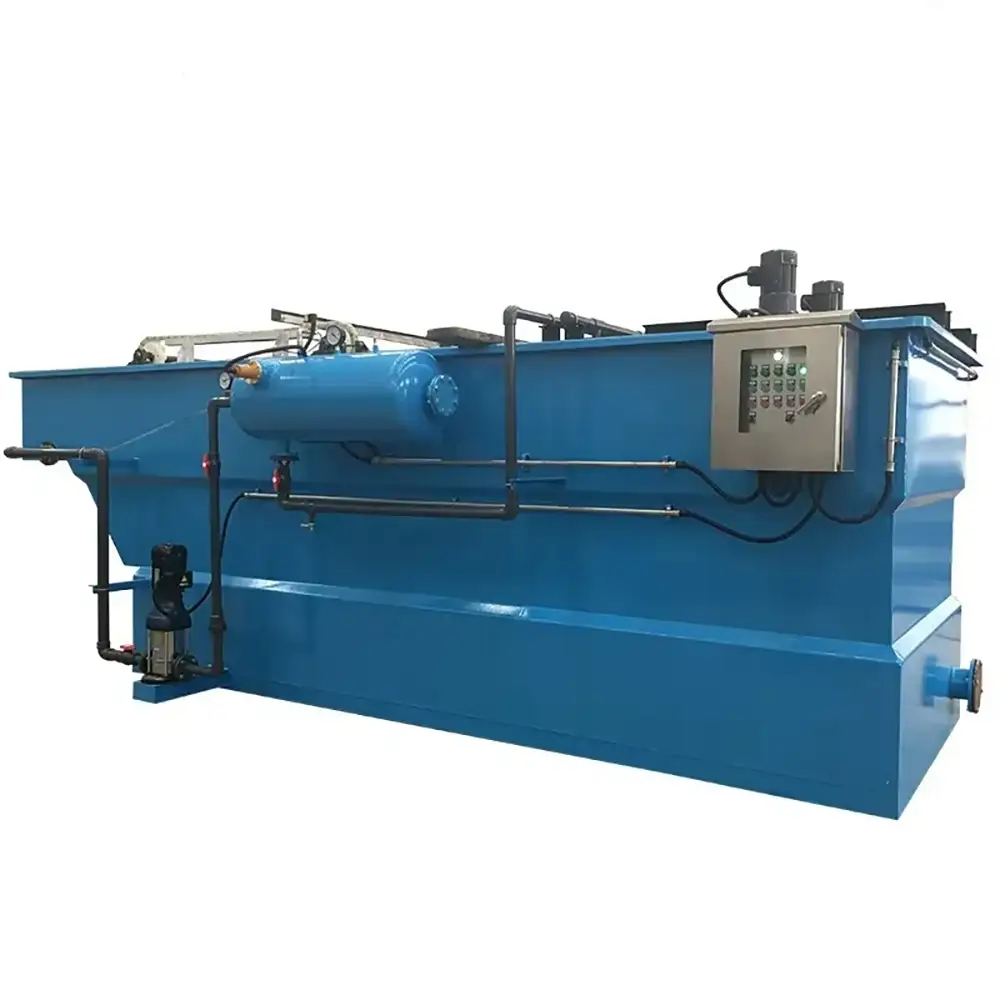
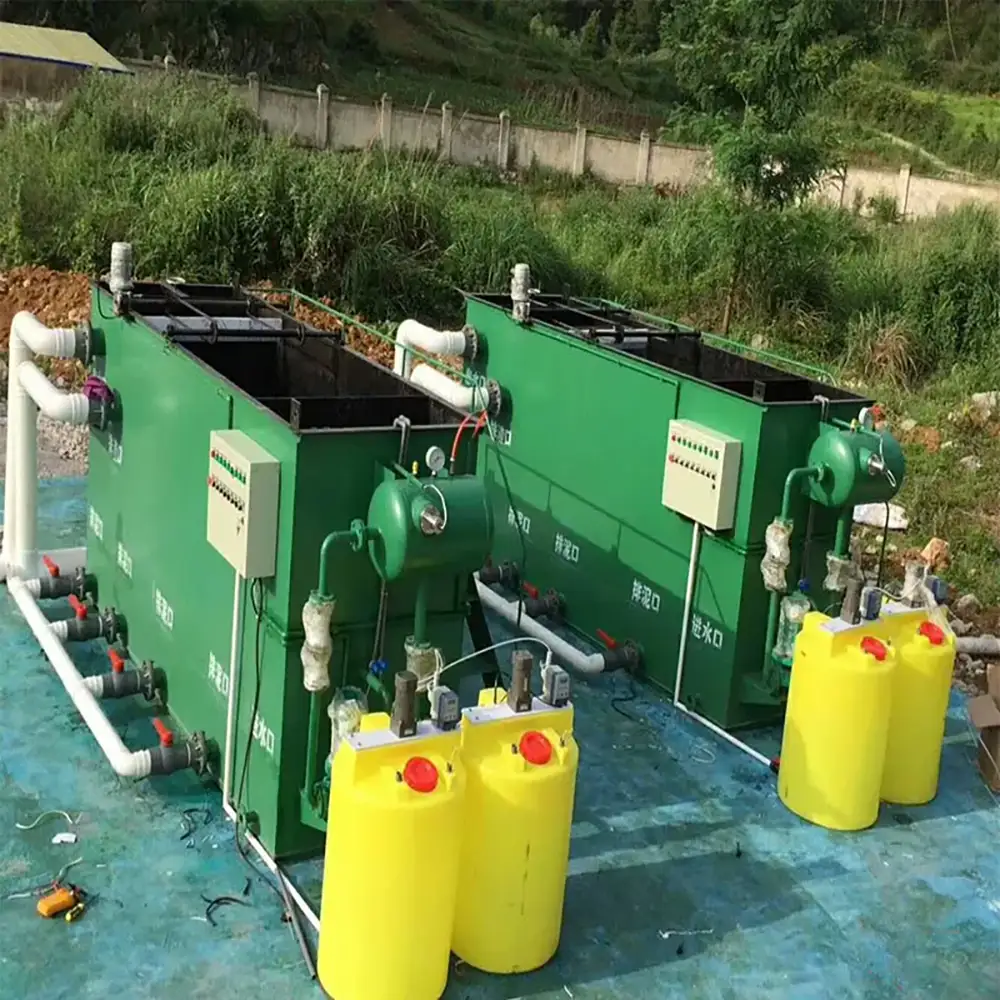
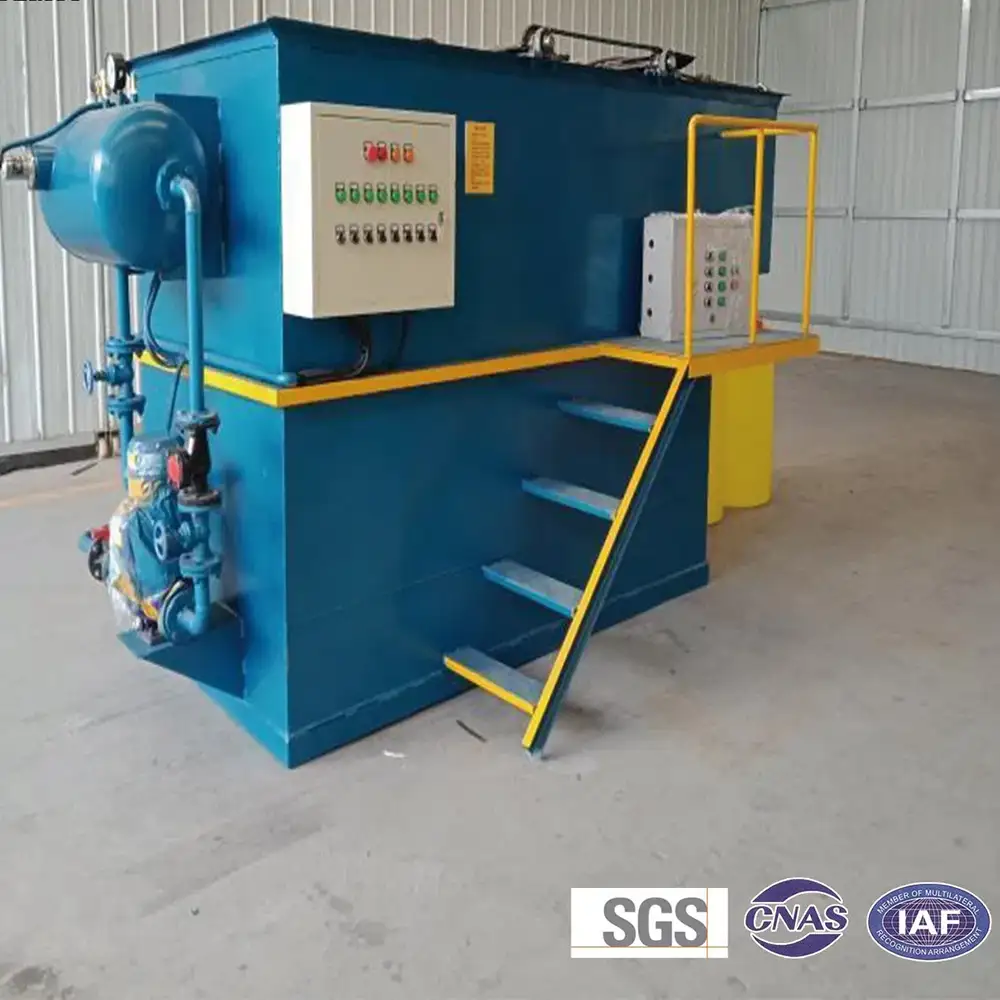
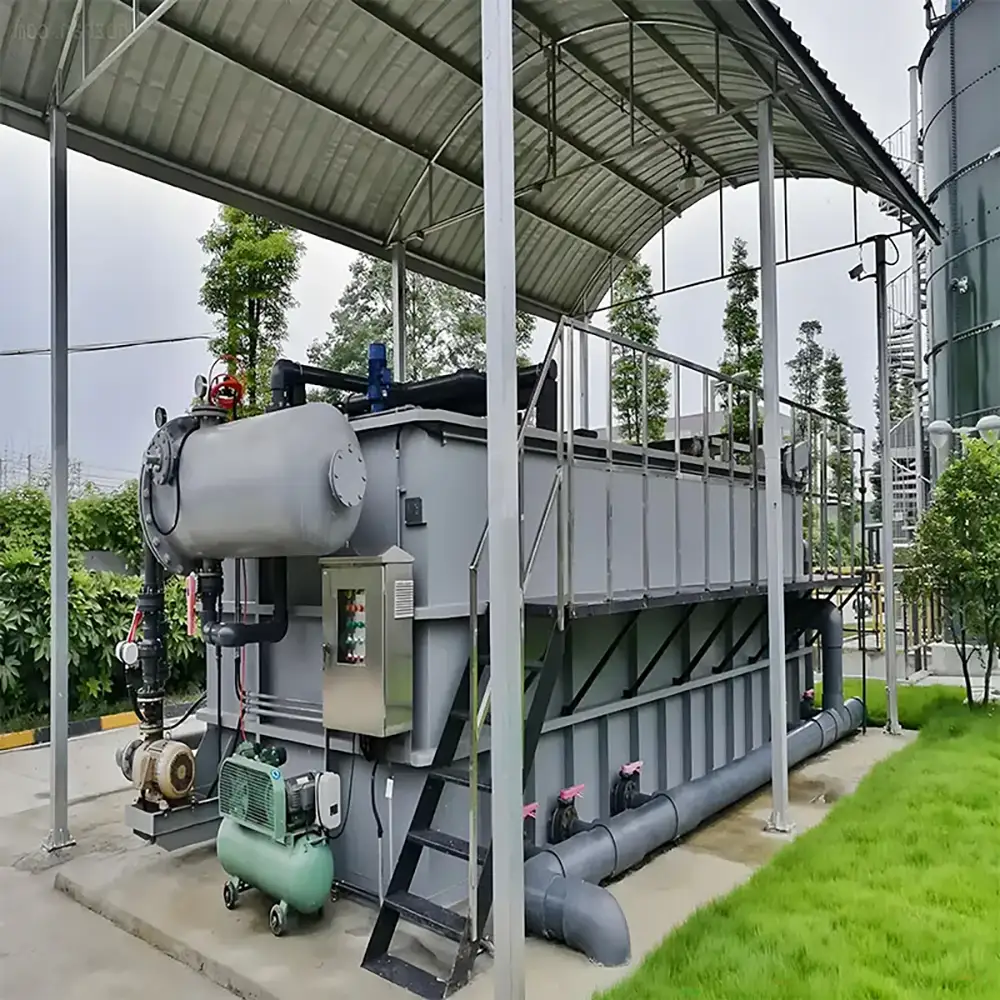
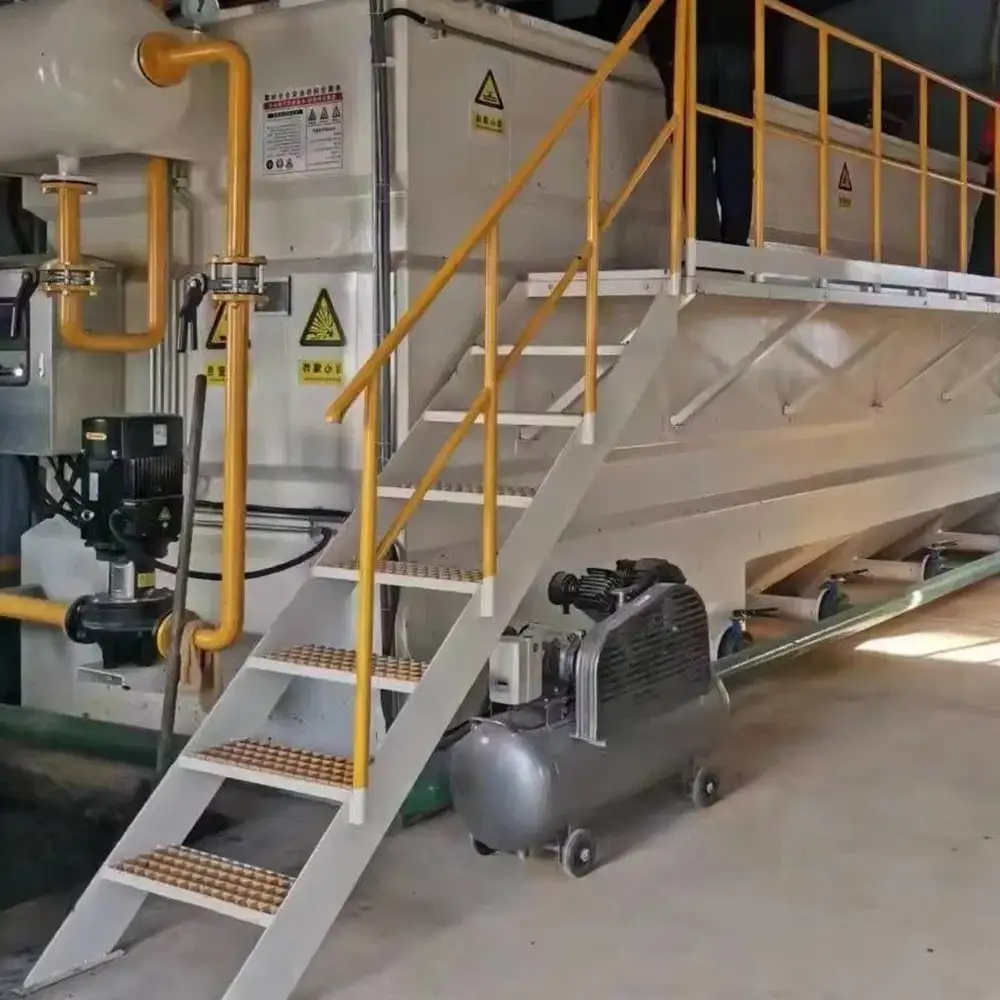
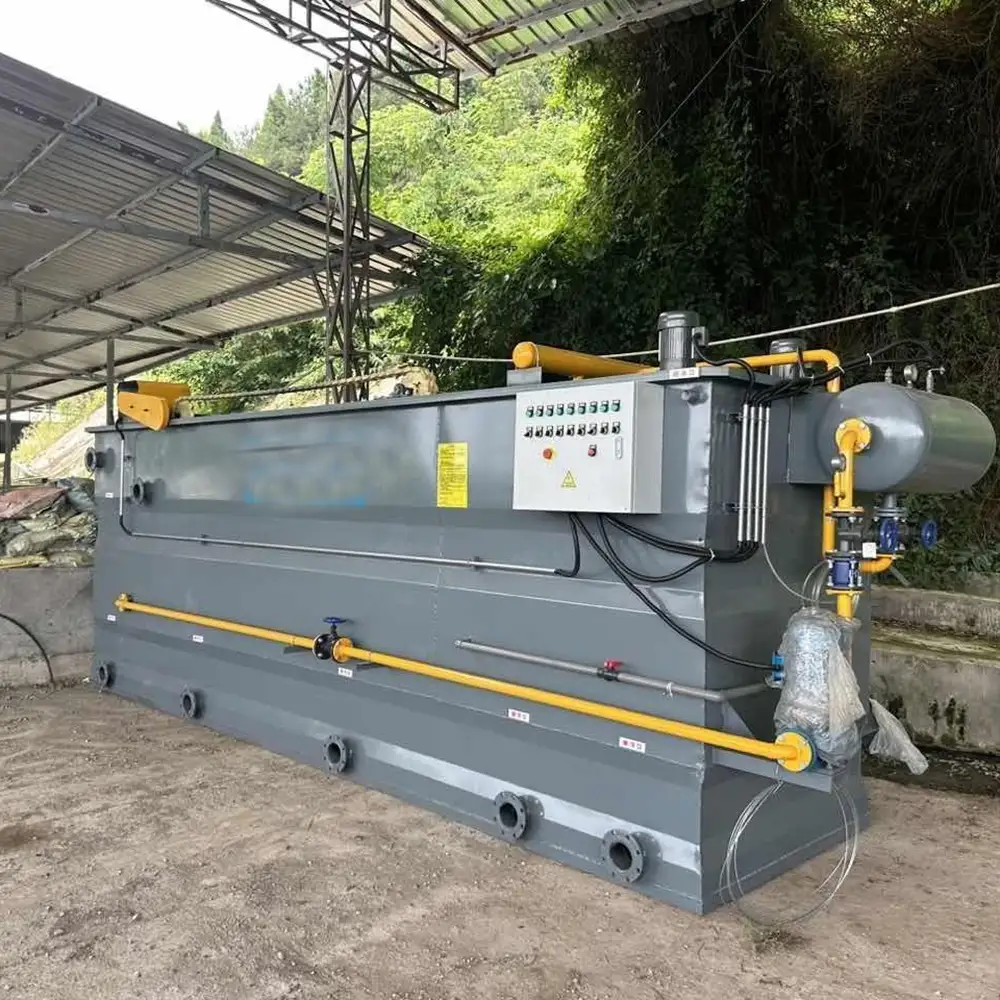
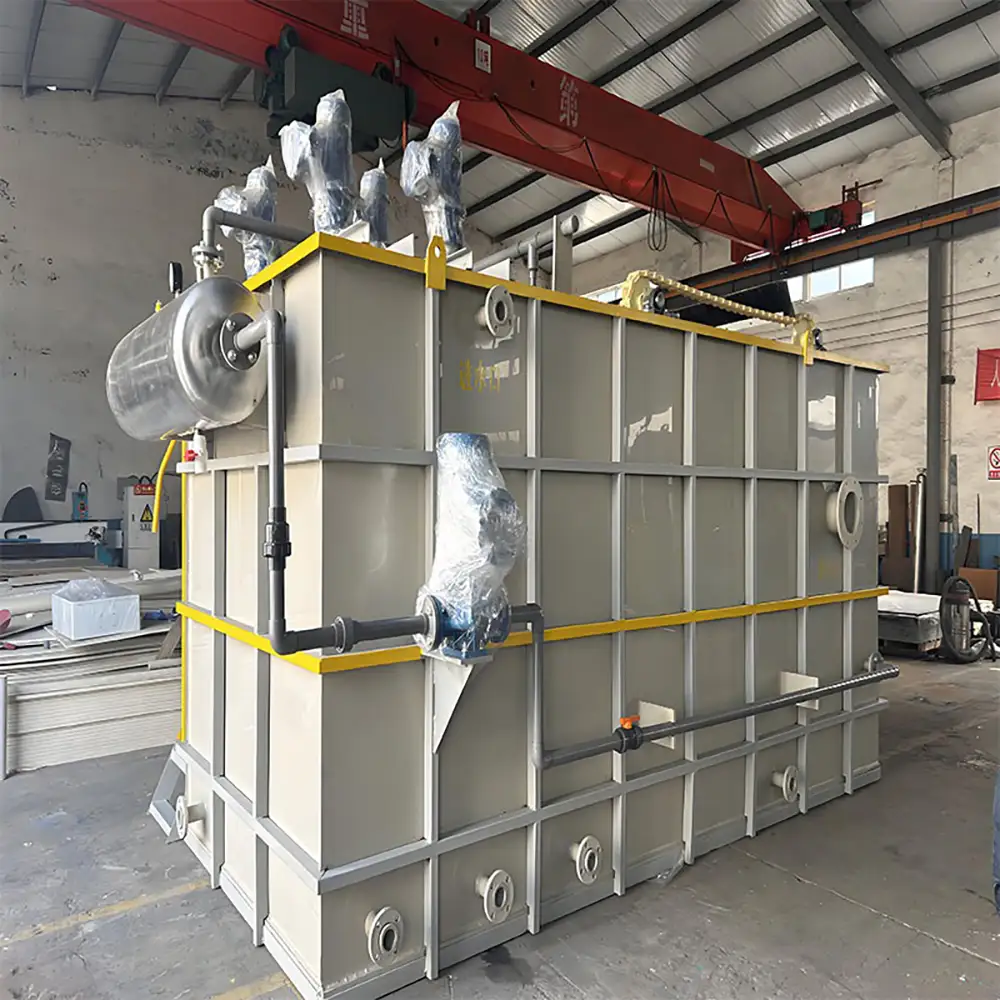
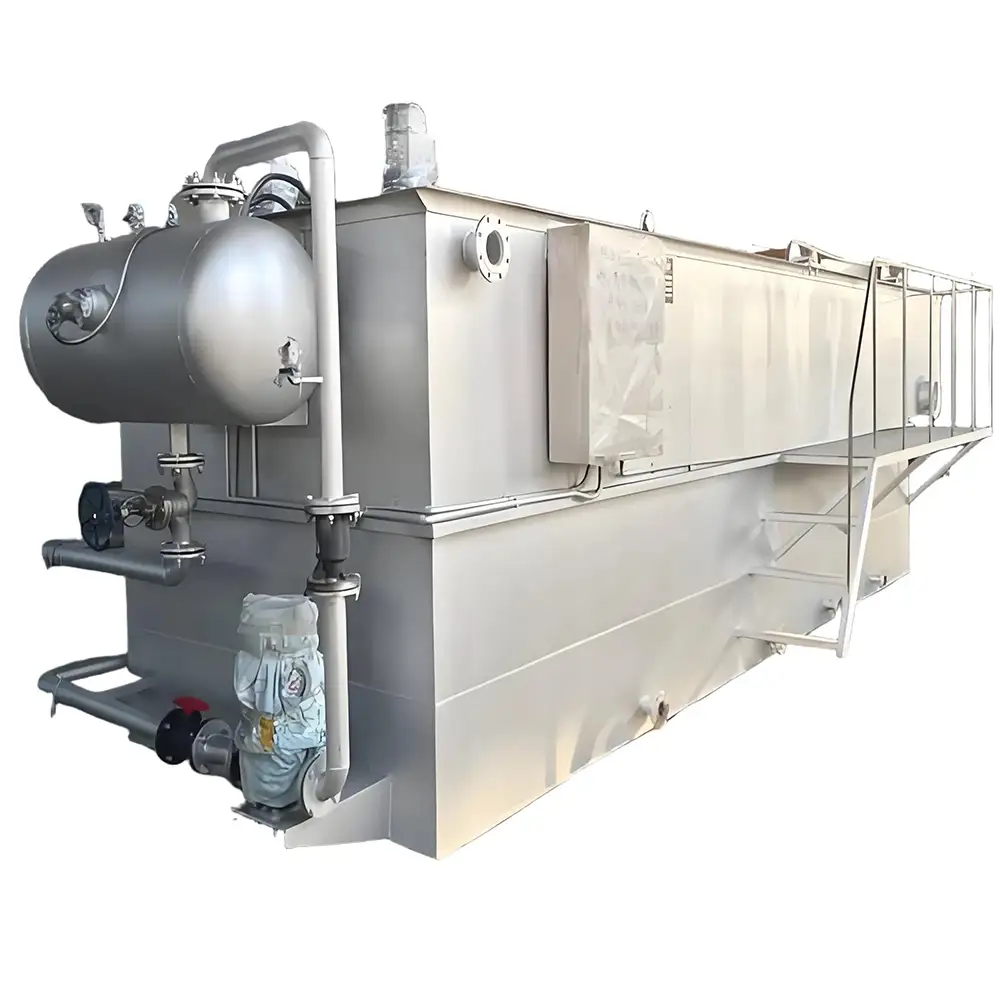
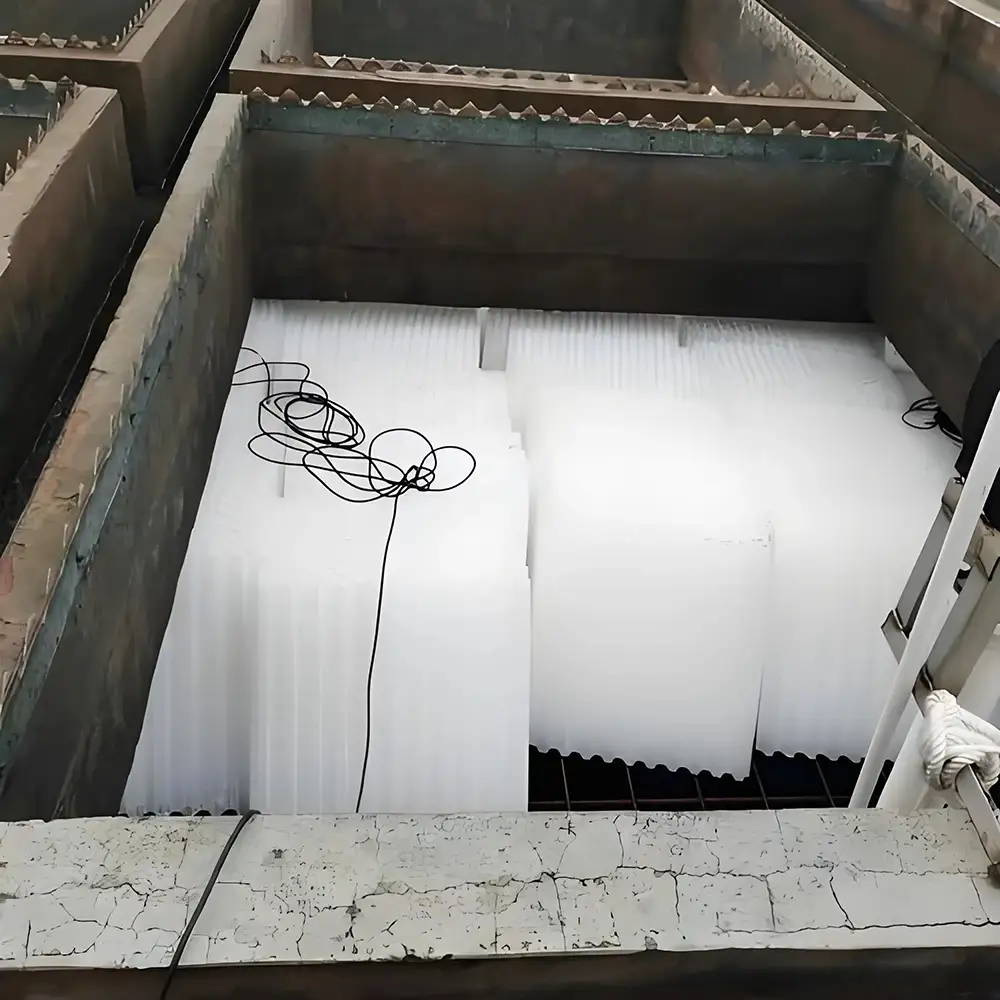
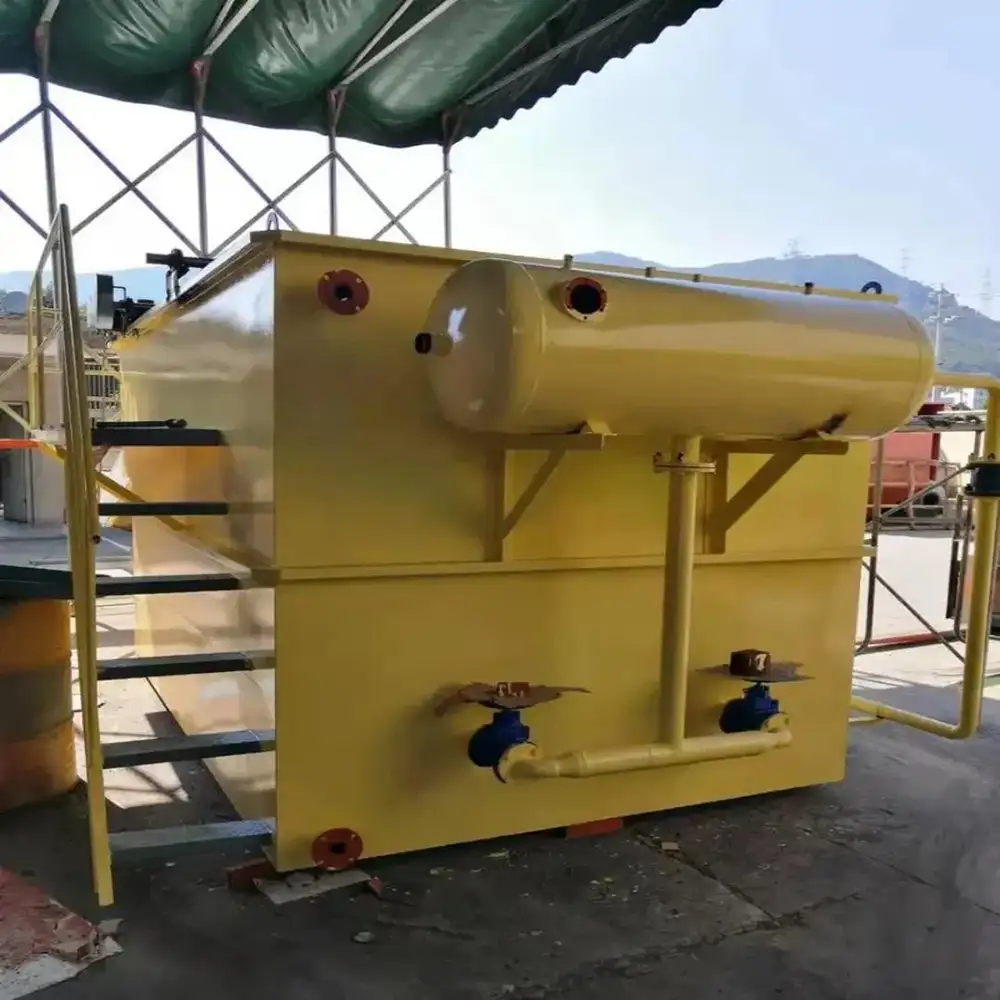
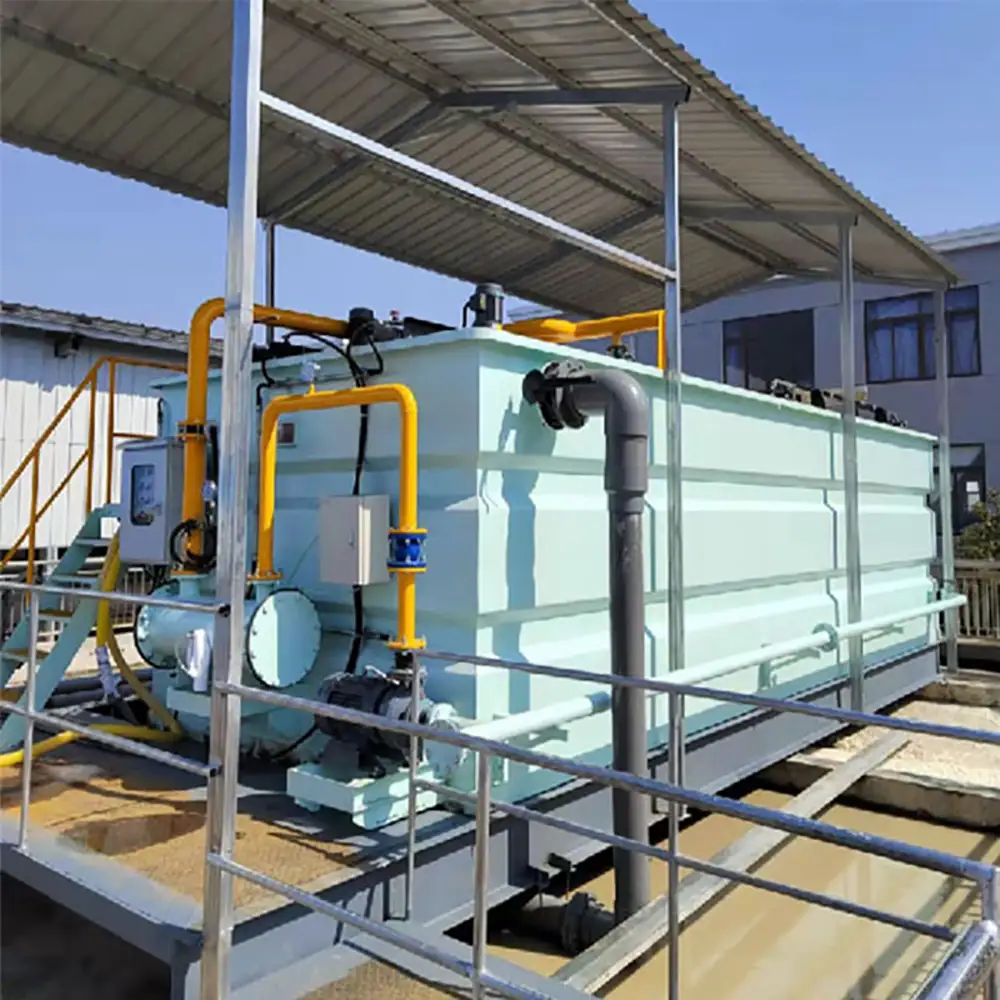
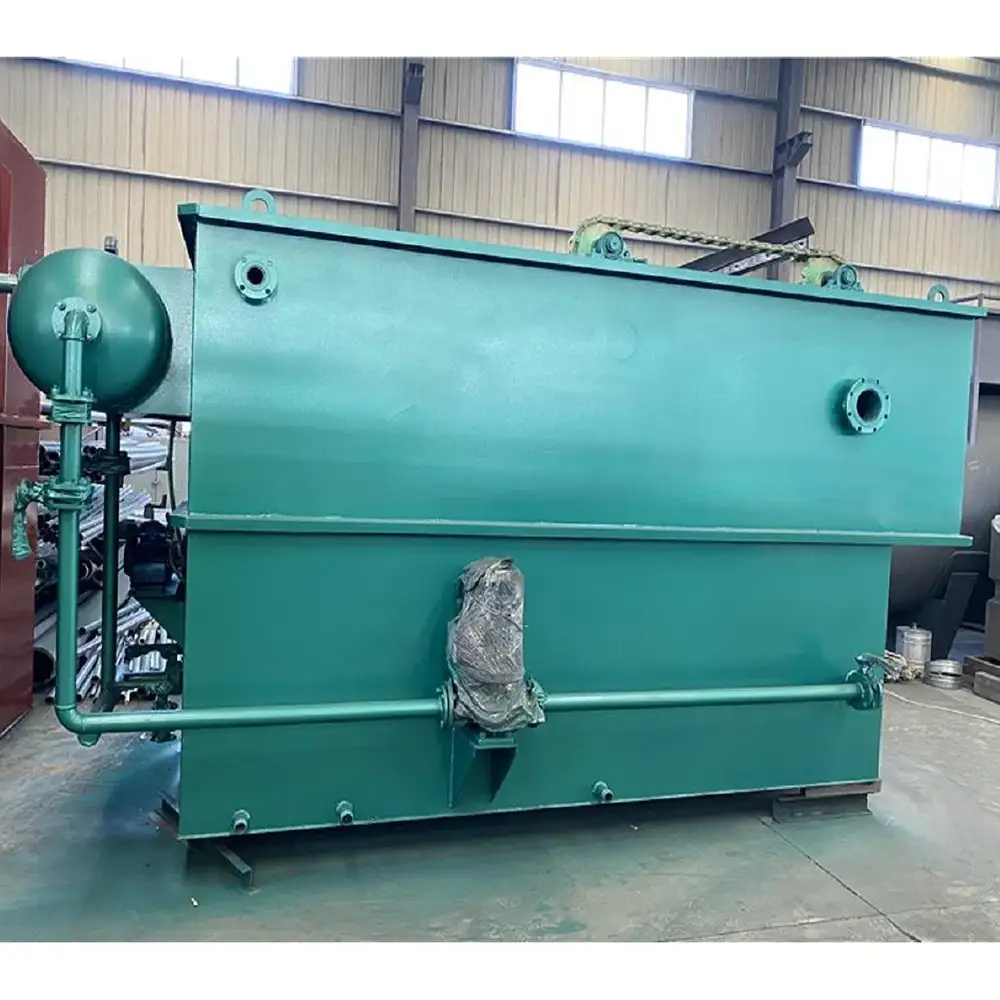
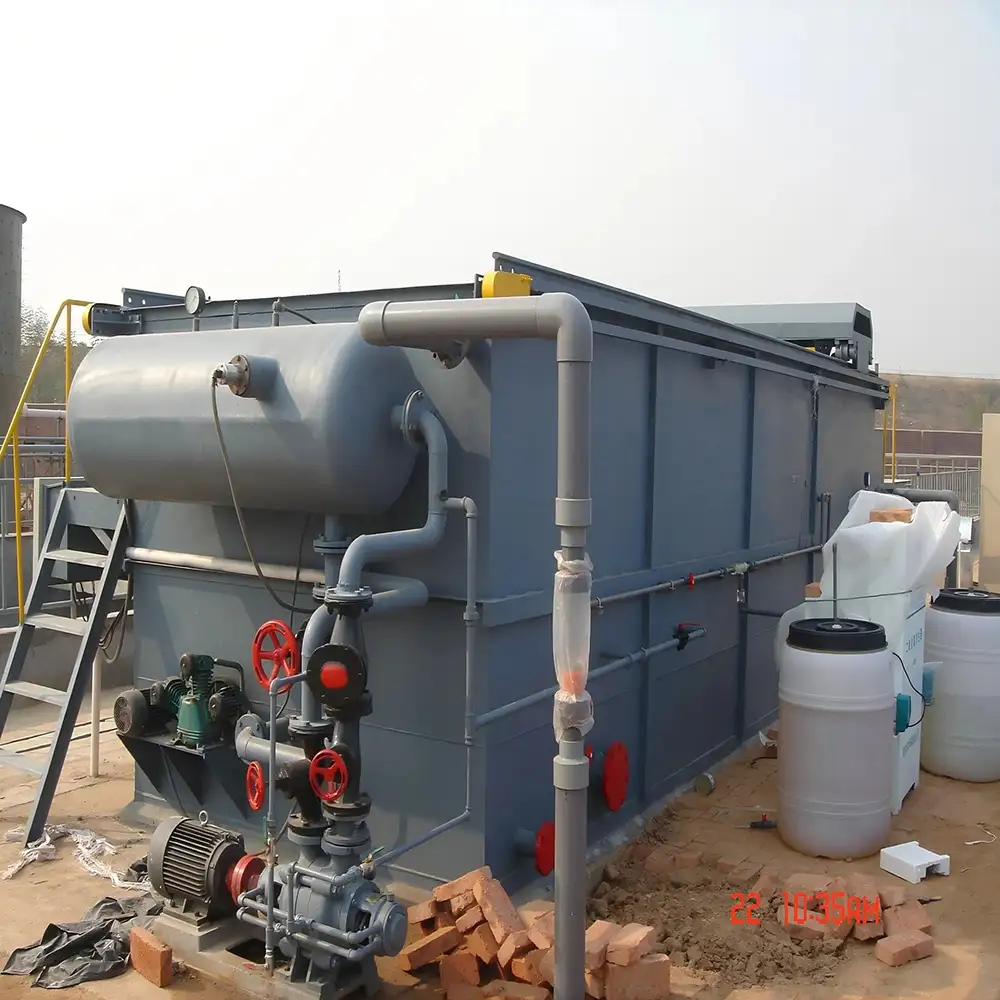
Intelligent Monitoring Dissolved Air Flotation Wastewater Equipment
Intelligent Monitoring Dissolved Air Flotation Wastewater Equipment combines dissolved air flotation technology with intelligent instrumentation, PLC control, online sensors, alarms, data logging, and automated process management. The system is designed for industrial wastewater treatment applications where stable clarification, reduced manual intervention, and continuous process visibility are important.
Dissolved air flotation, commonly known as DAF, uses fine air bubbles to attach to suspended particles, oil, grease, and flocculated contaminants. The resulting bubble-particle aggregates rise to the water surface, where a mechanical skimmer removes the concentrated floating sludge. Automation adds another layer by continuously monitoring important operating variables and coordinating pumps, chemical dosing, recycle flow, pressure, tank levels, and sludge removal.
Modern DAF automation can integrate pH, flow, turbidity/TSS, pressure, level, temperature, and other sensors with PLC and SCADA platforms for centralized monitoring and process control.
|
Model NO. |
GSRF |
Handling method |
physicochemical treatment |
|
Usage |
Industrial, agricultural, food factories, slaughterhouses |
Trademark |
|
|
Types |
Package, Compact, Small, Mini |
Applications |
Industrial, Municipal, Domestic, Medical, Ship |
|
Craft |
Flocculation sedimentation method |
Features |
Water Clarification, Filtration, Purification |
|
Service Life |
20 Years |
Operation |
Automatic |
|
Steel Plate Thickness |
>8mm |
Function |
Remove Suspended solids |
|
Voltage |
220V/ 380V/ Customerized |
Installation Type |
Onground |
|
Colour |
Grey/Silver/Blue/Balck/Customerized |
Use for |
Mineral, Printing, Chemical, Dyeing, Starch |
|
Material |
Carbon Steel, Stain Steel, FRP, PE, PP |
Certificate |
SGS, ISO |
|
Transport Package |
Container Standard Packing |
Specification |
Carbon steel anti-corrosion |
|
Production Capacity |
1000 Sets/Year |
Origin |
China |
Products Profile
Dissolved air flotation sewage treatment plants are usually used for primary sewage treatment, and the front can be used together with grilles(bar screen). The compact sewage treatment plant is the second treatment, and the disinfection system (sodium hypochlorite, chlorine dioxide) is tertiary.
Dissolved air flotation can remove suspended solids very well, and can be used for breeding, food consumption, slaughtering, food processing, plastic washing, dyeing, and car washing sewage treatment.
It has the characteristics of low price, small footprint, low operating cost and long service life.
Our company has been focusing on the production of air flotation equipment for more than 20 years, with domestic and foreign markets and a good reputation.
How Does an Intelligent DAF Wastewater System Work?
The wastewater first enters a screening or equalization stage when required. Equalization helps stabilize fluctuations in flow and pollutant concentration before the DAF unit.
Depending on wastewater characteristics, the control system can manage pH adjustment, coagulant dosing, and polymer dosing. Online flow and pH signals can be used as inputs for automatic dosing strategies, while operators can also define minimum and maximum dosing limits.
The conditioned wastewater enters the DAF flotation tank. A recycle stream is pressurized with air and returned to the flotation chamber. When the pressure is released, dissolved air forms fine bubbles that attach to suspended particles and flocs.
The floating solids form a sludge layer on the surface. A motorized scraper removes the float continuously or according to a programmed operating cycle.
The PLC monitors system status and can control the feed pump, recycle pump, chemical dosing pumps, skimmer, sludge pump, valves, and other auxiliary equipment.
Intelligent Monitoring and PLC Control
The PLC is the central control component of the automated DAF system. It receives signals from field instruments and sends control commands to pumps, motors, valves, dosing equipment, and other process components.
A typical control system can monitor:
Wastewater Flow
Inlet pH
Outlet pH
Turbidity
Suspended Solids
Recycle Flow
Recycle Pressure
Tank Level
Chemical Tank Level
Pump Status
Motor Status
Skimmer Status
Sludge Pump Status
Equipment Alarms
Industrial wastewater automation systems commonly use online sensors, PLCs, and centralized control systems to monitor and adjust treatment processes in real time.
Real-Time DAF Monitoring
Real-time monitoring provides operators with immediate visibility into the operating condition of the flotation system.
For example, if recycle pressure falls outside the configured operating range, the control system can generate an alarm. If a tank level becomes too high or too low, the PLC can initiate a programmed response or notify the operator.
Similarly, flow information can be used to coordinate chemical dosing and pump operation. Turbidity or TSS measurements can provide additional information about clarification performance.
The exact sensors and control logic should be selected according to the wastewater characteristics and project requirements rather than installing unnecessary instruments.
Automatic Chemical Dosing
Chemical conditioning is often important for DAF treatment. Coagulants and polymers can destabilize colloidal particles and help form larger flocs that are easier to float.
An intelligent DAF system can connect chemical dosing pumps to the PLC. Dosing can be flow-paced or controlled according to configured process parameters.
For advanced systems, online measurements can provide feedback for dosing adjustments. Flow-based and quality-based control strategies can help avoid relying exclusively on fixed chemical dosing ratios. Industrial DAF automation examples demonstrate the use of online measurements and PLC control for automated dosing and process optimization.
However, automatic dosing should always include suitable limits and operator override functions because wastewater quality can change rapidly.
Automated Dissolved Air Flotation Process
A typical automated operating sequence may include:
Wastewater Inlet → Flow Monitoring → pH Adjustment → Coagulation → Flocculation → DAF Flotation → Sludge Skimming → Clarified Water Outlet
The PLC can coordinate the major equipment throughout the process.
Feed pumps can be started according to level or flow conditions. Chemical dosing can follow the configured flow rate. The recycle pump can maintain the required flotation conditions. The surface scraper can operate continuously or intermittently. Sludge discharge can be controlled according to a timer, level, or operator-defined schedule.
This reduces routine manual intervention while giving operators greater control over process conditions.
SCADA and HMI Monitoring
For larger installations, the DAF system can be connected to a SCADA platform or plant-wide supervisory control system.
A touchscreen HMI can display:
Real-Time Flow
pH Values
Pressure
Tank Levels
Pump Status
Chemical Dosing Status
Motor Status
Alarm Information
Equipment Runtime
Operating Setpoints
Historical Trends
SCADA can provide a centralized interface for multiple treatment units and allow operators to review process data and alarms.
Some modern DAF control systems also support remote access, email or SMS notifications, and data logging.
Intelligent Alarm Management
Alarm management is an important part of smart wastewater treatment equipment.
The system can generate warnings or shutdown signals for conditions such as:
High Tank Level
Low Tank Level
High Recycle Pressure
Low Recycle Pressure
Pump Failure
Motor Overload
Chemical Tank Low Level
Abnormal pH
High Turbidity
Communication Failure
Emergency Stop
Critical alarms can be configured to stop selected equipment automatically when continued operation could cause equipment damage or process instability.
A manual operating mode can also be included so trained operators can maintain essential operation during certain control-system faults. Automated DAF systems can incorporate fail-safe or manual backup modes as part of their control architecture.
Suspended Solids, Oil, and Grease Removal
Although the intelligent control system is an important feature, the primary treatment mechanism remains dissolved air flotation.
DAF is suitable for separating suspended solids, oil, grease, colloidal particles, and other floatable contaminants. The performance depends on wastewater characteristics, chemical conditioning, air saturation, hydraulic conditions, and skimming efficiency.
The intelligent monitoring system helps operators maintain these operating conditions within their configured ranges.
By reducing manual adjustments and providing continuous process information, automation can help identify changes in wastewater conditions before they develop into larger treatment problems.
Intelligent DAF for Industrial Wastewater
The system can be applied to many industrial wastewater streams, including:
Food Processing Wastewater
Meat Processing Wastewater
Dairy Wastewater
Poultry Wastewater
Slaughterhouse Wastewater
Textile Wastewater
Printing and Dyeing Wastewater
Paper Mill Wastewater
Chemical Wastewater
Petrochemical Wastewater
Refinery Wastewater
Metal Processing Wastewater
Automotive Wastewater
Pharmaceutical Wastewater
Municipal Wastewater Pretreatment
DAF can function as a primary treatment or pretreatment stage before biological treatment, membrane filtration, activated carbon, RO, or other downstream processes.
Main Equipment and Instrumentation
An Intelligent Monitoring DAF Wastewater Equipment package may include:
DAF Flotation Tank
Dissolved Air Recycle Pump
Air Saturation System
Microbubble Release System
Coagulation Tank
Flocculation Tank
Chemical Dosing Pumps
Surface Sludge Scraper
Sludge Transfer Pump
Flow Meter
pH Sensor
Pressure Transmitter
Level Sensor
Turbidity/TSS Sensor
PLC Control Cabinet
HMI Touchscreen
SCADA Interface
Alarm System
Data Logging System
The actual instrumentation package can be adjusted according to the treatment process and automation requirements.
Energy and Chemical Management
Intelligent control can help optimize equipment operation by matching pumping, dosing, and other functions to actual process demand.
Variable-frequency drives can be used on selected pumps and motors to adjust operating speed. Automated chemical dosing can reduce the risk of maintaining a fixed dosage when wastewater flow changes.
However, energy and chemical savings should not be presented as guaranteed percentages without project-specific data. Actual savings depend on wastewater characteristics, equipment selection, control strategy, operating hours, and plant loading.
Sludge Management
DAF concentrates separated contaminants into a floating sludge layer. Effective sludge removal is therefore essential for stable operation.
The intelligent control system can schedule scraper operation and sludge pumping according to preset timers, levels, or other available signals.
The concentrated sludge can then be transferred to a sludge holding tank, thickener, filter press, centrifuge, screw press, or other dewatering system.
Integrating sludge handling into the overall control system can help prevent excessive accumulation in the flotation tank.
Why Choose Us?
Our Intelligent Monitoring Dissolved Air Flotation Wastewater Equipment combines DAF separation technology with modern automation and instrumentation for more visible, controllable, and repeatable wastewater treatment operation.
We can configure PLC control, HMI touchscreens, SCADA communication, online pH monitoring, flow measurement, pressure monitoring, turbidity/TSS measurement, automatic chemical dosing, variable-frequency drives, alarm management, and data logging according to project requirements.
The DAF system can also be integrated with screening, equalization, biological treatment, MBBR, MBR, activated carbon, UF, RO, disinfection, and sludge dewatering systems.
Our approach focuses on matching the automation level to the actual treatment process. A small system may only require basic PLC control, while a large industrial plant can benefit from comprehensive SCADA, historical data, remote monitoring, and plant-wide integration.
FAQ
1. What Is Intelligent Monitoring DAF Equipment?
It is a dissolved air flotation wastewater treatment system equipped with sensors, PLC control, HMI, alarms, and optional SCADA or remote monitoring functions.
2. What Does DAF Remove?
DAF can remove suspended solids, oil, grease, colloidal particles, and other floatable or flocculated contaminants.
3. What Parameters Can Be Monitored?
Typical parameters include flow, pH, pressure, tank level, turbidity, TSS, pump status, chemical level, recycle flow, and equipment operating status.
4. Can Chemical Dosing Be Automated?
Yes. Coagulant and polymer dosing pumps can be controlled by PLC according to flow-based settings or other configured process parameters.
5. Can the System Use Online TSS Monitoring?
Yes. An online turbidity or TSS sensor can be integrated where the application and sensor technology are suitable.
6. What Is the Role of the PLC?
The PLC receives signals from sensors and controls pumps, valves, dosing systems, skimmers, alarms, and other equipment according to programmed logic.
7. Can DAF Be Connected to SCADA?
Yes. The PLC can communicate with a SCADA system for visualization, alarm management, historical data, and centralized plant control.
8. Can Operators Monitor the System Remotely?
Remote monitoring can be included when the control architecture, network, cybersecurity, and project requirements support it.
9. Can the DAF System Operate Manually?
Yes. Manual or local control modes can be included for commissioning, maintenance, troubleshooting, or certain backup situations.
10. Can Intelligent DAF Reduce Chemical Consumption?
Automation can help optimize dosing and reduce unnecessary over-dosing, but actual chemical savings depend on wastewater quality, control strategy, and operating conditions.
11. What Industries Can Use Intelligent DAF Equipment?
Food, meat, dairy, poultry, textile, paper, chemical, petrochemical, refinery, pharmaceutical, metal processing, and many other industries can use DAF treatment.
12. Can the Intelligent DAF System Be Customized?
Yes. DAF capacity, sensors, PLC brand, HMI, SCADA, chemical dosing, VFDs, alarms, communication protocols, and remote monitoring functions can be configured according to project requirements.
Prev:
Dissolved Air Flotation and Activated Carbon Combined Equipment
Next:
Energy Efficient Low Consumption Air Flotation Purification Equipment
TAG:
Industrial Water Purification System,
Industrial Water Treatment System,
Industrial Wastewater Treatment Equipment,
Suspended Solids Removal,
Dairy Wastewater Treatment,
Meat Processing Wastewater Treatment,
Food Processing Wastewater Treatment,
Industrial Wastewater Treatment System,
DAF Wastewater Treatment System,
Industrial Wastewater Treatment,
Industrial Wastewater Treatment Plant,
Printing And Dyeing Wastewater Treatment,
Chemical Wastewater Treatment,
Metal Processing Wastewater Treatment,
Industrial Water Treatment Equipment,
Industrial Water Treatment,
Suspended Solids Removal Equipment,
Suspended Solids Removal System,
Industrial Water Purification,
Pharmaceutical Wastewater Treatment,
Industrial Water Reuse,
PLC Wastewater Treatment System,
SCADA Wastewater Treatment System,
Intelligent Wastewater Treatment Equipment,
Smart Wastewater Treatment System,
PLC Water Treatment System,
Slaughterhouse Wastewater Treatment,
RO Pretreatment,
Industrial Wastewater Pretreatment,
Wastewater Pretreatment System,
Related Category:
Intelligent Monitoring Dissolved Air Flotation Wastewater Equipment,Smart DAF Wastewater Treatment System China, suppliers, manufacturers, factory, customized, wholesale, quotation, made in China