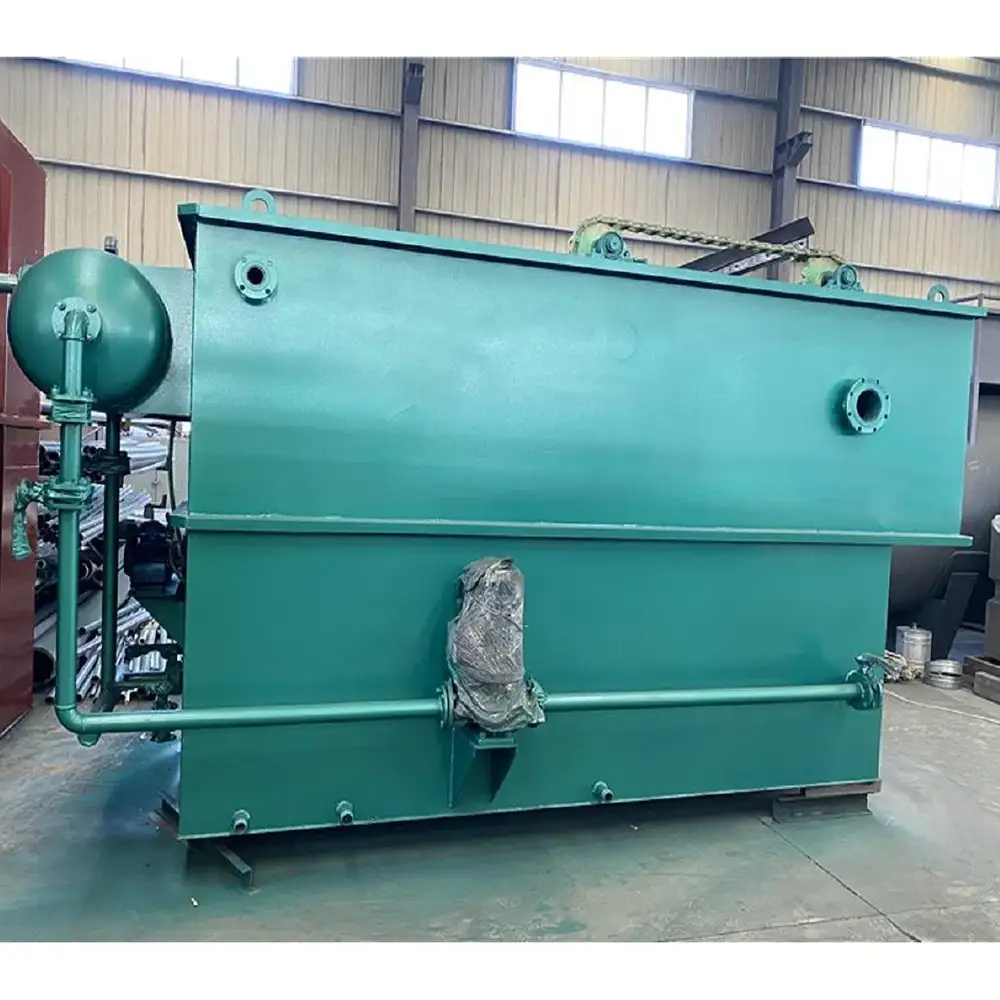
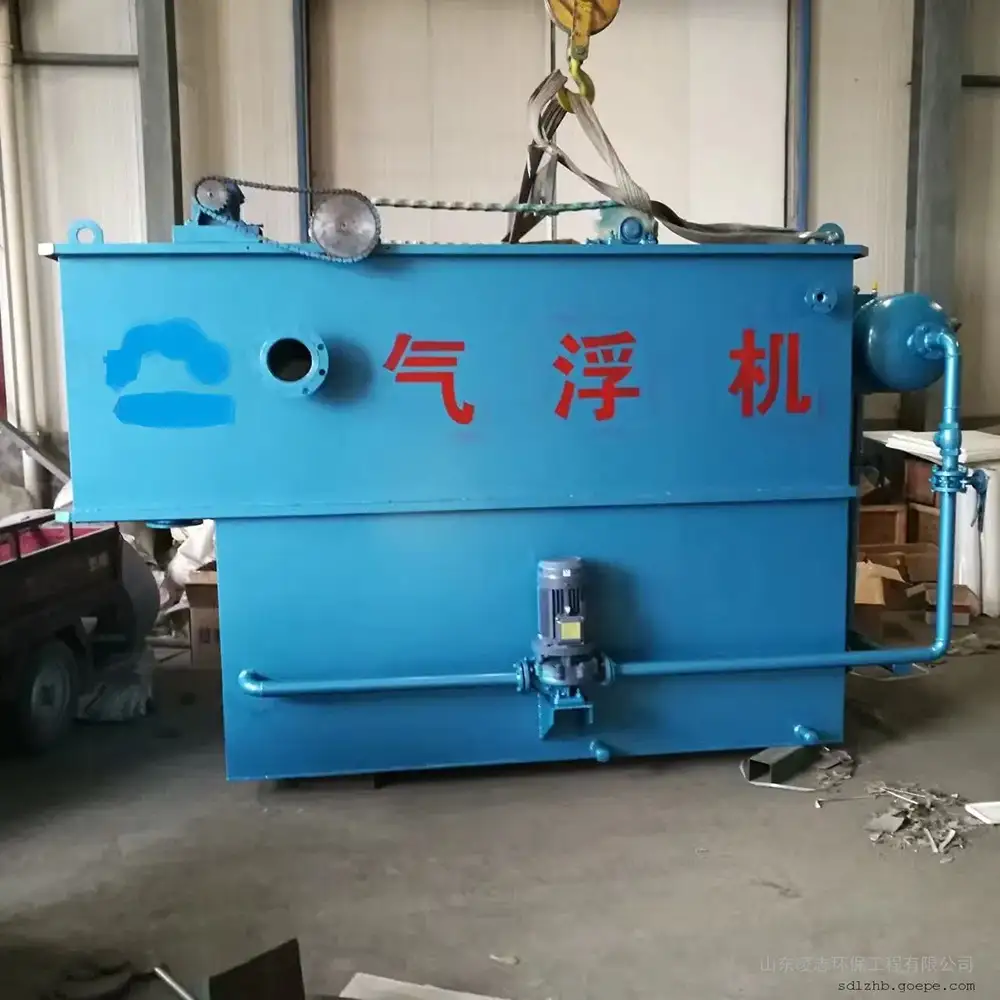
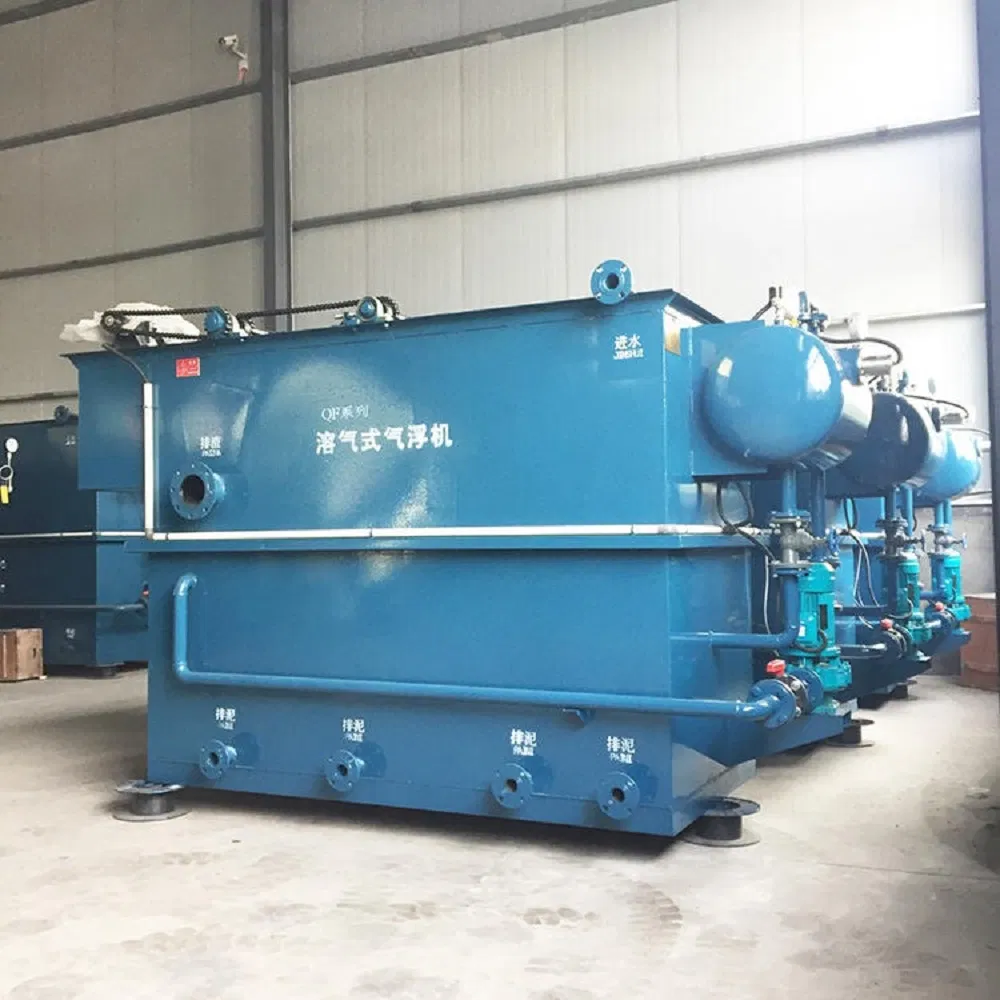
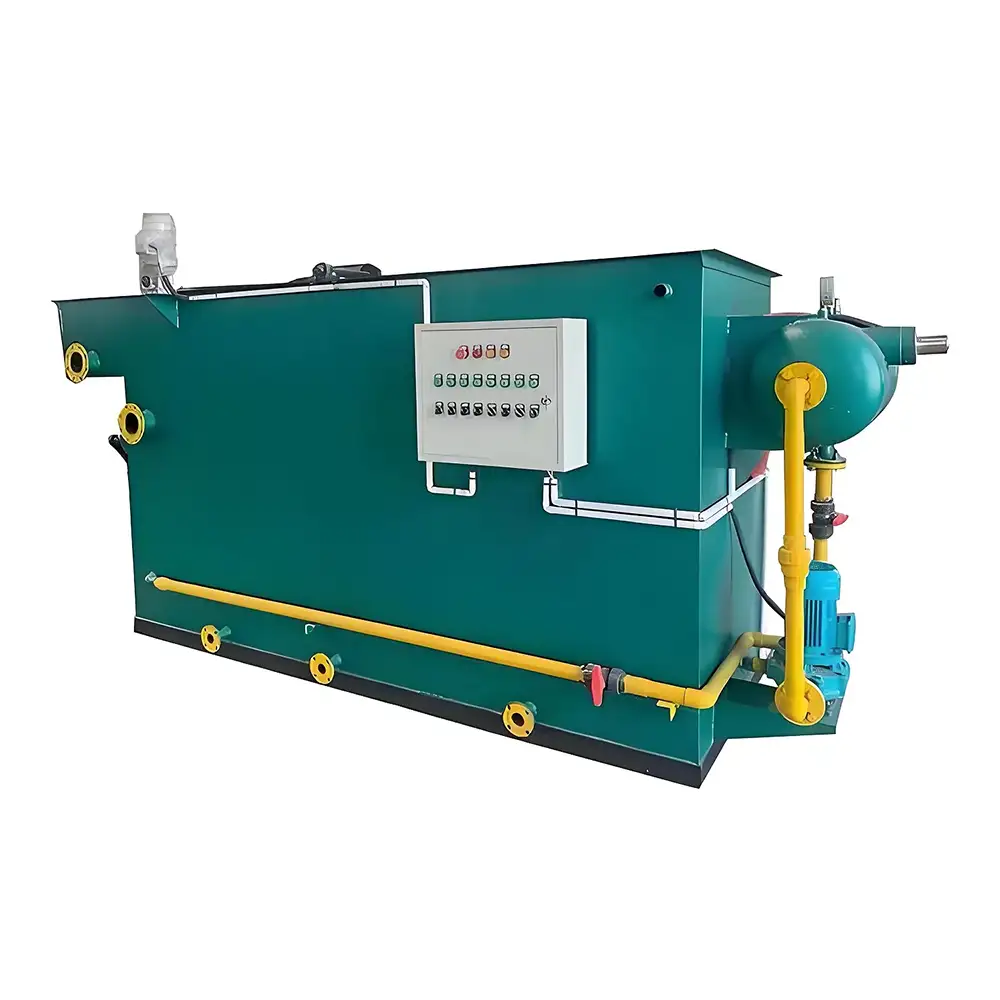
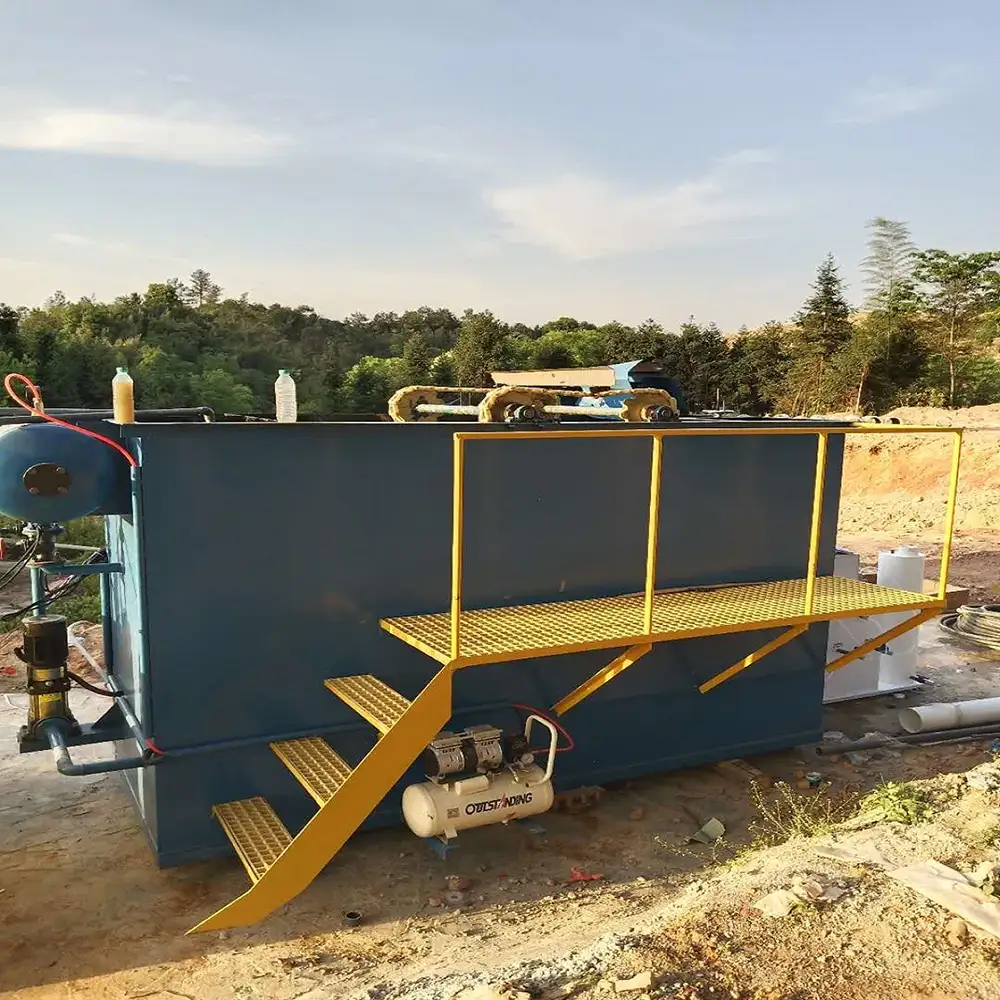
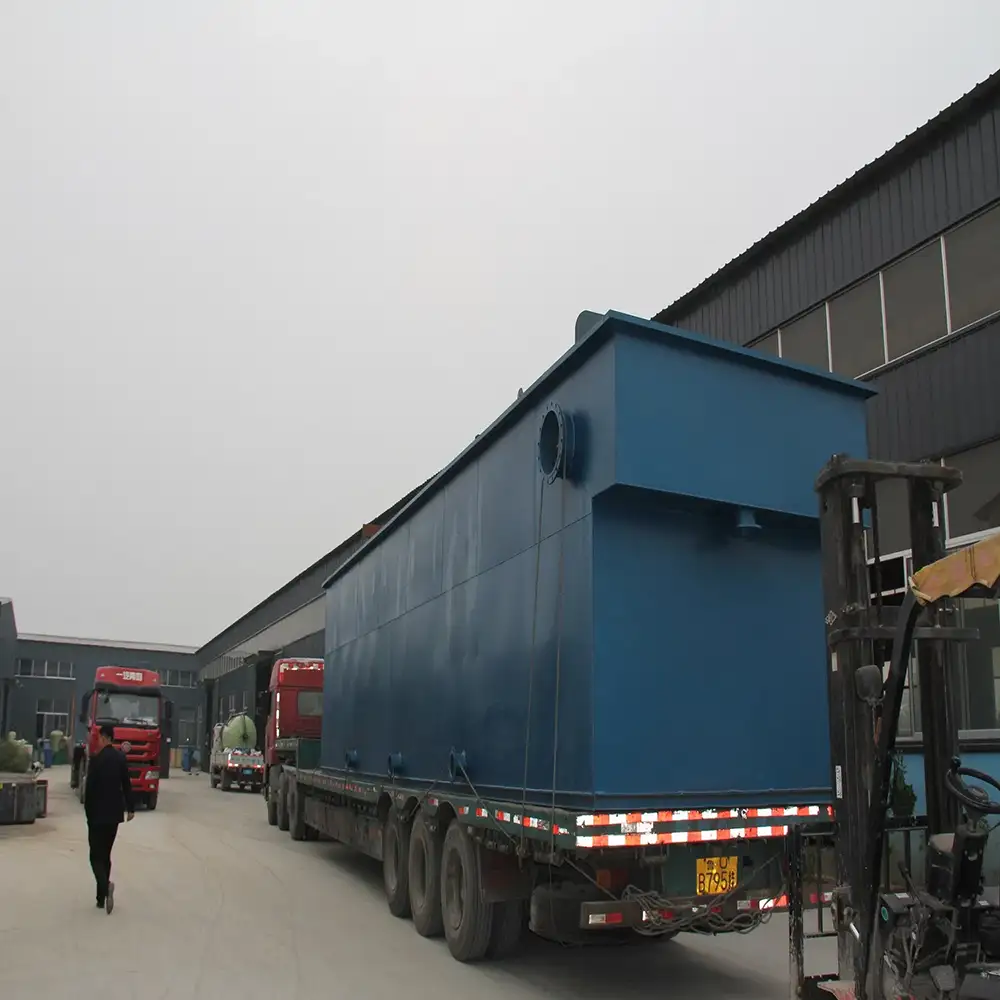
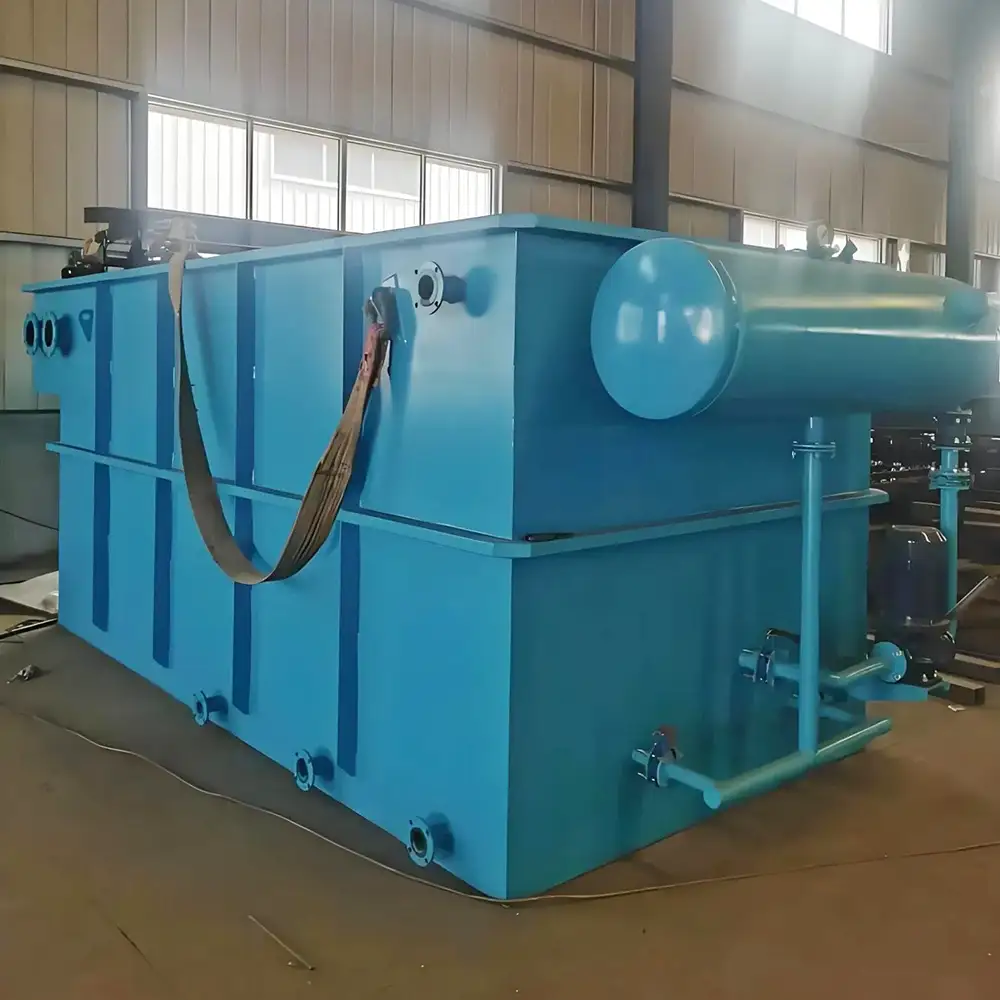
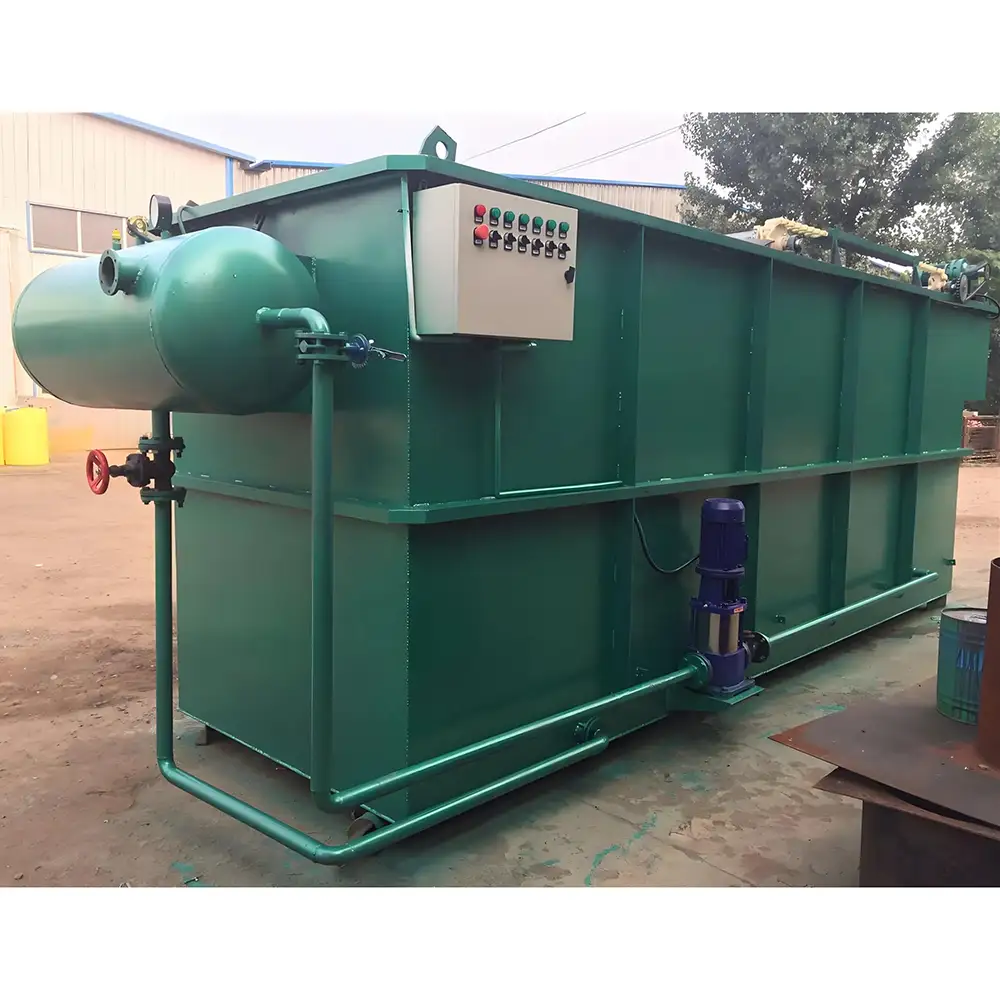
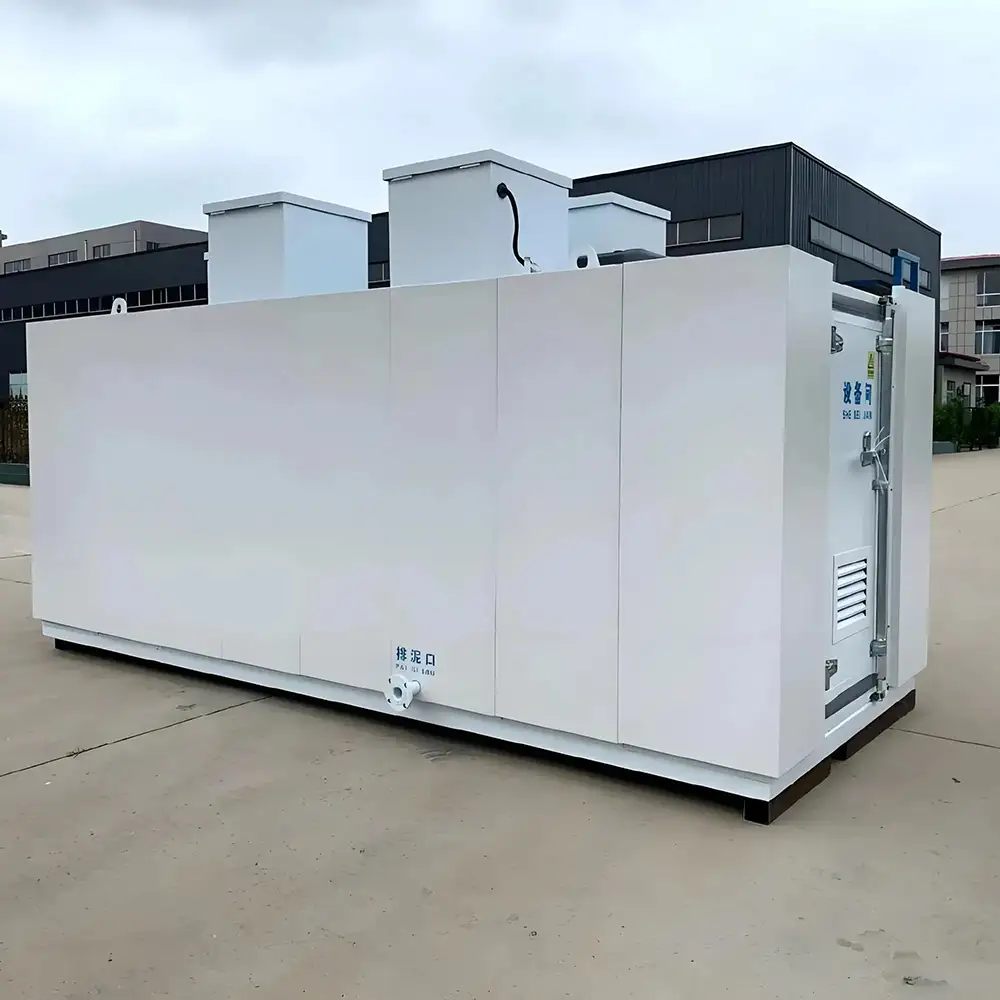
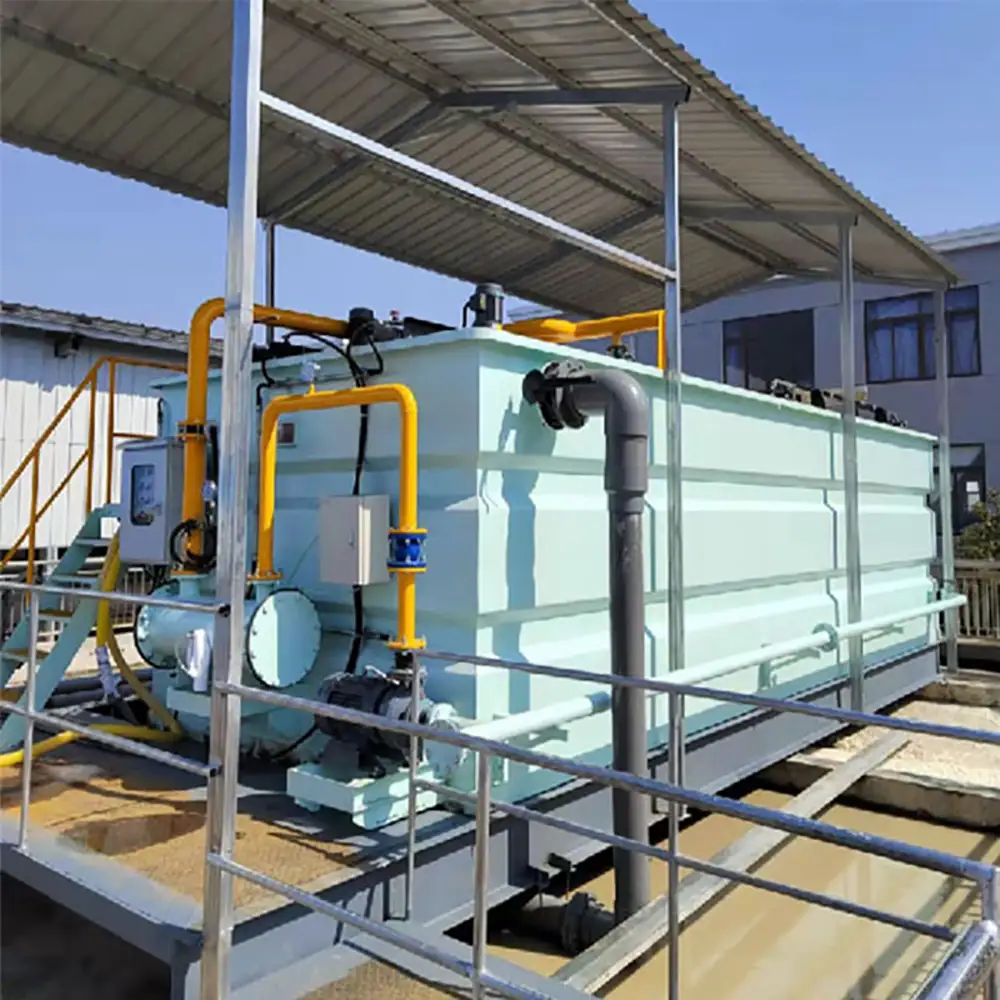
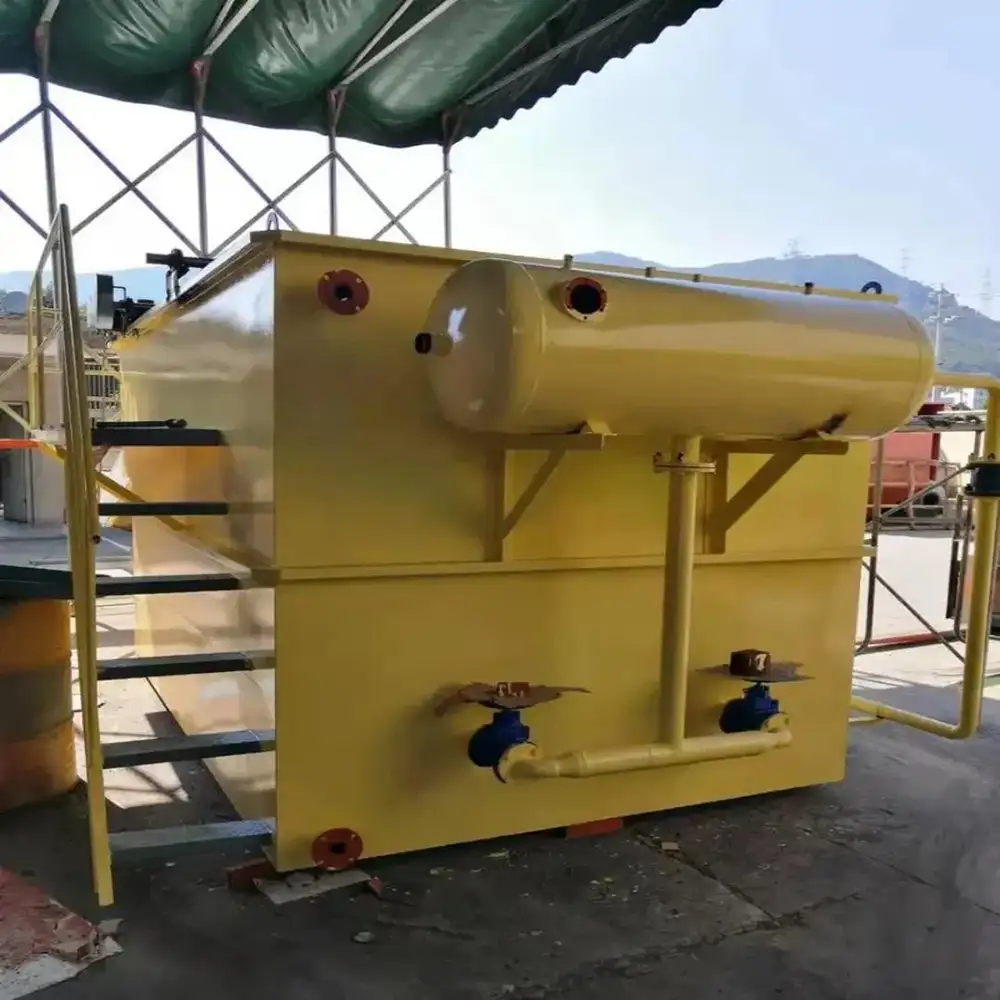
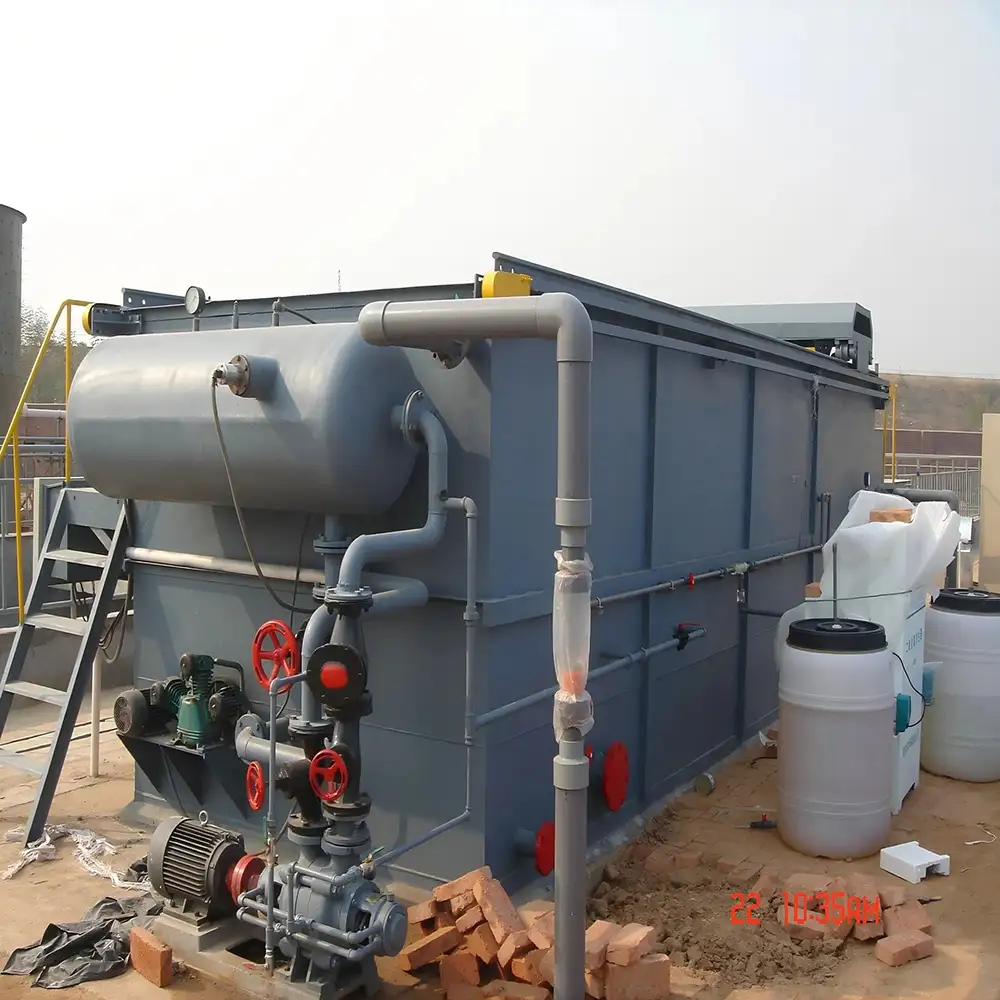
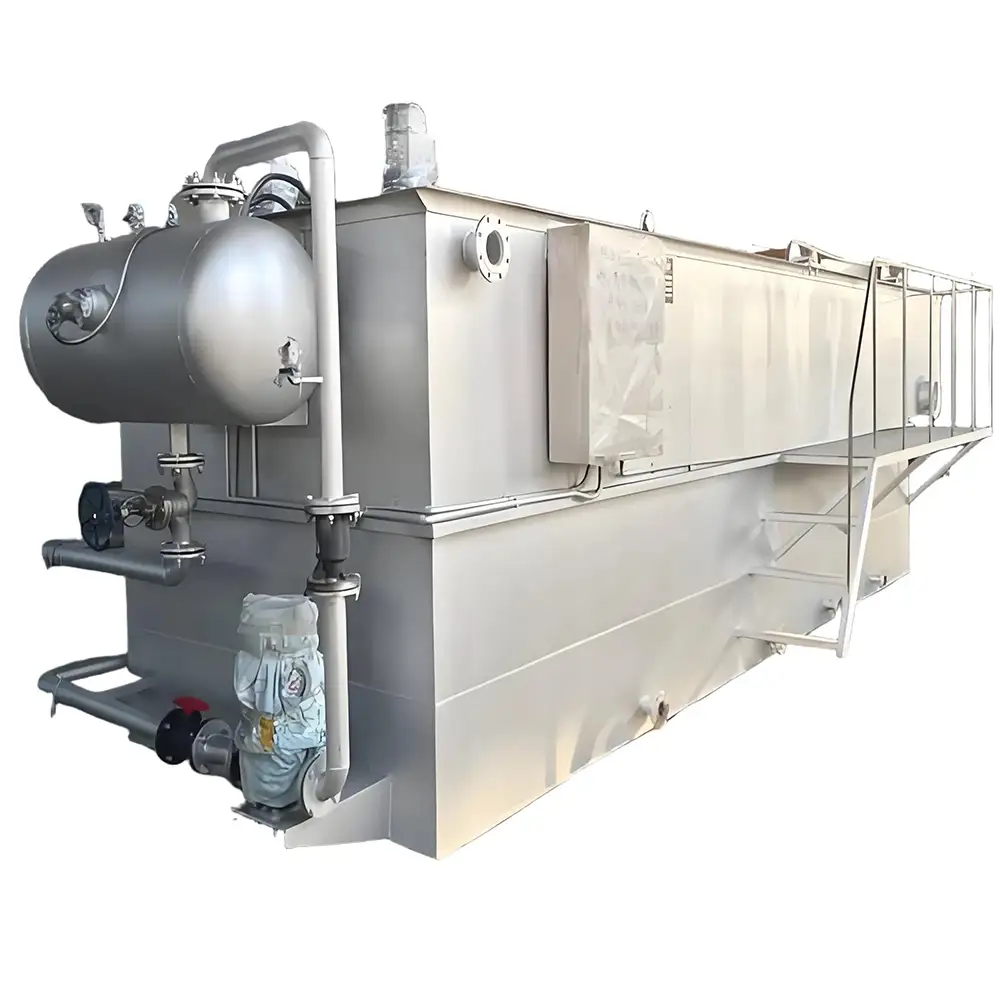
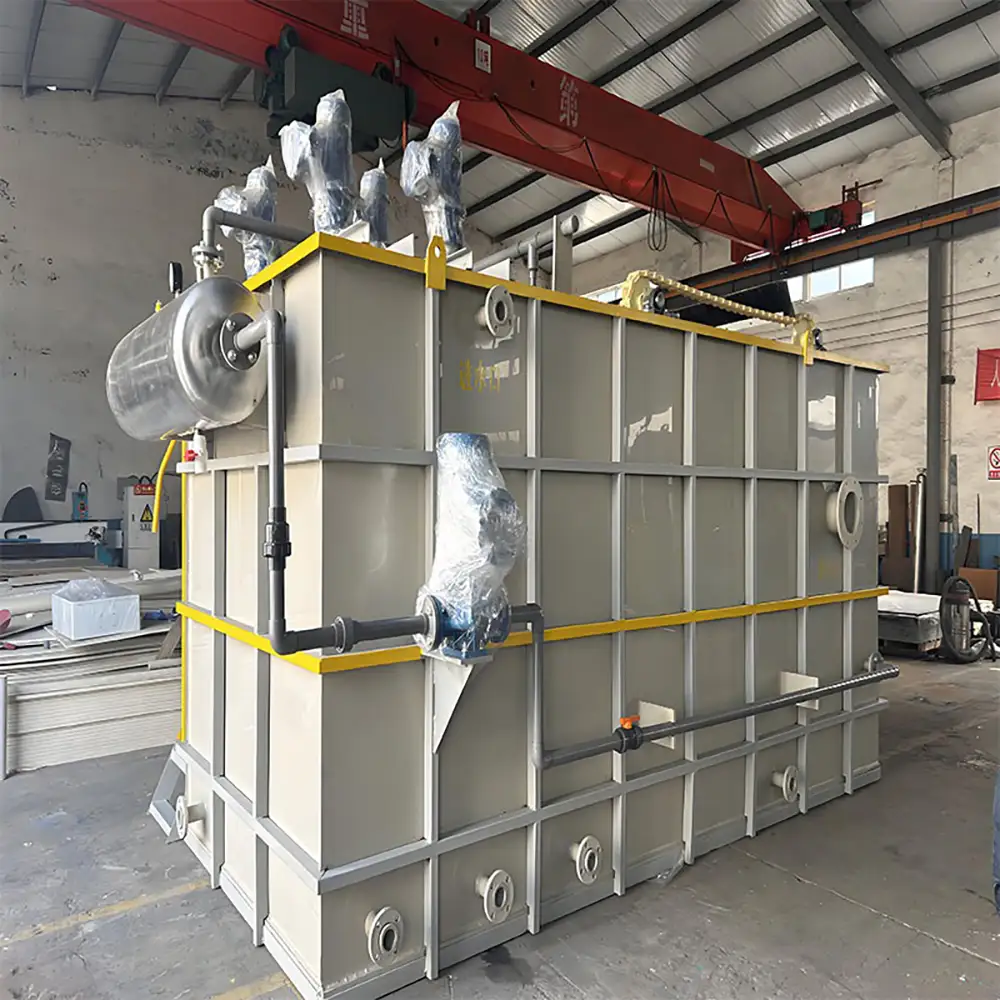
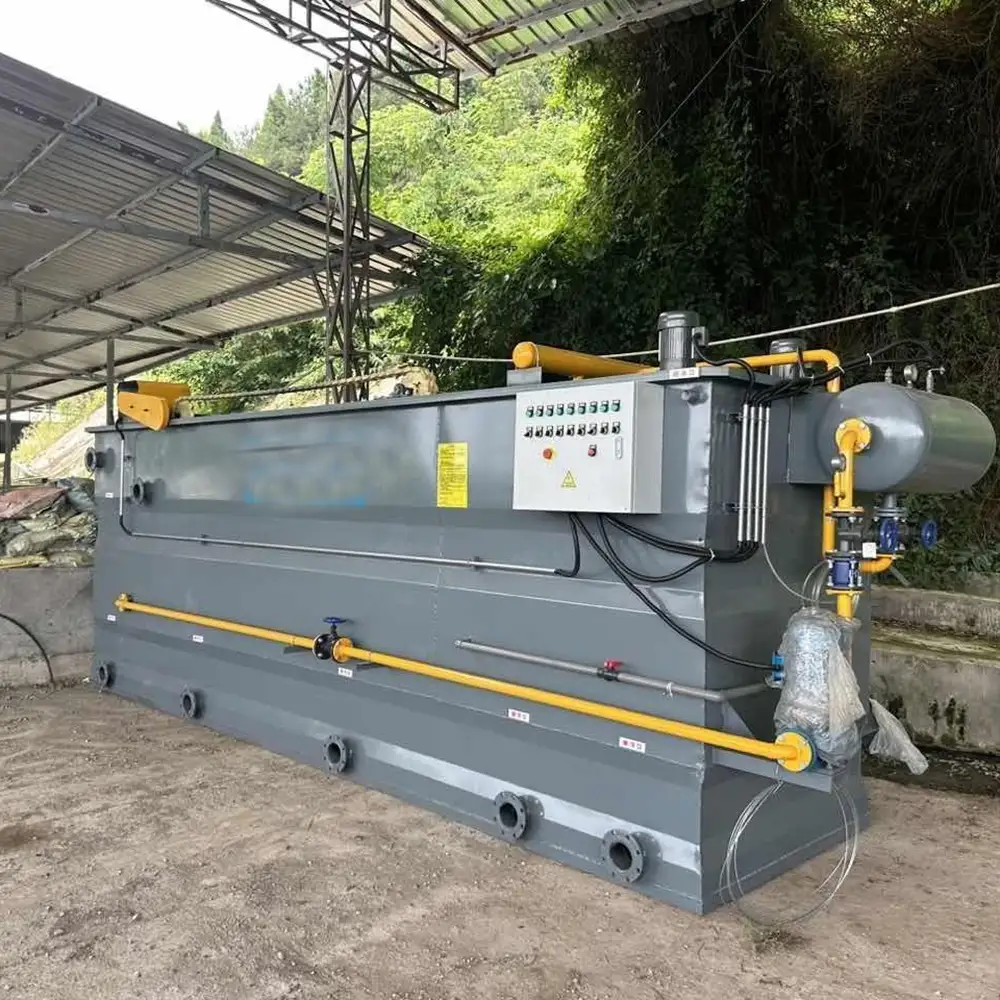
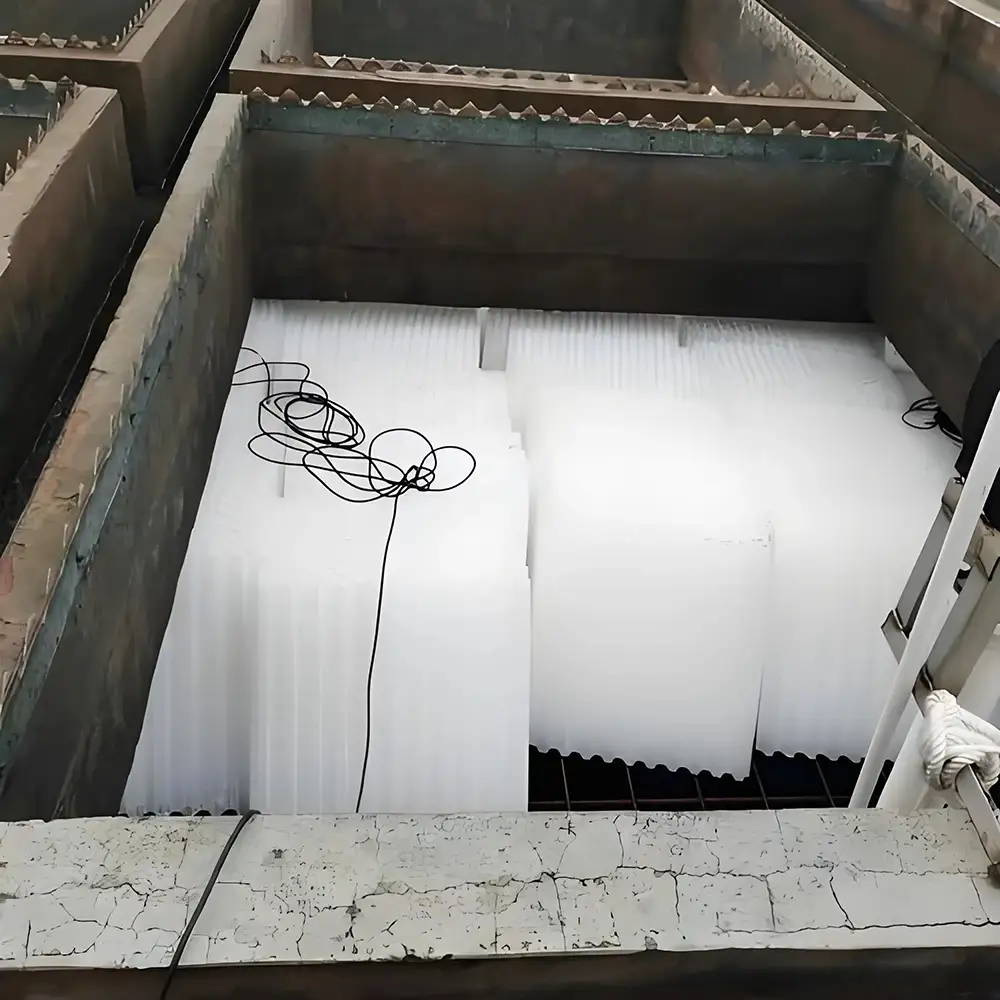
Sewage Treatment System DAF Dissolved Air Flotation Solid-Liquid Separation Unit
The Sewage Treatment System DAF Dissolved Air Flotation Solid-Liquid Separation Unit is an efficient physicochemical separation system designed to remove suspended solids, floating particles, oil, grease, colloids, and other low-density pollutants from wastewater. By combining dissolved air flotation technology with solid-liquid separation, the DAF unit provides effective clarification and pretreatment for municipal sewage, industrial wastewater, process water, and various specialized wastewater treatment applications.
Dissolved air flotation works by dissolving air into water under pressure and then releasing the pressurized stream into a flotation chamber. The pressure reduction generates fine air bubbles that attach to suspended particles and flocs, increasing their buoyancy and carrying them upward. The floated material forms a concentrated layer on the water surface, where it can be continuously or intermittently removed by a mechanical skimmer. This operating principle makes DAF particularly useful for wastewater containing fine suspended solids, oil, grease, and particles that are difficult to settle by conventional gravity clarification.
What Is a DAF Solid-Liquid Separation Unit?
A DAF solid-liquid separation unit is a wastewater clarification device that separates suspended and floating contaminants from the liquid phase through controlled flotation. Unlike conventional sedimentation, which relies mainly on gravity to move particles downward, DAF uses microbubbles to move target particles upward.
The system can be installed as a primary treatment stage, pretreatment unit, polishing process, or sludge thickening component depending on the wastewater characteristics and overall process design.
Typical DAF equipment may include a flotation tank, dissolved-air saturation system, recycle pump, air compressor or air injection system, pressure control components, chemical dosing equipment, flocculation section, skimming mechanism, sludge discharge system, and treated-water outlet. EPA technical documentation describes conventional DAF systems as including components such as a pump, retention tank, air system, and flotation tank.
Working Principle of Dissolved Air Flotation
The DAF treatment process generally follows several stages.
First, wastewater enters the pretreatment section where large debris and coarse solids may be removed. Depending on the wastewater characteristics, coagulants and polymers can be added to destabilize colloids and improve floc formation.
Next, a portion of clarified water or wastewater is pressurized and mixed with air. Under pressure, a significant amount of air dissolves into the liquid. The pressurized water is then introduced into the flotation chamber through a pressure-reducing device.
When the pressure is released, dissolved air comes out of solution as numerous small bubbles. These bubbles contact suspended particles, oil droplets, grease, and flocs. The bubble-particle aggregates become more buoyant and rise toward the surface.
A mechanical scraper then collects the floating sludge and transfers it to a sludge discharge section. Meanwhile, clarified water moves through the lower or outlet portion of the flotation tank for further treatment or discharge.
This basic process is widely recognized as a method for separating suspended solids and oil/grease from wastewater.
Main Features
Efficient Solid-Liquid Separation
The DAF unit is designed to separate fine suspended solids and floating contaminants from wastewater in a relatively compact treatment area. It is especially useful when target particles have poor settling characteristics.
Fine Bubble Flotation
The generation of fine dissolved-air bubbles provides a large contact opportunity between bubbles and suspended particles. Proper bubble distribution is important for stable flotation performance.
Oil and Grease Removal
DAF technology is particularly suitable for wastewater containing free oil, grease, emulsified materials after suitable pretreatment, and other floatable contaminants. EPA identifies DAF as a treatment technology for removing suspended solids, oil, and grease.
Chemical-Assisted Separation
Coagulation and flocculation can be integrated before the flotation chamber when wastewater contains colloids or fine particles that are difficult to separate directly. Typical treatment chemicals may include coagulants and polymers selected according to wastewater testing.
Compact Treatment Configuration
Compared with some gravity-based clarification processes, flotation can provide high surface loading and can be advantageous where available installation space is limited. EPA process-design material identifies smaller footprint and handling of difficult-to-settle solids among the potential advantages of flotation.
Flexible System Integration
The DAF solid-liquid separation unit can be combined with screening, equalization, coagulation, flocculation, biological treatment, filtration, disinfection, sludge dewatering, and other wastewater treatment processes.
Applications
The Sewage Treatment System DAF Dissolved Air Flotation Solid-Liquid Separation Unit can be used across a wide range of wastewater treatment projects.
Typical applications include:
Municipal Sewage Treatment
Industrial Wastewater Treatment
Food Processing Wastewater
Dairy Wastewater Treatment
Slaughterhouse Wastewater Treatment
Meat Processing Wastewater
Agricultural Wastewater Treatment
Chemical Industry Wastewater
Petrochemical Wastewater
Textile and Dyeing Wastewater
Paper and Pulp Wastewater
Pharmaceutical Wastewater
Oil-Containing Wastewater
Recycling and Reuse Water Treatment
Sludge Thickening Applications
For industrial wastewater, DAF is often selected when suspended solids, oil, grease, or poorly settling particles need to be separated before biological treatment or downstream filtration.
DAF in a Complete Sewage Treatment System
A DAF unit does not necessarily replace every other wastewater treatment process. Instead, it is normally selected according to the characteristics of the incoming wastewater and the required final water quality.
A typical treatment train may include:
Screening → Equalization → Coagulation → Flocculation → DAF → Biological Treatment → Filtration → Disinfection → Reuse or Discharge
For certain industrial wastewater projects, DAF can be positioned before biological treatment to reduce suspended solids, oil, grease, and other contaminants that could interfere with downstream processes.
For sludge applications, DAF can also be configured as a flotation thickening process to concentrate suspended solids before sludge dewatering or further stabilization.
Equipment Configuration
A complete DAF system can be configured according to the required treatment capacity and wastewater characteristics. Common components include:
DAF Flotation Tank
Dissolved Air Saturation System
Recycle Pump
Air Compressor
Pressure Release Device
Chemical Dosing System
Coagulation Tank
Flocculation Tank
Surface Skimmer
Sludge Collection System
Clarified Water Outlet
Electrical Control Cabinet
Piping and Valves
Automatic controls can be incorporated for pump operation, air supply, chemical dosing, scraper operation, alarms, and other process functions.
Operation and Maintenance
Regular operation and maintenance are important for stable DAF performance. Operators should monitor influent flow, suspended solids concentration, oil and grease loading, chemical dosage, recycle flow, pressure, bubble formation, float thickness, and treated-water quality.
The skimming mechanism should operate smoothly so that floated solids are removed before excessive accumulation occurs. The flotation tank, pumps, valves, pressure components, and air system should also be inspected periodically.
Chemical dosage should be adjusted according to actual wastewater conditions rather than using a fixed setting for every application. Jar testing and pilot testing can help determine suitable coagulant and polymer combinations for difficult wastewater.
Project Selection Considerations
When selecting a DAF solid-liquid separation unit, several parameters should be evaluated:
Wastewater flow rate
Peak flow rate
Suspended solids concentration
Oil and grease concentration
Particle characteristics
pH and temperature
COD and BOD levels
Chemical treatment requirements
Required effluent quality
Available installation space
Sludge production
Downstream treatment requirements
A properly designed DAF system should be matched to actual wastewater characteristics rather than selected only according to nominal flow capacity.
Why Choose Us?
We focus on practical wastewater treatment equipment and complete process solutions for industrial and sewage treatment applications. Our DAF systems can be configured around the actual wastewater characteristics, treatment capacity, required separation performance, and downstream process.
Key advantages include:
Complete DAF solid-liquid separation solutions
Flexible treatment capacity configurations
Integrated coagulation and flocculation options
Efficient suspended solids and oil/grease separation
Automatic control options
Compact equipment layouts
Easy integration with existing wastewater systems
Support for industrial and sewage treatment applications
Project-oriented equipment configuration
Export-ready equipment design and documentation
The objective is not simply to supply a flotation tank, but to provide a DAF treatment configuration that works as part of the customer's complete wastewater treatment process.
FAQs
1. What is a DAF solid-liquid separation unit?
A DAF solid-liquid separation unit uses dissolved air microbubbles to float suspended solids, oil, grease, and other separable contaminants to the water surface for mechanical removal.
2. What does DAF stand for?
DAF stands for Dissolved Air Flotation.
3. What contaminants can DAF remove?
DAF can be used to remove suspended solids, floating solids, oil, grease, and other particles that can be effectively captured by flotation.
4. Can DAF be used for sewage treatment?
Yes. DAF can be incorporated into sewage and wastewater treatment systems, particularly where flotation is beneficial for removing suspended or floatable contaminants. However, the complete treatment process should be designed according to the wastewater characteristics and discharge requirements.
5. Does DAF require chemicals?
Not every application requires the same chemical treatment. Coagulants and polymers may be used when better floc formation and separation are required.
6. How does DAF separate suspended solids?
Pressurized water releases fine air bubbles when pressure is reduced. The bubbles attach to suspended particles and carry them upward, where they form a float layer that can be skimmed away.
7. Can DAF remove oil and grease?
Yes. Oil and grease are among the common contaminants targeted by DAF systems.
8. Can DAF replace biological wastewater treatment?
Usually, no. DAF is primarily a physical-chemical separation process. It may serve as pretreatment or clarification before biological treatment and other downstream processes.
9. Can DAF be used for industrial wastewater?
Yes. DAF is widely applicable to industrial wastewater streams containing suspended solids, oil, grease, and difficult-to-settle particles.
10. What information is needed to select a DAF unit?
Important information includes flow rate, peak flow, suspended solids, oil and grease, pH, temperature, wastewater composition, required effluent quality, and downstream treatment requirements.
11. Can the DAF system be automated?
Yes. Automatic controls can be integrated for pumps, air systems, skimmers, chemical dosing, alarms, and other operating functions.
12. Can DAF be integrated with an existing wastewater treatment plant?
Yes. A DAF unit can be configured as pretreatment, primary clarification, polishing, or sludge treatment depending on the existing process.
13. Is DAF suitable for water reuse projects?
DAF can be used as one treatment stage in a water reuse system. Additional biological, membrane, filtration, disinfection, or other advanced treatment may be required depending on the intended reuse quality.
Prev:
10000L/H Daf Suspended Solids Wastewater Treatment Equipment
Next:
Intelligent MBR Modular Wastewater Treatment STP Machine
TAG:
Industrial Wastewater Treatment Equipment,
Suspended Solids Removal,
Dairy Wastewater Treatment,
Meat Processing Wastewater Treatment,
Oil And Grease Wastewater Treatment,
Food Processing Wastewater Treatment,
Agricultural Wastewater Treatment,
Industrial Wastewater Treatment System,
DAF Wastewater Treatment System,
Dissolved Air Flotation Wastewater Treatment,
Industrial Wastewater Treatment,
Sewage Treatment Plant,
Industrial Sewage Treatment,
Wastewater Treatment Equipment,
Wastewater Treatment Plant,
Chemical Wastewater Treatment,
Wastewater Treatment System,
Industrial Water Treatment,
Suspended Solids Removal Equipment,
Wastewater Separation Equipment,
Solid-Liquid Separation Equipment,
Wastewater Pretreatment Equipment,
Pharmaceutical Wastewater Treatment,
Process Wastewater Treatment,
Sewage Treatment Equipment,
Sewage Treatment System,
Slaughterhouse Wastewater Treatment,
Oil Removal Wastewater Treatment,
Oil Water Separator,
Industrial Sewage Treatment Equipment,
Related Category:
Sewage Treatment System,Dissolved Air Flotation,DAF Wastewater Treatment,DAF Solid-Liquid Separation Unit,Sewage Treatme China, suppliers, manufacturers, factory, customized, wholesale, quotation, made in China