|
Model NO. |
DAF |
Handling method |
physicochemical treatment |
|
Usage |
Industrial, agricultural, food factories, slaughterhouses |
Trademark |
|
|
Types |
Package, Compact, Small, Mini |
Applications |
Industrial, Municipal, Domestic, Medical, Ship |
|
Craft |
Flocculation sedimentation method |
Features |
Water Clarification, Filtration, Purification |
|
Service Life |
20 Years |
Operation |
Automatic |
|
Steel Plate Thickness |
>8mm |
Function |
Remove Suspended solids |
|
Voltage |
220V/ 380V/ Customerized |
Installation Type |
On ground |
|
Colour |
Grey/Silver/Blue/Balck/Customerized |
Use for |
Mineral, Printing, Chemical, Dyeing, Starch |
|
Material |
Carbon Steel, Stain Steel, FRP, PE, PP |
Certificate |
SGS, ISO |
|
Transport Package |
Container Standard Packing |
Specification |
Carbon steel anti-corrosion |
|
Production Capacity |
1000 Sets/Year |
Origin |
China |
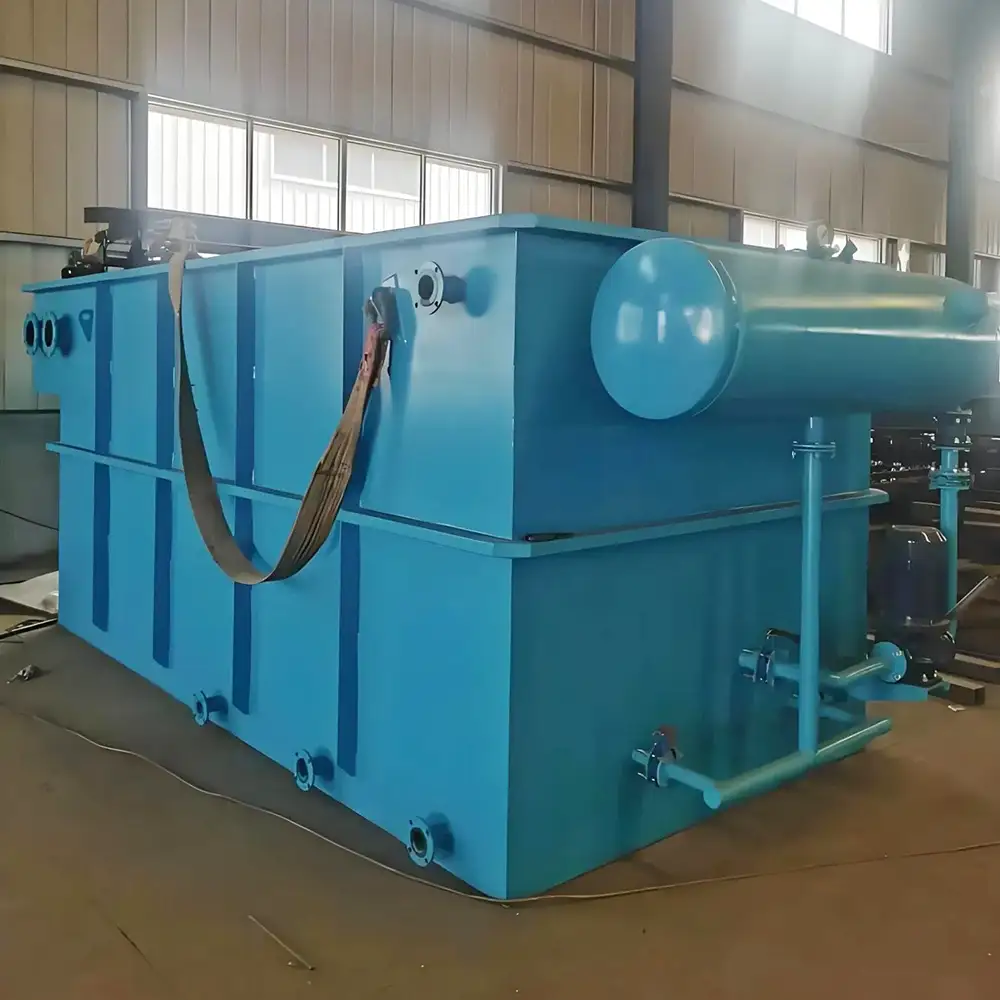
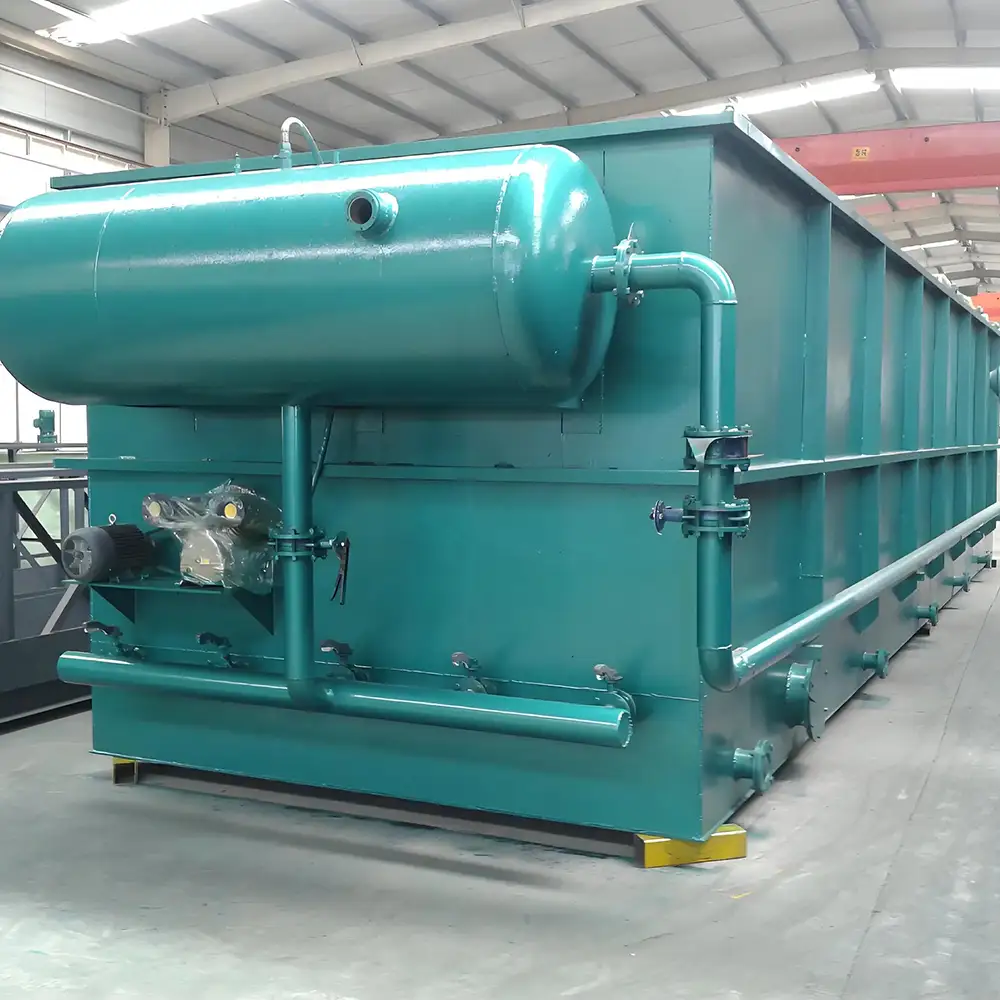
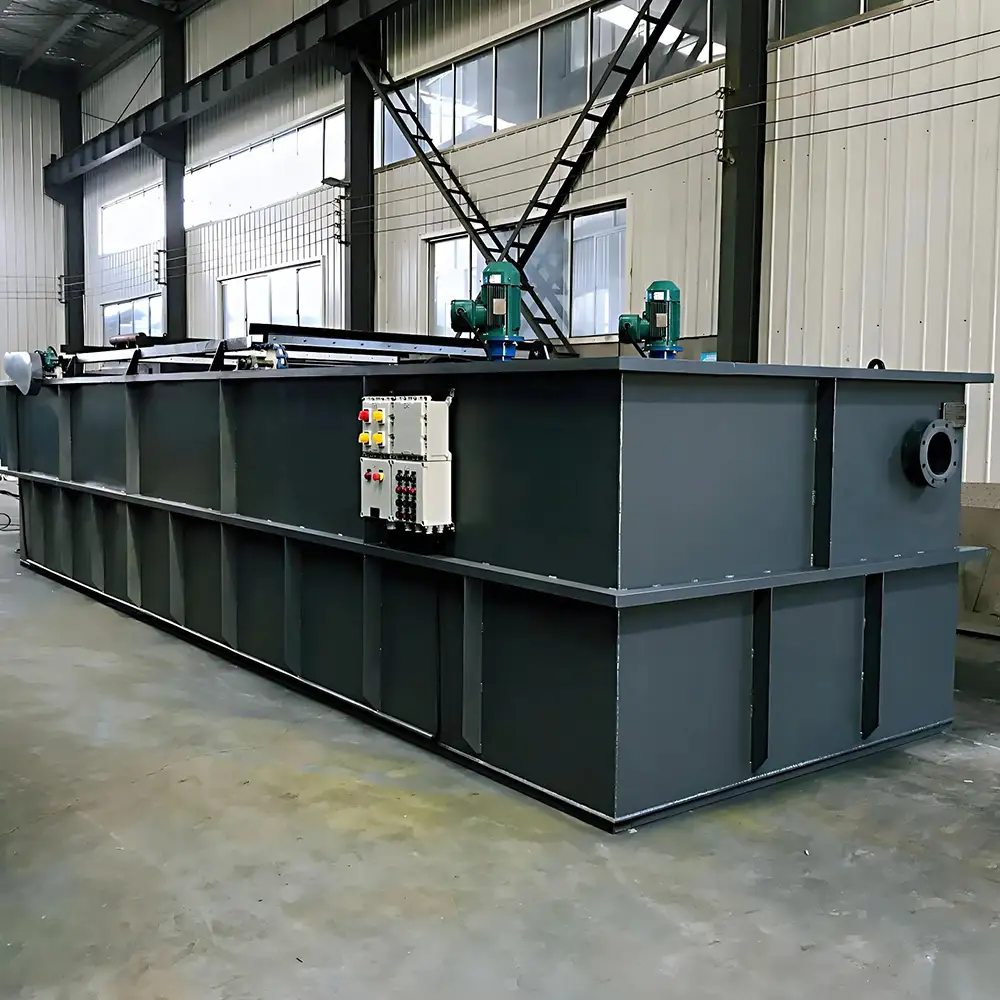
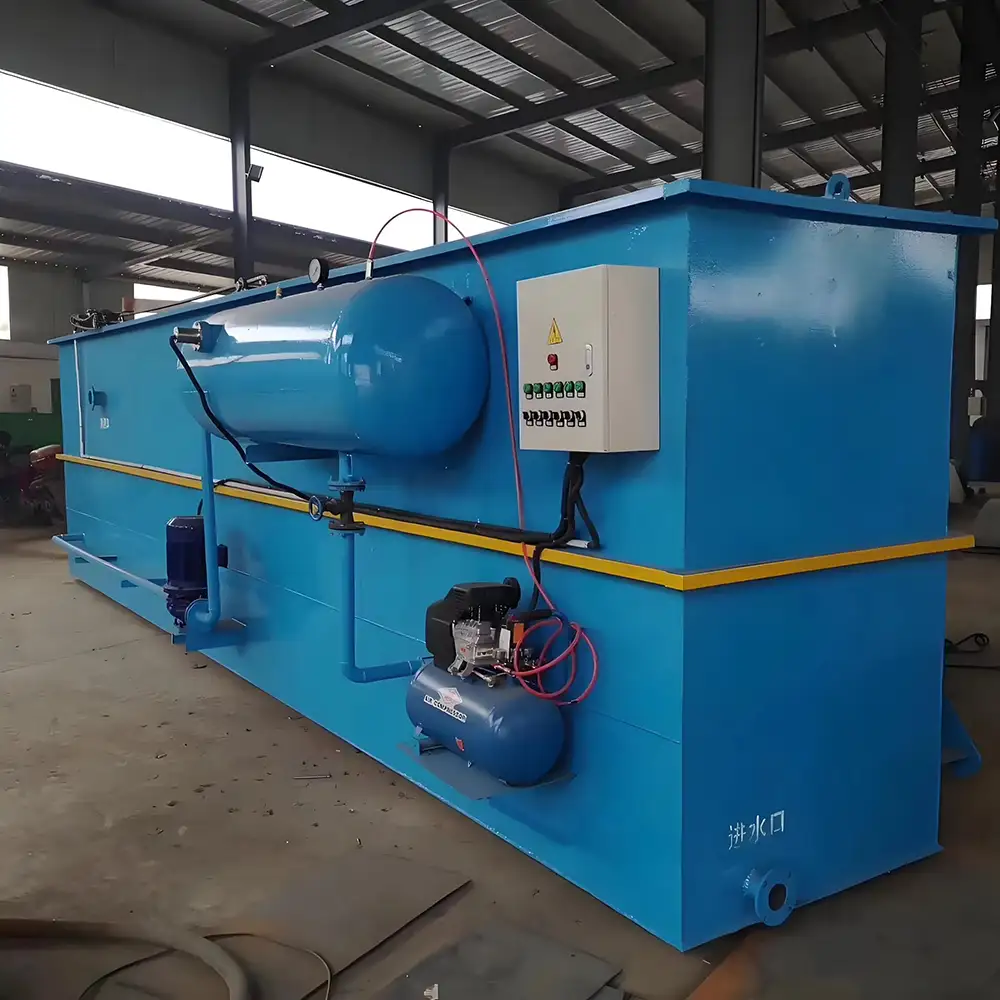
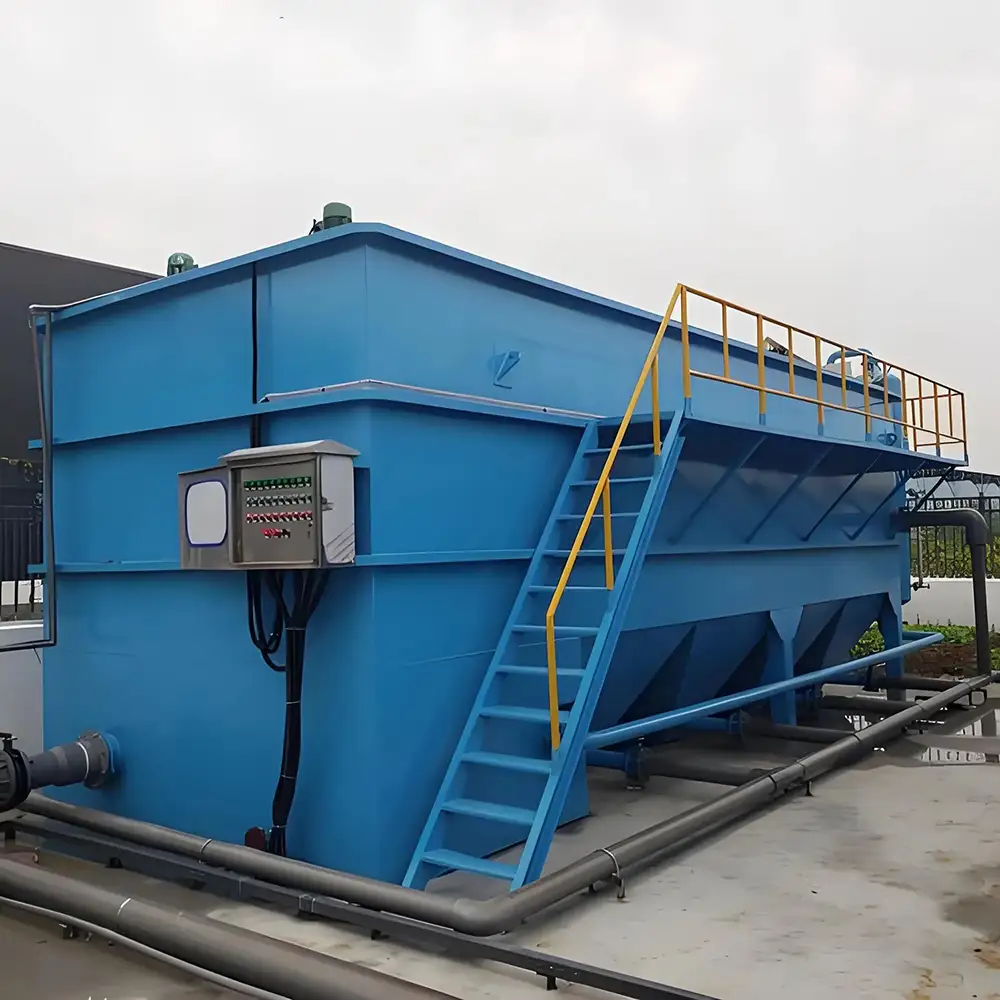
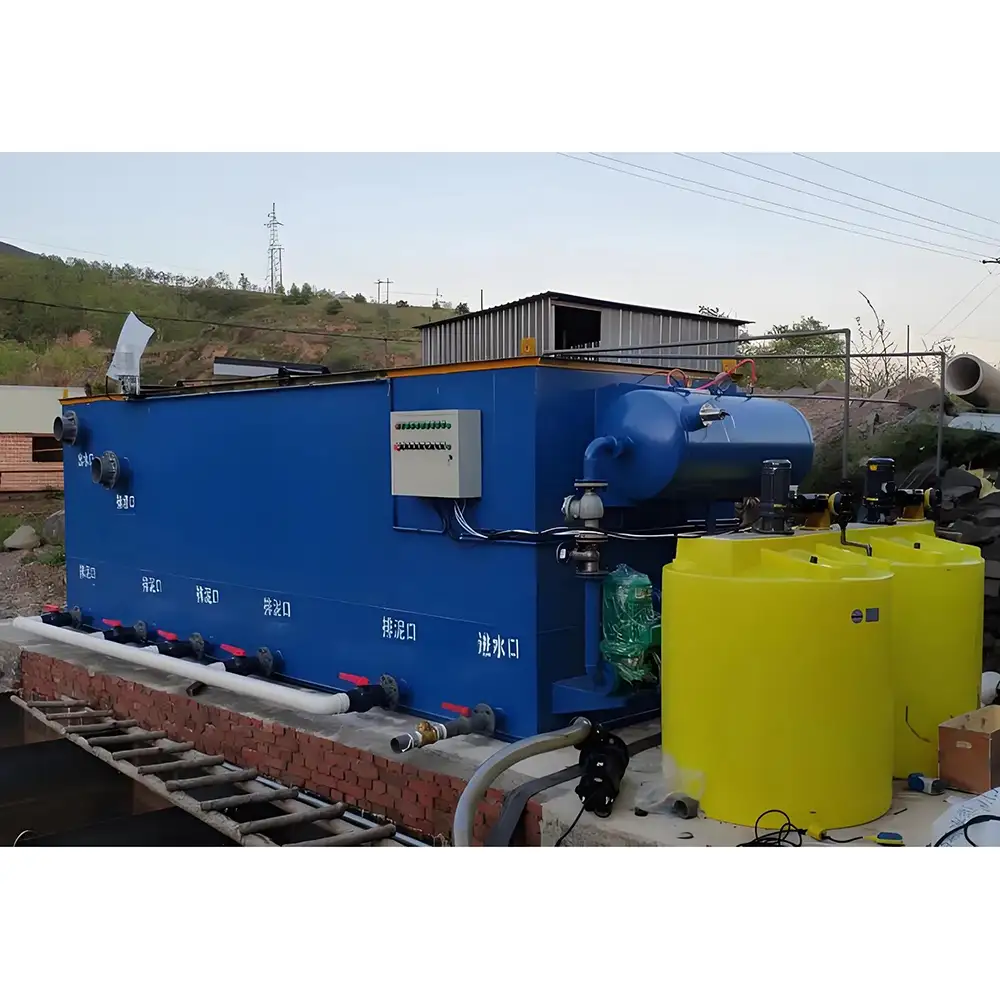
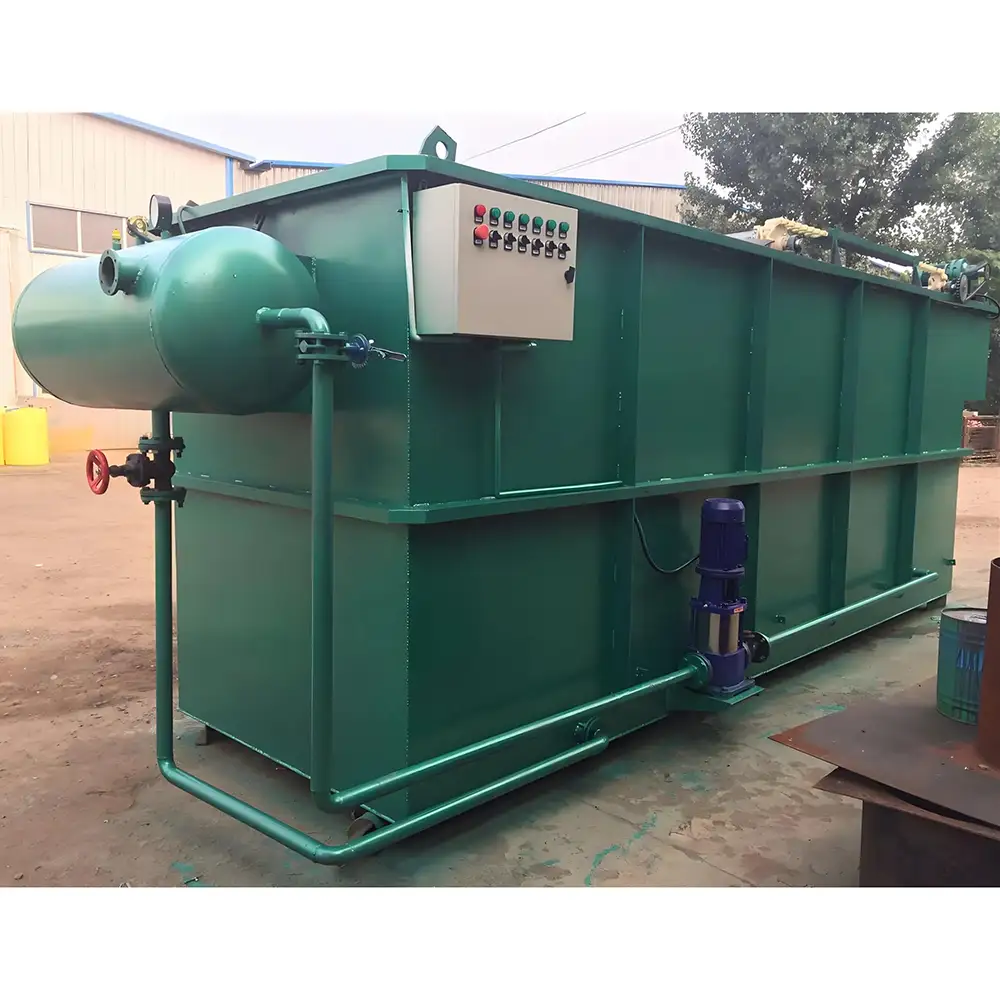
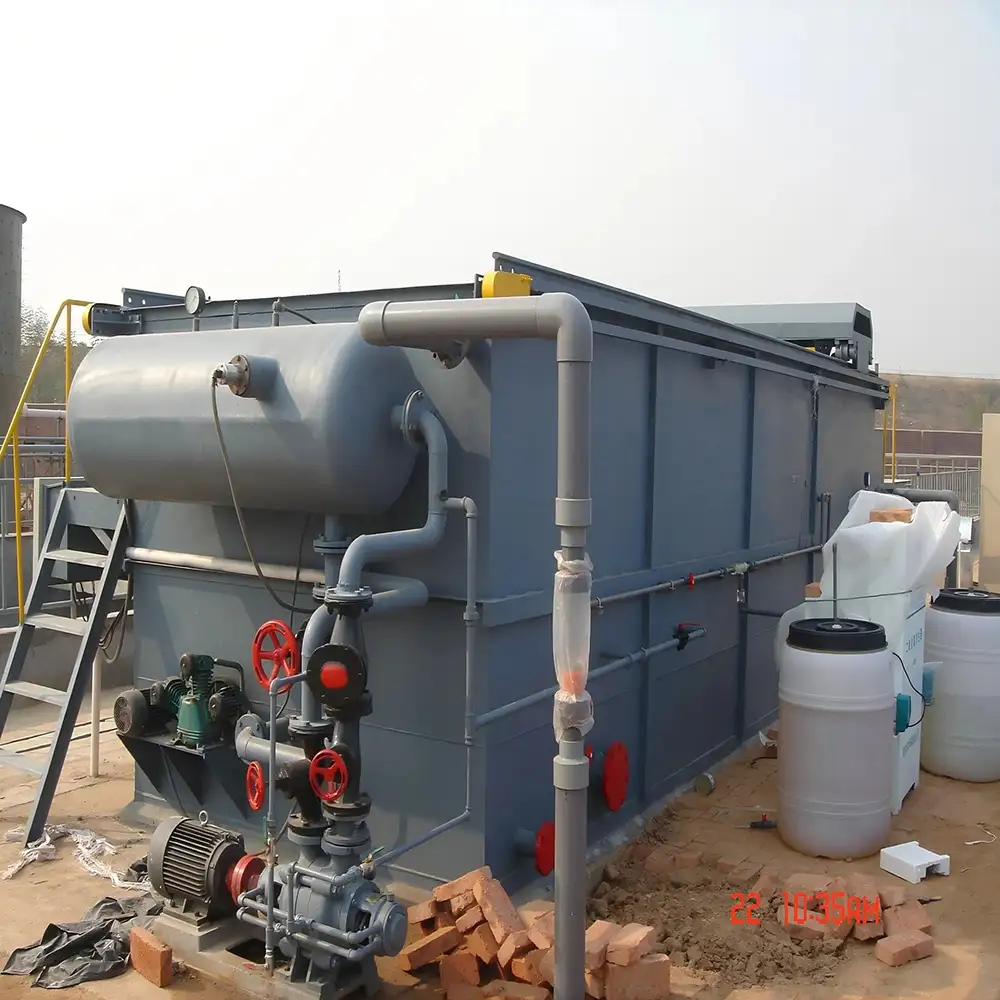
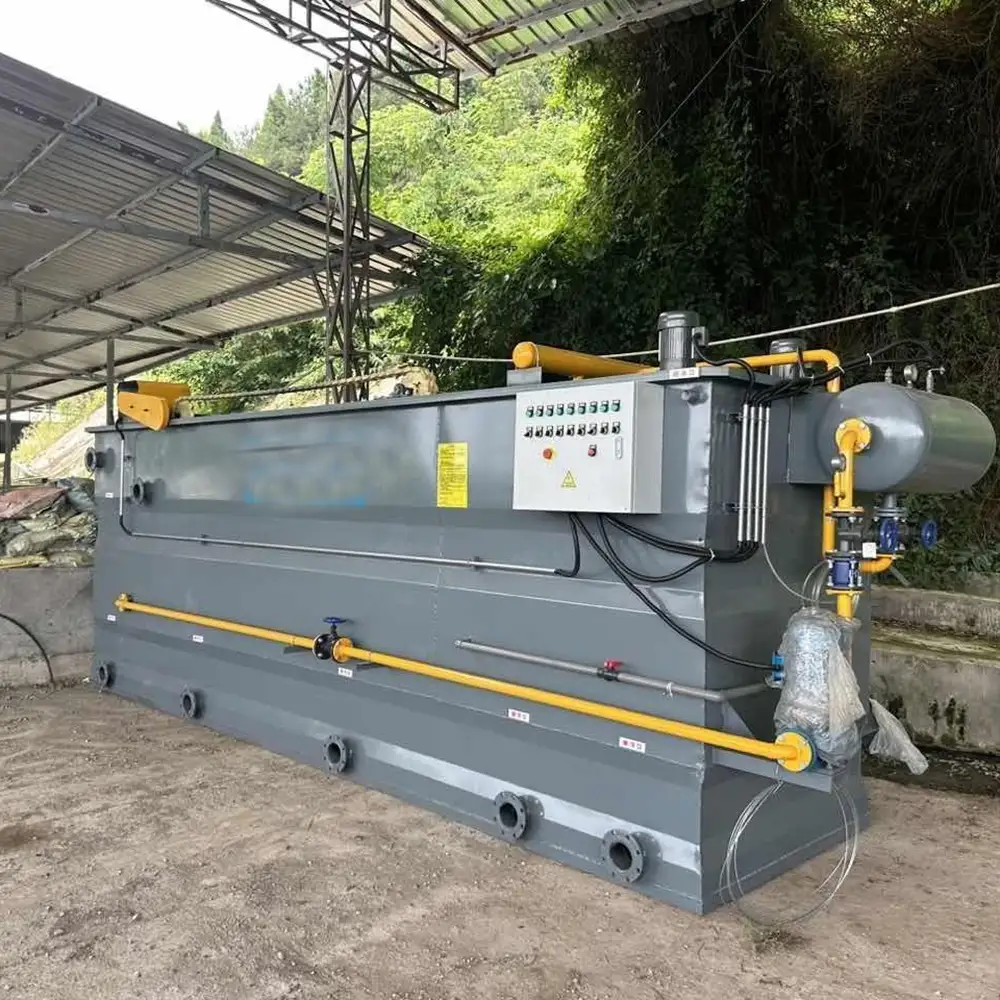
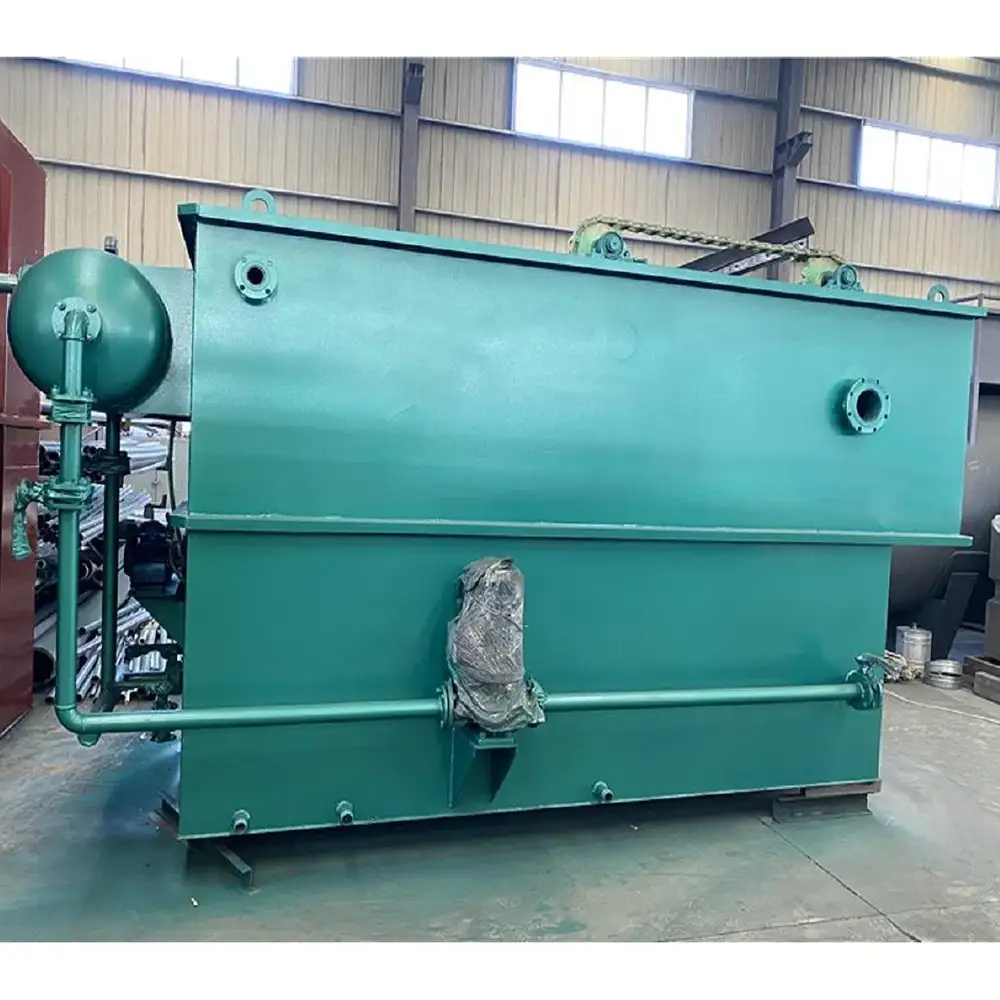
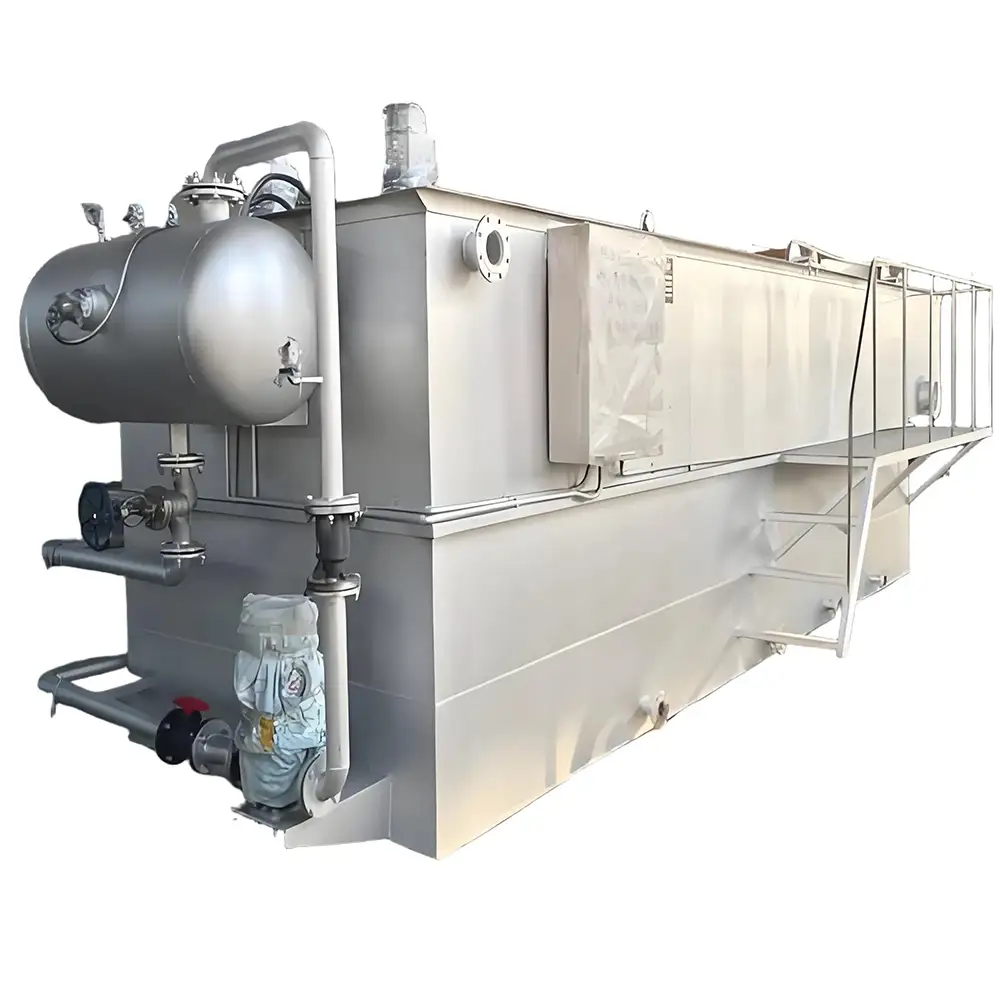
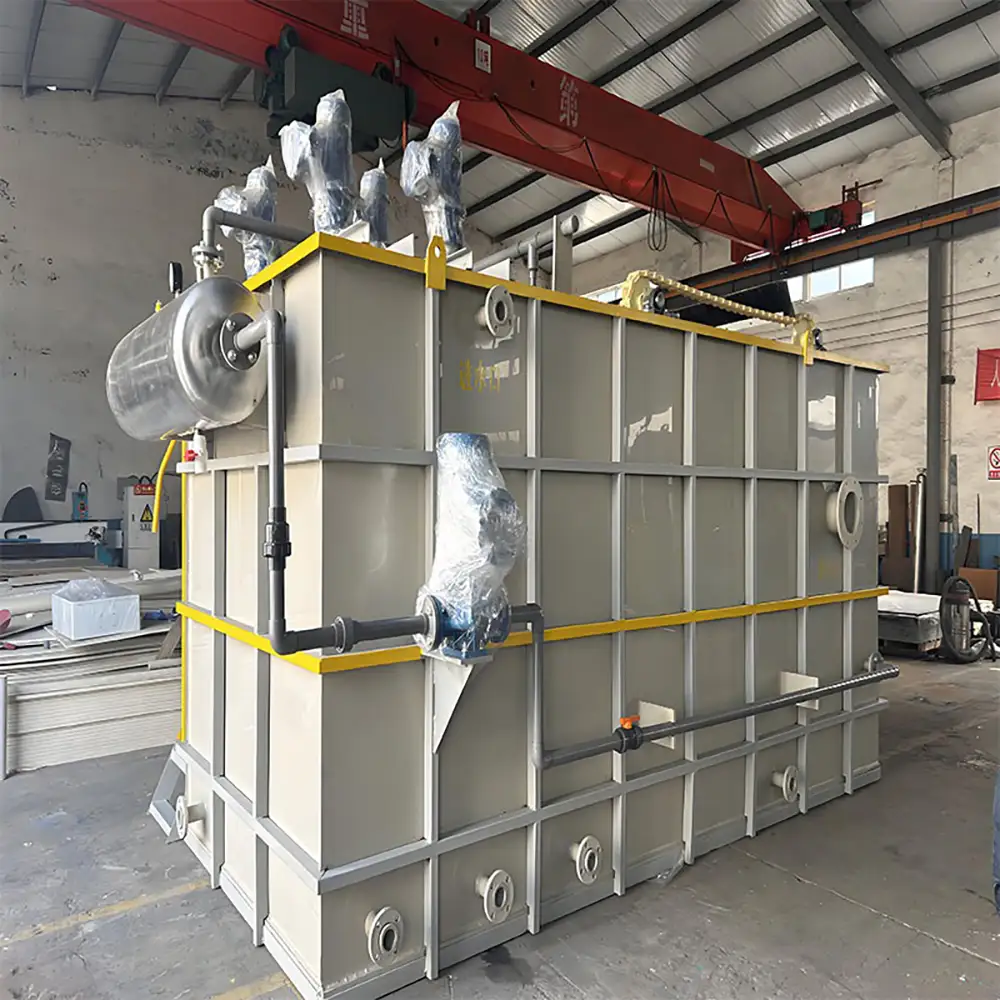
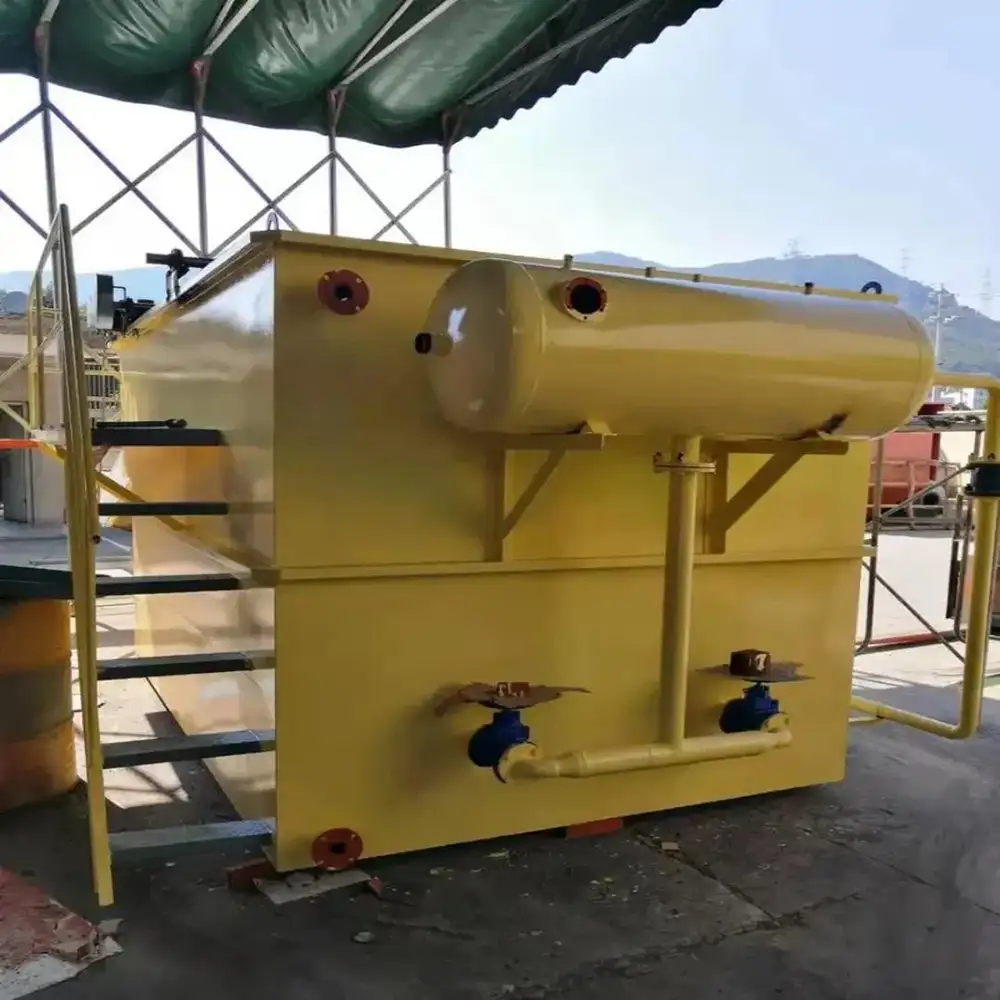
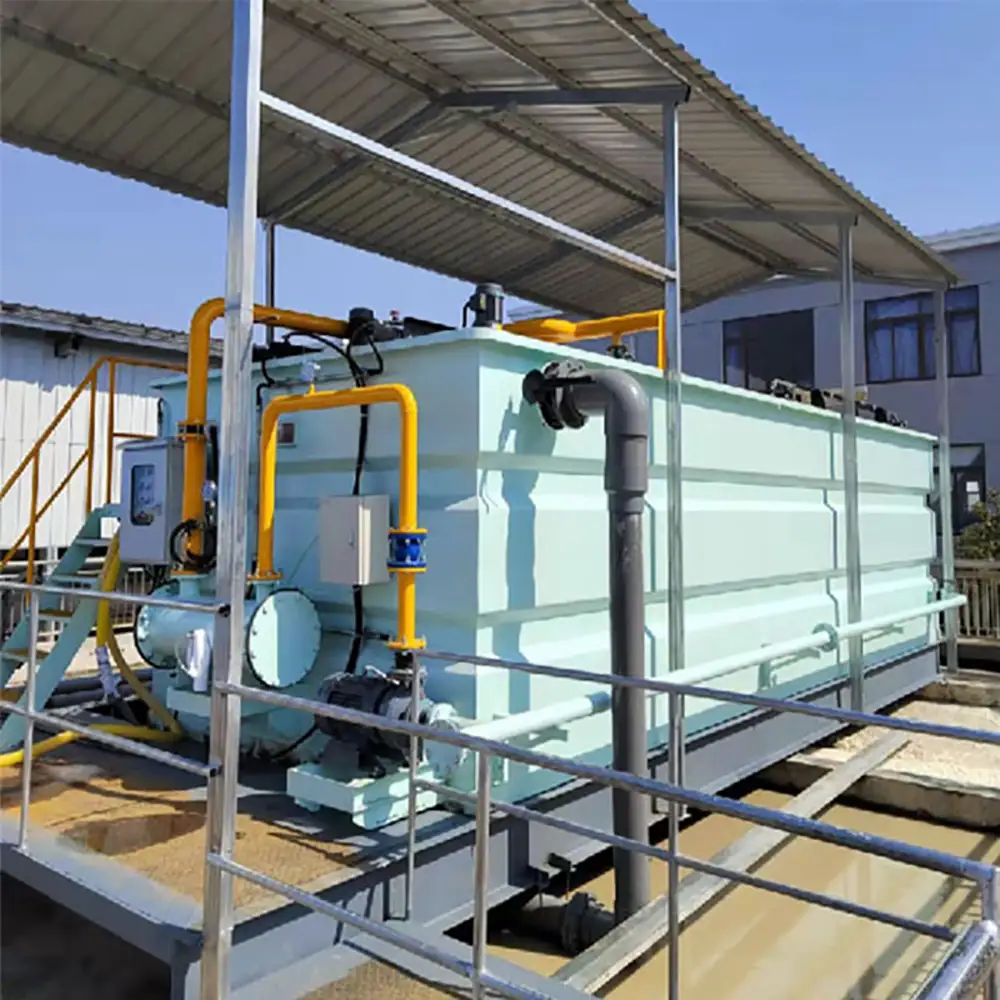
Dissolved air flotation sewage treatment plants are usually used for primary sewage treatment, and the front can be used together with grilles(bar screen). The compact sewage treatment plant is the second treatment, and the disinfection system (sodium hypochlorite, chlorine dioxide) is tertiary.
Dissolved air flotation can remove suspended solids very well, and can be used for breeding, food consumption, slaughtering, food processing, plastic washing, dyeing, and car washing sewage treatment.
It has the characteristics of low price, small footprint, low operating cost and long service life.
Our company has been focusing on the production of air flotation equipment for more than 20 years, with domestic and foreign markets and a good reputation.
Oil And Suspended Solids Recycling System With DAF Dissolved Air Flotation Machine
The Oil And Suspended Solids Recycling System With DAF Dissolved Air Flotation Machine is designed for wastewater treatment applications that require efficient separation of oil, grease, suspended solids, colloidal particles, and other floatable contaminants. The system uses dissolved air flotation technology to generate fine bubbles that attach to target particles and carry them to the water surface for removal.
DAF is widely used in industrial wastewater treatment because it can efficiently separate materials that are difficult to remove by conventional gravity settling. EPA technical documentation identifies dissolved air flotation as a process commonly used to remove suspended solids and dispersed oil and grease, particularly when particles have a density close to that of water.
The system can be installed as a primary treatment unit, pretreatment stage, polishing process, or part of a larger wastewater recycling and reuse plant.
How Does the DAF Dissolved Air Flotation Machine Work?
The DAF process begins when wastewater enters the flotation system after preliminary screening or other pretreatment. Depending on the wastewater characteristics, pH adjustment, coagulation, and flocculation may be used to improve separation.
A portion of clarified effluent is normally recycled and pressurized with air. Under pressure, air dissolves into the recycle water. When the pressurized water passes through a pressure-release device and enters the flotation chamber, the sudden pressure reduction causes dissolved air to form a large number of fine bubbles.
These bubbles attach to suspended solids, oil droplets, grease, and flocs. The bubble-particle combination becomes more buoyant and rises toward the surface. A mechanical skimmer removes the floating layer, while clarified water exits the flotation tank for further treatment or recycling.
EPA describes this pressure-release process as producing microscopic bubbles that attach to oil and suspended particles, causing them to rise and form a surface froth layer for skimming.
Oil Removal And Wastewater Recycling
Oil removal is one of the major applications of DAF technology. Industrial wastewater from food processing, metalworking, petrochemical production, machinery cleaning, refineries, transportation equipment cleaning, and other processes may contain free oil, dispersed oil, grease, and oil-wet solids.
The DAF machine helps concentrate these contaminants into a floating layer that can be mechanically removed from the wastewater.
For stable emulsified oil, additional chemical conditioning may be necessary. Coagulation, flocculation, pH adjustment, or emulsion breaking can improve the ability of oil droplets to attach to air bubbles. EPA materials note that pH adjustment and coagulation commonly precede DAF where finely dispersed or emulsified oil and grease are present.
After DAF treatment, the clarified water can be directed to biological treatment, filtration, membrane treatment, or other processes before being recycled for industrial reuse.
Suspended Solids Separation
The DAF Dissolved Air Flotation Machine is especially useful for suspended particles that settle slowly or have a specific gravity close to water.
Conventional gravity sedimentation relies on density differences to separate solids. Lightweight solids, oil-wet particles, fibers, biological solids, and some colloidal flocs may therefore require long settling times or may not settle effectively.
DAF increases the apparent buoyancy of these particles by attaching fine air bubbles to their surfaces. The resulting float rises rapidly and can be removed from the water surface.
This makes DAF suitable for applications where conventional sedimentation alone cannot provide sufficient clarification.
Coagulation And Flocculation
For many industrial wastewater applications, DAF performance can be improved through chemical pretreatment.
A typical process may include rapid mixing, coagulant dosing, flocculation, and then dissolved air flotation. Coagulants destabilize colloidal particles, while polymers may help form larger and stronger flocs.
These flocs provide a larger surface area for fine air bubbles to attach to during flotation.
Chemical selection should be based on actual wastewater characteristics. Important factors include pH, temperature, suspended solids concentration, oil and grease concentration, flow rate, and the nature of the contaminants.
Rather than using a fixed chemical dosage for every application, jar testing and pilot testing can help establish an appropriate treatment program.
Main DAF Machine Components
A complete Oil And Suspended Solids Recycling System can include several integrated components:
DAF Flotation Tank
Recycle Water Pump
Air Compressor
Air Saturation System
Pressure Tank
Pressure Release Valve
Surface Skimmer
Sludge Collection System
Coagulation Tank
Flocculation Tank
Chemical Dosing System
Control Cabinet
Flow Meter
Pressure Gauge
Level And Process Sensors
EPA documentation also identifies the pressurizing pump, retention tank, air compressor, pressure-control equipment, and flotation tank as common DAF system components.
Applications In Wastewater Treatment
The system can be configured for a wide range of industrial wastewater applications, including:
Food Processing Wastewater
Dairy Wastewater
Meat Processing Wastewater
Slaughterhouse Wastewater
Poultry Processing Wastewater
Petrochemical Wastewater
Refinery Wastewater
Metalworking Wastewater
Machinery Cleaning Wastewater
Textile Wastewater
Pulp And Paper Wastewater
Chemical Industry Wastewater
Mining Wastewater
Oilfield Wastewater
Industrial Water Recycling
DAF can be used as primary clarification, pretreatment before biological treatment, or as part of an industrial water reuse process.
Integration With Wastewater Recycling Systems
A DAF machine is often integrated with other treatment technologies to achieve the required water quality.
A typical treatment sequence may be:
Screening → Equalization → pH Adjustment → Coagulation → Flocculation → DAF → Biological Treatment → Filtration → Disinfection
For advanced recycling applications, additional ultrafiltration, MBR, activated carbon, or reverse osmosis can be installed after DAF.
Removing oil and suspended solids before membrane treatment can help reduce the contaminant load entering downstream equipment and support more stable operation.
Surface Skimming And Sludge Handling
As the DAF process operates, separated oil, grease, suspended solids, and flocs accumulate on the water surface. A mechanical skimmer continuously or periodically moves this floating material toward a collection trough.
The concentrated float can then be transferred to a sludge holding tank or dewatering system.
Proper float removal is important because excessive accumulation can reduce separation performance. EPA documentation notes that delaying removal of the surface sludge layer can allow particulates to return to the liquid.
Depending on the application, the collected material may be processed using a filter press, screw press, centrifuge, sludge thickener, or other dewatering equipment.
Operation And Maintenance
Routine inspection helps maintain reliable DAF performance. Operators should check the recycle pump, pressure system, air supply, pressure-release components, skimmer, sludge discharge, chemical dosing system, sensors, valves, and control cabinet.
The flotation surface should be monitored regularly, and the skimmer speed or operating cycle should be adjusted according to the actual float loading.
Chemical dosing should also be optimized according to influent conditions. Changes in wastewater flow, oil concentration, suspended solids, pH, or temperature can influence flotation performance.
Regular cleaning prevents accumulated solids and grease from affecting mechanical components and hydraulic flow.
Why Choose Us?
Selecting the right DAF machine requires consideration of wastewater flow, peak flow, oil concentration, suspended solids loading, chemical requirements, sludge characteristics, treatment objectives, available installation space, and downstream equipment.
Our Oil And Suspended Solids Recycling System can be configured for industrial wastewater treatment plants, sewage treatment facilities, and water recycling applications.
Key advantages include:
Efficient Oil And Grease Separation
Effective Suspended Solids Removal
Fine-Bubble Dissolved Air Flotation
Compact Solid-Liquid Separation
Flexible Recycle Pressurization
Optional Coagulation And Flocculation
Automatic Surface Skimming
Integrated Sludge Collection
PLC Automatic Control Options
Flexible Wastewater Treatment Configuration
Easy Integration With Recycling And Reuse Systems
The final system configuration should be determined from actual wastewater characteristics and required effluent quality rather than relying on a generic capacity or removal percentage.
FAQ
1. What is an Oil And Suspended Solids DAF System?
It is a wastewater treatment system using dissolved air flotation to separate oil, grease, suspended solids, and other suitable floatable contaminants from wastewater.
2. What does DAF remove?
DAF commonly removes suspended solids, dispersed oil, grease, fats, colloidal flocs, and other floatable materials.
3. Can DAF be used for wastewater recycling?
Yes. DAF can be used as pretreatment in industrial wastewater recycling systems to reduce oil and suspended solids before downstream filtration or membrane treatment.
4. Can DAF remove emulsified oil?
It can, but stable emulsified oil may require pH adjustment, coagulation, polymer dosing, or chemical emulsion breaking before flotation.
5. Why are fine bubbles important?
Fine bubbles provide a large contact surface and can attach to suspended particles and oil droplets, increasing their buoyancy and allowing them to float to the surface.
6. Does DAF remove dissolved salts?
Generally, no. DAF is primarily a separation process for suspended and floatable contaminants. Dissolved salts normally require technologies such as reverse osmosis or ion exchange.
7. Does the DAF system require chemicals?
Not necessarily, but chemical conditioning can improve removal of fine suspended solids, colloids, and emulsified oil in many wastewater applications.
8. How is DAF sludge removed?
A surface skimmer collects the floating material and transfers it to a sludge collection or dewatering system.
9. What industries use oil-removal DAF systems?
Common applications include food processing, dairy, meat processing, petrochemical, refinery, metalworking, machinery cleaning, textile, paper, chemical, mining, and oil-related wastewater treatment.
10. Can DAF be installed before MBR or RO?
Yes. DAF can serve as pretreatment before MBR, ultrafiltration, reverse osmosis, and other advanced treatment processes.
11. How is DAF capacity selected?
Capacity selection should consider average and peak wastewater flow, TSS, oil and grease concentration, wastewater chemistry, temperature, treatment objectives, and downstream process requirements.
12. Can the system be automated?
Yes. PLC control can be used for pumps, skimmers, chemical dosing, pressure monitoring, sludge discharge, alarms, and other operating functions.
Prev:
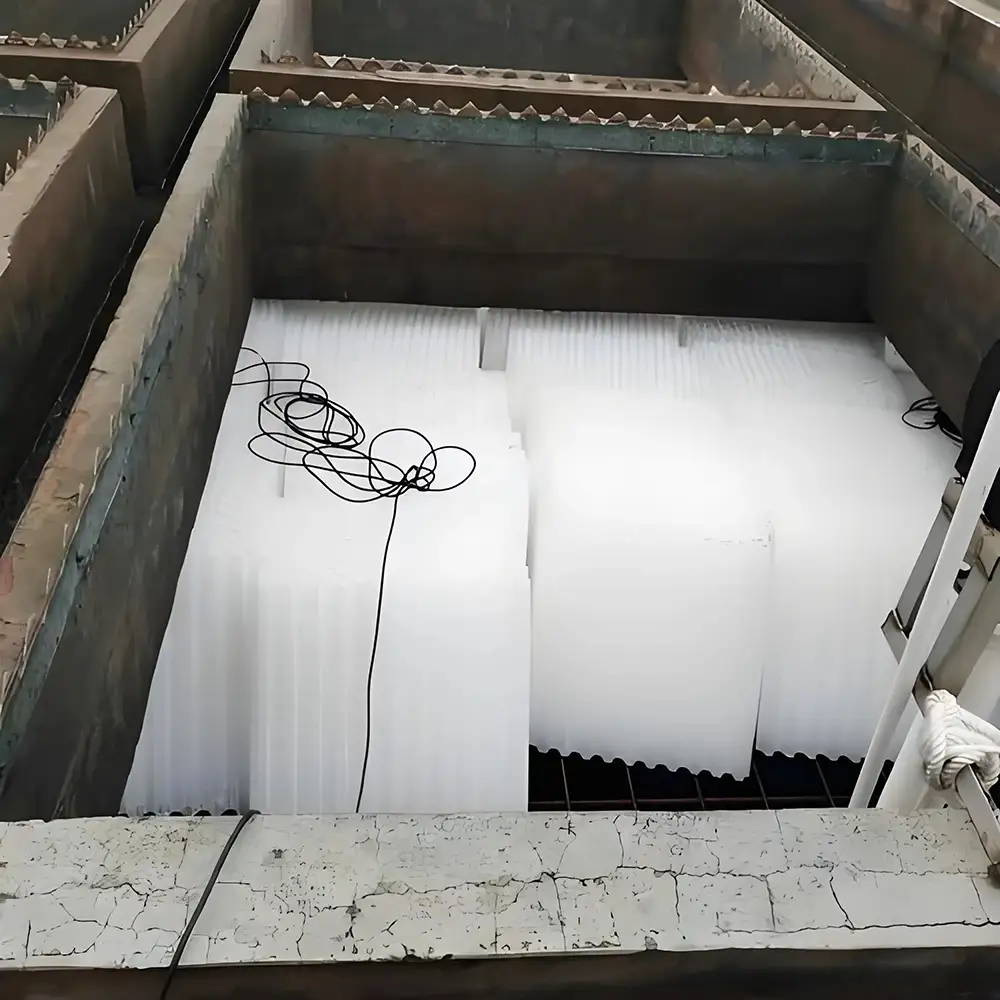
Integrated Inclined Tube Sedimentation and Coagulation Tank for Wastewater Treatment Plant
Next:
Dissolved Air Flotation Daf Machine with Best Quality for Sewage Treatment Plant
TAG:
Suspended Solids Removal,
Dairy Wastewater Treatment,
Meat Processing Wastewater Treatment,
Food Processing Wastewater Treatment,
DAF Wastewater Treatment System,
Industrial Wastewater Treatment,
Food Wastewater Treatment,
Industrial Wastewater Treatment Plant,
Wastewater Treatment Equipment,
Wastewater Treatment Plant,
Solid Liquid Separator,
Solid Liquid Separation Equipment,
Wastewater Reuse System,
Chemical Wastewater Treatment,
Wastewater Treatment System,
Metal Processing Wastewater Treatment,
Industrial Water Treatment,
Industrial Water Recycling,
Suspended Solids Removal Equipment,
Industrial Wastewater Recycling,
Wastewater Recycling System,
Industrial Effluent Treatment,
Water Reuse Treatment,
Poultry Wastewater Treatment,
Slaughterhouse Wastewater Treatment,
Oil Removal Equipment,
Industrial Oil Water Separator,
Oil Water Separator,
RO Pretreatment,
Industrial Wastewater Pretreatment,
Related Category:
Oil And Suspended Solids Recycling System,Oil And Suspended Solids Removal System,Dissolved Air Flotation DAF Machine China, suppliers, manufacturers, factory, customized, wholesale, quotation, made in China