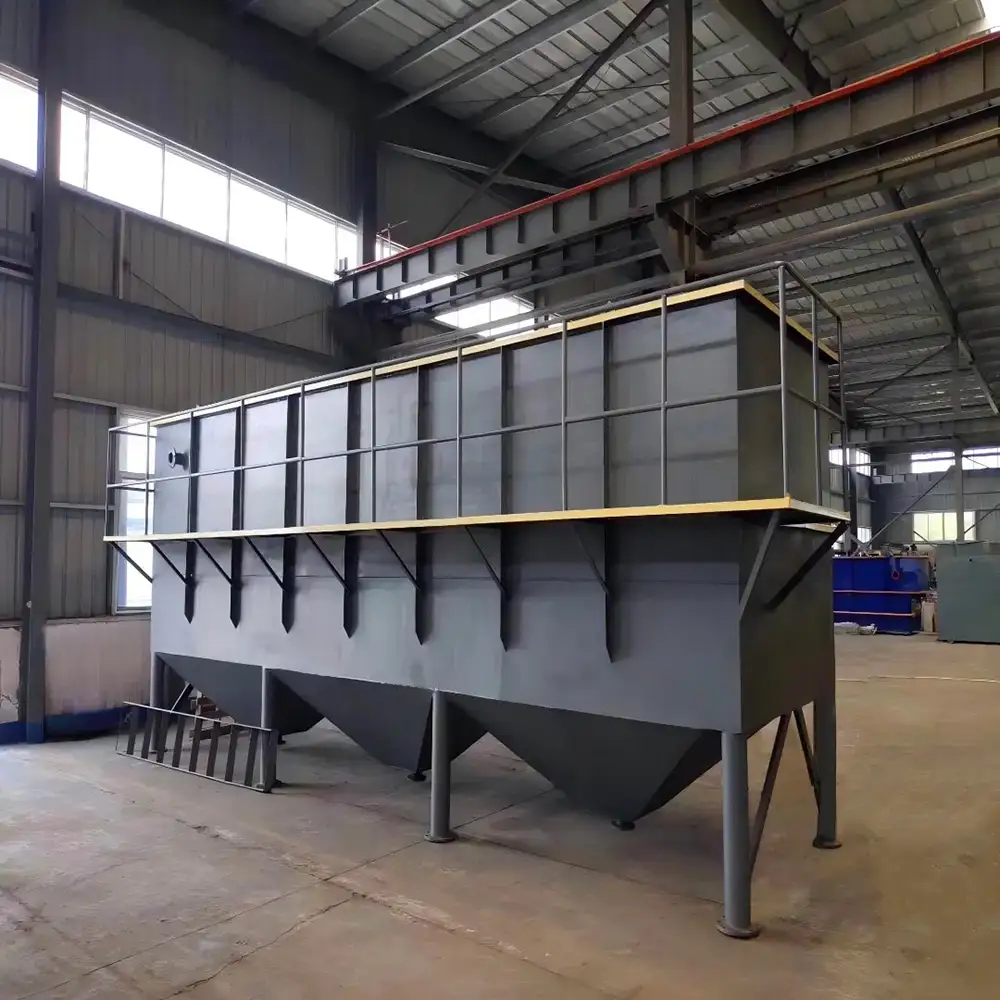
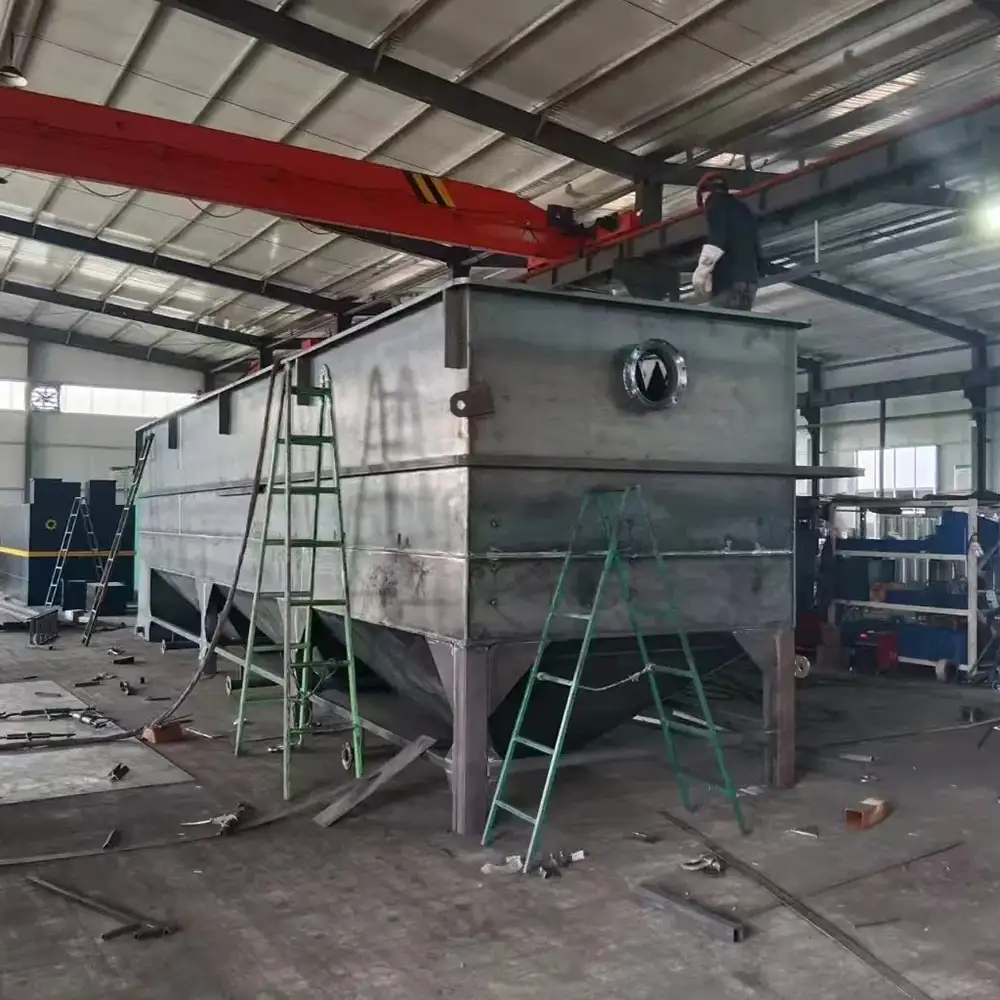
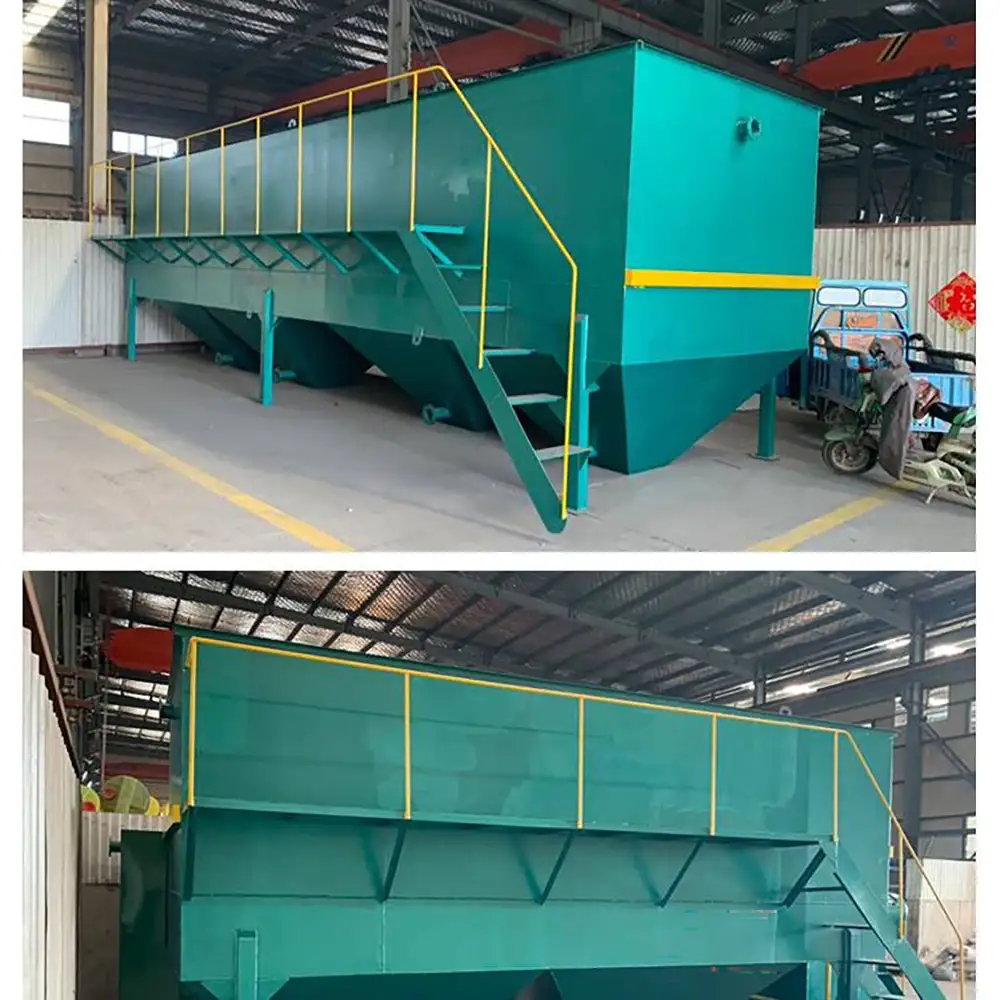
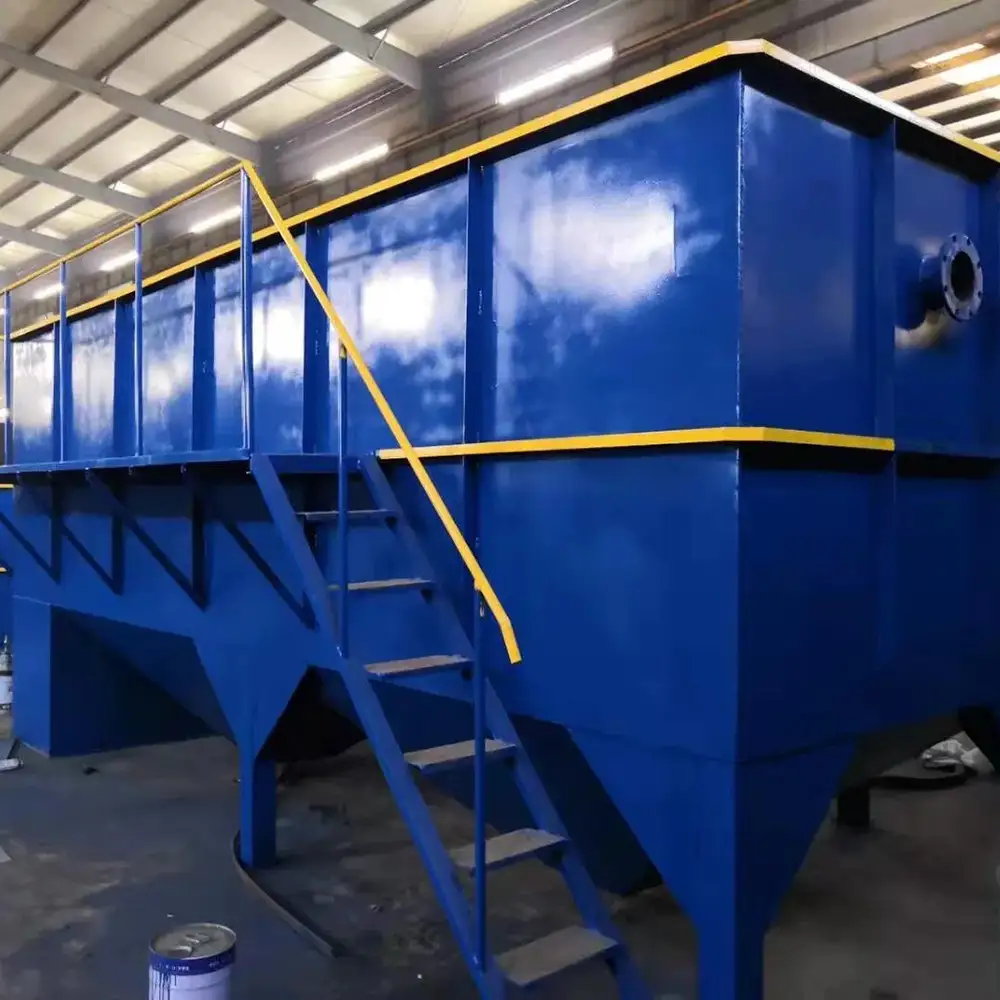
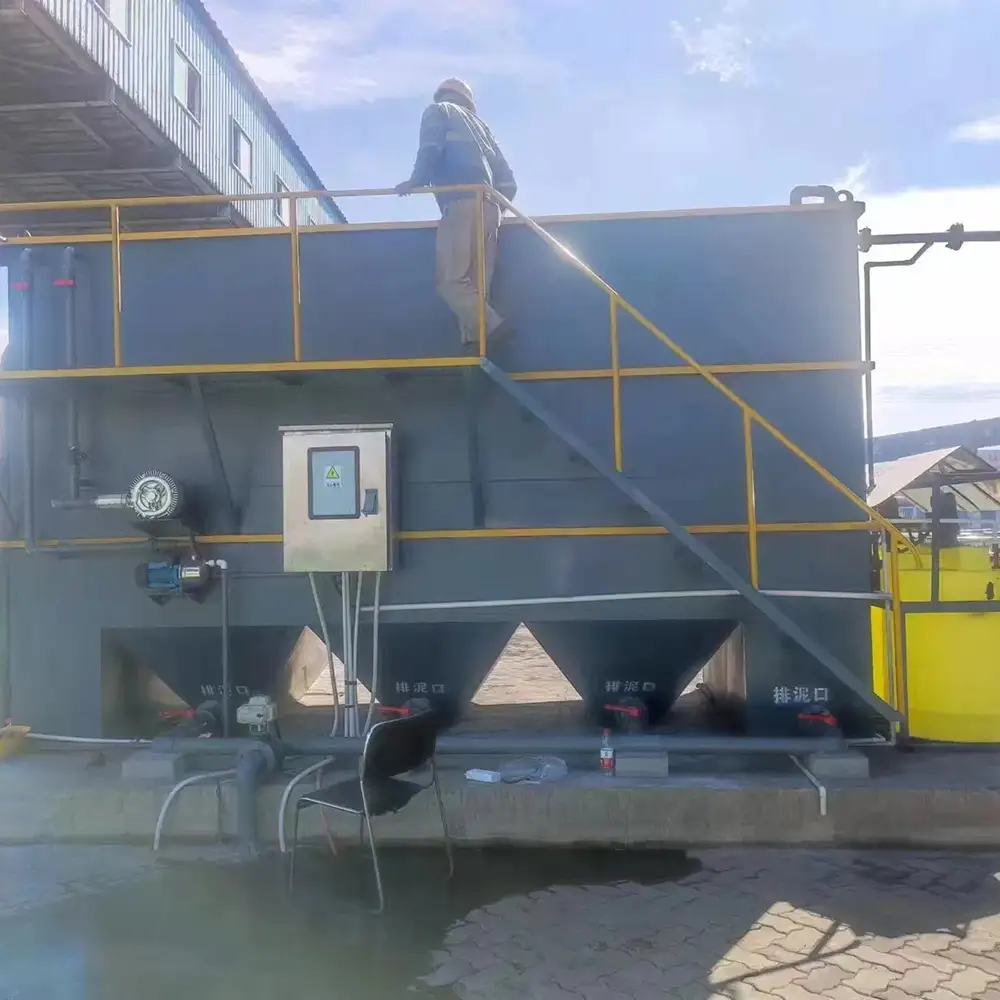
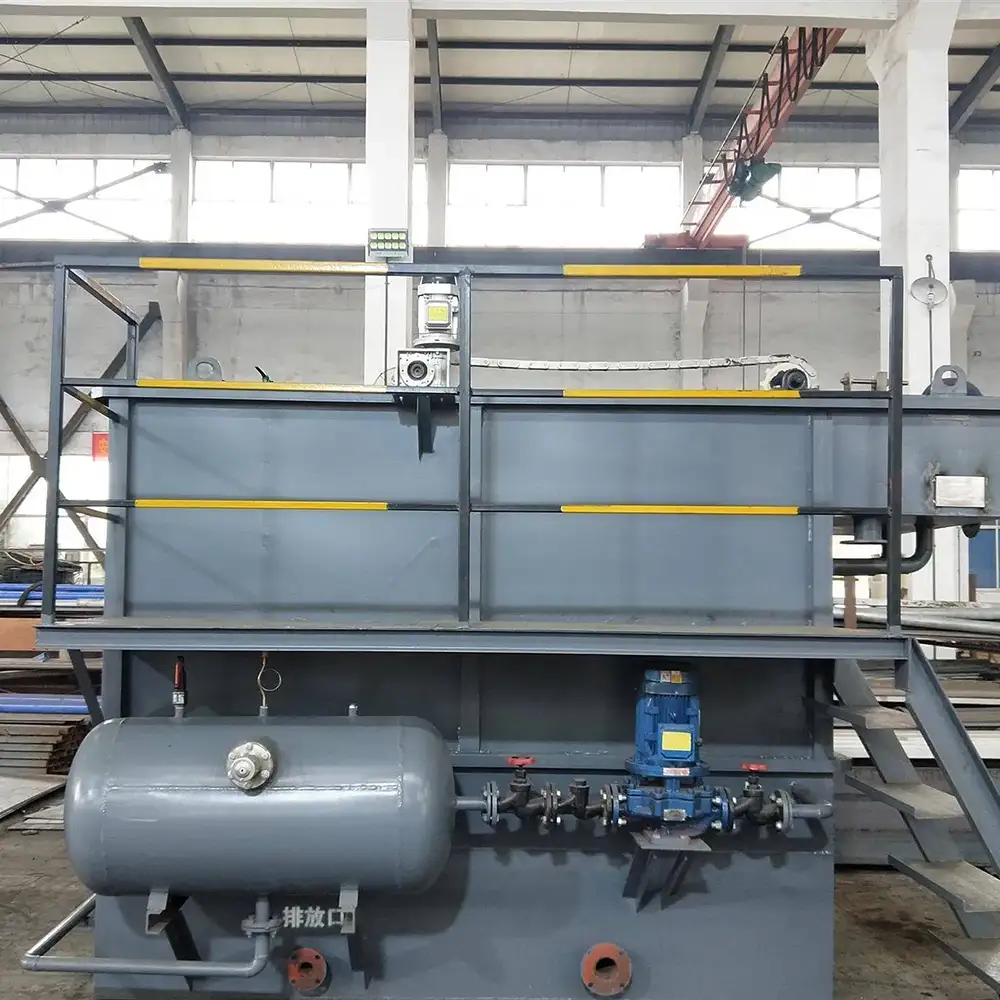
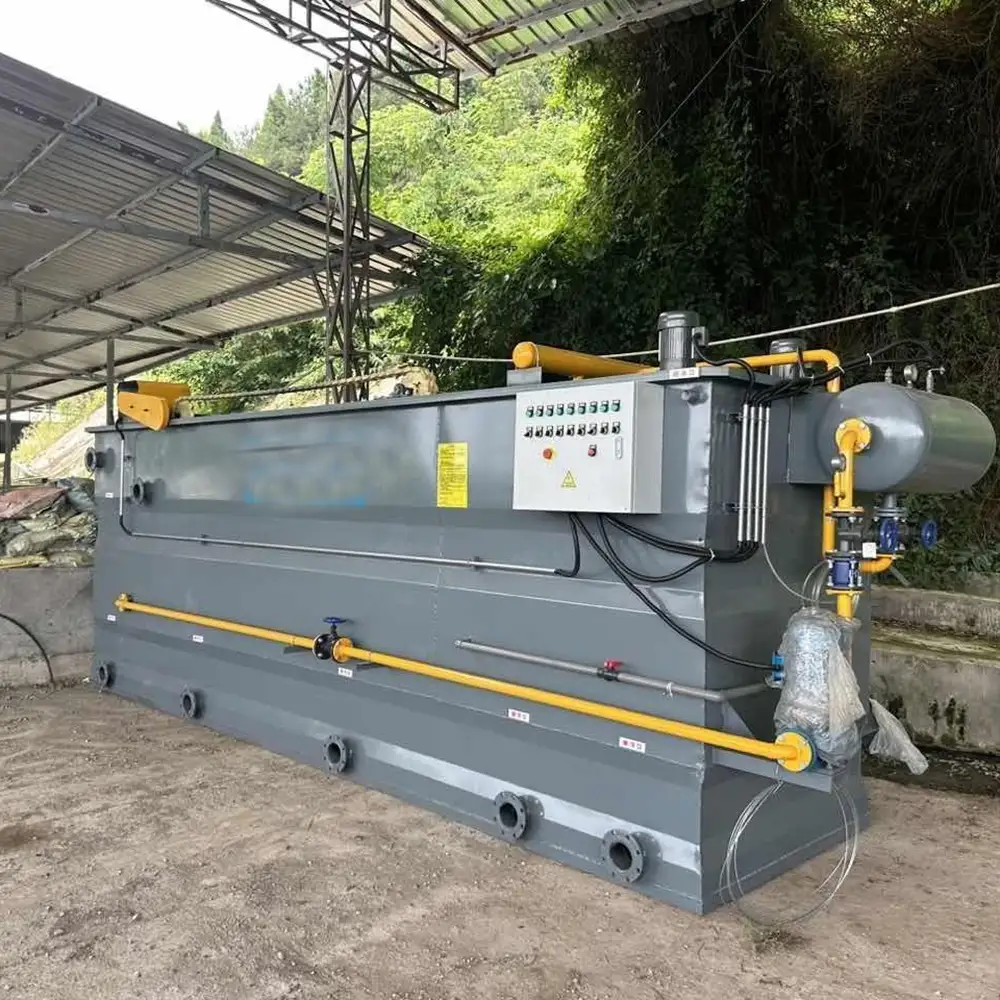
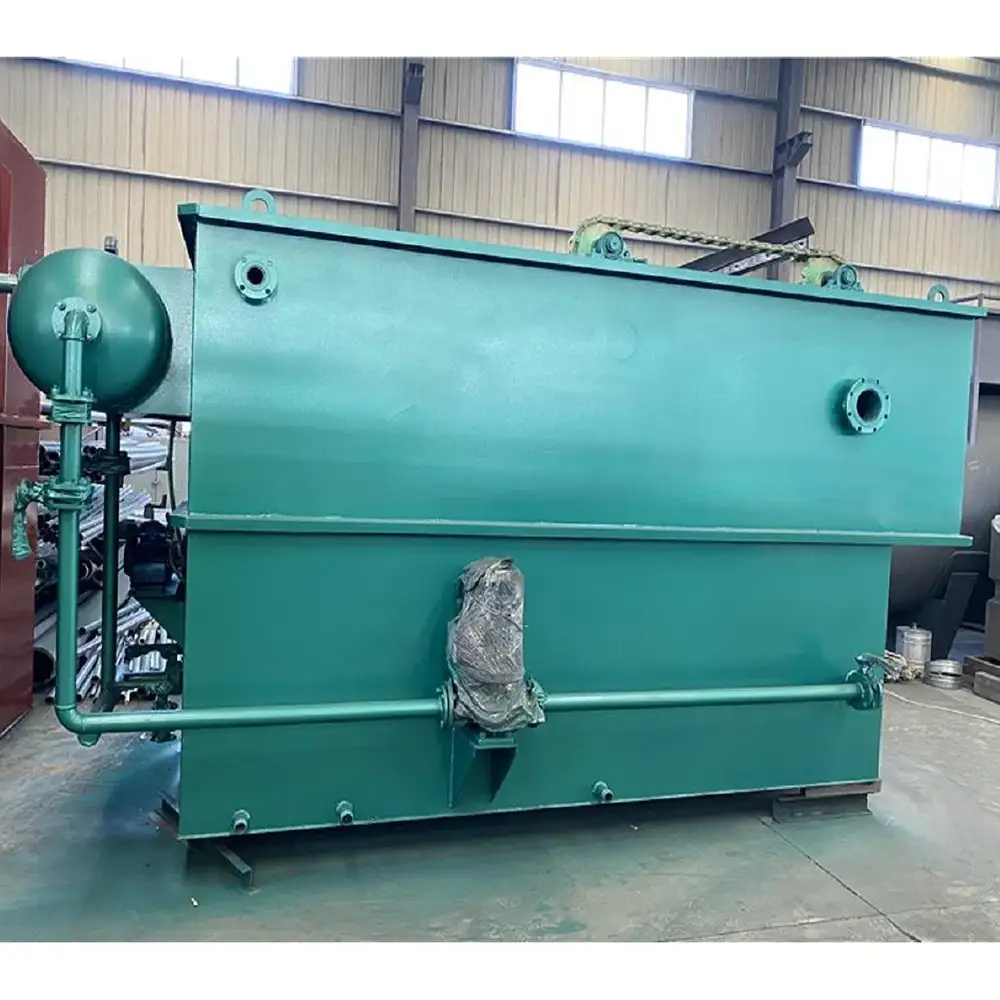
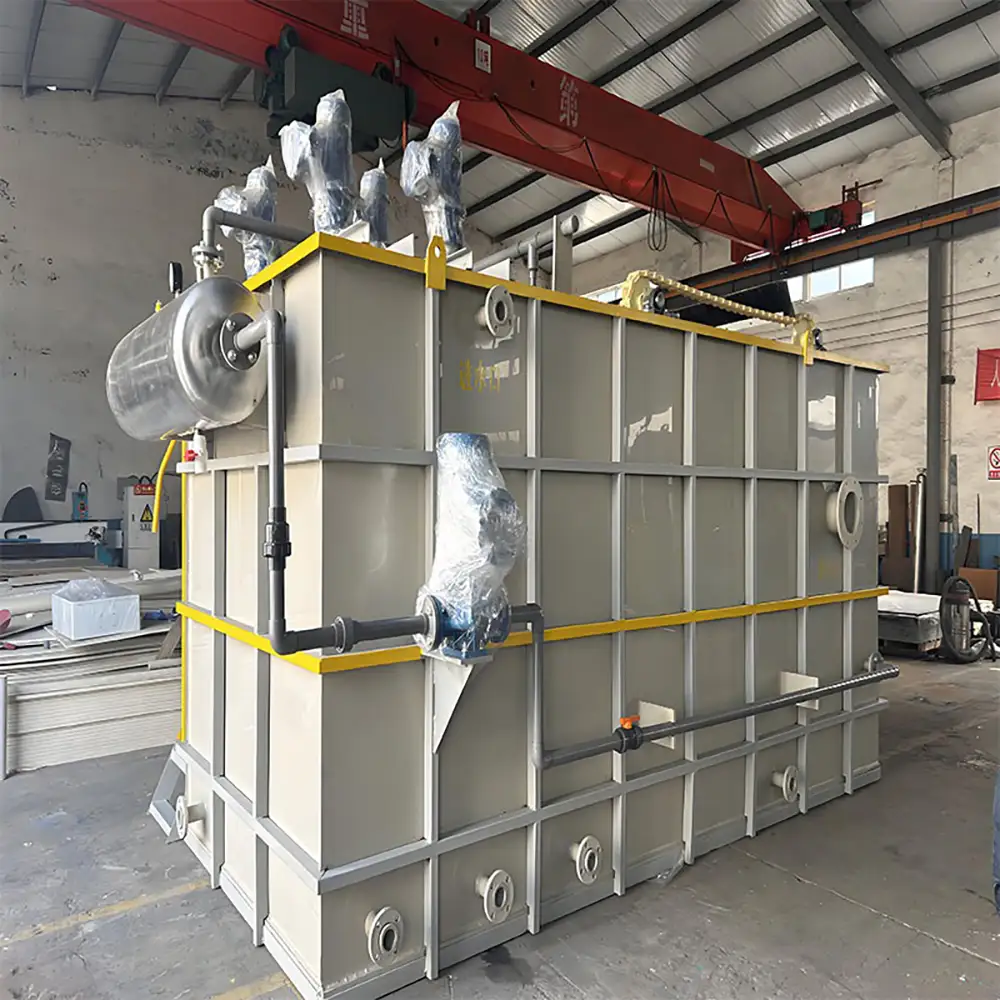
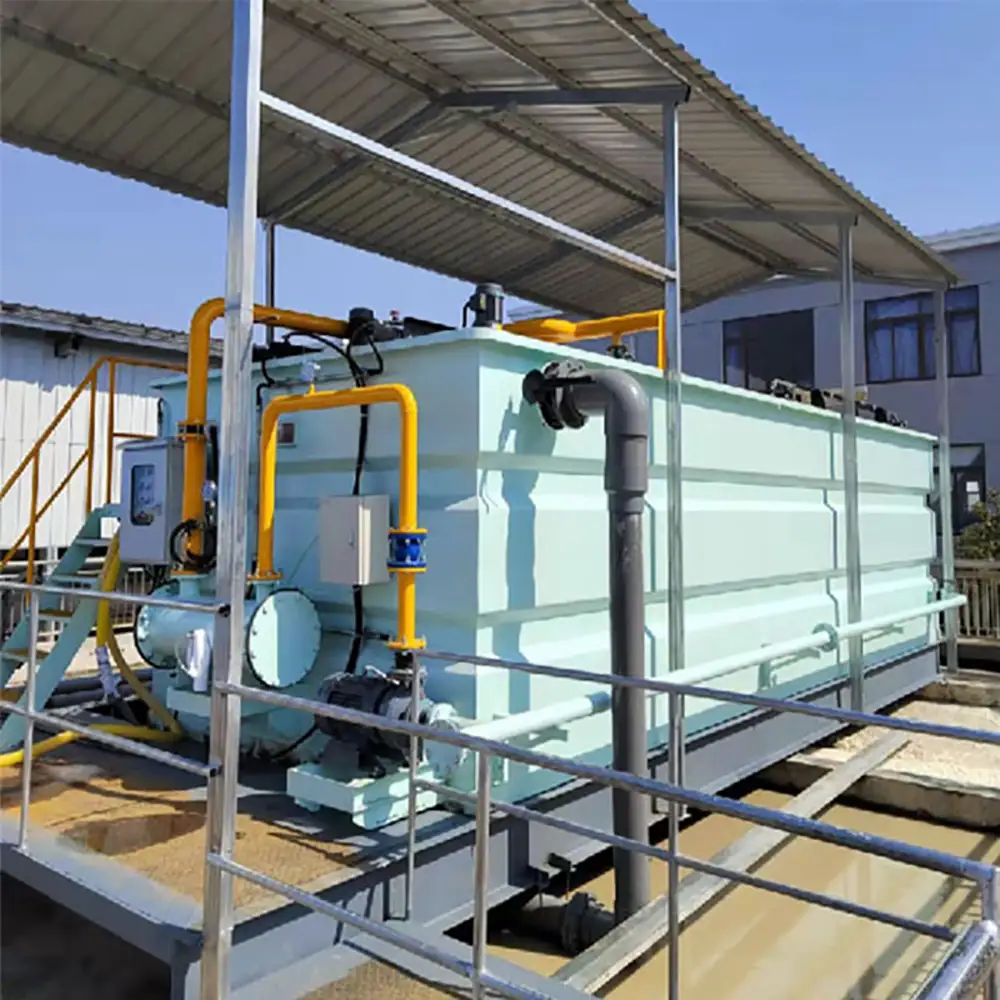
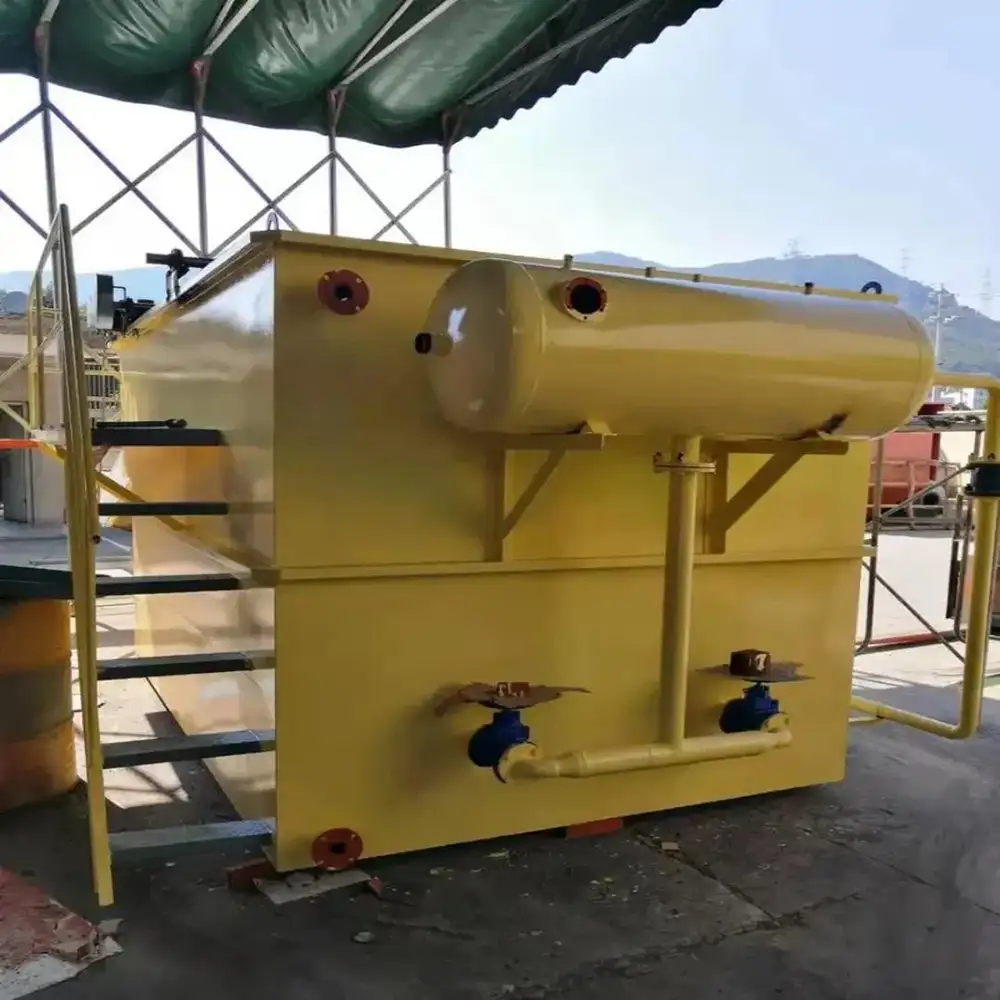
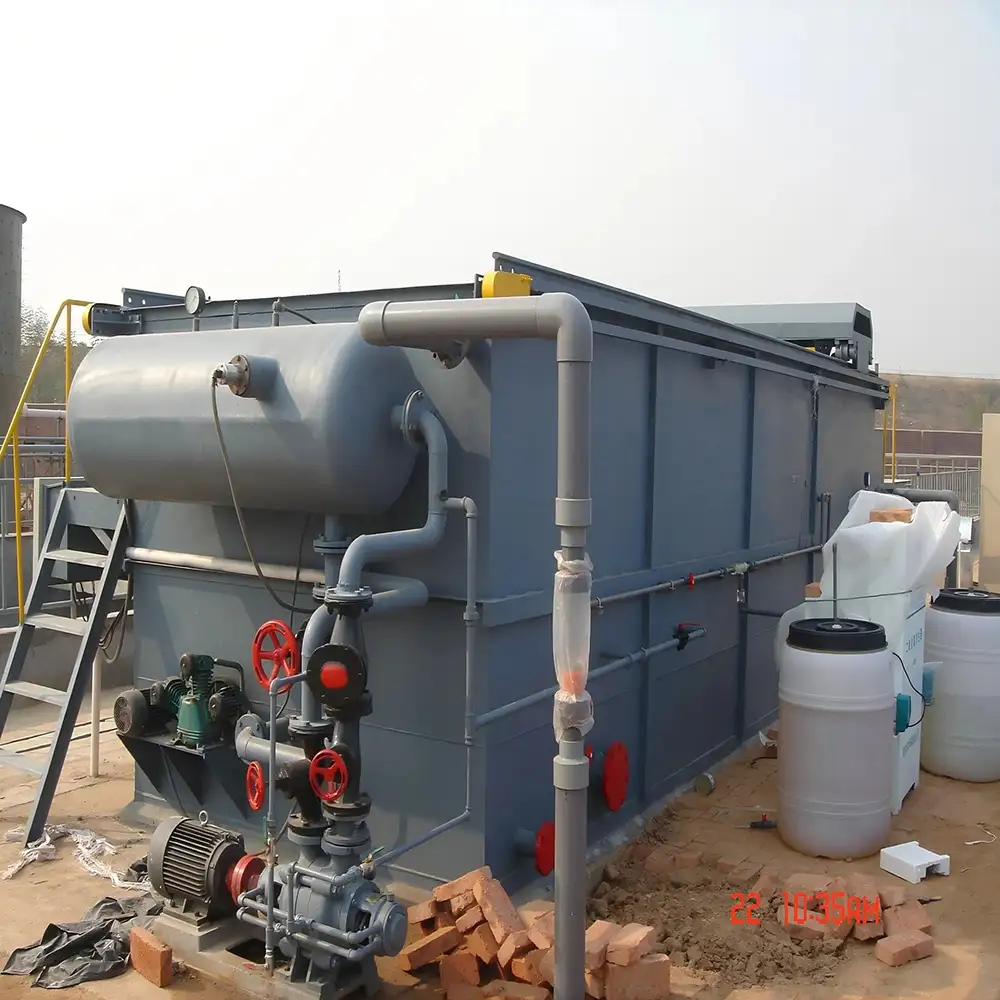
Integrated Inclined Tube Sedimentation and Coagulation Tank for Wastewater Treatment Plant
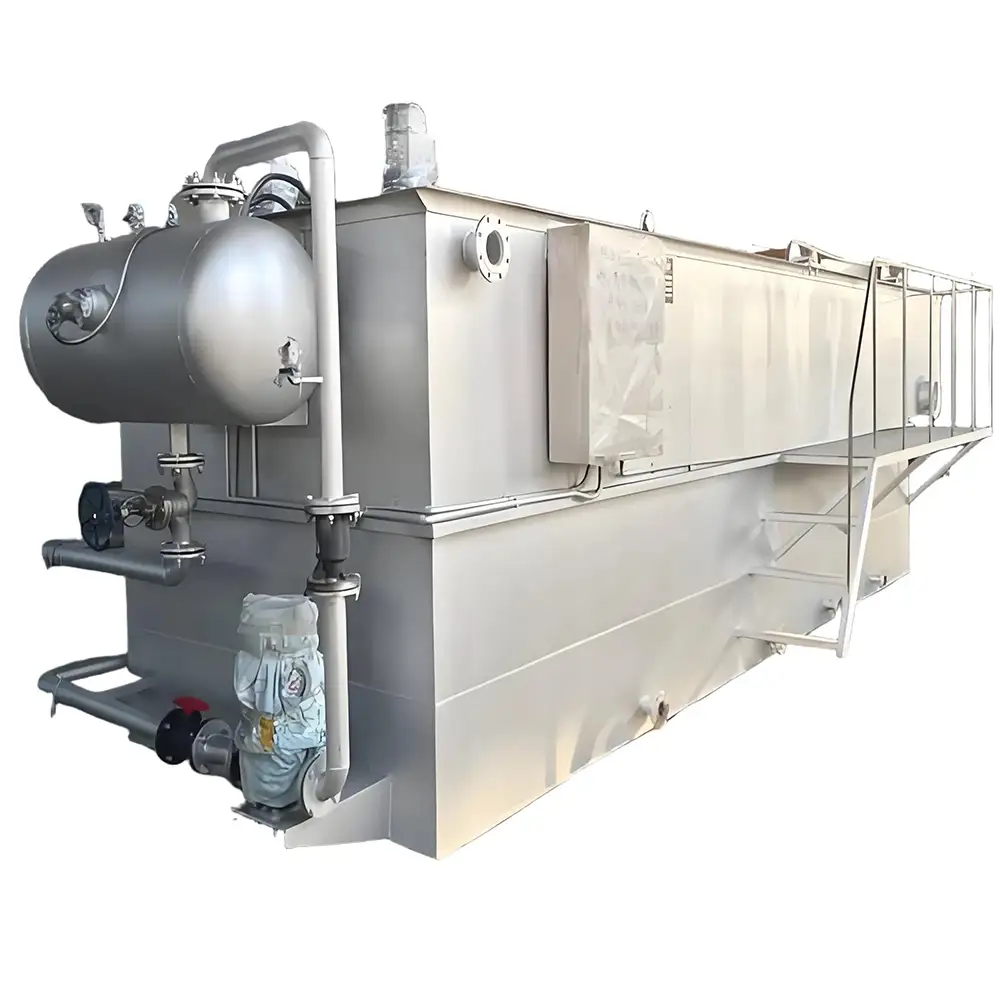
The Integrated Inclined Tube Sedimentation and Coagulation Tank for Wastewater Treatment Plant is an efficient solid-liquid separation solution that combines chemical coagulation with inclined tube sedimentation in an integrated treatment system. It is designed to improve the removal of suspended solids, colloidal particles, turbidity, and chemically formed flocs from municipal and industrial wastewater.
The system combines two important treatment functions. First, coagulants are rapidly mixed with wastewater to destabilize fine particles. The water then enters a controlled flocculation or reaction zone where destabilized particles combine into larger flocs. Finally, the flocculated wastewater flows through inclined tube modules, where the reduced settling depth allows particles to settle onto the tube surfaces and slide downward into the sludge collection zone.
|
Model NO. |
GSRF |
Handling method |
physicochemical treatment |
|
Usage |
Stone processing, coal mining, sand washing, heavy metal wastewater |
Trademark |
|
|
Types |
Package, Compact, Small, Mini |
Applications |
Industrial, Municipal, Domestic, Medical, Ship |
|
Craft |
Flocculation sedimentation method |
Features |
Water Clarification, Filtration, Purification |
|
Service Life |
20 Years |
Operation |
Automatic |
|
Steel Plate Thickness |
>8mm |
Function |
Remove Suspended solids |
|
Voltage |
220V/ 380V/ Customerized |
Installation Type |
Onground |
|
Colour |
Grey/Silver/Blue/Balck/Customerized |
Use for |
Minerals, printing, chemicals, heavy metals, coal mining, stone processing |
|
Material |
Carbon Steel, Stain Steel, FRP, PE, PP |
Certificate |
SGS, ISO |
|
Transport Package |
Container Standard Packing |
Specification |
Carbon steel anti-corrosion |
|
Production Capacity |
1000 Sets/Year |
Origin |
China |
EPA technical literature describes inclined tube and plate settlers as reduced-depth sedimentation technologies. Because particles only need to travel a relatively short distance before contacting a settling surface, inclined tube systems can provide high-rate clarification in a compact footprint.
How Does the Integrated System Work?
The treatment process generally begins with wastewater entering the inlet or mixing chamber. A coagulant such as an aluminum- or iron-based chemical can be added according to wastewater characteristics.
Rapid mixing disperses the chemical throughout the wastewater and promotes particle destabilization. After coagulation, the water enters a flocculation zone where gentle mixing encourages smaller particles to form larger and heavier flocs.
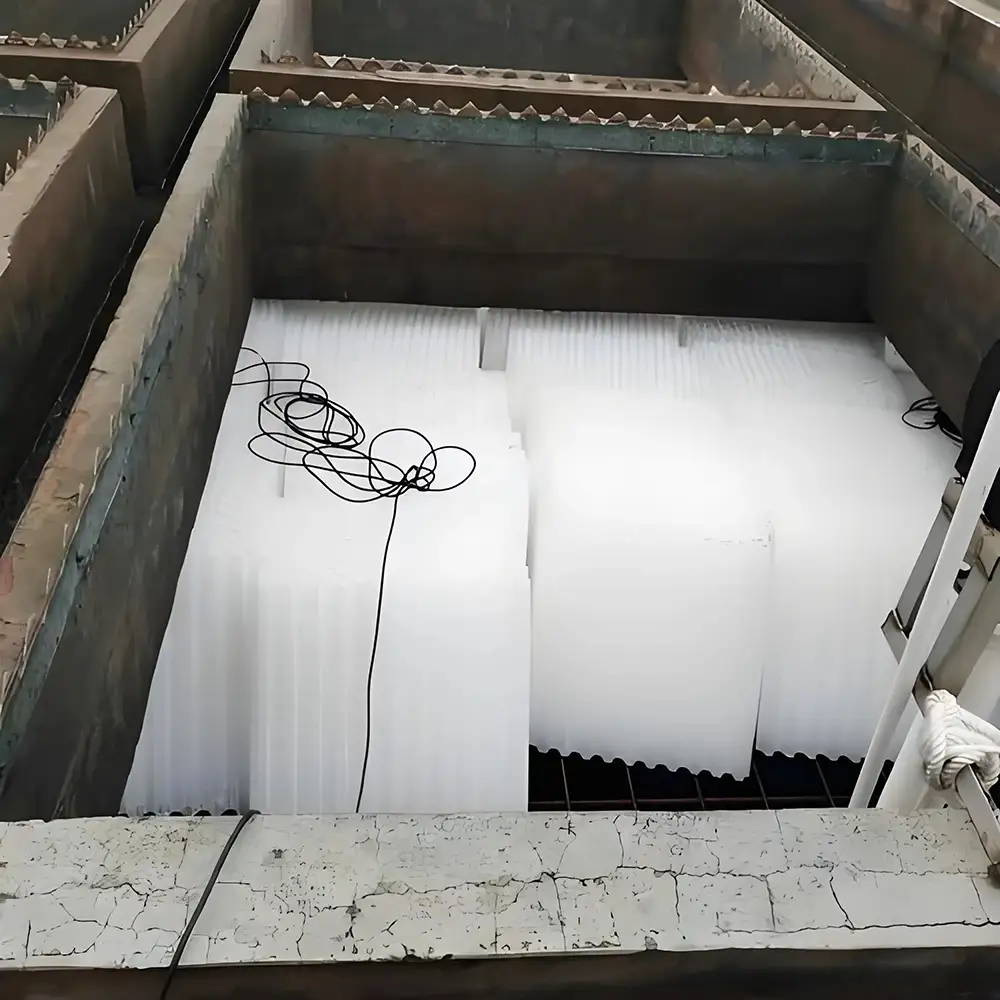
The flocculated water then enters the inclined tube sedimentation section. Water flows upward through multiple inclined channels while the heavier flocs move downward under gravity. The inclined configuration reduces the effective settling depth and provides additional settling surface area within a relatively small tank footprint.
EPA documentation notes that inclined tube modules are commonly installed at steep angles so settled material can slide downward by gravity toward the bottom of the settling basin.
Clarified water is collected at the upper section through outlet weirs or collection channels, while concentrated sludge moves downward and is discharged from the sludge collection zone.
Coagulation and Flocculation Process
Coagulation is particularly important when wastewater contains very fine suspended particles or colloidal material that does not settle efficiently by gravity alone.
During coagulation, chemical additives reduce the repulsive forces between particles and encourage them to combine. Flocculation then provides controlled mixing that promotes the formation of larger flocs.
EPA describes flocculation as the agglomeration of destabilized particles into larger solids that are easier to settle or filter.
The correct chemical dosage depends on wastewater chemistry. Factors such as pH, suspended solids concentration, temperature, organic content, alkalinity, and contaminant type can affect coagulation performance.
Jar testing or pilot testing is therefore recommended when determining the appropriate chemical program for a specific wastewater stream.
Inclined Tube Sedimentation Technology
The inclined tube section is the core clarification component of the system.
Instead of relying only on a large conventional settling basin, multiple inclined channels create a large effective settling area within a compact volume. Particles settle onto the tube surfaces and move downward, while clarified water travels upward toward the outlet.
Inclined tube systems are commonly installed at approximately 45–60 degrees, depending on design requirements and sludge characteristics. EPA references describe steeply inclined tube configurations as allowing continuous gravity drainage of settled solids.
This configuration can provide several advantages:
Compact Equipment Footprint
Increased Effective Settling Area
Shorter Settling Distance
Improved Solid-Liquid Separation
Gravity-Assisted Sludge Removal
High-Rate Clarification
Suitable For Space-Limited Treatment Plants
The actual hydraulic loading and treatment performance should always be established according to wastewater characteristics and system design.
Suspended Solids and Turbidity Removal
The integrated tank is designed primarily for suspended solids and flocculated particle removal. It is particularly useful when wastewater contains particles that can be chemically conditioned into settleable flocs.
Potential applications include removal of:
Suspended Solids
Coagulated Colloids
Chemical Precipitates
Turbidity-Causing Particles
Mineral Solids
Industrial Process Solids
Flocculated Organic Solids
Very fine or dissolved pollutants that do not form settleable particles generally require additional treatment technologies.
EPA identifies clarification or sedimentation as a process for separating suspended particles from water through gravitational settling.
Integrated Tank Configuration
A complete integrated system can be configured with several treatment sections, including:
Inlet Mixing Chamber
Rapid Coagulation Tank
Flocculation Chamber
Inclined Tube Settler
Water Distribution System
Outlet Weir
Sludge Collection Hopper
Sludge Discharge System
Chemical Dosing Equipment
Mixer
Level Sensors
Flow Meter
Control Cabinet
Combining these sections into one treatment unit can simplify equipment layout and reduce the number of separate tanks required.
Depending on project requirements, the system can be supplied as an independent clarification unit or integrated into a complete wastewater treatment plant.
Applications
The Integrated Inclined Tube Sedimentation and Coagulation Tank can be applied to many wastewater treatment processes, including:
Municipal Sewage Treatment
Industrial Wastewater Treatment
Food Processing Wastewater
Textile Wastewater
Printing And Dyeing Wastewater
Chemical Industry Wastewater
Metal Processing Wastewater
Mining Wastewater
Sand Washing Wastewater
Stone Processing Wastewater
Coal Washing Wastewater
Paper And Pulp Wastewater
Pharmaceutical Wastewater
Industrial Process Water Treatment
It can be used as primary clarification, chemical precipitation clarification, pretreatment before filtration, or a polishing stage depending on the overall treatment process.
Compact Alternative to Conventional Sedimentation
One major advantage of inclined tube sedimentation is its ability to provide substantial settling surface area without requiring an equally large conventional sedimentation basin.
EPA technical guidance explains that inclined tubes and plates allow greater loading rates by applying the reduced-depth sedimentation principle.
This can be particularly valuable for wastewater treatment plants with limited land availability or projects where an existing clarifier needs additional capacity.
However, the tube modules still require appropriate hydraulic distribution, sludge management, access, and cleaning provisions. EPA research also notes that tube settlers can experience fouling from accumulated solids or biological growth, making appropriate maintenance and accessibility important.
Integration With Complete Wastewater Treatment Plants
The integrated coagulation and inclined tube sedimentation system can be combined with other wastewater treatment equipment.
A typical industrial treatment process may include:
Screening → Equalization → Coagulation → Flocculation → Inclined Tube Sedimentation → Filtration → Biological Treatment → Disinfection
For applications involving advanced water reuse, downstream multimedia filtration, ultrafiltration, MBR, activated carbon, or reverse osmosis can be added according to the required water quality.
The system can therefore function as a flexible clarification stage rather than a standalone solution for every wastewater contaminant.
Sludge Collection and Maintenance
As suspended solids settle, sludge accumulates in the lower collection zone. Proper sludge withdrawal is essential to prevent excessive buildup and maintain stable hydraulic conditions.
Operators should regularly inspect the sludge discharge system, inlet distribution, outlet weirs, mixers, chemical dosing equipment, tube modules, and control instruments.
Inclined tube modules should be kept free from excessive sludge accumulation, grease, biological growth, and other deposits. Periodic cleaning may be required depending on wastewater characteristics. EPA documentation specifically identifies fouling as a potential maintenance issue for tube settlers.
Why Choose Us?
Selecting an integrated coagulation and sedimentation system requires more than choosing a tank volume. Wastewater flow, peak hydraulic loading, suspended solids concentration, particle characteristics, chemical requirements, sludge production, available space, and downstream treatment requirements should all be considered.
Our Integrated Inclined Tube Sedimentation and Coagulation Tank can be configured according to project requirements, including coagulation mixing, flocculation, tube-settler modules, sludge discharge, chemical dosing, instrumentation, and automatic control.
Key advantages include:
Integrated Coagulation And Sedimentation
High-Rate Inclined Tube Clarification
Compact Installation Footprint
Efficient Suspended Solids Separation
Improved Floc Settling
Gravity-Assisted Sludge Removal
Flexible Chemical Dosing
Easy Integration With Treatment Plants
Suitable For Industrial And Municipal Applications
Optional Automatic Control
Modular Treatment Configuration
The final design should be based on actual wastewater testing, hydraulic conditions, treatment objectives, and required effluent quality.
FAQ
1. What is an integrated inclined tube sedimentation tank?
It is a wastewater clarification system that combines coagulation or flocculation with inclined tube settling to remove suspended and chemically formed particles.
2. What is the purpose of coagulation?
Coagulation destabilizes fine particles and helps them combine into larger flocs that can settle more effectively.
3. What is an inclined tube settler?
An inclined tube settler uses multiple sloped channels to provide additional settling surfaces and reduce the distance particles must travel before separation.
4. What angle are inclined tubes installed at?
Many systems use an inclination of approximately 45–60 degrees, although the actual angle depends on hydraulic conditions, tube design, sludge characteristics, and application requirements.
5. What contaminants can the system remove?
It can remove suspended solids, turbidity, coagulated colloids, chemical precipitates, mineral particles, and other solids that can form settleable flocs.
6. Can it treat industrial wastewater?
Yes. It can be used for industrial wastewater from food processing, mining, metal processing, textile, chemical, paper, sand washing, and other industries.
7. Does the system require chemical dosing?
When fine or colloidal particles require coagulation, chemical dosing is commonly used. The exact dosage should be determined through wastewater testing.
8. Can inclined tube sedimentation replace a conventional clarifier?
It can provide a compact high-rate clarification option, but whether it can replace an existing clarifier depends on flow rate, solids loading, wastewater characteristics, hydraulic design, and required effluent quality.
9. How is sludge removed?
Settled solids slide downward along the inclined tube surfaces and collect in the lower sludge zone, where they can be periodically or continuously discharged.
10. Does the tube module require cleaning?
Yes. Cleaning frequency depends on wastewater characteristics. Grease, biological growth, and excessive solids can cause fouling and should be controlled through proper operation and maintenance.
11. Can the system be combined with filtration or MBR?
Yes. Inclined tube sedimentation can serve as pretreatment before sand filtration, multimedia filtration, UF, MBR, RO, or other downstream processes.
12. How is the system sized?
Sizing should consider average and peak flow, suspended solids concentration, particle settling characteristics, coagulation requirements, hydraulic loading, sludge production, and target effluent quality.
Prev:
DAF Catering Oily Wastewater Flotation Equipment Degreasing Water Treatment Equipment
Next:
Oils and Suspended Solids Recycling System Waste Water Industry Treatment Plant Daf Dissolved Air Flotation Machine
TAG:
Industrial Wastewater Treatment Equipment,
Integrated Wastewater Treatment System,
Industrial Wastewater Treatment System,
Food Wastewater Treatment,
Sewage Treatment Plant,
Industrial Wastewater Treatment Plant,
Wastewater Treatment Equipment,
Wastewater Treatment Plant,
Printing And Dyeing Wastewater Treatment,
Solid Liquid Separator,
Solid Liquid Separation Equipment,
Solid Liquid Separation System,
Chemical Wastewater Treatment,
Chemical Precipitation Equipment,
Wastewater Treatment System,
Metal Processing Wastewater Treatment,
Suspended Solids Removal Equipment,
Suspended Solids Removal System,
Pharmaceutical Wastewater Treatment,
Industrial Effluent Treatment,
Sewage Treatment Equipment,
Sewage Treatment System,
PLC Wastewater Treatment System,
Integrated Wastewater Treatment Equipment,
Compact Wastewater Treatment Equipment,
Pulp And Paper Wastewater Treatment,
Wastewater Clarification System,
Wastewater Clarification Equipment,
Textile Wastewater Treatment,
Wastewater Sludge Separation,
Related Category:
Integrated Inclined Tube Sedimentation and Coagulation Tank,Inclined Tube Sedimentation Tank,Coagulation Sedimentation T China, suppliers, manufacturers, factory, customized, wholesale, quotation, made in China