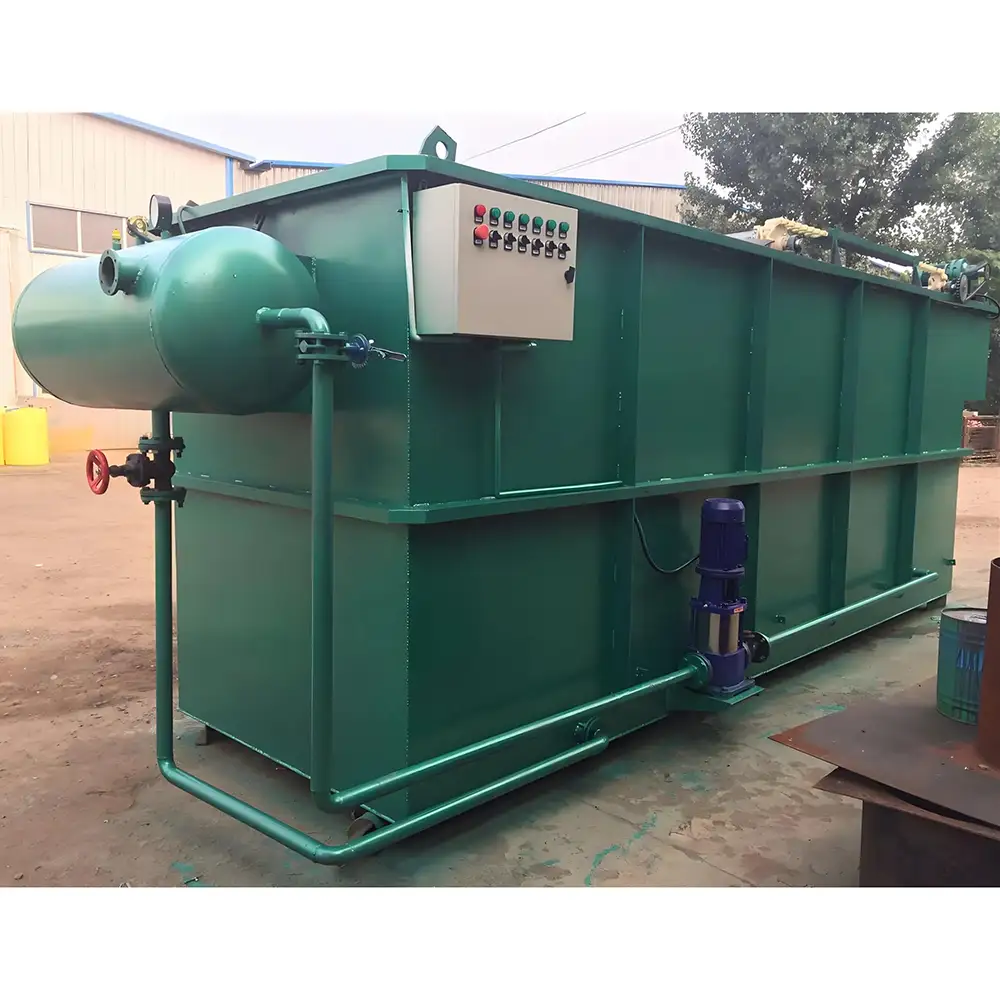
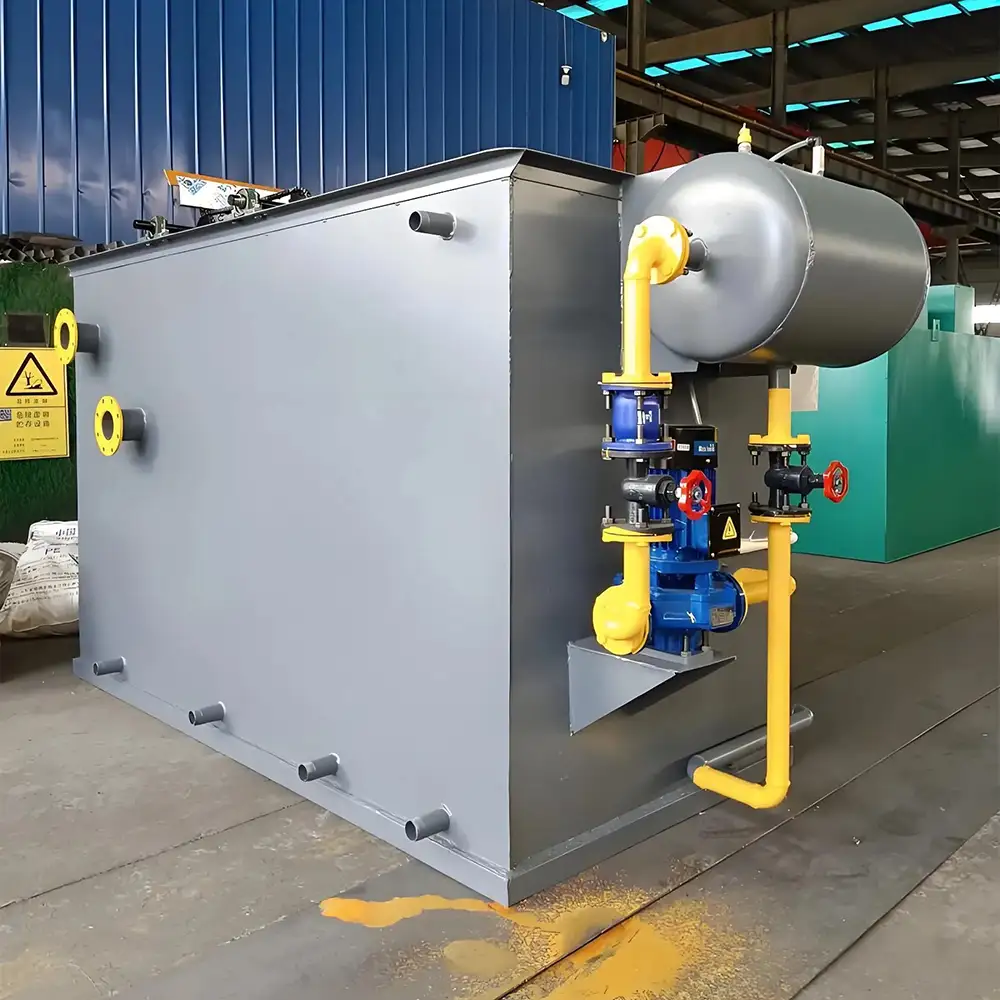
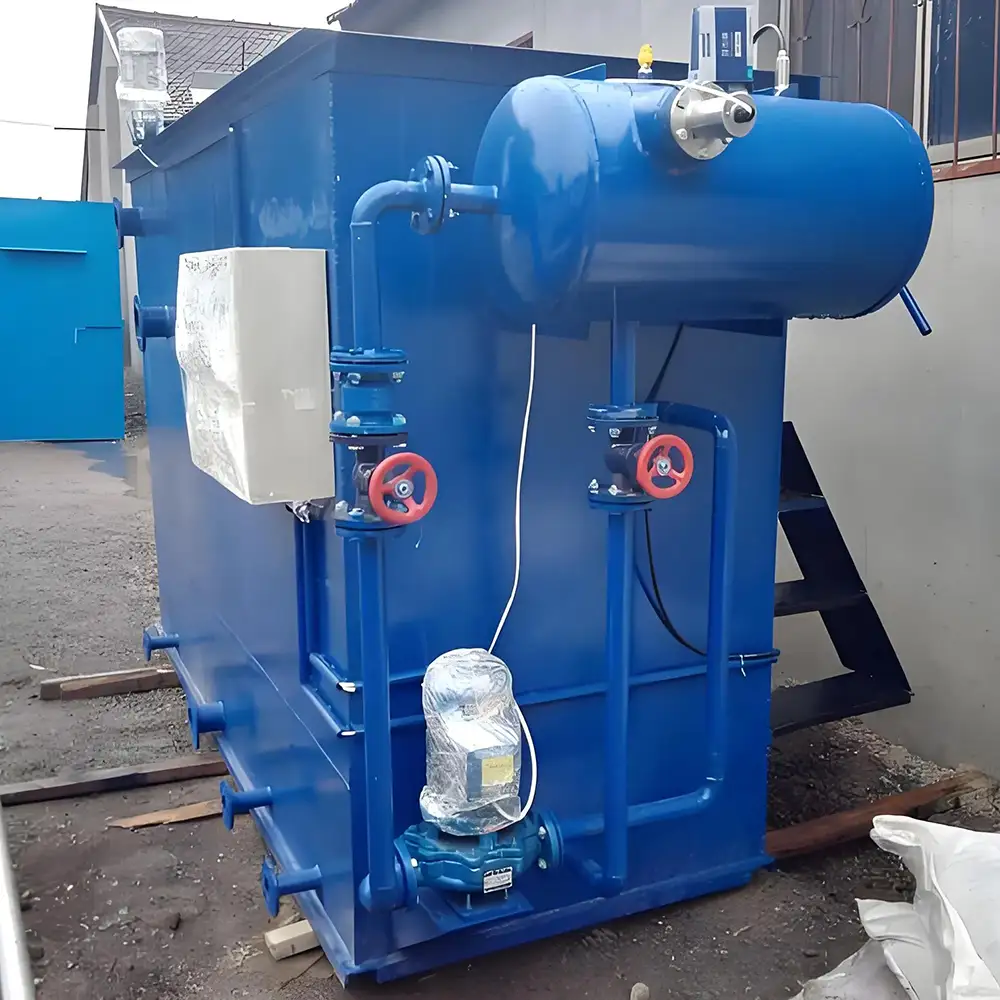
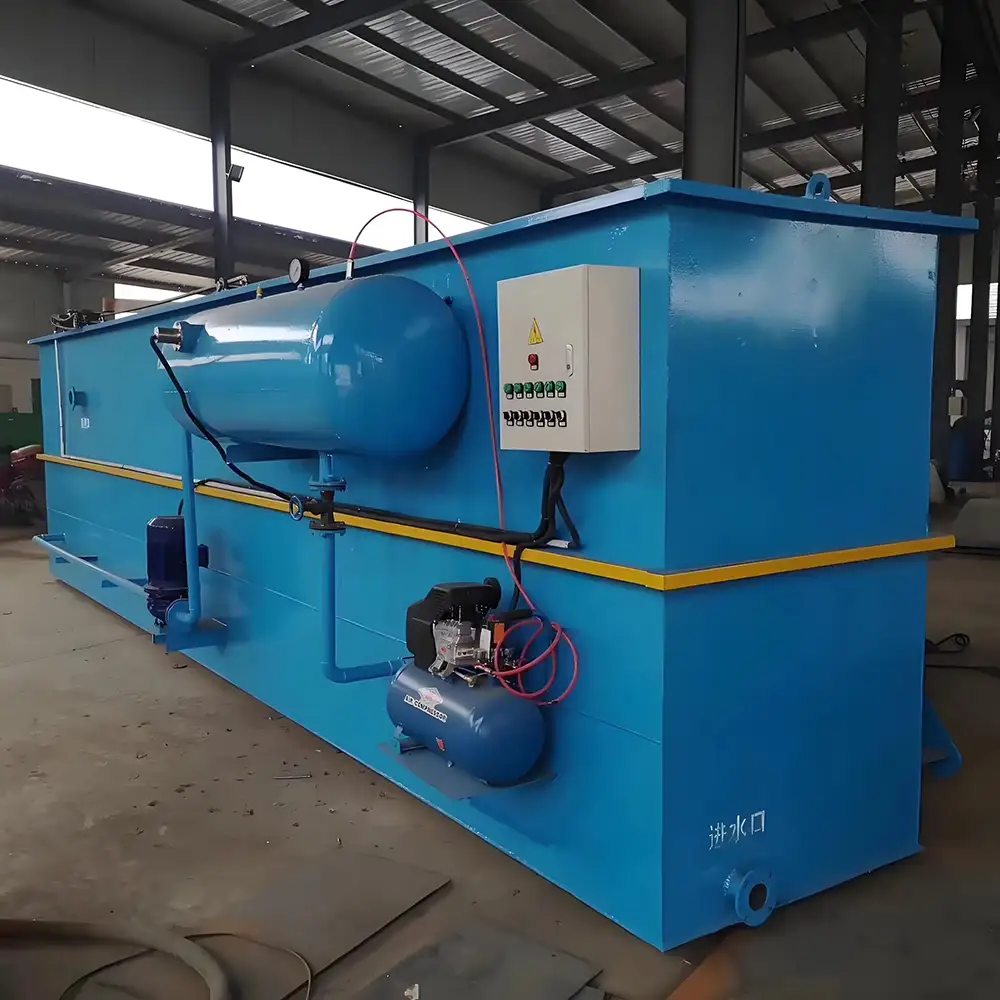
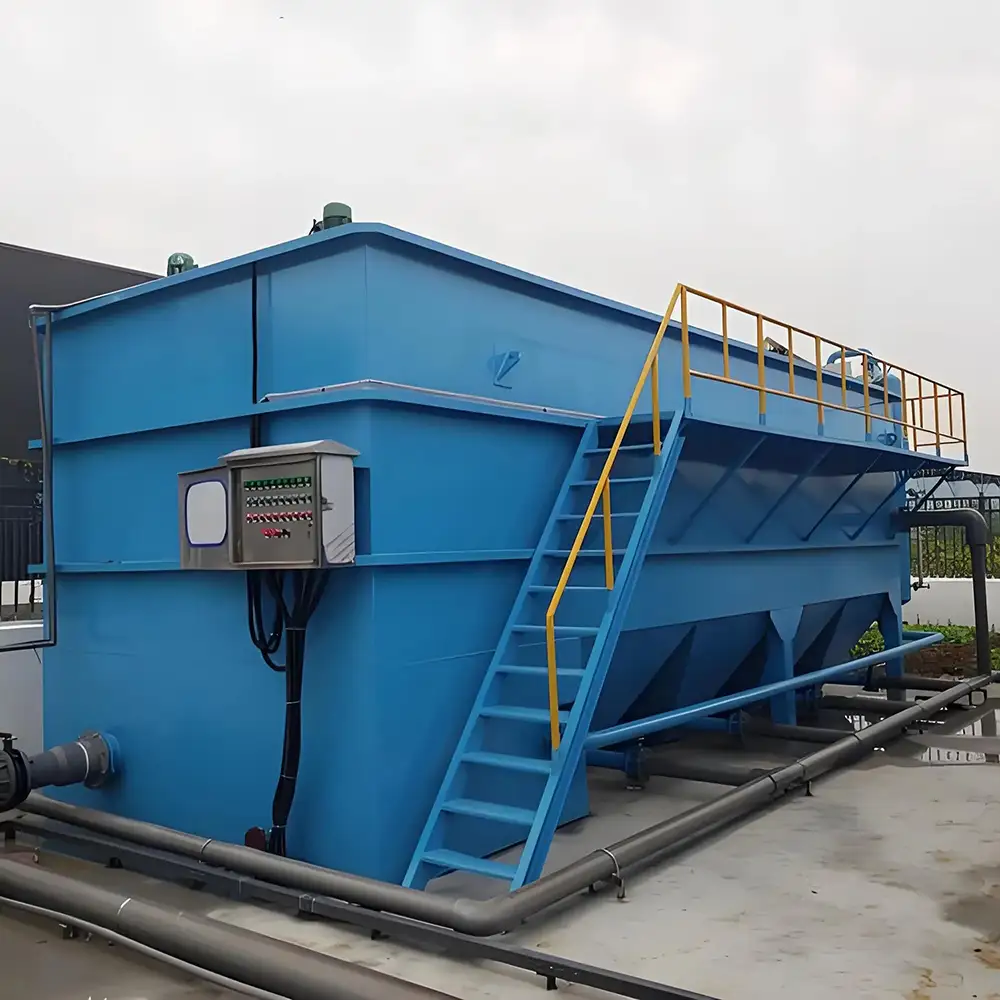
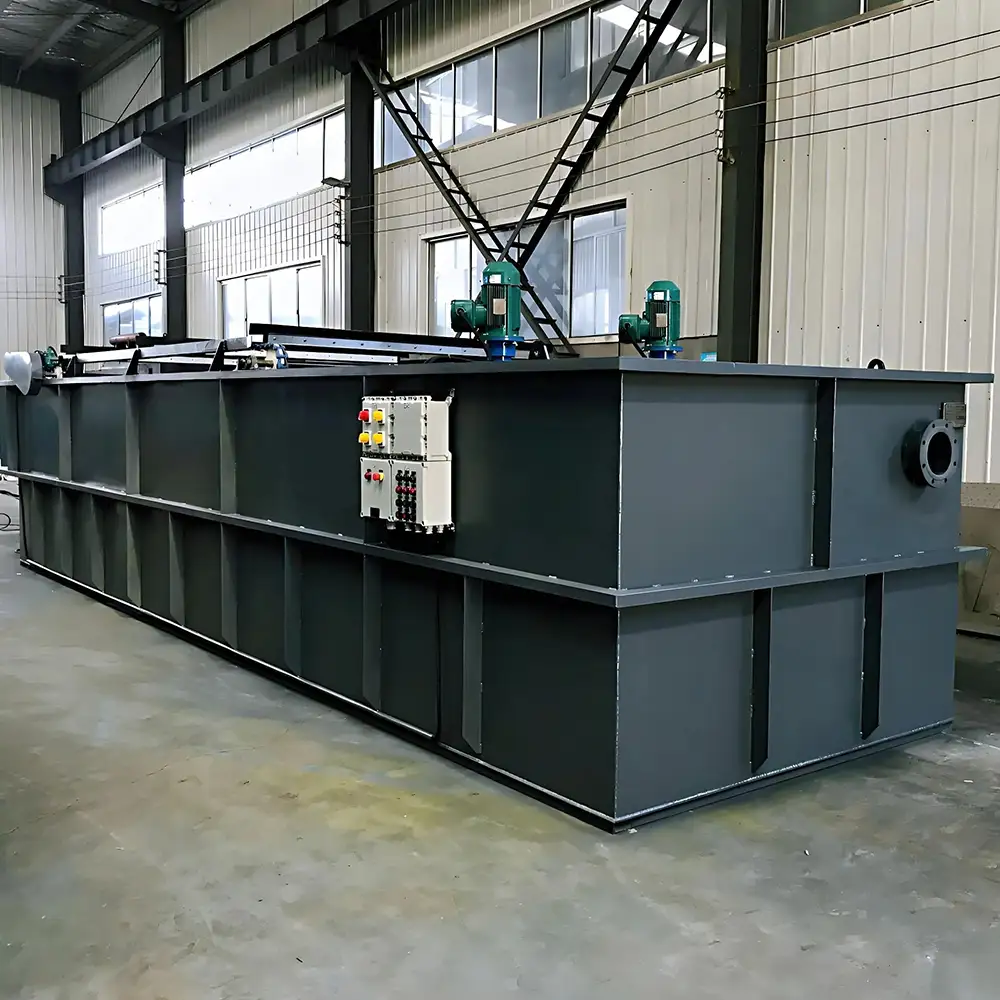
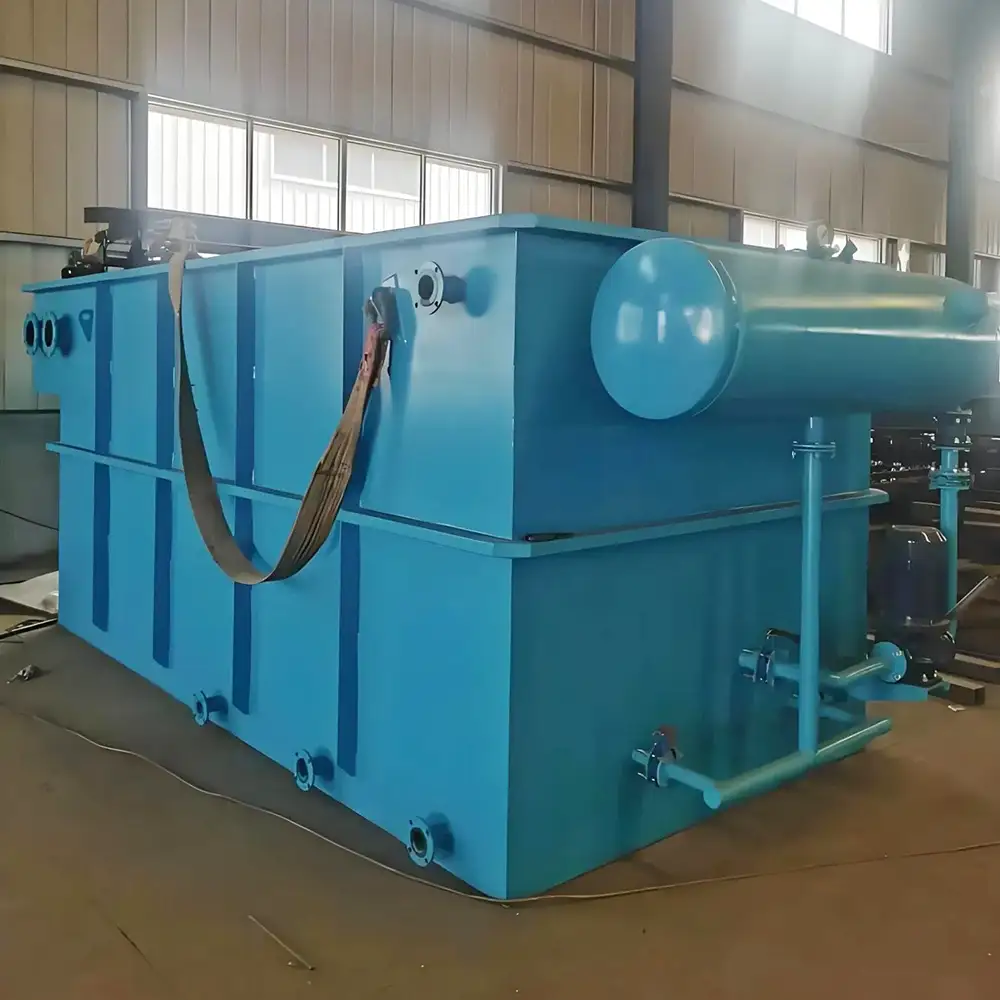
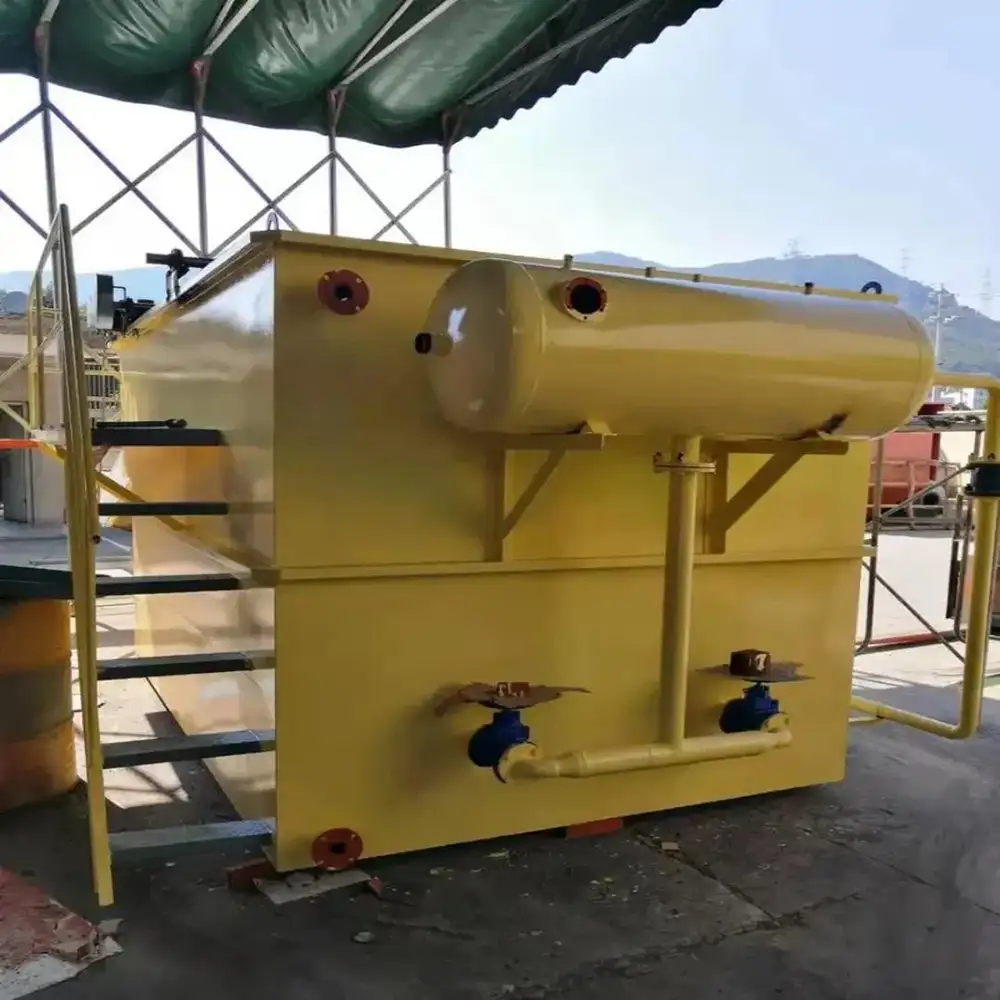
Dissolved Air Flotation DAF Machine for Sewage Treatment Plant
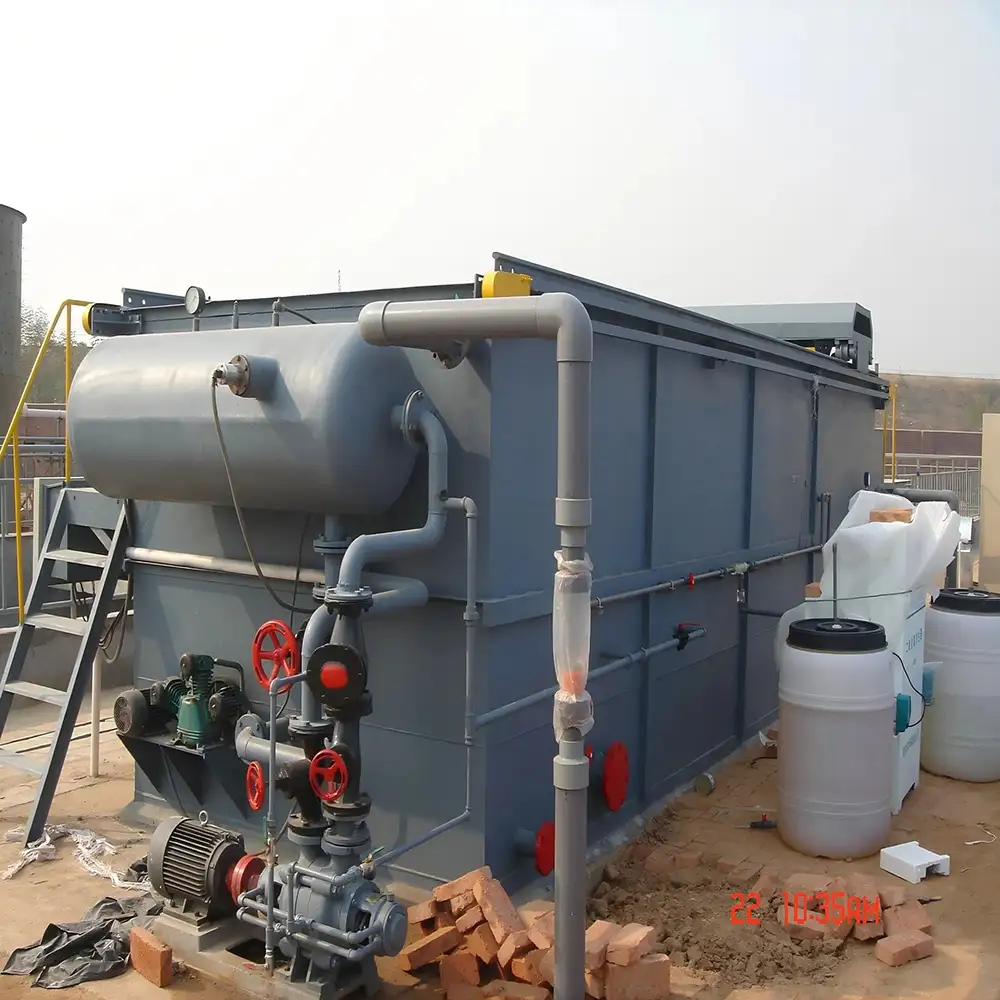
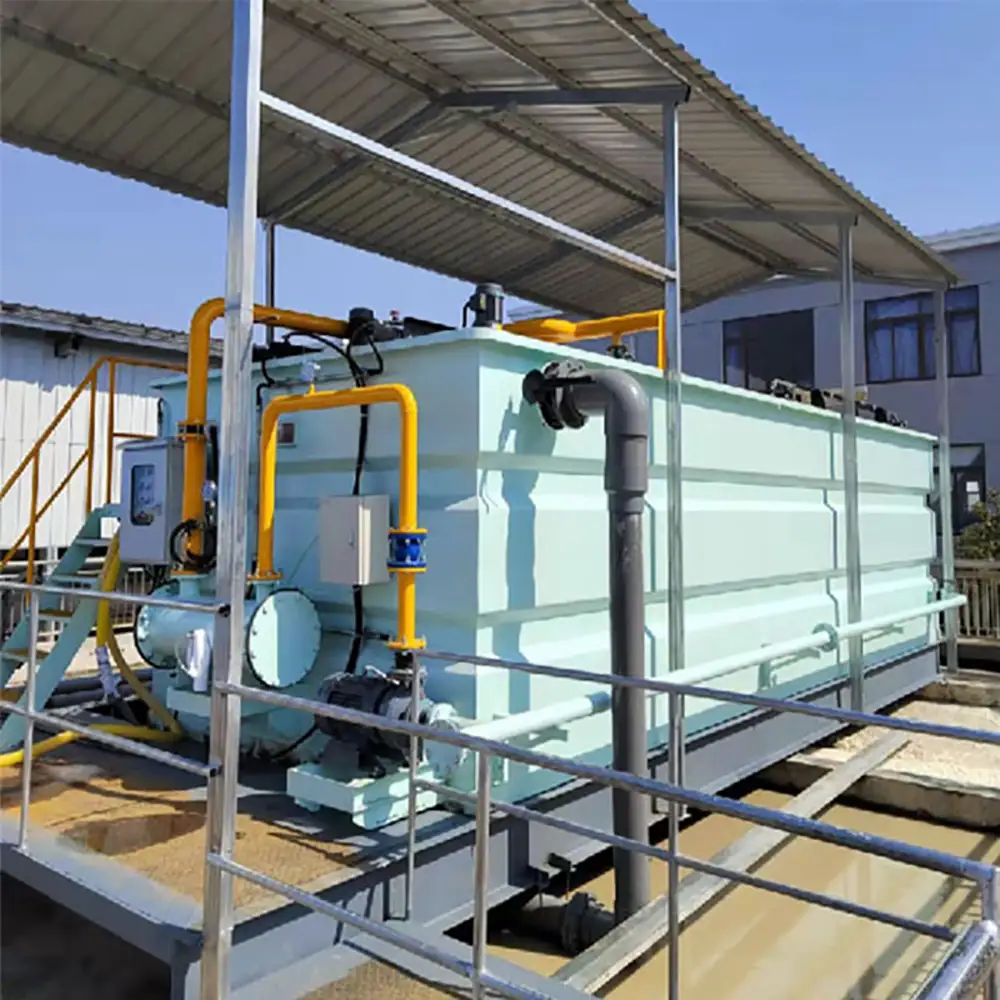
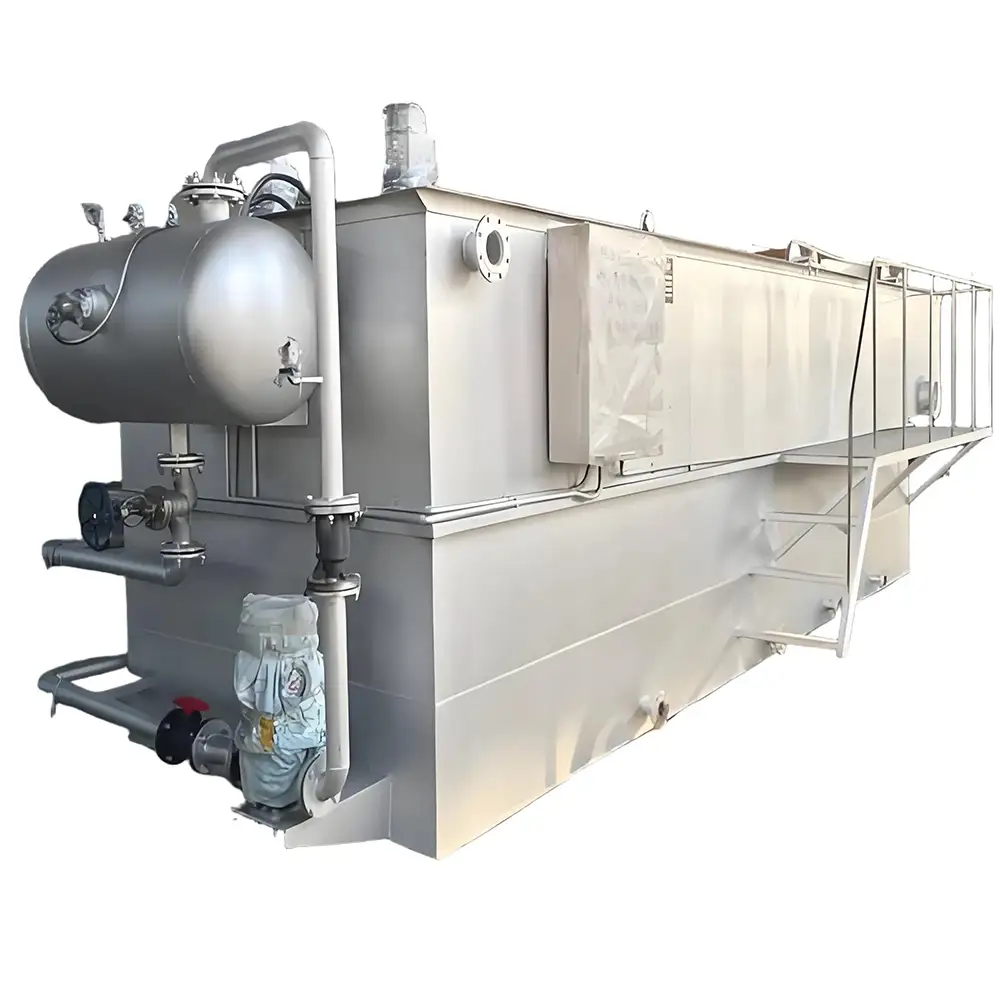
The Dissolved Air Flotation DAF Machine for Sewage Treatment Plant is an efficient solid-liquid separation system designed to remove suspended solids, oil, grease, fats, colloidal particles, and other floatable contaminants from wastewater. By using dissolved air and fine bubbles, the DAF machine helps separate contaminants that are difficult to remove through conventional gravity sedimentation.
DAF technology is widely used in industrial wastewater treatment and can also be incorporated into sewage treatment processes as a primary clarification, pretreatment, or polishing step. EPA technical references describe DAF as a flotation process in which air is dissolved under pressure and then released to generate fine bubbles that attach to suspended particles and oil or grease, causing them to rise to the water surface for removal.
|
Model NO. |
DAF |
Handling method |
physicochemical treatment |
|
Usage |
Industrial, agricultural, food factories, slaughterhouses |
Trademark |
|
|
Types |
Package, Compact, Small, Mini |
Applications |
Industrial, Municipal, Domestic, Medical, Ship |
|
Craft |
Flocculation sedimentation method |
Features |
Water Clarification, Filtration, Purification |
|
Service Life |
20 Years |
Operation |
Automatic |
|
Steel Plate Thickness |
>8mm |
Function |
Remove Suspended solids |
|
Voltage |
220V/ 380V/ Customerized |
Installation Type |
On ground |
|
Colour |
Grey/Silver/Blue/Balck/Customerized |
Use for |
Mineral, Printing, Chemical, Dyeing, Starch |
|
Material |
Carbon Steel, Stain Steel, FRP, PE, PP |
Certificate |
SGS, ISO |
|
Transport Package |
Container Standard Packing |
Specification |
Carbon steel anti-corrosion |
|
Production Capacity |
1000 Sets/Year |
Origin |
China |
Dissolved air flotation sewage treatment plants are usually used for primary sewage treatment, and the front can be used together with grilles(bar screen). The compact sewage treatment plant is the second treatment, and the disinfection system (sodium hypochlorite, chlorine dioxide) is tertiary.
How Does a Dissolved Air Flotation DAF Machine Work?
The DAF machine normally receives wastewater after preliminary screening or other pretreatment. Depending on the wastewater characteristics, coagulation and flocculation can be installed upstream to improve the formation of larger flocs.
A portion of clarified water can be recycled through a pressurizing pump and air saturation system. Air is dissolved into the recycled water under pressure. When the pressurized stream enters the flotation tank through a pressure-release device, the sudden pressure reduction causes the dissolved air to form a large number of fine bubbles.
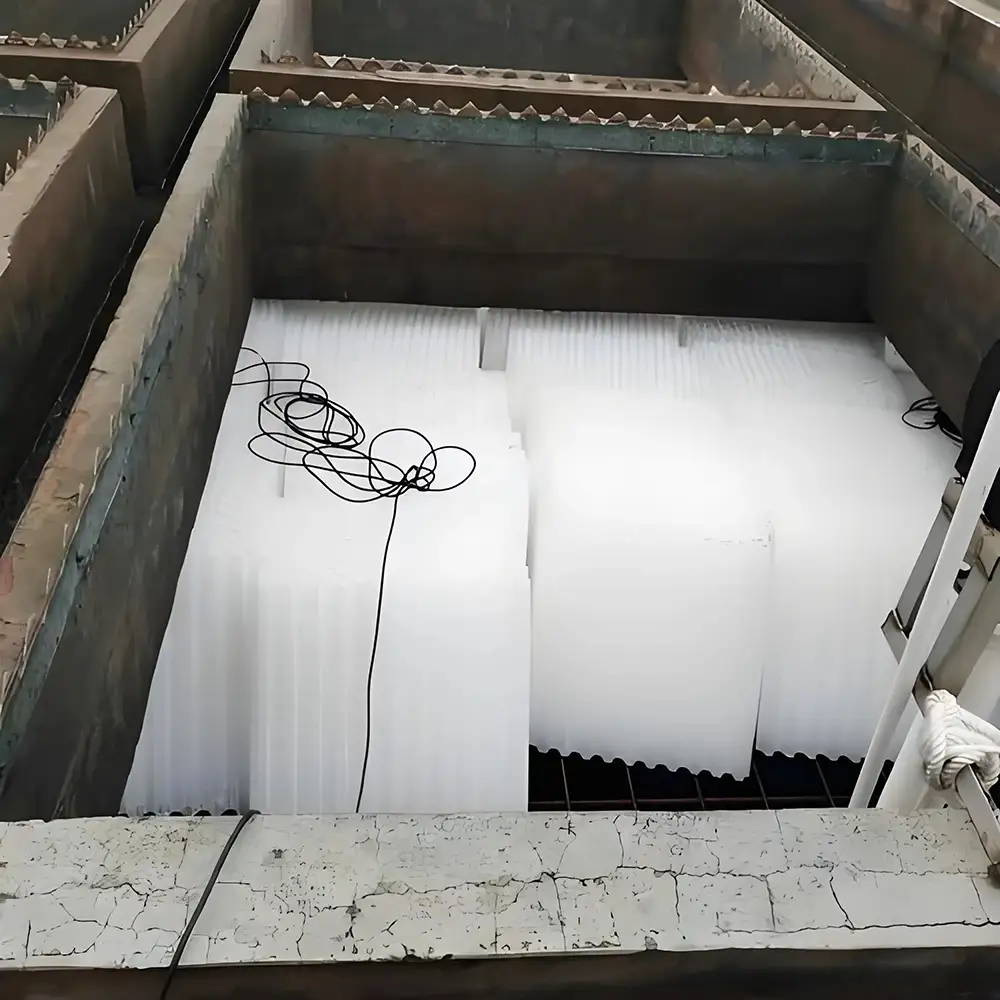
These bubbles attach to suspended particles, oil droplets, grease, and flocs. The bubble-particle combination becomes more buoyant and rises toward the surface. A mechanical skimmer then removes the floating material, while clarified water exits the flotation chamber for the next treatment stage.
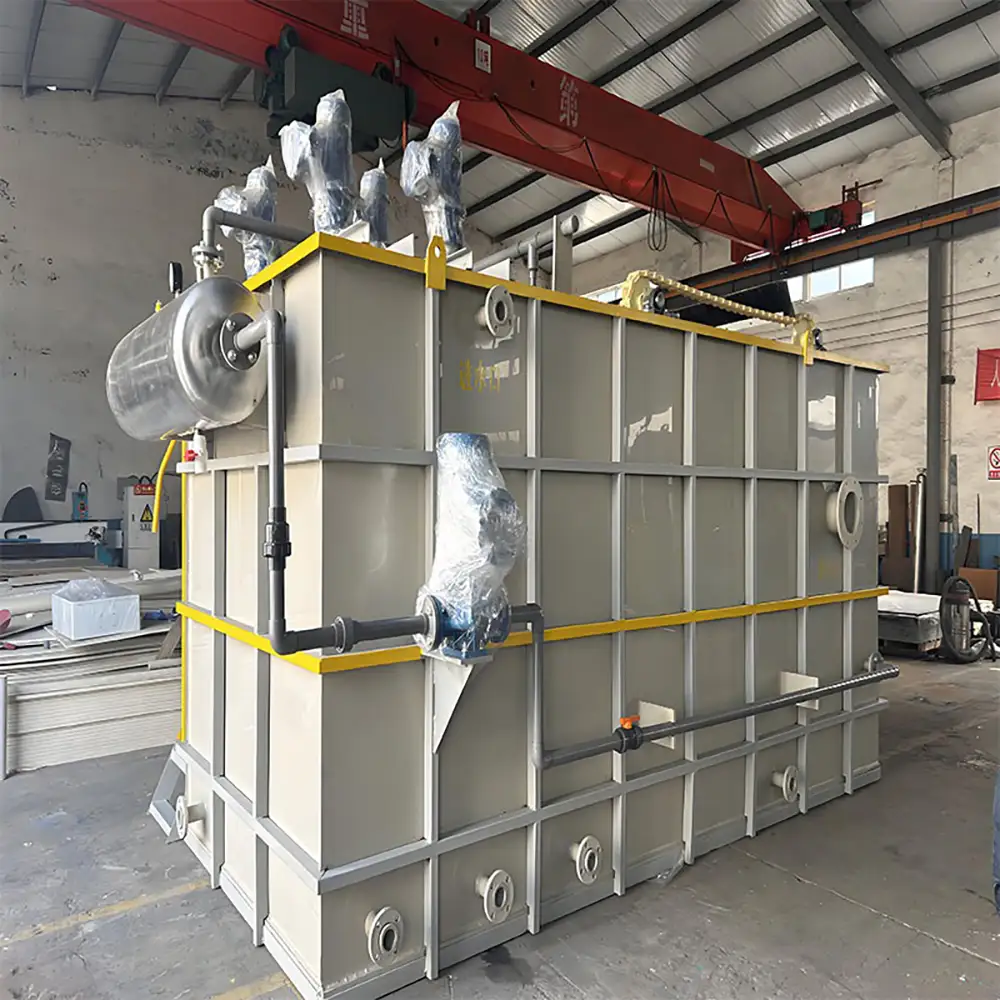
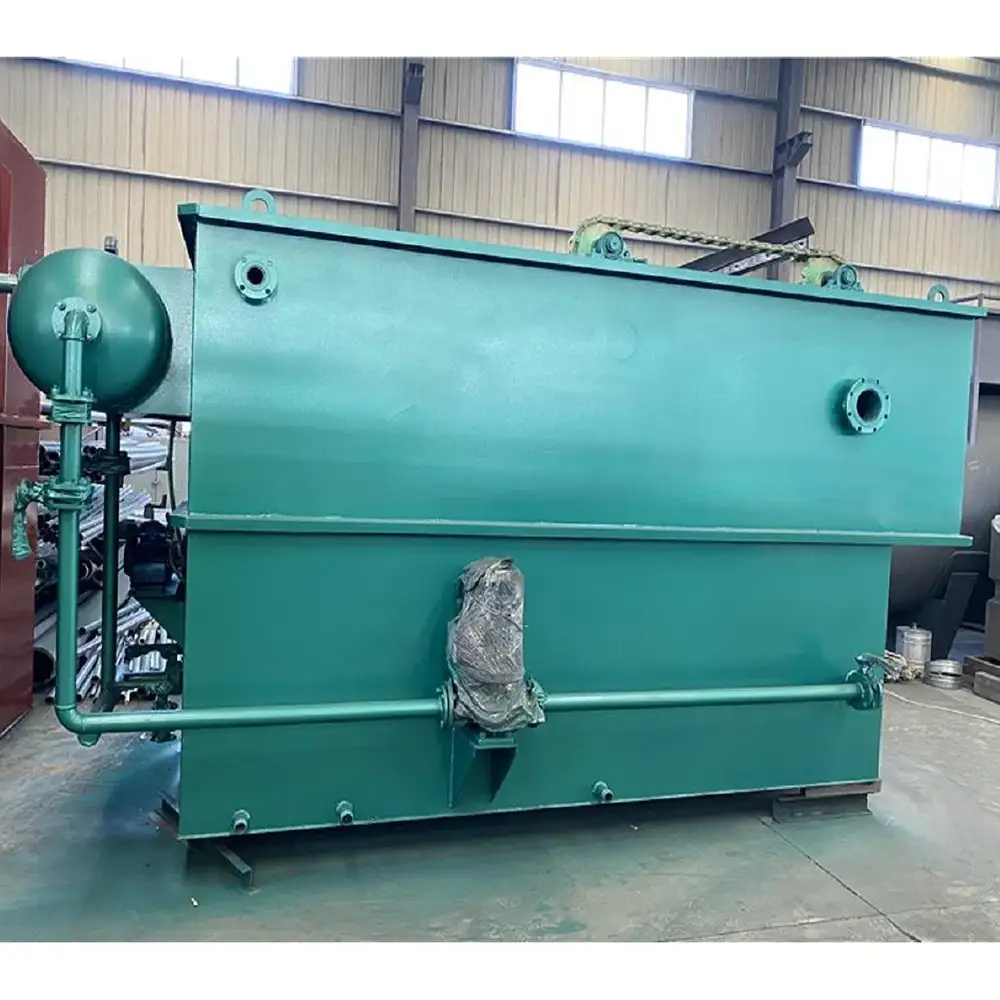
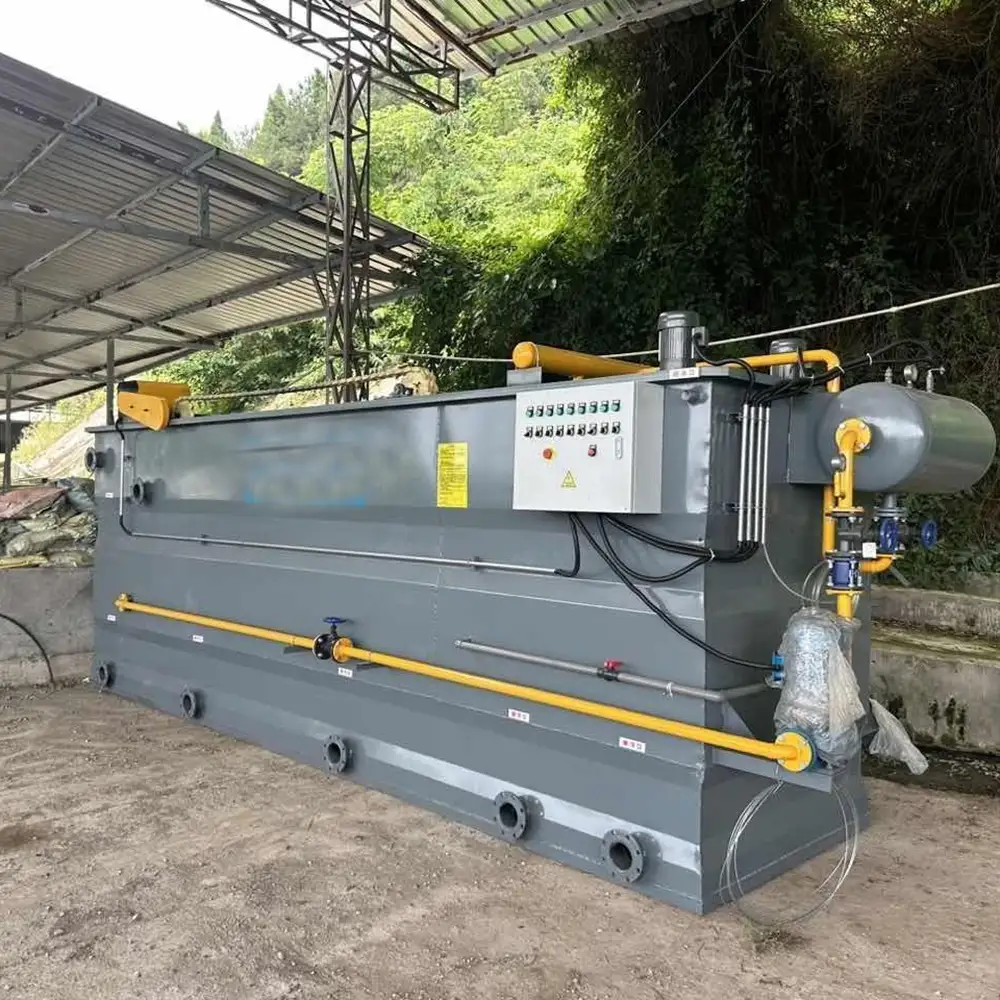
EPA documentation identifies pressurizing pumps, air injection equipment, retention or pressurization vessels, pressure-release components, flotation tanks, and skimming equipment as common DAF system components.
Efficient Suspended Solids Removal
One of the major advantages of a DAF Sewage Treatment Machine is its ability to separate fine and lightweight suspended solids that may settle slowly in conventional sedimentation tanks.
Particles with a density close to that of water can be difficult to remove efficiently through gravity alone. DAF changes the apparent density of these particles by attaching air bubbles to them, allowing them to rise quickly to the surface.
This makes DAF particularly useful for wastewater containing fine solids, fibers, biological solids, oil-wet particles, grease, and colloidal material. EPA references note that DAF can be particularly useful where particles have densities close to water and where gravity clarification would require longer settling times.
Oil, Grease and FOG Separation
The Dissolved Air Flotation DAF Machine is also widely applied for removing oil, grease, fats, and other floatable materials.
Food processing, meat processing, dairy plants, slaughterhouses, petrochemical facilities, refineries, metal processing facilities, and other industrial operations can generate wastewater containing oil and grease. Fine bubbles can attach to dispersed oil and grease particles and carry them to the surface for mechanical skimming.
For stable emulsified oil, DAF performance may be improved through pH adjustment, coagulation, polymer treatment, or chemical emulsion breaking. The appropriate chemical program depends on the wastewater composition and should be determined through testing rather than assuming a fixed dosage.
Chemical Coagulation and Flocculation
For sewage and industrial wastewater containing fine suspended solids or colloidal particles, chemical conditioning can improve DAF separation.
A typical process may include coagulant dosing followed by polymer addition and controlled flocculation. The chemicals destabilize small particles and help form larger flocs. When these flocs enter the flotation zone, fine air bubbles can attach to them and transport them to the surface.
Chemical treatment is application-dependent. Factors such as pH, temperature, suspended solids concentration, oil and grease content, wastewater flow, and contaminant characteristics can influence flotation performance. EPA technical information also notes that chemical pretreatment can improve removal performance for suspended solids and oil and grease.
Compact DAF Design for Sewage Treatment Plants
A DAF machine can provide rapid flotation in a relatively compact footprint. This can be valuable for wastewater treatment plants where available installation space is limited.
A complete DAF system may include:
Flotation Tank
Dissolved Air Release System
Recycle Pump
Air Compressor
Pressurization Tank
Pressure Release Valve
Surface Skimmer
Sludge Collection System
Chemical Dosing Equipment
Coagulation Tank
Flocculation Tank
Control Cabinet
Flow And Pressure Instruments
The exact configuration can be adjusted according to wastewater flow, treatment objectives, influent characteristics, automation requirements, and downstream processes.
Applications
The Dissolved Air Flotation DAF Machine for Sewage Treatment Plant can be used in many wastewater treatment applications, including:
Municipal Sewage Treatment
Industrial Wastewater Treatment
Food Processing Wastewater
Dairy Wastewater
Meat Processing Wastewater
Slaughterhouse Wastewater
Poultry Processing Wastewater
Textile And Dyeing Wastewater
Pulp And Paper Wastewater
Petrochemical Wastewater
Refinery Wastewater
Chemical Industry Wastewater
Metal Processing Wastewater
Mining Wastewater
Oil And Gas Wastewater
Industrial Water Recycling
DAF may serve as primary treatment, pretreatment before biological treatment, or a polishing stage depending on the overall process design.
Integration With Other Wastewater Treatment Equipment
DAF is often integrated with other treatment technologies instead of operating as a complete treatment process by itself.
A typical industrial wastewater process may include:
Screening → Equalization → Coagulation → Flocculation → DAF → Biological Treatment → Filtration → Disinfection
For applications requiring high-quality water reuse, downstream ultrafiltration, MBR, activated carbon, or reverse osmosis may be added.
DAF is particularly useful before membrane systems because reducing suspended solids and oil loading can help protect downstream filtration equipment.
Sludge Skimming and Handling
The floating layer generated during DAF operation contains concentrated suspended solids, oil, grease, and other separated contaminants. A surface skimmer continuously or periodically removes this material from the flotation tank.
Collected float sludge can then be transferred to a sludge holding tank, thickening system, filter press, screw press, centrifuge, or other dewatering equipment depending on the treatment plant configuration.
Timely removal of surface float is important. EPA references indicate that excessive delay in removing accumulated surface material can allow particulates to return to the liquid phase.
Operation and Maintenance
Routine maintenance helps keep the DAF machine operating consistently. Operators should regularly inspect the recycle pump, air supply, pressurization system, pressure-release valve, skimmer, sludge discharge line, chemical dosing equipment, sensors, and control cabinet.
The flotation surface should remain properly managed, and sludge discharge should be adjusted according to actual loading. Pumps and valves should be checked for abnormal vibration, leakage, blockage, or pressure fluctuations.
Chemical dosing should also be optimized according to actual wastewater conditions. Regular monitoring of flow, pH, suspended solids, oil and grease, and effluent quality can help operators maintain stable treatment performance.
Why Choose Us?
Choosing a high-quality Dissolved Air Flotation DAF Machine requires more than comparing tank dimensions or pump power. The complete system should match wastewater flow, contaminant characteristics, separation objectives, chemical requirements, sludge loading, available space, and downstream treatment equipment.
Our DAF solutions can be configured for sewage treatment plants and industrial wastewater applications with options for automatic control, chemical dosing, recycle pressurization, sludge handling, instrumentation, and integration with existing treatment systems.
Key advantages include:
Efficient Solid-Liquid Separation
Effective Suspended Solids Removal
Oil And Grease Separation
Compact Equipment Layout
Fine-Bubble Flotation Technology
Optional Coagulation And Flocculation
Automatic Surface Skimming
Recycle Pressurization Options
PLC Automatic Control Options
Easy Integration With Wastewater Plants
Flexible Configuration For Different Flow Rates
The final DAF configuration should be selected according to actual wastewater testing and required treatment performance.
FAQ
1. What is a DAF machine?
A DAF machine is a dissolved air flotation system that uses fine air bubbles to separate suspended solids, oil, grease, and other suitable floatable contaminants from wastewater.
2. What can a DAF machine remove?
DAF can commonly remove suspended solids, dispersed oil, grease, fats, colloidal material, and other floatable contaminants.
3. Is DAF suitable for a sewage treatment plant?
Yes. DAF can be used as a primary treatment, pretreatment, or polishing process depending on the sewage characteristics and overall treatment design.
4. Can DAF remove oil and grease?
Yes. DAF is widely used for separating free and dispersed oil and grease. Stable emulsified oil may require chemical conditioning before flotation.
5. Does DAF remove dissolved salts?
No. DAF is primarily a physical separation process and is not designed to remove dissolved salts. Reverse osmosis or other specialized processes may be required.
6. Does the DAF system require chemicals?
Not necessarily. However, coagulation and flocculation can improve the removal of fine suspended solids, colloids, and certain emulsified contaminants.
7. How does recycle pressurization work?
A portion of clarified effluent is recycled, pressurized, and saturated with air. After pressure release, fine bubbles form and enter the flotation zone. Recycle pressurization can reduce the volume of wastewater that needs to be pressurized.
8. How is DAF sludge removed?
A surface skimmer collects the floating sludge layer and transfers it to a sludge collection or dewatering system.
9. What industries use DAF machines?
Common applications include food processing, dairy, meat processing, slaughterhouses, petrochemical, refinery, textile, paper, chemical, metal processing, mining, and other industrial wastewater applications.
10. Can DAF be used before MBR or RO?
Yes. DAF can be used as pretreatment before MBR, ultrafiltration, reverse osmosis, and other advanced treatment processes.
11. Can the DAF machine be automated?
Yes. PLC controls can be integrated for pumps, skimmers, chemical dosing, pressure monitoring, sludge discharge, alarms, and other operating functions.
12. How should I select a DAF machine?
Selection should consider wastewater flow, peak flow, TSS, oil and grease concentration, pH, temperature, chemical requirements, target effluent quality, sludge characteristics, and downstream treatment equipment.
Prev:
Oils and Suspended Solids Recycling System Waste Water Industry Treatment Plant Daf Dissolved Air Flotation Machine
Next:
Wastewater Treatment Plant Dissolved Air Flotation DAF System
TAG:
Industrial Wastewater Treatment Equipment,
Suspended Solids Removal,
Dairy Wastewater Treatment,
Meat Processing Wastewater Treatment,
Food Processing Wastewater Treatment,
DAF Wastewater Treatment System,
Dissolved Air Flotation Wastewater Treatment,
Industrial Wastewater Treatment,
Food Wastewater Treatment,
Sewage Treatment Plant,
Industrial Wastewater Treatment Plant,
Wastewater Treatment Equipment,
Wastewater Treatment Plant,
Solid Liquid Separator,
Solid Liquid Separation Equipment,
Chemical Wastewater Treatment,
Wastewater Treatment System,
Metal Processing Wastewater Treatment,
Industrial Water Recycling,
Suspended Solids Removal Equipment,
Sewage Treatment Equipment,
Sewage Treatment System,
Poultry Wastewater Treatment,
Slaughterhouse Wastewater Treatment,
Oil Removal Equipment,
Oil Water Separator,
RO Pretreatment,
Industrial Wastewater Pretreatment,
Pulp And Paper Wastewater Treatment,
DAF Sludge Removal,
Related Category:
Dissolved Air Flotation DAF Machine,Dissolved Air Flotation Machine for Sewage Treatment Plant,DAF Machine China, suppliers, manufacturers, factory, customized, wholesale, quotation, made in China