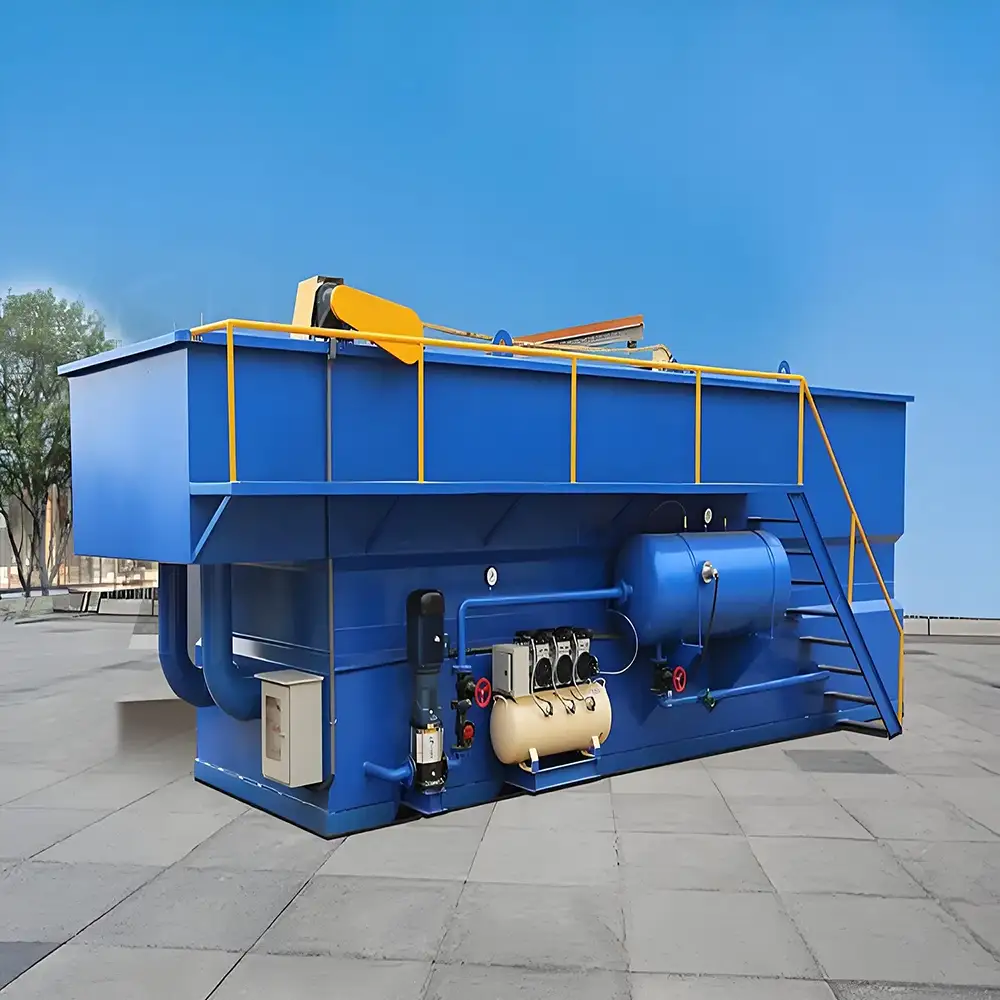
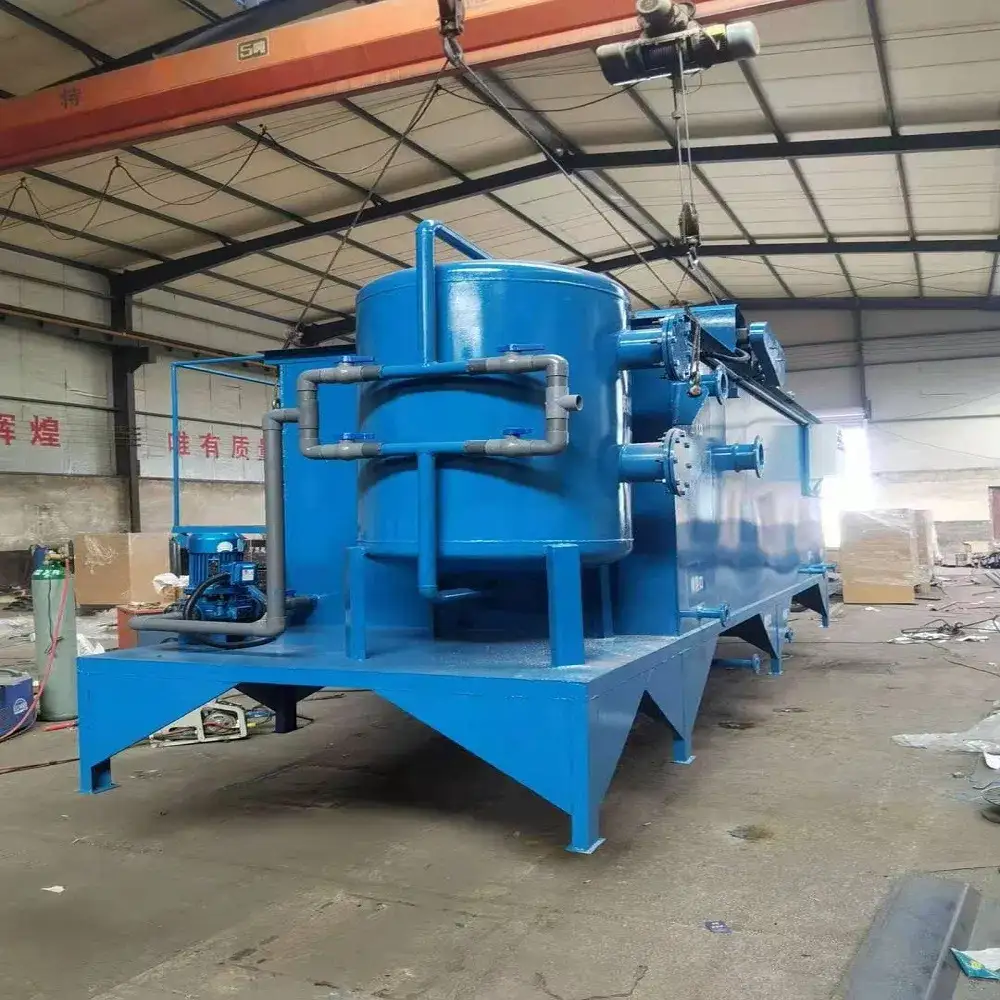
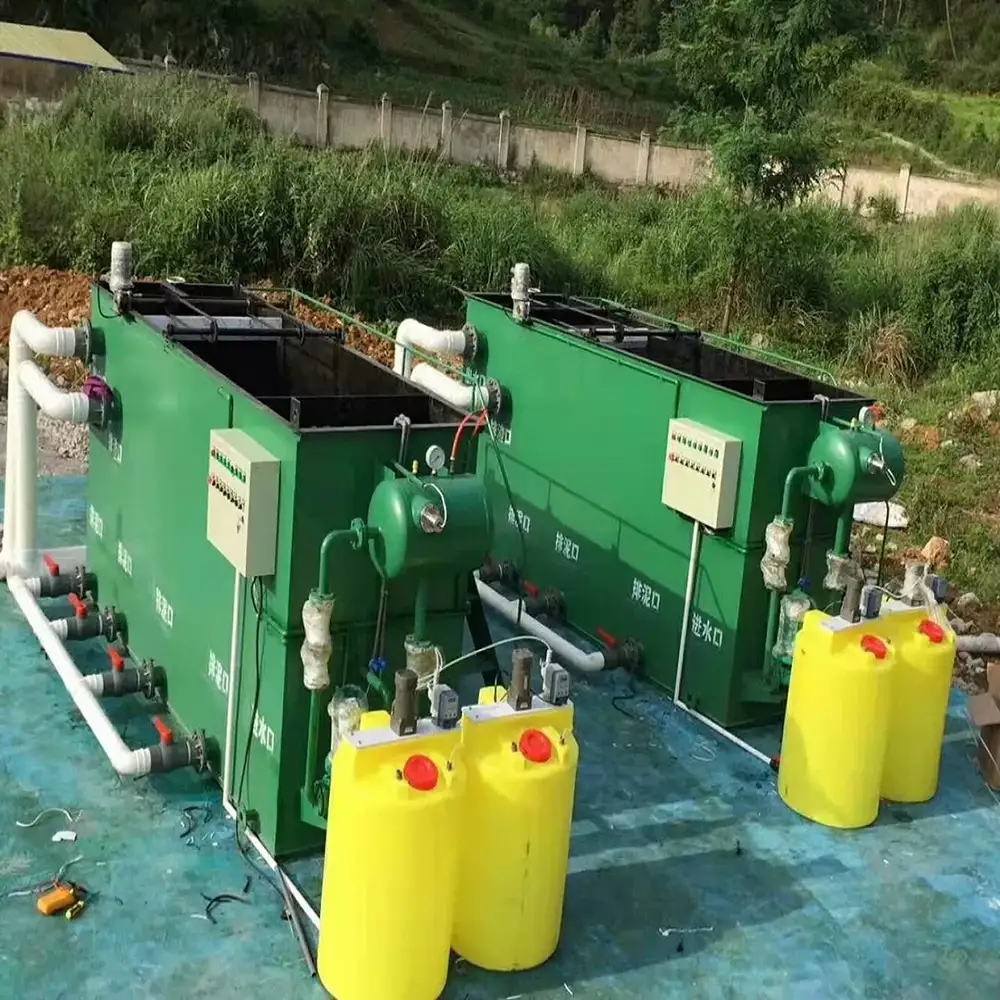
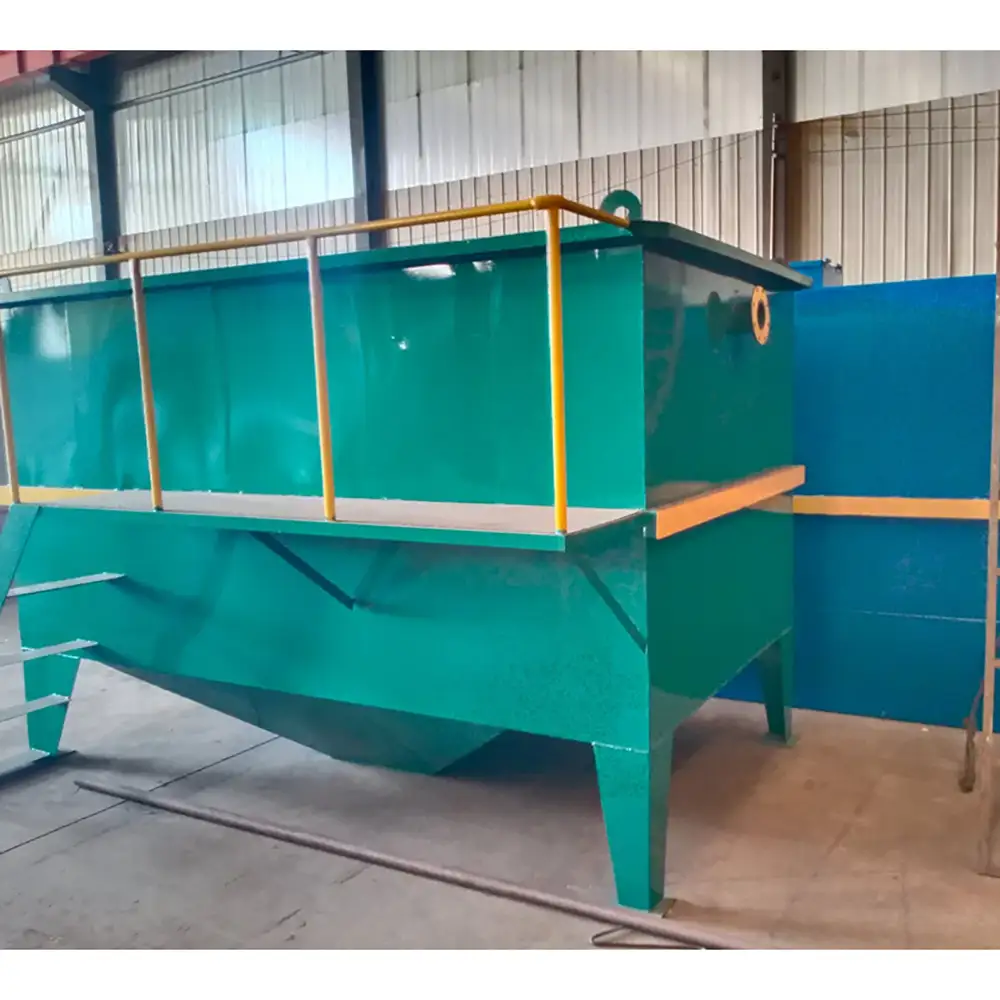
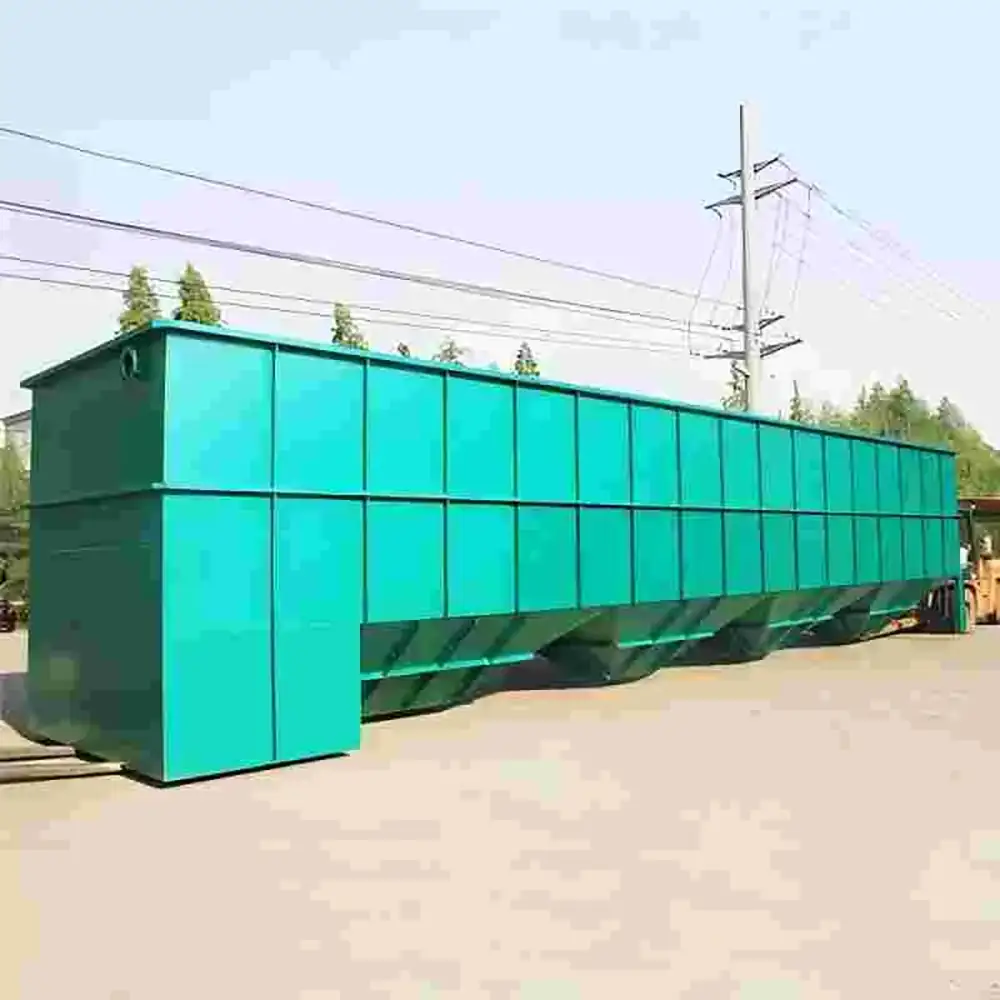
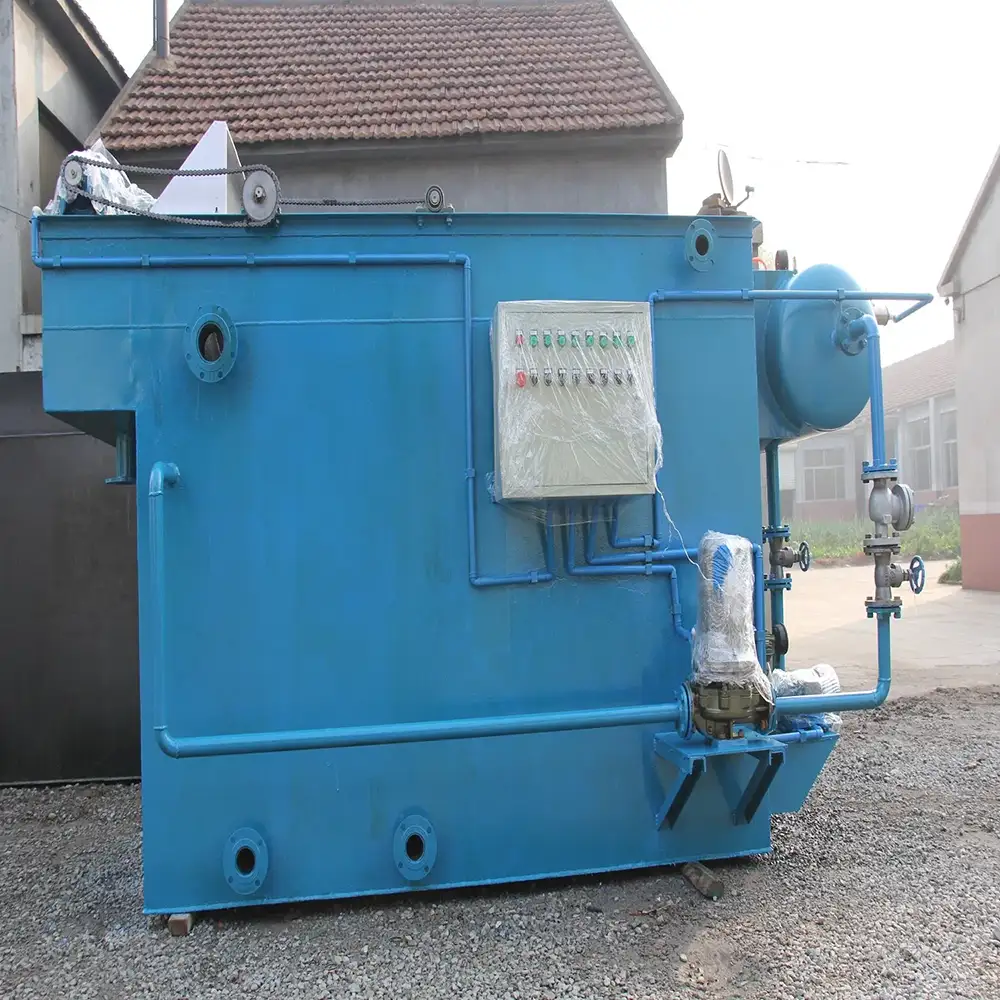
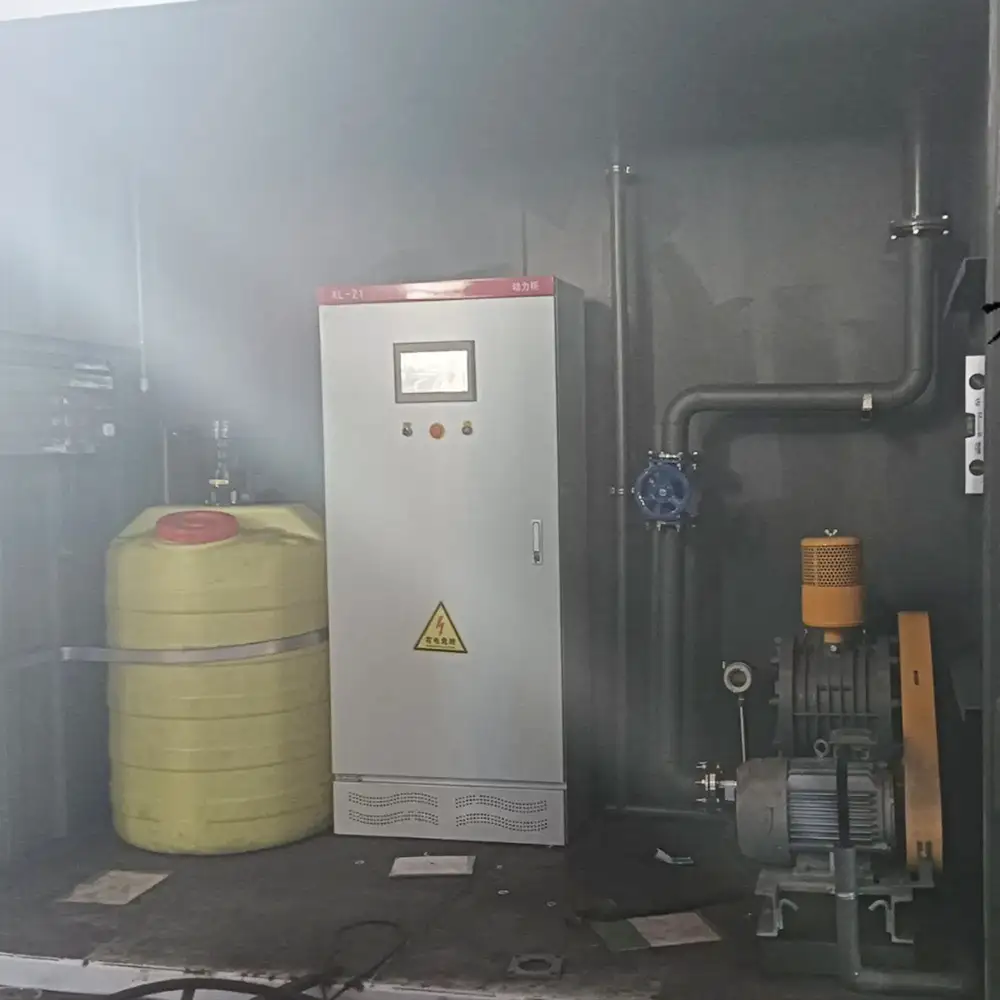
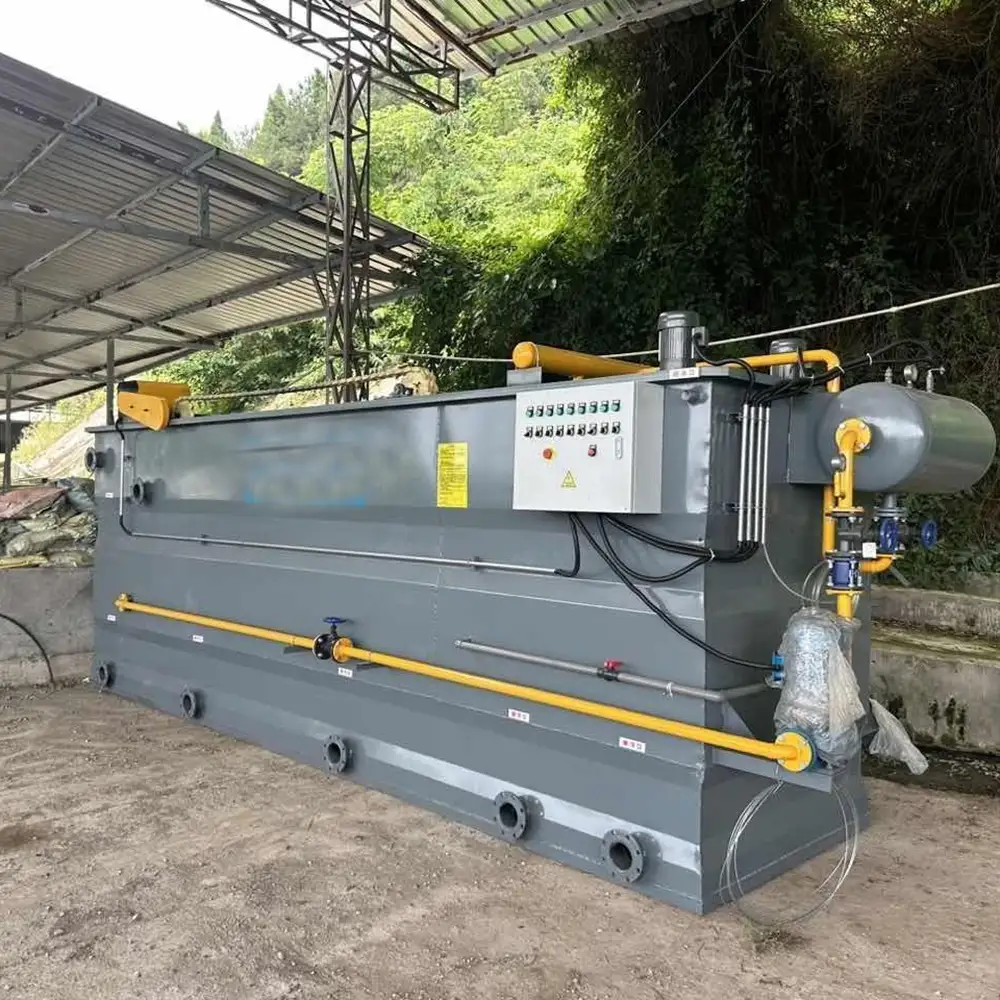
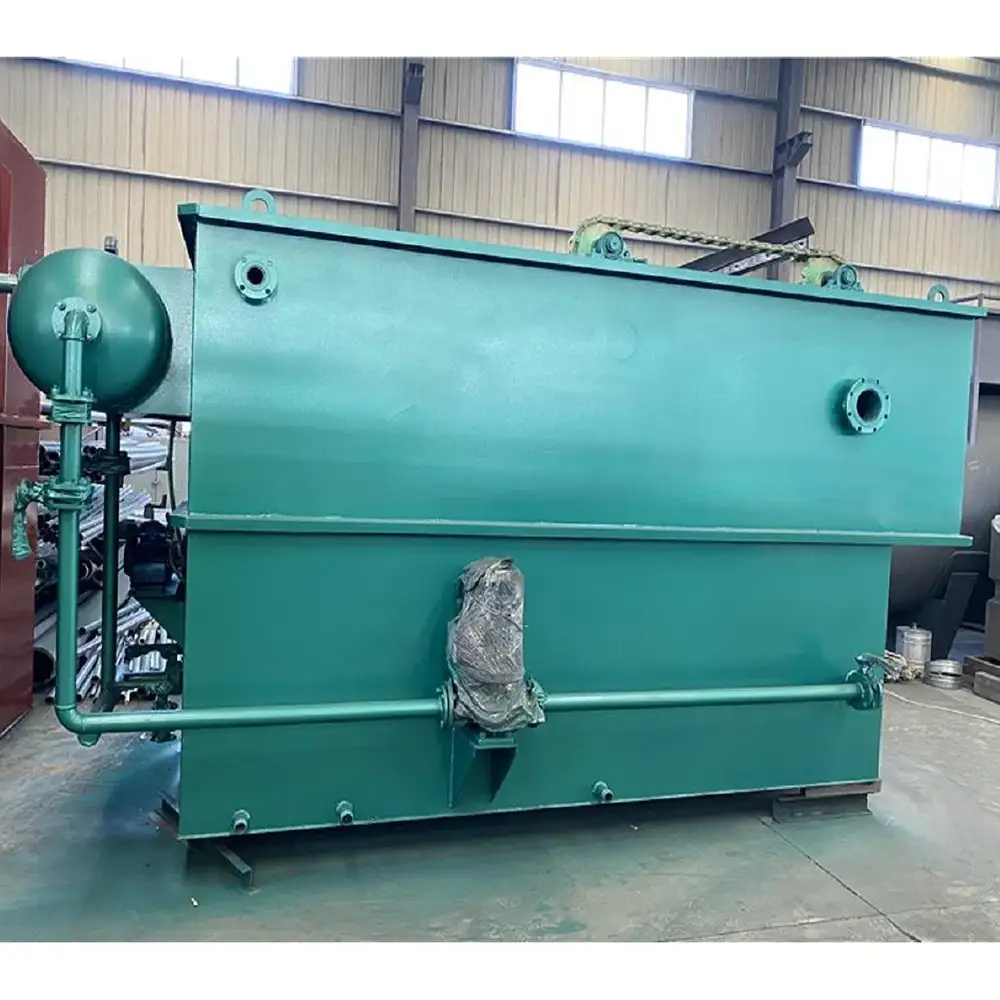
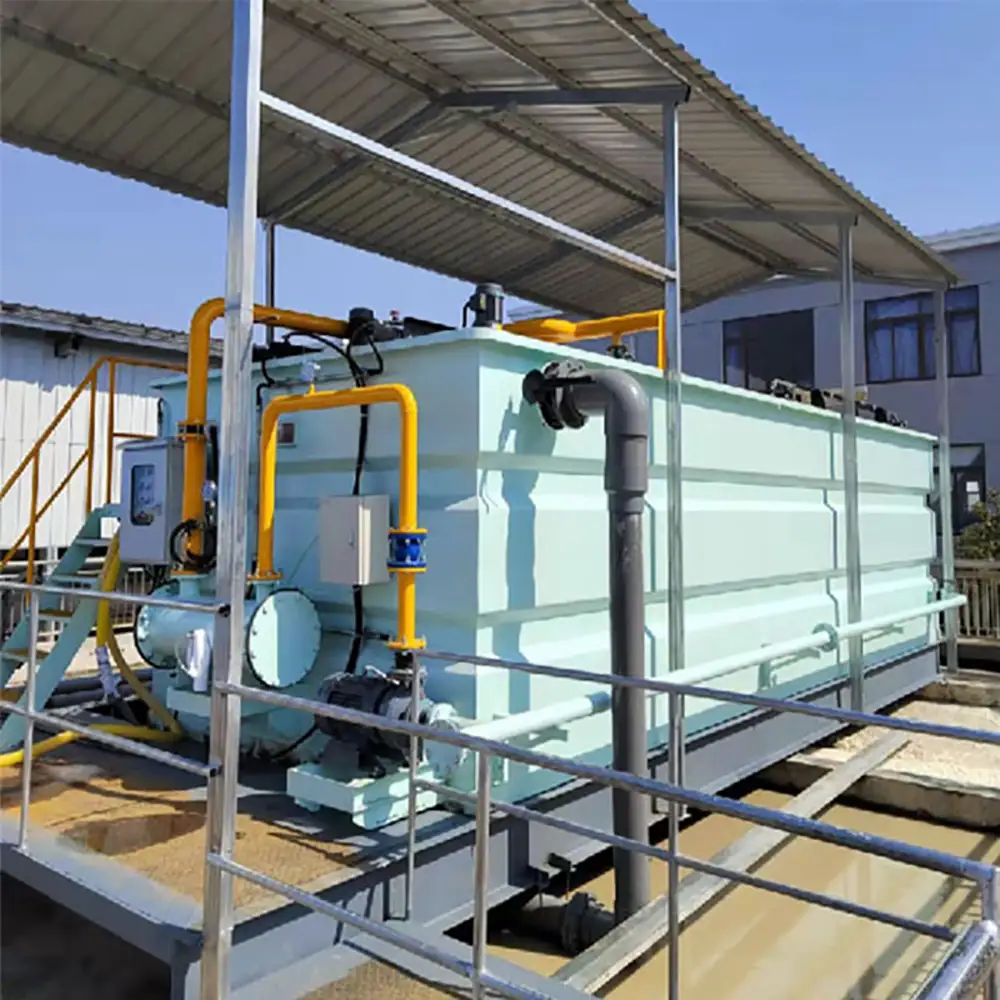
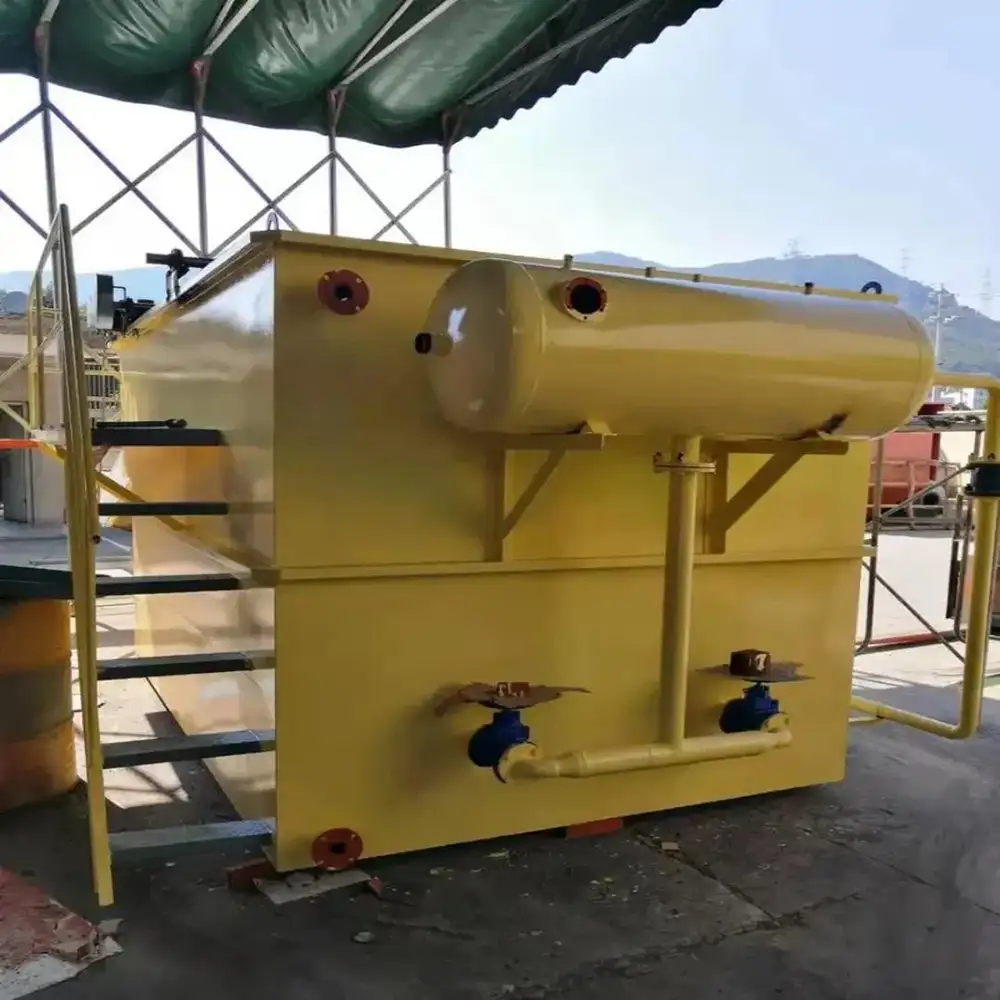
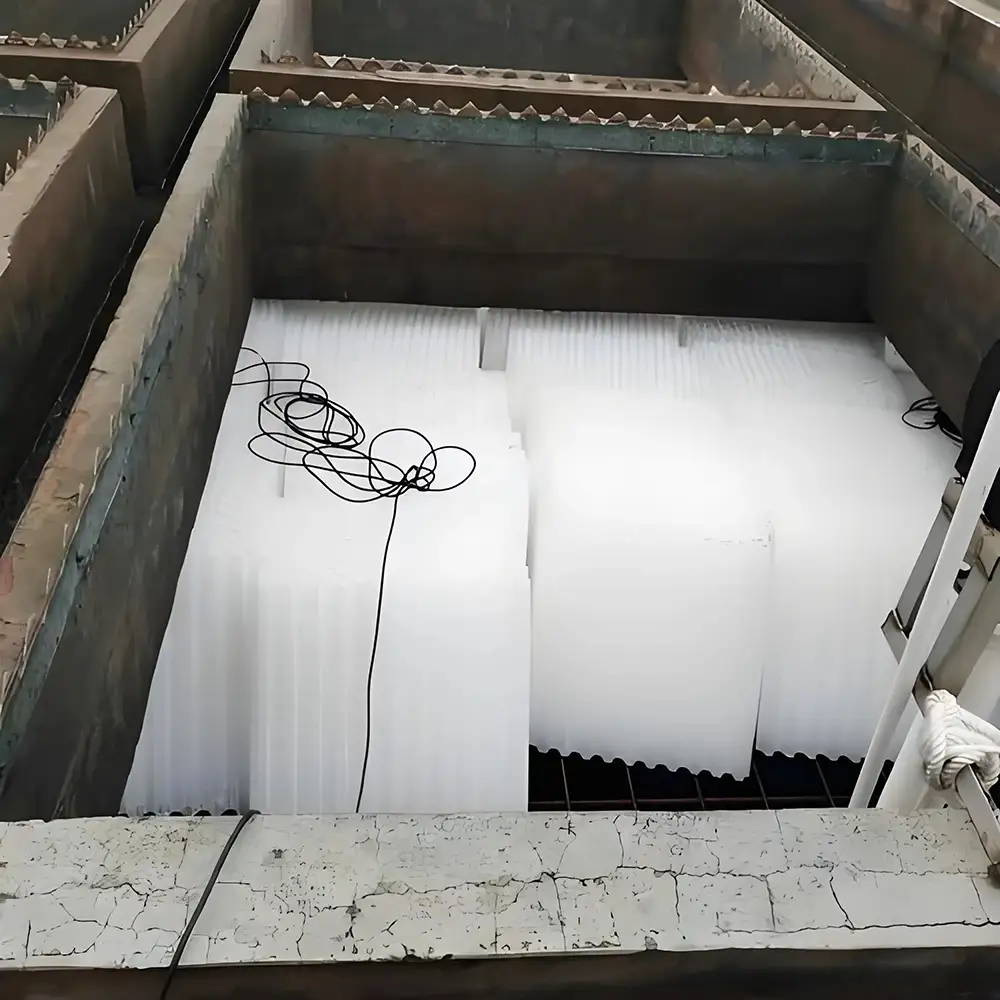
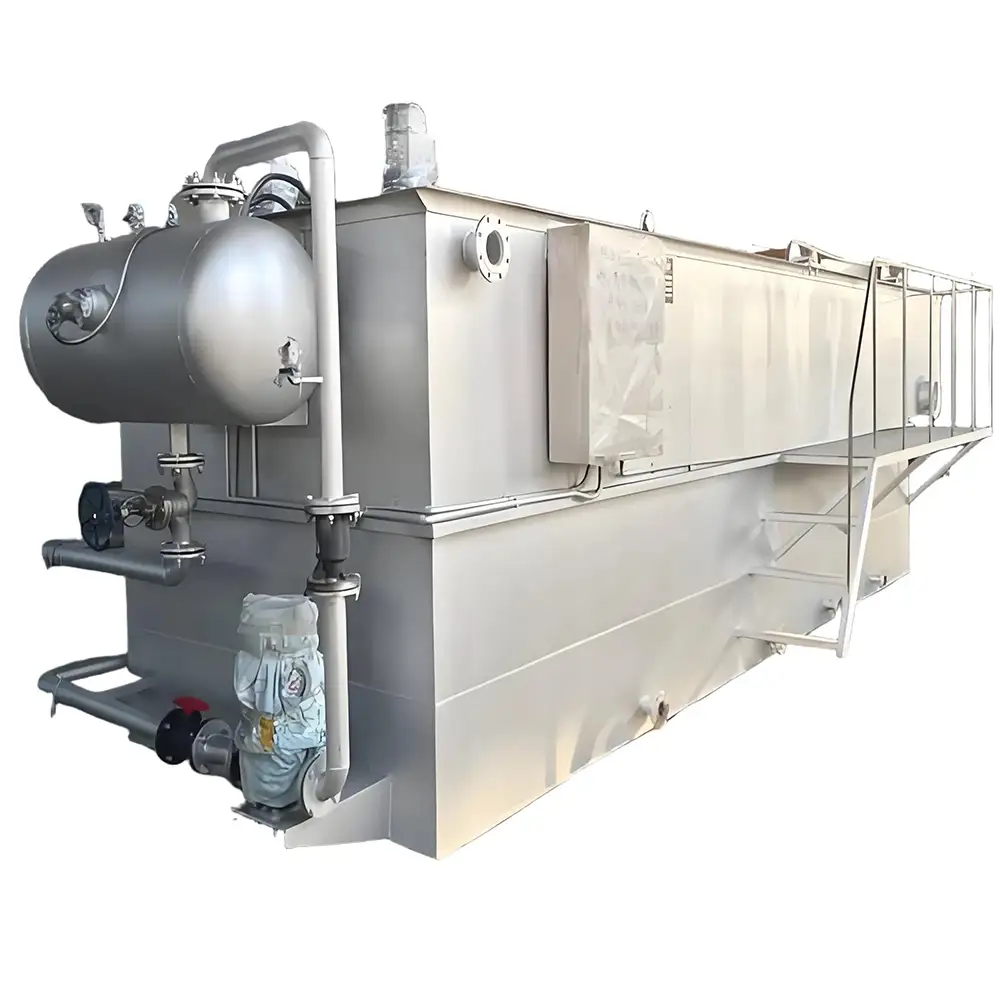
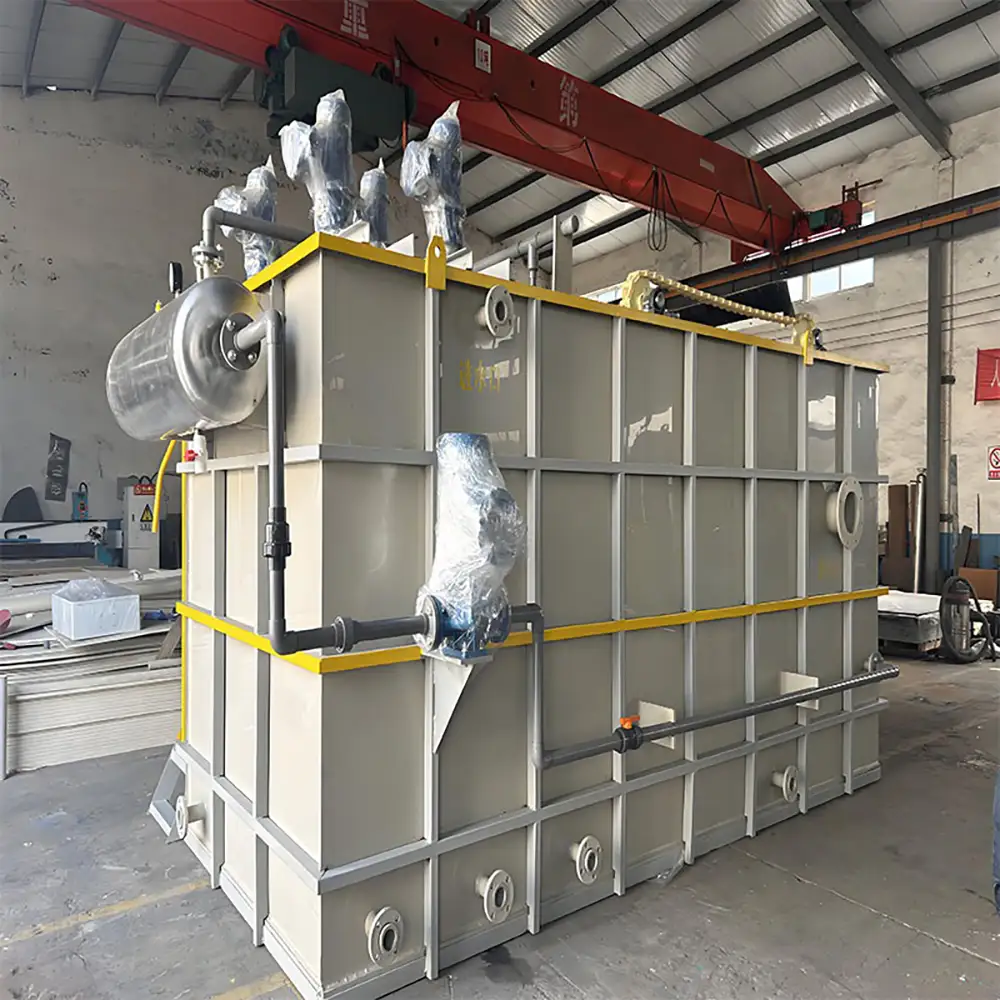
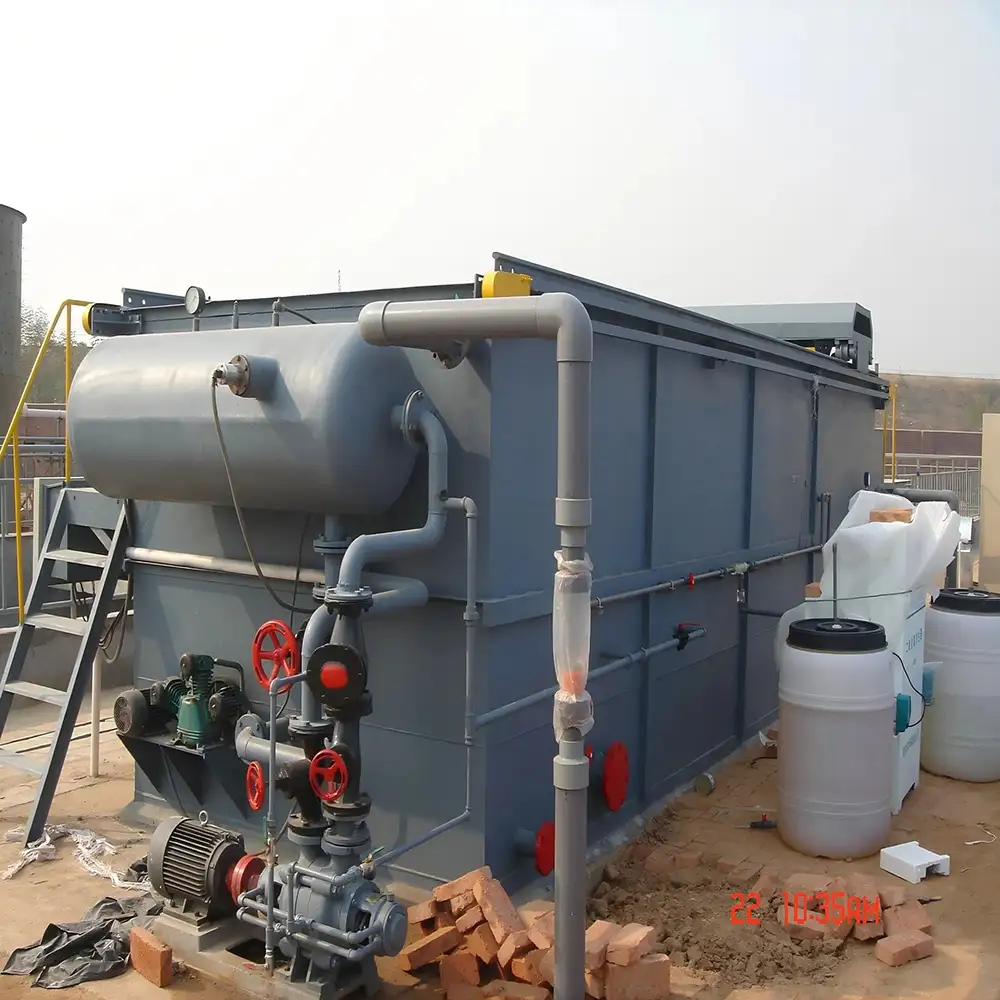
Dissolved air flotation sewage treatment plants are usually used for primary sewage treatment, and the front can be used together with grilles(bar screen). The compact sewage treatment plant is the second treatment, and the disinfection system (sodium hypochlorite, chlorine dioxide) is tertiary.
Intelligent MBR Modular Wastewater Treatment STP Machine
The Intelligent MBR Modular Wastewater Treatment STP Machine combines membrane bioreactor technology, biological wastewater treatment, membrane filtration, automation, and modular equipment design into an integrated sewage treatment solution. It is designed for applications that require reliable wastewater treatment, compact installation, consistent effluent quality, and intelligent process control.
MBR, or Membrane Bioreactor, combines biological treatment with membrane-based solid-liquid separation. Instead of relying primarily on a conventional secondary clarifier, the membrane module physically separates treated water from activated sludge. This allows the system to maintain a high concentration of biomass while producing a clear permeate suitable for further treatment or selected reuse applications.
The addition of an intelligent control layer can monitor and regulate important operating parameters such as aeration, filtration cycles, membrane backwashing, pump operation, water levels, and alarms. Research on IoT-enabled MBR systems has demonstrated the value of continuous monitoring and intelligent adjustment of operating parameters in industrial wastewater treatment.
What Is an Intelligent MBR Wastewater Treatment System?
An intelligent MBR wastewater treatment system is a membrane bioreactor equipped with automated control, monitoring, and process-management functions.
A conventional MBR already combines biological treatment and membrane separation. An intelligent MBR adds digital control and monitoring technologies to help operators manage the system more efficiently.
Depending on the equipment configuration, intelligent functions may include:
PLC Automatic Control
HMI Touchscreen Operation
Online Sensor Monitoring
Automatic Aeration Control
Membrane Filtration Control
Automatic Backwashing
Chemical Cleaning Control
Pump Frequency Control
Water Level Monitoring
Alarm Management
Remote Monitoring
Data Recording
Equipment Interlocking
The exact level of automation depends on the selected control system, instrumentation, communication platform, and project requirements.
Modular MBR Wastewater Treatment Design
The modular design allows the wastewater treatment system to be assembled around standardized treatment units.
A typical modular MBR system may include:
Screening → Equalization → Biological Treatment → MBR Membrane Separation → Disinfection → Treated Water Storage
Additional treatment stages can be incorporated according to wastewater characteristics.
Modular MBR technology is particularly useful when installation space is limited or when future treatment capacity expansion is expected. Membrane separation itself has strong modular characteristics, allowing treatment capacity to be expanded by adding membrane units and associated biological capacity.
Packaged MBR systems are also available as preassembled systems integrating biological treatment, membrane separation, aeration, pumps, and automatic control into a compact equipment package.
Working Principle
1. Preliminary Screening
Raw sewage first passes through a screen or fine screening system. Large solids, plastics, fibers, rags, and other debris are removed before the biological process.
Proper pretreatment is important because large particles can damage pumps and contribute to membrane fouling.
2. Equalization
An equalization tank can balance variations in wastewater flow and pollutant concentration.
For facilities with highly variable daily flow, equalization helps provide more stable conditions for the downstream biological process.
3. Biological Treatment
Wastewater enters the biological treatment zone, where microorganisms degrade biodegradable organic matter.
Depending on the treatment objective, the system may include anoxic and aerobic zones for nitrogen removal, as well as aerobic treatment for BOD and COD reduction.
4. Aeration
Fine-bubble diffusers supply oxygen to the biological reactor.
Aeration supports microbial activity while also playing an important role in membrane scouring in submerged MBR configurations.
Intelligent control can adjust blower operation or aeration conditions according to programmed operating requirements and available sensor information.
5. MBR Membrane Separation
Mixed liquor from the biological reactor enters the membrane separation area.
The membrane retains activated sludge and suspended solids while treated water passes through the membrane as permeate.
This provides highly effective solid-liquid separation and reduces the need for a conventional secondary settling tank.
6. Permeate Collection
A permeate pump or gravity-driven arrangement transfers filtered water from the membrane system to the next treatment stage.
Depending on the project, the permeate can proceed to disinfection, storage, discharge, or additional polishing for water reuse.
Intelligent Automatic Control
The intelligent control system is an important part of this product concept.
A PLC control cabinet can coordinate the operation of pumps, blowers, valves, membrane modules, sludge discharge systems, and cleaning systems.
Possible control functions include:
Automatic Aeration
The control system can manage blower start-stop cycles, variable-frequency operation, or programmed aeration schedules.
Membrane Filtration Control
Filtration and relaxation cycles can be controlled according to programmed operating parameters.
Automatic Backwashing
Where supported by the membrane configuration, automatic backwashing can be programmed to help control membrane fouling.
Chemical Cleaning
The system can provide automatic or semi-automatic sequences for membrane chemical cleaning.
Alarm Management
The control system can monitor abnormal conditions such as pump failure, high water level, low pressure, excessive pressure, or other equipment faults.
Remote Monitoring
Depending on the control platform, communication interfaces can be integrated for remote monitoring and data access.
Modern MBR systems increasingly use automated control, monitoring, and remote communication to simplify operation and improve process stability.
MBR Membrane Technology
The membrane is the core solid-liquid separation component.
Depending on the system design, MBR equipment can use:
Hollow Fiber Membranes
Flat Sheet Membranes
PVDF Membranes
Ultrafiltration Membranes
Microfiltration Membranes
The correct membrane type should be selected according to wastewater characteristics, required treatment capacity, operating flux, cleaning requirements, and the intended effluent quality.
Submerged membrane systems commonly use air scouring to reduce solids accumulation on the membrane surface. Periodic relaxation, backwashing, and chemical cleaning may also be incorporated depending on membrane design.
Advantages of Intelligent MBR
Compact Footprint
MBR systems can eliminate the need for a conventional secondary clarifier because the membrane performs solid-liquid separation. This can significantly reduce the footprint of the treatment plant.
High-Quality Effluent
The membrane provides a physical separation barrier that retains suspended solids and biomass, producing clear treated water.
Automated Operation
PLC-based automation can manage routine equipment sequences and reduce manual intervention.
Modular Capacity
The modular architecture makes it easier to design systems for different treatment capacities and, where planned appropriately, expand capacity in stages.
Water Reuse Potential
MBR effluent can provide a suitable feedwater quality for selected reuse applications when combined with appropriate disinfection and additional treatment where necessary.
Stable Solid-Liquid Separation
Membranes provide a physical separation barrier and are less dependent on conventional sludge settling characteristics.
Applications
The Intelligent MBR Modular STP Machine can be applied to many wastewater treatment projects.
Domestic Sewage
Suitable for residential communities, apartment developments, decentralized sewage stations, and other domestic wastewater applications.
Hotels and Resorts
The system can treat wastewater generated by guest rooms, bathrooms, kitchens, laundries, and other hotel facilities when properly designed.
Schools and Campuses
Modular MBR systems can be used for schools, universities, training centers, and other institutional facilities.
Hospitals
MBR can be incorporated into healthcare wastewater treatment systems, although appropriate pretreatment and disinfection requirements should be evaluated based on the wastewater source and applicable regulations.
Commercial Facilities
Shopping centers, office buildings, restaurants, service facilities, and other commercial properties can use modular STP systems.
Rural and Decentralized Communities
Compact modular MBR equipment can be suitable for locations without large centralized sewage infrastructure.
Selected Industrial Wastewater
MBR can treat industrial wastewater when the contaminants are suitable for biological treatment. Industrial wastewater should be tested before final process selection.
Intelligent MBR for Water Reuse
One important application of MBR technology is water reuse.
The membrane separation stage can produce a low-solids permeate that may be further disinfected or polished for applications such as:
Landscape Irrigation
Toilet Flushing
Road Washing
Cooling Water Makeup
Industrial Process Water
Equipment Washing
The appropriate reuse treatment depends on the intended application and local regulations. Additional technologies such as RO, activated carbon, UV, or other advanced treatment may be required for specific reuse objectives.
Some modern modular MBR systems are specifically designed for municipal, industrial, decentralized, and water-reuse applications.
Equipment Configuration
A complete intelligent MBR STP machine may include:
Mechanical Screen
Equalization Tank
Anoxic Tank
Aerobic Biological Tank
MBR Membrane Tank
MBR Membrane Modules
Aeration Blower
Fine-Bubble Diffusers
Permeate Pump
Backwash System
Chemical Cleaning System
Sludge Pump
Disinfection System
PLC Control Cabinet
HMI Touchscreen
Sensors And Instruments
Remote Monitoring Interface
The actual equipment configuration should be selected according to wastewater flow, pollutant concentration, treatment objectives, site conditions, and applicable discharge or reuse requirements.
Modular Installation
A modular system can reduce the amount of on-site assembly required compared with a fully site-built wastewater plant.
Factory-assembled systems may allow major components to be installed and tested before shipment. Depending on the system design, the customer may only need to complete foundation preparation, inlet and outlet piping, electrical connection, and commissioning.
Preassembled MBR systems are commercially available with integrated biological treatment, membrane separation, aeration, pumping, and control functions.
Maintenance and Membrane Management
Although intelligent automation reduces routine manual operation, regular maintenance remains necessary.
Important maintenance items include:
Membrane Inspection
Membrane Cleaning
Air Scouring
Backwashing
Blower Maintenance
Pump Inspection
Sensor Calibration
Sludge Removal
Electrical Cabinet Inspection
Valve Inspection
Membrane fouling should be monitored carefully. Proper pretreatment, stable aeration, appropriate flux, and scheduled cleaning can help maintain membrane performance.
Project Selection Parameters
Before selecting an Intelligent MBR STP Machine, the following information should be evaluated:
Average Daily Flow
Peak Flow
COD
BOD₅
TSS
Ammonia Nitrogen
Total Nitrogen
Total Phosphorus
pH
Temperature
Oil And Grease
Wastewater Source
Required Effluent Standard
Water Reuse Requirements
Available Installation Area
For industrial wastewater, additional information may be required regarding salinity, toxic compounds, heavy metals, solvents, refractory organics, and other substances that may affect biological treatment or membrane performance.
Why Choose Us?
We provide modular MBR wastewater treatment solutions designed around the actual requirements of each sewage treatment project.
The Intelligent MBR STP Machine combines biological treatment, membrane filtration, modular construction, and automatic control into one integrated treatment concept.
Key advantages include:
Intelligent MBR Process
Modular STP Configuration
Automatic PLC Control
Online Monitoring Options
Remote Monitoring Capability
Compact Equipment Design
High-Efficiency Membrane Separation
Automatic Membrane Management
Flexible Treatment Capacity
Water Reuse Integration
Packaged Equipment Options
International Project Support
The system can be configured for domestic sewage, municipal wastewater, commercial wastewater, institutional wastewater, rural sewage, and selected industrial wastewater applications.
FAQs
1. What is an Intelligent MBR Wastewater Treatment System?
It is a membrane bioreactor wastewater treatment system equipped with automated control, monitoring, and process-management functions to improve operational consistency and reduce routine manual intervention.
2. What does MBR stand for?
MBR stands for Membrane Bioreactor. It combines biological wastewater treatment with membrane filtration for solid-liquid separation.
3. What makes an MBR system intelligent?
Intelligent functions can include PLC control, HMI operation, online sensors, automatic aeration management, filtration-cycle control, alarms, data logging, and remote monitoring.
4. Can the MBR STP machine operate automatically?
Yes. Automatic operation can control pumps, blowers, filtration cycles, backwashing, chemical cleaning, sludge discharge, alarms, and other programmed functions.
5. Is the MBR system suitable for domestic sewage?
Yes. MBR systems are widely applicable to domestic and municipal sewage treatment, as well as decentralized wastewater projects.
6. Can the system treat industrial wastewater?
Yes, for industrial wastewater that is biologically treatable. Industrial wastewater should be characterized and tested before final process selection.
7. Does MBR require a secondary clarifier?
A typical MBR uses membranes for solid-liquid separation instead of a conventional secondary settling tank. This is one reason MBR systems can achieve a compact footprint.
8. Can the system remove nitrogen?
Yes. Anoxic and aerobic biological zones can be incorporated into an MBR process to support biological nitrogen removal when properly designed and operated.
9. Can MBR treated water be reused?
Potentially. MBR produces high-quality treated water, and additional disinfection or polishing can be incorporated depending on the intended reuse application.
10. How is membrane fouling controlled?
Common methods include air scouring, relaxation, backwashing, chemical cleaning, appropriate pretreatment, and controlled operating conditions.
11. Can the MBR system be remotely monitored?
Yes. Depending on the automation configuration, communication interfaces can support remote monitoring, operating-data collection, alarms, and selected remote-control functions.
12. Can modular MBR capacity be expanded?
Modular MBR technology can facilitate capacity expansion by adding membrane and treatment capacity when the original system and site layout are designed for future expansion.
13. How do I select the correct MBR STP machine?
The main factors are wastewater flow, peak flow, influent pollutant concentrations, required effluent quality, reuse requirements, membrane configuration, installation area, and future capacity requirements
Prev:
Sewage Treatment System Daf Dissolved Air Flotation Solid-Liquid Separation Unit
Next:
Automatic Ao+ MBR Modular Wastewater Treatment STP Machine
TAG:
Industrial Wastewater Treatment,
Sewage Treatment Plant,
Industrial Sewage Treatment,
Wastewater Treatment Equipment,
Wastewater Treatment Plant,
Wastewater Treatment System,
Sewage Treatment Equipment,
Sewage Treatment System,
Decentralized Wastewater Treatment,
Membrane Wastewater Treatment,
Biological Treatment System,
Biological Wastewater Treatment,
Integrated Sewage Treatment System,
Intelligent Wastewater Treatment System,
Smart Wastewater Treatment System,
Smart Sewage Treatment System,
Decentralized Sewage Treatment,
Rural Sewage Treatment,
Rural Wastewater Treatment,
Domestic Sewage Treatment Plant,
Biological Sewage Treatment,
Domestic Sewage Treatment,
Domestic Wastewater Treatment,
Compact Sewage Treatment Plant,
Packaged Sewage Treatment Plant,
Modular Sewage Treatment System,
Modular Wastewater Treatment System,
Modular Sewage Treatment Plant,
Commercial Wastewater Treatment,
Municipal Wastewater Treatment,
Related Category:
Intelligent MBR Wastewater Treatment,Modular MBR Wastewater Treatment,MBR Sewage Treatment Plant,MBR STP Machine China, suppliers, manufacturers, factory, customized, wholesale, quotation, made in China