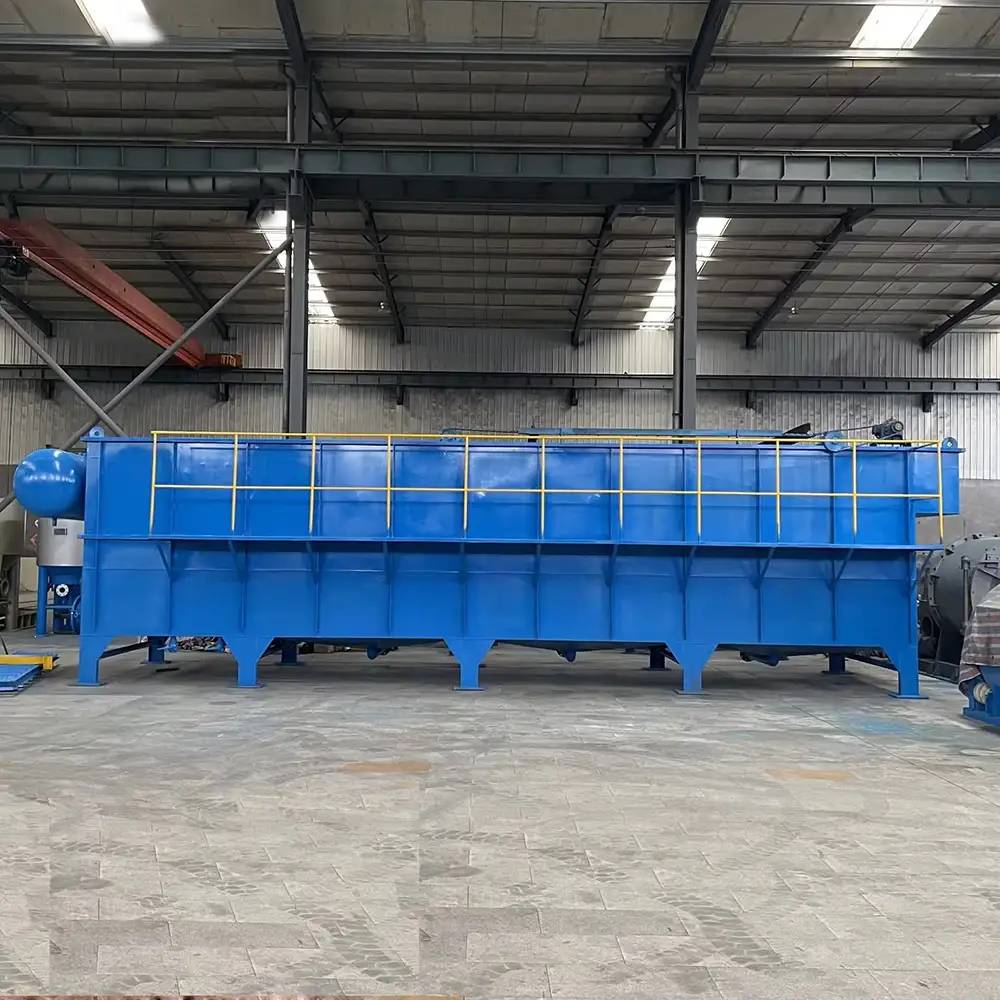
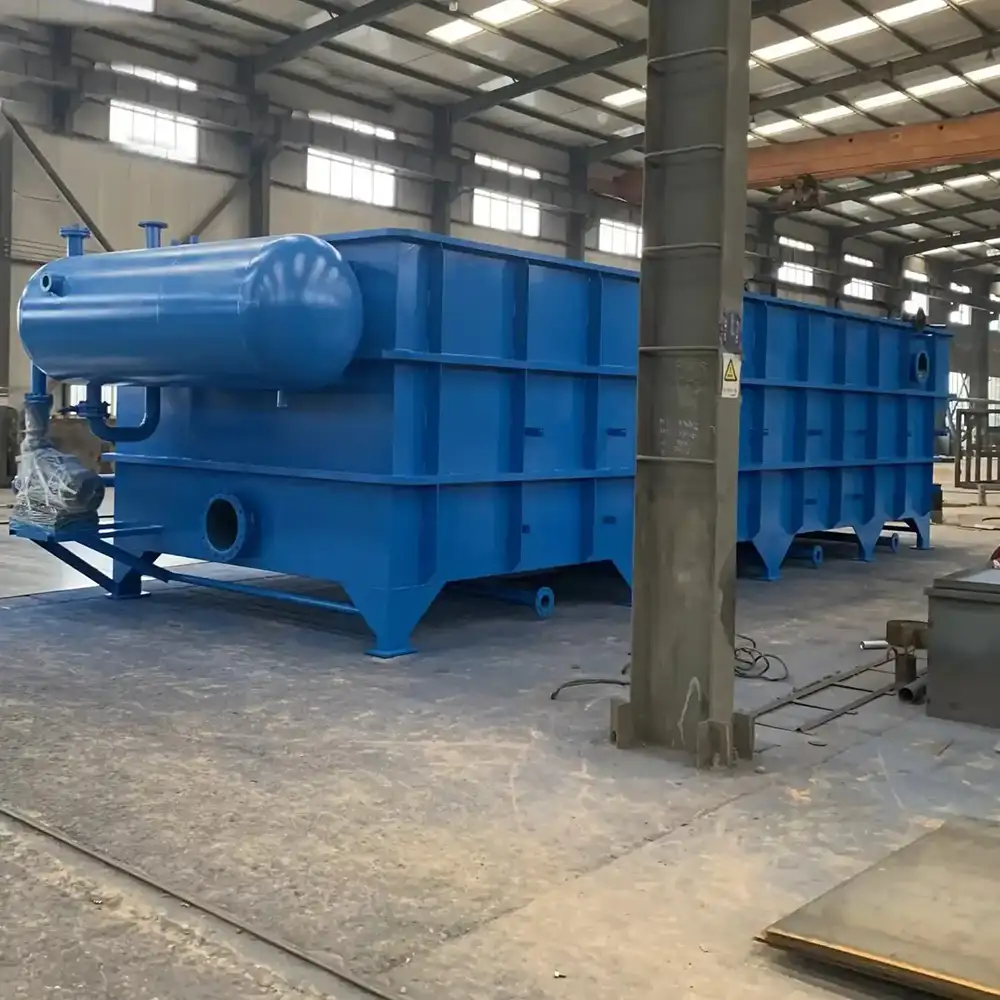
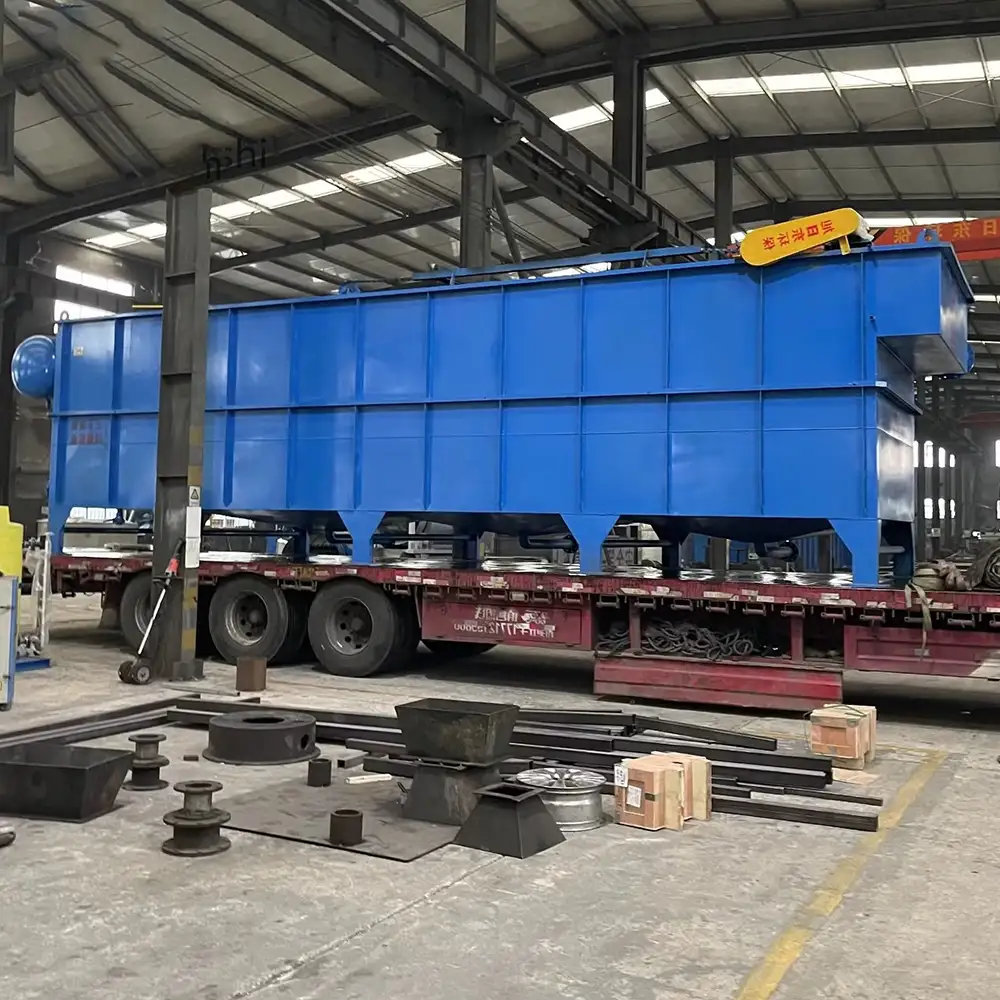
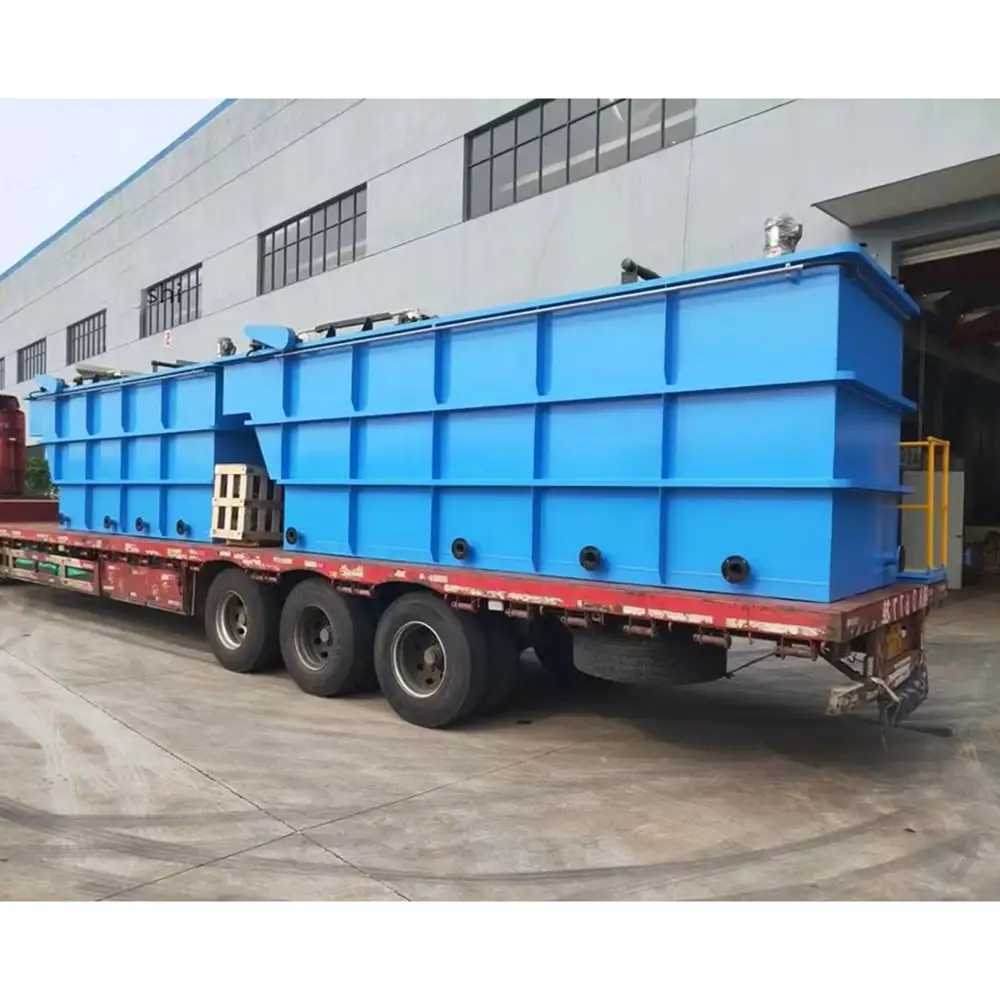
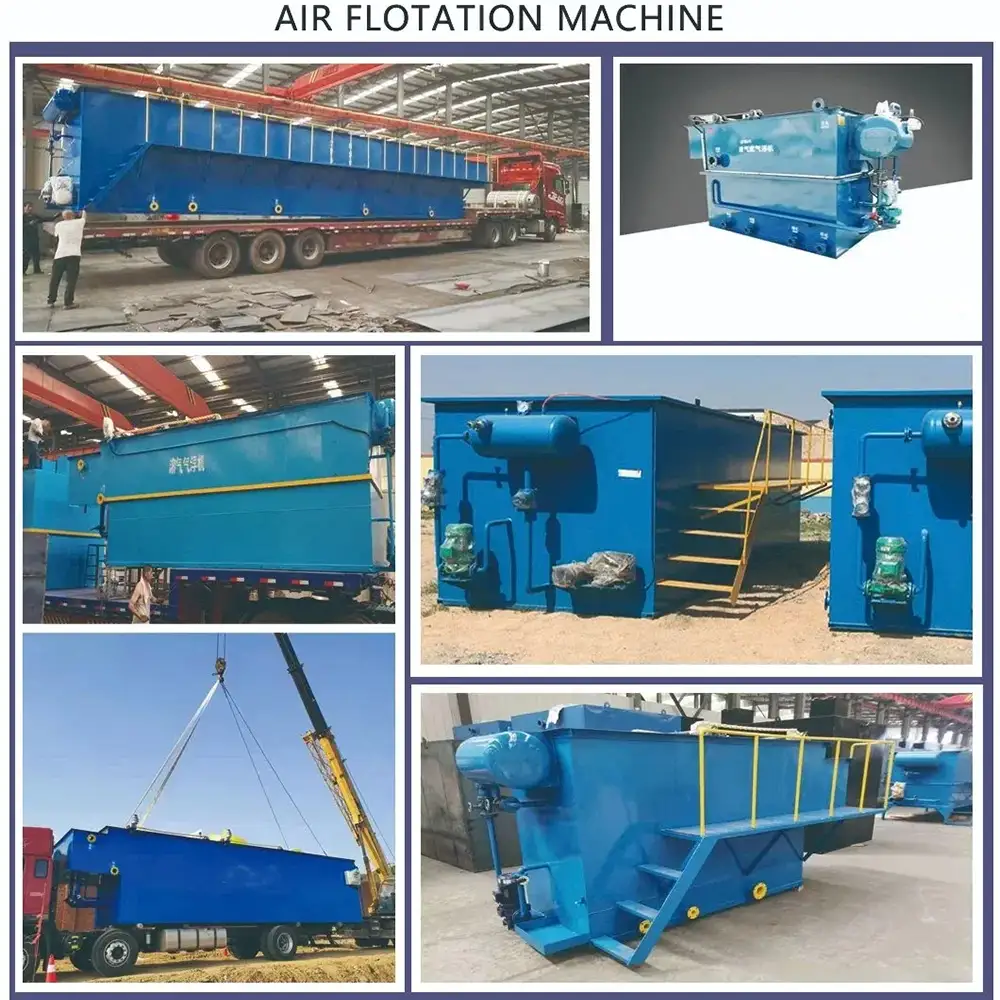
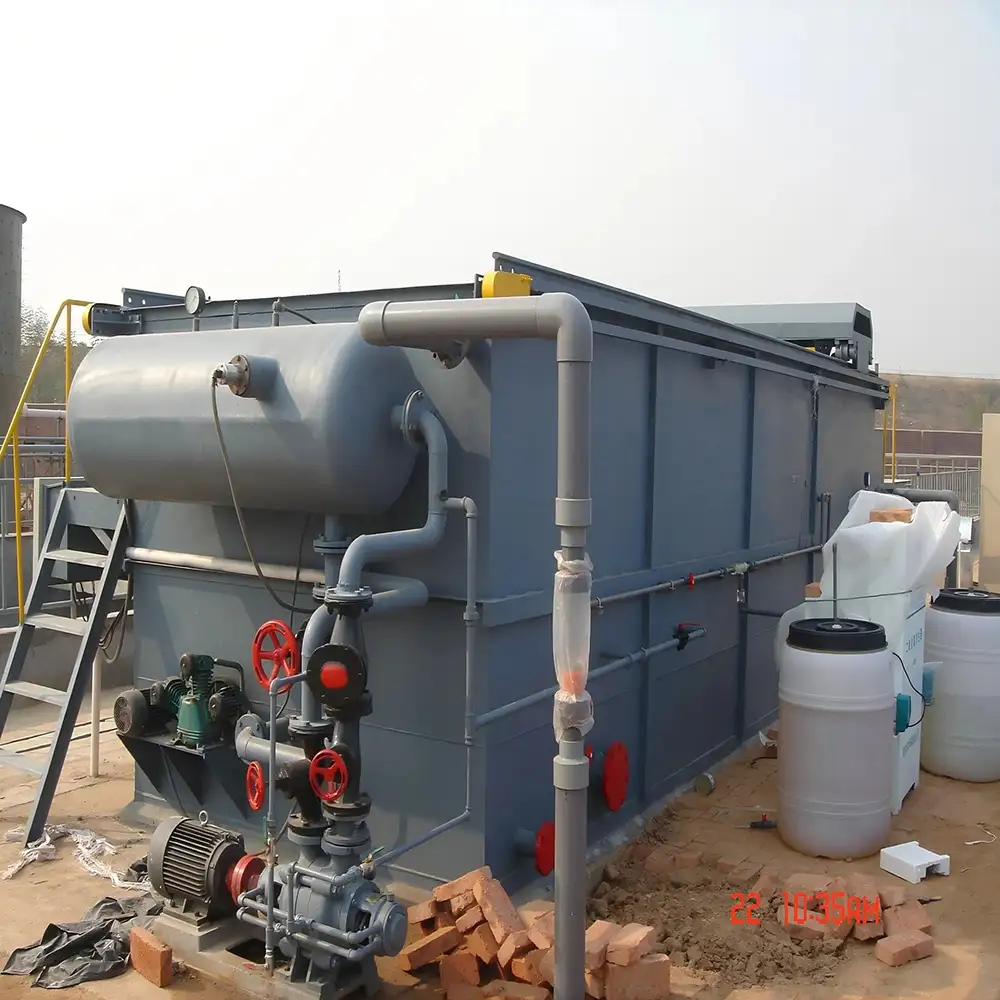
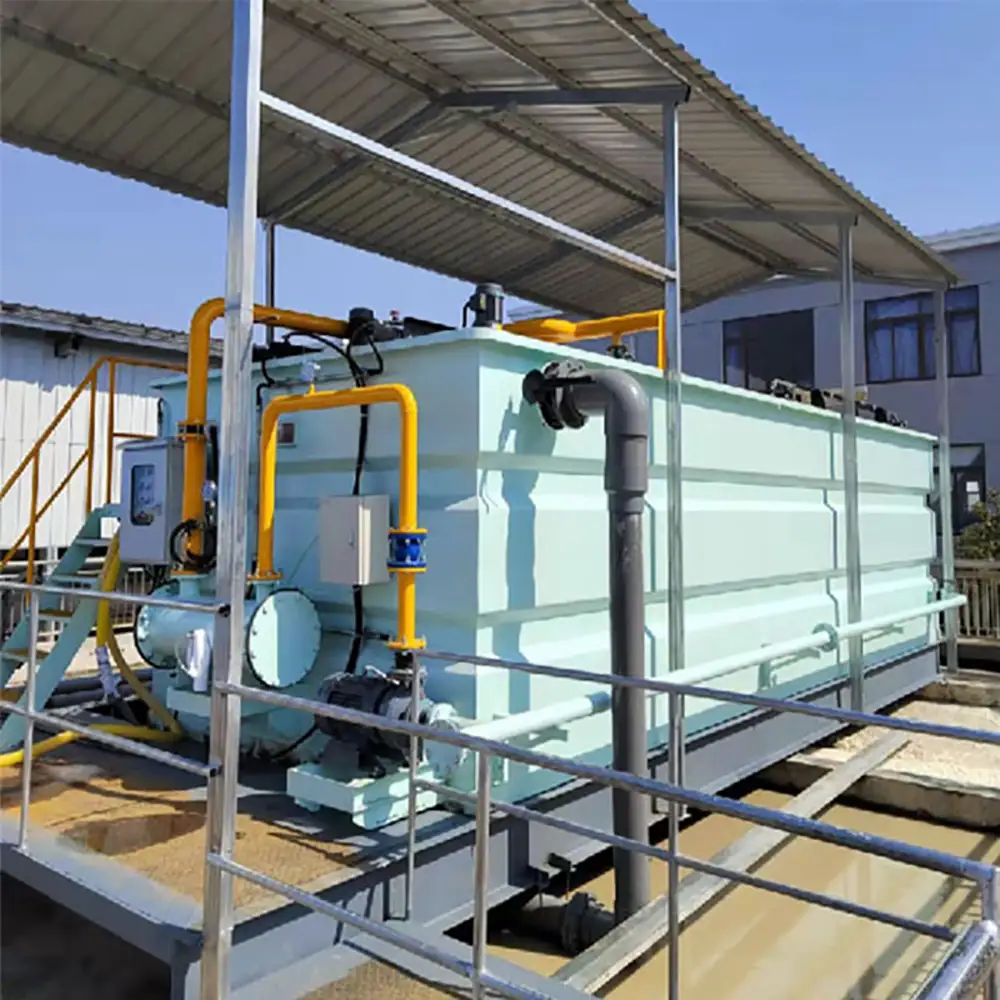
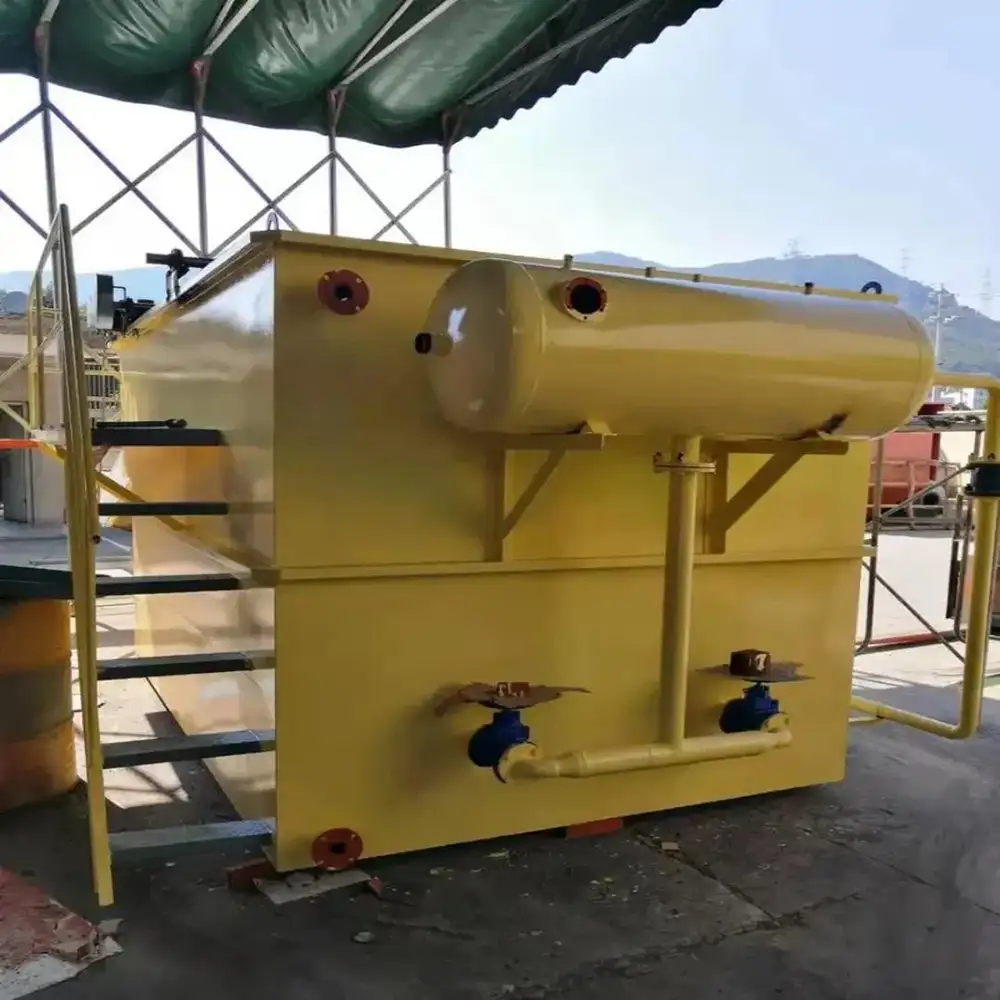
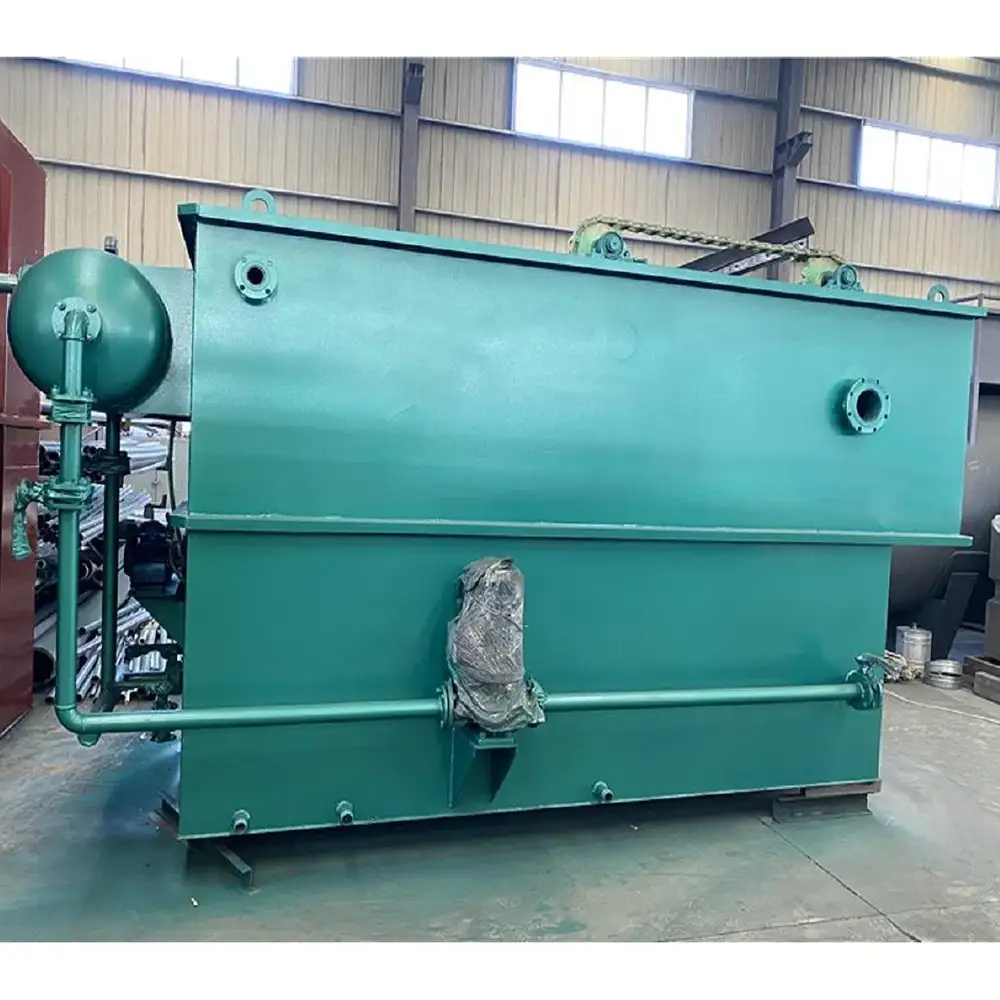
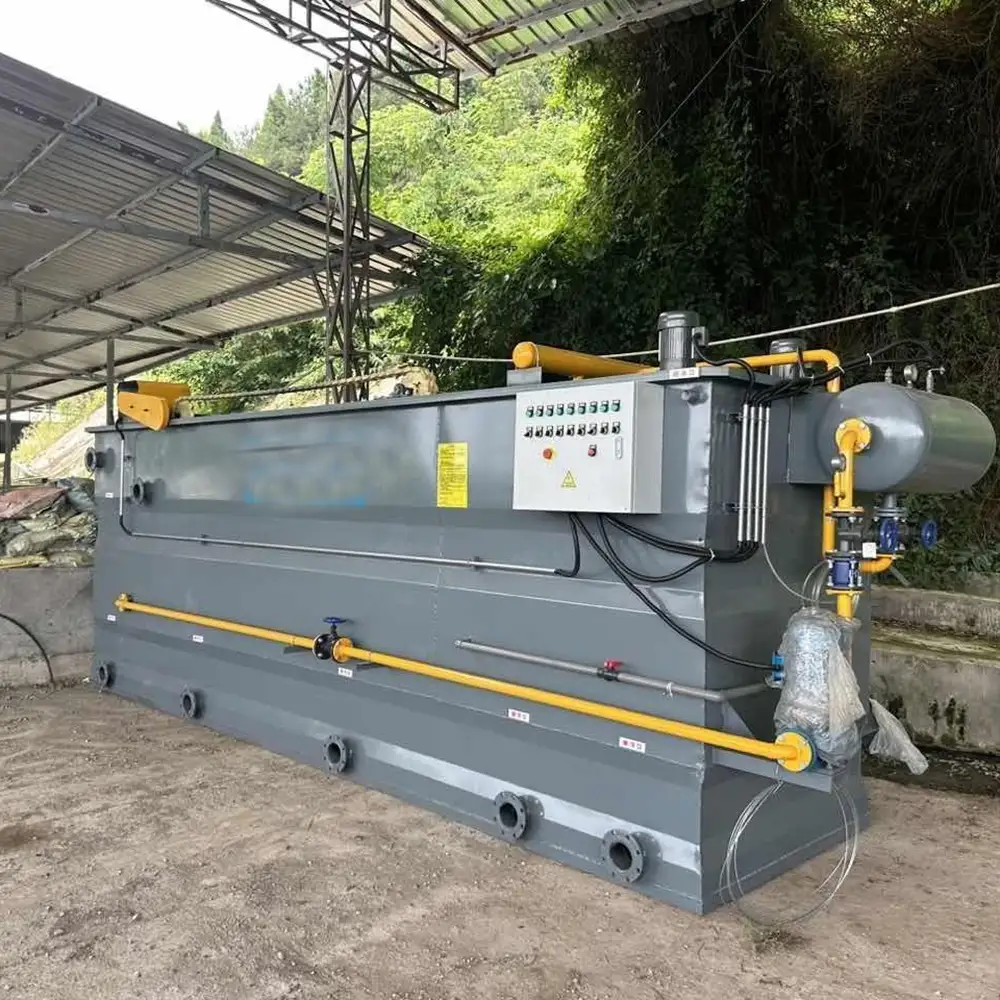
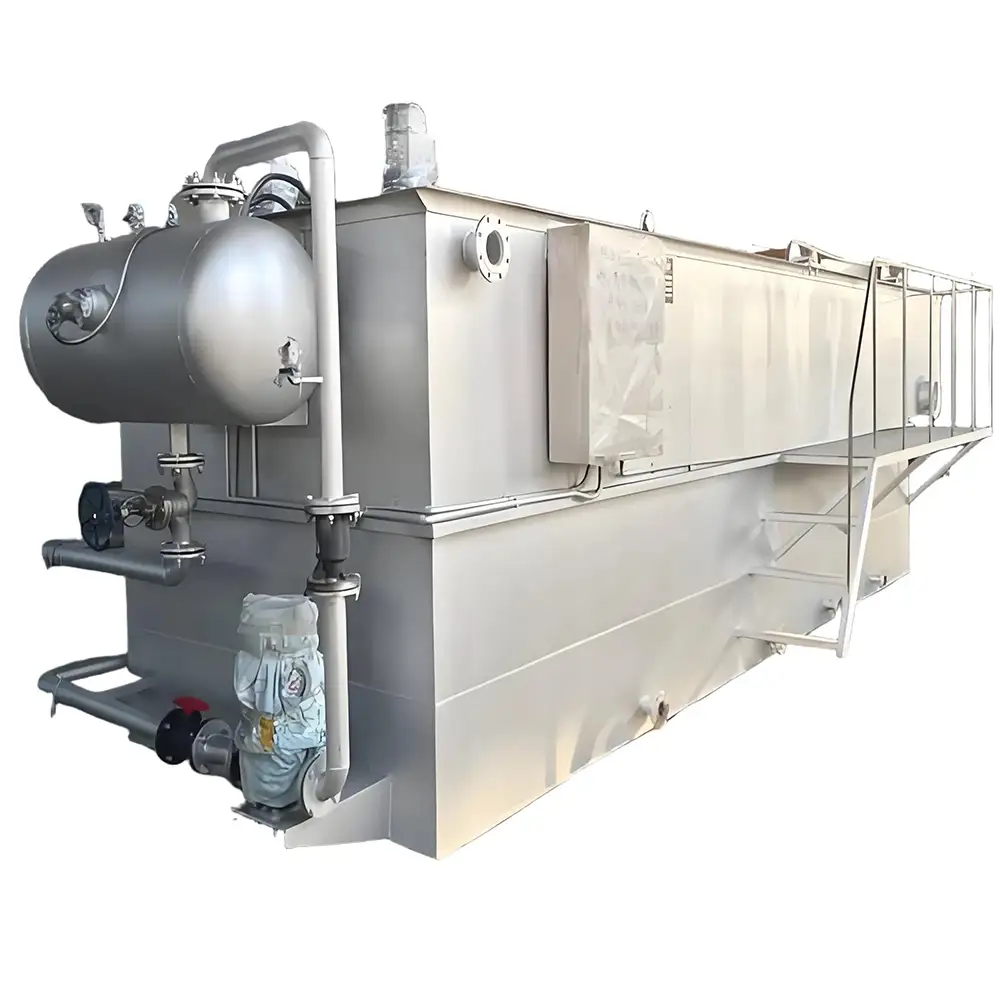
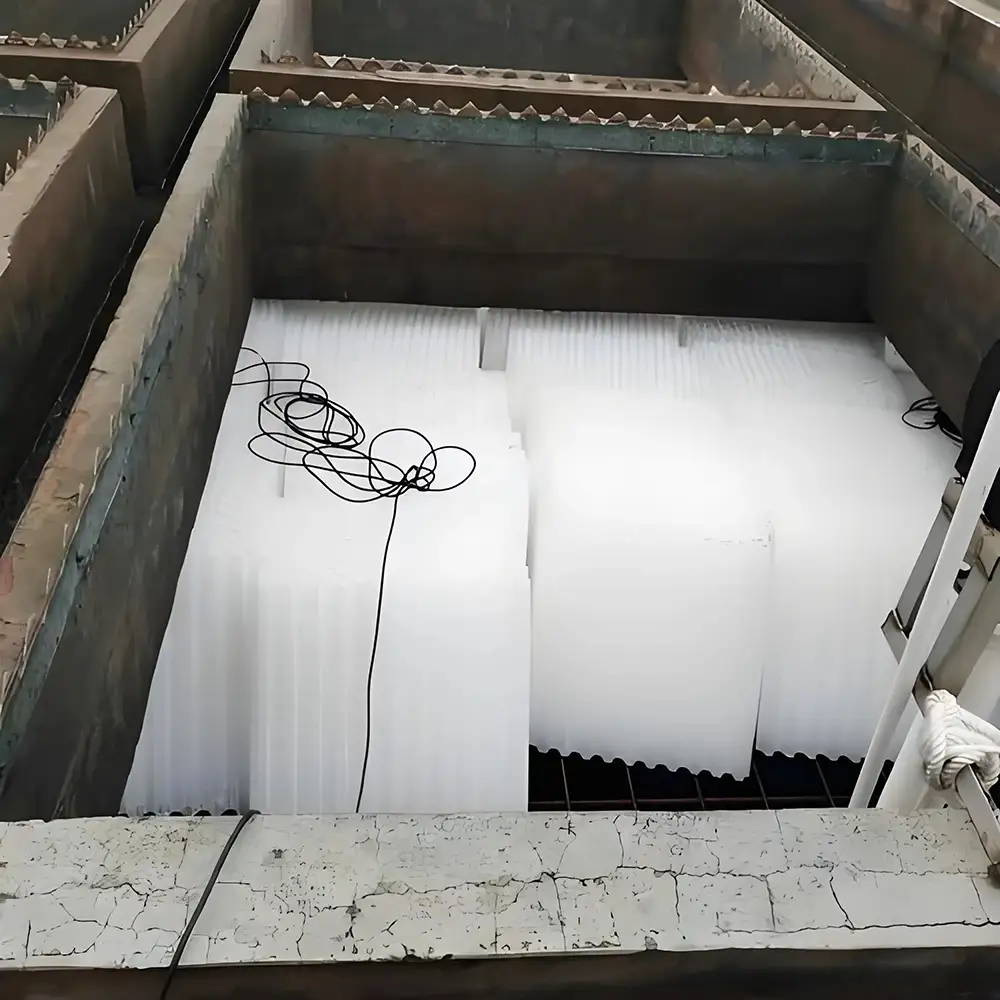
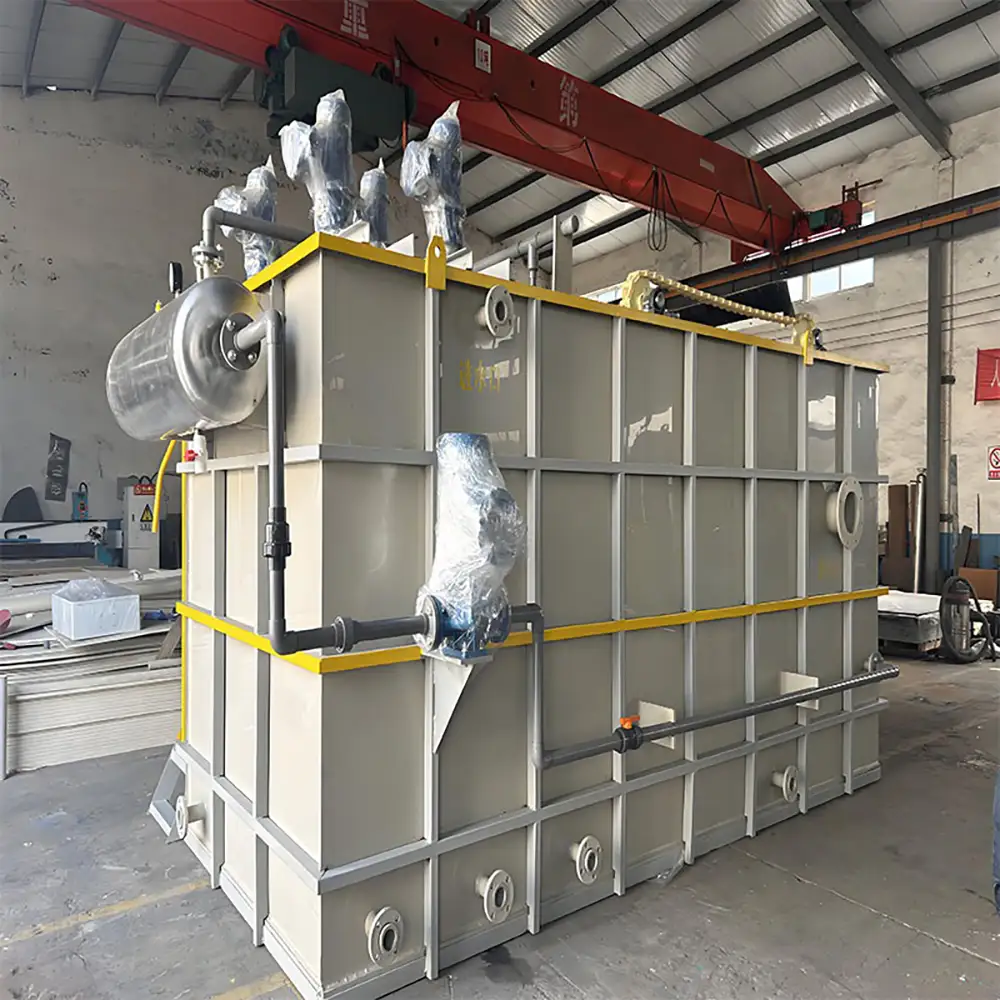
Dissolved air flotation sewage treatment plants are usually used for primary sewage treatment, and the front can be used together with grilles(bar screen). The compact sewage treatment plant is the second treatment, and the disinfection system (sodium hypochlorite, chlorine dioxide) is tertiary.
Dissolved air flotation can remove suspended solids very well, and can be used for breeding, food consumption, slaughtering, food processing, plastic washing, dyeing, and car washing sewage treatment.
It has the characteristics of low price, small footprint, low operating cost and long service life.
Our company has been focusing on the production of air flotation equipment for more than 20 years, with domestic and foreign markets and a good reputation.
|
Model NO. |
GSRF |
Handling method |
physicochemical treatment |
|
Usage |
Industrial, agricultural, food factories, slaughterhouses |
Trademark |
|
|
Types |
Package, Compact, Small, Mini |
Applications |
Industrial, Municipal, Domestic, Medical, Ship |
|
Craft |
Flocculation sedimentation method |
Features |
Water Clarification, Filtration, Purification |
|
Service Life |
20 Years |
Operation |
Automatic |
|
Steel Plate Thickness |
>8mm |
Function |
Remove Suspended solids |
|
Voltage |
220V/ 380V/ Customerized |
Installation Type |
Onground |
|
Colour |
Grey/Silver/Blue/Balck/Customerized |
Use for |
Mineral, Printing, Chemical, Dyeing, Starch |
|
Material |
Carbon Steel, Stain Steel, FRP, PE, PP |
Certificate |
SGS, ISO |
|
Transport Package |
Container Standard Packing |
Specification |
Carbon steel anti-corrosion |
|
Production Capacity |
1000 Sets/Year |
Origin |
China |
Energy Efficient Low Consumption Air Flotation Purification Equipment
Energy Efficient Low Consumption Air Flotation Purification Equipment is designed for industrial wastewater treatment applications where efficient solid-liquid separation, stable clarification, and reduced operating energy are important. Using dissolved air flotation technology, the system generates fine air bubbles that attach to suspended particles, oil, grease, fats, and other low-density contaminants, lifting them to the water surface for mechanical removal.
Compared with conventional gravity separation, air flotation can provide rapid clarification for contaminants that settle poorly or remain suspended because their density is close to that of water. DAF systems are widely used as primary treatment or pretreatment in food processing, dairy, slaughterhouse, oil and gas, petrochemical, chemical, paper, textile, and other industrial wastewater applications. EPA technical references also identify dissolved air flotation as a process commonly used for suspended solids and oil-and-grease removal.
Efficient Dissolved Air Flotation Working Principle
The equipment generally operates by dissolving air into a pressurized water stream and then releasing the air through a pressure-reduction device. The pressure change produces fine microbubbles inside the flotation tank.
These bubbles contact suspended solids, oil droplets, grease, flocs, and other floatable materials. As the bubbles attach to the contaminants, their effective buoyancy increases and the contaminant-bubble aggregates rise to the surface. A skimmer then continuously or periodically removes the floated sludge, while clarified water flows from the flotation chamber to the next treatment stage.
The process can be configured with partial-flow or recirculated-flow pressurization. Recirculated DAF arrangements can reduce the amount of wastewater that must be pressurized, which can contribute to lower pumping energy requirements when properly designed.
Low Energy Consumption Design
Energy efficiency is achieved through the coordinated design of the recycle pump, air dissolution system, pressure-control components, flotation tank, skimmer, and automatic controls.
Rather than simply increasing air pressure or recycle flow, an efficient DAF system should match the air-to-solids requirement and hydraulic loading to the actual wastewater characteristics. Properly optimized equipment can reduce unnecessary pumping, air compression, and chemical consumption while maintaining effective flotation performance.
A full-scale refinery pretreatment study reported that an API separator followed by DAF required substantially less specific energy than the downstream MBR stage, illustrating why flotation can be an energy-efficient pretreatment technology within a larger treatment train.
Actual energy consumption should always be determined from the required flow rate, wastewater quality, recycle ratio, pump selection, pressure, air dissolution method, sludge loading, and control strategy rather than using one universal kWh/m³ value.
Main Features
1. Energy-Efficient Flotation Process
Optimized recycle pumping and air dissolution help provide effective flotation without unnecessary energy input. The system can be engineered around the actual treatment capacity and contaminant loading.
2. Effective Suspended Solids Separation
Fine bubbles can capture light, fine, or neutrally buoyant particles that may be difficult to remove by conventional gravity settling. DAF is particularly useful when suspended particles have a density close to water.
3. Oil, Grease, and FOG Removal
DAF is especially suitable for wastewater containing fats, oils, and grease. Depending on the wastewater characteristics and pretreatment, chemical coagulation and flocculation can improve the capture of emulsified or colloidal contaminants.
4. Compact Treatment Footprint
Because flotation can achieve rapid solid-liquid separation, the required hydraulic retention volume can be smaller than that of some conventional sedimentation arrangements. This makes DAF attractive where available installation space is limited.
5. Automatic Operation
The system can incorporate PLC controls, automatic skimming, pump controls, pressure monitoring, liquid-level sensors, chemical dosing, alarms, and other instrumentation to simplify daily operation.
6. Flexible Configuration
The air flotation system can be configured with coagulation tanks, flocculation chambers, dissolved-air recycle systems, sludge scrapers, chemical dosing units, control cabinets, and downstream biological or membrane treatment.
Typical Applications
Energy Efficient Low Consumption Air Flotation Purification Equipment can be applied to many wastewater streams, including:
Food Processing Wastewater
Dairy Wastewater
Slaughterhouse Wastewater
Meat Processing Wastewater
Vegetable And Beverage Processing Wastewater
Oil And Grease Wastewater
Petrochemical Wastewater
Refinery Wastewater
Chemical Industry Wastewater
Pulp And Paper Wastewater
Textile And Dyeing Wastewater
Industrial Process Wastewater
Municipal Wastewater Pretreatment
MBR And Biological Treatment Pretreatment
For example, flotation is commonly positioned upstream of biological treatment or membrane processes when excessive oil and suspended solids could interfere with downstream equipment. A refinery case study demonstrated the value of flotation-based pretreatment before an MBR process.
Chemical Conditioning and Treatment Performance
For many industrial wastewater applications, coagulation and flocculation are important parts of the overall DAF process. Chemicals such as aluminum-based coagulants, ferric salts, or polymers may be selected according to the wastewater chemistry.
Chemical conditioning destabilizes colloidal particles and promotes larger flocs that can be more effectively captured by microbubbles. However, chemical selection should be established through laboratory or pilot testing rather than assuming the same dosage will work for every wastewater.
DAF performance is strongly dependent on influent characteristics, bubble generation, pressure, recycle rate, hydraulic loading, chemical conditioning, and sludge removal. EPA data show that DAF performance can differ significantly depending on whether chemical pretreatment is used.
Integrated Wastewater Treatment System
The air flotation unit can operate as an independent clarification system or as part of a complete wastewater treatment plant.
A typical process may include:
Screening → Equalization → Coagulation → Flocculation → DAF → Biological Treatment → Filtration → Disinfection
For advanced treatment, the DAF system can also be followed by MBR, UF, activated carbon, RO, or other technologies depending on the required treated-water quality.
DAF should primarily be considered a separation and pretreatment process. It is not designed to directly remove every dissolved contaminant, such as dissolved salts, ammonia, or nitrate. Additional biological, adsorption, precipitation, ion-exchange, or membrane treatment may be required for those contaminants.
Equipment Configuration
A complete low-consumption DAF system may include:
Flotation Tank
Dissolved Air Release Device
Recycle Water Pump
Air Compressor
Air Saturation System
Pressure Control Valve
Surface Sludge Skimmer
Sludge Collection System
Coagulation Tank
Flocculation Tank
Chemical Dosing System
PLC Control Cabinet
HMI Touchscreen
Flow And Pressure Sensors
Level Sensors
Optional Online Monitoring Instruments
Equipment materials can be selected according to the wastewater environment, including carbon steel with protective coating, stainless steel, or other corrosion-resistant materials.
Maintenance and Operation
Routine maintenance is important for maintaining low energy consumption and stable treatment performance. Operators should inspect the recycle pump, air compressor, pressure-control components, bubble-release system, skimmer, sludge discharge system, and chemical dosing equipment.
Keeping the flotation surface clean and preventing excessive sludge accumulation can help maintain stable separation. Pump and compressor efficiency should also be monitored because worn components can increase energy consumption while reducing process performance.
The control system can be configured to monitor operating pressure, flow, tank level, pump status, and other critical parameters. This helps operators identify abnormal operating conditions before they become major process problems.
Why Choose Us?
Choosing the right Energy Efficient Low Consumption Air Flotation Purification Equipment requires more than selecting a standard tank size. The system should be matched to wastewater flow, TSS, oil and grease concentration, particle characteristics, temperature, pH, chemical requirements, and downstream treatment objectives.
Our approach focuses on practical process engineering, efficient equipment configuration, reliable mechanical components, and flexible automation. We can provide DAF systems in different capacities and configurations for industrial wastewater treatment projects.
Key advantages include:
Energy-Efficient Recycle System Design
Optimized Dissolved Air Flotation Process
Flexible Treatment Capacity
Effective Suspended Solids And FOG Separation
Compact Equipment Configuration
Automatic Sludge Skimming
Optional PLC And HMI Control
Integrated Chemical Dosing Options
Stainless Steel Or Coated Steel Construction
Support For Complete Wastewater Treatment Lines
The final configuration can be engineered according to actual wastewater test data and required treatment objectives, helping customers balance treatment performance, capital cost, energy consumption, chemical use, and maintenance requirements.
FAQs
1. What Is Energy Efficient Air Flotation Equipment?
It is wastewater treatment equipment designed to use dissolved air flotation for separating suspended solids, oil, grease, and other floatable contaminants while optimizing pumping, air dissolution, and process control to reduce unnecessary energy consumption.
2. What Is DAF?
DAF stands for Dissolved Air Flotation. It uses pressurized air dissolved in water to generate fine bubbles that attach to contaminants and float them to the water surface for removal.
3. What Contaminants Can DAF Remove?
DAF is commonly used for suspended solids, oil, grease, fats, colloidal particles, and other floatable or buoyant contaminants.
4. Can DAF Remove Oil and Grease?
Yes. DAF is particularly suitable for oil and grease separation, especially when contaminants are dispersed or associated with suspended solids.
5. Does DAF Remove Dissolved Salts?
Generally, no. DAF is primarily a physical-chemical separation process and is not a desalination technology. RO, ion exchange, or other appropriate processes may be required for dissolved salts.
6. Can DAF Reduce BOD and COD?
DAF can reduce the particulate and oil-associated fraction of BOD and COD when these contaminants are captured with the floated solids. It should not be considered a complete dissolved-organic treatment process.
7. Is Chemical Dosing Required?
Not always. However, coagulation and flocculation can significantly improve separation for many industrial wastewater streams, particularly when fine or colloidal particles are difficult to float.
8. Can the DAF System Be Automated?
Yes. PLC, HMI, automatic pump control, pressure monitoring, level control, chemical dosing, alarms, and optional online water-quality monitoring can be integrated.
9. What Industries Use DAF Equipment?
Common applications include food processing, dairy, slaughterhouses, meat processing, petrochemical, refinery, chemical, paper, textile, and other industrial wastewater treatment applications.
10. How Can Energy Consumption Be Reduced?
Energy use can be optimized through efficient recycle pumps, suitable air dissolution pressure, proper recycle ratios, efficient bubble generation, variable-frequency drives, and automatic process control.
11. Can DAF Be Used Before MBR?
Yes. DAF can serve as pretreatment before MBR by reducing suspended solids, oil, and grease loads that could otherwise increase the burden on downstream biological and membrane processes.
12. How Do I Select the Correct DAF Capacity?
Selection should consider wastewater flow, peak flow, TSS, oil and grease concentration, temperature, pH, particle characteristics, chemical conditioning, required effluent quality, and downstream treatment requirements. Pilot or laboratory testing is recommended for difficult wastewater.
Prev:
Intelligent Monitoring Dissolved Air Flotation Wastewater Equipment
Next:
STP/High Efficiency Flotation Equipment/Micro-Nano Bubbles Wastewater Treatment Equipment
TAG:
Suspended Solids Removal,
Industrial Wastewater Treatment,
Industrial Water Treatment,
Wastewater Pretreatment Equipment,
Industrial Effluent Treatment,
DAF Sludge Removal,
Primary Wastewater Treatment,
DAF Coagulation System,
DAF Flocculation System,
Wastewater Clarification Equipment,
Microbubble Flotation,
Microbubble Air Flotation,
Oil And Grease Removal,
Industrial DAF System,
DAF System,
DAF Wastewater Treatment,
Dissolved Air Flotation Equipment,
Dissolved Air Flotation,
Air Flotation Equipment,
Air Flotation System,
DAF Pretreatment System,
DAF Clarifier,
Wastewater Purification Equipment,
Compact DAF System,
Automatic DAF System,
Recycle DAF System,
DAF Sludge Skimmer,
DAF Water Treatment,
Low Energy Wastewater Treatment,
Industrial Wastewater Flotation,
Related Category:
Energy Efficient Low Consumption Air Flotation Purification Equipment,Energy Efficient DAF System,Low Consumption Air Fl China, suppliers, manufacturers, factory, customized, wholesale, quotation, made in China