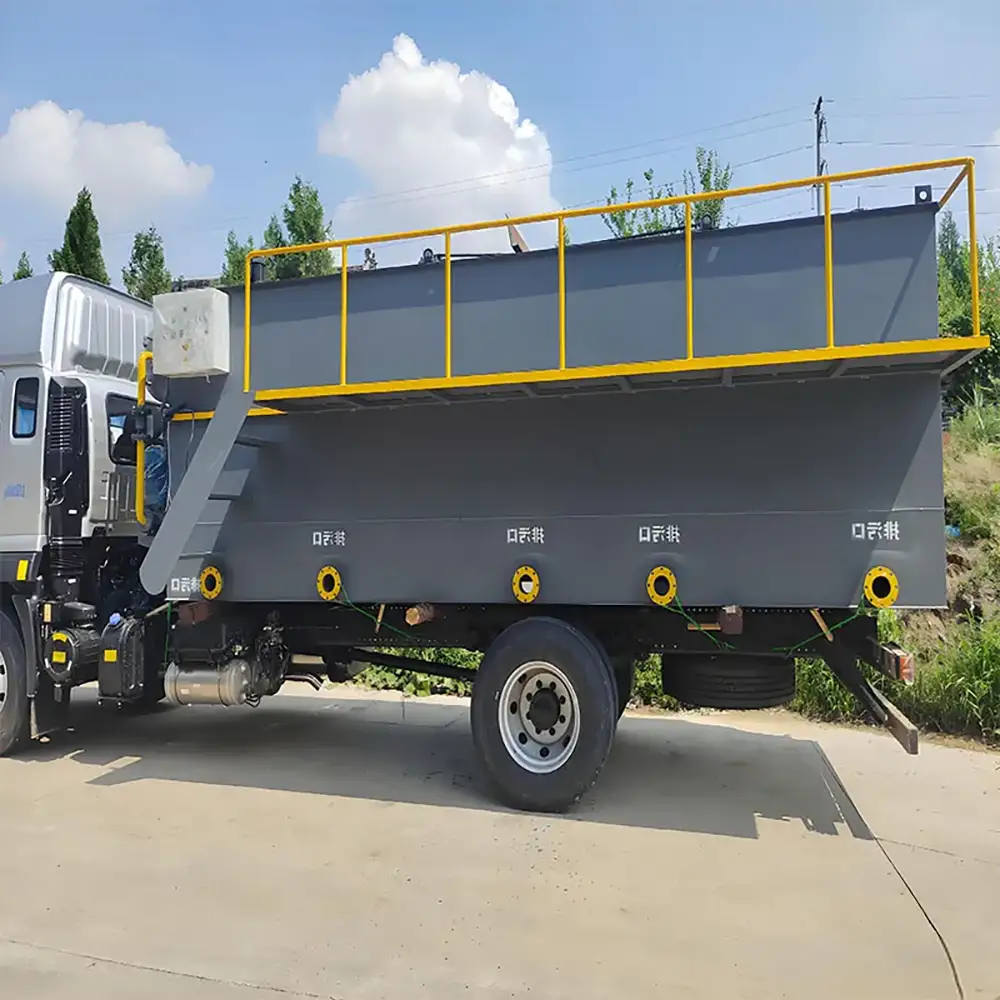
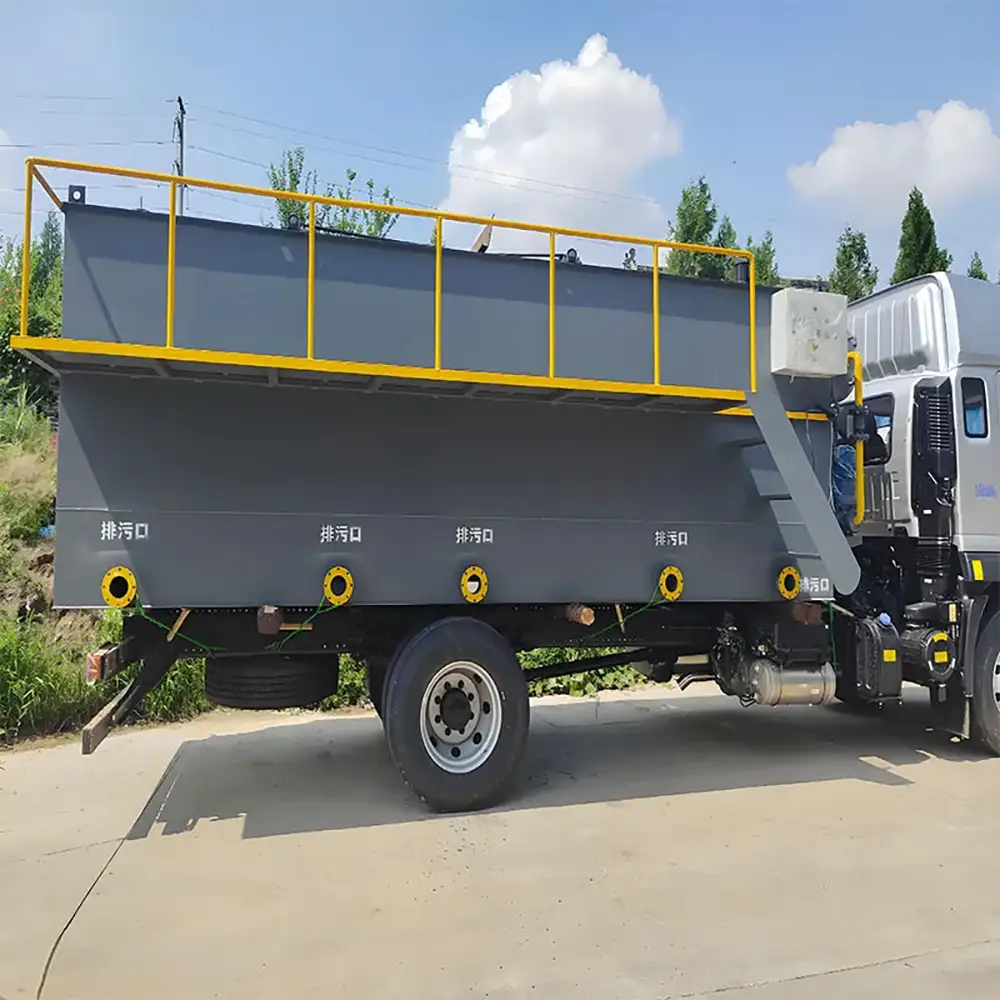
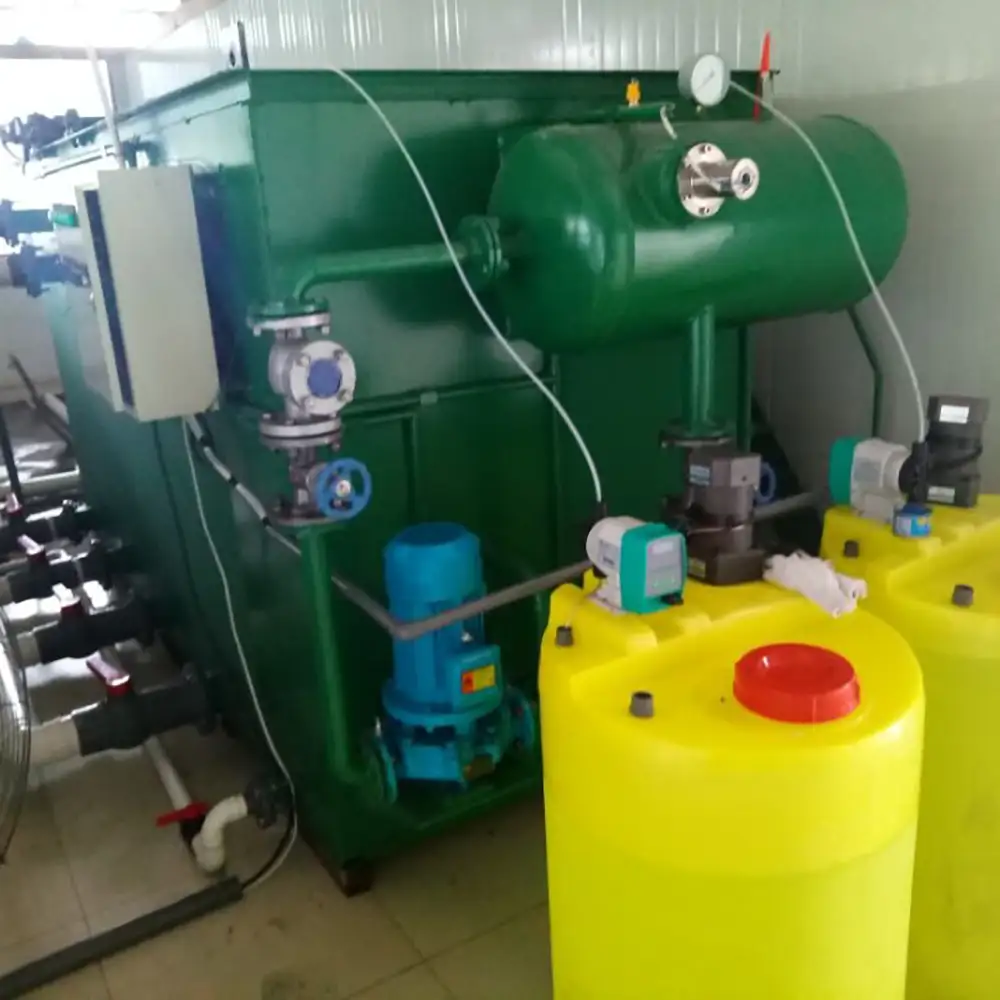
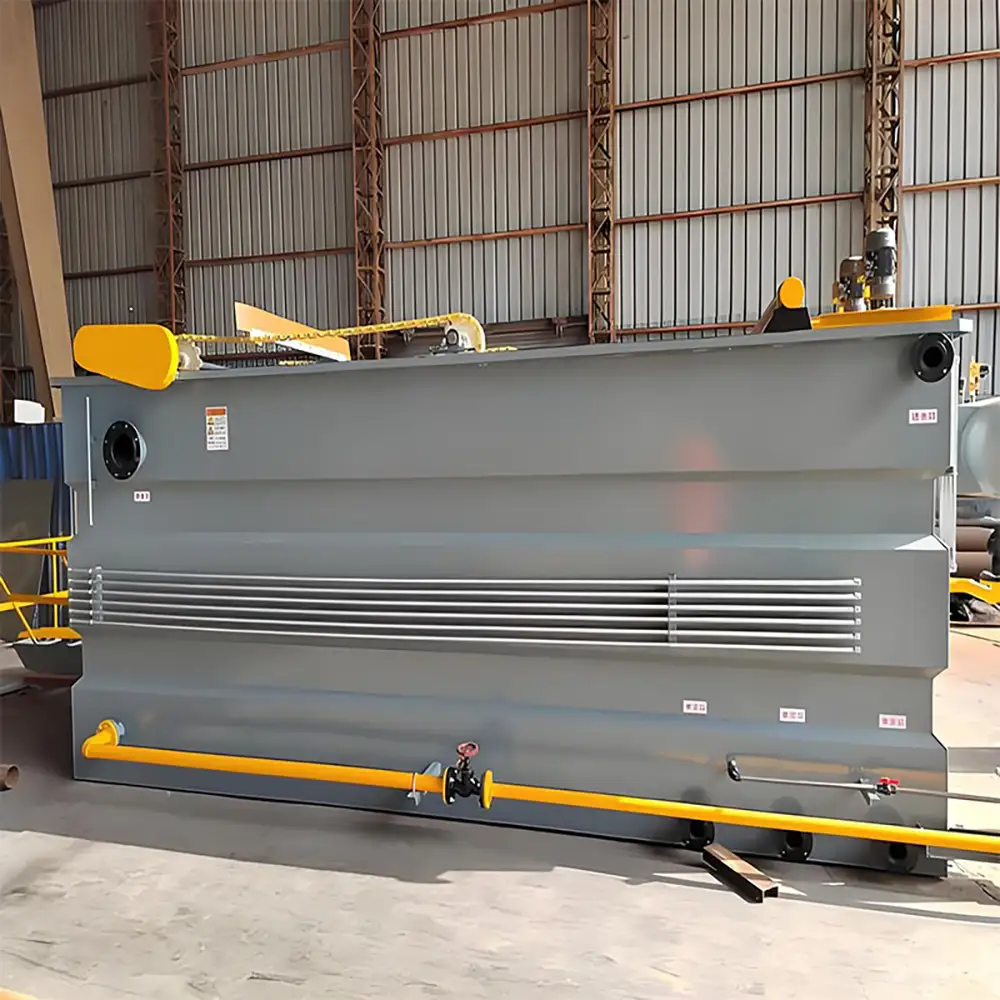
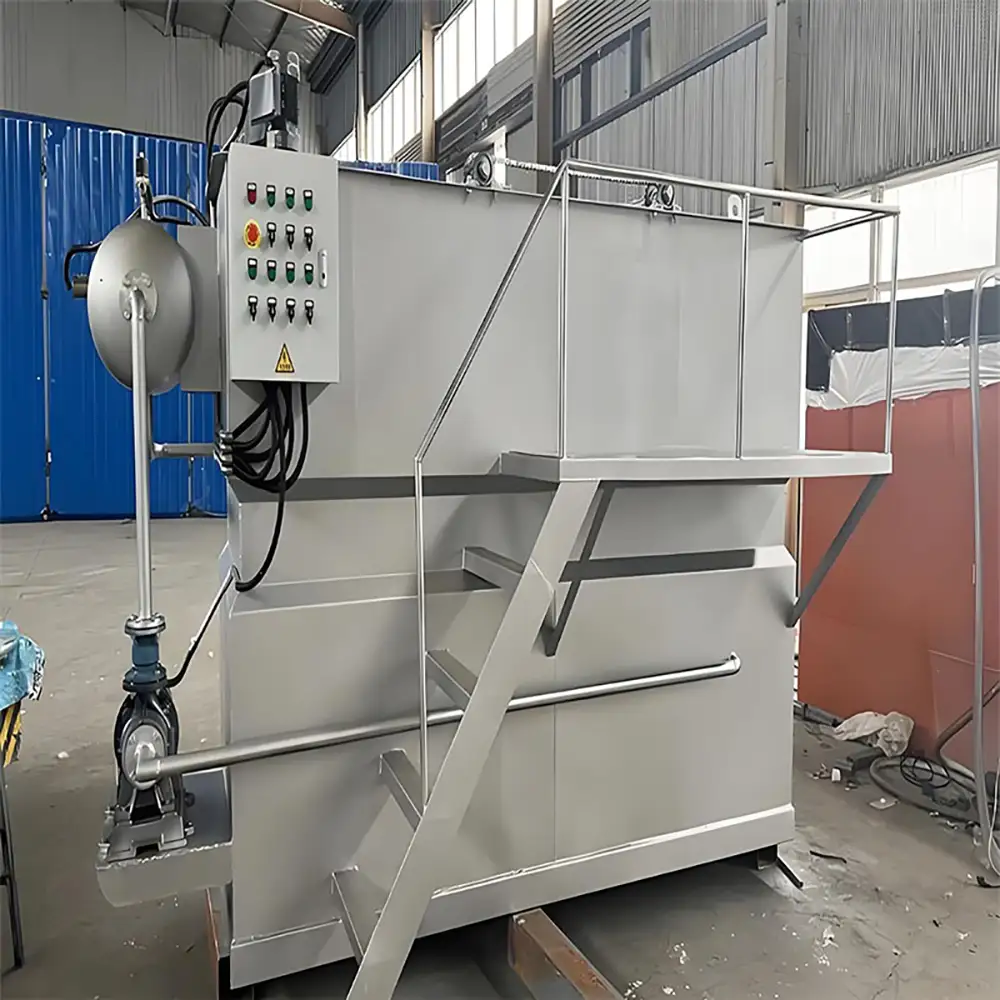
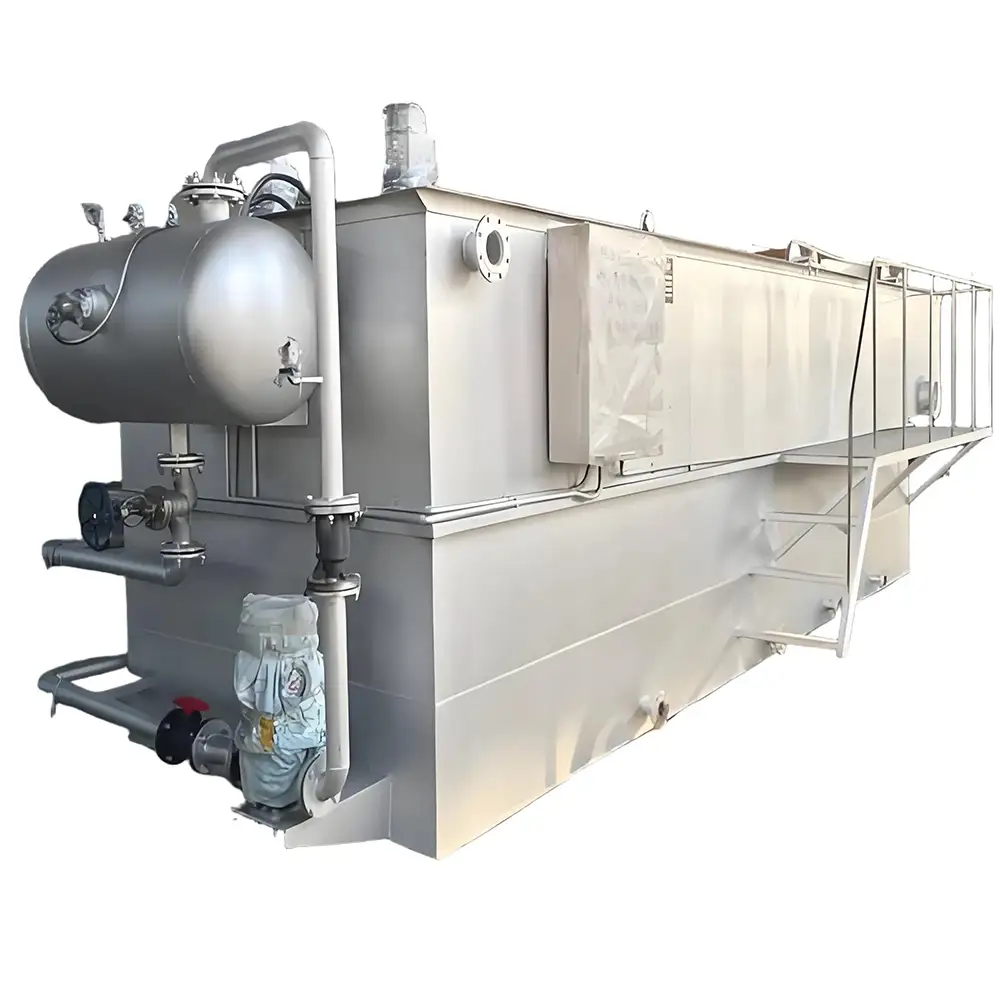
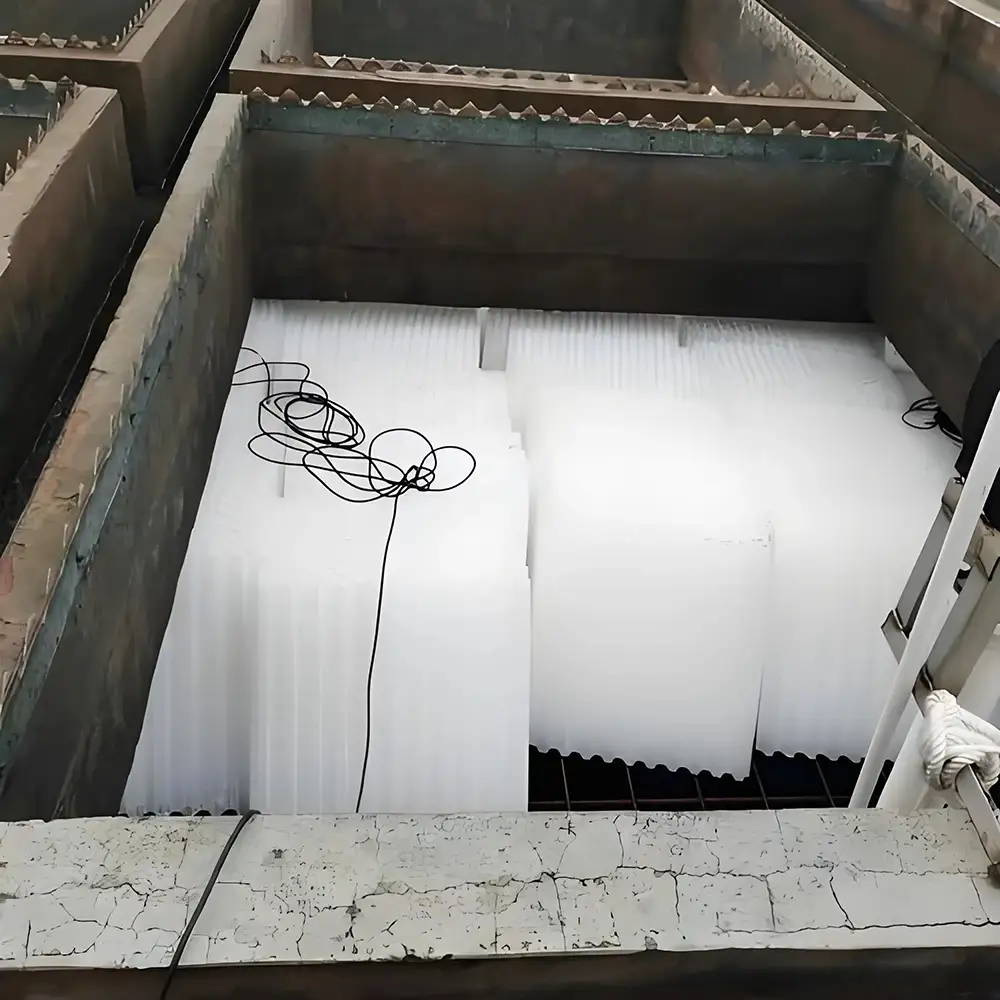
In terms of water supply and drainage, the pre-treatment water quality, except for some raw water bodies with high sand content and sewage with heavy mechanical impurities, is mostly composed of lightweight suspended particles. For example, algae in lakes, reservoirs, and some rivers; Plant residues and small colloidal impurities; Dye particles in the printing and dyeing industry; Short fibers in the papermaking and chemical fiber industries; Microdroplets of petroleum and organic solvents in the refining and chemical industries; Heavy metal ions in electroplating and pickling wastewater; Electrophoretic paint wastewater, etc; They are lightweight particles with a specific gravity very close to that of water. For these raw water, if traditional sedimentation methods are used, the effect will inevitably be poor, especially in low temperature winter conditions, where coagulation and hydraulic conditions deteriorate, making it more difficult to ensure the treatment effect. It can be imagined that if it is difficult to settle flocs, forcing them to sink will inevitably result in half the effort. Instead, it is better to use the situation to artificially introduce bubbles into the water body, making them adhere to the flocs, thereby greatly reducing the overall density of the flocs, and using the speed of bubble rise to force them to float up, thus achieving rapid solid-liquid separation. In this sense, the emergence of air flotation technology is a revolution in the gravity sedimentation method, which has opened up new fields of solid-liquid separation technology.
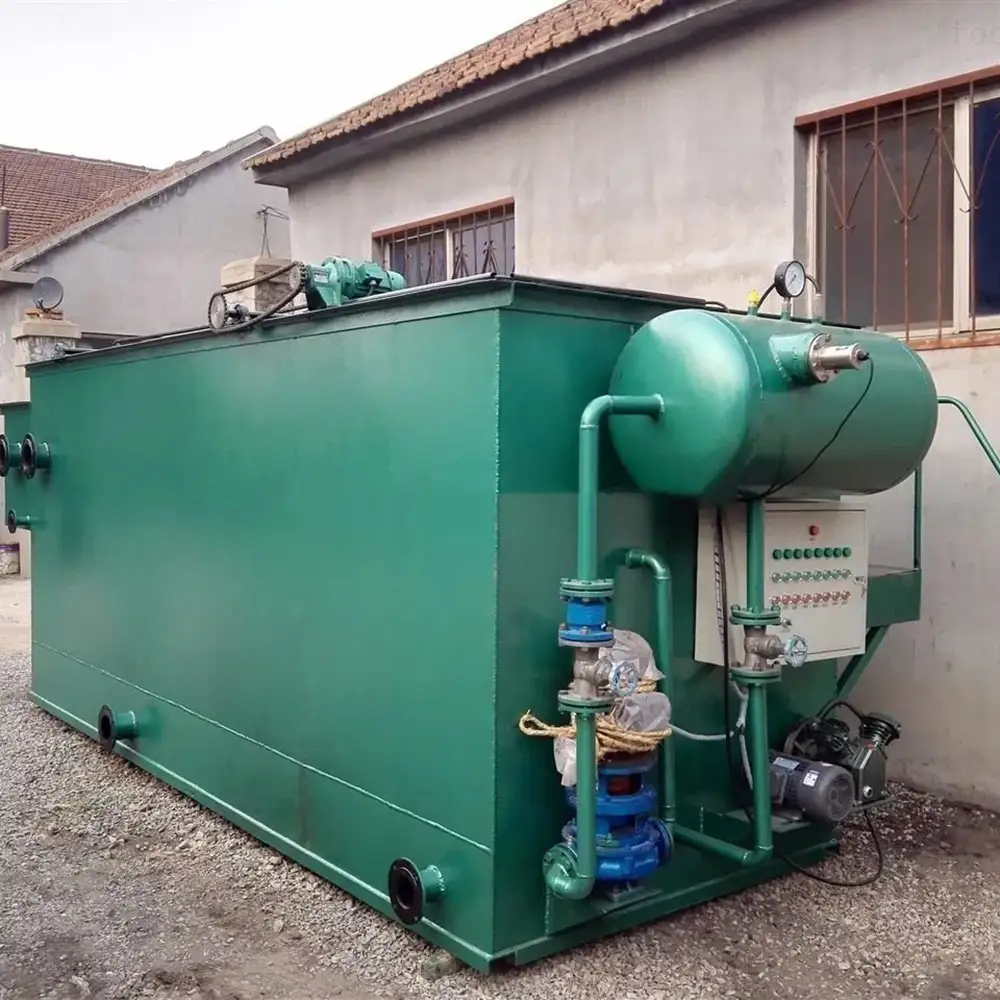
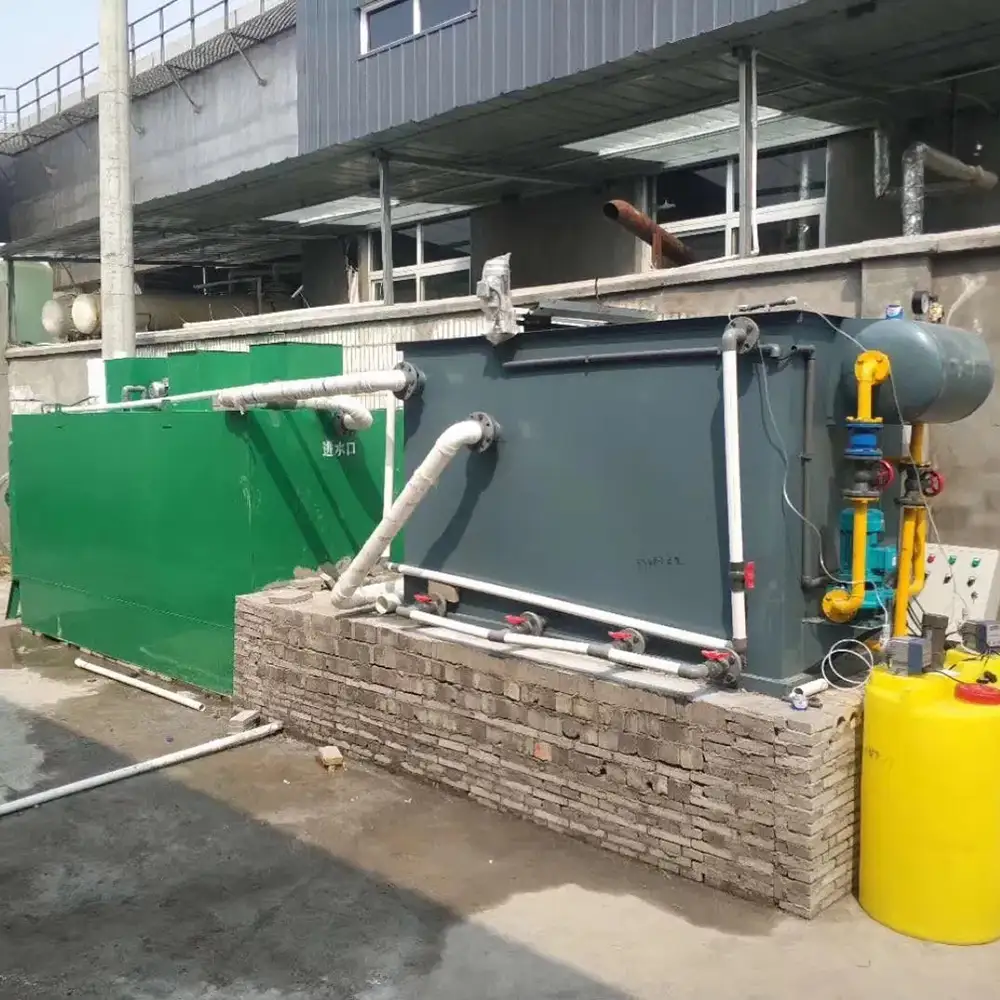
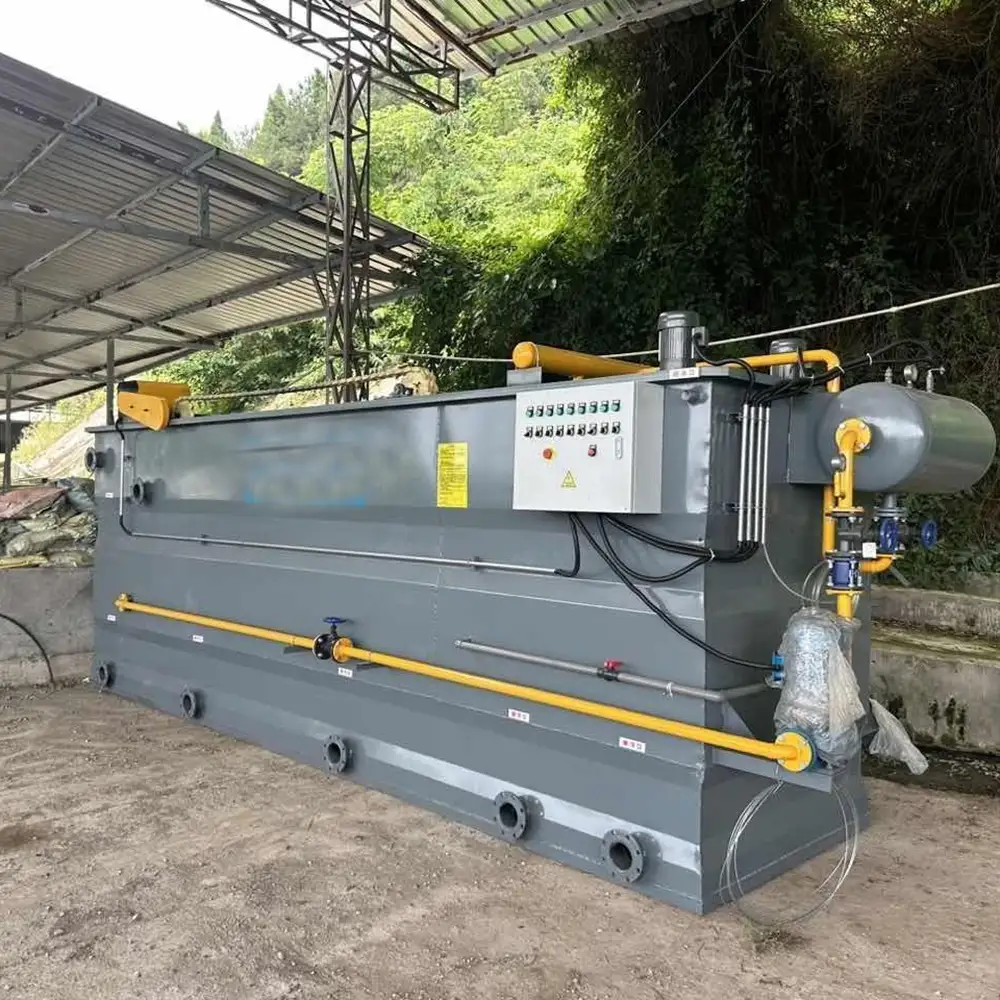
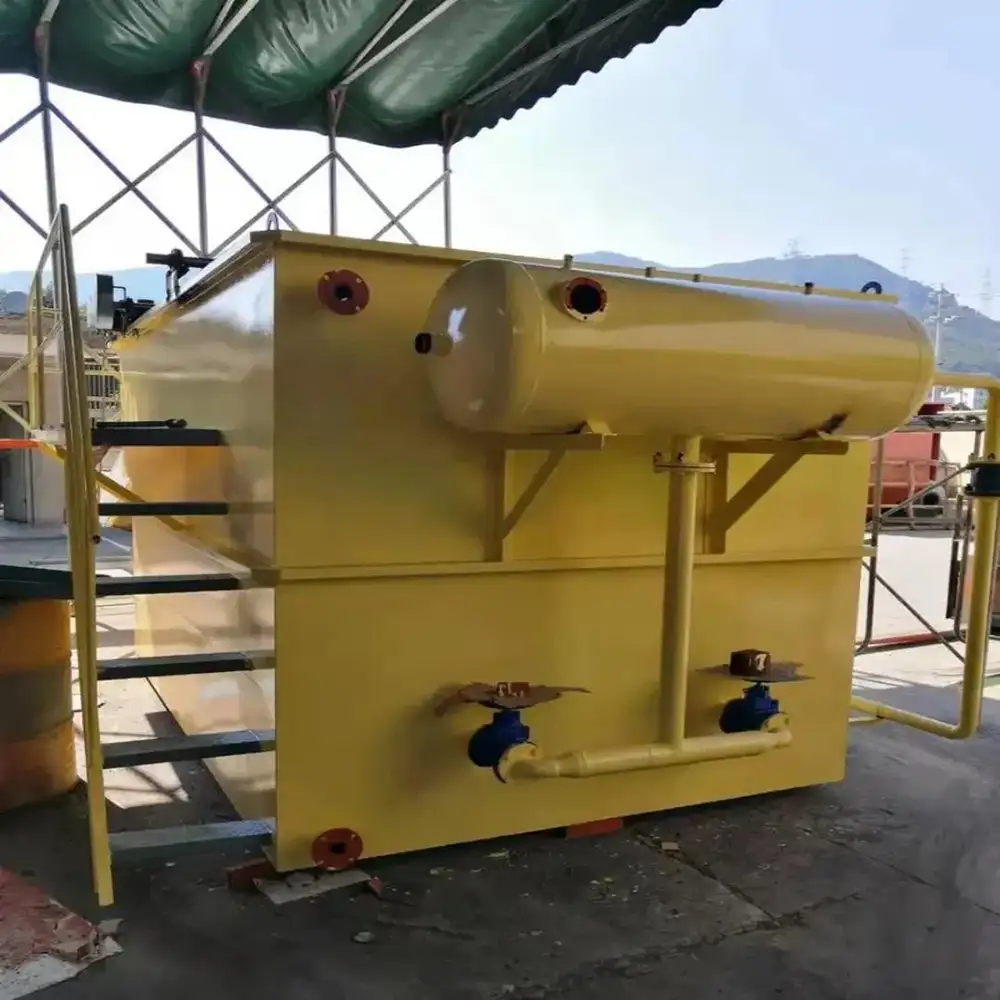
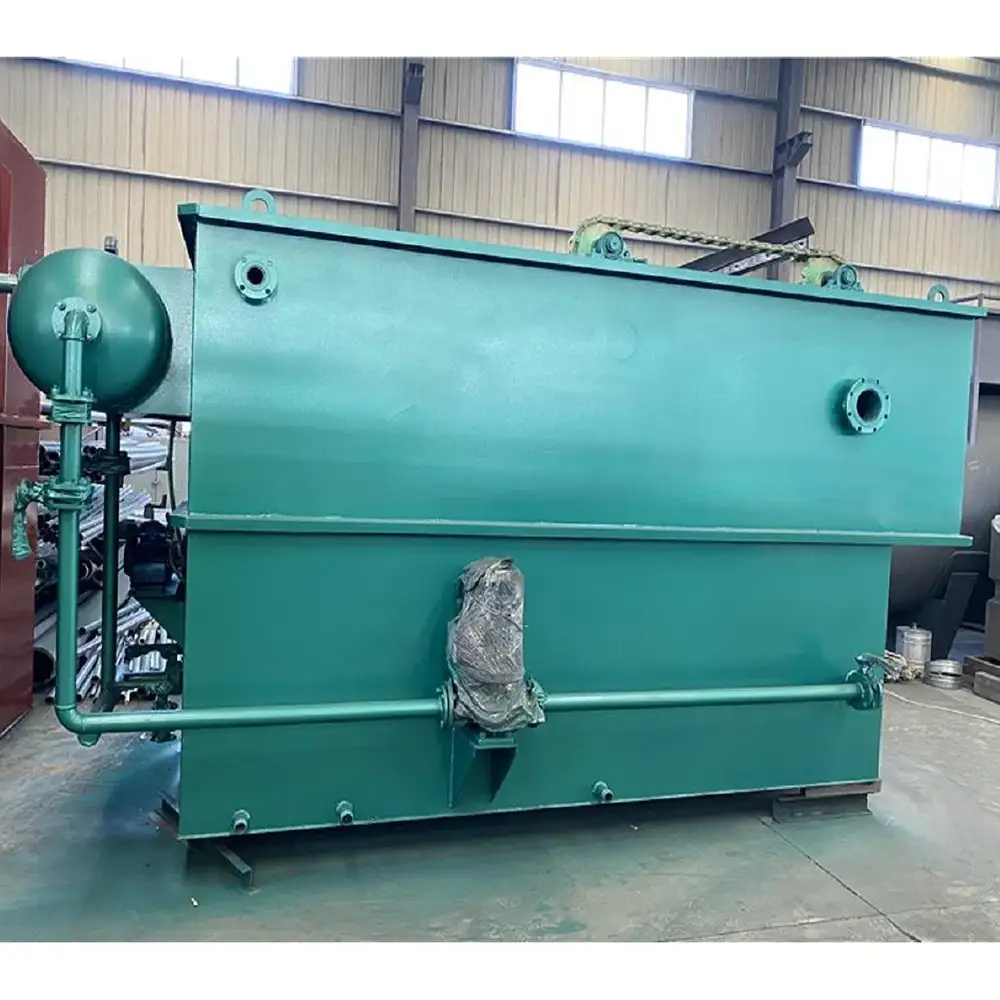
Energy Saving Air Float Efficient Removal of Sewage Impurities Wastewater Treatment Plant
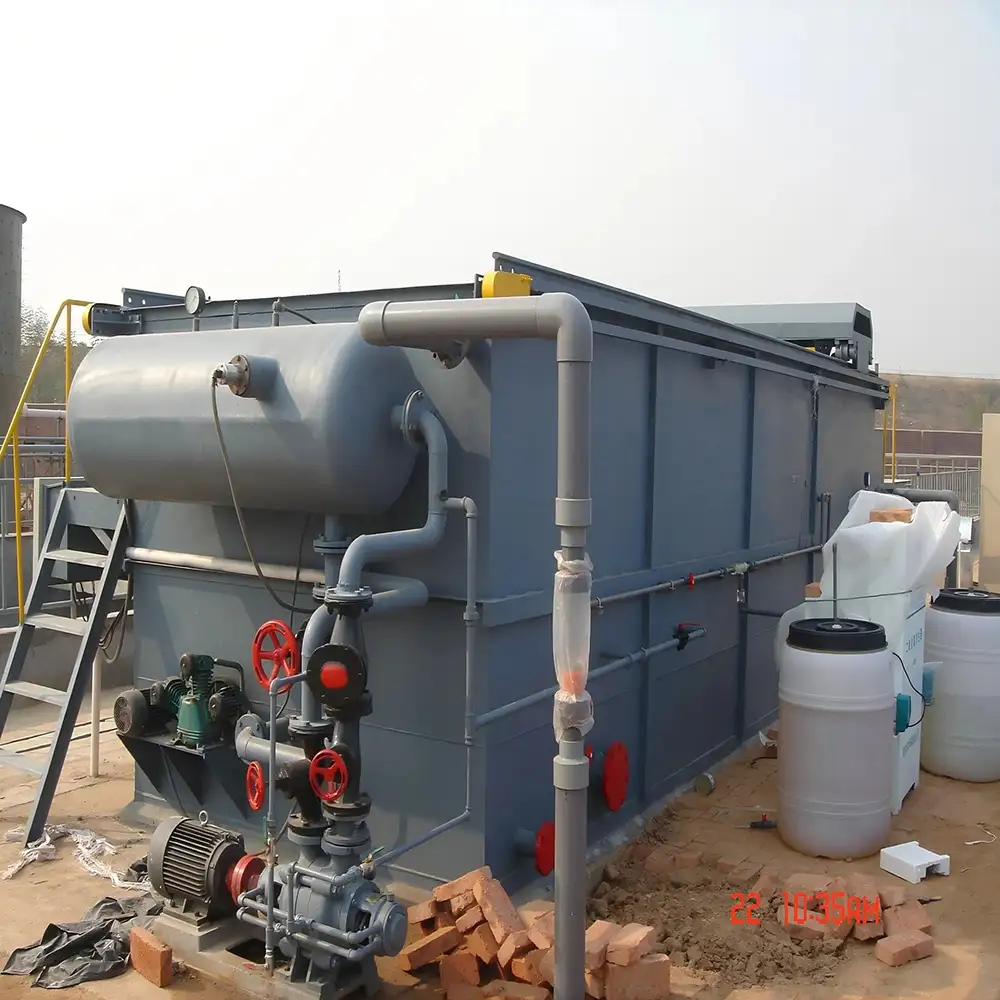
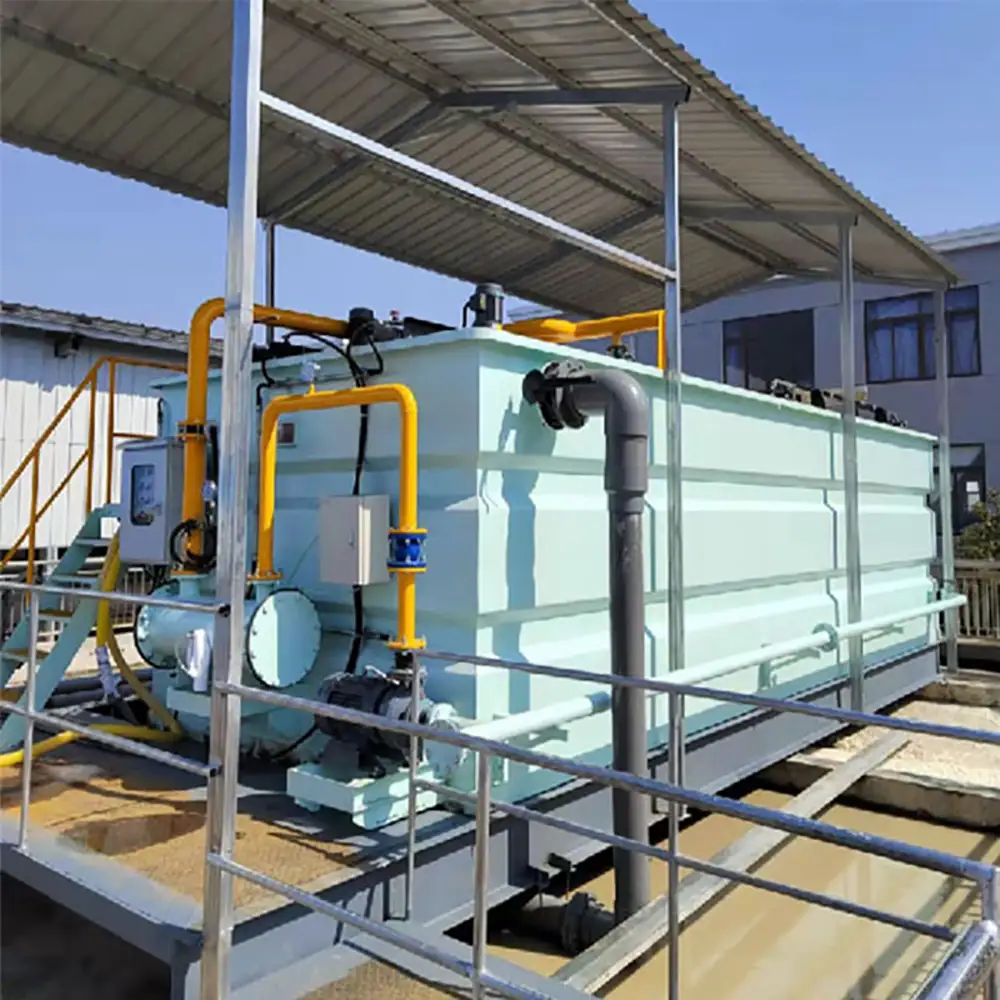
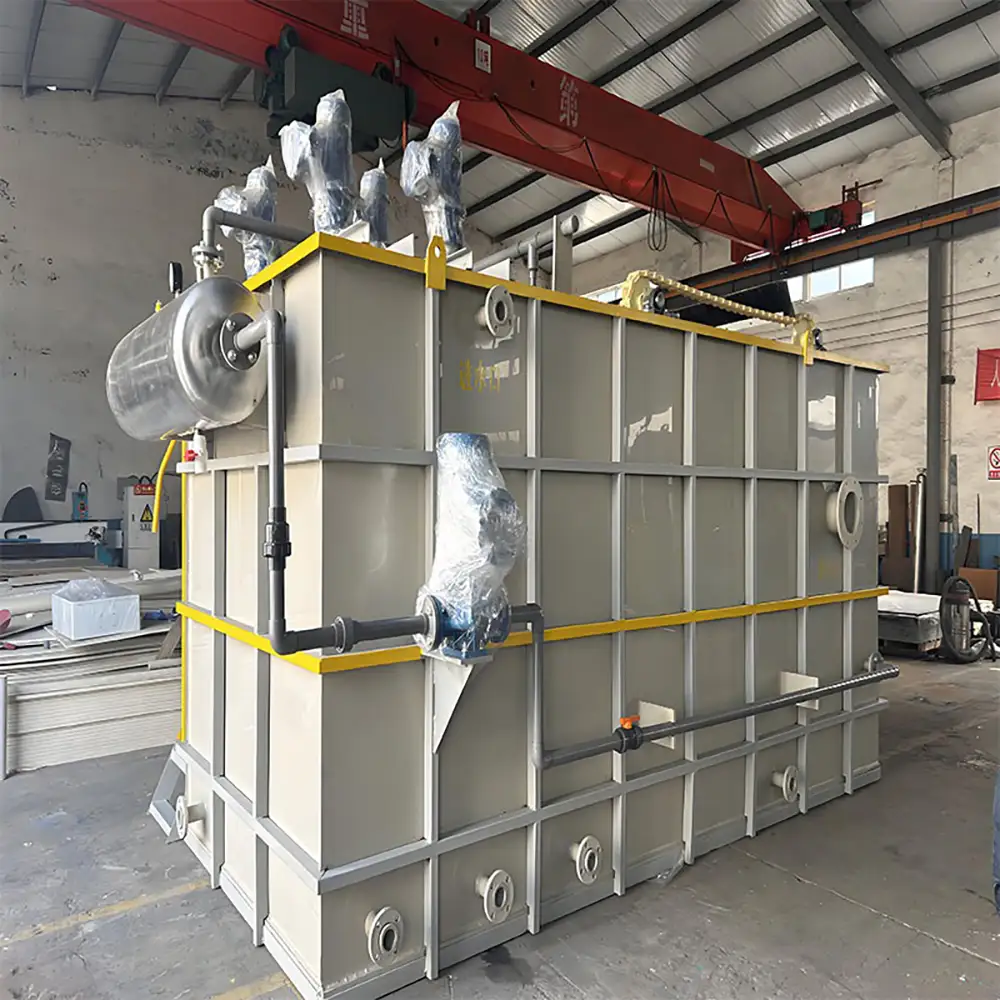
The Energy Saving Air Flotation Wastewater Treatment Plant is designed for efficient removal of suspended solids, floating impurities, oil, grease, fine particles, and other flotation-friendly contaminants from sewage and industrial wastewater. Using dissolved air flotation technology, the system generates fine air bubbles that attach to suspended particles and carry them upward for surface separation.
Commonly referred to as a DAF wastewater treatment system, this type of air flotation equipment can be used as a primary treatment, pretreatment, clarification, or polishing stage depending on wastewater characteristics and the overall treatment process.
Dissolved air flotation is based on a simple but effective separation principle. Air is dissolved into a pressurized water stream, and the pressure is subsequently reduced. This produces microscopic air bubbles that attach to suspended particles or flocs, increasing their buoyancy and causing them to rise to the surface. The floating layer can then be removed by a scraper or skimming mechanism.
Energy-Efficient Air Flotation Working Principle
The wastewater first enters the pretreatment or mixing section. Screening, equalization, pH adjustment, coagulation, or flocculation can be incorporated depending on the characteristics of the sewage.
For wastewater containing very fine particles or colloidal impurities, chemical conditioning can help form larger flocs that are easier for microbubbles to capture.
A portion of clarified water or another suitable recycle stream is pressurized and saturated with air. When the pressurized water is released into the flotation chamber, the sudden pressure reduction causes dissolved air to form a large number of fine bubbles.
These bubbles attach to suspended particles, oil droplets, grease, and flocs. The resulting bubble-particle aggregates rise to the water surface and form a floating sludge layer. A mechanical scraper then moves the concentrated float toward the sludge collection area.
The clarified water is collected below the flotation layer and transferred to the next treatment stage. EPA documentation identifies pressure, recycle ratio, feed solids concentration, detention time, air-to-solids ratio, and chemical aids as important operating factors affecting DAF performance.
Efficient Removal of Sewage Impurities
The main purpose of the air flotation system is to improve solid-liquid separation and reduce the pollutant load entering downstream treatment.
Depending on the wastewater composition and pretreatment conditions, the system can assist in removing:
Suspended solids
Fine particulate matter
Floating solids
Oil and grease
Organic flocs
Fibers
Colloidal particles after coagulation
Precipitated contaminants
Lightweight sludge
DAF can be particularly useful for particles that are difficult to settle by gravity. EPA technical information notes that flotation can be advantageous for suspended materials with densities close to water and for oil and grease separation.
Actual removal efficiency depends on the wastewater composition, particle characteristics, hydraulic loading, chemical conditioning, air-to-solids ratio, and operating conditions.
Energy-Saving Air Flotation Design
The term energy saving air flotation generally refers to optimizing the flotation process so that pumps, air injection, recycle flow, and mechanical equipment operate efficiently for the required treatment capacity.
A properly designed system does not simply maximize air or pump power. Excessive air flow or pressure may not improve treatment and can interfere with floc structure. EPA documentation identifies operating pressure and air-to-solids ratio as important DAF parameters.
Energy-efficient operation can therefore be achieved through appropriate recycle ratios, properly sized pumps, controlled air dissolution, efficient scraper operation, and automatic process control.
Variable operating conditions can also be managed through PLC controls and adjustable process parameters.
Main Components of the Air Flotation System
A complete energy-efficient DAF wastewater treatment plant may include several integrated components.
Wastewater Feed System
The feed system transfers wastewater into the flotation treatment process at a controlled flow rate.
Coagulation and Flocculation System
Chemical dosing and mixing equipment can be installed upstream when fine suspended or colloidal particles require conditioning.
Recycle Pump
The recycle pump provides the pressurized water required for dissolved-air generation.
Air Saturation System
Air is introduced into the pressurized water stream to create the dissolved-air solution.
Pressure Release Device
The pressure-release system creates the pressure drop that produces fine bubbles inside the flotation chamber.
DAF Flotation Tank
The flotation chamber provides the separation environment where bubbles attach to particles and transport them to the surface.
Sludge Scraper
The scraper removes the floating sludge layer and transfers it to the sludge collection trough.
Clarified Water Outlet
Treated water is collected separately from the flotation zone and discharged to downstream treatment or reuse.
Applications in Wastewater Treatment Plants
The Energy Saving Air Flotation system can be incorporated into a wide variety of wastewater treatment projects.
Food Processing Wastewater
Food-processing wastewater may contain suspended organic matter, fats, oils, grease, proteins, and fine particles. DAF can reduce the solids and organic loading before biological treatment.
Dairy Wastewater
Dairy wastewater commonly contains fats, oils, grease, proteins, and suspended organic solids. Air flotation can provide an effective physicochemical pretreatment stage.
Slaughterhouse Wastewater
Meat and slaughterhouse wastewater can contain high levels of suspended solids, fats, oils, grease, and organic matter. DAF can help separate flotation-friendly contaminants before biological treatment.
Textile and Dyeing Wastewater
Following appropriate coagulation and flocculation, DAF can separate suspended flocs and other particulate impurities from textile wastewater.
Paper and Pulp Wastewater
DAF can assist with removing fibers, fillers, and fine suspended solids from paper manufacturing wastewater.
Chemical Industry Wastewater
Chemical processing wastewater can contain precipitated solids, suspended particles, oil, grease, and other contaminants. DAF can be integrated into physicochemical treatment where flotation is suitable.
Municipal and Commercial Sewage
DAF may also be considered for selected sewage treatment applications, sludge thickening, or specialized clarification processes. Its suitability depends on wastewater characteristics and the complete treatment design.
DAF Before Biological or Advanced Treatment
One important advantage of an air flotation system is its ability to reduce the solids and contaminant load before downstream treatment.
The DAF unit can be installed after screening and equalization and before biological treatment. It can also be integrated with chemical precipitation, filtration, membrane treatment, sludge dewatering, or other treatment processes.
For systems using MBR, UF, MF, or RO downstream, appropriate pretreatment can help reduce the load of suspended particles entering the membrane process. However, the exact process train should always be selected based on wastewater analysis and required effluent quality.
Automatic Control and Process Optimization
An energy-saving wastewater treatment plant can use PLC-based control to regulate recycle pumps, air supply, pressure, scraper operation, chemical dosing, water levels, and alarms.
Automatic control helps maintain stable operation when wastewater flow and pollutant concentration fluctuate.
The system can also incorporate monitoring points for flow, pressure, tank level, pump status, and other operating conditions. This allows operators to identify abnormal conditions and adjust the process before treatment performance is significantly affected.
Sludge Collection and Handling
The contaminants separated by flotation accumulate at the water surface as concentrated float sludge. The mechanical scraper transfers this material into a sludge collection trough.
The collected sludge can then be transferred to a sludge tank, thickening system, filter press, belt filter press, centrifuge, or other suitable dewatering process.
Regular sludge removal is important because excessive accumulation can disturb the flotation layer and allow captured particles to return to the liquid phase. EPA guidance specifically notes the importance of timely surface sludge removal.
Operation and Maintenance
Routine maintenance should include inspection of the recycle pump, air saturation equipment, pressure-control components, valves, piping, scraper mechanism, sludge outlet, and chemical dosing system.
Operators should also monitor flotation performance and observe the appearance and stability of the surface sludge layer.
The proper operating pressure, recycle ratio, chemical dosage, air-to-solids ratio, and hydraulic loading should be established according to the wastewater characteristics rather than using one fixed setting for every application.
Why Choose Us?
The Energy Saving Air Flotation Wastewater Treatment Plant combines dissolved air flotation technology with efficient process control for practical wastewater impurity removal.
Its compact flotation process can provide effective separation of suspended solids, oil, grease, floating matter, and chemically formed flocs while serving as an important pretreatment or clarification stage.
The system can be integrated with screening, equalization, coagulation, flocculation, biological treatment, filtration, membrane treatment, and sludge dewatering equipment to create a complete wastewater treatment process.
A properly selected DAF system can provide stable clarification while optimizing pump capacity, recycle flow, air dissolution, scraper operation, and chemical consumption according to the actual wastewater conditions.
Frequently Asked Questions
1. What is an energy-saving air flotation system?
It is a wastewater flotation system designed to use dissolved-air flotation while optimizing pumps, recycle flow, air dissolution, and mechanical operation to achieve the required treatment with efficient energy use.
2. What does DAF stand for?
DAF stands for Dissolved Air Flotation, a process that uses fine air bubbles to float suspended particles and other flotation-friendly contaminants.
3. What impurities can air flotation remove?
Depending on wastewater characteristics, DAF can remove suspended solids, oil, grease, floating matter, fibers, organic flocs, and precipitated particles.
4. How does DAF remove suspended solids?
Microbubbles attach to suspended particles and flocs, increasing their buoyancy and causing them to rise to the surface for mechanical removal.
5. Is DAF suitable for industrial wastewater?
Yes. DAF is widely used in industrial wastewater treatment, particularly where suspended solids, oil, grease, or lightweight particles require separation.
6. Does DAF require chemical dosing?
Not every application requires chemicals, but coagulation and flocculation can significantly improve flotation when wastewater contains fine or colloidal particles.
7. Can DAF treat food-processing wastewater?
Yes. DAF can be used for food-processing wastewater containing fats, oils, grease, suspended organic matter, and other flotation-friendly contaminants.
8. Can the air flotation system remove oil and grease?
Yes. DAF is commonly used for oil and grease removal, particularly when dispersed oil droplets can be effectively captured by fine bubbles.
9. Can DAF be used before an MBR or RO system?
Yes. When appropriate for the wastewater, DAF can serve as a pretreatment stage before biological, membrane, filtration, or advanced water treatment.
10. How is DAF sludge removed?
A surface scraper or skimmer collects the floating sludge and transfers it to a sludge collection trough for further handling or dewatering.
11. What affects DAF treatment performance?
Important factors include wastewater flow, suspended solids concentration, particle characteristics, operating pressure, recycle ratio, air-to-solids ratio, detention time, and chemical conditioning.
12. How can DAF energy consumption be optimized?
Energy use can be optimized through properly sized pumps, controlled recycle flow, efficient air dissolution, appropriate operating pressure, automatic controls, and matching equipment capacity to actual wastewater loading.
Prev:
Industrial Water Treatment Air Float Equipment/Water Treatment Plant
Next:
DAF Systems Dissolved Air Flotation Cells for Wastewater Treatment Daf Flotation Cells
TAG:
Industrial Wastewater Treatment Equipment,
Suspended Solids Removal,
DAF Grease Removal,
Food Industry Wastewater Treatment,
Dairy Wastewater Treatment,
Meat Processing Wastewater Treatment,
Food Processing Wastewater Treatment,
Industrial Wastewater Treatment System,
DAF Wastewater Treatment System,
Industrial Wastewater Treatment,
Sewage Treatment Plant,
Wastewater Treatment Equipment,
Wastewater Treatment Plant,
Solid Liquid Separation Equipment,
Solid Liquid Separation System,
Chemical Wastewater Treatment,
Wastewater Treatment System,
Industrial Water Treatment Equipment,
Industrial Water Treatment,
Suspended Solids Removal Equipment,
Wastewater Pretreatment Equipment,
Water Treatment Plant,
Water Treatment Equipment,
Industrial Effluent Treatment,
Process Water Treatment,
Process Wastewater Treatment,
Sewage Water Treatment,
Sewage Treatment Equipment,
Sewage Treatment System,
Slaughterhouse Wastewater Treatment,
Related Category:
Energy Saving Air Flotation,Energy Efficient Air Float Wastewater Treatment,DAF Wastewater Treatment Plant,Dissolved Air China, suppliers, manufacturers, factory, customized, wholesale, quotation, made in China