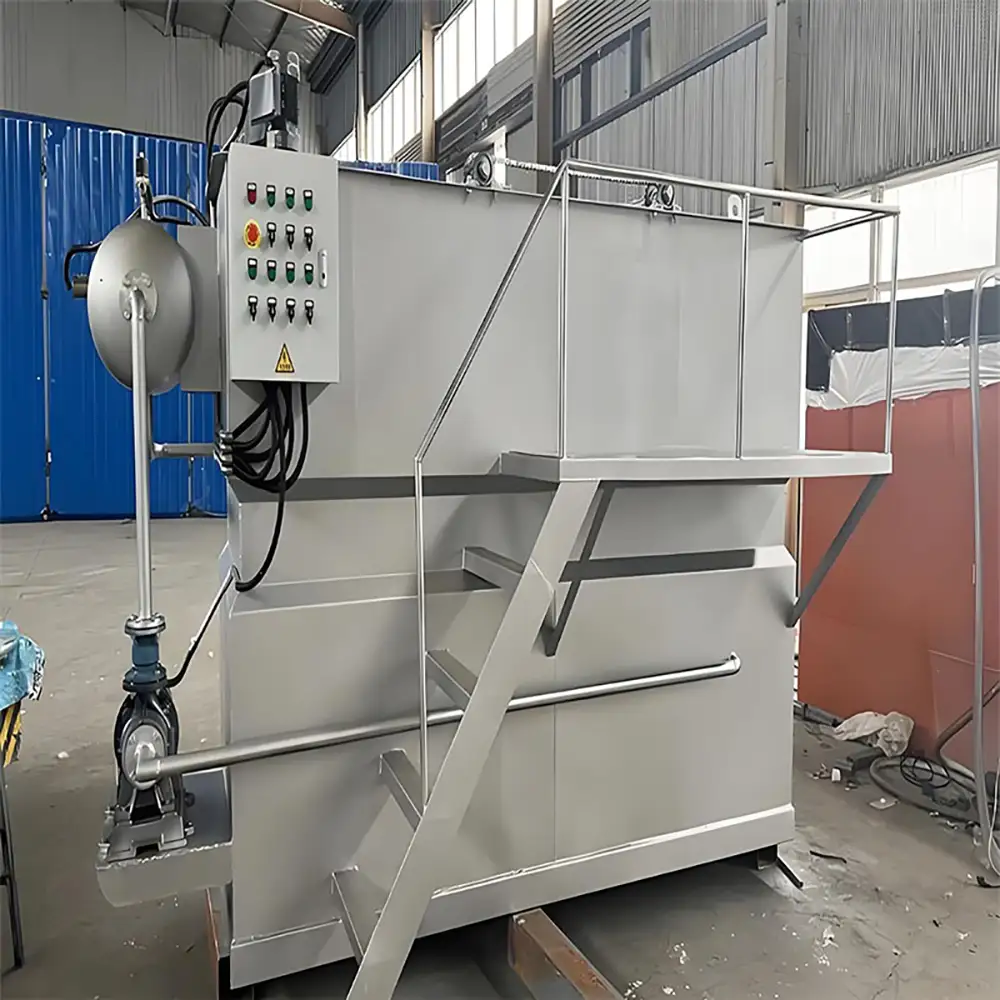
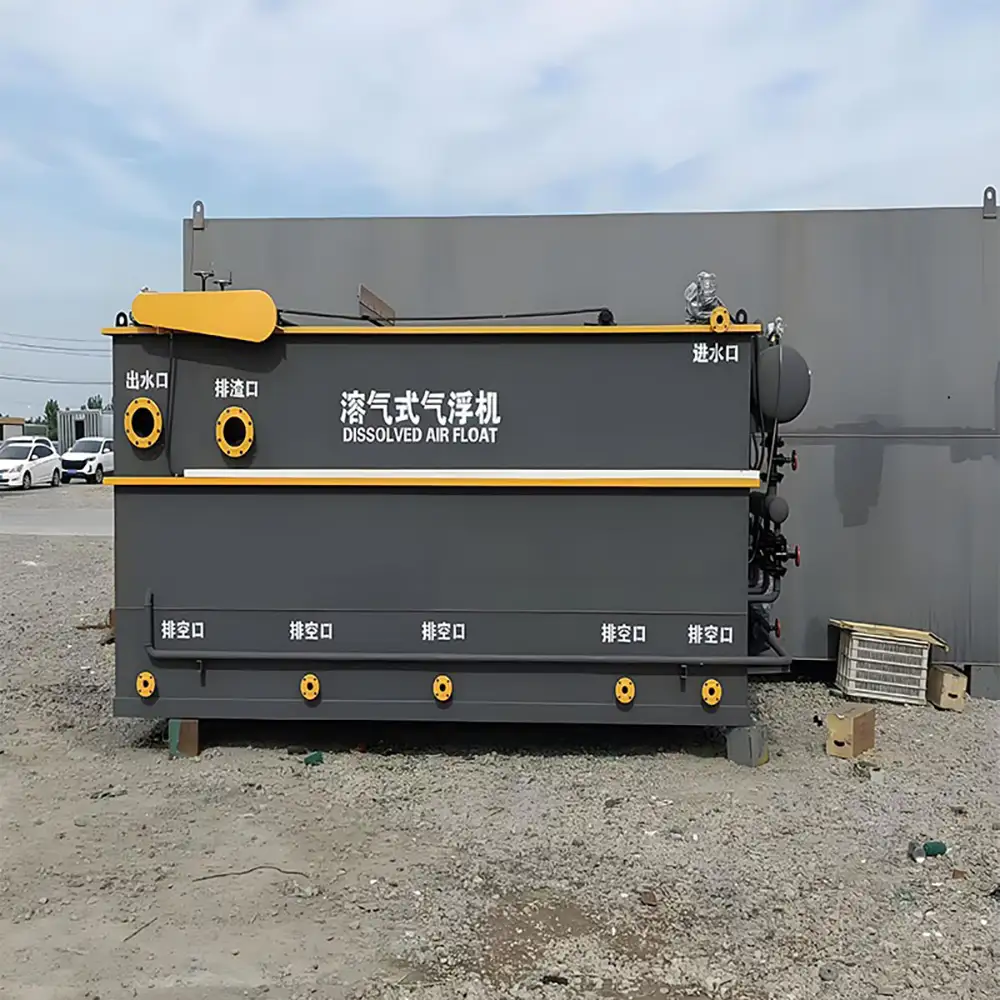
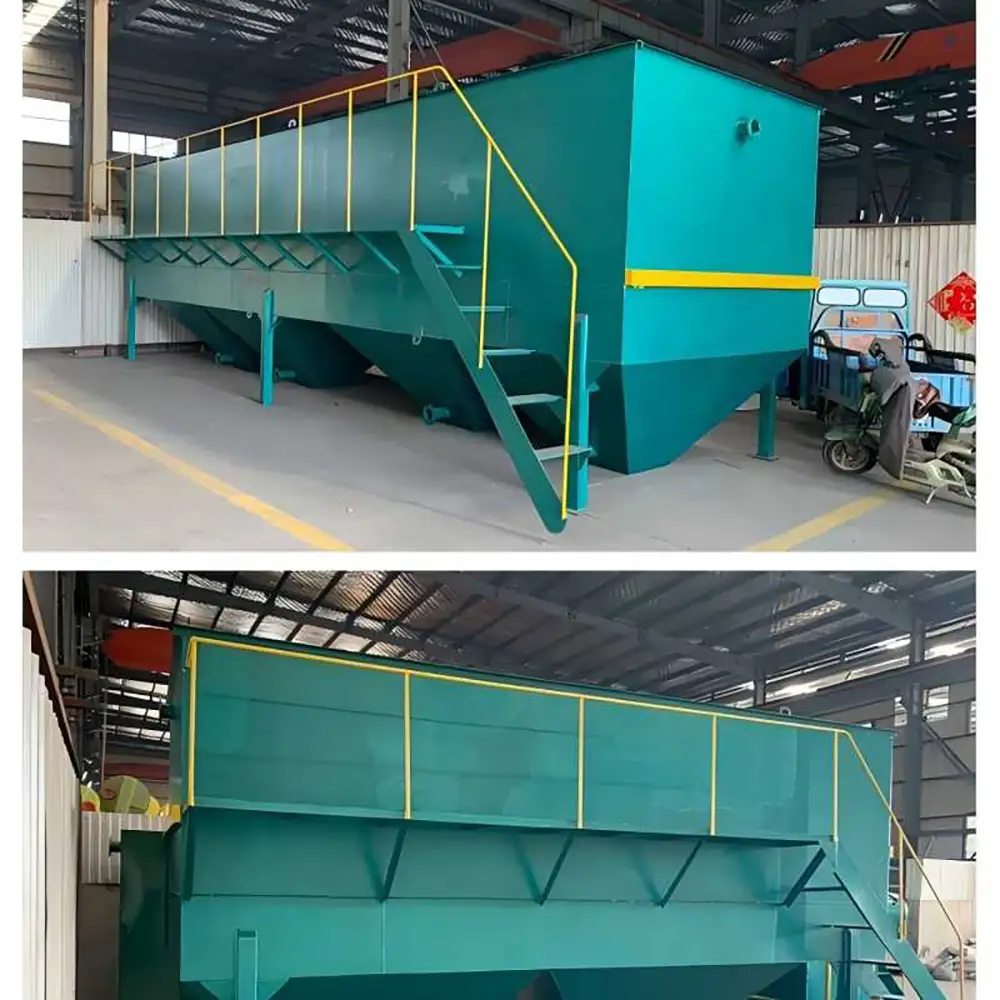
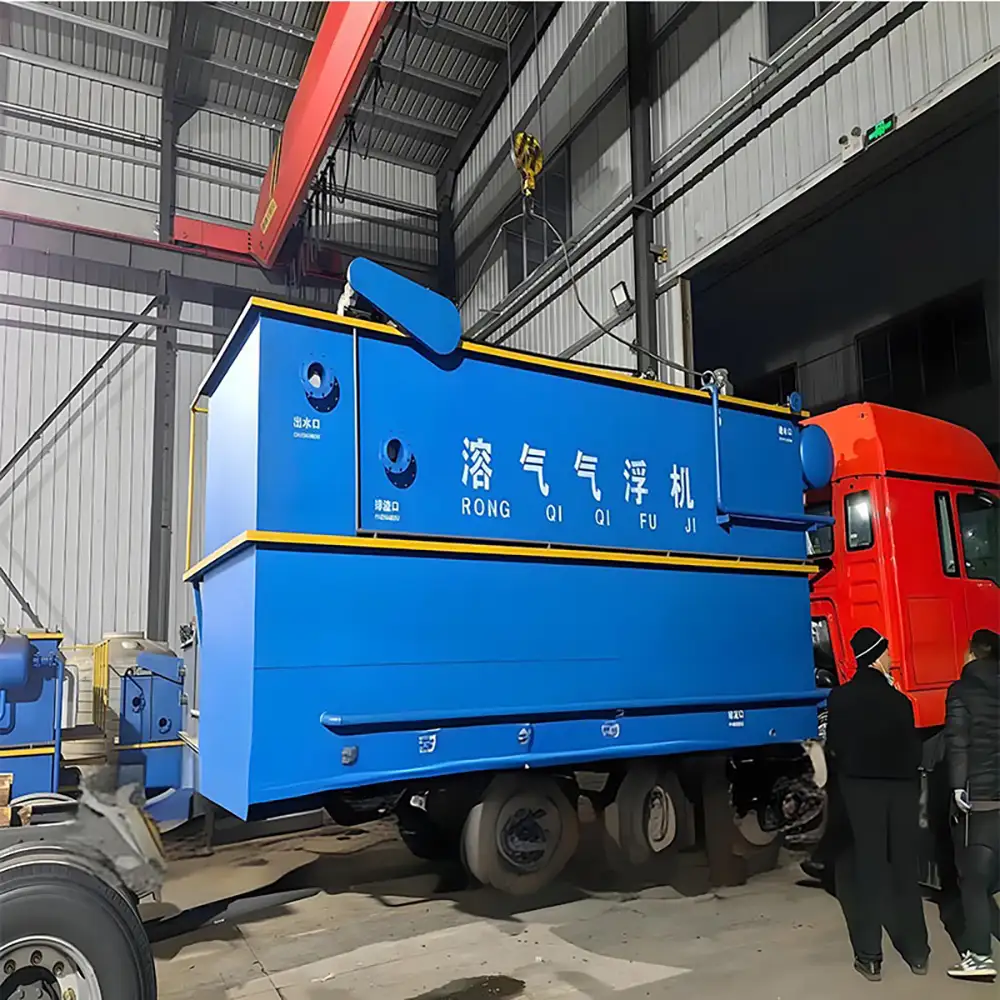
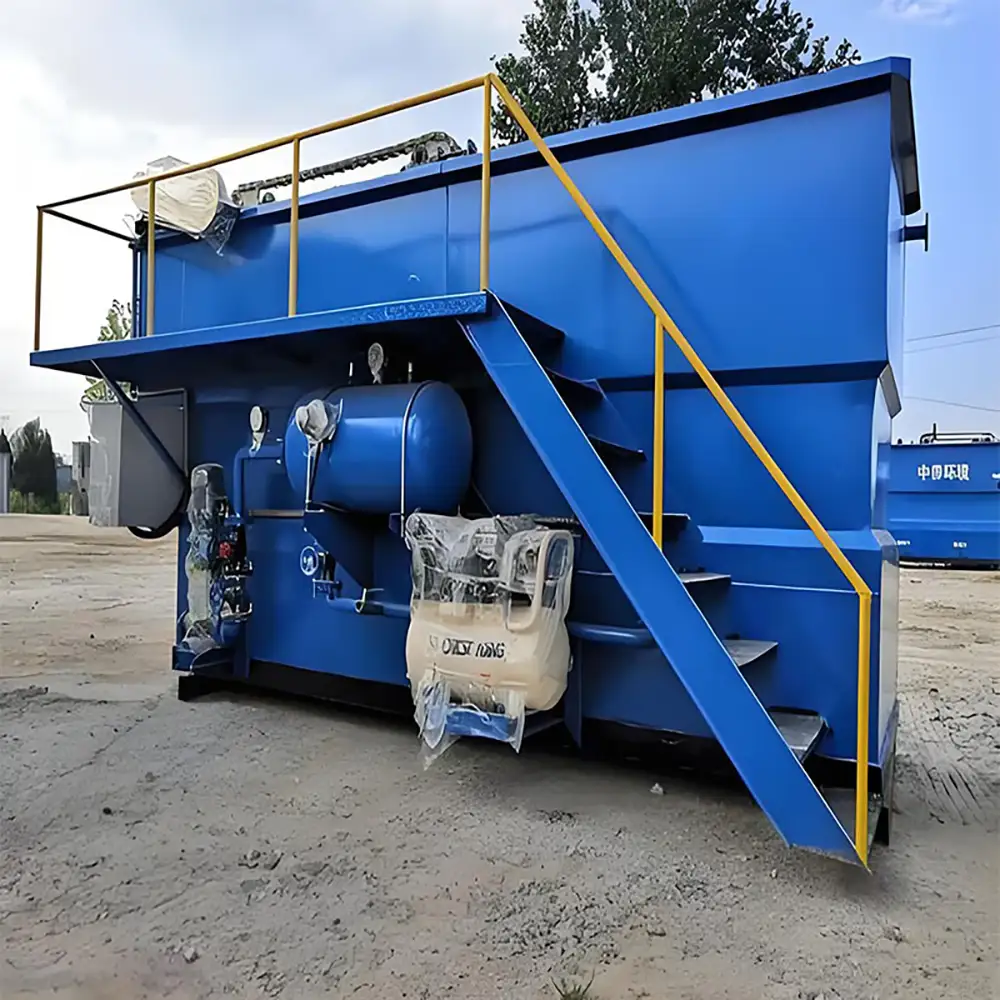
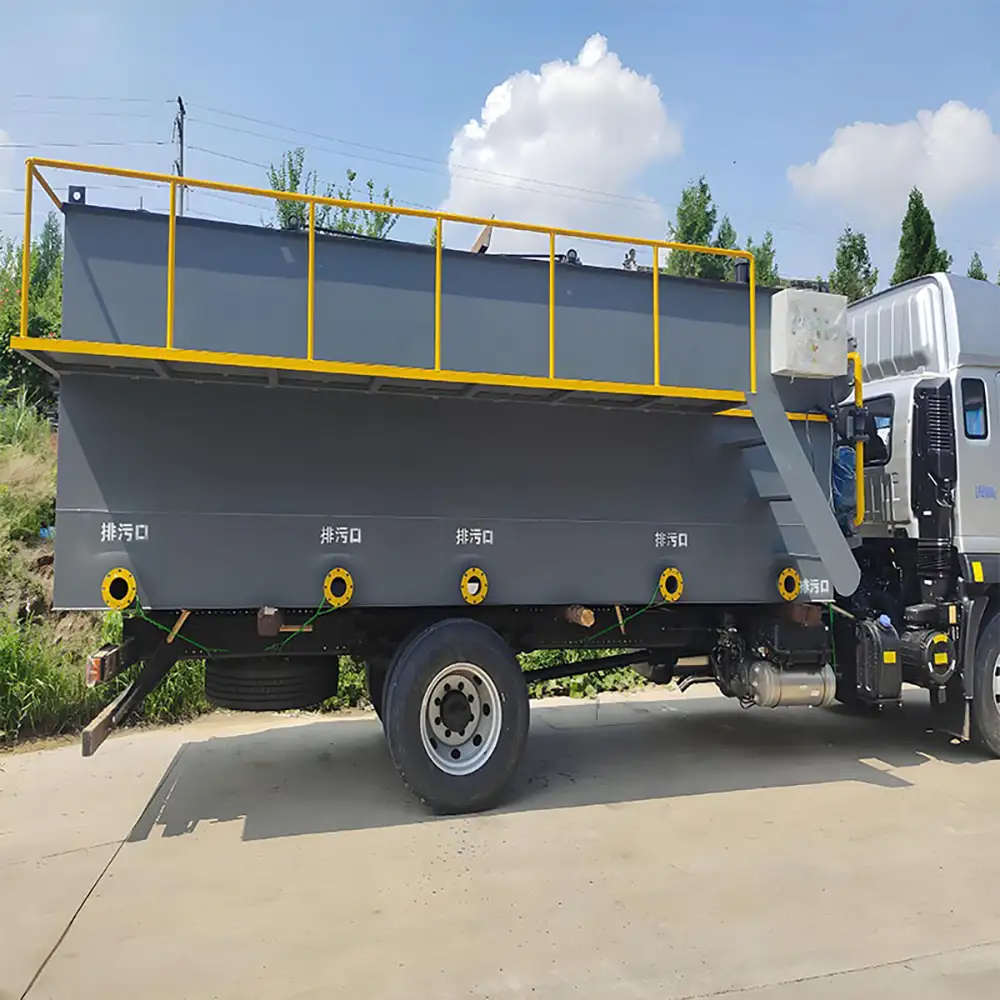
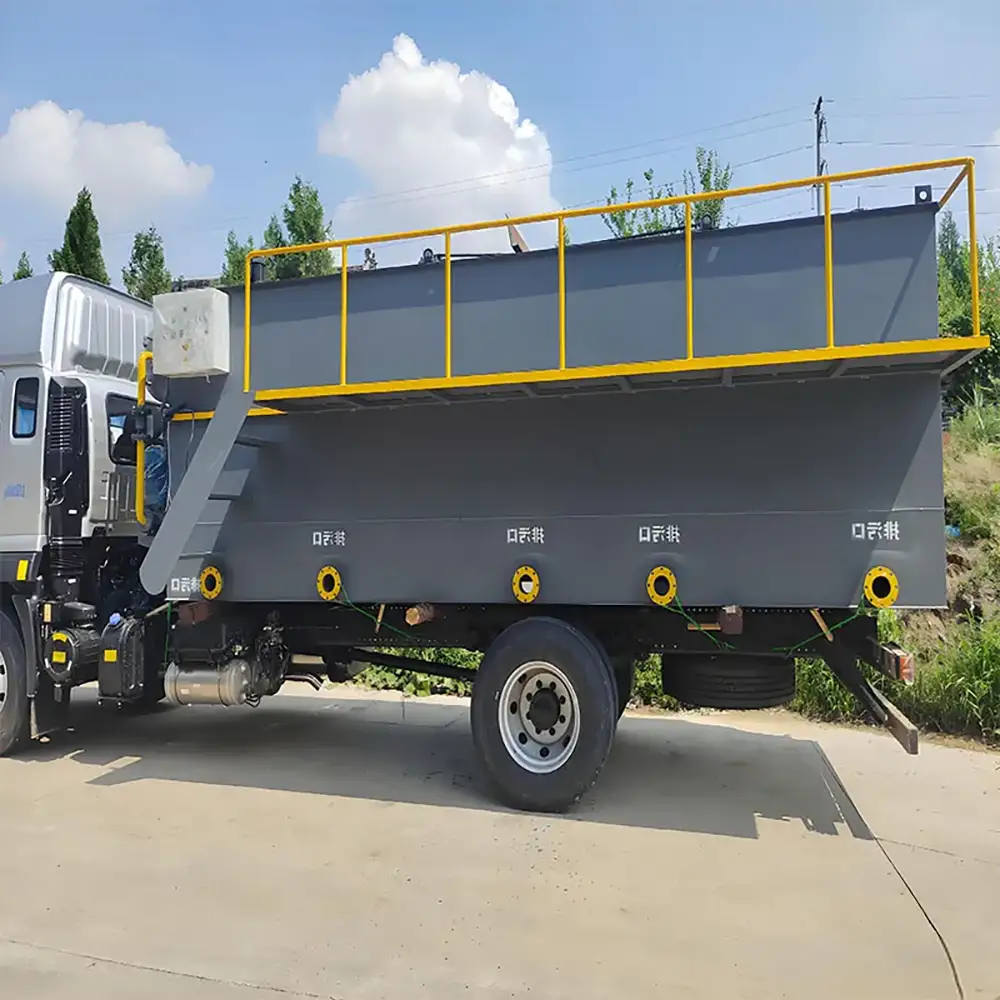
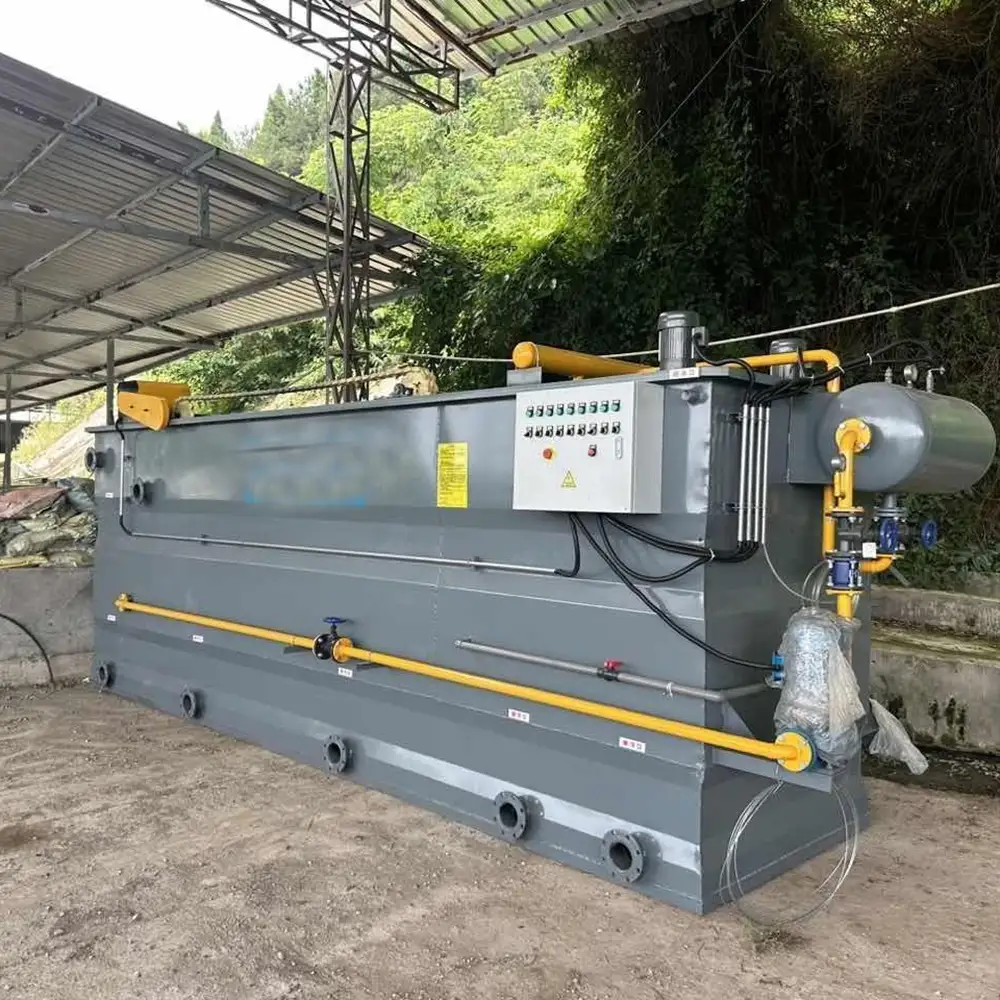
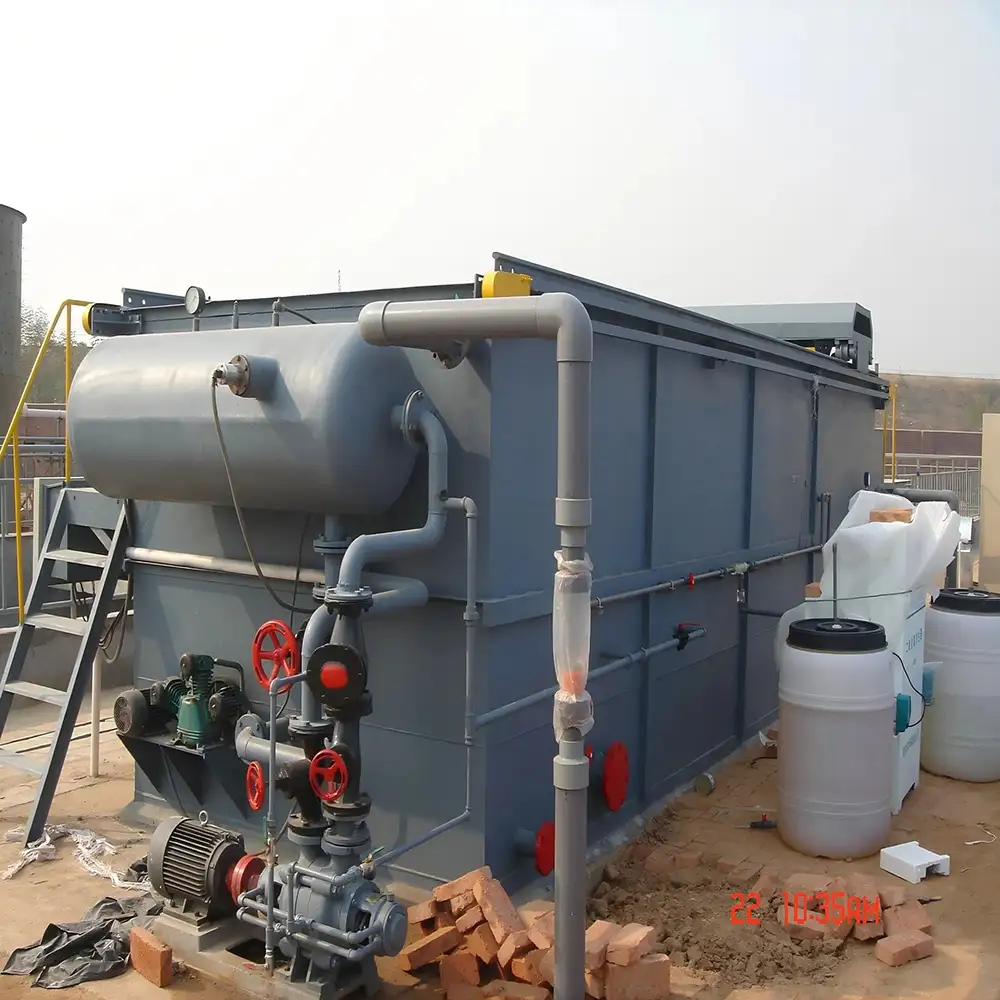
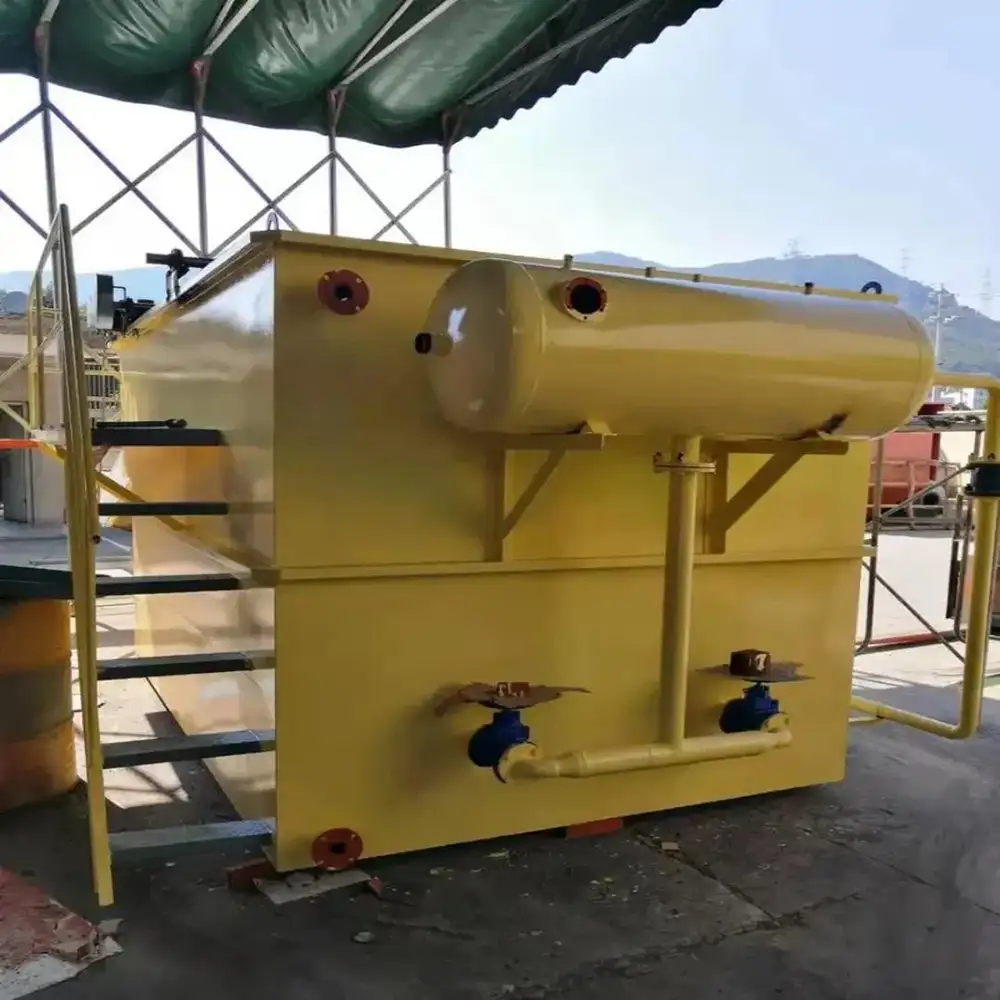
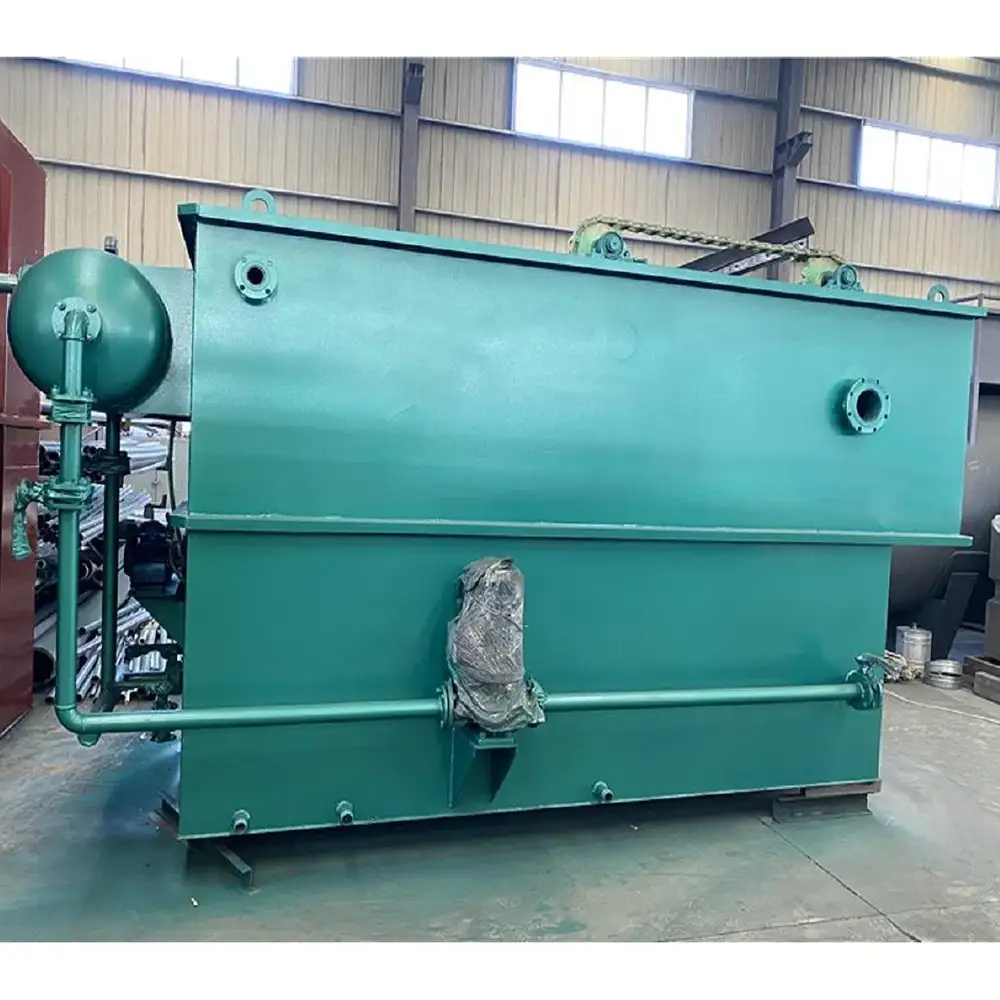
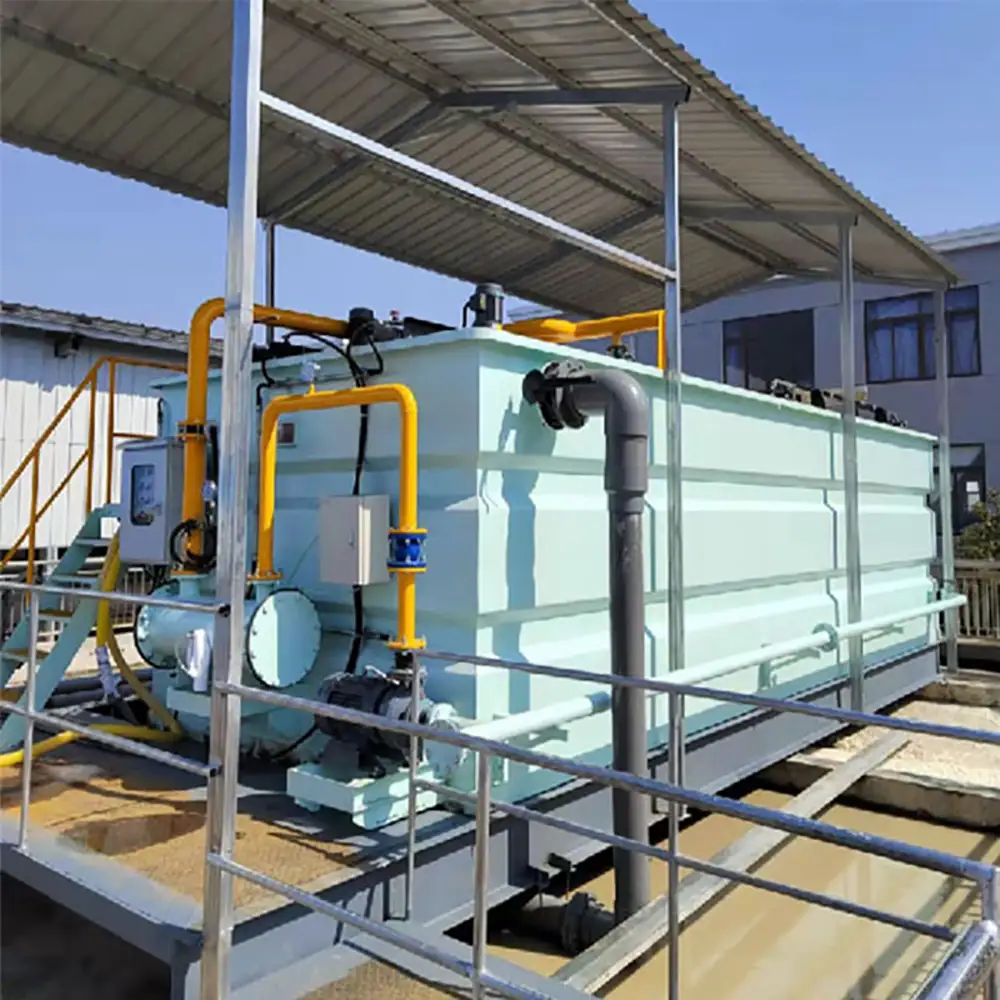
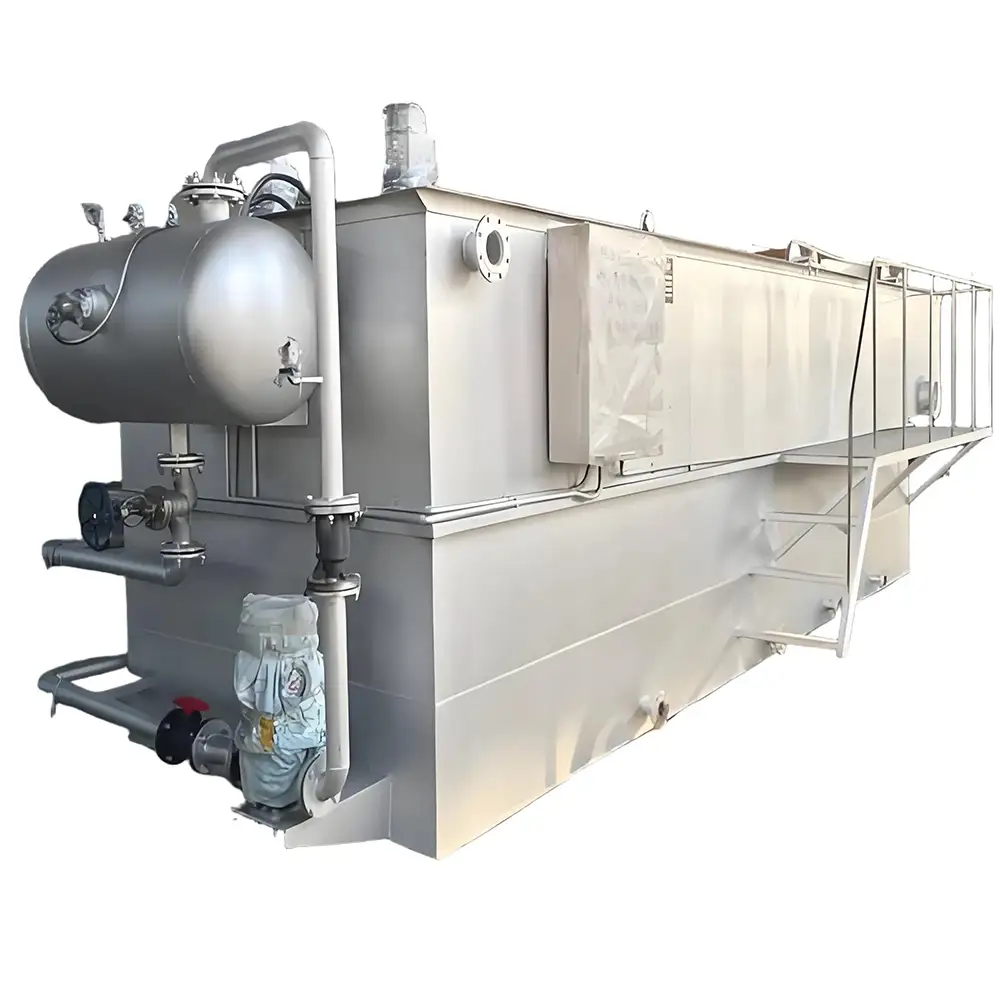
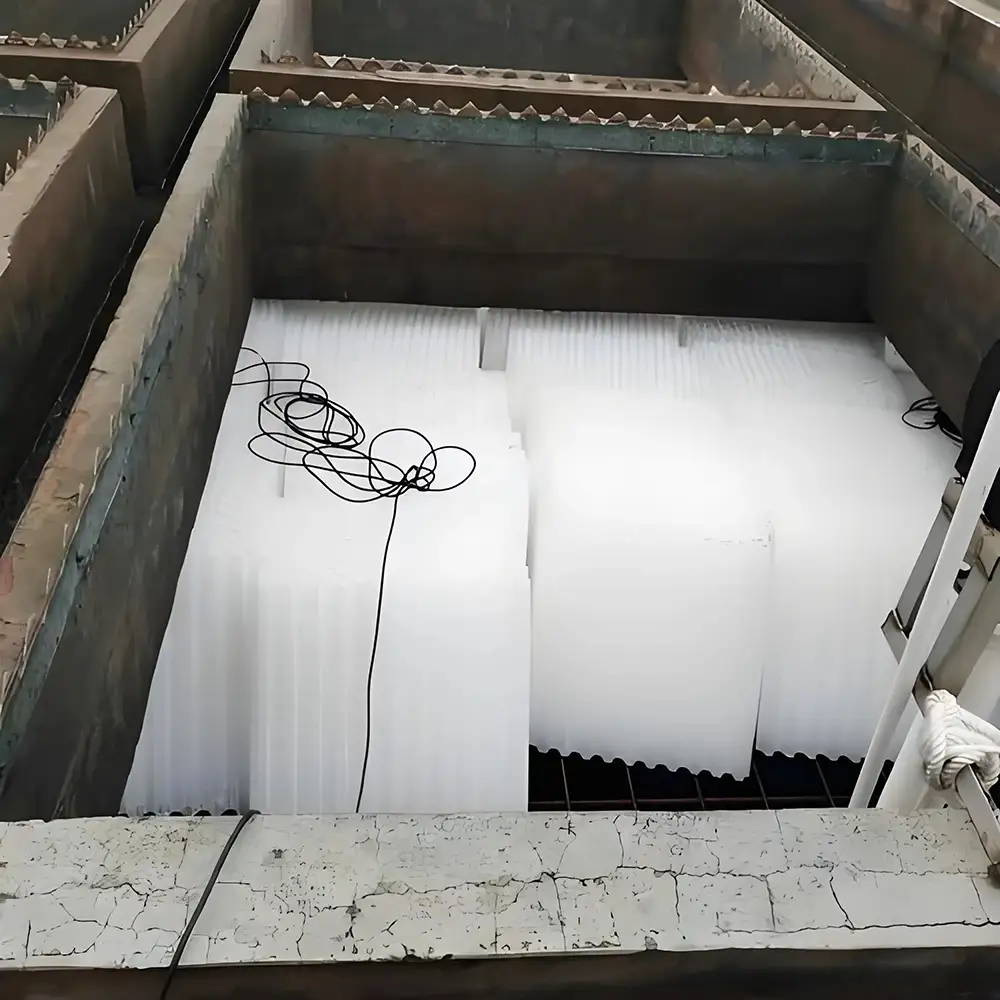
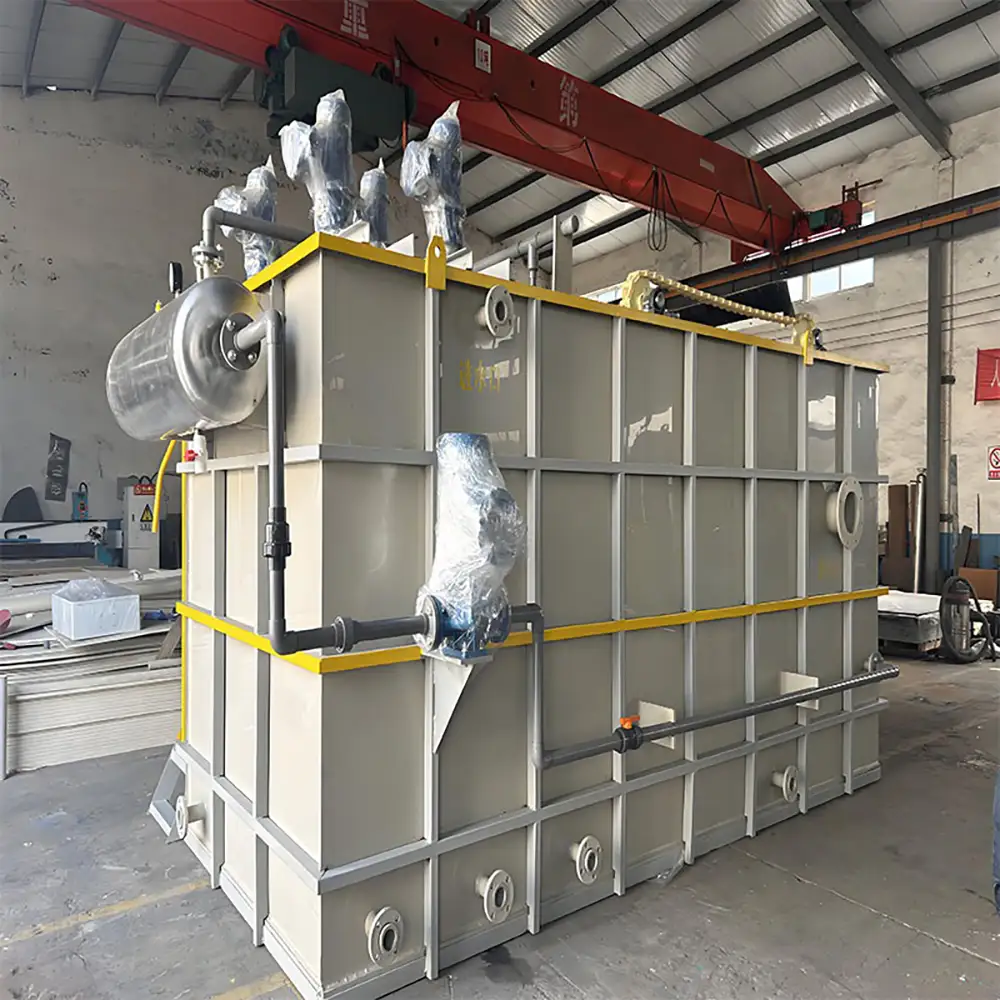
Air flotation technology has been widely used in water supply, drainage and wastewater treatment in recent years. It can effectively remove the light floc which is difficult to precipitate in wastewater. With decades of technical experience accumulation and strong independent research and development ability, the company has devoted itself to developing a new type of air float, with stable effect, lower failure rate, easier operation and maintenance, and lower construction and operating costs.
High Efficiency Dissolved Air Flotation DAF Wastewater Treatment Plant Water Clarifier
The High Efficiency Dissolved Air Flotation DAF Wastewater Treatment Plant Water Clarifier is designed for efficient solid-liquid separation and wastewater clarification in industrial and commercial water treatment applications. By combining dissolved air flotation technology with an optimized clarification process, the system helps remove suspended solids, floating particles, oil, grease, flocs, and other low-density contaminants from wastewater.
DAF is especially useful when conventional gravity sedimentation is less effective for particles that are close to the density of water or for wastewater containing oil, grease, and fine suspended solids. EPA technical documentation describes DAF as a clarification process in which pressurized water releases fine air bubbles that attach to suspended particles and carry them to the surface for removal.
High Efficiency DAF Wastewater Treatment Principle
The DAF process begins with wastewater entering the pretreatment or mixing section. Depending on the wastewater characteristics, coagulation and flocculation may be used to combine fine particles into larger flocs that are easier to separate.
A portion of clarified water or wastewater is pressurized and saturated with air. When the pressurized stream is released into the flotation chamber, the pressure reduction causes dissolved air to form numerous fine bubbles. These bubbles attach to suspended particles, oil droplets, grease, and flocculated solids, increasing their buoyancy.
The air-solid aggregates rise toward the water surface and form a floating sludge layer. A surface scraper or skimming mechanism continuously removes the floated material, while clarified water is collected from the lower portion of the flotation chamber. This process provides rapid clarification without depending entirely on gravity settling.
Efficient Water Clarification
One of the main advantages of a DAF water clarifier is its ability to handle fine and lightweight contaminants that can be difficult to remove through conventional sedimentation.
The system can be applied to wastewater containing:
Suspended solids
Fine flocs
Oil and grease
Floating particles
Emulsified materials after appropriate pretreatment
Fibers and other lightweight solids
Some precipitated contaminants
DAF is commonly used for industrial wastewater clarification, particularly where suspended solids and oil or grease require effective separation. EPA documentation also identifies DAF as a treatment technology used for industrial process wastewater and clarification applications.
Main Components of the DAF Treatment Plant
A complete dissolved air flotation wastewater treatment system can include a wastewater feed pump, coagulation and flocculation tanks, chemical dosing equipment, air saturation equipment, recycle pump, pressure vessel or retention system, flotation tank, scraper mechanism, sludge collection system, and treated-water outlet.
The exact configuration depends on wastewater flow rate, pollutant concentration, treatment objectives, available space, and the required downstream process.
The flotation chamber is the core separation unit. Its internal distribution structure is designed to provide stable wastewater flow and effective contact between microbubbles and suspended particles. The surface skimming system removes accumulated float sludge while minimizing disturbance to the clarified water.
Applications of DAF Wastewater Treatment
The High Efficiency DAF Wastewater Treatment Plant can be used in a wide range of industrial and commercial wastewater applications.
Typical applications include:
Food Processing Wastewater:
DAF can help separate suspended organic solids, fats, oils, grease, and flocculated materials from food processing wastewater.
Dairy Wastewater:
Dissolved air flotation can be incorporated into dairy wastewater treatment systems where fats, oils, grease, proteins, and suspended solids require separation.
Slaughterhouse Wastewater:
DAF is suitable for pretreatment and primary clarification where wastewater contains high levels of suspended organic matter, fats, oils, and grease.
Chemical Industry Wastewater:
After appropriate chemical conditioning, DAF can separate precipitated solids, suspended matter, oil, and other flotation-friendly contaminants.
Paper and Pulp Wastewater:
The system can assist in removing fibers, fillers, suspended solids, and other lightweight materials.
Textile and Dyeing Wastewater:
DAF can be used as part of a physicochemical treatment process for color-associated flocs, suspended solids, and other contaminants after suitable chemical conditioning.
Oil-Containing Wastewater:
DAF is particularly useful for separating dispersed oil, grease, and suspended solids from industrial wastewater.
High Efficiency and Compact Treatment Design
Compared with conventional clarification based entirely on gravity settling, DAF can provide rapid flotation of suitable particles and may require less surface area for certain treatment applications. EPA documentation notes that DAF can be considered when conventional clarifiers are hydraulically overloaded or when lighter suspended materials and oil/grease need to be removed.
The system can also be designed as a compact packaged treatment unit for projects where installation space is limited. Multiple DAF units may be integrated into larger wastewater treatment plants when higher treatment capacity is required.
Chemical Pretreatment and Flocculation
DAF performance depends strongly on wastewater characteristics and pretreatment conditions. Coagulants and polymers may be used to destabilize particles and promote floc formation before flotation.
Common treatment chemicals can include aluminum- or iron-based coagulants and polymers, depending on the wastewater chemistry and required separation performance. EPA documentation identifies coagulation and chemical pretreatment as important factors in DAF applications.
Proper chemical selection should be established through laboratory testing or pilot testing rather than assuming one chemical program will work for every wastewater stream.
Automatic Control and Operation
For modern wastewater treatment plants, the DAF system can be equipped with automatic pumps, chemical dosing controls, pressure monitoring, level sensors, scraper controls, and PLC-based operation.
Automatic control helps maintain stable flotation conditions and reduces the amount of manual intervention required during normal operation.
Operators can monitor important parameters such as flow rate, pressure, chemical dosing, sludge removal, and treated-water quality. The control system can also be integrated with upstream equalization, coagulation, biological treatment, filtration, or downstream sludge dewatering equipment.
Operation and Maintenance
Routine maintenance is essential for stable DAF performance. Operators should regularly inspect the recycle pump, air saturation system, pressure-control components, valves, piping, scraper mechanism, sludge collection system, and chemical dosing equipment.
The flotation surface should be kept clean and the floating sludge should be removed continuously or at an appropriate interval. Delayed sludge removal can allow accumulated solids to return to the water phase and reduce clarification performance.
Regular inspection of pressure equipment and mechanical components also helps improve operational reliability and service life.
Why Choose Us?
Choosing the right DAF system requires more than selecting a tank size. Wastewater flow, suspended solids concentration, oil and grease content, particle characteristics, chemical requirements, hydraulic loading, sludge production, and downstream treatment all influence the final configuration.
This High Efficiency Dissolved Air Flotation DAF Wastewater Treatment Plant provides a practical platform for industrial wastewater clarification and solid-liquid separation. Its combination of dissolved-air technology, flotation clarification, surface sludge removal, and optional chemical conditioning makes it suitable for a wide range of wastewater treatment processes.
The system can also be integrated with equalization tanks, biological treatment, sedimentation, filtration, membrane systems, sludge dewatering, and reclaimed-water treatment processes to create a complete wastewater treatment solution.
Frequently Asked Questions
1. What is a DAF wastewater treatment plant?
A DAF wastewater treatment plant uses dissolved air flotation to separate suspended solids, oil, grease, and other flotation-friendly contaminants from wastewater.
2. How does a dissolved air flotation clarifier work?
Pressurized water saturated with air is released into the flotation chamber. Fine bubbles form and attach to particles and flocs, causing them to rise to the surface where they are removed by a scraper.
3. What contaminants can DAF remove?
DAF can remove suspended solids, floating solids, oil, grease, fibers, flocs, and other contaminants that can be effectively floated.
4. Is DAF suitable for industrial wastewater?
Yes. DAF is widely used for industrial wastewater clarification and is especially useful for wastewater containing suspended solids, oil, grease, and lightweight particles.
5. Can DAF treat food processing wastewater?
Yes. DAF is commonly incorporated into food and dairy wastewater treatment systems for separating fats, oils, grease, suspended solids, and flocculated organic matter.
6. Does DAF require chemicals?
Chemical pretreatment is often beneficial and may be necessary depending on the wastewater. Coagulants and polymers can improve floc formation and flotation performance.
7. Is DAF better than sedimentation?
DAF is not universally better than sedimentation. It is particularly advantageous for lightweight particles, oil and grease, and fine solids that are difficult to settle efficiently.
8. Can DAF be used before an MBR or RO system?
Yes. DAF can serve as a pretreatment or clarification stage before downstream biological, membrane, filtration, or other advanced treatment processes when appropriate for the wastewater.
9. What determines DAF capacity?
Important factors include wastewater flow rate, suspended solids concentration, oil and grease loading, particle characteristics, chemical conditioning, hydraulic loading, and required effluent quality.
10. How is DAF sludge removed?
Floating sludge is normally removed from the water surface by a mechanical scraper or skimming system and transferred to a sludge collection or dewatering process.
11. Can the DAF system operate automatically?
Yes. A DAF system can incorporate PLC controls, automatic chemical dosing, pressure monitoring, pump controls, scraper controls, and other instrumentation.
12. How should a DAF system be selected?
The system should be selected according to actual wastewater analysis, flow rate, treatment targets, pretreatment requirements, available installation space, and downstream treatment processes.
Prev:
High Suspended Solids Wastewater Flotation Machine Water Treatment Plant
Next:
Tertiary Filtration Polishing Air Flotation Machine | Reclaimed Water Reuse Dissolved Air Flotation Equipment
TAG:
Industrial Wastewater Treatment Equipment,
Suspended Solids Removal,
Food Industry Wastewater Treatment,
Dairy Wastewater Treatment,
Meat Processing Wastewater Treatment,
Food Processing Wastewater Treatment,
Industrial Wastewater Treatment System,
DAF Wastewater Treatment System,
Industrial Wastewater Treatment,
Wastewater Treatment Equipment,
Wastewater Treatment Plant,
Solid Liquid Separation Equipment,
Chemical Wastewater Treatment,
Wastewater Treatment System,
Industrial Water Treatment,
Wastewater Pretreatment Equipment,
Water Treatment Plant,
Water Treatment Equipment,
Industrial Effluent Treatment,
Process Water Treatment,
Process Wastewater Treatment,
Effluent Treatment Plant,
Sewage Treatment Equipment,
Advanced Wastewater Treatment,
Slaughterhouse Wastewater Treatment,
Factory Wastewater Treatment,
Oil Removal Wastewater Treatment,
Oil Wastewater Treatment,
Suspended Solids Separation,
DAF Sludge Removal,
Related Category:
High Efficiency DAF Wastewater Treatment,Dissolved Air Flotation DAF Plant,DAF Wastewater Treatment Plant,DAF Water Clar China, suppliers, manufacturers, factory, customized, wholesale, quotation, made in China