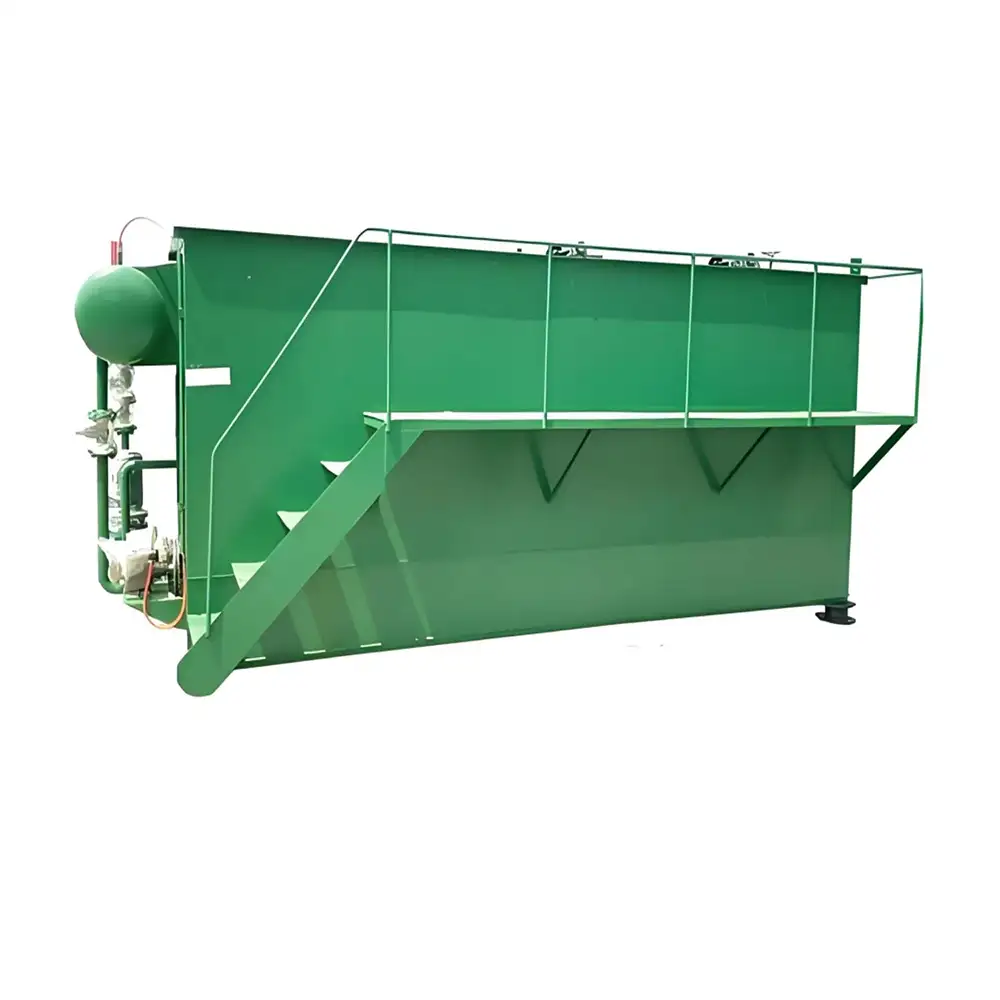
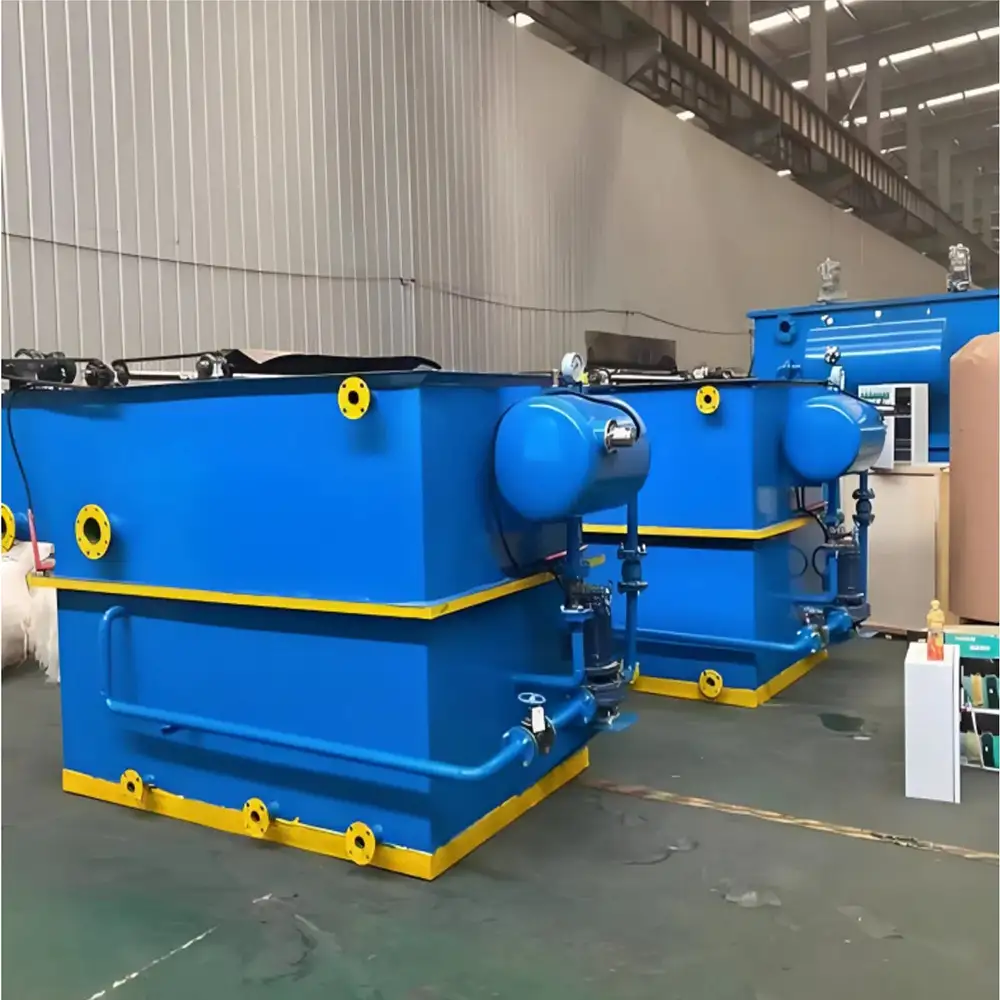
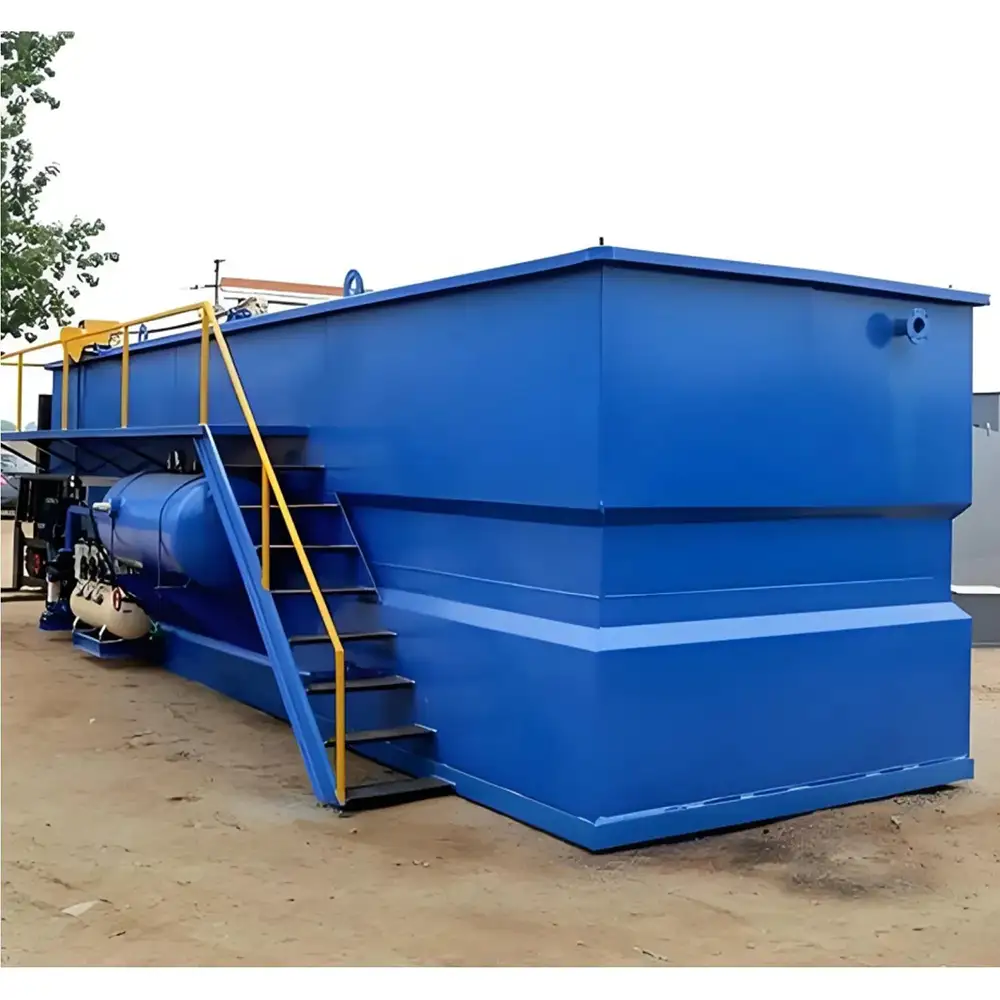
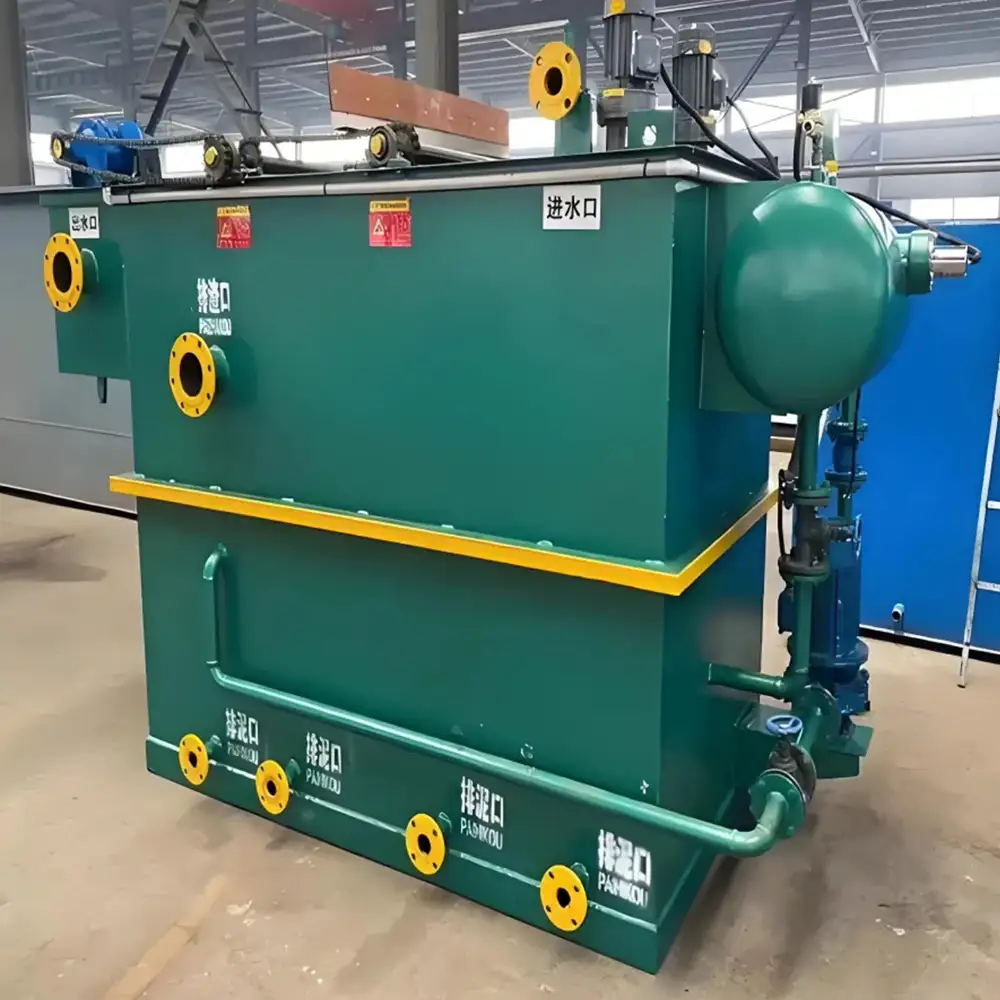
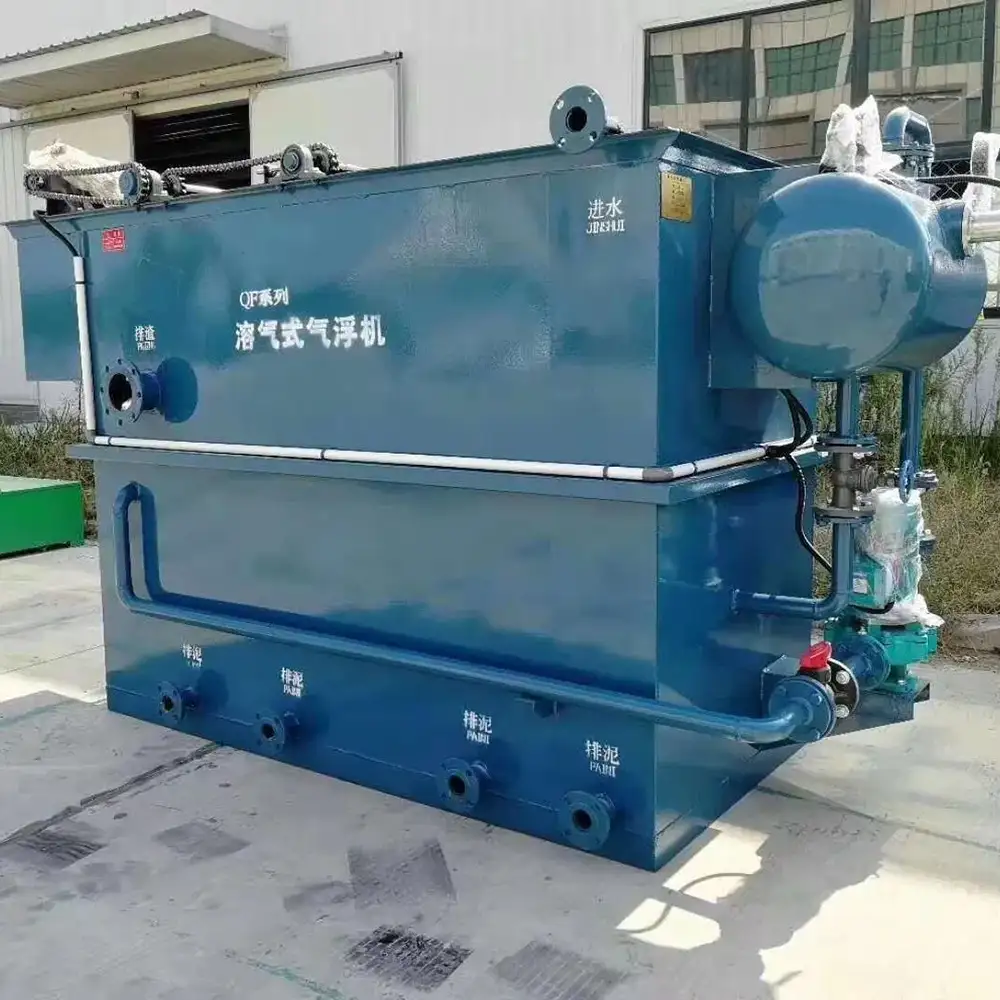
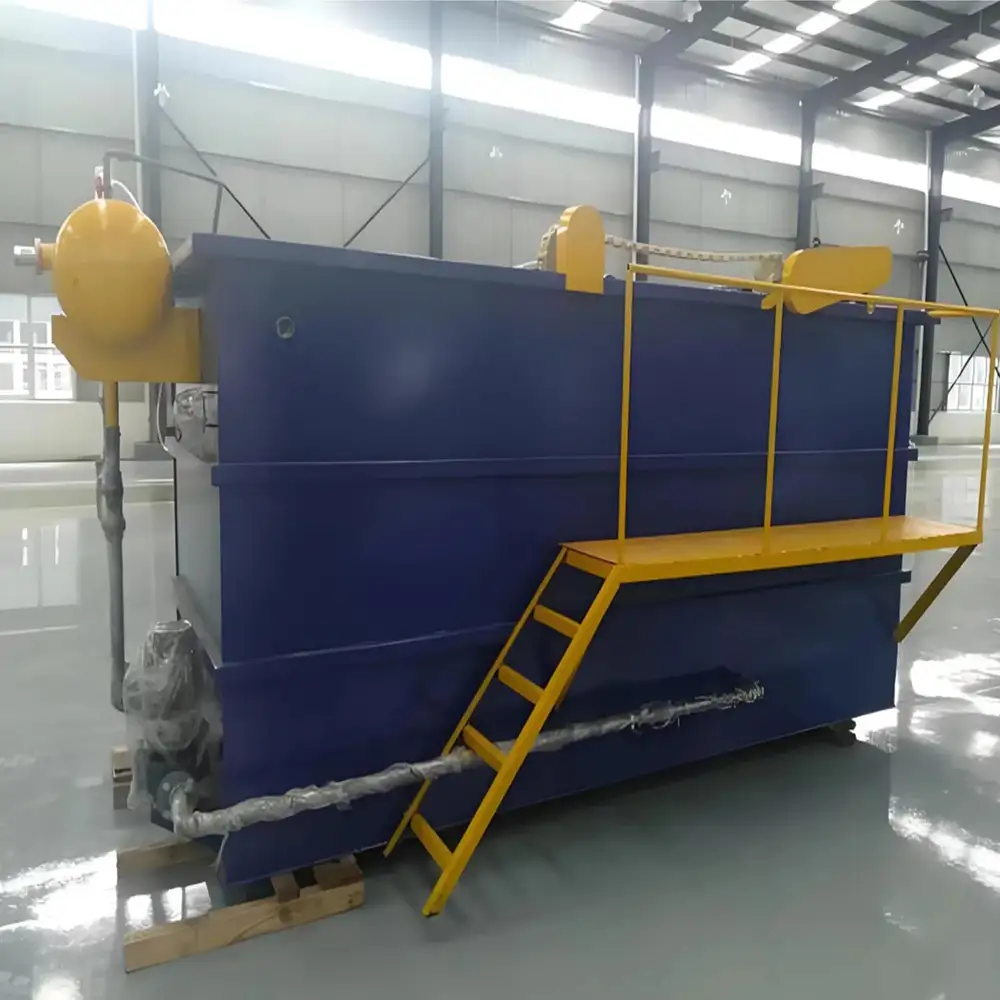
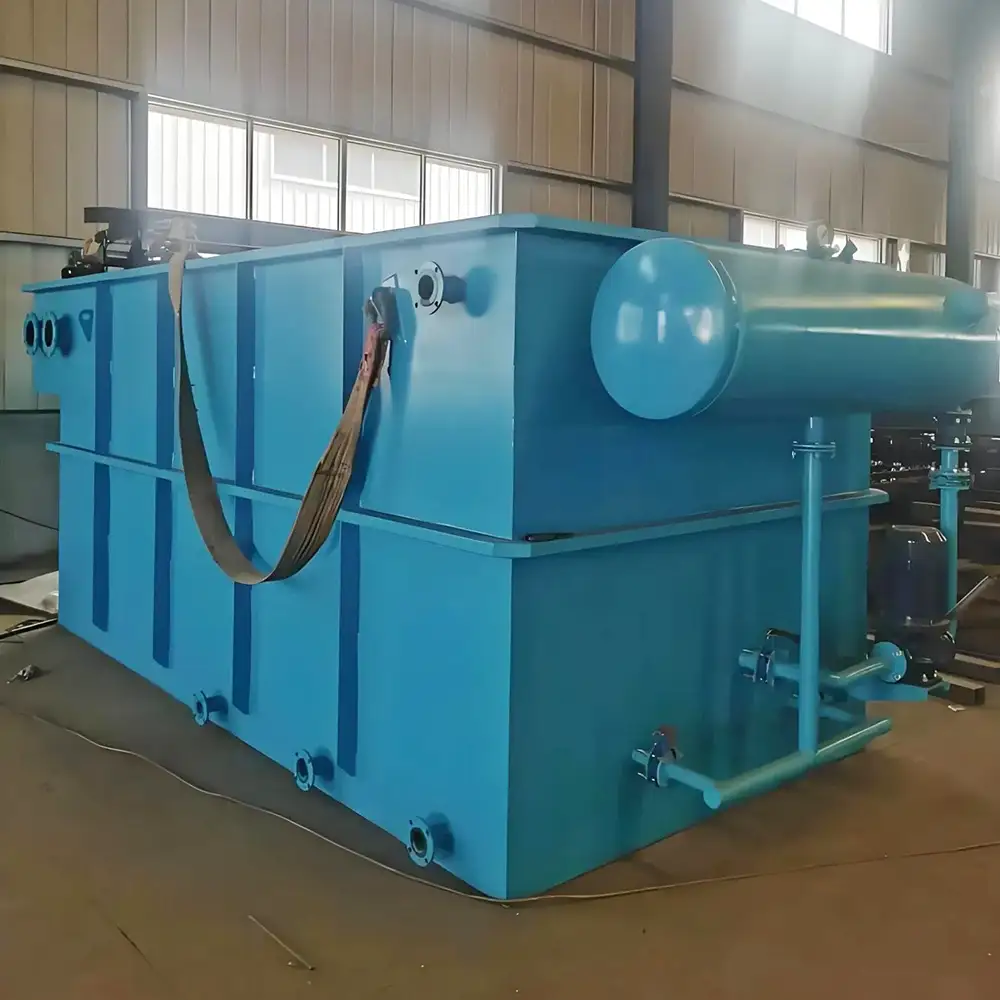
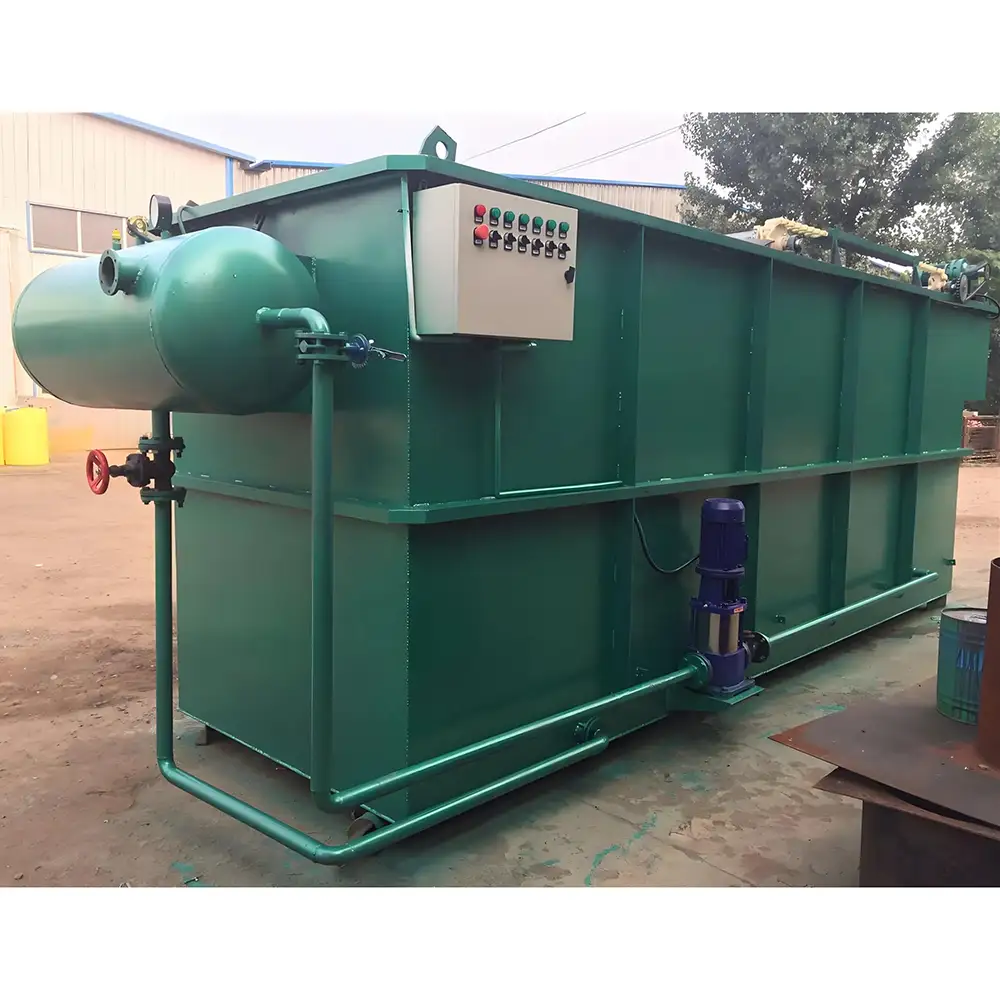
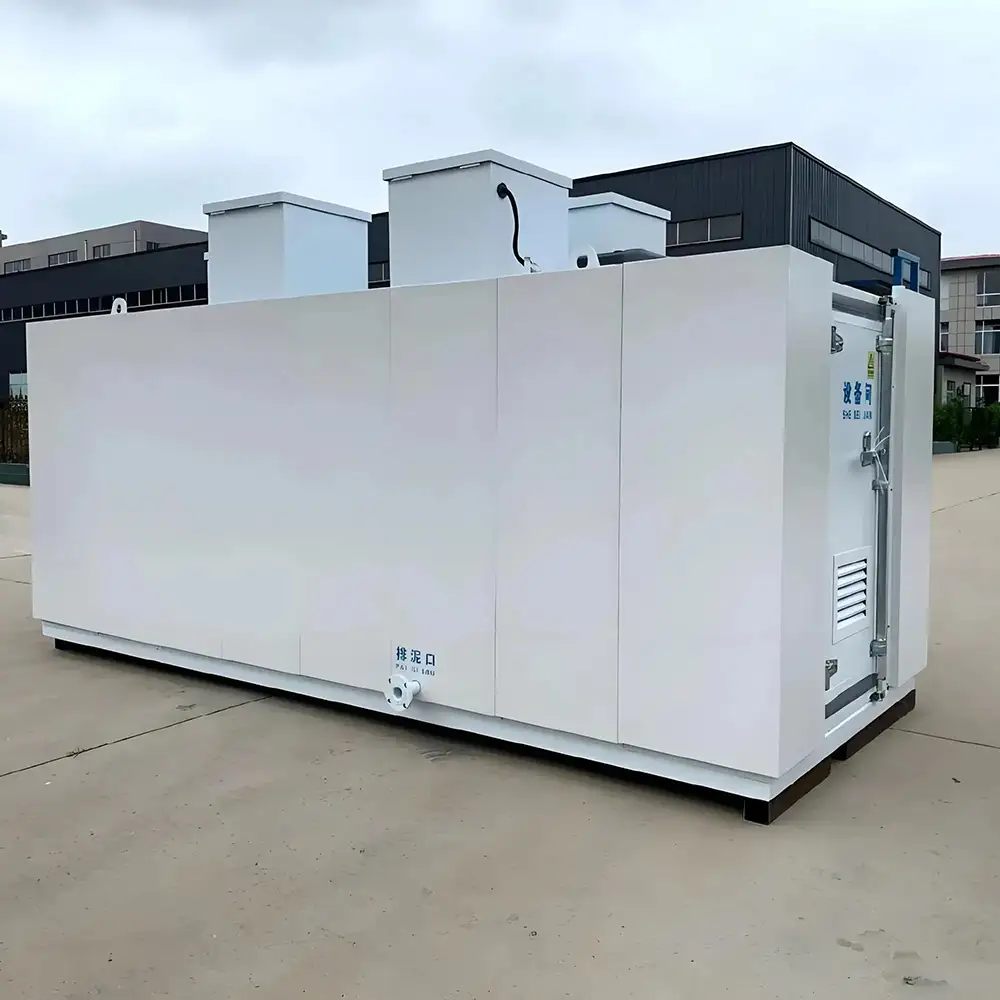
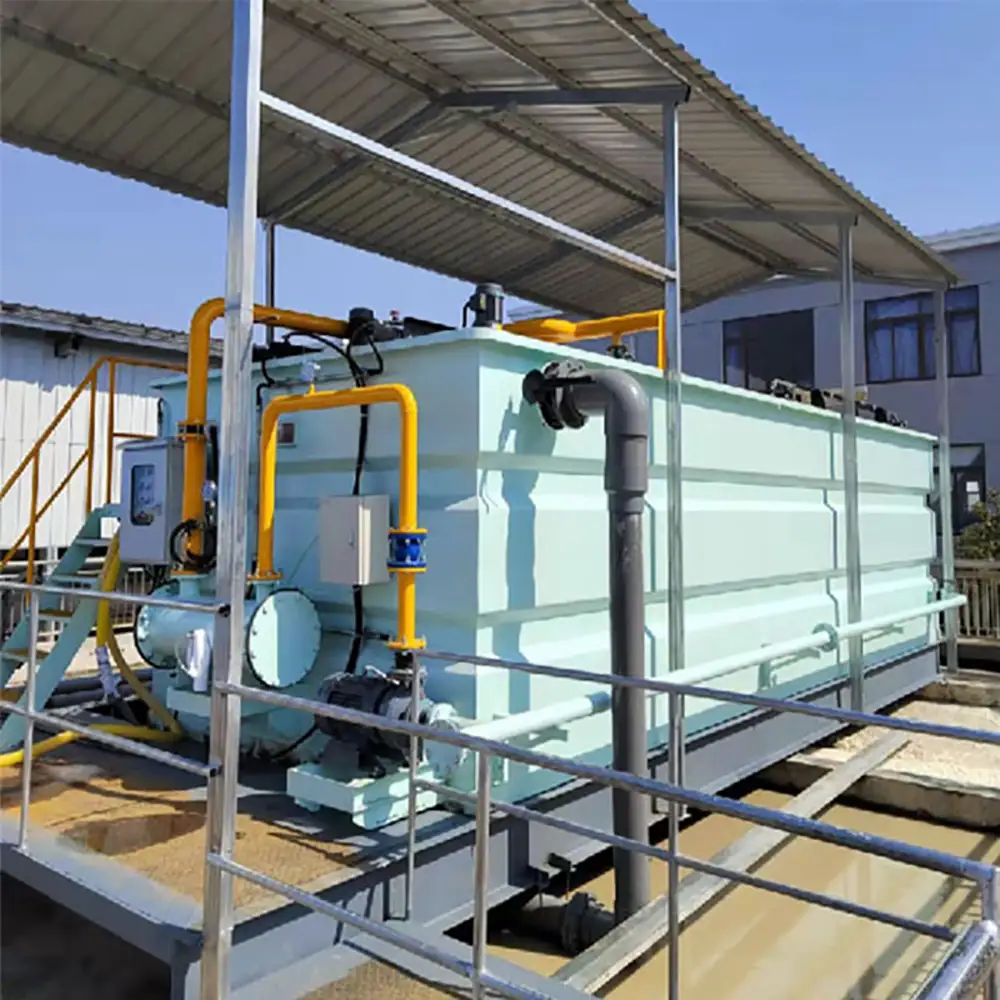
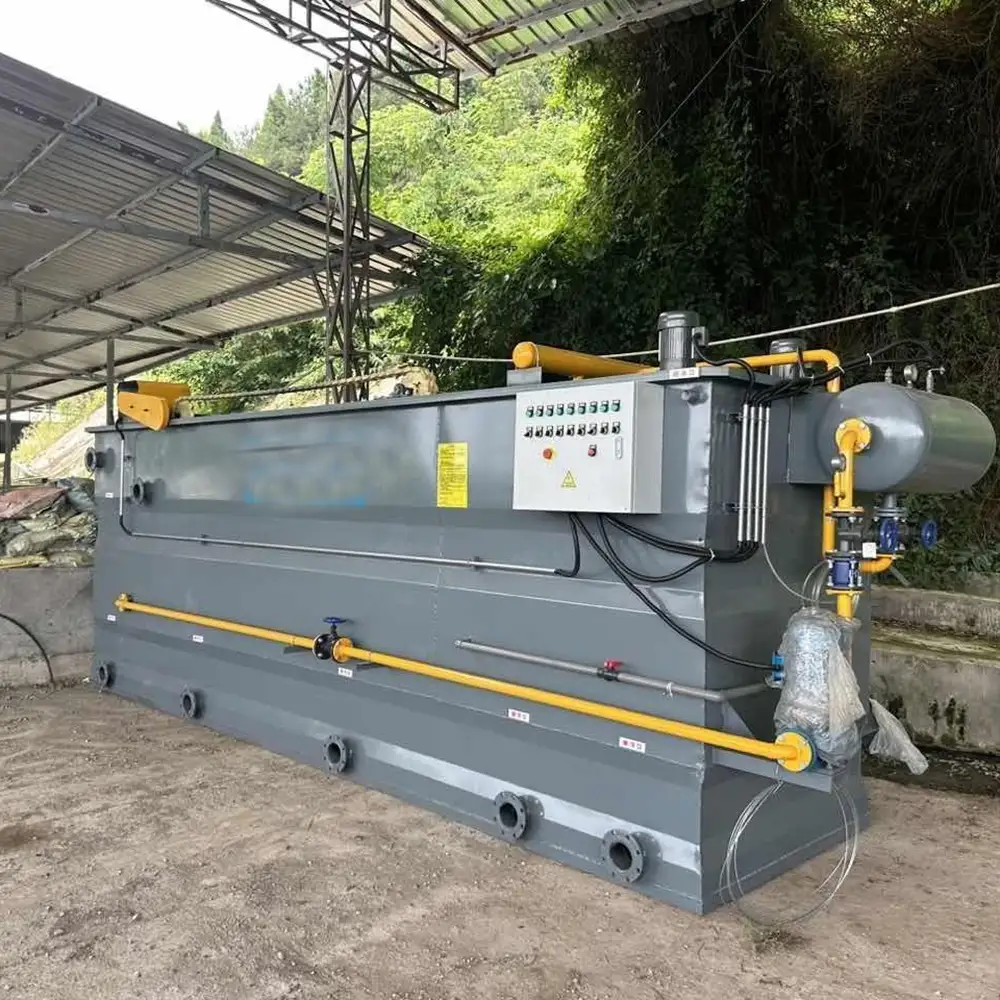
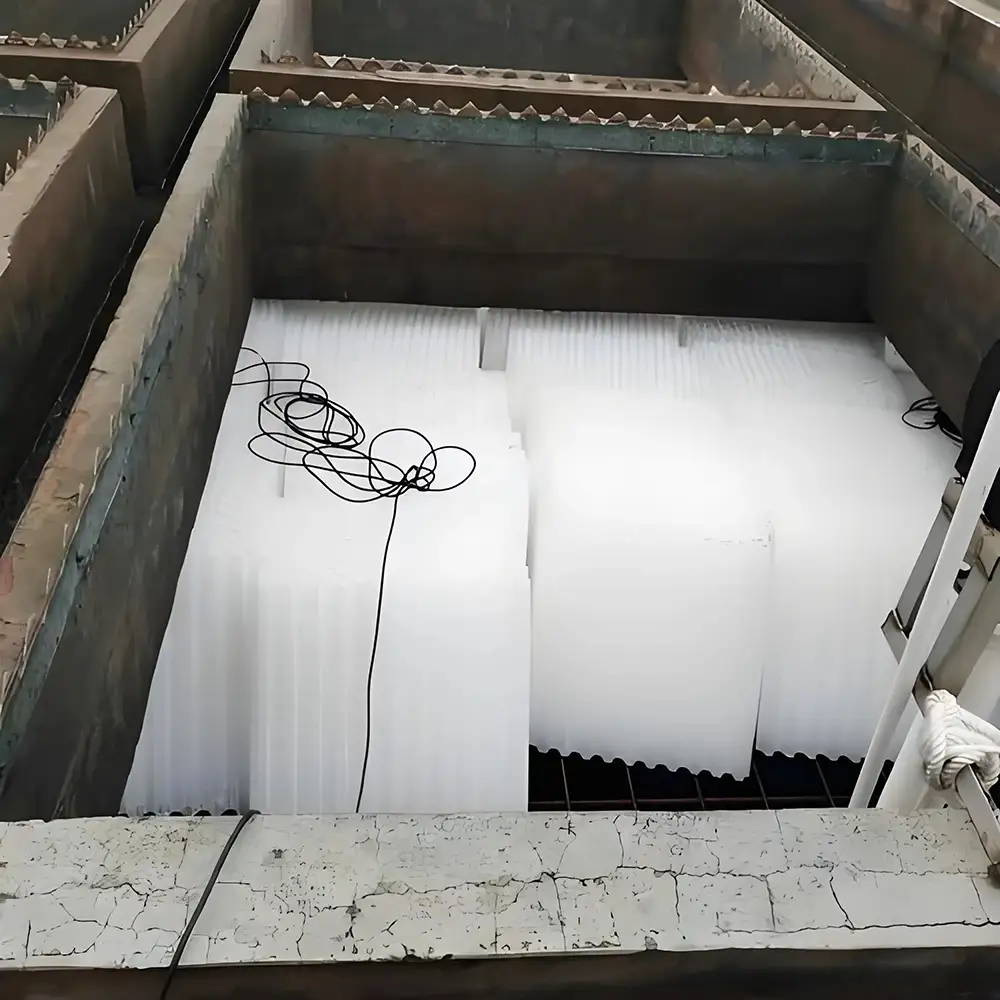
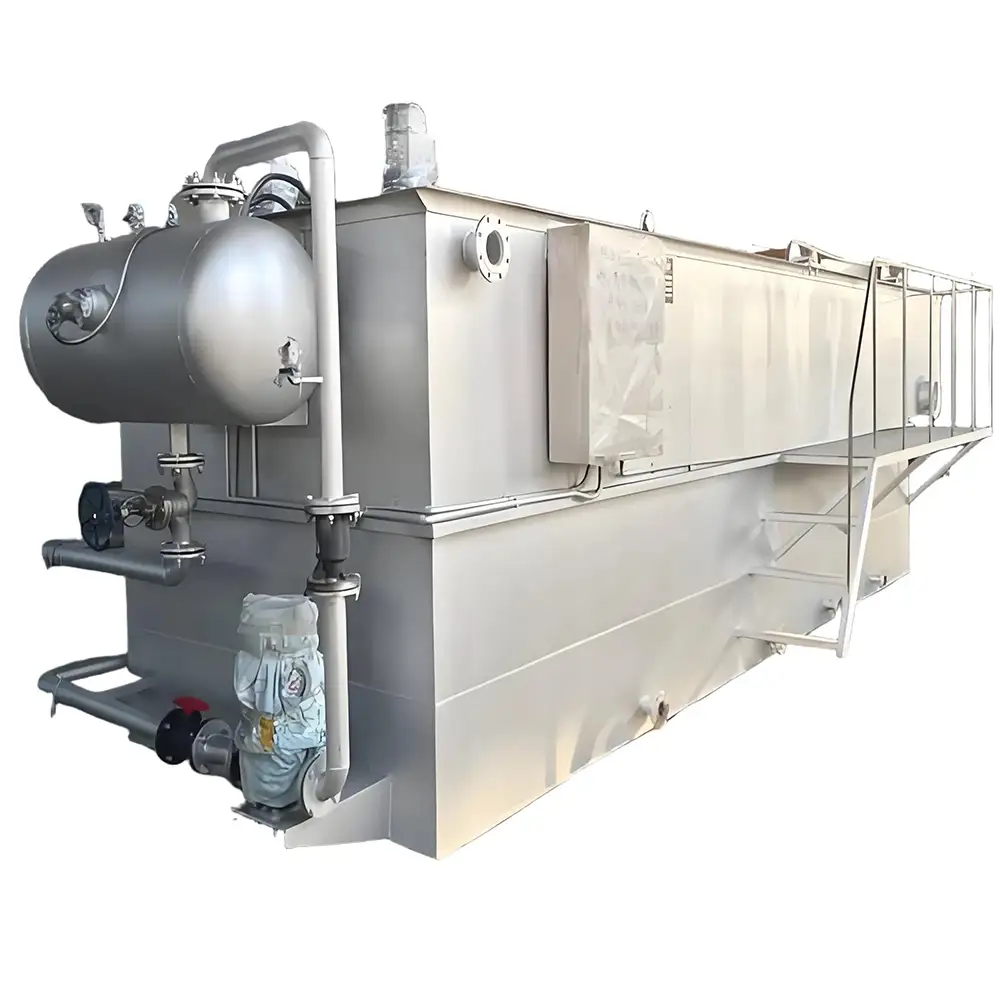
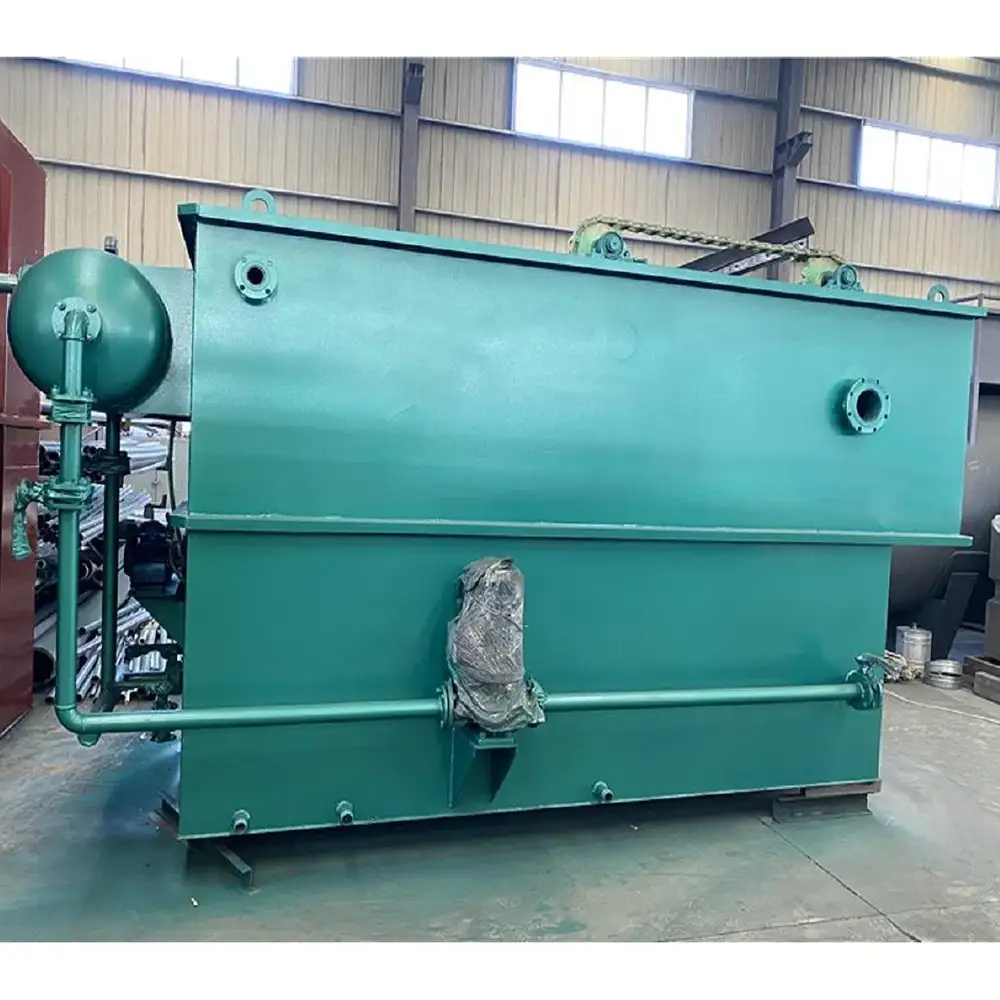
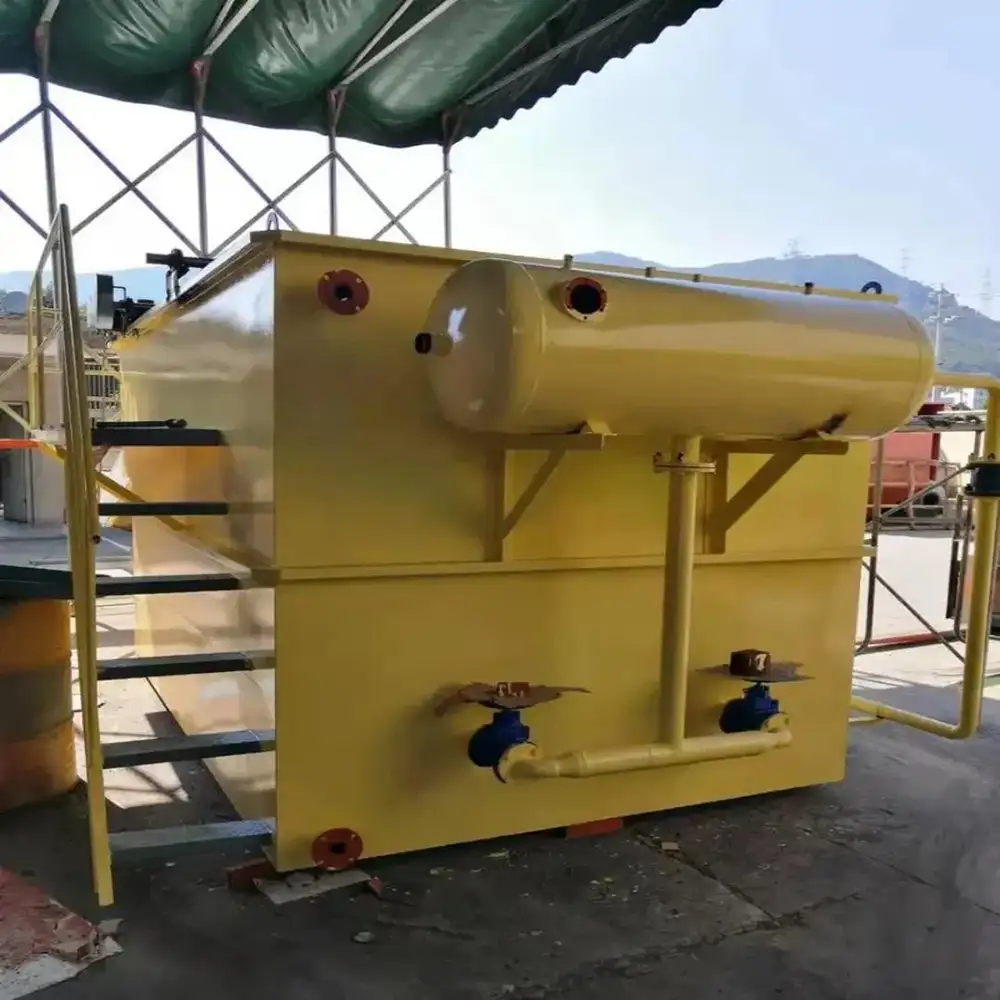
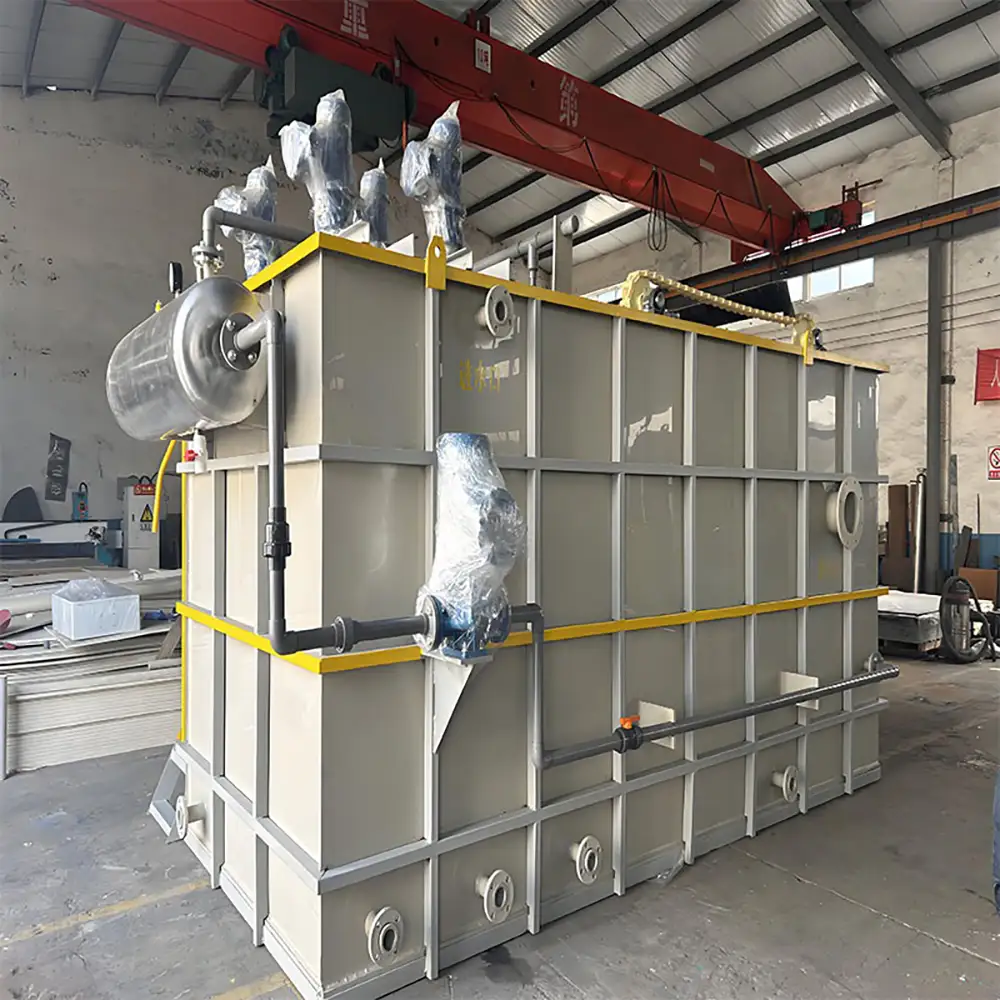
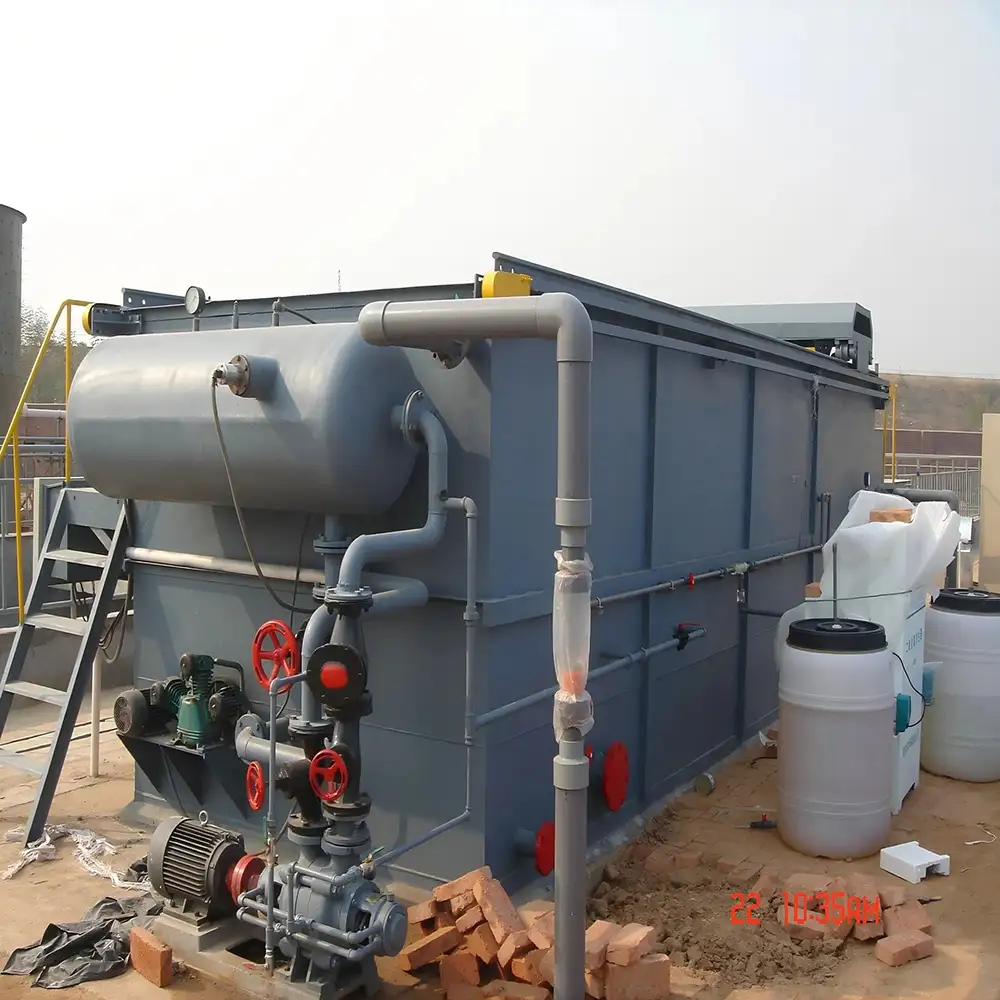
Dissolved air flotation sewage treatment plants are usually used for primary sewage treatment, and the front can be used together with grilles(bar screen). The compact sewage treatment plant is the second treatment, and the disinfection system (sodium hypochlorite, chlorine dioxide) is tertiary. Dissolved air flotation can remove suspended solids very well, and can be used for breeding, food consumption, slaughtering, food processing, plastic washing, dyeing, and car washing sewage treatment.
It has the characteristics of low price, small footprint, low operating cost and long service life.
Our company has been focusing on the production of air flotation equipment for more than 20 years, with domestic and foreign markets and a good reputation.
DAF Chemical Industry Wastewater Treatment and Dissolved Air Flotation System
Chemical manufacturing and processing industries generate wastewater with highly variable characteristics. Depending on the production process, wastewater may contain suspended solids, emulsified oils, grease, colloidal particles, chemical residues, color bodies, and other pollutants. A properly designed DAF Chemical Industry Wastewater Treatment System provides an effective physical-chemical separation stage for industrial water treatment projects.
Dissolved Air Flotation (DAF) uses fine air bubbles to attach to suspended particles and flocs, increasing their buoyancy so they rise to the water surface. The floating material is then continuously or intermittently removed by a surface skimmer. EPA documentation describes DAF as a process used to remove suspended solids, emulsified oil, and other pollutants from industrial process wastewater, with chemical coagulation and flocculation often used to improve separation.
For chemical industry applications, DAF can be installed as a pretreatment, primary clarification, intermediate separation, or polishing stage depending on wastewater characteristics and the overall treatment process.
|
Model NO. |
DAF |
Handling method |
physicochemical treatment |
|
Usage |
Industrial, agricultural, food factories, slaughterhouses |
Trademark |
|
|
Types |
Package, Compact, Small, Mini |
Applications |
Industrial, Municipal, Domestic, Medical, Ship |
|
Craft |
Flocculation sedimentation method |
Features |
Water Clarification, Filtration, Purification |
|
Service Life |
20 Years |
Operation |
Automatic |
|
Steel Plate Thickness |
>8mm |
Function |
Remove Suspended solids |
|
Voltage |
220V/ 380V/ Customerized |
Installation Type |
On ground |
|
Colour |
Grey/Silver/Blue/Balck/Customerized |
Use for |
Mineral, Printing, Chemical, Dyeing, Starch |
|
Material |
Carbon Steel, Stain Steel, FRP, PE, PP |
Certificate |
SGS, ISO |
|
Transport Package |
Container Standard Packing |
Specification |
Carbon steel anti-corrosion |
|
Production Capacity |
1000 Sets/Year |
Origin |
China |
What Is DAF Wastewater Treatment?
DAF stands for Dissolved Air Flotation. It is a flotation-based wastewater treatment technology designed to separate low-density or poorly settling materials from water.
The process normally uses a portion of treated water or influent as recycled water. Air is dissolved into the pressurized recycle stream. When the pressure is released inside the flotation tank, microscopic air bubbles are generated.
These bubbles attach to suspended particles or become trapped within chemical flocs. The resulting particle-bubble aggregates rise to the surface, where a scraper removes the floating sludge.
A conventional DAF system generally includes:
Wastewater Inlet
Equalization Tank
Chemical Dosing System
Coagulation Tank
Flocculation Tank
Recycle Pump
Air Saturation System
Pressure Release System
DAF Flotation Tank
Surface Skimmer
Sludge Collection System
Treated Water Outlet
Electrical Control System
The exact configuration depends on wastewater flow, pollutant concentration, chemical characteristics, required treatment performance, and downstream processes.
DAF Working Principle
The DAF treatment process can be divided into several stages.
1. Wastewater Equalization
Chemical wastewater may fluctuate significantly in flow rate, temperature, pH, suspended solids, and chemical concentration. An equalization tank can help stabilize the wastewater before DAF treatment.
2. Chemical Conditioning
Depending on the wastewater, coagulants and polymers may be added to destabilize colloidal particles and form larger flocs.
Typical treatment chemicals may include aluminum-based or iron-based coagulants and polymer flocculants. Chemical selection should be determined through laboratory or pilot testing rather than assuming one chemical works for every wastewater.
3. Air Dissolution
A portion of the wastewater or treated recycle stream is pressurized and mixed with air. Under pressure, air dissolves into the water.
4. Pressure Release
The pressurized water enters the flotation chamber through a pressure-reducing system. The rapid pressure reduction causes dissolved air to form microscopic bubbles.
5. Bubble-Particle Separation
The small bubbles attach to suspended particles, oil droplets, and flocs. Their apparent density is reduced, causing the aggregates to rise toward the surface.
6. Surface Skimming
The floating layer is collected by a mechanical scraper or skimming device and transferred to a sludge collection system.
7. Treated Water Discharge
Clarified water leaves the DAF chamber and proceeds to the next treatment stage, such as biological treatment, filtration, membrane treatment, or final discharge.
EPA technical documentation describes this same basic mechanism: pressurized air is dissolved into water, pressure is released, microscopic bubbles form, and the bubbles attach to suspended material and carry it to the surface for removal.
Chemical Industry Wastewater Applications
Chemical industry wastewater varies greatly between facilities. DAF is therefore normally selected based on actual wastewater testing and process requirements.
Potential applications include:
Chemical Manufacturing Wastewater
Chemical Processing Wastewater
Petrochemical Wastewater
Resin And Polymer Wastewater
Paint And Coating Wastewater
Adhesive Manufacturing Wastewater
Pharmaceutical Process Wastewater
Industrial Chemical Rinse Water
Surfactant-Containing Wastewater
Oil-Containing Industrial Wastewater
Mineral Processing Wastewater
Metal-Containing Wastewater
Fine Chemical Production Wastewater
Industrial Process Water Treatment
DAF can be particularly useful when suspended particles have poor settling characteristics or when oil and grease need to be separated from water. EPA materials identify DAF as a technology used for suspended solids and dispersed oil and grease removal in industrial wastewater applications.
DAF as Pretreatment for Chemical Wastewater
One of the most important applications of DAF is pretreatment.
Chemical wastewater may contain suspended solids, oils, emulsions, colloids, or chemical flocs that could negatively affect downstream biological or membrane processes. Removing these materials before the next stage can help create more stable operating conditions.
A typical chemical wastewater treatment process may be:
Chemical Wastewater → Screening → Equalization → pH Adjustment → Coagulation → Flocculation → DAF → Biological Treatment → Filtration → Disinfection → Discharge or Reuse
Depending on the wastewater, additional technologies such as oxidation, activated carbon, MBR, UF, NF, RO, or sludge dewatering may be incorporated.
DAF should not automatically be considered a complete treatment system for every chemical wastewater stream. Dissolved salts, specific dissolved organic compounds, nutrients, and other contaminants may require additional treatment technologies.
Advantages of Dissolved Air Flotation
Efficient Suspended Solids Separation
Fine bubbles can capture particles that may settle slowly or poorly in conventional sedimentation systems.
Oil and Grease Removal
DAF is widely used for removing dispersed oil and grease from industrial wastewater.
Compact Footprint
Flotation can provide rapid separation and may require less surface area than conventional gravity clarification for certain applications.
Chemical-Assisted Treatment
Coagulation and flocculation can improve the formation of larger, more floatable particles.
Flexible Industrial Application
DAF can be adapted to chemical, food processing, petrochemical, mineral processing, and other industrial wastewater applications.
Sludge Concentration
The floating solids can be collected as concentrated float sludge for subsequent dewatering or disposal.
EPA's DAF fact sheet reports typical removal ranges of approximately 40–65% for suspended solids and 60–80% for oil and grease without chemicals, with higher ranges reported when chemicals are used. Actual performance depends heavily on wastewater characteristics, chemical dosing, hydraulic loading, and equipment design.
Chemical Dosing and Flocculation
Chemical conditioning is often an important part of a chemical-industry DAF project.
The purpose of coagulation is to destabilize small colloidal particles. Flocculation then promotes the formation of larger aggregates that can interact more effectively with air bubbles.
The optimal chemical program depends on:
Wastewater pH
Suspended Solids
Oil And Grease
Emulsions
Colloidal Matter
Organic Loading
Metal Concentration
Chemical Composition
Temperature
Flow Rate
Jar testing is commonly recommended during system development to determine suitable chemical types and dosages.
DAF Equipment Configuration
A complete DAF project may include more than the flotation tank itself.
A customized system can include an equalization tank, pH adjustment system, chemical storage tanks, dosing pumps, rapid mixing equipment, flocculation tanks, recycle pumps, air compressors, pressure vessels, DAF flotation chambers, skimmers, sludge pumps, control cabinets, and downstream sludge treatment equipment.
PLC control can be used to coordinate pumps, valves, chemical dosing, skimmer operation, alarms, and other automatic functions.
For larger industrial wastewater treatment projects, online monitoring of pH, flow, pressure, turbidity, and other parameters can also be considered.
Materials and Industrial Construction
The DAF unit should be constructed according to wastewater chemistry and site conditions.
Possible construction materials include:
Carbon Steel
Stainless Steel
FRP Components
Corrosion-Resistant Coatings
Chemical-Resistant Piping
Customized Internal Components
Material selection should be based on actual wastewater composition rather than simply selecting a material based on industry category.
For aggressive chemical wastewater, corrosion resistance can be especially important for tanks, piping, pumps, valves, skimmers, and chemical dosing components.
Operation and Maintenance
Routine maintenance is essential for stable DAF performance.
Operators should inspect:
Recycle Pump
Air Saturation System
Pressure Regulating Valve
Air Compressor
Skimmer
Sludge Pump
Chemical Dosing Pumps
Sensors
Valves
Electrical Controls
The operator should also monitor float sludge characteristics and treated-water quality. Changes in chemical dosage, pH, flow, or air-to-solids conditions may affect flotation performance.
Sludge should be removed at an appropriate frequency. Excessive accumulation can interfere with flotation performance and may allow solids to return to the treated-water stream.
Industrial Water Treatment Project Design
Every chemical wastewater project should begin with actual process information.
Important design parameters include:
Wastewater Flow Rate
Peak Flow Rate
pH
COD
BOD
TSS
Oil And Grease
Temperature
Chemical Composition
Required Effluent Quality
Sludge Characteristics
Available Installation Space
Downstream Treatment Requirements
Laboratory testing or pilot testing can help determine whether DAF is suitable and establish appropriate chemical dosing and hydraulic conditions.
Why Choose Us?
We provide industrial wastewater treatment solutions focused on the actual characteristics of each project rather than using a one-size-fits-all configuration.
Our DAF solutions can be developed for chemical processing, industrial manufacturing, mineral processing, food processing, petrochemical, and other wastewater applications.
Key advantages include:
Industrial DAF Treatment Solutions
Chemical Wastewater Application Experience
Flexible Equipment Configurations
Coagulation And Flocculation Integration
Automatic PLC Control Options
Corrosion-Resistant Material Options
Sludge Collection And Handling
Complete Pretreatment System Integration
Pilot And Laboratory Testing Support
Project-Based Engineering
International Industrial Water Treatment Support
The objective is to create a stable treatment process that can be integrated with the customer's existing wastewater treatment plant or supplied as part of a complete industrial wastewater treatment project.
FAQs
1. What does DAF stand for in wastewater treatment?
DAF stands for Dissolved Air Flotation. It uses microscopic air bubbles to float suspended particles, oils, grease, and flocculated solids to the water surface for removal.
2. Is DAF suitable for chemical industry wastewater?
Yes. DAF is used for various industrial and chemical wastewater applications, particularly where suspended solids, emulsified oils, grease, or poorly settling particles are present.
3. What contaminants can DAF remove?
DAF can help remove suspended solids, dispersed oil, grease, colloidal material, and chemically formed flocs. Specific dissolved contaminants may require additional treatment.
4. Does chemical dosing need to be used with DAF?
Not always. However, coagulation and flocculation can significantly improve the flotation of fine particles and emulsified materials in many industrial wastewater applications.
5. Can DAF remove COD?
DAF can reduce COD associated with suspended solids, oils, and other floatable or coagulated materials. It should not be assumed to remove all dissolved COD.
6. Can DAF remove oil and grease?
Yes. Oil and grease separation is one of the common industrial applications of dissolved air flotation.
7. Can DAF be used before an MBR system?
Yes. Depending on the wastewater, DAF can serve as pretreatment before MBR or other biological and membrane processes to reduce suspended solids, oils, grease, and other loading.
8. What is the difference between DAF and a sedimentation tank?
Sedimentation relies primarily on gravity, while DAF uses fine air bubbles to increase the buoyancy of particles and float them to the surface. DAF can be advantageous for certain low-density or poorly settling materials.
9. How is DAF sludge removed?
A surface scraper or skimmer removes the floating sludge. The collected sludge can then be transferred to a sludge thickening or dewatering process.
10. Can the DAF system be automated?
Yes. PLC control can automate pumps, valves, chemical dosing, skimmers, alarms, and other operating functions.
11. How is a DAF system sized?
Sizing depends on wastewater flow, peak flow, suspended solids, oil and grease concentration, loading, required treatment performance, chemical conditions, and downstream requirements.
12. Can DAF treat highly variable chemical wastewater?
DAF can be incorporated into a system with equalization and chemical conditioning to manage variations. Actual suitability should be confirmed through wastewater characterization and testing.
13. Can DAF be supplied as part of a complete wastewater treatment project?
Yes. DAF can be integrated with screening, equalization, pH adjustment, coagulation, flocculation, biological treatment, filtration, disinfection, sludge treatment, and other process units according to the project requirements.
Prev:
Industrial Agriculture Wanze Plastic Film Wrapping+LCL Flotation Unit Waste Water Treatment Floatation
Next:
Plastic Film Wrapping with LCL Customized Chemical Industry Processing Flotation
TAG:
Industrial Water Treatment System,
Industrial Wastewater Treatment Equipment,
Suspended Solids Removal,
Industrial Wastewater Treatment System,
DAF Wastewater Treatment System,
Dissolved Air Flotation Wastewater Treatment,
Industrial Wastewater Treatment,
Industrial Sewage Treatment,
Industrial Wastewater Treatment Plant,
Wastewater Treatment Equipment,
Wastewater Treatment Plant,
Wastewater Sludge Treatment,
Industrial Sludge Treatment,
Chemical Wastewater Treatment,
Industrial Water Treatment Plant,
Chemical Wastewater Treatment Equipment,
Wastewater Treatment System,
Industrial Water Treatment Equipment,
Industrial Water Treatment,
Wastewater Pretreatment Equipment,
Water Treatment Plant,
Water Treatment Equipment,
Chemical Industry Wastewater Treatment,
Industrial Chemical Wastewater Treatment,
Process Wastewater Treatment,
Industrial Sewage Treatment Plant,
Water Treatment System,
Industrial Process Water Treatment,
Oil And Grease Removal System,
Oil And Grease Removal Equipment,
Related Category:
DAF Wastewater Treatment,Dissolved Air Flotation,Chemical Industry Wastewater Treatment China, suppliers, manufacturers, factory, customized, wholesale, quotation, made in China