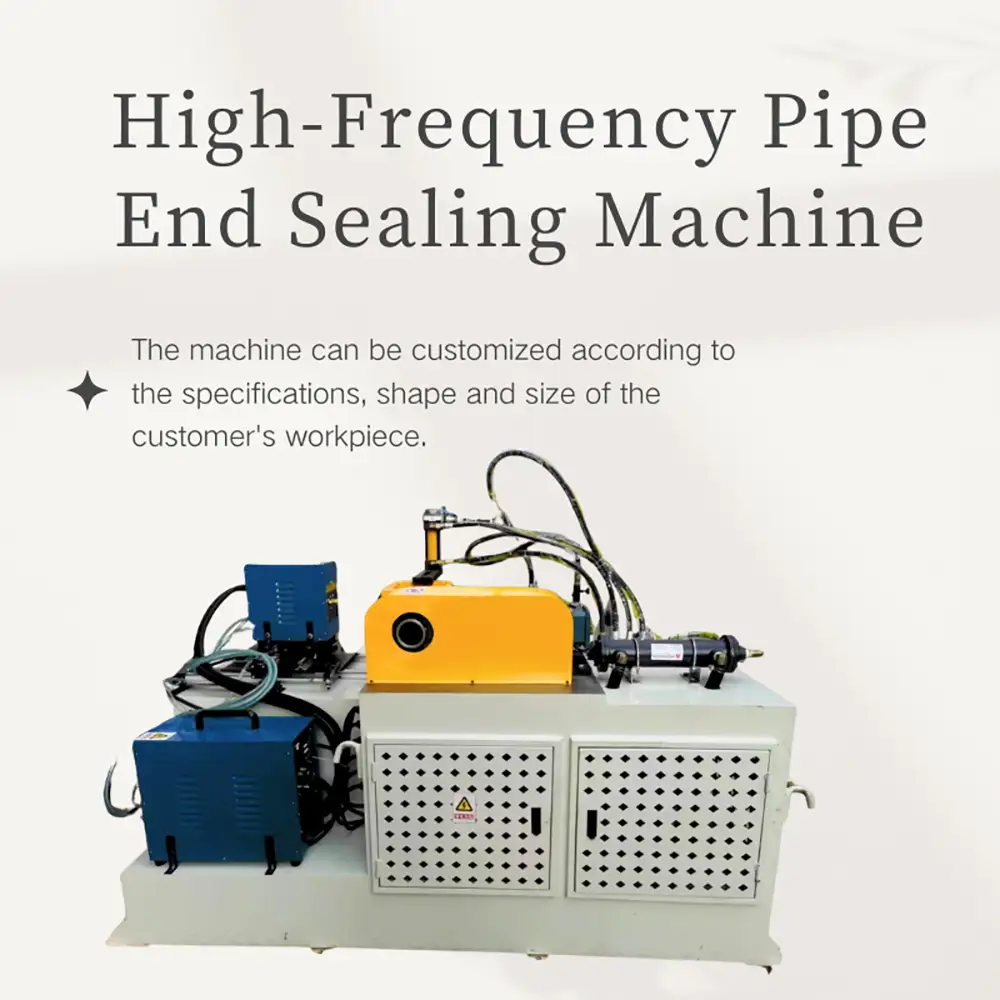
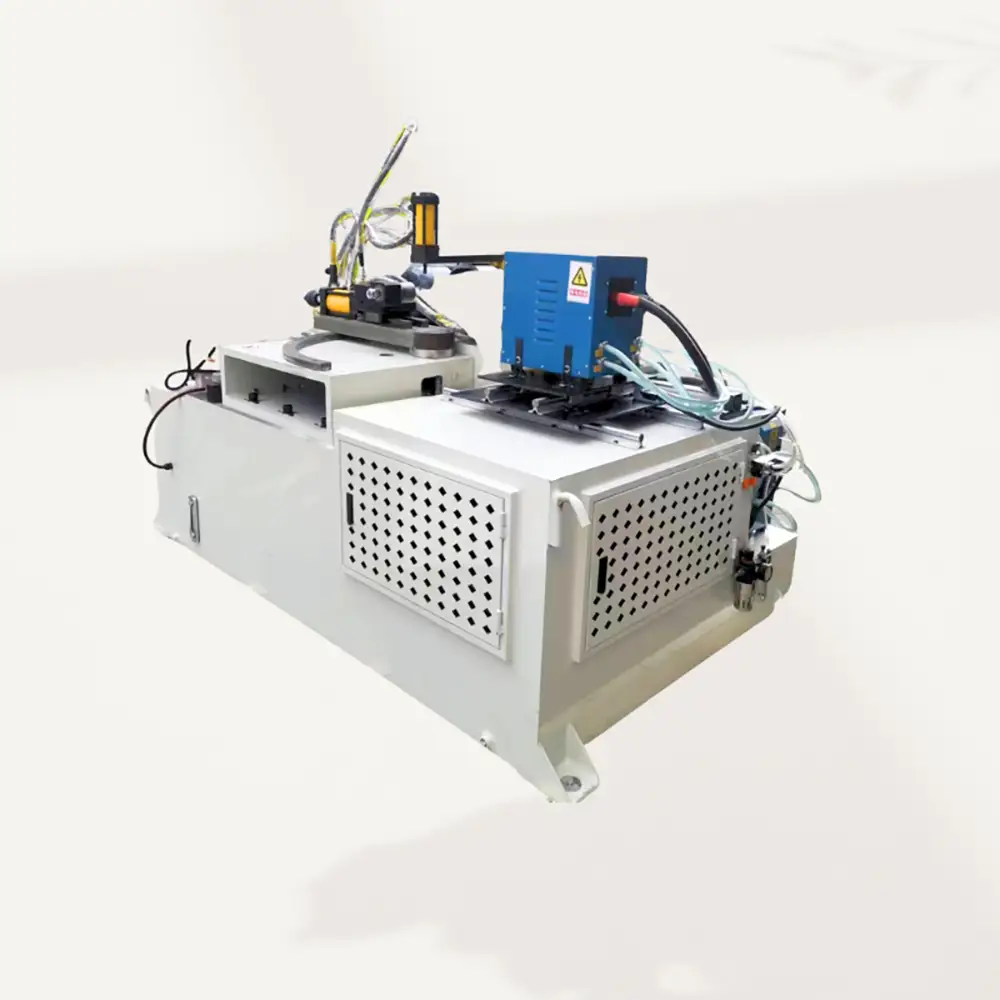
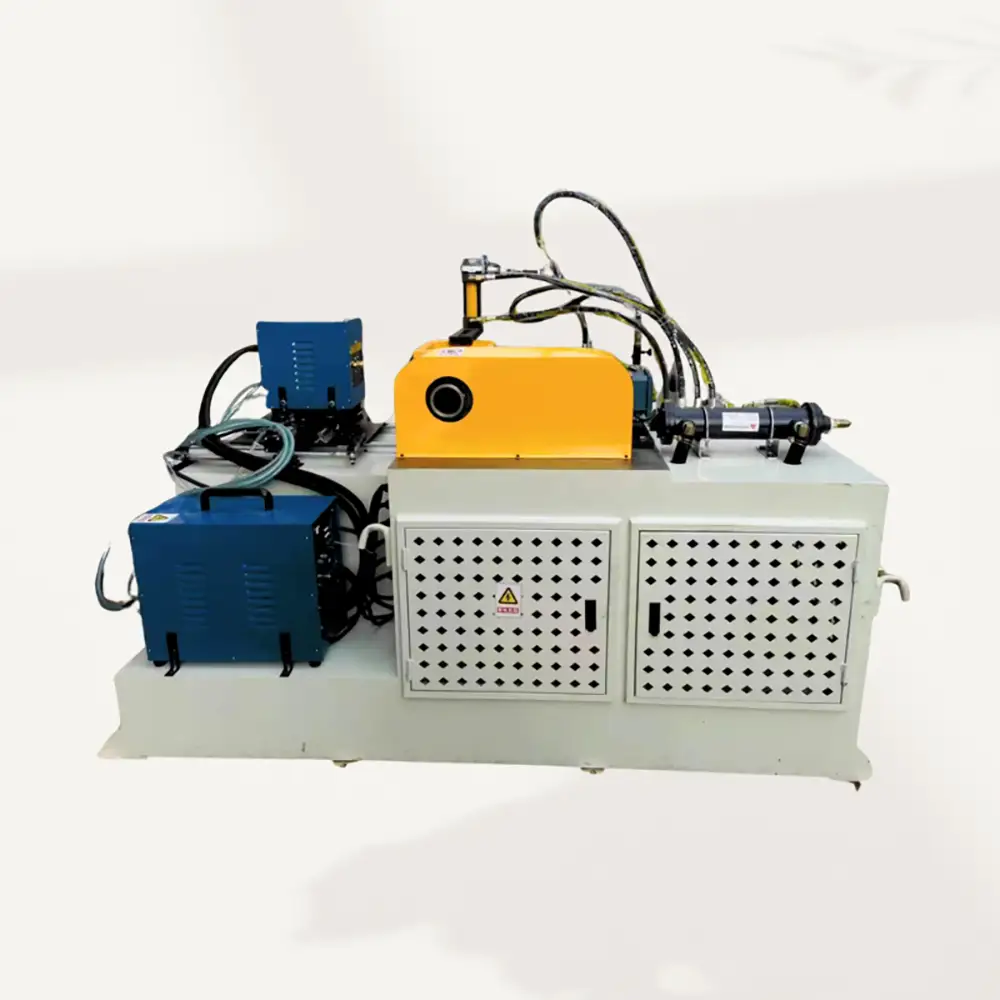
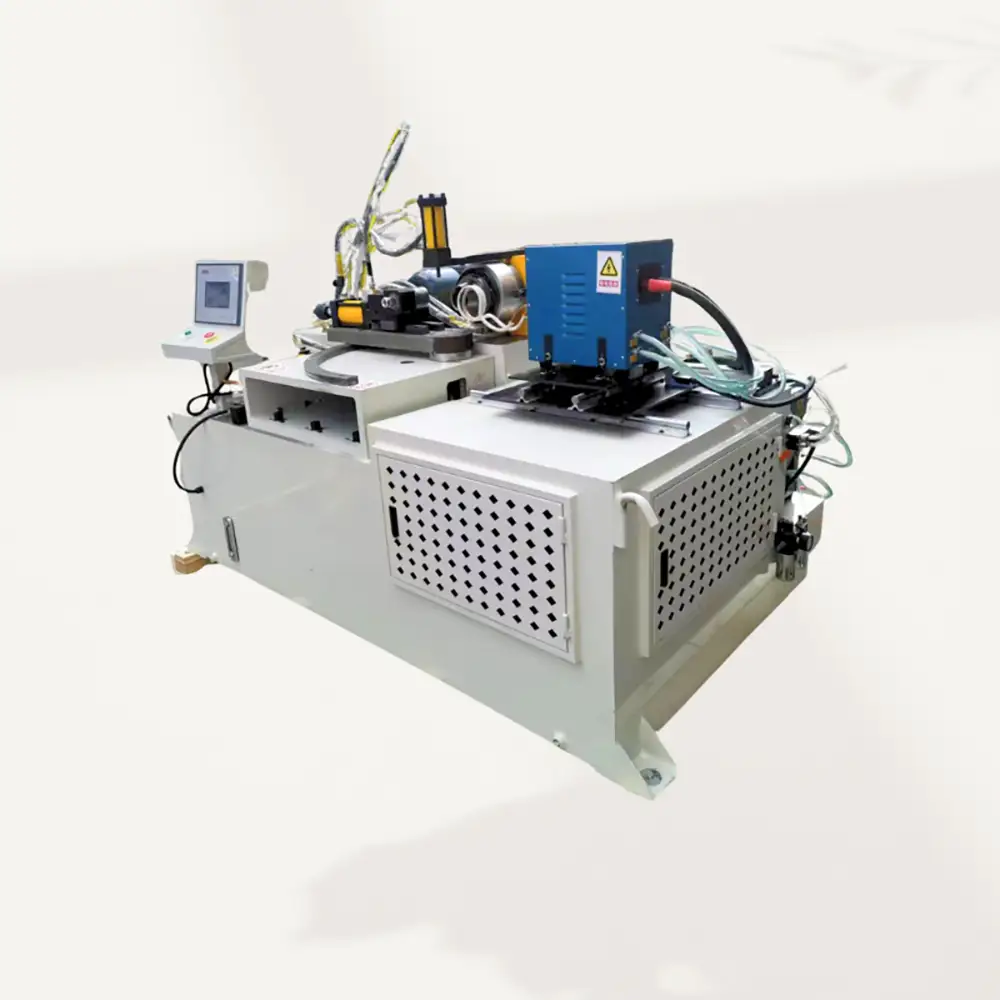
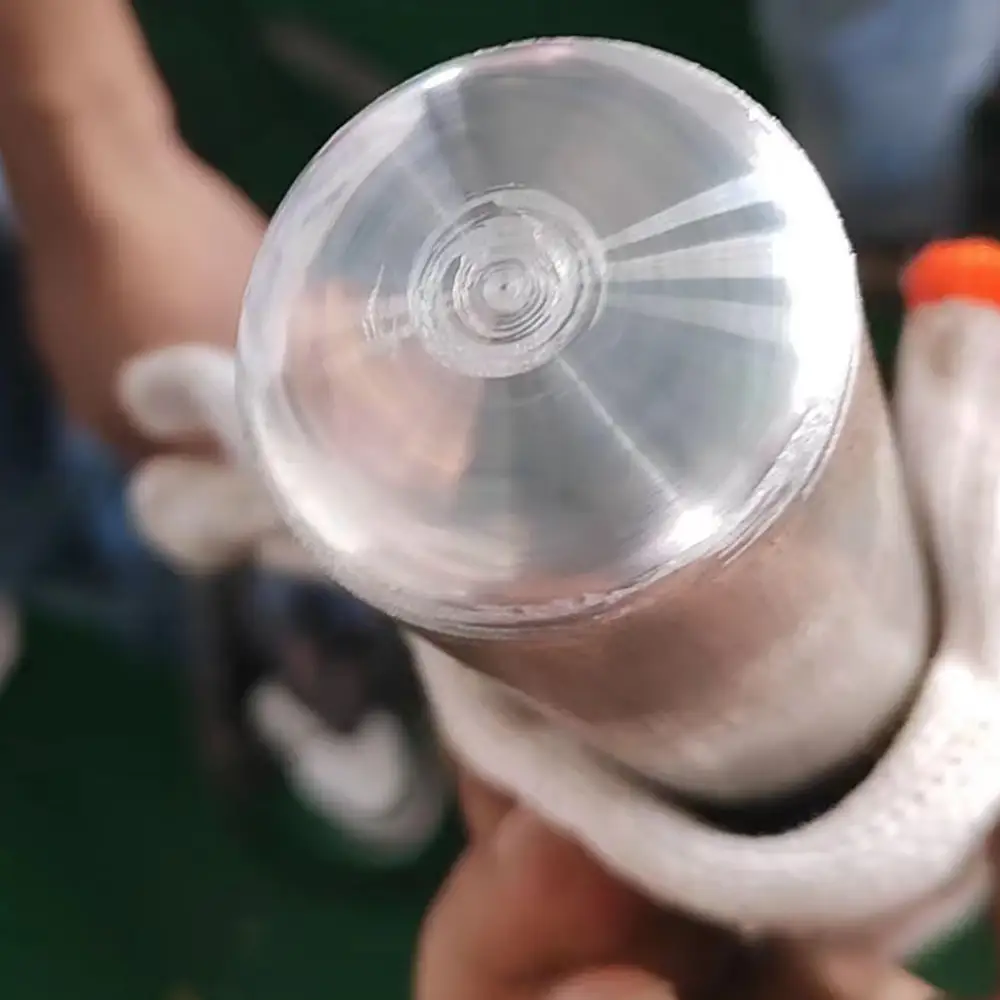
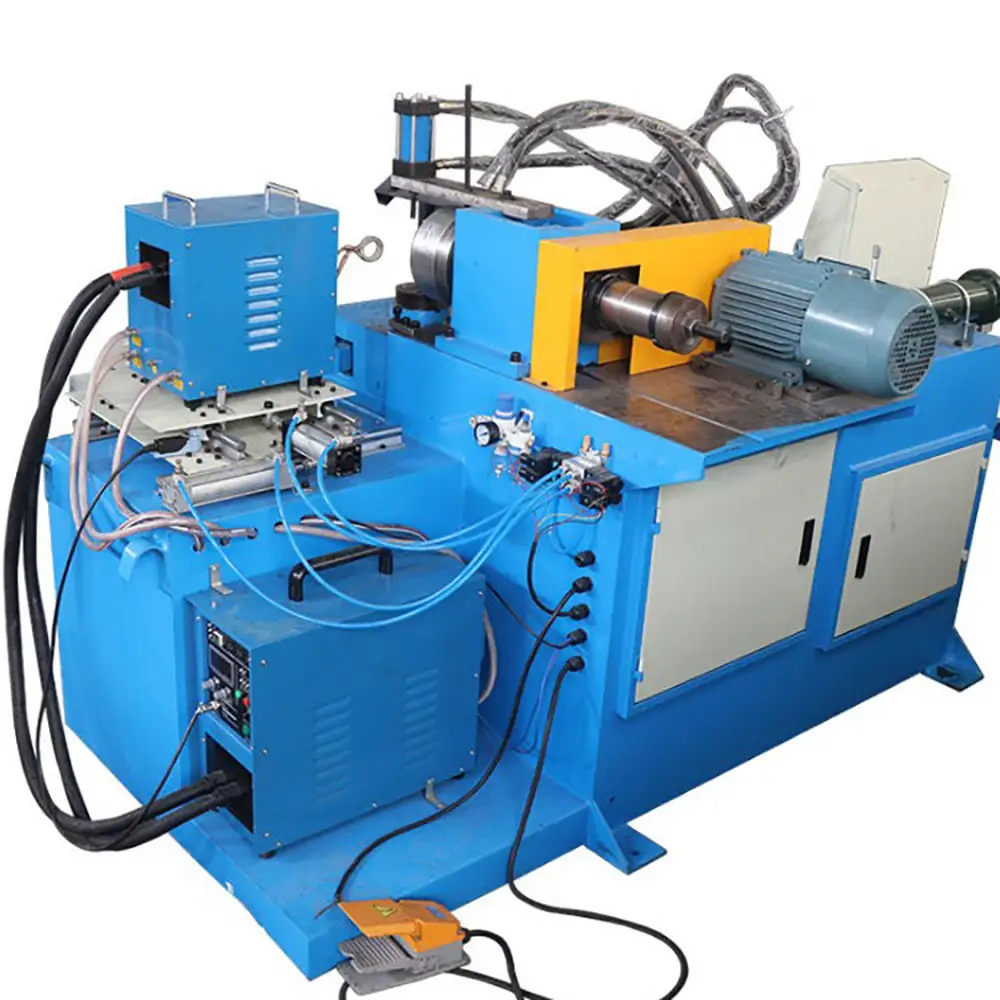
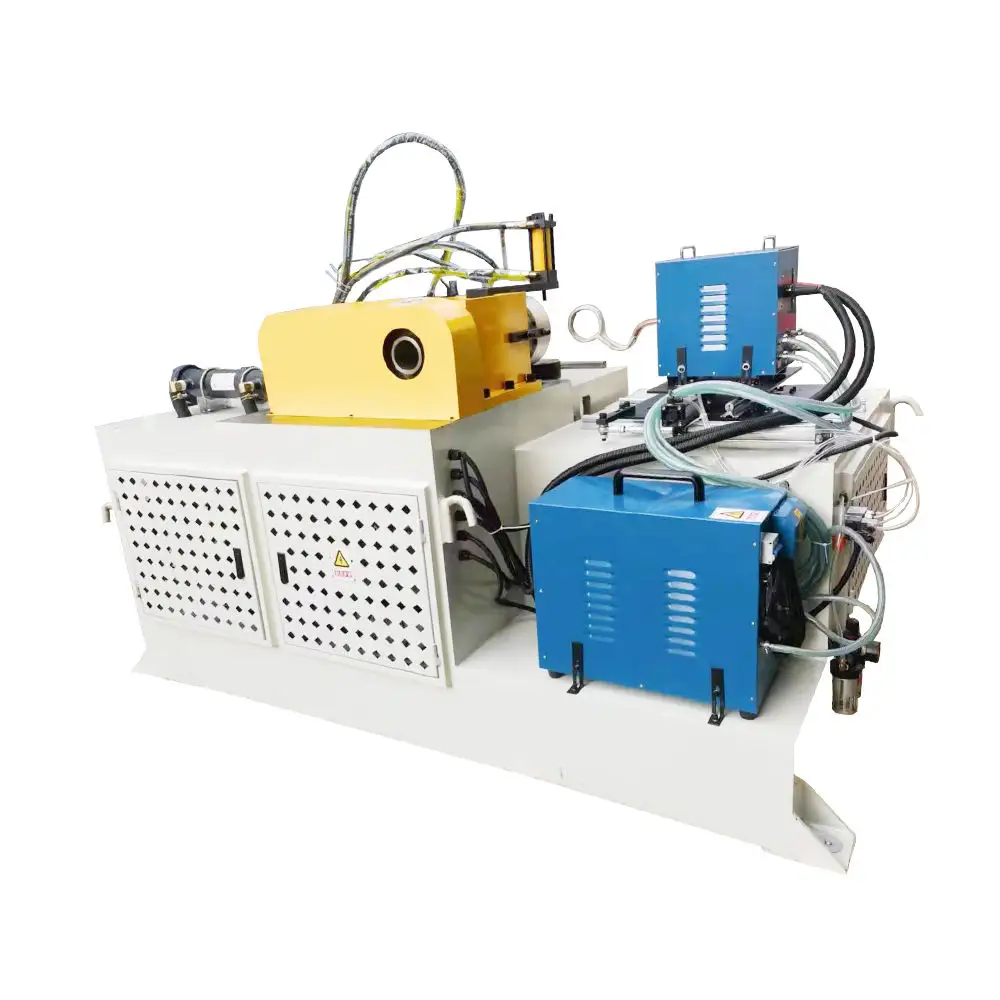
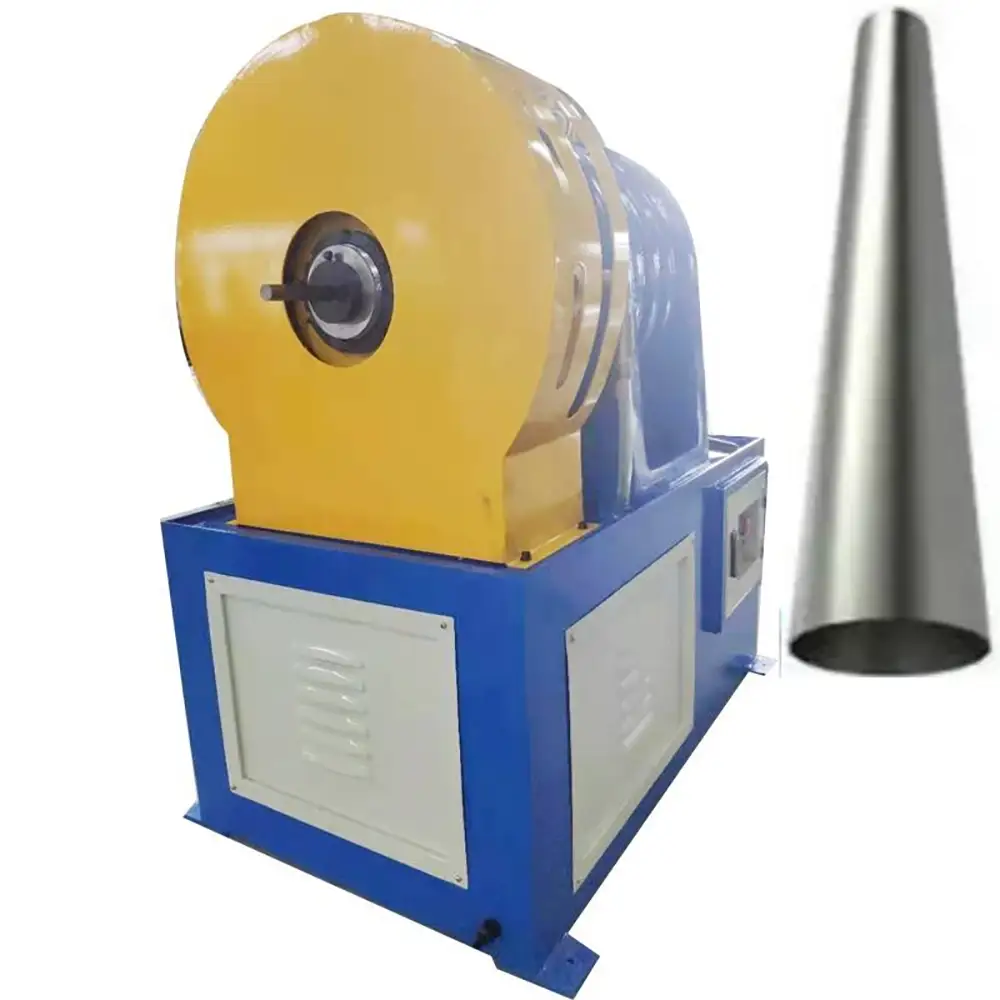
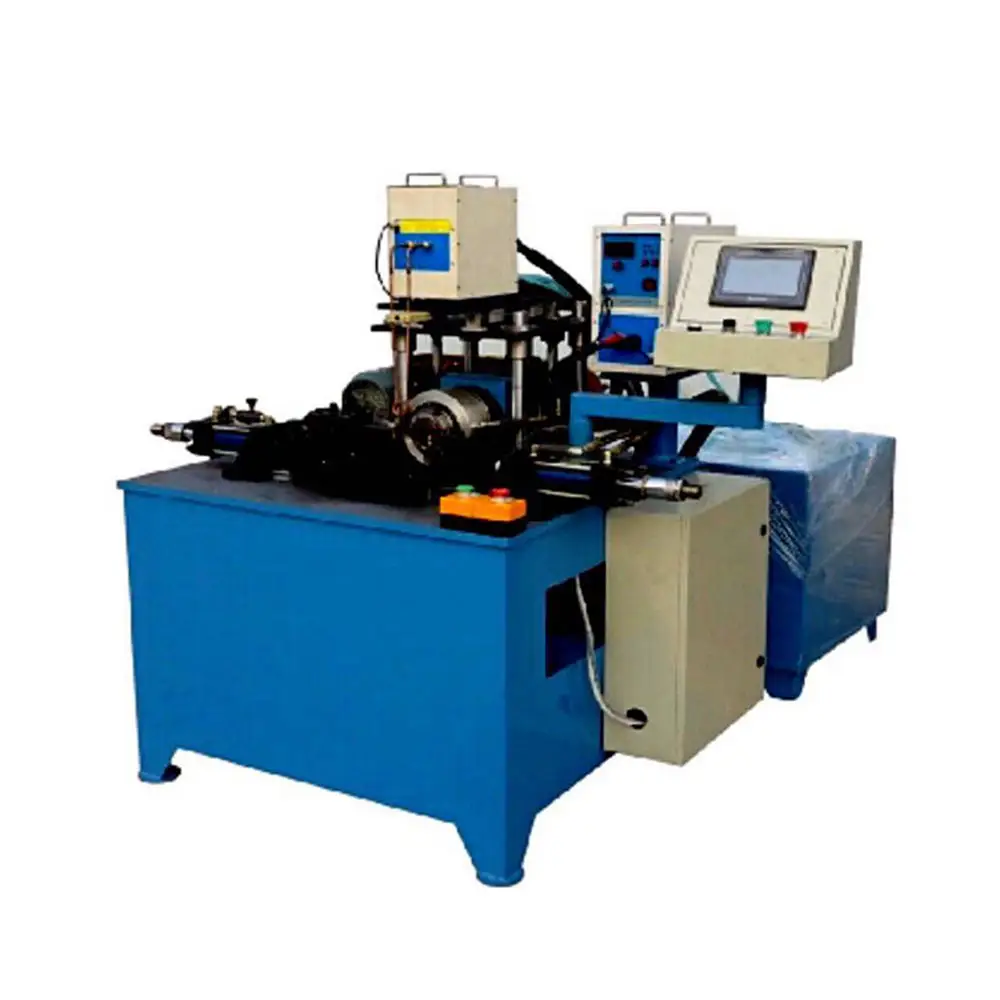
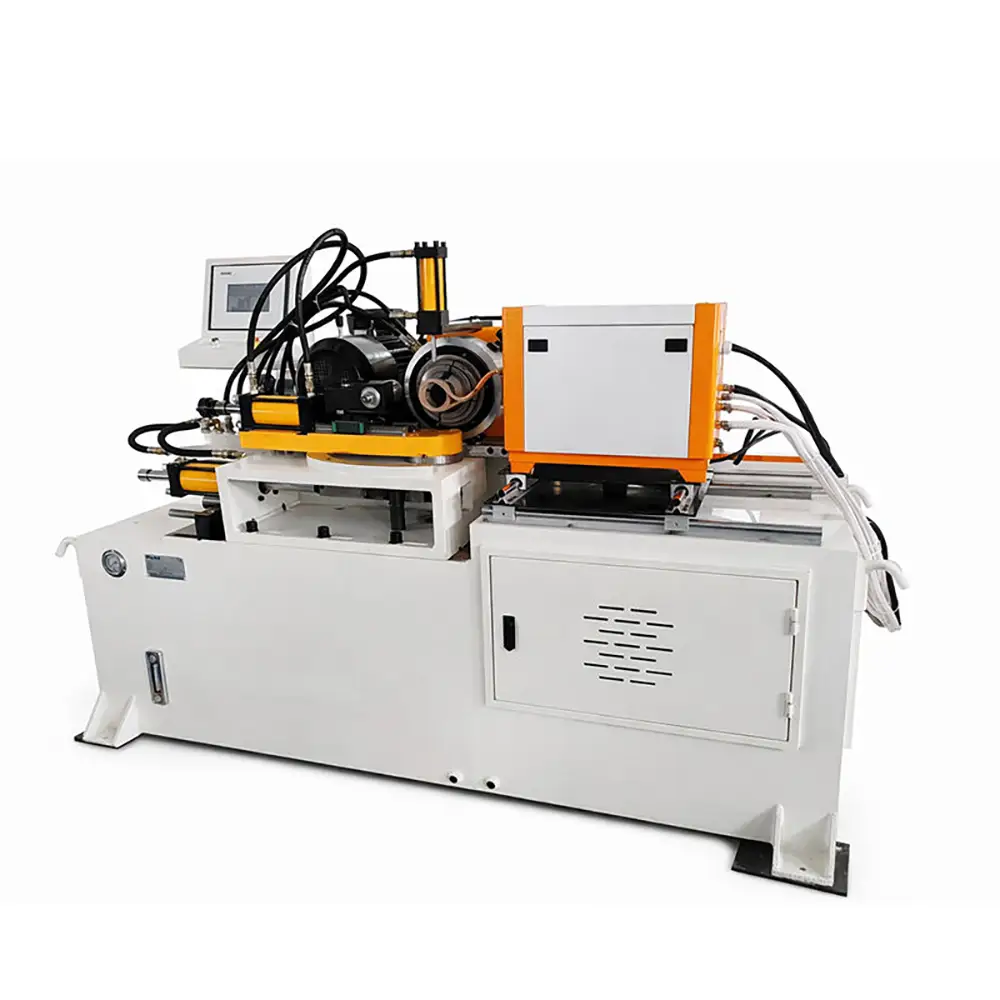
Adopts high-frequency induction heating for fast, clean, and flux-free pipe end sealing.
Ensures 100% airtightness & leak-proof performance, ideal for pressure testing and refrigerant systems.
Suitable for stainless steel, copper, aluminum, brass, carbon steel pipes and various metal tubes.
Wide application in refrigeration, HVAC, automotive, heat exchanger, medical, food & sanitary industry.
High precision forming with no deformation, no cracking, smooth and uniform sealing surface.
Supports automatic feeding, automatic clamping, automatic sealing for high production efficiency.
Stable performance, low energy consumption, low noise, environmentally friendly operation.
Compact structure, small footprint, easy operation and low maintenance cost.
Customizable for different pipe diameters, wall thicknesses, lengths and sealing shapes.
Compatible with automated production lines and robotic integration.
CE certified, safe design with overload protection and emergency stop system.
Consistent quality for mass production, reducing labor cost and improving product yield.
Ideal for air conditioner pipes, refrigerator tubes, automotive exhaust pipes, hydraulic lines, solar pipes, and medical gas pipes.
Professional after-sales service, on-site installation, commissioning and training support.
Long service life of key components, high reliability, and stable long-term operation
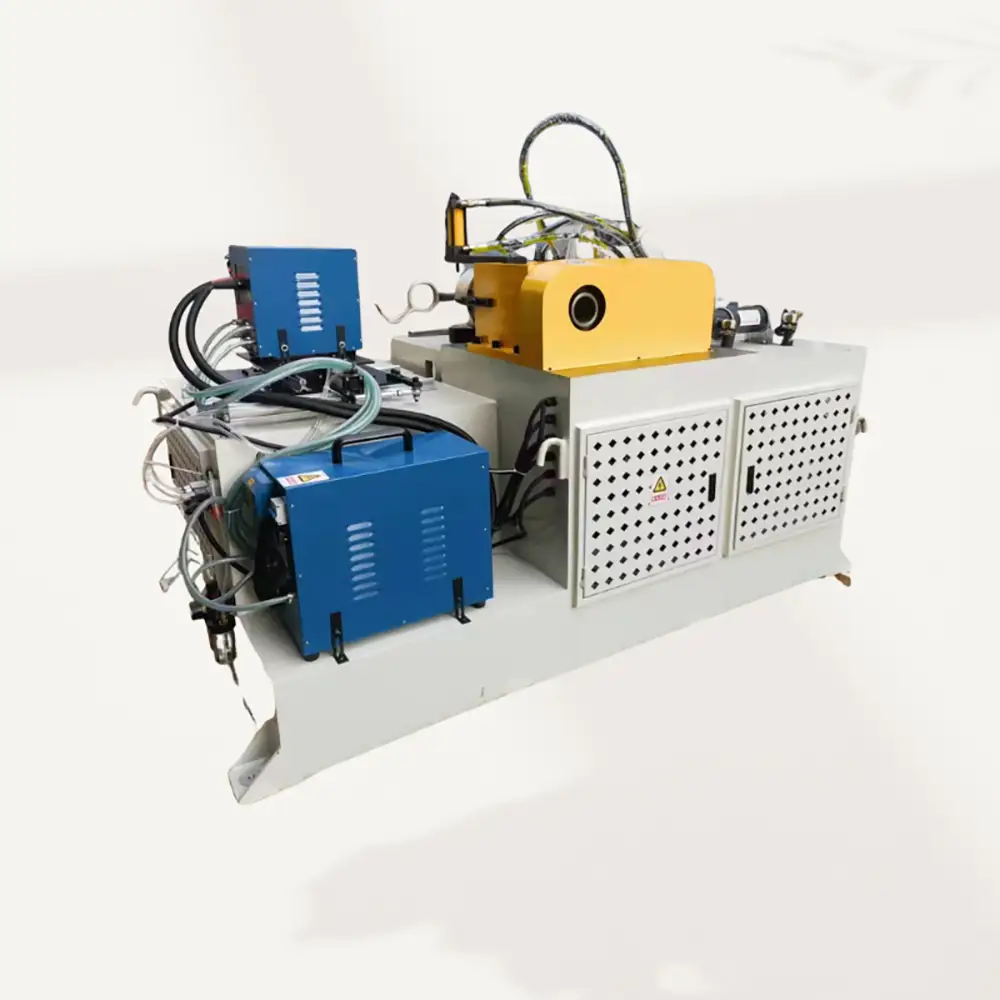
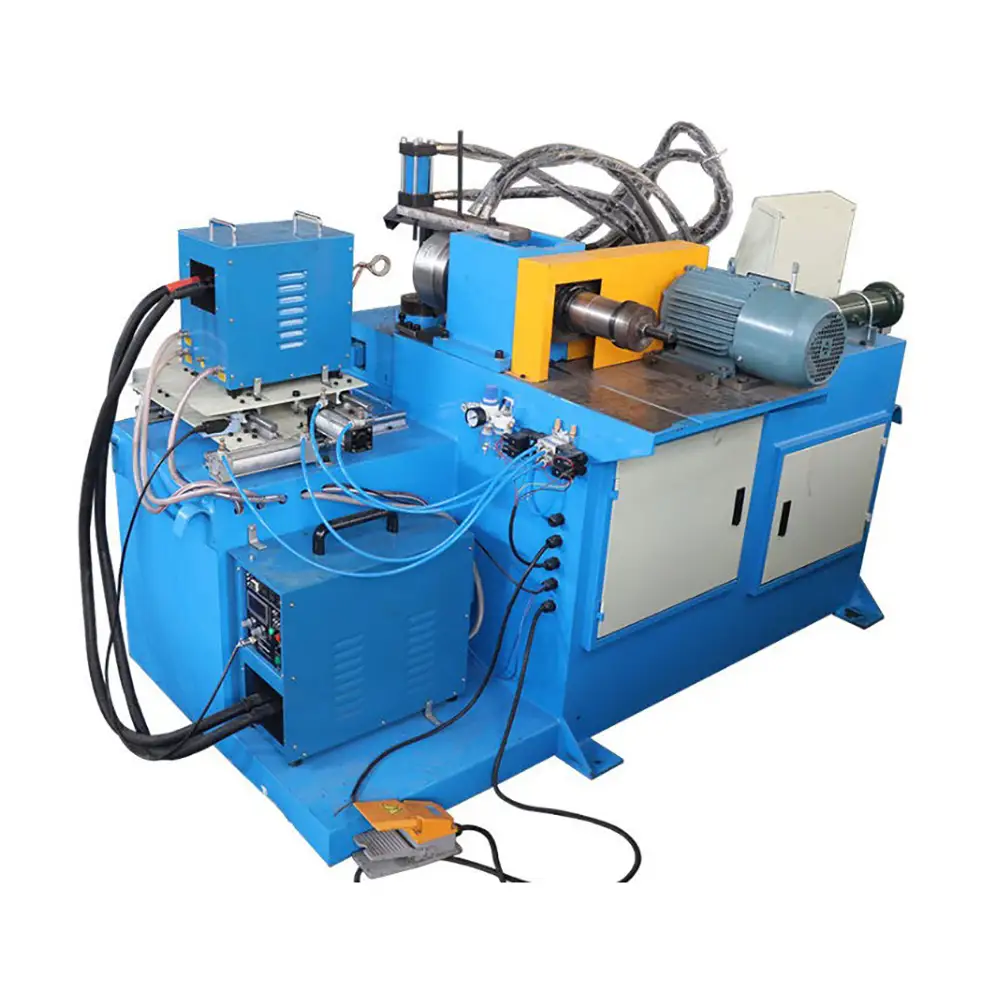
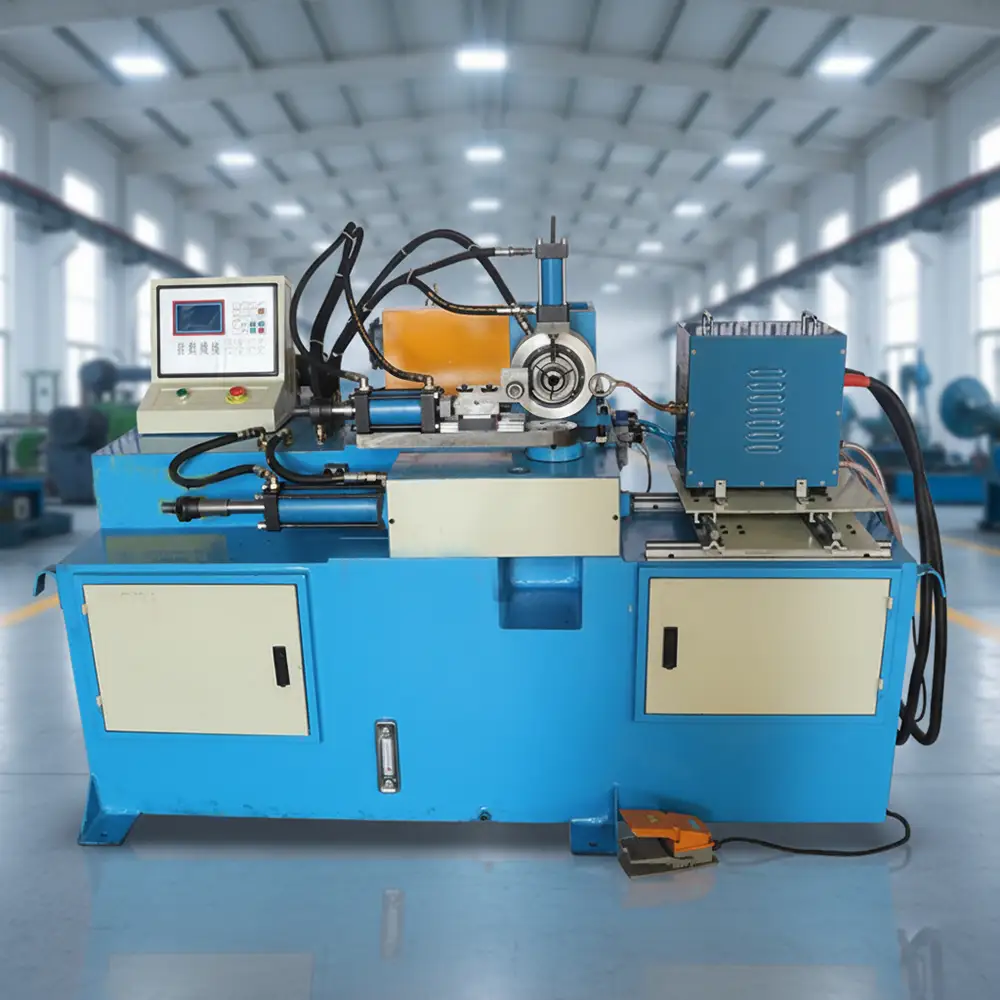
High-Frequency Pipe End Sealing Machine for Refrigeration and Pressure Leak Testing
The High-Frequency Pipe End Sealing Machine is a specialized industrial solution designed for sealing the ends of suitable metal pipes and tubes used in refrigeration,air-conditioning,heat-exchange,and other pressure-related applications. By combining high-frequency heating technology with controlled pipe-end sealing,the machine can help manufacturers prepare tubular components for subsequent pressure,leak,and quality testing.
Pipe-end sealing is an important step when a tube needs to be temporarily or permanently closed before a pressure test,leak test,transportation,storage,or downstream manufacturing process. The appropriate sealing method depends on the tube material,diameter,wall thickness,required sealing strength,and final application.
This type of equipment is particularly relevant to manufacturers of refrigeration tubing,air-conditioning components,heat exchanger assemblies,automotive thermal-management parts,and other tubular products requiring controlled end closure.
The exact heating power,sealing dimensions,cycle time,and compatible tube specifications depend on the selected machine configuration.
High-Frequency Heating Technology
High-frequency heating uses electromagnetic energy to generate heat in a suitable conductive metal workpiece. When correctly configured,the process can provide localized heating around the selected pipe or tube area.
For pipe-end sealing applications,this controlled heating can support forming or sealing operations without requiring the entire workpiece to be heated.
Localized heating may help reduce unnecessary thermal exposure to other areas of the tube. However,the actual heating zone and process characteristics depend on the induction coil,frequency,power,material,wall thickness,and machine configuration.
Different metals respond differently to high-frequency heating. Copper,aluminum,steel,and other alloys have different electrical and thermal properties,so the heating system must be selected according to the actual tube material.
Pipe End Sealing Process
The general process begins with positioning the tube in a suitable fixture. The tube end is then placed in the designated heating and forming area.
The high-frequency system heats the required section of the tube. Mechanical forming or sealing tooling can then create the desired closed or sealed end according to the machine design.
After sealing,the workpiece may be cooled before being transferred to a pressure or leak testing station.
The exact process may vary depending on whether the application requires end closing,necking,sealing,forming,or another tube-end operation.
Customers should provide tube samples or drawings when a specific sealing geometry is required.
Refrigeration Tube Sealing Applications
Refrigeration systems commonly use copper,aluminum,steel,or other suitable tubing. During manufacturing,transportation,and assembly,some tube ends may need to be sealed to prevent contamination,moisture,or unwanted material from entering the system.
Potential applications include:
Refrigeration Tubes
Air-Conditioning Tubes
Copper Tubing
Heat Exchanger Tubes
Condenser Tubes
Evaporator Tubes
HVAC Components
Automotive Cooling Tubes
Thermal Management Components
Industrial Heat Transfer Tubes
The actual sealing process must be compatible with the material and final pressure requirements of the product.
For refrigeration applications where cleanliness is important,the sealed tube should be handled according to the manufacturer's production and cleanliness procedures.
Pressure Leak Testing
After a tube or pipe has been sealed,the component may need to undergo pressure or leak testing to verify the integrity of the sealed assembly.
Pressure leak testing can be performed using appropriate test media and equipment depending on the product requirements.
Possible test methods include pressure decay testing,air pressure testing,water pressure testing,or other specialized leak detection methods.
The pipe end sealing machine itself should not automatically be considered a complete leak-testing system. In many production environments,the sealing machine and testing equipment are separate but complementary stages of the manufacturing process.
Customers should specify the required test pressure,test medium,test duration,and acceptable leakage criteria when requesting an integrated solution.
Tube End Forming and Closing
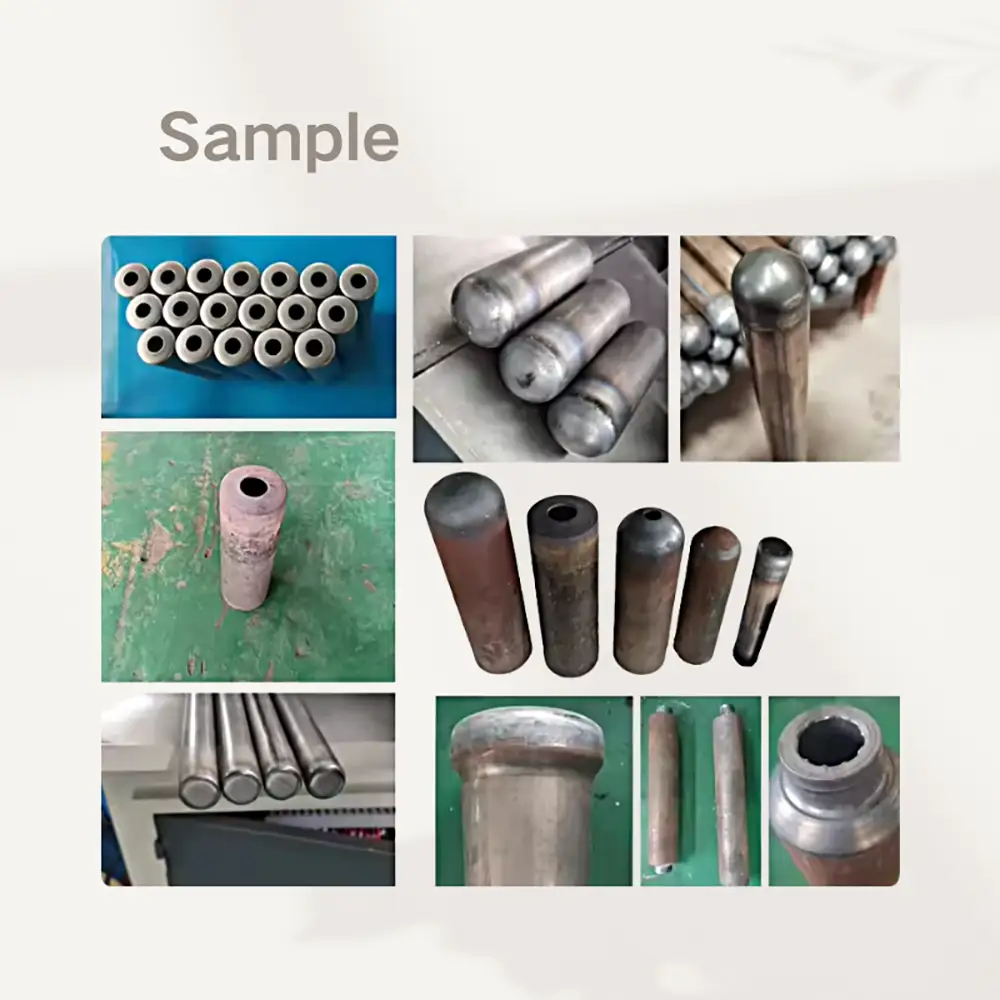
Pipe-end sealing may involve more than simply closing the opening. Depending on the application,the tube end may need to be flattened,pressed,necked,formed,or otherwise shaped before final sealing.
The machine's tooling determines the achievable end geometry.
Common tube-end forming applications may include:
Closed Tube Ends
Flattened Tube Ends
Reduced Tube Ends
Sealed Copper Tube Ends
Refrigeration Tube Closures
Heat Exchanger Tube Closures
Custom Tubular End Forms
For production requiring a specific end profile,the customer should provide detailed drawings showing dimensions,tolerances,and sealing requirements.
High-Frequency Sealing for Copper and Metal Tubes
Copper is widely used in refrigeration and HVAC tubing because of its thermal conductivity and suitability for many tube-processing applications.
High-frequency heating can be considered for suitable copper tube end-forming and sealing processes when the heating system and tooling are properly configured.
Other conductive materials may also be processed depending on their properties.
The machine should not be assumed to work equally on every metal. Electrical conductivity,magnetic properties,wall thickness,and tube geometry can significantly influence heating behavior.
Testing representative tube samples is recommended before finalizing process parameters.
Controlled Heating and Production Consistency
A controlled heating system can help manufacturers establish repeatable processing conditions across production batches.
Important process variables may include:
Heating Power
Heating Frequency
Heating Time
Coil Position
Tube Diameter
Wall Thickness
Material Type
Forming Pressure
Cooling Conditions
Maintaining stable parameters can help reduce variation between workpieces.
However,production consistency also depends on tube dimensional tolerances,tooling condition,fixture alignment,and operator setup.
For high-volume manufacturing,the machine can be evaluated as part of an automated production cell.
Automated Pipe Handling
Depending on the configuration,the machine may include automatic or semi-automatic workpiece positioning and handling.
Automated clamping can help maintain consistent tube placement during heating and sealing. Controlled movement can also reduce repetitive manual positioning.
The exact automation level varies between machine models. Some configurations may require manual loading and unloading,while more advanced systems can be integrated with feeding and material handling equipment.
Customers should confirm the desired automation scope when requesting a quotation.
Integration With Leak Testing Systems
For manufacturers producing pressure-related tube assemblies,the sealing process can be connected with downstream inspection and testing.
A typical workflow may include:
Tube Cutting
Tube Cleaning
End Positioning
High-Frequency Heating
End Forming Or Sealing
Cooling
Pressure Leak Testing
Inspection
Packaging Or Further Assembly
Integrating these steps can help manufacturers create a more organized production process.
For automated lines,the sealing machine can potentially communicate with testing equipment through appropriate controls,fixtures,or material handling systems.
Industrial Applications
The machine can support a range of tubular manufacturing industries,including:
Refrigeration Equipment
HVAC Manufacturing
Air-Conditioning Equipment
Heat Exchanger Production
Automotive Cooling Systems
Condenser Manufacturing
Evaporator Manufacturing
Industrial Heat Transfer Equipment
Appliance Manufacturing
Custom Tube Fabrication
The appropriate sealing method depends on the tube material,product design,and pressure requirements.
Machine Configuration and Tooling
Different tube sizes require suitable fixtures,heating coils,and forming tools.
When processing several tube diameters or wall thicknesses,the machine may require interchangeable tooling or adjustable components.
Customers should provide the following information for proper configuration:
Tube Material
Tube Outer Diameter
Tube Inner Diameter
Wall Thickness
Tube Length
End Sealing Shape
Required Sealing Strength
Production Volume
Leak Test Pressure
Test Medium
Drawings and samples can help determine the appropriate heating and forming system.
OEM and Custom Solutions
OEM and ODM customization can be considered for manufacturers with specific tube-processing requirements.
Possible customization areas include heating power,frequency configuration,induction coil design,forming tooling,fixtures,control systems,automatic feeding,and integration with leak testing equipment.
For a complete production solution,the sealing machine can be evaluated together with tube cutting,cleaning,forming,and inspection equipment.
Providing detailed technical information before production helps ensure the machine is configured for the intended application.
Safety and Maintenance
High-frequency heating equipment can generate significant electromagnetic and thermal energy. Operators should follow the manufacturer's operating procedures and applicable workplace safety requirements.
The heating area can become extremely hot,so appropriate protective measures should be used around heated workpieces.
Routine maintenance may include inspecting the induction coil,fixtures,cooling system,electrical connections,and forming tooling.
Cooling systems should be maintained according to the manufacturer's recommendations because stable cooling can be important for high-frequency equipment performance.
Any pressure testing equipment used with the sealed tubes should also be operated within its rated pressure range and with suitable protective procedures.
Why Choose Us
High-Frequency Heating Technology
Provides controlled localized heating for suitable metal tube and pipe end-processing applications.
Specialized Pipe End Sealing
Designed for closing,sealing,or forming suitable tube ends according to the selected tooling.
Refrigeration Industry Applications
Suitable for refrigeration,HVAC,heat exchanger,and other tubular component manufacturing.
Pressure Testing Workflow
Can support production processes where sealed tubes subsequently undergo pressure or leak testing.
Flexible Tube Processing
Machine configuration can be selected according to tube material,diameter,wall thickness,and end geometry.
Controlled Production Parameters
Heating time,power,tooling,and positioning can be adjusted according to the application.
Automation Options
Manual,semi-automatic,and integrated automated configurations can be evaluated according to production requirements.
OEM And B2B Support
Suitable for manufacturers,distributors,and international industrial buyers requiring customized tube sealing and testing solutions.
FAQs
1. What is a high-frequency pipe end sealing machine?
It is a machine that uses high-frequency heating and suitable forming or sealing tooling to process and close the ends of compatible metal pipes or tubes.
2. What tubes can be processed?
Depending on the configuration,the machine can process suitable copper,aluminum,steel,and other conductive metal tubes.
3. Is it suitable for refrigeration tubes?
Yes. The machine can be configured for suitable refrigeration,air-conditioning,heat exchanger,and HVAC tube applications.
4. Can it seal copper tubes?
Yes. Copper tubes can be processed when the high-frequency heating system and sealing tooling are correctly configured for the tube dimensions.
5. What is the purpose of sealing a pipe end?
Tube ends may be sealed to close the workpiece,prevent contamination,prepare the component for testing,or support subsequent manufacturing and assembly operations.
6. Can the sealed tube be pressure tested?
Yes. A properly sealed tube can be transferred to suitable pressure or leak testing equipment. The required test method and pressure depend on the product and application.
7. Is pressure leak testing built into the machine?
Not necessarily. The pipe sealing machine and leak testing system may be separate production stages. An integrated solution can be evaluated when required.
8. What does high-frequency heating do?
High-frequency heating uses electromagnetic energy to generate localized heat in a suitable conductive metal workpiece,allowing controlled heating of the required area.
9. Can different tube sizes be processed?
Depending on the machine configuration,different tube sizes may be accommodated using suitable fixtures,coils,and forming tools.
10. What affects sealing quality?
Material type,tube diameter,wall thickness,heating power,heating time,coil position,forming pressure,tooling,and cooling conditions can all affect the final sealing result.
11. Can the machine be automated?
Depending on the configuration,it can be manual,semi-automatic,or integrated with automatic feeding,positioning,and downstream testing equipment.
12. What information should I provide for a quotation?
Provide tube material,outer diameter,inner diameter,wall thickness,length,end-sealing shape,production volume,and required leak-test pressure. Drawings or samples are recommended.
Prev:
Hydraulic Pipe End Sealing Machine Tube End Closing Machine Metal Pipe End Forming Equipment for Metal Steel Tube
Next:
380V Longitudinal Seam Pipe Welding Machine Laser Fully Automatic Steel Pipe Seam Welding Machine
TAG:
Industrial Tube End Forming Machine,
Industrial Pipe End Forming Machine,
Tube End Forming Equipment,
Pipe End Forming Equipment,
Pipe End Reducing Machine,
Tube End Reducing Machine,
Tube End Forming Machine,
Pipe End Forming Machine,
Metal Tube Processing Machine,
Pipe Fabrication Machine,
Tube Fabrication Machine,
Metal Pipe Processing Machine,
Pipe End Sealing Equipment,
Tube End Sealing Equipment,
Tube End Closing Machine,
Pipe End Sealing Machine,
Tube End Sealing Machine,
Metal Tube Sealing Machine,
Pipe End Closing Machine,
Pipe Sealing Machine,
Tube Sealing Machine,
Metal Pipe Sealing Machine,
CNC Tube End Forming Machine,
HVAC Tube Processing Machine,
Refrigeration Tube Processing Machine,
Heat Exchanger Tube End Forming Machine,
High Frequency Tube Heating Machine,
Automatic Pipe End Sealing Machine,
Automatic Tube End Sealing Machine,
High Frequency Pipe Heating Machine,
Related Category:
High-Frequency Pipe End Sealing Machine,Pipe End Sealing Machine,High-Frequency Tube Sealing Machine,Refrigeration Pipe China, suppliers, manufacturers, factory, customized, wholesale, quotation, made in China