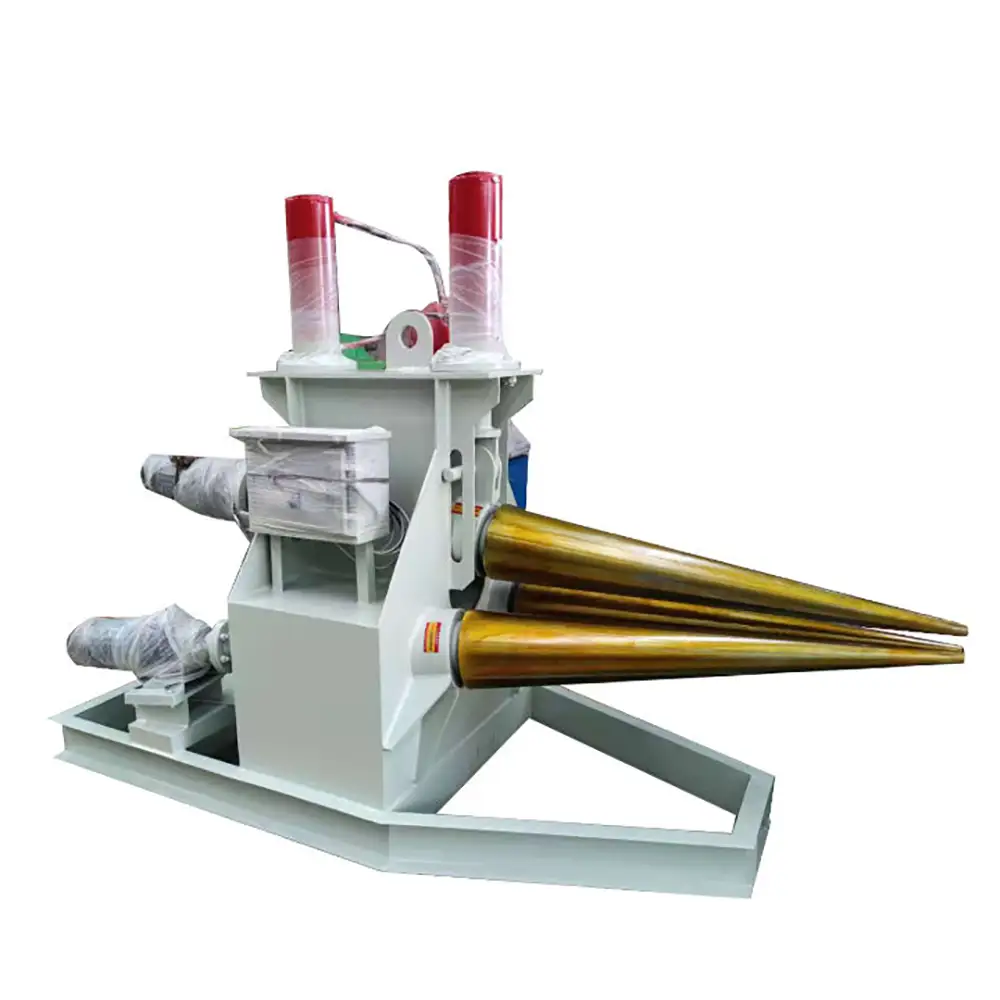
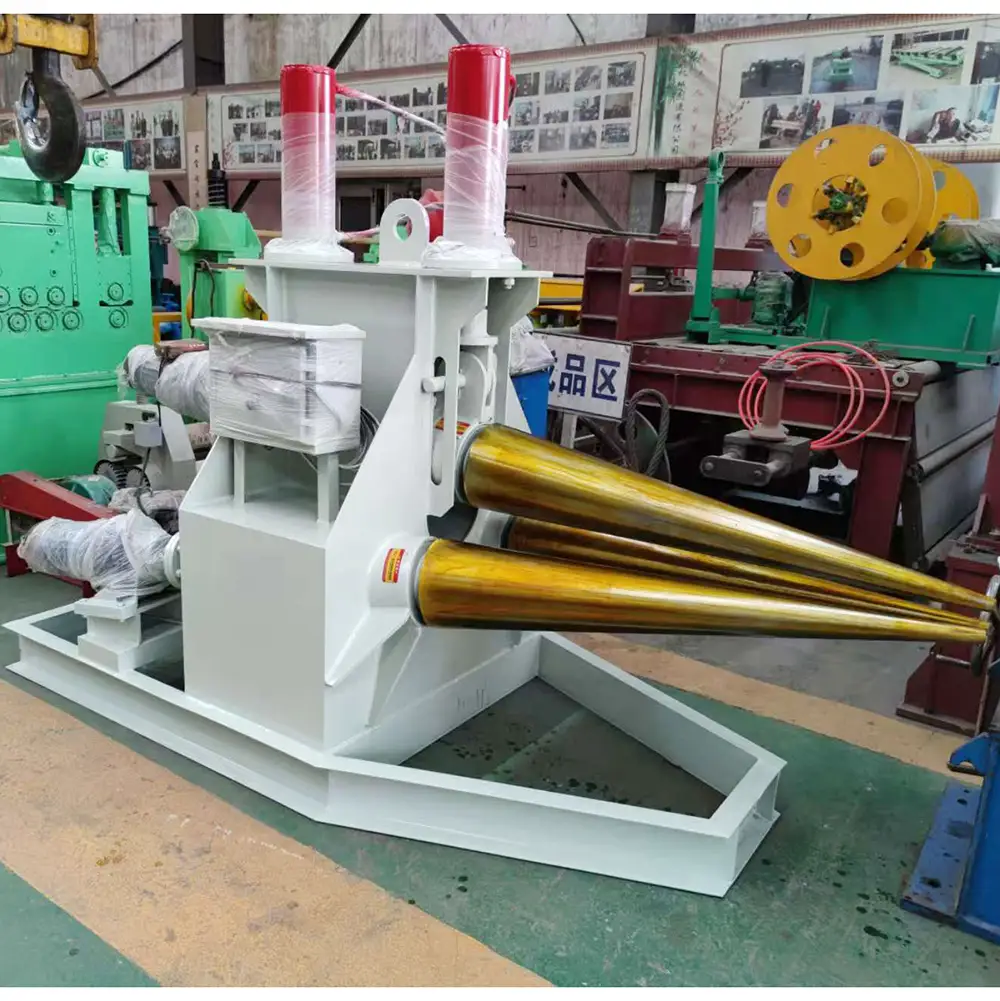
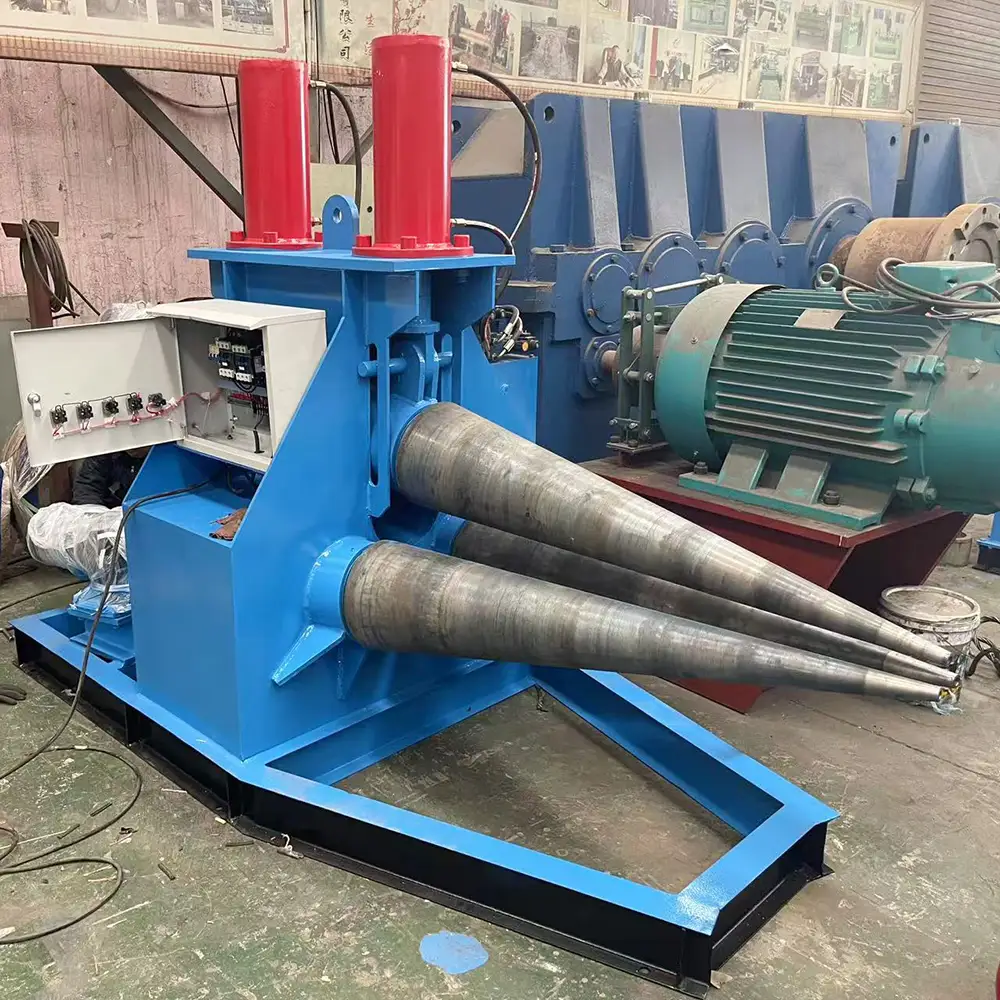
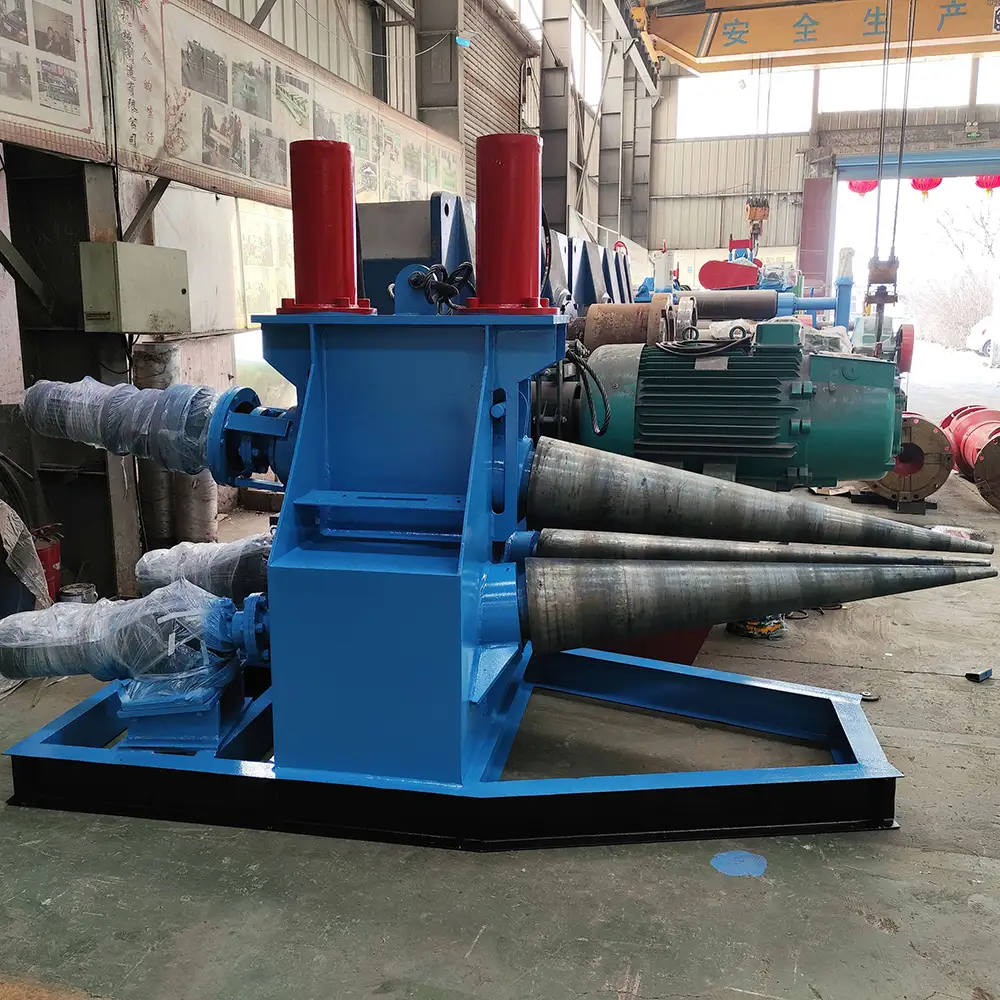
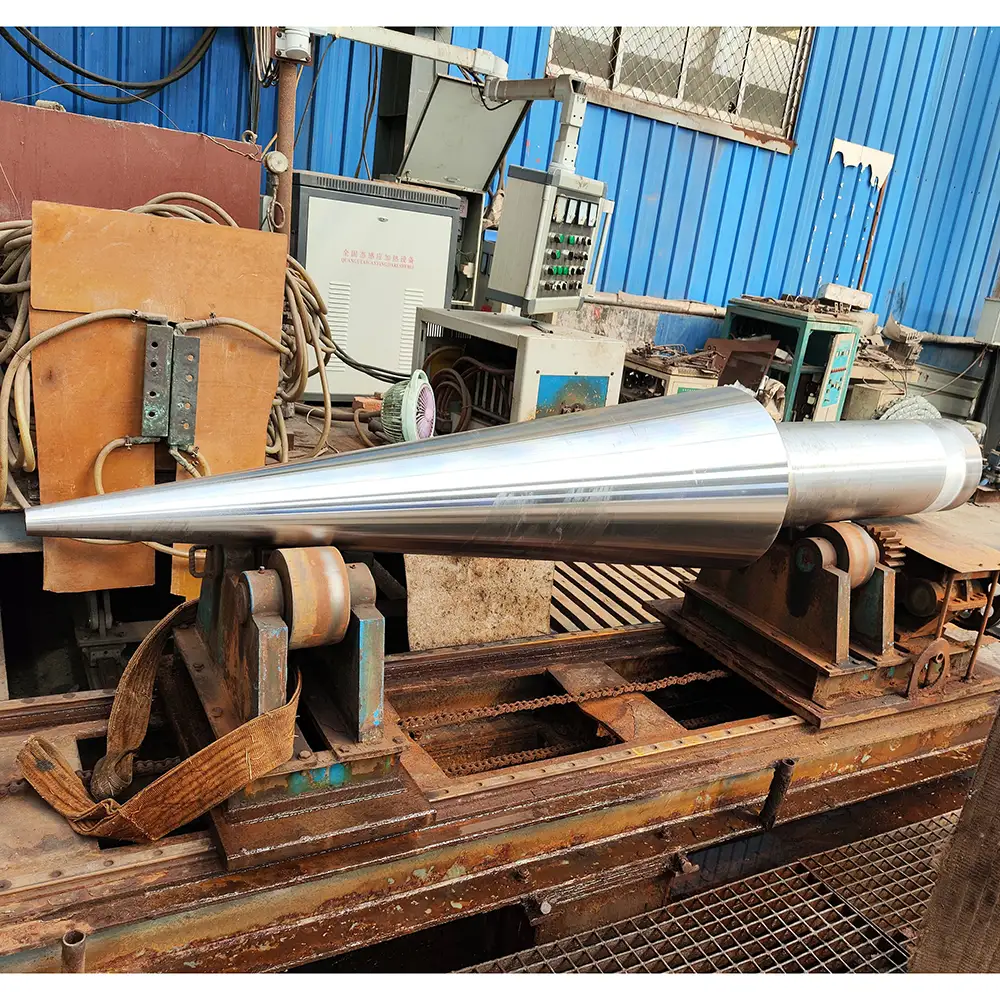
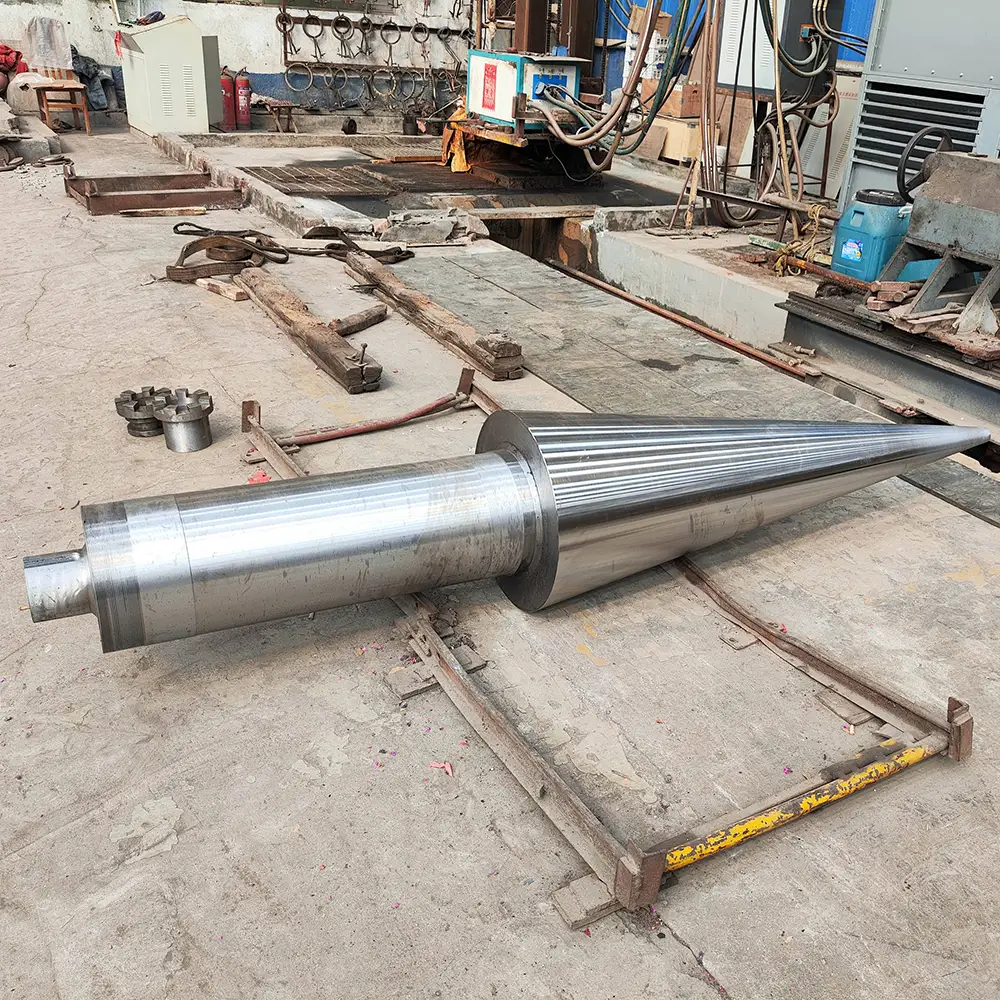
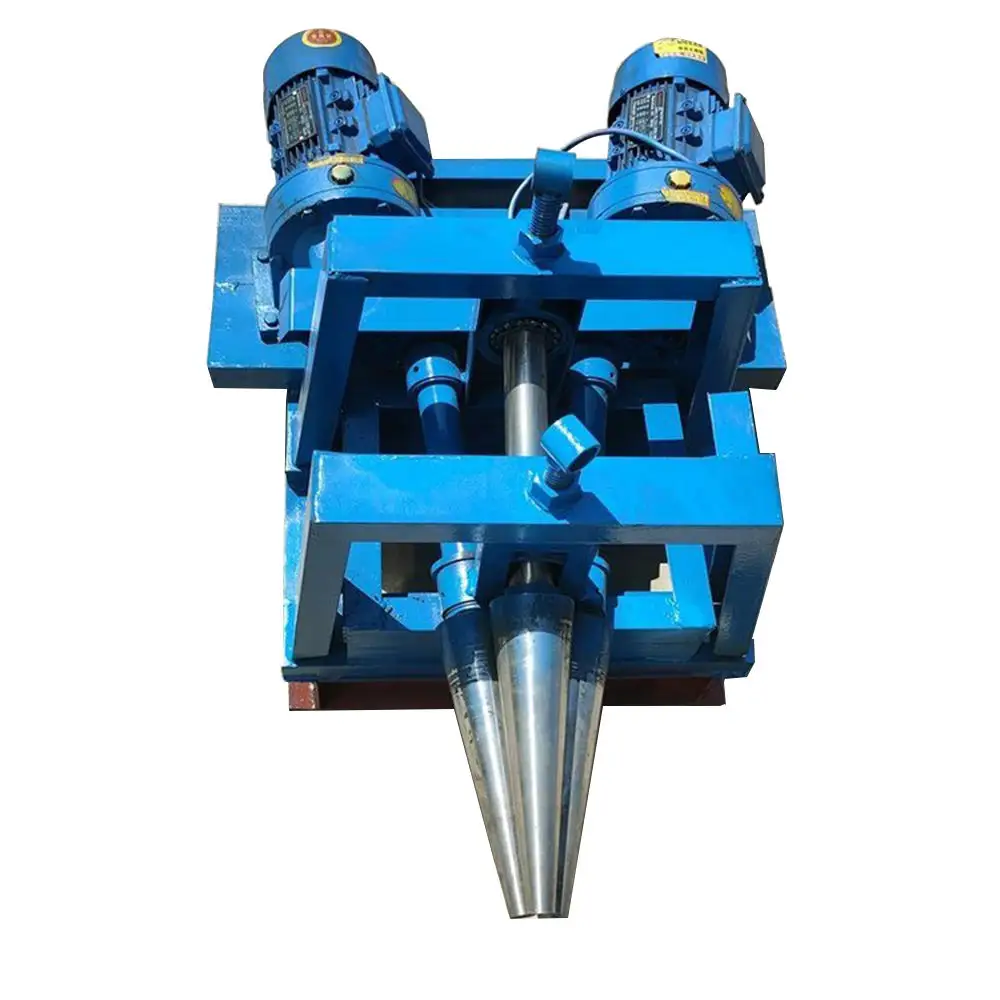
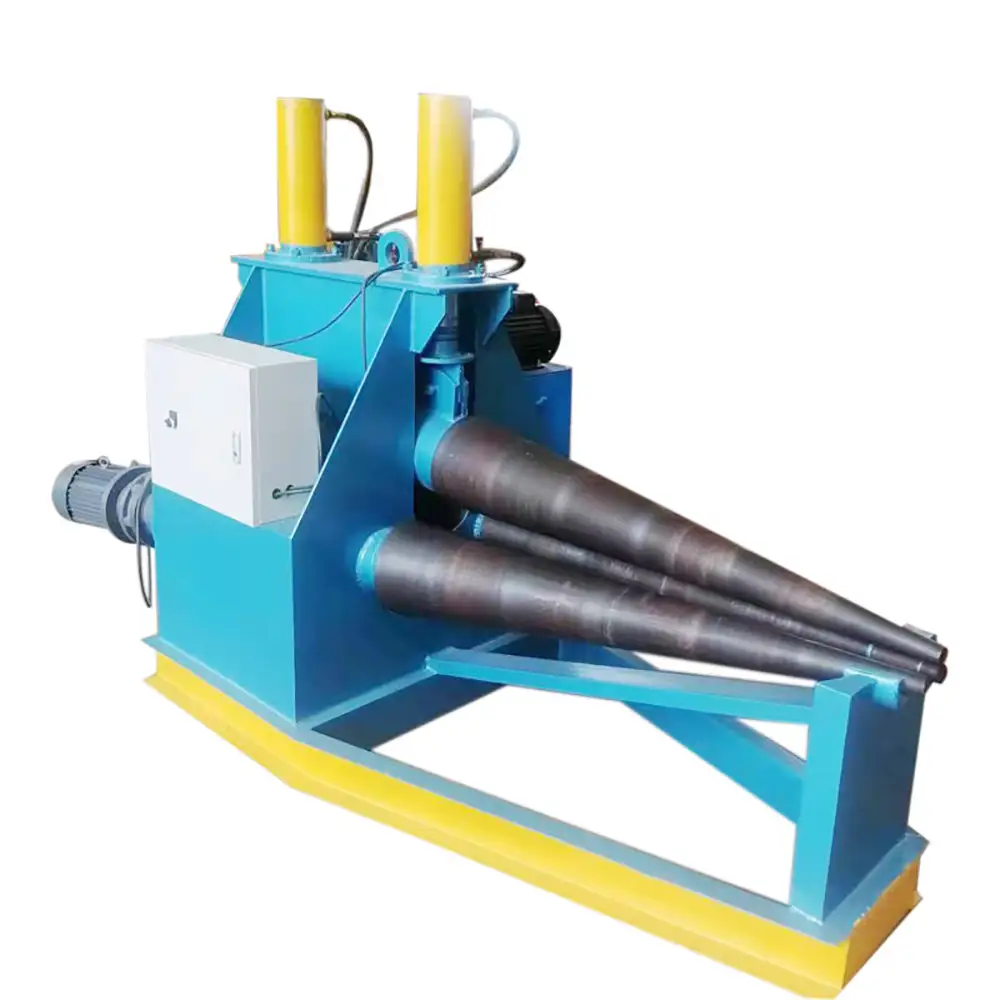
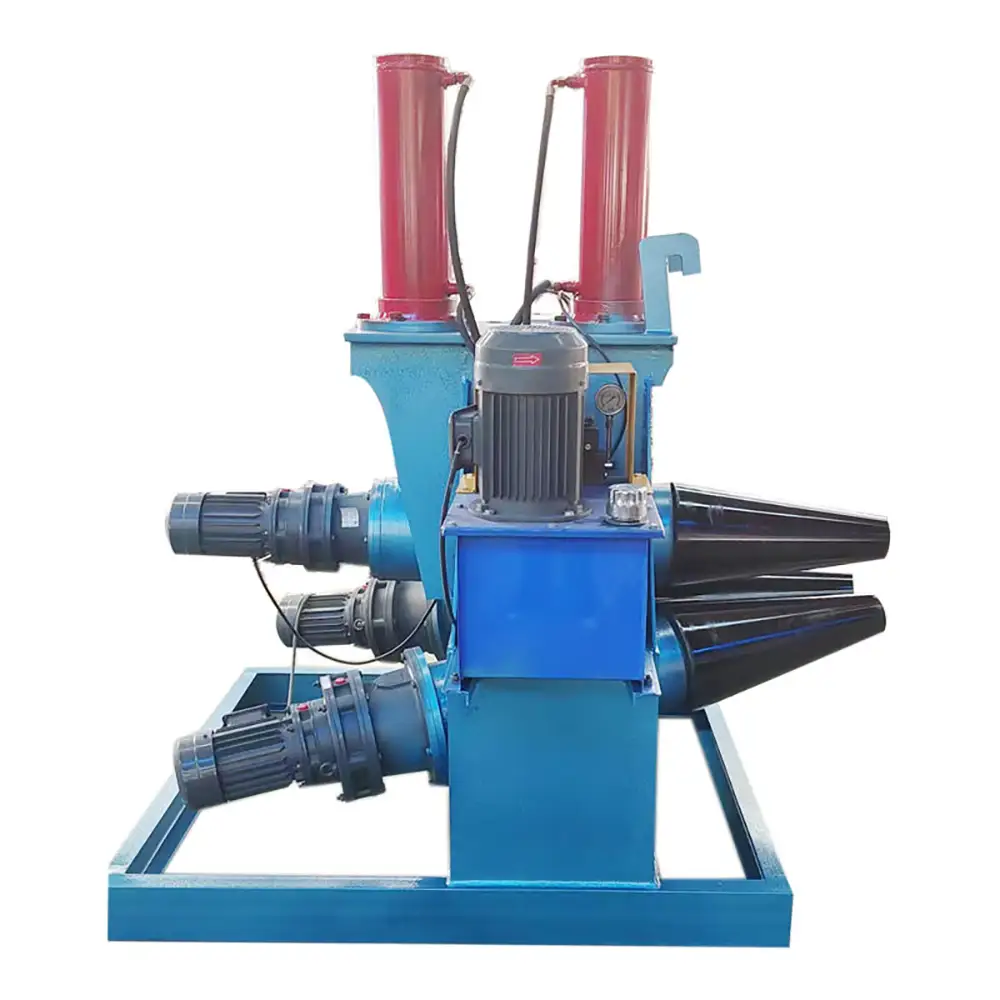
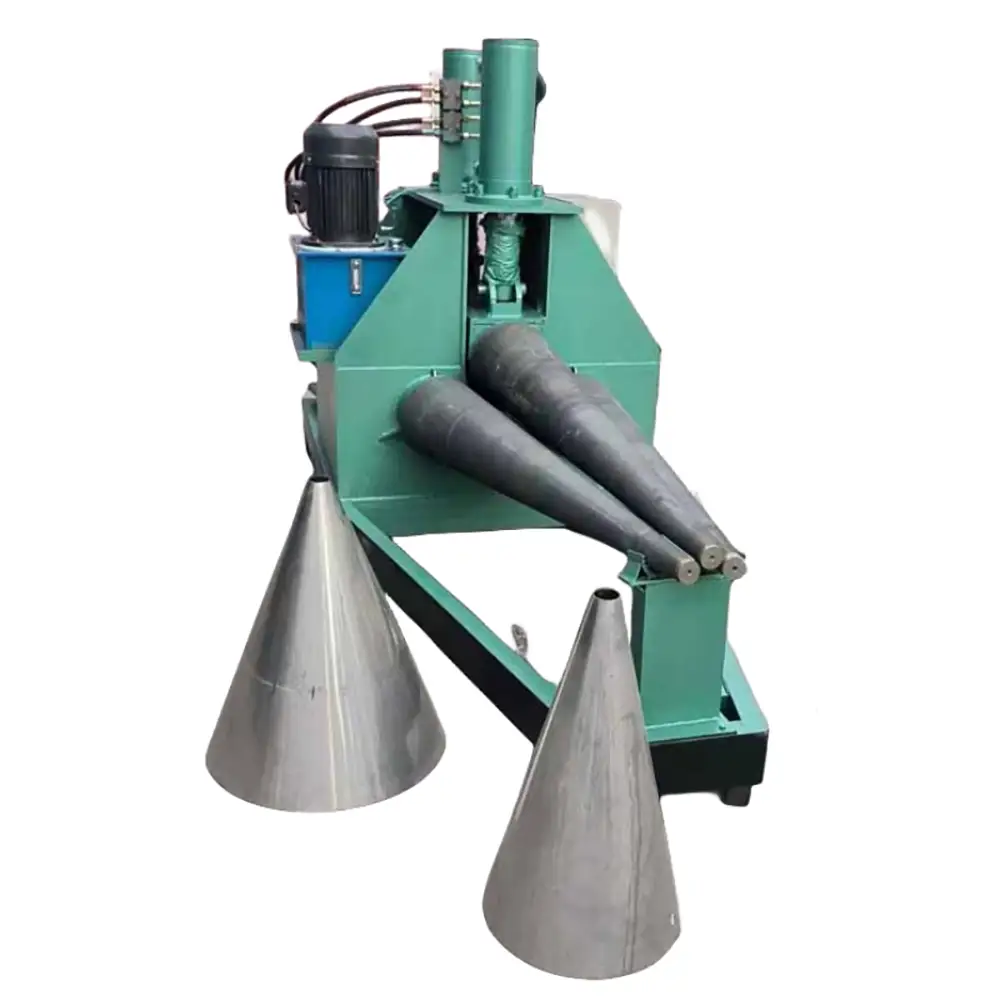
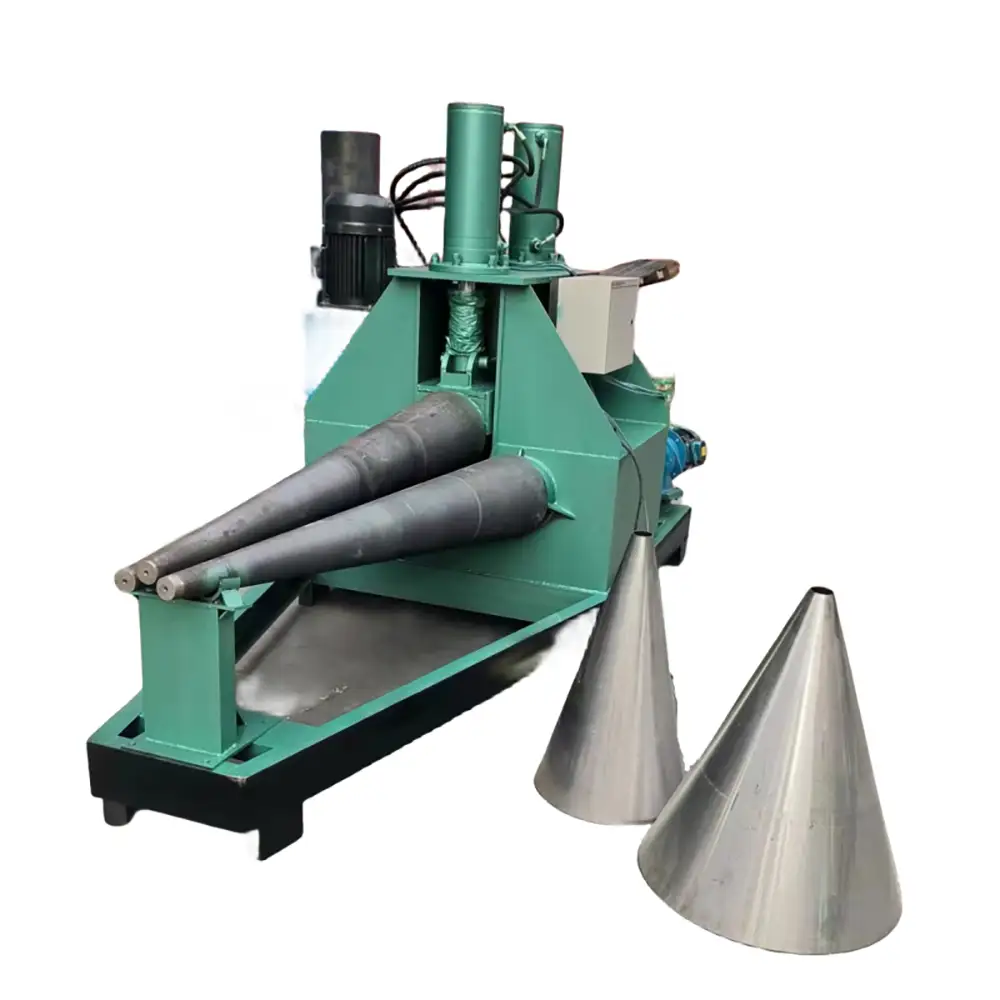
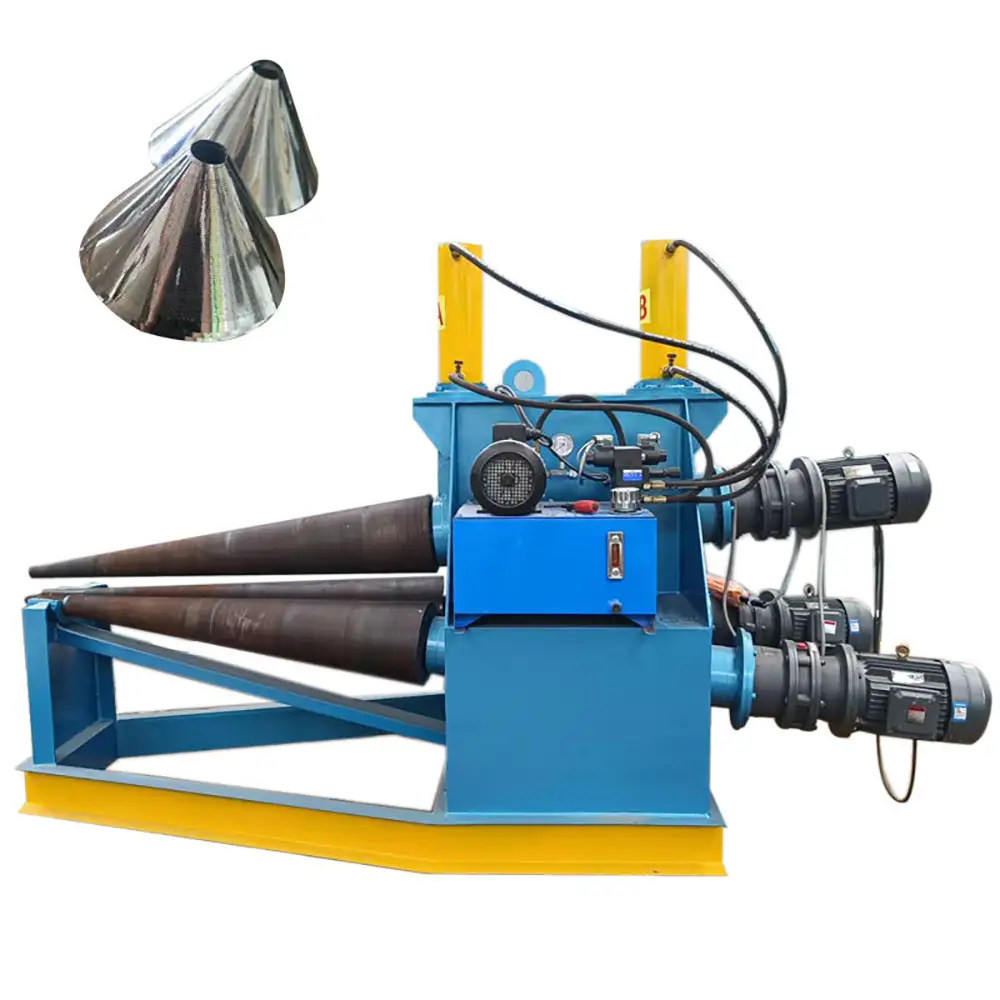
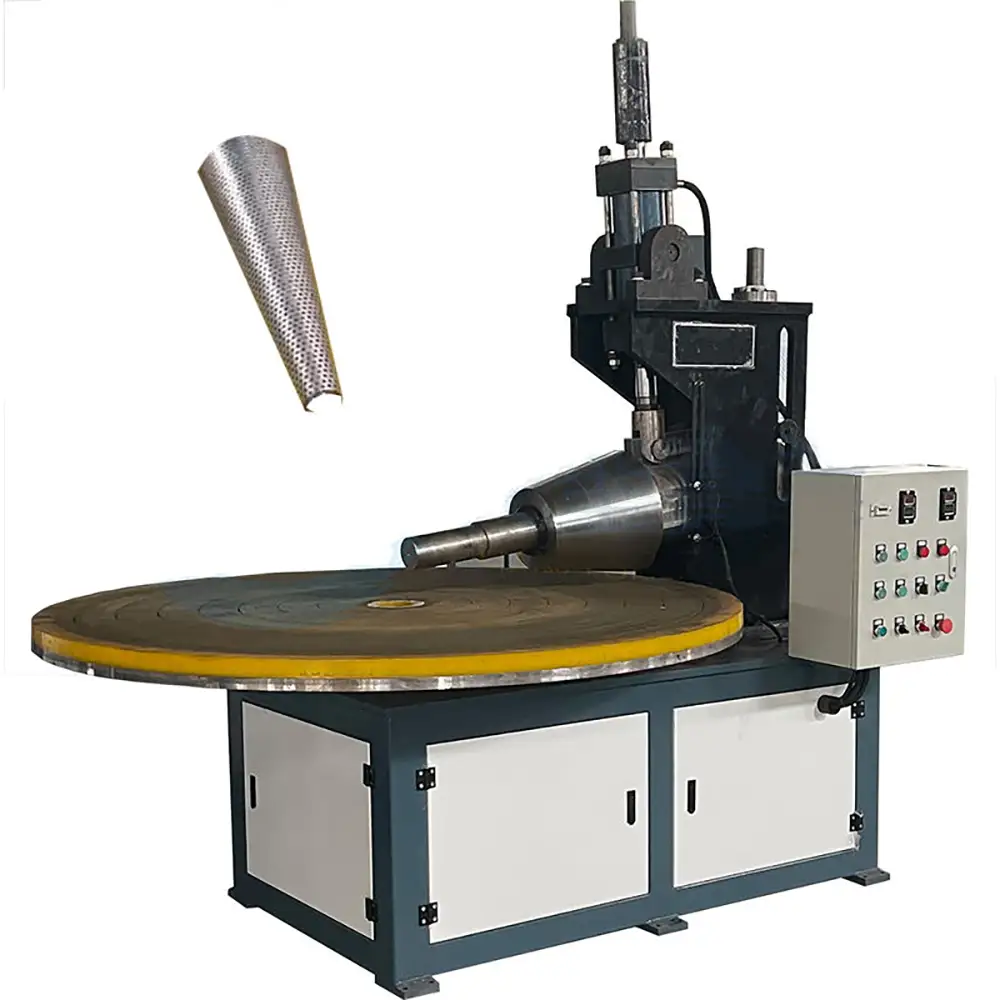
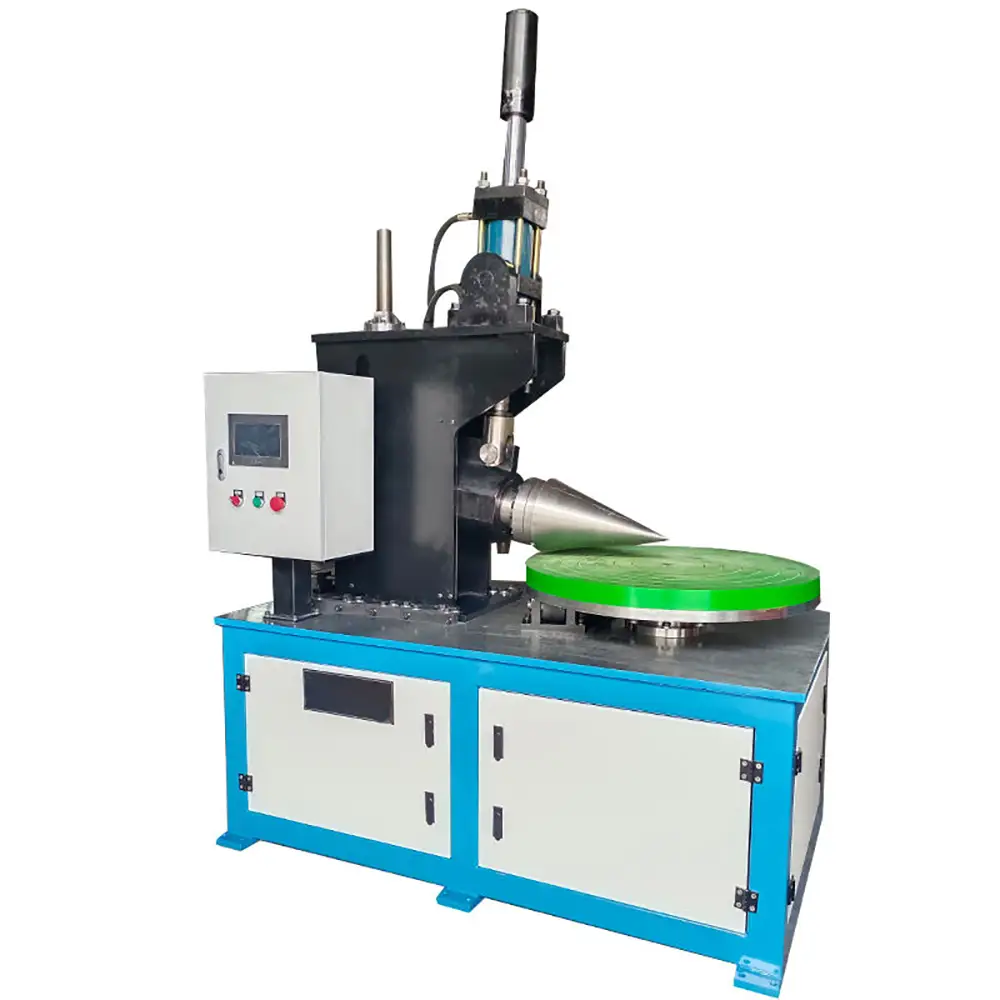
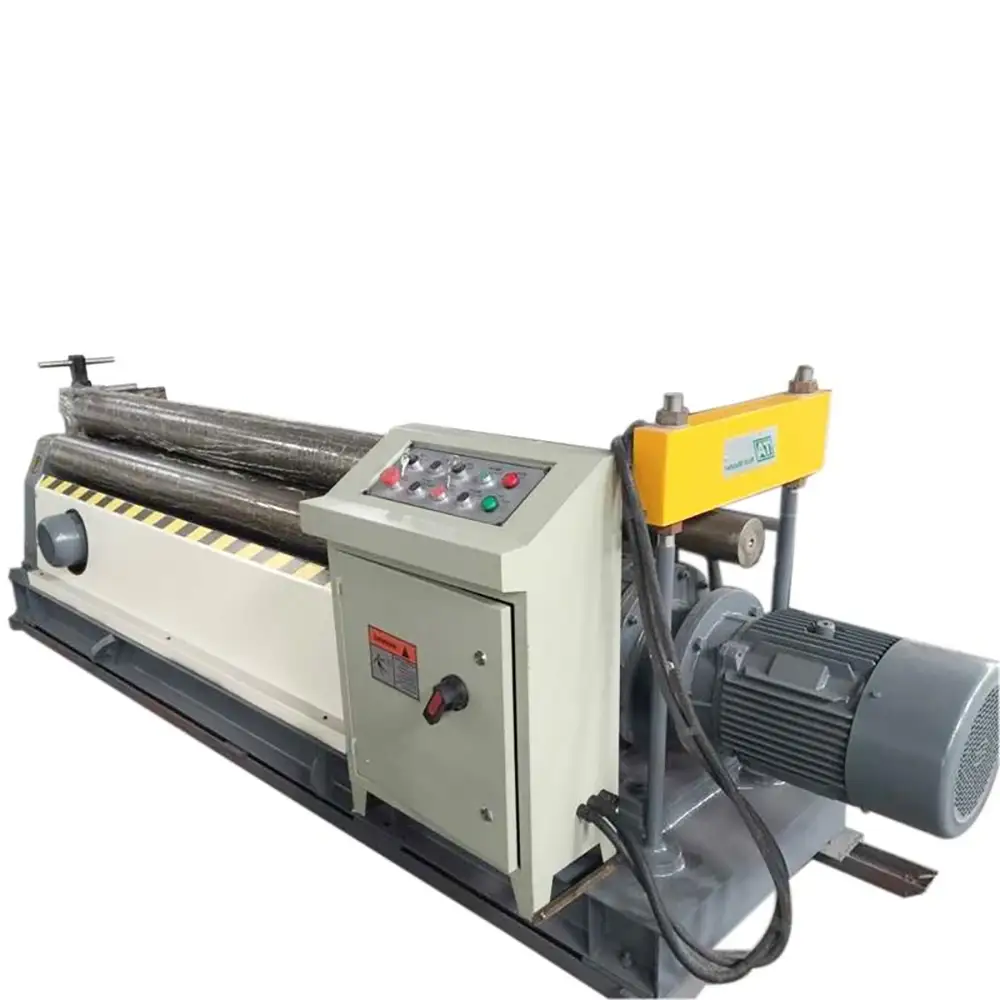
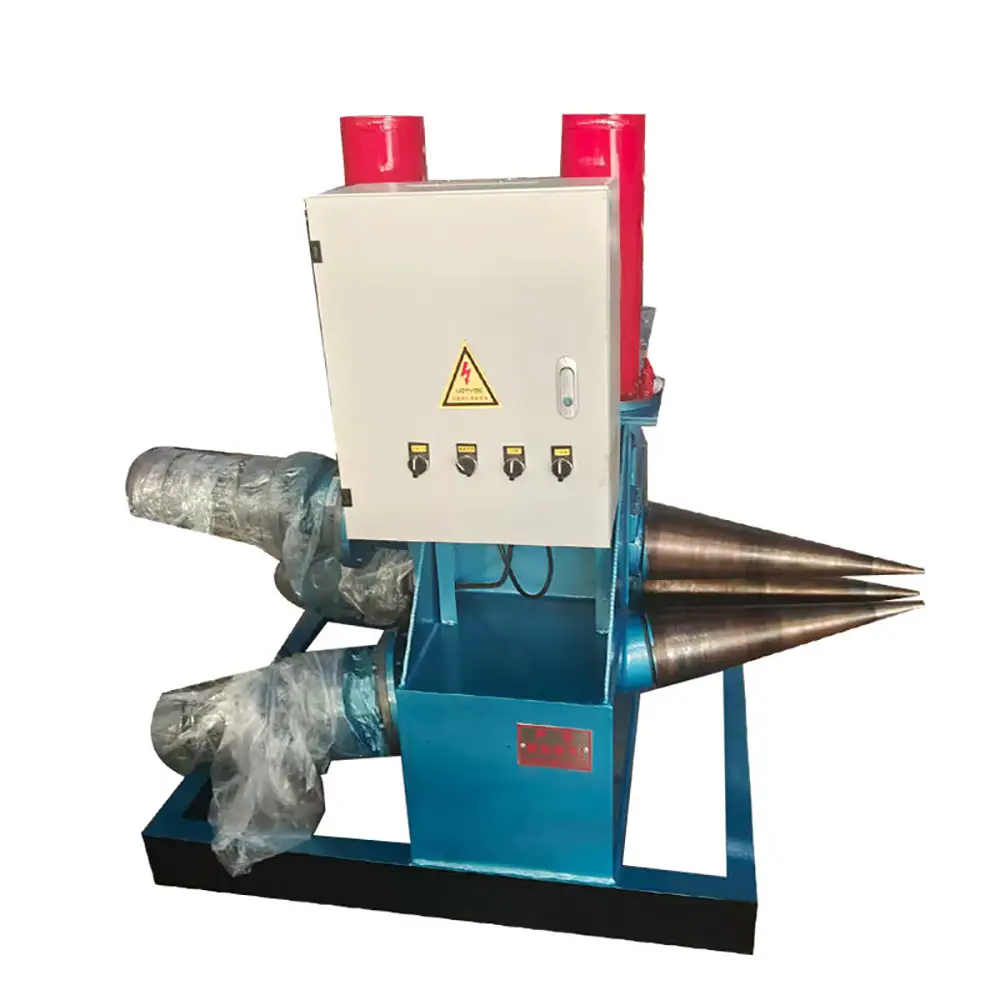
The Cone Roller Hydraulic Cone Rolling Machine Sheet Metal Steel Plate Bending Roller Pre Roll Cones Machine is designed for professional metal fabrication applications requiring accurate forming of conical, tapered, and curved sheet metal components. Combining hydraulic rolling technology with specialized cone-forming capability, this machine provides an efficient solution for producing pre-rolled cones, conical shells, reducers, transition sections, hoppers, funnels, and other tapered metal components.
Unlike conventional plate rolling equipment used mainly for cylindrical shells, a cone roller is designed for applications where the two sides of the workpiece have different diameters. This creates different forming requirements across the plate width. A properly configured hydraulic cone rolling machine provides controlled forming force and roll movement to progressively shape the plate into the required conical geometry.
The equipment can be used with suitable carbon steel, mild steel, stainless steel, aluminum, and other metal materials, depending on the machine configuration and rated capacity.
This machine is a hydraulic cantilever cone three-roller plate rolling machine, which is used to roll fan-shaped steel plates into cone-shaped cylinders.
The upper working roller is lifted and lowered, and the hydraulic cylinder transmits power on the power side to make the steel plate bend and deform. The rolling transmission drives the working rollers to rotate through three motors through the reducer and the coupling. The three rollers are active rollers when rolling the plate.
Since the elevation of the lower roller remains unchanged and the working section of the upper roller is open and does not need to be laid down, it is convenient for feeding and operation.
|
Model |
W11YZT--10×1300 |
|
Maximum thickness of rolled plate(mm) |
10mm |
|
Roll cone length |
1300mm |
|
Roller working length |
1350mm |
|
Cone roll big head diameter |
30020mm |
|
Cone roll small head diameter |
30mm |
|
Rolling speed(m/min) |
3.5m/min |
|
Main motor power (KW) |
3KW*3 |
|
Hydraulic motor power (KW) |
3KW |
Hydraulic Cone Rolling Machine
The hydraulic system provides controlled movement and forming force during the rolling operation. This is particularly useful when processing thicker steel plates or industrial components that require substantial forming pressure.
A typical cone rolling process begins with a flat plate blank cut according to the required cone development. The blank is positioned between the rolls and gradually formed through controlled rolling passes. Depending on the material and geometry, pre-bending and multiple passes may be required before the desired cone shape is achieved.
The actual forming process depends on plate thickness, material strength, cone angle, small-end diameter, large-end diameter, and required forming radius. Machine selection should therefore be based on the customer's actual production specifications.
Pre Roll Cones Machine
The Pre Roll Cones Machine is especially useful for fabrication companies that regularly manufacture conical components before welding and assembly.
Pre-rolled cone sections can be used for:
Hopper components
Funnel sections
Tank cone bottoms
Pipe reducers
Transition sections
Ducting components
Vessel sections
Industrial chutes
Process equipment
Custom tapered structures
By mechanically forming the plate before welding, manufacturers can establish the basic conical geometry in a controlled production process. Subsequent welding, trimming, grinding, calibration, or inspection can then be performed according to the final component requirements.
Steel Plate Bending Roller
Steel plate bending is one of the primary applications of this equipment. Carbon steel and mild steel plates can be formed into conical and tapered sections when the material dimensions and strength fall within the machine's rated working range.
The forming capacity of a steel plate bending roller depends on several factors. These include maximum plate thickness, working width, roll diameter, material yield strength, cone diameter, and cone angle.
For heavy-duty steel fabrication, the machine should be properly sized to provide sufficient forming force without exceeding the rated capacity. Providing the manufacturer with complete material and dimensional information is important when selecting the appropriate machine.
Sheet Metal Cone Forming
The machine can also be used for sheet metal cone forming applications involving thinner metal materials.
Sheet metal cones are commonly used in ventilation systems, dust collection equipment, funnels, hoppers, ducting, industrial covers, and fabricated assemblies.
Thin sheet metal can be sensitive to local deformation and surface marking, so forming parameters should be adjusted according to the material and component design. Proper plate preparation and controlled rolling passes can help improve dimensional consistency.
Stainless Steel Cone Rolling
Stainless steel is widely used for fabricated equipment requiring corrosion resistance and good surface appearance. Typical applications include food processing equipment, chemical processing equipment, water treatment systems, pharmaceutical machinery, and industrial tanks.
A suitable hydraulic cone roller can process stainless steel plate when its thickness, grade, and mechanical properties are compatible with the machine.
When forming stainless steel, manufacturers may use suitable roll surfaces and handling procedures to minimize unnecessary surface marks. The required machine capacity should be evaluated using the actual stainless steel grade and plate dimensions.
Carbon Steel Cone Forming
Carbon steel is one of the most common materials used for industrial cone fabrication. It is widely used in tanks, structural components, ducts, hoppers, reducers, and general fabrication.
The hydraulic cone roller can provide the forming force required for suitable carbon steel plate. For heavier material, the machine must be selected according to the actual plate thickness and yield strength rather than thickness alone.
This helps ensure that the machine has sufficient forming capability for the intended application.
Conical Shell Manufacturing
Conical shell forming is another important application. A conical shell may be welded to a cylindrical shell to create a complete tank or vessel assembly.
The cone roller can produce tapered sections with different large-end and small-end diameters according to the engineering design. These components can then undergo welding and other downstream fabrication processes.
For pressure vessels, storage tanks, and regulated industrial equipment, the rolling machine performs only the forming stage. Final products may require additional welding procedures, dimensional inspection, non-destructive testing, pressure testing, heat treatment, and certification according to applicable project requirements.
Pipe Reducer and Transition Forming
The machine can be used to form suitable plate-based reducers and transition sections.
These components are manufactured by developing the required geometry into a flat plate blank and then rolling it into a conical shape. After forming, the longitudinal seam can be welded and finished according to the customer's production process.
This makes cone rolling equipment useful for manufacturers producing custom transitions, large-diameter reducers, duct components, and industrial fabricated connections.
It is important to distinguish this process from conventional pipe bending. A cone roller forms a flat sheet or plate blank into a conical section; it is not primarily designed to bend an already manufactured finished pipe.
Hydraulic Forming Performance
Hydraulic drive technology provides controlled movement of the forming rolls and supports stable processing for industrial applications.
The actual performance depends on the machine's structural design, hydraulic capacity, roll diameter, drive power, working width, and control system.
For applications involving thick plate, high-strength steel, or large-diameter cones, the machine should be engineered around the actual production requirements.
CNC or digitally assisted controls may also be available depending on the selected model. Automation level can be specified according to production volume, operator requirements, and desired repeatability.
Production Efficiency
For companies producing multiple conical components, dedicated cone rolling equipment can help streamline the forming process.
A controlled rolling process can reduce reliance on manual shaping and provide a repeatable method for producing similar components. This can be particularly beneficial for fabrication shops working with multiple cone sizes or recurring production orders.
Improved forming consistency can also simplify downstream welding and assembly because properly formed sections generally require less manual correction.
Quality Control
Accurate cone production begins with correct plate development and cutting. The blank should be prepared according to the approved engineering dimensions.
After rolling, the formed component can be checked for:
Large-end diameter
Small-end diameter
Cone angle
Roundness
Edge alignment
Overall dimensions
Surface condition
The appropriate inspection method depends on the final application.
For components used in pressure vessels, chemical equipment, or other regulated products, inspection and testing should follow the applicable standards, engineering specifications, and customer requirements.
Maintenance and Safe Operation
Regular maintenance helps maintain reliable machine performance. Hydraulic oil, hoses, fittings, bearings, lubrication points, electrical components, rolls, and fasteners should be inspected according to the manufacturer's maintenance schedule.
Operators should confirm that the workpiece is within the rated machine capacity before starting production. Proper plate positioning and controlled rolling passes can reduce unnecessary mechanical stress.
Safety-oriented features may include emergency-stop systems, guarding, electrical protection, and other options depending on the machine configuration. Operators should follow the supplied operating instructions and applicable workplace safety requirements.
Custom Cone Roller Solutions
Different fabrication companies require different working widths, plate capacities, cone diameters, and automation levels. The machine can therefore be configured according to specific project requirements.
For a technical quotation, customers should provide:
Material type
Material grade
Maximum plate thickness
Maximum plate width
Minimum cone diameter
Maximum cone diameter
Cone angle
Required production quantity
Component drawings or samples
Based on these details, the manufacturer can recommend a suitable hydraulic cone rolling machine.
OEM, ODM, and Custom & OEM solutions can also be provided for machinery distributors, industrial fabricators, metalworking companies, and international B2B buyers.
Why Choose Us
Specialized Cone Rolling Equipment
We focus on metal forming solutions for conical and tapered components.
Hydraulic Forming Technology
Hydraulic drive systems provide controlled forming force for suitable steel and sheet metal applications.
Pre-Rolled Cone Applications
The machine is designed to support pre-rolling processes before welding and final assembly.
Wide Material Applications
Suitable configurations can be used for carbon steel, stainless steel, aluminum, and other compatible materials.
Industrial Fabrication Support
Applications include hoppers, funnels, reducers, transitions, tanks, vessels, ducts, and custom fabricated components.
Customized Machine Configuration
Working width, plate capacity, roll configuration, hydraulic system, and controls can be selected according to production requirements.
OEM & Custom Manufacturing
We support customized machinery projects based on drawings, technical specifications, and production requirements.
International B2B Service
We provide technical communication, machine configuration support, documentation, and export coordination for overseas buyers.
FAQs
1. What is a cone roller?
A cone roller is a specialized plate rolling machine used to form flat metal plates into conical or tapered shapes.
2. What is a hydraulic cone rolling machine used for?
It is used to manufacture conical shells, tapered sections, reducers, hoppers, funnels, tank components, vessel sections, and other fabricated metal parts.
3. Can this machine pre-roll cones?
Yes. Pre-rolling cone blanks is a major application of cone rolling equipment. The exact rolling procedure depends on the material and cone dimensions.
4. Can it bend steel plates?
Yes. Suitable carbon steel and mild steel plates can be formed when their thickness, width, and strength are within the machine's rated capacity.
5. Can it process stainless steel?
Yes. Suitable configurations can process stainless steel plate. The stainless steel grade and dimensions should be provided when selecting the machine.
6. Can it process aluminum?
Suitable aluminum sheets and plates can be processed when the machine is configured for the specific material and forming requirements.
7. What products can be made with a cone roller?
Typical products include cones, hoppers, funnels, reducers, transition sections, tank cone bottoms, vessel components, ducts, and other tapered metal structures.
8. Can it make pipe reducers?
Yes. Plate-based conical reducers can be formed using a cone rolling machine and then welded and finished during subsequent fabrication stages.
9. Is a cone roller the same as a pipe bending machine?
No. A cone roller primarily forms flat plate or sheet blanks into conical sections. A pipe bending machine is designed for bending finished tubes or pipes.
10. What determines the machine's rolling capacity?
Important factors include plate thickness, working width, material strength, roll diameter, minimum forming diameter, maximum diameter, and cone angle.
11. Can the machine be equipped with CNC control?
CNC or digitally assisted controls may be available depending on the machine model and configuration. Automation should be selected according to production requirements.
12. What information is required for machine selection?
Customers should provide material type and grade, maximum plate thickness, plate width, cone angle, small-end and large-end diameters, production quantity, and drawings when available.
Prev:
High Efficiency Cone Rolling Machine for High Volume Cone Forming
Next:
Tank Vessel Fabrication Machine Hydraulic Cone Roller for Oil Gas Chemical Industry Applications
TAG:
Cone Forming Machine,
Industrial Metal Forming Machine,
Sheet Metal Rolling Machine,
Metal Rolling Equipment,
Steel Plate Rolling Machine,
Plate Rolling Equipment,
Three Roller Plate Rolling Machine,
Hydraulic Metal Rolling Machine,
Automatic Cone Rolling Machine,
Three Roller Cone Rolling Machine,
Industrial Cone Rolling Machine,
Heavy Duty Cone Rolling Machine,
Cone Reducer Forming Machine,
Conical Shell Rolling Machine,
Conical Shell Forming Machine,
Metal Plate Bending Machine,
Hydraulic Plate Rolling Machine,
Stainless Steel Cone Rolling Machine,
Steel Cone Rolling Machine,
Carbon Steel Cone Rolling Machine,
Steel Cone Forming Machine,
Sheet Metal Cone Bending Machine,
Tapered Metal Forming Machine,
Tapered Sheet Metal Rolling Machine,
Cone Rolling Machine,
Conical Plate Bending Machine,
CNC Cone Rolling Machine,
Metal Cone Rolling Machine,
Metal Cone Forming Machine,
Hydraulic Cone Rolling Machine,
Related Category:
Cone Roller,Hydraulic Cone Rolling Machine,Sheet Metal Cone Rolling Machine,Steel Plate Bending Roller,Pre Roll Cones Ma China, suppliers, manufacturers, factory, customized, wholesale, quotation, made in China