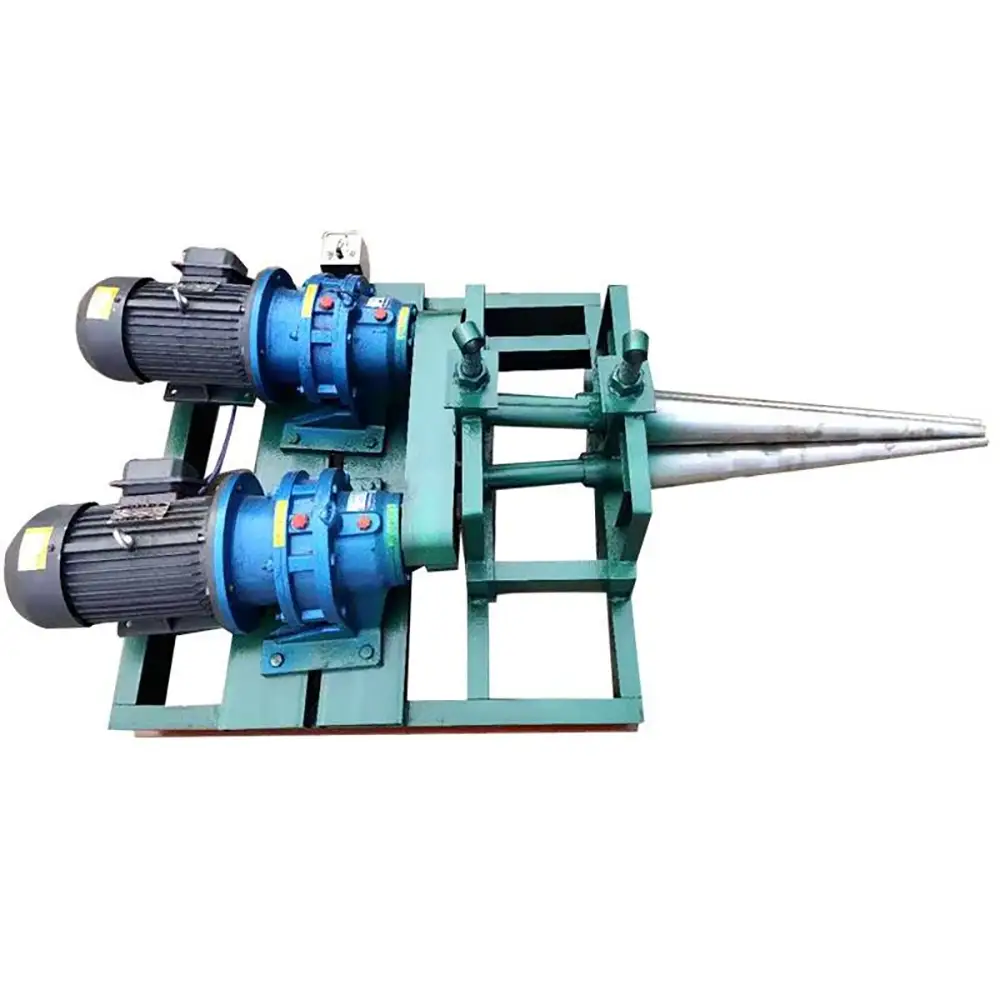
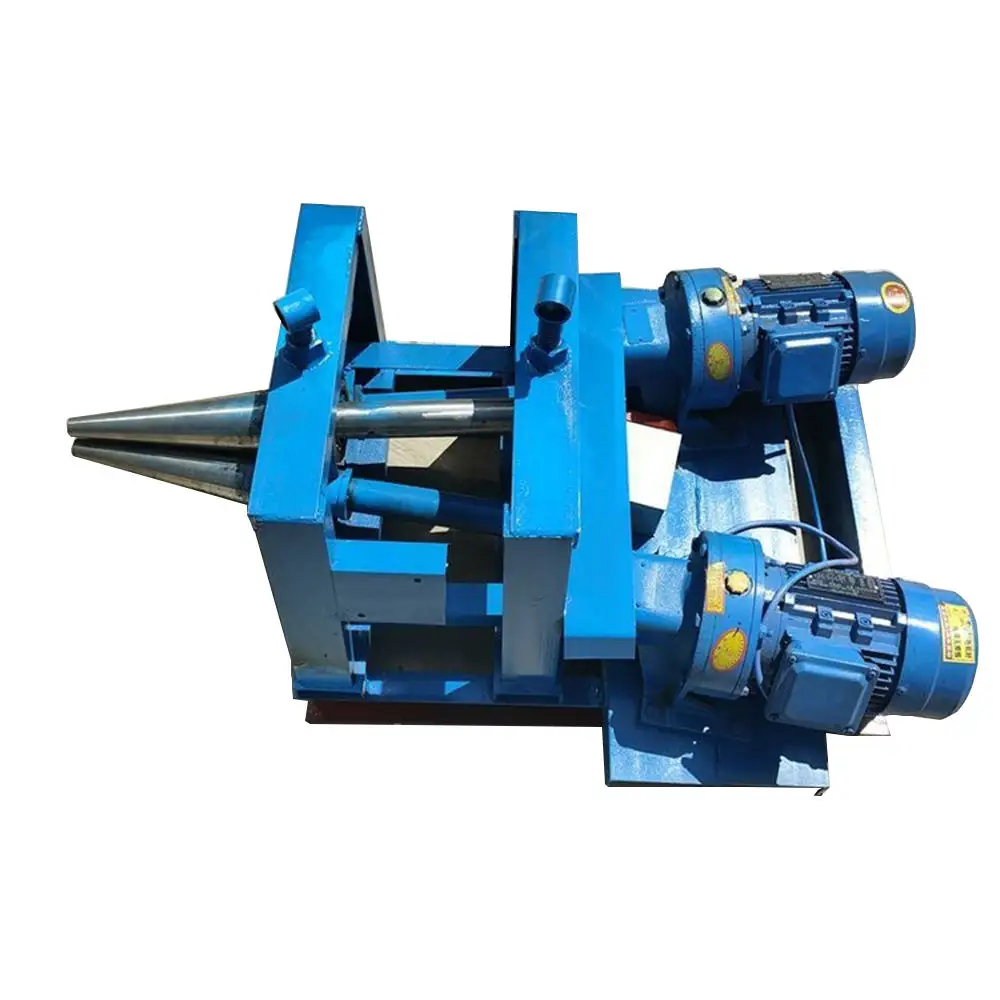
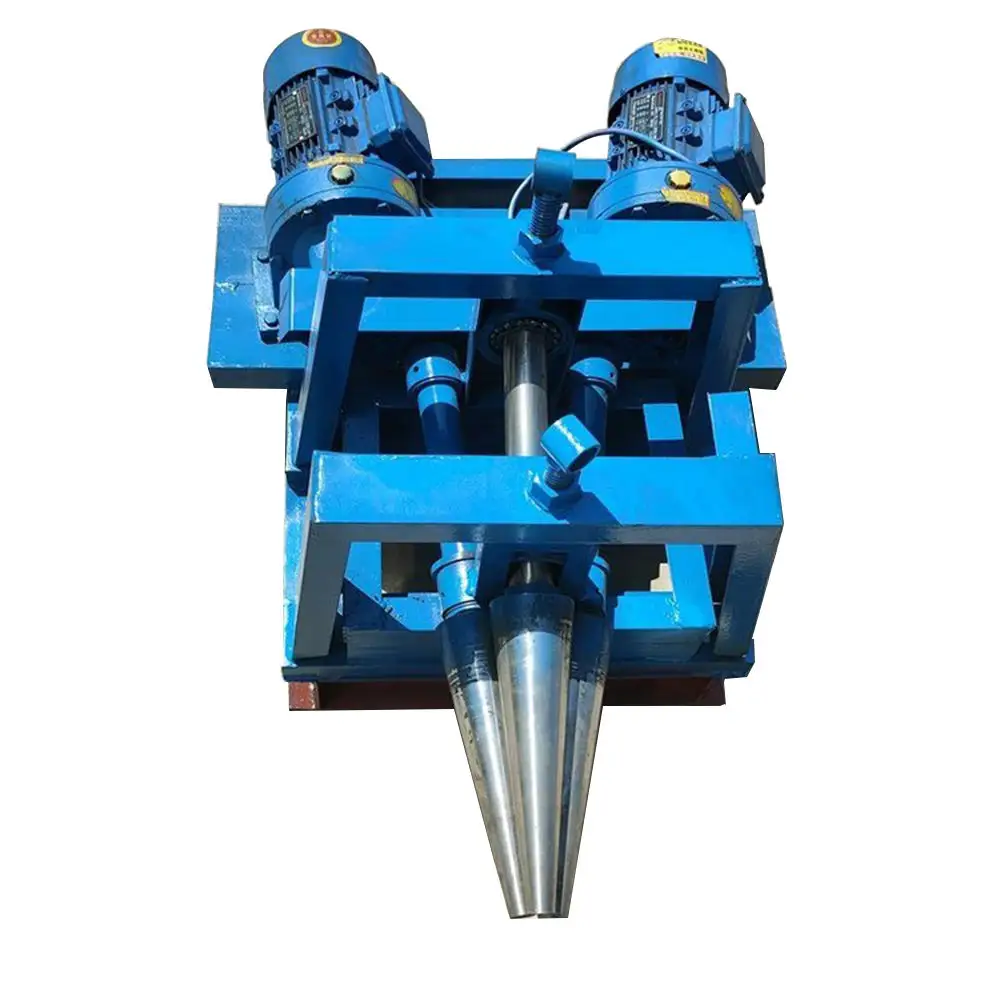
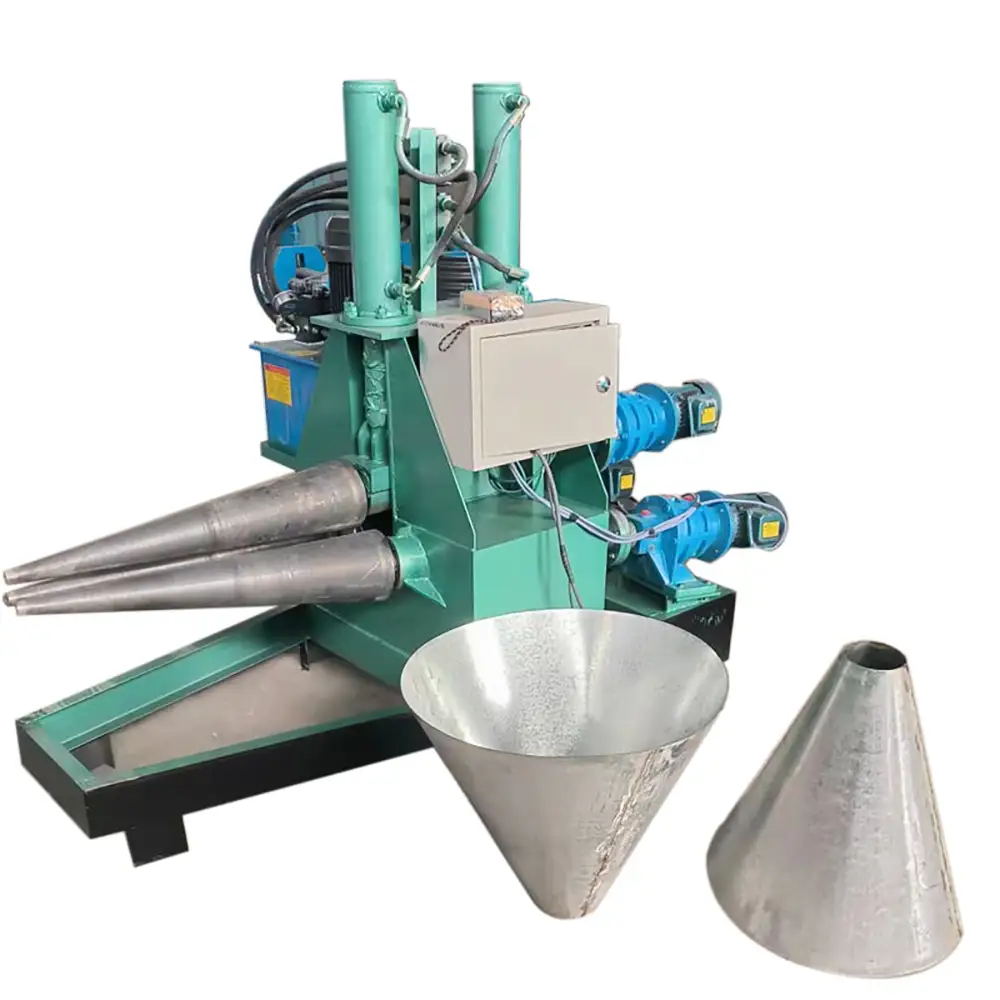
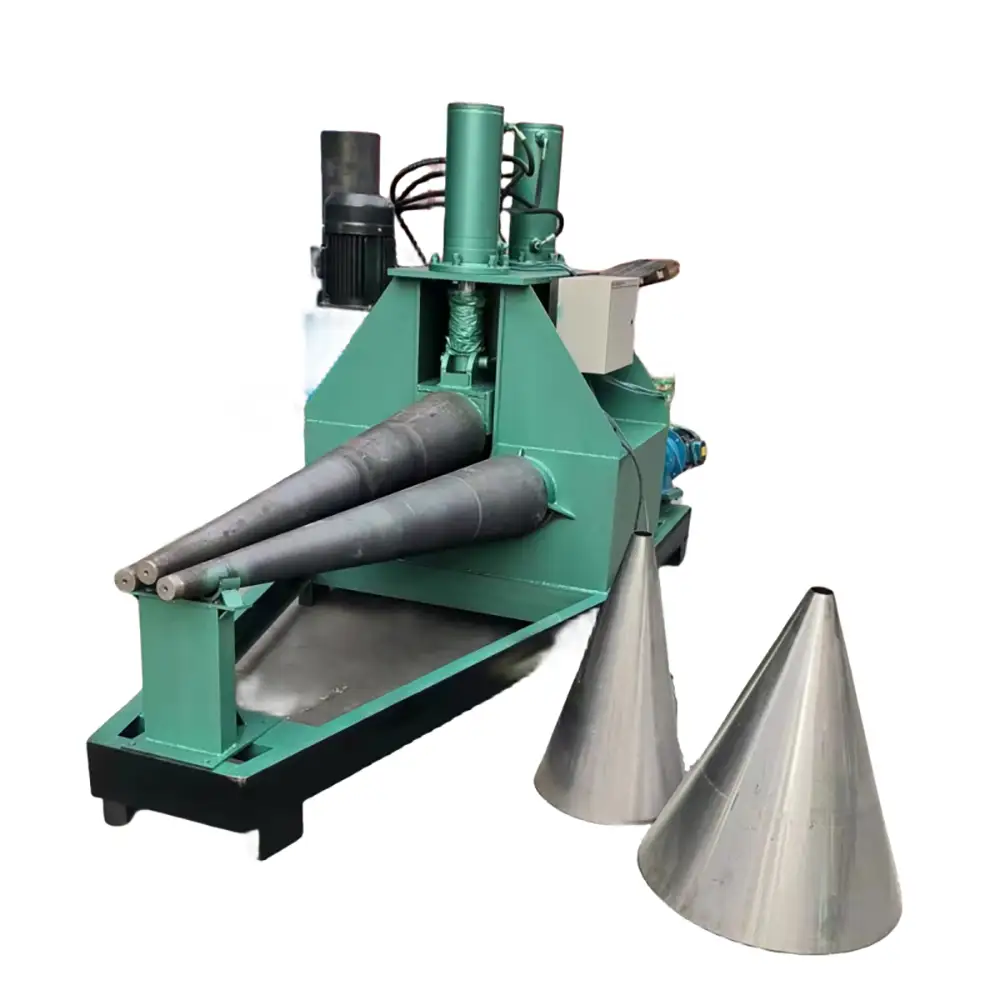
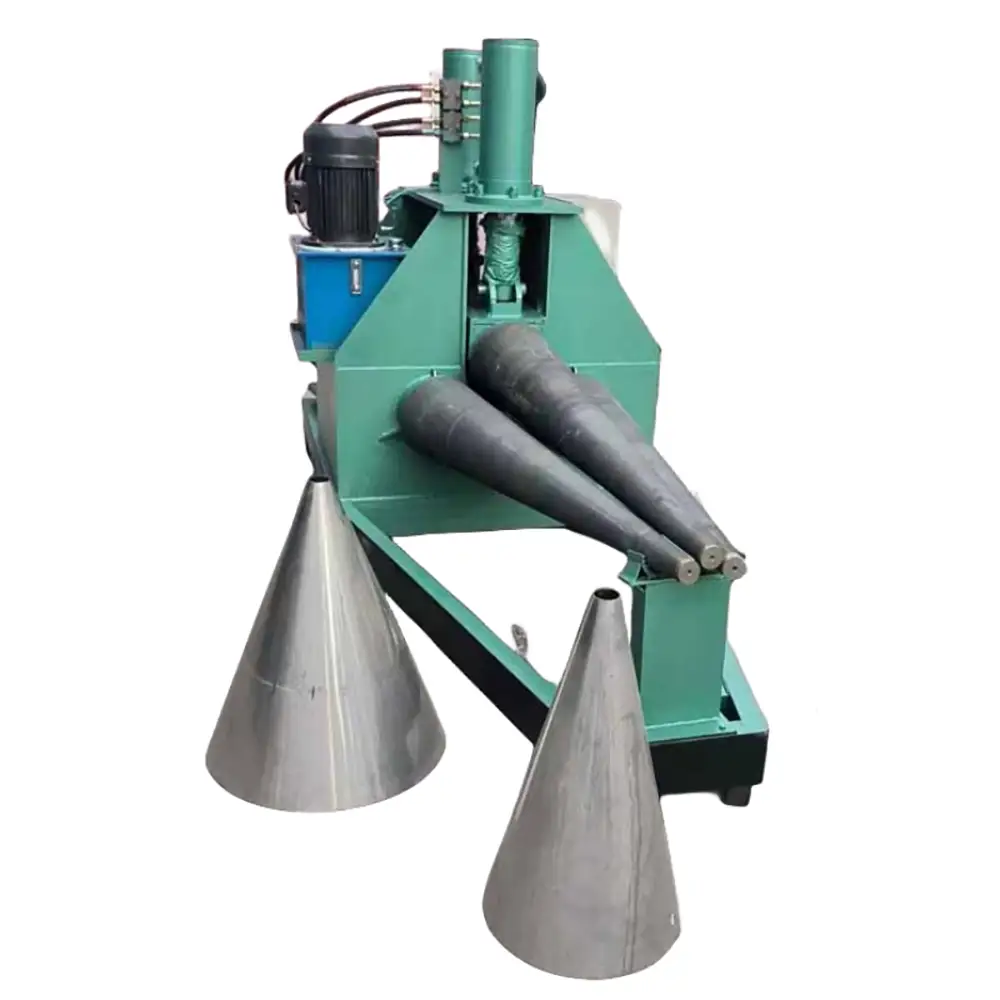
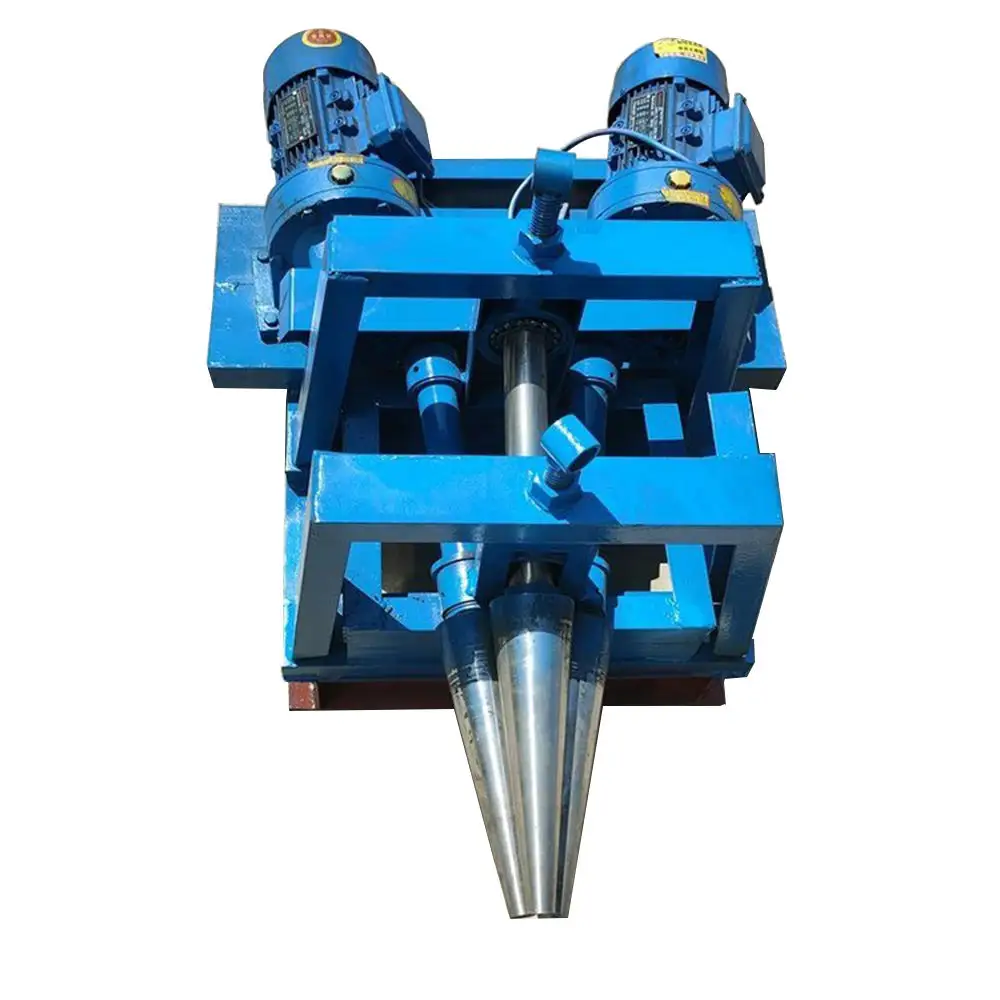
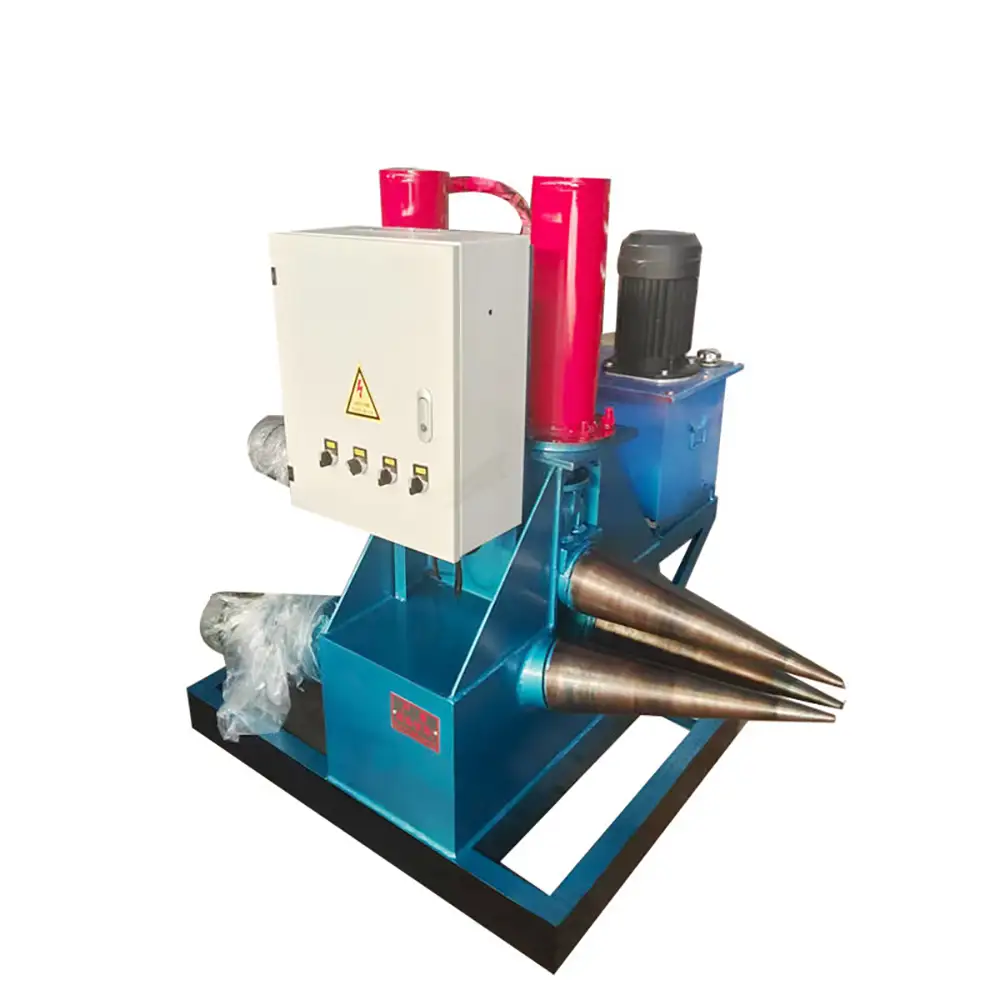
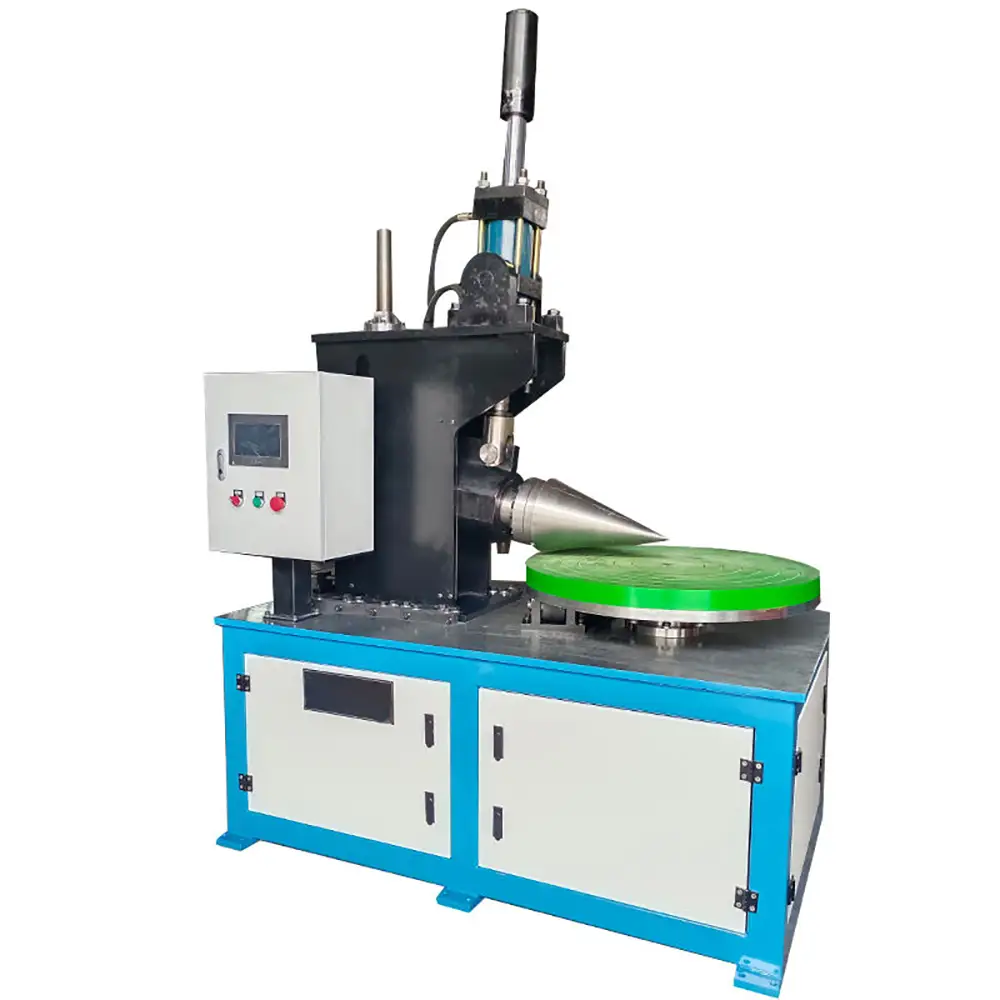
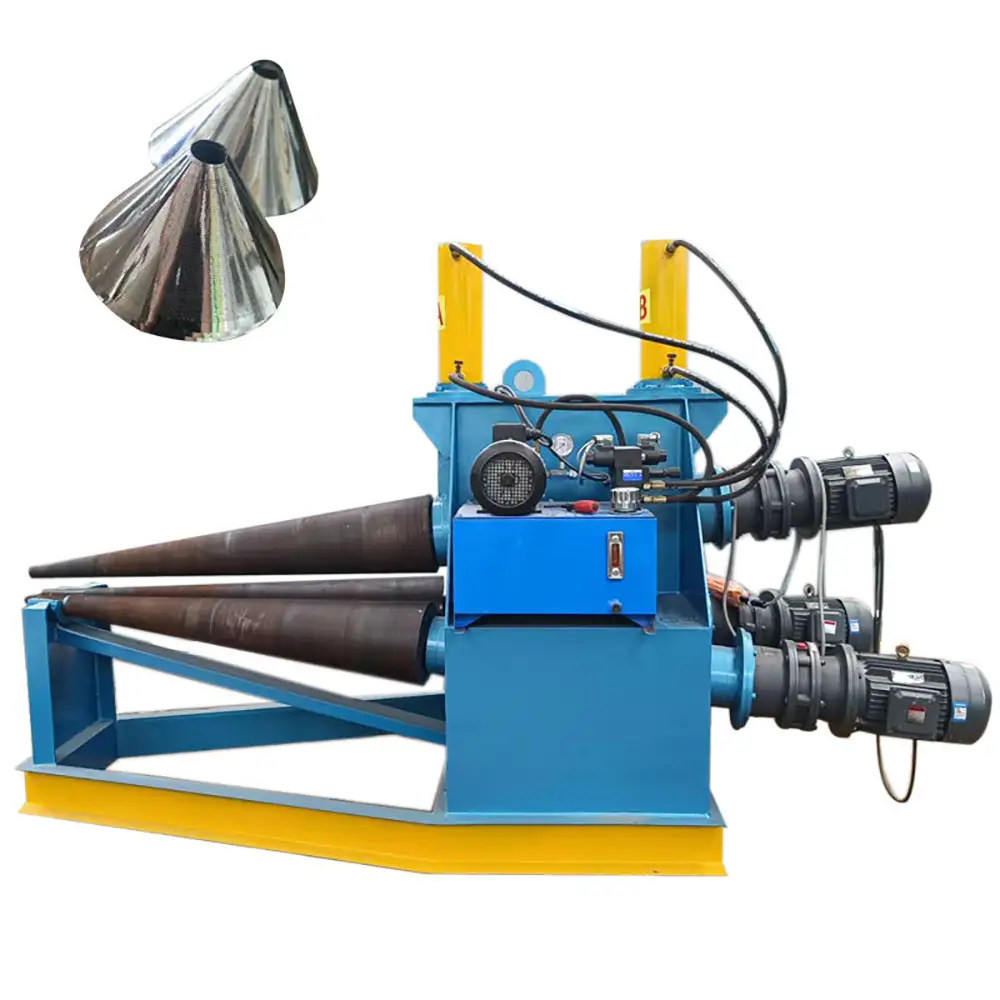
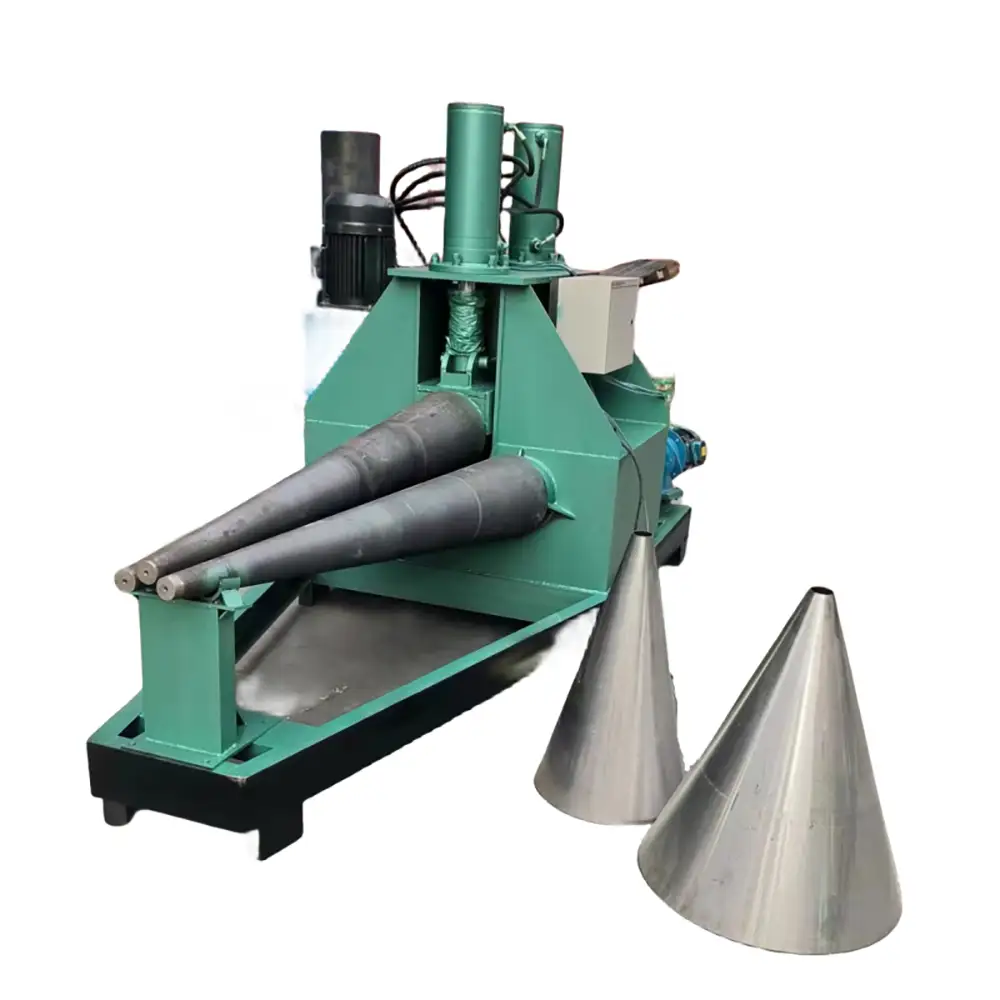
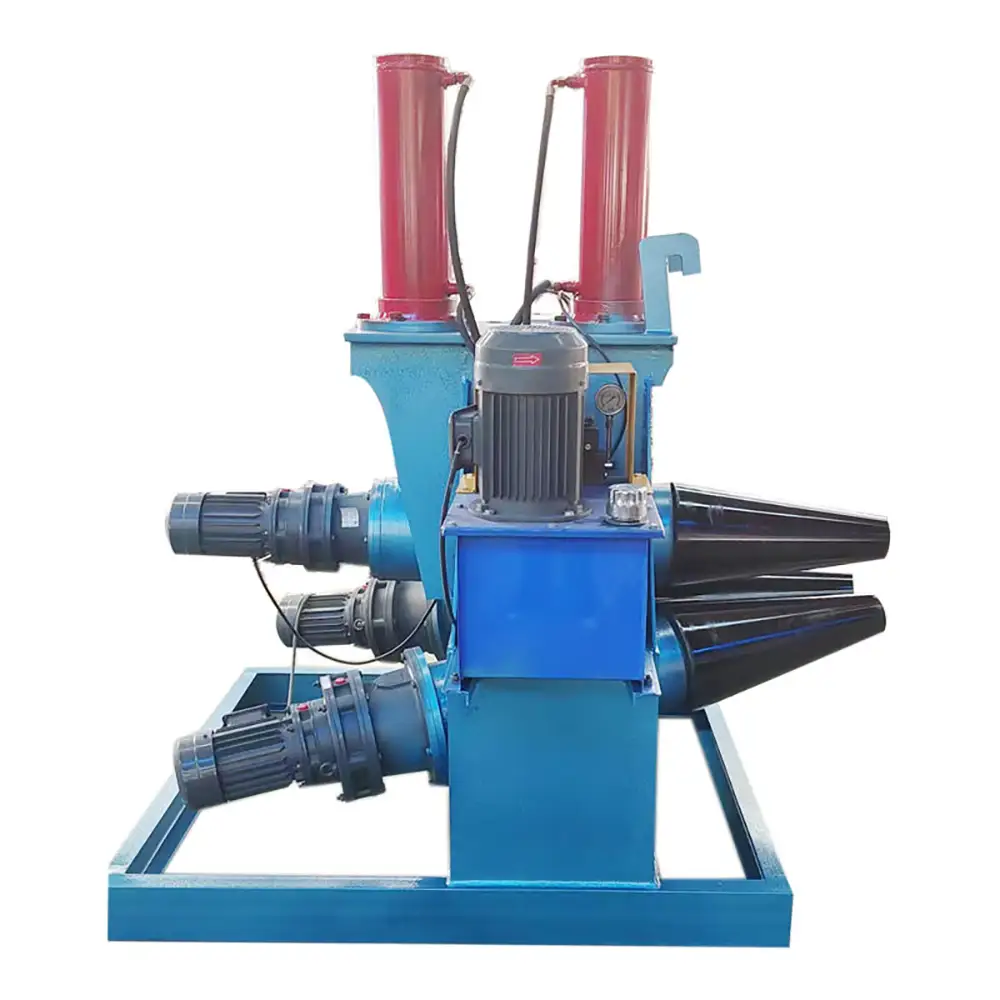
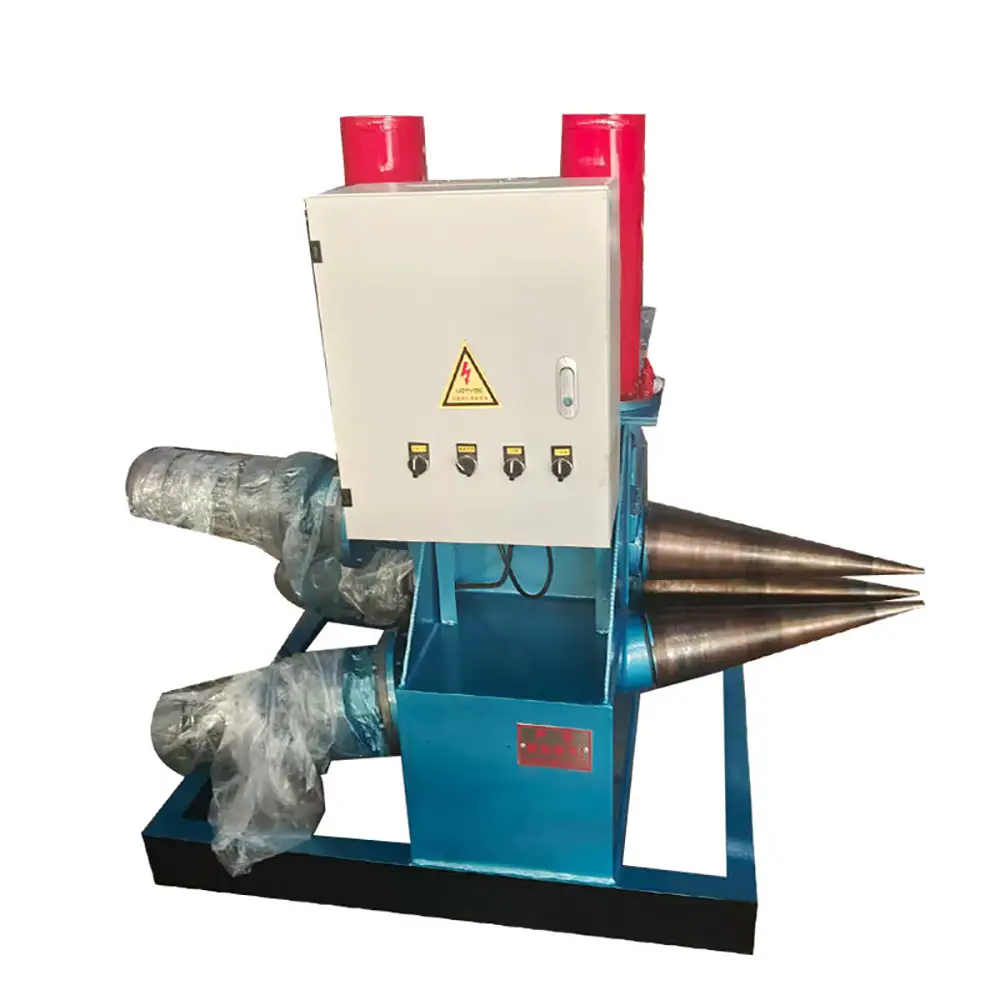
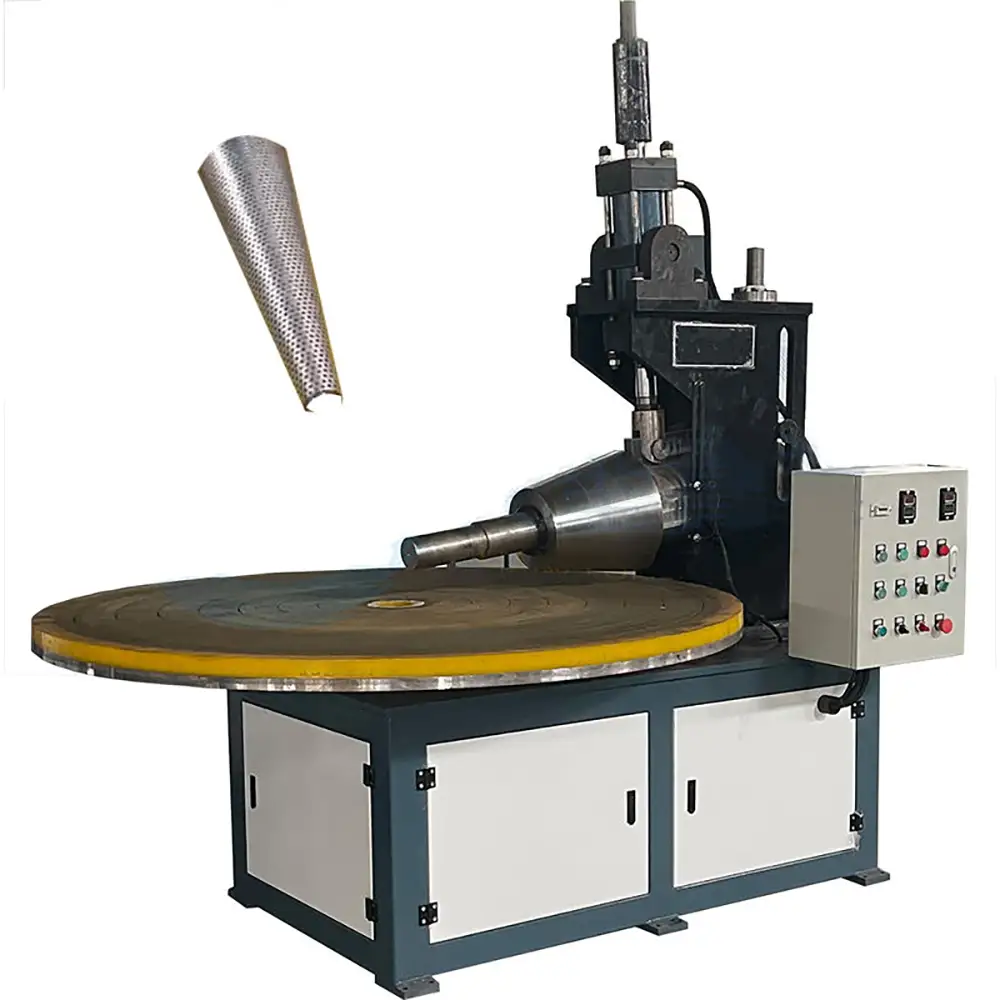
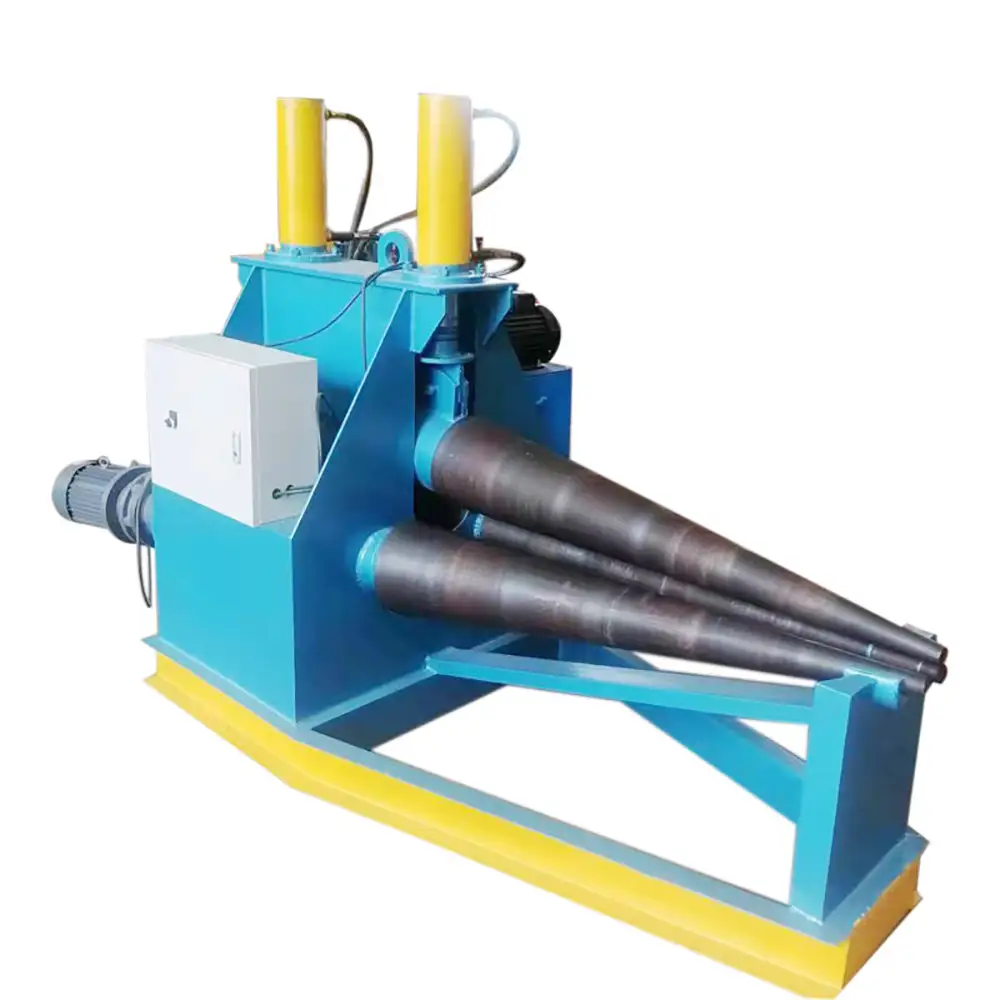
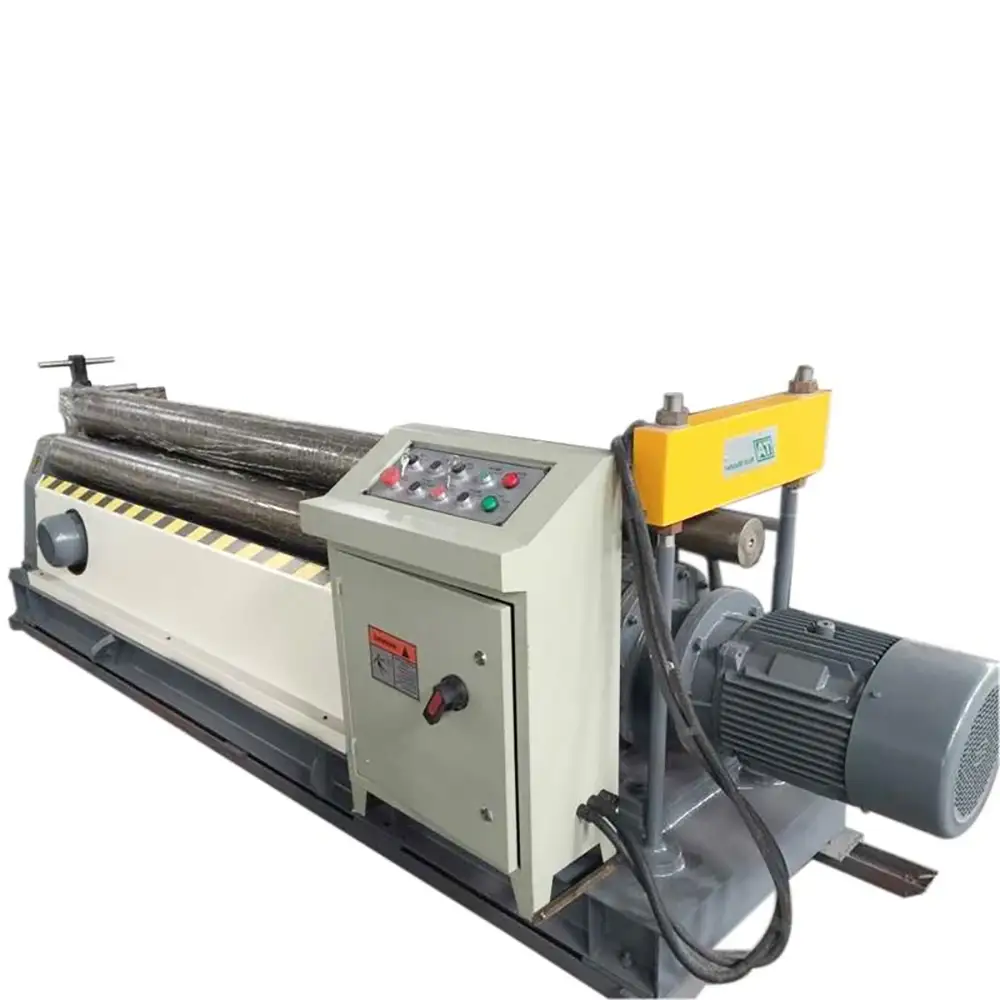
The Mini Cone Rolling Machine Small Cone Taper Roller Metal Coiler is a compact metal forming solution designed for workshops, fabrication companies, prototyping operations, maintenance departments, and manufacturers that need to produce small conical and tapered metal components. Combining cone rolling capability with compact plate bending and metal coiling functions, this equipment provides a practical solution for forming sheet metal into cones, tapered sections, curved components, and other small fabricated shapes.
Compared with large industrial plate rolling machines, a mini cone rolling machine is designed for applications where workpiece dimensions and production requirements are smaller. Its compact format can make it easier to install in workshops with limited floor space while providing a dedicated forming process for small cone components.
The actual machine capacity depends on the model and configuration. Material type, plate thickness, working width, cone diameter, cone angle, forming radius, and required production volume should all be considered before selecting equipment.
The plate rolling machine is a hydraulic three-roller cone plate rolling machine. The upper roller moves up and down at the symmetrical position in the center of the two bottom rollers, and adjustment power is obtained through hydraulic cylinder, and front and rear parts can be adjusted freely to make cones of different sizes. The bottom tapered rollers are respectively driven by a motor reducer (or driven by tow motors) to provide power for the sheet metal to run. The machine is electric rolling and hydraulic pressing.
PRODUCT SPECIFICATIONS
|
Model |
3*500 |
4*1000 |
|
Roller big head diameter |
170mm |
220mm |
|
Roller small head diameter |
20 |
52 |
|
Roller length |
500mm |
1000mm |
|
Motor power |
3*750W |
3*1000w |
|
Oil station power |
3kw |
3kw |
|
Cylinder diameter |
110mm |
140mm |
|
Processing range |
Processable plate thickness stainless steel 2mm, Q235 plate 3mm |
High-frequency quenching treatment of roller
Machinable plate thickness stainless steel 3mm, Q235 plate 4mm |
|
Size |
1900x1500x1520mm |
2600x1200x1500 |
|
weight |
800kg |
1300kg |
Mini Cone Rolling Machine
A mini cone rolling machine is primarily designed to form flat metal blanks into conical or tapered shapes.
The workpiece is normally cut according to the required cone development before it is positioned between the forming rolls. The material is progressively bent through controlled rolling passes until the required conical geometry is achieved.
Depending on the material and dimensions, pre-bending and multiple forming passes may be required. Operators should establish the appropriate process according to material properties, plate thickness, cone diameter, and machine capacity.
This type of equipment is particularly useful when a fabrication shop produces smaller cones that do not justify the floor space or capacity of a large heavy-duty plate rolling machine.
Small Cone Roller
The small cone roller is suitable for compact conical components used in general fabrication and specialized manufacturing.
Typical applications can include:
Small hoppers
Funnels
Conical covers
Reducer sections
Small ducts
Exhaust components
Lighting components
Decorative metal cones
Machinery components
Custom fabricated parts
For prototyping and low-to-medium volume production, a small cone roller can provide flexibility when different cone sizes need to be manufactured.
Taper Roller
The taper roller function allows the machine to form tapered metal components where the two ends have different diameters.
Unlike uniform cylindrical rolling, taper forming requires the forming process to accommodate different dimensions across the workpiece width. This makes a dedicated cone or taper roller useful for producing conical sections and transition components.
The finished component may subsequently require welding, trimming, grinding, calibration, or other finishing operations depending on the application.
Metal Coiler Applications
The term Metal Coiler can describe equipment used for bending or coiling sheet metal into curved or rolled forms. In a compact cone-forming machine, the rolling mechanism can be used for both curved forming and conical applications when the machine configuration supports those processes.
Suitable applications may include small cylindrical sections, curved sheet metal parts, tapered components, and custom rolled shapes.
The machine should not be confused with a high-speed coil-processing line used for continuously feeding and winding large metal coils. A mini cone rolling machine is primarily intended for discrete sheet or plate forming.
Sheet Metal Forming
Sheet metal forming is one of the key applications for compact rolling equipment.
Materials such as mild steel, carbon steel, stainless steel, and aluminum can potentially be processed when their thickness and mechanical properties are within the machine's rated capacity.
For thinner materials, operators should pay attention to surface quality, local deformation, edge effects, and springback. Proper blank preparation and controlled forming can help achieve more consistent results.
For thicker materials, machine capacity becomes increasingly important because greater forming force may be required.
Small Steel Cone Forming
Small steel cones are widely used in machinery, fabrication, ducting, exhaust systems, funnels, hoppers, and industrial components.
Carbon steel and mild steel can generally be formed when the plate dimensions and material strength are suitable for the machine.
The actual minimum cone diameter depends on the machine design, roll diameter, material thickness, and forming process. Buyers should provide the desired cone dimensions when requesting a machine recommendation.
Stainless Steel Cone Rolling
Stainless steel is frequently used for small conical components where corrosion resistance and appearance are important.
Potential applications include food equipment, kitchen and processing components, chemical equipment, water treatment equipment, decorative fabrication, and stainless steel machinery parts.
When forming stainless steel, appropriate roll surfaces and handling procedures can help minimize unnecessary surface marks. Stainless steel grade should also be specified because different grades may have different forming characteristics.
Aluminum Cone Forming
Aluminum and aluminum alloys can be used for lightweight cone components when the machine configuration is suitable.
Aluminum cones may be used in ventilation, transportation equipment, lightweight machinery, architectural fabrication, and custom metal products.
Because aluminum has different mechanical properties from steel, forming parameters should be adjusted according to the alloy and component requirements.
Compact Workshop Equipment
One of the main advantages of a mini cone rolling machine is its compact format.
Small fabrication shops may have limited floor space, making a compact metal forming machine easier to integrate into an existing production area.
The machine can be used for prototyping, repair work, custom fabrication, sample production, and smaller production batches.
Its application should be matched to the actual capacity of the selected model rather than assuming that every mini cone roller can handle the same plate thickness or diameter.
Prototype and Custom Fabrication
A small cone rolling machine can be useful for prototype development because manufacturers often need to test different cone dimensions and forming processes before committing to larger-scale production.
It can also support custom fabrication businesses that receive orders for different small metal components.
For low-volume work, a flexible machine can allow operators to produce different shapes without requiring dedicated tooling for every component.
Reducers and Transition Sections
The machine can be used for suitable small plate-based reducers and transition sections.
The flat blank is developed according to the required geometry and then rolled into the desired tapered form. After rolling, the longitudinal seam can be welded and finished.
Applications can include ventilation systems, exhaust assemblies, dust collection equipment, machinery connections, and other fabricated systems.
As with other cone rolling processes, the machine forms the plate blank. Welding and finishing are separate downstream operations.
Production Efficiency
Although compact, a mini cone rolling machine can improve workflow efficiency for businesses that frequently produce small conical components.
A repeatable rolling procedure can reduce manual shaping and provide more consistent results between workpieces.
Production efficiency depends on material preparation, component dimensions, machine configuration, operator experience, forming passes, and handling procedures.
For high-volume production, buyers should evaluate whether a larger automated or CNC cone rolling machine would be more suitable.
Quality Control
Accurate cone forming begins with correct blank development. The plate should be cut according to the required large-end diameter, small-end diameter, cone angle, and overall dimensions.
After rolling, manufacturers can inspect:
Large-end diameter
Small-end diameter
Cone angle
Overall height
Roundness
Edge alignment
Surface condition
For components that will be welded into assemblies, accurate geometry can help improve fit-up and reduce downstream correction.
Maintenance and Safe Operation
Regular maintenance helps maintain stable machine performance. Rolls, bearings, lubrication points, fasteners, drive components, and electrical systems should be checked according to the manufacturer's recommendations.
Before operation, the operator should confirm that the material thickness, width, and strength are within the machine's rated capacity.
Safety-oriented features may include emergency-stop systems, guards, electrical protection, and other features depending on the configuration. Operators should follow the manufacturer's operating instructions and applicable workplace safety requirements.
Custom Mini Cone Roller Solutions
Different workshops may require different working widths, plate capacities, cone diameters, and forming capabilities.
When requesting a quotation, customers should provide:
Material type and grade
Maximum plate thickness
Maximum plate width
Minimum cone diameter
Maximum cone diameter
Cone angle
Required forming radius
Expected production volume
Component drawings or samples
This information helps determine whether a mini cone rolling machine or a larger cone forming system is appropriate.
OEM, ODM, and Custom & OEM solutions can also be provided for machinery distributors, fabrication shops, manufacturers, and international B2B buyers.
Why Choose Us
Compact Cone Forming Solution
The mini cone roller is designed for smaller conical and tapered metal components.
Space-Saving Equipment
A compact machine format can be easier to integrate into workshops with limited floor space.
Multiple Metal Applications
Suitable configurations can process carbon steel, mild steel, stainless steel, aluminum, and other compatible materials.
Flexible Cone Production
The machine can support different cone sizes and tapered component designs within its rated working range.
Prototype And Custom Fabrication
It is suitable for sample production, prototypes, repair work, custom fabrication, and smaller production batches.
Taper Forming Capability
The rolling process can be used for conical sections, reducers, funnels, hoppers, and transition components.
OEM & Custom Support
Machine specifications can be customized according to working dimensions and production requirements.
International B2B Service
We provide technical communication, machine selection support, documentation, and export coordination for international customers.
FAQs
1. What is a mini cone rolling machine?
A mini cone rolling machine is compact metal forming equipment designed to roll sheet metal or plate blanks into small conical and tapered shapes.
2. What is a small cone roller used for?
It is used for producing small cones, funnels, hoppers, reducers, transition sections, ducts, covers, and other tapered metal components.
3. Can it roll steel?
Yes. Suitable carbon steel and mild steel can be processed when their thickness, width, and strength are within the machine's rated capacity.
4. Can it form stainless steel cones?
Yes. Suitable stainless steel plate can be formed when the machine configuration matches the material and dimensions.
5. Can it process aluminum?
Suitable aluminum alloys can be processed depending on the machine configuration and forming requirements.
6. What does a taper roller do?
A taper roller forms metal into a tapered shape where the two ends have different diameters.
7. Can the machine make small pipe reducers?
Yes. Suitable plate-based reducer blanks can be rolled into conical sections and subsequently welded and finished.
8. Can it make cylindrical parts?
Some configurations may also perform conventional cylindrical rolling within their rated working range. The exact capability depends on the machine design.
9. Is a mini cone roller suitable for high-volume production?
It depends on the required production volume and component size. For continuous high-volume production, a larger automated or CNC system may be more appropriate.
10. What is the smallest cone diameter it can produce?
The minimum diameter depends on roll diameter, material thickness, material properties, and machine configuration. The required cone dimensions should be provided for evaluation.
11. Is this machine a continuous metal coil processing machine?
No. A mini cone rolling machine is generally designed for discrete sheet or plate forming rather than continuous coil-processing lines.
12. What information is needed for a quotation?
Provide the material, maximum thickness, plate width, minimum and maximum cone diameters, cone angle, production quantity, and drawings or samples when available.
Prev:
Aluminium Stainless Metal Steel Taper Roll Forming Machines Ice Cream Cone Rolling Machine for Pre Rolled Cone
Next:
Upper Roller Mobile Three Roller Cone Rolling Machine Taper Forming Machine
TAG:
Cone Forming Machine,
Taper Forming Machine,
Three Roller Plate Rolling Machine,
Three Roller Cone Rolling Machine,
Custom Cone Rolling Machine,
Industrial Cone Rolling Machine,
Cone Reducer Forming Machine,
Stainless Steel Cone Rolling Machine,
Steel Cone Rolling Machine,
Carbon Steel Cone Rolling Machine,
Steel Cone Forming Machine,
Sheet Metal Cone Bending Machine,
Tapered Metal Forming Machine,
Cone Rolling Machine,
Conical Plate Bending Machine,
CNC Cone Rolling Machine,
Metal Cone Rolling Machine,
Metal Cone Forming Machine,
Hydraulic Cone Rolling Machine,
Cone Bending Machine,
Hopper Cone Rolling Machine,
Sheet Metal Cone Forming Machine,
Conical Plate Rolling Machine,
Three Roll Plate Rolling Machine,
Three Roll Cone Rolling Machine,
Tapered Plate Rolling Machine,
Small Sheet Metal Bending Machine,
Small Cone Roller,
Hydraulic Cone Roller,
Small Sheet Metal Rolling Machine,
Related Category:
Mini Cone Rolling Machine,Small Cone Rolling Machine,Taper Roller,Metal Coiler,Mini Cone Roller,Small Cone Roller,Cone R China, suppliers, manufacturers, factory, customized, wholesale, quotation, made in China