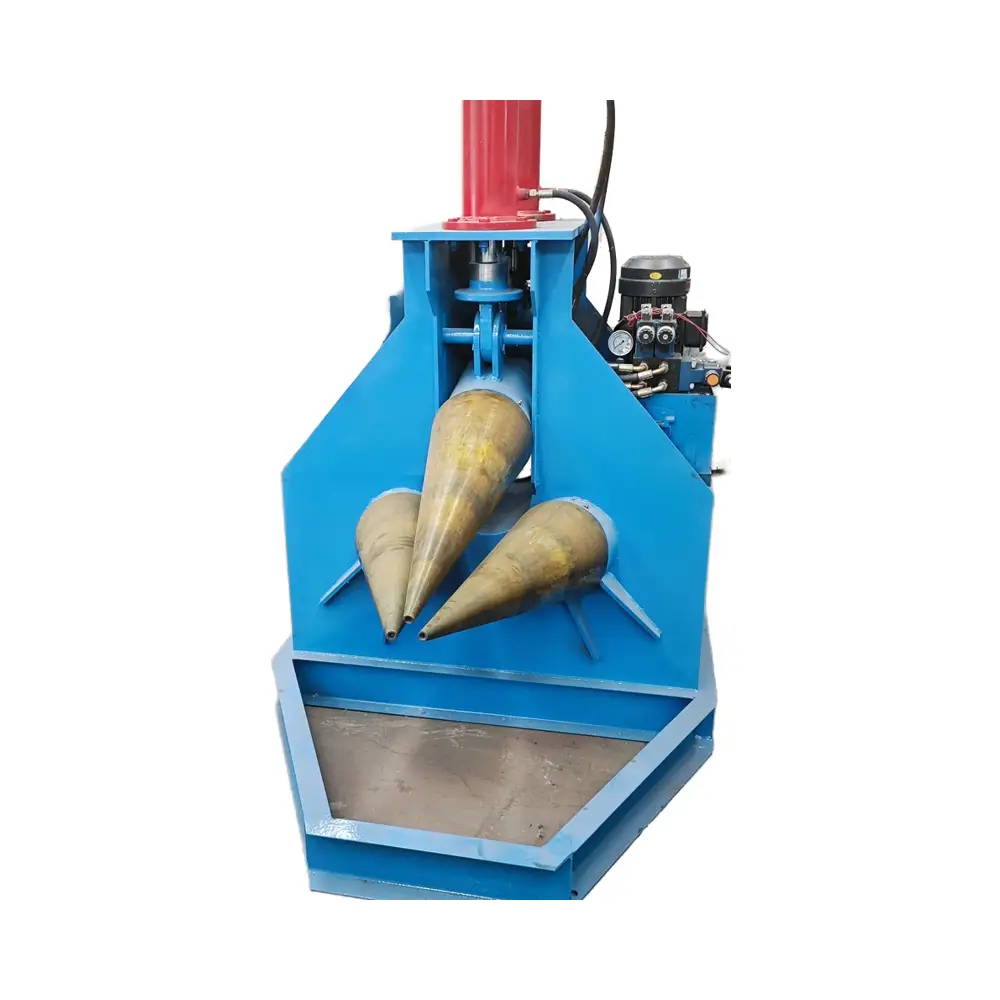
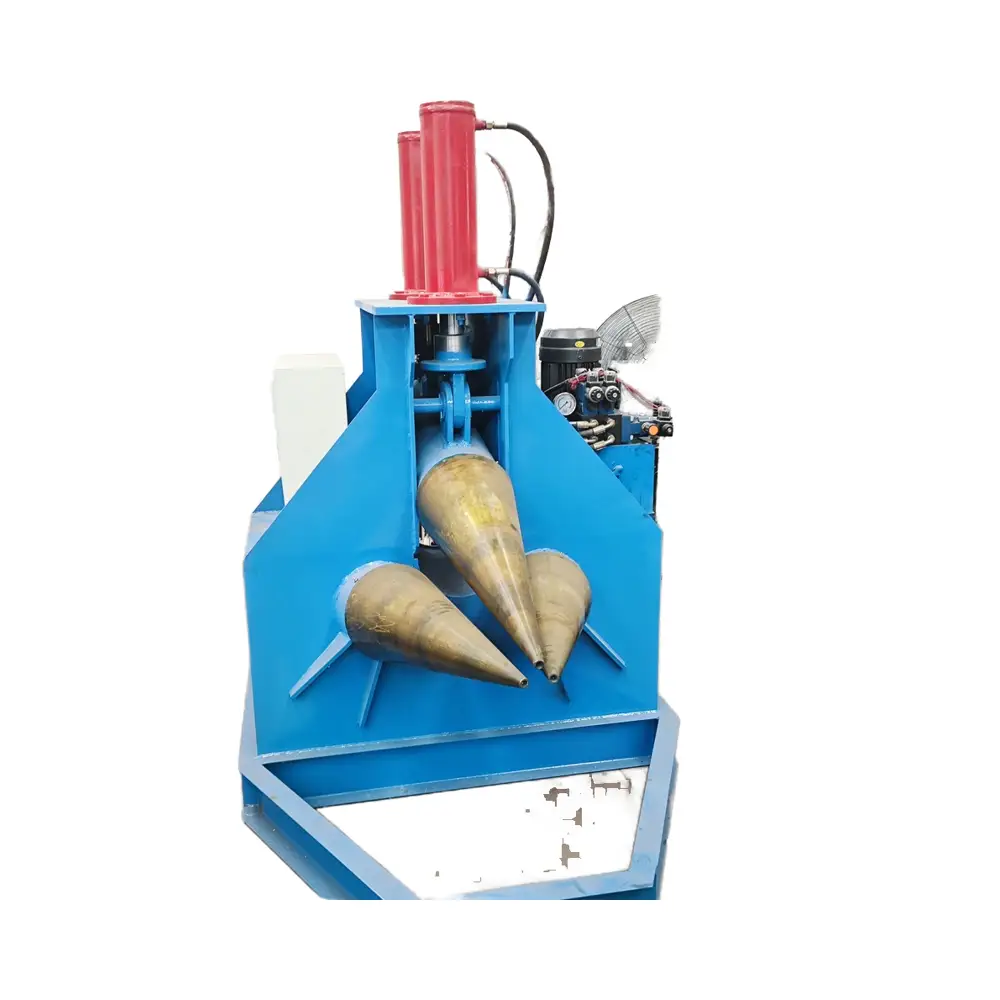
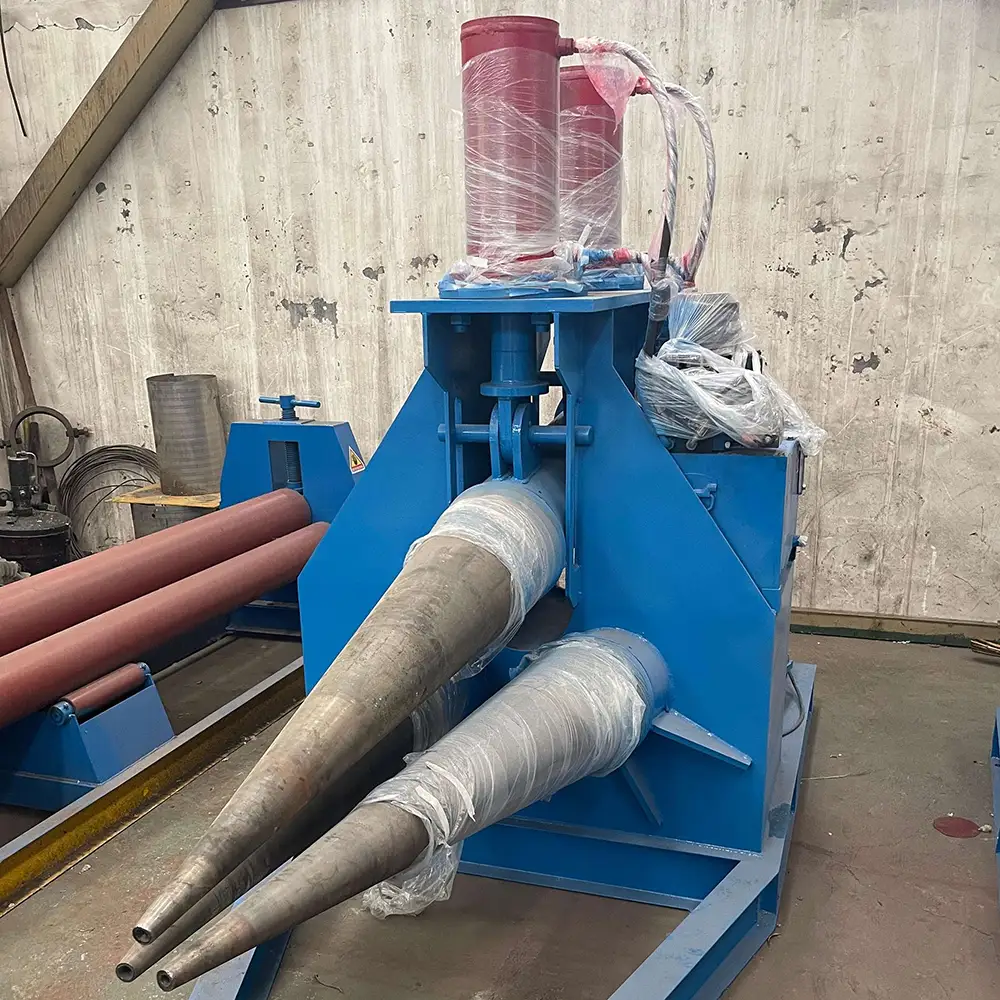
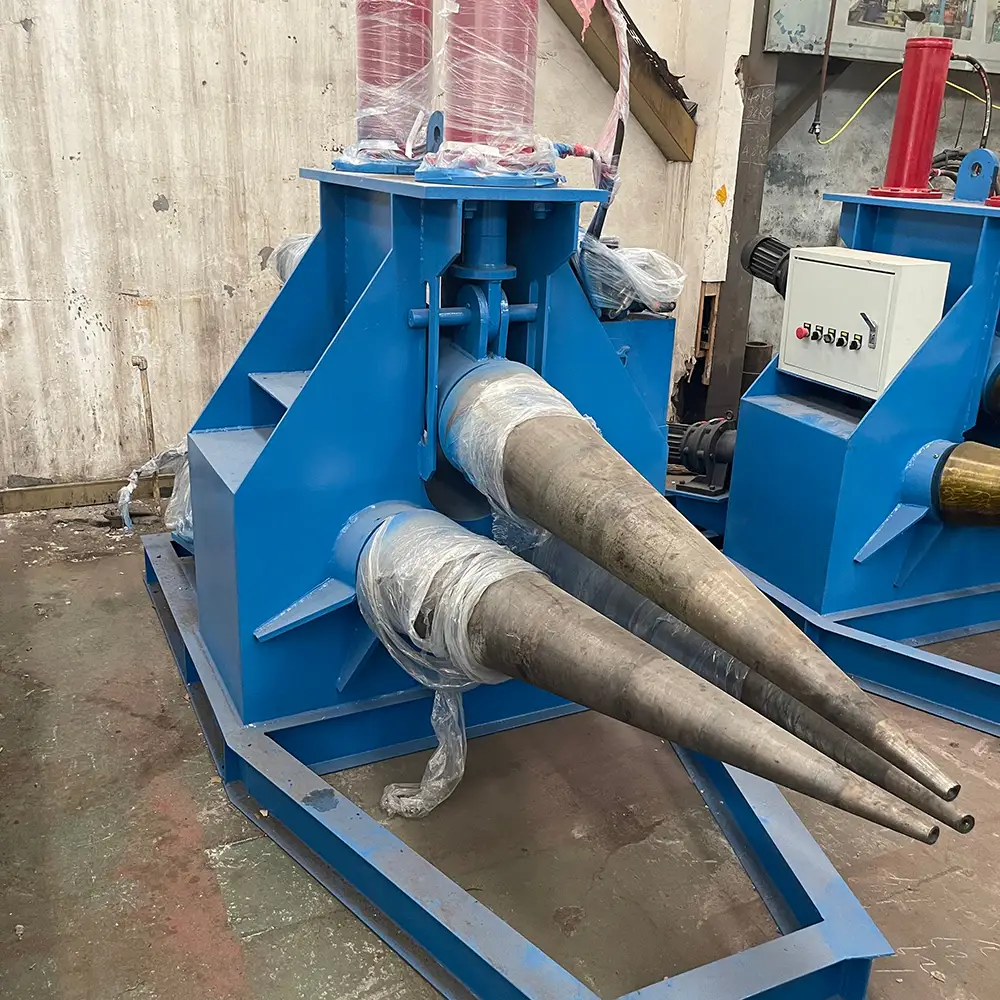
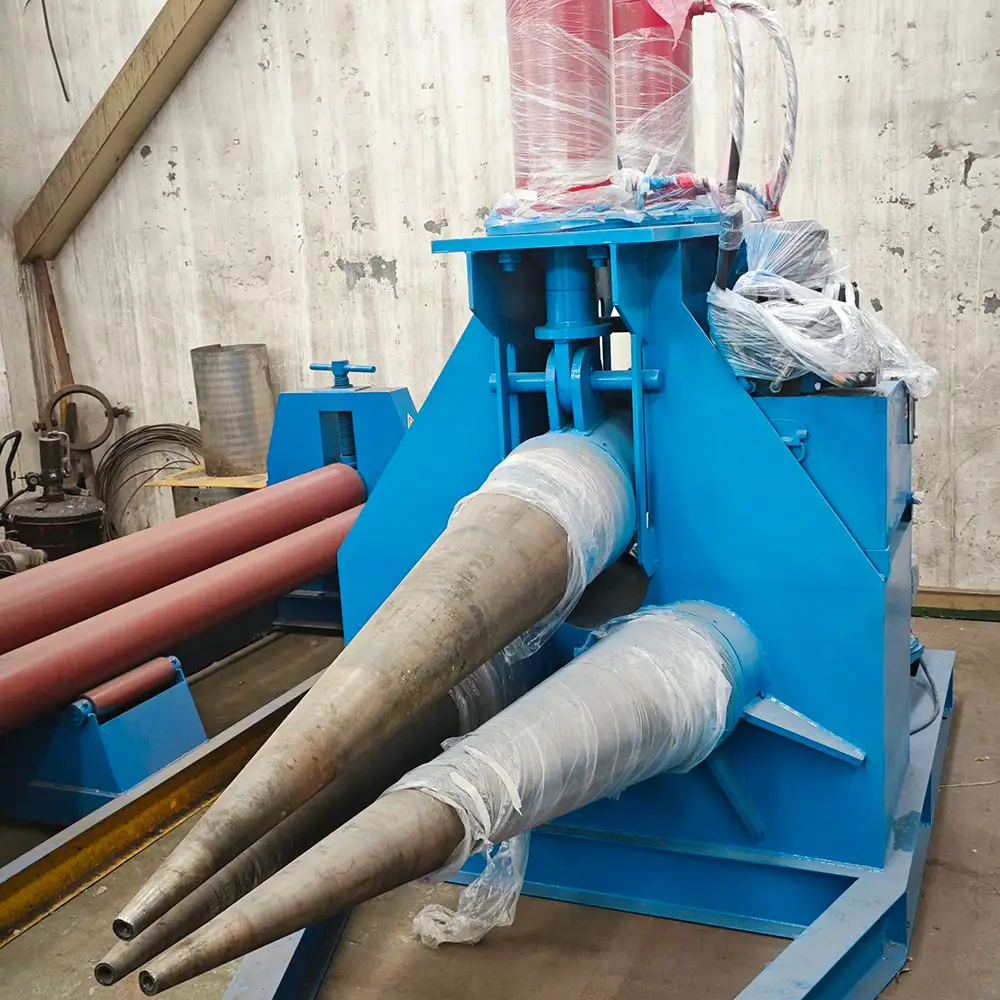
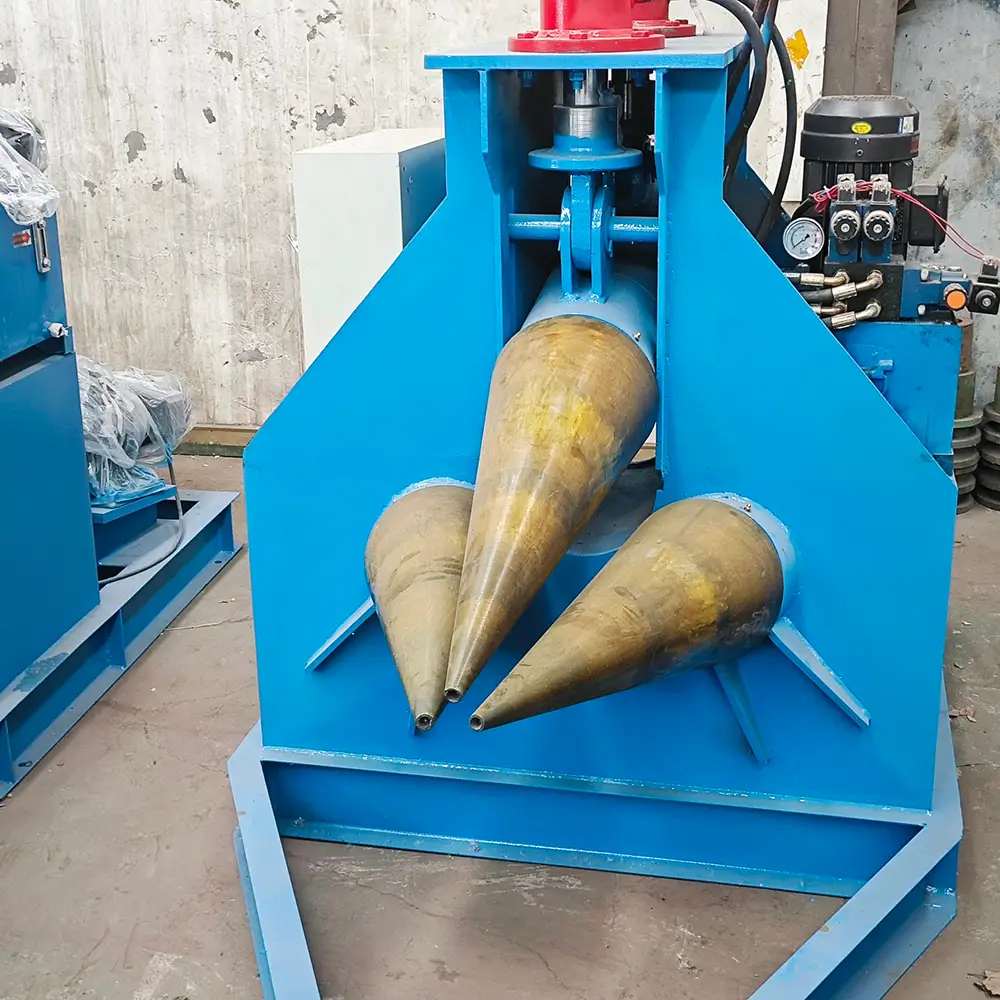
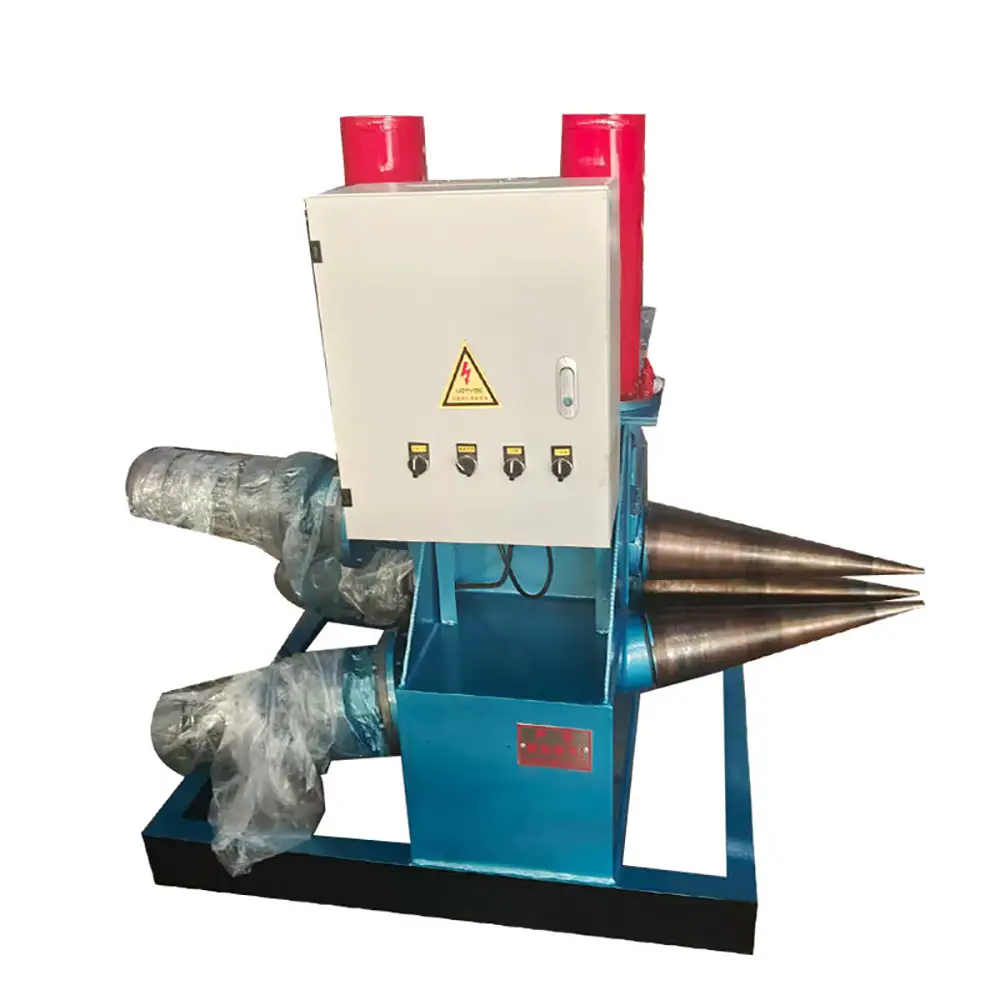
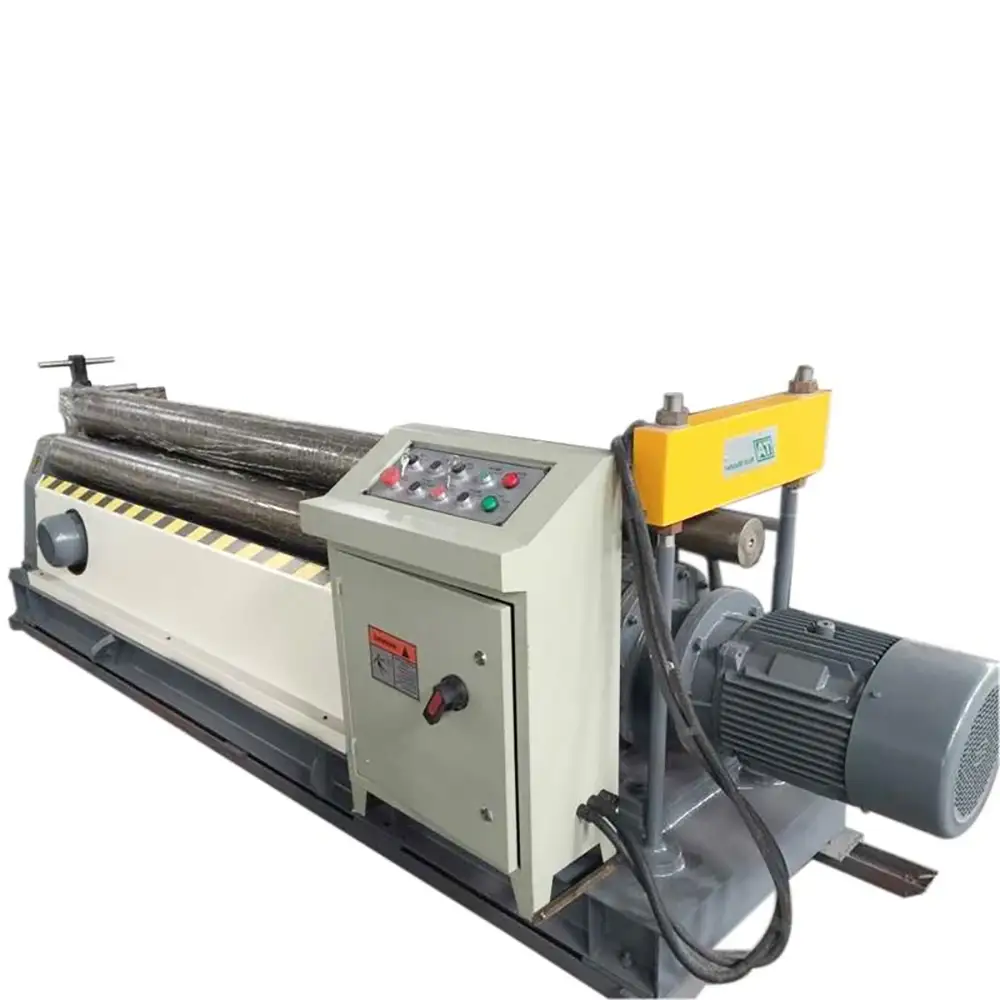
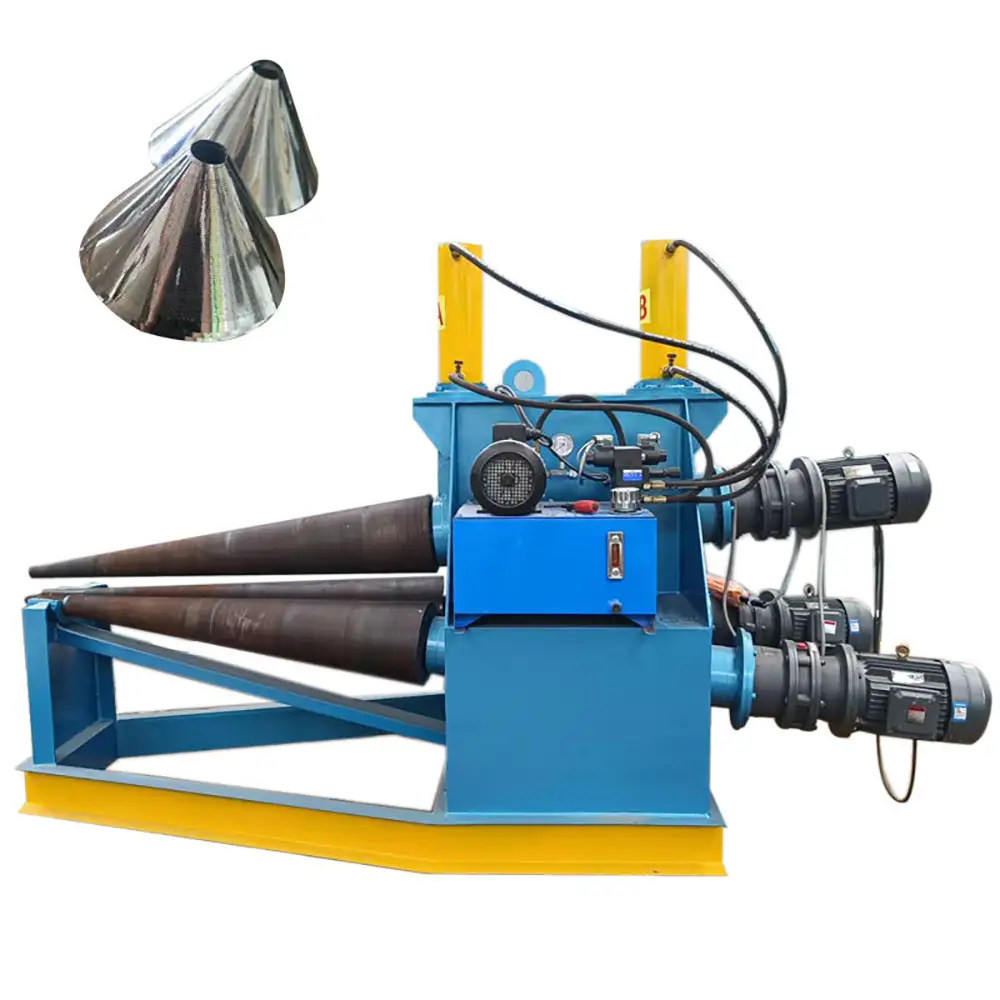
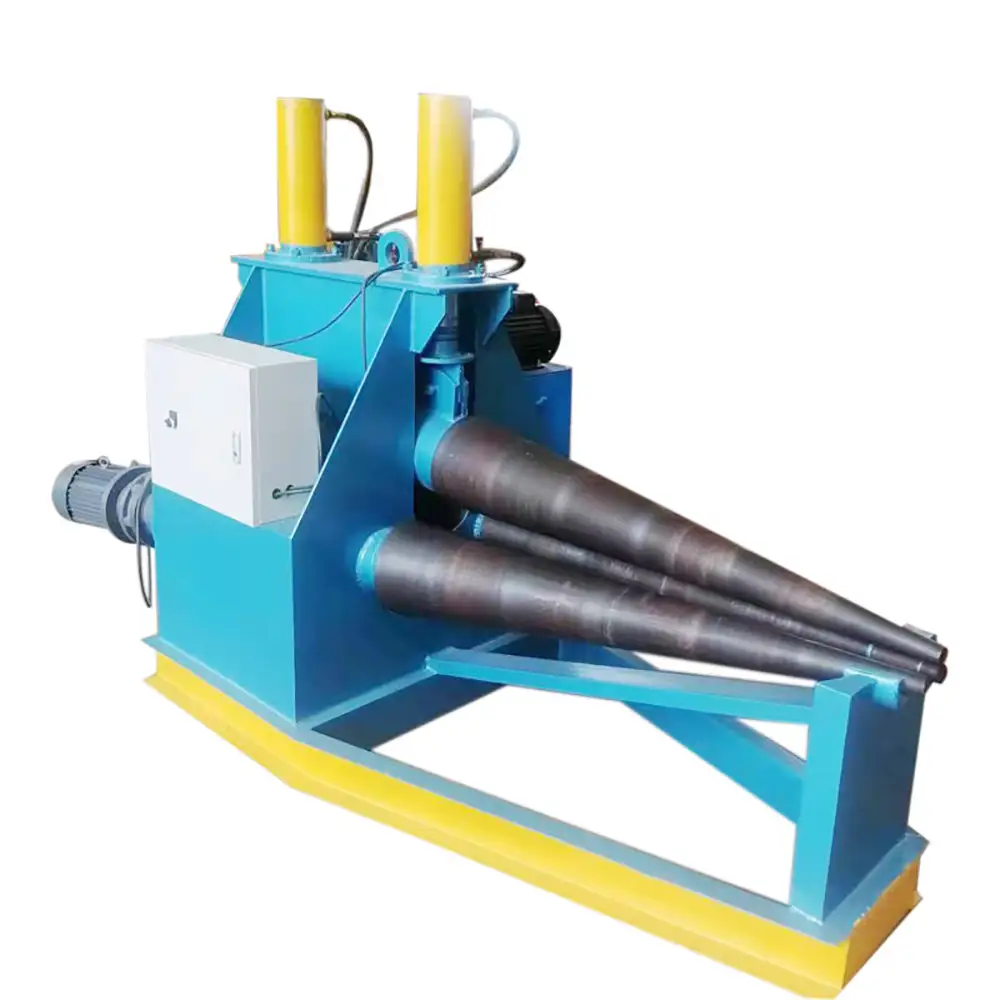
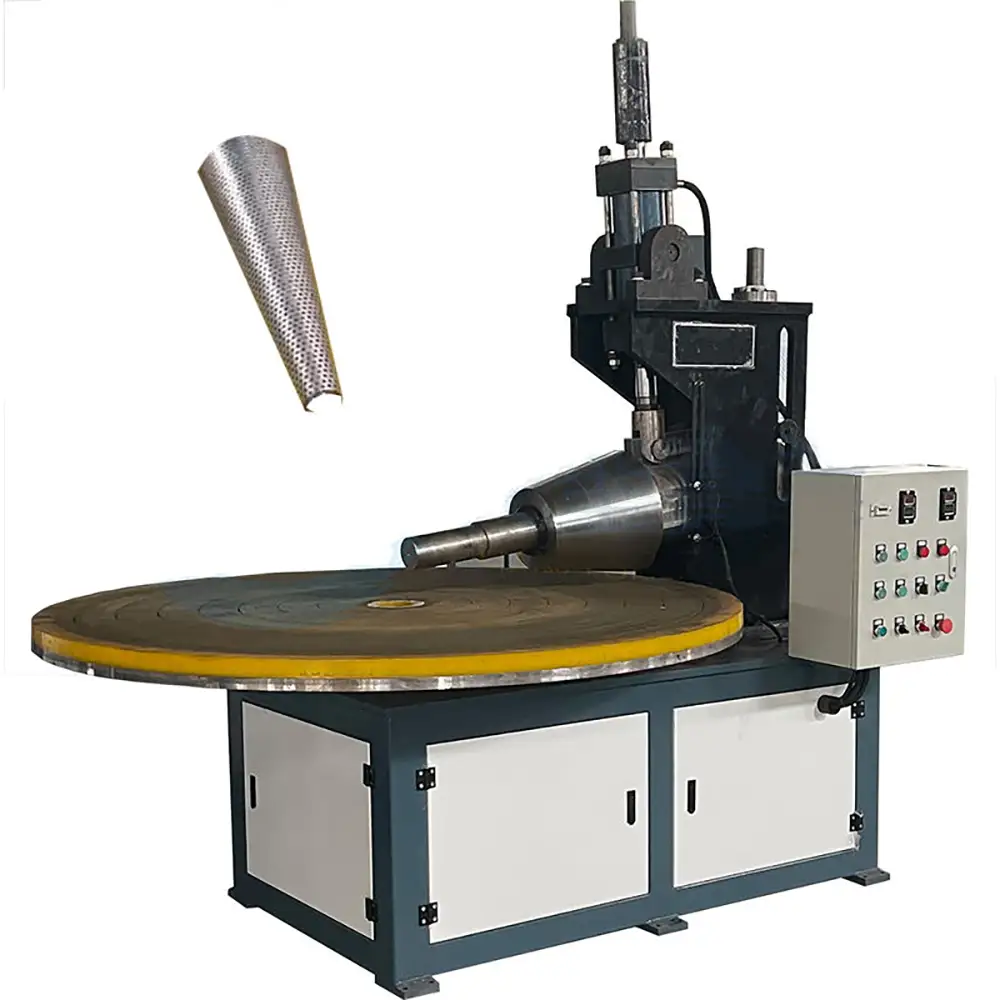
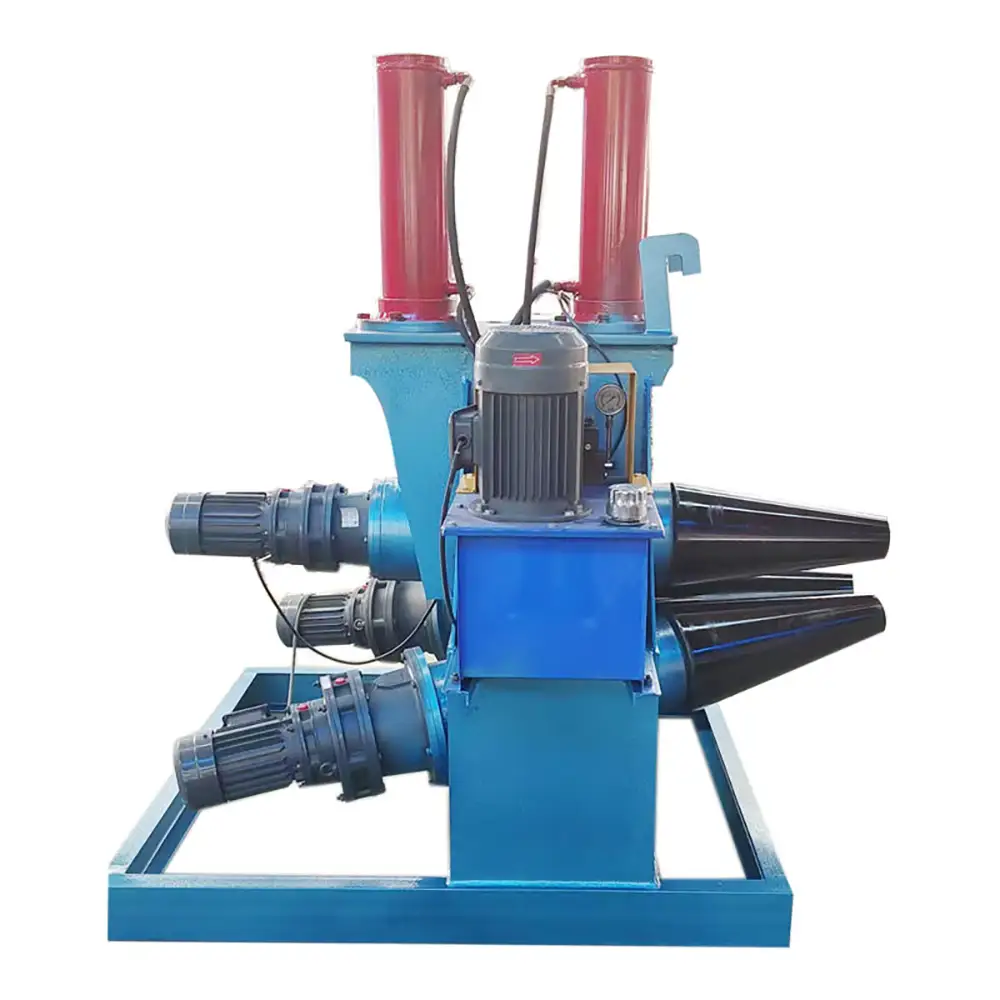
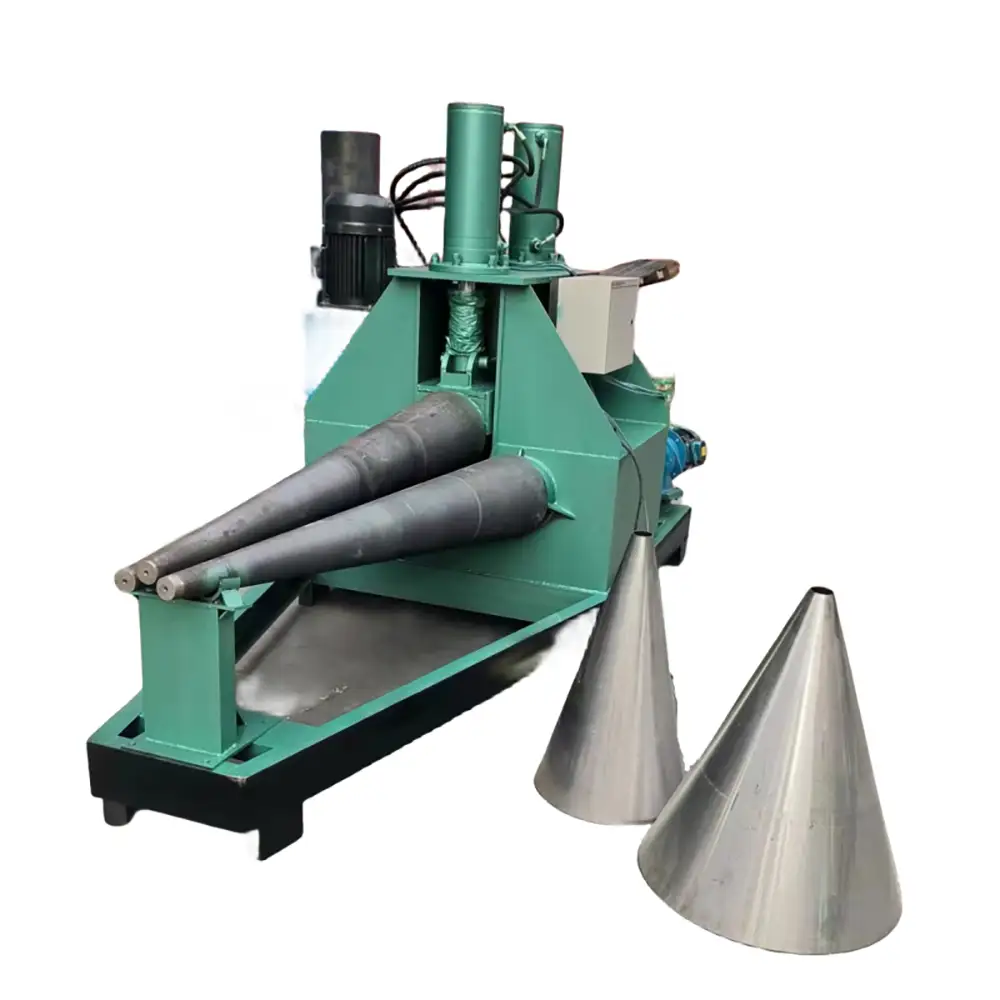
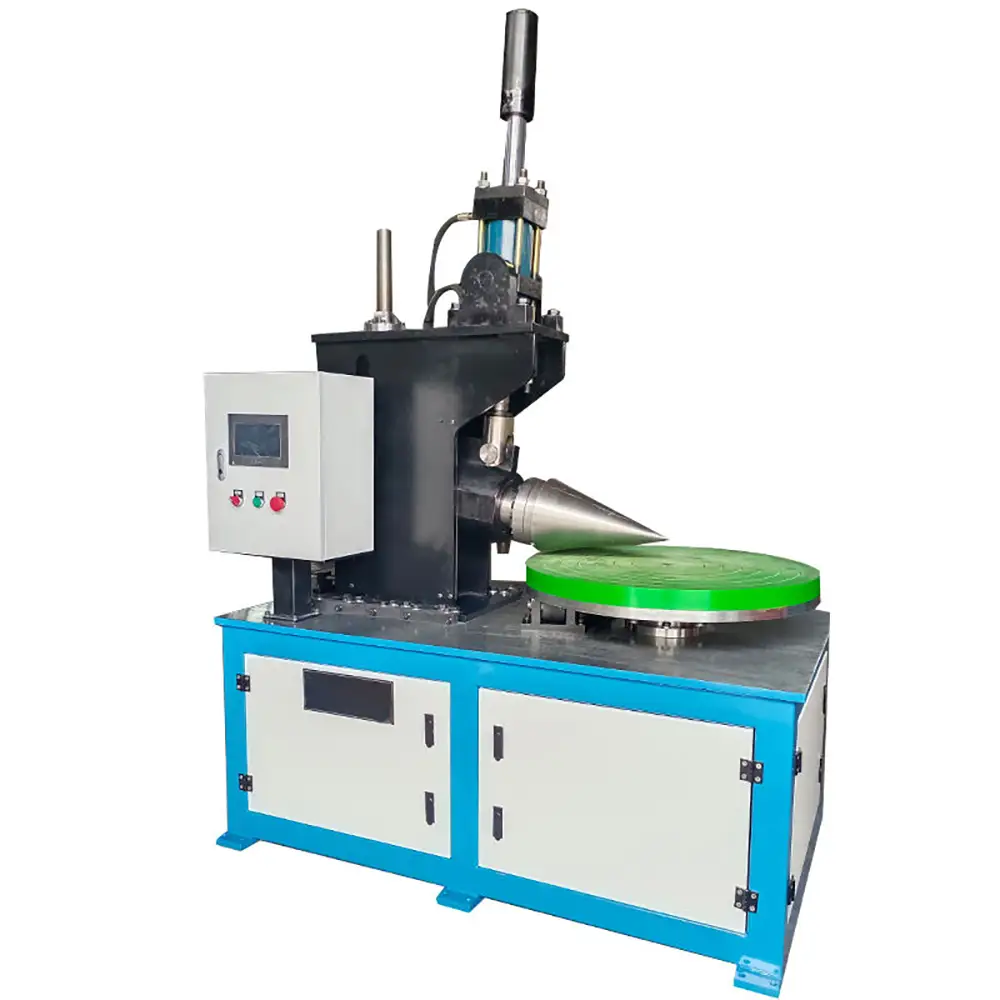
The 3 Roller Sheet Metal Hydraulic Cone Rolling/Bending Machine is designed for conical metal forming, sheet metal bending, and cone rolling applications in industrial fabrication. Using a three-roll configuration with hydraulic adjustment, the machine provides controlled forming force for producing tapered components from suitable steel, stainless steel, aluminum, and other metal sheets or plates.
Also known as a 3-roll cone rolling machine, three-roller hydraulic cone roller, or hydraulic sheet metal cone bending machine, this equipment is suitable for manufacturers that need to produce conical shells, transition sections, reducers, funnels, hoppers, ducts, and other tapered metal components.
The three-roll design provides a practical balance between forming flexibility, machine structure, and production efficiency. The hydraulic system supports roller adjustment and forming operations, while the operator controls the rolling sequence according to the material and required cone geometry. Actual forming capacity depends on machine configuration, material strength, plate thickness, plate width, cone diameter, cone angle, and other workpiece parameters.
|
Model |
6X1200 |
8*2000 |
|
Max bending sheet thickness(mm) |
6 |
8 |
|
Adjust way |
Hydraulic |
Hydraulic |
|
Max processing capacity |
Steel 7mm, stainless steel 5mm |
Steel 9mm, stainless steel 7mm |
|
Max motor power |
2.2kw x3picec |
3kw*3 |
|
Oil pump motor power |
2.2kw |
2.2kw |
|
Total power |
8.8kw |
11.2kw |
|
Roller quantity |
3 solid rollers |
3 solid rollers |
|
R0ller length |
2000mm |
2200mm |
|
Roller data |
Small DIA40mm,big DIA 1300mm |
Small DIA40mm,big DIA 2100mm |
Three-Roller Hydraulic Cone Rolling Technology
The basic principle of the machine is progressive metal deformation between three forming rolls. A prepared sheet or plate is positioned in the machine, and the hydraulic system adjusts the roller position to apply controlled forming pressure.
Unlike conventional cylindrical plate rolling, cone rolling requires different forming conditions across the width of the plate. The larger and smaller ends of a cone follow different circumferential paths, so the machine must create a controlled differential bend across the workpiece.
The operator can gradually roll the material through multiple passes until the required tapered geometry is achieved. The number of passes depends on material properties, thickness, cone dimensions, and the desired forming result.
Proper blank development and roller adjustment are essential for minimizing deformation errors and achieving a consistent cone shape.
Sheet Metal Cone Bending
The machine is designed for bending sheet metal into conical and tapered components. It can be used for both custom fabrication and repeat production when the workpiece dimensions are within the machine's rated capacity.
Typical components include:
Steel cones
Stainless steel cones
Funnels
Hoppers
Reducers
Transition sections
Duct components
Exhaust components
Industrial chutes
Tank and vessel sections
Custom tapered shells
The final cone may require additional welding, trimming, grinding, calibration, or inspection after rolling, depending on the product design.
Hydraulic Forming Capability
Hydraulic operation provides controlled roller movement and forming force, making the machine suitable for demanding metalworking environments. Compared with purely manual adjustment, hydraulic systems can simplify roller positioning and reduce physical effort during setup and forming.
Machine configurations can vary according to production requirements. Options may include different roller diameters, working widths, hydraulic systems, drive configurations, control systems, and other features.
For heavy plate applications, machine selection should consider the material yield strength rather than plate thickness alone. A thin high-strength plate may require substantial forming force, while a thicker aluminum plate may have different forming requirements.
Materials and Metal Applications
The 3 Roller Sheet Metal Hydraulic Cone Rolling/Bending Machine can be configured for various metal materials.
Carbon steel is widely used in industrial cone and structural component fabrication. It provides a common application for general-purpose plate rolling.
Stainless steel can also be formed when the machine has adequate capacity. Stainless steel may require greater forming force and careful control because of its strength, work hardening, and springback characteristics.
Aluminum is suitable for applications where lightweight components are required. Roller surfaces and workpiece handling should be considered to minimize unwanted surface marks.
Other compatible sheet metals may also be processed depending on their mechanical properties and the machine's rated specifications.
Applications Across Industrial Fabrication
Hydraulic cone rolling equipment is used in many industries where tapered components are required.
Common applications include:
Chemical equipment manufacturing
Industrial tank fabrication
Pressure-related equipment
HVAC duct production
Dust collection systems
Exhaust system components
Mining equipment
Material handling equipment
Agricultural machinery
Food processing equipment
Metal fabrication workshops
Structural steel manufacturing
Custom machinery production
The machine can serve both general fabrication companies and specialized manufacturers producing custom conical components.
Efficient Production for Conical Components
Three-roll hydraulic cone rolling can provide an efficient forming method for small-batch and repeated production. Once the correct blank dimensions and roller settings are established, operators can follow a standardized forming procedure for similar workpieces.
For production environments, repeatability can be improved through consistent material preparation, standardized setup procedures, dimensional inspection, and documented forming parameters.
Actual production cycle time varies according to workpiece dimensions, material thickness, cone angle, number of forming passes, machine configuration, and operator experience.
For higher-volume manufacturing, the cone rolling stage can be combined with cutting, edge preparation, welding, grinding, inspection, and other processes to create a complete fabrication workflow.
Cone Rolling Accuracy and Quality Control
The quality of a finished cone depends on several factors, including machine alignment, roller condition, blank geometry, material properties, forming sequence, and operator settings.
Before rolling, the sheet should be accurately cut and prepared according to the required cone development. During rolling, operators can check the developing shape and make adjustments as needed.
After forming, the larger diameter, smaller diameter, cone height, cone angle, roundness, and seam alignment can be inspected according to the product requirements.
For demanding applications, additional measurement equipment or CNC-assisted controls may be considered depending on the machine configuration.
Practical Maintenance
Routine maintenance helps extend machine service life and maintain forming performance. Hydraulic oil, cylinders, hoses, seals, bearings, roller surfaces, drive components, electrical connections, and fasteners should be inspected according to the manufacturer's maintenance recommendations.
Roll surfaces should be kept clean and free from debris that could affect workpiece quality. Hydraulic systems should be checked for leakage or abnormal pressure behavior.
Correct lubrication and regular inspection of mechanical components can help reduce unnecessary wear and unexpected downtime.
Safe Operation
Plate rolling machines generate substantial mechanical force. Operators should receive appropriate training before using the equipment.
Hands, clothing, and tools should be kept away from rotating rollers and moving components. Appropriate personal protective equipment should be worn during operation.
Depending on the machine configuration, safety features may include emergency-stop devices, guards, electrical protection, and other safety-oriented systems. Operators should always follow the manufacturer's instructions and local workplace safety requirements.
The machine should never be operated beyond its rated capacity.
OEM and Custom Manufacturing Support
Different customers require different cone diameters, plate thicknesses, cone angles, working widths, and production volumes. For this reason, the machine can be selected or configured according to specific production requirements.
Customers can provide material information, plate dimensions, cone drawings, target diameters, cone angles, and expected production volume. These details help determine the appropriate roller configuration and hydraulic capacity.
For international B2B customers, OEM and custom options may include machine dimensions, control systems, electrical standards, roller specifications, tooling, documentation, packaging, and export support.
Why Choose Us
Professional Cone Rolling Solutions
We provide three-roll hydraulic rolling equipment for conical sheet metal and plate forming applications.
Three-Roller Forming Design
The three-roll configuration provides a practical solution for cylindrical and conical metal-forming applications within the machine's rated range.
Hydraulic Roller Adjustment
Hydraulic control supports controlled forming pressure and convenient roller positioning.
Multiple Material Applications
Suitable configurations can be selected for carbon steel, stainless steel, aluminum, and other compatible sheet metals.
Flexible Industrial Applications
The machine can be used for cones, reducers, hoppers, ducts, funnels, transition pieces, and custom tapered components.
Custom Machine Configuration
Working width, roller diameter, hydraulic capacity, drive system, and control options can be discussed according to customer requirements.
OEM and B2B Support
We provide technical communication, machine configuration assistance, documentation, export packaging, and international order support.
Application-Based Engineering
Customers can provide workpiece drawings and material information so the appropriate machine configuration can be evaluated before production.
FAQs
1. What is a 3 roller cone rolling machine?
A 3 roller cone rolling machine uses three forming rolls to progressively bend metal sheet or plate into conical and tapered shapes.
2. What materials can this hydraulic cone roller process?
Depending on machine capacity, it can process suitable carbon steel, stainless steel, aluminum, and other compatible sheet or plate materials.
3. Can it roll stainless steel cones?
Yes. Stainless steel cones can be produced when the machine has sufficient forming capacity for the selected grade, thickness, width, and cone dimensions.
4. Can it make cylindrical parts as well?
Some three-roll configurations can perform both cylindrical and conical rolling. The actual capability depends on the roller arrangement and machine design.
5. What products can be made with this machine?
Typical products include cones, reducers, funnels, hoppers, transition sections, ducts, exhaust components, tank sections, and other tapered metal parts.
6. What determines the maximum plate thickness?
The maximum thickness depends on material strength, plate width, roller diameter, machine structure, hydraulic capacity, and required rolling diameter.
7. Can the cone angle be adjusted?
Yes. The achievable cone geometry depends on roller adjustment, workpiece dimensions, machine configuration, and forming method.
8. Does cone rolling require multiple passes?
Depending on material thickness, cone dimensions, and required forming accuracy, multiple passes may be used to gradually achieve the final geometry.
9. Can the rolled cone be welded?
Yes. Many conical workpieces are welded along the formed seam after rolling. Additional trimming, grinding, calibration, and inspection may also be required.
10. Is this machine suitable for small-batch production?
Yes. Three-roll hydraulic cone rolling machines can be useful for custom fabrication, prototype development, small-batch production, and repeated industrial manufacturing.
11. What information should I provide when requesting a quotation?
Provide material type, thickness, plate width, larger cone diameter, smaller cone diameter, cone height or angle, production quantity, and drawings if available.
12. Can the machine be customized?
Yes. Depending on the manufacturer and model, working dimensions, roller specifications, hydraulic system, drive system, controls, and electrical configuration can be customized.
Prev:
Semi-Automatic Cone Rolling Machine for Hopper Funnel Shapes Stainless Steel/Aluminum/Carbon Steel CNC Power Engine Core
Next:
Multifunction Mini Cone Roller Cone Rolling Machine for Pre Taper Rolled Cone Machine
TAG:
Cone Forming Machine,
Sheet Metal Rolling Machine,
Steel Plate Rolling Machine,
Automatic Cone Rolling Machine,
Industrial Cone Rolling Machine,
Industrial Cone Forming Machine,
Heavy Duty Cone Rolling Machine,
Metal Plate Bending Machine,
Hydraulic Plate Rolling Machine,
Stainless Steel Cone Rolling Machine,
Steel Cone Rolling Machine,
Steel Cone Forming Machine,
Sheet Metal Cone Bending Machine,
Cone Rolling Machine,
Conical Plate Bending Machine,
CNC Cone Rolling Machine,
Metal Cone Rolling Machine,
Metal Cone Forming Machine,
Hydraulic Cone Rolling Machine,
Cone Bending Machine,
Hydraulic Sheet Metal Rolling Machine,
Conical Plate Rolling Machine,
Plate Cone Bending Machine,
Steel Plate Bending Machine,
Metal Plate Rolling Machine,
Industrial Plate Rolling Machine,
Three Roll Plate Rolling Machine,
Sheet Metal Cone Rolling Machine,
Metal Cone Bending Machine,
Conical Sheet Rolling Machine,
Related Category:
3 Roller Sheet Metal Hydraulic Cone Rolling Machine,3 Roller Hydraulic Cone Rolling Machine,3 Roller Cone Bending Machin China, suppliers, manufacturers, factory, customized, wholesale, quotation, made in China