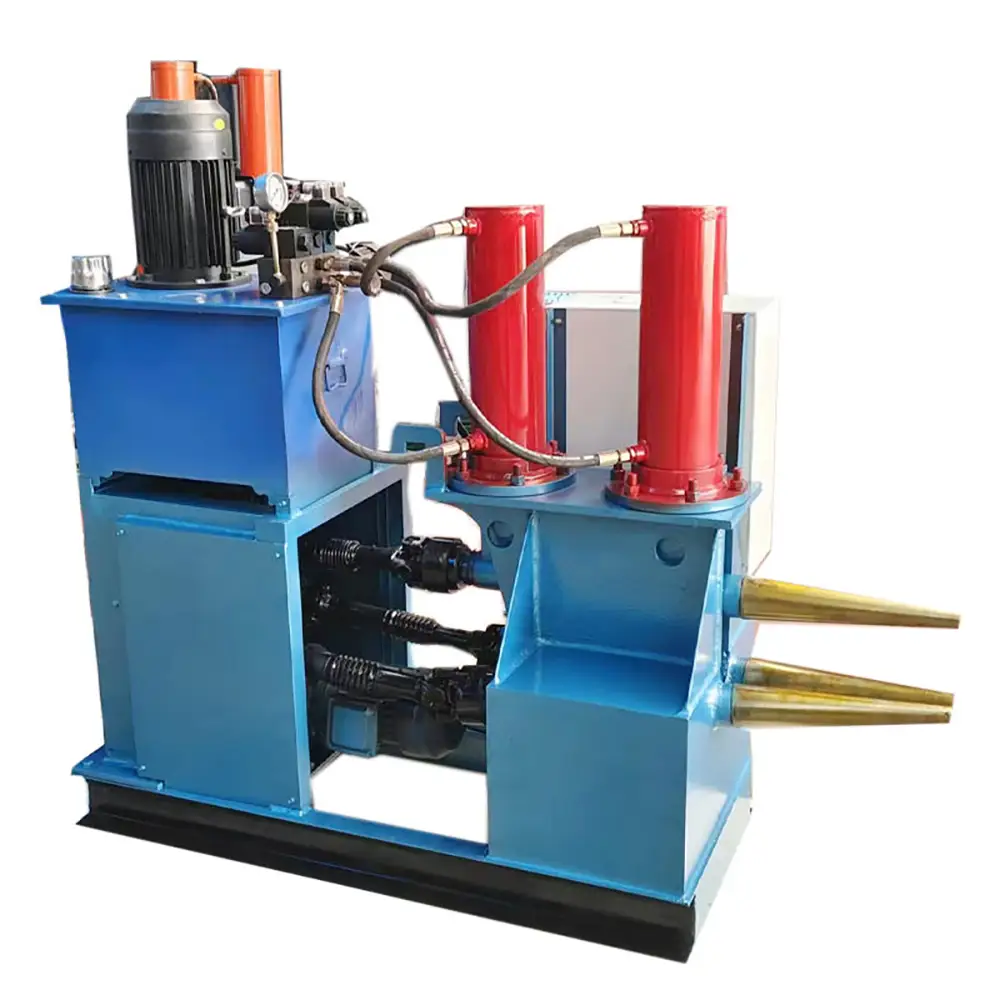
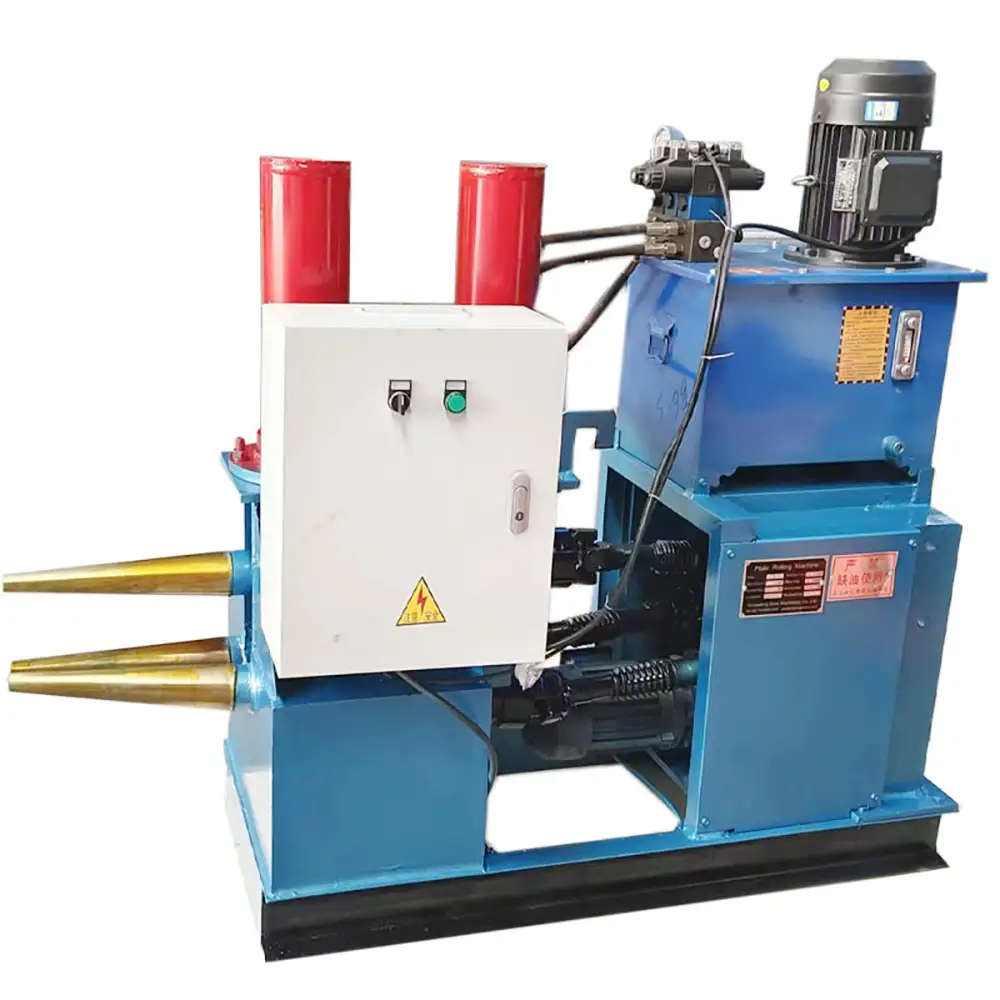
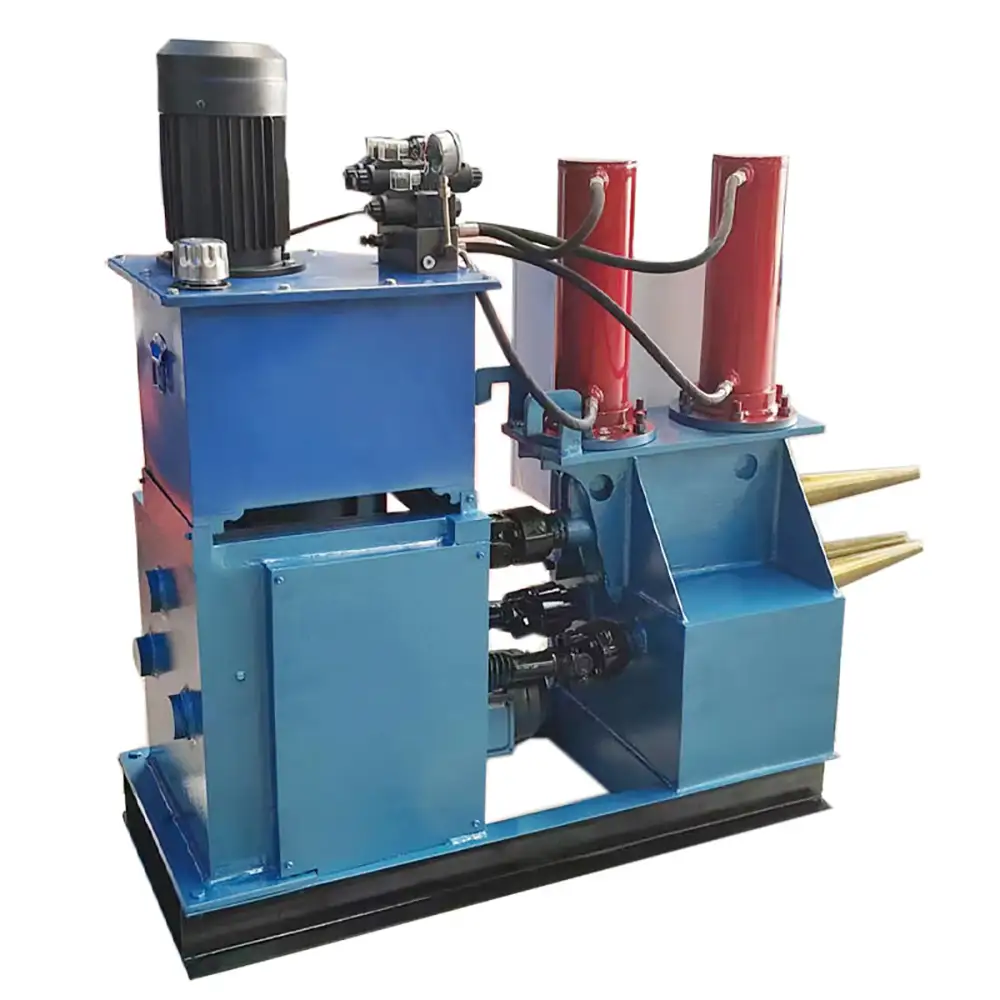
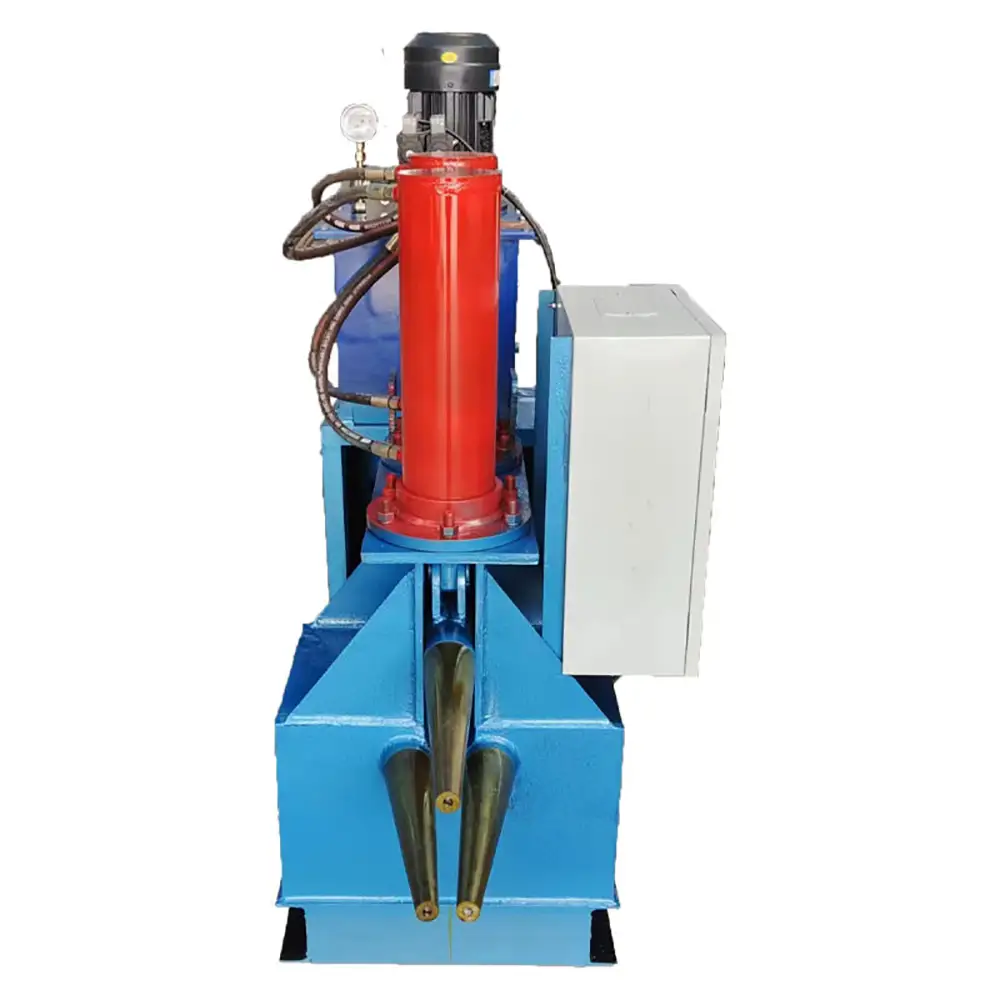
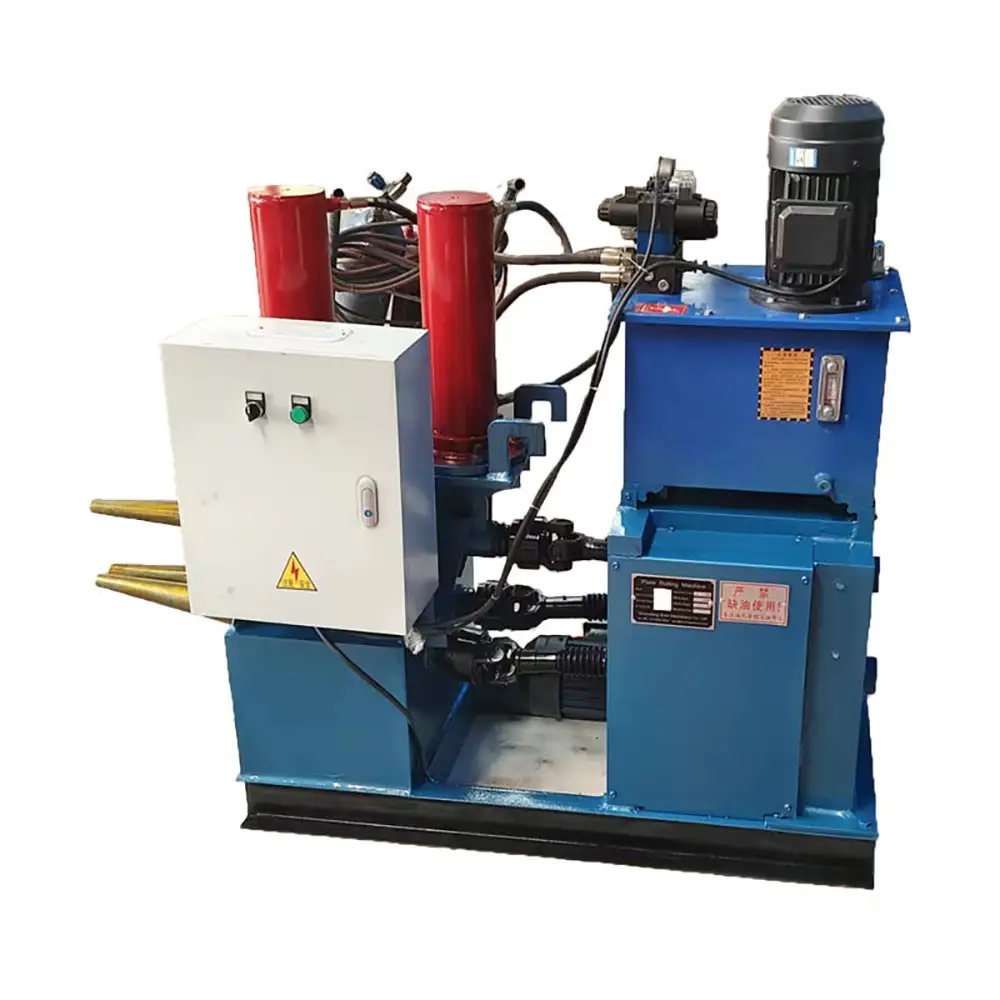
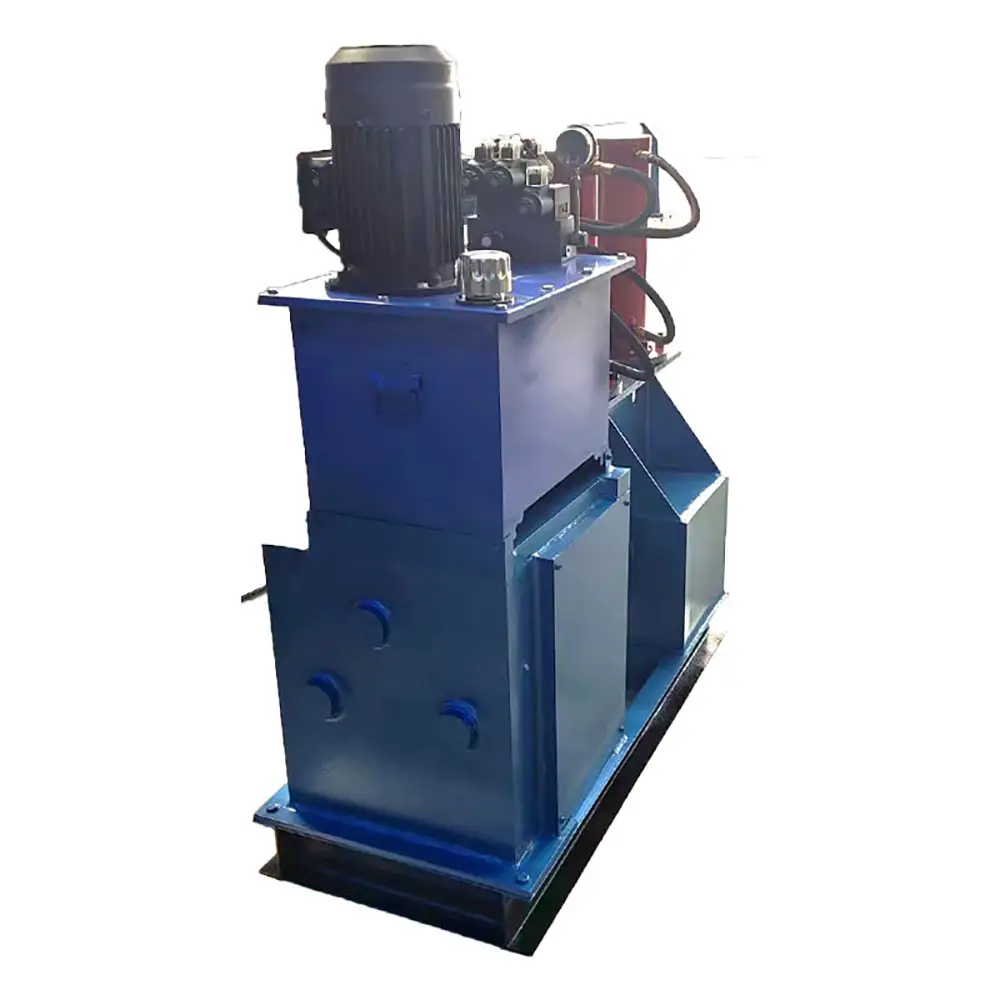
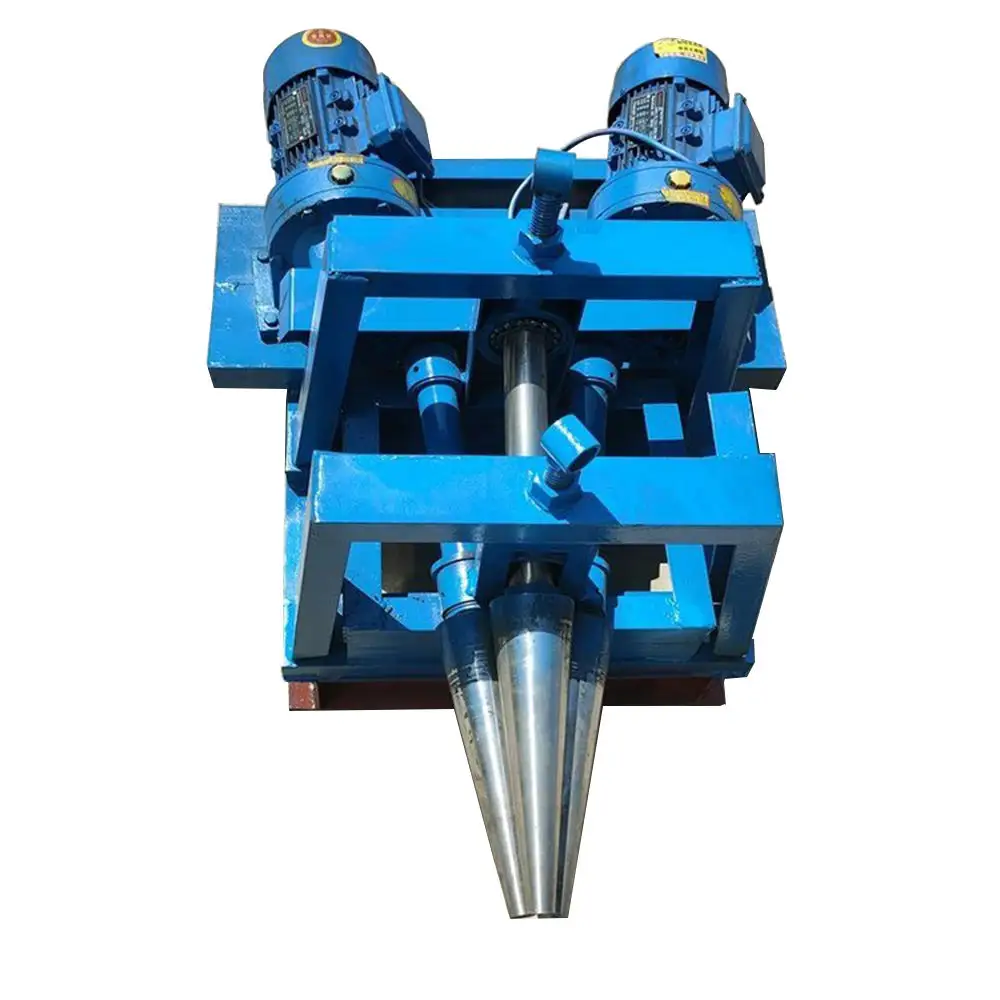
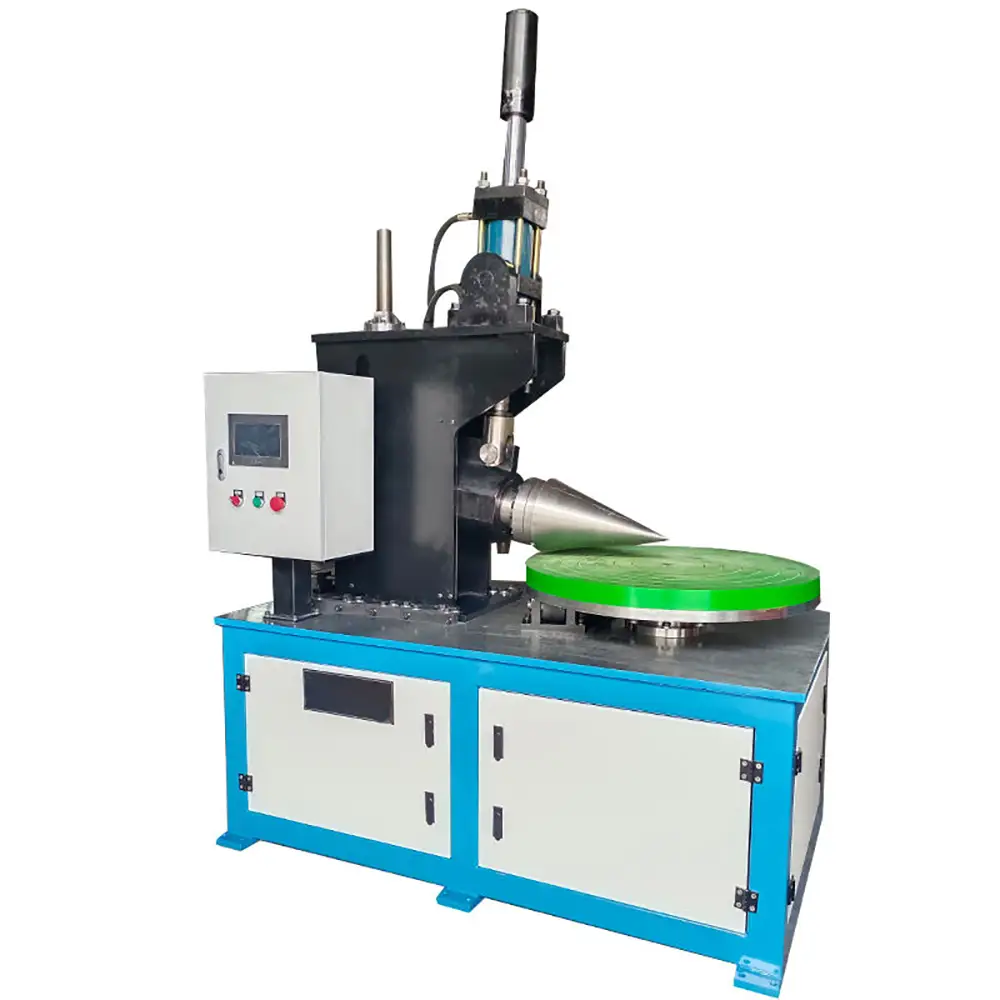
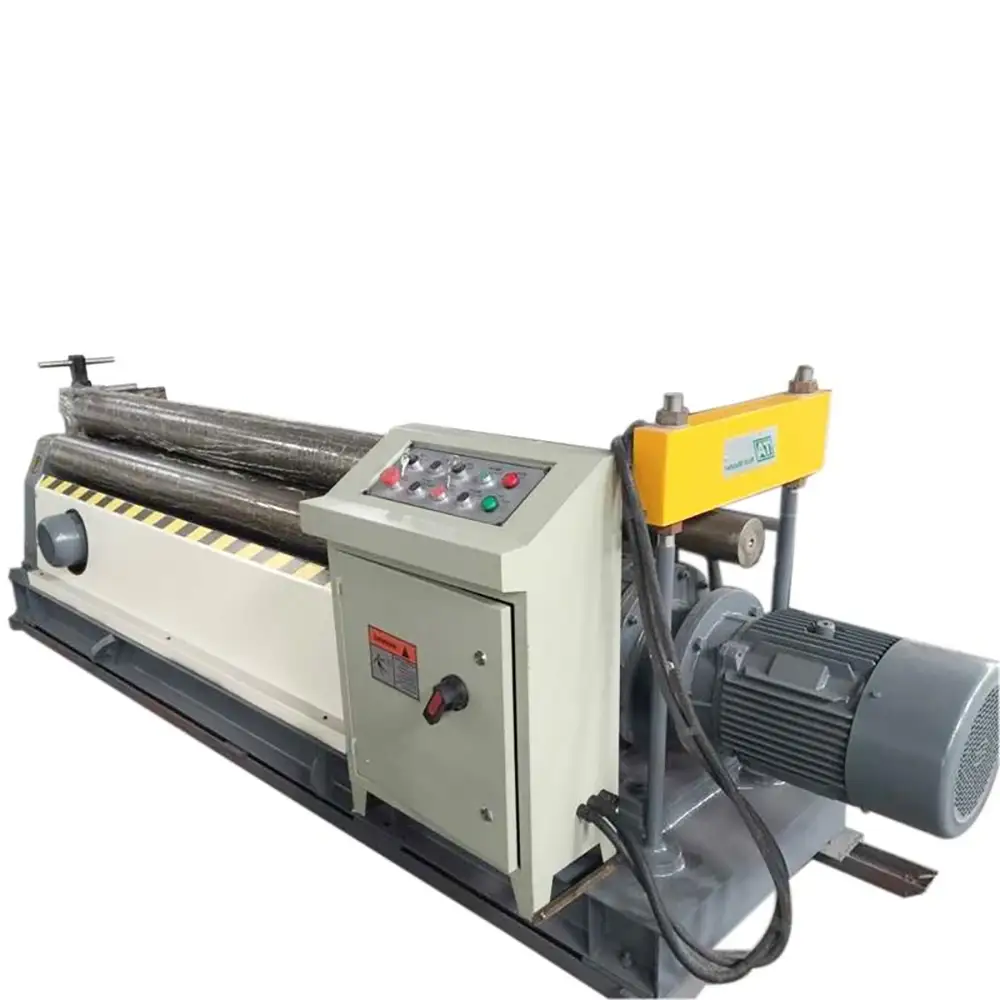
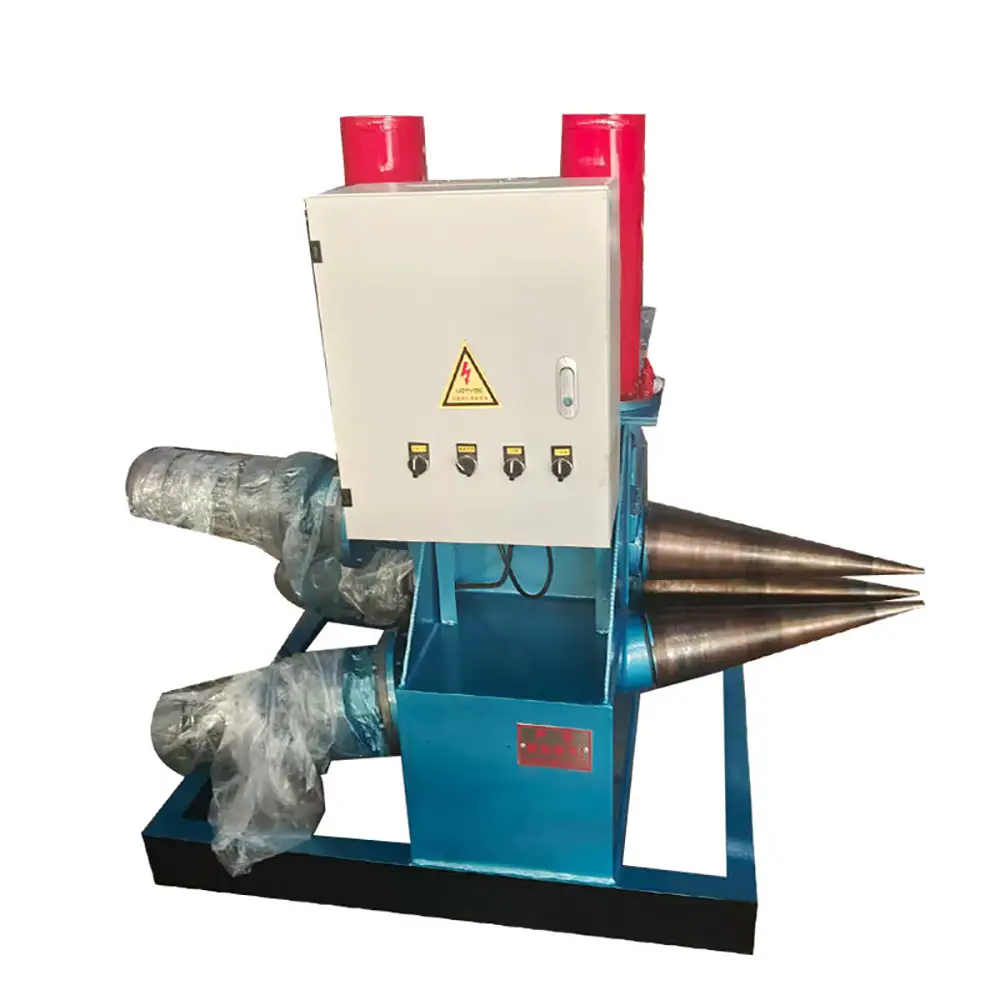
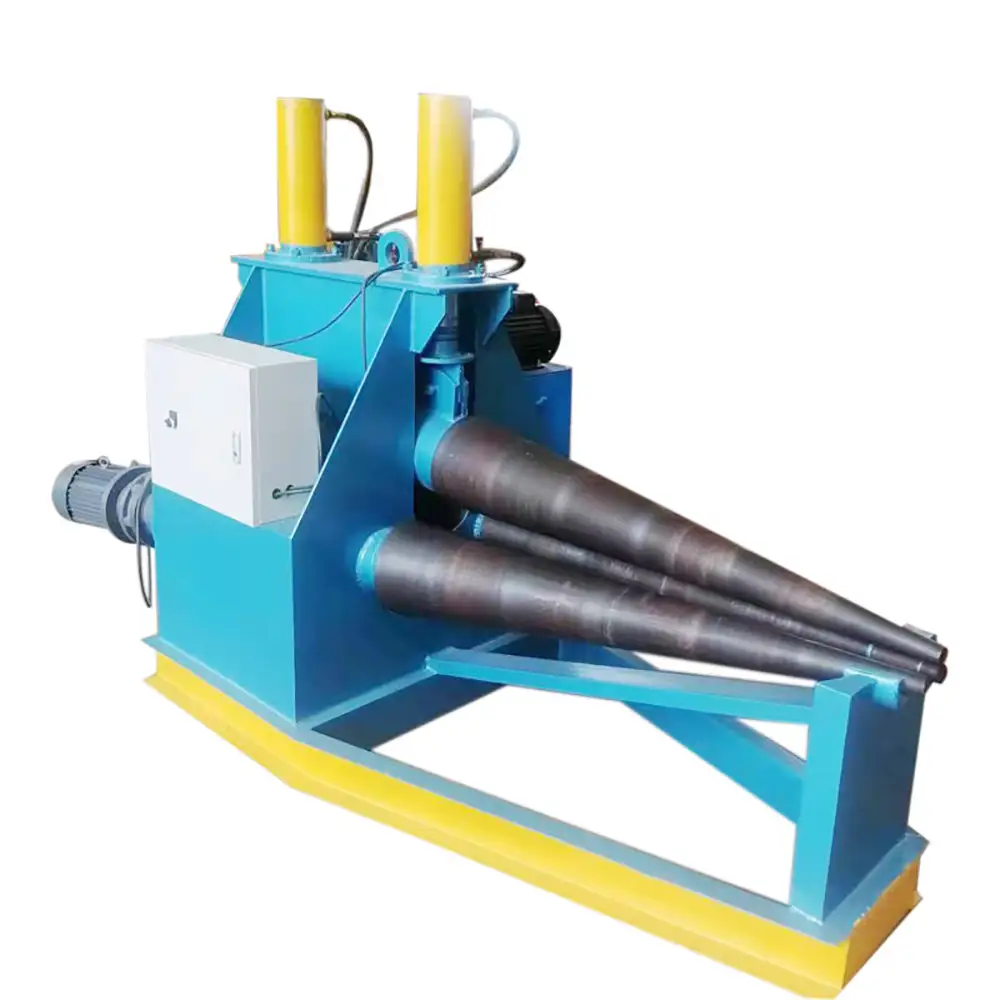
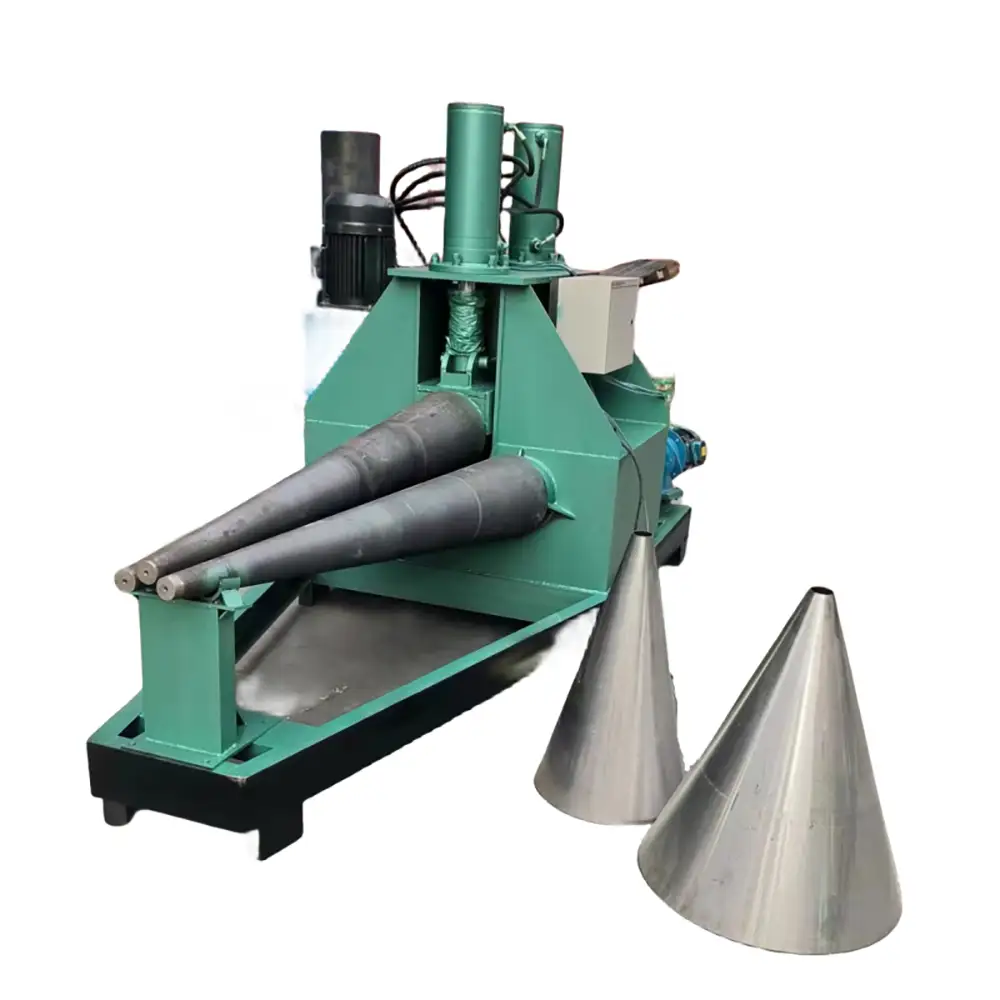
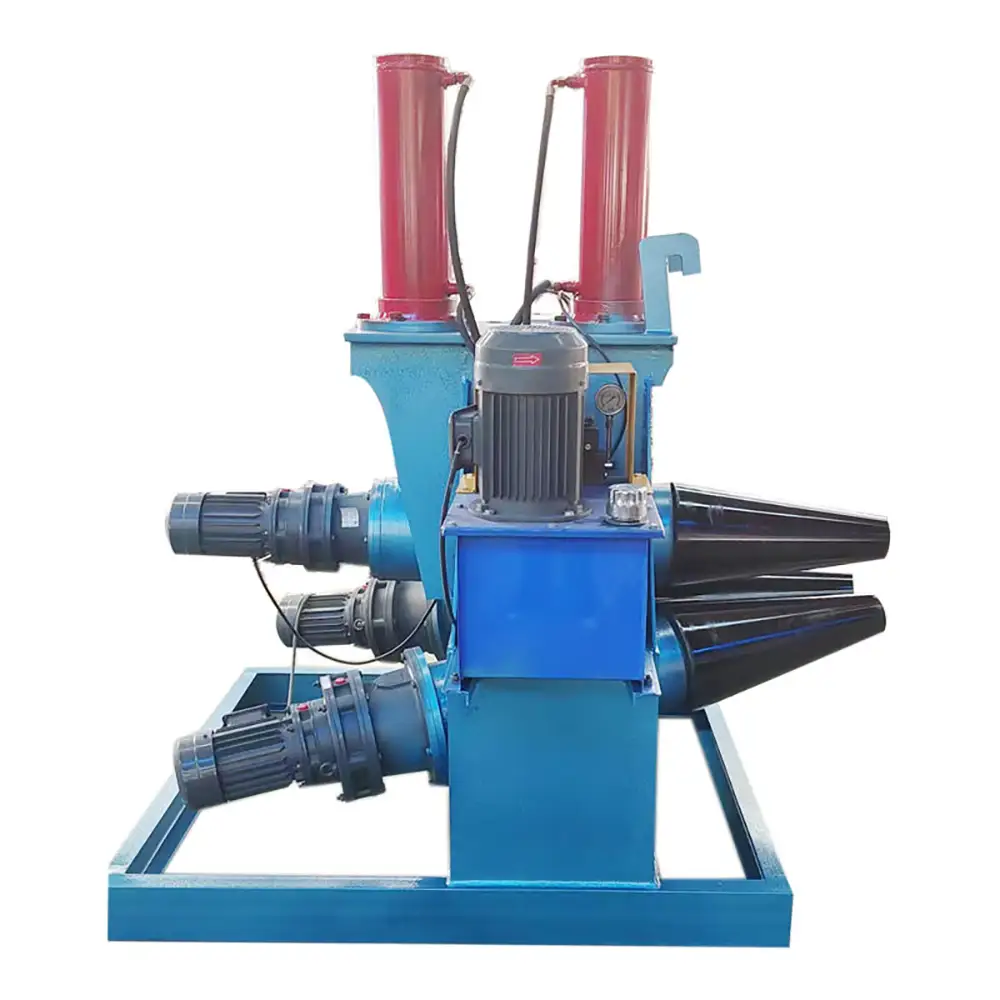
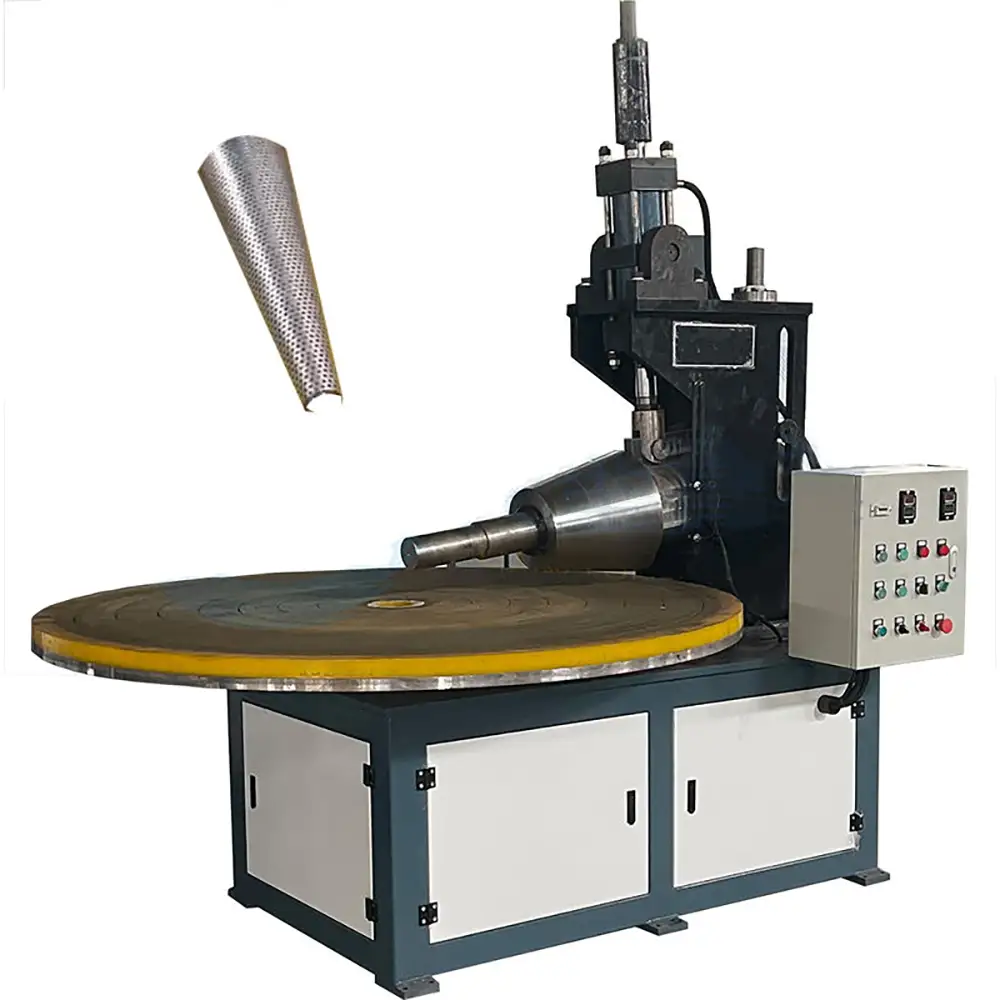
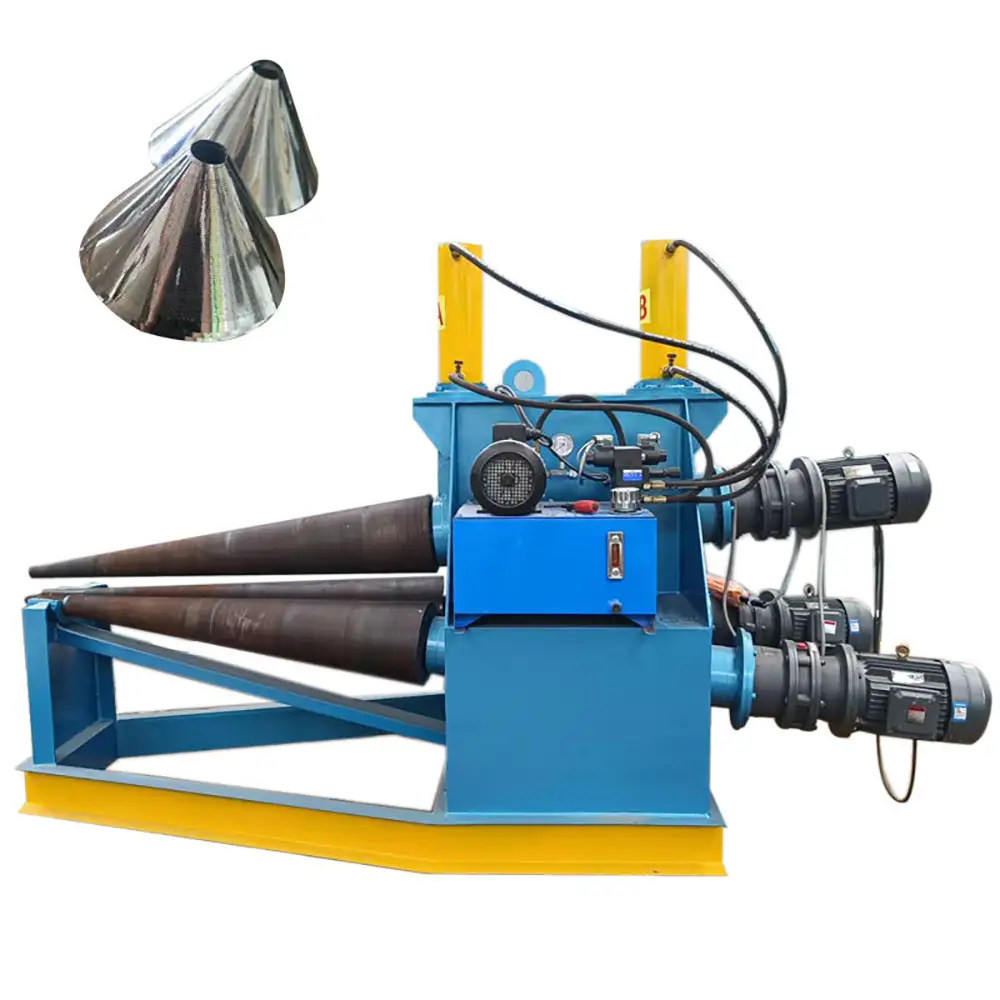
The Upper Roller Mobile Three Roller Cone Rolling Machine Taper Forming Machine is a specialized metal forming solution designed for manufacturers that need to produce conical, tapered, and curved metal components. Featuring a three-roller forming arrangement with an upper roller configuration, this machine provides a practical solution for cone rolling, taper forming, sheet metal bending, and steel plate fabrication.
Cone rolling differs from conventional cylindrical plate rolling because the workpiece has different diameters across its width. The rolling process must therefore accommodate the tapered geometry while maintaining controlled deformation. A dedicated three roller cone rolling machine is designed to provide the forming conditions needed to progressively transform flat metal plate into conical and tapered sections.
The machine can be applied to suitable carbon steel, mild steel, stainless steel, aluminum, and other compatible materials according to its specific configuration and rated capacity.
|
Model |
3*350 |
|
Maximum thickness of rolled plate(mm) |
3mm |
|
Roll cone length |
350mm |
|
Yield limit of plate(Mpa) |
aluminium alloy |
|
Diameter of upper roll(mm) |
30*80mm |
|
Lower roll diameter(mm) |
30*80mm |
|
Cone roll big head diameter |
80mm |
|
Diameter of small head of cone roller |
20mm |
|
Rolling speed(m/min) |
4 |
|
Main motor power (KW) |
1.1KW |
|
Hydraulic motor power (KW) |
3KW |
|
Upper roller movement mode |
hydraulic drive |
|
Cylinder bore |
125mm |
|
Overall dimension(mm) |
1680*670*1520mm |
|
Weight (ton) |
700kg |
Upper Roller Mobile Design
The upper roller configuration provides flexibility during workpiece loading, positioning, and forming. A mobile or adjustable upper roller arrangement can help operators position the plate and manage the forming process according to the required cone geometry.
The exact movement method and adjustment range depend on the machine configuration. For industrial production, the machine should be selected according to the required plate thickness, working width, cone diameter, cone angle, and material strength.
The upper roller design can be particularly useful when the production process requires convenient workpiece handling and controlled forming of tapered sections.
Three Roller Cone Rolling
Three roller systems are widely used for plate rolling and curved metal forming. In cone rolling applications, the relative position of the rollers and the forming process must be adjusted to accommodate the different diameters of the conical workpiece.
The plate is normally prepared as a developed blank before being introduced into the machine. Through controlled rolling passes, the flat plate gradually obtains the required curvature.
Depending on material properties and component geometry, pre-bending, multiple passes, and final adjustment may be necessary. The actual rolling procedure should be determined according to the material, thickness, dimensions, and machine design.
Taper Forming Machine
The machine is designed for taper forming applications where the finished component has different diameters from one end to the other.
Tapered components are commonly used in industrial fabrication, ventilation systems, material handling equipment, storage tanks, process equipment, ducting, and machinery manufacturing.
Typical products include:
Conical shells
Tapered sections
Pipe reducers
Transition pieces
Hoppers
Funnels
Tank cone bottoms
Duct transitions
Industrial chutes
Custom conical components
For high-volume production, a dedicated taper forming machine can help establish a repeatable forming procedure for similar components.
Steel Plate Cone Forming
Steel plate is one of the most common materials used in industrial cone fabrication. Carbon steel and mild steel can be rolled into conical sections when the material dimensions and mechanical properties fall within the machine's working range.
The required machine capacity depends on more than plate thickness. Material yield strength, working width, cone diameter, cone angle, roll diameter, and required forming radius should all be considered.
For thicker or higher-strength steel, the machine should be properly sized to provide sufficient forming force. Customers should provide complete material specifications when requesting a machine recommendation.
Sheet Metal Cone Rolling
The three roller cone rolling machine can also be used for sheet metal forming applications.
Thin sheet metal cones are used in ventilation components, dust collection systems, funnels, hoppers, exhaust components, industrial covers, and fabricated assemblies.
Thin materials can be sensitive to local deformation, edge effects, and surface marking. Proper plate preparation, roller adjustment, and controlled forming passes can help improve the quality of the finished component.
The appropriate machine configuration should be selected according to the material thickness and required cone dimensions.
Stainless Steel Taper Forming
Stainless steel is commonly used in applications where corrosion resistance and surface quality are important. Examples include food processing, chemical equipment, water treatment, pharmaceutical machinery, industrial tanks, and process equipment.
A suitable three roller cone rolling machine can form stainless steel plate when the material grade, thickness, and dimensions are compatible with the machine capacity.
When surface appearance is important, suitable roll surfaces and material handling procedures can help reduce unnecessary marks during forming.
Aluminum Cone Forming
Aluminum and aluminum alloys can also be suitable for cone forming when the machine is configured for the material.
Aluminum has different mechanical properties from steel, so forming parameters should be adjusted accordingly. Applications can include transportation equipment, ventilation components, lightweight machinery parts, architectural structures, and custom fabricated products.
The actual suitability should be evaluated according to the specific alloy, thickness, width, cone diameter, and required surface quality.
Conical Shell Manufacturing
Conical shell forming is an important application of three roller cone rolling equipment.
A conical shell can be welded to a cylindrical section to create a tank, vessel, hopper, or other fabricated assembly. The cone rolling machine forms the plate blank into the required tapered geometry before downstream welding and finishing.
After rolling, the component may require seam welding, trimming, grinding, calibration, inspection, and other processes depending on the final product.
For pressure vessels and regulated industrial equipment, the rolling machine performs only the forming stage. Final manufacturing must follow the applicable engineering specifications and industry requirements.
Pipe Reducer and Transition Forming
The machine can be used for suitable plate-based pipe reducers and transition sections.
A flat blank is developed according to the required reducer geometry and then rolled into a conical section. After forming, the longitudinal seam can be welded and finished.
This makes the machine useful for manufacturers producing custom reducers and transitions for ducting, industrial equipment, process systems, exhaust systems, and large-diameter fabricated connections.
It is important to distinguish this process from finished-pipe bending. A cone rolling machine forms flat sheet or plate into a tapered section rather than bending an already manufactured pipe.
Production Efficiency
A dedicated three roller cone rolling machine can improve workflow efficiency for fabrication companies that regularly produce tapered components.
Once suitable forming parameters have been established, operators can use a repeatable process for similar workpieces. This can reduce manual shaping and help simplify subsequent welding and assembly.
Production efficiency depends on machine configuration, material preparation, operator skill, component geometry, forming passes, and material handling. The actual cycle time should be evaluated using the customer's specific production requirements rather than a general machine specification.
Quality Control
Accurate cone forming begins with correct blank development and cutting.
After rolling, manufacturers can inspect:
Large-end diameter
Small-end diameter
Cone angle
Overall height
Roundness
Edge alignment
Surface condition
For welded components, proper fit-up between the conical section and other parts can also be checked before welding.
For pressure vessels, chemical equipment, or other regulated products, additional inspection and testing may be required according to the applicable standards and customer specifications.
Maintenance and Safe Operation
Regular maintenance helps maintain reliable machine operation. Hydraulic components, bearings, rolls, lubrication points, electrical systems, fasteners, and other mechanical components should be inspected according to the manufacturer's recommendations.
Operators should verify that the workpiece is within the machine's rated capacity before starting production.
Safety-oriented equipment may include emergency-stop systems, guarding, electrical protection, and other features depending on the selected configuration. Operators should receive appropriate training and follow the machine's operating instructions and applicable workplace safety requirements.
Custom Three Roller Cone Rolling Solutions
Different manufacturers have different requirements for plate width, thickness, cone diameter, material, production volume, and automation.
Customers can provide the following information when requesting a quotation:
Material type and grade
Maximum plate thickness
Maximum plate width
Minimum cone diameter
Maximum cone diameter
Cone angle
Required forming radius
Production volume
Component drawings or samples
Based on these details, the machine configuration can be selected for the intended application.
OEM, ODM, and Custom & OEM solutions can also be provided for industrial manufacturers, machinery distributors, metal fabrication companies, and international B2B buyers.
Why Choose Us
Specialized Cone Forming Equipment
We provide dedicated solutions for conical and tapered metal forming applications.
Three Roller Configuration
The three roller design provides a practical forming arrangement for plate rolling and cone production.
Upper Roller Mobility
The upper roller configuration supports flexible workpiece positioning and forming according to the machine design.
Multiple Material Applications
Suitable configurations can process carbon steel, stainless steel, aluminum, and other compatible metals.
Wide Range Of Applications
The machine can produce cones, hoppers, funnels, reducers, transition sections, tank components, and other tapered structures.
Production-Oriented Design
The equipment can support repeatable forming workflows for fabrication shops and industrial manufacturers.
OEM & Custom Manufacturing
Machine dimensions, capacity, hydraulic systems, controls, and other configurations can be customized according to requirements.
International B2B Support
We support overseas buyers with technical communication, machine selection, documentation, and export coordination.
FAQs
1. What is an upper roller mobile cone rolling machine?
It is a three roller metal forming machine with an upper roller arrangement designed to support cone rolling and taper forming applications.
2. What is a three roller cone rolling machine used for?
It is used to form flat metal plates into conical and tapered components such as cones, reducers, hoppers, funnels, transitions, and vessel sections.
3. What does taper forming mean?
Taper forming means shaping a flat metal blank into a component with different diameters at its two ends rather than a uniform cylindrical diameter.
4. Can it roll steel plate?
Yes. Suitable configurations can roll carbon steel and mild steel plate when the material and dimensions are within the machine's rated capacity.
5. Can it form stainless steel cones?
Yes. Stainless steel can be processed when its grade, thickness, width, and forming requirements are compatible with the machine.
6. Can it process aluminum?
Suitable aluminum alloys can be formed when the machine is configured for the material and required cone dimensions.
7. Can it make pipe reducers?
Yes. The machine can form suitable plate-based reducers and transition sections, which can then be welded and finished.
8. Can it make tank cone bottoms?
Yes. Tank cone bottoms and other conical vessel components are common applications for cone rolling equipment.
9. Can it bend finished pipes?
No, not primarily. The machine is designed to form flat sheet or plate blanks into conical or tapered sections. Finished-pipe bending requires dedicated pipe or tube bending equipment.
10. What determines cone rolling capacity?
Important factors include plate thickness, working width, material strength, roll diameter, cone diameter, cone angle, and forming radius.
11. Is hydraulic operation available?
Hydraulic systems may be incorporated depending on the machine model and configuration. Hydraulic capacity should be selected according to the intended forming requirements.
12. What information is needed for machine selection?
Provide the material grade, maximum plate thickness and width, minimum and maximum cone diameters, cone angle, production volume, and drawings or samples when available.
Prev:
Mini Cone Rolling Machine Small Cone Taper Rolller Metal Coiler
Next:
High Efficiency Cone Rolling Machine for High Volume Cone Forming
TAG:
Cone Forming Machine,
Industrial Metal Forming Machine,
Sheet Metal Rolling Machine,
Taper Forming Machine,
Metal Rolling Equipment,
Steel Plate Rolling Machine,
Plate Rolling Equipment,
Three Roller Plate Rolling Machine,
Hydraulic Metal Rolling Machine,
Three Roller Cone Rolling Machine,
Industrial Cone Rolling Machine,
Industrial Cone Forming Machine,
Heavy Duty Cone Rolling Machine,
Cone Reducer Forming Machine,
Conical Shell Rolling Machine,
Conical Shell Forming Machine,
Metal Plate Bending Machine,
Hydraulic Plate Rolling Machine,
Stainless Steel Cone Rolling Machine,
Steel Cone Rolling Machine,
Carbon Steel Cone Rolling Machine,
Steel Cone Forming Machine,
Sheet Metal Cone Bending Machine,
Tapered Metal Forming Machine,
Cone Rolling Machine,
Conical Plate Bending Machine,
Metal Cone Rolling Machine,
Metal Cone Forming Machine,
Hydraulic Cone Rolling Machine,
Cone Bending Machine,
Related Category:
Upper Roller Mobile Three Roller Cone Rolling Machine,Taper Forming Machine,Three Roller Cone Rolling Machine China, suppliers, manufacturers, factory, customized, wholesale, quotation, made in China