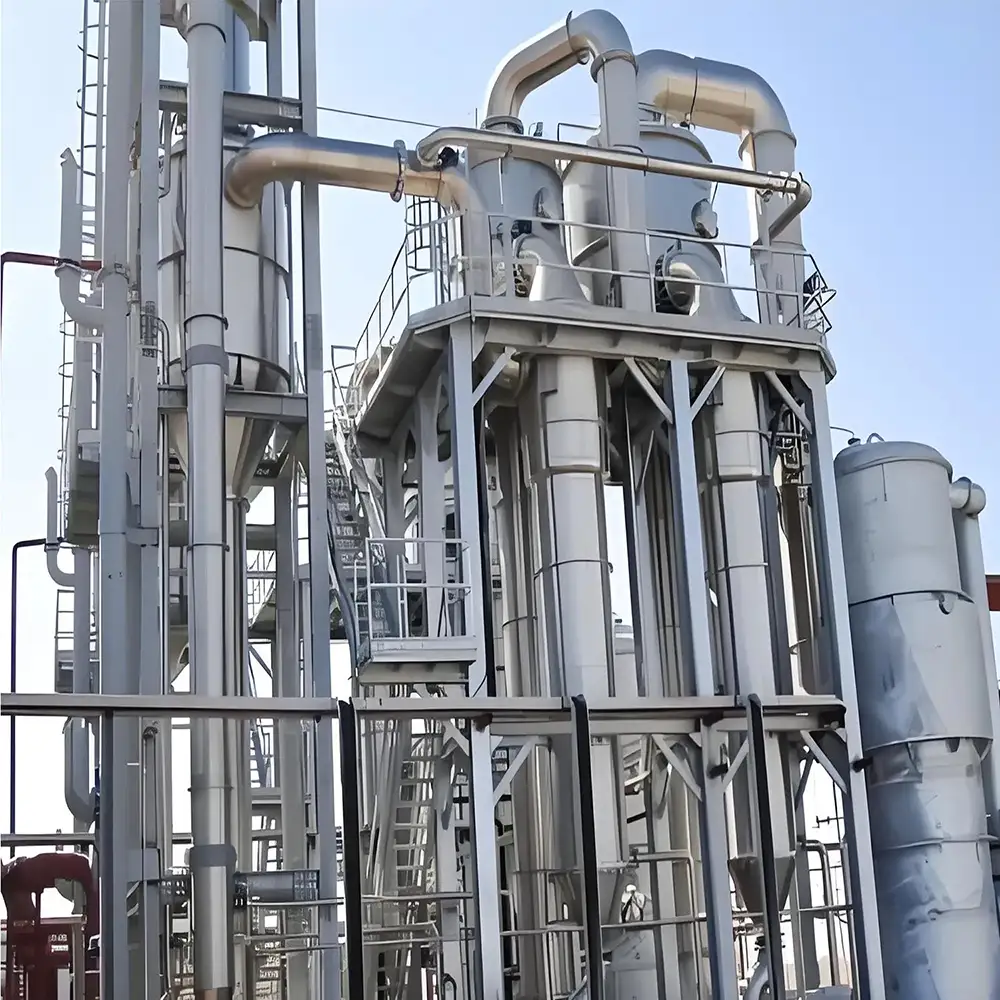
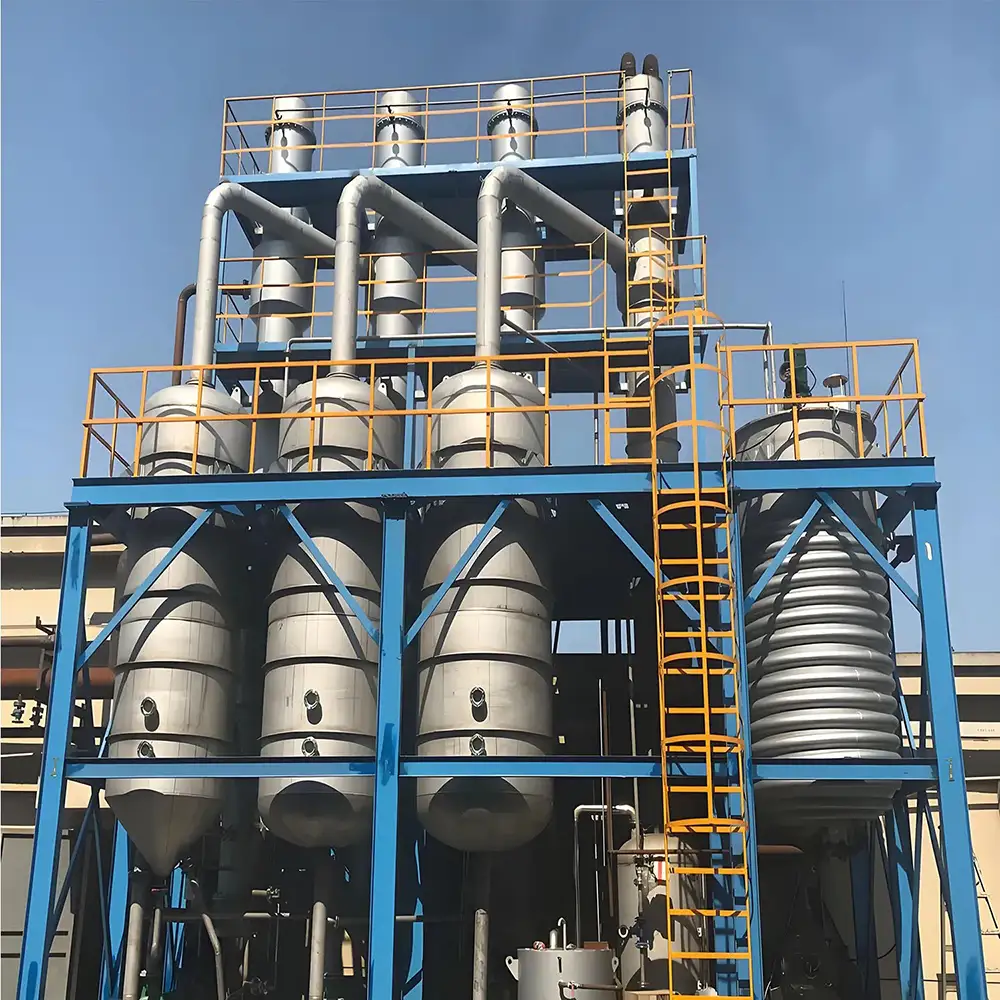
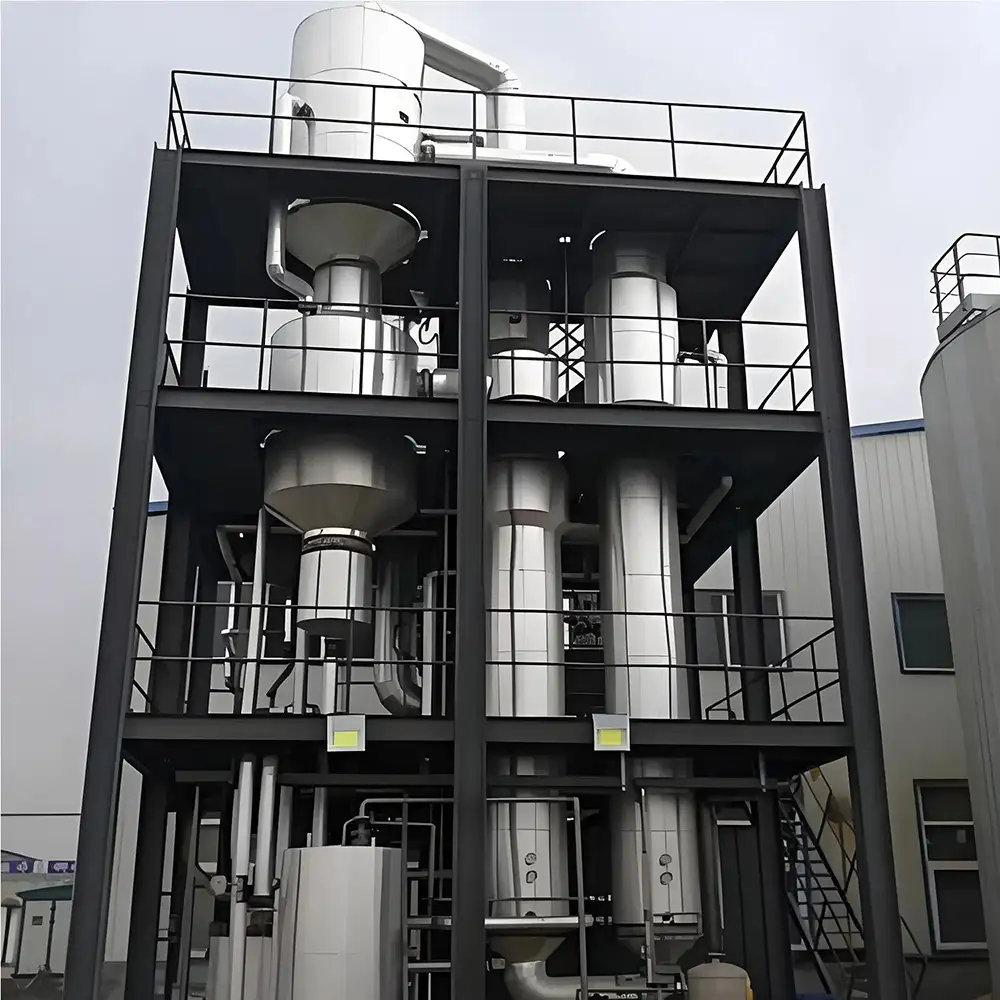
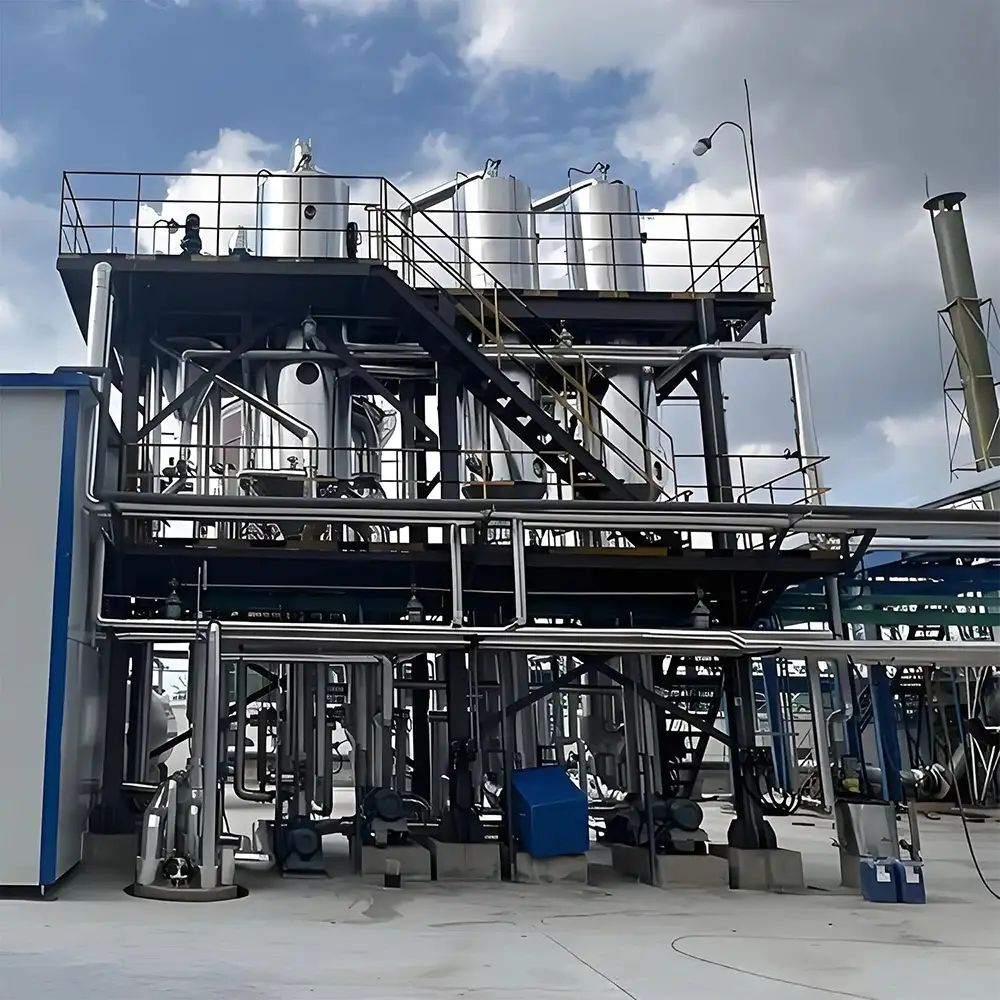
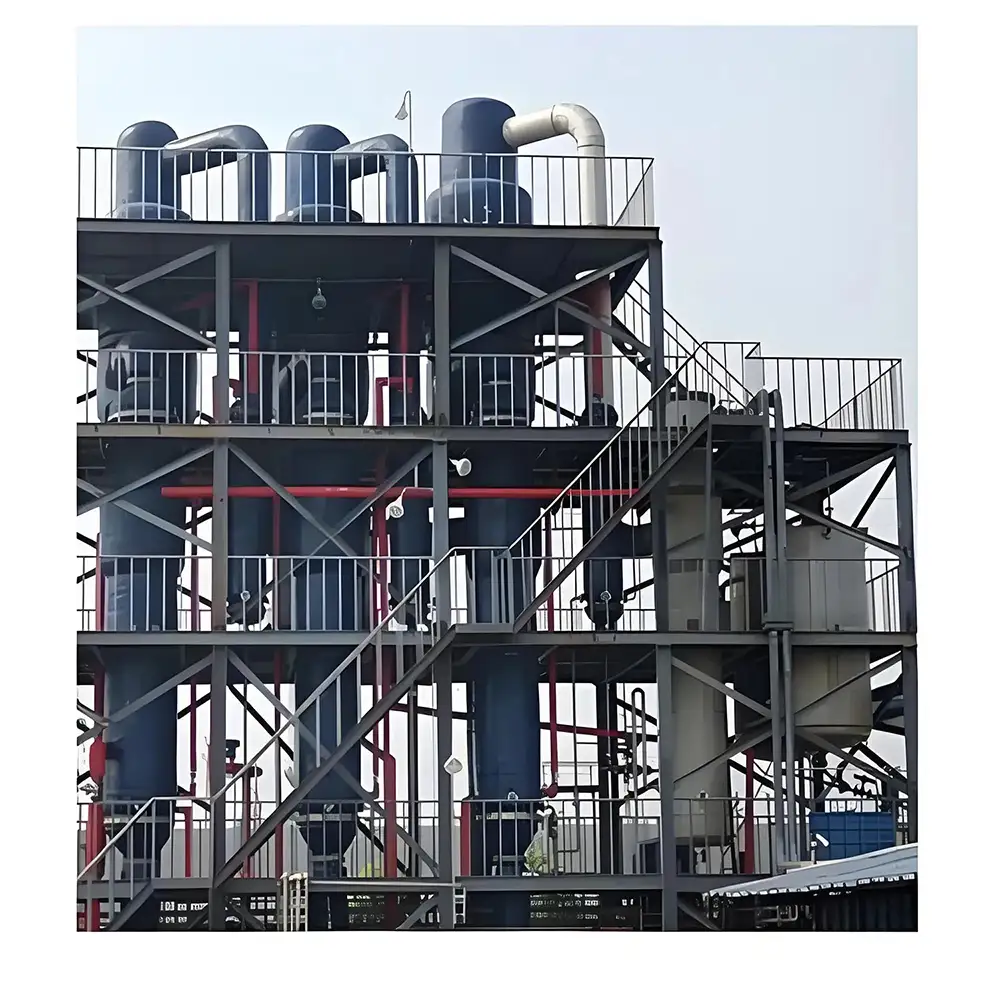
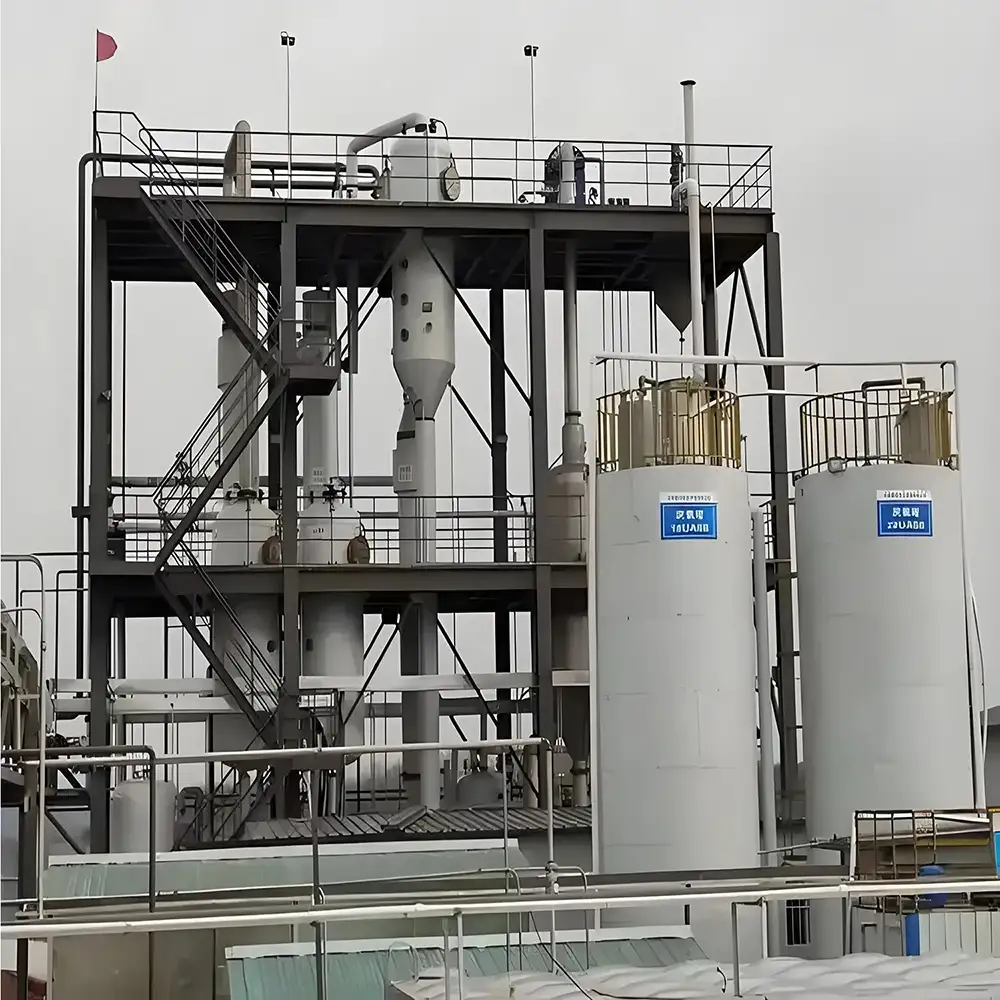
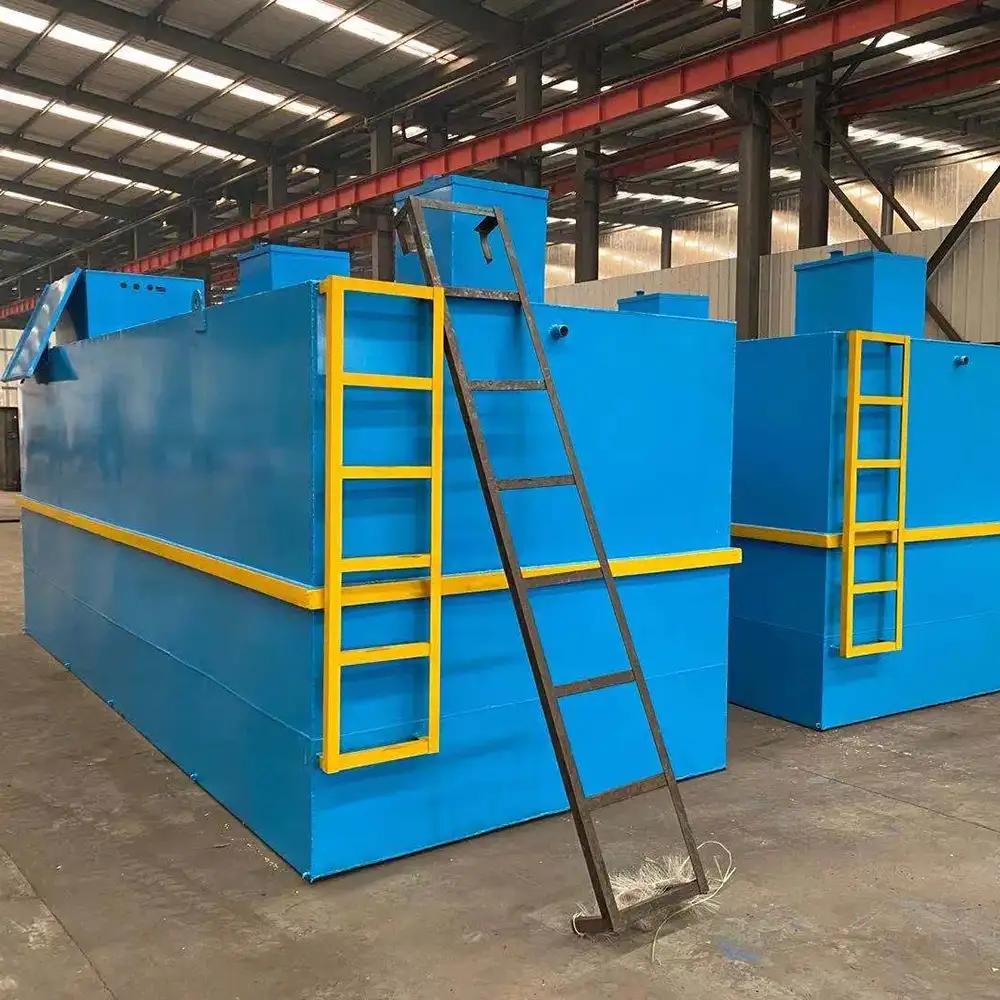
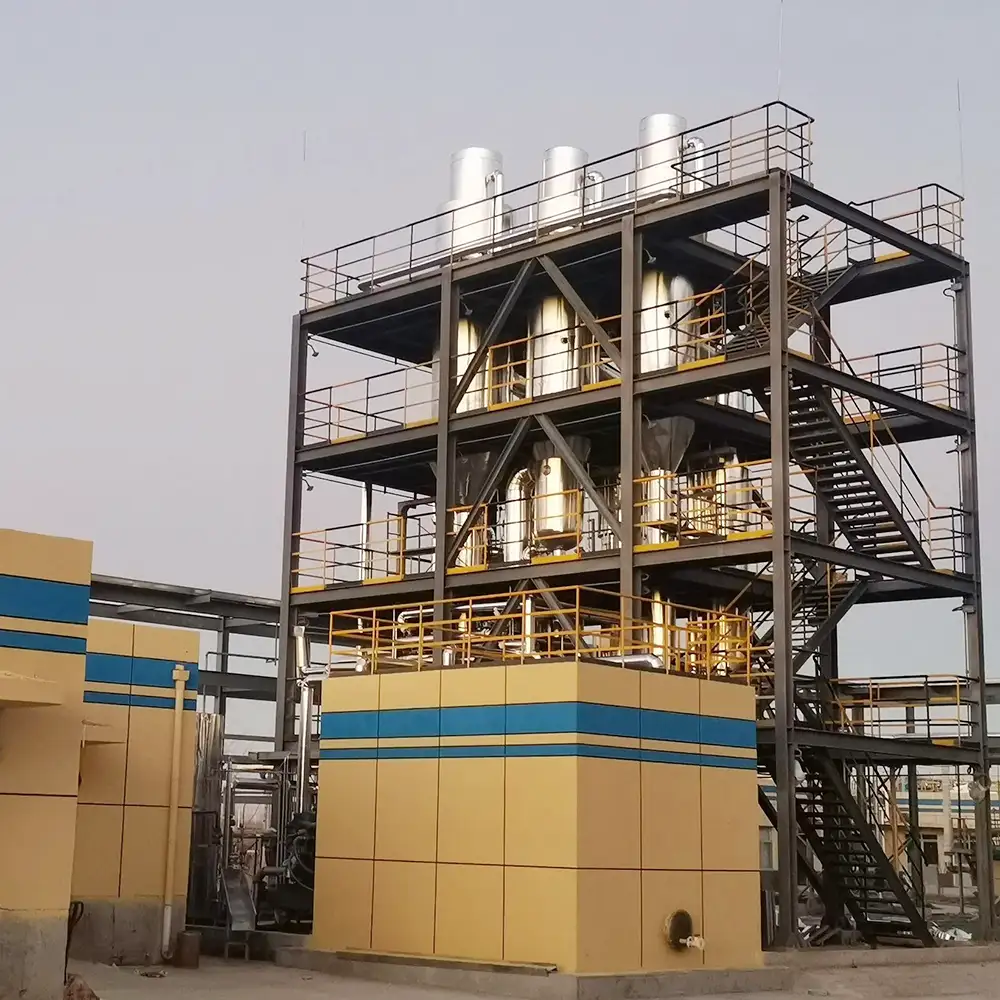
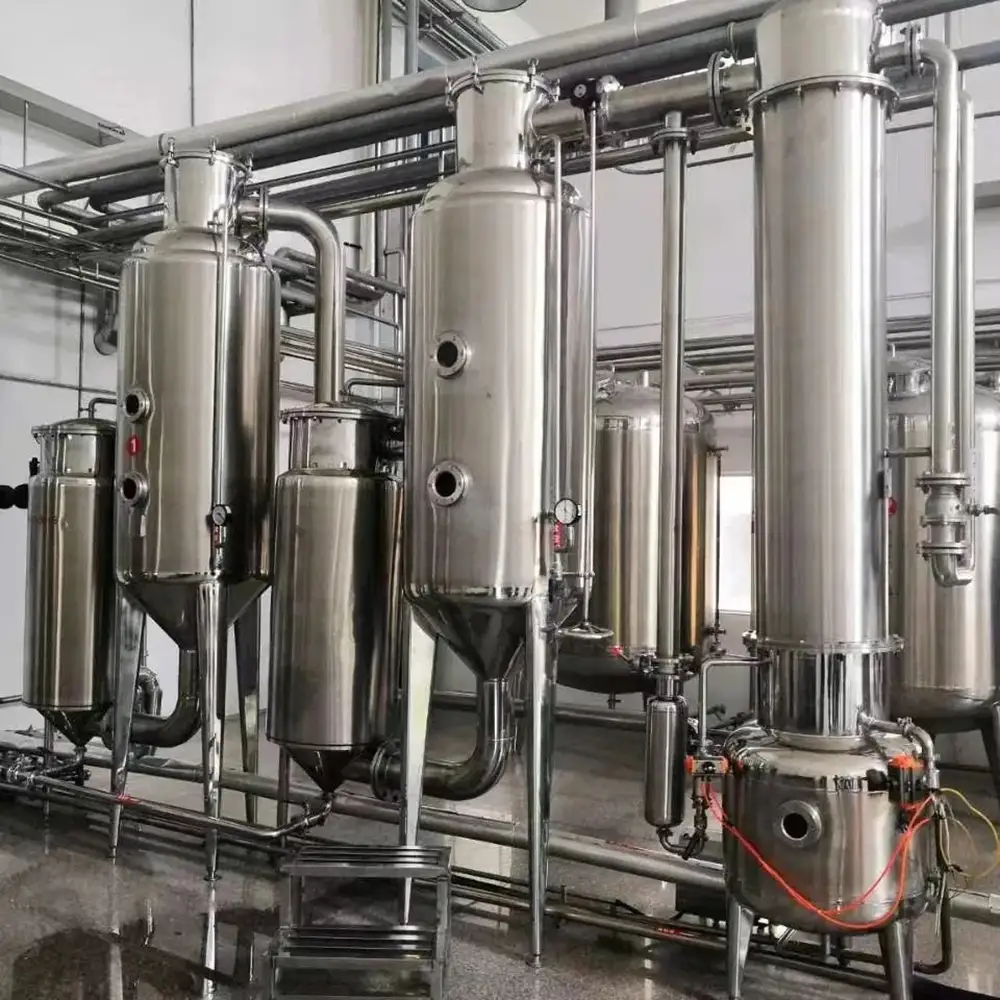
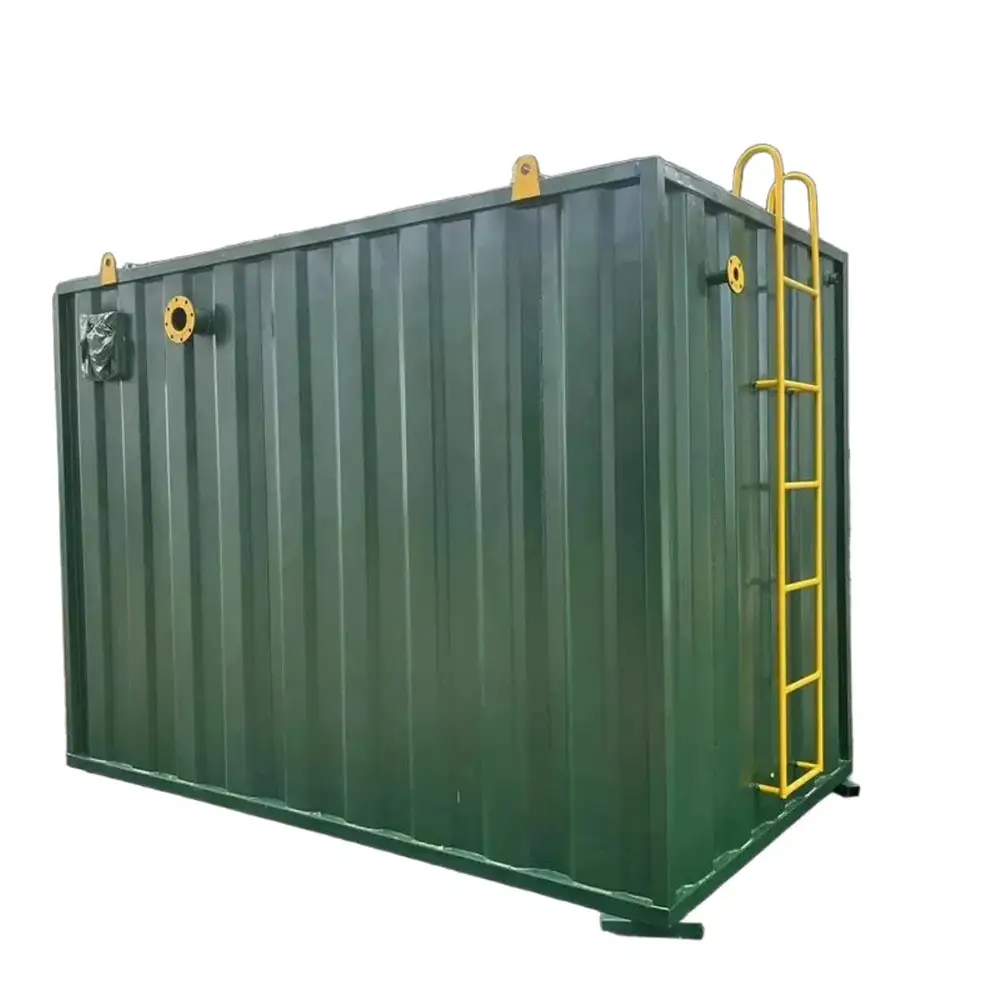
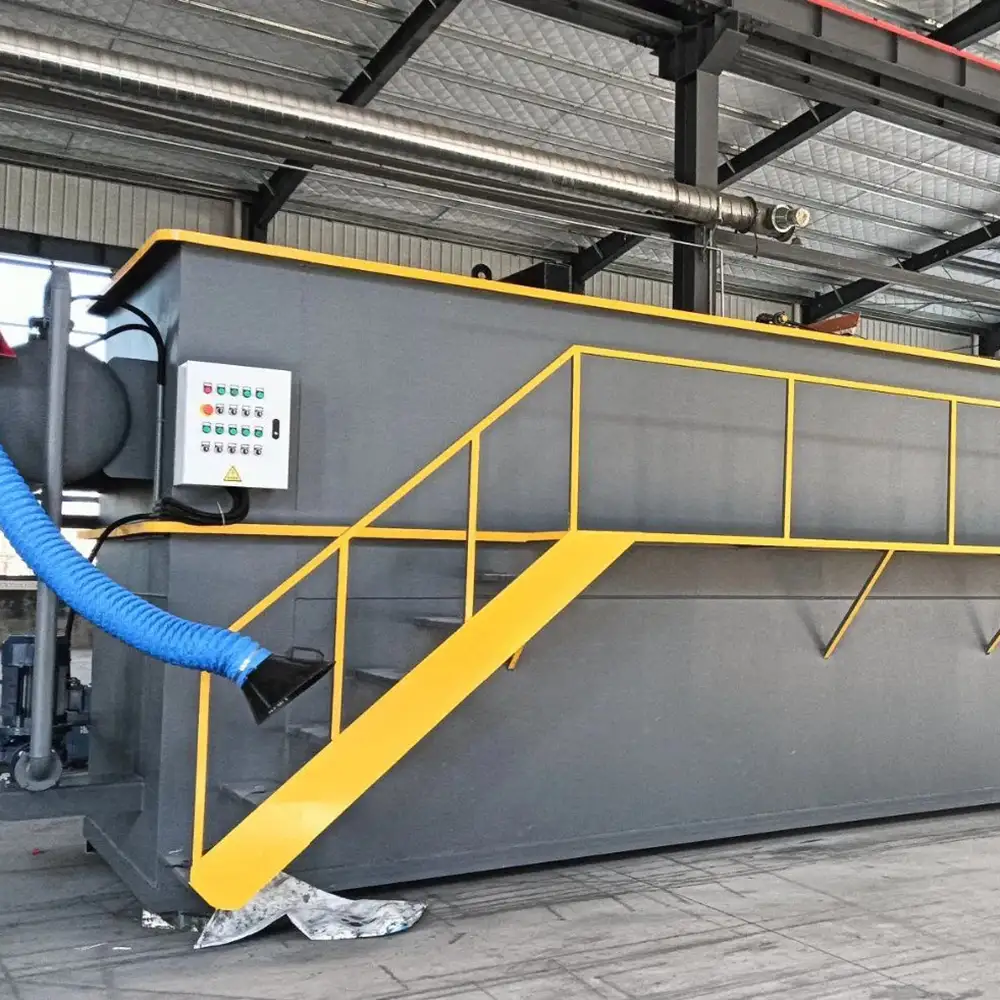
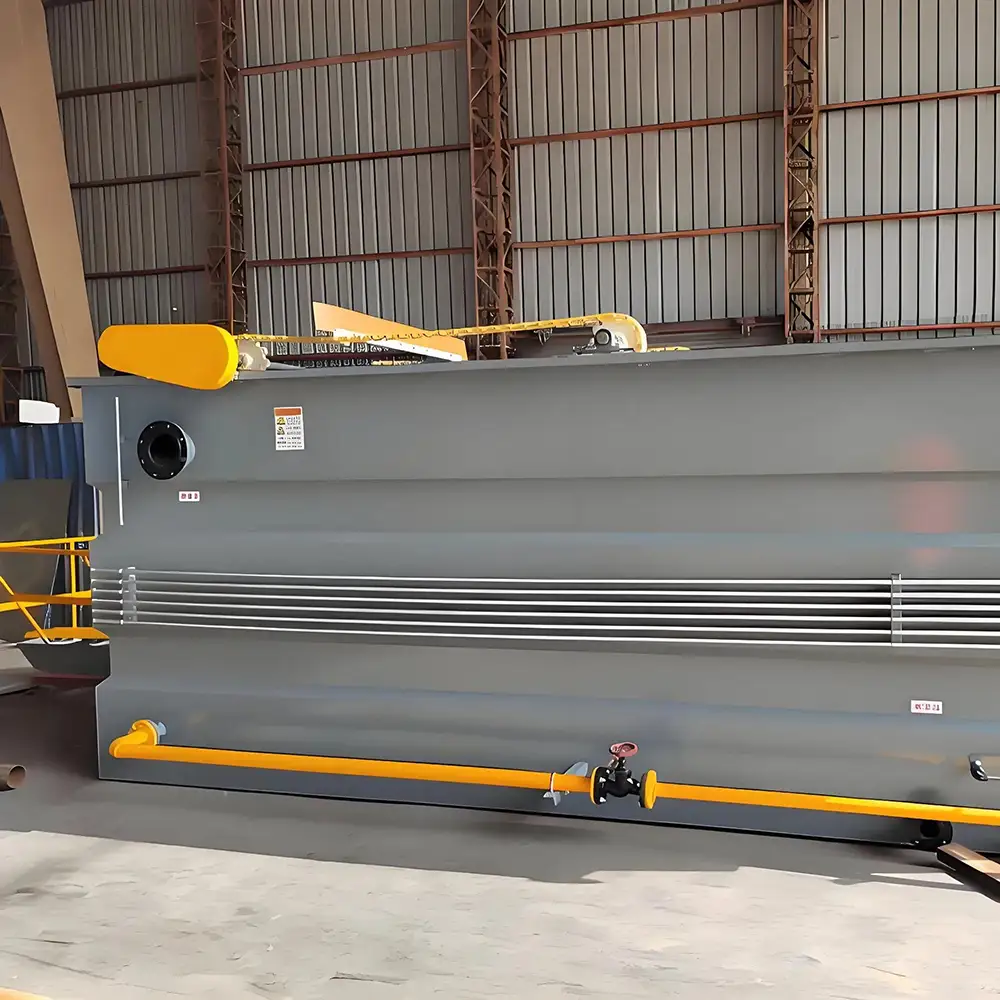
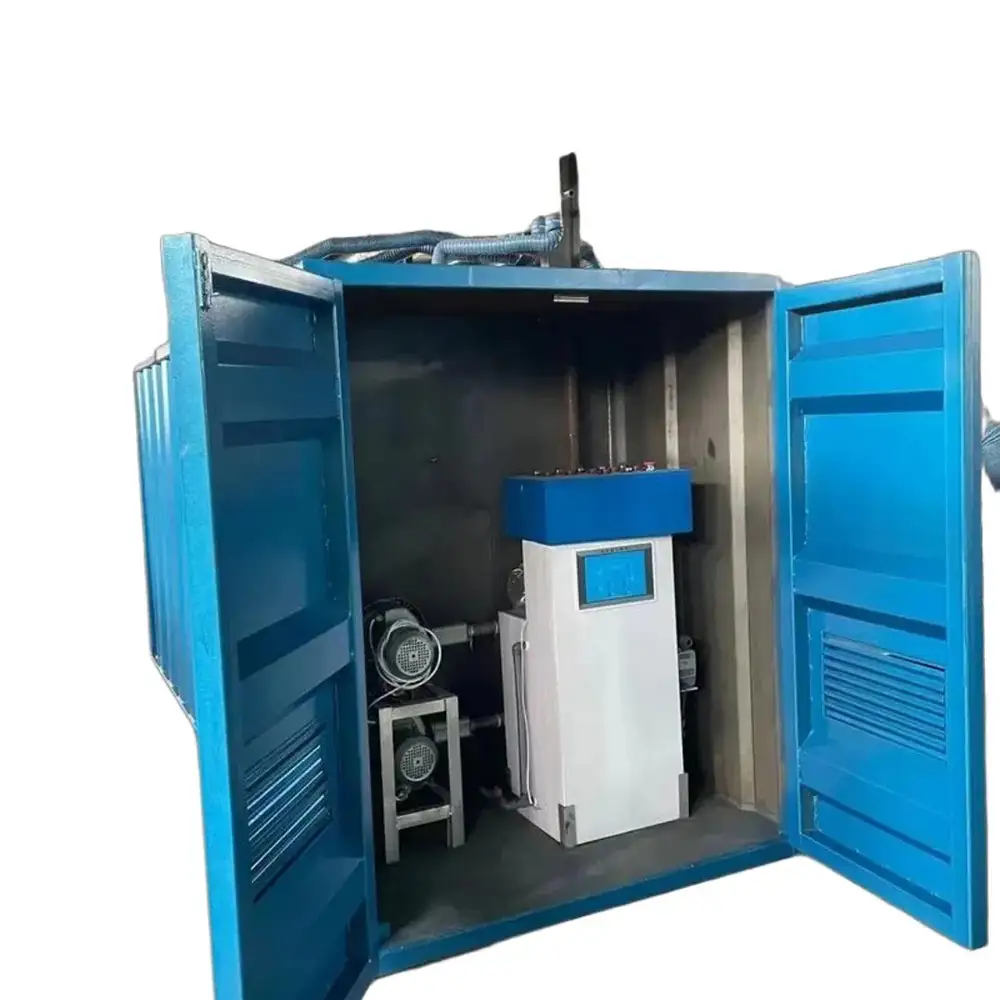
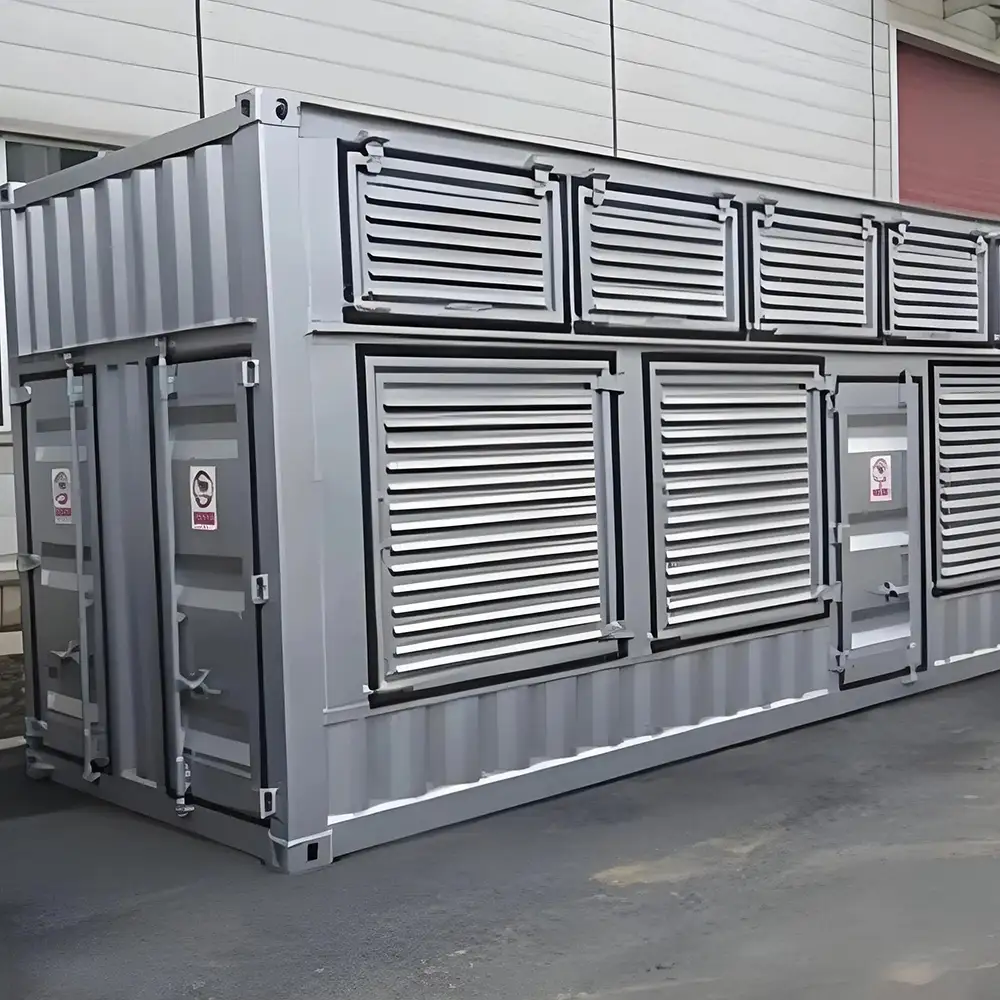
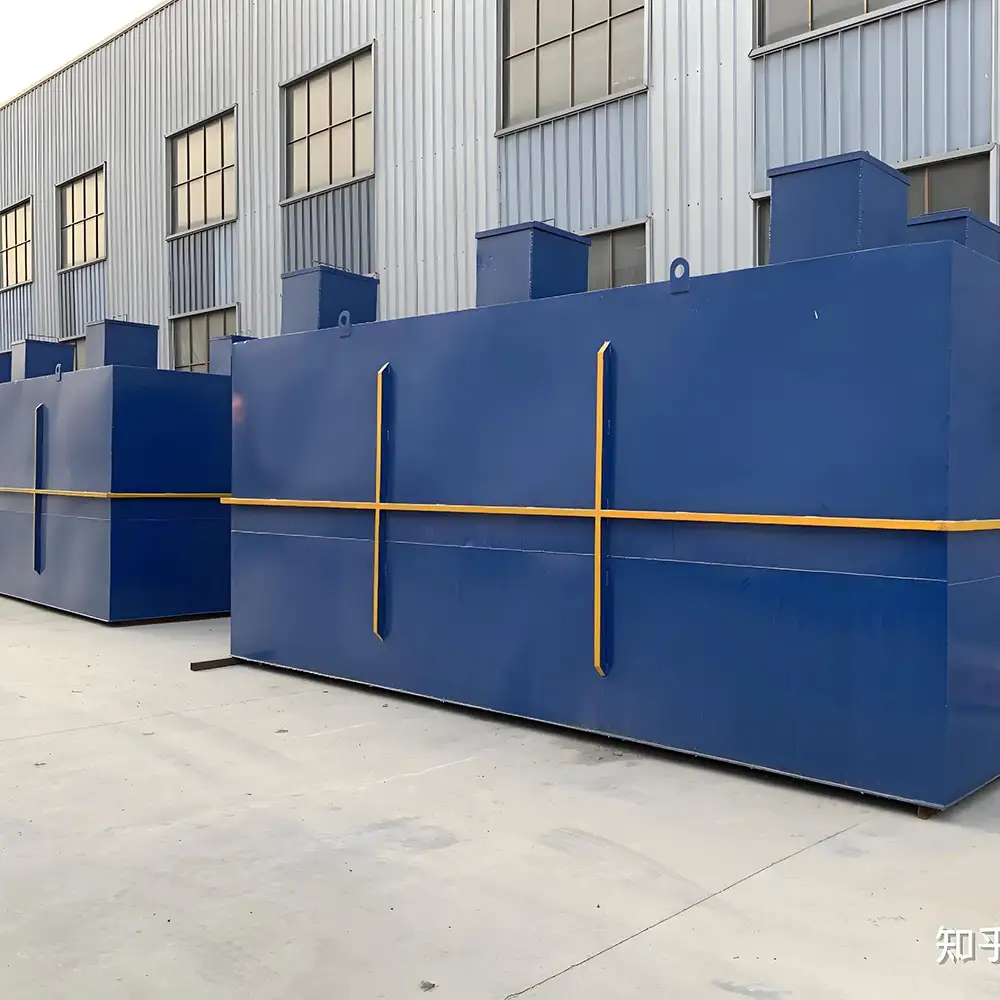
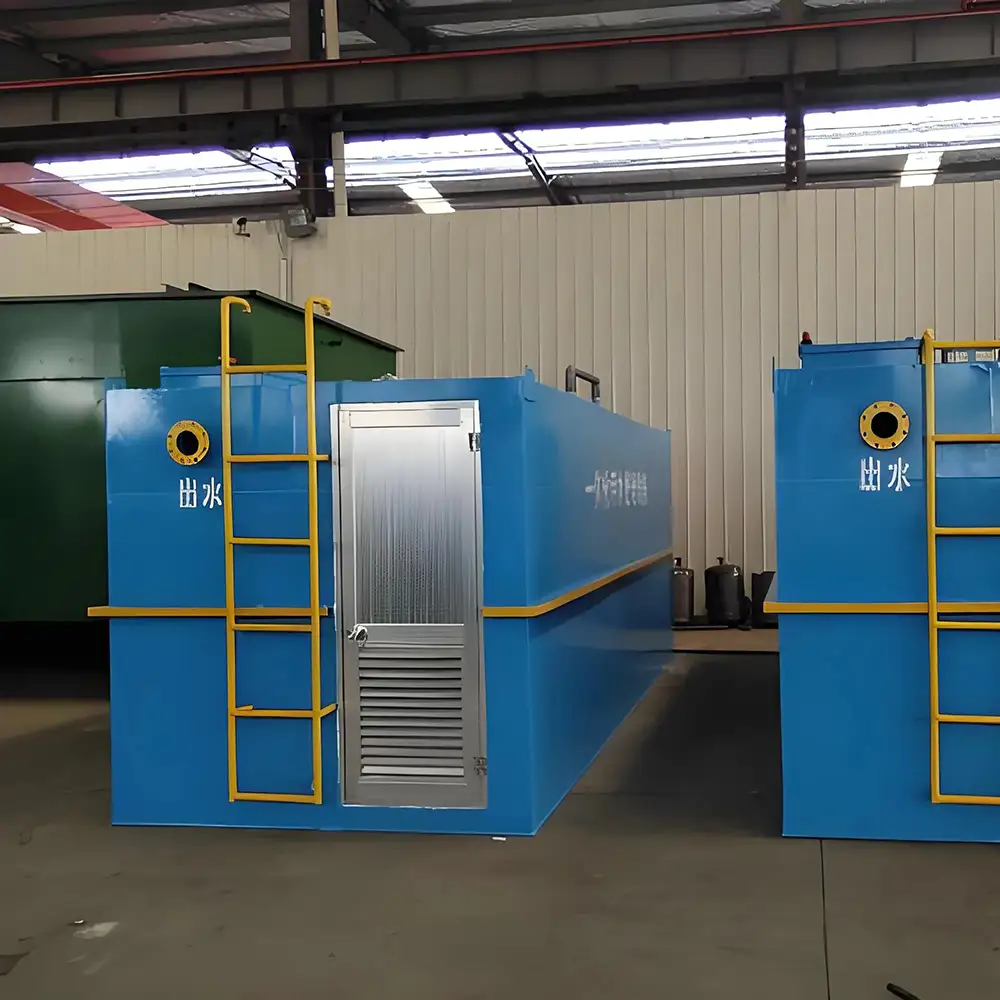
MVR stands for Mechanical Vapor Recovery. MVR is a technology that reuses the energy generated by its own secondary steam to reduce the demand for external energy. This technology is applied in industries such as chemical, pharmaceutical, papermaking, sewage treatment, and seawater desalination.
The working process involves the compression of low-temperature steam by a compressor, which increases the temperature and pressure, increases the enthalpy, and then enters a heat exchanger for condensation to fully utilize the latent heat of the steam. Except for starting the car, only a small amount of steam is required during the entire evaporation process.
In the process of multi effect evaporation, the secondary steam of one effect of the evaporator cannot be directly used as the heat source of the main effect, but can only be used as the heat source of the secondary effect or several secondary effects. As a heat source for this effect, additional energy must be provided to increase its temperature (pressure). The steam jet pump can only compress a portion of the secondary steam, while the MVR evaporator can compress all the secondary steam in the evaporator The solution is circulated in a falling film evaporator through a material circulation pump in the heating tube. The initial steam is heated by fresh steam outside the tube, which heats and boils the solution to produce secondary steam. The generated secondary steam is sucked in by a turbocharged fan, and after being pressurized, the temperature of the secondary steam increases and enters the heating chamber as a heating source for circulating evaporation. After normal start-up, the turbo compressor sucks in secondary steam, which is then pressurized and converted into heated steam. This continuously circulates and evaporates, and the evaporated water is eventually discharged as condensed water.
|
Model NO. |
GSRF |
Handling method |
physicochemical treatment |
|
Usage |
Cutting fluid wastewater, sodium sulfate wastewater, corn pulp wastewater, electroplating wastewater, pharmaceutical industry, fine chemical industry, non-ferrous metal industry, electronics industry, petrochemical industry, automotive industry |
Trademark |
Wanze Prosperity |
|
Types |
Package, Compact, Small, Mini |
Applications |
Industrial, Municipal, Domestic, Medical, Ship |
|
Craft |
Flocculation sedimentation method |
Features |
Water Clarification, Filtration, Purification |
|
Service Life |
20 Years |
Operation |
Automatic |
|
Steel Plate Thickness |
>8mm |
Function |
Remove Suspended solids |
|
Voltage |
220V/ 380V/ Customerized |
Installation Type |
Onground |
|
Colour |
Grey/Silver/Blue/Balck/Customerized |
Use for |
Mineral, Printing, Chemical, Dyeing, Starch |
|
Material |
Carbon Steel, Stain Steel, FRP, PE, PP |
Certificate |
SGS, ISO |
|
Transport Package |
Container Standard Packing |
Specification |
Carbon steel anti-corrosion |
|
Production Capacity |
5000 Sets/Year |
Origin |
China |
Main principle:
Mechanical vapor recompression (MVR) evaporator utilizes the secondary steam generated in the evaporator, which is compressed by a compressor to increase pressure, temperature, and enthalpy. It is then sent to the heating chamber of the evaporator as heating steam, maintaining the boiling state of the feed liquid, while the heating steam itself condenses into water. In this way, the steam that was originally intended to be discarded is fully utilized, latent heat is recovered, and thermal efficiency is improved. The economy of steam production is equivalent to 20 effects of multi effect evaporation, reducing the demand for external heating and cooling resources, energy consumption, and pollution.
MVR Forced Circulation Crystallization Evaporator for Industrial Wastewater Treatment
The MVR Forced Circulation Crystallization Evaporator is an advanced thermal treatment system designed for industrial wastewater containing high concentrations of dissolved salts, inorganic solids, and other difficult-to-treat contaminants. By combining Mechanical Vapor Recompression (MVR) with forced circulation evaporation and crystallization, the system can concentrate wastewater, recover water, reduce liquid discharge, and facilitate the separation of dissolved salts as solid crystals.
This technology is particularly useful for industrial wastewater streams where conventional biological treatment, filtration, or membrane systems cannot economically handle the final high-TDS concentrate. MVR evaporation can recover the thermal energy contained in secondary vapor, while forced circulation maintains high liquid movement through the heat-transfer system. The combination is well suited to wastewater that is prone to scaling, fouling, crystallization, or high-viscosity operation. Research on MVR evaporation-crystallization systems also identifies forced circulation as suitable for crystallization of inorganic salts and other high-concentration solutions.
How the MVR Forced Circulation System Works
The wastewater first enters a feed tank and is transferred through a preheating stage. Depending on the project, heat can be recovered from condensate or other process streams to improve overall thermal efficiency.
The preheated wastewater then enters the forced circulation loop. A circulation pump continuously moves the liquid through the heat exchanger at a controlled flow rate. The heating surface transfers thermal energy into the circulating wastewater, raising its temperature before the concentrated liquid enters the vapor-liquid separator or crystallization chamber.
Water vapor generated during evaporation is separated from the concentrated liquid. The secondary vapor is then sent to the MVR compressor. Mechanical compression increases the vapor pressure and temperature, allowing the recompressed vapor to be reused as the heating medium.
The concentrated liquid continues circulating until the target concentration or supersaturation condition is reached. When the solution reaches the appropriate crystallization condition, dissolved salts can form crystals. The crystal-containing slurry can then be sent to a centrifuge, filter, or other solid-liquid separation equipment.
The separated mother liquor may be returned to the circulation loop for further concentration, while the recovered condensate can be collected for additional polishing or potential industrial reuse.
Why Forced Circulation Is Important
Forced circulation is especially valuable when wastewater becomes highly concentrated during evaporation. As water is removed, dissolved salts become more concentrated and the risk of scaling and crystal deposition increases.
Instead of relying primarily on natural circulation, a dedicated circulation pump maintains continuous liquid movement through the heat-transfer system. This helps maintain heat transfer and can reduce the tendency of solids to deposit directly on heating surfaces when the system is properly designed.
Forced circulation crystallizers are widely used where scaling is a concern and where crystallization of salts or other dissolved substances is required.
For industrial wastewater applications, the exact circulation rate, heat exchanger configuration, crystallizer volume, and operating temperature should be determined from wastewater testing and pilot or engineering data.
MVR Energy Recovery
The major advantage of MVR technology is the reuse of secondary vapor.
In a conventional evaporation process, vapor generated during evaporation may need to be condensed or otherwise handled while fresh steam supplies additional heat. In an MVR system, the secondary vapor is compressed mechanically and returned to the heating side of the evaporator.
This recycles much of the vapor's latent heat and reduces the need for continuous external steam during normal operation. The main electrical load is generally associated with the MVR compressor and supporting pumps and equipment.
Actual energy consumption depends on feed concentration, evaporation temperature, boiling-point elevation, compressor efficiency, heat-transfer performance, concentration ratio, and wastewater chemistry. MVR systems have been investigated specifically for high-salinity wastewater and evaporation-crystallization applications because of their ability to recycle secondary-vapor energy.
Industrial Wastewater Applications
The MVR Forced Circulation Crystallization Evaporator can be considered for many industrial wastewater streams, including:
High-Salinity Wastewater
High-TDS Wastewater
Chemical Manufacturing Wastewater
Electroplating Wastewater
Metal Processing Wastewater
Mining and Metallurgical Wastewater
Textile and Dyeing Wastewater
Pharmaceutical Wastewater
Petrochemical Wastewater
Industrial RO Concentrate
Brine Concentrate
Inorganic Salt Wastewater
Process Mother Liquor
Landfill Leachate Concentrate
Zero Liquid Discharge Projects
For example, MVR forced-circulation systems have been applied to wastewater containing sodium chloride, sodium sulfate, ammonium sulfate, and other dissolved salts, with crystallization used for downstream solid-liquid separation.
Evaporation and Crystallization Process
A typical process can be configured as:
Feed Tank → Pretreatment → Preheater → Forced Circulation Evaporator → Vapor-Liquid Separator → MVR Compressor → Evaporation Heating Loop → Crystallizer → Solid-Liquid Separation → Condensate Recovery
Depending on the wastewater, additional equipment may include:
Screening → pH Adjustment → Chemical Pretreatment → Filtration → RO Concentration → MVR Evaporation → Forced Circulation Crystallization → Centrifuge → Salt Collection
The exact process should be determined according to the salt composition and solubility characteristics. Some wastewater streams may require pretreatment to control hardness, silica, suspended solids, organics, or other compounds that could increase fouling.
Main Equipment Components
A complete MVR forced circulation crystallization plant may include:
Feed Tank
Feed Pump
Pretreatment System
Heat Recovery Preheater
Forced Circulation Pump
Heat Exchanger
Evaporator
Vapor-Liquid Separator
MVR Vapor Compressor
Evaporative Crystallizer
Condensate Tank
Vacuum System
Slurry Transfer Pump
Centrifuge
Filter or Solid-Liquid Separator
Salt Collection System
CIP Cleaning System
PLC or DCS Control System
A vapor scrubber or demister may also be installed upstream of the compressor to reduce entrained droplets and protect the compressor from liquid carryover. Such configurations are used in industrial wastewater MVR systems.
Advantages of the MVR Forced Circulation Crystallization Evaporator
High-Salinity Treatment
The system is designed for wastewater that becomes increasingly concentrated during evaporation and may eventually form crystals.
Thermal Energy Recovery
MVR recycles secondary vapor energy and can reduce the need for continuous external steam under suitable operating conditions.
Reduced Scaling Risk
Forced circulation maintains controlled liquid movement through the heat-transfer system, helping manage deposition and fouling in suitable applications.
Water Recovery
The evaporation process produces a condensate or distillate stream that can potentially be reused after appropriate quality verification and polishing.
Salt Crystallization
Dissolved salts can be concentrated to supersaturation and converted into a crystal-containing slurry for downstream separation.
ZLD Integration
The technology can serve as a major concentration and crystallization stage in a Zero Liquid Discharge system.
Continuous Operation
Properly designed forced circulation and automated process control allow continuous industrial operation with monitoring of temperature, pressure, flow, density, concentration, and other critical parameters.
ZLD and Industrial Water Reuse
For facilities pursuing Zero Liquid Discharge, the MVR evaporator can reduce wastewater volume before or during the final crystallization stage.
A typical ZLD process may combine pretreatment, membrane concentration such as RO, MVR evaporation, forced circulation crystallization, and solid-liquid separation. The appropriate configuration depends heavily on feed chemistry.
MVR alone should not automatically be described as a complete ZLD system. Full ZLD normally requires additional equipment for final concentrate management and solid separation when the objective is to eliminate liquid discharge.
Design Considerations
Successful MVR crystallization depends on accurate wastewater characterization. Important design parameters include:
Feed Flow Rate
TDS
Salt Composition
COD
Chloride
Sulfate
Hardness
Silica
pH
Temperature
Viscosity
Suspended Solids
Scaling Potential
Foaming Characteristics
Boiling-Point Elevation
Desired Concentration
Crystal Recovery Requirements
Condensate Quality Requirements
Material selection is also important. Depending on chloride concentration, acidity, alkalinity, temperature, and other corrosive conditions, stainless steel, duplex stainless steel, titanium, or other corrosion-resistant materials may be considered for selected wetted components.
Operation and Maintenance
Regular monitoring of the MVR compressor, circulation pump, heat exchanger, separator, crystallizer, valves, sensors, and condensate system is important for stable operation.
Scaling should be monitored through heat-transfer performance, pressure drop, temperature differences, and other operating indicators. Cleaning frequency should be established according to actual wastewater characteristics.
The compressor should remain within its designed pressure, temperature, flow, vibration, and operating envelope. The forced circulation pump should also be monitored because stable circulation is essential to system performance.
Pretreatment can significantly influence operating reliability. Removing excessive suspended solids, hardness-forming compounds, oils, or other fouling materials before evaporation may help reduce maintenance requirements.
Why Choose Us?
We provide integrated MVR evaporation, forced circulation, crystallization, and industrial wastewater treatment solutions for high-TDS and high-salinity wastewater.
Rather than selecting equipment only by nominal evaporation capacity, we consider wastewater chemistry, salt composition, scaling tendency, heat-transfer characteristics, concentration requirements, condensate quality, crystal recovery, and downstream disposal or reuse requirements.
The complete system can integrate pretreatment, MVR evaporation, forced circulation, crystallization, centrifugation, condensate recovery, PLC/DCS automation, and other process equipment.
This approach allows the equipment to be configured for industrial wastewater reduction, water recovery, salt crystallization, resource recovery, and ZLD projects.
FAQs
1. What is an MVR forced circulation crystallization evaporator?
It is a thermal wastewater treatment system combining mechanical vapor recompression, forced liquid circulation, evaporation, and crystallization.
2. What does MVR mean?
MVR means Mechanical Vapor Recompression. Secondary vapor generated during evaporation is mechanically compressed and reused as a heating medium.
3. Why use forced circulation?
Forced circulation maintains controlled liquid flow through the heat-transfer system and is particularly useful for concentrated, viscous, scaling-prone, or crystallizing solutions.
4. Can this system treat high-salt wastewater?
Yes. It is particularly suitable for properly characterized high-salinity and high-TDS wastewater where evaporation and crystallization are technically appropriate.
5. Can it produce salt crystals?
Yes. When the wastewater reaches the appropriate supersaturation condition, dissolved salts can crystallize and be separated using centrifuges or other solid-liquid separation equipment.
6. Can the system recover water?
Yes. Water evaporated from the feed can be condensed into a distillate stream. Additional polishing may be required depending on the intended reuse.
7. Can it be used for Zero Liquid Discharge?
Yes. MVR forced circulation evaporation and crystallization can form an important part of a ZLD treatment train.
8. What is the difference between an evaporator and a crystallizer?
An evaporator primarily concentrates liquid by removing water. A crystallizer takes the concentration further so dissolved substances reach conditions where crystals form.
9. What wastewater is suitable for this system?
Applications can include chemical, electroplating, mining, metallurgical, pharmaceutical, textile, dyeing, petrochemical, and other high-salinity industrial wastewater streams.
10. Does MVR eliminate the need for steam?
MVR significantly recycles secondary vapor energy, but startup, sealing, preheating, or specific process conditions may still require supplementary heat depending on system design.
11. How can scaling be controlled?
Forced circulation, appropriate operating conditions, pretreatment, controlled concentration, suitable heat-transfer design, and periodic cleaning can help manage scaling.
12. Can the equipment be customized?
Yes. Evaporation capacity, circulation system, crystallizer configuration, materials, compressor, automation, condensate handling, and solid-liquid separation can be engineered according to the wastewater and project requirements.
Prev:
Mvr Mechanical Vapor Recompression Evaporator Water Treatment Plant
Next:
Integrated SBR Sewage Treatment Equipment
TAG:
Industrial Wastewater Treatment Equipment,
Industrial Wastewater Treatment System,
Industrial Wastewater Treatment,
Industrial Wastewater Treatment Plant,
ZLD Wastewater Treatment,
ZLD Evaporator,
Industrial Water Recovery,
ZLD Crystallizer,
Zero Liquid Discharge,
Industrial Crystallizer,
Salt Crystallization Equipment,
High Salinity Wastewater Treatment,
Forced Circulation Evaporator,
High Salt Wastewater Treatment,
Vacuum Evaporator,
MVR Evaporation System,
Mechanical Vapor Recompression Evaporator,
Mechanical Vapor Recompression System,
Wastewater Concentration Equipment,
Wastewater Concentration System,
High TDS Wastewater Treatment,
High TDS Wastewater Evaporator,
Industrial Wastewater Evaporation,
Wastewater Evaporation System,
Evaporation Crystallizer,
MVR Evaporator,
MVR Wastewater Evaporator,
Industrial Wastewater Evaporator,
High Salt Wastewater Evaporator,
Industrial Wastewater Recycling,
Related Category:
Industrial Wastewater Treatment Plant,MVR Forced Circulation Crystallization Evaporator,MVR Evaporator,Forced Circulatio China, suppliers, manufacturers, factory, customized, wholesale, quotation, made in China