|
Model NO. |
WSZ |
Handling method |
Biological Treatment |
|
Usage |
Industrial, Home, Agriculture, Hospital, Urban |
Trademark |
|
|
Types |
Package, Compact, Small, Mini |
Applications |
Industrial, Municipal, Domestic, Medical, Ship |
|
Craft |
Mbr Membrane, Mbbr, Ao, Aao, Disinfect, Filtration |
Features |
Water Clarification, Filtration, Purification |
|
Service Life |
20 Years |
Operation |
Automatic |
|
Steel Plate Thickness |
>8mm |
Function |
Remove Cod BOD |
|
Voltage |
220V/ 380V/ Customerized |
Installation Type |
Underground / Onground |
|
Colour |
Grey/Silver/Blue/Balck/Customerized |
Use for |
farm,mall,Mineral, Chemical, Dyeing, Starch |
|
Material |
Carbon Steel, Stain Steel, FRP, PE, PP |
Certificate |
SGS, ISO |
|
Transport Package |
Container Standard Packing |
Specification |
Carbon steel anti-corrosion |
|
Production Capacity |
1000 Sets/Year |
Origin |
China |
Suspended Solids and Oil & Grease Removal DAF System for Water Treatment
The efficient removal of suspended solids, oil, grease, and floating pollutants is an important step in many industrial wastewater treatment processes. Wastewater from food processing, slaughterhouses, dairy plants, chemical production, petrochemical facilities, metal processing, paper mills, textile operations, and other industries can contain fine suspended particles and oily contaminants that are difficult to remove through conventional gravity separation alone.
Our Suspended Solids and Oil & Grease Removal DAF System for Water Treatment uses Dissolved Air Flotation technology to provide efficient solid-liquid separation. DAF generates fine air bubbles that attach to suspended particles, oil droplets, grease, and flocs, causing them to float to the water surface for mechanical removal. EPA technical references identify DAF as a wastewater treatment process commonly used for suspended solids and oil and grease removal.
What Is a DAF System?
DAF stands for Dissolved Air Flotation. It is a physical separation technology widely used as a pretreatment, primary clarification, or polishing stage in industrial wastewater treatment.
In a typical DAF process, a portion of clarified water or wastewater is pressurized and saturated with air. When the pressurized stream is released into the flotation tank, microscopic air bubbles are generated. These bubbles attach to suspended solids and oil or grease particles, reducing their effective density and causing them to rise toward the surface.
A mechanical scraper then removes the floating material, while clarified water is collected for further treatment.
Suspended Solids Removal
Suspended solids can include fine particles, fibers, biological solids, food residues, mineral particles, and other insoluble materials.
Some particles settle quickly by gravity, while lighter or very fine particles may remain suspended for long periods. DAF is especially useful for particles with densities close to water because flotation can separate them faster than conventional settling in suitable applications.
DAF can therefore be used before biological treatment, filtration, membrane treatment, or other downstream processes to reduce the solids loading entering subsequent treatment stages.
Oil and Grease Removal
Oil and grease are common contaminants in wastewater from food processing, slaughterhouses, restaurants, dairy production, petrochemical facilities, machinery manufacturing, and other industrial operations.
Free oil and grease can often be separated through gravity or skimming, but emulsified or finely dispersed oil may require additional treatment. DAF can improve separation by attaching air bubbles to oil droplets and floating them to the surface.
For oily wastewater, DAF is commonly used as an oil and grease removal stage.
Chemical Coagulation and Flocculation
DAF can operate as a physical flotation process, but chemical pretreatment may significantly improve the separation of fine suspended particles, colloids, and emulsified materials.
A typical process may include rapid mixing, coagulant dosing, flocculation, and then DAF flotation. Coagulants destabilize small particles, while polymers can help form larger and stronger flocs.
The resulting flocs have improved flotation characteristics and can be more effectively removed by the DAF system.
Chemical selection and dosage should be determined according to actual wastewater characteristics, preferably through laboratory or pilot testing.
Typical DAF Treatment Process
A complete DAF system can include several treatment stages:
1. Screening: Removes large debris and protects pumps and downstream equipment.
2. Equalization: Balances flow and pollutant concentration before flotation.
3. pH Adjustment: Provides suitable conditions for chemical treatment when required.
4. Coagulation: Destabilizes colloidal and fine suspended particles.
5. Flocculation: Promotes the formation of larger particles or flocs.
6. Dissolved Air Flotation: Microbubbles attach to contaminants and carry them to the water surface.
7. Surface Skimming: A scraper removes floating sludge, oil, grease, and solids.
8. Clarified Water Collection: Treated water moves to biological treatment, filtration, reuse, or discharge.
9. Sludge Handling: Collected float and sludge can be thickened, dewatered, or otherwise managed.
Food Processing Wastewater
Food processing wastewater can contain high concentrations of suspended solids, fats, oils, grease, proteins, and biodegradable organic matter.
DAF is particularly suitable as a pretreatment stage for food-related wastewater because it can remove floating and suspended contaminants before biological treatment.
Typical applications include meat processing, poultry processing, dairy plants, seafood processing, vegetable processing, beverage production, and other food manufacturing facilities.
For high-organic-load wastewater, DAF can be followed by biological technologies such as MBBR, activated sludge, or MBR.
Slaughterhouse Wastewater
Slaughterhouse wastewater may contain blood, fat, grease, proteins, tissue particles, and suspended solids. These contaminants can place a heavy load on downstream biological systems if not properly removed.
DAF can provide an effective pretreatment stage by separating fats, grease, floating materials, and suspended solids.
A typical treatment train may include screening, equalization, coagulation and flocculation, DAF, biological treatment, clarification, filtration, and disinfection.
Industrial Applications
The DAF system can be used across many industrial sectors, including:
Food Processing
Slaughterhouses
Dairy Processing
Seafood Processing
Beverage Manufacturing
Petrochemical Industry
Chemical Manufacturing
Textile and Dyeing
Paper and Pulp
Metal Processing
Machinery Manufacturing
Mining and Mineral Processing
Oil-Containing Industrial Wastewater
Municipal and Commercial Wastewater
The actual treatment configuration should be selected according to wastewater composition, flow rate, pollutant loading, and required effluent quality.
Main Equipment Components
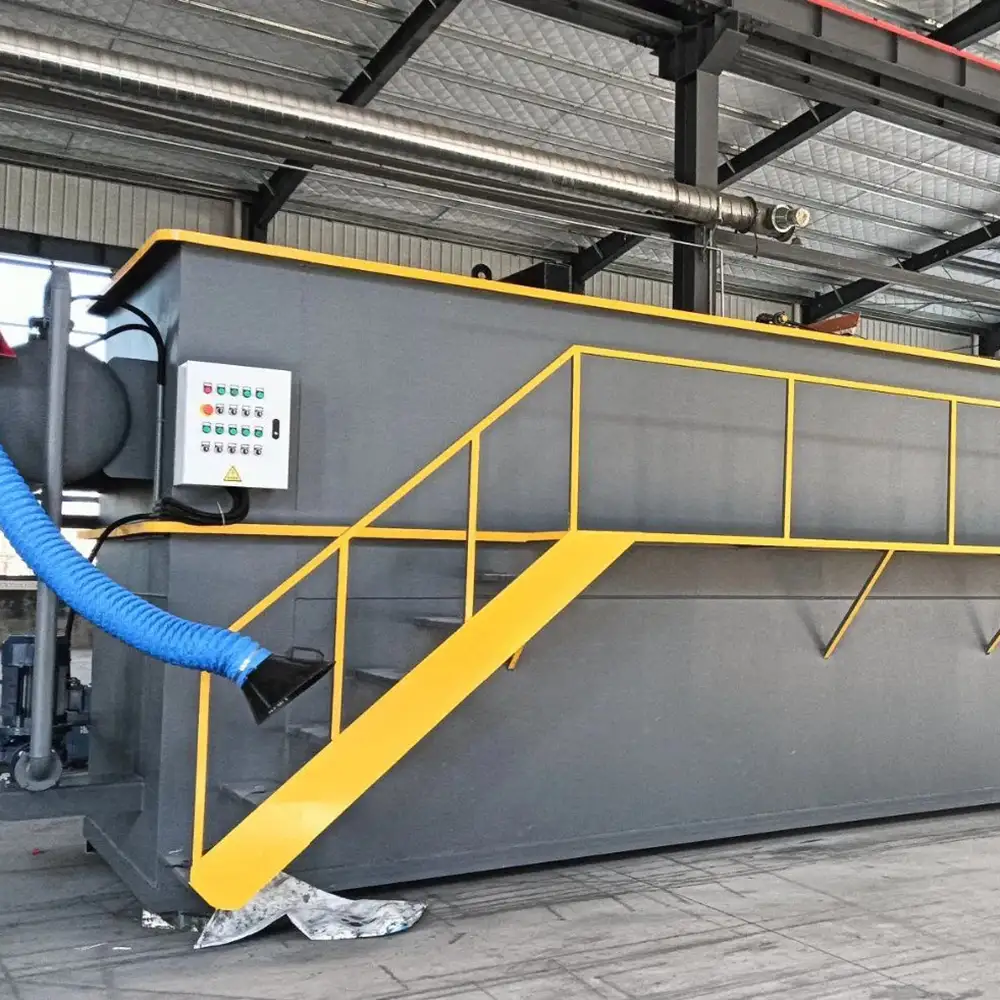
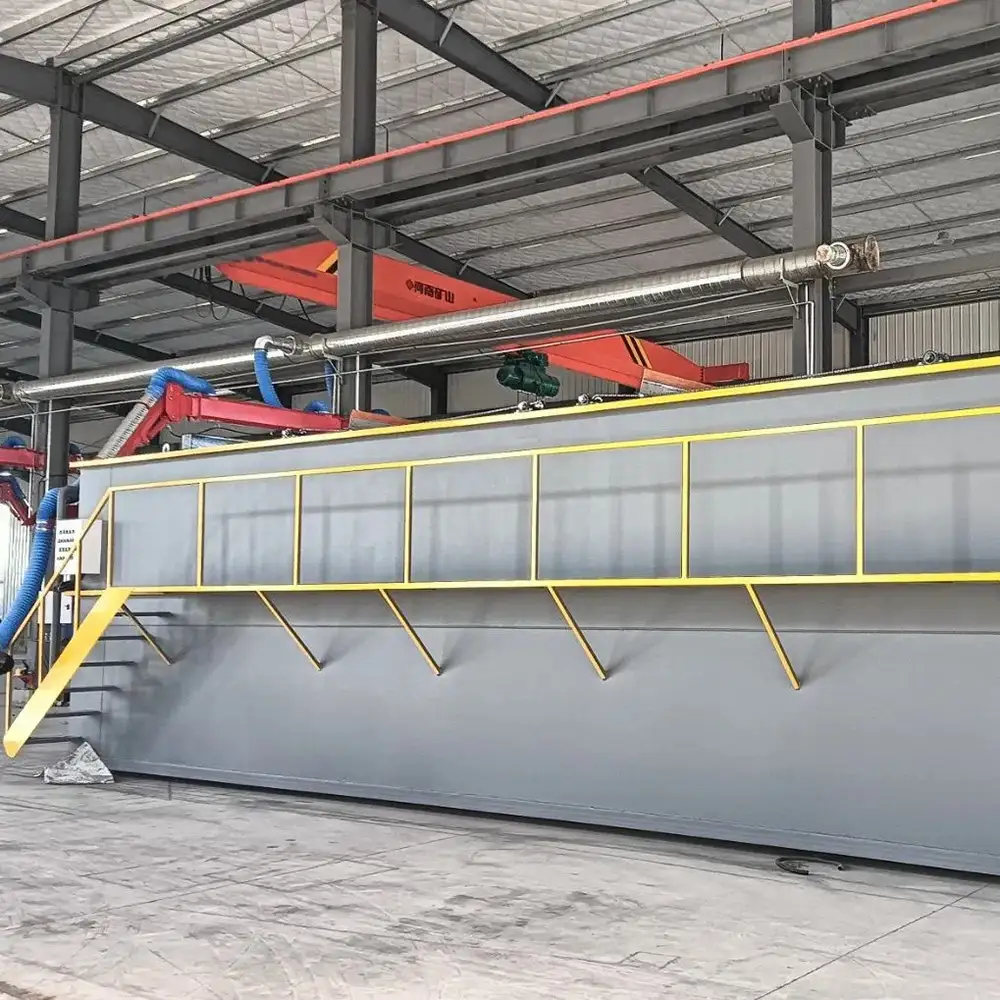
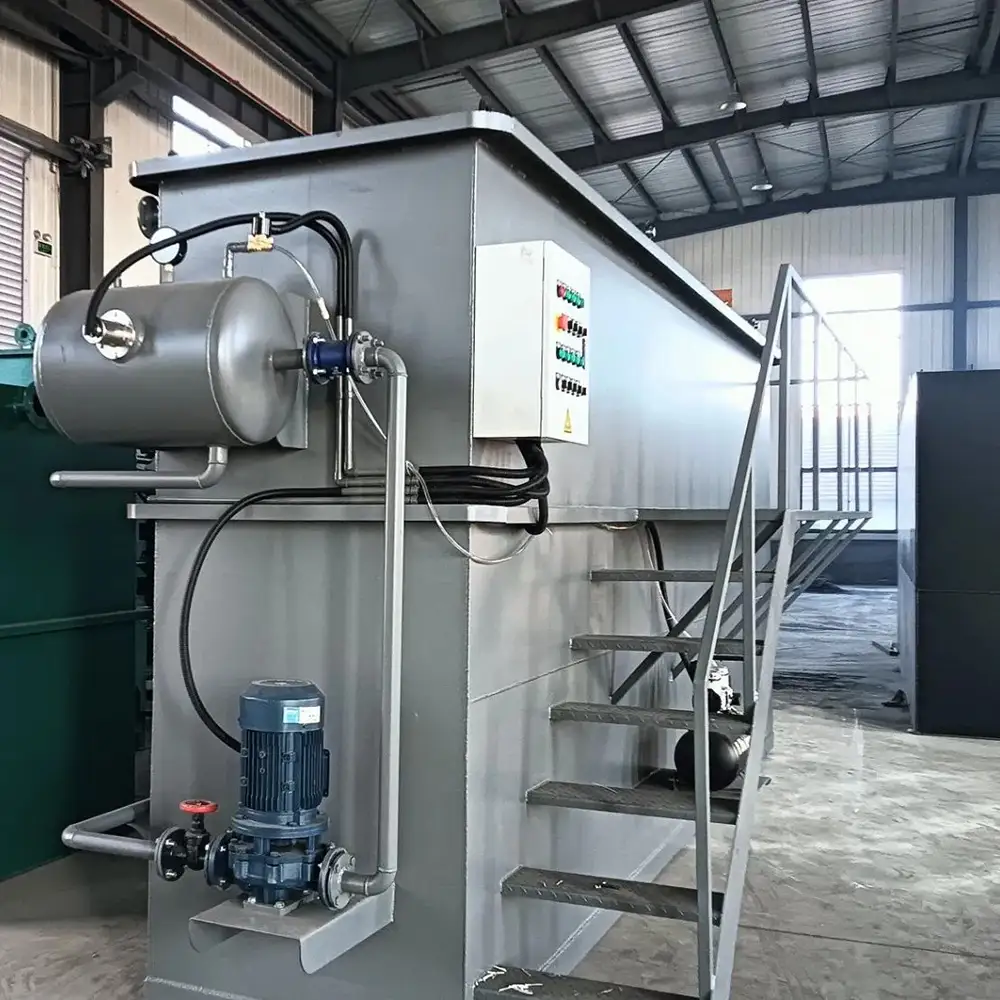
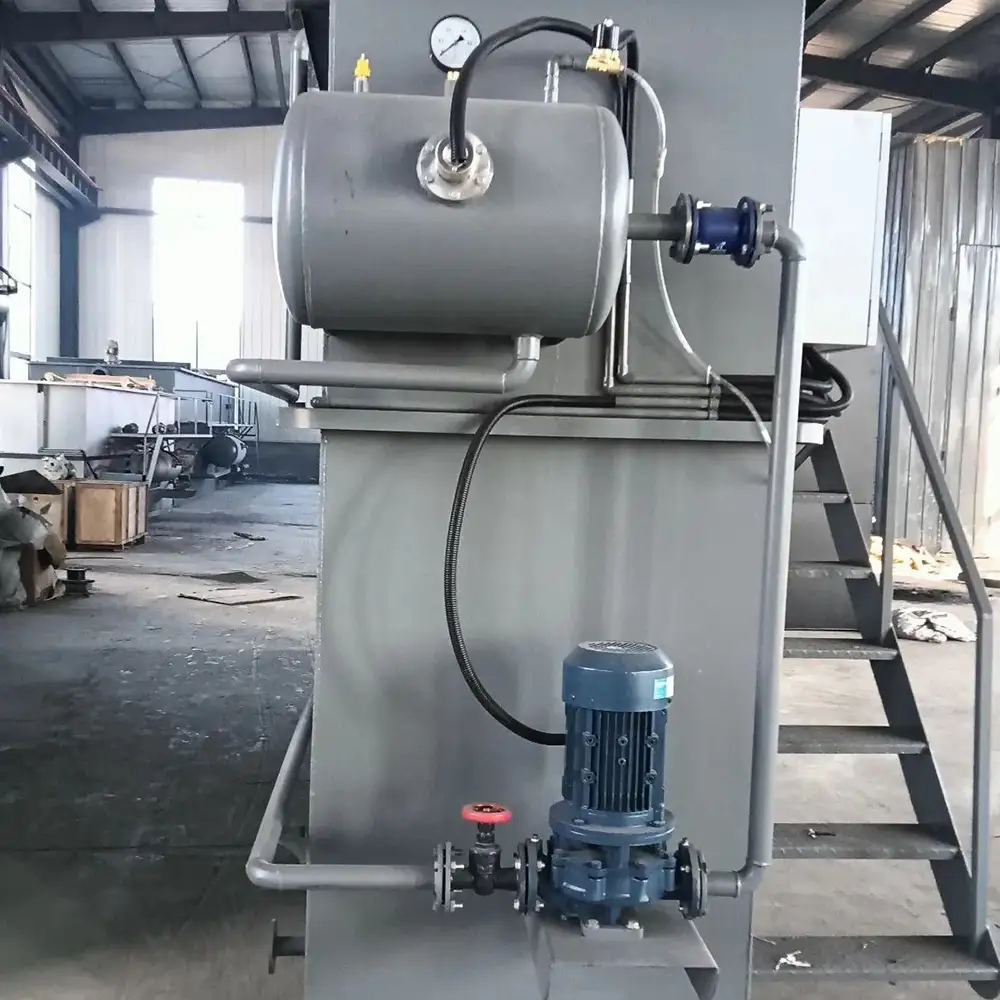
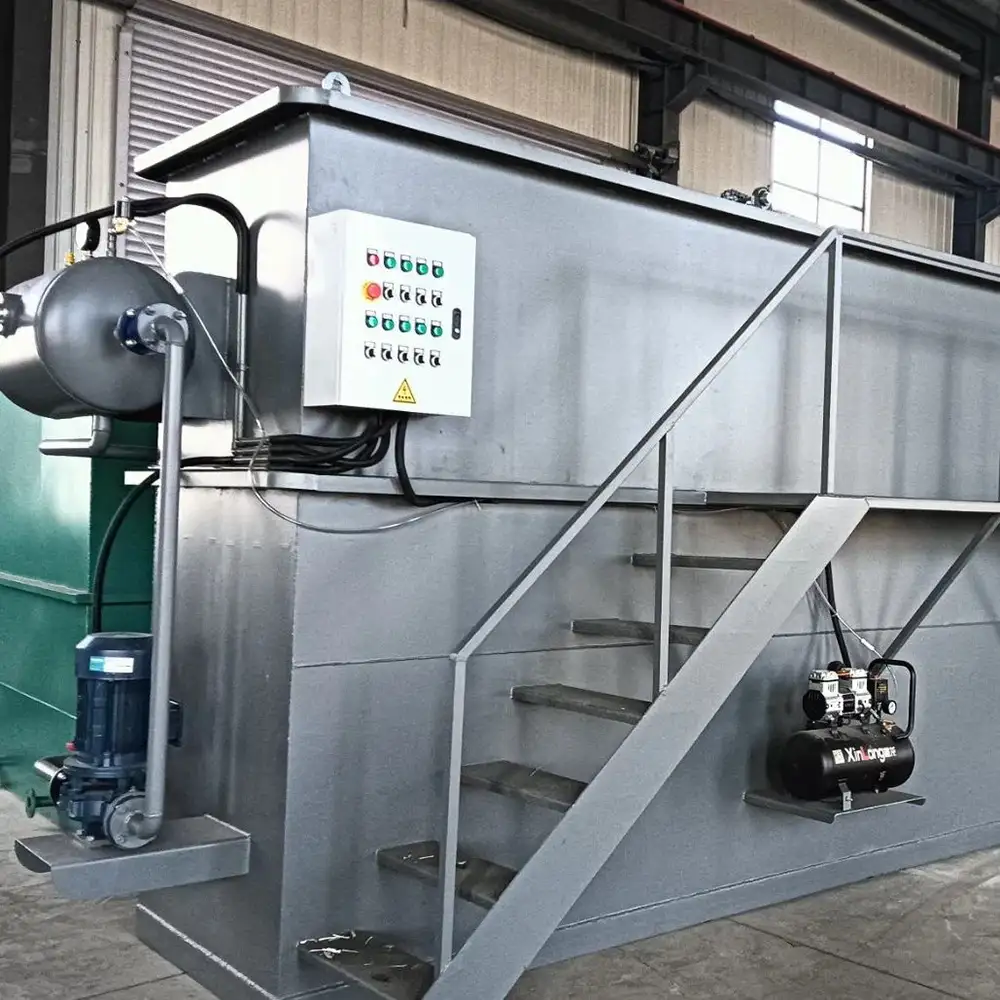
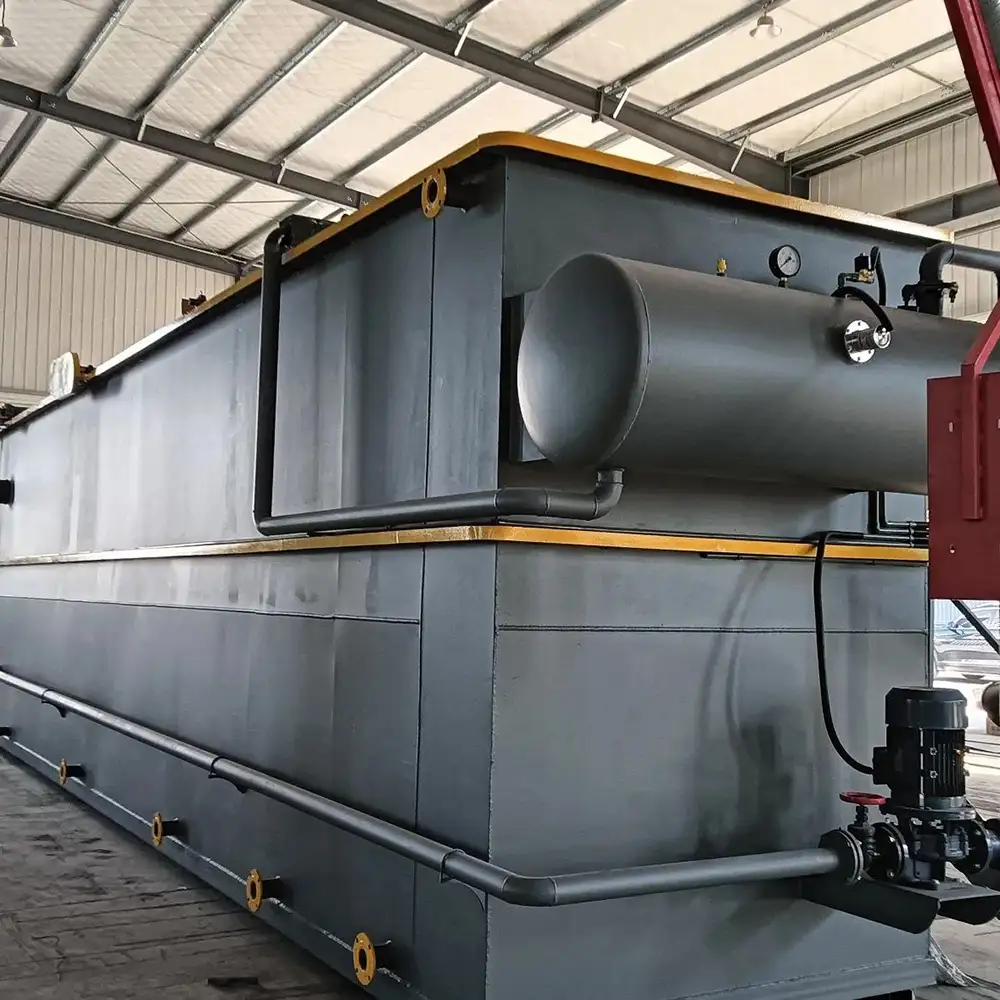
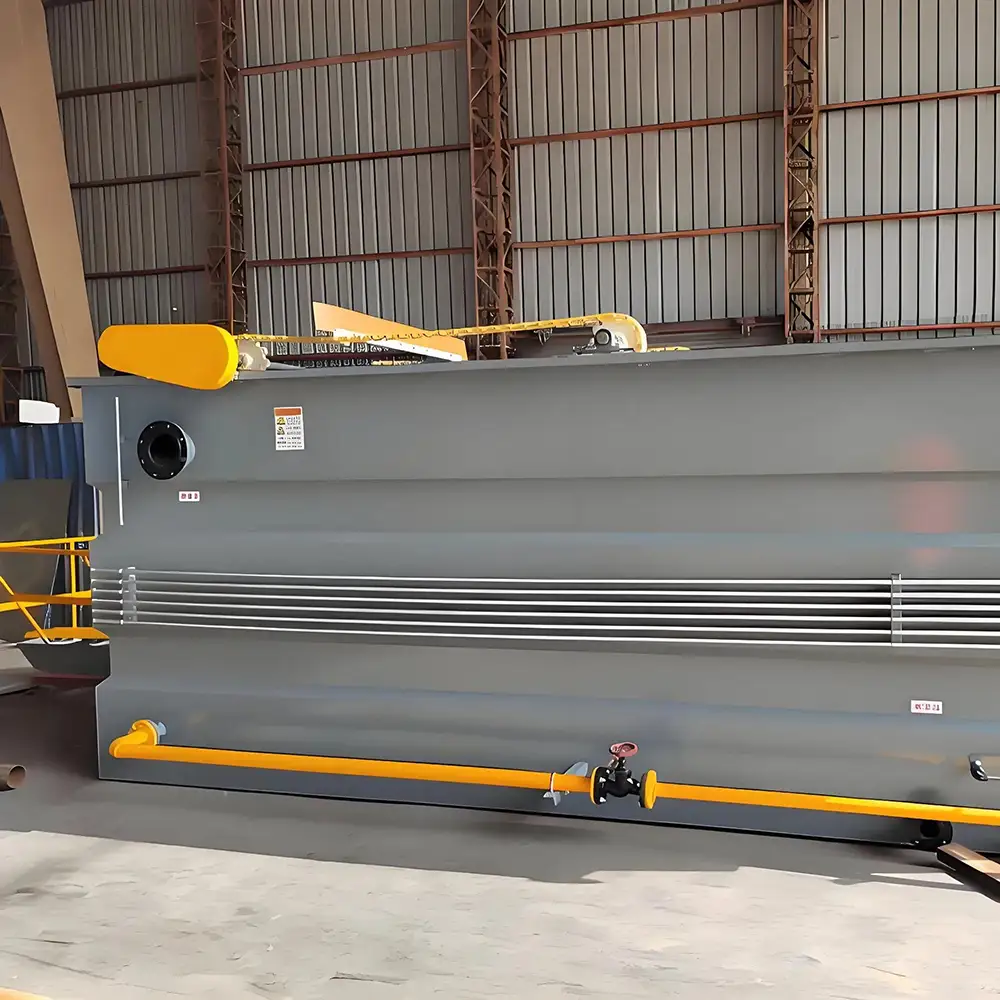
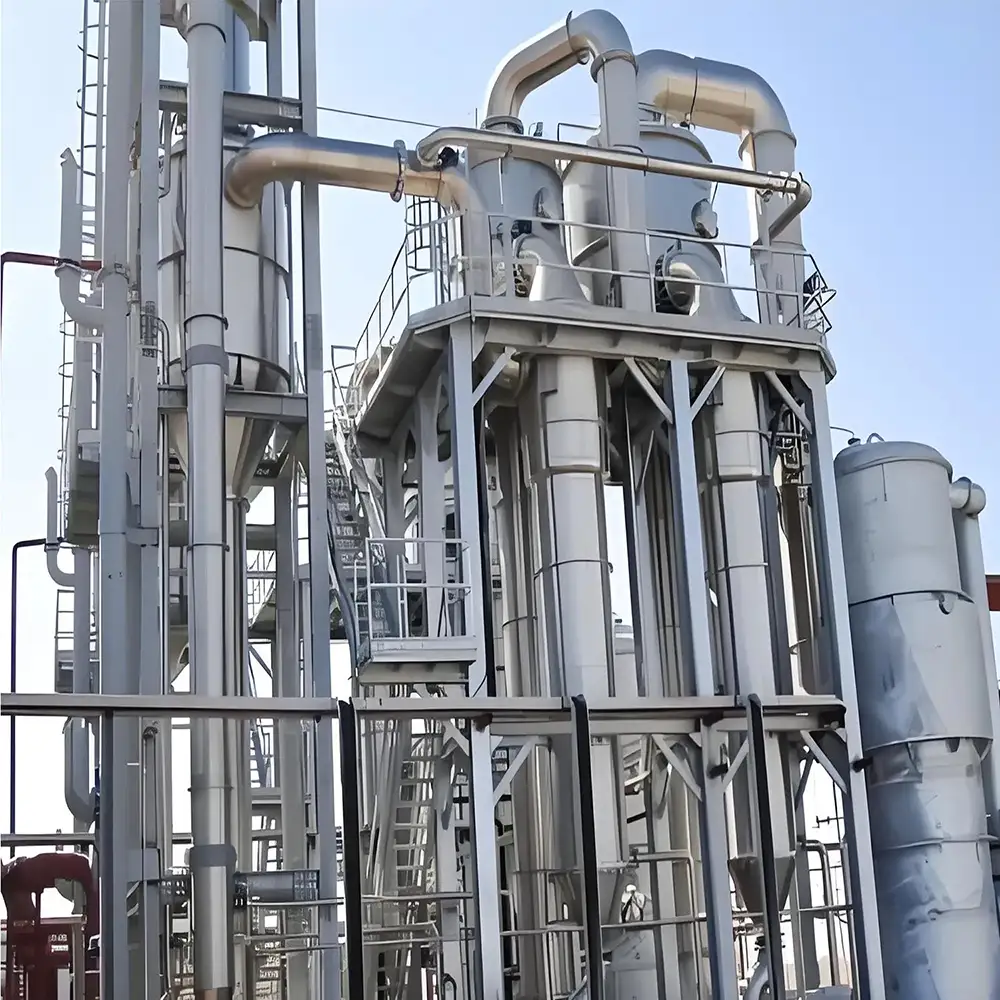
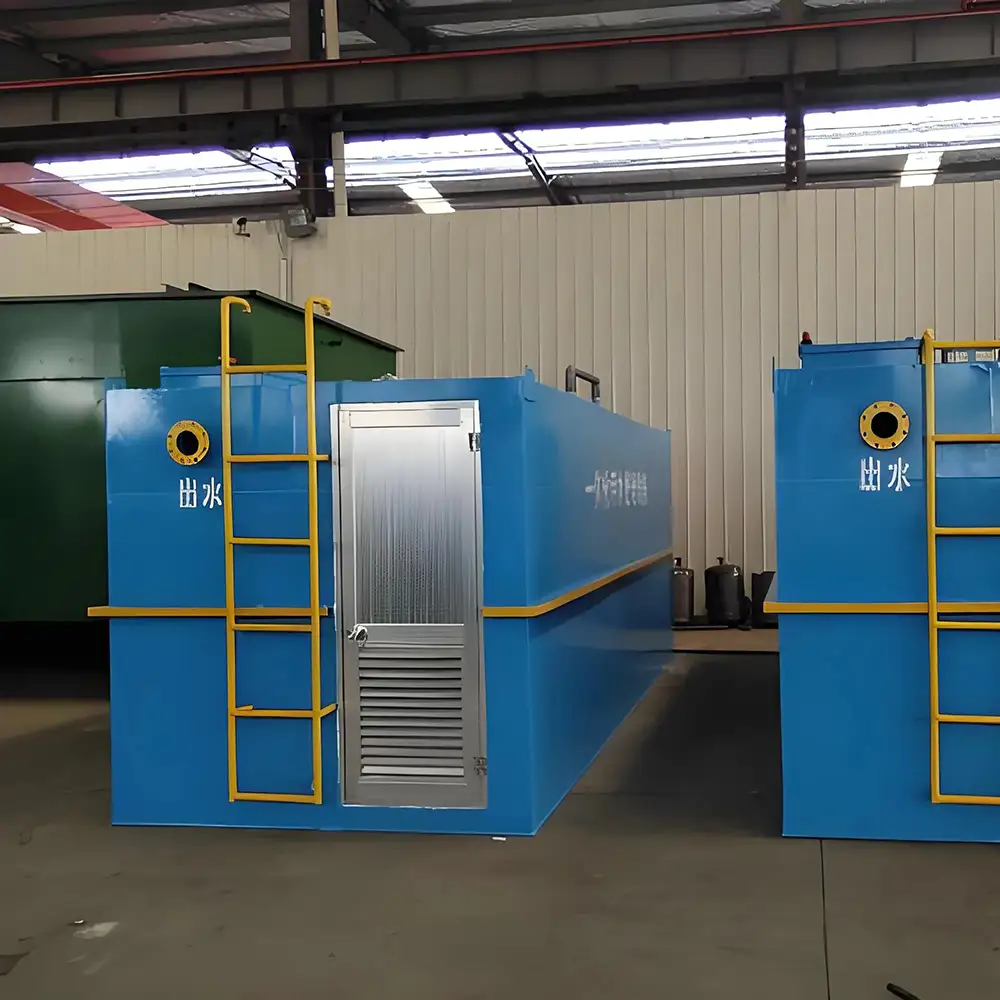
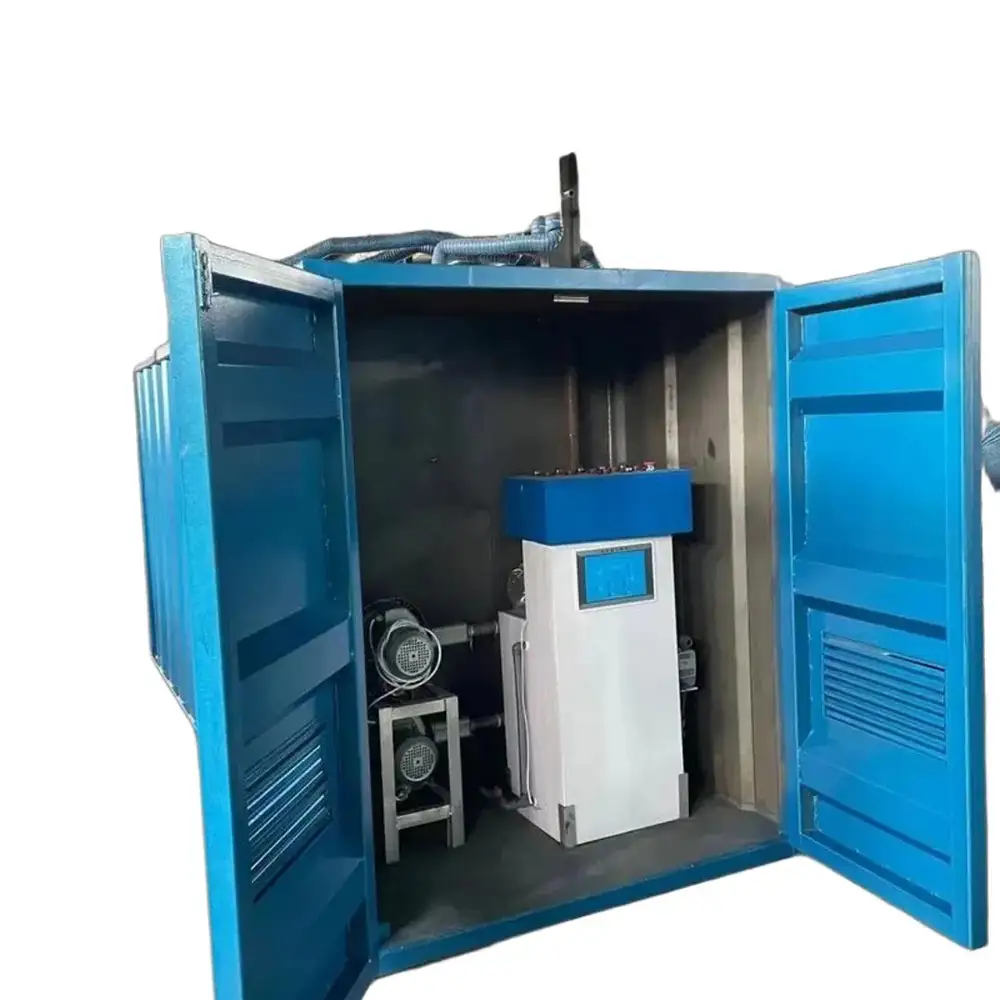
A complete dissolved air flotation system may include a flotation tank, recycle pump, air saturation or pressure vessel, air compressor, pressure release device, surface scraper, sludge collection system, chemical dosing system, mixer, control panel, and auxiliary piping.
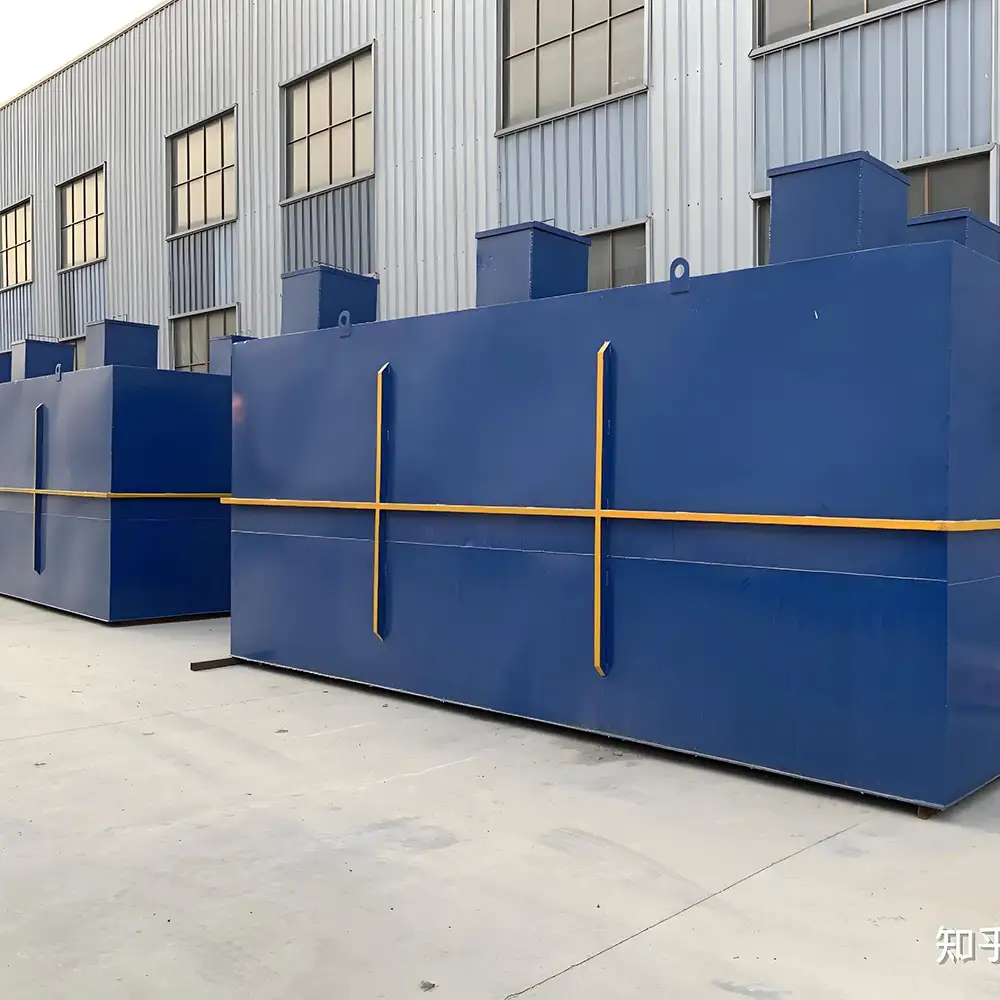
The system can be supplied as a standalone DAF unit or integrated into a complete wastewater treatment plant.
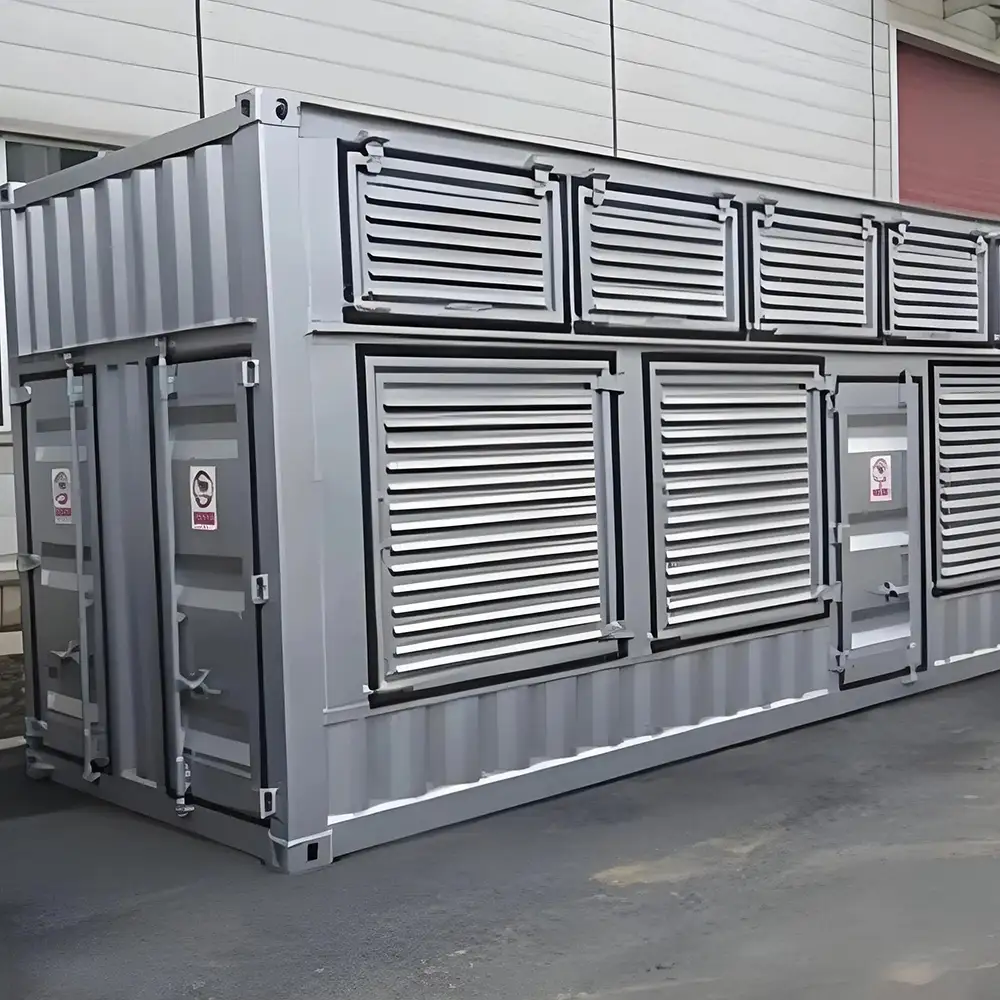
For compact installations, skid-mounted or integrated configurations can help reduce installation requirements and simplify project implementation.
Advantages of the DAF System
A properly designed DAF system provides several advantages:
Efficient suspended solids separation
Oil and grease removal
Removal of floating pollutants
Effective treatment of fine particles
Suitable for lightweight flocs
Compact equipment footprint
Rapid solid-liquid separation
Suitable for industrial wastewater pretreatment
Compatible with coagulation and flocculation
Reduces loading on downstream treatment
Suitable for wastewater treatment plant upgrades
Flexible integration with biological treatment
DAF is especially attractive where conventional gravity settling is less effective for light or fine particles. EPA documentation also notes its use for oil, grease, and suspended solids, particularly where particles have densities close to that of water.
DAF System Design
DAF sizing should be based on actual wastewater conditions rather than simply selecting equipment according to nominal flow.
Important design parameters include average and peak flow rate, suspended solids concentration, oil and grease concentration, temperature, pH, wastewater density, floc characteristics, chemical requirements, and target removal efficiency.
For larger facilities, recycle-flow DAF systems can pressurize a portion of clarified effluent rather than the entire wastewater stream. This configuration is widely used because only the recycle stream needs to be pressurized.
Operation and Maintenance
Regular maintenance helps maintain stable flotation performance. Operators should inspect the recycle pump, pressure vessel, air supply, valves, nozzles, scraper mechanism, sludge discharge system, and chemical dosing equipment.
The flotation surface should be monitored so that accumulated float is removed at an appropriate frequency. Excessive float accumulation can reduce separation performance.
Chemical dosing should also be adjusted according to actual wastewater conditions. Changes in pH, suspended solids, oil concentration, temperature, and production conditions can affect flotation performance.
Why Choose Us?
We provide DAF Water Treatment Systems designed for industrial wastewater applications requiring efficient suspended solids, oil, grease, and floating contaminant removal.
Our DAF equipment can be configured as a standalone flotation unit or integrated with screening, equalization, coagulation, flocculation, biological treatment, filtration, disinfection, and sludge dewatering systems.
We focus on selecting the appropriate process configuration according to wastewater characteristics, treatment capacity, installation conditions, and required effluent quality.
For food processing, slaughterhouses, chemical plants, petrochemical facilities, textile factories, machinery plants, and other industrial wastewater applications, DAF can provide a practical pretreatment or clarification solution.
Frequently Asked Questions
1. What does DAF mean in wastewater treatment?
DAF means Dissolved Air Flotation. It uses fine air bubbles to float suspended solids, oil, grease, and other suitable contaminants to the water surface for removal.
2. Can DAF remove suspended solids?
Yes. DAF is widely used to remove suspended solids, particularly fine or lightweight particles that may be difficult to separate efficiently by gravity settling.
3. Can DAF remove oil and grease?
Yes. Oil and grease removal is one of the major applications of DAF wastewater treatment systems.
4. Is chemical dosing required?
Not always. However, coagulants and polymers can be used to improve the formation of flocs and increase removal efficiency for certain wastewater types.
5. Can DAF treat food processing wastewater?
Yes. DAF is suitable for many food-processing applications where wastewater contains fats, oils, grease, proteins, and suspended solids.
6. Can DAF be used for slaughterhouse wastewater?
Yes. It can remove fats, grease, blood-related solids, tissue particles, and other suspended pollutants before downstream biological treatment.
7. Can DAF replace biological wastewater treatment?
Generally, no. DAF primarily provides physical-chemical separation. It can be used before biological treatment to reduce suspended solids and oil/grease loading.
8. Can DAF be combined with MBBR?
Yes. DAF can be installed upstream of MBBR to reduce solids and oil loading before the biological treatment stage.
9. What is the difference between DAF and sedimentation?
Sedimentation separates particles primarily by gravity, while DAF uses fine air bubbles to float suitable particles to the surface. DAF can be advantageous for light particles, oil, grease, and certain fine flocs.
10. How is DAF equipment sized?
Sizing depends mainly on wastewater flow, peak flow, suspended solids, oil and grease concentration, floc characteristics, hydraulic loading, and required treatment performance.
11. Can the DAF system be customized?
Yes. Tank dimensions, recycle system, scraper, chemical dosing, flocculation section, automation, sludge collection, and auxiliary equipment can be configured according to the project.
12. What wastewater information is needed for DAF design?
Typical information includes wastewater flow rate, SS, oil and grease, COD, BOD, pH, temperature, wastewater source, chemical characteristics, required removal efficiency, and downstream treatment requirements.
Prev:
Water Purification Machine Water Treatment Equipment Hospital Equipment
Next:
Physicochemical Waste Water System Wastewater Treatment Plant Equipment
TAG:
Industrial Wastewater Treatment Equipment,
Suspended Solids Removal,
DAF Wastewater Treatment System,
Industrial Wastewater Treatment,
Industrial Sewage Treatment,
Industrial Water Treatment,
Oil Removal Wastewater Treatment,
Oil Water Separation System,
Suspended Solids Separation,
Wastewater Clarification System,
Oil And Grease Removal,
Grease Removal Wastewater Treatment,
Industrial DAF System,
DAF System,
DAF Wastewater Treatment,
Dissolved Air Flotation System,
Coagulation Flocculation DAF,
DAF Clarifier,
Wastewater Flotation System,
DAF Water Treatment Equipment,
Related Category:
DAF System for Water Treatment,Suspended Solids Removal DAF System,Oil and Grease Removal System China, suppliers, manufacturers, factory, customized, wholesale, quotation, made in China