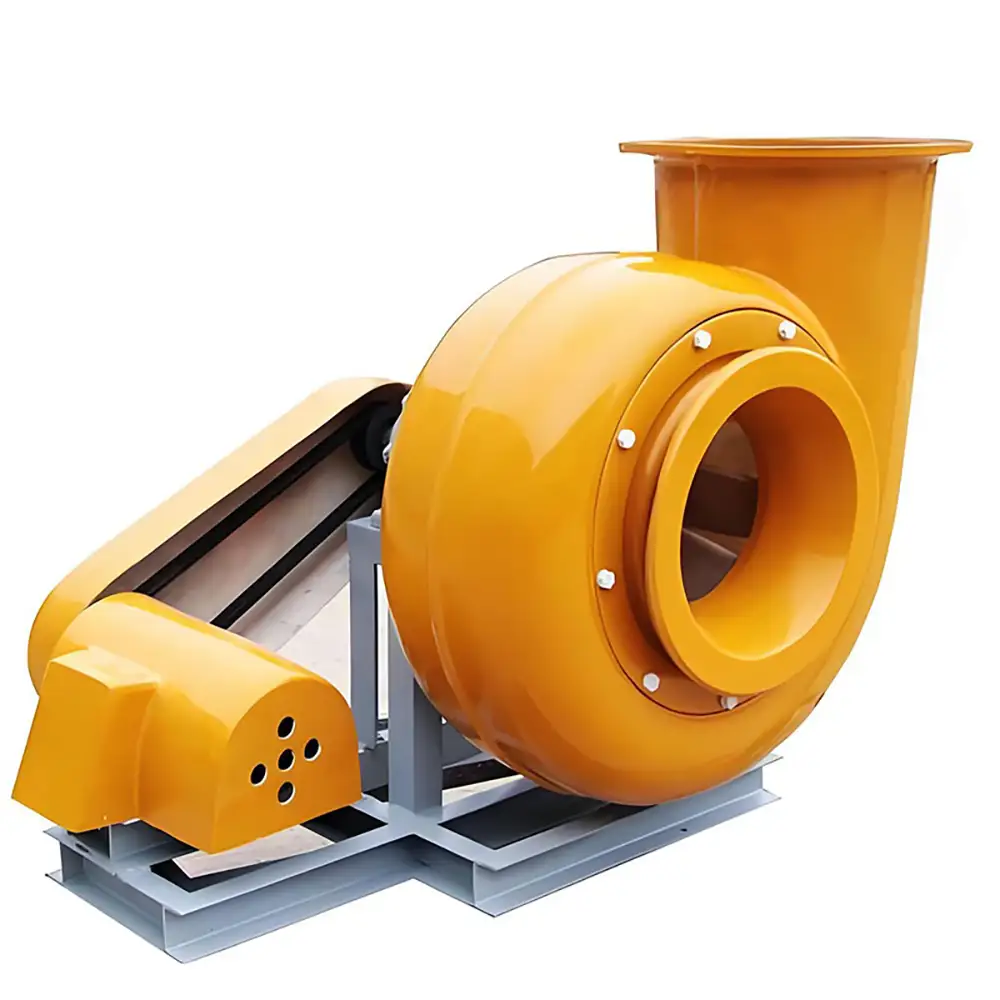
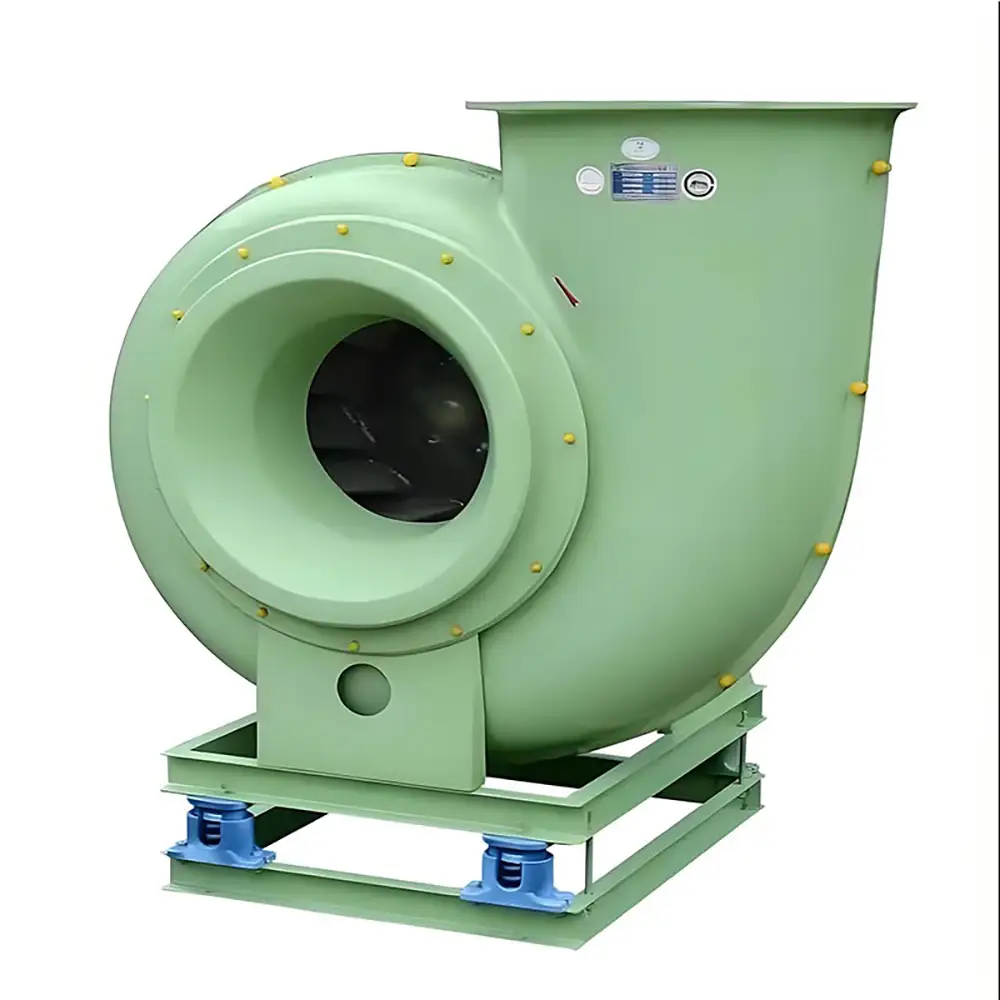
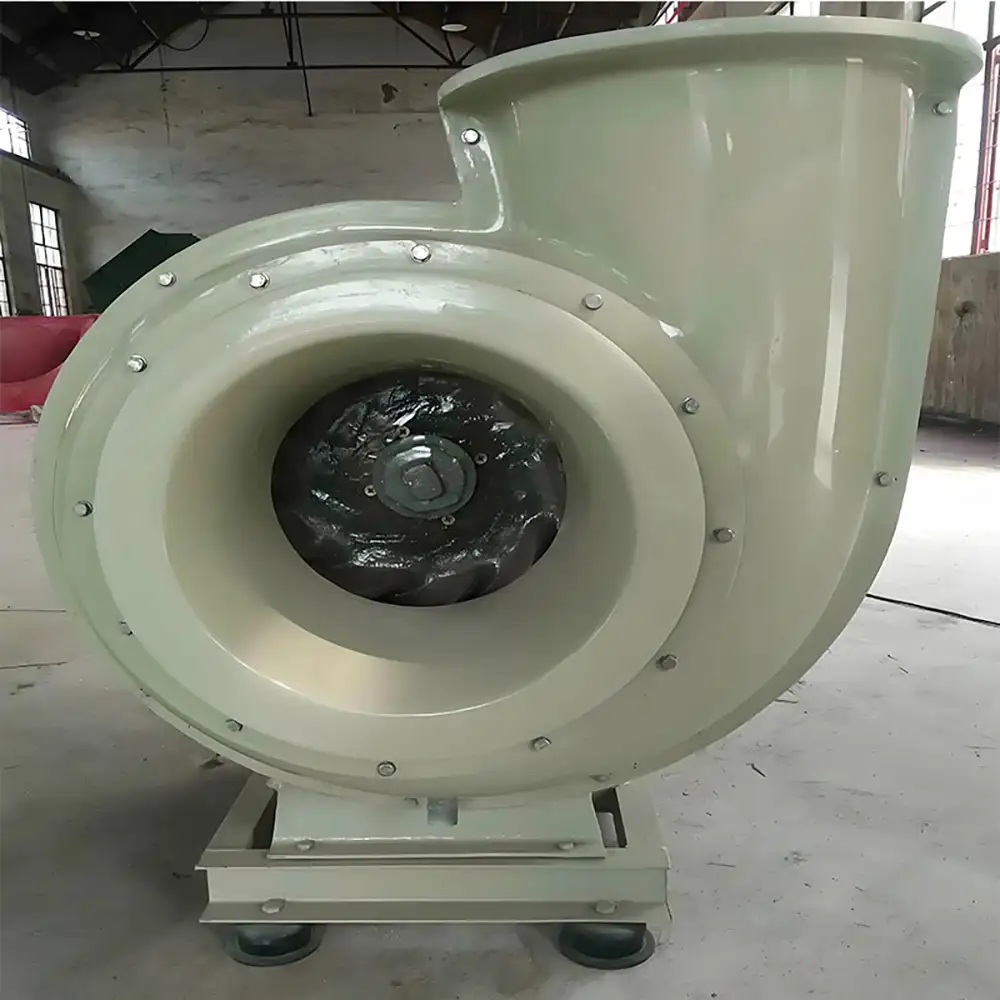
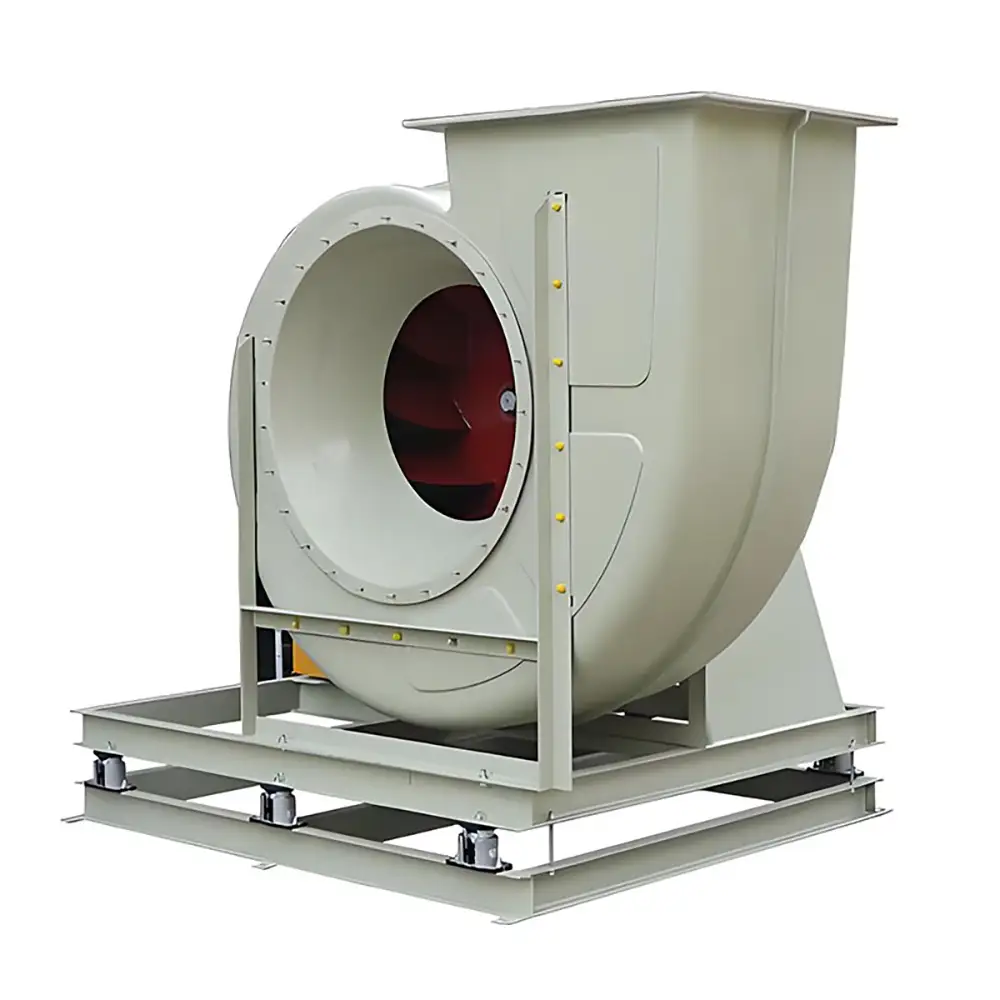
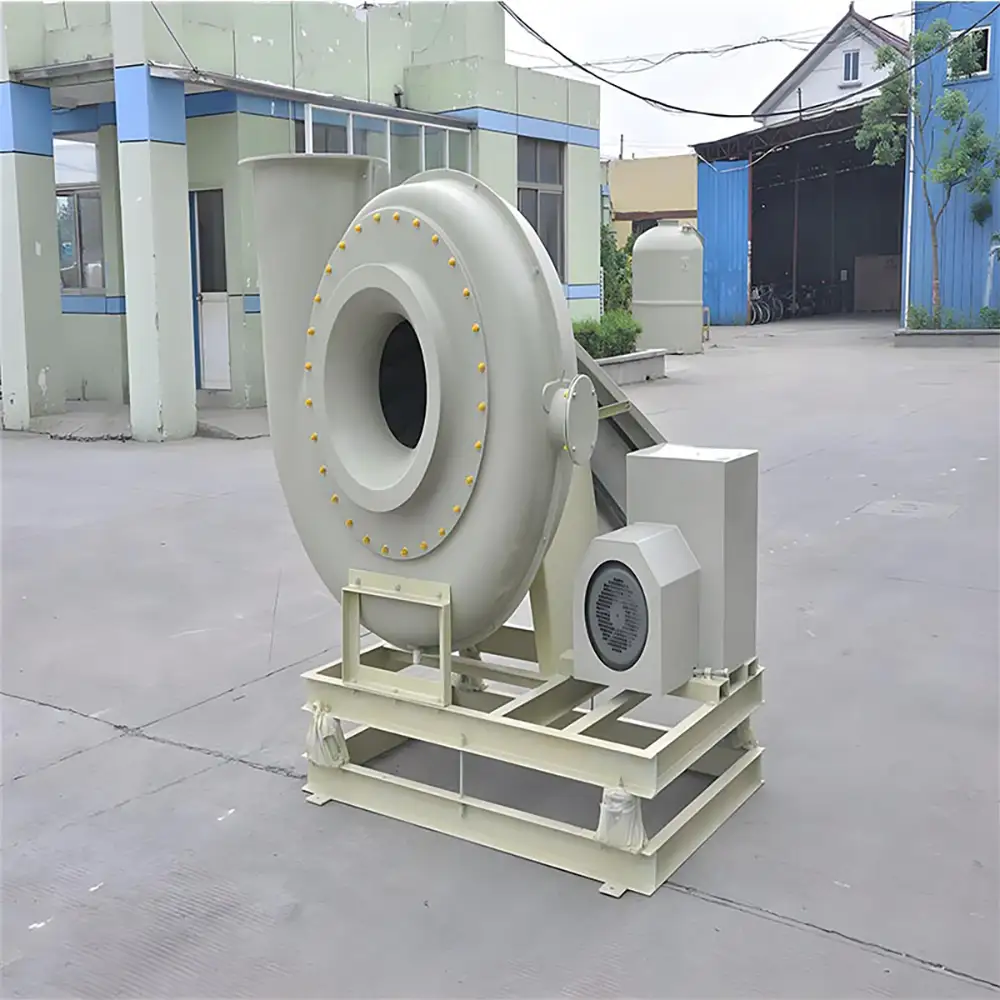
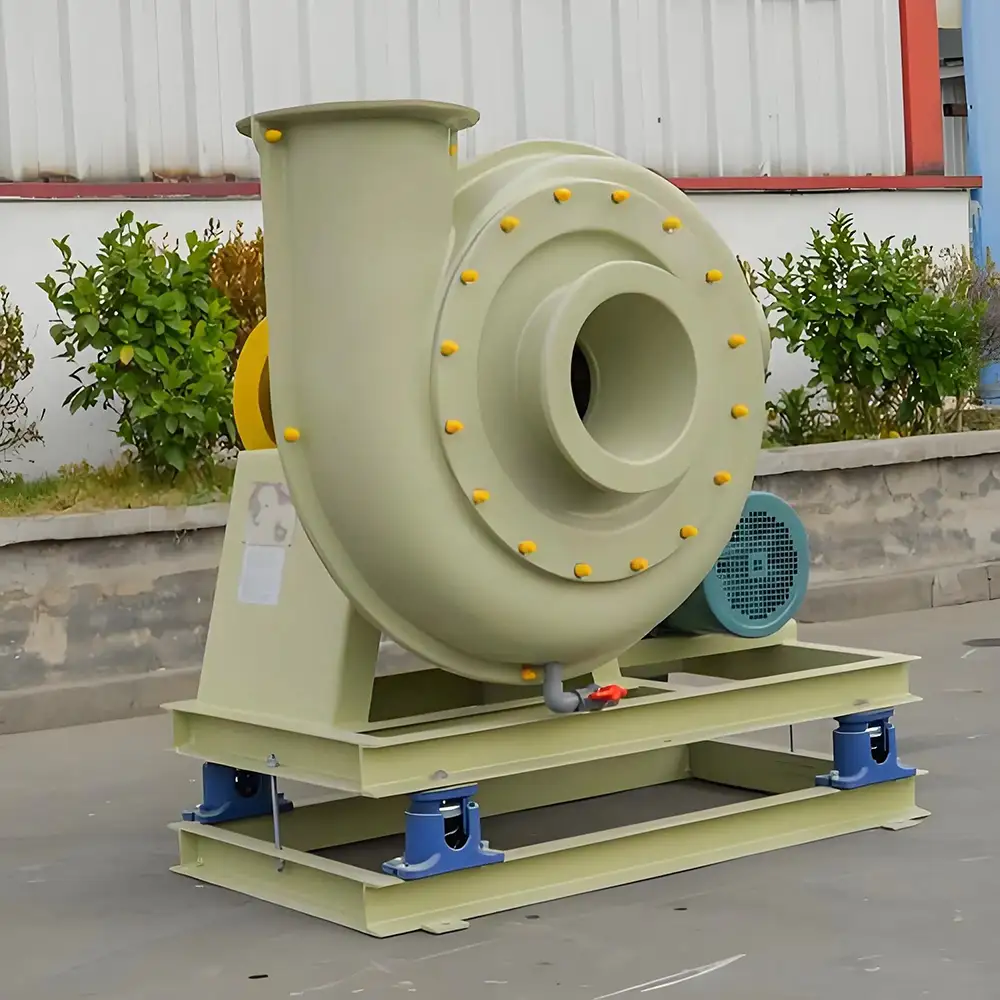
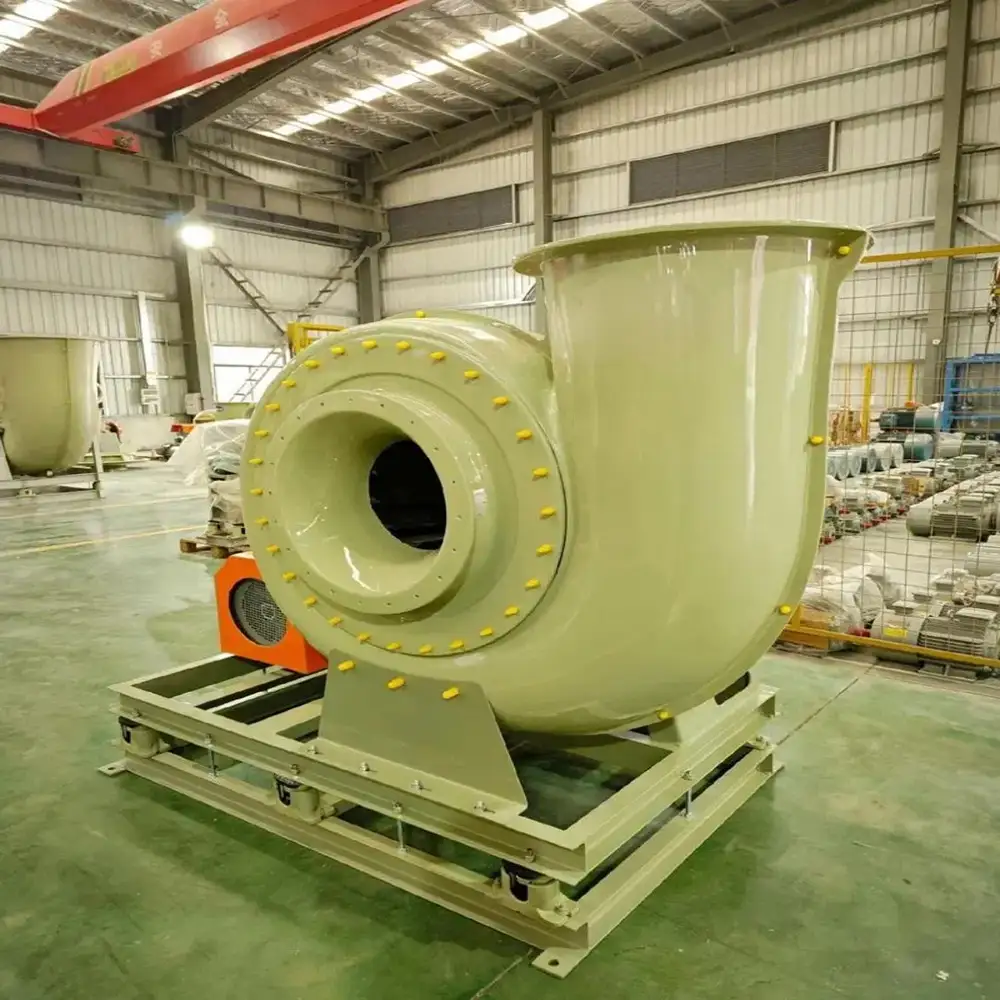
Product Features
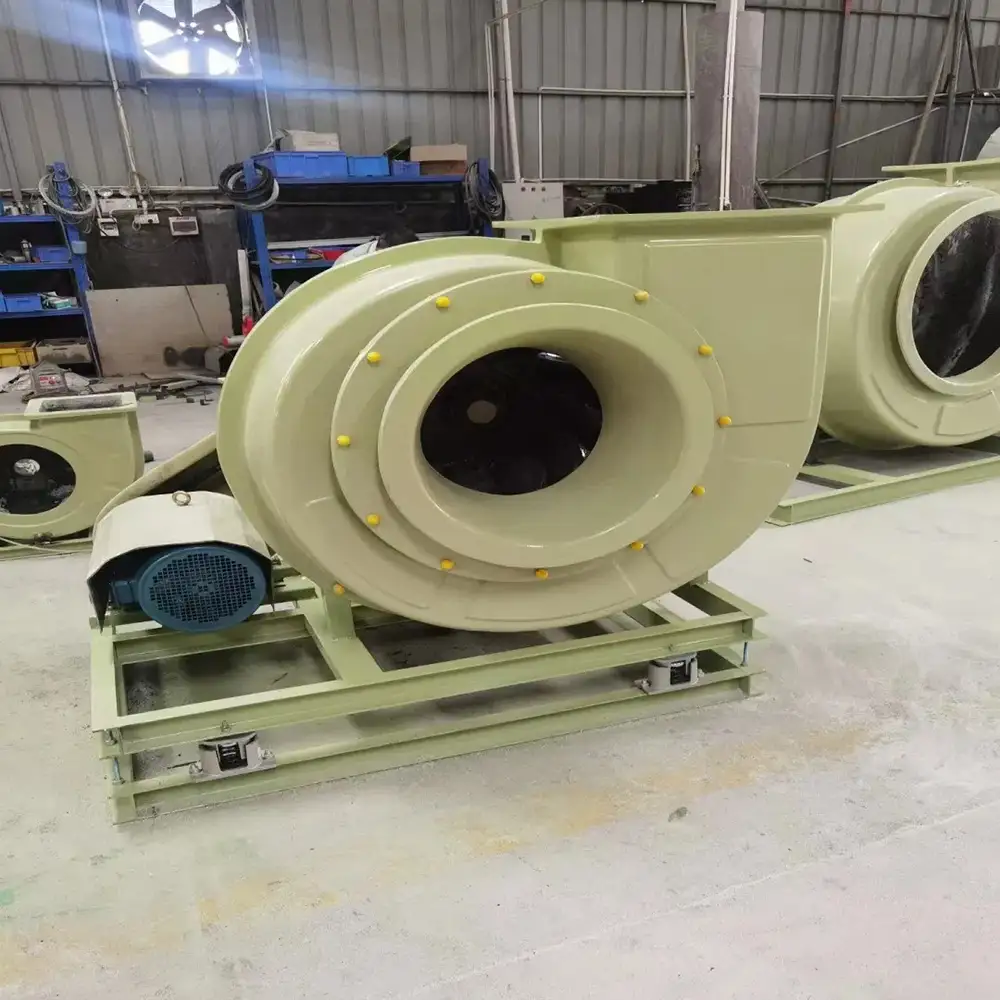
Impeller: The impeller is made of resin glass fiber composite (frp), which has good corrosion resistance, strength and light weight. It can be flexibly proportioned for different gas environments. Through three
-dimensional design and the use of relevant software strength mechanical analysis , it has excellent quality. 802 and 806 resins are used in combination through multiple processes to achieve better strength.
Casing: Made of resin glass fiber composite (frp), it has good corrosion resistance, light weight, and can be flexibly proportioned for different gas environments. It is designed and molded through three-dimensional design, and the strength and mechanical analysis of related software are carried out. It has excellent quality, and the surface is sprayed with anti-UV gel coat, which is durable.
High Efficiency Centrifugal Fan Fiberglass Centrifugal Fan FRP Centrifugal Fan for Sale
Bearing box: The cast oil bath bearing seat can effectively lubricate and cool the axis bearing. Simple and easy maintenance is the guarantee of long-term operation of the fan.
Bearings : High-quality self-aligning rolling bearings, C&U brand guarantee, SKF, NSK and other well-known brand bearings can be configured according to customer needs
Spindle: Made of high-quality 45# steel, precision-machined to ensure spindle size and shape tolerances, durable
Balance : Each impeller is dynamically balanced before assembly. The balance accuracy meets the G2.5 standard of ISO1940 and AMCA standards.
High Efficiency Fiberglass FRP Centrifugal Fan
The High Efficiency Centrifugal Fan Fiberglass Centrifugal Fan FRP Centrifugal Fan is an industrial air-moving solution designed for applications that require efficient airflow, corrosion resistance and reliable continuous ventilation. Manufactured using Fiber Reinforced Plastic (FRP), this type of centrifugal fan is particularly suitable for chemical exhaust, industrial ventilation, corrosive gas handling, wastewater treatment, electroplating, laboratory exhaust and environmental protection systems.
Unlike conventional metal fans, FRP centrifugal fans are designed around a corrosion-resistant composite material system. Depending on the resin and construction selected, the casing and impeller can provide resistance to many acidic, alkaline, humid and chemically aggressive air streams. FRP centrifugal fans are widely used where conventional steel equipment may require additional corrosion protection.
High-Efficiency Centrifugal Fan Design
A centrifugal fan draws air into the impeller and redirects it radially through the fan housing. This design allows the fan to generate useful static pressure for ducted ventilation systems.
Industrial ventilation systems often include long duct runs, bends, dampers, filters, scrubbers and other components that create resistance. Therefore, a centrifugal fan must be selected according to both airflow and system pressure rather than airflow alone.
High-efficiency performance depends on the complete operating point, including:
Required Airflow
Static Pressure
Total Pressure
Fan Speed
Impeller Geometry
Motor Efficiency
Drive Configuration
Duct Resistance
Operating Temperature
Gas Composition
Optimized impeller geometry and proper fan sizing can contribute to efficient air movement, stable operation and lower unnecessary energy consumption. FRP fan designs are available with backward-curved, radial and other impeller configurations depending on the required operating conditions.
Fiberglass Reinforced Plastic Construction
Fiberglass Centrifugal Fans use fiberglass-reinforced plastic as a major structural material. FRP combines reinforcing glass fibers with a polymer resin to provide a balance of mechanical strength, low weight and corrosion resistance.
The exact chemical resistance depends on the resin system, temperature and chemical concentration. Vinyl ester resin systems, for example, are commonly used in demanding chemical ventilation applications.
An FRP fan may include:
FRP Fan Casing
FRP Impeller
Fiberglass Reinforcement
Corrosion-Resistant Resin
Protective Gel Coat
External Bearing Housing
Motor
Belt Drive or Direct Drive
Base Frame
Flexible Connector
Inspection Port
Drain Connection
Some current industrial FRP fan designs use vinyl-ester resin, dynamically balanced impellers and corrosion-resistant external coatings for demanding environments.
Corrosion-Resistant Industrial Ventilation
One of the primary reasons to select an FRP centrifugal fan is its suitability for corrosive environments.
Industrial processes may generate acid mist, alkaline vapors, chlorine-containing gases, chemical fumes, humid exhaust or other aggressive air streams. These conditions can accelerate corrosion of conventional carbon-steel components.
FRP construction provides an alternative for compatible applications such as:
Chemical Plants
Electroplating Facilities
Pickling Lines
Surface Treatment Plants
Pharmaceutical Facilities
Laboratories
Semiconductor Manufacturing
Wastewater Treatment Plants
Petrochemical Facilities
Textile Processing Plants
Printing Facilities
Paint Production
Industrial Scrubber Systems
The fan material should always be checked against the actual chemical composition, concentration and operating temperature before final selection.
Fiberglass Fan for Chemical Exhaust
Chemical ventilation systems require stable air extraction to collect process fumes and prevent unwanted accumulation of contaminants.
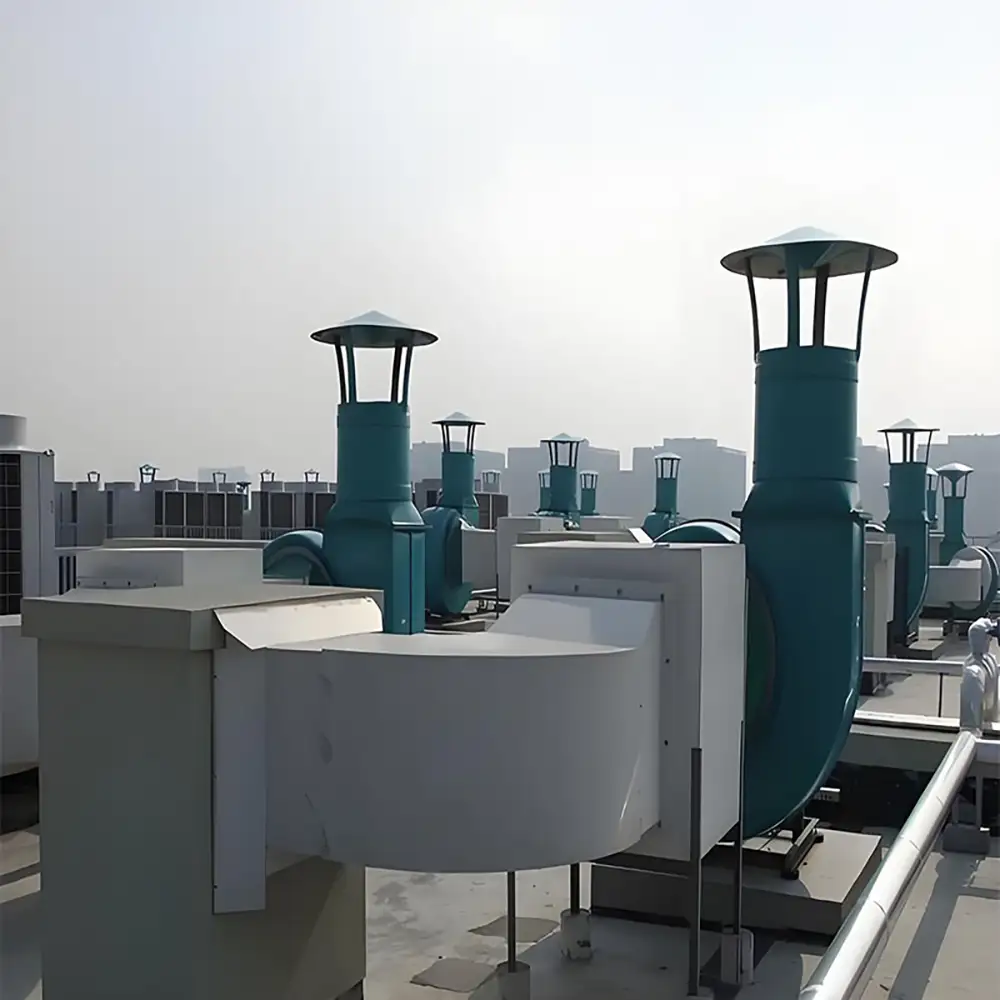
A fiberglass centrifugal fan can be installed as part of a complete chemical exhaust system. A typical configuration may include:
Fume Hood → Exhaust Duct → Scrubber → FRP Centrifugal Fan → Discharge Stack
The fan must provide sufficient pressure to overcome the resistance of the hood, ductwork, scrubber, mist eliminator, dampers and discharge system.
For this reason, providing the complete system operating point is important when selecting a high-efficiency FRP centrifugal fan.
Applications in Wastewater Treatment
Wastewater treatment plants often contain humid and chemically aggressive environments. Exhaust systems may also handle unpleasant odors and corrosive gases generated around collection, equalization, sludge and treatment processes.
FRP centrifugal fans can be used for selected wastewater ventilation and odor-control systems where corrosion resistance is required.
Typical applications include:
Wastewater Treatment Ventilation
Odor Control Systems
Chemical Dosing Areas
Equalization Tank Exhaust
Sludge Handling Ventilation
Headworks Ventilation
Industrial Wastewater Exhaust
Scrubber Exhaust
The actual fan selection should consider the gas composition, humidity, temperature and required airflow. FRP fan systems are commercially used in wastewater and environmental ventilation applications.
Direct Drive and Belt Drive Options
Different installations may require different transmission configurations.
A direct-drive FRP centrifugal fan connects the impeller and motor without a conventional belt and pulley arrangement. This can provide a compact configuration and reduce the number of mechanical transmission components.
A belt-driven configuration separates the motor from the fan shaft and can provide greater flexibility for adjusting fan speed and selecting the operating point.
The appropriate configuration depends on fan size, speed, motor power, installation requirements and operating conditions.
Current FRP centrifugal fan designs are available in both direct-drive and belt-drive arrangements.
Variable Frequency Drive Control
A high-efficiency centrifugal fan can also be equipped with Variable Frequency Drive (VFD) control.
VFD control allows the fan speed to be adjusted according to changing ventilation demand. This can be useful when production loads vary or when the system needs different airflow levels during different operating periods.
For example, the fan may operate at reduced speed during low production and increase speed when process exhaust demand rises.
VFD control can also be integrated with:
Pressure Sensors
Airflow Sensors
PLC Control
Automatic Dampers
Differential Pressure Monitoring
SCADA Systems
Building Management Systems
The actual energy performance depends on the fan curve, system resistance, operating schedule and control strategy. A VFD should therefore be considered as part of the complete ventilation system rather than as a standalone efficiency feature.
Low Vibration and Stable Operation
High-speed centrifugal fans require appropriate balancing to maintain stable operation.
An accurately balanced impeller helps reduce vibration and mechanical stress on bearings and other components. Industrial FRP fan manufacturers commonly use static and dynamic balancing procedures for their impellers. Some products specify ISO-based balancing and vibration requirements.
Stable operation can help support:
Lower Mechanical Stress
Reduced Vibration
Improved Bearing Life
More Consistent Airflow
Lower Noise
Easier Maintenance
Actual vibration performance depends on balancing accuracy, installation, foundation, alignment and operating conditions.
Lightweight FRP Construction
Fiberglass-reinforced plastic is generally lighter than many conventional metal constructions. This can simplify handling and installation for certain fan configurations.
The combination of relatively low weight and corrosion resistance makes FRP attractive for industrial ventilation projects where the fan may be installed on platforms, rooftops or elevated equipment structures.
However, the supporting structure must still be designed according to the fan's actual operating weight, vibration and dynamic loads.
Integration With Air Pollution Control Equipment
The FRP centrifugal fan can be integrated into a broader environmental-control system.
Depending on the application, the system may include:
Wet Scrubber
Dry Scrubber
Activated Carbon Filter
Mist Eliminator
Dust Collector
Cyclone Separator
Exhaust Hood
Industrial Ductwork
Dampers
Silencers
Flexible Connectors
VFD Control Cabinet
Exhaust Stack
The fan provides the required air movement while upstream equipment performs filtration, absorption, adsorption or other pollutant-control functions.
Maintenance and Service
Regular inspection is important for maintaining centrifugal fan performance.
Recommended maintenance includes:
Inspecting the impeller for deposits or damage.
Checking fan vibration and abnormal noise.
Inspecting bearings and lubrication where applicable.
Checking belt tension on belt-driven models.
Inspecting motor connections.
Checking duct and flange connections.
Inspecting FRP surfaces for cracks or chemical degradation.
Cleaning accumulated deposits where required.
Checking drain and inspection ports.
Verifying airflow and pressure periodically.
FRP fan designs may incorporate inspection openings and drainage provisions to simplify inspection and cleaning.
Why Choose Us
The High Efficiency Fiberglass FRP Centrifugal Fan combines corrosion-resistant FRP construction with industrial centrifugal airflow technology for demanding ventilation applications.
Key advantages include:
High-Efficiency Airflow: Aerodynamically optimized impeller options can support efficient air movement.
FRP Construction: Fiberglass-reinforced plastic provides useful corrosion resistance for compatible chemical environments.
Industrial Centrifugal Design: Suitable for ducted ventilation and exhaust systems requiring static pressure.
Chemical Exhaust Capability: Designed for selected acid, alkaline, humid and corrosive air applications.
Flexible Drive Options: Direct-drive and belt-drive configurations can be selected according to project requirements.
VFD Compatibility: Variable-speed control can match airflow to changing ventilation demand.
Low-Vibration Operation: Proper impeller balancing helps support smooth mechanical operation.
Lightweight Construction: FRP can reduce equipment weight compared with some conventional metal designs.
Environmental Applications: Suitable for selected scrubber, wastewater, odor-control and pollution-control systems.
Application-Based Selection: Fan configuration can be matched to airflow, pressure, gas composition, temperature and installation conditions.
FAQs
1. What Is a Fiberglass Centrifugal Fan?
A fiberglass centrifugal fan is an industrial centrifugal air-moving device constructed primarily from fiberglass-reinforced plastic. It is commonly selected for applications requiring corrosion resistance.
2. What Does FRP Mean?
FRP means Fiber Reinforced Plastic. It combines reinforcing fibers, commonly glass fibers, with a polymer resin matrix.
3. Why Use FRP Instead of Steel?
FRP can provide useful resistance to many corrosive gases, vapors and humid environments. It can therefore be suitable for chemical exhaust and other applications where conventional steel may be vulnerable to corrosion.
4. Is an FRP Centrifugal Fan Energy Efficient?
A properly selected fan can provide efficient air movement. Actual energy consumption depends on fan size, operating point, motor efficiency, pressure, airflow, control method and system resistance.
5. Can the Fan Be Equipped With a VFD?
Yes. A Variable Frequency Drive can be used to adjust fan speed according to airflow or pressure requirements when the motor and fan are appropriately configured.
6. Can It Handle Corrosive Gases?
Yes, for compatible gases and operating conditions. The FRP resin system must be selected according to chemical composition, concentration and temperature.
7. Can This Fan Be Used in a Chemical Plant?
Yes. FRP centrifugal fans are widely used for chemical ventilation, acid and alkali exhaust, electroplating, pickling and scrubber systems.
8. Can an FRP Fan Be Used for Wastewater Treatment?
Yes. It can be used in selected wastewater ventilation, odor-control and exhaust applications where corrosion resistance is required.
9. Which Is Better: Direct Drive or Belt Drive?
Neither is universally better. Direct drive offers a compact mechanical arrangement, while belt drive can provide greater flexibility for fan speed and installation configuration. Selection depends on the application.
10. What Information Is Needed to Select a Fan?
Important information includes airflow, static pressure, gas composition, temperature, humidity, dust concentration, operating schedule, installation conditions and any hazardous-area requirements.
11. Can the FRP Fan Work With a Scrubber?
Yes. FRP centrifugal fans can be integrated with wet scrubbers, dry scrubbers, mist eliminators and other air-pollution-control equipment. The fan should be selected according to the complete system pressure loss.
12. How Can I Maintain an FRP Centrifugal Fan?
Regularly inspect the impeller, bearings, drive system, motor, FRP surfaces, vibration, duct connections and drainage. Remove deposits when necessary and periodically verify airflow and pressure.
Prev:
High Efficiency Centrifugal Fan/High Temperature Resistance/Explosion Proof/Smoke Exhaust/Industrial Equipment
Next:
Dust Removal FRP Centrifugal Fan
TAG:
VFD Centrifugal Fan,
Process Air Blower,
Process Exhaust Fan,
Process Ventilation Fan,
Industrial Fume Extraction Fan,
Industrial Ventilation Fan,
Industrial Ventilation Blower,
Industrial Air Blower,
Industrial Exhaust Fan,
Industrial Exhaust Blower,
Industrial Air Exhaust Fan,
Industrial Centrifugal Fan,
Industrial Centrifugal Blower,
Scrubber Exhaust Fan,
Variable Frequency Centrifugal Fan,
Chemical Exhaust Fan,
Chemical Plant Exhaust Fan,
Petrochemical Exhaust Fan,
Air Pollution Control Fan,
Industrial Fume Exhaust Fan,
High Efficiency Industrial Blower,
High Efficiency Centrifugal Fan,
High Efficiency Industrial Fan,
High Efficiency Exhaust Fan,
Low Noise Centrifugal Fan,
Low Vibration Centrifugal Fan,
VFD FRP Fan,
Variable Speed Centrifugal Fan,
Variable Speed FRP Fan,
High Pressure FRP Fan,
Related Category:
High Efficiency Centrifugal Fan,Fiberglass Centrifugal Fan,FRP Centrifugal Fan,High Efficiency FRP Fan,Fiberglass Indust China, suppliers, manufacturers, factory, customized, wholesale, quotation, made in China