111
|
Model NO. |
GSRF |
Handling method |
physicochemical treatment |
|
Usage |
Industrial, agricultural, food factories, slaughterhouses |
Trademark |
Wanze Prosperity |
|
Types |
Package, Compact, Small, Mini |
Applications |
Industrial, Municipal, Domestic, Medical, Ship |
|
Craft |
Flocculation sedimentation method |
Features |
Water Clarification, Filtration, Purification |
|
Service Life |
20 Years |
Operation |
Automatic |
|
Steel Plate Thickness |
>8mm |
Function |
Remove Suspended solids |
|
Voltage |
220V/ 380V/ Customerized |
Installation Type |
Onground |
|
Colour |
Grey/Silver/Blue/Balck/Customerized |
Use for |
Mineral, Printing, Chemical, Dyeing, Starch |
|
Material |
Carbon Steel, Stain Steel, FRP, PE, PP |
Certificate |
SGS, ISO |
|
Transport Package |
Container Standard Packing |
Specification |
Carbon steel anti-corrosion |
|
Production Capacity |
1000 Sets/Year |
Origin |
China |
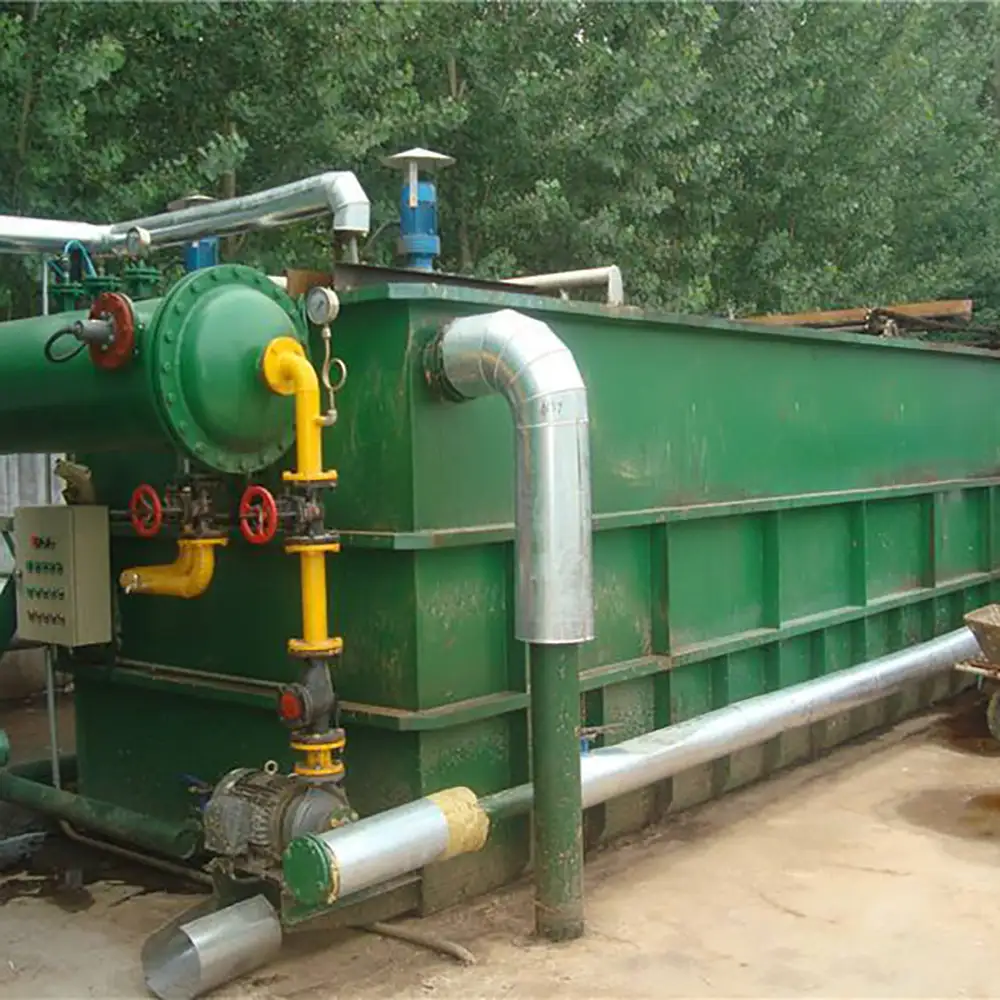
Vortex Concave Air Flotation Machine
The Vortex Concave Air Flotation Machine is a wastewater treatment system designed for solid-liquid separation, oil removal and suspended solids flotation. Also known as a Cavitation Air Flotation Machine or CAF Air Flotation Machine, it uses a vortex concave aerator to introduce air into wastewater and generate fine bubbles that attach to suspended particles and floating pollutants.
The attached particles become buoyant and rise toward the water surface, where a scraper system can continuously collect and discharge the floating scum. This process is particularly useful for wastewater containing suspended solids, oils, grease, colloidal materials and other pollutants that are difficult to remove efficiently through ordinary sedimentation.
What Is a Vortex Concave Air Flotation Machine?
A vortex concave air flotation machine is a type of air flotation equipment that uses mechanical aeration and a vortex concave aerator to produce microbubbles directly in the wastewater.
Unlike conventional dissolved air flotation systems that use pressurized dissolved air and a pressure-release mechanism, vortex concave air flotation generates bubbles through an aeration device installed in the flotation tank. This makes the equipment configuration different from traditional DAF systems.
A typical system includes a flotation tank, vortex concave aerator, inlet and outlet sections, scum scraper, scum collection chamber, sludge discharge section and related control components.
How Vortex Concave Air Flotation Works
Wastewater first enters the treatment tank, usually after appropriate screening, equalization or chemical pretreatment when required.
The vortex concave aerator rotates at high speed and creates a low-pressure or vacuum region that draws air into the wastewater. The resulting air-water mixture contains fine bubbles that disperse through the flotation zone.
When the microbubbles contact suspended solids, oil droplets and other flotation-friendly pollutants, they can attach to the particles. The combined bubble-particle flocs have a lower apparent density than water and move upward.
The floating material accumulates at the surface and is continuously or periodically removed by the scraper mechanism. Clarified water leaves through the treated-water outlet, while settled solids can be discharged through the bottom sludge collection section.
Oil and Grease Removal
One important application of vortex concave air flotation is the separation of oil and grease from wastewater.
Oil-containing wastewater can contain free oil, dispersed oil, grease and suspended solids. Air flotation can help bring these materials to the surface where they can be collected as scum.
For applications involving emulsified or dissolved oil, chemical conditioning such as coagulation and demulsification may be required before flotation. The appropriate chemical dosage should be determined through wastewater testing and process evaluation.
Vortex concave air flotation has been used in industrial wastewater applications involving oil, suspended solids and other pollutants requiring flotation-based separation.
Suspended Solids Separation
Suspended solids are another major target of air flotation.
Fine suspended particles may settle slowly because of their low density or small particle size. When suitable microbubbles attach to these particles, their effective buoyancy increases and they can be separated at the surface.
This makes vortex concave air flotation useful as a pretreatment or primary treatment stage before biological treatment, filtration or other downstream processes.
The actual removal performance depends on particle characteristics, wastewater chemistry, hydraulic loading, bubble distribution and pretreatment conditions.
Chemical Flocculation and Air Flotation
For wastewater containing fine colloidal particles, stable emulsions or difficult-to-float pollutants, coagulation and flocculation can be integrated before the air flotation stage.
Coagulants can destabilize suspended particles, while flocculants can promote the formation of larger flocs. These flocs may then interact more effectively with the microbubbles generated by the vortex concave aerator.
The treatment sequence can therefore include:
Screening → Coagulation → Flocculation → Vortex Concave Air Flotation → Biological Treatment
However, the exact configuration should be determined from wastewater characteristics and laboratory or pilot testing.
Equipment Structure
A typical vortex concave air flotation machine may include:
Wastewater Inlet
Flotation Tank
Vortex Concave Aerator
Aeration Zone
Scum Scraper
Scum Collection Trough
Sludge Collection Section
Sludge Discharge Outlet
Treated Water Outlet
Reflux Or Circulation Components
Electrical Control System
Some designs also incorporate bottom sludge collection structures to reduce the accumulation of heavier particles inside the flotation tank. Patent literature describes vortex-concave systems using aeration zones, scrapers, scum outlets, sludge collection areas and water outlets.
Advantages of Vortex Concave Air Flotation
One of the key benefits of this technology is its relatively straightforward mechanical aeration configuration.
Because the vortex concave aerator generates bubbles directly in the flotation tank, the equipment can avoid some of the pressure-dissolution components used by conventional dissolved air flotation systems. This can simplify the process configuration for applications where CAF technology is appropriate.
Other potential advantages include:
Compact Equipment Configuration
Direct Mechanical Aeration
Effective Solid-Liquid Separation
Oil And Grease Separation Capability
Continuous Surface Scum Removal
Suitable For Industrial Wastewater
Integration With Chemical Pretreatment
Flexible Upstream And Downstream Treatment
Actual performance depends on wastewater characteristics and system design.
Industrial Wastewater Applications
Vortex concave air flotation machines can be considered for many industrial wastewater applications where flotation is suitable.
Typical applications include:
Food Processing Wastewater: Removal of fats, oils, grease and suspended solids.
Meat Processing Wastewater: Separation of floating and suspended organic solids.
Dairy Wastewater: Pretreatment for fat, grease and suspended solids.
Petrochemical Wastewater: Oil and suspended solids separation after suitable pretreatment.
Machinery Manufacturing Wastewater: Separation of oil-containing wastewater and suspended particles.
Textile Wastewater: Removal of suspended solids, dyes and coagulated pollutants when suitable chemical pretreatment is provided.
Paper And Pulp Wastewater: Removal of fibers, suspended solids and flotation-friendly materials.
Chemical Wastewater: Pretreatment before biological or advanced treatment depending on wastewater composition.
Air flotation is also used in municipal and industrial wastewater treatment applications, with vortex concave systems being one of the recognized air flotation configurations.
Integration With Other Wastewater Treatment Processes
A vortex concave air flotation machine is often most effective as part of a larger wastewater treatment process rather than as a standalone solution for every pollutant.
For example, a complete industrial wastewater treatment line may include:
Coarse Screening → Equalization → pH Adjustment → Coagulation → Flocculation → Vortex Concave Air Flotation → Biological Treatment → Filtration → Disinfection
For oily wastewater, additional oil separation or demulsification may be installed before the flotation system.
For wastewater with high COD or refractory organic compounds, biological or advanced oxidation processes may be required after flotation.
This modular approach allows the air flotation unit to focus on solid-liquid separation and flotation-friendly pollutants while downstream processes address dissolved contaminants.
Operation and Maintenance
Routine inspection is important for reliable operation.
The vortex concave aerator should be checked regularly for abnormal vibration, blockage, wear or reduced aeration performance. Scraper components should also be inspected to ensure that floating scum is effectively transferred into the collection trough.
Sludge collection areas should be cleaned or discharged according to actual operating conditions. Chemical dosing systems, when used, should be checked for correct dosage and stable operation.
Operators should also monitor influent flow, pH, suspended solids, oil concentration and other relevant parameters to maintain stable treatment conditions.
Why Choose Us
Specialized Air Flotation Design: The equipment is designed specifically around vortex concave aeration and flotation-based solid-liquid separation.
Oil And Solids Separation: Suitable configurations can address suspended solids, oils, grease and other flotation-friendly pollutants.
Compact Configuration: The integrated flotation tank, aeration and scraping system can reduce the need for separate equipment.
Flexible Process Integration: The machine can be combined with screening, coagulation, flocculation, biological treatment, filtration and other wastewater processes.
Industrial Applications: Suitable configurations can be considered for food, dairy, petrochemical, textile, paper, machinery and other industrial wastewater applications.
Continuous Scum Removal: Mechanical scraping can continuously or periodically remove floating solids from the water surface.
Project-Based Selection: Equipment capacity and configuration can be selected according to wastewater flow, pollutant characteristics and treatment objectives.
Practical Operation: The mechanical aeration structure can provide a relatively straightforward operating configuration for suitable wastewater applications.
FAQs
1. What Is a Vortex Concave Air Flotation Machine?
It is an air flotation wastewater treatment machine that uses a vortex concave aerator to generate fine bubbles for separating suspended solids, oil, grease and other flotation-friendly pollutants.
2. What Is Another Name for This Equipment?
It is also commonly called a Cavitation Air Flotation Machine, CAF Air Flotation Machine or Vortex Concave Air Flotation System.
3. How Does It Generate Microbubbles?
A high-speed vortex concave aerator creates a low-pressure zone that draws air into the wastewater and disperses the resulting air-water mixture into the flotation zone.
4. Can It Remove Oil From Wastewater?
Yes. It can be used for free and dispersed oil separation. Emulsified oil may require chemical demulsification or coagulation before flotation.
5. Can It Remove Suspended Solids?
Yes. Microbubbles can attach to suitable suspended particles and help bring them to the surface for removal.
6. Does It Require a Chemical Flocculation System?
Not necessarily. The requirement depends on wastewater characteristics. Chemical coagulation and flocculation can improve flotation of fine or colloidal particles when appropriate.
7. Is It the Same as a Dissolved Air Flotation Machine?
No. Both use flotation for solid-liquid separation, but vortex concave systems generate bubbles through mechanical aeration, while conventional DAF systems typically use dissolved air released from a pressurized water stream.
8. What Industries Can Use Vortex Concave Air Flotation?
Potential applications include food processing, dairy, meat processing, petrochemical, machinery manufacturing, textile, paper and chemical wastewater treatment.
9. Can It Be Used Before Biological Treatment?
Yes. It can serve as a pretreatment or primary treatment stage to reduce suspended solids, oil and other flotation-friendly pollutants before biological treatment.
10. How Is Floating Scum Removed?
A mechanical scraper moves floating solids across the water surface into a scum collection trough, where they can be discharged for further sludge handling.
11. Does the Machine Need Regular Maintenance?
Yes. Aerators, motors, scraper mechanisms, sludge outlets, bearings, electrical controls and other components should be inspected and maintained regularly.
12. How Should I Select the Right Model?
Selection should consider wastewater flow, suspended solids concentration, oil and grease concentration, particle characteristics, pH, temperature, chemical pretreatment requirements and desired effluent quality. Laboratory or pilot testing is recommended for difficult industrial wastewater.
Prev:
Fiberglass Integrated Sewage Treatment Equipment
Next:
Vertical Flow Dissolved Air Flotation Machine
TAG:
Industrial Wastewater Treatment Equipment,
Suspended Solids Removal,
Dairy Wastewater Treatment,
Meat Processing Wastewater Treatment,
Food Processing Wastewater Treatment,
Industrial Wastewater Treatment System,
Industrial Wastewater Treatment,
Industrial Sewage Treatment,
Sludge Separation Equipment,
Solid Liquid Separation Equipment,
Chemical Wastewater Treatment,
Electroplating Wastewater Treatment,
Suspended Solids Removal Equipment,
Solid-Liquid Separation Equipment,
Oily Wastewater Treatment Equipment,
Wastewater Pretreatment Equipment,
Poultry Wastewater Treatment,
Oil Removal Wastewater Treatment,
Oil Removal Equipment,
Oil Wastewater Treatment,
Industrial Sewage Treatment Equipment,
Solid-Liquid Separation System,
Industrial Wastewater Pretreatment,
Suspended Solids Separation,
Wastewater Solid-Liquid Separation,
Wastewater Pretreatment System,
Flotation Sludge Removal,
Wastewater Scum Removal,
Petrochemical Wastewater Treatment,
Paper Mill Wastewater Treatment,
Related Category:
Vortex Concave Air Flotation Machine,Cavitation Air Flotation Machine,Vortex Concave Air Flotation,Cavitation Air Flotat China, suppliers, manufacturers, factory, customized, wholesale, quotation, made in China