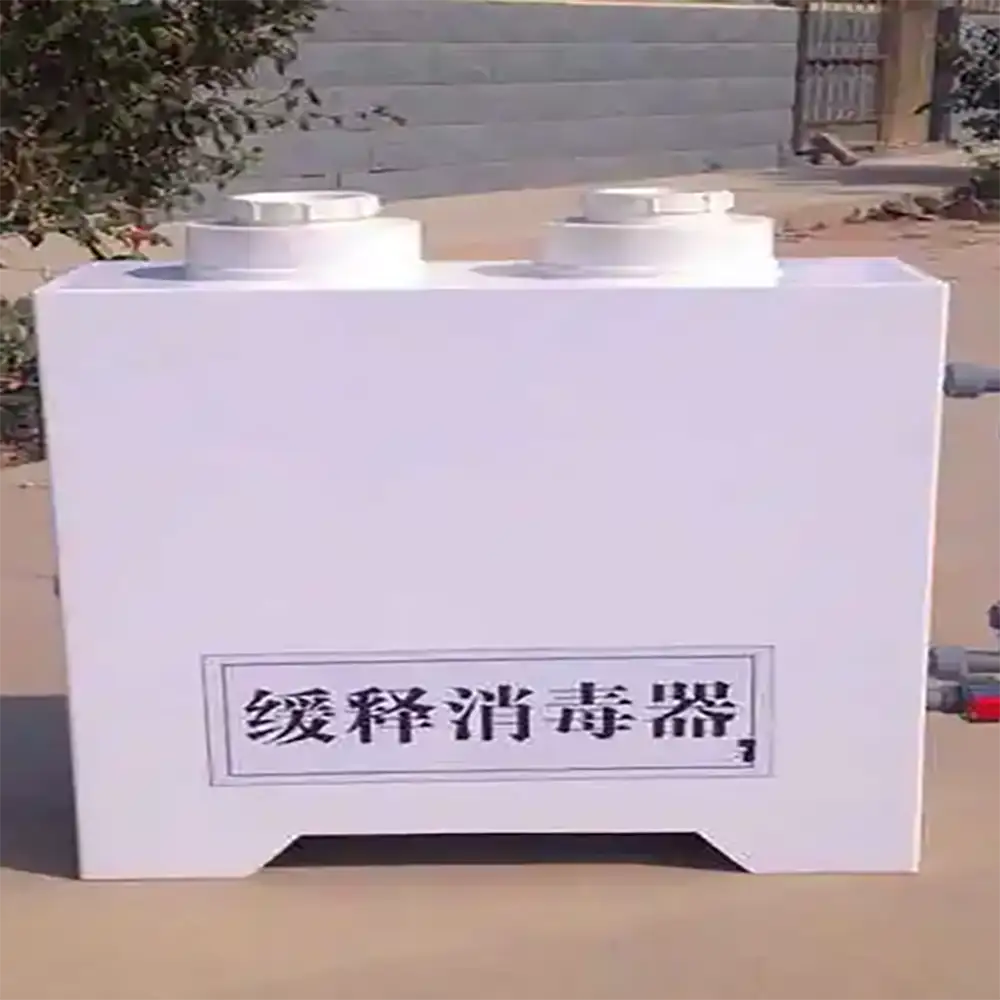
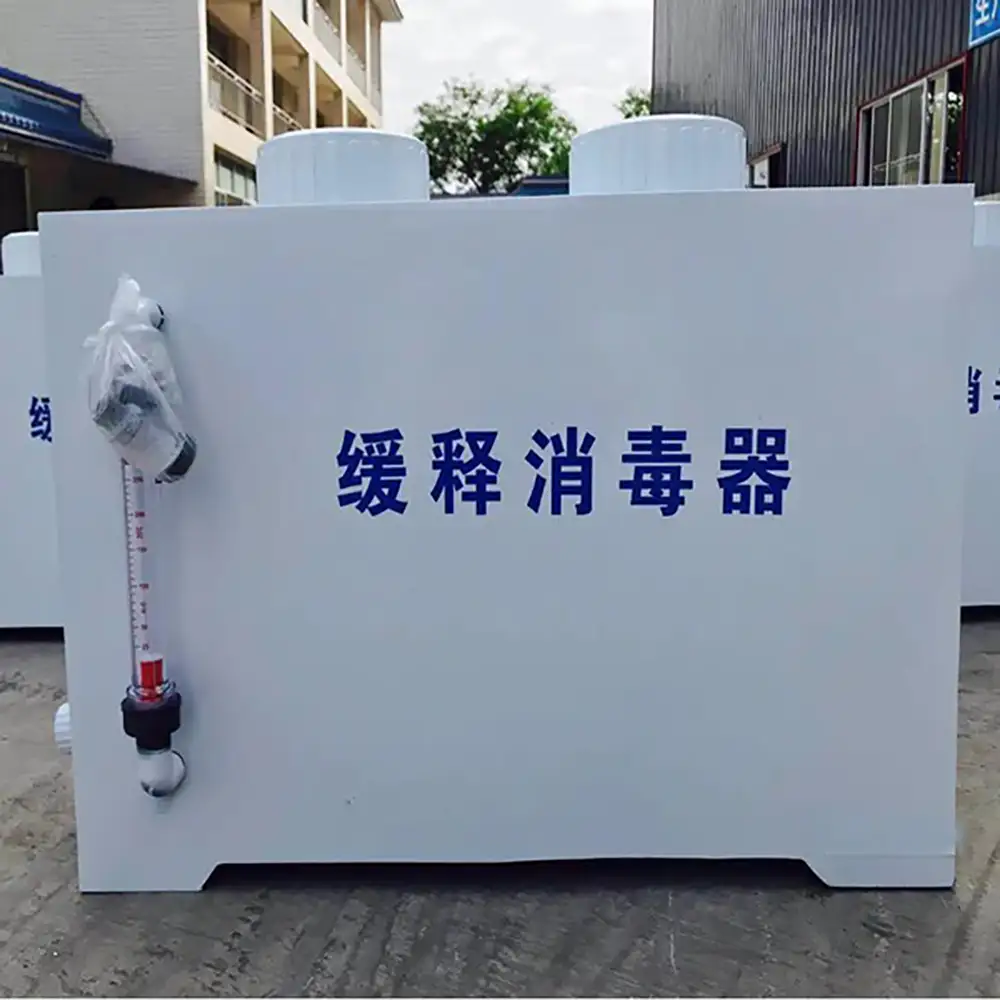
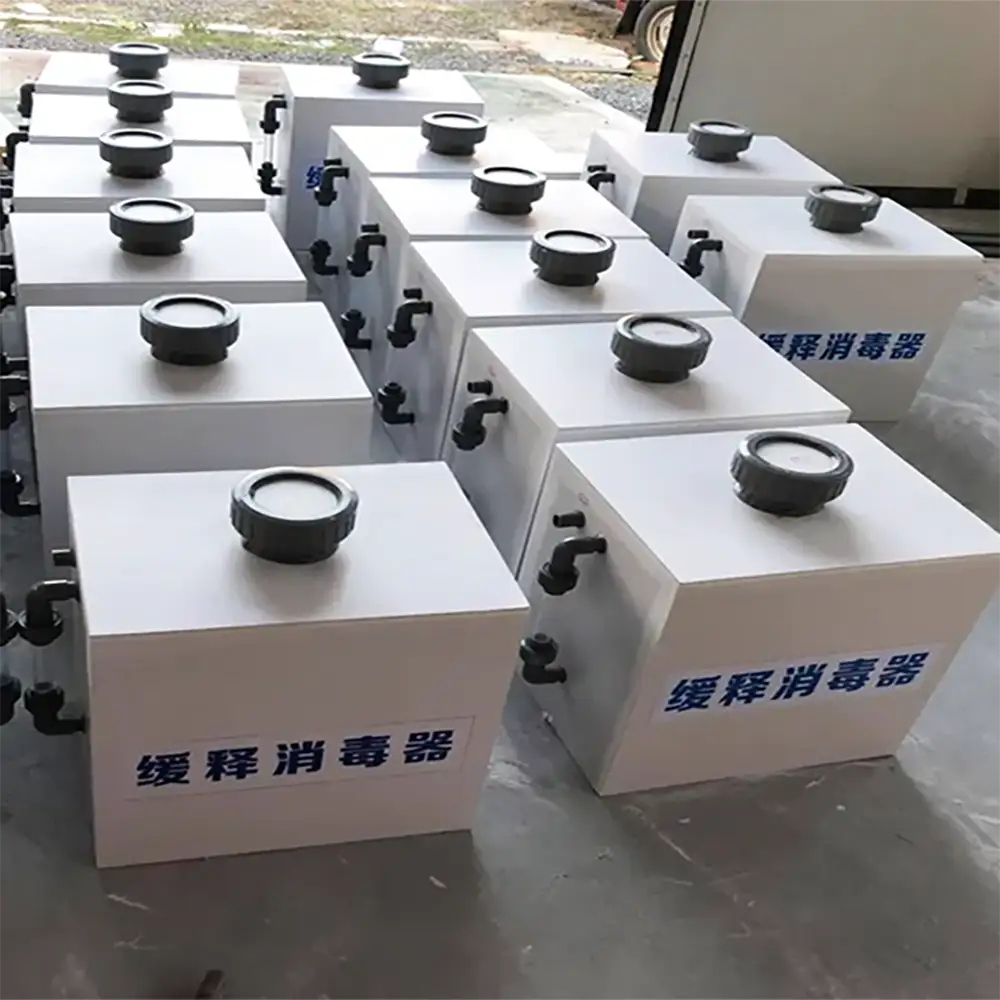
Slow-Release Sterilizer for Water and Wastewater Disinfection
A Slow-Release Sterilizer is a water disinfection device designed to provide a controlled release of disinfectant into a flowing water or wastewater stream. It is commonly used where continuous or sustained disinfection is required without relying on a complex continuous chemical dosing pump.
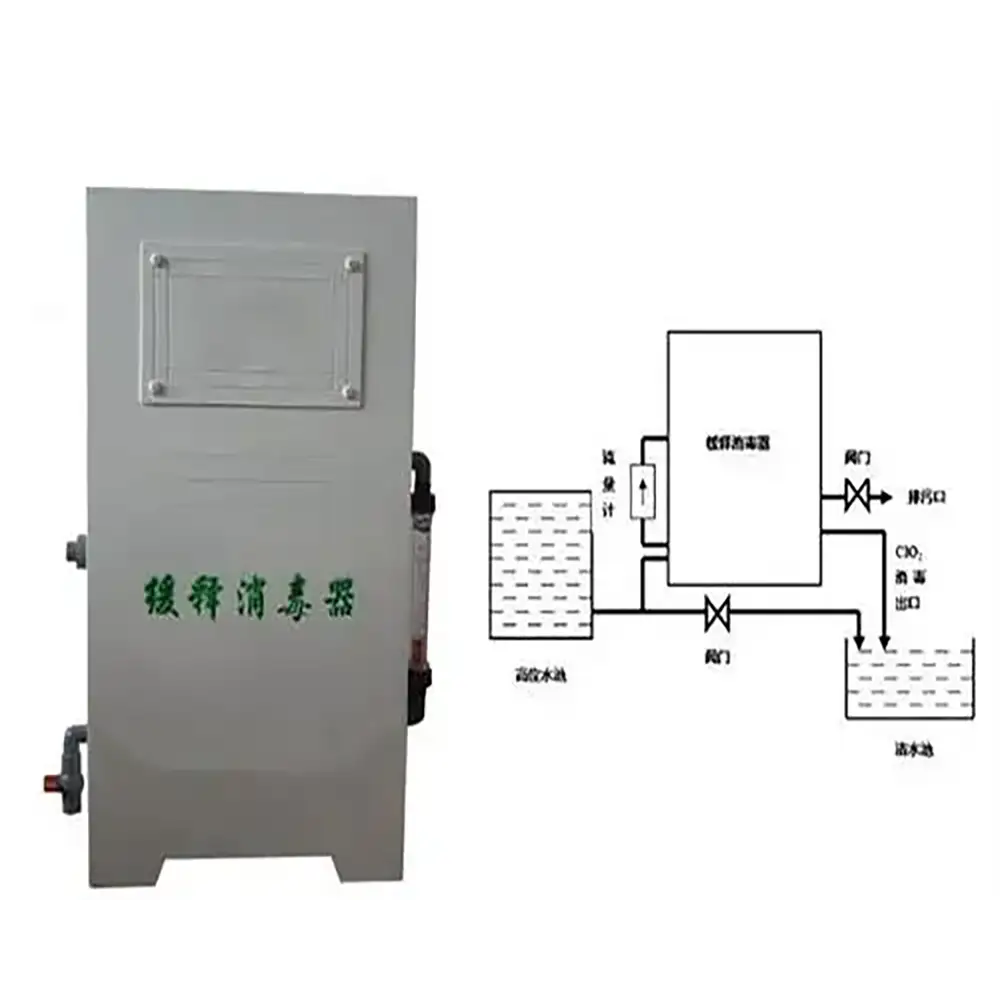
Depending on the equipment design, slow-release sterilizers can use chlorine tablets or other approved solid disinfectants. Water passes through or contacts the disinfectant chamber, allowing a controlled amount of disinfectant to dissolve into the water. The treated water then continues through the disinfection section before discharge, storage, or further treatment.
Slow-release disinfection devices are used in a variety of water-treatment applications, including small water-supply systems, sewage treatment, medical wastewater treatment, rural wastewater treatment, and decentralized treatment systems. Available equipment examples describe chlorine-tablet slow-release units as compact devices with no moving parts and simple installation.
How Does a Slow-Release Sterilizer Work?
The basic operating principle is straightforward.
A solid disinfectant, commonly formulated as a chlorine tablet where permitted, is placed inside a dedicated slow-release chamber. As water passes through the chamber, a controlled portion of the disinfectant dissolves into the water.
The disinfectant then reacts with microorganisms and other biological contaminants in the treated water. Chlorine-based disinfection works through oxidation and inactivation of microorganisms, with effectiveness influenced by disinfectant concentration, contact time, pH, temperature, organic matter, and other water-quality conditions.
A simplified process can be described as:
Treated Water Inlet → Slow-Release Disinfectant Chamber → Contact/Disinfection → Disinfected Water Outlet
The slow-release approach is designed to provide a more controlled disinfectant supply than manually adding tablets directly into a water tank. Some slow-release devices use adjustable openings or flow arrangements to influence the rate at which disinfectant dissolves.
Slow-Release Chlorine Disinfection
One common configuration uses chlorine tablets as the disinfectant source.
Chlorine-based disinfection is widely used in water and wastewater treatment because chlorine can inactivate many microorganisms when sufficient disinfectant concentration and contact time are achieved.
However, chlorine performance is affected by water chemistry. Organic matter and other chlorine-demanding substances can consume disinfectant, while pH and temperature can influence disinfection behavior.
For this reason, a slow-release sterilizer should generally be installed after appropriate pretreatment or biological treatment when treating wastewater. The water should be sufficiently clarified so that suspended solids and organic loading do not unnecessarily interfere with the disinfection stage.
Application in Wastewater Treatment
A Slow-Release Sterilizer can be installed as the final disinfection stage of a wastewater treatment process.
A typical treatment sequence may be:
Screening → Biological Treatment → Sedimentation → Filtration → Slow-Release Disinfection → Discharge
For small decentralized wastewater systems, the slow-release unit can provide a relatively simple final disinfection stage.
It can also be incorporated into compact treatment equipment for clinics, outpatient facilities, small medical facilities, rural wastewater treatment, and other locations where a simple disinfection configuration is preferred. Published equipment examples specifically describe slow-release disinfection units for medical wastewater and outpatient wastewater treatment.
The sterilizer itself should not be considered a substitute for upstream wastewater treatment. High suspended solids, excessive organic matter, or other contaminants may increase disinfectant demand and reduce the effectiveness of the final disinfection stage.
Water Supply Disinfection
Slow-release sterilizers can also be used for certain small-scale water-supply applications.
Water from a storage tank, well, or other treated-water source can pass through the slow-release chamber before entering a distribution or storage system.
Some designs use a gravity-driven or low-energy operating principle, making them potentially suitable for locations where power availability is limited. Patent literature describes slow-release disinfection devices intended for small water-supply systems and rural water treatment.
For drinking-water applications, the disinfectant, dosing level, contact time, residual disinfectant, and overall system design must comply with applicable drinking-water requirements.
Compact and Simple Disinfection Design
One advantage of slow-release technology is its relatively simple mechanical structure.
A basic unit may include:
Disinfectant Chamber
Tablet Loading Port
Water Inlet
Water Outlet
Flow Control Structure
Internal Support or Tablet Tray
Adjustable Release Opening
Inspection Cover
Connecting Pipes
Mounting Structure
Some designs do not require electrical power or complicated dosing pumps. This can simplify installation in small treatment facilities.
Commercial product examples describe slow-release units made from corrosion-resistant materials such as UPVC and designed without moving parts.
The actual construction material should be selected according to the disinfectant, water chemistry, temperature, installation environment, and required service life.
Advantages of Slow-Release Disinfection
Controlled Disinfectant Release
The slow-release chamber is designed to gradually dissolve disinfectant rather than adding a large quantity of chemical at one time.
Simple Operation
Compared with automated liquid chemical dosing systems, a basic tablet-based unit can have fewer mechanical and electrical components.
Low Power Requirements
Some gravity-flow configurations can operate without an electrical dosing pump, which can be useful for decentralized or remote treatment applications.
Compact Structure
Slow-release sterilizers generally require limited installation space and can be incorporated into compact wastewater treatment systems.
Continuous Disinfection
When properly sized and maintained, the system can continuously supply disinfectant to the treated-water stream.
Easy Chemical Replacement
The disinfectant chamber can be opened periodically to inspect the remaining tablets and replenish the disinfectant according to the operating schedule.
Medical and Healthcare Wastewater
Disinfection is particularly important for wastewater from healthcare-related facilities because the wastewater may contain microorganisms and other biological contaminants.
A slow-release chlorine disinfection unit can be installed as part of a broader medical wastewater treatment process after appropriate pretreatment and clarification.
For example:
Medical Wastewater → Pretreatment → Biological Treatment → Solid-Liquid Separation → Filtration → Slow-Release Sterilizer → Final Discharge
Published medical wastewater equipment configurations use slow-release chlorine disinfection together with filtration and other treatment stages.
The required treatment process should be determined according to the facility type, wastewater characteristics, local discharge requirements, and applicable healthcare wastewater regulations.
Installation Position
The sterilizer is normally installed after the primary wastewater treatment stages and before the final discharge point.
For water-supply applications, it may be installed downstream of filtration and upstream of the treated-water storage or distribution system.
The installation should provide:
Stable Water Flow
Suitable Contact Time
Easy Tablet Replacement
Safe Chemical Handling
Convenient Inspection
Adequate Ventilation Where Required
Protection From Unauthorized Access
The system should also be installed so that operators can safely inspect and replenish the disinfectant.
Disinfection Performance Factors
Several factors affect the performance of a slow-release sterilizer.
Water Flow:
Excessive flow may reduce contact time, while very low flow may produce different disinfectant-release behavior.
Disinfectant Concentration:
The required concentration depends on water quality and the treatment objective.
Contact Time:
Adequate contact time is necessary for effective microbial inactivation.
pH:
Chlorine disinfection performance can vary with pH.
Organic Matter:
High organic loading can consume chlorine and increase disinfectant demand.
Suspended Solids:
High turbidity and suspended solids can interfere with disinfection and should generally be reduced before the final disinfection stage.
Because of these variables, a slow-release sterilizer should be sized according to actual flow and water-quality conditions rather than relying only on a nominal equipment capacity.
Maintenance and Operation
Routine maintenance is relatively simple but remains important.
Operators should periodically check the disinfectant chamber, tablet condition, water flow, release openings, pipes, valves, and outlet water.
The remaining disinfectant should be inspected and replenished according to actual consumption.
If the system includes adjustable dosing or flow-control components, these should be checked for blockage or scaling.
For wastewater applications, upstream filtration and clarification should also be maintained. Excessive solids entering the sterilizer may affect flow distribution and increase maintenance requirements.
Operators should follow the chemical manufacturer's safety instructions when handling chlorine tablets or other disinfectants.
Integration With Complete Treatment Systems
A Slow-Release Sterilizer can be integrated with many wastewater treatment technologies.
For example:
Integrated Sewage Treatment Equipment → Sedimentation → Filtration → Slow-Release Sterilizer
or:
Biological Wastewater Treatment → Clarification → Slow-Release Chlorine Disinfection → Discharge
For medical wastewater:
Medical Wastewater Treatment → Filtration → Slow-Release Disinfection → Final Discharge
The best configuration depends on wastewater quality, treatment capacity, microbial-control objectives, and local discharge requirements.
Why Choose Us?
Simple Disinfection Technology: Slow-release systems provide a straightforward method for continuous water disinfection.
Compact Equipment: Suitable for small and decentralized water and wastewater treatment systems.
Low-Complexity Operation: Selected configurations can operate without complex electrical dosing equipment.
Flexible Applications: Suitable for water supply, sewage treatment, medical wastewater, rural wastewater, and other disinfection applications.
Controlled Chemical Release: Designed to provide gradual disinfectant dissolution through a dedicated chamber.
Easy Maintenance: Tablet replacement, chamber inspection, and routine cleaning can be performed conveniently.
Integrated Treatment: Can be installed as the final disinfection stage of a complete wastewater treatment system.
Corrosion-Resistant Materials: Equipment materials can be selected according to disinfectant and water chemistry.
Application-Based Design: Capacity and configuration can be selected according to flow rate, contact time, water quality, and treatment requirements.
Practical for Decentralized Systems: Compact designs can be considered for locations with limited space or limited infrastructure.
FAQs
1. What Is a Slow-Release Sterilizer?
A Slow-Release Sterilizer is a water disinfection device that gradually releases a solid disinfectant into a flowing water or wastewater stream.
2. What Disinfectant Is Used in a Slow-Release Sterilizer?
Chlorine tablets are commonly used in this type of equipment, although the appropriate disinfectant depends on the equipment design, application, water chemistry, and applicable regulations.
3. How Does a Slow-Release Chlorine Sterilizer Work?
Water passes through a chamber containing solid disinfectant. A controlled portion dissolves into the water and provides chlorine-based disinfection.
4. Can a Slow-Release Sterilizer Be Used for Wastewater?
Yes. It can be used as a final disinfection stage after appropriate wastewater treatment and clarification.
5. Can It Be Used for Medical Wastewater?
Yes. Slow-release disinfection units can be incorporated into medical and outpatient wastewater treatment systems when appropriately designed for the wastewater characteristics and applicable requirements.
6. Does a Slow-Release Sterilizer Need Electricity?
Some basic gravity-flow designs do not require electrical dosing equipment. Other systems may use pumps, controls, or flow-monitoring components depending on the configuration.
7. What Are the Main Advantages of Slow-Release Disinfection?
The main advantages include simple construction, gradual disinfectant release, compact installation, relatively simple operation, and suitability for certain decentralized treatment applications.
8. Can It Remove Suspended Solids?
No. A sterilizer is primarily a disinfection device, not a solids-removal unit. Suspended solids should normally be reduced by screening, sedimentation, filtration, or other upstream treatment.
9. How Often Should Chlorine Tablets Be Replaced?
Replacement frequency depends on water flow, disinfectant consumption, tablet formulation, water quality, and system configuration. Operators should inspect the chamber regularly rather than relying on one universal replacement interval.
10. Can the Disinfectant Release Rate Be Adjusted?
Some slow-release sterilizers include adjustable openings or flow-control structures that can influence the release rate. The adjustment method depends on the specific equipment design.
11. What Factors Affect Disinfection Performance?
Flow rate, disinfectant concentration, contact time, pH, temperature, organic matter, suspended solids, and water chemistry can all affect disinfection performance.
12. How Should a Slow-Release Sterilizer Be Selected?
Selection should consider treatment flow, water quality, required disinfection objective, disinfectant type, contact time, installation conditions, maintenance requirements, and applicable regulations.
Prev:
Ro Reverse Osmosis
Next:
Chemical Chlorine Dioxide Generator
TAG:
Water Treatment Disinfection Equipment,
Water Disinfection System,
Water Disinfection Equipment,
Wastewater Disinfection System,
Water Sterilization System,
Hospital Wastewater Disinfection,
Medical Wastewater Disinfection,
Drinking Water Disinfection,
Sewage Disinfection System,
Wastewater Sterilization System,
Wastewater Sterilization Equipment,
Sewage Disinfection Equipment,
Wastewater Disinfection Equipment,
Water Sterilization Equipment,
Sewage Sterilization Equipment,
Sewage Sterilization System,
Final Wastewater Disinfection,
Final Sewage Disinfection,
Drinking Water Sterilization,
Sewage Sterilizer,
Wastewater Sterilizer,
Water Sterilizer,
Water Treatment Disinfection System,
Medical Sewage Disinfection,
Medical Wastewater Disinfection Equipment,
Medical Sewage Sterilization,
Clinic Wastewater Disinfection,
Outpatient Wastewater Disinfection,
Rural Water Disinfection,
Rural Wastewater Disinfection,
Related Category:
Slow-Release Sterilizer,Slow-Release Disinfection Equipment,Slow-Release Chlorine Sterilizer,Chlorine Tablet Disinfectio China, suppliers, manufacturers, factory, customized, wholesale, quotation, made in China