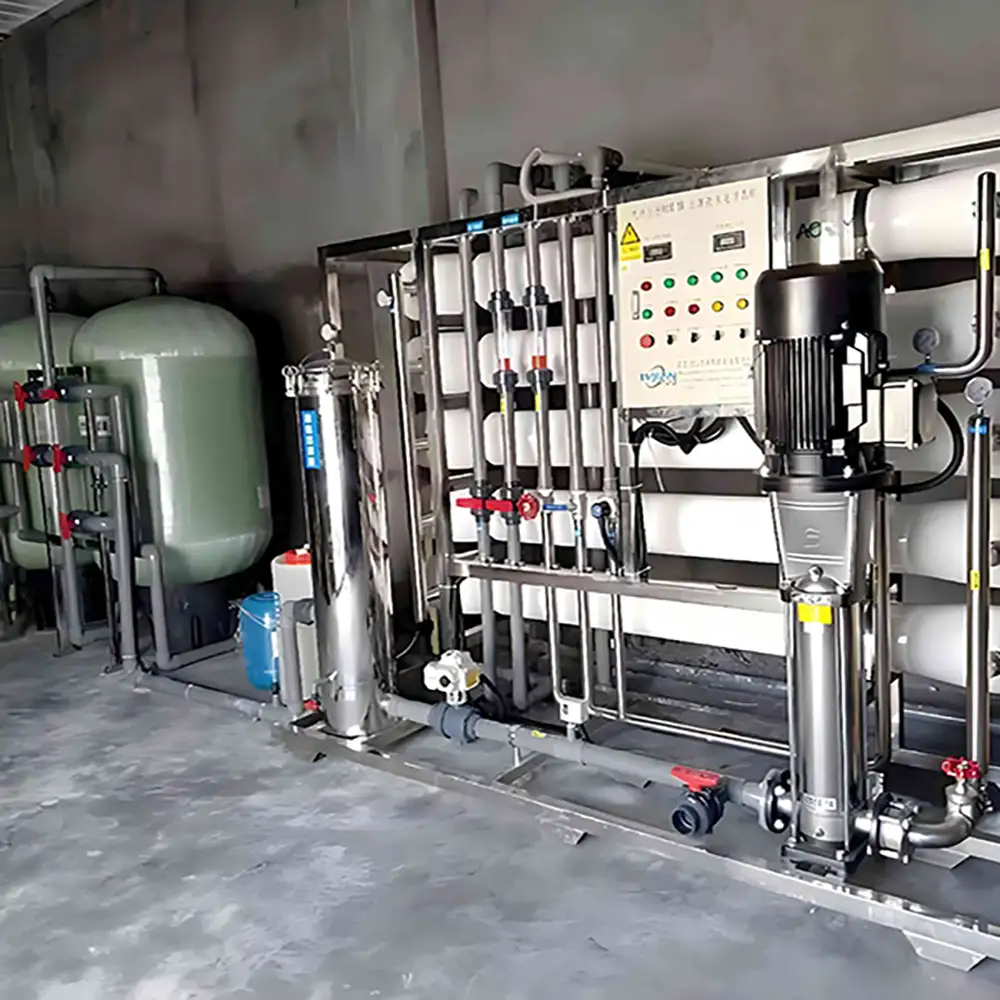
Fiberglass Integrated Sewage Treatment Equipment
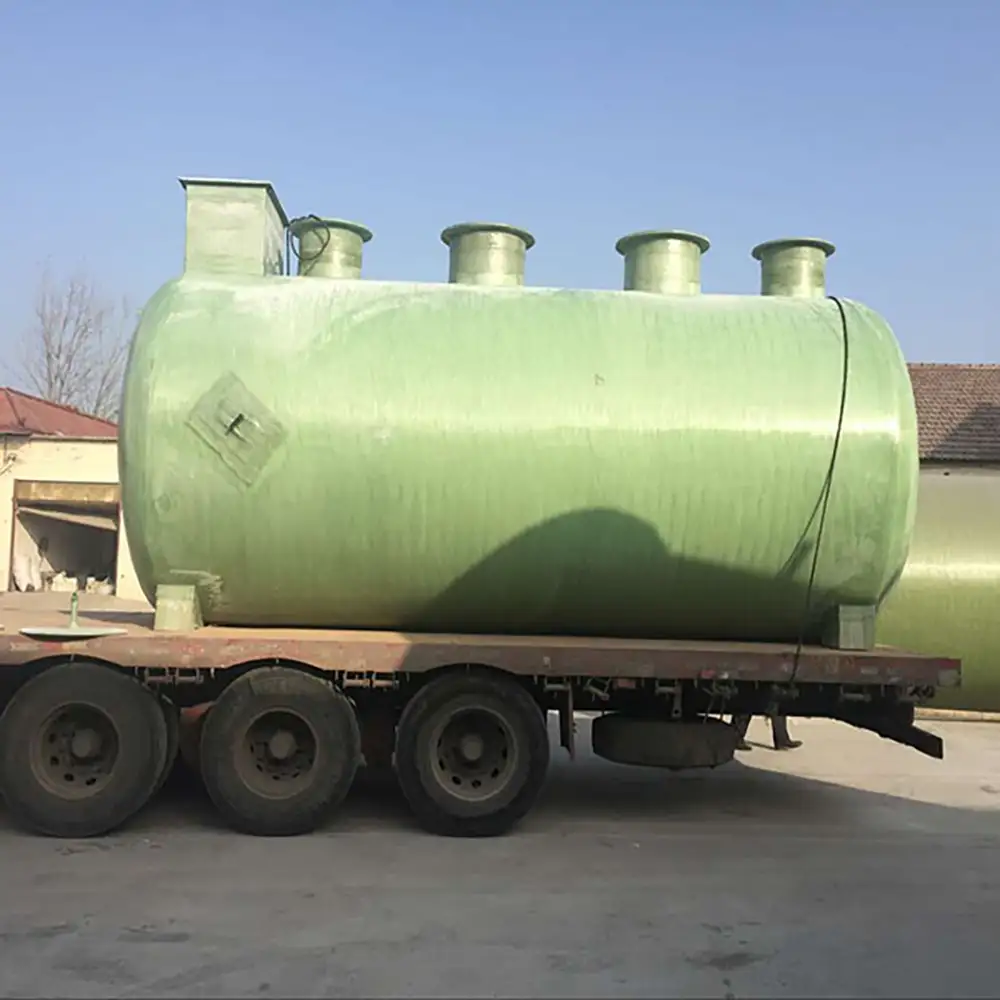
Fiberglass Integrated Sewage Treatment Equipment is a compact wastewater treatment solution that combines multiple treatment processes inside a fiberglass-reinforced plastic structure. Also known as FRP or GRP integrated wastewater treatment equipment, this type of system is designed for domestic sewage, decentralized wastewater treatment and selected wastewater applications where a corrosion-resistant, compact and space-efficient treatment system is required.
Fiberglass is widely used for wastewater tanks because it can provide corrosion resistance and a high strength-to-weight ratio. EPA technical materials also identify fiberglass tanks as one of the tank types used in decentralized and onsite wastewater systems.
The integrated design can incorporate pretreatment, biological treatment, sedimentation, sludge separation, filtration and disinfection according to project requirements. The final configuration should be selected according to wastewater characteristics, hydraulic loading, treatment objectives and applicable discharge requirements.
|
Whether to customize |
yes |
Material |
fiberglass fiber |
|
structure type |
Cylindrical |
Throughput |
custom made |
|
Operation method |
Intelligence, automation |
Application places |
Wastewater collection
upgrading project |
|
brand |
wanze shengshi |
Equipment size |
custom made |
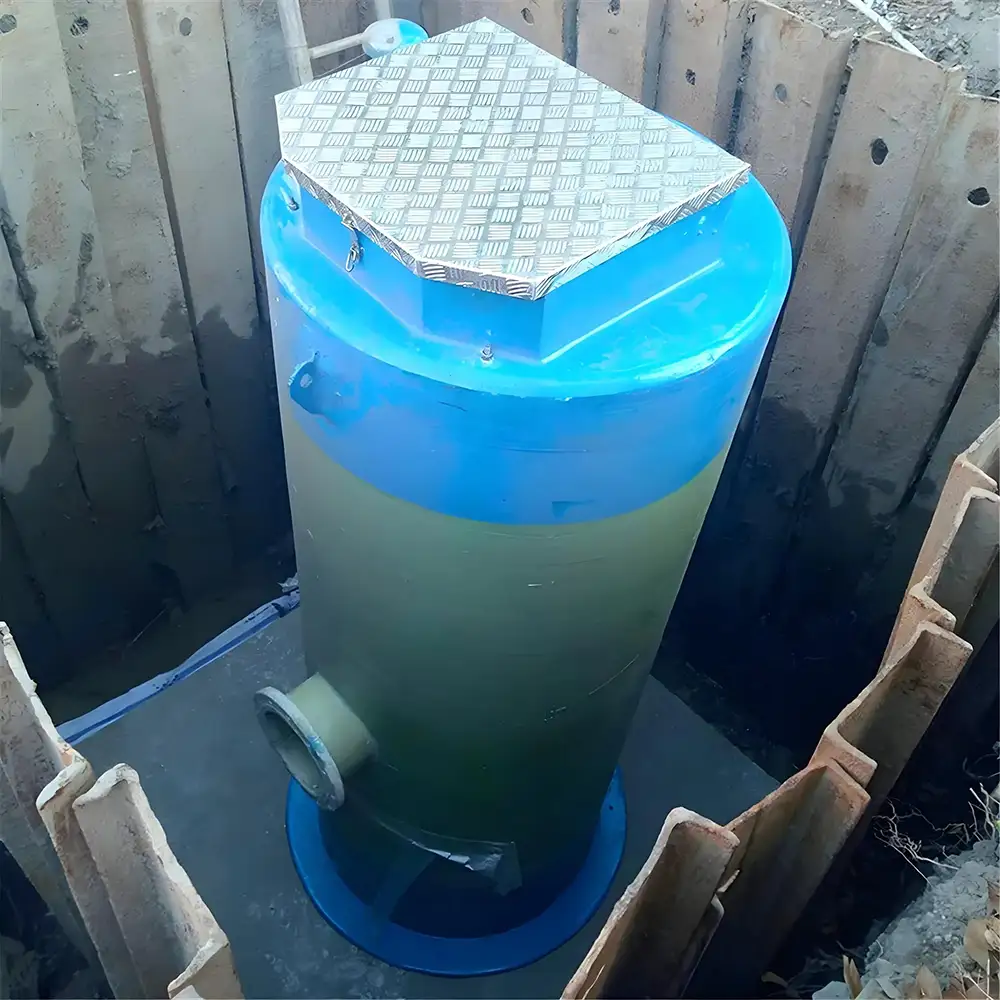
The integrated pumping station is a new type of environmentally friendly pumping station that is designed, manufactured, assembled, transported and installed on-site by the factory to enhance the drainage of sewage, rainwater, drinking water, wastewater, etc. The integrated pump station product has modern product characteristics such as short construction period, convenient installation, small size, high efficiency, and intelligent networking. Compared with traditional pumping stations, the civil engineering quantity is less, and the investment can be reduced by more than half. The product quality is reliable and it is a substitute for the traditional coagulation sewage lifting pump station.
1.0n demand customization: Each set of pump stations is designed based on the parameters provided by the customer, to meet the operational requirements of the pump station.
2.Design: Adopting new flow field calculations to minimize the discharge of solid particles such as sludge from the equipment.
3.Industrial control design: Adopting high-quality electrical appliances, touch screen design, including communication RS485 interface. The pump station should have manual control, automatic control, and distance detection functions, and different control methods should be able to switch freely.
Industrial Fluid Transfer, /Integrated Pump Station
4.New material: The pump station cylinder structure is made of fiberglass reinforced plastic (GRP), which is fully automated and continuously wound to ensure uniform thickness and achieve the designed stiffness, with stable and excellent quality. 5.Accessories standard: All accessories are designed and manufactured in the factory, including pressure pipelines, maintenance platforms, inlet and outlet pipes, etc., and the reliability of the pump station is strictly debugged before leaving the factory. 6.Highly integrated: As an integrated equipment, the pump station provides a complete set of components such as cylinder, pressure pipeline, maintenance platform, maintenance ladder, grid filtration device, coupling system, pump lifting system, ventilation device, anti-skid manhole cover, etc.
7.Cost savings: The pump station is supplied as a complete set, and only the entire pump station needs to be installed on site, reducing the civil construction cycle and engineering costs, and reducing the overall investment of the owner.
8.Service life: The pump station cylinder is made of fiberglass material, and the internal accessories are made of anti-corrosion materials such as SS304 and hot-dip galvanizing, which do not require maintenance and have a long service life.
9.Convenient maintenance: Both the water pump and grille are equipped with lifting rails, which can be quickly removed and installed during maintenance.
What Is Fiberglass Integrated Sewage Treatment Equipment?
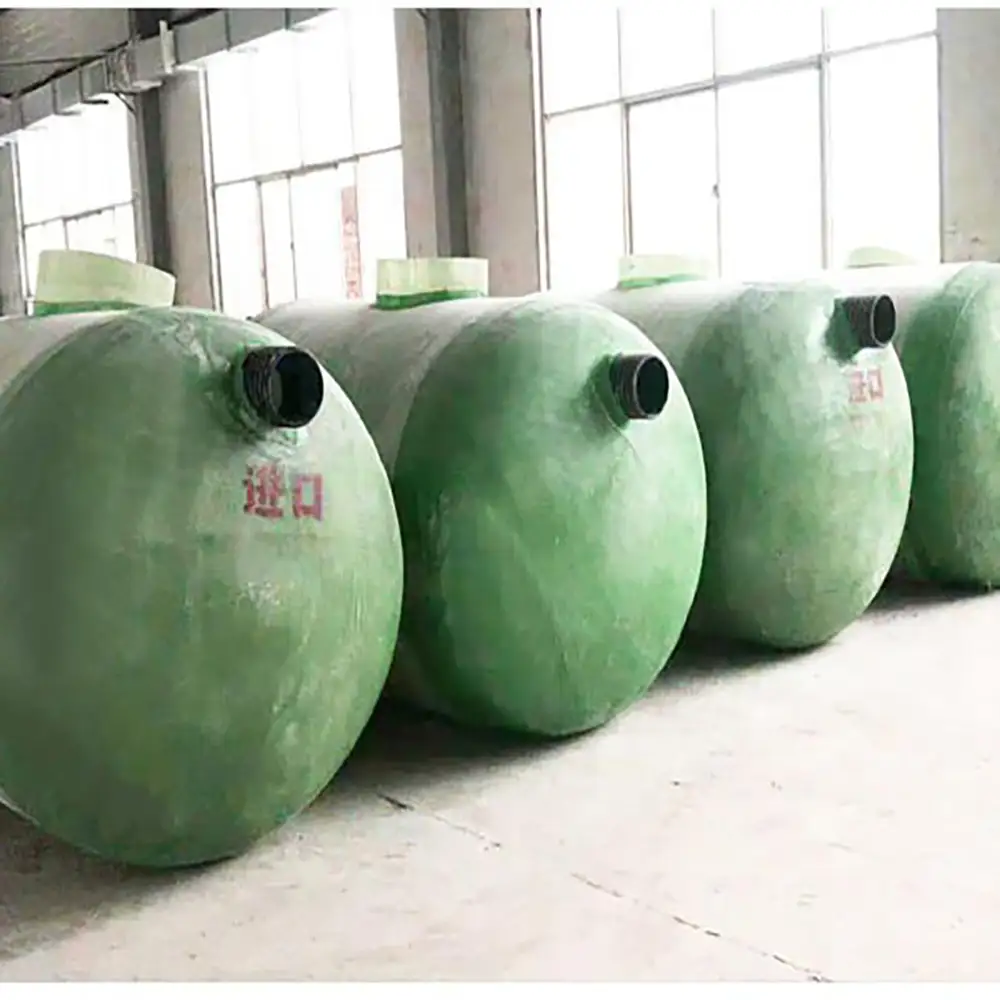
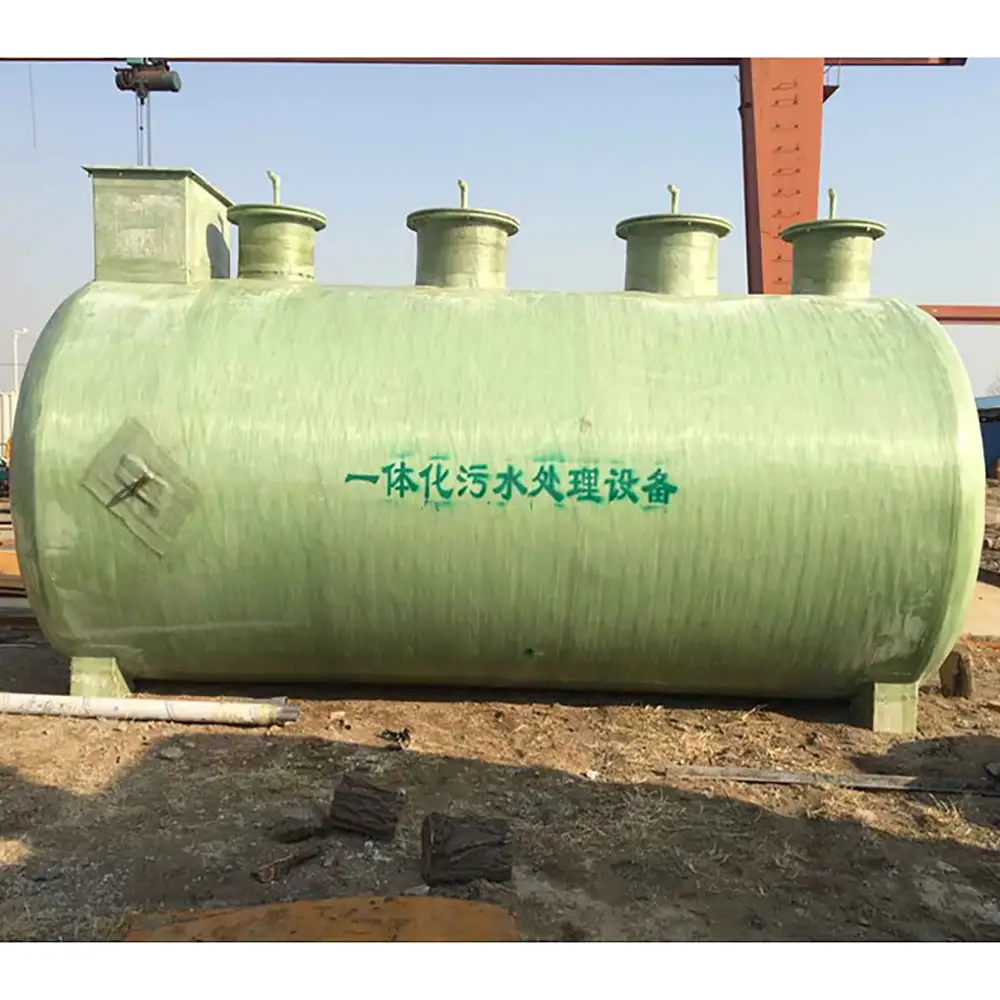
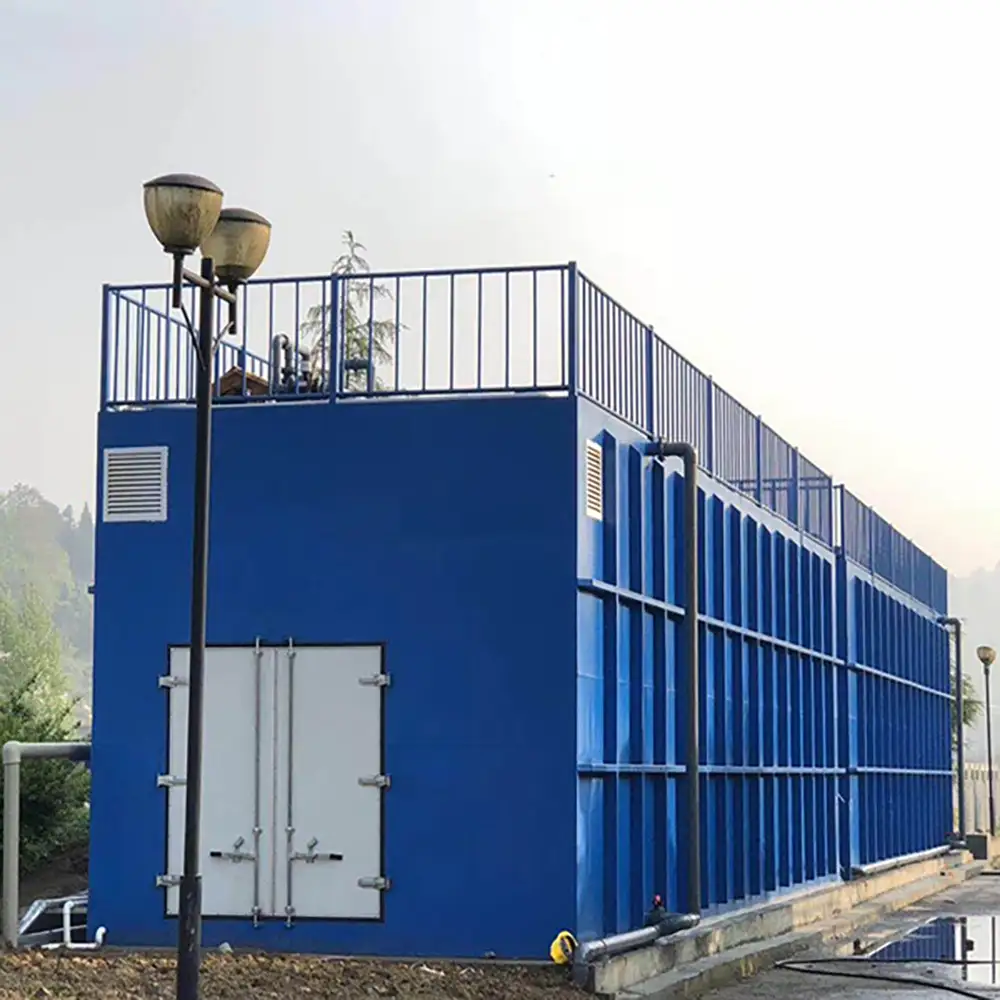
Fiberglass Integrated Sewage Treatment Equipment is an integrated sewage treatment system with a fiberglass-reinforced plastic shell or tank structure. Instead of constructing separate concrete treatment tanks for every process, multiple treatment chambers can be incorporated into a single prefabricated unit.
The equipment may include an inlet and pretreatment section, anaerobic or anoxic zone, aerobic biological treatment chamber, sedimentation section and disinfection stage. Additional filtration or advanced treatment modules can also be incorporated when required.
The fiberglass structure provides a practical alternative to conventional steel or concrete tanks for many projects. Fiberglass wastewater equipment is particularly attractive where corrosion resistance, transportation, compact installation and prefabricated construction are important considerations.
FRP and GRP Wastewater Treatment Equipment
FRP stands for Fiber Reinforced Plastic, while GRP generally refers to Glass Reinforced Plastic. In wastewater treatment applications, these terms are often used to describe fiberglass-reinforced composite structures.
Compared with conventional carbon steel structures, fiberglass equipment does not depend on a conventional painted steel surface for corrosion protection. This can be useful in wastewater environments where moisture, chemicals and corrosive gases may be present.
Fiberglass also provides a relatively high strength-to-weight ratio, which can simplify transportation and positioning compared with some heavier tank materials. Industry equipment descriptions commonly highlight corrosion resistance, lightweight construction and durability as characteristics of FRP wastewater treatment equipment.
Integrated Domestic Sewage Treatment
Fiberglass integrated systems are well suited to domestic sewage treatment because domestic wastewater normally contains biodegradable organic matter, suspended solids, nutrients and other contaminants that can be addressed through a combination of physical and biological treatment.
The system can receive wastewater from residential communities, rural homes, hotels, schools, resorts, offices, service facilities and other buildings.
A typical treatment sequence may begin with screening or solid separation, followed by biological treatment, sedimentation and disinfection. Depending on the required effluent quality, filtration or other advanced treatment can be added.
The actual process should be designed according to the wastewater flow and pollutant loading rather than assuming that every domestic sewage application has identical characteristics.
Biological Treatment Process
Biological treatment is usually one of the key stages in an integrated sewage treatment system.
Aerobic microorganisms can consume biodegradable organic matter under controlled conditions. Depending on project requirements, fiberglass integrated equipment can incorporate technologies such as biological contact oxidation, MBBR, A/O, A²/O or other biological processes.
MBBR technology uses suspended carriers to provide surface area for biofilm growth. This can make it suitable for compact wastewater treatment equipment where a relatively high biological treatment capacity is required within a limited tank volume.
Biological contact oxidation is another option for integrated sewage treatment. The appropriate process depends on influent quality, hydraulic retention requirements, pollutant loading, temperature and effluent standards.
Pretreatment and Solid Separation
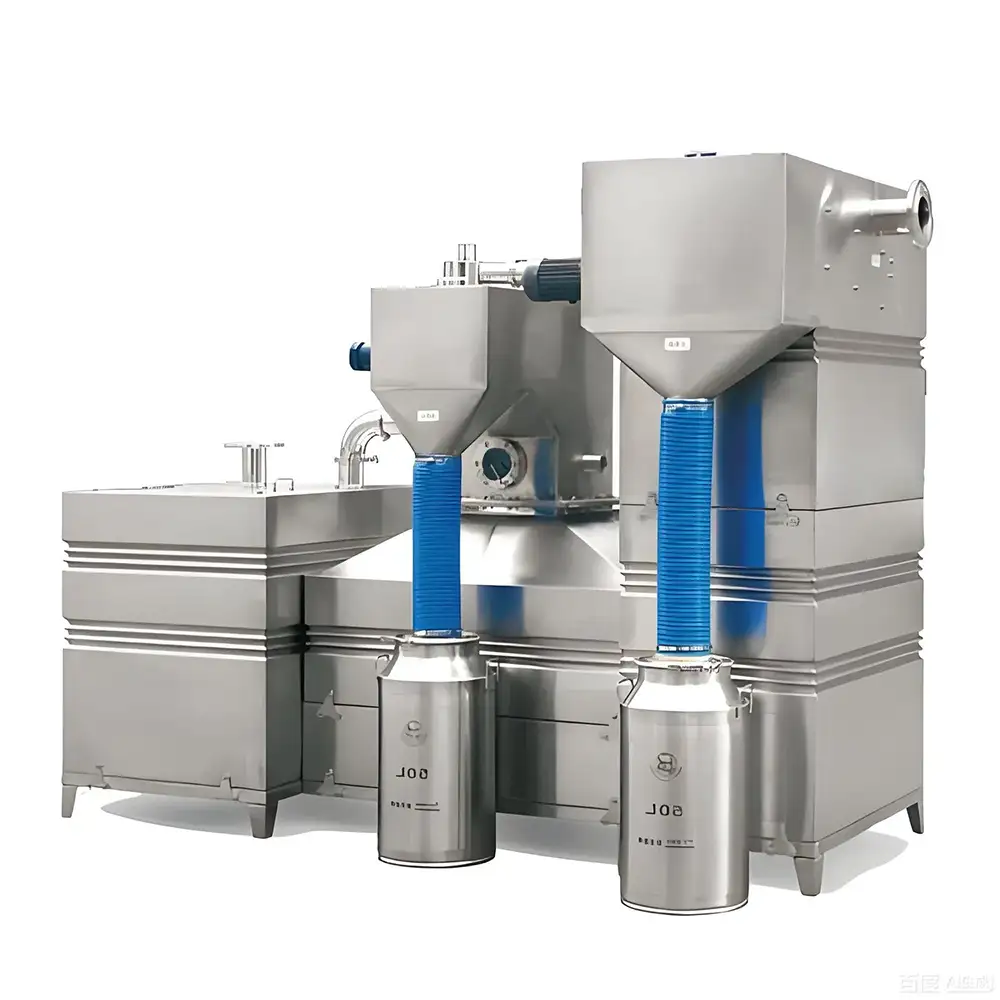
Pretreatment helps protect the biological treatment section from large solids and unwanted materials.
A screening or settling stage can be incorporated at the inlet to separate larger suspended materials before the wastewater enters the biological treatment zone.
For facilities with variable wastewater flow, an equalization section can also be considered. Equalization can help reduce sudden hydraulic or organic loading changes and provide more stable conditions for downstream biological treatment.
Proper pretreatment contributes to stable operation and can reduce the risk of clogging and excessive solids accumulation.
Sedimentation and Sludge Management
After biological treatment, suspended biological solids need to be separated from the treated water.
An integrated sedimentation chamber allows suspended solids to settle before the clarified water moves to subsequent treatment stages.
Depending on the selected biological process, part of the settled sludge may be returned to the biological treatment section, while excess sludge needs to be periodically removed.
Sludge management should be included in the overall system design because even a compact integrated wastewater treatment plant requires appropriate handling of biological solids.
Fiberglass Construction Advantages
The fiberglass structure is one of the defining features of this type of equipment.
Corrosion Resistance: Fiberglass can provide resistance to many moisture and chemically aggressive wastewater environments.
Lightweight Construction: FRP structures can offer a favorable strength-to-weight ratio, which can simplify transportation and installation.
Prefabricated Design: Equipment can be manufactured and assembled before delivery, helping reduce extensive onsite tank construction.
Compact Configuration: Multiple treatment zones can be incorporated into one integrated structure.
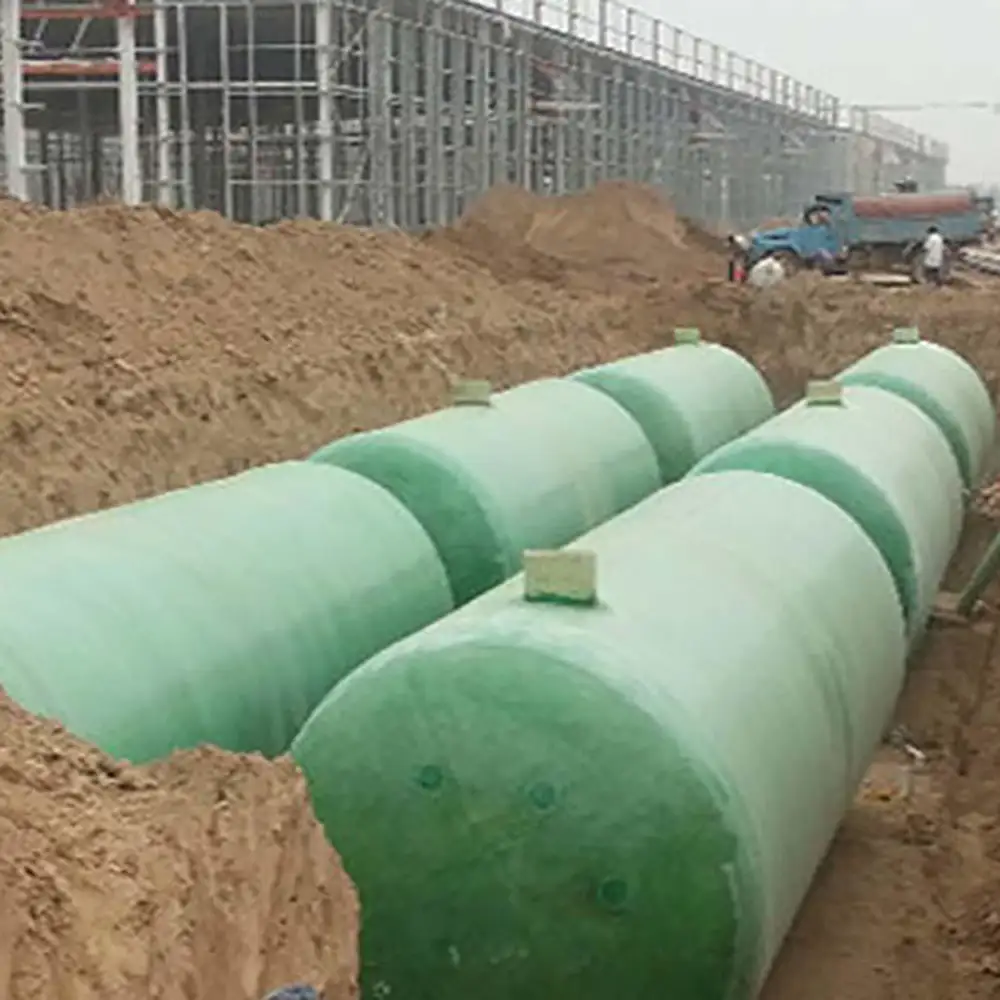
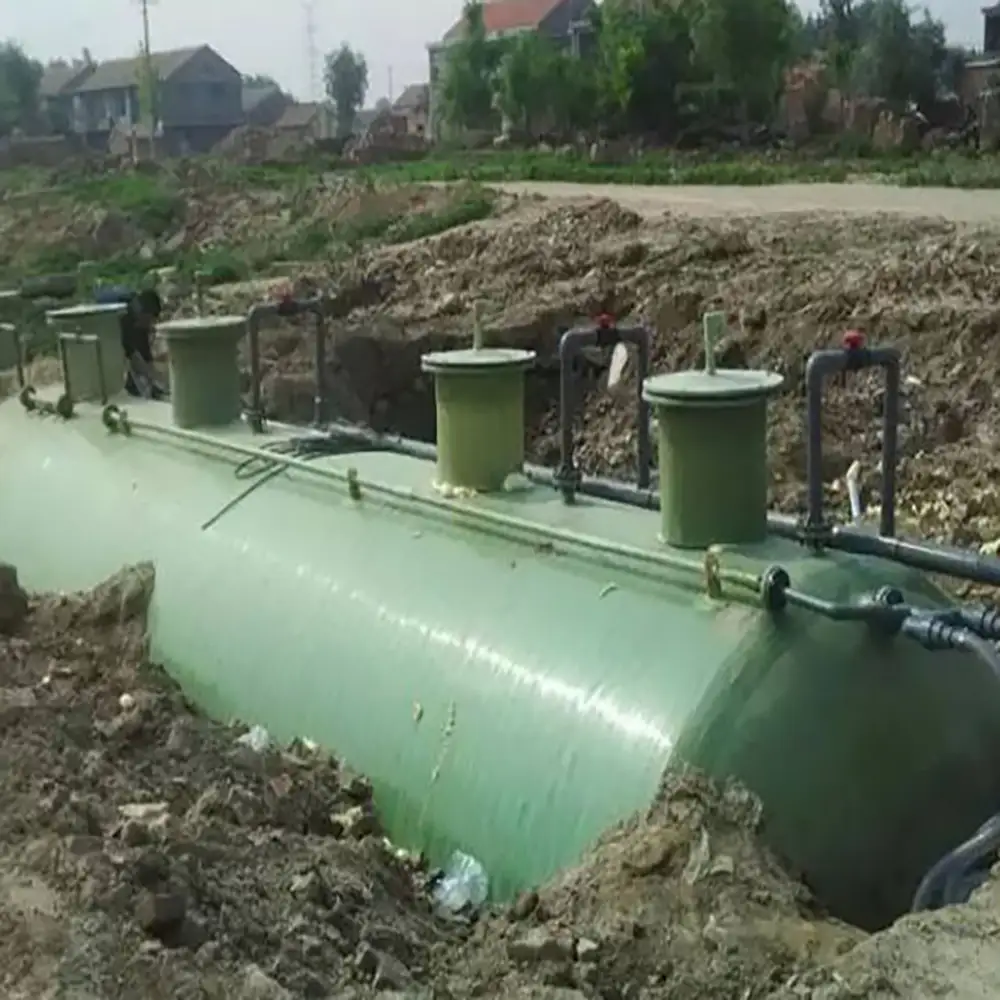
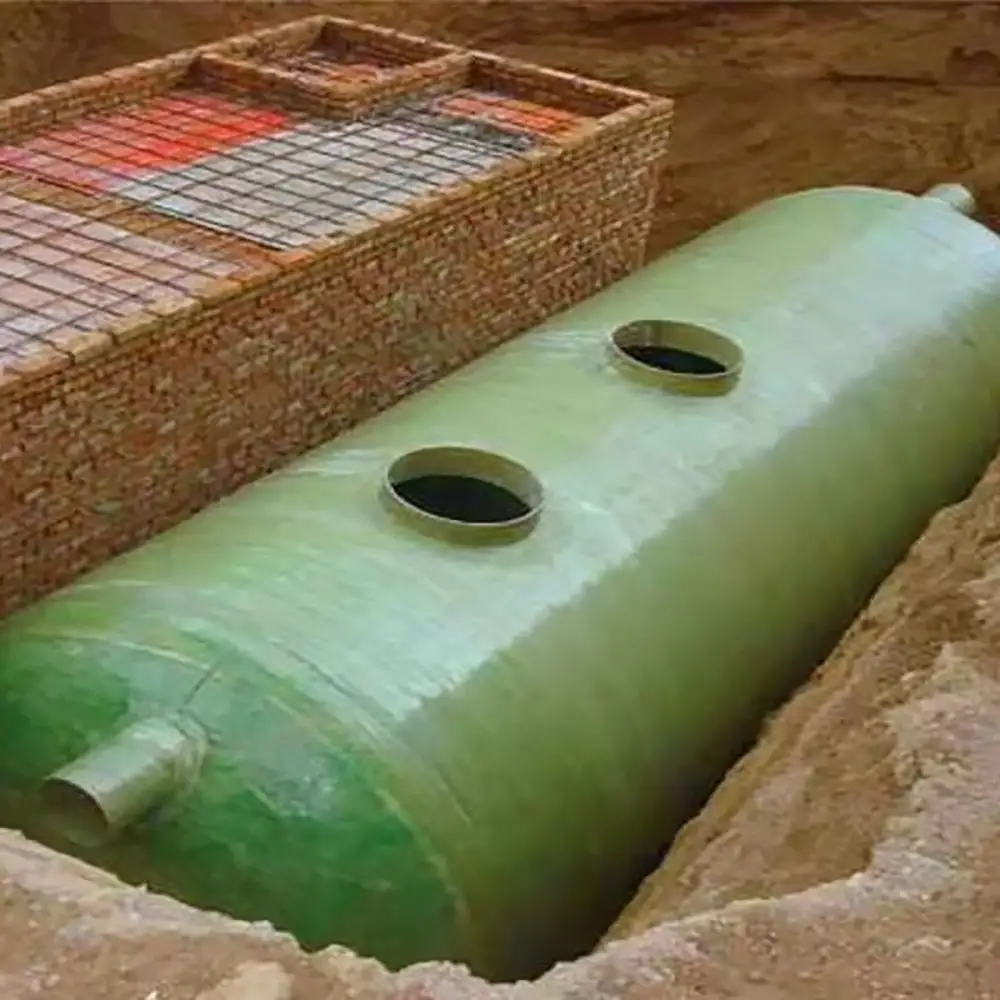
Low Visible Footprint: When designed for buried installation, the main tank can be installed underground while access covers and service components remain available for maintenance.
Durable Composite Structure: Properly designed FRP/GRP equipment can provide a long service life when used within its specified operating conditions.
These advantages are consistent with industry descriptions of fiberglass wastewater treatment equipment and EPA documentation identifying fiberglass as a recognized tank material for decentralized wastewater systems.
Underground Fiberglass Sewage Treatment System
Many fiberglass integrated sewage treatment systems are designed for underground installation.
A buried configuration can reduce the visible footprint of the treatment facility and preserve more usable surface space. This can be useful for residential developments, rural properties, hotels, scenic areas and other locations where the appearance of above-ground tanks is undesirable.
However, underground installation requires appropriate engineering evaluation. Soil conditions, groundwater level, structural loading, excavation depth, tank anchoring, access openings, ventilation and maintenance requirements should all be considered.
EPA guidance emphasizes site evaluation, design, construction, operation and maintenance as important components of decentralized wastewater system management.
Applications
Fiberglass integrated sewage treatment equipment can be used for a wide range of decentralized and onsite wastewater projects.
Typical applications include:
Residential Communities
Rural Sewage Treatment
Hotels And Resorts
Schools And Campuses
Hospitals And Clinics
Scenic And Tourist Areas
Highway Service Areas
Construction Camps
Commercial Facilities
Farms And Agricultural Facilities
Remote Buildings
Small Community Wastewater Treatment
EPA recognizes decentralized wastewater treatment as an approach for individual properties, businesses and small communities, particularly where centralized sewer infrastructure is unavailable or impractical.
Filtration and Disinfection
After biological treatment and sedimentation, additional treatment may be required depending on the final water-quality objective.
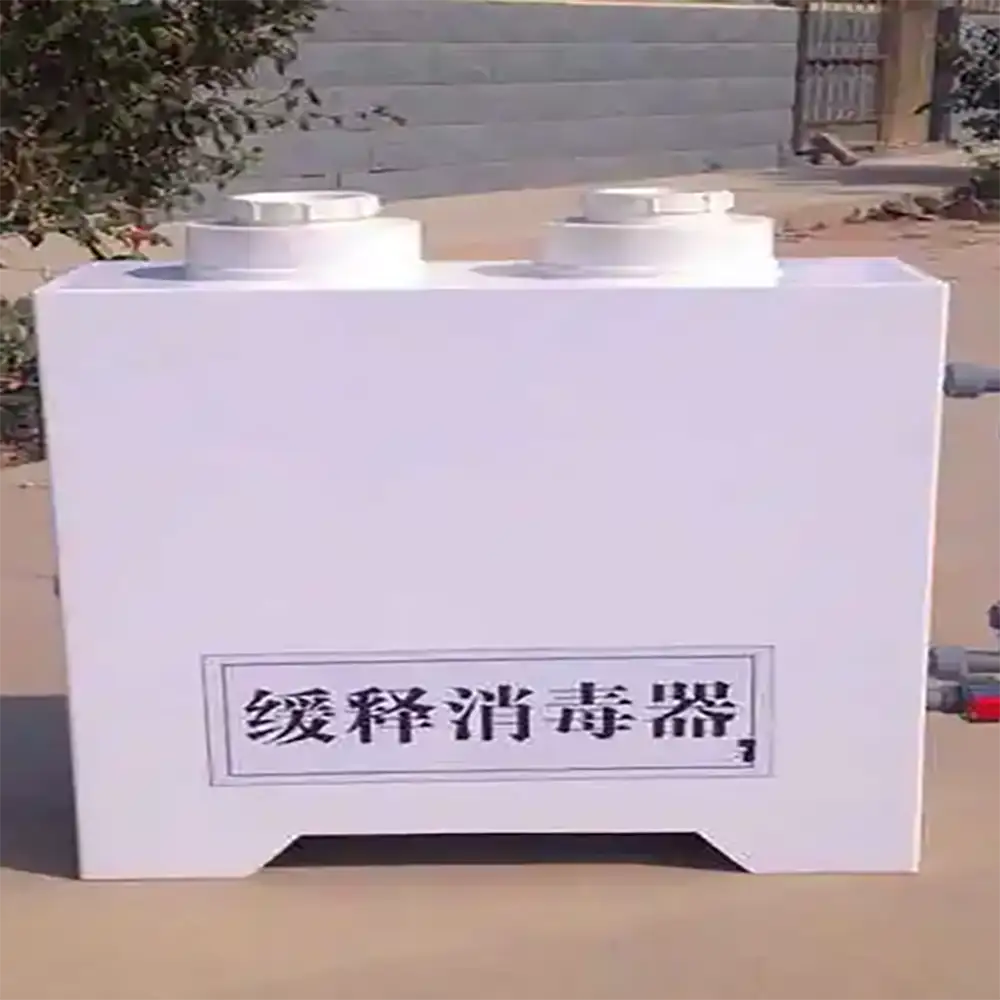
Filtration can help reduce remaining suspended particles. Disinfection can be incorporated when pathogen reduction is required before discharge or certain reuse applications.
Potential disinfection methods include chlorine-based systems, chlorine dioxide, ultraviolet disinfection and other suitable technologies.
Advanced treatment should be selected according to actual project requirements rather than automatically adding unnecessary equipment.
Operation and Maintenance
Although fiberglass integrated equipment is designed as a compact treatment system, regular maintenance remains important.
Operators should inspect blowers, pumps, aeration equipment, valves, control systems and disinfection equipment. Sludge accumulation should be monitored, and excess sludge should be removed according to actual operating conditions.
For underground systems, access covers and inspection openings should remain accessible. Ventilation should also be properly designed, and confined-space safety procedures should be followed whenever personnel enter tanks or treatment chambers.
EPA guidance emphasizes that proper operation and maintenance are essential to the performance of decentralized wastewater systems.
Why Choose Us
FRP/GRP Integrated Design: Fiberglass-reinforced structures combine the treatment tank and multiple process chambers into a compact system.
Corrosion-Resistant Construction: Fiberglass is well suited to many wastewater environments where corrosion resistance is important.
Flexible Treatment Processes: MBBR, biological contact oxidation, A/O, A²/O and other suitable biological processes can be considered.
Compact Installation: The integrated configuration reduces the need for multiple separate treatment tanks.
Underground Application: The system can be designed for buried installation when site conditions and engineering requirements permit.
Decentralized Treatment: Suitable for residential, rural, commercial and other onsite wastewater treatment projects.
Project-Based Configuration: Capacity, tank dimensions, process chambers, pumps, blowers, controls and disinfection equipment can be selected according to project requirements.
Complete Wastewater Solution: Pretreatment, biological treatment, sedimentation, filtration and disinfection can be integrated into one coordinated treatment system.
FAQs
1. What Is Fiberglass Integrated Sewage Treatment Equipment?
It is an integrated wastewater treatment system using an FRP or GRP fiberglass structure to combine multiple sewage treatment processes within one compact unit.
2. What Does FRP Mean?
FRP means Fiber Reinforced Plastic. It is a composite material consisting of a polymer matrix reinforced with fibers, commonly glass fibers in wastewater equipment.
3. Is Fiberglass Suitable for Wastewater Treatment?
Yes. Fiberglass is used for wastewater tanks and treatment equipment because of its corrosion resistance and favorable strength-to-weight characteristics. EPA technical documentation identifies fiberglass tanks as one type of tank used in decentralized wastewater systems.
4. Can the Equipment Be Installed Underground?
Yes. Many fiberglass integrated sewage treatment systems are designed for buried installation, subject to site conditions and structural engineering requirements.
5. What Wastewater Can It Treat?
It is primarily suitable for domestic sewage and similar wastewater. Certain commercial or industrial applications may be possible after wastewater characterization and process evaluation.
6. Can MBBR Be Used in a Fiberglass System?
Yes. MBBR can be incorporated into fiberglass integrated wastewater treatment equipment when the wastewater characteristics and treatment objectives are appropriate.
7. What Are the Main Advantages of Fiberglass Equipment?
Common advantages include corrosion resistance, relatively low weight, prefabricated construction, compact design and suitability for underground installation.
8. Can Disinfection Be Added?
Yes. A suitable disinfection stage can be integrated according to discharge, reuse and regulatory requirements.
9. Does Fiberglass Equipment Require Maintenance?
Yes. Pumps, blowers, aeration systems, valves, controls, sludge levels and other components require routine inspection and maintenance.
10. Is Fiberglass Better Than Concrete for Every Project?
Not necessarily. Material selection depends on soil conditions, structural requirements, project budget, installation method, wastewater characteristics and local engineering requirements.
11. Can the Equipment Be Used for Rural Wastewater Treatment?
Yes. Fiberglass integrated systems can be suitable for rural, onsite and decentralized wastewater treatment projects where centralized sewer infrastructure is unavailable or impractical.
12. How Should I Select the Right Fiberglass Sewage Treatment System?
Selection should consider daily and peak wastewater flow, BOD, COD, suspended solids, ammonia nitrogen, pH, temperature, discharge requirements, installation conditions and future operating requirements. Wastewater analysis and site evaluation are recommended before final equipment selection.
Prev:
Underground Integrated Equipment
Next:
Vortex Concave Air Flotation Machine
TAG:
Decentralized Wastewater Treatment,
Onsite Wastewater Treatment,
Decentralized Sewage Treatment System,
Onsite Wastewater Treatment System,
Decentralized Wastewater Treatment System,
Underground Fiberglass Sewage Treatment,
Underground Fiberglass Wastewater Treatment,
Underground FRP Sewage Treatment,
Underground FRP Wastewater Treatment,
Buried Fiberglass Sewage Treatment,
Buried Fiberglass Wastewater Treatment,
Buried FRP Sewage Treatment,
Buried FRP Wastewater Treatment,
Package Fiberglass Sewage Treatment,
Package Fiberglass Wastewater Treatment,
Compact Fiberglass Sewage Treatment,
Compact Fiberglass Wastewater Treatment,
Fiberglass Package Sewage Treatment Plant,
Fiberglass Integrated Sewage Treatment Plant,
Decentralized Sewage Treatment,
Onsite Sewage Treatment System,
Rural Sewage Treatment,
Rural Wastewater Treatment,
Onsite Sewage Treatment,
Rural Sewage Treatment System,
Rural Wastewater Treatment System,
Residential Wastewater Treatment Equipment,
Domestic Sewage Treatment Plant,
Domestic Wastewater Treatment Plant,
Domestic Wastewater Treatment System,
Related Category:
Fiberglass Integrated Sewage Treatment Equipment,Fiberglass Wastewater Treatment Equipment China, suppliers, manufacturers, factory, customized, wholesale, quotation, made in China