|
|
A |
B |
BKL |
CAB |
CCD |
CEF |
CKL |
D |
E |
FCD |
FKL |
LA |
LB |
|
ST-3.2 |
529 |
270 |
467 |
643 |
643 |
643 |
643 |
390 |
195 |
270 |
250 |
555 |
194 |
|
ST-4 |
730 |
318 |
576 |
745 |
763 |
745 |
745 |
496 |
271 |
344 |
317 |
615 |
235 |
|
ST-5 |
820 |
387 |
912 |
855 |
910 |
855 |
855 |
620 |
335 |
410 |
372 |
720 |
290 |
|
ST-5.6 |
890 |
450 |
806 |
900 |
990 |
900 |
900 |
690 |
380 |
465 |
422 |
760 |
320 |
|
ST-6.5 |
970 |
490 |
903 |
995 |
1095 |
995 |
995 |
790 |
430 |
531 |
482 |
846 |
351 |
|
ST-7 |
1009 |
560 |
997 |
1025 |
1145 |
1025 |
1025 |
850 |
460 |
576 |
527 |
885 |
368 |
|
ST-8 |
1120 |
626 |
1140 |
1170 |
1344 |
1170 |
1170 |
950 |
480 |
614 |
556 |
980 |
400 |
|
ST-8.8 |
1180 |
700 |
1230 |
1120 |
1380 |
1220 |
1220 |
1040 |
570 |
72
0 |
637 |
1010 |
420 |
Dust Removal FRP Centrifugal Fan for Industrial Dust Extraction
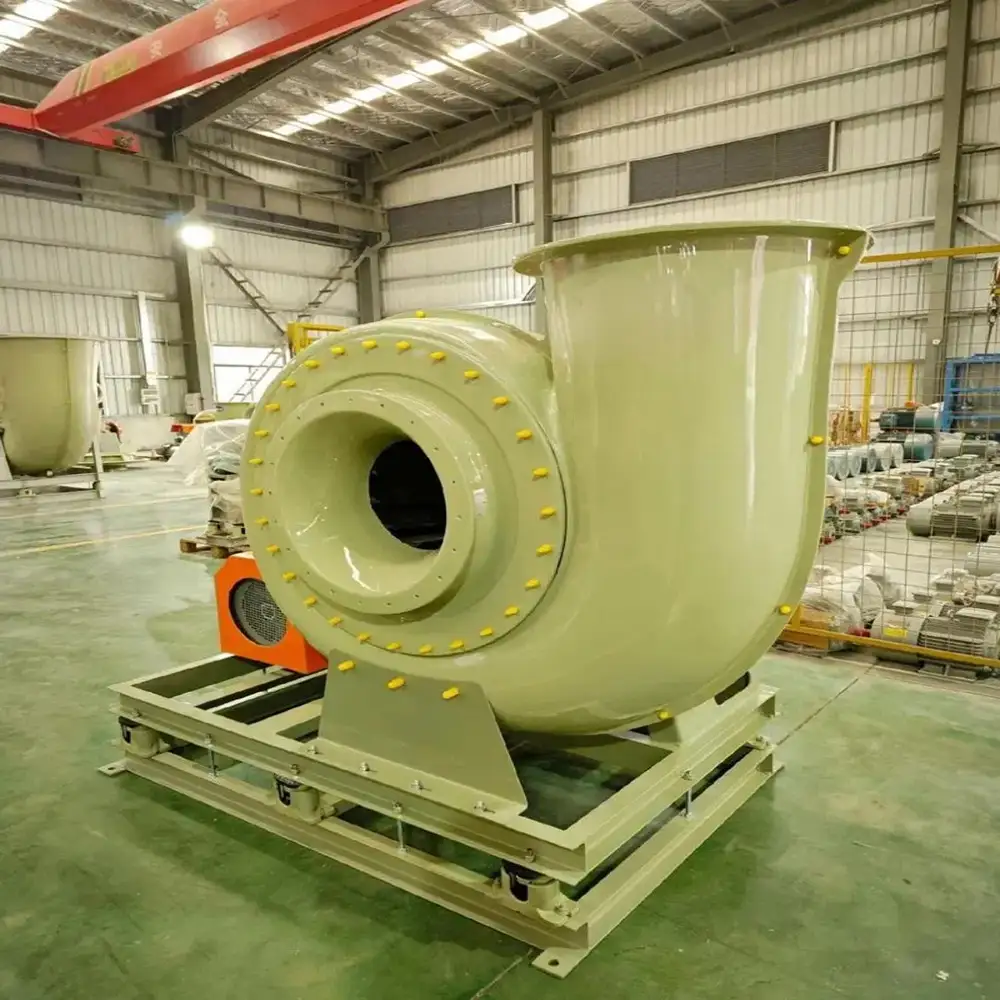
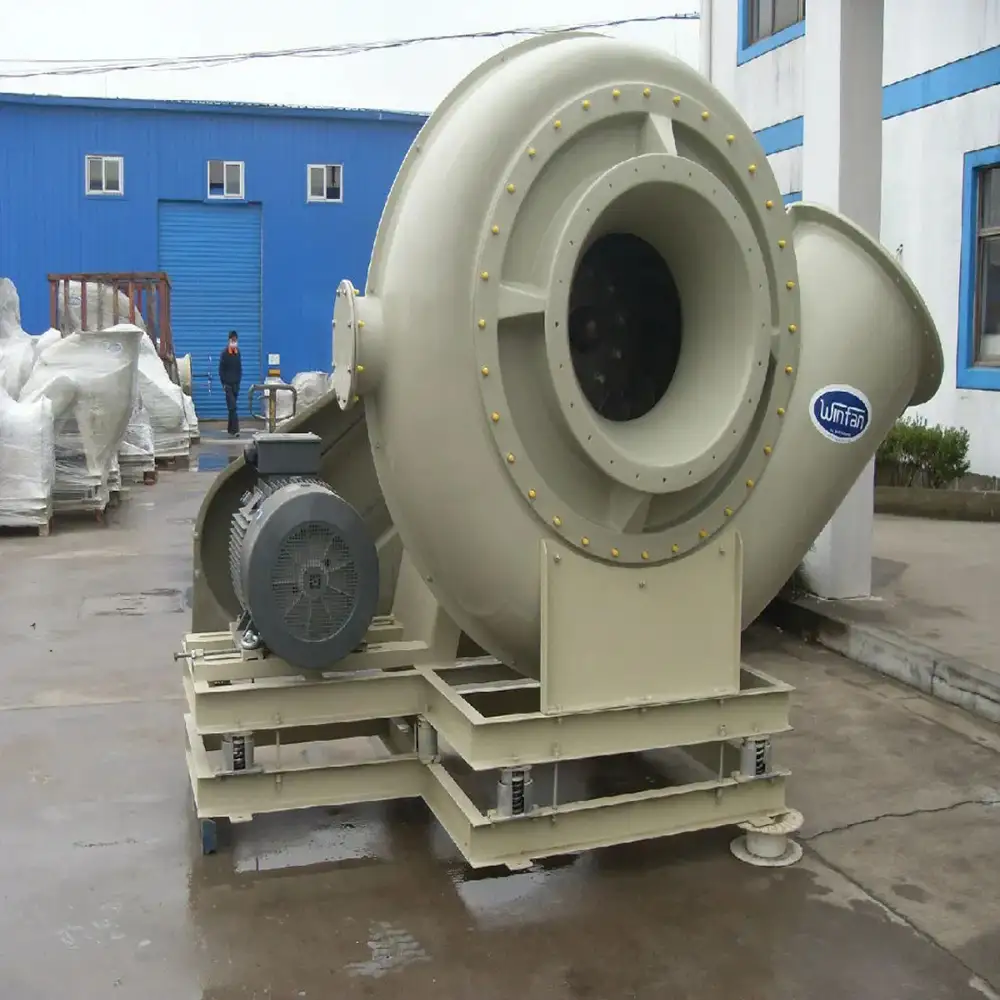
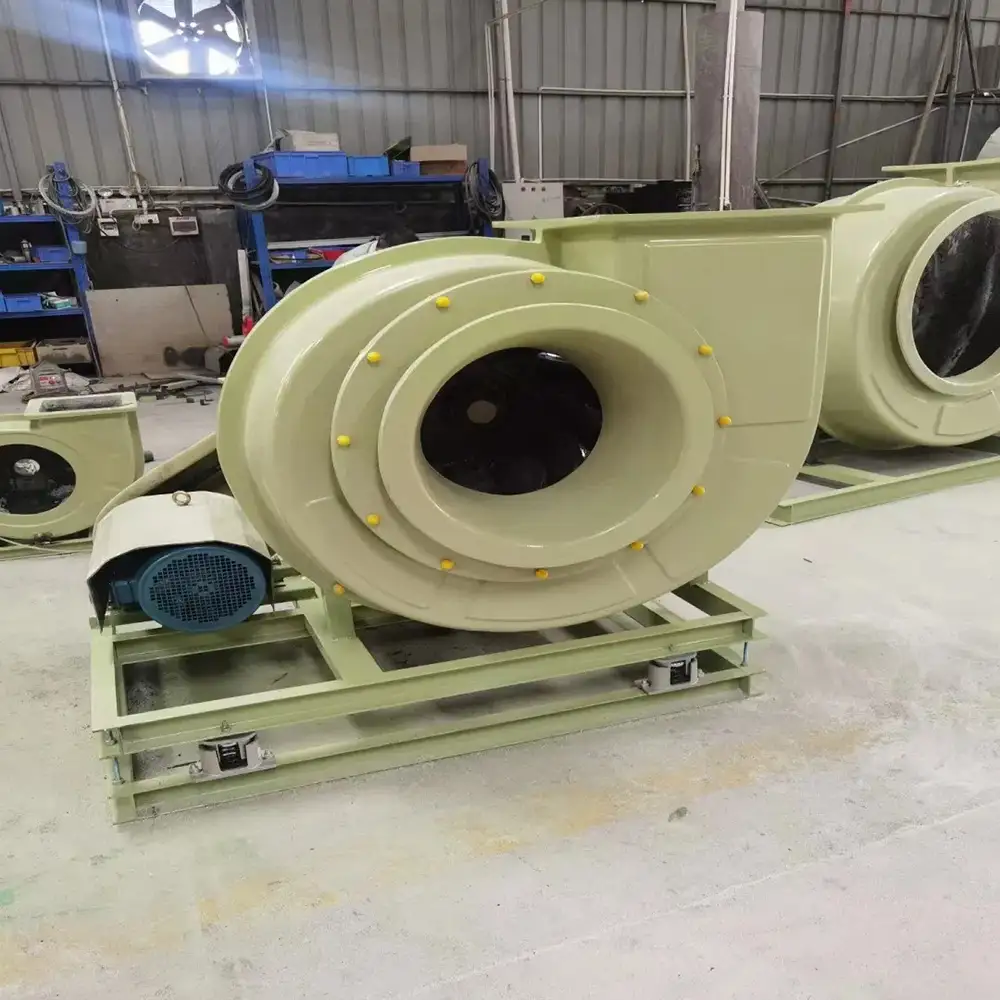
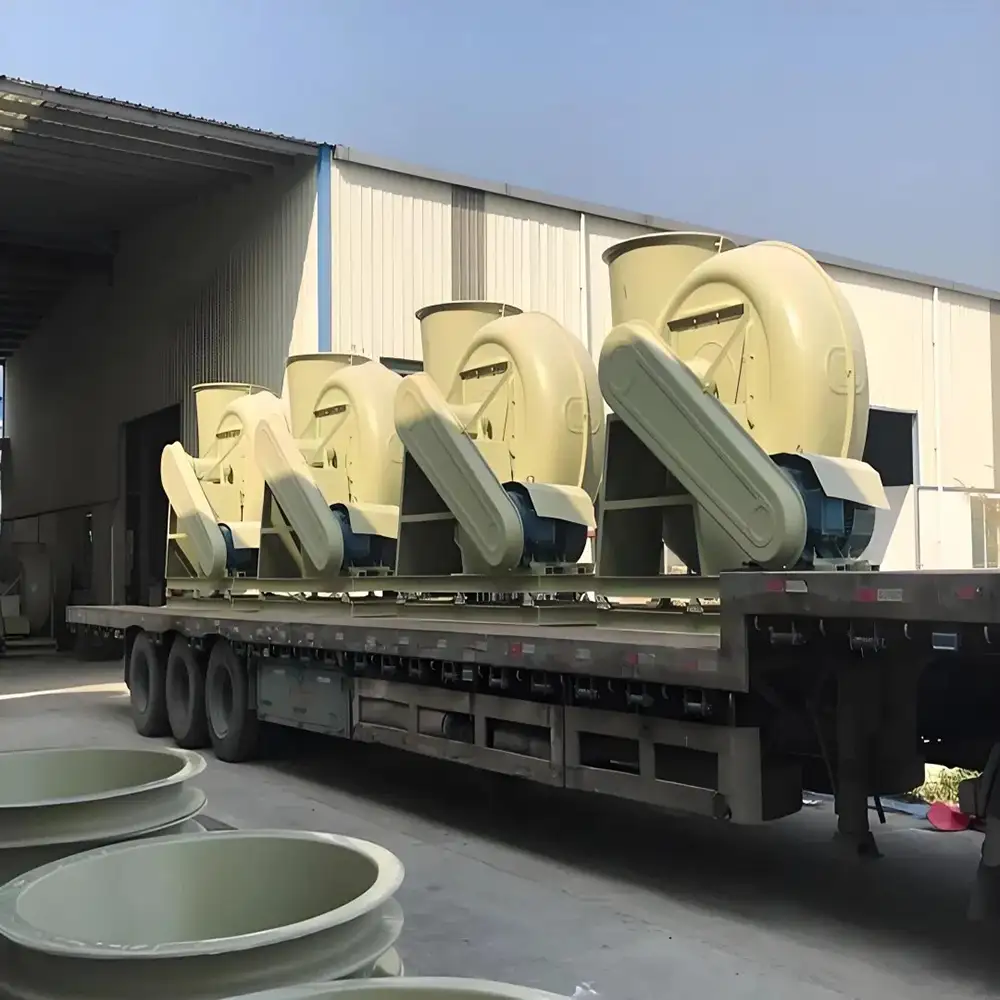
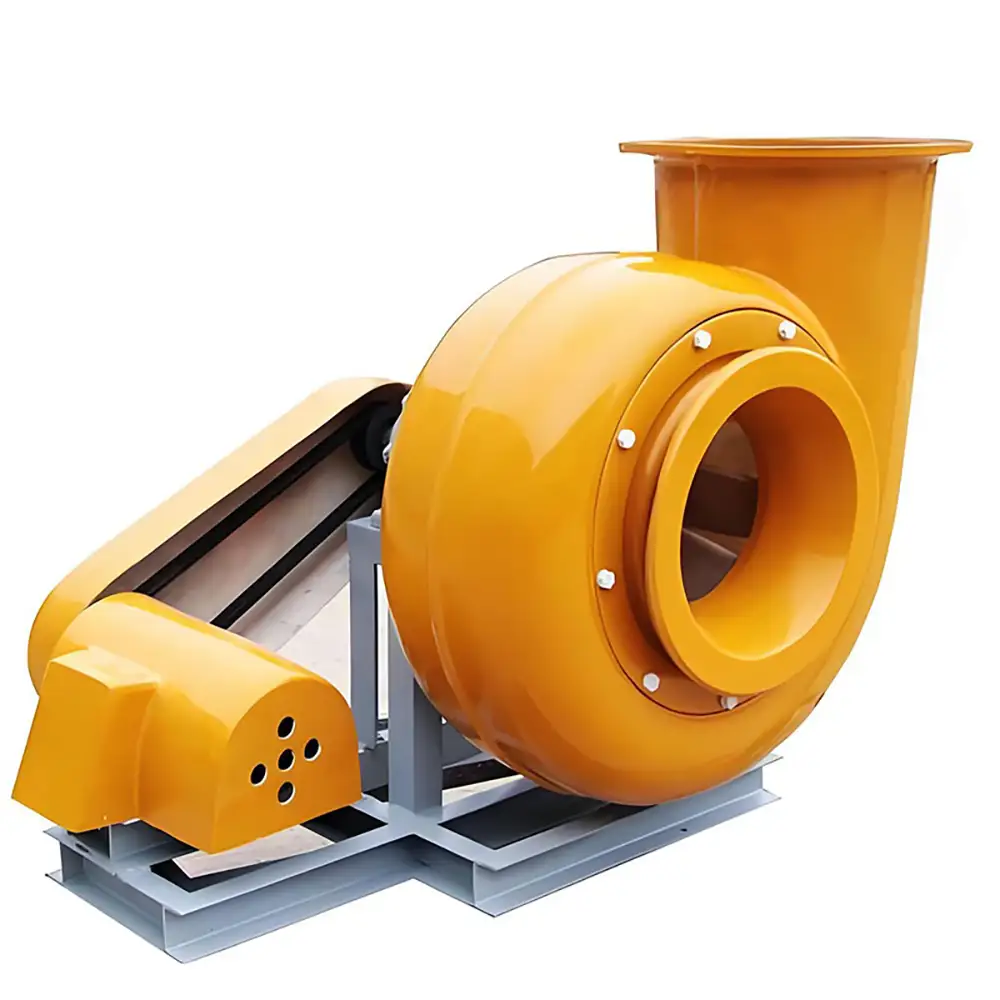
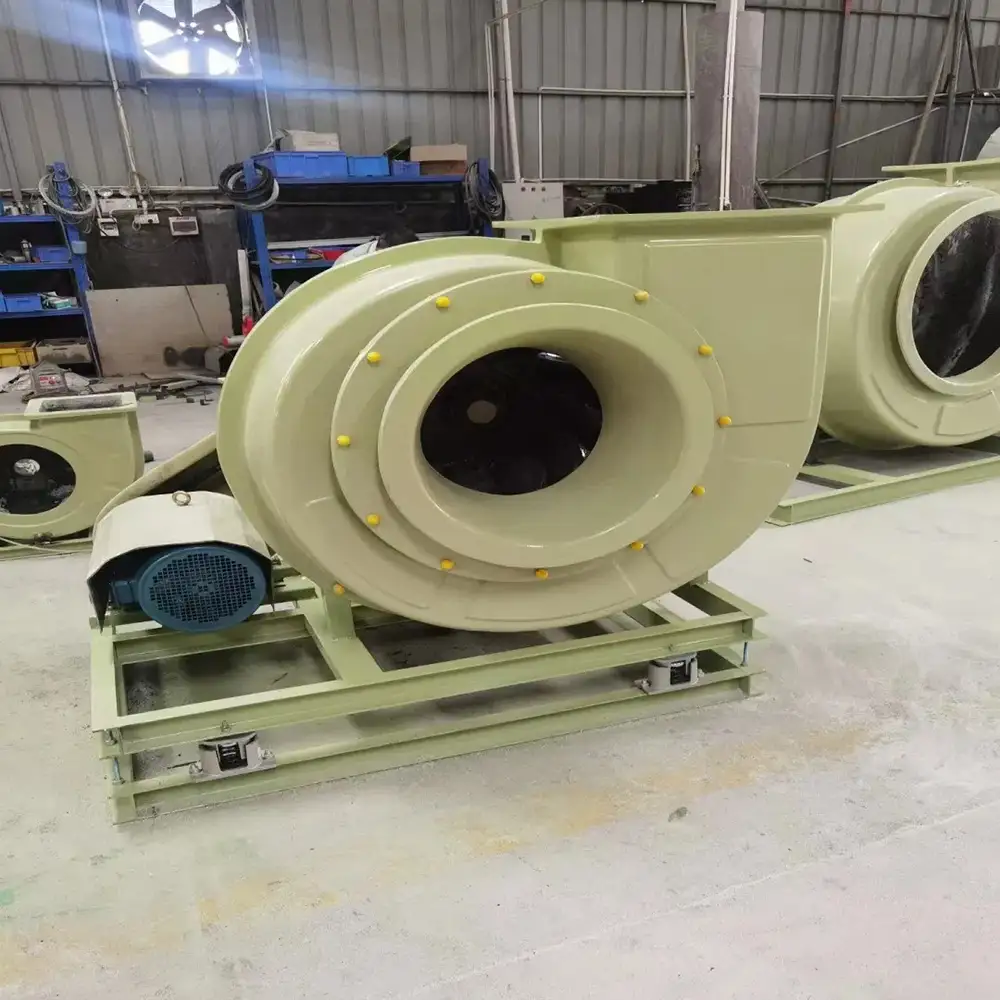
The Dust Removal FRP Centrifugal Fan is an industrial ventilation and exhaust solution designed for applications requiring reliable air movement, dust extraction and resistance to corrosive environments. Constructed from Fiber Reinforced Plastic (FRP), the fan provides an alternative to conventional metal centrifugal fans where moisture, chemical vapors, acid mist, alkaline gases or corrosive process air may accelerate metal corrosion.
FRP centrifugal fans are commonly used in chemical plants, electroplating facilities, wastewater treatment plants, laboratories, industrial workshops and environmental exhaust systems. Their centrifugal configuration is suitable for ducted systems where the fan needs to overcome system resistance from ducts, filters, scrubbers, hoods and other air-treatment equipment. Industrial FRP fan designs are available with different impeller geometries, drive arrangements and accessories to match different airflow and pressure requirements.
FRP Construction for Dust Removal and Corrosive Exhaust
The main advantage of an FRP centrifugal fan is its resistance to many corrosive air streams. FRP combines glass reinforcement with a resin matrix to create a lightweight composite structure with useful chemical resistance.
Depending on the selected resin and construction, FRP fan components can be designed for air streams containing acidic or alkaline compounds, humid gases and chemical vapors. Special resin systems, surface veils and other construction options can further improve chemical resistance for specific applications.
For dust removal systems, material selection is especially important because the fan may operate continuously in an environment containing moisture, dust, chemical contaminants or corrosive particles.
The appropriate FRP construction should therefore be selected according to:
Dust characteristics
Dust concentration
Particle size
Gas composition
Gas temperature
Humidity
Corrosive chemical concentration
Required airflow
Required static pressure
Operating hours
Hazardous-area requirements
Centrifugal Design for Industrial Dust Extraction
A centrifugal fan draws air through the inlet and accelerates it through a rotating impeller before directing the air through the discharge outlet. This configuration makes centrifugal fans suitable for ducted industrial exhaust systems where pressure loss can be significant.
A complete dust-removal system may include a collection hood, ductwork, cyclone separator, bag filter, cartridge collector, scrubber, dust collector, damper and exhaust stack.
The fan should be selected according to the operating point created by the entire system.
For example:
Dust Collection Hood → Ductwork → Dust Collector → FRP Centrifugal Fan → Exhaust Duct → Discharge
The required fan capacity depends on the air volume and resistance of the system. Choosing a fan based only on nominal airflow may result in insufficient extraction if the actual system pressure is higher than expected.
Dust Removal Applications
The Dust Removal FRP Centrifugal Fan can be used for selected industrial exhaust and dust-removal applications where corrosion resistance is important.
Typical applications include:
Chemical plant exhaust
Electroplating workshop ventilation
Acid mist extraction
Alkali mist exhaust
Wastewater treatment ventilation
Laboratory exhaust
Industrial process ventilation
Dust collection systems
Corrosive workshop exhaust
Scrubber exhaust
Fume extraction
Environmental protection equipment
Pickling line ventilation
Surface-treatment exhaust
Pharmaceutical process ventilation
Industrial odor-control systems
FRP centrifugal fans are also used in wastewater treatment and other corrosive industrial environments where fiberglass construction can provide useful resistance to chemical attack.
Dust Removal and Corrosion Resistance
Traditional carbon-steel fans can require protective coatings when exposed to aggressive chemicals. If coatings are damaged, corrosion may develop underneath or around exposed areas.
An appropriately selected FRP fan can reduce dependence on conventional metal construction in compatible corrosive applications.
This is particularly useful when dust and corrosive gases exist together. For example, a production process may generate airborne particles while also releasing acidic or alkaline vapors. In this situation, the ventilation equipment needs to consider both the mechanical characteristics of the particles and the chemical characteristics of the gas.
However, FRP should not automatically be considered suitable for every dust. Abrasive particles, high-temperature gases, sticky materials and high dust concentrations can require specialized fan construction or upstream separation.
Fan Selection for Dust Removal Systems
Correct fan selection begins with the operating conditions.
Important engineering data includes airflow, static pressure, gas temperature and the characteristics of the transported medium.
For dust-removal applications, additional information should include:
Airflow: The required volume of air to be extracted.
Static Pressure: The pressure needed to overcome duct, filter, scrubber and other system resistance.
Dust Concentration: The amount of particulate material carried by the air stream.
Particle Characteristics: Particle size, density, hardness, abrasiveness and stickiness.
Temperature: The normal and maximum operating temperature.
Corrosive Components: Acidic, alkaline or other chemical vapors in the air stream.
Operating Schedule: Continuous, intermittent or variable operation.
Hazard Classification: Whether combustible dust or flammable/explosive gases are present.
These factors help determine the suitable impeller type, FRP material, shaft arrangement, motor configuration and control method.
Impeller Design and Airflow Performance
Different industrial centrifugal fan applications can require different impeller designs.
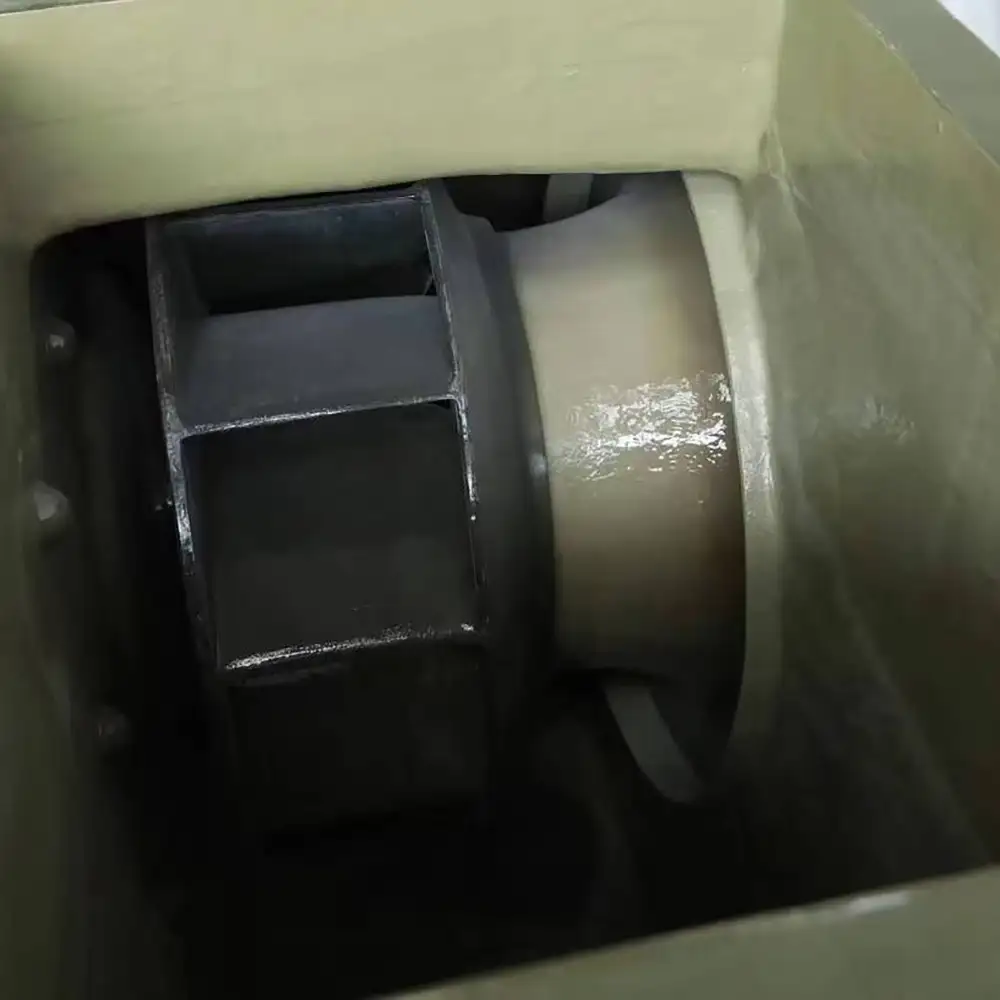
Backward-curved impellers can be used where efficient airflow and pressure performance are important. Radial-blade configurations may be considered for certain industrial exhaust applications. The final selection depends on the operating point and transported medium.
Industrial FRP centrifugal fan manufacturers offer different impeller geometries and sizes to cover a broad range of airflow and static-pressure requirements.
For dust-containing air, impeller design should also consider the possibility of particle accumulation and abrasion. Where significant particulate loading exists, an upstream dust collector or separator may be recommended to reduce the amount of solids entering the fan.
Integration With Dust Collectors
The FRP centrifugal fan can serve as the air-moving component of a larger dust-control system.
A typical configuration may use the fan downstream of a dust collector. The collector removes a significant portion of the particulate material before the air reaches the fan, while the fan provides the pressure needed to pull contaminated air through the collection system.
Depending on the application, the system may include:
Cyclone Dust Collector
Baghouse Dust Collector
Cartridge Dust Collector
Wet Scrubber
Activated Carbon Filter
Mist Eliminator
Exhaust Hood
Industrial Ductwork
Air Dampers
Flexible Connectors
VFD Control
Exhaust Stack
This modular configuration makes it easier to integrate the FRP centrifugal fan into existing environmental protection systems.
VFD and Variable Airflow Control
For applications where dust generation changes during production, variable-speed control can provide additional operating flexibility.
A Variable Frequency Drive (VFD) can adjust motor speed according to the required operating condition. For example, the fan may operate at a lower speed during low production periods and increase airflow when additional extraction is required.
VFD control can also be integrated with pressure sensors, airflow monitoring, PLC systems and automatic dampers.
However, energy performance depends on the complete fan system, operating point and control strategy rather than simply installing a VFD.
FRP centrifugal fan systems can be supplied with variable-frequency drives and other accessories depending on the selected configuration.
Anti-Static and Safety Considerations
Dust-removal systems require careful consideration of static electricity and combustible dust hazards.
Although fiberglass itself is non-metallic, some FRP fan designs can accumulate static charge. Where explosive fumes or combustible dust may be present, specialized spark-resistant and static-grounding construction may be required.
Some fiberglass centrifugal fan designs use conductive or carbon-impregnated construction to reduce static charge accumulation.
The fan should never be specified as “explosion-proof” solely because it is made from FRP. The complete system must be evaluated according to the applicable hazardous-area requirements, including motor, electrical components, grounding, fan construction and installation.
Maintenance and Cleaning
Regular maintenance helps maintain stable airflow and minimize vibration.
Recommended inspection points include:
Check fan vibration and abnormal noise.
Inspect the impeller for dust buildup.
Check the shaft and bearings.
Inspect belts and pulleys on belt-driven models.
Check motor connections.
Inspect duct and flange connections.
Check drain points where condensation may occur.
Remove deposits when required.
Inspect FRP surfaces for cracks or chemical damage.
Verify airflow and pressure periodically.
Dust accumulation on the impeller can affect balance and operating performance. Some FRP fan designs incorporate inspection ports and drainage provisions to simplify cleaning and maintenance.
Why Choose Us
The Dust Removal FRP Centrifugal Fan is designed for industrial applications where airflow performance and corrosion resistance need to work together.
Key advantages include:
Corrosion-Resistant FRP Construction: Suitable for compatible acidic, alkaline, humid and chemical exhaust environments.
Industrial Centrifugal Design: Suitable for ducted dust extraction and ventilation systems.
Dust Removal Applications: Can be integrated with dust collectors, scrubbers and filtration equipment.
Chemical Exhaust Capability: Suitable for selected corrosive process-air applications.
Flexible Impeller Options: Different impeller designs can be selected according to airflow and pressure requirements.
VFD Compatibility: Variable-speed control can be used where airflow demand changes.
Anti-Static Options: Conductive or spark-resistant configurations can be considered for applicable applications.
System Integration: Compatible with ducts, dampers, scrubbers, filters and environmental protection equipment.
Industrial Durability: FRP construction provides a useful alternative to conventional metal fans in compatible corrosive environments.
Application-Based Selection: Fan specifications can be matched to airflow, pressure, gas composition, temperature and dust characteristics.
FAQs
1. What Is a Dust Removal FRP Centrifugal Fan?
It is a fiberglass-reinforced plastic centrifugal fan designed to move air in industrial dust extraction, exhaust and ventilation systems where corrosion resistance is also required.
2. What Does FRP Stand For?
FRP stands for Fiber Reinforced Plastic. It combines reinforcing fibers, commonly glass fiber, with a resin matrix.
3. Can an FRP Centrifugal Fan Remove Dust?
The fan provides the airflow needed for a dust-removal system. The actual separation of dust is normally performed by equipment such as a baghouse, cyclone, cartridge collector or scrubber.
4. Can This Fan Handle Corrosive Gas?
Yes, an appropriately selected FRP centrifugal fan can be used for compatible corrosive gases and vapors. The resin system and construction must match the chemical environment.
5. Can It Be Used With a Dust Collector?
Yes. The fan can be integrated with bag filters, cartridge collectors, cyclones, scrubbers and other dust or air-pollution-control equipment.
6. Is FRP Suitable for Acid Mist?
FRP is commonly selected for compatible acid and chemical exhaust applications. The exact resin, concentration and temperature must be checked before final selection.
7. Can the Fan Use a VFD?
Yes. A Variable Frequency Drive can be used to adjust fan speed and airflow according to system requirements, provided the motor and fan are properly configured.
8. Can This Fan Be Used for Wastewater Treatment?
Yes. FRP centrifugal fans are used in selected wastewater ventilation, exhaust and odor-control systems because of the corrosive and humid conditions commonly encountered in wastewater facilities.
9. Is an FRP Fan Suitable for Combustible Dust?
Not automatically. Combustible-dust applications require a specific engineering and hazardous-area assessment. Anti-static, spark-resistant and properly rated electrical configurations may be required.
10. How Do I Select the Right Dust Removal Fan?
Provide airflow, static pressure, dust concentration, particle size, temperature, gas composition, humidity, operating hours and hazardous-area information. These parameters are used to determine the appropriate fan configuration.
11. Can the Fan Be Used With a Scrubber?
Yes. FRP centrifugal fans are commonly integrated into industrial scrubber and exhaust-gas treatment systems. The fan must be selected to overcome the pressure loss of the complete system.
12. What Maintenance Does an FRP Centrifugal Fan Need?
Routine maintenance includes inspecting the impeller, bearings, shaft, motor, belts, vibration, FRP surfaces, drainage and duct connections. Dust deposits should be removed when necessary to maintain proper balance and airflow.
Prev:
High Efficiency Centrifugal Fan Fiberglass Centrifugal Fan FRP Centrifugal Fan
Next:
FRP Centrifugal Fan Anti-Corrosion Explosion-Proof Frequency Conversion
TAG:
Dust Collection Equipment,
Dust Removal Equipment,
Dust Removal System,
Cyclone Dust Collector Fan,
Cartridge Dust Collector Fan,
Cyclone Exhaust Fan,
Process Exhaust Fan,
Process Ventilation Fan,
Industrial Fume Extraction Fan,
Baghouse Dust Collector Fan,
Industrial Ventilation Fan,
Industrial Ventilation Blower,
Dust Exhaust Blower,
Industrial Air Blower,
Industrial Exhaust Fan,
Industrial Exhaust Blower,
Industrial Air Exhaust Fan,
Industrial Dust Removal Fan,
Industrial Dust Collector Fan,
Industrial Dust Extraction Fan,
Dust Extraction Blower,
Dust Removal Blower,
Dust Collector Blower,
Dust Collection Blower,
Dust Collection Fan,
Scrubber Exhaust Fan,
Variable Frequency Centrifugal Fan,
Chemical Exhaust Fan,
Chemical Plant Exhaust Fan,
Industrial Fume Exhaust Fan,
Related Category:
Dust Removal FRP Centrifugal Fan,FRP Dust Removal Fan,FRP Centrifugal Fan,Fiberglass Centrifugal Fan China, suppliers, manufacturers, factory, customized, wholesale, quotation, made in China