FRP Centrifugal Fan Anti-Corrosion Explosion-Proof Variable Frequency
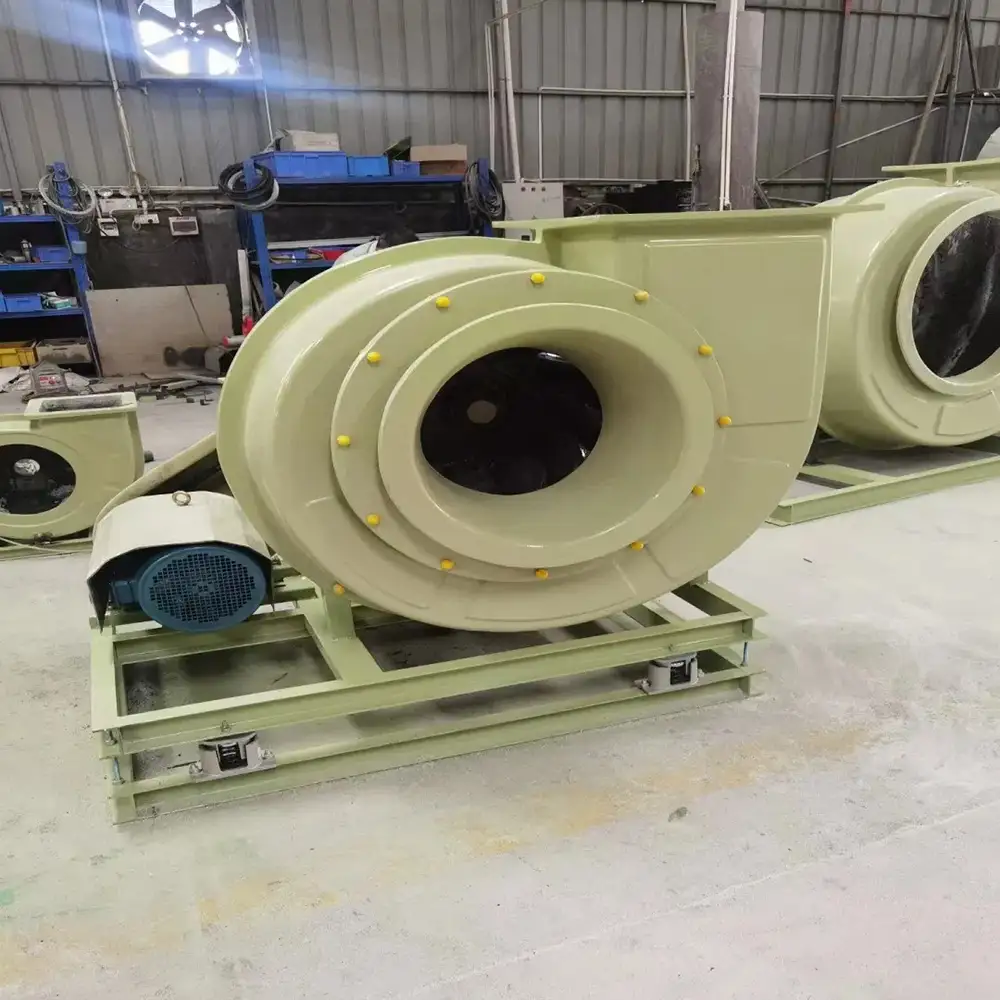
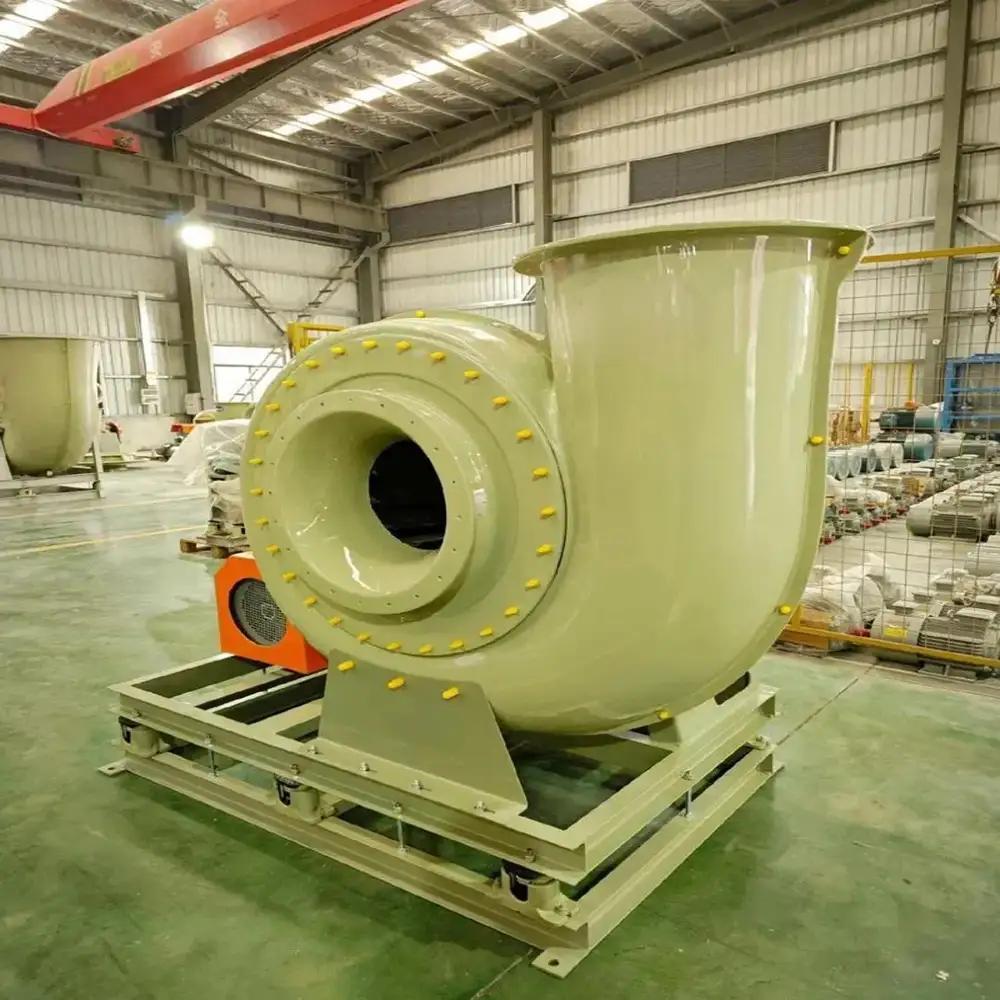
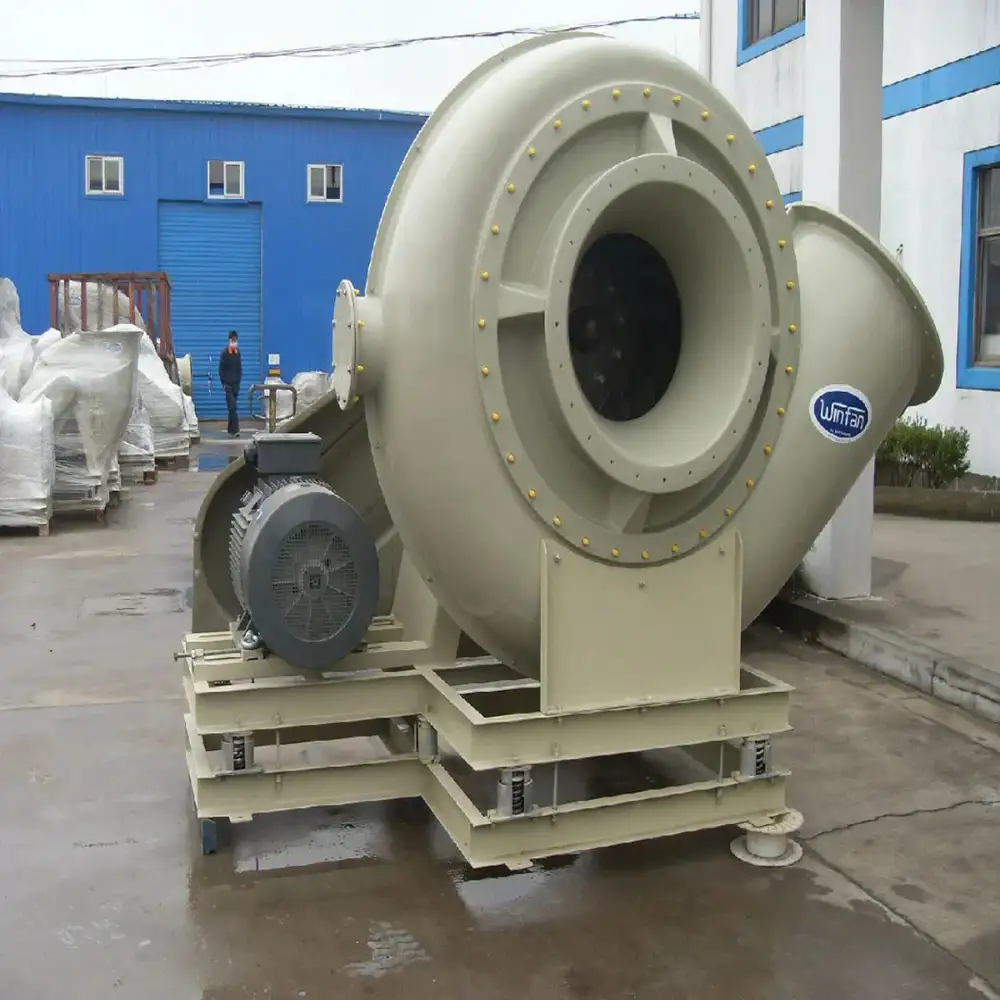
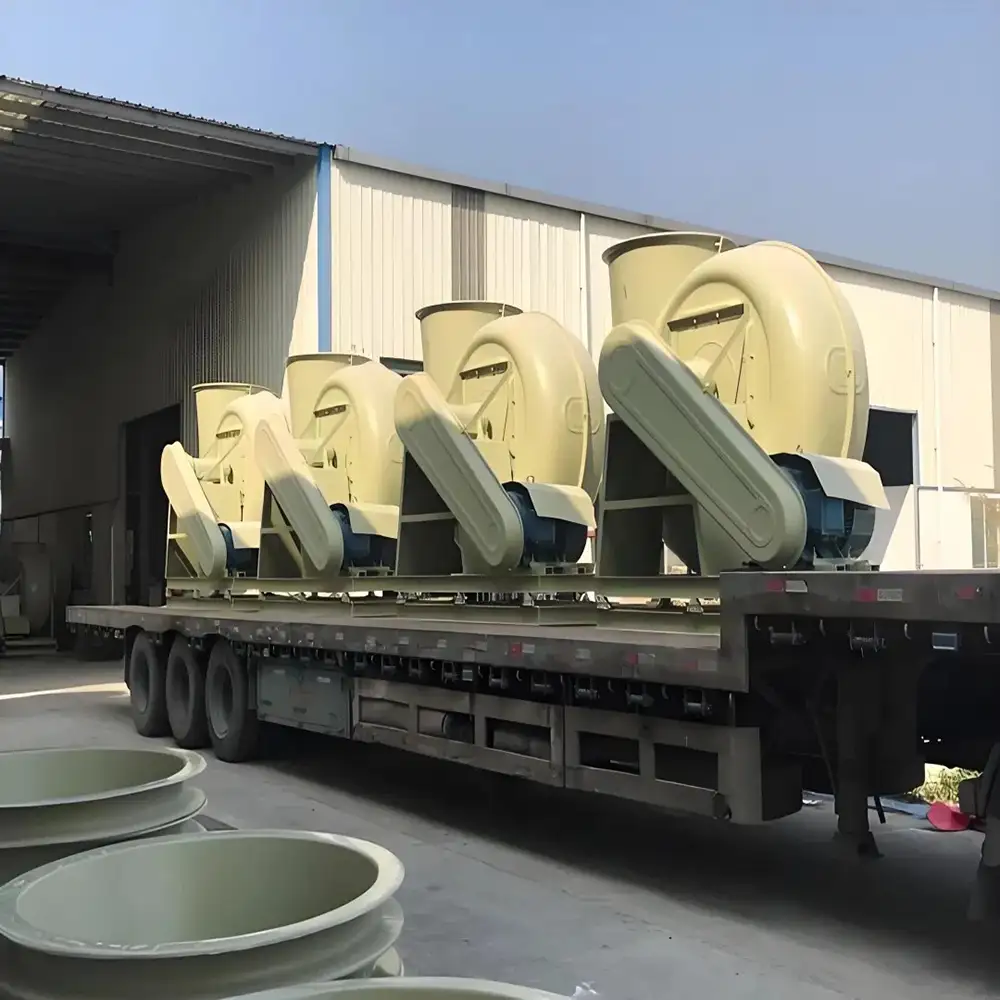
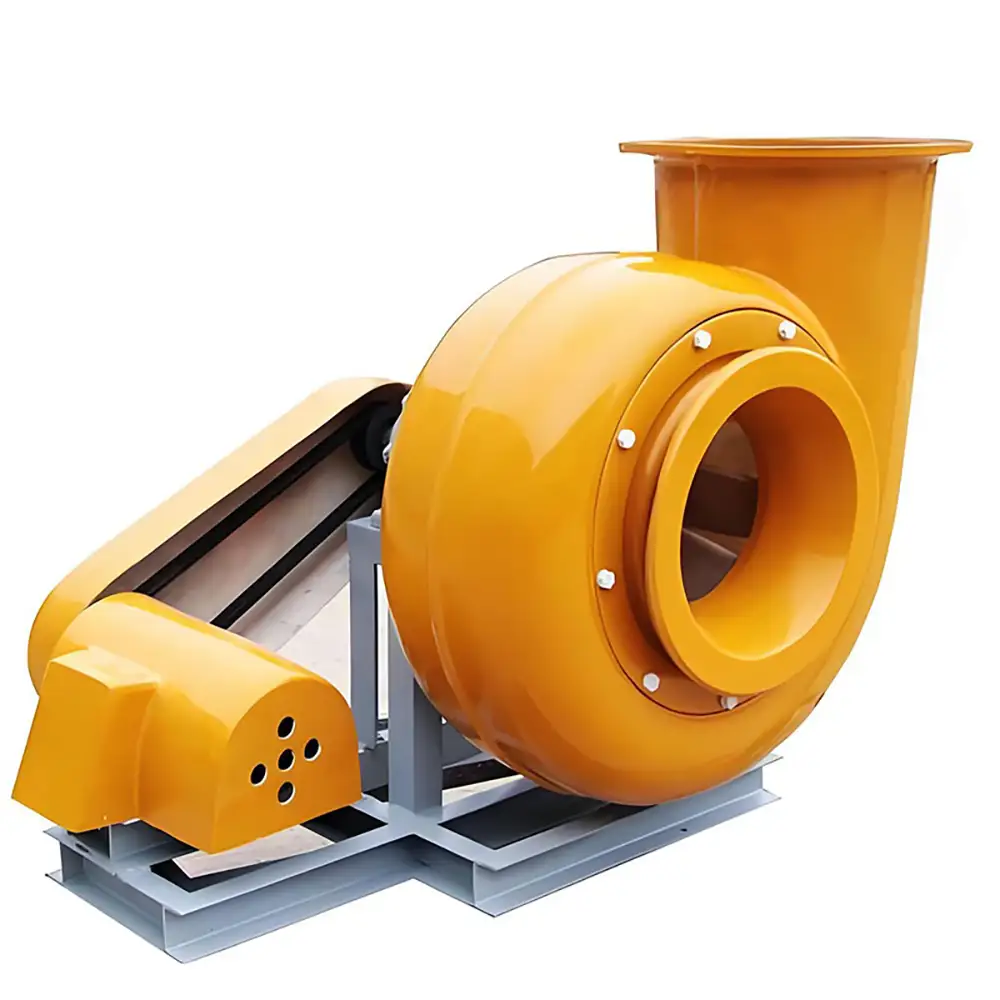
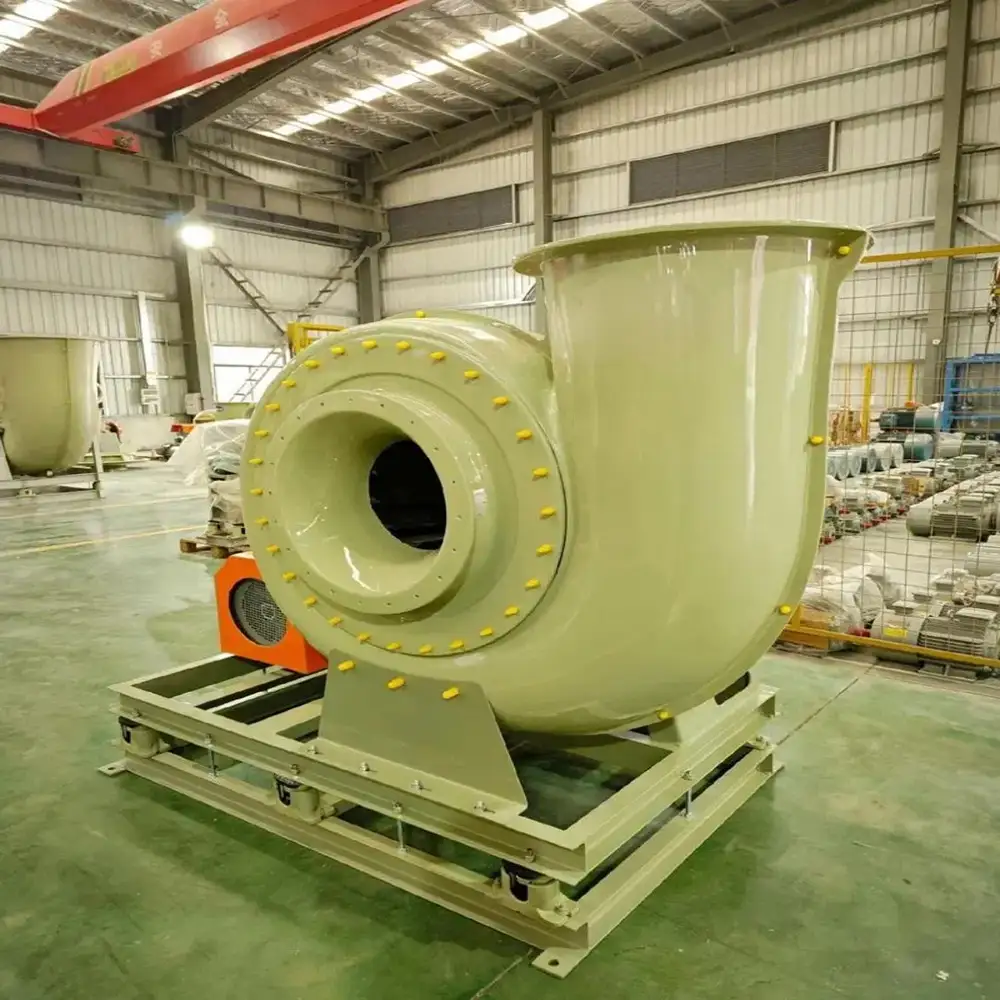
The FRP Centrifugal Fan Anti-Corrosion Explosion-Proof Frequency Conversion series is designed for industrial ventilation, corrosive gas exhaust and demanding air-handling applications where conventional metal fans may not provide sufficient chemical resistance. Made with Fiber Reinforced Plastic (FRP) components, the centrifugal fan is suitable for environments involving acid mist, alkaline vapors, humid corrosive gases and other aggressive exhaust streams.
The fan can also be configured with an explosion-proof motor, anti-static materials and variable frequency drive (VFD) control according to the hazardous-area classification and operating requirements. This combination makes the equipment suitable for chemical processing, electroplating, wastewater treatment, pharmaceutical production, laboratories, petrochemical facilities and other industrial ventilation systems. FRP centrifugal fans are widely used in corrosive environments because fiberglass-reinforced construction provides resistance to many chemical gases and vapors.
FRP Construction for Corrosion-Resistant Ventilation
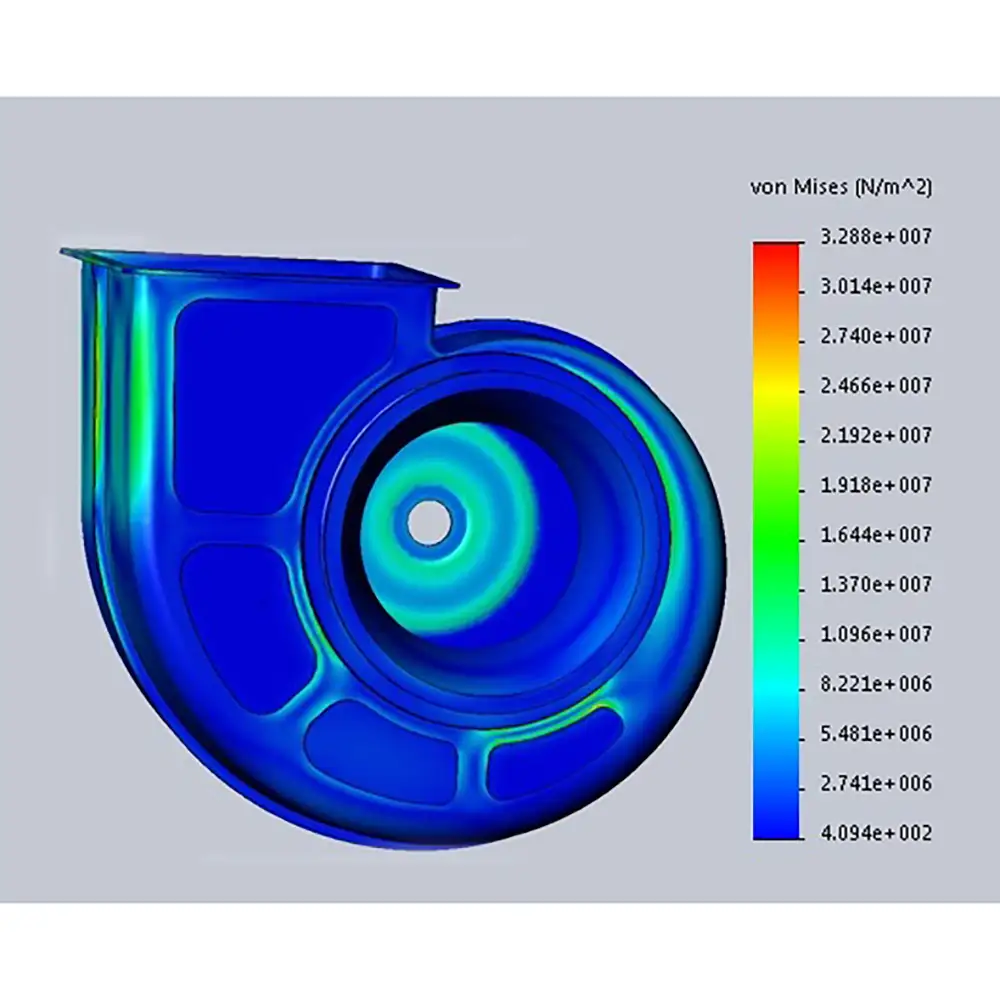
The primary advantage of an FRP centrifugal fan is its corrosion-resistant composite construction. Unlike conventional carbon-steel fans that can require extensive protective coatings in aggressive environments, FRP uses glass fiber reinforcement combined with a suitable resin system to provide structural strength and chemical resistance.
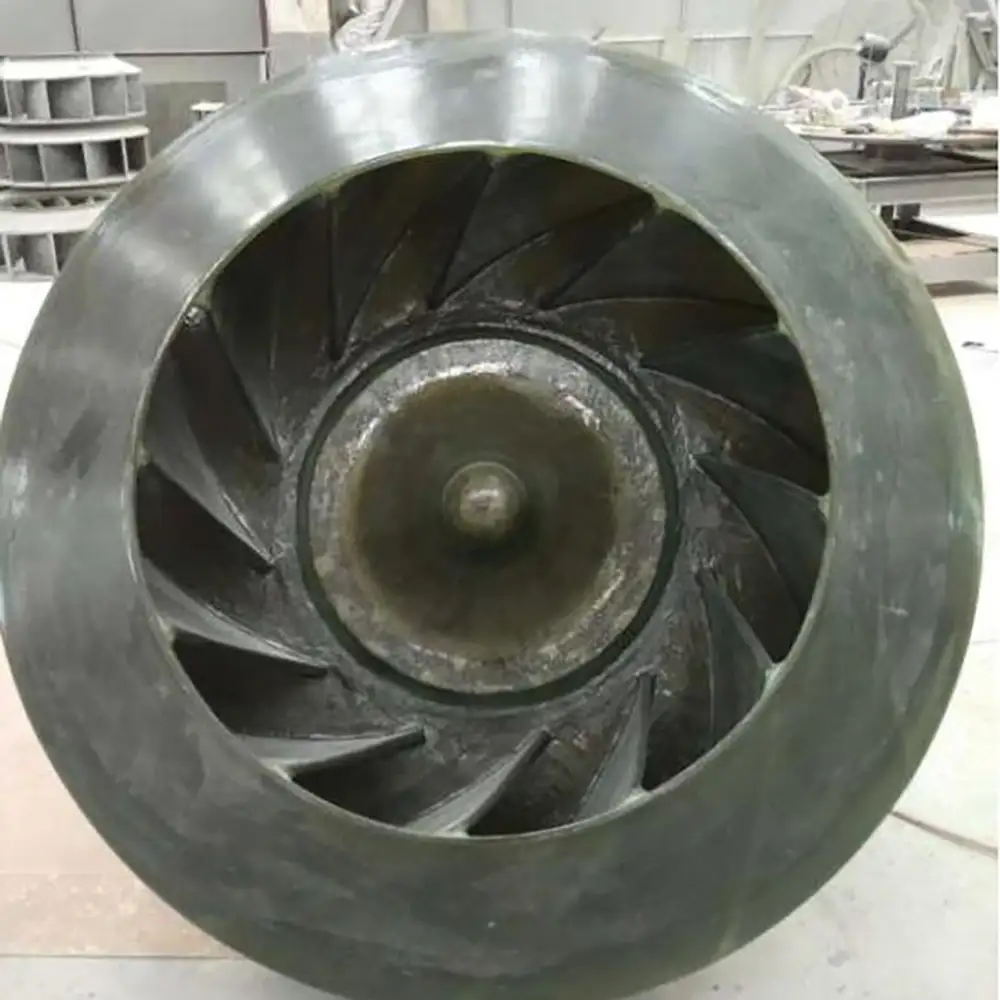
The casing, impeller and other air-contact components can be selected according to the gas composition, concentration, temperature and humidity. Material selection is particularly important when the fan handles acid fumes, alkaline gases, chlorine-containing gases or other corrosive process exhaust.
For wastewater treatment applications, FRP centrifugal fans are commonly considered for odor-control and exhaust systems because wastewater facilities can contain corrosive gases such as hydrogen sulfide and other treatment-related compounds.
|
|
A |
B |
Bkl |
Cab |
CcD |
Cef |
Ckl |
D |
E |
Fcd |
Fkl |
La |
Lb |
|
SH-3.2 |
520 |
260 |
420 |
593 |
593 |
593 |
593 |
335 |
210 |
260 |
250 |
120 |
515 |
|
SH-4 |
580 |
300 |
460 |
610 |
610 |
610 |
610 |
350 |
200 |
290 |
280 |
150 |
545 |
|
SH-5 |
810 |
380 |
620 |
785 |
785 |
785 |
785 |
500 |
325 |
425 |
400 |
180 |
655 |
|
SH-6.5 |
920 |
447 |
800 |
860 |
970 |
910 |
910 |
685 |
460 |
515 |
480 |
250 |
750 |
|
SH-8 |
1120 |
600 |
1060 |
1030 |
1210 |
1130 |
1130 |
900 |
586 |
635 |
585 |
345 |
900 |
|
|
|
|
|
|
|
|
|
|
|
|
|
|
|
|
|
Ra |
Rb |
Ua |
Ub |
S |
W |
A |
C1 |
C2 |
C3 |
C4 |
|
|
|
SH-3.2 |
750 |
230 |
535 |
21 |
100 |
550 |
4-020 |
150 |
250 |
150 |
250 |
|
|
|
SH-4 |
840 |
260 |
545 |
19 |
100 |
640 |
4-020 |
200 |
300 |
200 |
300 |
|
|
|
SH-5 |
1140 |
330 |
648 |
22 |
125 |
890 |
4-020 |
250 |
350 |
250 |
350 |
|
|
|
SH-6.5 |
1300 |
380 |
940 |
220 |
125 |
1050 |
4-020 |
350 |
450 |
350 |
450 |
|
|
|
SH-8 |
1600 |
480 |
1138 |
290 |
125 |
1350 |
4-020 |
500 |
616 |
500 |
620 |
|
|
Centrifugal Airflow for Industrial Exhaust
A centrifugal fan draws air into the impeller and redirects the airflow radially through the fan housing. This configuration can provide useful static pressure for systems containing ductwork, scrubbers, filters, dampers and other air-treatment components.
Compared with a simple ventilation fan, an industrial centrifugal fan can be selected according to both airflow and static pressure, making it suitable for centralized exhaust and process ventilation.
Typical system selection should consider:
Required airflow
Static or total pressure
Gas composition
Corrosive concentration
Operating temperature
Relative humidity
Dust or particulate loading
Duct length and resistance
Scrubber or filtration resistance
Hazardous-area classification
Motor voltage and frequency
Required speed-control range
These factors should be evaluated together rather than selecting a fan based only on nominal airflow.
Anti-Corrosion Design for Chemical Exhaust
Chemical production and surface-treatment processes may generate corrosive vapors and fumes. Acid mist from pickling, alkaline vapors from cleaning processes and chemical exhaust from manufacturing operations can create challenging conditions for conventional ventilation equipment.
An FRP fan provides a material option for these applications. Depending on the resin and construction, FRP equipment can be designed to resist various acidic, alkaline and humid environments.
Common applications include:
Chemical plant ventilation
Acid and alkali exhaust
Electroplating ventilation
Pickling line exhaust
Pharmaceutical production
Laboratory fume exhaust
Semiconductor manufacturing
Wastewater treatment
Scrubber exhaust
Industrial odor control
Petrochemical ventilation
Process gas extraction
The actual chemical compatibility should always be verified against the specific gas composition, concentration and operating temperature.
Explosion-Proof Configuration
When a ventilation system handles flammable gases, vapors or potentially explosive atmospheres, the fan system must be selected according to the applicable hazardous-area requirements.
An explosion-proof centrifugal fan configuration may include an appropriate explosion-proof motor, anti-static FRP construction, grounding provisions and spark-resistant design features. The required protection level depends on the hazardous-area classification and local electrical safety requirements.
It is important to distinguish between an explosion-proof motor and the complete fan system. A project requiring hazardous-area operation should evaluate the motor, electrical components, fan materials, grounding, static-control measures, installation and certification as a complete system.
For example, industrial FRP fan suppliers offer explosion-proof motor options and anti-static materials for chemical and petrochemical applications.
Variable Frequency Conversion and VFD Control
The frequency conversion configuration allows the centrifugal fan speed to be adjusted using a Variable Frequency Drive. This is useful when the required exhaust airflow changes according to production conditions.
Instead of continuously operating the fan at one fixed speed, VFD control can help adjust airflow according to:
Production load
Duct pressure
Process exhaust demand
Scrubber resistance
Indoor negative pressure
Time-based ventilation requirements
Automatic pressure-control signals
Variable-speed operation can also help reduce unnecessary fan energy consumption when full airflow is not required. The actual energy savings depend on fan selection, system resistance, operating schedule and control strategy rather than the VFD alone.
Modern FRP centrifugal fan systems can be supplied with VFD interfaces, PLC control and other automation options for industrial ventilation systems.
Stable Airflow for Scrubber Systems
FRP centrifugal fans are often installed downstream or upstream of industrial air-pollution-control equipment. For example, a chemical exhaust system may include a collection hood, ductwork, scrubber, demister and centrifugal fan.
The fan must provide enough pressure to overcome system resistance while maintaining the required airflow.
A properly selected fan can therefore support:
Collection → Ducting → Scrubbing/Filtration → Fan → Discharge
The final fan model should be selected from the system operating point instead of using airflow alone.
Applications in Wastewater Treatment
Wastewater treatment plants can generate unpleasant and potentially corrosive gases, particularly around headworks, sludge handling, equalization tanks and other enclosed process areas.
FRP centrifugal fans can be used for general ventilation, odor-control systems and exhaust-gas collection. Where hazardous gases may be present, the motor and fan configuration should be selected according to the facility's safety requirements.
FRP construction can also be advantageous in humid wastewater environments where corrosion resistance is an important consideration.
Applications in Chemical and Industrial Plants
Chemical factories often require continuous exhaust from production lines, storage areas, reactors, mixing stations and treatment equipment.
The FRP centrifugal fan can be integrated into centralized ventilation systems or dedicated process exhaust systems. Depending on the application, the fan may be combined with:
Chemical scrubbers
Activated carbon systems
Bag filters
Wet scrubbers
Fume hoods
Exhaust ducts
Inlet dampers
Flexible connectors
Silencers
VFD control cabinets
PLC monitoring systems
Differential-pressure sensors
This makes the fan suitable for both standalone exhaust applications and complete environmental-control systems.
Fan Selection and Engineering Support
Correct fan selection is essential for long-term performance. A suitable technical specification should include airflow, pressure, gas composition, temperature, humidity and installation information.
For hazardous or corrosive applications, additional information may include chemical concentration, explosive-area classification, required motor protection, grounding requirements and anti-static specifications.
The fan can then be selected according to impeller design, casing material, motor power, transmission arrangement, speed range and control method.
Maintenance and Operating Considerations
FRP centrifugal fans generally require routine inspection of the impeller, bearings, motor, fasteners, duct connections and vibration condition.
Recommended maintenance may include:
Checking fan vibration and abnormal noise.
Inspecting the impeller for deposits or damage.
Checking bearing temperature and condition.
Inspecting motor electrical connections.
Checking grounding and anti-static provisions.
Cleaning accumulated dust or chemical deposits where appropriate.
Inspecting flexible connectors and duct joints.
Checking VFD alarms and operating parameters.
Verifying airflow and pressure periodically.
Inspecting corrosion-sensitive accessories.
The maintenance schedule should be adapted to the actual gas composition, operating hours and environmental conditions.
Why Choose Us
Choosing the right FRP centrifugal fan requires more than selecting a corrosion-resistant housing. The complete system should match the gas characteristics, airflow demand, pressure requirement and safety classification.
Key advantages include:
FRP Corrosion Resistance: Suitable for many acid, alkali and humid industrial exhaust environments.
Industrial Centrifugal Design: Provides airflow and static pressure suitable for ducted ventilation systems.
Explosion-Proof Options: Explosion-proof motors and safety configurations can be selected for applicable hazardous environments.
VFD Compatibility: Variable frequency control allows flexible adjustment of fan speed and airflow.
Chemical Exhaust Applications: Suitable for chemical, electroplating, pharmaceutical and industrial ventilation.
Wastewater Applications: Can be integrated into wastewater odor-control and ventilation systems.
System Integration: Compatible with scrubbers, filters, ducts, dampers and automation systems.
Engineering-Based Selection: Fan specifications can be matched to airflow, pressure, gas composition and operating conditions.
Maintenance-Friendly Design: External components and accessible inspection points can simplify routine maintenance.
Flexible Configuration: Material, motor, drive, control and installation options can be selected according to the project.
FAQs
1. What Is an FRP Centrifugal Fan?
An FRP centrifugal fan is an industrial fan constructed with fiberglass-reinforced plastic components and designed to move air or corrosive gases through ducted ventilation systems.
2. What Does FRP Mean?
FRP stands for Fiber Reinforced Plastic. It generally combines glass-fiber reinforcement with a resin matrix to provide mechanical strength and corrosion resistance.
3. Is an FRP Centrifugal Fan Suitable for Chemical Plants?
Yes. FRP centrifugal fans are commonly used for chemical exhaust, acid and alkali ventilation, electroplating, laboratory exhaust and other corrosive-air applications. Material compatibility should be checked for each chemical condition.
4. Can This Fan Be Explosion-Proof?
Explosion-proof configurations are available for suitable applications, typically involving an appropriate explosion-proof motor and related safety measures. The required certification and configuration depend on the hazardous-area classification.
5. What Does Frequency Conversion Mean?
Frequency conversion normally refers to using a Variable Frequency Drive to adjust motor speed. This allows the fan airflow and operating point to be adjusted according to system demand.
6. Can the Fan Be Used for Wastewater Treatment?
Yes. FRP centrifugal fans are suitable for selected wastewater ventilation and odor-control applications, particularly where corrosive gases and humid environments are present.
7. Can the Fan Handle Acid Mist?
An appropriately selected FRP fan can be used for acid-mist exhaust. However, the resin system, temperature, concentration and chemical composition should be confirmed before selection.
8. Can a VFD Control the Fan Airflow?
Yes. VFD control can adjust motor speed and therefore change the fan operating point. Proper control requires matching the fan curve, duct system and desired operating range.
9. What Information Is Needed for Fan Selection?
Important information includes airflow, static pressure, gas composition, temperature, humidity, dust concentration, hazardous-area classification, voltage, frequency and installation dimensions.
10. Is FRP Better Than Carbon Steel for Corrosive Gas?
For many corrosive environments, FRP can provide stronger resistance to chemical attack than ordinary carbon steel. However, the best material depends on the exact gas, concentration, temperature and operating conditions.
11. Can the Fan Be Integrated With a Scrubber?
Yes. FRP centrifugal fans are commonly integrated with scrubbers, ducts, dampers and other exhaust-gas treatment equipment. The fan must be selected to overcome the complete system pressure loss.
12. How Do I Choose the Right FRP Centrifugal Fan?
Provide the required airflow, static pressure, gas composition, temperature, corrosive concentration, hazardous-area classification and installation information. These parameters allow the fan, motor, FRP material and control configuration to be properly selected.
Prev:
Dust Removal FRP Centrifugal Fan
Next:
Energy Saving High Capacity Wwtp Power Plant Magnetic Levitation Turbo Blower
TAG:
VFD Centrifugal Fan,
Variable Speed Exhaust Fan,
Process Exhaust Fan,
Process Ventilation Fan,
Industrial Ventilation Fan,
Industrial Ventilation Blower,
Heavy Duty Centrifugal Fan,
Industrial Air Blower,
Industrial Exhaust Fan,
Industrial Exhaust Blower,
Industrial Air Exhaust Fan,
High Pressure Centrifugal Fan,
Industrial Centrifugal Fan,
Scrubber Exhaust Fan,
Chemical Exhaust Fan,
Chemical Plant Exhaust Fan,
Petrochemical Exhaust Fan,
Air Pollution Control Fan,
High Volume Centrifugal Fan,
Industrial Fume Exhaust Fan,
Spark Resistant Centrifugal Fan,
High Efficiency Centrifugal Fan,
High Efficiency Industrial Fan,
VFD FRP Fan,
Variable Speed Centrifugal Fan,
Laboratory Exhaust Fan,
Semiconductor Exhaust Fan,
Chemical Plant Ventilation Fan,
Electroplating Exhaust Fan,
Pickling Line Exhaust Fan,
Related Category:
FRP Centrifugal Fan,Anti-Corrosion FRP Fan,Explosion-Proof Centrifugal Fan,FRP Industrial Fan,Fiberglass Centrifugal Fan China, suppliers, manufacturers, factory, customized, wholesale, quotation, made in China