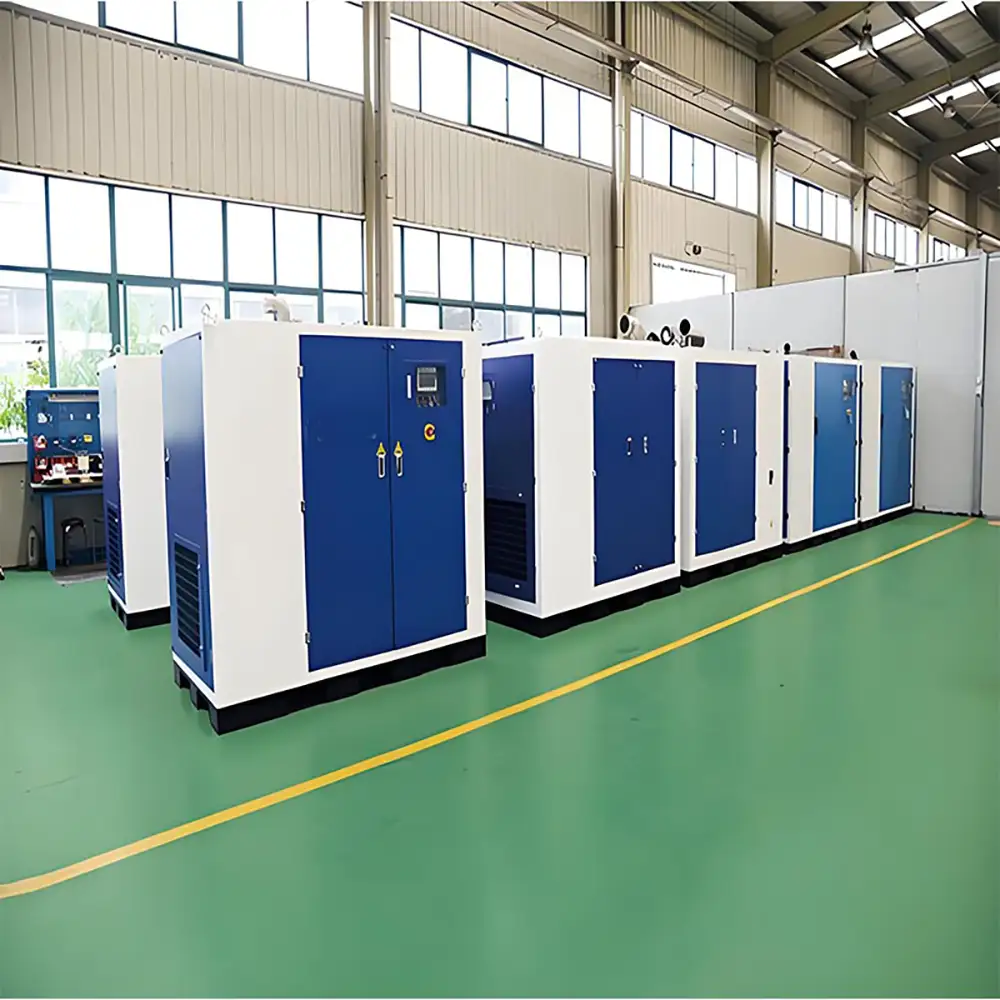
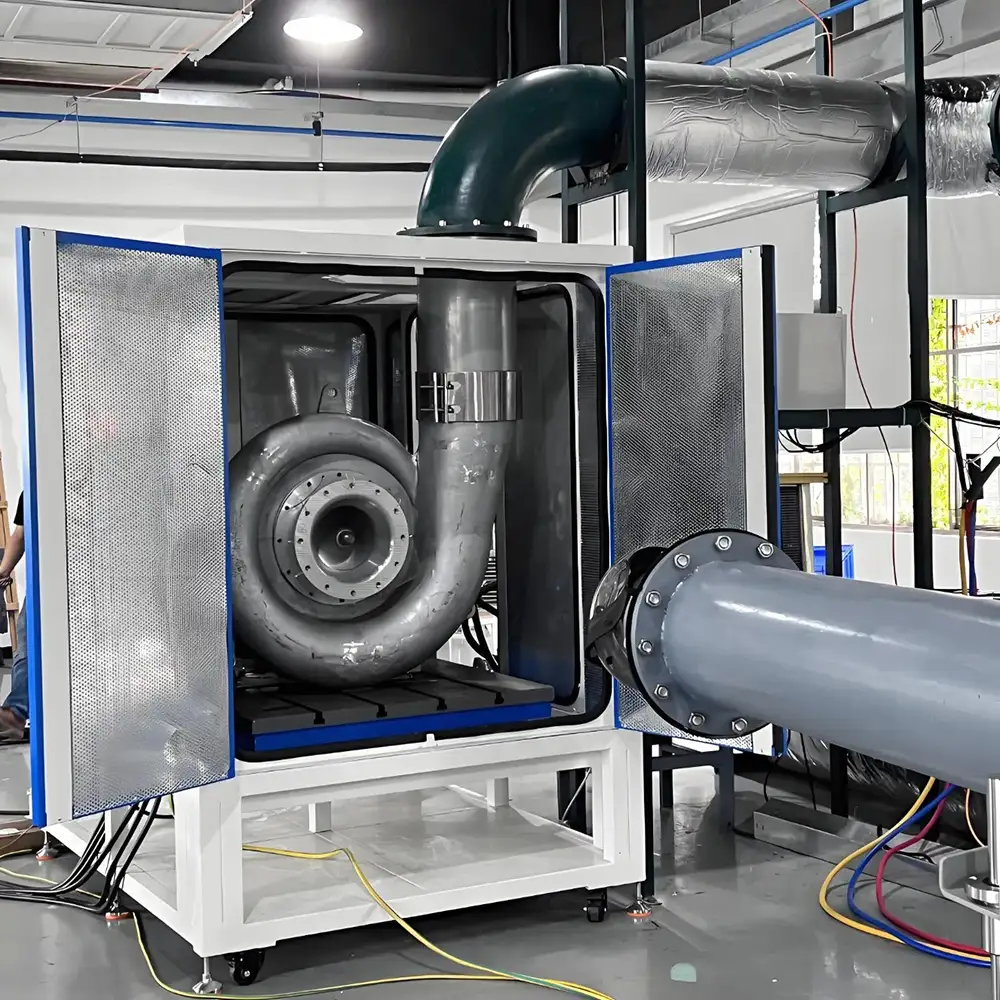
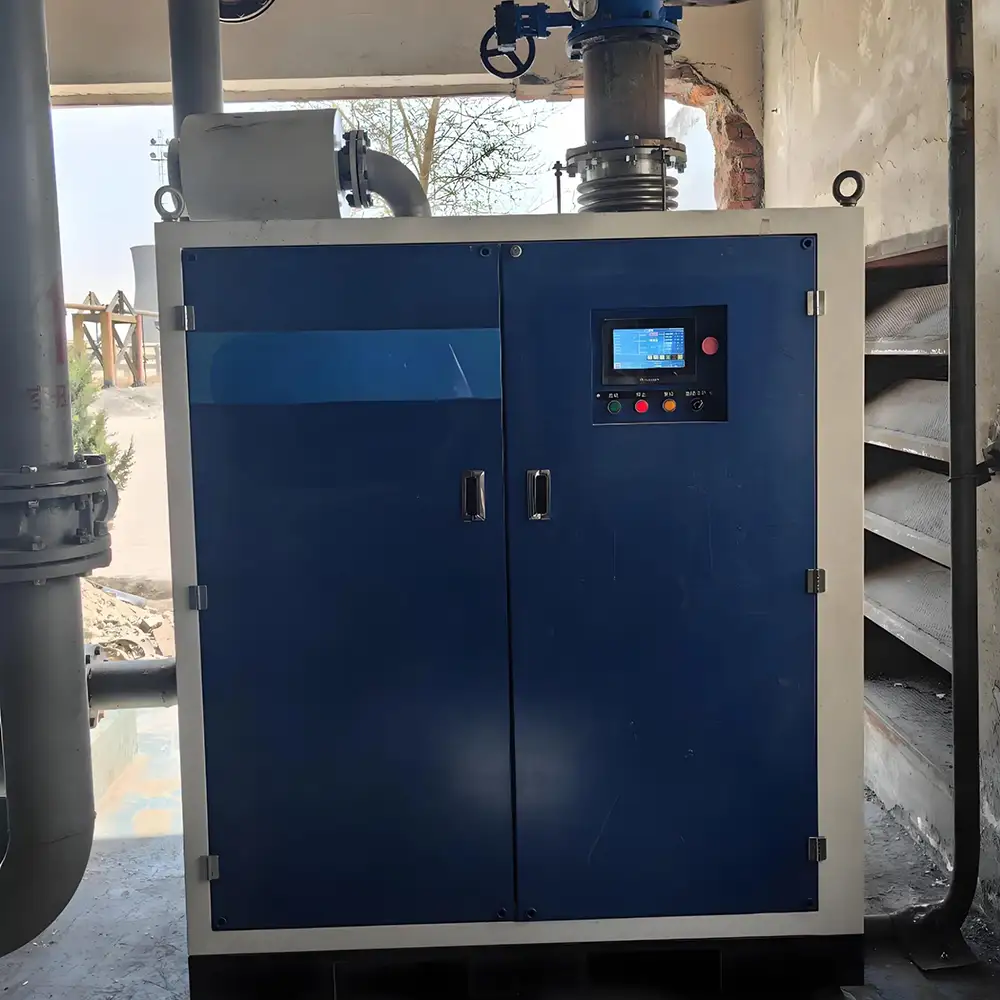
The magnetic levitation blower is an energy-saving and environmentally friendly high-tech product. Compared with the traditional Roots blower, it saves 30% of electricity on average and has a noise level of less than 80 decibels. It is the preferred product for iterative upgrades in traditional industries and is widely used in cement, sewage treatment, papermaking, steel, thermal power, chemical, pharmaceutical, food, textile and other fields.
|
Model |
Product Specifications |
|
Flow rate (m³/min) |
Pressure(KPa) |
Motor power (kW) |
cooling method |
|
TR037 Series |
15~55 |
20~80 |
37 |
Air Cooling |
|
TR055 Series |
25~70 |
20~80 |
55 |
Air Cooling |
|
TR075 Series |
25~75 |
20~80 |
75 |
Air Cooling |
|
TR090 Series |
25~100 |
20~80 |
90 |
Air Cooling |
|
TR110 Series |
40~100 |
20~80 |
110 |
Air Cooling |
|
TR150 Series |
30~180 |
20~80 |
150 |
Air Cooling |
|
TR185 Series |
30~190 |
20~80 |
185 |
Air Cooling |
|
TR220 Series |
70~200 |
20~80 |
220 |
Air Cooling |
|
TR300 Series |
150~300 |
20~80 |
300 |
Air Cooling |
|
Remark |
1. Model meaning: Brand-Power (kW). Example: TR055 series, TR is the brand, power 55kW. 2. Pressures in the range of 90~140kPa are unconventional models and the delivery cycle is extended. |
Energy Saving High Capacity Magnetic Levitation Turbo Blower for WWTP Aeration
The Energy Saving High Capacity Magnetic Levitation Turbo Blower is designed to provide efficient, reliable, and oil-free air supply for wastewater treatment plants and other high-demand industrial aeration applications. Using magnetic bearing technology, a high-speed turbo blower supports non-contact rotor operation while delivering a large volume of process air for biological wastewater treatment.
Aeration is a major energy-consuming process in many wastewater treatment plants, making blower selection an important factor in overall plant efficiency. EPA technical evaluations identify turbo blowers with magnetic or air bearing technology as high-efficiency aeration options, with magnetic bearings supporting friction-free rotor operation.
The blower can be used with activated sludge, MBBR, SBR, oxidation ditch, biological nutrient removal, and other aerobic wastewater treatment processes.
Performance Comparison
|
Compare Projects |
Roos |
Single stage centrifugal blower |
Air suspension blower |
Blower |
|
Air volume adjustment |
Adjustable, need to install frequency converter |
50%~100% |
65%~100% |
30%~100% |
|
Is there friction when starting? |
There is friction |
There is friction |
There is friction |
Frictionless |
|
Can it be started frequently? |
Can |
Can |
Can't |
Can |
|
noise |
More than 100 decibels |
90~100 decibels |
75~85 decibels |
75~85 decibels |
|
shock |
Very big |
Small and medium |
very small |
very small |
|
Lubrication and maintenance |
Lubrication required |
Requires complex lubrication system |
No lubrication required |
No lubrication required |
|
Maintenance method |
Regular maintenance |
Regular maintenance by a dedicated person is required |
Change filters regularly |
Change filters regularly |
|
Service life |
5~8 years |
10 years |
10 years (failures frequently occur after 2 years) |
More than 20 years |
|
size |
Large size |
Large size |
small volume |
small volume |
|
Installation and construction requirements |
Need to be fixed to the groundSoundproofing measures required |
Need to be fixed to the groundSoundproofing measures required |
No need to fixand soundproofing measures |
No need to fixand soundproofing measures |
|
efficiency |
Low |
high |
working principle
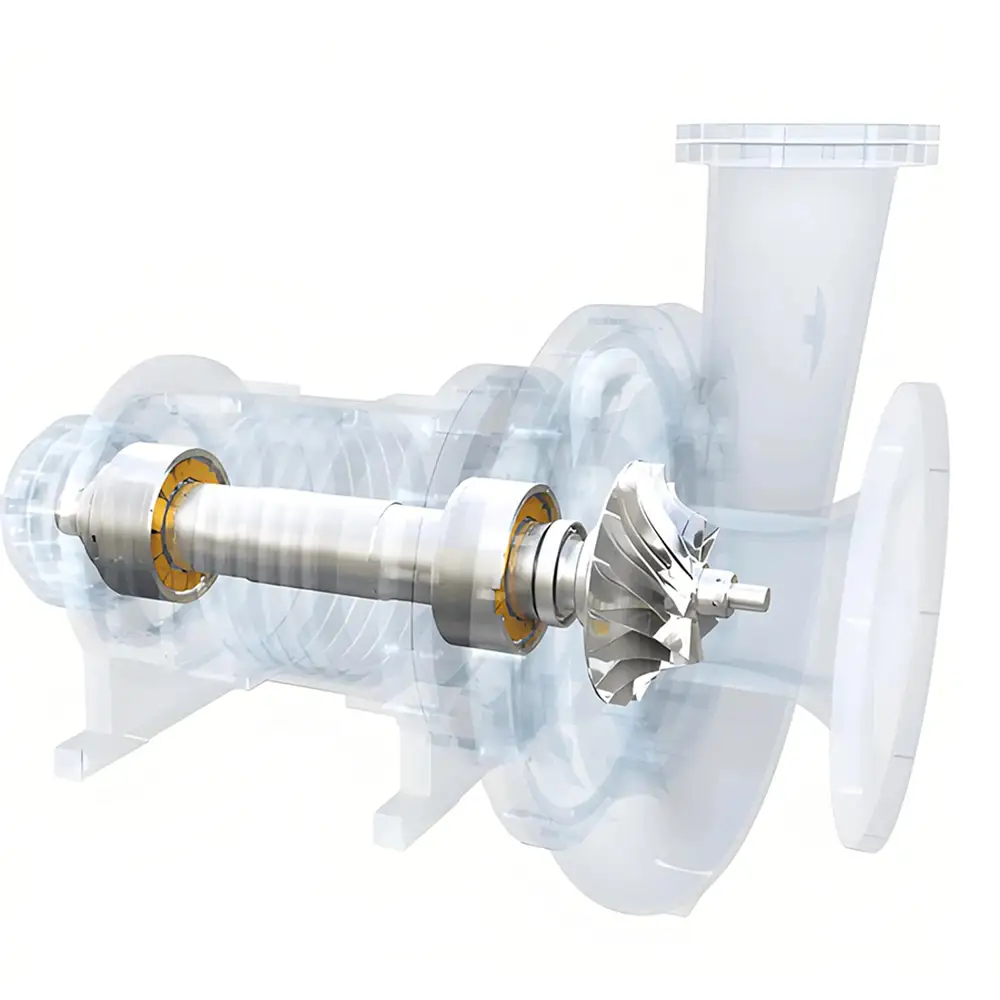
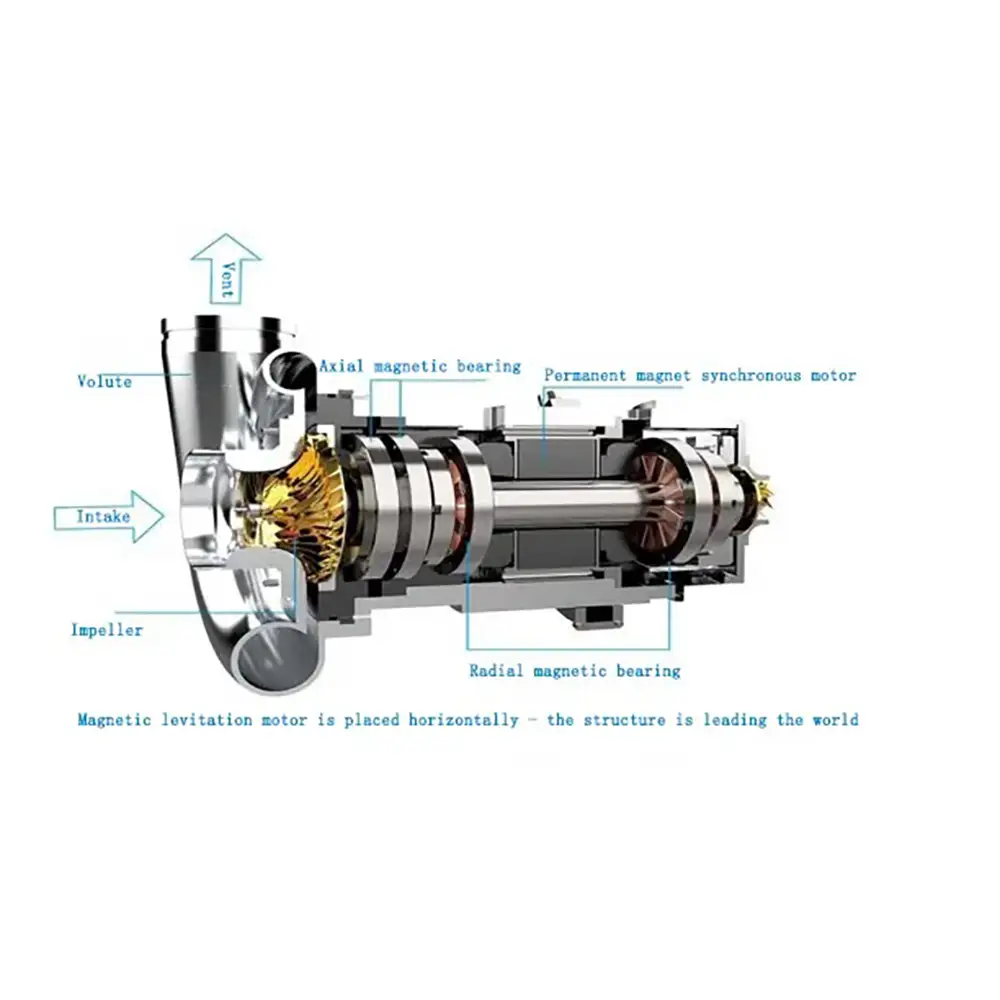
The active magnetic bearing system is the core system of the magnetic levitation blower. The motor rotor is fixed between two radial magnetic bearings and two axial magnetic bearings. The position of the rotor is detected by the position sensor, and the position signal is reflected to the main controller in real time. When the rotor is offset, the main controller will adjust the magnetic field force of each degree of freedom of the magnetic bearing according to the rotor offset to return the rotor to the correct position.
Magnetic Levitation Turbo Blower Technology
A magnetic levitation turbo blower uses magnetic bearing technology to support the rotating shaft without conventional mechanical contact. This reduces friction associated with traditional bearing systems and eliminates the need for conventional bearing lubrication in the process-air path.
The high-speed impeller is driven by a direct-drive motor or high-speed permanent-magnet motor, depending on the equipment configuration. A variable frequency drive can regulate rotational speed and airflow according to actual aeration demand.
Modern magnetic-bearing turbo blowers are designed for high-efficiency, low-pressure process air applications such as wastewater aeration. Commercial systems also commonly integrate intelligent controllers, airflow measurement, and variable-speed operation.
High Capacity WWTP Aeration
Large wastewater treatment plants require substantial air volumes to maintain aerobic biological processes. The blower must provide sufficient airflow and discharge pressure to overcome diffuser resistance, water depth, piping losses, valves, and other system pressure requirements.
A high-capacity turbo blower can be configured for centralized aeration systems serving large biological reactors. Multiple blowers can also be installed in parallel to provide operating flexibility, standby capacity, and variable airflow according to plant demand.
The correct blower size should be determined from the actual oxygen demand, required air flow, discharge pressure, aeration tank depth, diffuser characteristics, wastewater temperature, altitude, and process operating conditions.
Energy Saving Aeration System
The main energy-saving opportunity comes from matching blower output with actual oxygen requirements.
Instead of continuously operating at a fixed airflow, a variable-speed magnetic levitation turbo blower can adjust operating speed according to the required air volume. When combined with dissolved oxygen monitoring and automatic airflow control, the aeration system can reduce unnecessary air delivery.
EPA case studies have documented energy reductions after replacing conventional blower equipment with magnetic-bearing turbo blowers and improving automated aeration controls. One Green Bay WWTP case reported approximately 2.14 million kWh/year of electricity reduction compared with the previous blower operation. The actual savings of any replacement project depend on site-specific operating conditions.
Oil-Free Process Air
Oil-free air is an important advantage for biological wastewater treatment applications.
Conventional mechanically driven equipment may use lubricated bearings or gearboxes. Magnetic-bearing turbo blower configurations can eliminate mechanical contact at the main bearing system and avoid conventional oil lubrication requirements.
This can simplify maintenance and reduce the possibility of lubricating oil entering the process-air system. Magnetic-bearing turbo blowers are specifically promoted for oil-free wastewater aeration applications.
Oil-free operation is particularly useful where clean aeration air is required for biological microorganisms.
Direct-Drive High-Speed Motor
The turbo blower can use a high-speed direct-drive motor coupled to the impeller. Eliminating traditional gear transmission can reduce the number of mechanical components between the motor and impeller.
Depending on the configuration, a permanent-magnet synchronous motor and integrated frequency converter can provide precise speed control and efficient operation.
Direct-drive architecture can also reduce mechanical transmission losses and simplify the overall blower package. Current wastewater turbo blower systems commonly combine high-speed motors, VFD control, magnetic or hybrid bearing technology, and integrated airflow management.
Intelligent Blower Control
An intelligent control system allows the turbo blower to respond to changing wastewater aeration requirements.
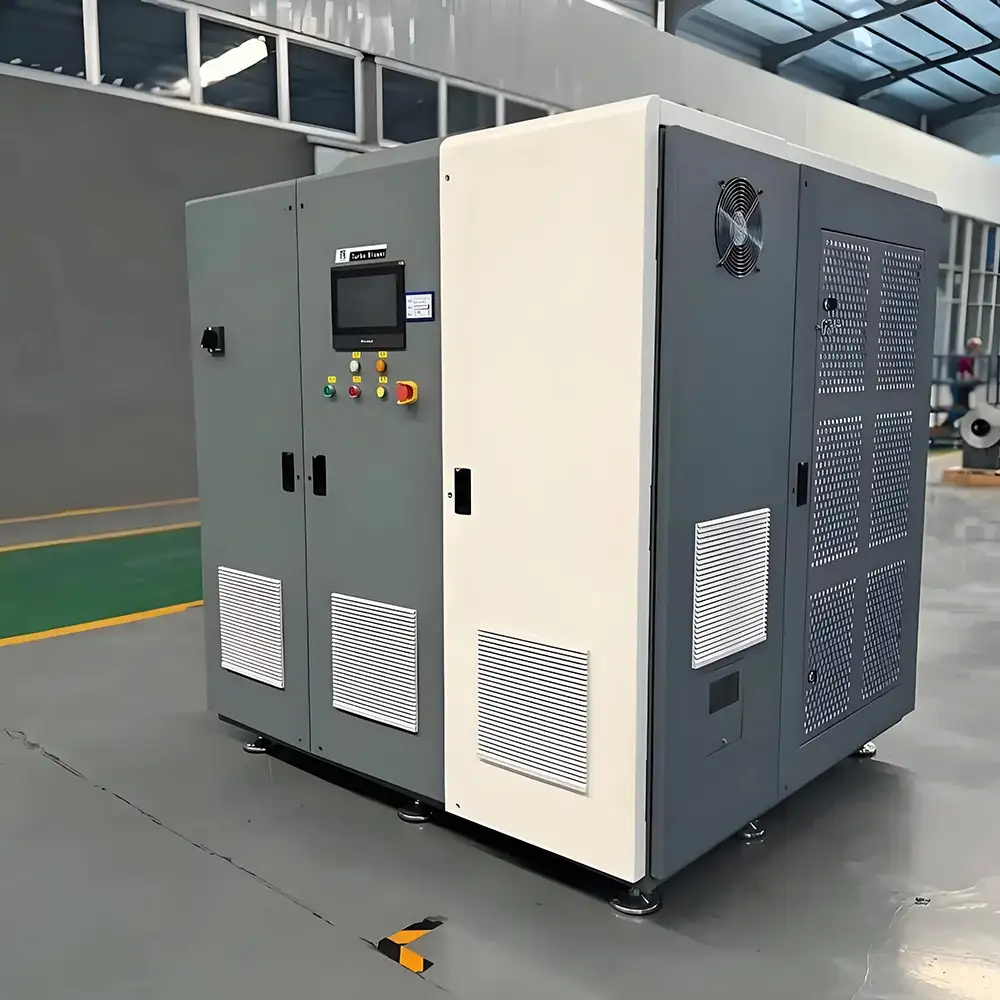
The control cabinet can monitor and regulate:
Airflow
Discharge Pressure
Motor Speed
Motor Power
Dissolved Oxygen
Inlet Conditions
Bearing Status
Temperature
Vibration
Operating Alarms
A PLC-based control system can communicate with the wastewater treatment plant's central SCADA system.
This allows operators to monitor blower operation and adjust aeration according to treatment requirements. Industrial magnetic-bearing turbo blower systems can support PLC and SCADA communication through common industrial communication protocols.
Aeration for Activated Sludge
Activated sludge treatment requires oxygen to support microorganisms responsible for biological removal of biodegradable organic matter and, depending on process design, nitrogen compounds.
The turbo blower delivers air through an aeration header to submerged diffusers. The diffusers distribute air into the biological reactor, where oxygen transfers from the bubbles into the wastewater.
Proper airflow distribution is essential. Excessive airflow can increase energy consumption, while insufficient airflow may negatively affect biological treatment conditions.
For this reason, blower capacity should be coordinated with diffuser design, aeration tank configuration, dissolved oxygen targets, and biological process requirements.
MBBR and SBR Applications
The magnetic levitation turbo blower can also be used with MBBR and SBR wastewater treatment systems.
MBBR reactors require aeration for oxygen transfer and carrier movement in aerobic zones. SBR systems may have intermittent aeration cycles, making flexible blower control particularly important.
High-cycle wastewater processes can place additional demands on blower start-stop performance. Modern hybrid or magnetic-bearing turbo blower technologies are available for applications involving intermittent aeration and frequent cycling.
Low Maintenance Operation
The reduced mechanical contact of magnetic bearing technology can help minimize mechanical wear. Unlike conventional gearbox-driven systems, a magnetic-bearing turbo blower can be designed without a traditional gear transmission and with fewer wear components.
Maintenance requirements can therefore focus more on air filters, cooling systems, electrical components, sensors, diffusers, and other process-side equipment.
Routine inspection remains necessary. Operators should monitor vibration, temperature, airflow, pressure, electrical consumption, filter condition, and alarm history to maintain reliable operation.
Compact High-Capacity Design
Despite its high airflow capability, a turbo blower can provide a relatively compact footprint compared with some conventional high-capacity blower arrangements.
This can be useful when upgrading an existing WWTP blower room where available floor space is limited.
Parallel blower configurations can also be designed so that operating units match current demand while additional units provide standby or peak-load capacity.
WWTP and Industrial Applications
Typical applications include:
Municipal Wastewater Treatment Plants
Industrial WWTPs
Activated Sludge Systems
MBBR Wastewater Treatment
SBR Wastewater Treatment
Biological Nutrient Removal
Oxidation Ditch Systems
Aerobic Wastewater Treatment
Food Processing Wastewater
Dairy Wastewater Treatment
Slaughterhouse Wastewater
Chemical Wastewater Treatment
Pharmaceutical Wastewater Treatment
Petrochemical Wastewater Treatment
Industrial Aeration Systems
Water Reuse Treatment Plants
Why Choose Us
High-capacity turbo blower design for WWTP aeration
Magnetic levitation or magnetic bearing technology
Oil-free process-air supply
High-efficiency direct-drive configuration
Variable-speed airflow regulation
Intelligent PLC control options
SCADA communication capability
Suitable for continuous and variable aeration demand
Compatible with activated sludge, MBBR, SBR, and other aerobic processes
Parallel blower configurations for large treatment plants
Compact design for new plants and blower-room upgrades
Project-specific airflow and pressure selection
FAQ
1. What Is a Magnetic Levitation Turbo Blower?
A magnetic levitation turbo blower is a high-speed centrifugal blower that uses magnetic bearing technology to support the rotor with minimal mechanical contact. It is commonly used for high-efficiency process-air applications such as wastewater aeration.
2. Why Is It Used in WWTPs?
It provides the air required by aerobic biological treatment while offering high-speed operation, variable airflow control, oil-free air delivery, and reduced mechanical wear.
3. Is the Blower Oil-Free?
Magnetic-bearing configurations can operate without conventional bearing lubrication, providing an oil-free process-air system. The exact equipment architecture should be confirmed from the selected model.
4. Can It Replace a Roots Blower?
It can be considered as an upgrade option where the required airflow, pressure range, control range, installation conditions, and operating profile are compatible.
5. How Does It Save Energy?
Energy efficiency can come from high-efficiency motor and impeller design, reduced mechanical transmission losses, magnetic bearing technology, and variable-speed airflow regulation. Actual savings depend on the existing system and operating conditions.
6. Can It Be Used for Large WWTPs?
Yes. High-capacity models and parallel blower arrangements can be used for large wastewater treatment facilities. Capacity should be selected according to actual oxygen and airflow requirements.
7. Can It Work With MBBR?
Yes. The blower can supply the aeration required for aerobic MBBR reactors when the airflow and pressure requirements are correctly matched.
8. Is It Suitable for SBR Systems?
Yes. Variable-speed and high-cycle configurations can be suitable for SBR systems, especially where aeration demand changes between process phases.
9. Can the Blower Be Controlled by VFD?
Yes. Variable-speed control can be integrated to adjust blower output according to airflow or process demand.
10. Can It Connect to SCADA?
Yes. A PLC control cabinet and industrial communication interface can be configured for integration with a plant SCADA system.
11. How Is the Blower Selected?
Selection normally considers required airflow, discharge pressure, operating range, aeration tank depth, diffuser pressure loss, wastewater temperature, altitude, electrical supply, and process oxygen demand.
12. Does the Blower Require Regular Maintenance?
Yes. Although magnetic bearing technology can reduce mechanical wear and lubrication requirements, routine inspection of filters, cooling, electrical components, sensors, control systems, and process-air equipment remains necessary.
Prev:
FRP Centrifugal Fan Anti-Corrosion Explosion-Proof Frequency Conversion
Next:
Intelligent Monitoring Automatic Regulation/Sewage Treatment System/Integrated Pumping Station
TAG:
Process Air Blower,
High Efficiency Centrifugal Blower,
Aeration Tank Blower,
Aeration Diffuser Blower,
Aeration Air Supply System,
Low Pressure Turbo Blower,
Low Pressure Aeration Blower,
Centrifugal Turbo Blower,
Magnetic Bearing Aeration System,
Magnetic Levitation Aeration System,
Maglev Wastewater Aeration,
Maglev WWTP Blower,
Magnetic Bearing WWTP Blower,
Magnetic Bearing Wastewater Blower,
Magnetic Bearing Aeration Blower,
Energy Efficient WWTP Blower,
High Capacity WWTP Blower,
Industrial Wastewater Treatment Blower,
Automatic Blower Control,
Industrial Wastewater Aeration,
Smart Turbo Blower,
Intelligent Turbo Blower,
Smart Aeration Blower,
Intelligent Aeration Blower,
PLC Turbo Blower,
PLC Aeration Control,
SCADA Turbo Blower,
SCADA Aeration System,
Automatic Aeration Blower,
Automatic Wastewater Aeration,
Related Category:
Energy Saving Magnetic Levitation Turbo Blower,High Capacity Turbo Blower,Magnetic Bearing Turbo Blower,Maglev Turbo Blo China, suppliers, manufacturers, factory, customized, wholesale, quotation, made in China