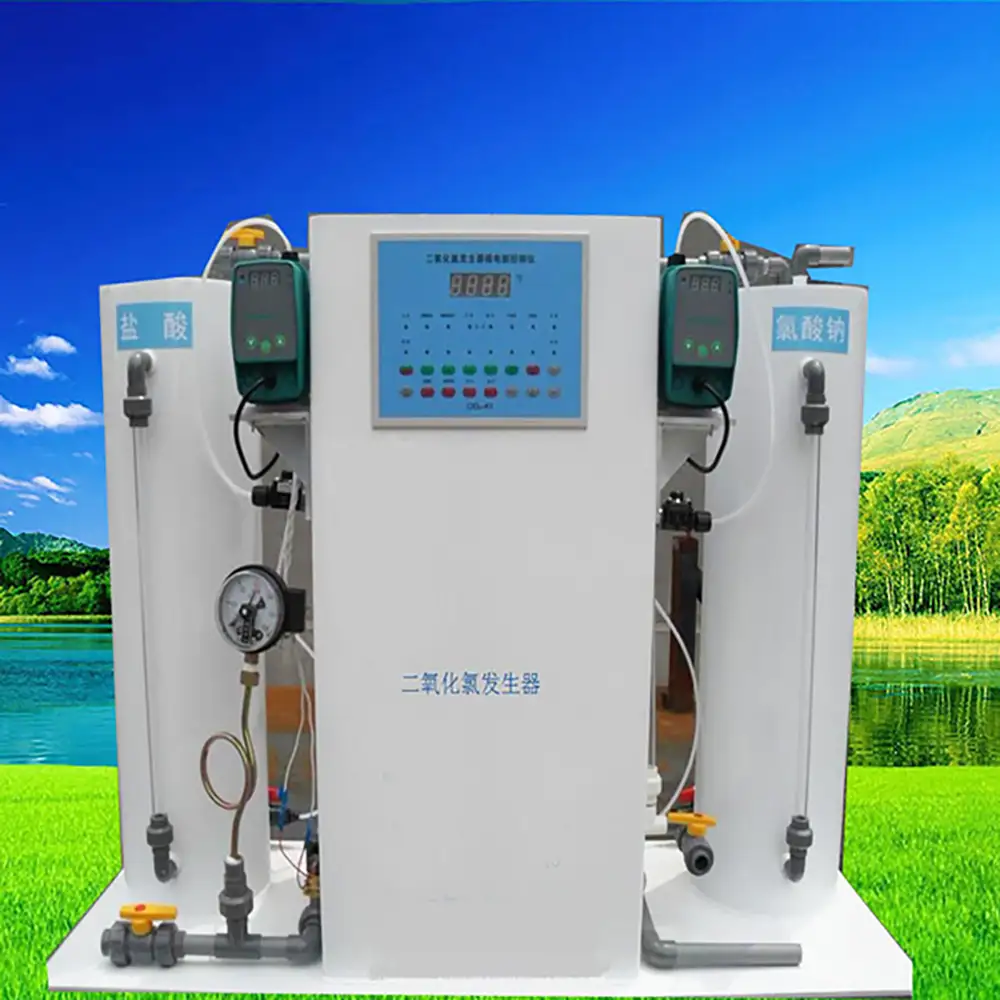
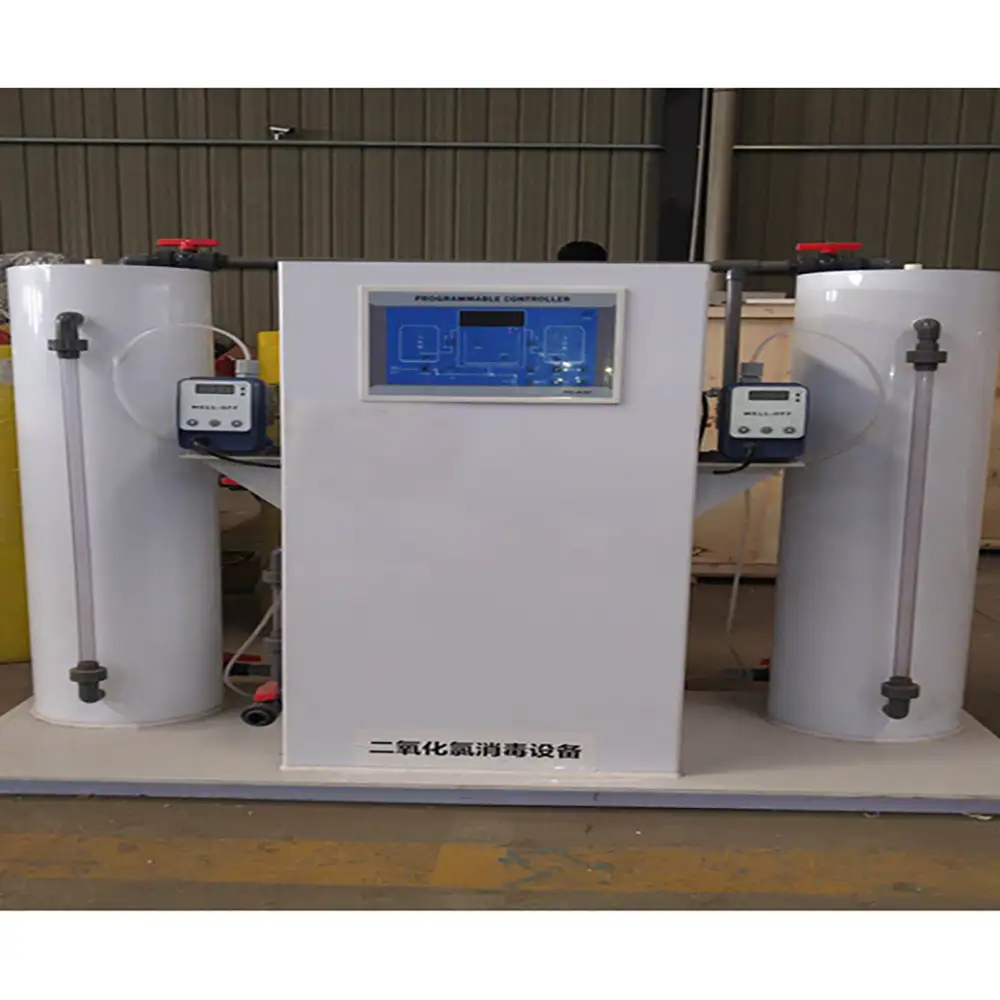
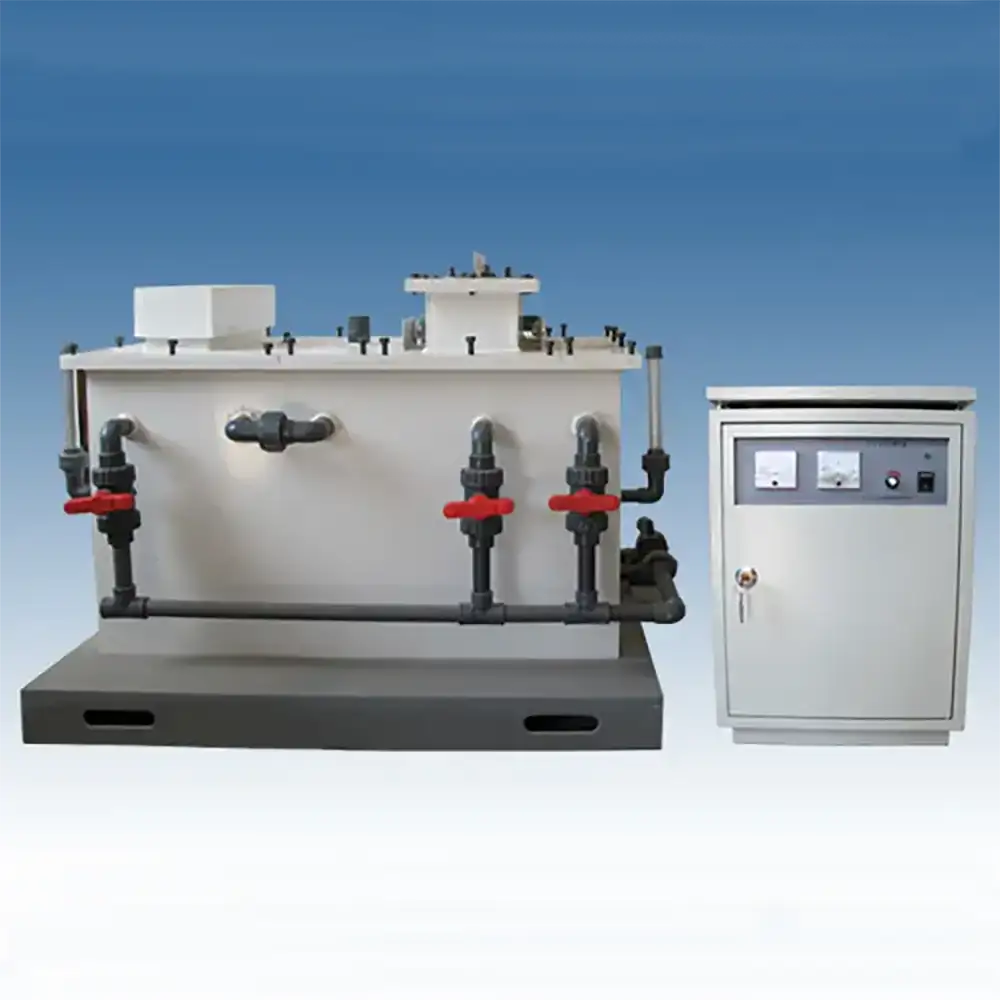
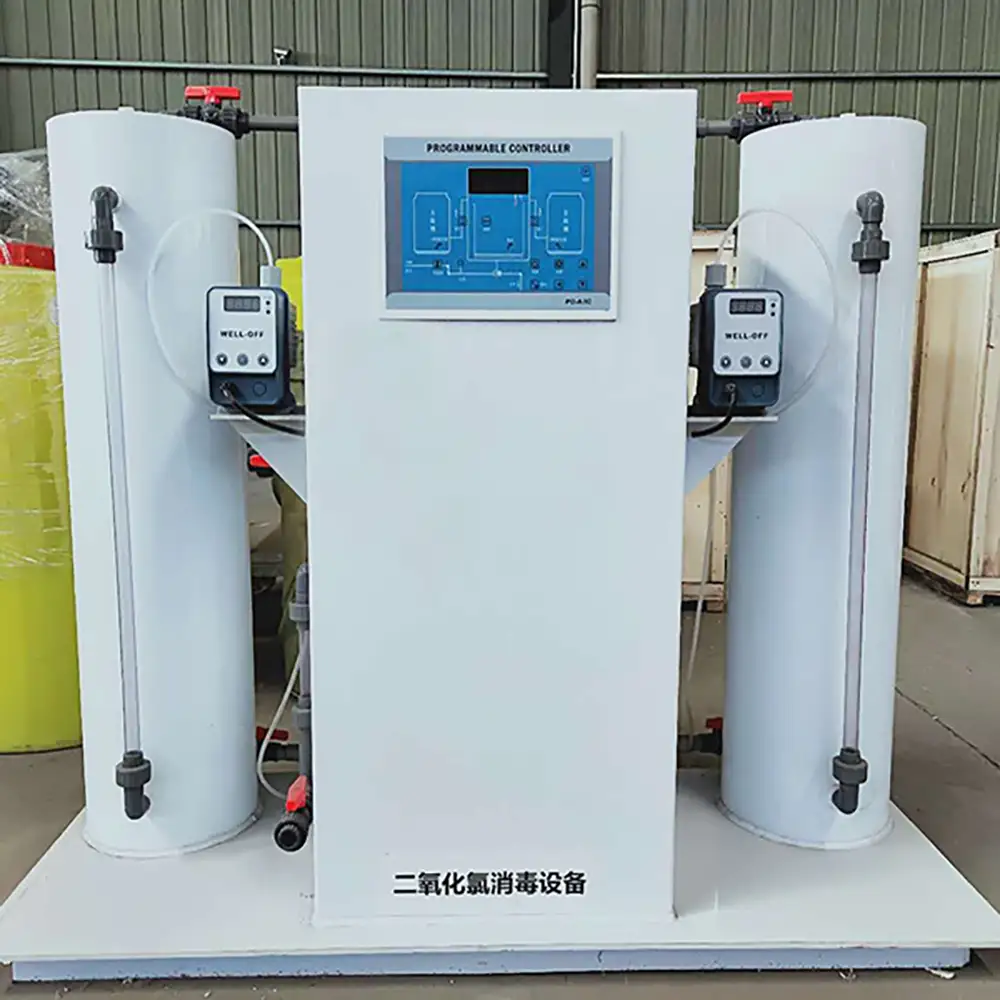
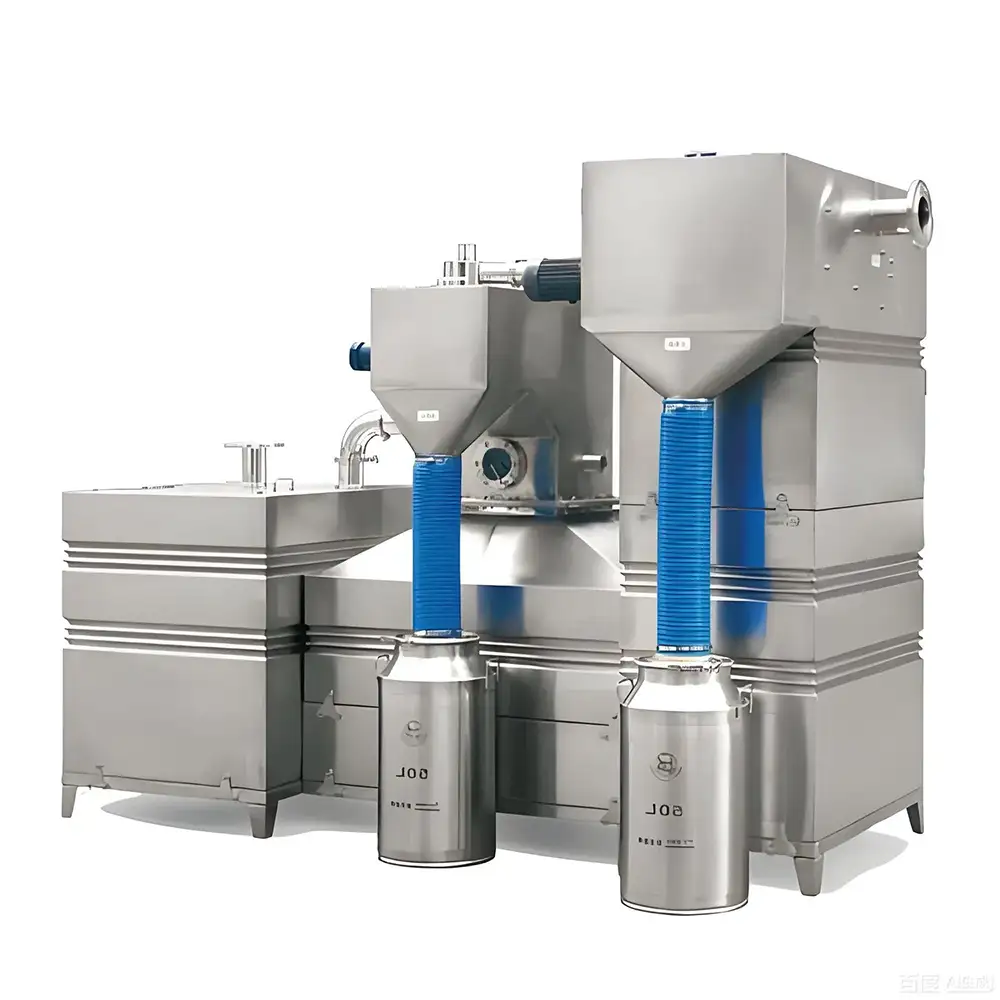
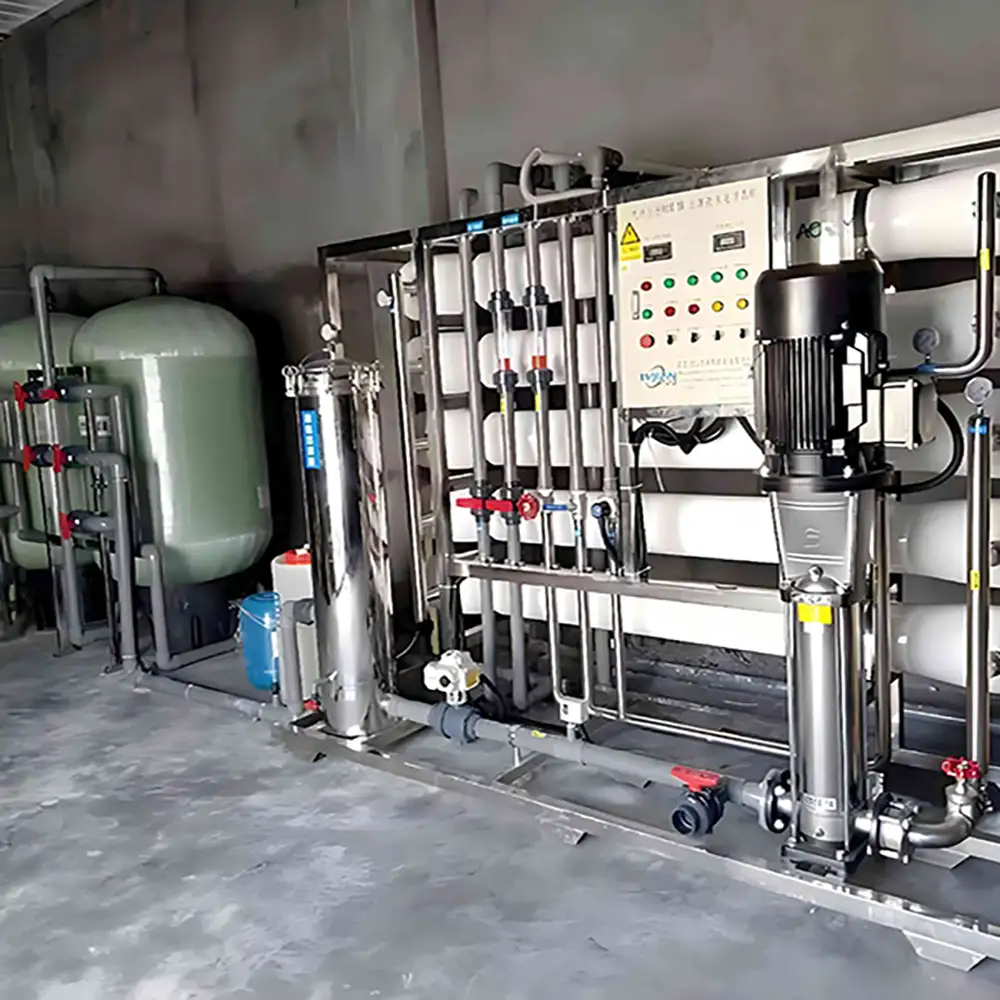
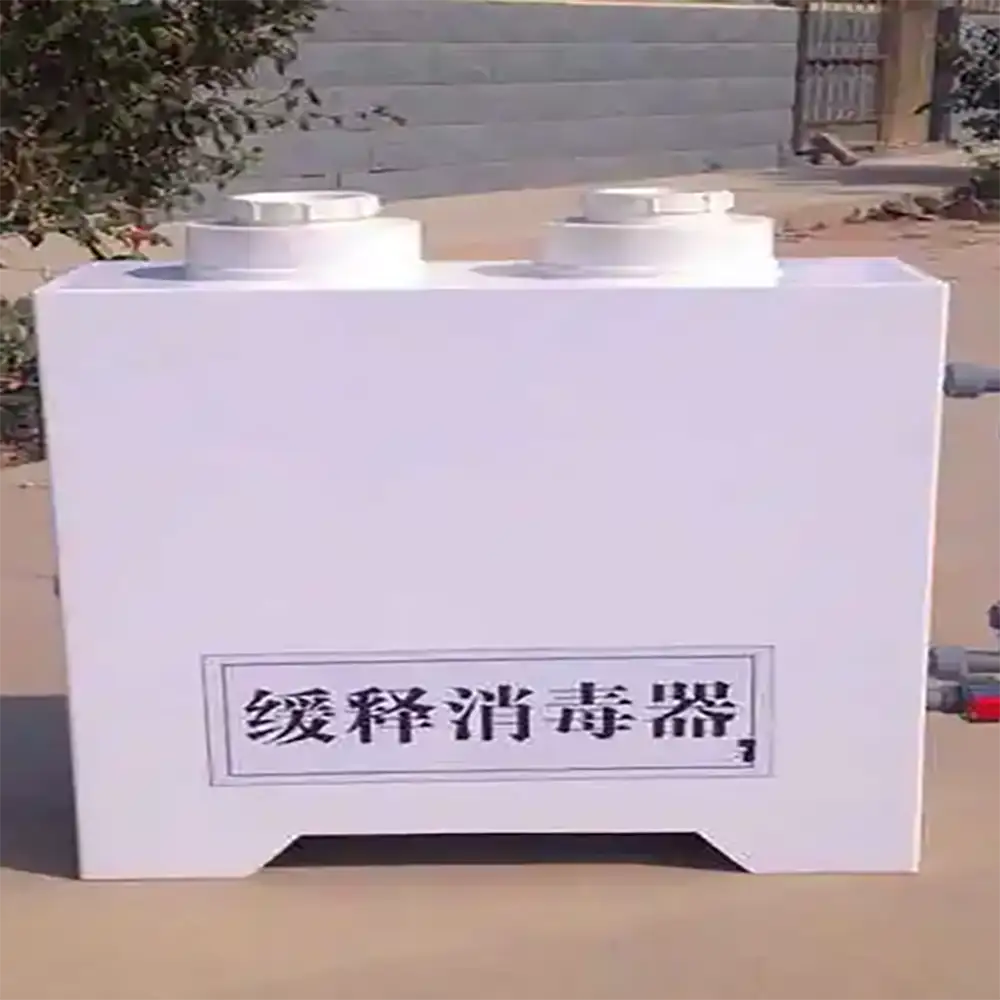
Chlorine Dioxide Generator for Water and Wastewater Treatment
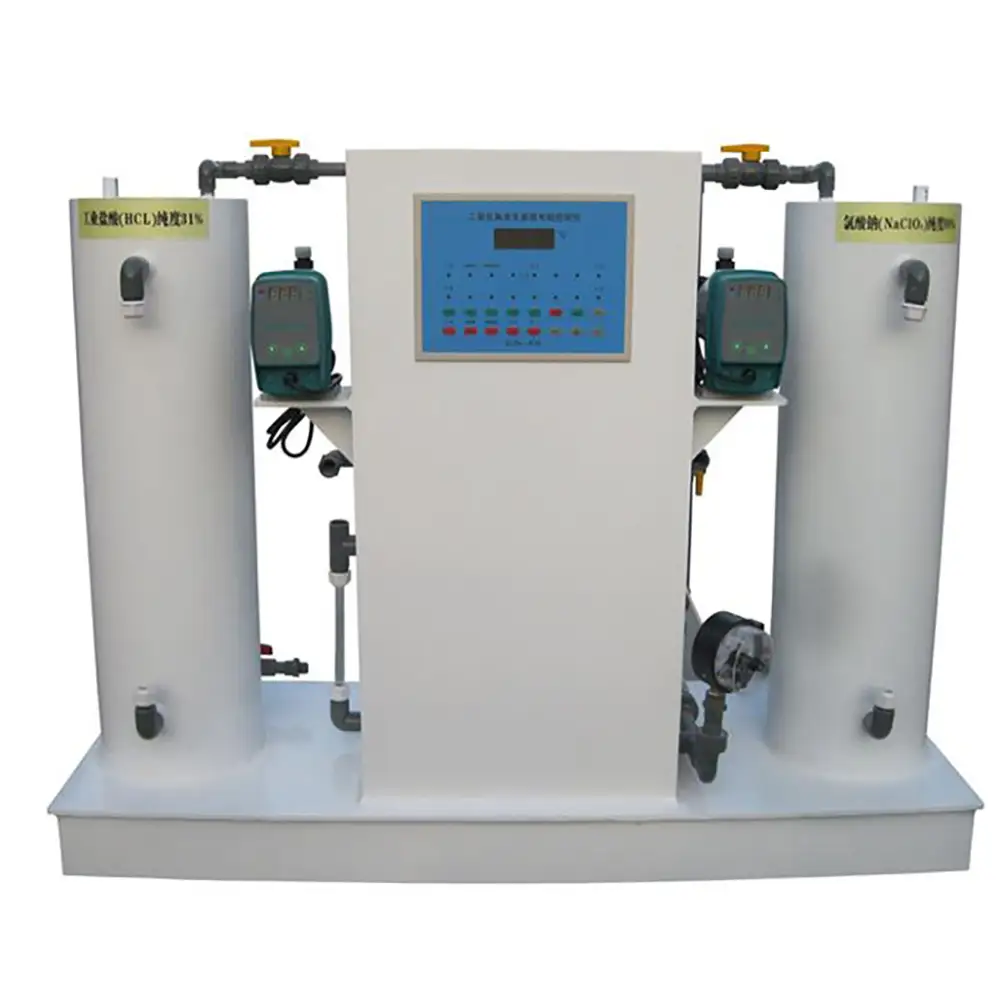
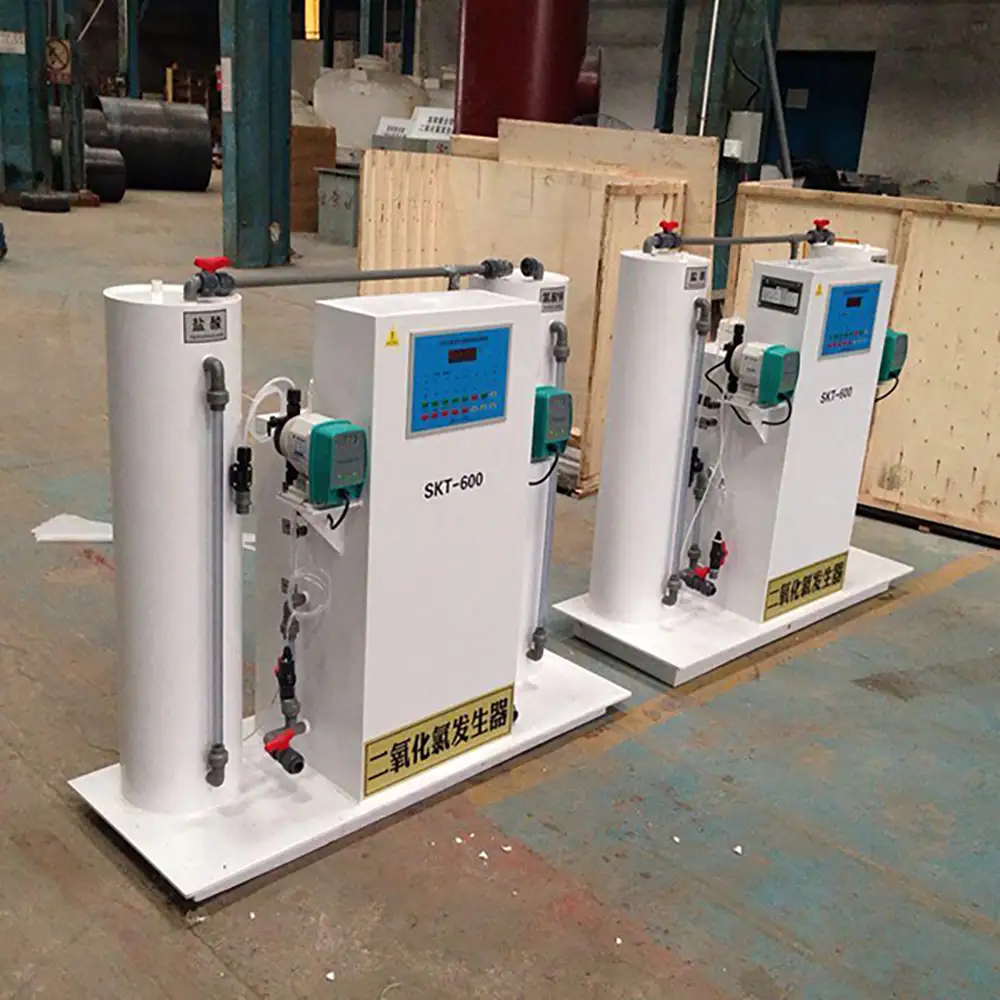
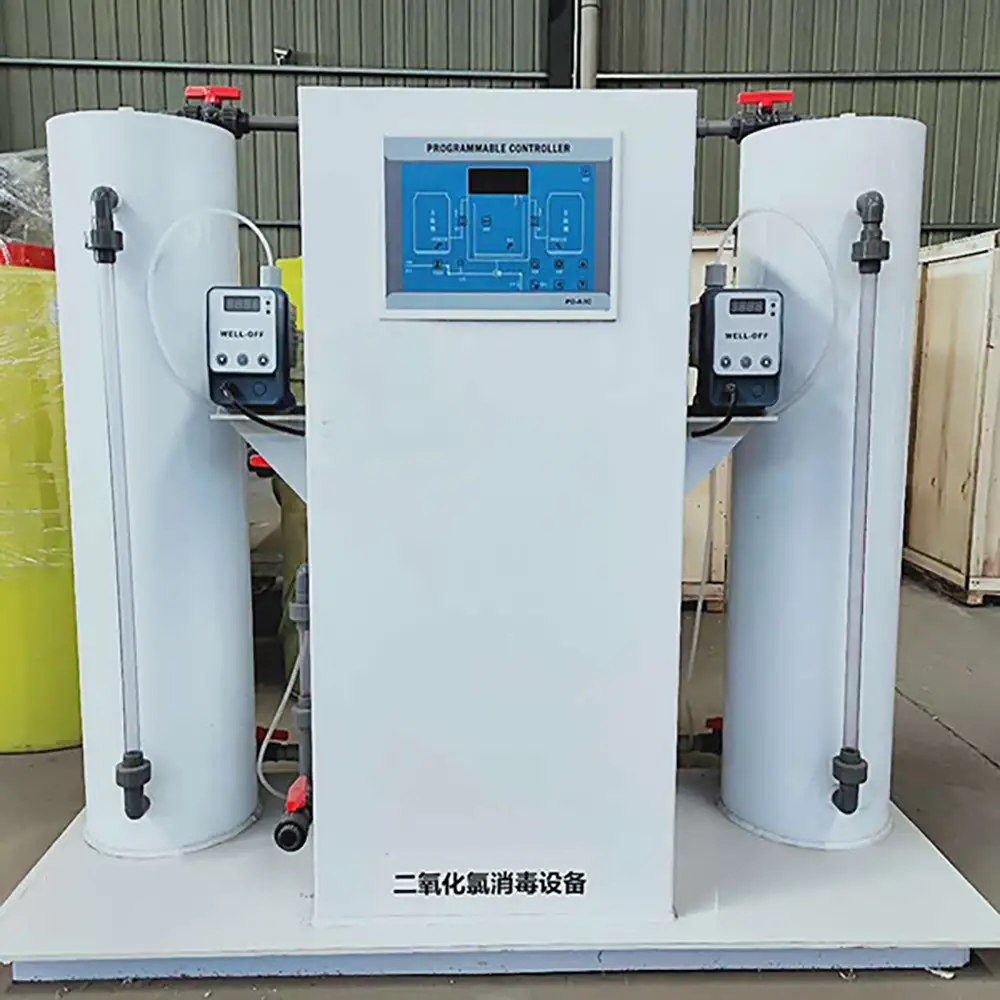
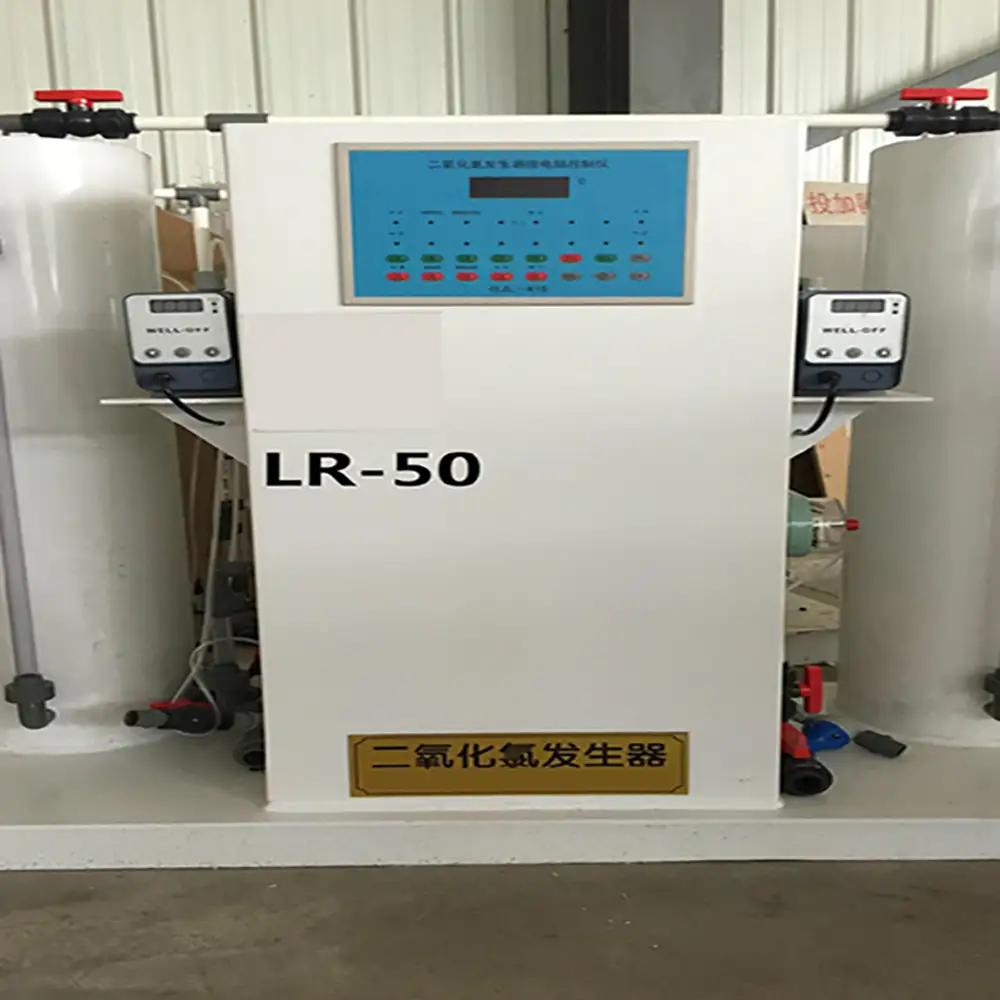
A Chlorine Dioxide Generator is an on-site chemical generation system designed to produce chlorine dioxide (ClO₂) for water disinfection, wastewater treatment, industrial process water treatment and selected oxidation applications. The generator combines controlled chemical reaction, dosing, mixing and process control to produce chlorine dioxide close to the point where it is required.
Chlorine dioxide is a strong oxidizing disinfectant. It has been used in water treatment for microbial control and oxidation, and WHO identifies chlorine dioxide as a relatively strong germicide capable of inactivating many waterborne pathogens under suitable treatment conditions.
Because chlorine dioxide is unstable in concentrated gaseous form, it is generally generated on site rather than transported and stored as a concentrated gas. EPA technical guidance specifically describes on-site chlorine dioxide generation using sodium chlorite with different feedstocks and direct injection or eduction into a water stream.
What Is a Chlorine Dioxide Generator?
A Chlorine Dioxide Generator is equipment that converts selected precursor chemicals into chlorine dioxide under controlled reaction conditions.
A typical system may contain:
Chemical Storage Tanks
Chemical Metering Pumps
Reaction Chamber
Mixing System
Water Dilution System
Chlorine Dioxide Solution Tank
Flow Meters
Pressure Sensors
Level Sensors
Injection System
Automatic Valves
PLC Control Cabinet
Alarm And Safety Interlocks
The exact configuration depends on the selected generation chemistry, required chlorine dioxide production capacity, water flow, application, chemical concentration and site requirements.
EPA documentation describes generation methods based on sodium chlorite combined with chlorine, hypochlorite or acids, while other generation technologies may use different reaction or electrochemical approaches.
How a Chlorine Dioxide Generator Works
The basic process can be summarized as:
Chemical Feeding → Controlled Reaction → ClO₂ Generation → Dilution → Dosing → Mixing → Contact → Disinfection
First, precursor chemicals are accurately metered into the reaction chamber. The reaction produces chlorine dioxide under controlled conditions.
The generated chlorine dioxide can then be diluted or transferred to an injection system. A metering pump or ejector introduces the chlorine dioxide into the treatment water.
Proper mixing is essential. EPA technical guidance describes chlorine dioxide systems using reaction vessels, metering pumps, ancillary piping and injection equipment to introduce the generated disinfectant into the treatment stream.
The treated water then passes through a contact zone where chlorine dioxide remains in contact with microorganisms and oxidizable substances for the required treatment period.
On-Site Chlorine Dioxide Generation
On-site generation is one of the most important advantages of a Chlorine Dioxide Generator.
Chlorine dioxide is inherently unstable and is therefore typically generated at or near the point of use. WHO and EPA documents both describe on-site generation as a standard approach for chlorine dioxide water treatment.
Producing chlorine dioxide on site can eliminate the need to transport large quantities of concentrated chlorine dioxide gas. Instead, the system generates the required disinfectant according to actual treatment demand.
This configuration is particularly useful for industrial and municipal facilities that require continuous or scheduled water disinfection.
Chlorine Dioxide Generation Methods
Different generator designs use different chemical reactions.
Common approaches include:
Sodium Chlorite + Chlorine:
Sodium chlorite reacts with chlorine or a chlorine solution to generate chlorine dioxide.
Sodium Chlorite + Acid:
Sodium chlorite reacts with an acid under controlled conditions to produce chlorine dioxide.
EPA technical documentation describes both chlorine-chlorite and acid-chlorite generation routes.
The appropriate method should be selected according to chemical availability, required production capacity, operating conditions, safety requirements and applicable regulations.
Water Disinfection
A Chlorine Dioxide Generator can be integrated into water treatment systems for microbial control.
Potential applications include:
Municipal Water Treatment
Drinking Water Disinfection
Industrial Process Water
Cooling Water Treatment
Reclaimed Water Treatment
Utility Water Disinfection
Food Processing Water
Beverage Processing Water
Commercial Water Treatment
Chlorine dioxide can provide strong oxidation and disinfection performance when properly applied. However, the required dose depends on water quality, pH, temperature, microorganism type, organic load and contact time. EPA specifically notes that disinfection effectiveness is influenced by factors including flow rate, pH, TSS and temperature.
Wastewater Disinfection
The Chlorine Dioxide Generator can also be used as part of a wastewater treatment system.
A typical process may be:
Screening → Biological Treatment → Clarification → Filtration → Chlorine Dioxide Generation → Dosing → Contact Tank → Discharge Or Reuse
The generator can provide chlorine dioxide for final disinfection after suspended solids and organic pollutants have been reduced through upstream treatment.
Depending on the wastewater characteristics, chlorine dioxide may also be used for selected oxidation or odor-control applications.
The required treatment conditions should be established through wastewater analysis and, where necessary, pilot testing.
Industrial Wastewater Applications
Chlorine dioxide generation technology can be considered for a wide range of industrial water and wastewater applications.
Potential industries include:
Food Processing
Beverage Production
Pulp And Paper
Textile Processing
Petrochemical Production
Chemical Manufacturing
Industrial Process Water
Cooling Water Systems
Reclaimed Water
Municipal Wastewater
In industrial wastewater treatment, chlorine dioxide may be applied for microbial control, final disinfection and selected oxidation requirements.
The system can operate independently or be integrated with biological treatment, DAF, sedimentation, filtration, MBR, MBBR, SBR and other wastewater treatment technologies.
Chlorine Dioxide Generator for Odor Control
Chlorine dioxide is also an oxidant and can be considered for selected wastewater odor-control applications.
Certain reduced sulfur compounds and other oxidizable substances can create unpleasant odors in wastewater systems. A properly designed chlorine dioxide dosing system can introduce the oxidant at an appropriate treatment location.
Potential dosing points include:
Equalization Tanks
Collection Systems
Lift Stations
Biological Treatment Areas
Sludge Treatment Areas
Final Effluent Lines
Actual performance depends strongly on wastewater composition and oxidant demand. Testing should be used to establish the appropriate dosing strategy for difficult applications.
Automatic Chlorine Dioxide Generation
Modern Chlorine Dioxide Generators can use PLC-based automation for chemical dosing and process control.
The control system may monitor:
Chemical Tank Levels
Water Flow
Chemical Feed Rate
Generator Status
Pressure
Product Solution Level
Chlorine Dioxide Concentration
Pump Status
System Alarms
Automatic operation can coordinate chemical feeding with water flow and treatment demand.
For example, a flow-paced control system can increase or decrease chlorine dioxide production and dosing according to changes in water flow.
Chlorine Dioxide Dosing and Injection
After generation, chlorine dioxide must be introduced into the treatment stream with suitable mixing.
A complete system may use:
Metering Pumps
Eductors
Injection Quills
Diffusers
Static Mixers
Contact Tanks
Flow Meters
Back-Pressure Valves
EPA technical information describes the use of metering pumps, ejectors and diffusers for controlled chlorine dioxide application and mixing.
Good mixing helps distribute chlorine dioxide throughout the water and supports consistent contact with the treatment target.
Safety and Chemical Control
Safety is an essential part of chlorine dioxide generator design.
Concentrated chlorine dioxide gas is unstable, so generation should take place under controlled conditions. EPA documentation specifically states that chlorine dioxide generation should take place in a controlled generator and that the generated solution should be applied through an appropriate treatment point with uniform mixing.
A complete system may incorporate:
Chemical Containment
Ventilation
Leak Detection
Low-Level Protection
Automatic Shutdown
Pressure Protection
Flow Monitoring
Emergency Interlocks
Alarm Systems
Operators should follow equipment instructions, chemical supplier requirements and applicable local regulations.
Chlorite and Chlorate Monitoring
Chlorine dioxide treatment requires attention to its reaction byproducts, particularly chlorite and chlorate.
WHO identifies chlorite and chlorate as important byproducts associated with chlorine dioxide disinfection and provides provisional guideline values for drinking water.
For regulated drinking-water applications, treatment design should therefore consider precursor chemistry, chlorine dioxide dose, contact conditions and residual byproduct monitoring.
Why Choose Us
Our Chlorine Dioxide Generator solutions are designed for industrial and municipal water treatment applications requiring controlled on-site ClO₂ production.
On-Site Generation: Produces chlorine dioxide close to the treatment point.
Controlled Chemical Reaction: Designed for stable and controlled precursor feeding.
Automatic Operation: PLC controls can coordinate generation, dosing and alarms.
Accurate Dosing: Metering systems support controlled chlorine dioxide injection.
Flexible Capacity: Generator capacity can be selected according to treatment flow and demand.
Wide Applications: Suitable for water, wastewater, process water and industrial disinfection.
Integrated Design: Generation, dosing, injection and control components can be combined.
Safety-Oriented System: Monitoring, interlocks and emergency shutdown functions can be incorporated.
Easy Integration: Compatible with MBR, MBBR, SBR, DAF, filtration and other treatment processes.
Project-Based Configuration: System parameters can be evaluated according to actual water quality and treatment requirements.
FAQs
1. What Is a Chlorine Dioxide Generator?
A Chlorine Dioxide Generator is equipment that produces chlorine dioxide on site from selected precursor chemicals for water disinfection, wastewater treatment and oxidation applications.
2. Why Is Chlorine Dioxide Generated On Site?
Chlorine dioxide is unstable, particularly in concentrated gaseous form, so it is generally generated close to the point of use.
3. What Chemicals Are Used to Generate Chlorine Dioxide?
Common systems use sodium chlorite with chlorine, hypochlorite or an acid, depending on the generator design.
4. Can a Chlorine Dioxide Generator Treat Wastewater?
Yes. Chlorine dioxide can be used for wastewater disinfection and selected oxidation applications when the system is appropriately designed for the wastewater characteristics.
5. Can It Be Used for Drinking Water?
Yes. Chlorine dioxide is used for drinking-water disinfection in certain applications, subject to applicable regulations and monitoring requirements.
6. What Affects Chlorine Dioxide Dosage?
Flow rate, pH, temperature, TSS, organic matter, microorganism concentration and required contact time can affect the appropriate dose.
7. Can the Generator Operate Automatically?
Yes. PLC controls, flow meters, dosing pumps, sensors and automatic valves can be integrated for automatic operation.
8. Does the Generator Need a Dosing System?
Most complete treatment installations require controlled dosing and injection equipment to transfer the generated chlorine dioxide into the water stream.
9. Can the Generator Be Integrated With an Existing WWTP?
Yes. It can be installed as a final disinfection or oxidation stage after biological treatment, clarification or filtration.
10. Can Chlorine Dioxide Be Used for Odor Control?
Yes. Chlorine dioxide has oxidation properties and can be used for selected odor-control applications. The actual dose depends on the odor-causing compounds and wastewater chemistry.
11. Are Chlorite and Chlorate Important?
Yes. They are relevant byproducts of chlorine dioxide treatment and should be considered in applications where regulatory limits apply.
12. How Do I Select a Chlorine Dioxide Generator?
Selection should consider water or wastewater flow, required ClO₂ production rate, precursor chemicals, water quality, target disinfection level, contact time, automation requirements and applicable regulations. Site-specific testing may be appropriate for complex treatment projects.
Prev:
Chlorine Dioxide Dosing Device
Next:
Electrolytic Chlorine Dioxide Generator
TAG:
Water Disinfection System,
Industrial Water Disinfection Equipment,
Water Disinfection Equipment,
Chlorine Dioxide Generator System,
Chlorine Dioxide Dosing System,
Cooling Water Disinfection,
Automatic Chlorine Dioxide Dosing System,
Chlorine Dioxide Oxidation Equipment,
Wastewater Disinfection System,
Chlorine Dioxide Oxidation System,
Chlorine Dioxide Disinfection Equipment,
Chlorine Dioxide Water Treatment Equipment,
Industrial Wastewater Disinfection,
Industrial Water Disinfection System,
Chlorine Dioxide Disinfection System,
Chlorine Dioxide Water Treatment System,
Chlorine Dioxide Wastewater Treatment,
Chlorine Dioxide Water Disinfection,
Automatic Chlorine Dioxide Generator,
Industrial Chlorine Dioxide Generator,
Chlorine Dioxide Generator,
Process Water Disinfection,
Chlorine Dioxide Dosing Equipment,
On-Site Chlorine Dioxide Generation,
ClO2 Water Treatment System,
Industrial Water Disinfection,
ClO2 Generator,
Chlorine Dioxide Water Treatment,
Water Sterilization System,
Industrial Process Water Treatment,
Related Category:
Chlorine Dioxide Generator,ClO2 Generator,Chlorine Dioxide Generation System,Chlorine Dioxide Generator System China, suppliers, manufacturers, factory, customized, wholesale, quotation, made in China