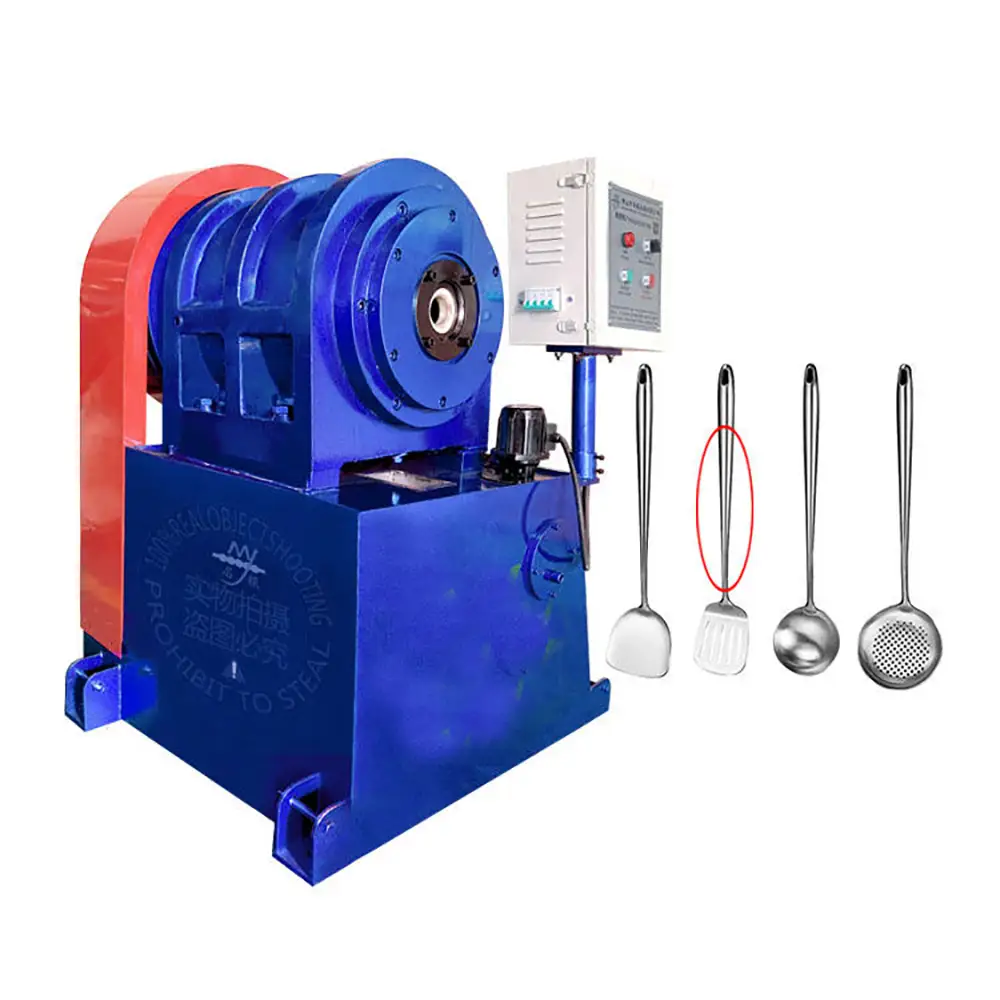
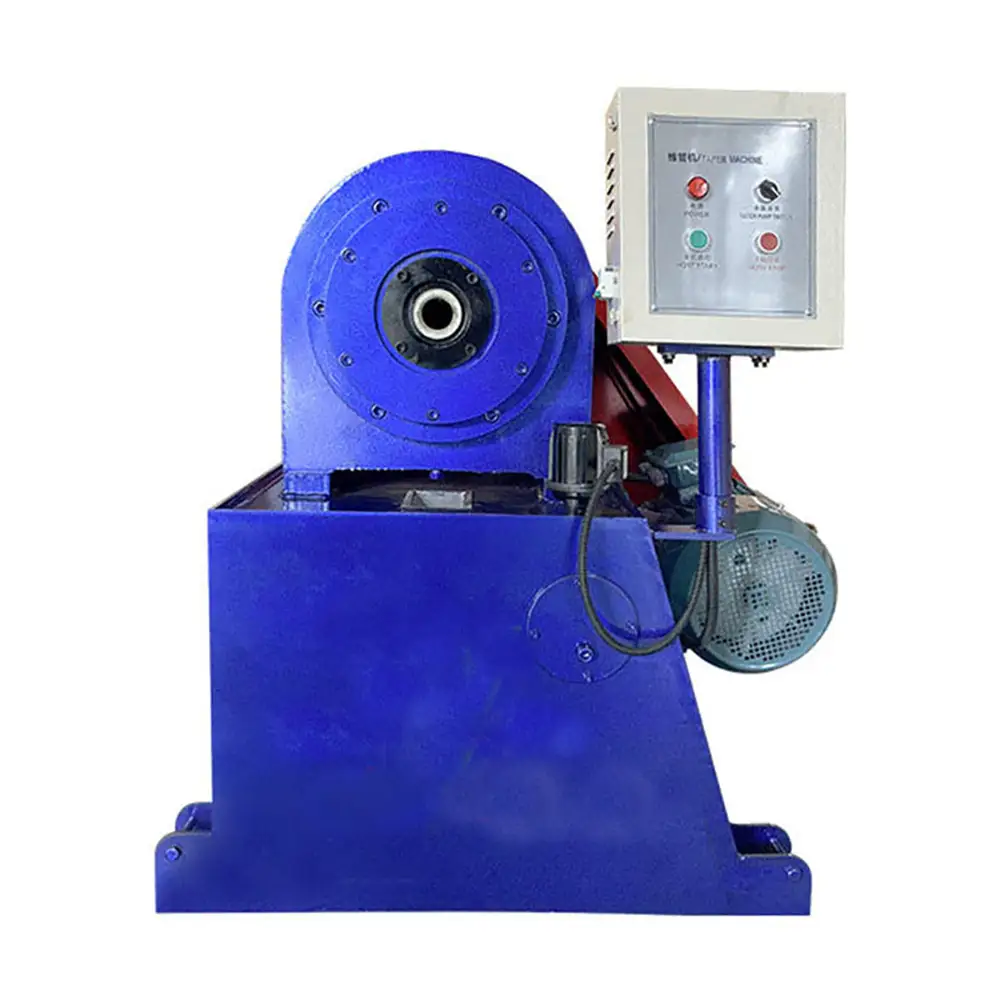
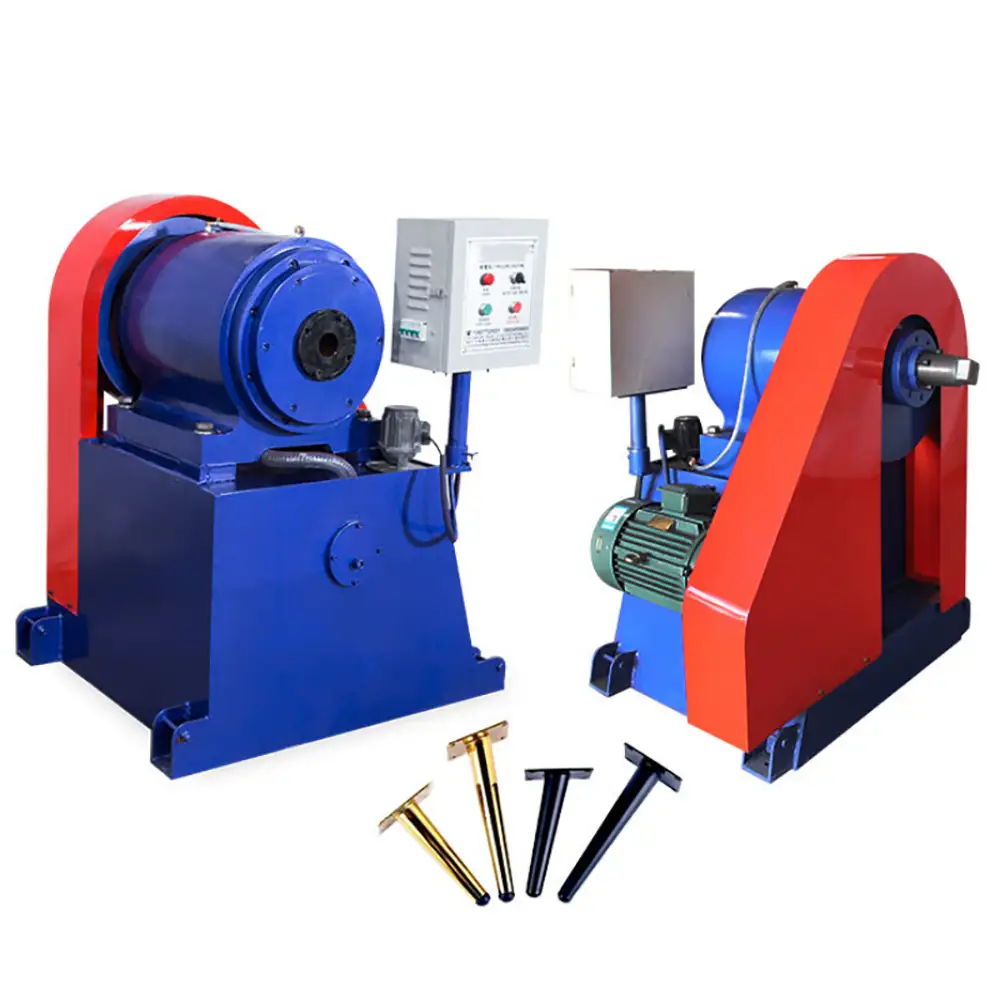
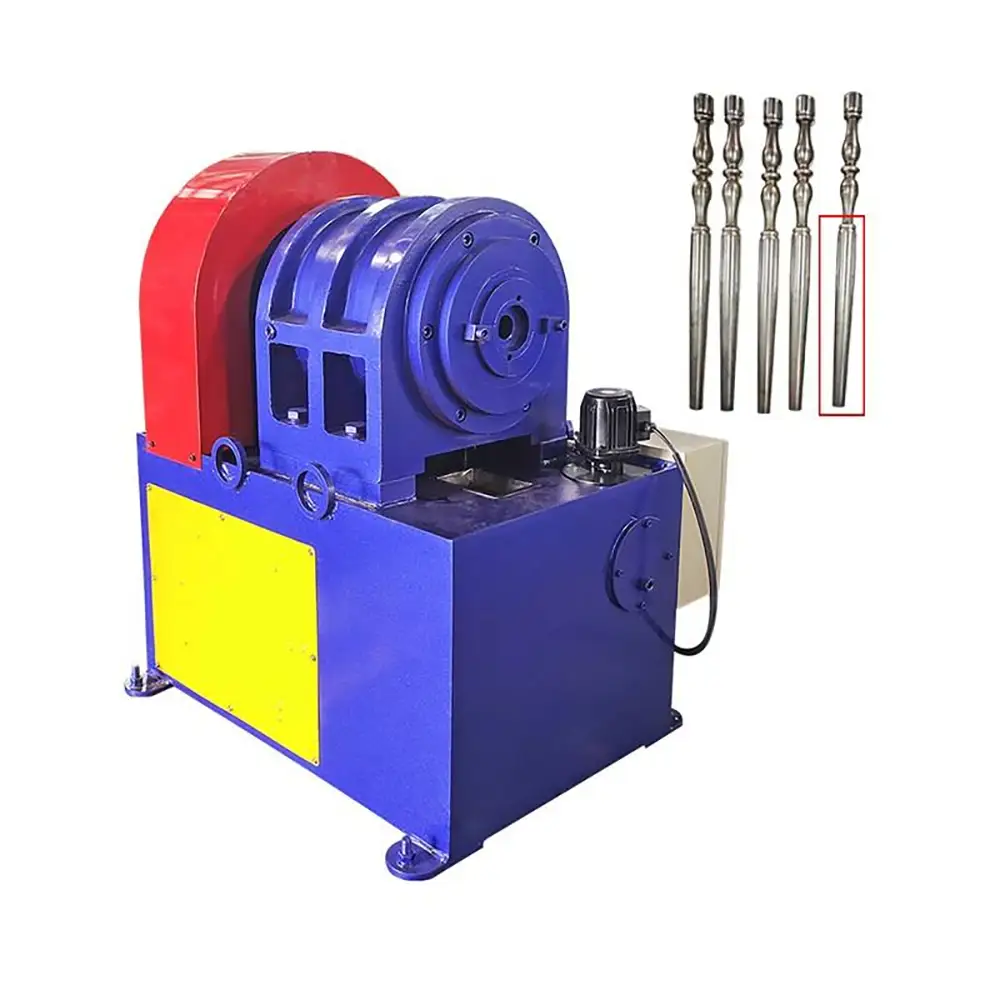
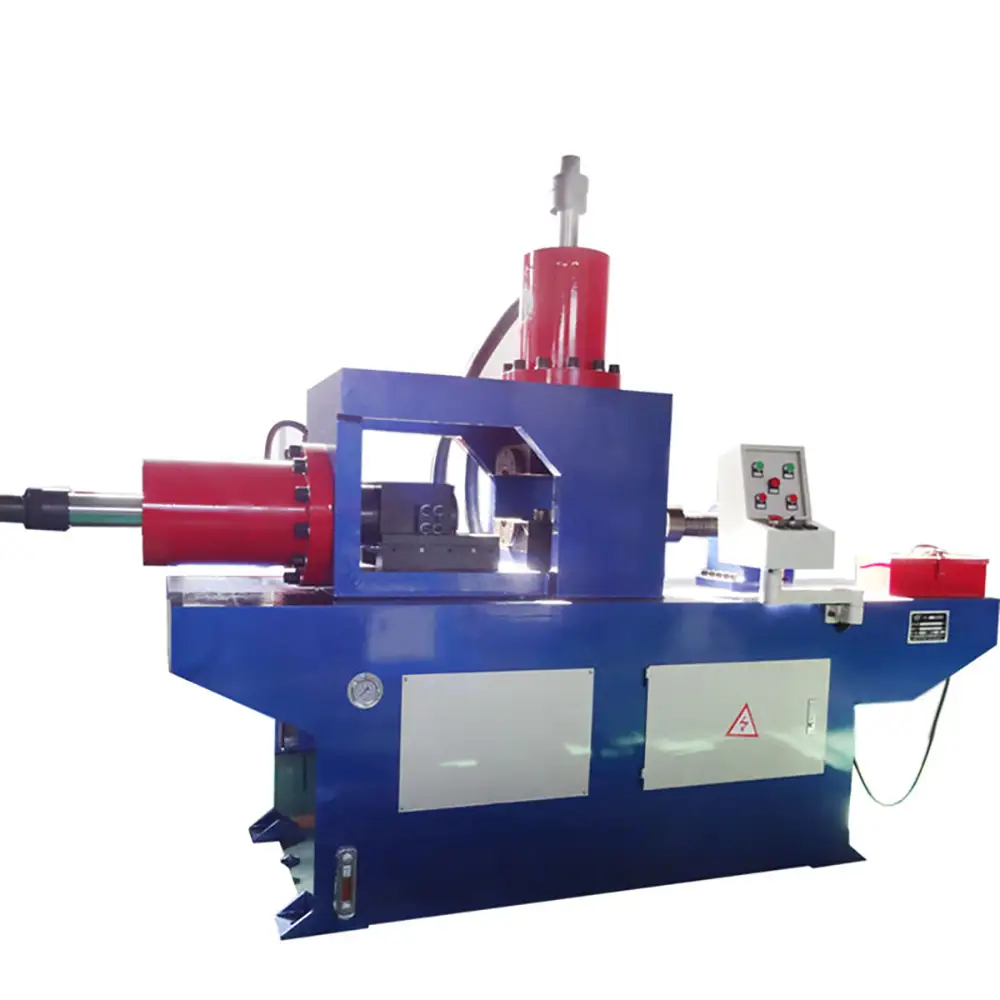
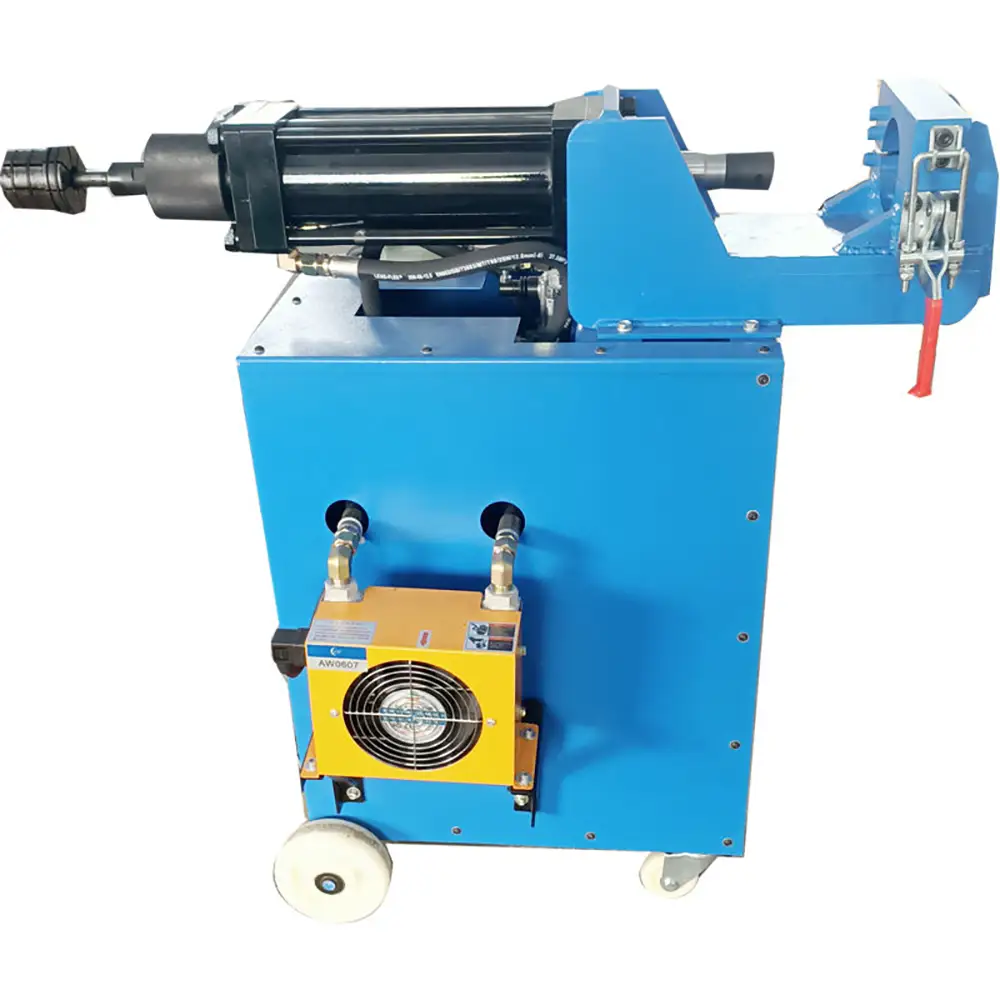
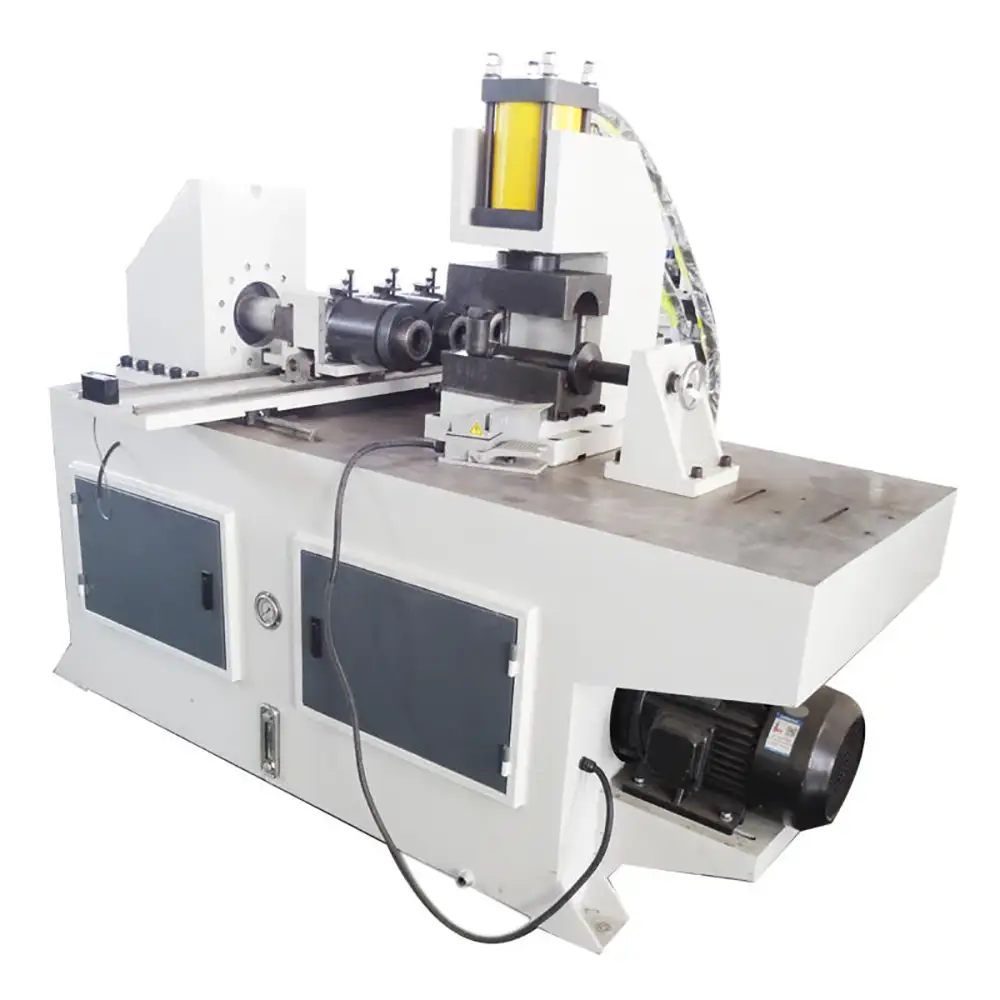
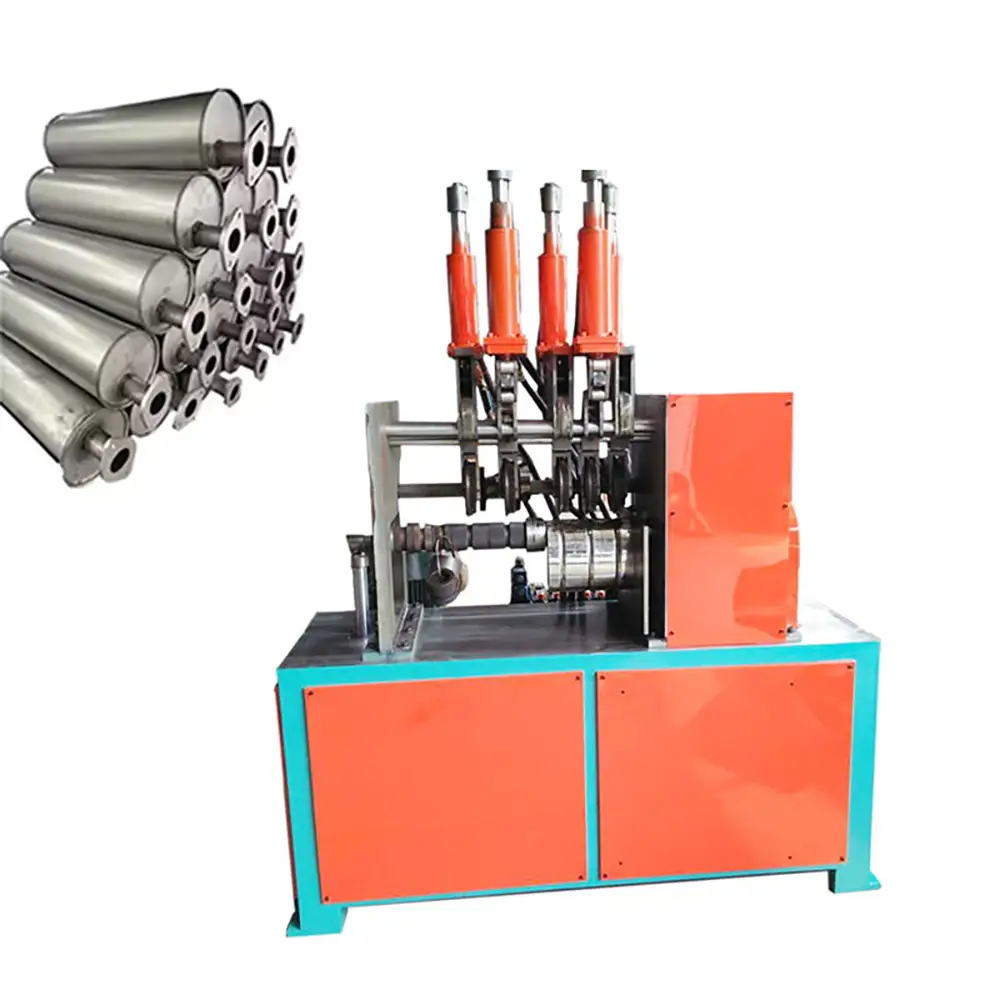
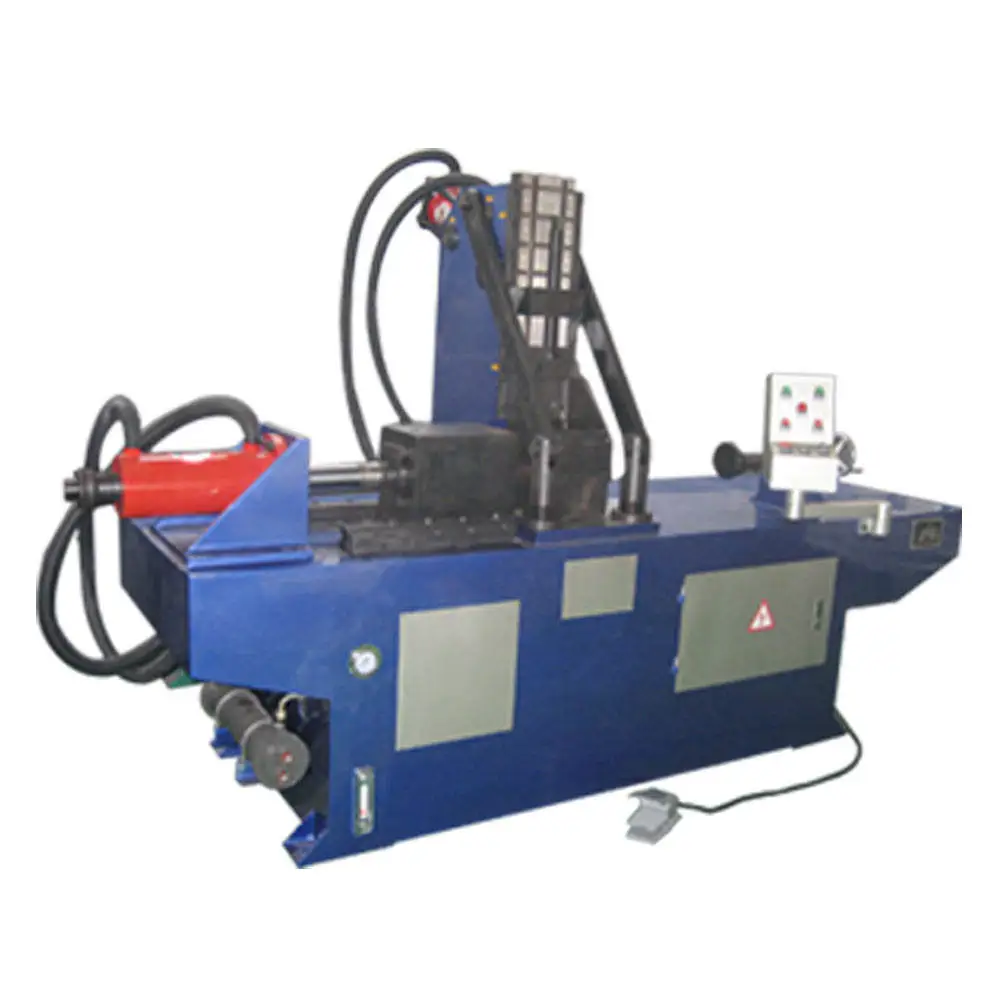
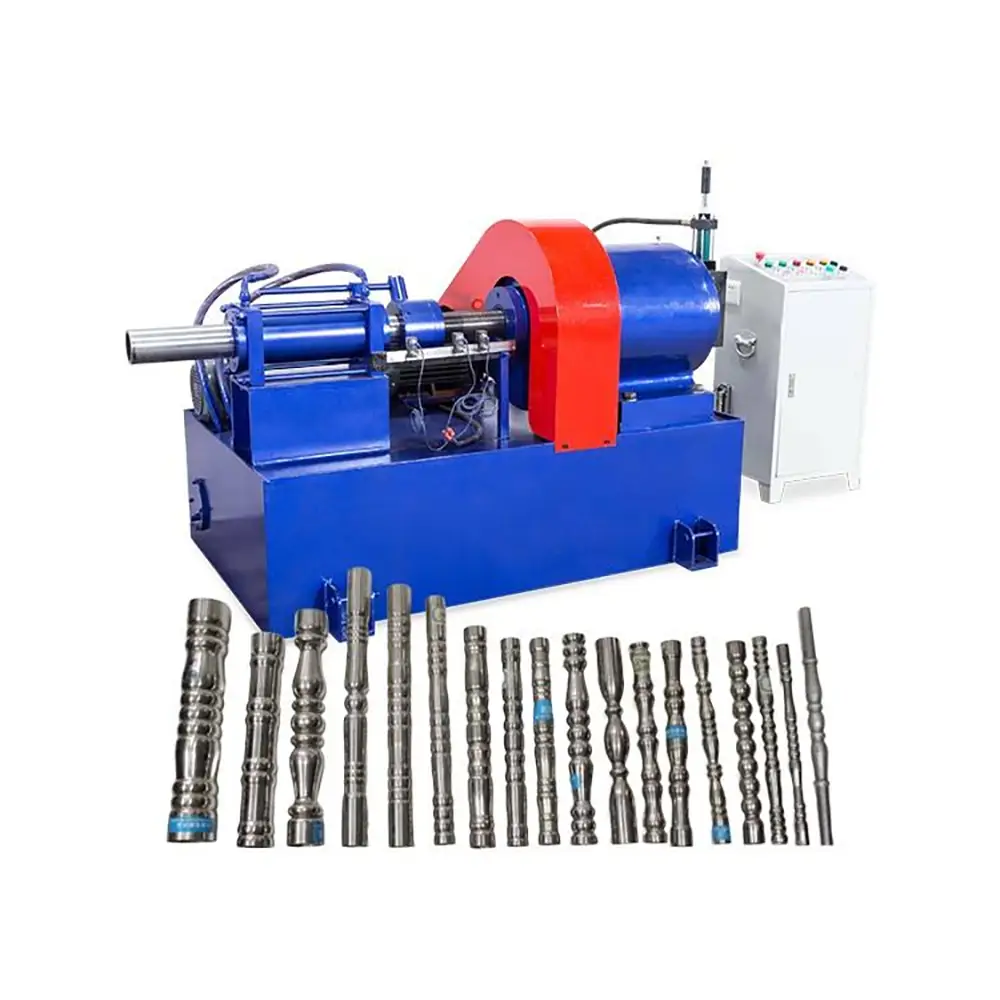
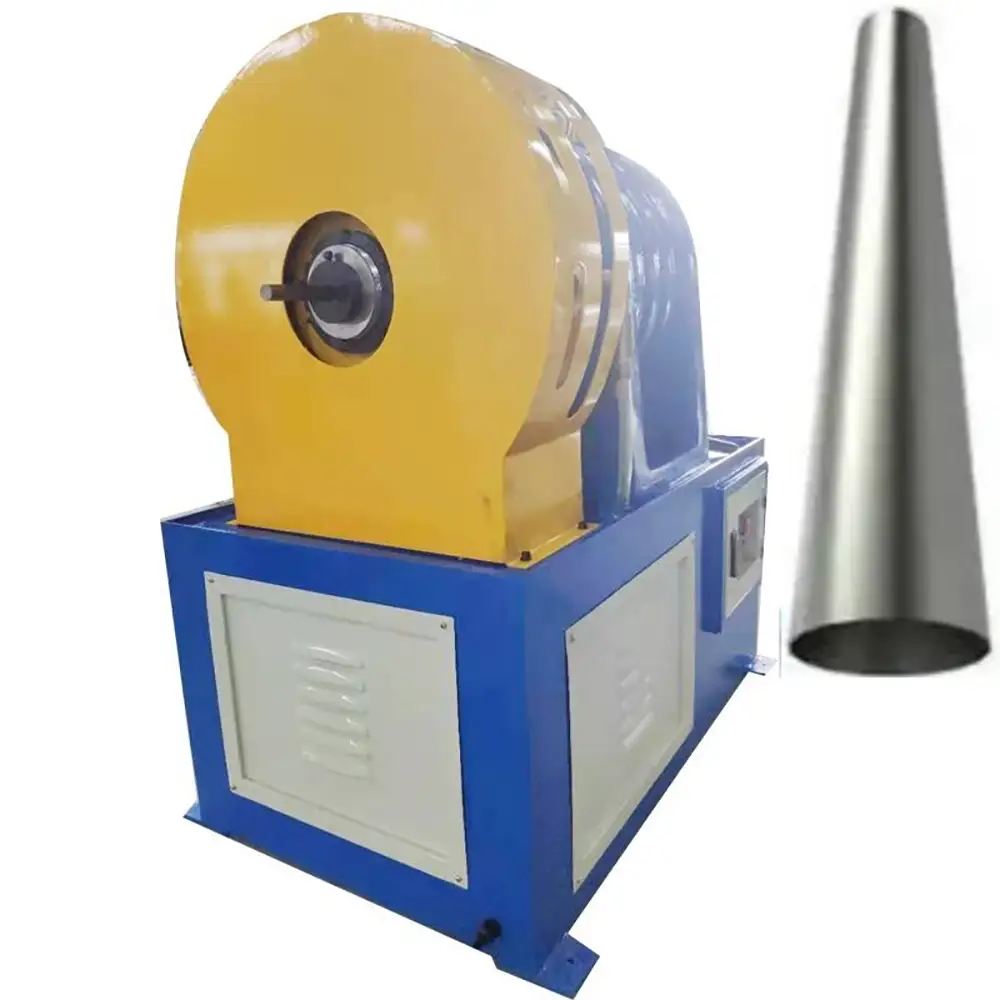
Soar Alloy/Brass/Copper/Carbon Steel Pipe End Reducing & Taper Grinder with 50mm Max Shrinking Capacity for Golf Stick Making
|
Machine Model |
50*300 |
50*450 |
76*600 |
76*800 |
|
Machine size(MM) |
1200*900*1200 |
1060*760*1160 |
1600*1300*1500 |
1900*1500*1500 |
|
Mold Size(MM) |
300*42*44 |
450*42*44 |
600*60*50 |
800*60*50 |
|
Processing range(MM) |
φ12- φ50 |
φ12- φ50 |
φ18- φ76 |
φ18- φ76 |
|
Workpiece thickness(MM) |
0.68-1.5 |
0.68-1.5 |
1.0-20 |
1.0-25 |
|
Forming length(MM) |
280 |
430 |
580 |
780 |
|
Molding time(S/Second) |
5-10 |
5-10 |
5-10 |
5-10 |
|
Main motor(KW) |
3.0 |
5.5 |
7.5-11 |
7.5-15 |
|
The total weight of equipment(KG) |
1100 |
1300 |
3200 |
3800 |
|
Packing size(L-W*H)(MM) |
1250*950*1300 |
1200*800*1350 |
1660*1350*1600 |
1960*1560*1750 |
Pipe End Reducing & Taper Grinder with Shrinking Capacity for Golf Stick Making
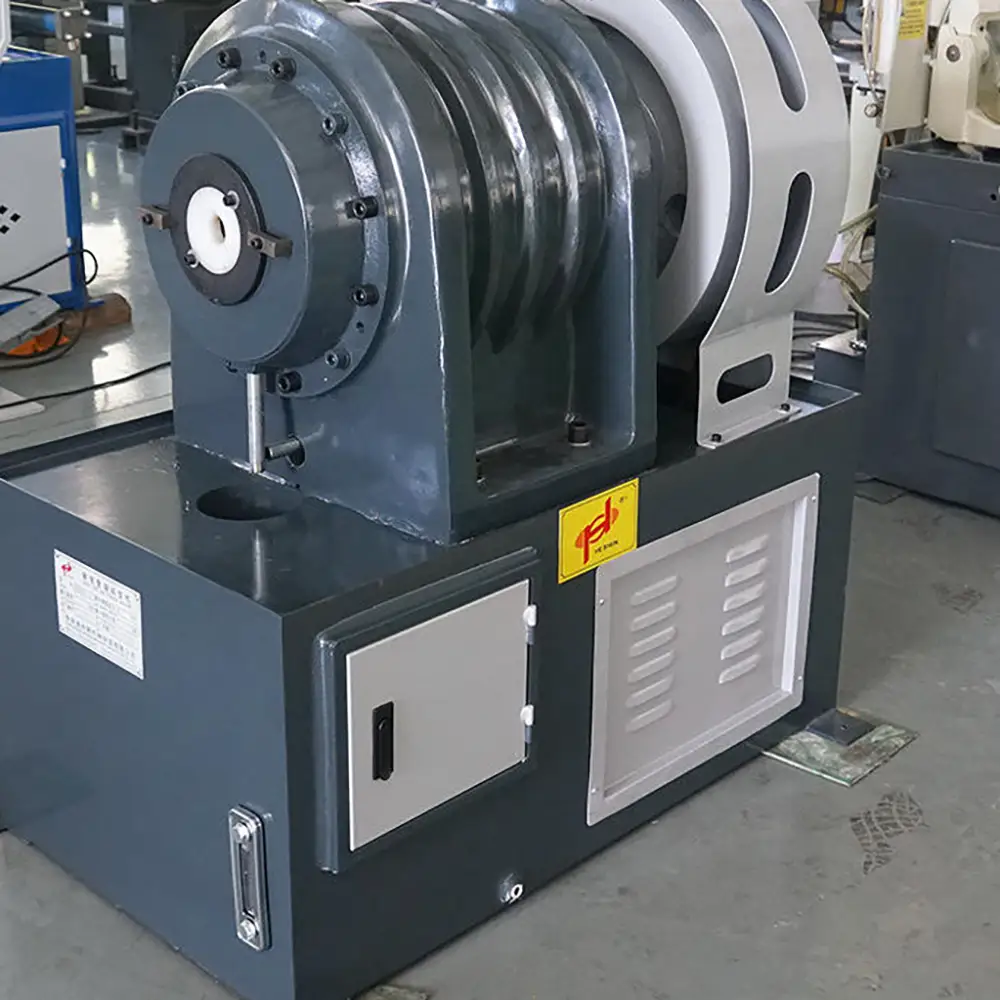
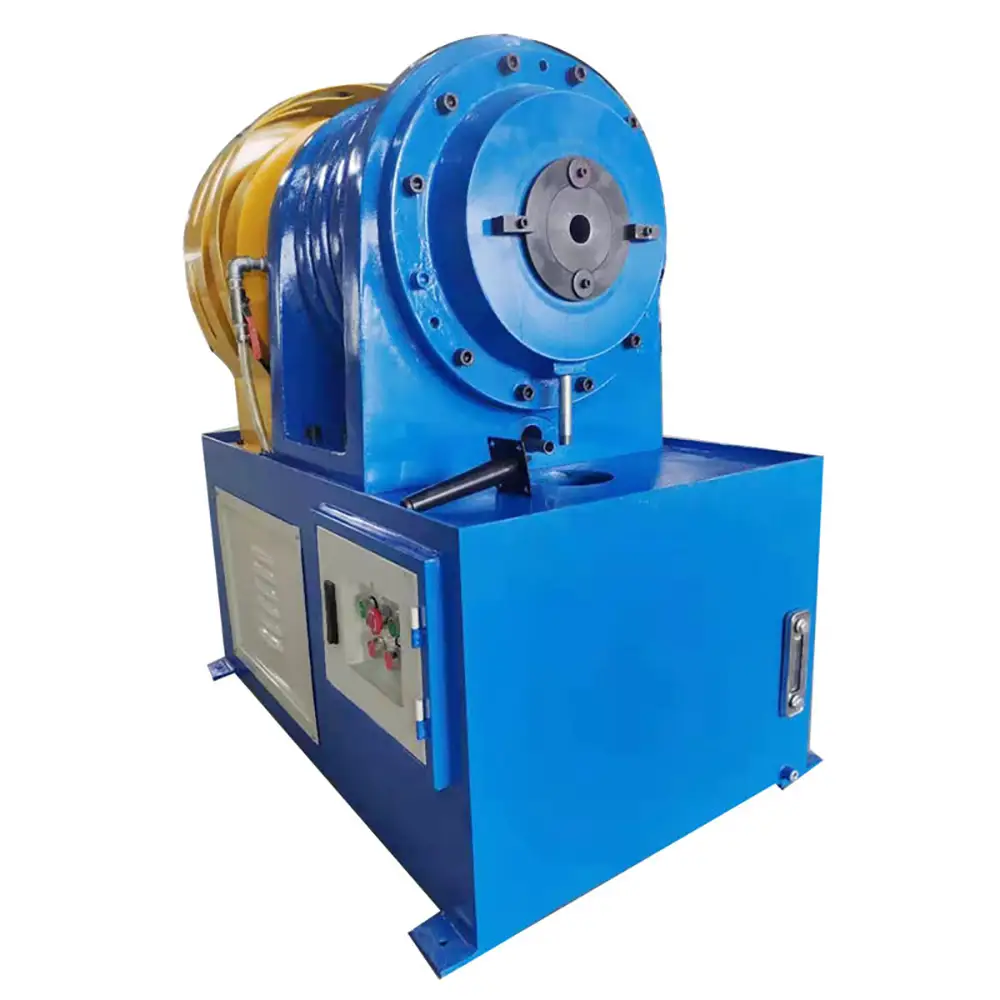
The Pipe End Reducing & Taper Grinder with Shrinking Capacity is designed for controlled processing of metal pipes and tubes used in specialized manufacturing applications,including golf stick and golf shaft production. The equipment combines pipe end reducing,tapering,and grinding-related processing capabilities to help manufacturers create the required end geometry on suitable tubular components.
Golf shafts and other precision tubular products often require carefully controlled diameter transitions and finished end dimensions. A dedicated tube reducing and tapering machine can help manufacturers establish a repeatable forming process before subsequent machining,grinding,polishing,coating,or assembly operations.
The machine can be configured for suitable alloy,brass,copper,carbon steel,and other compatible metal tubes. Actual material compatibility,pipe dimensions,shrinking range,and finished taper geometry depend on the machine configuration and tooling.
Pipe End Reducing and Shrinking
Pipe end reducing is a forming process used to decrease the diameter of a selected tube section. The reduction can create a smaller end diameter or prepare the tube for subsequent joining and assembly.
The shrinking function can be particularly useful when manufacturing components that require a controlled diameter transition.
For golf shaft production,the tube may need to transition between different diameters along its length. The appropriate forming process depends on the shaft design,material,wall thickness,and required dimensional tolerances.
The machine can be equipped with suitable dies,rollers,or other forming components according to the intended workpiece.
Taper Forming for Golf Shaft Manufacturing
Golf shafts typically have carefully designed geometries that influence their finished characteristics and assembly requirements.
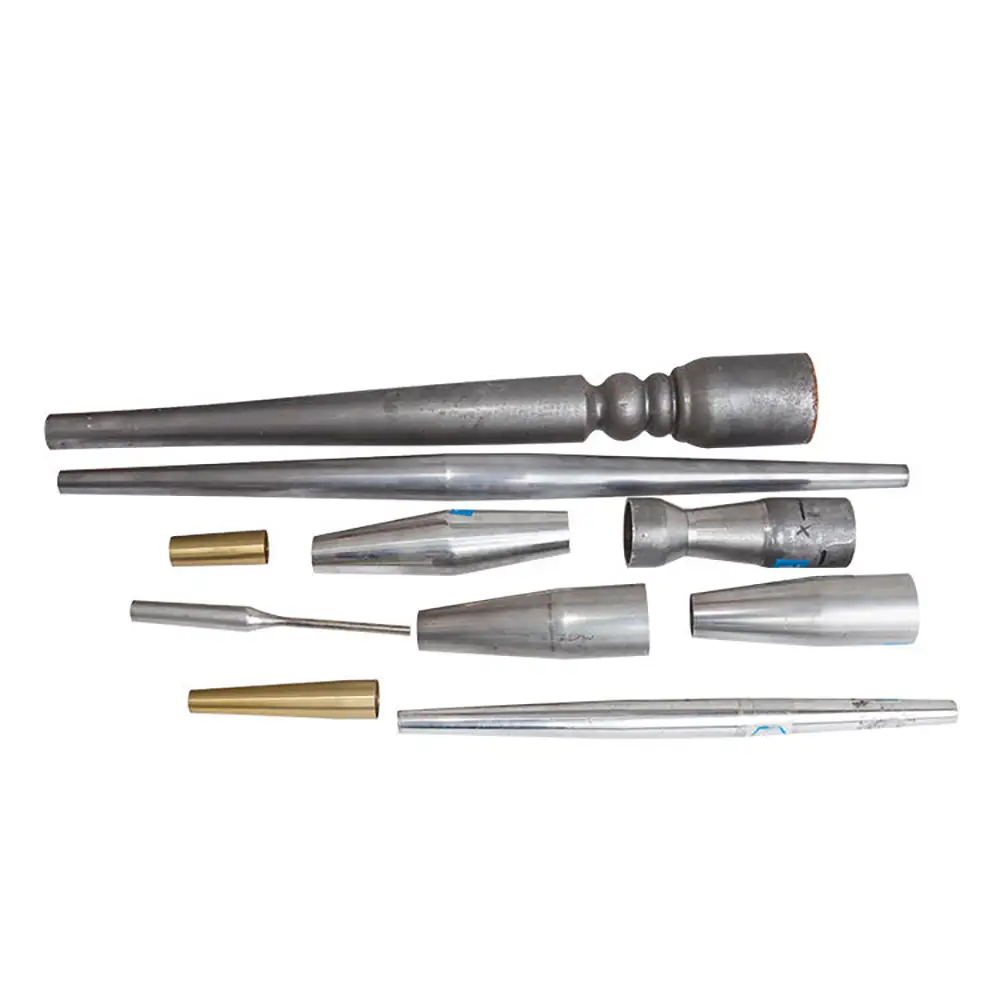
A tapering machine can help form a gradual reduction or transition in a tubular workpiece. For manufacturers producing golf-related tubular components,the equipment can be integrated into a production line involving cutting,forming,grinding,polishing,heat treatment,coating,and final assembly.
The actual taper profile is determined by the tooling and machine setup.
Important dimensions may include:
Tube Outside Diameter
Tube Inside Diameter
Wall Thickness
Taper Length
End Diameter
Transition Position
Overall Shaft Length
Customers should provide drawings or samples when precise shaft geometry is required.
Taper Grinder Function
The grinder component can be used for suitable finishing operations on the formed tube or tapered section.
Grinding may help remove forming irregularities,prepare a surface for subsequent processing,or achieve a specified surface condition depending on the machine configuration.
The exact grinding process depends on abrasive tooling,grinding wheel specifications,workpiece material,rotation speed,feed rate,and desired surface finish.
Grinding and forming are different processes. The forming stage establishes the basic geometry,while grinding can be used for selected finishing or dimensional correction applications.
For critical shaft components,the required surface roughness and dimensional tolerance should be specified before machine selection.
Materials: Alloy,Brass,Copper and Carbon Steel
The equipment can be configured for a range of compatible metal tubes.
Potential materials include:
Alloy Steel
Brass
Copper
Carbon Steel
Mild Steel
Stainless Steel
Other Compatible Metal Tubes
Copper and brass have different forming characteristics from carbon steel. Their ductility and material strength influence the required reducing force and tooling.
Carbon steel may require greater forming force depending on grade and wall thickness.
For alloy materials,the exact composition and mechanical properties should be considered when selecting the forming and grinding configuration.
Material testing with actual workpieces can help determine suitable processing parameters for specialized applications.
Golf Stick and Golf Shaft Applications
One of the key applications for this equipment is golf stick or golf shaft manufacturing.
The machine can be used for suitable tubular components during processes such as:
Shaft End Reducing
Shaft Tapering
Tube Shrinking
End Forming
Surface Grinding
Diameter Transition Processing
Component Preparation
The exact production sequence depends on the golf shaft design and manufacturing process.
For high-volume golf component production,the machine can be integrated with automatic feeding,material handling,inspection,and downstream finishing equipment where appropriate.
Controlled Tube End Forming
Controlled forming is important when processing thin-wall or precision metal tubes.
The workpiece should be securely positioned before the reducing operation begins. The forming force should be appropriate for the material and wall thickness.
Excessive forming force may cause unwanted deformation,wrinkling,or surface damage,while insufficient force may result in incomplete diameter reduction.
Tooling geometry also has a major influence on the finished shape.
For production work,first-piece inspection can be used to verify the end diameter and taper profile before continuing with larger batches.
Multi-Material Processing
The ability to work with different metal materials can provide production flexibility for manufacturers that process more than one type of tubular product.
Copper and brass tubes are commonly used where conductivity,corrosion resistance,or appearance are important. Carbon steel and alloy steel may be selected when higher mechanical strength is required.
The machine should not be assumed to process every material with identical parameters. Each material requires appropriate tooling,forming force,and grinding conditions.
Customers should specify the material grade and tube dimensions when requesting a quotation.
Tooling and Custom Dies
Tooling determines the final geometry of the reduced or tapered section.
Custom dies can be designed according to the required:
Starting Diameter
Finished Diameter
Taper Angle
Taper Length
Tube Wall Thickness
Transition Shape
End Profile
For golf shaft manufacturing,tooling precision is particularly important because the shaft geometry may require consistent dimensional control across repeated products.
OEM tooling can be developed according to customer drawings,samples,and production requirements.
Production Efficiency
A dedicated pipe reducing and tapering machine can help reduce repetitive manual processing.
For batch production,the same tooling and machine settings can be used for similar workpieces. This can help establish a standardized production procedure.
Actual production efficiency depends on tube dimensions,material,forming depth,grinding requirements,cycle time,loading method,tool changes,and operator workflow.
For automated production,the equipment may be integrated with feeding and material handling systems where supported by the machine configuration.
Quality Control
Quality inspection is important when producing precision tubular components.
Typical inspection points include:
Finished Diameter
Taper Profile
Taper Length
Tube Roundness
Wall Deformation
Surface Condition
Grinding Finish
Overall Dimensions
For golf shaft components,manufacturers may also need to inspect straightness and other product-specific characteristics according to their own quality standards.
The machine itself does not replace final product inspection. Measurement equipment and production quality-control procedures should be selected according to the finished product requirements.
Maintenance and Safety
Routine maintenance helps maintain consistent forming and grinding performance.
Operators should inspect forming dies,rollers,grinding components,fixtures,drive components,and other wear parts according to the manufacturer's maintenance recommendations.
Grinding operations may generate metal particles and dust. Appropriate guarding,ventilation,and personal protective equipment should be used according to the actual machine configuration and local safety requirements.
During pipe reducing operations,operators should keep hands away from moving forming components and follow machine-specific operating procedures.
Custom & OEM Golf Shaft Processing Solutions
Different golf shaft manufacturers may use different materials,diameters,taper profiles,and production methods. The machine can therefore be developed as a Custom & OEM solution.
Customers can provide:
Tube Material
Tube Diameter
Wall Thickness
Shaft Length
Starting Diameter
Finished Diameter
Taper Profile
Grinding Requirements
Production Volume
Product Drawings Or Samples
Based on these details,the machine configuration,forming dies,grinding components,fixtures,and operating system can be evaluated.
The equipment can also be considered for other precision tube-processing applications beyond golf shaft manufacturing.
Why Choose Us
Pipe End Reducing & Shrinking – Designed for controlled reduction of suitable metal tube ends.
Taper Forming Capability – Supports customized tapered and reduced tube profiles according to tooling requirements.
Golf Shaft Manufacturing Application – Suitable for tubular components used in golf stick and golf shaft production.
Multi-Material Processing – Can be configured for suitable copper,brass,carbon steel,alloy steel,and other compatible tubes.
Integrated Grinding Function – Grinding capability can support selected finishing operations according to the machine configuration.
Custom Tooling – Dies,fixtures,and forming components can be developed for specific tube geometries.
Production Flexibility – Suitable for prototypes,small batches,and repetitive industrial manufacturing.
OEM & ODM Support – Machine configurations can be developed according to customer drawings,samples,materials,and production requirements.
FAQs
1. What is a pipe end reducing machine?
A pipe end reducing machine is designed to decrease the diameter of a selected section of a metal pipe or tube through a controlled forming process.
2. Can this machine be used for golf shaft manufacturing?
Yes. The machine can be configured for suitable tubular components used in golf shaft and golf stick manufacturing.
3. What is the shrinking function?
Shrinking refers to reducing the diameter of a selected tube section to create a smaller or tapered end profile.
4. What materials can be processed?
Depending on the configuration,the machine can process suitable alloy steel,brass,copper,carbon steel,mild steel,stainless steel,and other compatible metal tubes.
5. Can copper and brass tubes be reduced?
Yes,when suitable forming tooling and parameters are selected for the material and tube dimensions.
6. Can carbon steel tubes be tapered?
Yes. Carbon steel tubes can be tapered or reduced when their dimensions and material properties are within the machine's forming capability.
7. What is the purpose of the grinder?
The grinder can be used for selected surface finishing,material removal,edge preparation,or dimensional finishing operations according to the machine configuration.
8. Can the taper dimensions be customized?
Yes. Custom tooling can be designed according to the starting diameter,finished diameter,taper length,taper angle,and other required dimensions.
9. Is the machine fully automatic?
The operating method depends on the selected configuration. Automatic,semi-automatic,or operator-assisted production arrangements may be available.
10. What affects the reducing quality?
Material properties,tube diameter,wall thickness,forming force,tooling geometry,workpiece alignment,and machine rigidity all affect the finished result.
11. Can custom golf shaft tooling be supplied?
Yes. Custom forming dies,fixtures,and related tooling can be developed according to golf shaft drawings or samples.
12. What information is needed for a quotation?
Provide the tube material,outside diameter,wall thickness,length,starting and finished diameters,taper profile,grinding requirements,production volume,and drawings or samples if available.
Pipe End Reducing Machine,Pipe Taper Grinder,Golf Stick Making Machine,Golf Shaft Tapering Machine China, suppliers, manufacturers, factory, customized, wholesale, quotation, made in China