|
Model |
SG50NC |
SG60NC |
SG80NC |
SG100NC |
SG120NC |
|
Max pipe capacity |
φ50×3 MM |
φ60×3 MM |
φ80×6 MM |
φ100×8 MM |
φ120×8 MM |
|
Pipe cycle |
4 |
4 |
4 |
5 |
6 |
|
Power |
5.5 |
7.5 |
11 |
11 |
18.5 |
|
Overall size (L×W×H)m |
2.4×0.5×1.6 |
3×1.1×1.9 |
3×1.1×1.9 |
4×1.2×1.9 |
4×1.2×1.9 |
|
Weight(T) T |
0.9 |
1.7 |
2 |
3.6 |
3.8 |
|
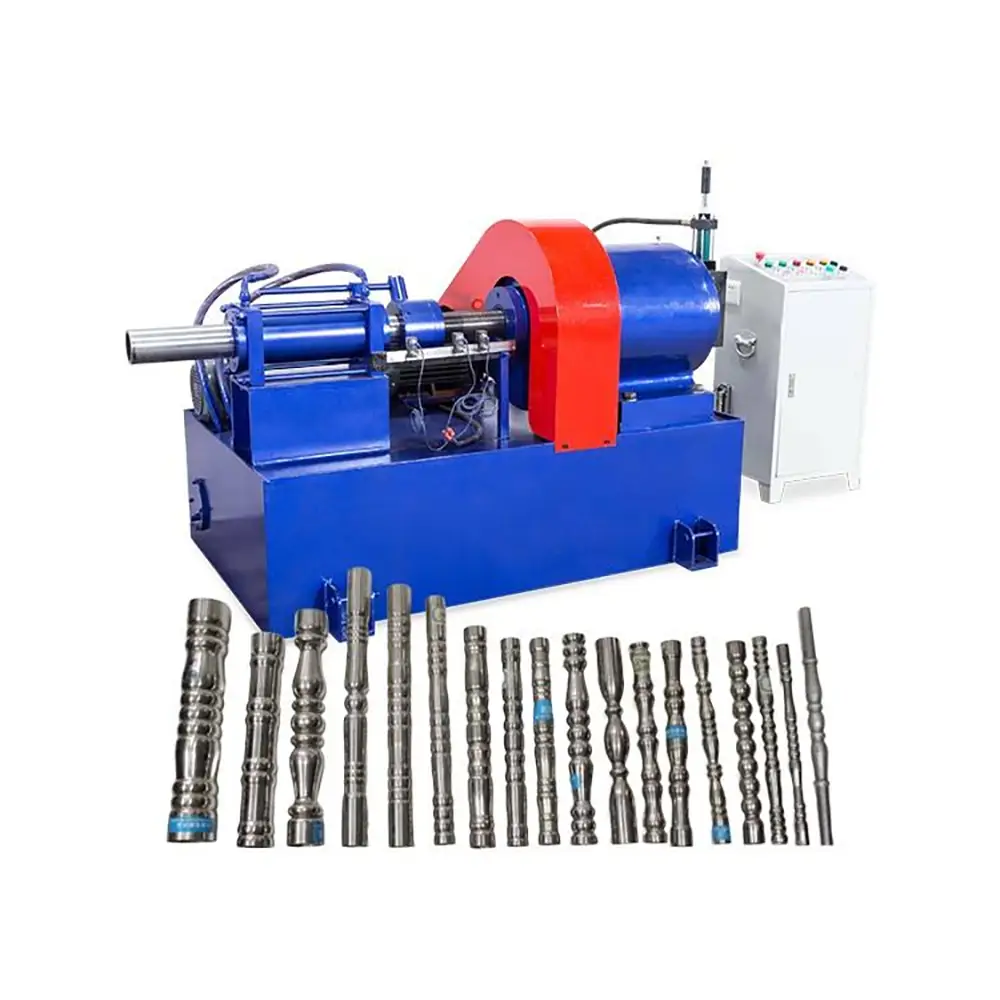
Applicable to pipe shape |
convex-shaped, concavity-shaped, nodular shape, long partial shape, square shape, topological shape, oblique shape, V-shape,
cracking type and flat type.
|
|
Applicable to material of pipe |
Carbon steel,stainless steel copper pipe, aluminium alloypipe |
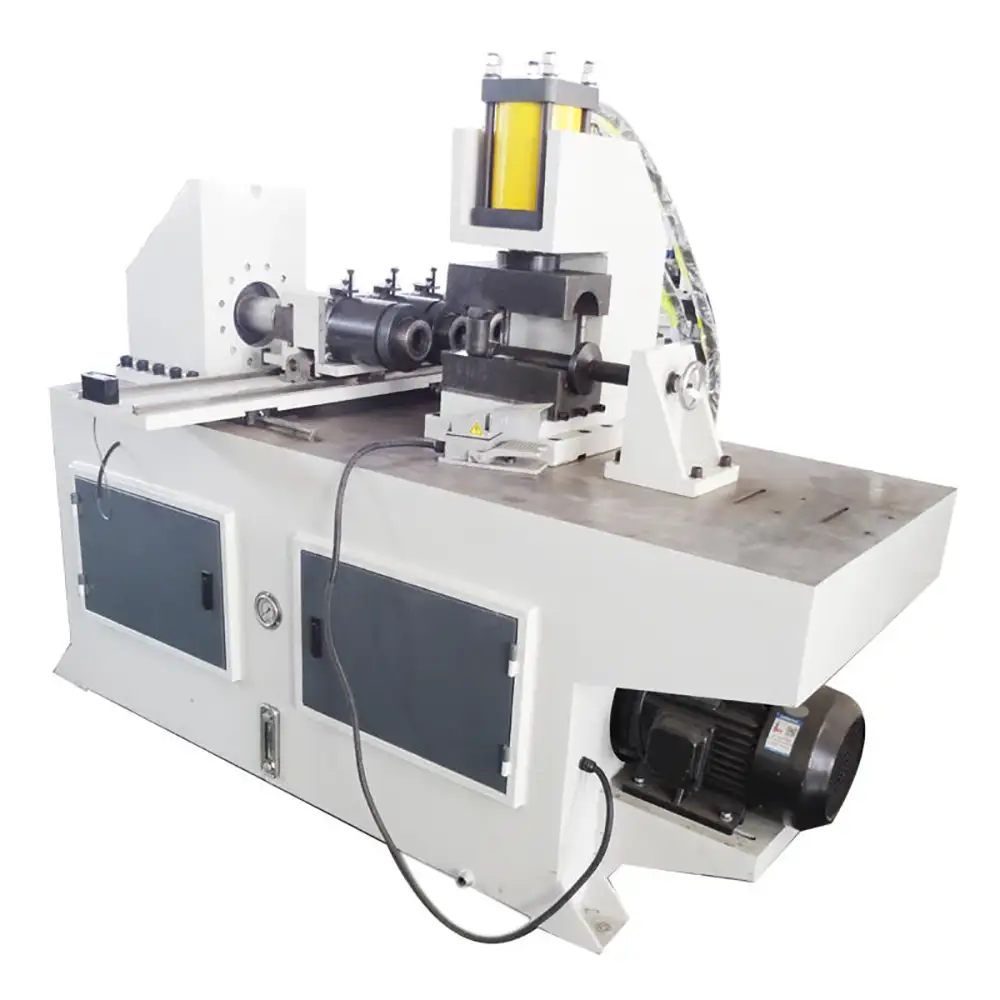
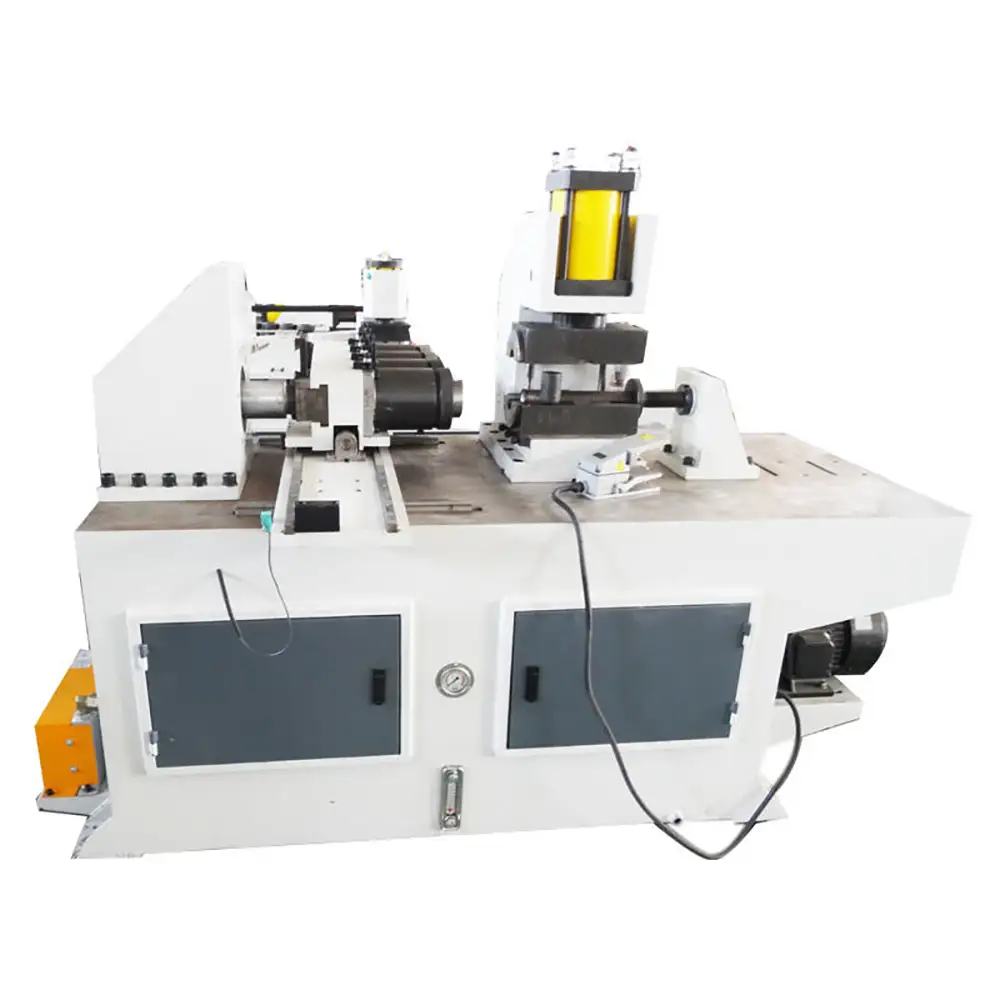
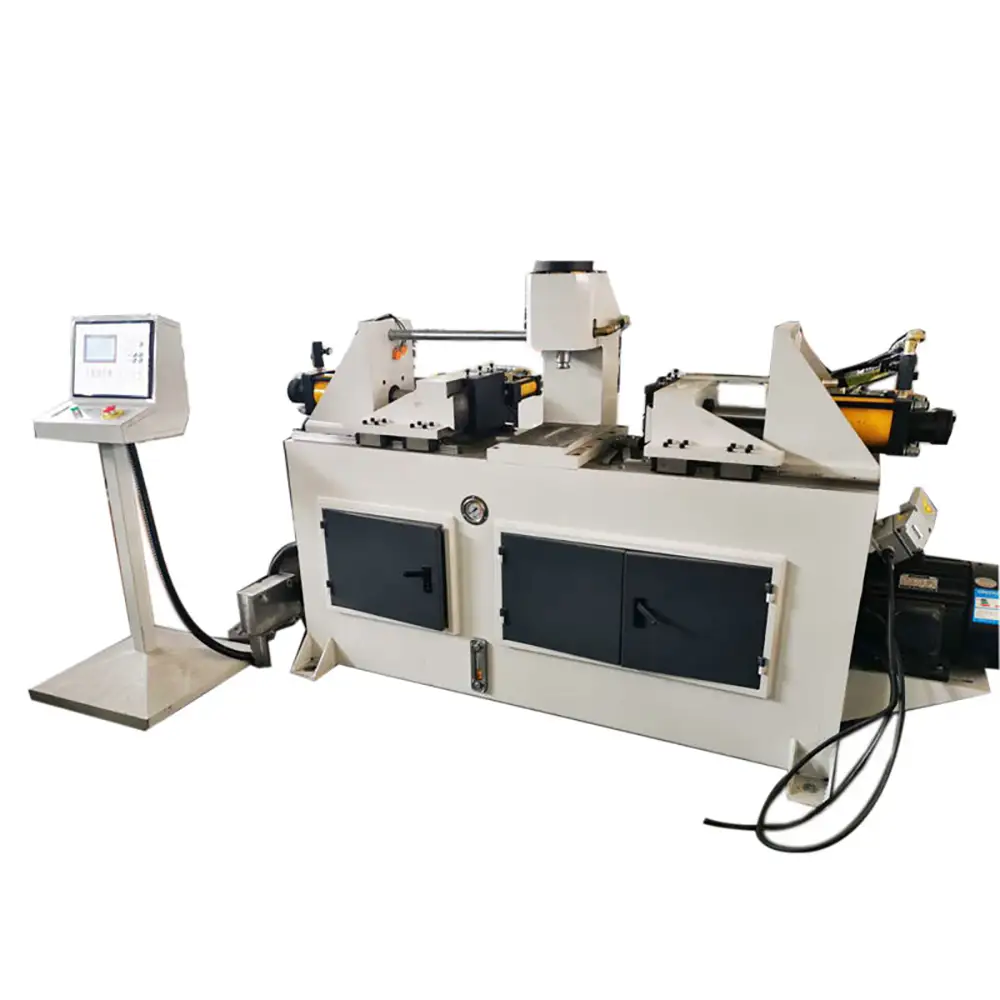
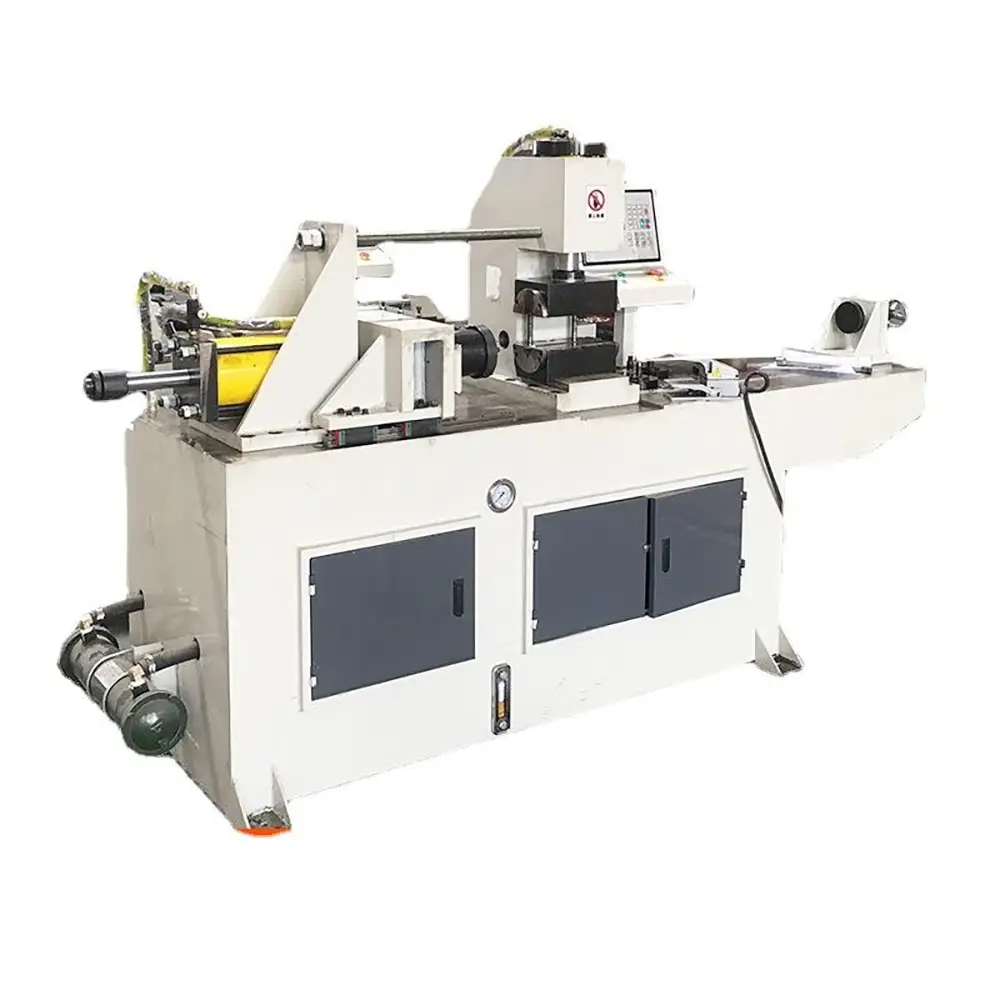
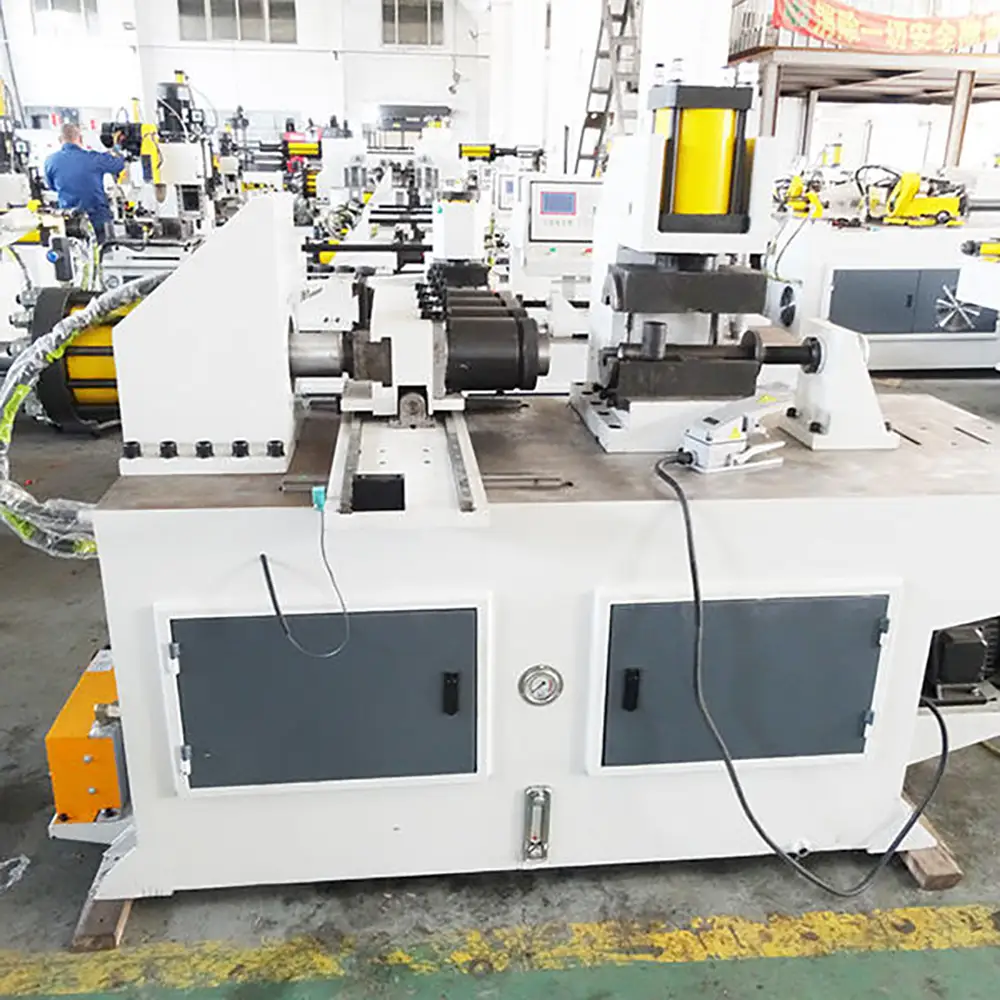
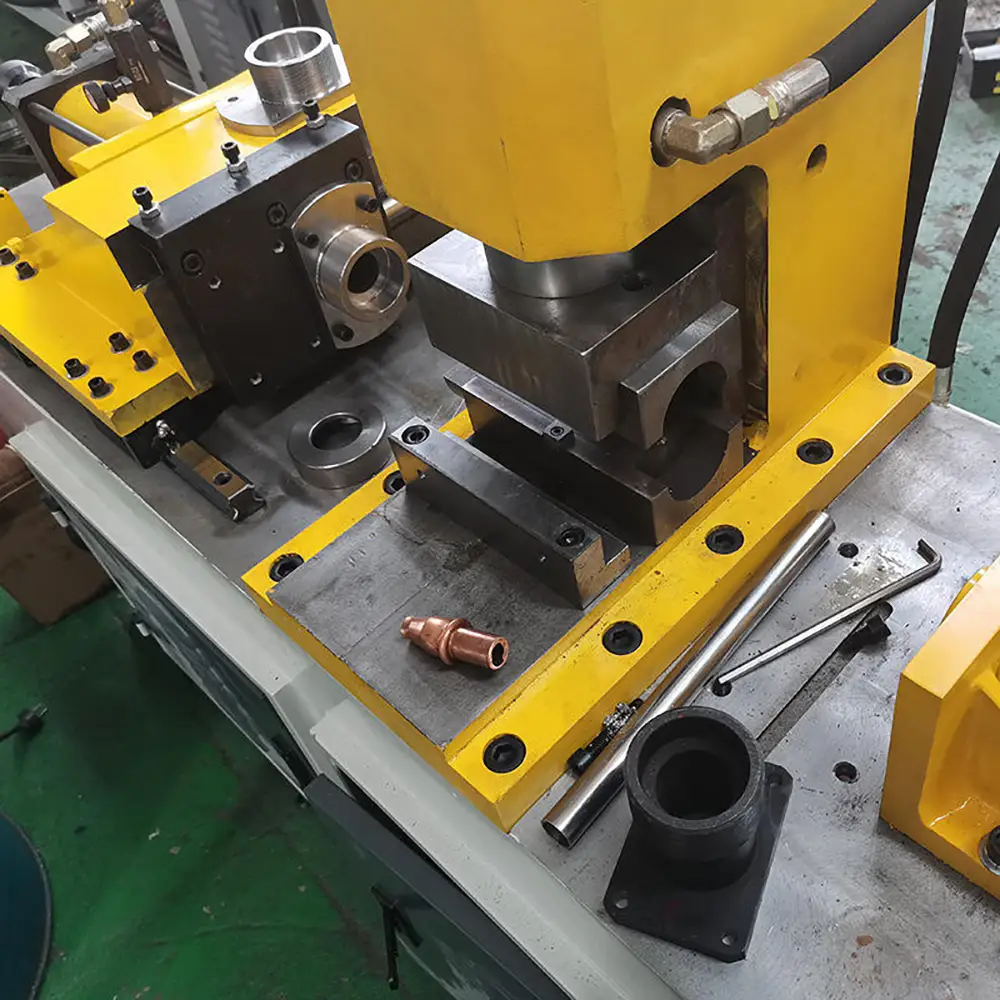
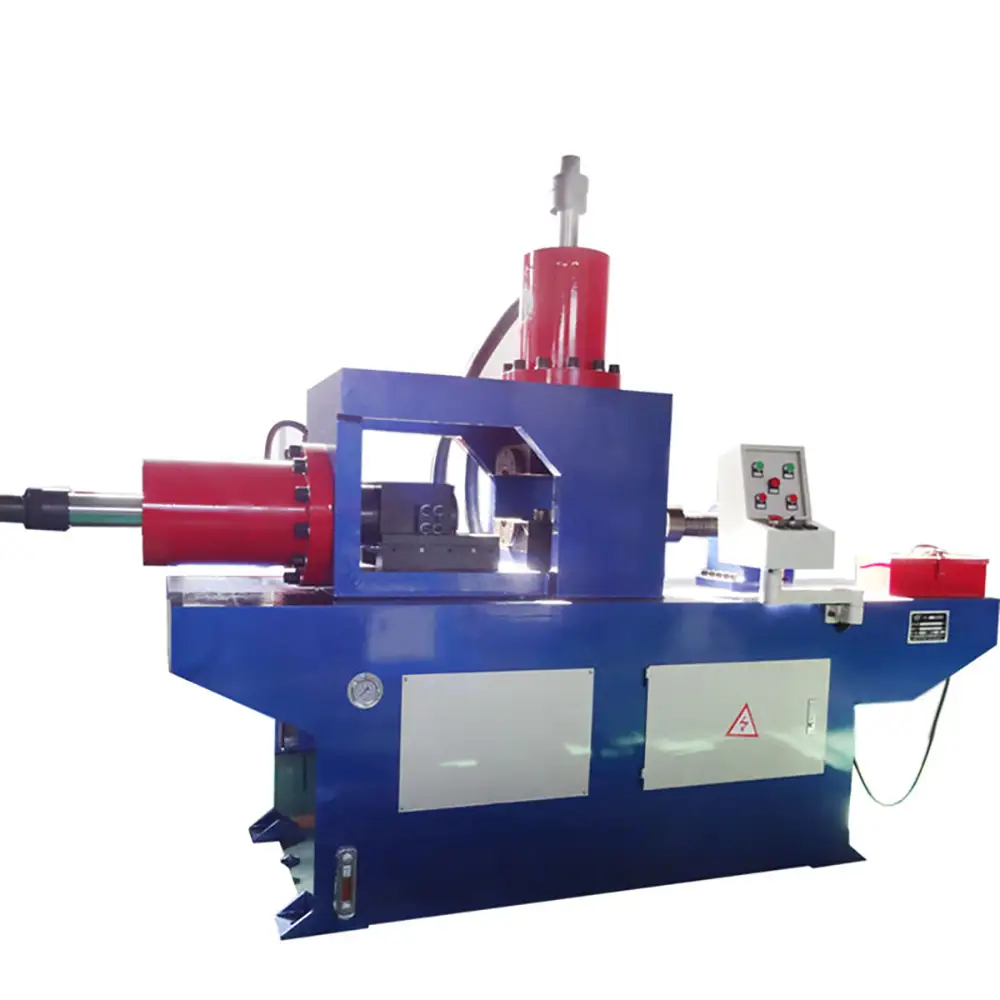
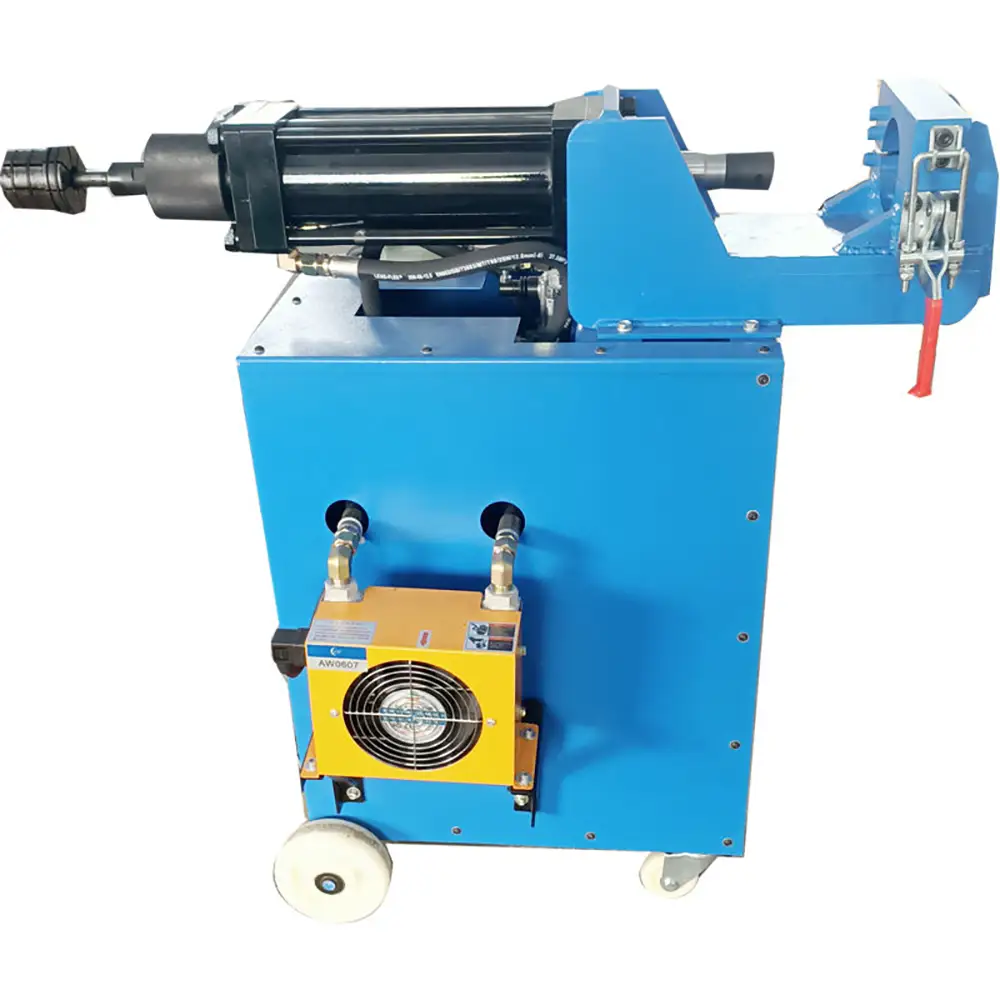
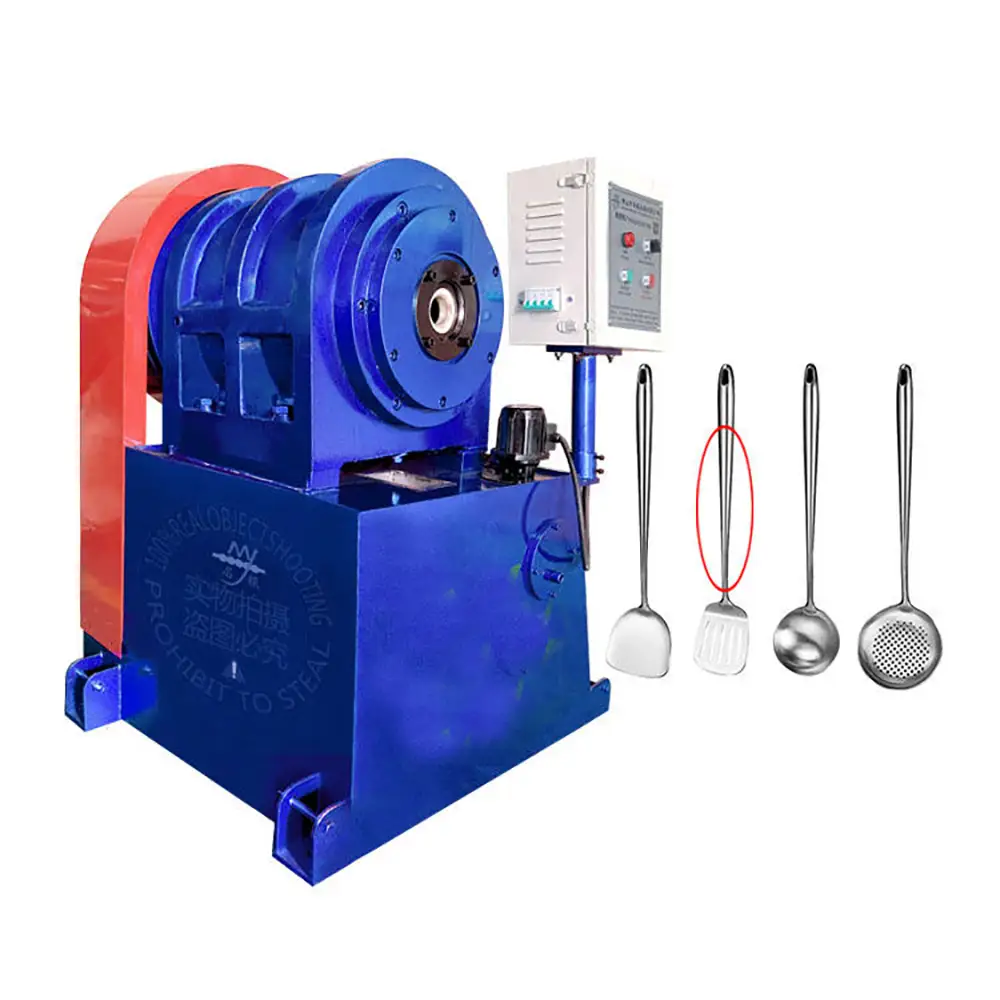
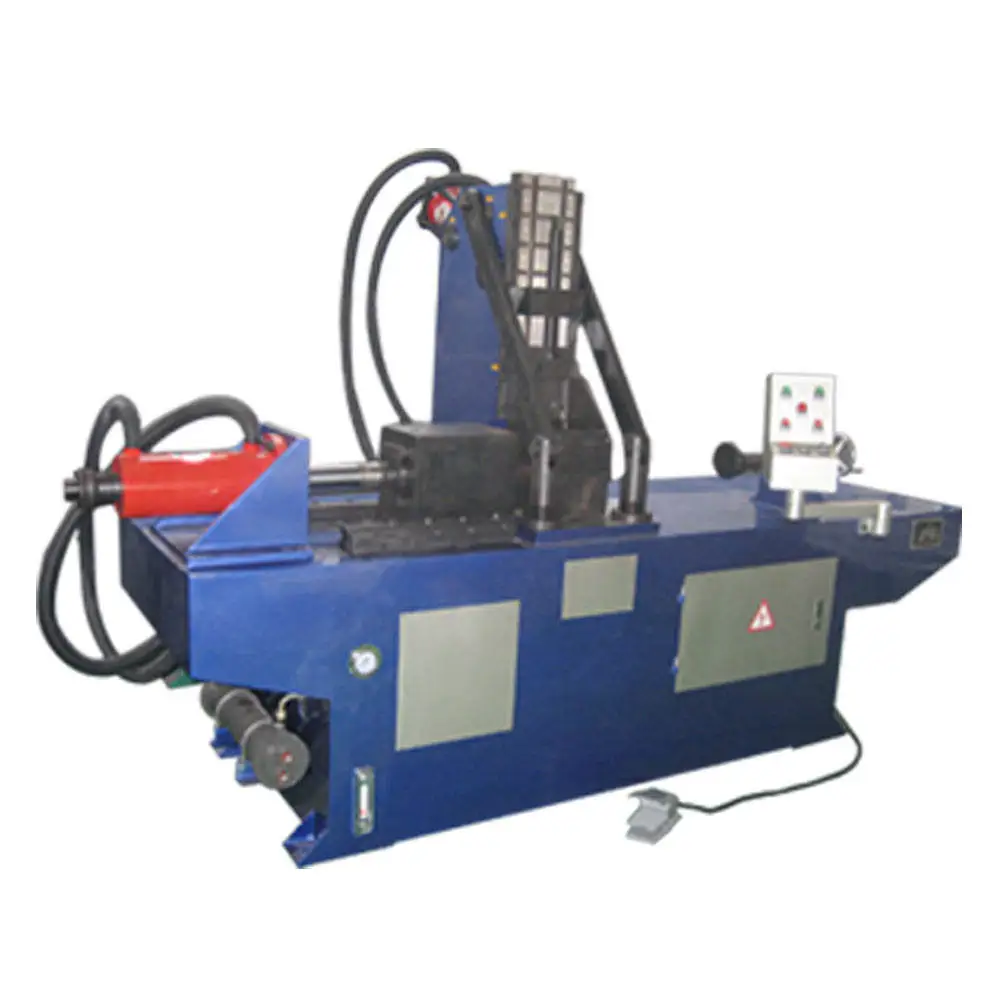
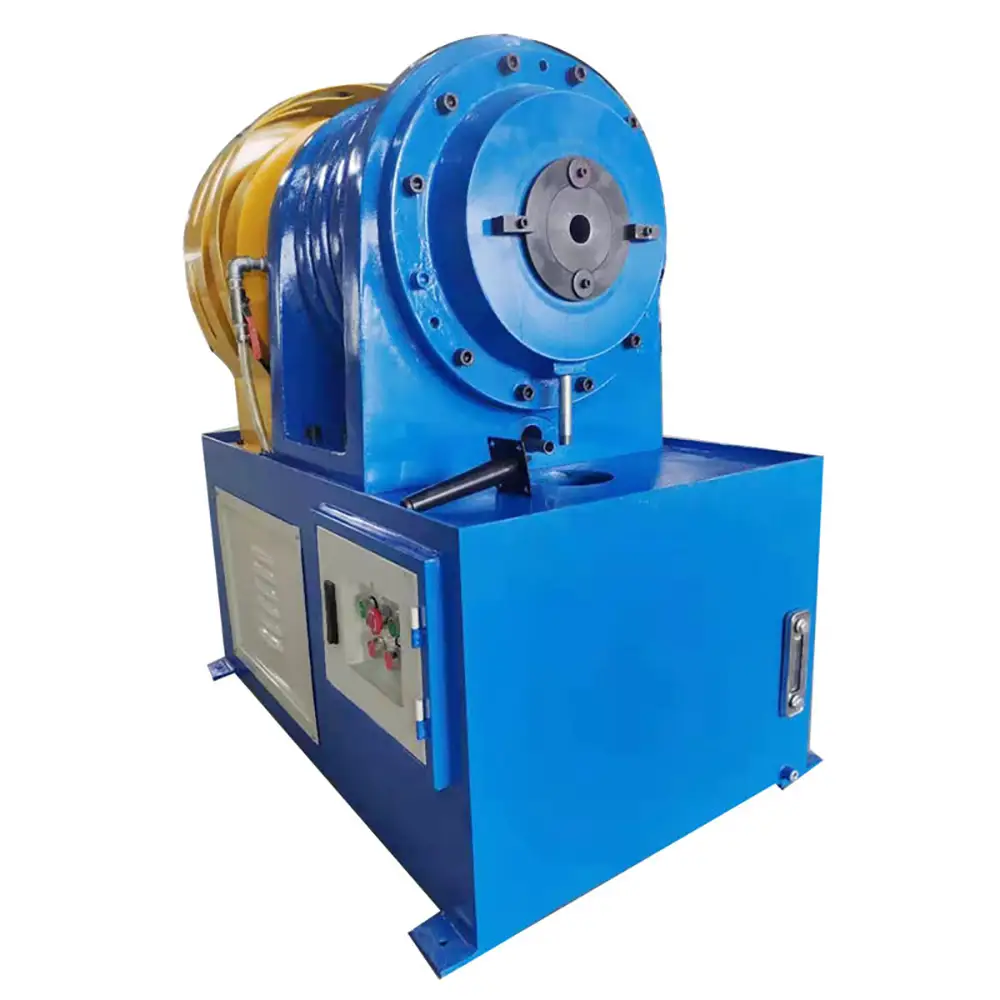
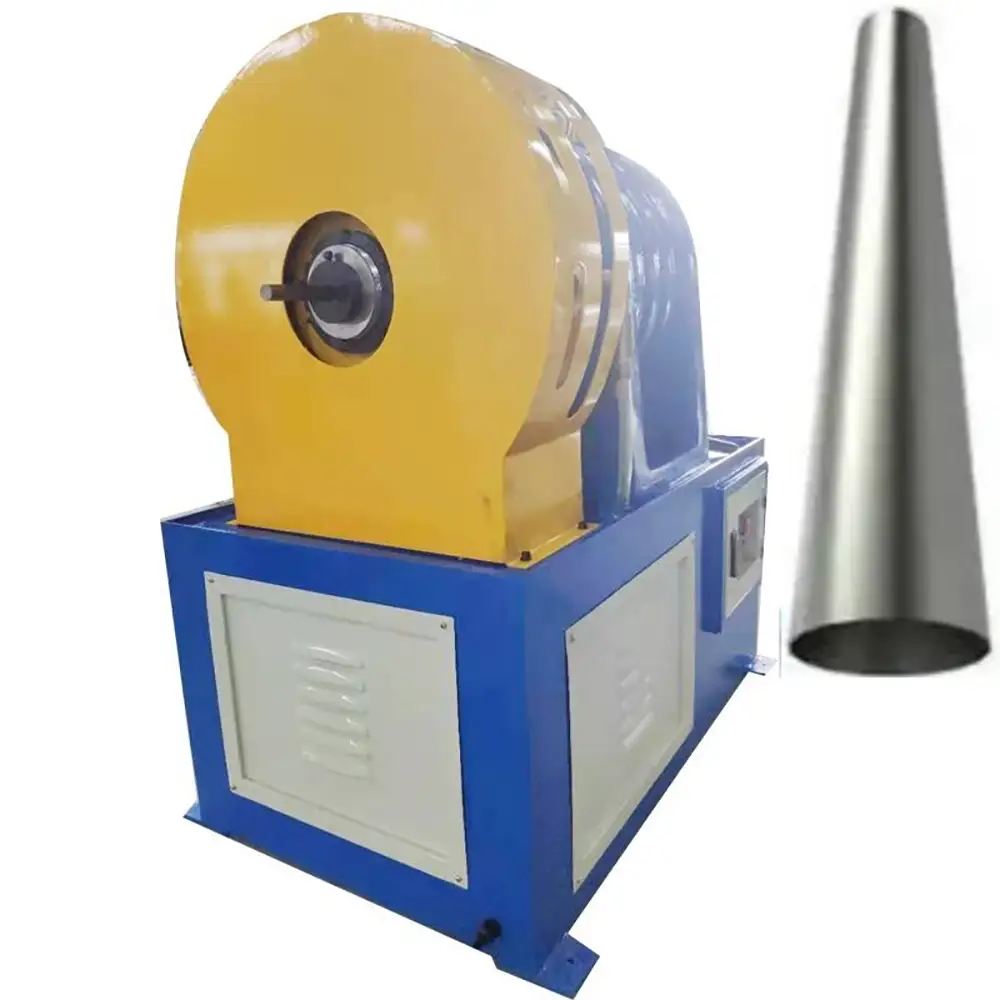
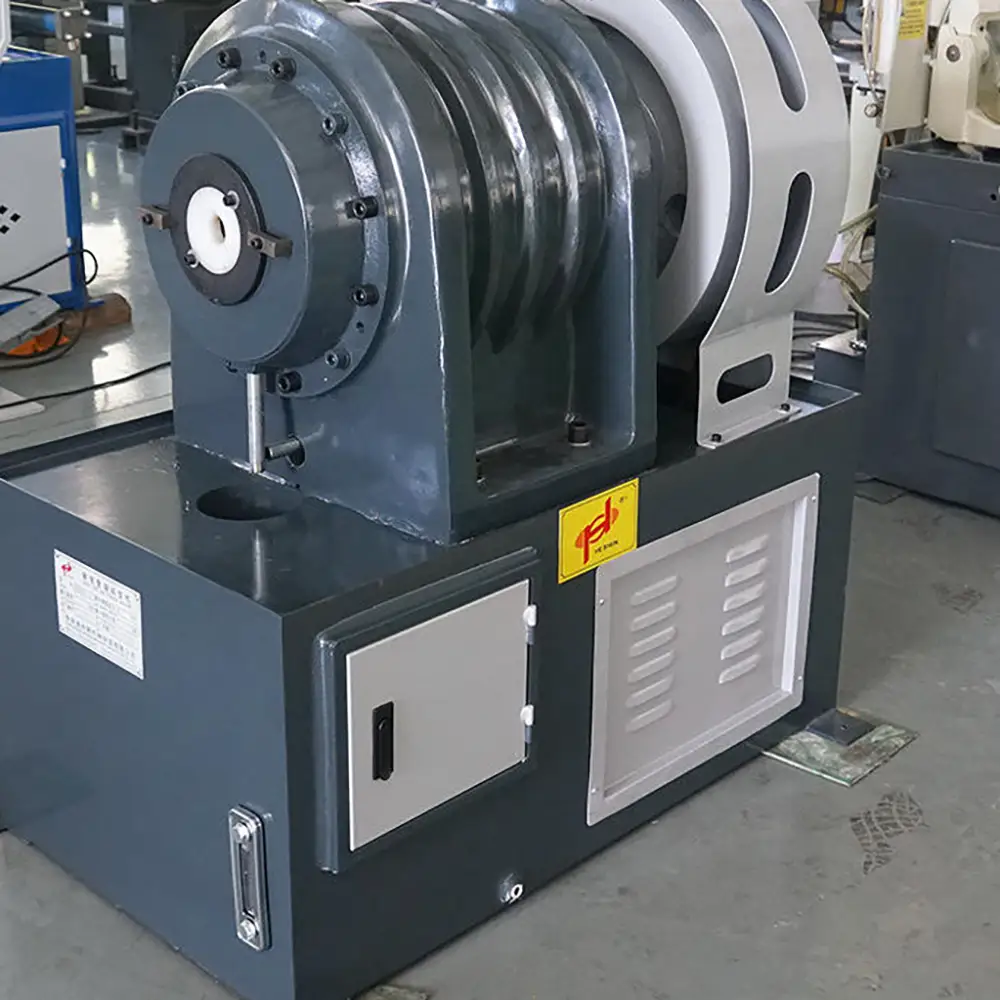
Pipe End Reducing Expanding Shrinking Flaring Crimping Machine
The Pipe End Reducing Expanding Shrinking Flaring Crimping Tube End Forming Machine is a versatile metal tube processing solution designed for forming the ends of pipes and tubes through controlled mechanical deformation. Depending on the machine configuration and tooling,it can perform operations such as end reducing,expanding,shrinking,flaring,crimping,and other customized tube end forming processes.
Tube end forming is widely used in automotive exhaust systems,furniture manufacturing,construction equipment,industrial piping,metal structures,appliances,and general fabrication. By forming the tube end before assembly,manufacturers can create specific diameters,profiles,connections,and interfaces required by the final product.
The actual forming operations available on one machine depend on the machine structure,forming stations,hydraulic or mechanical system,tooling,and control configuration. Customers should provide tube material,diameter,wall thickness,forming geometry,and production requirements when selecting the machine.
Pipe End Reducing
End reducing decreases the diameter of a selected section of a tube or pipe. The process can create a smaller tube end for inserting one component into another or preparing the tube for subsequent welding,assembly,or forming.
Reducing is commonly used in applications where different tube diameters need to be connected.
The final reduced diameter depends on the original tube dimensions,material properties,tooling,and forming process.
For production applications,appropriate tooling should be selected to minimize wrinkling,cracking,or excessive wall deformation.
Tube End Expanding
Tube end expanding increases the diameter of a selected tube section. Expansion can be used to create a larger connection area,prepare a tube for assembly,or produce a specific end profile.
The process is commonly used in exhaust components,automotive parts,heat-transfer equipment,and general tube fabrication.
The amount of expansion should be controlled according to the tube material,wall thickness,and required final geometry.
Different expansion diameters may require dedicated forming tools.
Pipe End Shrinking
End shrinking reduces the outside diameter of the tube end through controlled forming. It is similar to reducing but may refer more specifically to shaping or compressing the end section into a smaller or tapered profile.
Shrinking is frequently used for furniture legs,automotive exhaust tubes,structural components,and other products requiring tapered or reduced tube ends.
A properly designed forming die can help achieve consistent geometry across repeated workpieces.
Tube End Flaring
Flaring expands and forms the tube end outward to create a flared profile. The resulting shape can provide a connection surface or interface for another component.
Tube flaring is widely used in tubing applications where the end geometry must accommodate a fitting,connection,or assembly component.
The required flare angle,diameter,and length depend on the final product design and tooling.
For specialized applications,custom flaring dies can be developed according to customer drawings or samples.
Tube End Crimping
Crimping forms or compresses the tube end around a specific area. It can be used to create a mechanical connection,reduce a diameter,or produce a defined end profile.
Crimping is common in automotive,industrial,and general metal tube fabrication applications.
The correct crimping force and tooling depend on the material,wall thickness,tube diameter,and required finished geometry.
For thin-wall tubes,process parameters should be carefully controlled to avoid excessive deformation.
Multi-Function Tube End Forming
Combining multiple tube forming operations provides greater flexibility for manufacturers producing different types of components.
Depending on the machine configuration,the forming process may include:
End reducing
End expanding
End shrinking
End flaring
End crimping
Beading
Necking
Swaging
Taper forming
Custom end profiling
Not every machine performs all of these operations simultaneously. The available functions depend on the forming stations and tooling supplied with the machine.
Hydraulic Tube End Forming
Hydraulic forming systems can provide controlled force for tube end processing. Hydraulic cylinders can drive forming tools into the tube according to the machine's operating sequence.
Hydraulic tube forming is useful for applications involving relatively strong materials or larger tube dimensions where substantial forming force may be required.
The required hydraulic capacity depends on material strength,tube dimensions,forming geometry,and tooling.
Customers should provide actual workpiece specifications so the appropriate hydraulic system can be selected.
Suitable Materials
The machine can be configured for suitable metal tubes and pipes,including:
Carbon steel
Mild steel
Stainless steel
Aluminum
Copper
Brass
Alloy steel
Other compatible metal tubing
Different materials have different forming characteristics. Stainless steel and high-strength steel may require higher forming force or specialized tooling,while aluminum and copper may require different forming parameters to prevent excessive deformation.
Material grade,wall thickness,and tube dimensions should therefore be considered when selecting the machine.
Automotive Exhaust Applications
Tube end forming is widely used in automotive exhaust manufacturing. Exhaust pipes often require diameter changes,tapered sections,expanded ends,or connection profiles before welding and assembly.
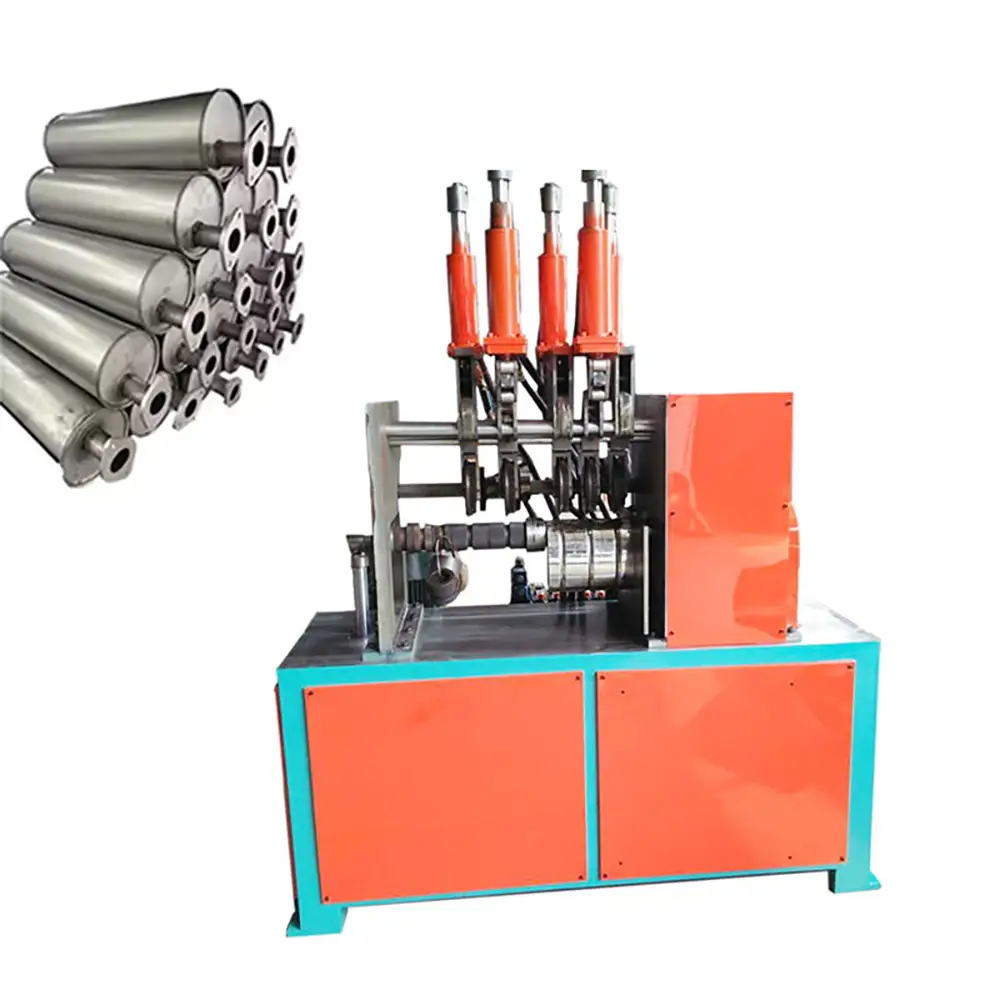
Reducing,expanding,shrinking,and flaring operations can be used to prepare exhaust tubes for mufflers,catalytic components,resonators,and connecting pipes.
The machine can also be evaluated for motorcycle exhaust tube processing and other vehicle exhaust components.
Furniture and Structural Tube Applications
Tube end forming is also widely used in furniture manufacturing. Metal table legs,chair legs,bed frames,and decorative tubing may require reduced,tapered,expanded,or crimped ends.
In structural applications,tube end forming can help prepare components for assembly,welding,or connection with other profiles.
The machine can be configured with dedicated dies for specific furniture or structural tube profiles.
Production Efficiency
A dedicated tube end forming machine can reduce the need for multiple manual forming operations. For repetitive production,controlled forming can help improve consistency between workpieces.
A typical production cycle may include loading the tube,positioning it in the fixture,clamping the workpiece,performing the programmed forming operation,releasing the tube,and removing the finished part.
Actual production speed depends on tube dimensions,forming complexity,tool changes,material properties,machine configuration,and operator workflow.
For higher-volume applications,the machine can be integrated with automatic feeding or material-handling systems when supported by the equipment design.
Tooling and Custom Dies
Tooling determines the final shape of the tube end. Reducing,expanding,shrinking,flaring,and crimping operations require different forming geometries.
Custom dies can be designed for special diameters,taper angles,flange profiles,beads,crimps,and connection shapes.
For OEM applications,customers can provide technical drawings,samples,material specifications,and production quantities. This information allows the appropriate forming tooling to be evaluated.
For products with multiple tube sizes,interchangeable tooling can provide additional production flexibility.
Quality Control
Tube end forming quality should be checked through dimensional and visual inspection.
Important inspection items may include:
Finished end diameter
Original tube diameter
Forming length
Wall deformation
Taper angle
Flare geometry
Crimp dimensions
Surface condition
Overall dimensional consistency
First-piece inspection can help establish suitable forming parameters. Periodic checks can identify tooling wear or process variation during production.
For critical components,customers should define the required tolerances before machine selection.
Maintenance and Safety
Operators should be trained before using hydraulic or mechanical tube forming equipment. The workpiece should be properly positioned and securely clamped before the forming cycle begins.
Routine maintenance may include inspection of hydraulic oil,hoses,cylinders,forming dies,fixtures,electrical components,and other moving parts.
Tooling should be kept clean and inspected for wear. Damaged or excessively worn dies can affect finished tube geometry.
Operators should keep hands away from forming areas and follow the manufacturer's safety instructions. Emergency stops,guards,and other protective systems depend on the actual machine configuration.
Custom & OEM Tube Forming Solutions
Tube forming requirements vary considerably between industries and products. For this reason,the machine can be configured around specific tube sizes,materials,forming operations,and production requirements.
OEM and ODM projects may include customized forming dies,hydraulic systems,fixtures,clamping systems,multiple forming stations,automatic feeding,and control functions.
Customers should provide tube diameter,wall thickness,material,desired end geometry,forming operations,and production volume when requesting a quotation.
The machine is suitable for manufacturers,factories,distributors,wholesalers,and international B2B buyers looking for pipe reducing machines,tube expanding machines,pipe shrinking machines,tube flaring machines,crimping equipment,and multifunction tube end forming machinery.
Why Choose Us
Multiple Tube End Forming Operations — Supports suitable reducing,expanding,shrinking,flaring,and crimping applications according to machine configuration.
Hydraulic Forming Capability — Controlled forming force can support demanding metal tube processing applications.
Flexible Tooling Options — Custom dies can be developed for different diameters,profiles,and tube materials.
Wide Application Range — Suitable for automotive exhaust,furniture,construction,industrial piping,and general metal fabrication.
Multiple Material Options — Can be configured for suitable steel,stainless steel,aluminum,copper,brass,and other metal tubing.
Repeatable Production — Controlled forming processes can help improve consistency across repetitive workpieces.
Custom & OEM Support — Machine structure,tooling,fixtures,and forming functions can be developed around customer requirements.
B2B Industrial Supply — Suitable for manufacturers,factories,distributors,wholesalers,and international machinery buyers.
FAQs
1. What is a tube end forming machine?
A tube end forming machine is equipment used to reshape the end section of a metal tube through operations such as reducing,expanding,shrinking,flaring,crimping,beading,or tapering.
2. What is tube end reducing?
Tube end reducing decreases the diameter of the selected tube end to create a smaller or tapered section for assembly or further processing.
3. What is tube end expanding?
Tube end expanding increases the diameter of a selected tube section to create a larger opening or connection area.
4. What is the difference between reducing and shrinking?
Both processes reduce tube diameter,but terminology depends on the forming method and finished geometry. Reducing generally describes creating a smaller diameter,while shrinking can refer to compressing or shaping a tube end into a reduced or tapered profile.
5. Can the machine perform flaring?
Yes,when suitable flaring tooling and a compatible machine configuration are provided.
6. Can it perform tube crimping?
Yes. The machine can be configured for suitable crimping applications using dedicated forming dies.
7. What materials can be processed?
Depending on the configuration,it may process carbon steel,stainless steel,aluminum,copper,brass,and other compatible metal tubes.
8. Is it suitable for automotive exhaust pipes?
Yes. Tube end forming is commonly used for exhaust pipes,connecting tubes,muffler components,and other automotive exhaust parts.
9. Can it process furniture tubes?
Yes. Suitable forming operations can be used for furniture legs,chair frames,table legs,and other metal tube components.
10. Can the forming dies be customized?
Yes. Custom dies can be developed for specific tube diameters,taper profiles,flare dimensions,crimp shapes,and other end geometries.
11. What determines the machine capacity?
Tube material,diameter,wall thickness,forming geometry,required force,tooling,and machine configuration all affect the actual forming capacity.
12. What information is needed for a quotation?
Provide the tube material,outer diameter,wall thickness,required end shape,forming operations,finished dimensions,production volume,and drawings or samples if available.
Prev:
Portable Tubing Swaging Expanding Machine Hydraulic Exhaust Tube End Reduce Machine
Next:
Stainless Steel Condenser Radiator Tube Expandsion Hydraulic Pneumatic Copper Tube Expander Machine
TAG:
Pipe Diameter Reducing Machine,
Tube Diameter Reducing Machine,
Pipe End Processing Machine,
Automatic Tube End Forming Machine,
Tube End Processing Machine,
Semi Automatic Tube End Forming Machine,
Exhaust Pipe End Forming Machine,
Exhaust Tube Reducing Machine,
Furniture Tube End Forming Machine,
Stainless Steel Tube Forming Machine,
Metal Tube Reducing Machine,
Metal Tube Expanding Machine,
Carbon Steel Tube Forming Machine,
Hydraulic Tube Forming Machine,
Tube End Forming Equipment,
Hydraulic Pipe Forming Machine,
Pipe Flaring Machine,
Pipe End Forming Equipment,
Pipe Beading Machine,
Tube Beading Machine,
Pipe Tapering Machine,
Pipe End Reducing Machine,
Tube Flaring Machine,
Tube Swaging Machine,
Pipe Swaging Machine,
Pipe Necking Machine,
Tube Necking Machine,
Tube Tapering Machine,
Tube End Reducing Machine,
Pipe Reducing Machine,
Related Category:
Pipe End Reducing Machine,Pipe End Expanding Machine,Pipe End Shrinking Machine,Pipe End Flaring Machine,Pipe End Crimpi China, suppliers, manufacturers, factory, customized, wholesale, quotation, made in China