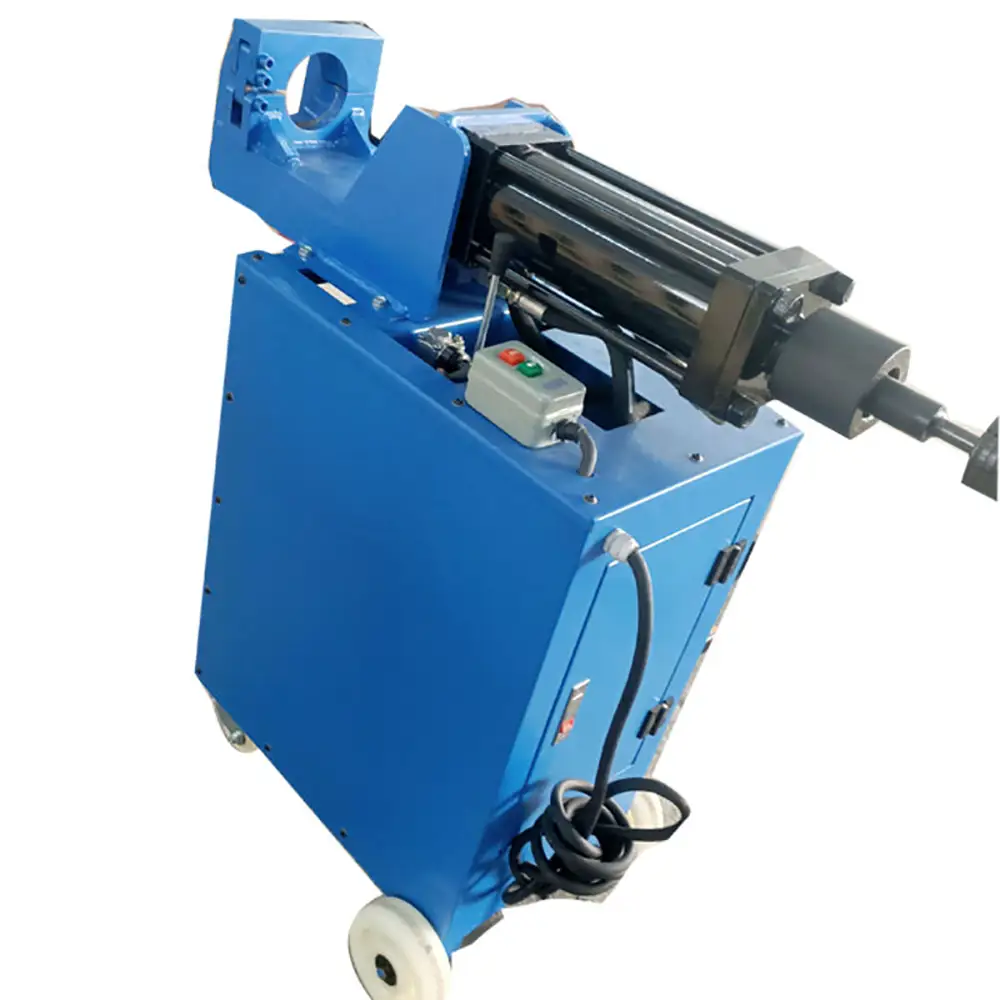
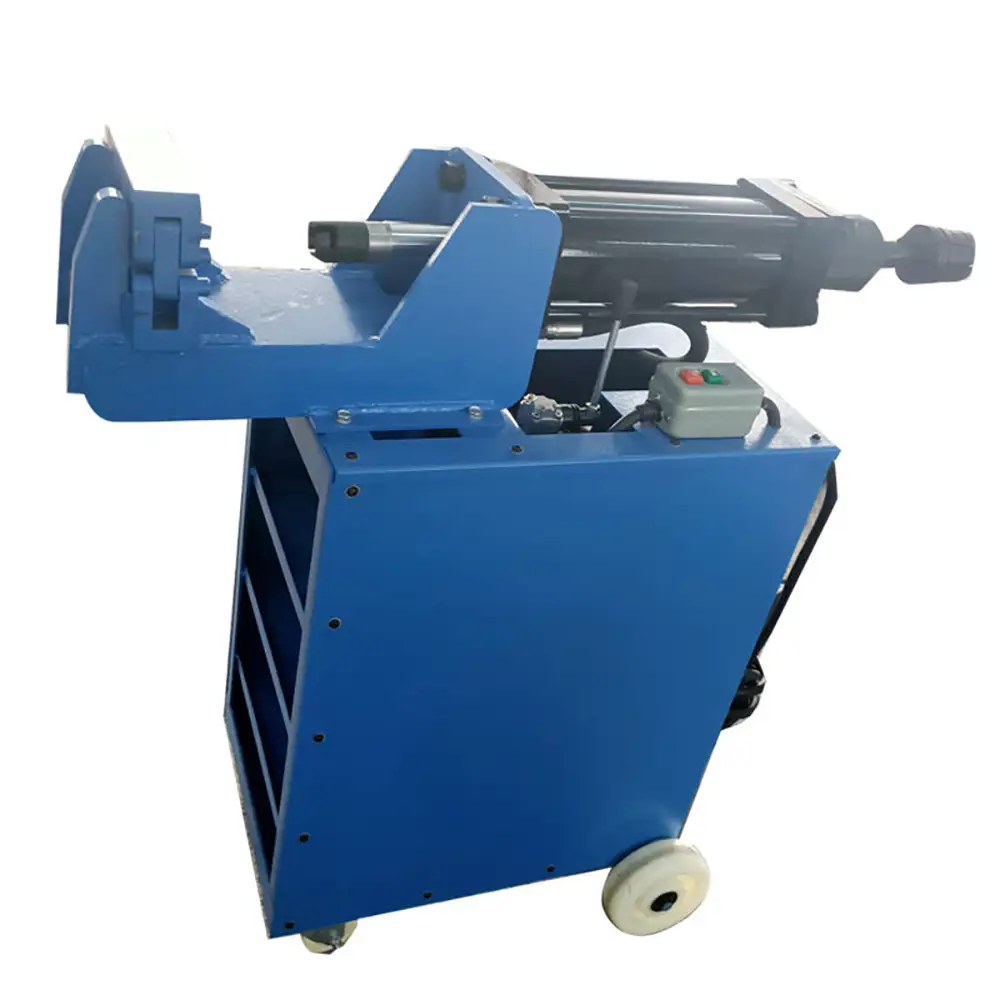
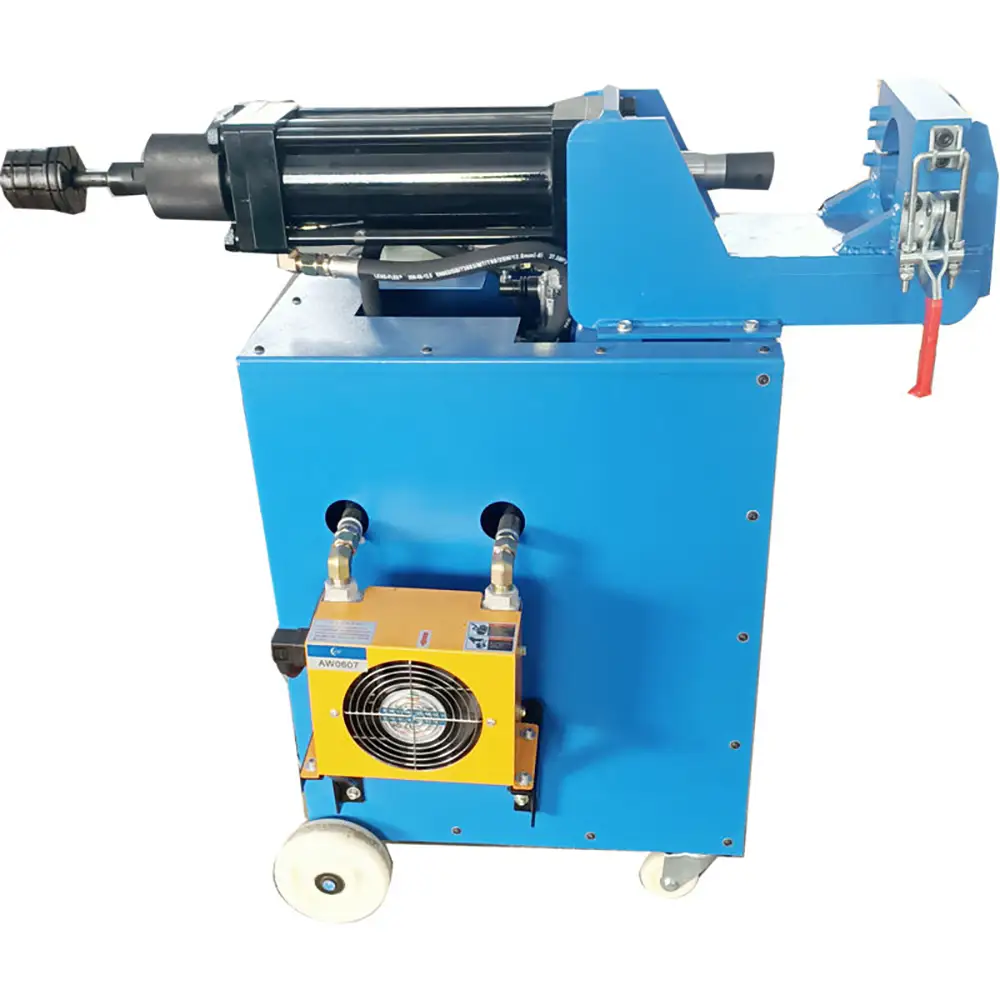
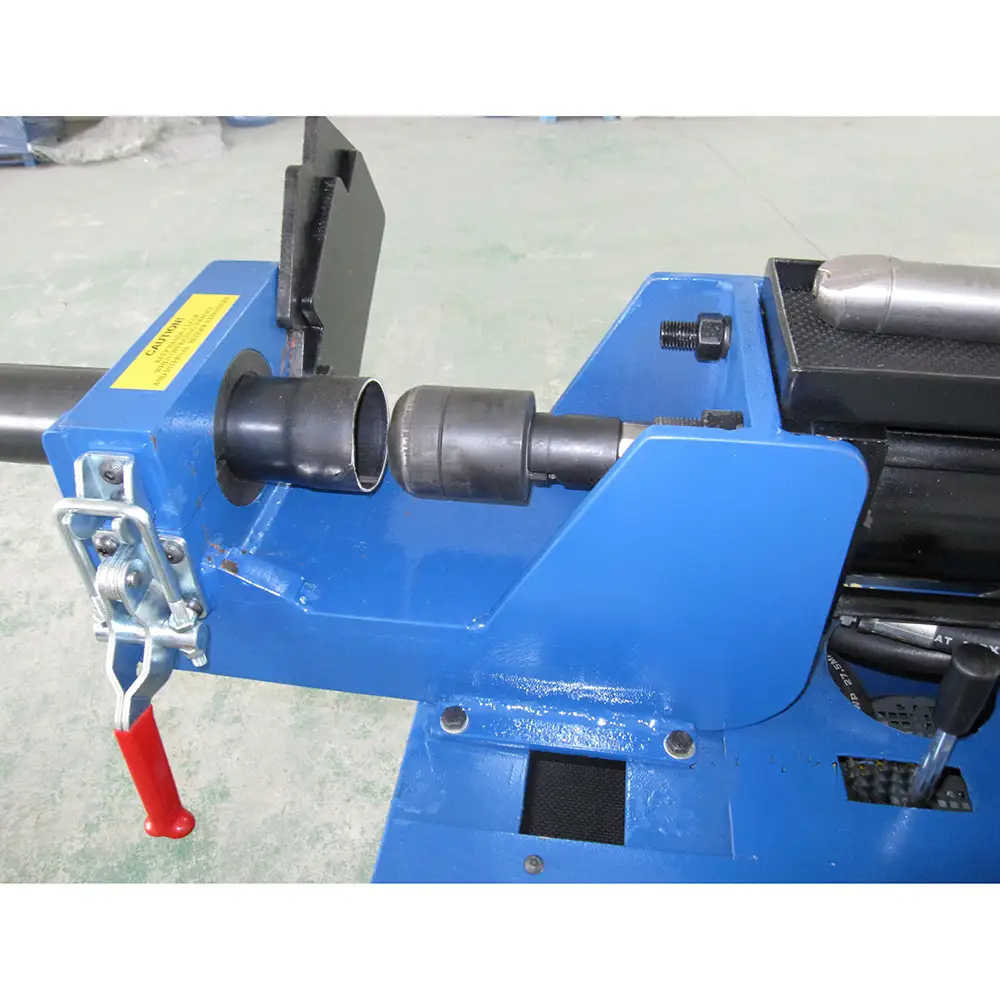
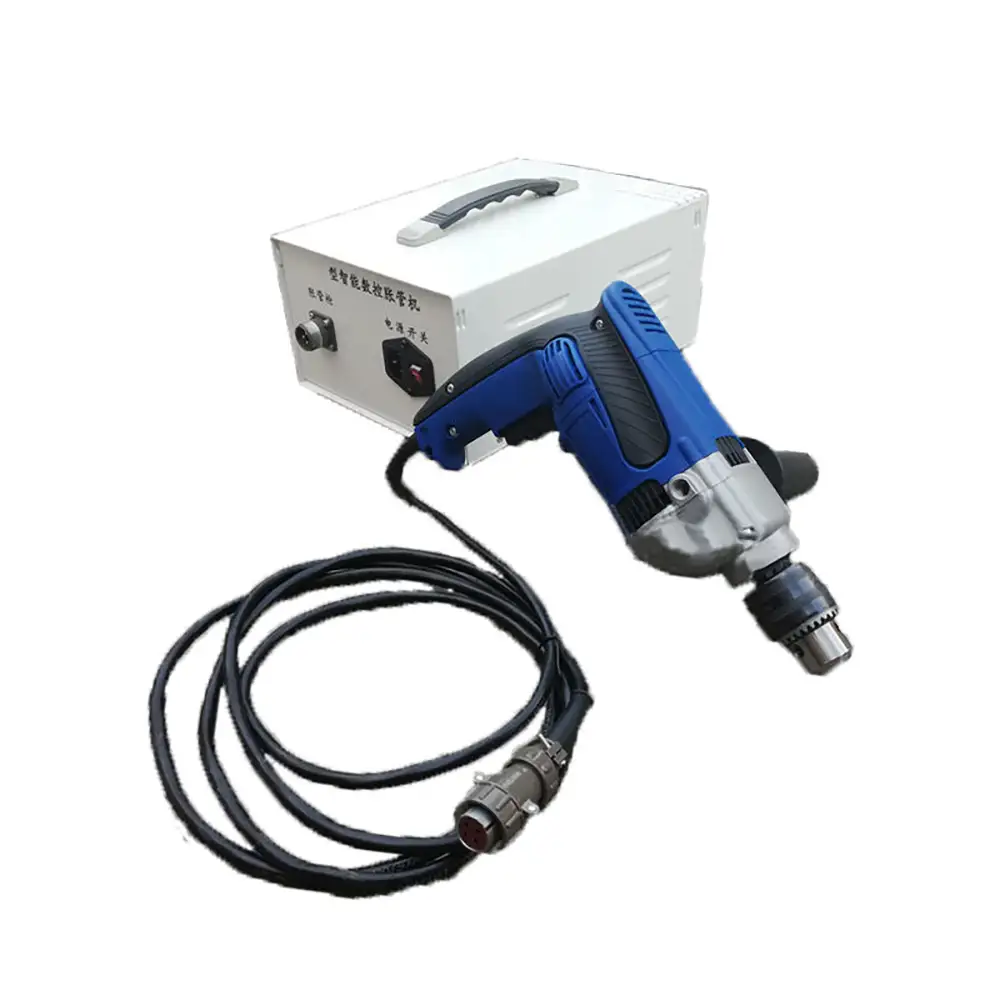
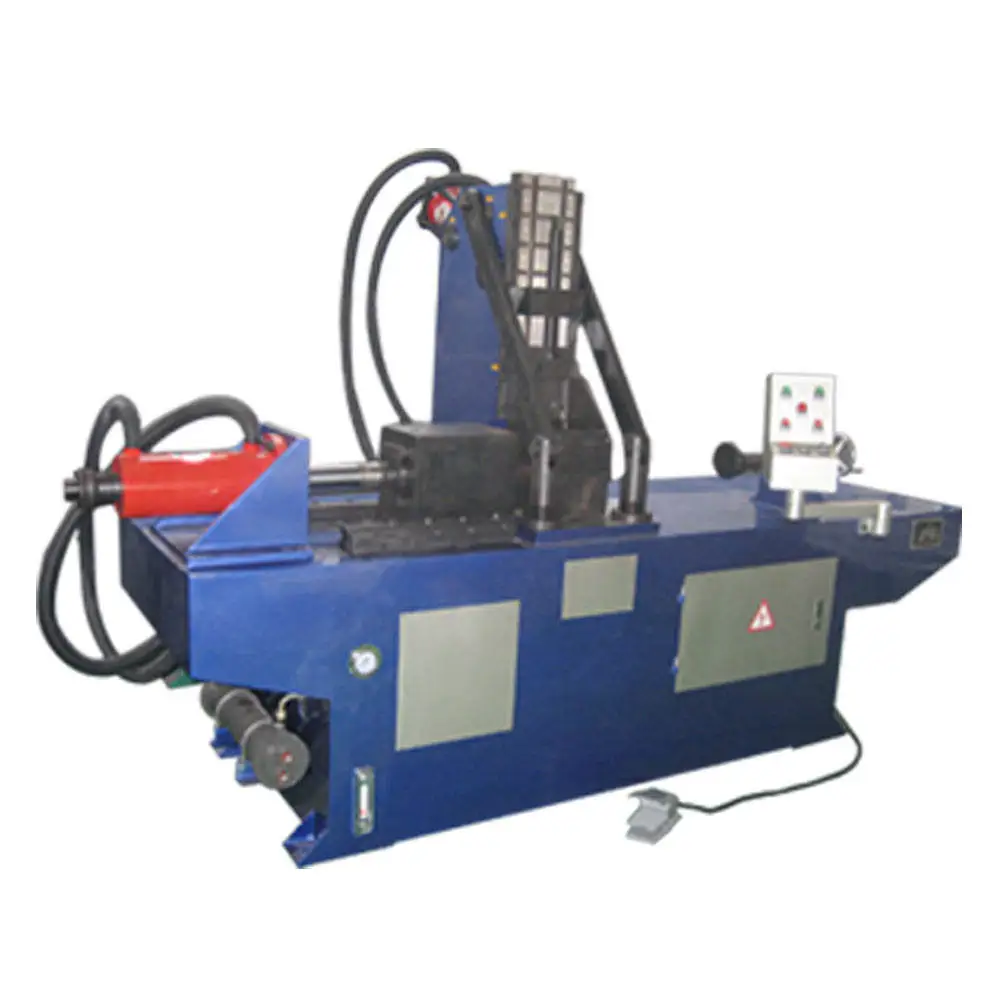
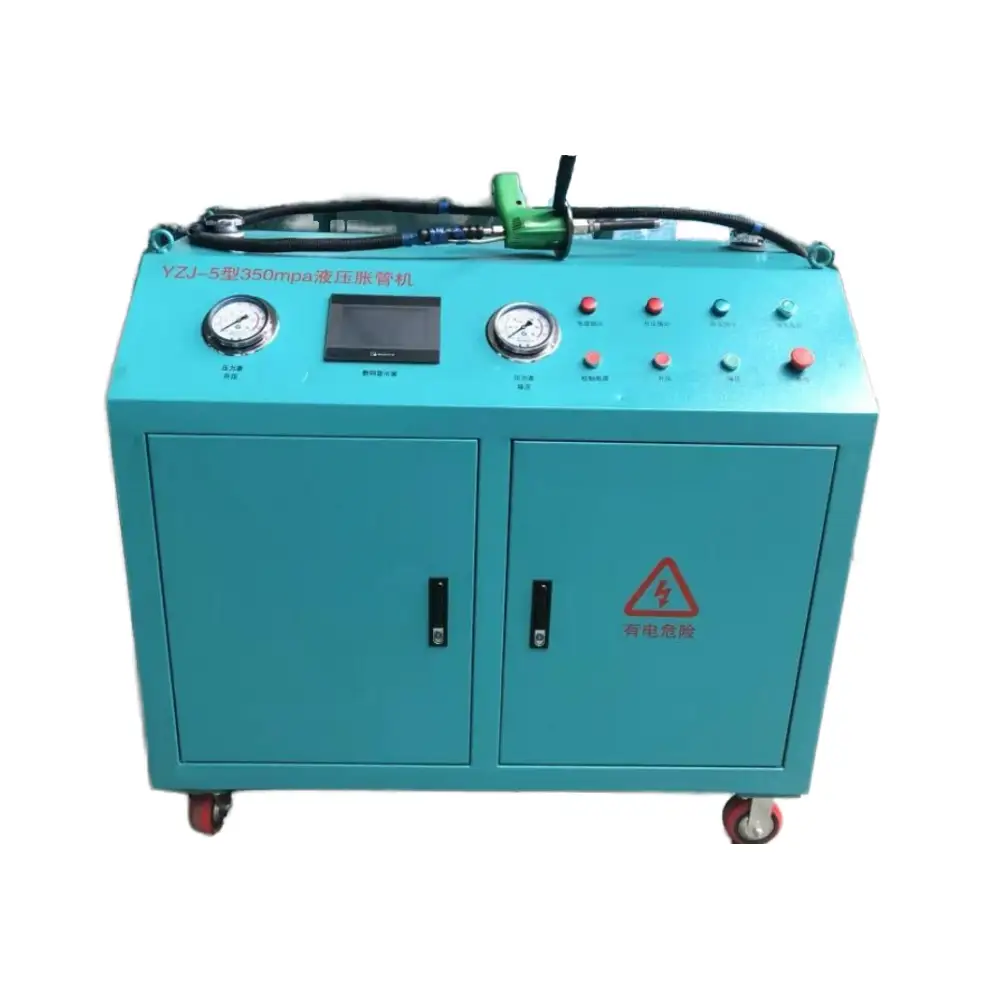
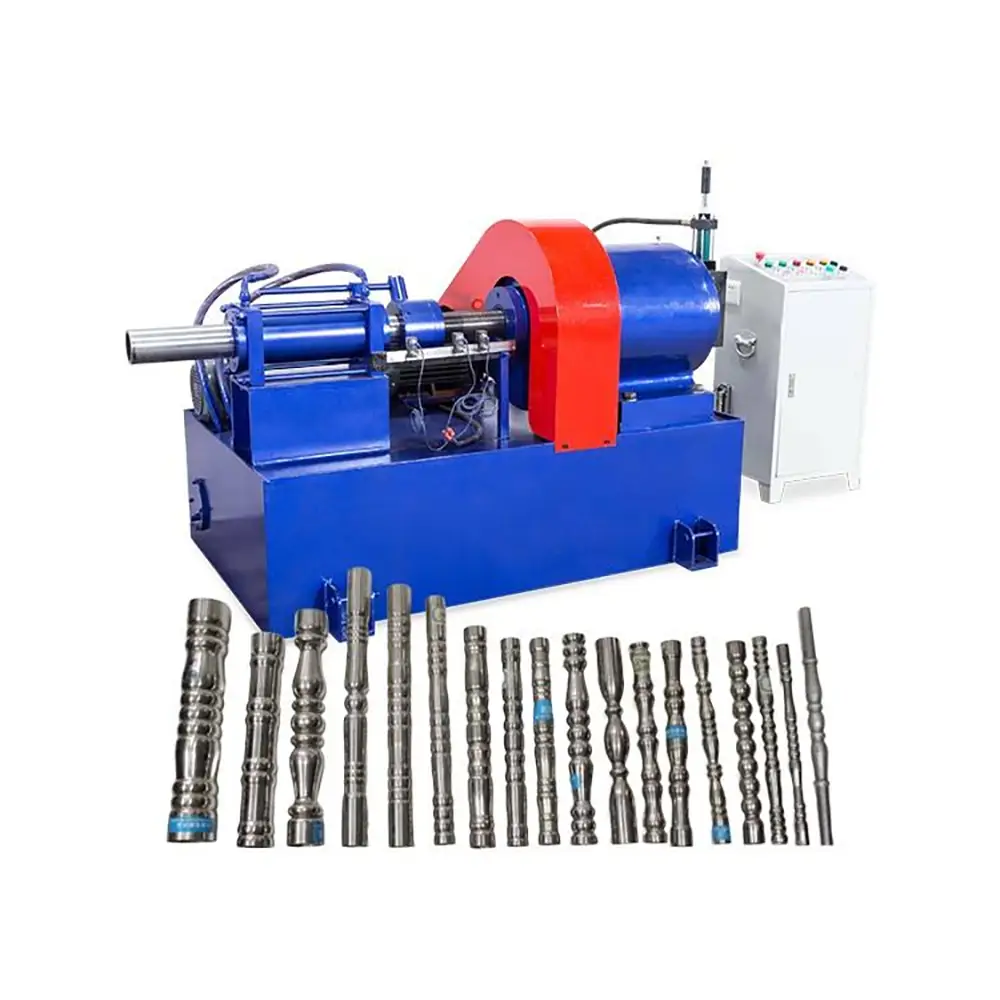
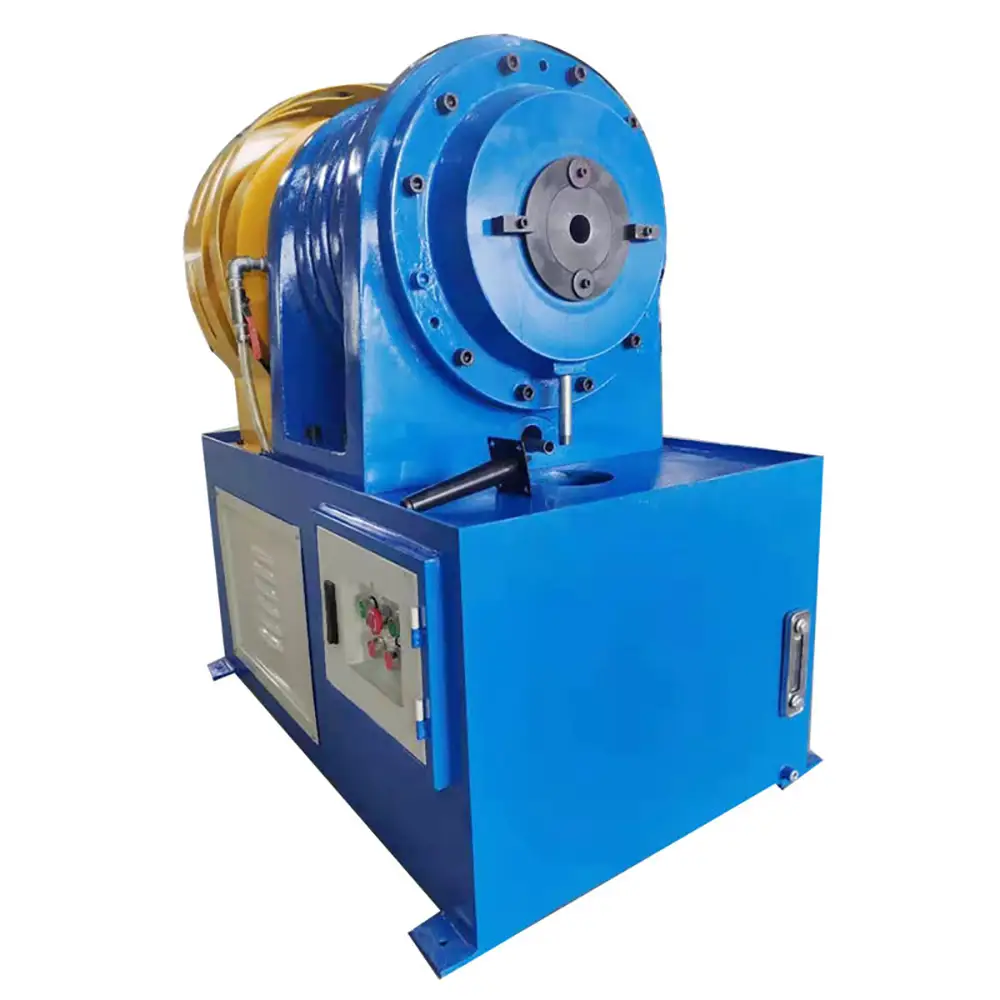
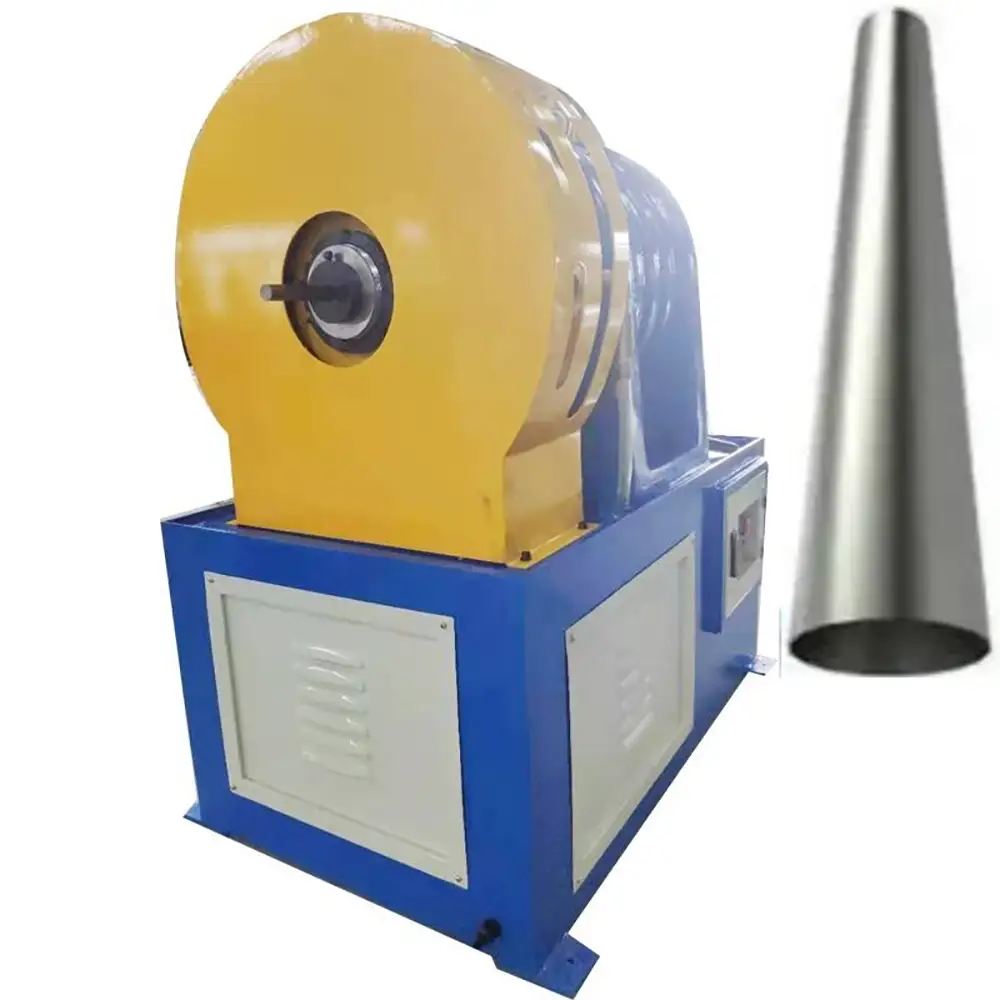
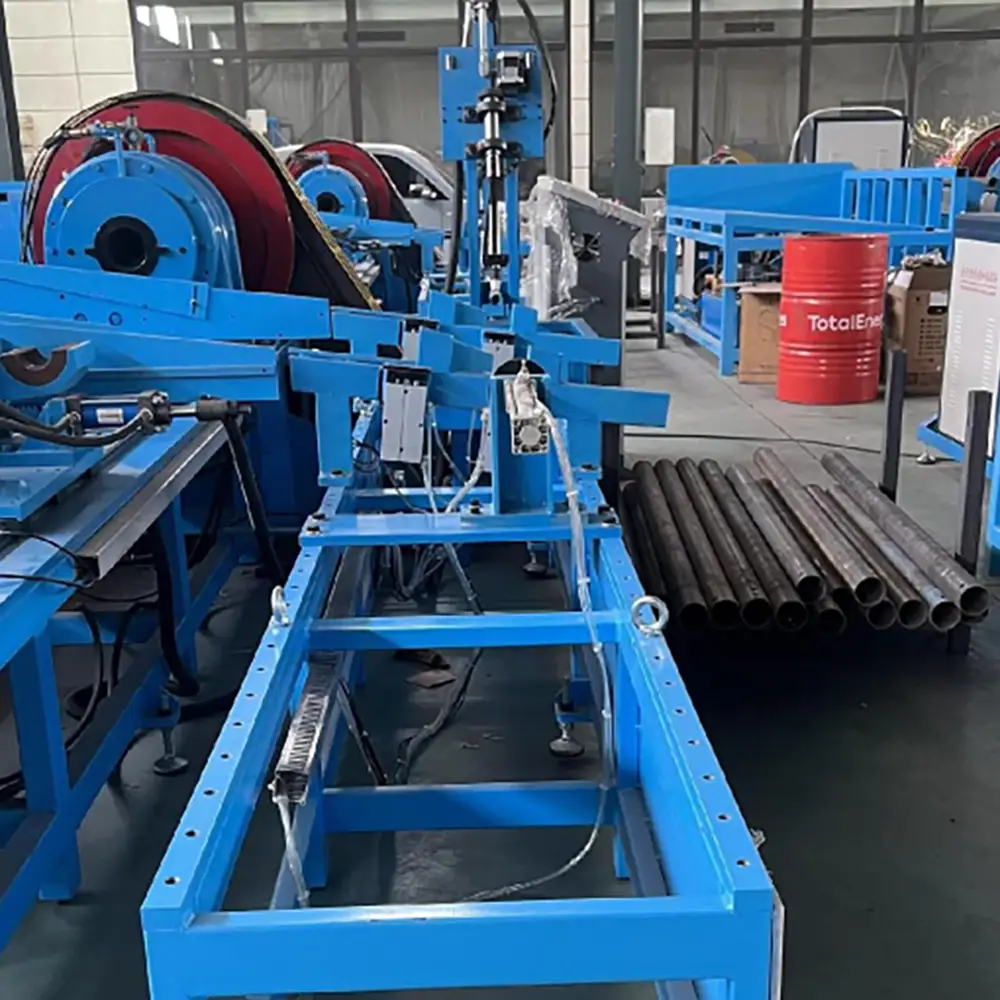
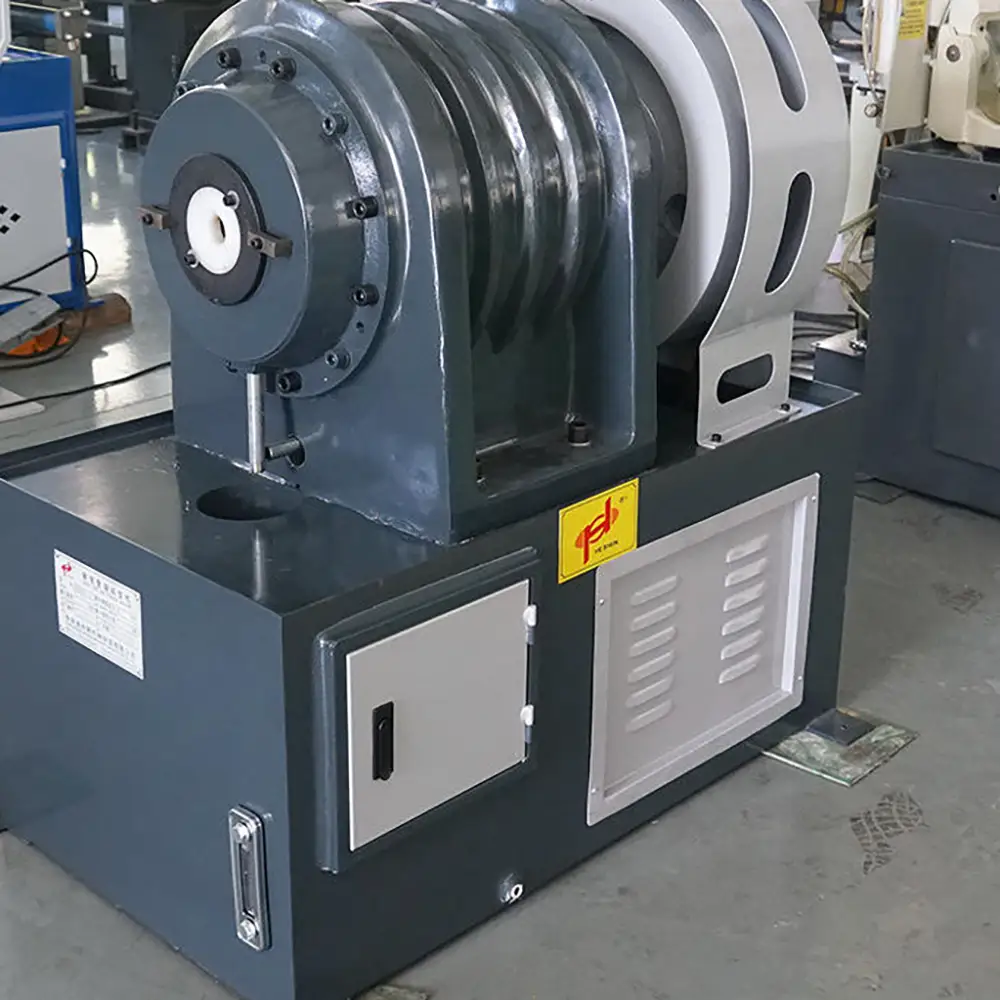
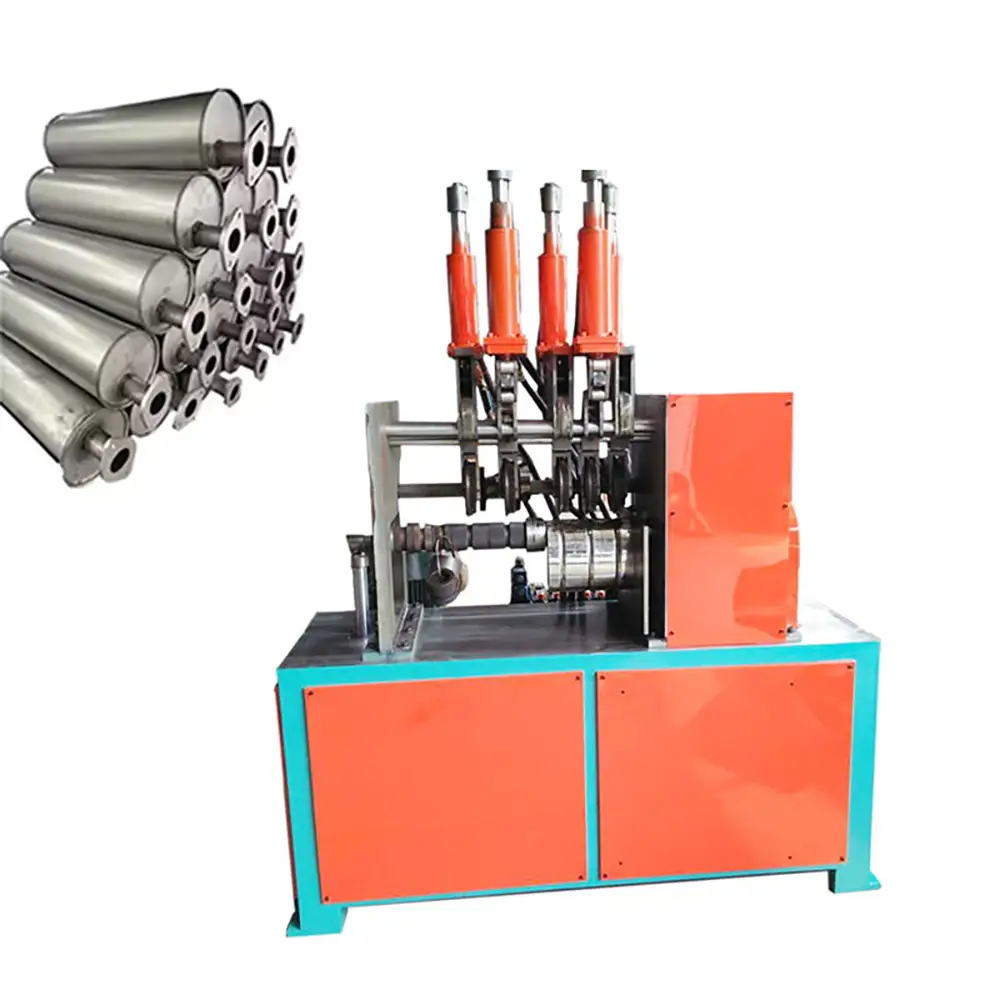
This expanding machine is a standard piece of equipment utilized in various settings, including car body repair shops, exhaust repair facilities, and auto modification garages, among others.
5 HP Motor, single-phase (30 amp), or Three-phase (20-amp)
Runs on 220 volt, 50 Hz supply. 60 Hz and other voltages available.
25,000 pounds of expanding power
A 3-1/2" cylinder
Expanding capacity from 1" to 5-1/2"
Adjustable Collar for expanding 1" to 3-1/2"
Collet Holder for 1" to 2-1/2" O.D. tubing
Swaging capacity from 1" to 3"
Front swivel casters
15' power cord
Compact design - 1020mm high x 900mm long x 520mm wide
|
Length |
Width |
Height |
Cylinder stroke |
Horse power |
R.P.M |
|
900mm |
520mm |
1020mm |
Front: 180mm;
Rear: 60mm |
2HP, 1.5kw, single phase / three phase |
1 |
Portable Tubing Swaging and Expanding Machine
The Portable Tubing Swaging & Expanding Machine Hydraulic Exhaust Tube End Reducing Machine is designed for tube end forming applications where metal tubing needs to be reduced,expanded,swaged,or reshaped before assembly or welding. Its portable design provides a flexible solution for workshops,maintenance operations,exhaust fabrication,and other applications where a compact tube forming machine is required.
Tube end processing is widely used in automotive exhaust manufacturing,motorcycle exhaust fabrication,furniture production,metal structures,industrial equipment,and general tube fabrication. Swaging and expanding can modify the diameter or profile of the tube end so that components can fit together or achieve the required finished geometry.
The hydraulic forming system provides controlled force during the forming process. Actual forming capacity depends on the tube material,diameter,wall thickness,tooling,hydraulic system,and required end geometry.
Portable Tube Forming Design
A portable tube forming machine can be useful when workpieces are large,awkward to move,or processed at different locations within a workshop.
Instead of requiring every tube or exhaust component to be transported to a large fixed production machine,the portable unit can be positioned close to the work area when the application allows.
The compact design may also be useful for repair shops,custom exhaust businesses,prototype production,and small-batch manufacturing.
The actual weight,dimensions,and portability depend on the specific machine configuration. Customers should confirm the machine installation and operating requirements before purchase.
Hydraulic Tube Swaging
Swaging is a metal forming process used to reshape a tube by reducing or modifying its diameter. A controlled forming tool applies force around or against the tube to create the desired end profile.
Hydraulic swaging can provide substantial and controlled forming force for suitable metal tubing. This makes it useful for applications involving steel,stainless steel,and other compatible materials.
Swaging can be used to create reduced ends,tapered sections,connection areas,and other profiles.
The final geometry depends on the forming die,material properties,tube dimensions,and hydraulic pressure.
Tube End Expanding
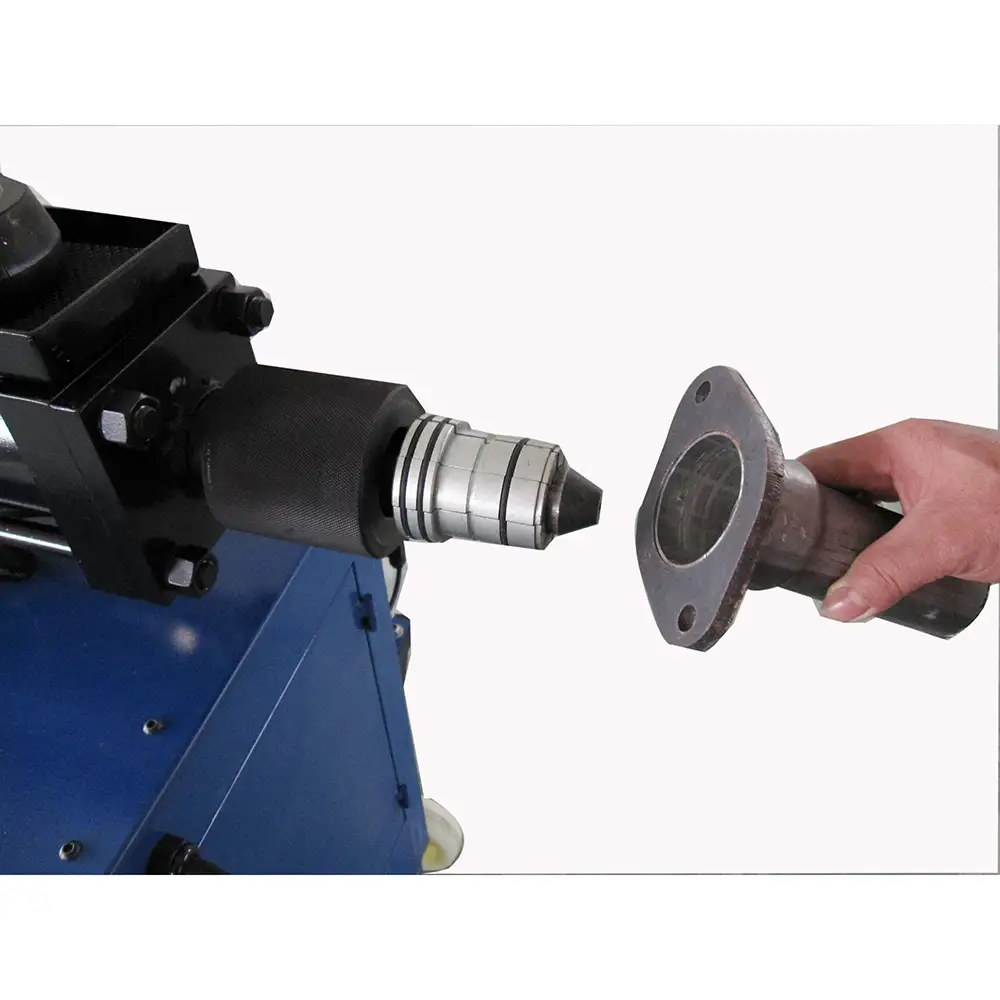
Tube expansion increases the diameter of a selected section of the tube. It can be used to prepare a tube for insertion,connection,welding,or assembly with another component.
For exhaust applications,an expanded tube end may be required to connect one exhaust section to another.
Expansion can also be used in other tube-processing applications where a larger diameter or formed connection area is required.
The required expansion amount should be established according to the final component design.
Exhaust Tube End Reducing
Exhaust tube end reducing is one of the important applications for this type of machine. Automotive and motorcycle exhaust systems often contain tubes with different diameters that must be connected together.
Reducing the end of a larger tube can create a smaller section suitable for inserting into another exhaust component.
The process can help prepare tubes before welding,clamping,or final exhaust assembly.
Suitable forming dies can be selected according to the required exhaust tube diameter and end profile.
Exhaust Pipe Swaging Applications
Exhaust systems commonly use formed tube ends for connecting pipes,mufflers,resonators,catalytic components,and other exhaust parts.
A swaging machine can create:
Reduced tube ends
Expanded tube ends
Tapered sections
Connection profiles
Stepped diameters
Customized end shapes
The exact forming process depends on the exhaust system design and required joint method.
For custom exhaust fabrication,the machine can provide a flexible way to process different tube sizes with appropriate tooling.
Suitable Tube Materials
The machine can be configured for various compatible metal tubes. Typical materials may include:
Carbon steel
Mild steel
Stainless steel
Aluminum
Copper
Alloy steel
Other compatible tubing
Stainless steel exhaust tubing may require appropriate forming parameters because material strength and work-hardening behavior can differ from mild steel.
Aluminum and copper generally require different forming conditions because of their different mechanical properties.
Customers should provide the material grade,outer diameter,and wall thickness when selecting the machine and tooling.
Tube Diameter Reduction
The end reducing process changes the tube diameter over a defined section. Depending on the tooling,the transition may be gradual or more pronounced.
A controlled reduction can help manufacturers produce consistent tube connections.
Important factors include the starting diameter,the target diameter,wall thickness,material strength,forming length,and die geometry.
For larger diameter reductions,multiple forming stages may be required depending on the material and machine design.
Custom Swaging and Expansion Dies
Tooling is one of the most important parts of a tube swaging and expanding machine.
Different tube diameters and finished profiles require different dies. A custom die can be designed to produce a specific reduced diameter,expanded diameter,taper angle,or connection profile.
For exhaust manufacturing,custom tooling can be developed for muffler inlet and outlet tubes,connecting pipes,and other exhaust components.
Customers can provide drawings,samples,or finished-part dimensions for tooling evaluation.
Production Efficiency
Hydraulic tube forming can reduce manual tube shaping operations and improve consistency for repetitive production.
A typical cycle may include inserting the tube into the forming fixture,positioning the workpiece,activating the hydraulic system,performing the swaging or expansion operation,releasing the tube,and removing the finished component.
Actual cycle time depends on the tube size,material,forming amount,tooling,and operator workflow.
For small-batch and custom exhaust production,the machine can provide flexibility for processing different tube sizes.
For higher production volumes,automatic feeding or additional material-handling systems may be evaluated depending on the machine configuration.
Applications Beyond Exhaust Tubes
Although exhaust tube forming is an important application,the machine can also be evaluated for other metal tube processing requirements.
Potential applications include:
Automotive tube fabrication
Motorcycle exhaust manufacturing
Furniture tube processing
Metal frame production
Industrial piping
Construction components
Agricultural machinery
General fabrication
Custom metalworking
Prototype production
The actual application range depends on machine capacity and suitable tooling.
Quality Control
Tube end forming quality should be checked using dimensional and visual inspection.
Important measurements may include:
Original tube diameter
Reduced diameter
Expanded diameter
Forming length
Taper dimensions
Wall deformation
Surface condition
Overall dimensional consistency
First-piece inspection can help determine appropriate forming parameters. Periodic checks can help identify tooling wear or process changes.
For applications requiring close dimensional tolerances,the finished parts should be measured according to the customer's engineering specifications.
Maintenance and Safety
Hydraulic tube forming equipment should be operated by trained personnel.
Routine maintenance may include checking hydraulic oil,hoses,fittings,cylinders,seals,forming dies,and other mechanical components.
The forming tools should be inspected regularly for wear or damage. Properly maintained tooling can help maintain consistent tube geometry.
Before forming,the tube should be properly positioned and securely supported. Operators should keep hands away from the forming area and follow the manufacturer's safety instructions.
Emergency-stop systems,guards,and other protective features depend on the actual machine configuration.
Custom & OEM Solutions
Tube forming requirements vary between industries and products. OEM and ODM solutions can therefore be developed around specific tube dimensions,materials,and end profiles.
Customers can provide:
Tube material
Tube outer diameter
Wall thickness
Target reduced diameter
Target expanded diameter
Forming length
Required profile
Production volume
Drawings or samples
Based on this information,the hydraulic system,forming dies,fixtures,and machine configuration can be evaluated.
The machine is suitable for manufacturers,factories,exhaust system suppliers,automotive parts companies,distributors,and international B2B buyers looking for portable tube swaging machines,hydraulic exhaust tube forming equipment,tube expanding machines,and tube end reducing machinery.
Why Choose Us
Portable Tube Forming Design — Provides a flexible solution for workshops,repair facilities,and applications where compact equipment is preferred.
Hydraulic Forming Force — Controlled hydraulic force supports suitable swaging,expanding,and tube end reducing operations.
Exhaust Tube Applications — Suitable for automotive and motorcycle exhaust tube end processing.
Swaging & Expansion Functions — Can be configured for reducing,expanding,swaging,and other tube end forming applications.
Custom Tooling — Dies can be developed for different tube diameters,reduced ends,expanded ends,and custom profiles.
Multiple Metal Materials — Suitable configurations can be evaluated for steel,stainless steel,aluminum,copper,and other compatible tubing.
Flexible Production — Suitable for custom work,small batches,repair operations,and repetitive tube forming.
OEM & ODM Support — Machine configurations and tooling can be developed according to customer drawings,samples,and production requirements.
FAQs
1. What is a tube swaging machine?
A tube swaging machine reshapes a section of metal tubing by controlled forming,commonly reducing or modifying the tube diameter.
2. Can this machine expand tube ends?
Yes. With suitable expansion tooling,the machine can enlarge a selected section of the tube end.
3. Can it reduce exhaust tube diameter?
Yes. Hydraulic forming can be used to reduce suitable exhaust tube ends to a specified diameter.
4. What is the difference between swaging and reducing?
Swaging generally refers to mechanically reshaping a tube,frequently reducing its diameter or creating a specific profile. Reducing specifically describes decreasing the tube diameter.
5. Is the machine suitable for exhaust pipes?
Yes. Exhaust tube end reducing,swaging,and expanding are common applications for this type of equipment.
6. What materials can be processed?
Depending on the configuration,the machine may process carbon steel,stainless steel,aluminum,copper,and other compatible metal tubing.
7. Can stainless steel exhaust tubes be formed?
Yes,provided the machine and tooling are properly matched to the stainless steel grade,diameter,and wall thickness.
8. Can the forming dies be customized?
Yes. Custom dies can be developed for specific reduced diameters,expanded diameters,tapered profiles,and exhaust connection shapes.
9. What tube sizes can the machine process?
The tube size range depends on the specific machine and tooling. Tube outer diameter,wall thickness,and material should be provided before machine selection.
10. Is the machine suitable for small workshops?
A portable or compact configuration can be suitable for small workshops,repair shops,and custom fabrication businesses,subject to the machine's actual dimensions and capacity.
11. What affects tube forming quality?
Material properties,tube diameter,wall thickness,tooling geometry,hydraulic force,forming speed,and workpiece alignment can all affect the finished tube.
12. What information should I provide for a quotation?
Provide the tube material,outer diameter,wall thickness,target reduced or expanded diameter,forming length,desired profile,production volume,and drawings or samples if available.
Prev:
Multifunction Fully Automatic Flat Iron Forming Hoop Machine
Next:
Pipe End Reducing Expanding Shrinking Flaring Crimping Reduce Diameter Tube End Forming Machine
TAG:
Pipe Diameter Reducing Machine,
Tube Diameter Reducing Machine,
Pipe End Processing Machine,
Tube End Processing Machine,
Exhaust Tube Expanding Machine,
Exhaust Tube Reducing Machine,
Automotive Exhaust Pipe Forming Machine,
Metal Tube Reducing Machine,
Stainless Steel Tube Expanding Machine,
Hydraulic Tube Forming Machine,
Pipe Beading Machine,
Tube Beading Machine,
Hydraulic Tube Shrinking Machine,
Pipe Tapering Machine,
Pipe End Reducing Machine,
Tube Swaging Machine,
Pipe Necking Machine,
Tube Necking Machine,
Tube Tapering Machine,
Tube End Reducing Machine,
Pipe End Expanding Machine,
Pipe Shrinking Machine,
Tube Shrinking Machine,
Tube End Forming Machine,
Pipe End Forming Machine,
Tube End Expanding Machine,
Hydraulic Tube End Forming Machine,
Tube Expanding Machine,
Hydraulic Pipe End Forming Machine,
Hydraulic Tube Swaging Machine,
Related Category:
Portable Tubing Swaging Machine,Portable Tube Expanding Machine,Hydraulic Tube End Reducing Machine China, suppliers, manufacturers, factory, customized, wholesale, quotation, made in China