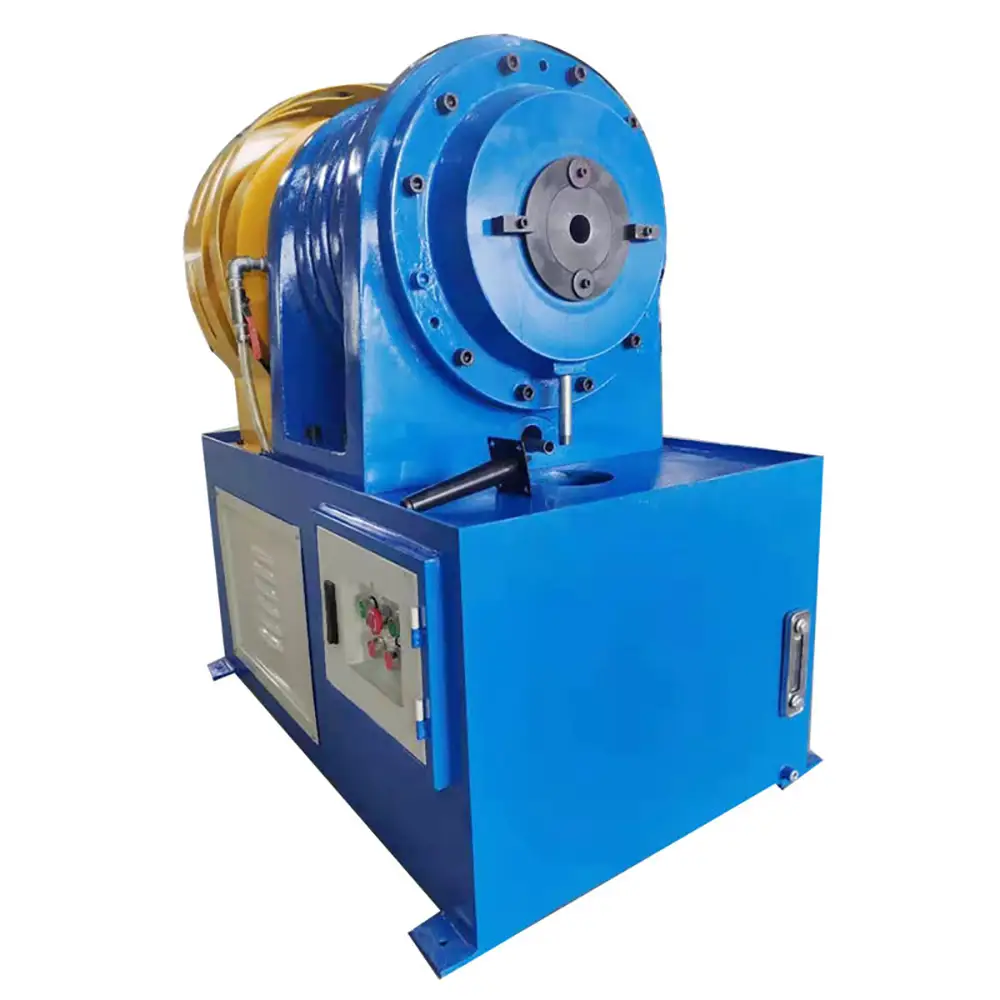
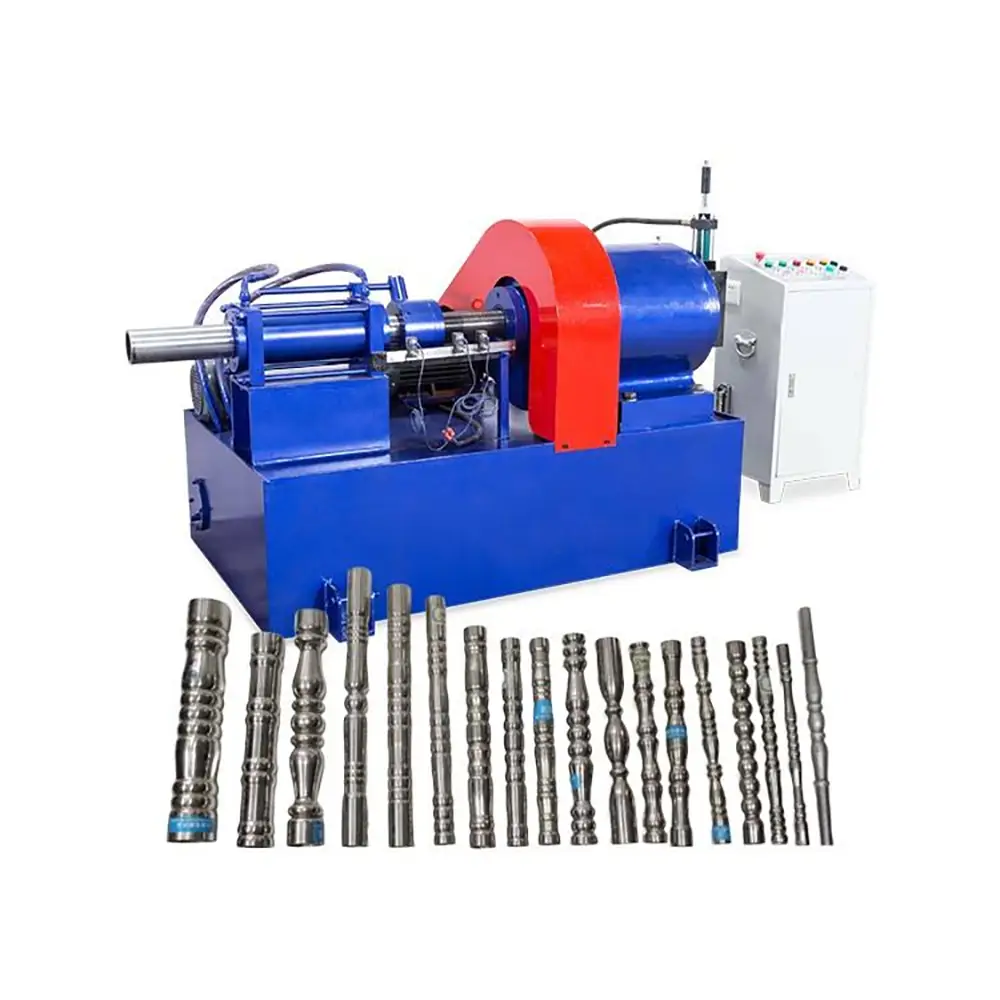
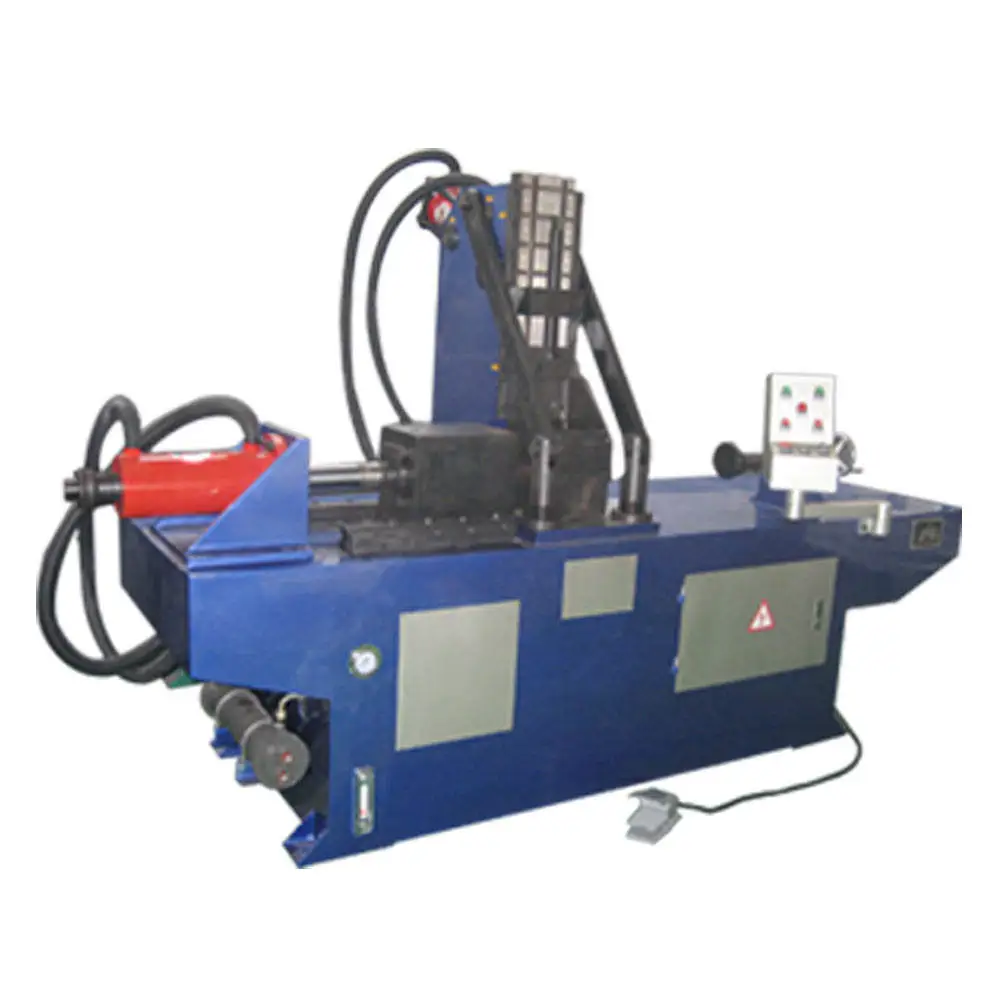
|
item |
value |
|
material / metal processed |
Brass / Copper |
|
power (kw) |
4 |
|
warranty |
1 Year |
|
weight (kg) |
200 |
|
Model Number |
SOAR-KTLBK |
|
max.shrinking capacity (thickness)(mm) |
2 |
|
video outgoing-inspection |
Provided |
|
machinery test report |
Provided |
|
tube contracting cycle (s) |
|
|
brand name |
SOAR |
|
extra services |
End Forming |
|
key selling points |
Easy To Operate |
|
Function |
Pipe end flaring |
|
Voltage |
220v |
|
Usage |
Air Condition pipe connection |
|
Color |
Blue |
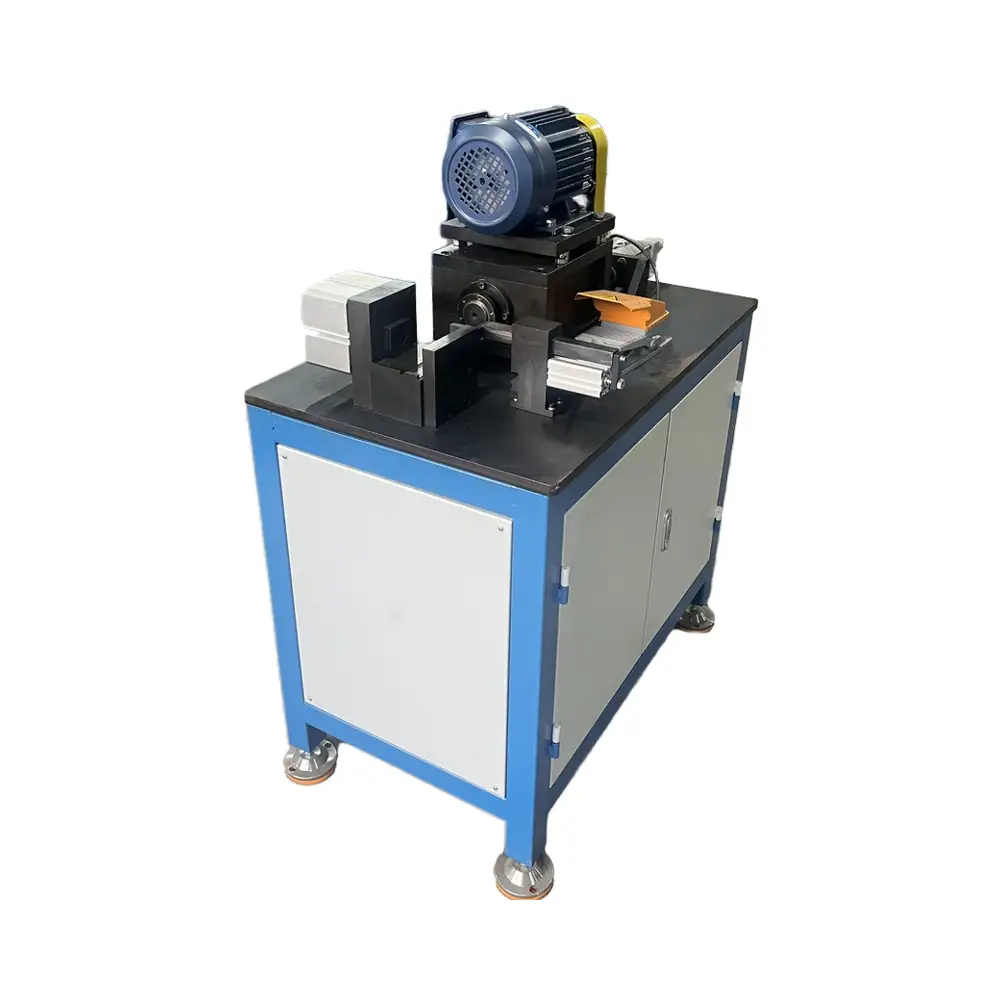
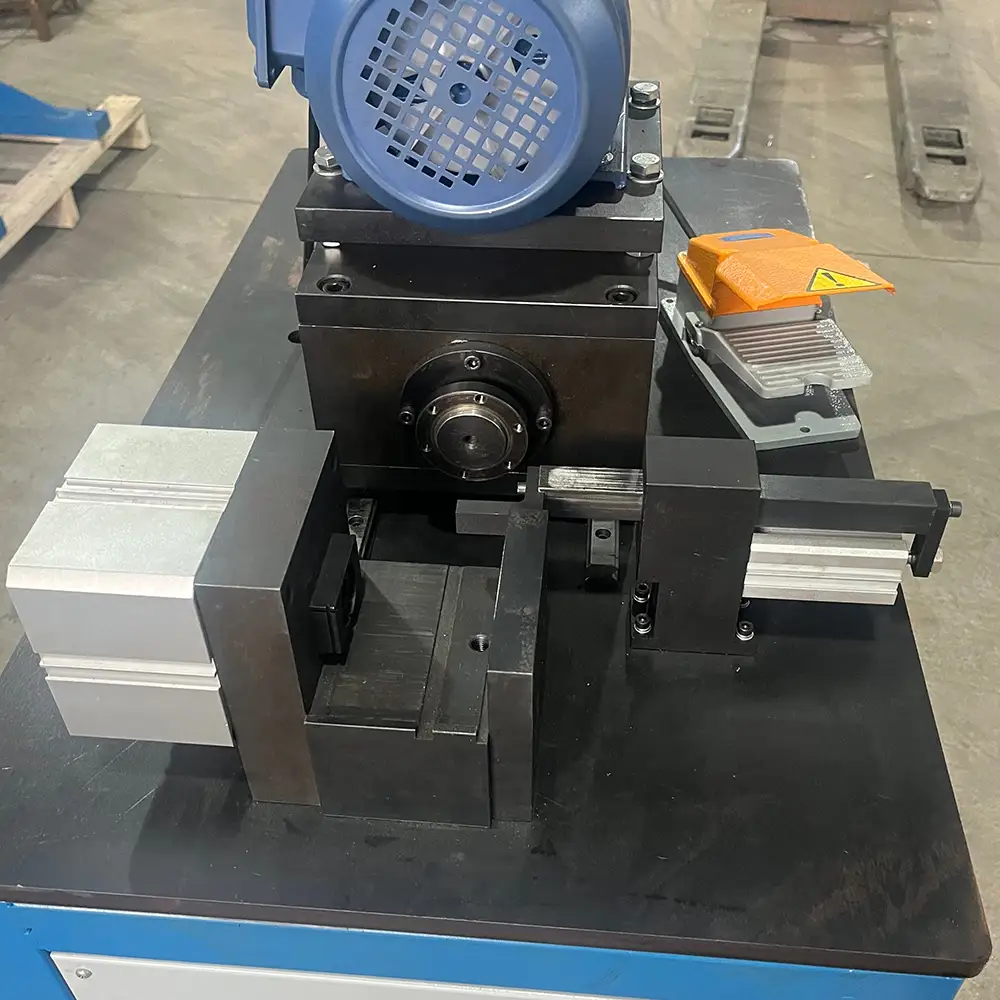
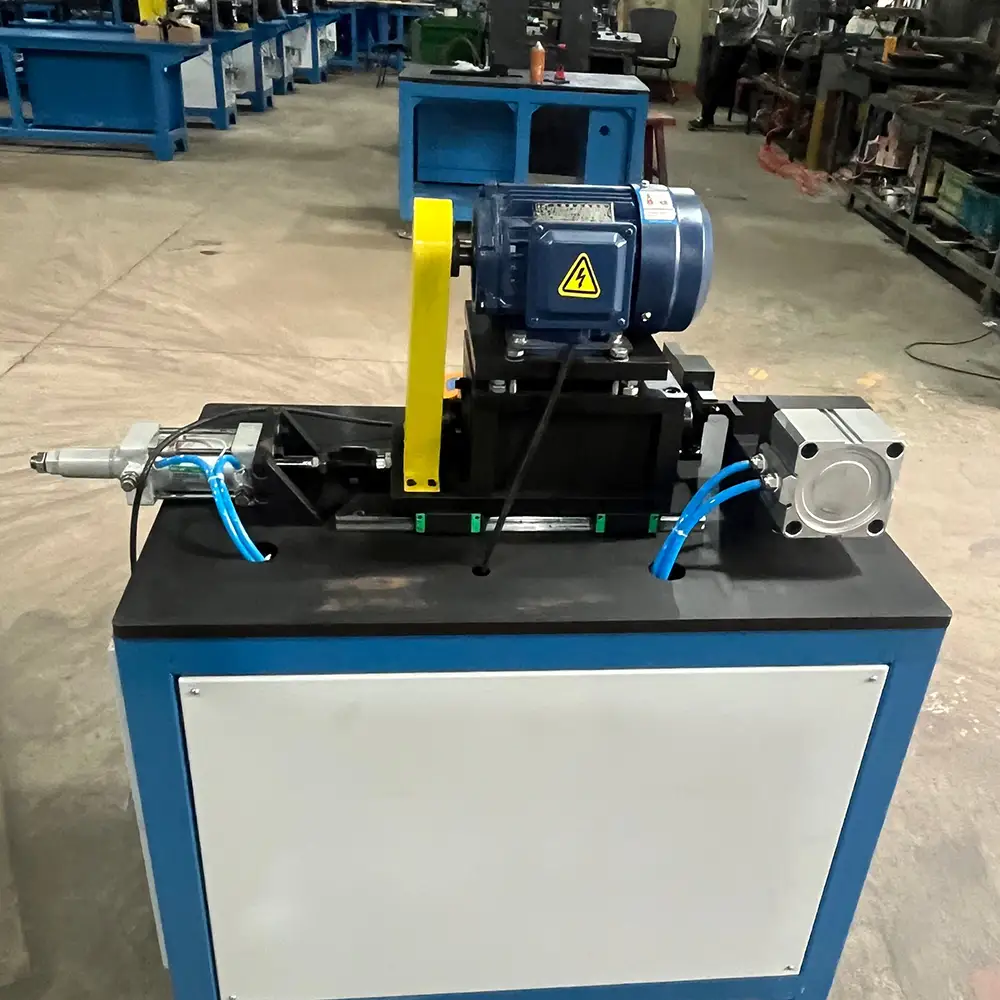
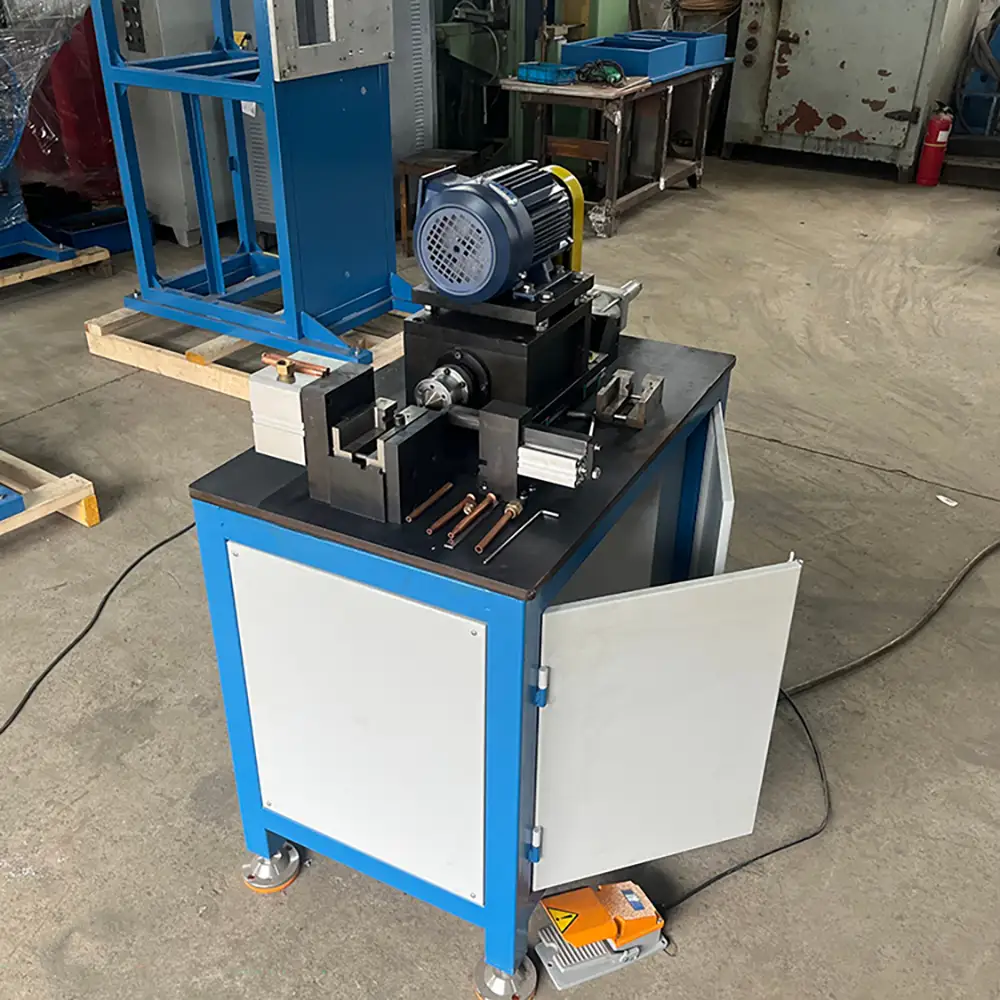
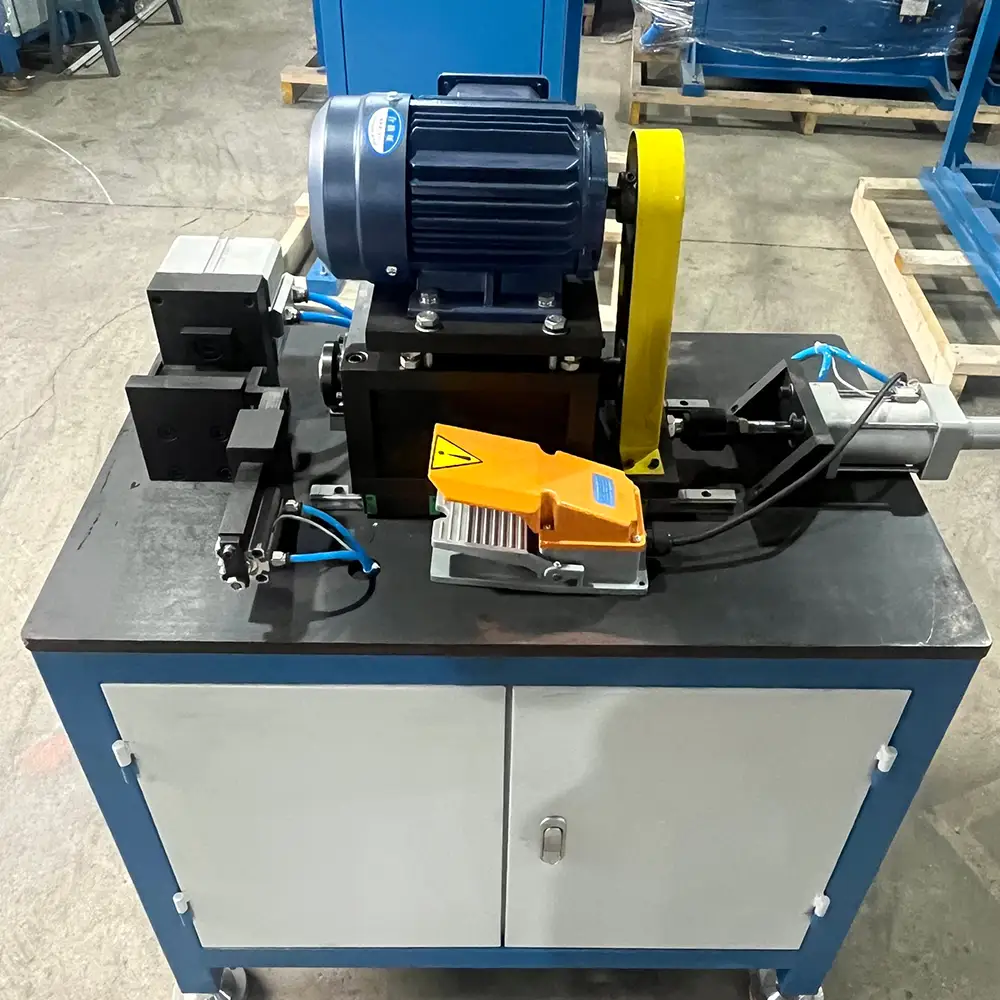
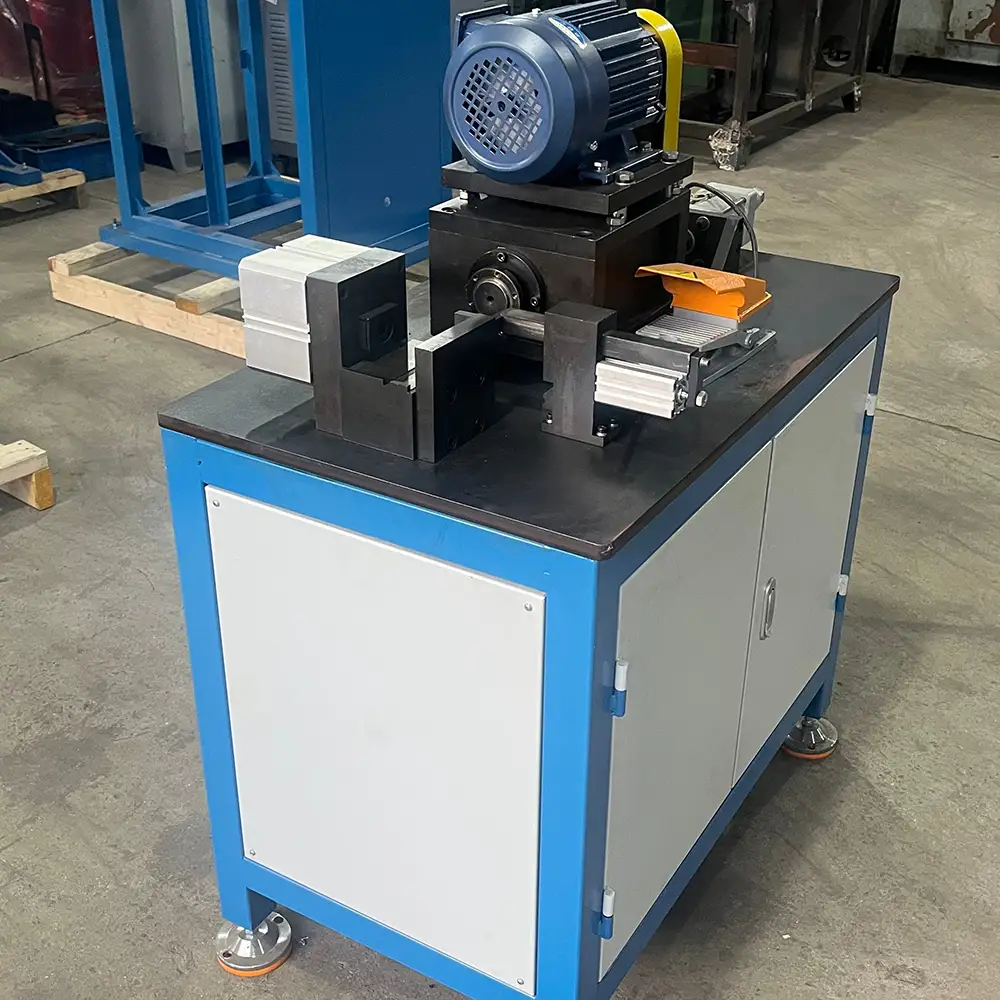
Pipe End Forming Machine for AC Refrigerant Line Flaring
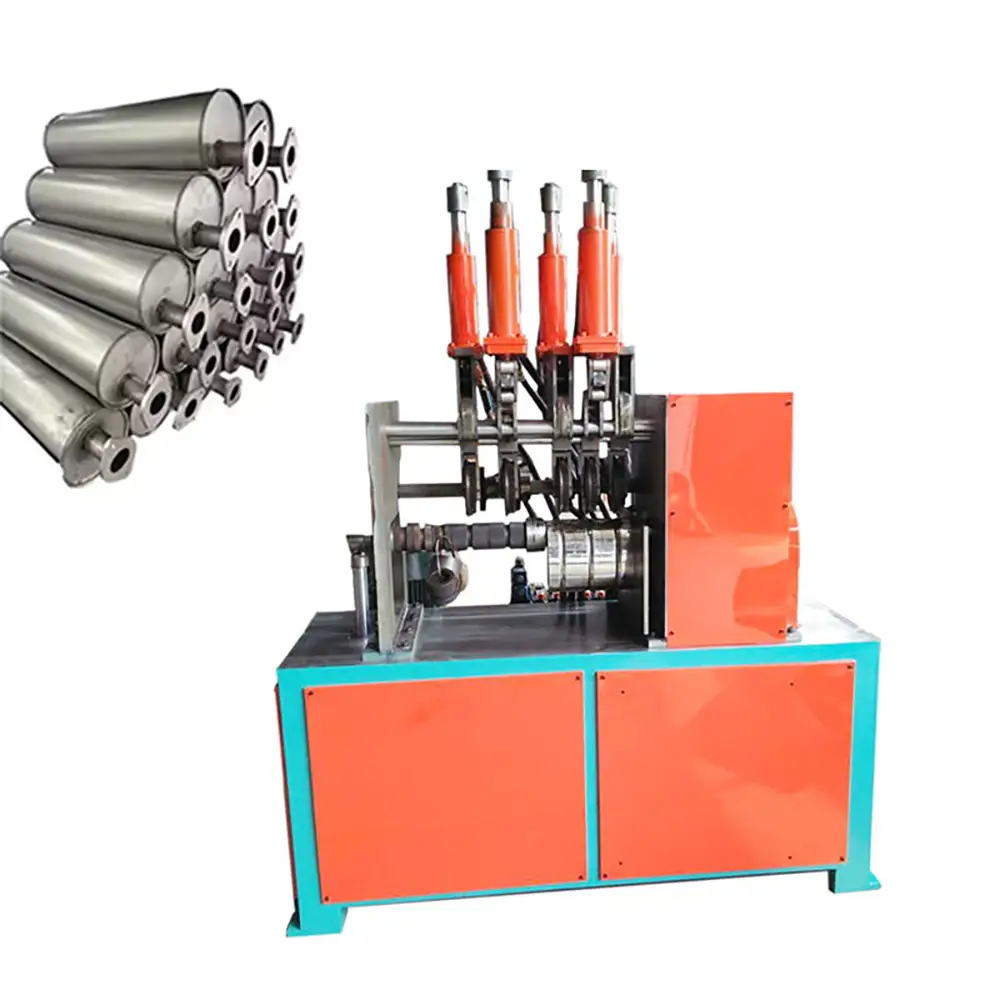
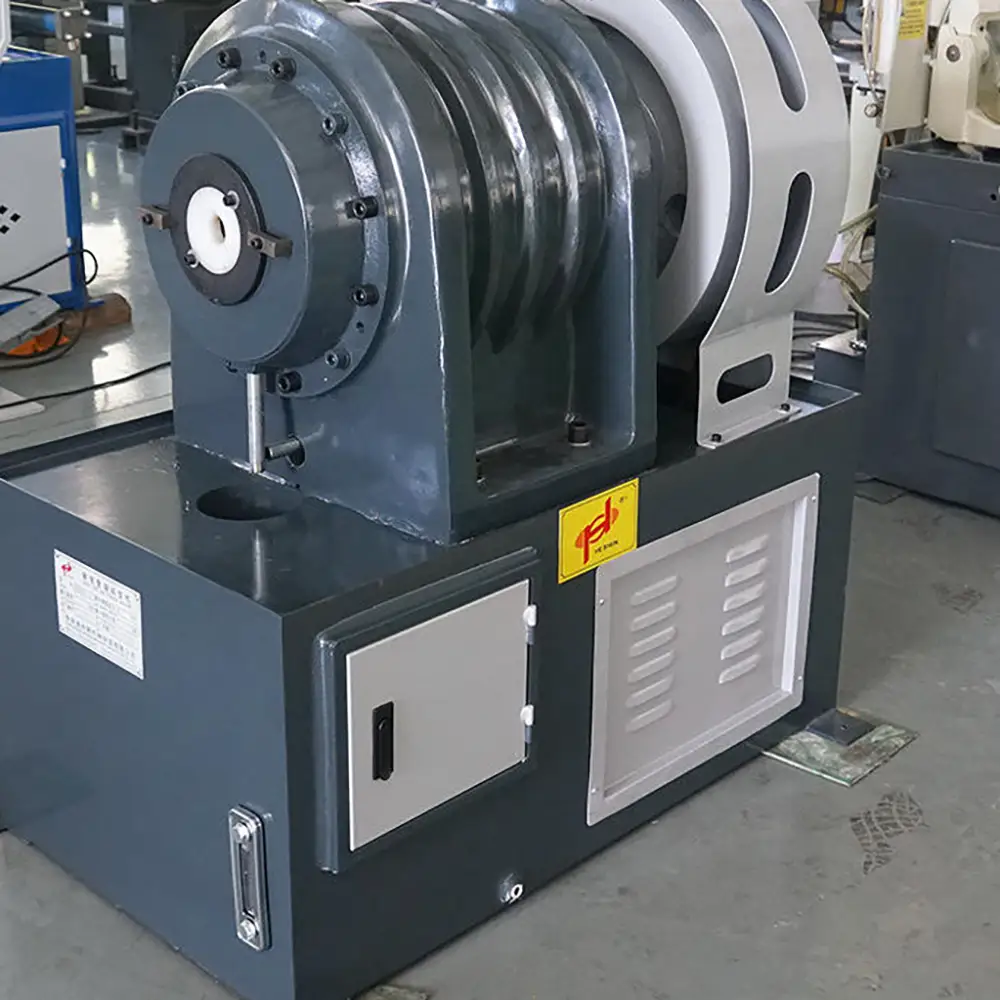
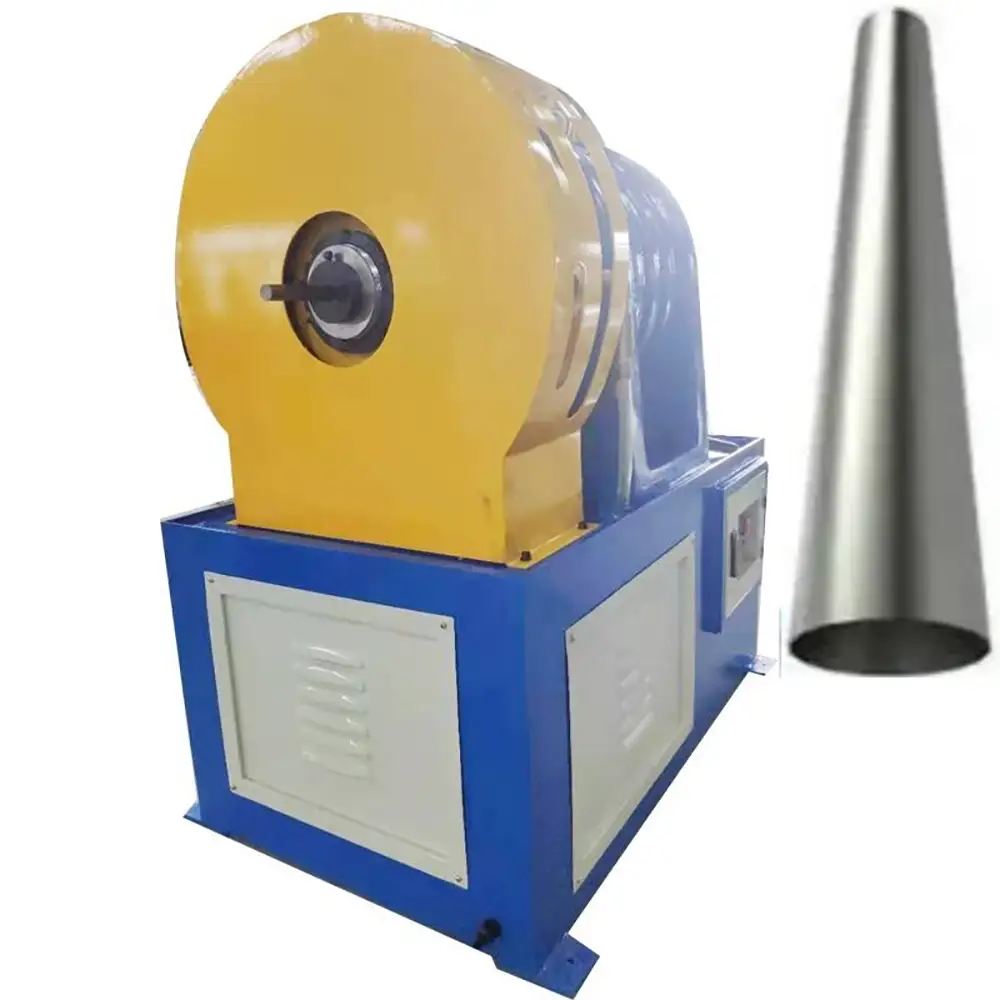
The Pipe End Forming Machine for Flaring is designed for processing air conditioner connecting pipes,AC refrigerant lines,and compatible metal tubing used in HVAC and refrigeration applications. The machine combines controlled pipe-end forming with flaring to prepare tube ends for compatible mechanical connections.
Air conditioner connecting pipes commonly require precise end preparation before installation or assembly. A properly formed tube end can provide the geometry required for a compatible flare fitting,helping establish a reliable mechanical connection when the tube,fitting,tooling,and assembly procedure are correctly matched.
This machine is particularly suitable for manufacturers of air conditioning components,refrigeration equipment,HVAC suppliers,service workshops,and businesses producing or processing copper refrigerant lines.
The actual tube diameter range,wall thickness,forming capacity,and flare profile depend on the machine configuration and tooling.
AC Refrigerant Line End Forming
Refrigerant lines are an important component of air conditioning and refrigeration systems. They connect different system components and carry refrigerant between the indoor,outdoor,and other equipment depending on the system design.
Before a connecting pipe is installed,the tube end may need to be cut,prepared,shaped,and flared. The end-forming machine provides a controlled method for producing the required tube-end geometry.
Compared with completely manual tube preparation,a dedicated machine can help standardize the forming process for repeated production.
The operator positions the tube in the appropriate fixture,secures it,and applies the forming process using the selected tooling. The resulting end can then be inspected before assembly.
Pipe Flaring Process
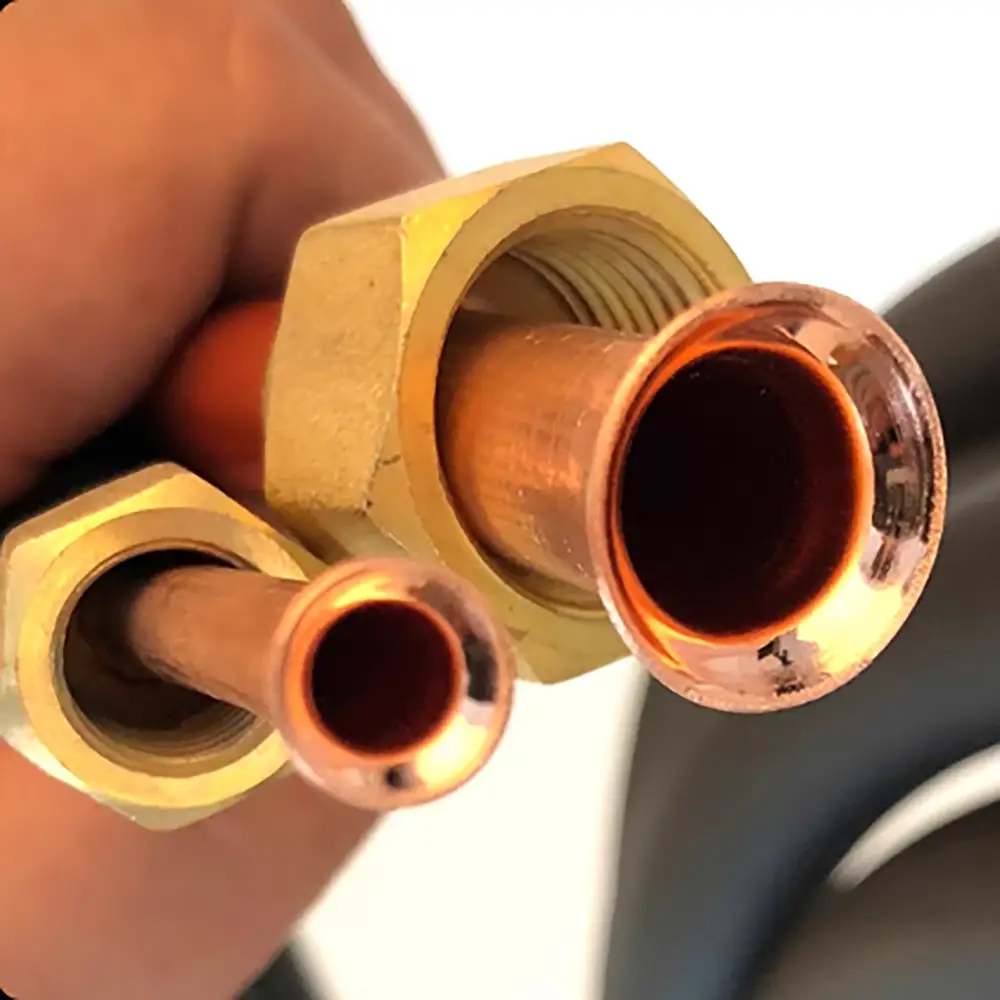
Flaring is an end-forming operation in which the end of a tube is expanded or reshaped into a specified flare profile.
For compatible HVAC and refrigeration connections,the flared tube end is assembled against a matching fitting surface. The flare geometry must correspond to the fitting design.
The quality of the finished flare depends on several factors:
Tube Material
Tube Outside Diameter
Wall Thickness
Tube Cut Quality
Deburring
Tooling Condition
Tube Position
Forming Force
Flare Geometry
Assembly Procedure
The machine is designed to provide controlled forming,but the final connection performance also depends on the complete installation process.
Air Conditioner Connecting Pipe Applications
Air conditioner connecting pipes are commonly manufactured from copper tubing or other suitable materials depending on the system design.
The machine can be used for compatible connecting pipe components in applications such as:
Residential Air Conditioners
Commercial Air Conditioning
Split AC Systems
Heat Pump Systems
Refrigeration Equipment
HVAC Equipment
Air Conditioning Service
Refrigerant Line Assembly
AC Connecting Pipe Production
HVAC Component Manufacturing
The exact tube specifications depend on the air conditioning system and manufacturer requirements.
For high-volume production,automated or semi-automatic feeding and positioning systems can be considered depending on the required workflow.
Copper Tube End Forming
Copper tubing is widely used for refrigerant lines because of its suitability for many HVAC and refrigeration applications.
Copper is relatively formable,but tube wall thickness and material condition still influence the forming process. Excessive forming force or incorrect tooling can cause cracks,folds,or other deformation.
The machine can be configured with suitable clamps,forming cones,dies,and other tools for the selected copper tube dimensions.
Before production,the tube should be cut cleanly and prepared properly. Burrs and severe deformation at the tube end should be removed before flaring.
For critical production applications,representative samples should be tested to confirm the required flare dimensions and appearance.
Tube End Forming Beyond Flaring
Flaring is one type of tube end forming. Depending on the machine design and tooling,the equipment may also support selected operations such as expanding,reducing,beading,swaging,necking,or end sizing.
These processes can modify the diameter or shape of the tube end for specific assembly requirements.
The available functions depend on the forming mechanism and tooling configuration. Customers requiring multiple tube-end operations should provide drawings or samples before ordering.
Custom tooling can be considered for specific tube profiles and production requirements.
HVAC and Refrigeration Manufacturing
The machine can be integrated into manufacturing workflows for air conditioning and refrigeration components.
A typical production process may include:
Tube Cutting
Deburring
Tube Cleaning
Positioning
Clamping
End Forming
Flaring
Dimensional Inspection
Final Assembly
Integrating controlled tube forming into the production process can help reduce inconsistent manual forming and improve repeatability between similar workpieces.
Actual production efficiency depends on tube size,forming requirements,tool changes,loading method,operator workflow,and machine configuration.
Connection Quality and Leak Resistance
Accurate flare preparation is important for applications where refrigerant connections must maintain system integrity.
A properly formed flare can provide the intended contact geometry with a compatible fitting. However,the term leak-resistant should be understood as a result of the complete connection system rather than the machine alone.
Connection performance depends on tube dimensions,fitting compatibility,flare geometry,cleanliness,alignment,and tightening procedure.
Operators should follow the fitting or equipment manufacturer's recommended installation specifications.
After assembly,appropriate inspection or leak-testing procedures should be used according to the HVAC or refrigeration system requirements.
Manual, Semi-Automatic, and Automatic Production
Pipe end-forming machines can be configured for different levels of production automation.
Manual systems can be useful for service shops,repair operations,prototypes,and small-batch production. Semi-automatic systems can reduce repetitive operator movements while retaining flexibility. Automatic systems can integrate feeding,positioning,clamping,and forming functions for higher-volume production.
The appropriate configuration depends on production quantity,number of tube sizes,required cycle time,and available labor.
Customers should provide production requirements when selecting the machine configuration.
Tooling and Customization
Tooling is critical to successful tube-end forming. The forming die,clamp,cone,and other components must match the tube dimensions and required end profile.
For AC connecting pipes,different tube sizes may require different tooling sets.
Custom tooling can be developed based on:
Tube Outside Diameter
Wall Thickness
Tube Material
Flare Angle
Flare Diameter
Forming Length
Connection Type
Production Volume
For OEM projects,customers can provide drawings,samples,or photographs of the required finished pipe end.
Quality Control
Quality control should be performed throughout the tube-forming process.
Important inspection points may include tube-end diameter,flare angle,forming length,concentricity,surface condition,and visible cracks or folds.
For production batches,first-piece inspection can verify that the selected tooling and machine parameters are suitable. Periodic inspections can then be used to monitor tooling wear and process consistency.
For applications with strict dimensional requirements,appropriate measuring instruments and inspection procedures should be established.
Maintenance and Safety
Regular maintenance helps maintain stable machine operation. Operators should inspect forming dies,clamps,mechanical components,bearings where applicable,fasteners,and other wear parts.
Forming tools should be kept clean and replaced when excessive wear affects the finished product.
The working area should remain clean and organized. Operators should keep hands away from moving forming components and use appropriate PPE according to the application.
Before changing tooling or performing maintenance,the machine should be stopped and secured according to the manufacturer's procedures.
For HVAC applications,the machine is a tube-processing device and should be used together with appropriate refrigerant handling,installation,and leak-testing procedures.
Custom & OEM B2B Solutions
Different air conditioner manufacturers and HVAC suppliers may require different connecting pipe dimensions,flare profiles,and production volumes.
The machine can therefore be supplied as a Custom & OEM tube-processing solution.
Customization may include dedicated forming dies,clamps,fixtures,feeding systems,positioning mechanisms,and control configurations.
The equipment is suitable for manufacturers,HVAC component suppliers,refrigeration companies,distributors,wholesalers,purchasing agents,and international B2B buyers.
Why Choose Us
AC Refrigerant Line Flaring — Designed for controlled end forming and flaring of compatible air conditioning and refrigeration tubing.
Air Conditioner Connecting Pipe Processing — Suitable for producing and preparing compatible AC connecting pipe components.
Copper Tube Compatibility — Can be configured for copper tubing commonly used in HVAC and refrigeration applications.
Controlled End Forming — Supports consistent tube-end shaping when the correct tooling and process parameters are used.
Flexible Production Options — Suitable for manual,semi-automatic,or automatic production configurations depending on requirements.
Custom Tooling Support — Forming dies,clamps,and other tooling can be developed for specific tube dimensions and end profiles.
Quality-Oriented Processing — Controlled positioning and forming can help improve dimensional consistency between workpieces.
OEM & B2B Manufacturing Support — Suitable for HVAC manufacturers,refrigeration suppliers,distributors,wholesalers,and industrial purchasing agents.
FAQs
1. What is a pipe end forming machine for flaring?
It is a machine designed to reshape the end of a compatible metal tube into a specified flare or other end-forming profile for subsequent connection or assembly.
2. Can it process AC refrigerant lines?
Yes. The machine can be configured for suitable refrigerant tubing used in air conditioning and refrigeration applications.
3. Can it flare copper connecting pipes?
Yes. Suitable copper tubes can be processed when the machine and tooling match the tube diameter,wall thickness,and required flare profile.
4. What are air conditioner connecting pipes?
They are tubes used to connect components in an air conditioning system. Their material,diameter,and connection method depend on the specific AC system.
5. Does flaring guarantee a leak-proof connection?
No machine can guarantee the final connection by itself. Leak resistance depends on correct tube preparation,fitting compatibility,flare geometry,alignment,and proper assembly.
6. What materials can be processed?
Depending on the configuration,the machine may process copper,aluminum,and other compatible metal tubing. Material compatibility should be confirmed before production.
7. Can the machine perform other end-forming operations?
Depending on the tooling,it may support selected operations such as expanding,reducing,beading,swaging,or end sizing.
8. Can different tube sizes be processed?
Yes,potentially,but different tube sizes may require different clamps,forming dies,or other tooling.
9. Is this machine suitable for HVAC manufacturers?
Yes. It can be integrated into manufacturing workflows for compatible AC,refrigeration,and HVAC connecting pipes.
10. Can the machine be automated?
Depending on the model,it can be configured as manual,semi-automatic,or automatic equipment. Feeding,clamping,and positioning options vary by configuration.
11. Can custom tooling be provided?
Yes. Custom forming dies,clamps,and fixtures can be developed according to the tube dimensions and required finished profile.
12. What information is needed for a quotation?
Provide tube material,outside diameter,wall thickness,flare dimensions,required end profile,production quantity,and application. Drawings or samples are recommended for customized projects.
Prev:
Multi-Material Applicable Semi-automatic Flower Tube Machine | Industrial Grade
Next:
Machine for Flaring and Shaping AC Refrigerant Lines with Leak-Proof Accuracy
TAG:
Pipe End Processing Machine,
Tube End Processing Machine,
Tube End Forming Equipment,
Pipe Flaring Machine,
Pipe End Forming Equipment,
Pipe Beading Machine,
Tube Beading Machine,
Tube Flaring Machine,
Tube Swaging Machine,
Pipe Swaging Machine,
Pipe Necking Machine,
Tube Necking Machine,
Pipe Reducing Machine,
Tube Reducing Machine,
Tube End Forming Machine,
Pipe End Forming Machine,
Pipe Expanding Machine,
Tube Expanding Machine,
Precision Tube End Forming Machine,
Pipe End Shaping Machine,
Tube End Shaping Machine,
Tube End Flaring Machine,
Pipe End Flaring Machine,
Refrigeration Tube Flaring Machine,
HVAC Tube Flaring Machine,
Copper Tube Flaring Machine,
Copper Tube Processing Equipment,
Copper Tube Forming Machine,
Copper Pipe Forming Machine,
Copper Tube End Forming Machine,
Related Category:
Pipe End Forming Machine for Flaring,AC Refrigerant Line Flaring Machine,Air Conditioner Connecting Pipe Machine China, suppliers, manufacturers, factory, customized, wholesale, quotation, made in China