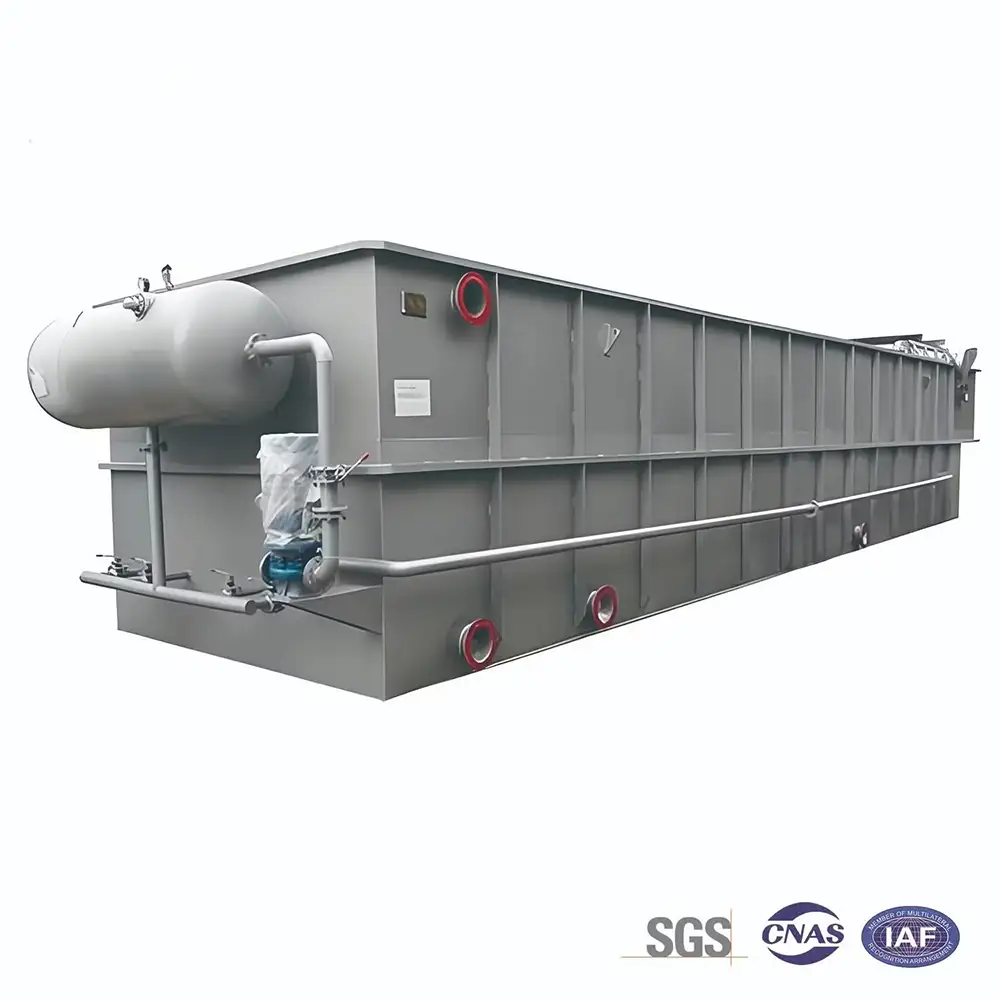
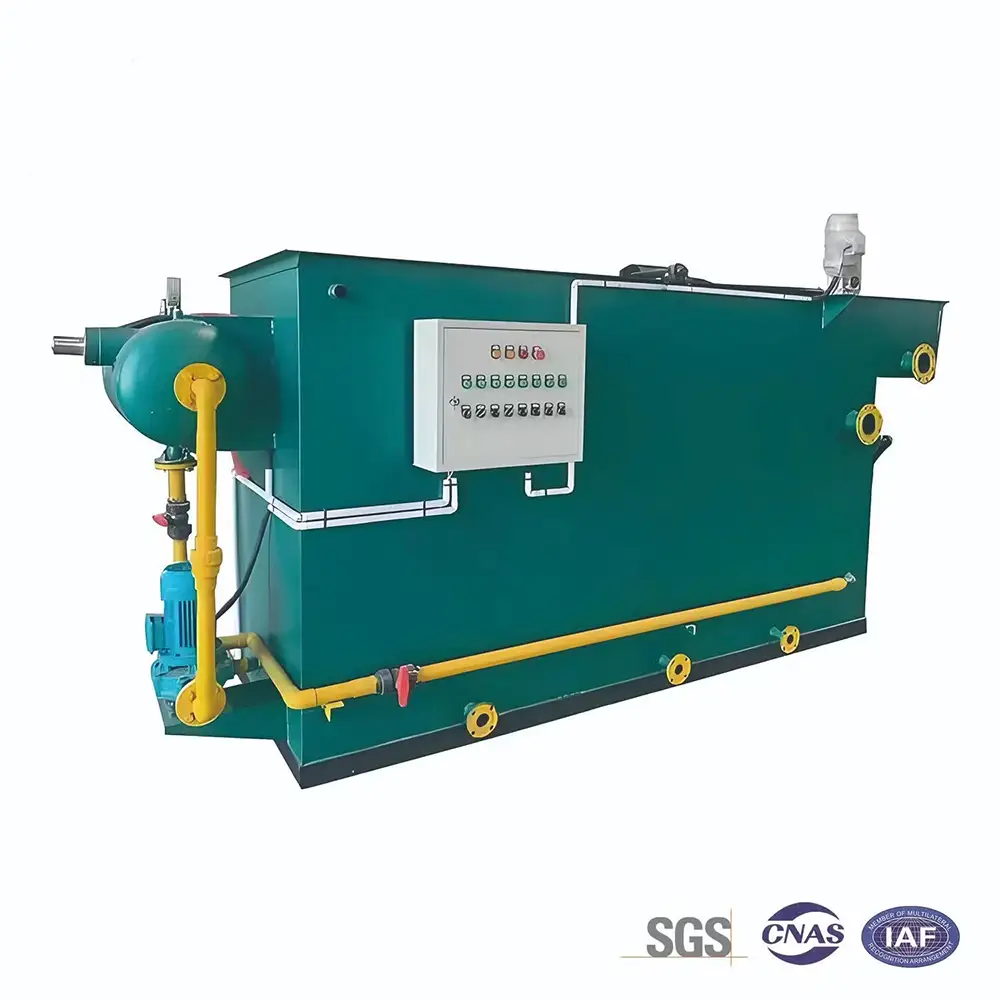
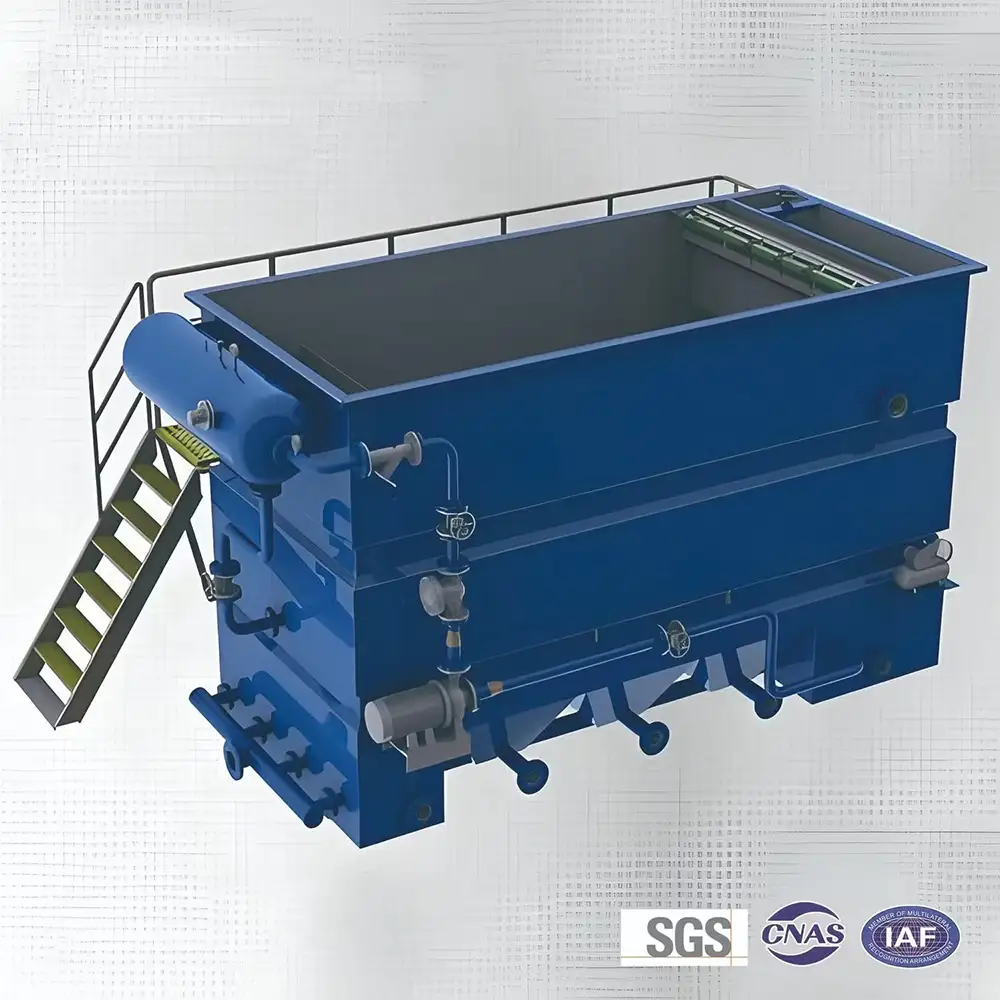
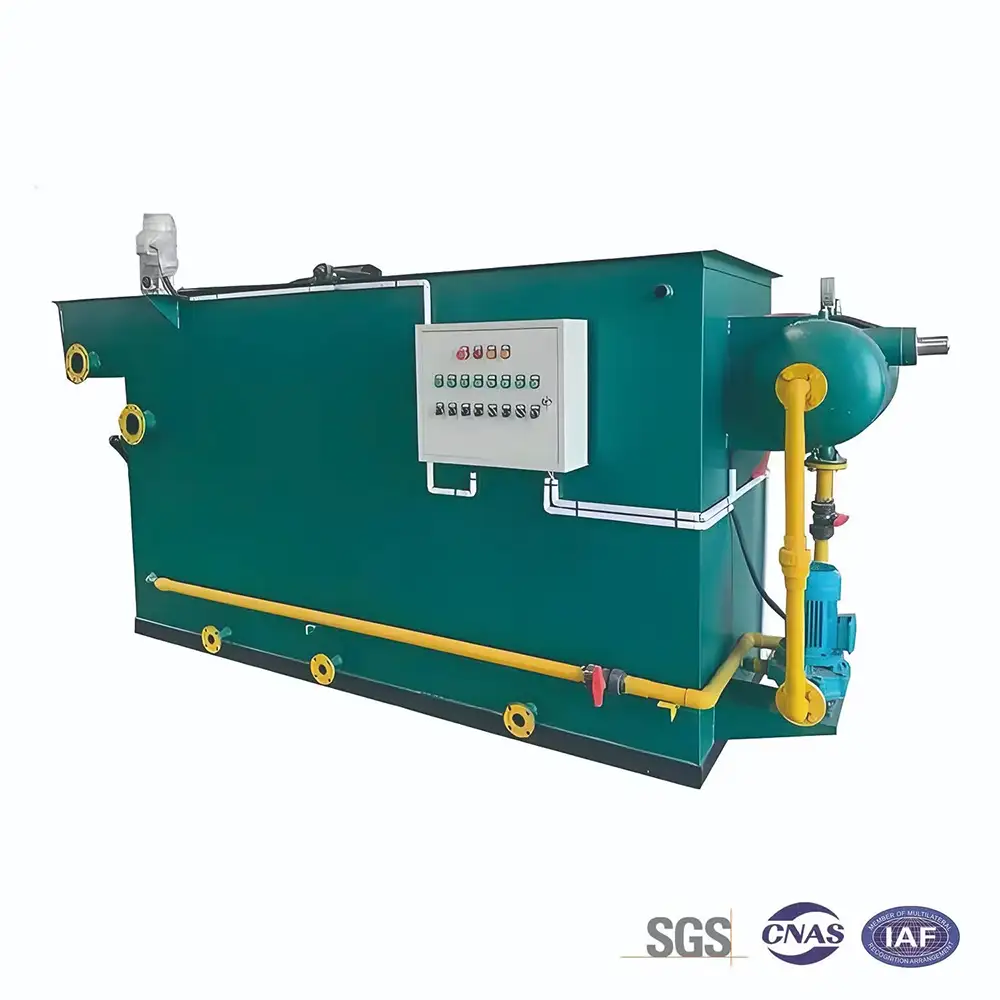
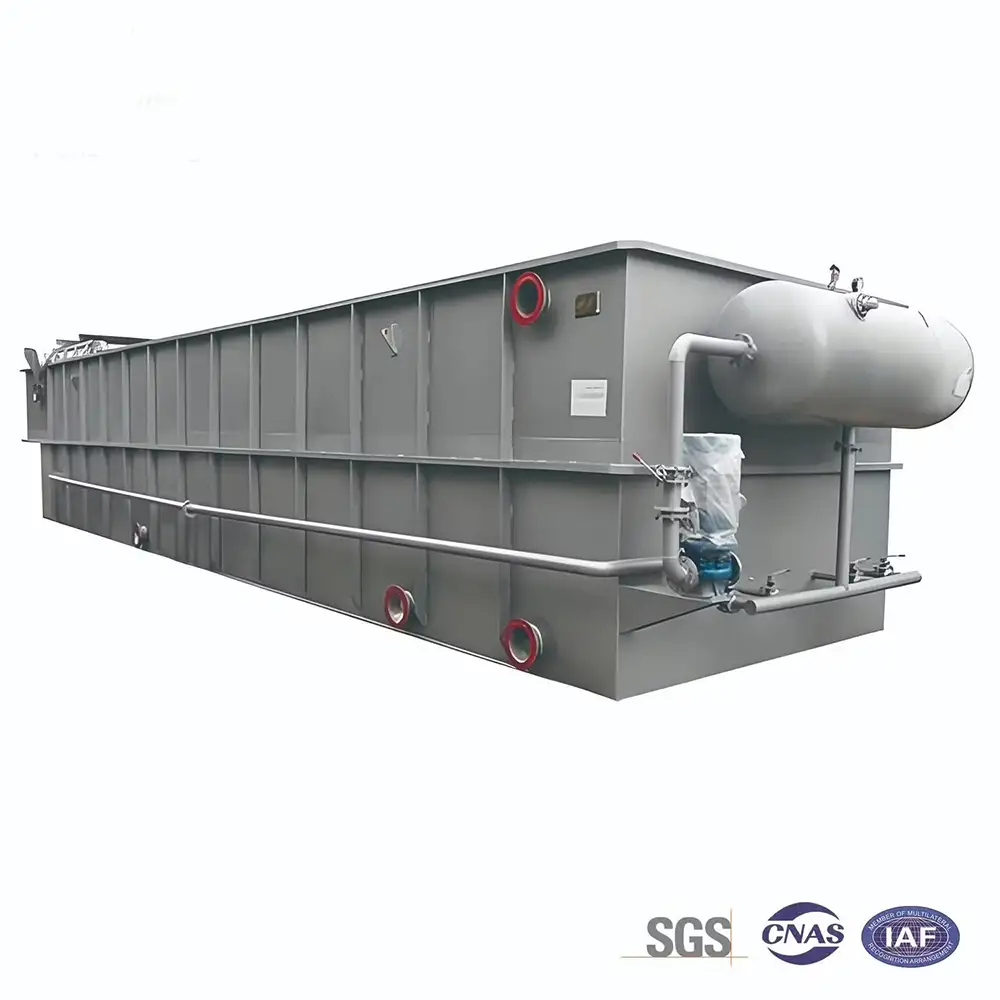
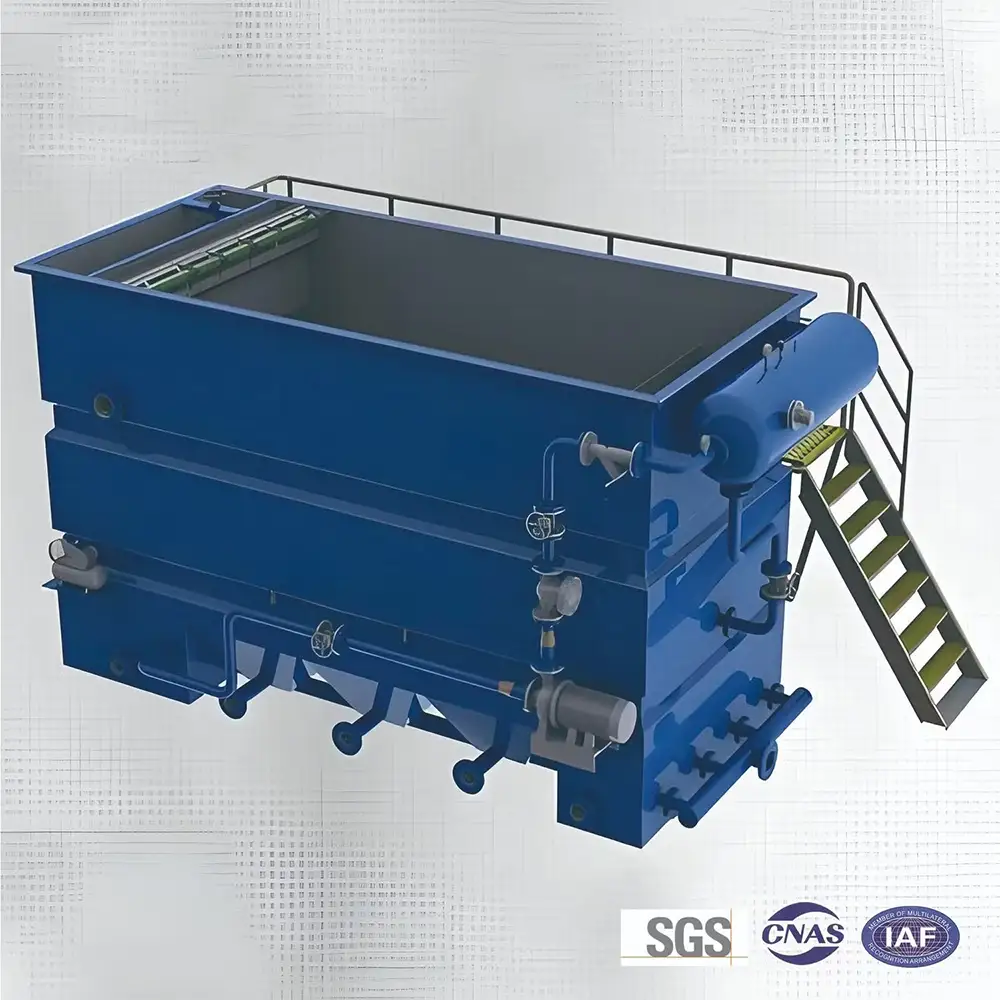
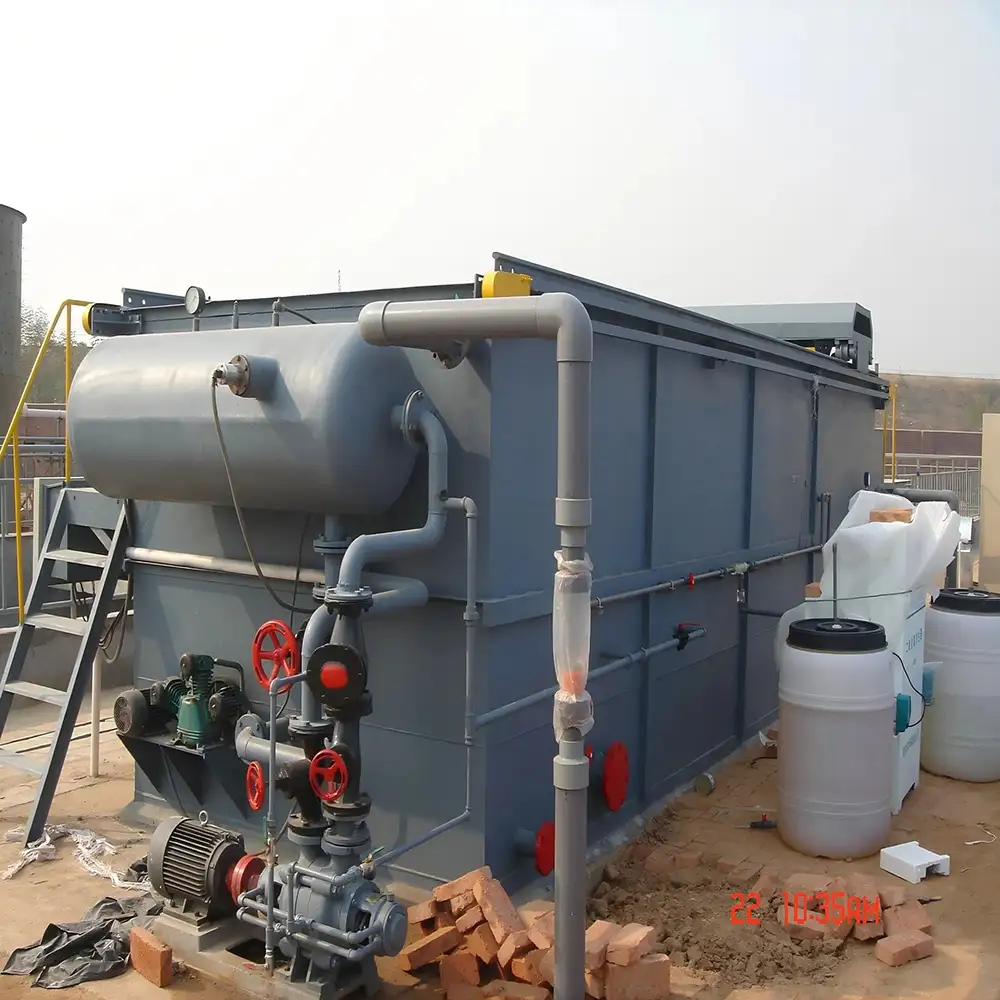
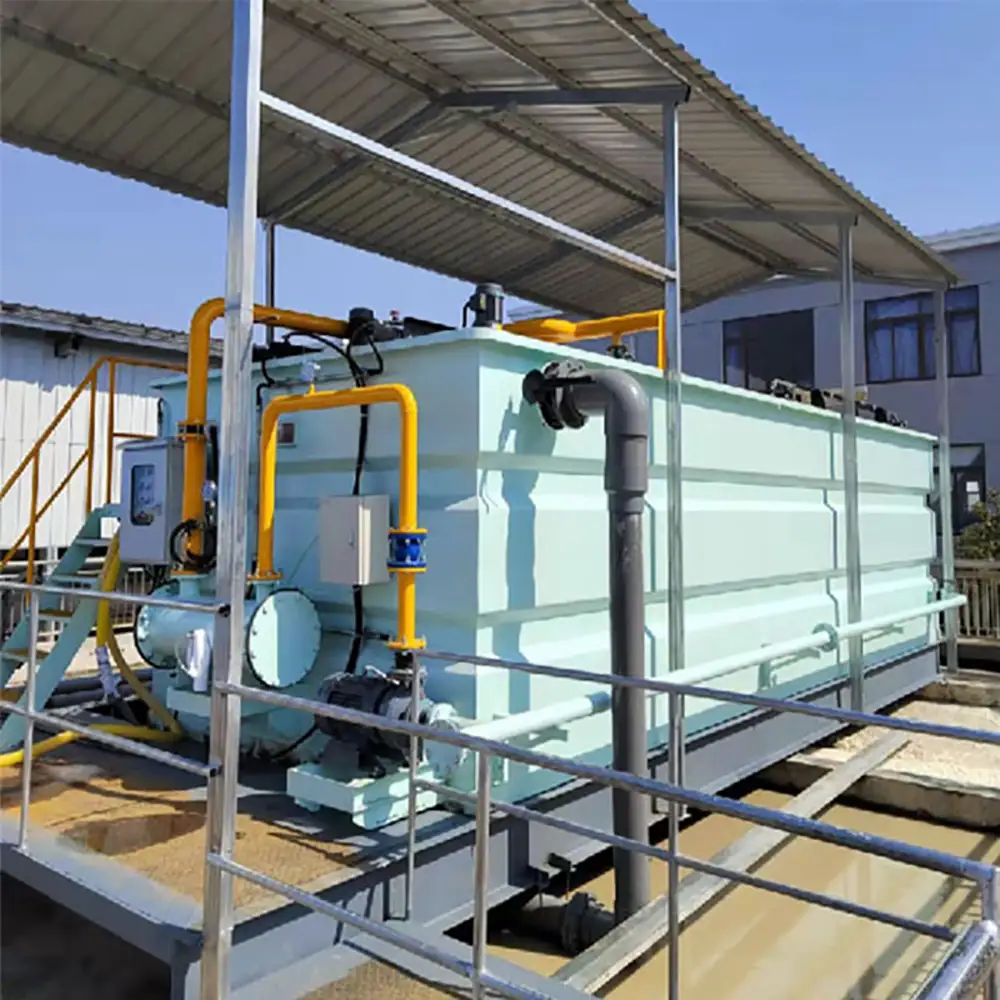
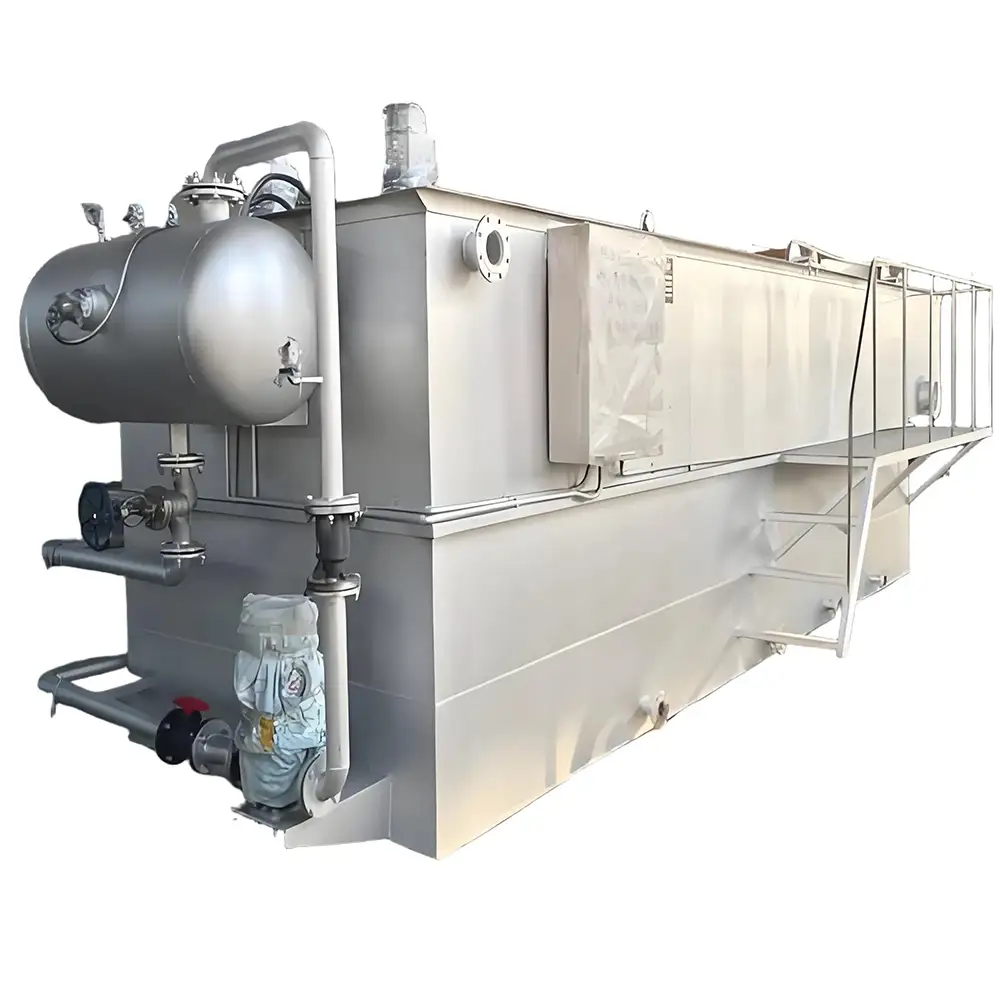
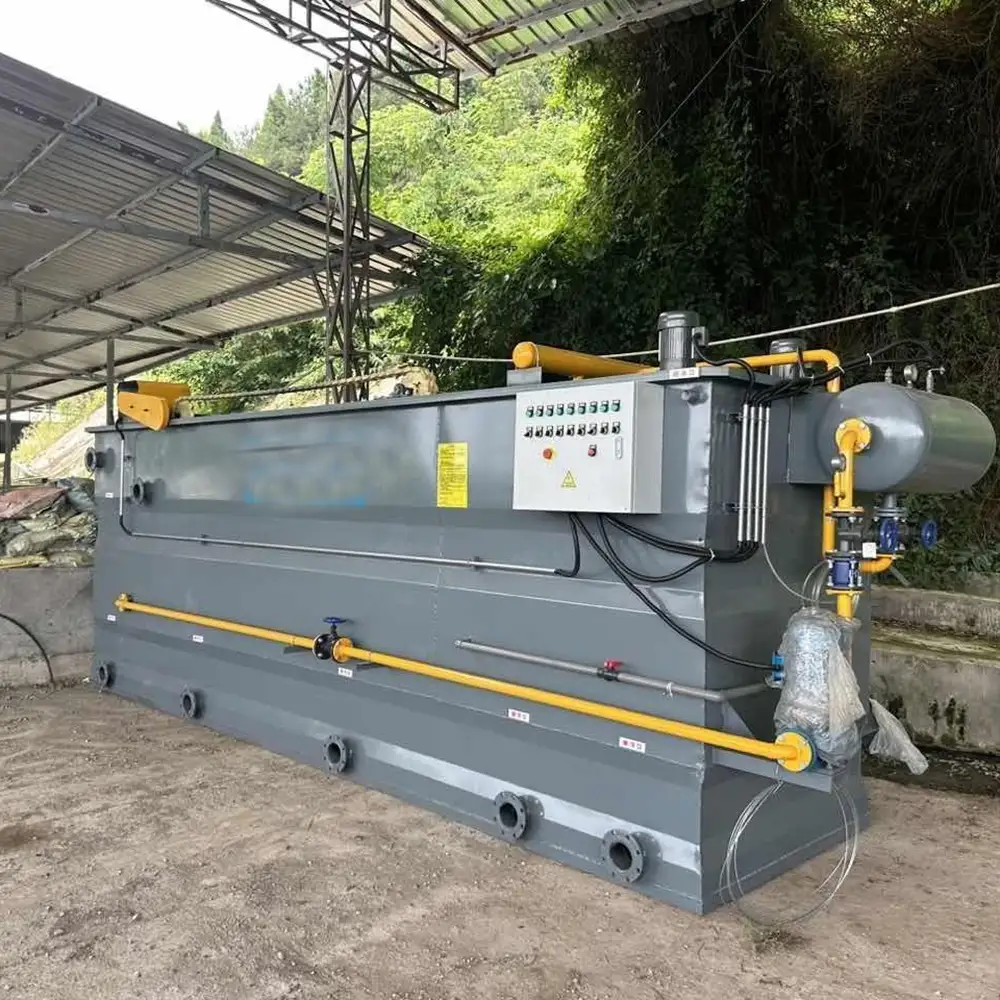
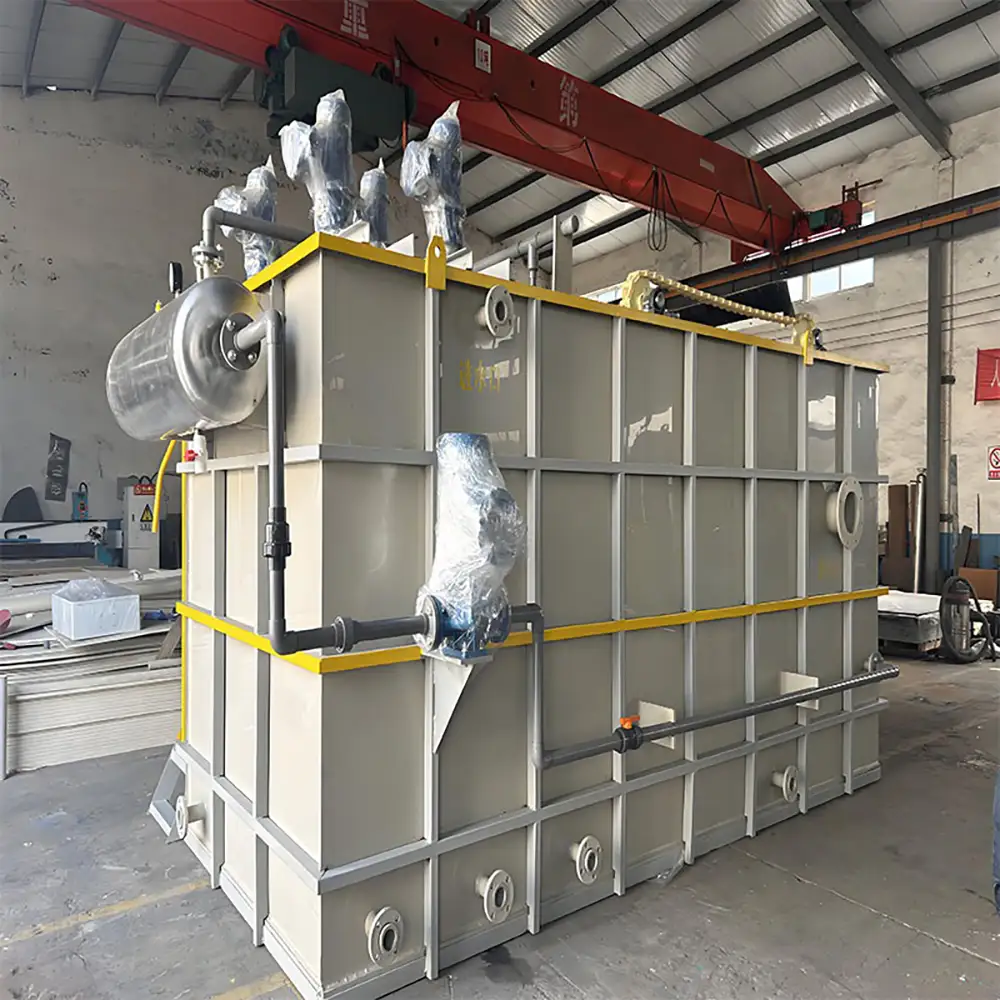
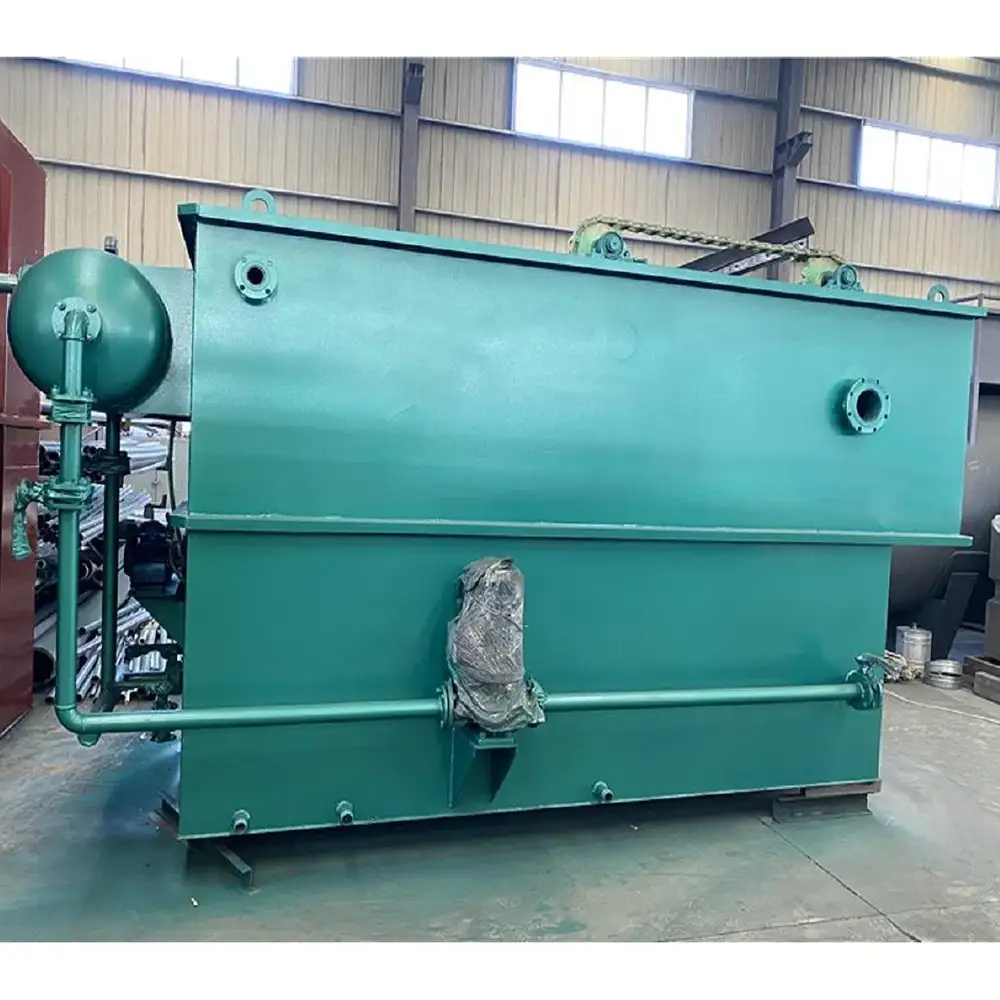
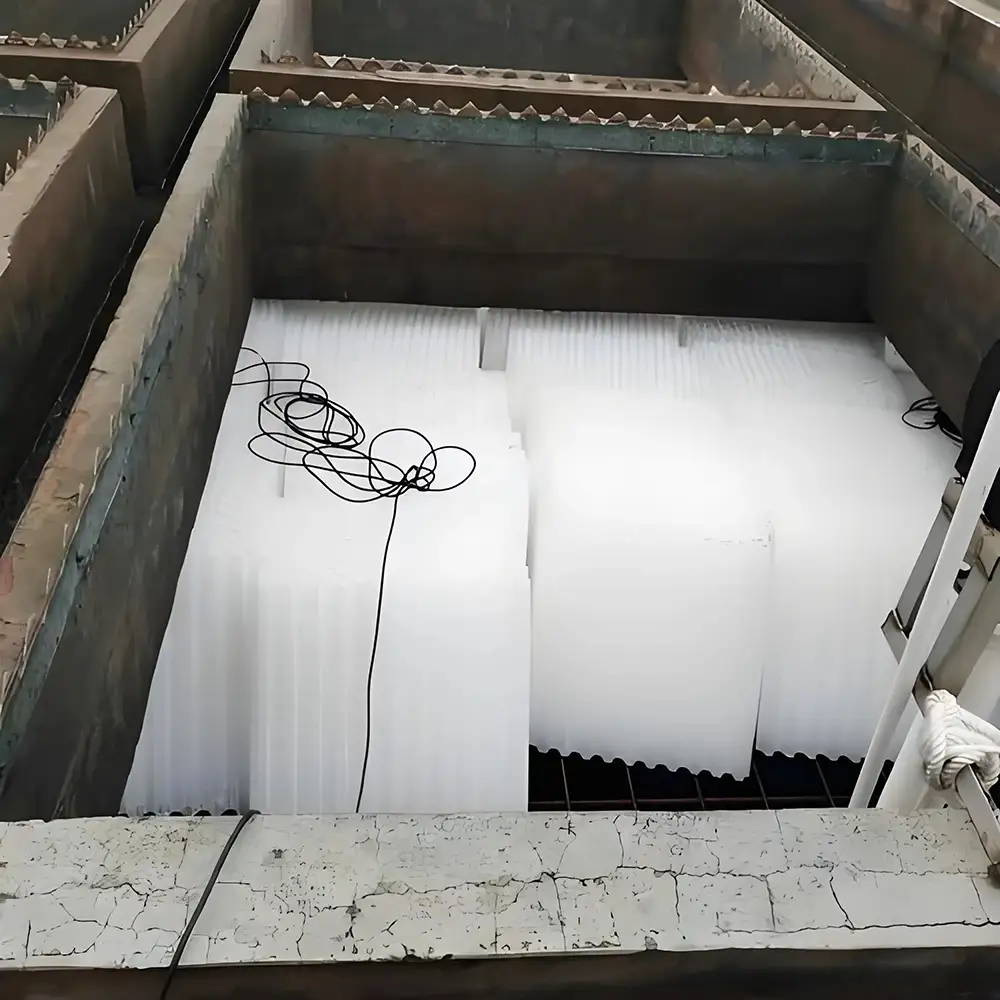
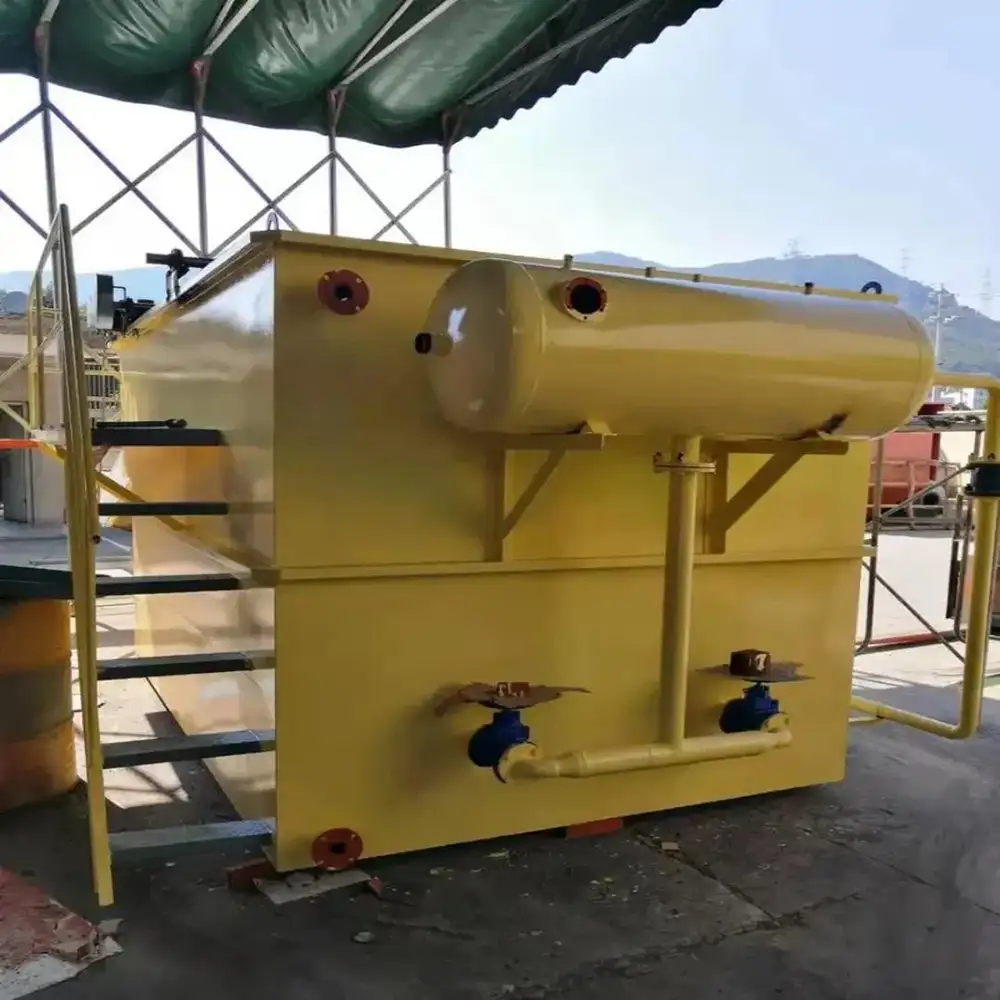
Air flotation machine is a machine that uses small bubbles or small bubbles to surface impurities in the medium. This air flotation device can be used for small particles with a specific gravity close to that of water, which are difficult to sink or float due to their own weight.
In terms of water supply and drainage, the pre-treatment water quality, except for some raw water bodies with high sand content and sewage with heavy mechanical impurities, is mostly composed of lightweight suspended particles. For example, algae in lakes, reservoirs, and some rivers; Plant residues and small colloidal impurities; Dye particles in the printing and dyeing industry; Short fibers in the papermaking and chemical fiber industries; Microdroplets of petroleum and organic solvents in the refining and chemical industries; Heavy metal ions in electroplating and pickling wastewater; Electrophoretic paint wastewater, etc; They are lightweight particles with a specific gravity very close to that of water. For these raw water, if traditional sedimentation methods are used, the effect will inevitably be poor, especially in low temperature winter conditions, where coagulation and hydraulic conditions deteriorate, making it more difficult to ensure the treatment effect. It can be imagined that if it is difficult to settle flocs, forcing them to sink will inevitably result in half the effort. Instead, it is better to use the situation to artificially introduce bubbles into the water body, making them adhere to the flocs, thereby greatly reducing the overall density of the flocs, and using the speed of bubble rise to force them to float up, thus achieving rapid solid-liquid separation. In this sense, the emergence of air flotation technology is a revolution in the gravity sedimentation method, which has opened up new fields of solid-liquid separation technology.
Reverse Osmosis Combined Purification Equipment
Reverse Osmosis Combined Purification Equipment is an integrated water purification solution that combines multiple treatment processes into one coordinated system. By integrating pretreatment, high-pressure reverse osmosis membrane filtration, and optional post-treatment, the system can provide consistent purified water for industrial, commercial, institutional, and process applications.
Reverse osmosis is a pressure-driven membrane separation process. Feed water is pressurized and passed across a semipermeable membrane. Water that passes through the membrane becomes purified product water, while dissolved salts, minerals, and other rejected substances remain concentrated in the reject stream. RO is widely used because it can address a broad range of dissolved contaminants rather than targeting only one specific substance.
Integrated Reverse Osmosis Purification System
The major advantage of combined purification equipment is that several treatment stages can be engineered into a single system. A typical configuration may include a raw water tank, feed pump, multimedia or cartridge filtration, activated carbon filtration, water softening or antiscalant dosing, high-pressure pump, RO membrane modules, control instruments, and post-treatment equipment.
The exact configuration should be determined according to the source-water analysis and required product-water quality. EPA guidance notes that RO systems can benefit from optimized pretreatment, advanced membrane configurations, multiple stages, and concentrate management.
Pretreatment is particularly important because suspended solids, hardness, organic matter, and other foulants can reduce membrane performance. Proper pretreatment helps control membrane fouling and scaling and can improve operating stability and membrane service life.
How Reverse Osmosis Combined Purification Equipment Works
Raw water first enters the pretreatment section. Sediment filtration can reduce suspended particles, while activated carbon can be used where appropriate to address chlorine and certain organic compounds. Depending on the feed-water chemistry, additional softening, ultrafiltration, microfiltration, antiscalant dosing, pH adjustment, or other conditioning may be incorporated.
After pretreatment, a high-pressure pump delivers the conditioned water to the RO membrane assembly. Pressure forces water through the semipermeable membrane while many dissolved contaminants are retained in the concentrate stream. The purified permeate is collected for downstream use.
The system may then include a post-treatment stage such as UV disinfection, polishing filtration, remineralization, pH adjustment, or a final storage and distribution system. The appropriate post-treatment depends on the intended application.
Key Features
Integrated Process Design: Multiple water treatment stages can be combined into a coordinated purification system, reducing the need to assemble separate treatment units.
High-Quality Water Production: RO membranes can reduce many dissolved solids, inorganic substances, salts, and other contaminants. RO is also used for brackish-water and seawater desalination applications.
Flexible Configuration: The system can be configured with different pretreatment, membrane, post-treatment, pumping, monitoring, and control components.
Automatic Operation: PLC-based controls, pressure sensors, flow meters, conductivity monitoring, automatic valves, and alarm functions can be incorporated for easier operation.
Compact Installation: Combining multiple treatment stages into a skid-mounted or integrated arrangement can simplify plant layout and installation.
Stable Continuous Operation: Properly selected pretreatment and membrane stages help maintain reliable production and reduce unnecessary membrane fouling.
Expandable Capacity: Multiple RO membrane housings, parallel trains, or additional treatment modules can be incorporated when higher production capacity is required.
Applications
Reverse Osmosis Combined Purification Equipment can be used in a wide variety of water treatment applications, including:
Industrial process water
Boiler feedwater pretreatment
Cooling system makeup water
Food and beverage processing
Pharmaceutical and laboratory water
Electronics and precision manufacturing
Hotel and commercial water purification
Drinking water treatment
Brackish water desalination
Municipal and institutional water treatment
Wastewater reuse and water recycling
Pretreatment for ultrapure water systems
For specialized applications, the RO system can be combined with additional technologies such as ultrafiltration, ion exchange, electrodeionization, UV, ozone, or polishing filtration.
Water Efficiency and Concentrate Management
RO produces both purified water and concentrate. The concentrate contains a higher concentration of rejected substances and therefore requires appropriate discharge, treatment, or reuse planning. EPA guidance recommends considering recovery rate, system sizing, pretreatment, multiple-stage configurations, and possible concentrate reuse when designing RO systems.
A properly sized system should match the required water demand rather than being unnecessarily oversized. Feed-water quality, operating pressure, temperature, membrane selection, recovery target, and required product-water quality all affect system performance.
For industrial installations, concentrate can sometimes be evaluated for secondary uses when its water chemistry is suitable. Any reuse or discharge strategy should be based on actual water analysis and applicable local requirements.
Maintenance and Operation
Routine maintenance is essential for maintaining stable RO performance. Operators should monitor feed pressure, operating pressure, permeate flow, concentrate flow, conductivity or TDS, differential pressure, and other relevant parameters.
Pretreatment filters should be serviced according to pressure drop and water-quality conditions. RO membranes should be cleaned when performance indicators show excessive fouling or scaling. Cartridge filters, dosing components, valves, pumps, sensors, and electrical controls should also be inspected regularly.
EPA guidance emphasizes that proper maintenance and replacement of system components are important for maintaining RO performance and efficiency.
System Selection
When selecting Reverse Osmosis Combined Purification Equipment, buyers should consider:
Raw water source and laboratory analysis
Required purified-water capacity
Required water quality
Feed-water pressure and temperature
TDS, hardness, silica, iron, manganese, and suspended solids
Pretreatment requirements
RO membrane type and configuration
Desired recovery rate
Concentrate disposal or reuse
Automation and monitoring requirements
Installation space and electrical supply
Future capacity expansion
A complete water analysis is strongly recommended before final equipment selection because RO performance depends heavily on feed-water chemistry and system design.
Why Choose Us?
We provide integrated Reverse Osmosis Combined Purification Equipment designed around the customer's water source, capacity requirements, and final water-quality objectives. Instead of offering a one-size-fits-all RO unit, the treatment process can be configured with appropriate pretreatment, membrane stages, pumps, instruments, controls, and post-treatment equipment.
Our solution can support skid-mounted systems, compact commercial units, industrial RO systems, multi-stage configurations, and customized water purification projects. We can also help coordinate the treatment flow from raw-water intake through pretreatment, RO purification, storage, and final water delivery.
The result is a practical and scalable purification solution that simplifies system integration while providing reliable operation for demanding water treatment applications.
Frequently Asked Questions
1. What is Reverse Osmosis Combined Purification Equipment?
It is an integrated water treatment system that combines pretreatment, reverse osmosis membrane filtration, and optional post-treatment into one coordinated purification system.
2. What does reverse osmosis remove?
RO can reduce many dissolved solids, salts, inorganic contaminants, and other substances depending on membrane selection and operating conditions. Actual removal performance should be confirmed through membrane specifications and testing.
3. Why is pretreatment necessary?
Pretreatment helps reduce suspended solids, hardness, chlorine, and other substances that may cause membrane fouling, scaling, or degradation.
4. Can this system treat well water?
Yes. RO can be designed for well water, but the system should be configured after analyzing hardness, iron, manganese, TDS, turbidity, silica, and other relevant parameters.
5. Can RO equipment treat seawater?
Yes. Specialized seawater RO systems use membranes, pumps, and pretreatment designed for high-salinity feedwater.
6. Is RO suitable for industrial applications?
Yes. Industrial RO systems are widely used for process water, boiler feedwater, food processing, electronics, pharmaceutical, and other applications.
7. Does RO produce wastewater?
Yes. RO produces a concentrate or reject stream. Its quantity depends on system design, feed-water quality, recovery target, and operating conditions.
8. Can the system be fully automatic?
Yes. PLC controls, automatic valves, pressure monitoring, conductivity meters, alarms, and other instruments can be integrated according to project requirements.
9. How often should RO membranes be replaced?
There is no universal replacement interval. Membrane life depends on feed-water quality, pretreatment, operating conditions, cleaning frequency, and maintenance.
10. Can UV or other purification technologies be added?
Yes. UV, activated carbon, ultrafiltration, polishing filters, remineralization, and other technologies can be integrated when required by the final water-quality specification.
11. Can the RO system be customized?
Yes. Capacity, membrane configuration, pretreatment, pumps, tanks, control systems, materials, skid layout, and post-treatment can be customized according to project requirements.
12. What information is needed for system selection?
Raw-water analysis, required flow rate, operating hours, desired product-water quality, installation conditions, power supply, and concentrate-disposal requirements are useful for proper system design.
Prev:
Easy Maintenance Solid and Liquard Separator Processor Dissolved Air Flotation for Wastewater
Next:
Stone Processing Sand Washing and Coal Mine Sewage Treatment Equipment
TAG:
Water Purification Equipment,
Integrated Water Treatment System,
Reverse Osmosis Water Treatment,
RO Water Purification System,
Industrial Water Treatment Equipment,
Process Water Purification,
Water Filtration Equipment,
Water Filtration System,
Water Treatment Equipment,
Membrane Filtration System,
Membrane Water Treatment,
Desalination RO System,
Industrial Water Purification,
Water Purification System,
Industrial RO Water Treatment,
Seawater RO System,
Industrial RO System,
RO Desalination System,
RO Water Treatment System,
Process Water Treatment,
Advanced Water Purification,
Commercial RO System,
Commercial Water Purification,
Automatic RO Water Treatment,
Water Treatment System,
RO Membrane System,
RO Membrane Filtration,
RO Filtration System,
RO Membrane Water Treatment,
Reverse Osmosis Water Purification,
Related Category:
Reverse Osmosis Combined Purification Equipment,Combined RO Purification System,Reverse Osmosis Water Purification Equip China, suppliers, manufacturers, factory, customized, wholesale, quotation, made in China