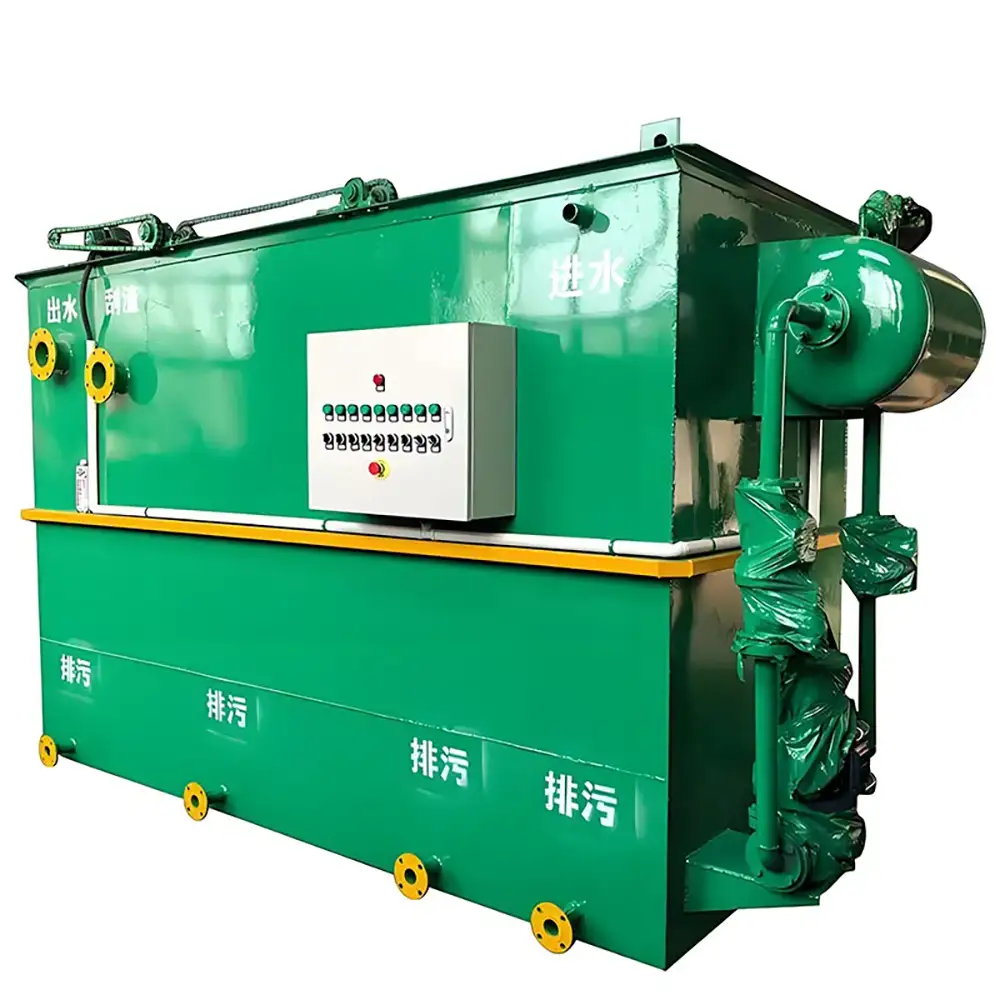
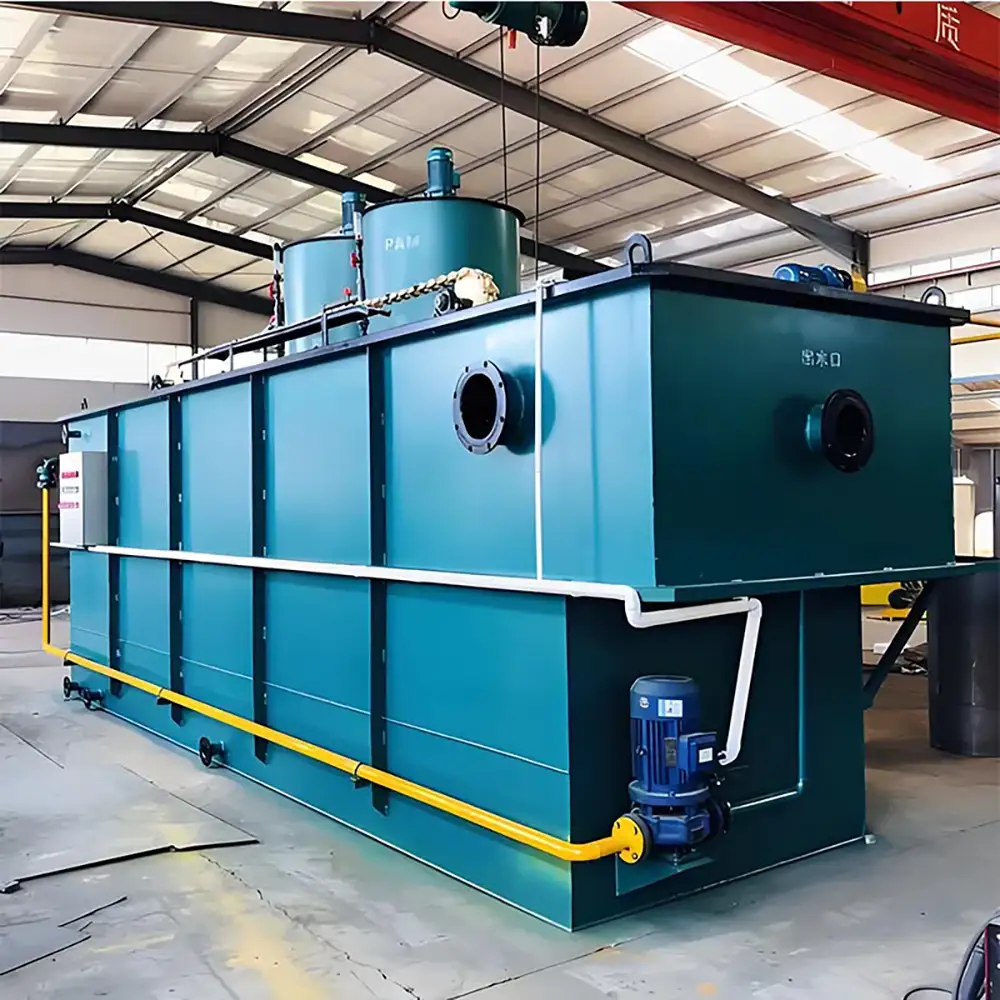
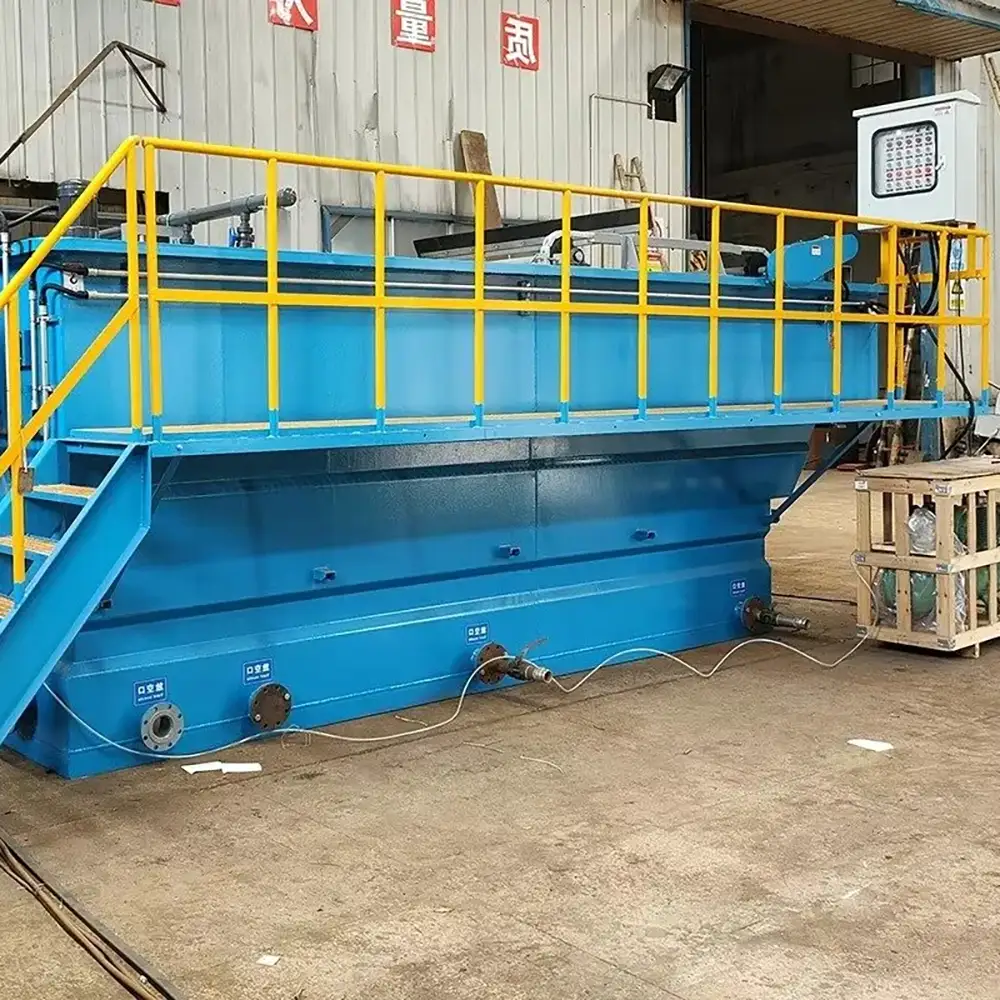
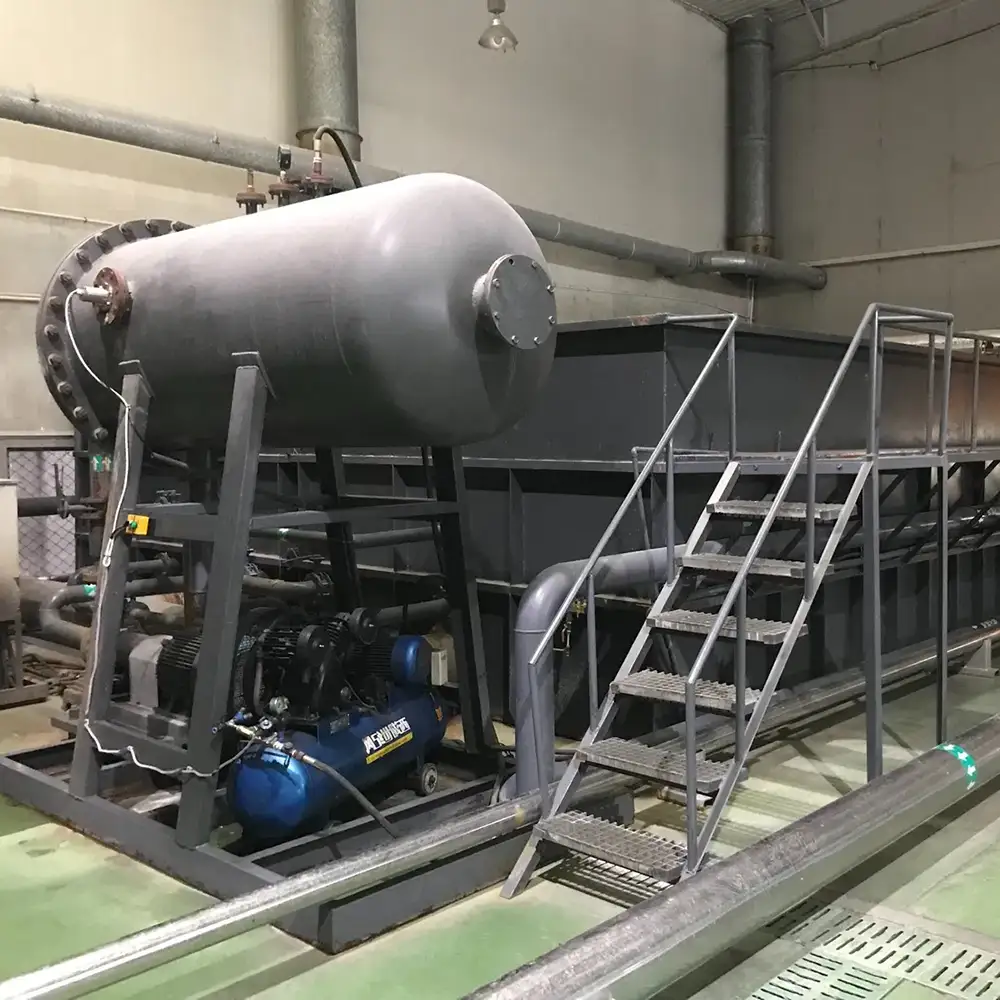
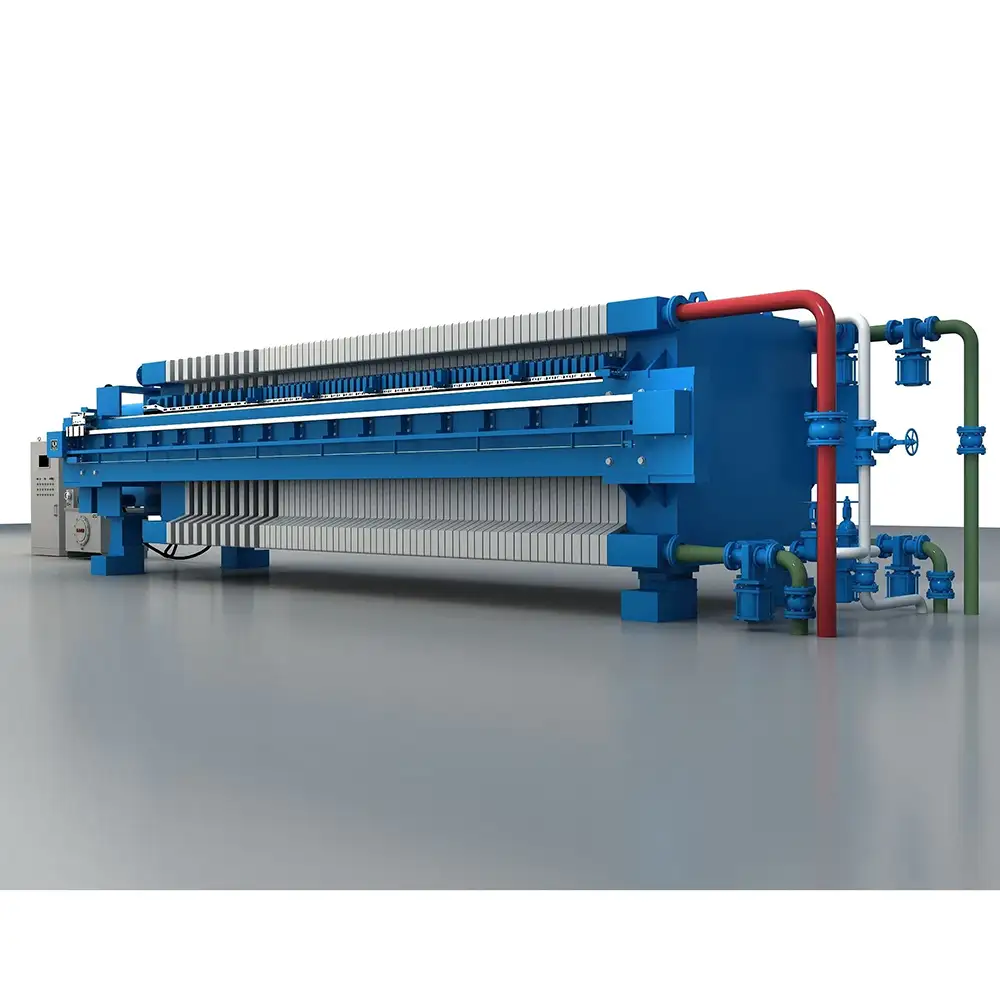
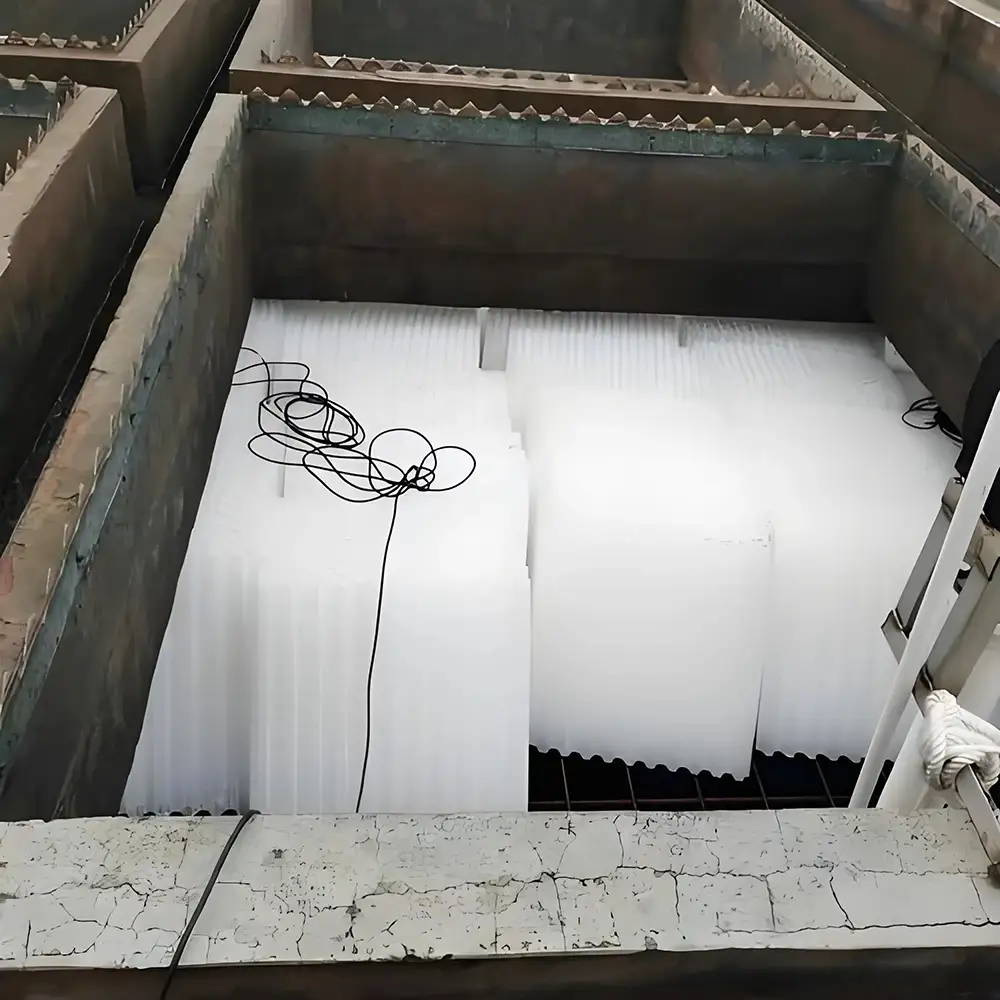
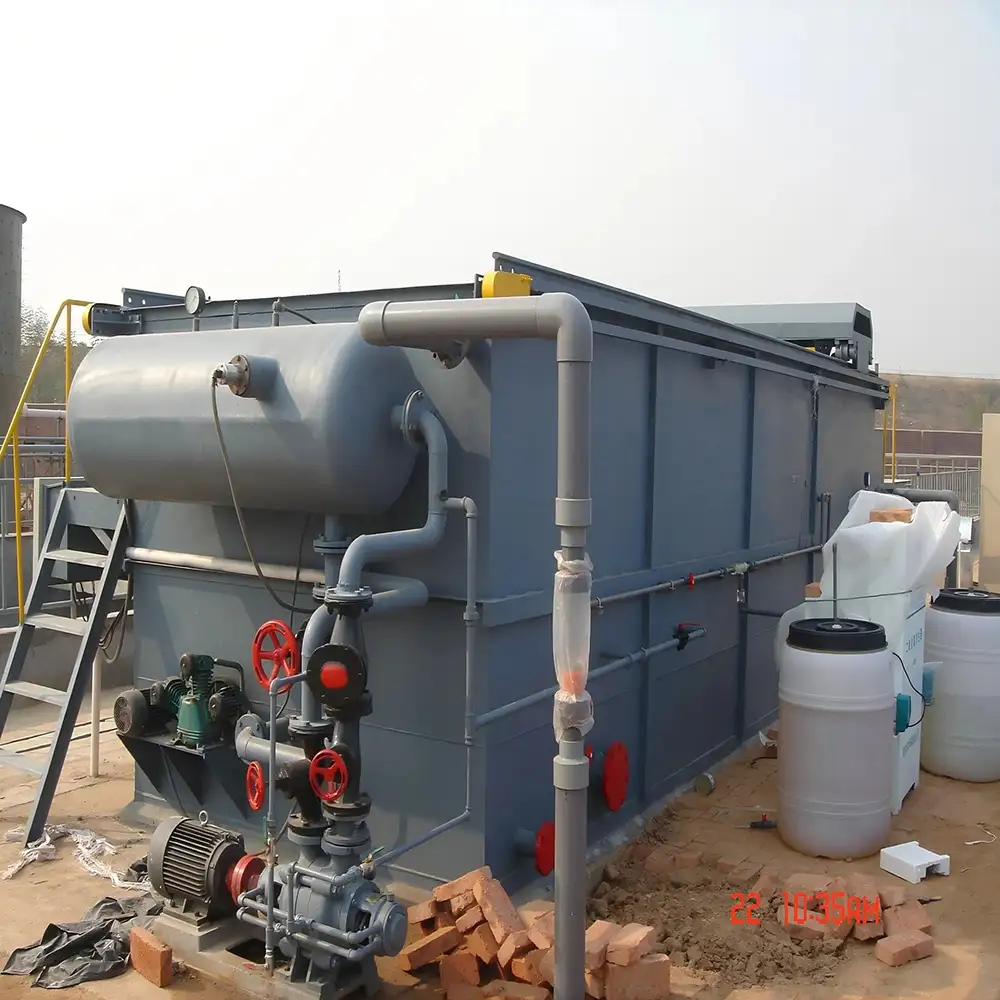
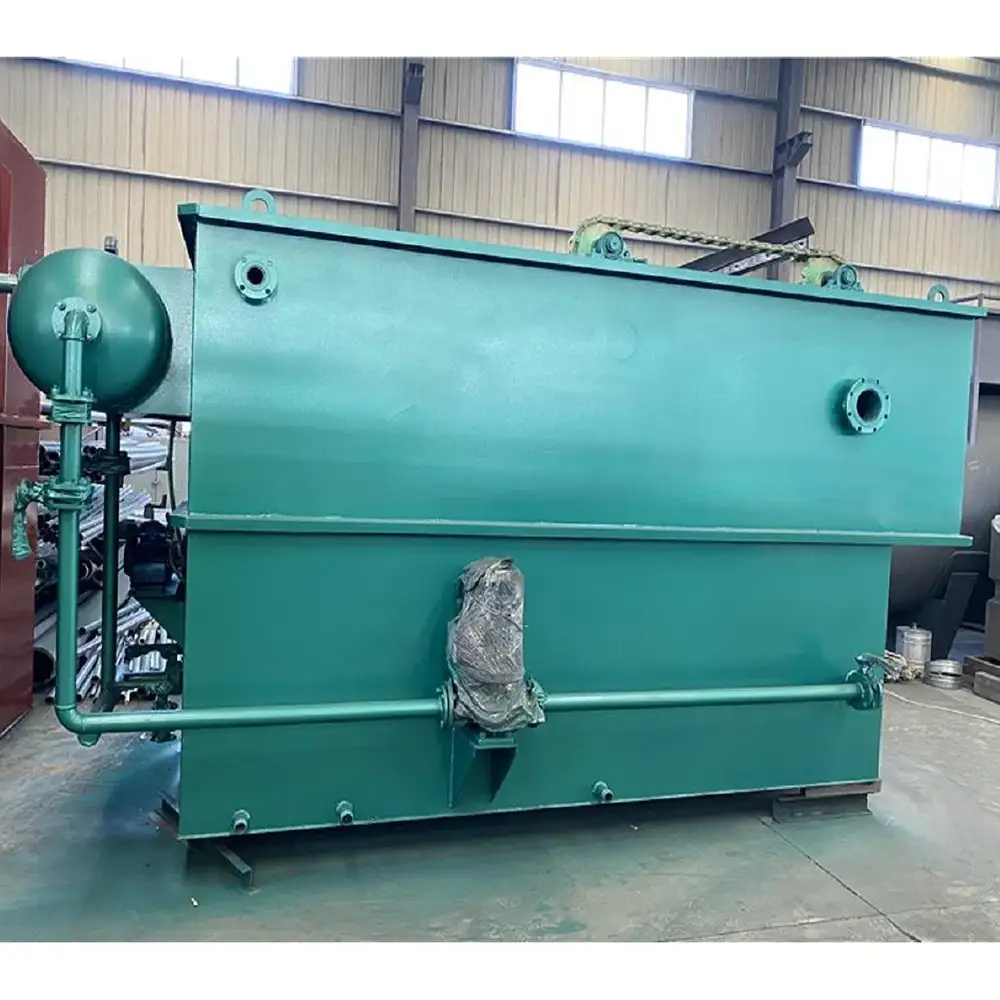
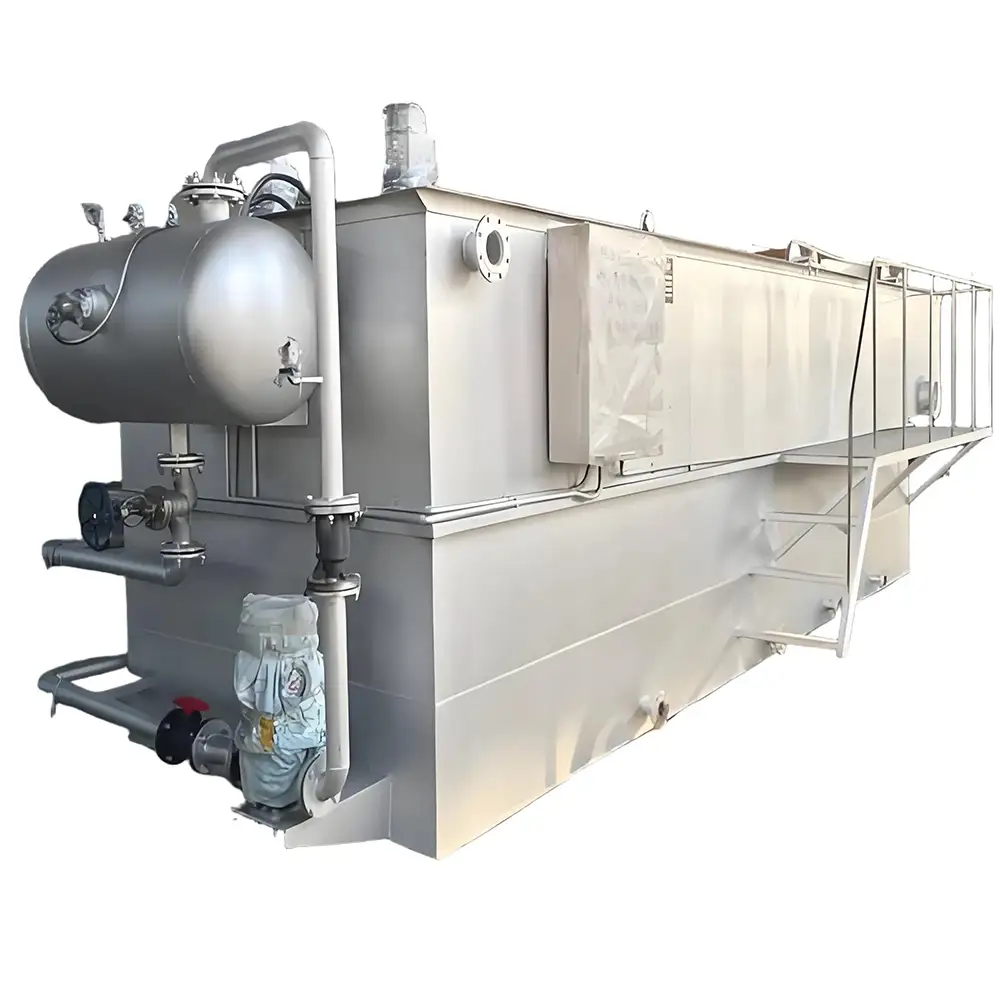
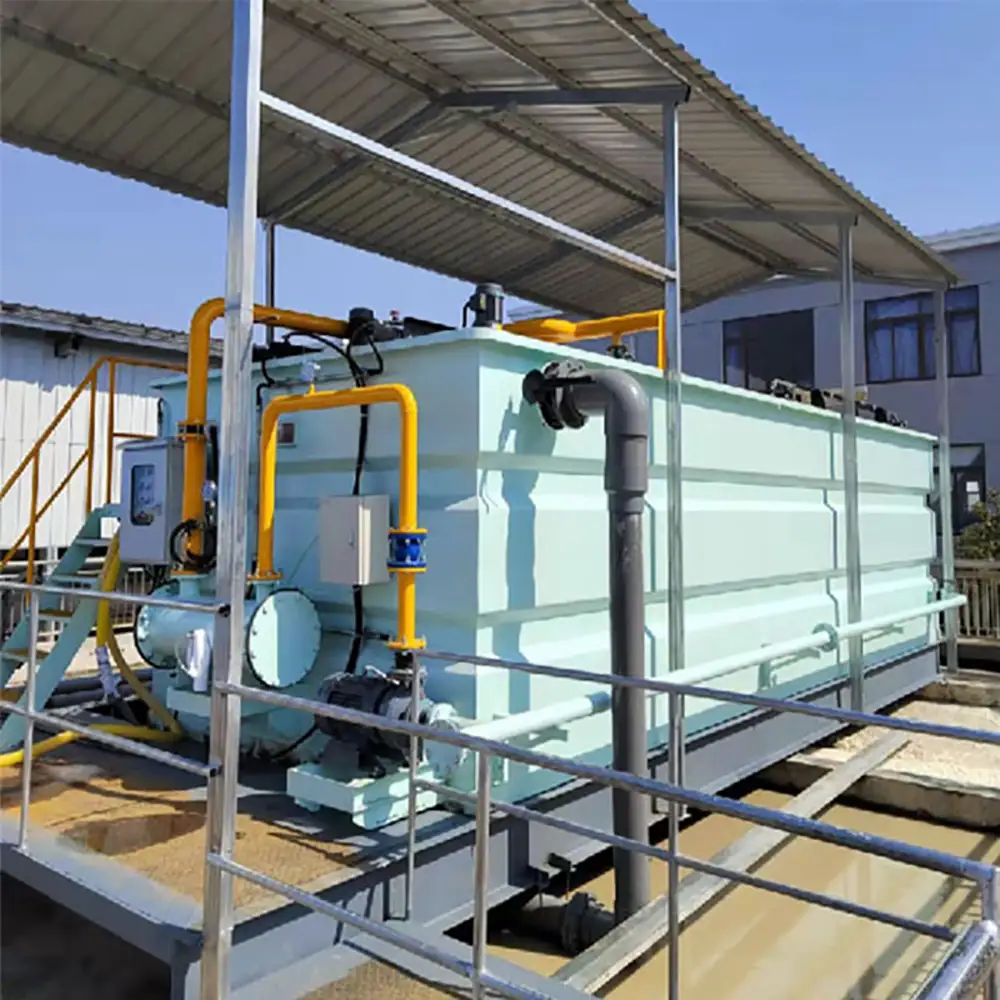
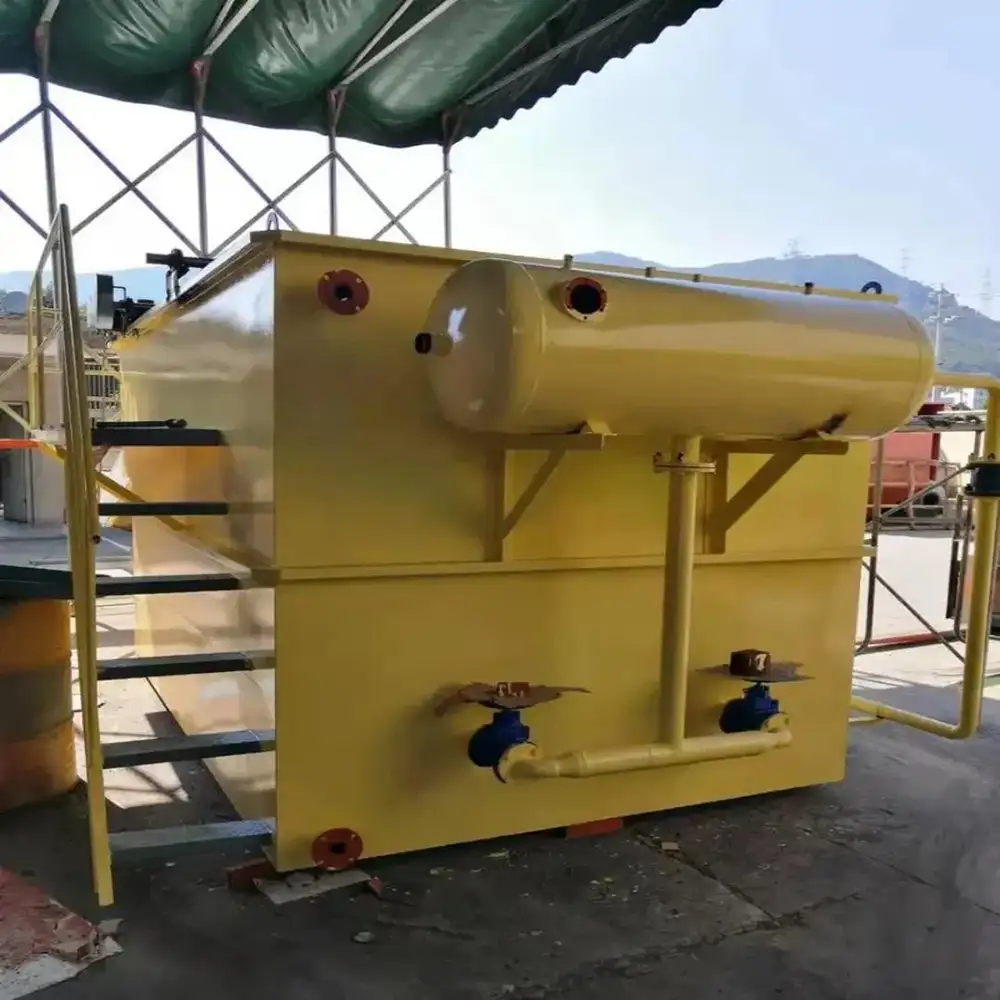
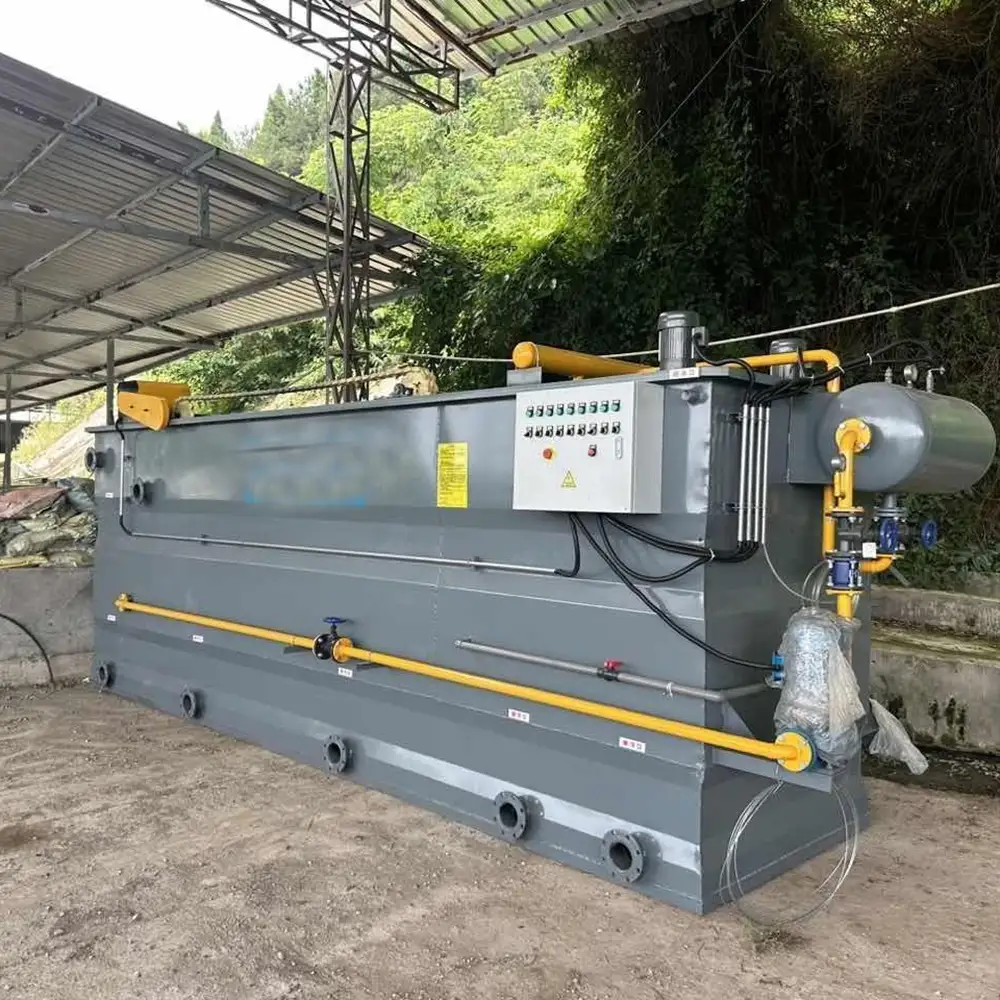
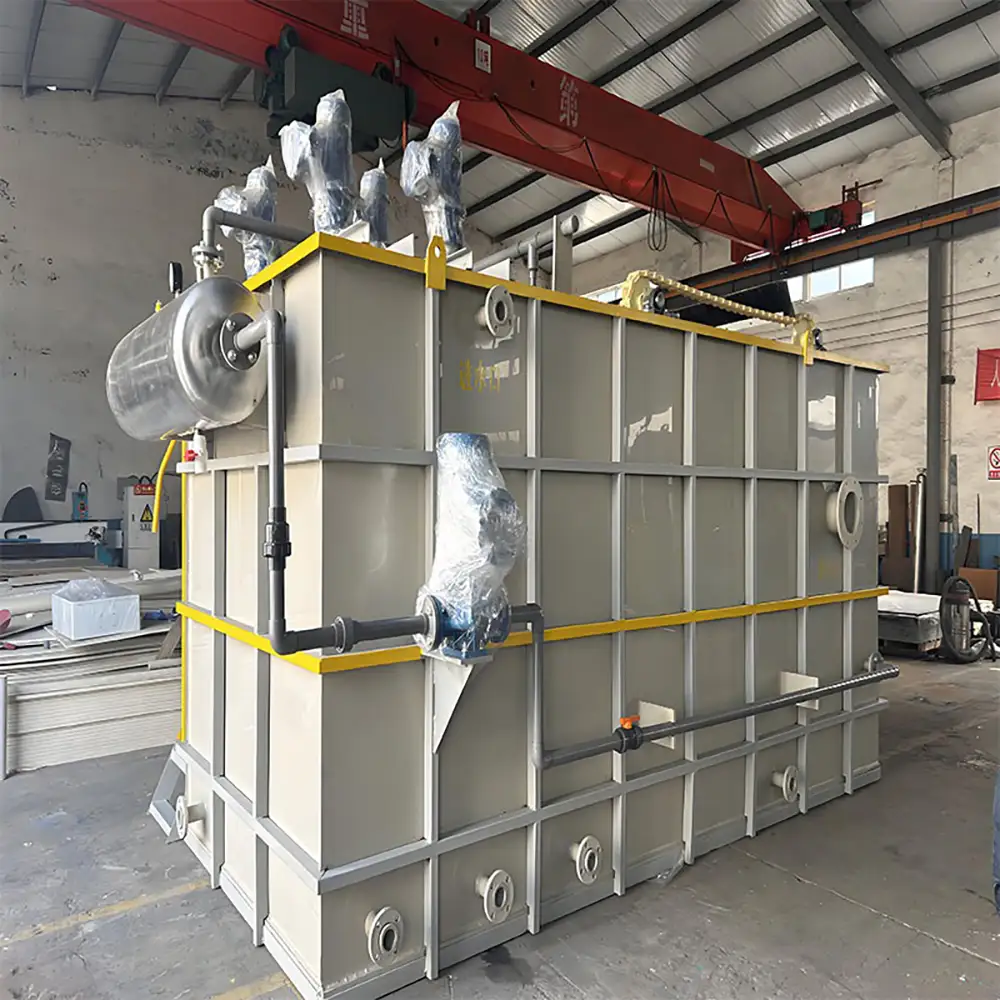
Easy Maintenance Solid-Liquid Separator Processor Dissolved Air Flotation for Wastewater
The Easy Maintenance Solid-Liquid Separator Processor Dissolved Air Flotation for Wastewater is designed for efficient solid-liquid separation in industrial and municipal wastewater treatment applications. Combining dissolved air flotation technology with an accessible equipment configuration, the system helps remove suspended solids, oil, grease, fats, colloidal particles, and other contaminants that can be effectively separated through flotation.
Unlike conventional gravity sedimentation, which depends primarily on particles settling to the bottom of a tank, dissolved air flotation uses fine air bubbles to increase the apparent buoyancy of suitable particles. The bubbles attach to suspended contaminants and carry them toward the water surface, where a mechanical skimmer removes the concentrated float layer. EPA technical documentation identifies DAF as a common process for removing suspended solids, dispersed oil, and grease, especially when contaminants have densities close to that of water.
|
Model NO. |
GSRF |
Handling method |
physicochemical treatment |
|
Usage |
Industrial, agricultural, food factories, slaughterhouses |
Trademark |
|
|
Types |
Package, Compact, Small, Mini |
Applications |
Industrial, Municipal, Domestic, Medical, Ship |
|
Craft |
Flocculation sedimentation method |
Features |
Water Clarification, Filtration, Purification |
|
Service Life |
20 Years |
Operation |
Automatic |
|
Steel Plate Thickness |
>8mm |
Function |
Remove Suspended solids |
|
Voltage |
220V/ 380V/ Customerized |
Installation Type |
Onground |
|
Colour |
Grey/Silver/Blue/Balck/Customerized |
Use for |
Mineral, Printing, Chemical, Dyeing, Starch |
|
Material |
Carbon Steel, Stain Steel, FRP, PE, PP |
Certificate |
SGS, ISO |
|
Transport Package |
Container Standard Packing |
Specification |
Carbon steel anti-corrosion |
|
Production Capacity |
1000 Sets/Year |
Origin |
China |
Dissolved Air Flotation Working Principle
Wastewater first enters the flotation treatment process after preliminary screening or equalization. Depending on the wastewater characteristics, pH adjustment, coagulation, and flocculation can be incorporated upstream.
A portion of clarified water is normally recycled and pressurized with air. When the pressurized recycle stream passes through a pressure-release device, dissolved air comes out of solution and forms fine bubbles.
These bubbles contact suspended solids, oil droplets, grease, and chemically formed flocs. Bubble-particle aggregates become buoyant and rise to the surface of the flotation tank. A surface skimmer then removes the floating solids and concentrated sludge, while clarified water exits through the treated-water outlet.
This process provides an efficient method of accelerating the separation of light and slowly settling materials. DAF systems are particularly useful for oil and grease and for suspended particles whose density is close to that of water.
Easy Maintenance DAF Design
Maintenance accessibility is an important consideration for industrial wastewater treatment equipment. A practical DAF system should allow operators to inspect pumps, valves, pressure components, skimmers, dosing equipment, sensors, and electrical controls without unnecessarily complicated procedures.
The equipment can be arranged with accessible inspection points and service areas around major components. The surface skimming mechanism should be easy to inspect and clean, while the recycle system should allow routine checking of pump performance and pressure conditions.
Regular cleaning is also important. An EPA case study of a DAF installation describes routine cleaning to remove sludge buildup from skimmer components and regular checks of the skimmer, sludge pump, recirculation pumps, and probes.
Main Features
1. Easy Maintenance Configuration
The equipment is designed around accessible mechanical and process components to simplify inspection, cleaning, adjustment, and routine servicing.
2. Effective Solid-Liquid Separation
DAF can separate suspended solids and other floatable contaminants by changing their apparent density through attachment to fine air bubbles.
3. Oil and Grease Removal
The system is well suited for wastewater containing free oil, dispersed oil, grease, fats, and oil-associated suspended solids.
4. Fine Bubble Flotation
Dissolved air is released after pressure reduction to generate fine bubbles that attach to suitable contaminants and transport them to the surface.
5. Automatic Surface Skimming
A mechanical skimmer removes the accumulated float layer and transfers it to a sludge or float collection system.
6. Flexible Chemical Conditioning
Coagulation and flocculation systems can be integrated when fine suspended solids, colloids, or emulsified contaminants require additional conditioning.
7. PLC Automation Options
The system can incorporate PLC and HMI controls for pumps, pressure, level, chemical dosing, sludge removal, alarms, and other operating functions.
Solid-Liquid Separation Applications
The Easy Maintenance DAF system can be used in many wastewater treatment applications, including:
Food Processing Wastewater
Dairy Wastewater
Slaughterhouse Wastewater
Meat Processing Wastewater
Beverage Industry Wastewater
Oil And Gas Wastewater
Refinery Wastewater
Petrochemical Wastewater
Metal Processing Wastewater
Machinery Manufacturing Wastewater
Automotive Wastewater
Pulp And Paper Wastewater
Textile And Dyeing Wastewater
Chemical Industry Wastewater
Pharmaceutical Wastewater
Industrial Process Wastewater
Municipal Wastewater Pretreatment
DAF is particularly useful when wastewater contains light solids, grease, oil, or particles that do not settle efficiently through gravity. EPA references describe flotation as attractive for particles close to the density of water and for oil-wet solids that can be difficult to remove through conventional sedimentation.
Coagulation and Flocculation
For many industrial wastewater applications, DAF performance can be improved by adding coagulation and flocculation before flotation.
Coagulants destabilize colloidal particles, while polymers or other flocculants promote the formation of larger flocs. These flocs provide better attachment targets for flotation bubbles.
Chemical conditioning is especially useful for wastewater containing fine suspended solids, colloids, emulsified oil, or other difficult-to-separate contaminants. EPA technical data indicate that chemical pretreatment can significantly improve suspended-solids and oil-and-grease removal in DAF applications.
Chemical dosage should be determined through wastewater testing and jar testing rather than applying a universal dosage.
Recycle Pressurization System
The DAF system can use either full-flow or recycle-flow pressurization. For larger industrial systems, recycle pressurization is commonly used because a portion of clarified effluent is pressurized and saturated with air before being returned to the flotation process.
The pressurized recycle stream enters the flotation tank through a pressure-release device, creating fine bubbles. This configuration avoids pressurizing the entire wastewater flow and can reduce the energy required for pressurization.
The recycle pump, pressure vessel, air injection system, pressure regulator, and bubble-release components should be selected according to wastewater flow and required flotation performance.
Typical Equipment Components
A complete Easy Maintenance DAF system may include:
DAF Flotation Tank
Recycle Water Pump
Air Compressor
Air Saturation Tank
Pressure Release Valve
Microbubble Release Device
Surface Sludge Skimmer
Float Collection Chamber
Bottom Sludge Collection System
Coagulation Tank
Flocculation Tank
Chemical Dosing Pumps
Flow Meter
Pressure Gauge
Level Sensors
PLC Control Cabinet
HMI Touchscreen
Optional Online Monitoring System
The exact configuration depends on wastewater characteristics, treatment capacity, installation conditions, and required effluent quality.
Oil, Grease and Suspended Solids Removal
DAF is particularly effective when wastewater contains a combination of suspended solids and oily contaminants. Oil-wet solids can have an overall density close to water, making them difficult to remove by gravity alone. Flotation bubbles provide an alternative separation mechanism by increasing the buoyancy of these particles.
For emulsified oil, additional chemical treatment may be required. Stable emulsions can resist direct flotation, so pH adjustment, coagulation, polymer dosing, or chemical emulsion breaking may be incorporated before the DAF tank.
The collected surface material generally contains concentrated oil, grease, suspended solids, and water. This float can be transferred to a sludge storage, thickening, dewatering, recovery, or disposal process.
Integration With Complete Wastewater Treatment Plants
The DAF system can operate as a standalone solid-liquid separator or be integrated into a larger wastewater treatment line.
A typical industrial treatment process may include:
Screening → Equalization → pH Adjustment → Coagulation → Flocculation → DAF → Biological Treatment → Filtration → Disinfection
For advanced treatment, DAF can also serve as pretreatment before MBR, UF, activated carbon, or RO.
DAF should primarily be considered a physical-chemical separation process. It is not intended to remove every dissolved contaminant, such as dissolved salts, nitrate, or ammonia. Additional treatment technologies may be required depending on the final water-quality target.
Operation and Maintenance
Easy maintenance depends on regular inspection and proper operating conditions. Operators should routinely inspect the recycle pump, air compressor, pressure-release device, skimmer, sludge discharge equipment, valves, chemical dosing pumps, sensors, and control cabinet.
The flotation surface should not be allowed to accumulate excessive sludge. EPA documentation notes that delayed removal of the surface layer can allow particulates to return to the liquid.
Operators should also monitor wastewater flow, recycle flow, pressure, pH, temperature, suspended solids, oil and grease, chemical dosage, and sludge production where appropriate.
If flotation performance decreases, potential causes include excessive hydraulic loading, inadequate bubble generation, incorrect chemical dosage, unsuitable pH, insufficient recycle flow, changes in wastewater characteristics, or delayed sludge removal.
Why Choose Us?
Choosing an Easy Maintenance Solid-Liquid Separator Processor Dissolved Air Flotation system requires consideration of both treatment performance and long-term operation.
Our DAF solutions are designed around practical wastewater separation, accessible maintenance, reliable flotation components, and flexible process integration.
Key advantages include:
Easy Maintenance Equipment Configuration
Efficient Dissolved Air Flotation
Solid-Liquid Separation
Suspended Solids Removal
Oil And Grease Removal
Automatic Surface Skimming
Accessible Mechanical Components
Optional Coagulation And Flocculation
Recycle Pressurization System
PLC And HMI Automation Options
Flexible Industrial Wastewater Applications
Easy Integration With Existing Treatment Plants
Each DAF system can be evaluated according to wastewater flow, peak flow, TSS, oil and grease concentration, particle characteristics, pH, temperature, chemical requirements, available space, and downstream treatment objectives.
FAQs
1. What Is a Solid-Liquid Separator DAF?
It is a dissolved air flotation system that separates suspended solids and other suitable contaminants from wastewater by attaching them to fine air bubbles and floating them to the surface.
2. What Does DAF Stand For?
DAF stands for Dissolved Air Flotation. Air is dissolved into water under pressure and released to create fine flotation bubbles.
3. What Can DAF Remove?
DAF can remove suspended solids, oil, grease, fats, colloids, floatable materials, and other contaminants that are suitable for flotation.
4. Is DAF Easy to Maintain?
With an appropriate equipment design, DAF can be relatively straightforward to inspect and maintain. Routine attention is required for pumps, skimmers, pressure components, chemical systems, and sludge removal.
5. Can DAF Remove Oil and Grease?
Yes. DAF is widely used for oil and grease removal, particularly for free and dispersed oil and oil-associated suspended solids.
6. Does DAF Require Chemicals?
Not every application requires chemicals, but coagulation and flocculation can improve the capture of fine solids, colloids, and emulsified oil.
7. Can DAF Remove Dissolved Pollutants?
Generally, DAF is not intended for removing dissolved salts or most dissolved contaminants. Additional biological, chemical, adsorption, or membrane treatment may be necessary.
8. Can DAF Be Used Before MBR?
Yes. DAF can reduce suspended solids, oil, and grease before downstream biological or membrane treatment.
9. What Is Recycle Pressurization?
Recycle pressurization uses a portion of clarified DAF water, pressurizes it with air, and returns it to the flotation tank to create fine bubbles.
10. How Is DAF Maintenance Performed?
Typical maintenance includes checking pumps, pressure components, air systems, skimmers, sludge discharge, dosing equipment, sensors, valves, and control components, along with routine cleaning.
11. How Is the DAF System Sized?
Sizing depends on wastewater flow, peak flow, suspended solids, oil and grease, wastewater chemistry, particle characteristics, chemical conditioning, and required effluent quality.
12. Can the DAF System Be Automated?
Yes. PLC, HMI, automatic chemical dosing, pump control, level monitoring, pressure monitoring, alarms, and optional online sensors can be integrated.
13. Can the Equipment Be Customized for Industrial Wastewater?
Yes. Tank dimensions, treatment capacity, materials, recycle system, skimmer, chemical dosing, controls, and auxiliary equipment can be configured according to project requirements.
Prev:
Modular Expandable Dissolved Air Flotation Equipment
Next:
Reverse Osmosis Combined Purification Equipment
TAG:
Suspended Solids Removal,
Dairy Wastewater Treatment,
Meat Processing Wastewater Treatment,
Industrial Wastewater Treatment,
Food Wastewater Treatment,
Solid Liquid Separator,
Solid Liquid Separation Equipment,
Metal Processing Wastewater Treatment,
Wastewater Separation Equipment,
Wastewater Solid Liquid Separator,
Wastewater Pretreatment Equipment,
Industrial Effluent Treatment,
Slaughterhouse Wastewater Treatment,
Pulp And Paper Wastewater Treatment,
DAF Sludge Removal,
Petrochemical Wastewater Treatment,
Primary Wastewater Treatment,
DAF Coagulation System,
DAF Flocculation System,
Microbubble Flotation,
Oil And Grease Removal,
Industrial DAF System,
DAF Equipment,
DAF System,
DAF Wastewater Treatment,
Dissolved Air Flotation Equipment,
Dissolved Air Flotation,
Air Flotation Equipment,
Air Flotation System,
Textile Wastewater Treatment,
Related Category:
Easy Maintenance Solid-Liquid Separator Processor,Dissolved Air Flotation for Wastewater,Easy Maintenance DAF Equipment China, suppliers, manufacturers, factory, customized, wholesale, quotation, made in China