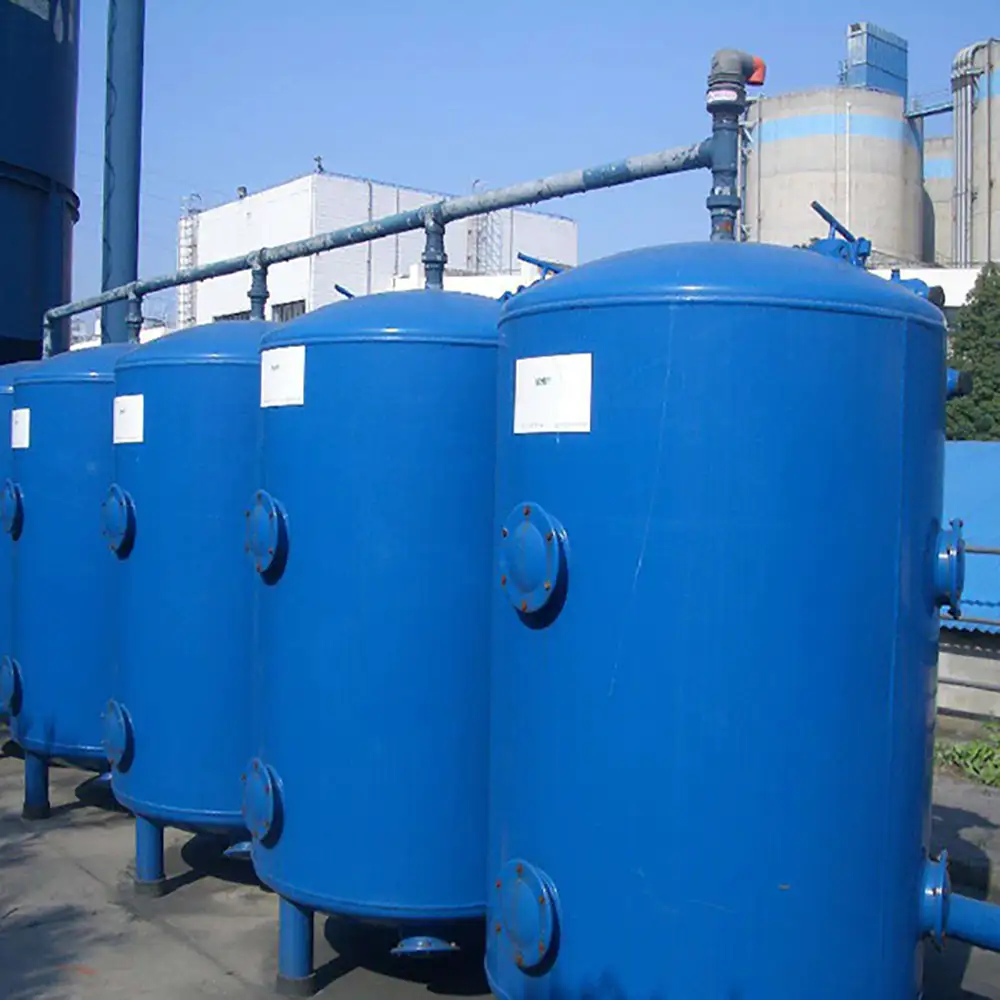
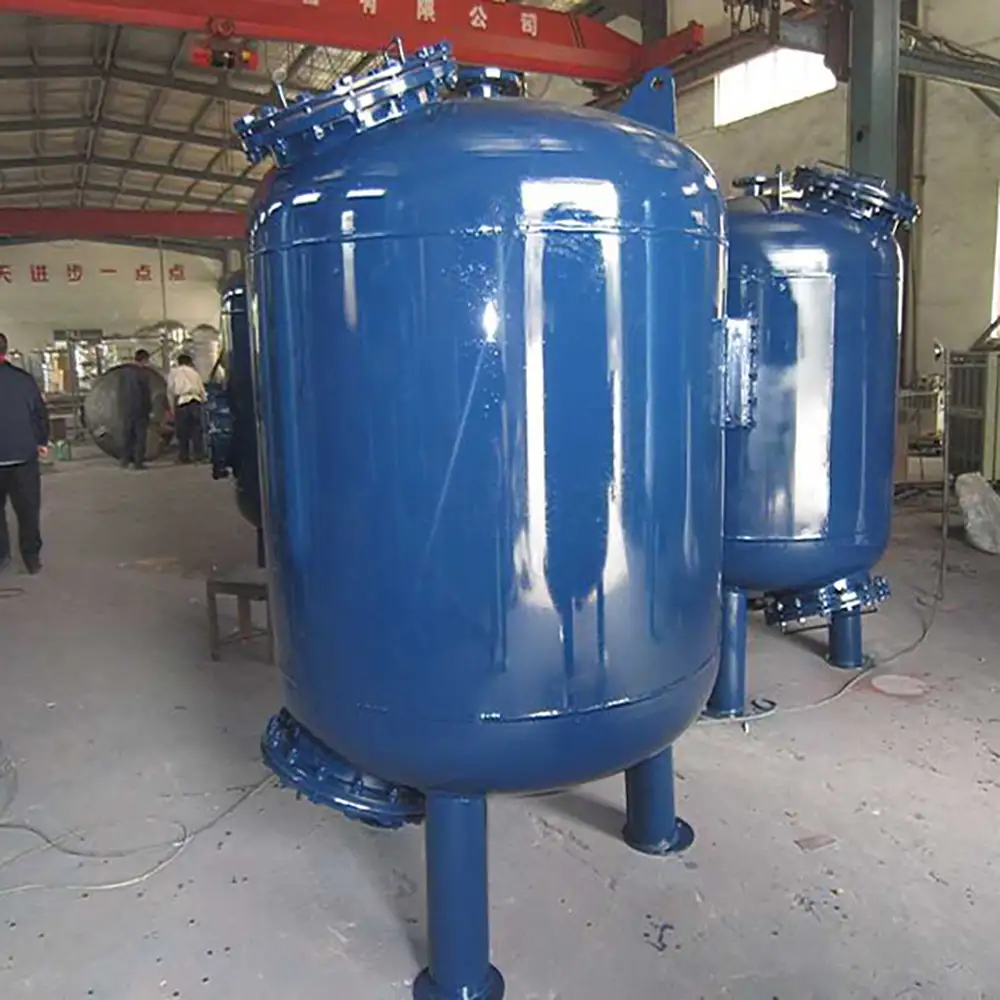
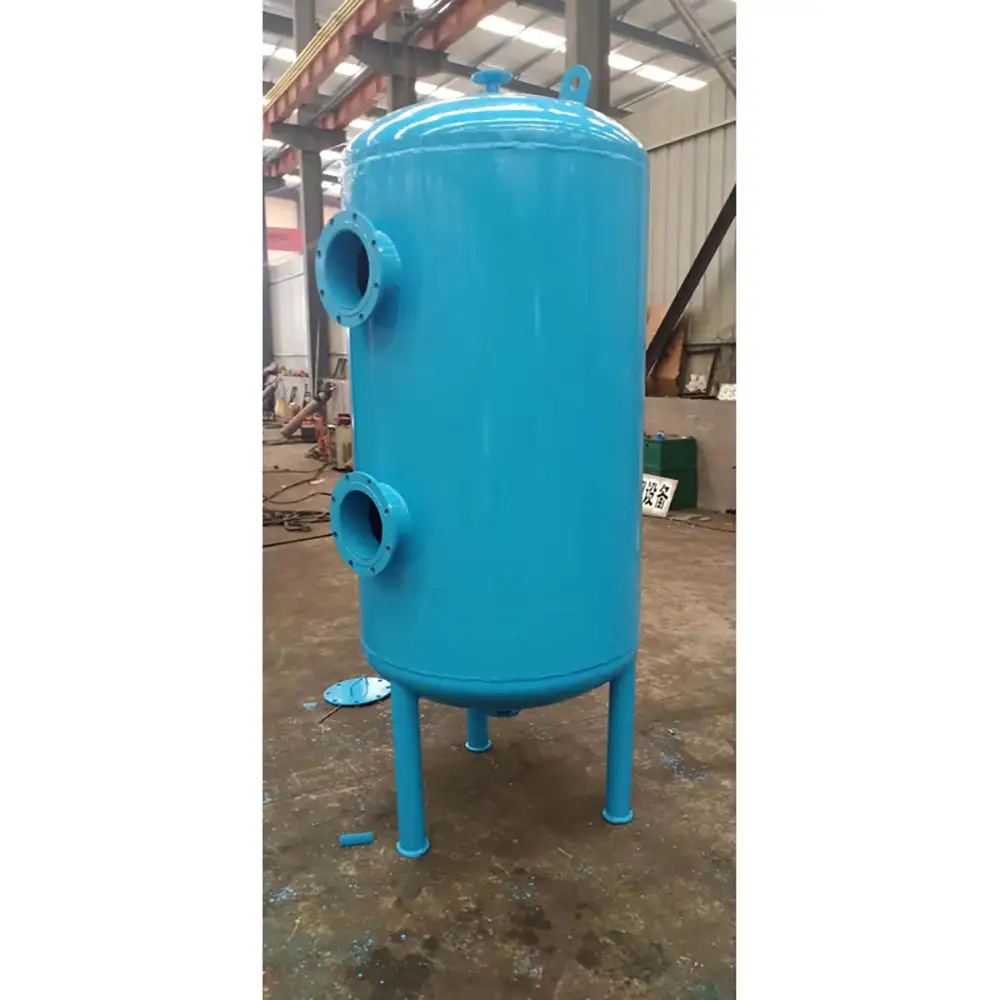
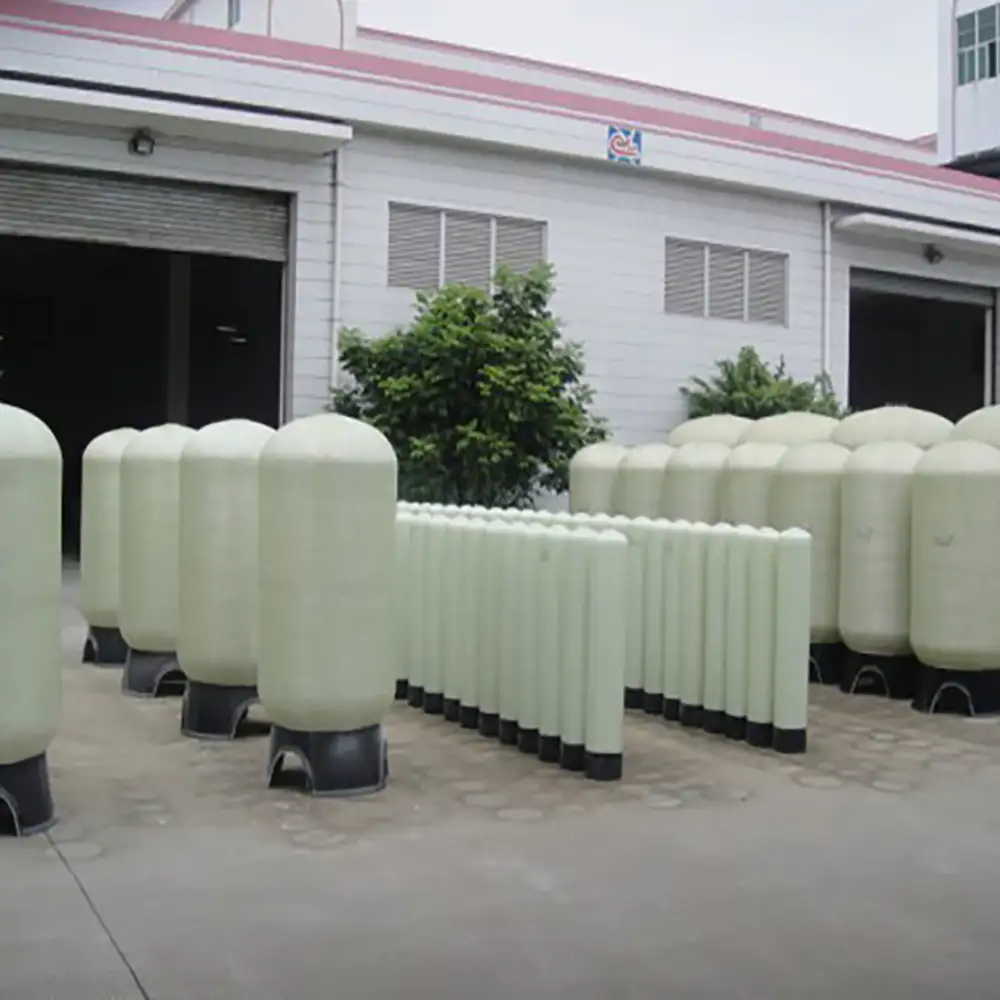
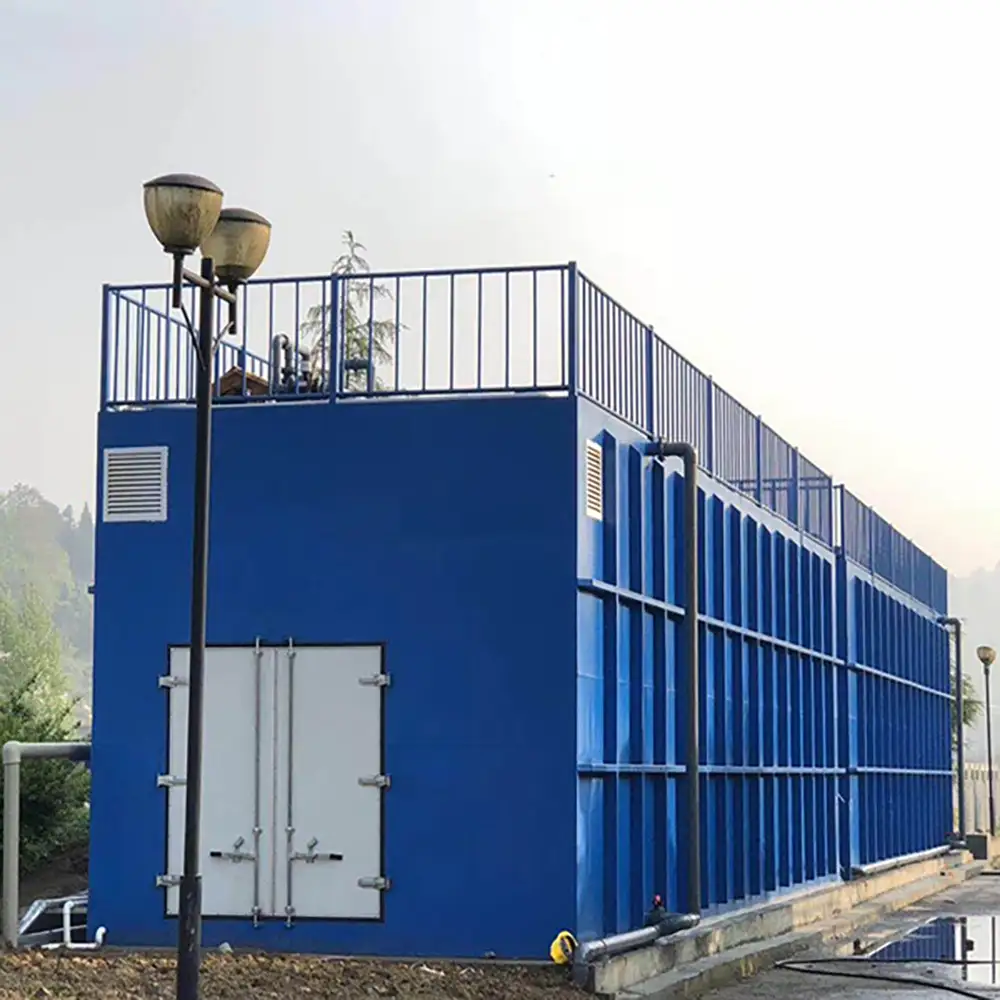
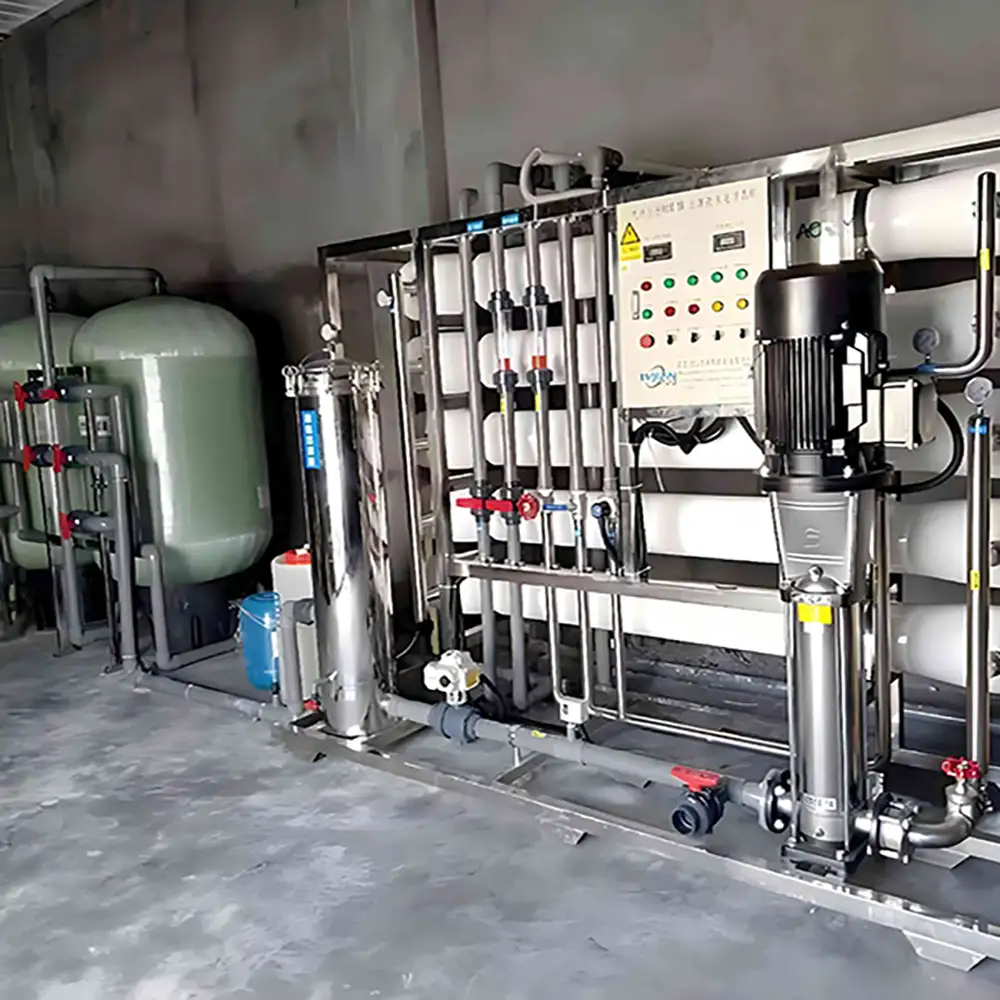
The meaning of filtration. In the process of water treatment, filtration generally refers to the process of using quartz sand, Anthracite and other filter material layers to intercept suspended impurities in water, so as to make water clear. The porous material used for filtration is called filter material, and quartz sand is the most common filter material. There are various types of filter materials, including granular, powdered, and fibrous. Common filter materials include quartz sand, Anthracite, activated carbon, Magnetite, garnet, porous ceramics, plastic balls, etc.
Multi medium filter (filter bed) is a medium filter that uses two or more types of media as the filter layer. In industrial circulating water treatment systems, it is used to remove impurities, adsorbed oil, etc. from wastewater, so that the water quality meets the requirements of recycling. The function of filtration is mainly to remove suspended or colloidal impurities in water, especially small particles and bacteria that cannot be removed by sedimentation technology. BOD5 and COD also have a certain degree of removal effect
Quartz Sand, Activated Carbon Filter for Water Treatment
A Quartz Sand, Activated Carbon Filter is a combined water filtration system that uses quartz sand and activated carbon media to provide complementary treatment functions. Quartz sand primarily provides physical filtration for suspended solids and turbidity, while activated carbon provides adsorption for a range of dissolved organic compounds, taste- and odor-producing substances and other contaminants that are amenable to carbon treatment.
This combination is widely used as part of water pretreatment, industrial water purification, process-water treatment and wastewater polishing systems. Granular filtration beds can remove suspended solids through mechanisms including straining, interception and sedimentation, while granular activated carbon provides a different treatment mechanism based on adsorption.
A properly designed system can therefore combine particle removal and adsorption treatment within a practical water-treatment configuration.
How Quartz Sand and Activated Carbon Filtration Works
Quartz sand and activated carbon perform different functions, so their arrangement should be selected according to the required treatment process.
Quartz sand filtration is primarily used to capture suspended particles as water passes through the granular media bed. The spaces between the media grains provide filtration pathways where particles can be retained.
Activated carbon filtration uses porous carbon media with a large internal surface area. Dissolved compounds can adsorb onto the carbon surface and within its pore structure. EPA describes granular activated carbon as a porous adsorption medium used for compounds such as taste- and odor-producing substances, natural organic matter, VOCs and some synthetic organic compounds.
Depending on the system design, quartz sand and activated carbon may be installed in separate filter vessels or incorporated into a multi-media filtration configuration.
Quartz Sand Filter for Suspended Solids Removal
Quartz sand is a common granular filter medium because it provides a stable filtration bed for removing suspended particles.
A quartz sand filter can help reduce:
Suspended solids
Turbidity
Fine particles
Sediment
Rust particles
Process solids
Residual floc
The actual removal performance depends on media size, bed depth, filtration velocity, influent quality and system configuration.
For industrial wastewater and water-treatment applications, granular filtration can provide additional suspended-solids removal after chemical or biological treatment. EPA technical documentation describes granular-bed filtration as a method for retaining suspended solids within the voids between filter media particles.
Activated Carbon Filter for Adsorption
Activated carbon provides a treatment function that is different from sand filtration.
Granular activated carbon contains a highly porous structure with substantial internal surface area. As water passes through the carbon bed, certain dissolved compounds can attach to the carbon through adsorption.
Activated carbon is commonly used for:
Taste and odor control
Natural organic matter reduction
Selected VOC removal
Organic compound adsorption
Certain disinfection byproduct precursors
Selected industrial wastewater contaminants
However, activated carbon does not remove every contaminant equally. Performance depends on carbon type, contaminant characteristics, water chemistry, contact time, flow rate and carbon-bed depth. EPA specifically notes that GAC performance varies with the type of carbon, bed depth, flow rate, temperature and the characteristics of the water.
Sand and Carbon Filter Combination
Combining quartz sand and activated carbon can create a more comprehensive filtration arrangement.
The sand stage can reduce particulate loading before water reaches the carbon stage. This is important because excessive suspended solids can prematurely foul or clog an activated carbon bed.
For some applications, a separate quartz sand filter followed by an activated carbon filter is preferable because each vessel can be operated and backwashed independently.
A typical arrangement may be:
Raw Water → Pretreatment → Quartz Sand Filter → Activated Carbon Filter → Fine Filtration → RO or Final Treatment
The actual process depends on source-water quality and the required finished-water characteristics.
Multimedia Filter With Quartz Sand
Quartz sand can also be used as one component of a multimedia filtration bed.
Multimedia filters may contain combinations such as anthracite, quartz sand and garnet. Different media densities and particle sizes allow solids to penetrate into different regions of the bed rather than accumulating only at the surface.
EPA documentation describes multimedia filters as granular beds containing different materials, with common combinations including anthracite, sand and garnet.
In certain systems, activated carbon can also be incorporated into a multi-media configuration, although the design should account for media density, particle size, backwash behavior and the intended treatment function.
Activated Carbon Filter for Water Purification
Activated carbon filtration is frequently used as a polishing or pretreatment step in water purification systems.
It may be installed upstream of reverse osmosis to reduce certain organic compounds, chlorine or other substances that could interfere with downstream treatment, depending on the specific process.
For example:
Raw Water → Quartz Sand Filter → Activated Carbon Filter → Cartridge Filter → RO System
This arrangement can reduce particulate loading before the RO membrane and provide additional treatment of compounds that are adsorbable by carbon.
The exact pretreatment requirements should be determined from water analysis and membrane manufacturer's requirements.
Water Filtration for Industrial Applications
Quartz sand and activated carbon filtration can be used across many industrial water-treatment applications.
Typical applications include:
Municipal water treatment
Industrial process water
Drinking-water pretreatment
Groundwater treatment
Surface-water treatment
Cooling-water pretreatment
Boiler-feed-water pretreatment
RO pretreatment
Food and beverage water treatment
Pharmaceutical water pretreatment
Textile water treatment
Industrial wastewater polishing
For industrial wastewater, the filtration system may be installed after biological treatment, clarification or other processes to provide additional removal of residual suspended solids and selected dissolved organic compounds.
EPA documentation identifies multimedia filtration as a supplemental treatment step for residual suspended solids following chemical or biological wastewater treatment.
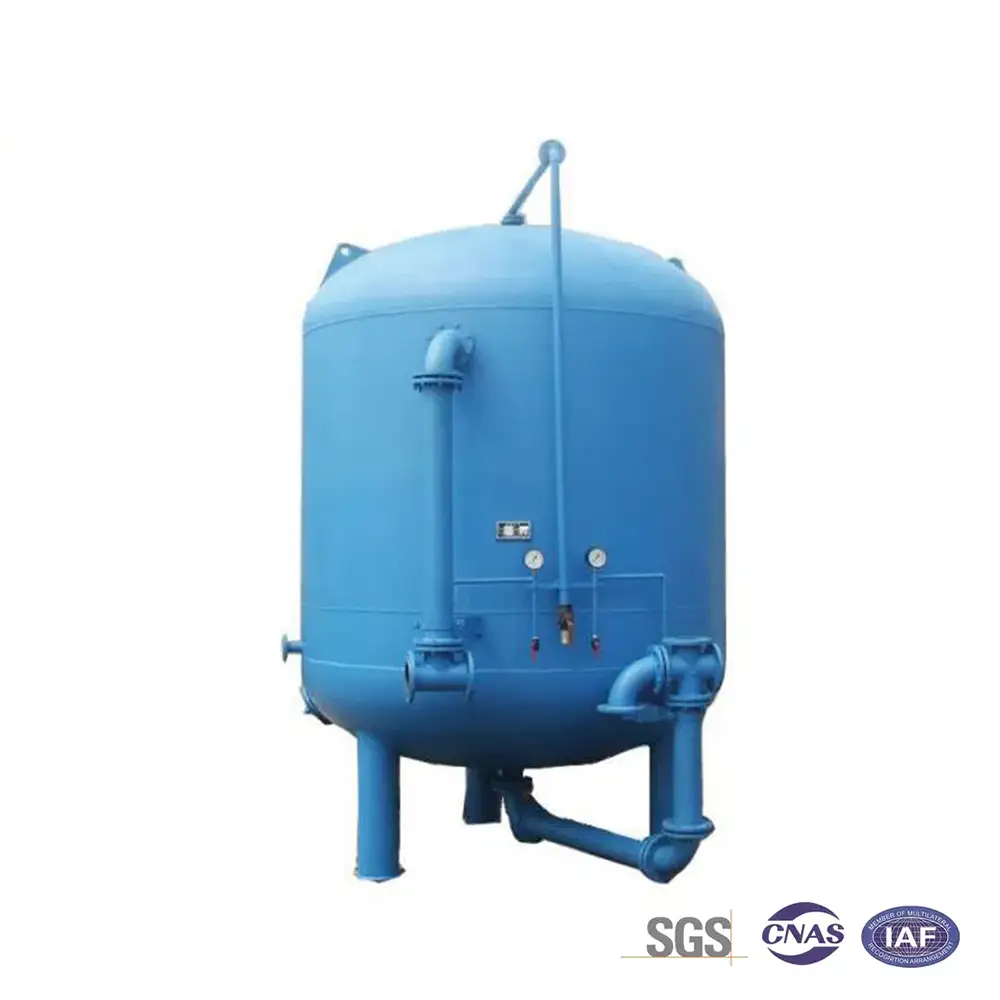
Filter Vessel and Internal Structure
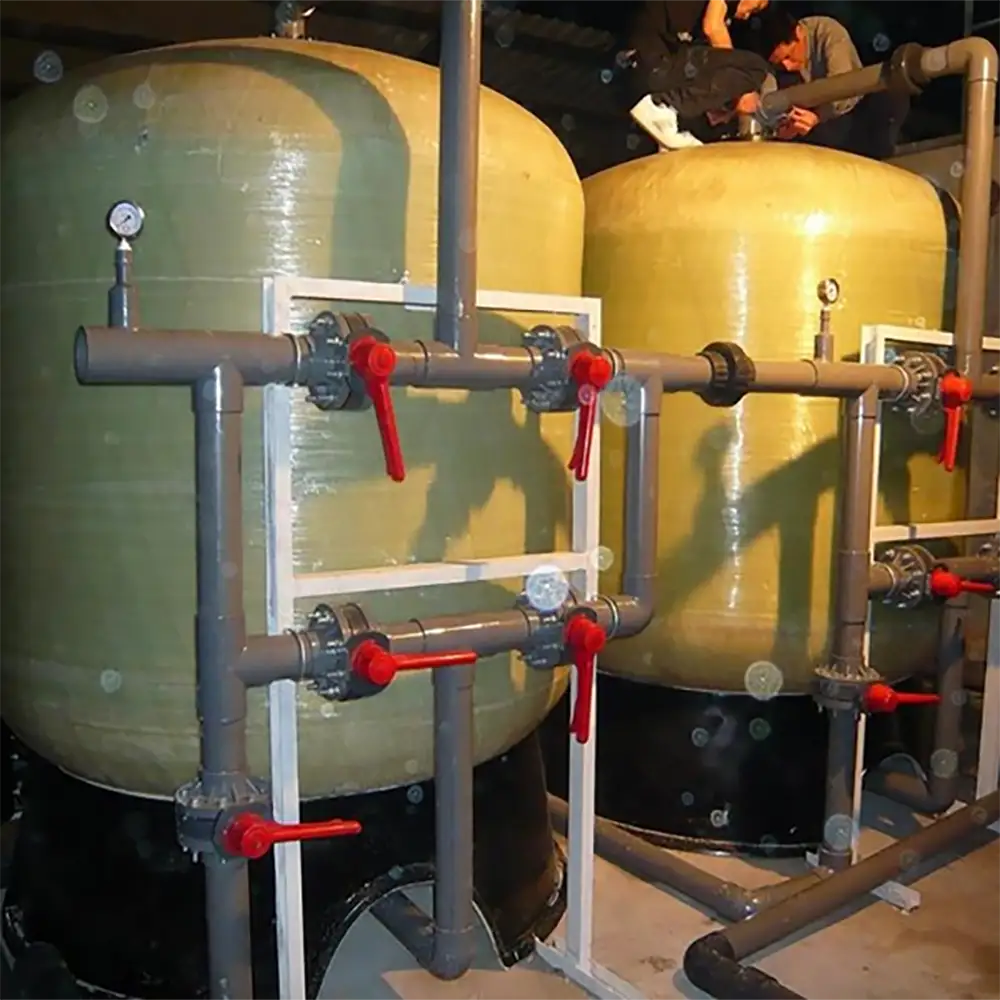
A quartz sand and activated carbon filtration system can be configured as pressure vessels or other filtration units depending on the application.
A typical pressure filter may include:
Filter vessel
Water distributor
Quartz sand media
Activated carbon media
Supporting gravel
Underdrain system
Inlet and outlet valves
Pressure gauges
Backwash piping
Drain connection
Control valves
The internal distribution system should provide relatively uniform water flow through the media bed. Uneven flow can cause channeling, reducing effective contact with the filter media.
Backwashing and Filter Maintenance
Quartz sand filters require periodic backwashing as suspended solids accumulate within the media bed. Backwashing reverses the normal flow direction and expands or agitates the media to release retained particles.
Activated carbon systems may also require backwashing depending on their configuration. However, carbon replacement or regeneration is an important part of long-term operation because adsorption capacity eventually becomes exhausted.
EPA notes that granular activated carbon must be removed and replaced or regenerated when its adsorption capacity is exhausted.
The frequency of backwashing and media replacement depends on influent quality, loading, flow rate, media characteristics and operating conditions.
Quartz Sand and Activated Carbon Filter for RO Pretreatment
A sand and activated carbon combination is often considered for RO pretreatment because the two media address different water-quality concerns.
Quartz sand can reduce suspended particles and turbidity, while activated carbon can adsorb certain organic compounds and other carbon-treatable contaminants.
Additional pretreatment such as cartridge filtration, softening, antiscalant dosing, iron removal or other processes may still be required depending on feed-water chemistry.
A complete RO pretreatment system should therefore be designed from water analysis rather than relying on a standard media configuration.
Why Choose Us
Dual Treatment Function: Combines particulate filtration and activated carbon adsorption.
Quartz Sand Filtration: Designed to reduce suspended solids and turbidity.
Activated Carbon Adsorption: Suitable for selected organic compounds, taste and odor compounds and other adsorbable contaminants.
Flexible Configuration: Sand and carbon can be arranged in separate vessels or selected as part of a multimedia process.
RO Pretreatment: Can be integrated into reverse osmosis pretreatment systems.
Industrial Applications: Suitable for municipal, commercial and industrial water-treatment projects.
Backwashable Design: Filter vessels can be configured for convenient media cleaning and maintenance.
Expandable Treatment System: Can be combined with cartridge filtration, softening, UF, RO, UV and other technologies.
Water-Quality Based Design: Media selection can be adjusted according to source-water characteristics and treatment objectives.
Complete Filtration Integration: Suitable for integration with complete water purification and wastewater polishing systems.
Frequently Asked Questions
1. What Is a Quartz Sand, Activated Carbon Filter?
It is a water filtration system that combines quartz sand filtration with activated carbon adsorption to provide both particulate and dissolved-contaminant treatment functions.
2. What Does Quartz Sand Remove?
Quartz sand primarily helps remove suspended solids, sediment, turbidity and other particulate matter that can be captured by granular filtration.
3. What Does Activated Carbon Remove?
Activated carbon can adsorb certain organic compounds, taste and odor compounds, VOCs and other contaminants depending on the carbon type and water chemistry. It is not a universal contaminant-removal medium.
4. Should Sand or Activated Carbon Be Installed First?
In many treatment configurations, particulate filtration is placed before activated carbon to reduce solids loading on the carbon bed. The exact arrangement should be determined according to the feed-water characteristics and treatment objective.
5. Can It Be Used for RO Pretreatment?
Yes. Quartz sand and activated carbon filters can be incorporated into RO pretreatment, although additional treatment may be required depending on hardness, iron, manganese, SDI, chlorine and other feed-water parameters.
6. Is Activated Carbon the Same as Quartz Sand?
No. Quartz sand primarily provides physical filtration, while activated carbon primarily provides adsorption. They perform different treatment functions.
7. Does Activated Carbon Remove All Contaminants?
No. Activated carbon effectiveness depends on the specific contaminant, carbon characteristics, contact time, flow rate and water chemistry. EPA notes that different contaminants have different adsorption behavior.
8. Does the Quartz Sand Filter Need Backwashing?
Yes. As particles accumulate in the media bed, pressure loss can increase. Periodic backwashing can remove retained solids and restore hydraulic performance.
9. Does Activated Carbon Need to Be Replaced?
Yes, when the carbon's adsorption capacity becomes exhausted. Replacement or regeneration requirements depend on contaminant loading and operating conditions.
10. Can This Filter Be Used for Wastewater?
Yes. Granular filtration and activated carbon treatment can be used for selected wastewater polishing applications, but the required pretreatment and media configuration depend strongly on wastewater characteristics.
11. Can Quartz Sand and Activated Carbon Be Installed in One Vessel?
They can be configured in certain multi-media systems, but separate vessels are often useful when independent backwashing, media replacement and process control are required.
12. How Should the Filter Be Selected?
Important factors include water flow, turbidity, suspended solids, organic contaminants, required contact time, media depth, filtration velocity, vessel size, backwash requirements and downstream treatment requirements. A water analysis is recommended for final system selection.
Prev:
Rotary Mechanical Grille
Next:
Plate And Frame Filter Press
TAG:
Water Purification Equipment,
Wastewater Filtration Equipment,
Industrial Water Treatment,
Water Treatment Filtration System,
Process Water Filtration,
Wastewater Filter System,
Water Filtration Equipment,
Water Filtration System,
Industrial Water Filter,
Water Treatment Equipment,
Industrial Water Purification,
Water Purification System,
RO Water Treatment System,
Industrial Water Filtration,
Activated Carbon Adsorption,
Municipal Water Treatment,
Drinking Water Filtration,
Drinking Water Treatment,
Water Treatment System,
RO Water Treatment,
RO Water Filtration,
Water Purification Plant,
Industrial Wastewater Filtration,
Commercial Water Filtration,
Commercial Water Filter,
Reverse Osmosis Water Filtration,
RO Pretreatment System,
Activated Carbon RO Pretreatment,
RO Pretreatment Equipment,
Industrial Process Water Filtration,
Related Category:
Quartz Sand Activated Carbon Filter,Quartz Sand Filter,Activated Carbon Filter,Sand And Carbon Filter China, suppliers, manufacturers, factory, customized, wholesale, quotation, made in China