Rotary Mechanical Grille for Wastewater Pretreatment
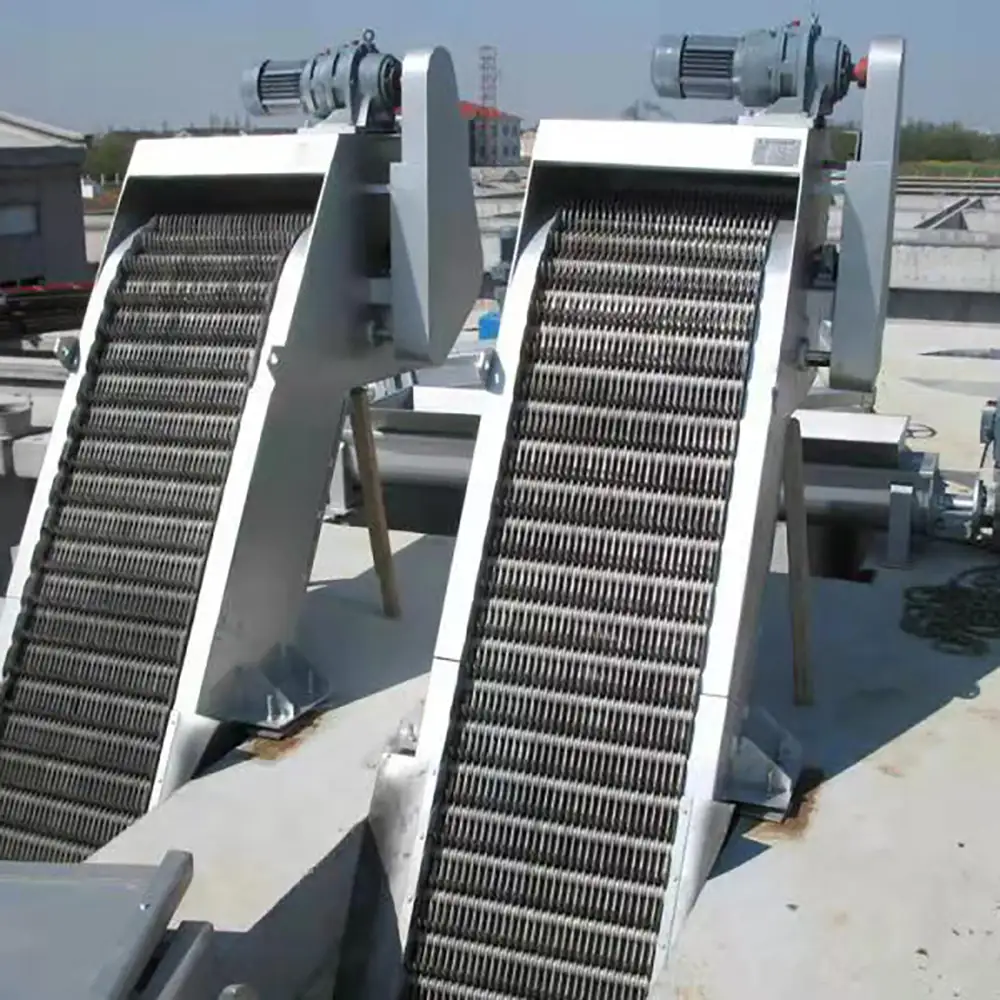
A Rotary Mechanical Grille is an automatic screening machine designed to continuously intercept and remove solid debris from wastewater and other flowing liquids. It is commonly installed at the inlet or pretreatment stage of municipal sewage treatment plants, industrial wastewater facilities, pumping stations and water intake systems.
Also known as a Rotary Mechanical Bar Screen, mechanical grille, rotary screen or rake-tooth screen, the equipment uses a rotating rake mechanism to collect intercepted materials from the liquid stream and discharge them above the water level. This continuous screening process reduces manual cleaning requirements and helps protect pumps, pipelines and downstream treatment units. Industry descriptions of rotary mechanical grilles identify continuous automatic debris removal and solid-liquid separation as their primary functions.
|
Model NO. |
wzss |
Handling method |
Physical Treatment |
|
Usage |
Industrial, Home, Agriculture, Hospital, Urban |
Trademark |
|
|
Types |
Package, Compact, Small, Mini |
Features |
Removal and separation of suspended solids in water |
|
Craft |
Mechanical removal |
Operation |
Automatic |
|
Service Life |
20 Years |
Function |
Solid matter Suspended solids |
|
Steel Plate Thickness |
>4mm |
Installation Type |
Underground / Onground |
|
Voltage |
220V/ 380V/ Customerized |
Use for |
Food factory, slaughterhouse, chemical factory, household waste |
|
Colour |
Grey/Silver/Blue/Balck/Customerized |
Certificate |
SGS, ISO |
|
Material |
Carbon Steel, Stain Steel, FRP, PE, PP |
Specification |
stainless steel |
|
Transport Package |
Container Standard Packing |
Origin |
China |
How Does a Rotary Mechanical Grille Work?
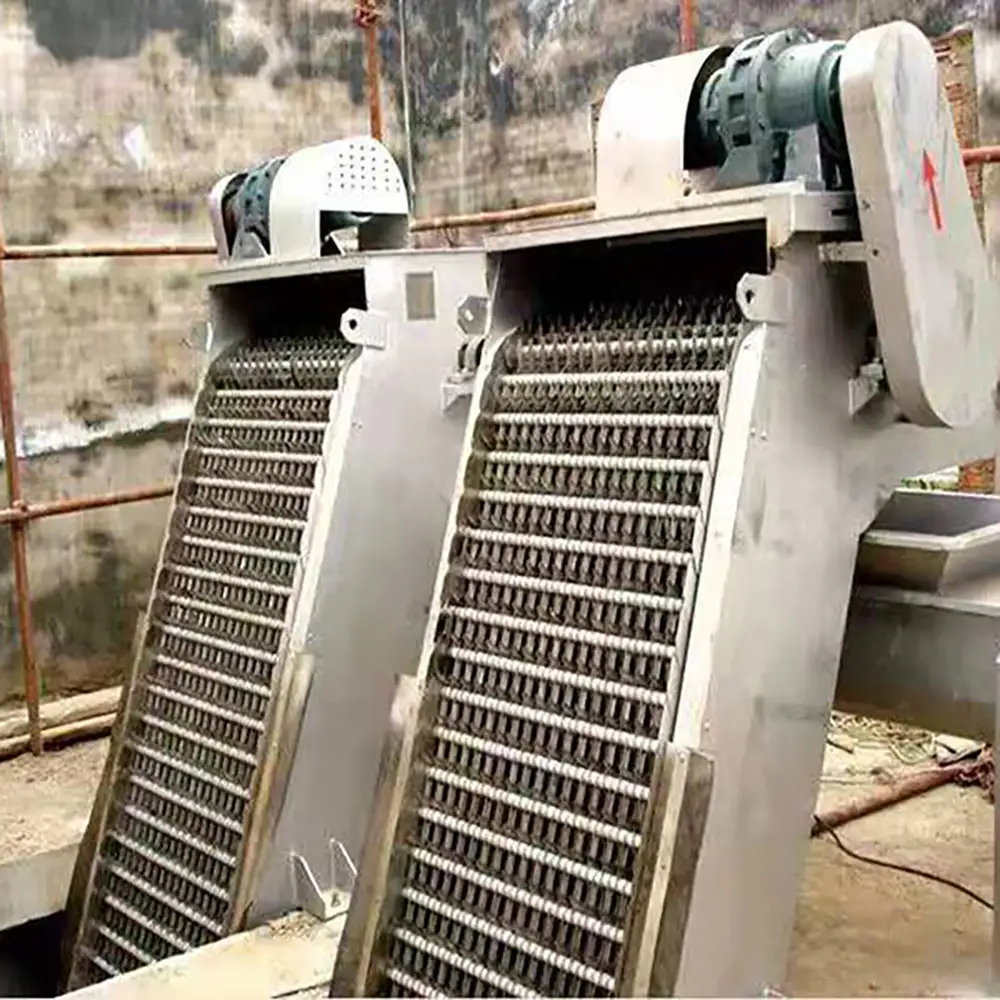
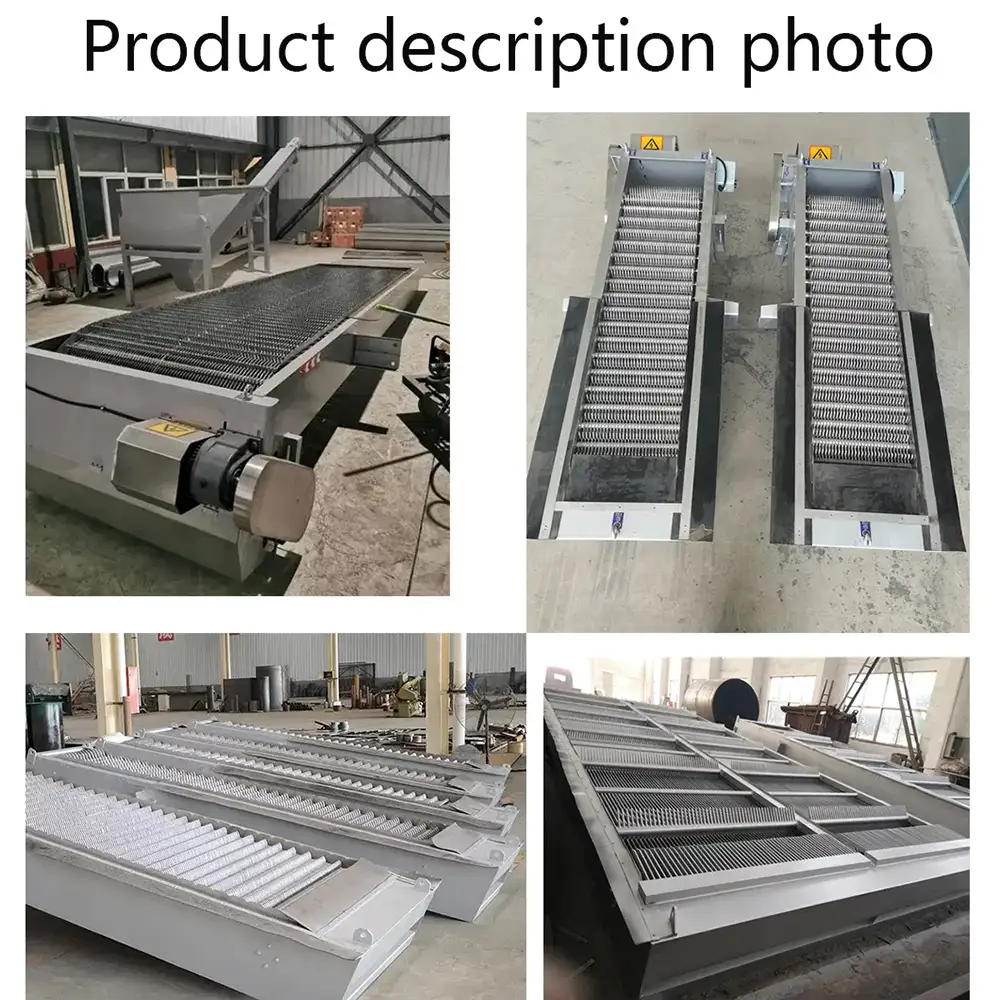
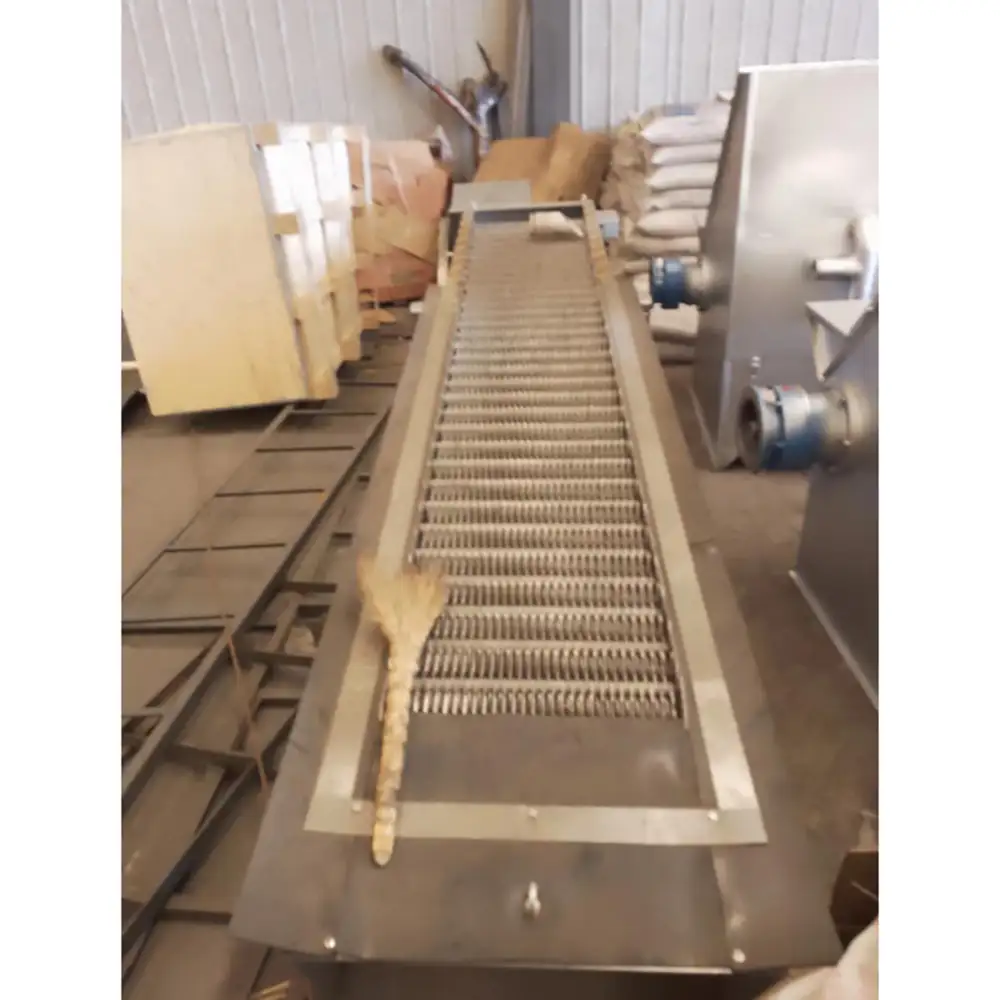
The main working components typically include a screen frame, screen bars or rake teeth, rotating chain assembly, drive motor, reducer, guide rails and a discharge or cleaning mechanism.
Wastewater flows through the screening section while larger solids are intercepted by the screen bars or rake teeth. The motor and gearbox drive the rake chain continuously along its operating track. As the rake teeth move upward, they lift the captured debris from the wastewater.
When the rake teeth reach the upper discharge area, their movement and the geometry of the guide system allow the collected material to separate from the teeth. The debris then falls into a collection chute or conveyor for further handling.
Some designs use additional brushes, scrapers or washing devices to remove material remaining on the rake teeth. Rotary mechanical grille systems may therefore provide continuous interception and automatic cleaning without requiring operators to manually rake the screen.
Rotary Mechanical Bar Screen for Wastewater Treatment
The Rotary Mechanical Grille is particularly useful as a front-end screening device in wastewater treatment.
Raw sewage can contain plastics, paper, fibers, leaves, packaging materials, hair, rags, floating debris and other coarse solids. If these materials enter pumps or biological treatment equipment, they can contribute to clogging, abrasion, mechanical damage and operational interruptions.
Installing a mechanical screen before subsequent treatment units allows larger solids to be removed at an early stage.
The screen opening or bar spacing should be selected according to wastewater characteristics, hydraulic flow, solids size and the requirements of downstream equipment. Available rotary grille designs can use different gap configurations for different screening applications.
Continuous Automatic Screening
One of the major advantages of a rotary mechanical grille is continuous operation.
Traditional manually cleaned screens require operators to periodically remove accumulated debris. A rotary mechanical grille automates this process by continuously moving the rake mechanism through the screen channel.
Automatic screening can reduce the need for routine manual removal, especially where wastewater contains a high or variable concentration of floating and suspended debris.
The equipment can also be operated through a control panel with automatic start and stop functions. Depending on the project, operation can be based on timers, water level difference, upstream water level or other process signals.
Solid-Liquid Separation
A rotary mechanical grille performs an important initial solid-liquid separation function.
The screen does not normally remove dissolved contaminants or fine particles that can pass through the selected screen openings. Instead, it focuses on intercepting larger solids and debris.
This makes it particularly suitable for wastewater pretreatment, where coarse materials need to be removed before processes such as grit removal, sedimentation, biological treatment, membrane filtration or sludge treatment.
By removing coarse solids at the beginning of the process, the screening stage can help reduce the physical load placed on downstream equipment.
Protection of Pumps and Downstream Equipment
A properly selected mechanical grille can serve as a protective barrier for pumps and other mechanical equipment.
Large rags, plastics, wood pieces and other debris can wrap around pump impellers or block pipelines. In wastewater treatment systems, these materials can also interfere with aeration equipment, mixers, clarifiers and other treatment components.
The rotary screening process captures suitable solids before they travel deeper into the treatment system.
This protective function is especially important at sewage pumping stations, lift stations and wastewater treatment plant inlet channels.
Municipal Sewage Treatment
Rotary Mechanical Grilles are widely used in municipal wastewater treatment.
Typical installation locations include:
Sewage treatment plant inlet channels
Pumping stations
Lift stations
Primary screening systems
Municipal wastewater pretreatment
Stormwater-related screening
Water intake structures
Municipal sewage can have significant variations in flow and debris loading. An automatic mechanical screen can therefore provide a practical solution for continuous coarse-solids interception. Rotary mechanical grilles are described for urban sewage treatment and water-treatment applications as automatic solid-removal equipment.
Industrial Wastewater Screening
The equipment can also be used for industrial wastewater pretreatment.
Potential applications include:
Food processing wastewater
Slaughterhouse wastewater
Textile wastewater
Paper mill wastewater
Pulp processing
Leather processing
Brewing wastewater
Sugar processing wastewater
Printing and dyeing wastewater
Petrochemical wastewater
Industrial wastewater characteristics can vary significantly. Some processes contain fibers, food residues, packaging materials, hair, plastics or other coarse solids. The screen configuration should therefore be selected according to the actual wastewater composition.
Some rotary grille applications also focus on recovering useful solids, such as fibers or process residues, rather than simply treating them as waste.
Screen Gap Selection
Screen opening size is an important consideration when selecting a Rotary Mechanical Grille.
A smaller opening can intercept finer solids, while a larger opening allows more water to pass with lower screening resistance. The optimum configuration depends on the required screening performance, hydraulic conditions and downstream equipment.
Factors to consider include:
Design flow rate
Peak flow rate
Channel dimensions
Wastewater characteristics
Debris size
Required screening level
Installation angle
Available head loss
Downstream equipment requirements
For this reason, screen dimensions and opening size should be determined through project-specific engineering rather than selecting a model based only on nominal capacity.
Automatic Cleaning and Debris Discharge
Automatic cleaning is an important part of the rotary grille design.
As the rake teeth travel through the wastewater, they collect intercepted material. When the rake assembly reaches the discharge area, the collected material is released into a receiving chute or conveyor.
Some designs incorporate mechanical cleaners or brushes to improve removal of material that remains attached to the teeth. Patent and equipment descriptions show the use of cleaning assemblies and rake-tooth mechanisms for improving continuous debris discharge.
This design helps reduce screen clogging and allows the machine to continue operating with limited manual intervention.
Installation and Maintenance
Before installation, the channel width, water depth, hydraulic conditions, installation angle and required discharge arrangement should be confirmed.
Routine maintenance normally includes inspection of the motor, gearbox, chain, bearings, rake teeth, guide rails and cleaning mechanism. Operators should also check for abnormal vibration, unusual noise, chain wear or material accumulation.
The screening area should be kept accessible for inspection and maintenance. The collected screenings should be transferred to an appropriate waste handling system.
For wastewater containing abrasive materials or corrosive chemicals, suitable construction materials and protective measures should be considered.
Integration With Complete Wastewater Treatment Systems
A Rotary Mechanical Grille can be integrated with a complete wastewater treatment process.
A typical treatment arrangement may include:
Inlet → Rotary Mechanical Grille → Grit Removal → Equalization → Biological Treatment → Clarification → Filtration → Disinfection
The exact process depends on wastewater characteristics and treatment objectives.
For industrial applications, the rotary grille may be followed by oil separation, dissolved air flotation, chemical treatment or biological treatment. For municipal sewage, it may serve as the first mechanical pretreatment stage before subsequent treatment units.
Why Choose Us
Continuous Automatic Screening: Designed for continuous interception and removal of wastewater debris.
Effective Pretreatment: Helps remove coarse solids before downstream treatment processes.
Automatic Rake Cleaning: Rotary rake teeth transport collected material toward the discharge point.
Reduced Manual Labor: Automatic operation reduces routine manual screening work.
Pump Protection: Helps prevent large debris from entering pumps and downstream equipment.
Flexible Screen Configuration: Screen openings and equipment dimensions can be selected according to project requirements.
Municipal and Industrial Applications: Suitable for sewage treatment plants, pumping stations and industrial wastewater systems.
Compact Mechanical Structure: Designed for integration into wastewater channels and pretreatment systems.
Automatic Control: Can be integrated with level sensors, timers and plant control systems.
Complete Project Support: Equipment configuration can be based on flow rate, channel dimensions, solids characteristics and downstream treatment requirements.
Frequently Asked Questions
1. What Is a Rotary Mechanical Grille?
A Rotary Mechanical Grille is an automatic screening machine that uses rotating rake teeth or a mechanical screen assembly to intercept and remove solid debris from wastewater.
2. Is a Rotary Mechanical Grille the Same as a Rotary Mechanical Bar Screen?
In wastewater treatment applications, the terms are often used for similar equipment. Both generally refer to mechanically operated screening equipment that continuously removes intercepted solids.
3. What Does a Rotary Mechanical Grille Remove?
It is primarily designed to remove coarse and screenable solids such as plastics, rags, fibers, leaves, paper and other floating or suspended debris that is larger than the selected screen opening.
4. Where Is the Equipment Installed?
It is commonly installed at wastewater treatment plant inlets, pumping stations, lift stations, industrial wastewater pretreatment systems and certain water intake applications.
5. Can It Be Used for Industrial Wastewater?
Yes. It can be used for wastewater from food processing, slaughterhouses, paper mills, textiles, leather processing and other industries where coarse solids need to be intercepted.
6. Does the Rotary Grille Operate Automatically?
Yes. The drive system continuously rotates the rake assembly, and the collected solids are automatically lifted and discharged.
7. How Is the Screen Cleaned?
Depending on the design, collected material is removed through the relative movement of the rake teeth, scrapers, brushes or other cleaning mechanisms.
8. How Do I Select the Screen Opening?
Screen opening should be selected according to wastewater flow, solids characteristics, required screening performance, channel dimensions and downstream equipment requirements.
9. Can It Protect Wastewater Pumps?
Yes. By intercepting large debris before the pump or downstream equipment, the screen can help reduce the risk of clogging and mechanical interference.
10. Can the Equipment Be Integrated With a PLC?
Yes. The rotary mechanical grille can be configured with electrical controls and connected to a plant PLC or other automation system.
11. What Maintenance Does a Rotary Mechanical Grille Require?
Routine maintenance generally includes inspection of the drive motor, gearbox, chain, bearings, rake teeth, guide rails and cleaning components, together with removal of accumulated waste from the discharge area.
12. What Information Is Needed for Equipment Selection?
Important information includes design and peak flow, channel width and depth, wastewater type, solids characteristics, required screen opening, installation angle, available headroom and the desired screenings discharge method.
Prev:
Dosing Device
Next:
Quartz Sand, Activated Carbon Filter
TAG:
Solid Liquid Separation Equipment,
Suspended Solids Removal Equipment,
Solid-Liquid Separation Equipment,
Wastewater Pretreatment Equipment,
Wastewater Screening Equipment,
Industrial Sewage Treatment Equipment,
Rag Removal Screen,
Textile Wastewater Screening,
Paper Mill Wastewater Screening,
Pulp And Paper Wastewater Screening,
Leather Wastewater Screening,
Brewing Wastewater Screening,
Sugar Industry Wastewater Screening,
Printing Wastewater Screening,
Dyeing Wastewater Screening,
Petrochemical Wastewater Screening,
Fiber Screening Equipment,
Plastic Screening Equipment,
Rotary Rake Wastewater Screen,
Automatic Rotary Rake Screen,
Continuous Mechanical Screen,
Continuous Wastewater Screening,
Continuous Bar Screen,
Automatic Wastewater Bar Screen,
Municipal Wastewater Treatment Equipment,
Industrial Wastewater Pretreatment,
Water Treatment Screening Equipment,
Water Intake Screen,
Pump Station Screen,
Lift Station Screen,
Related Category:
Rotary Mechanical Grille,Rotary Mechanical Bar Screen,Mechanical Grille,Rotary Bar Screen,Mechanical Bar Screen China, suppliers, manufacturers, factory, customized, wholesale, quotation, made in China