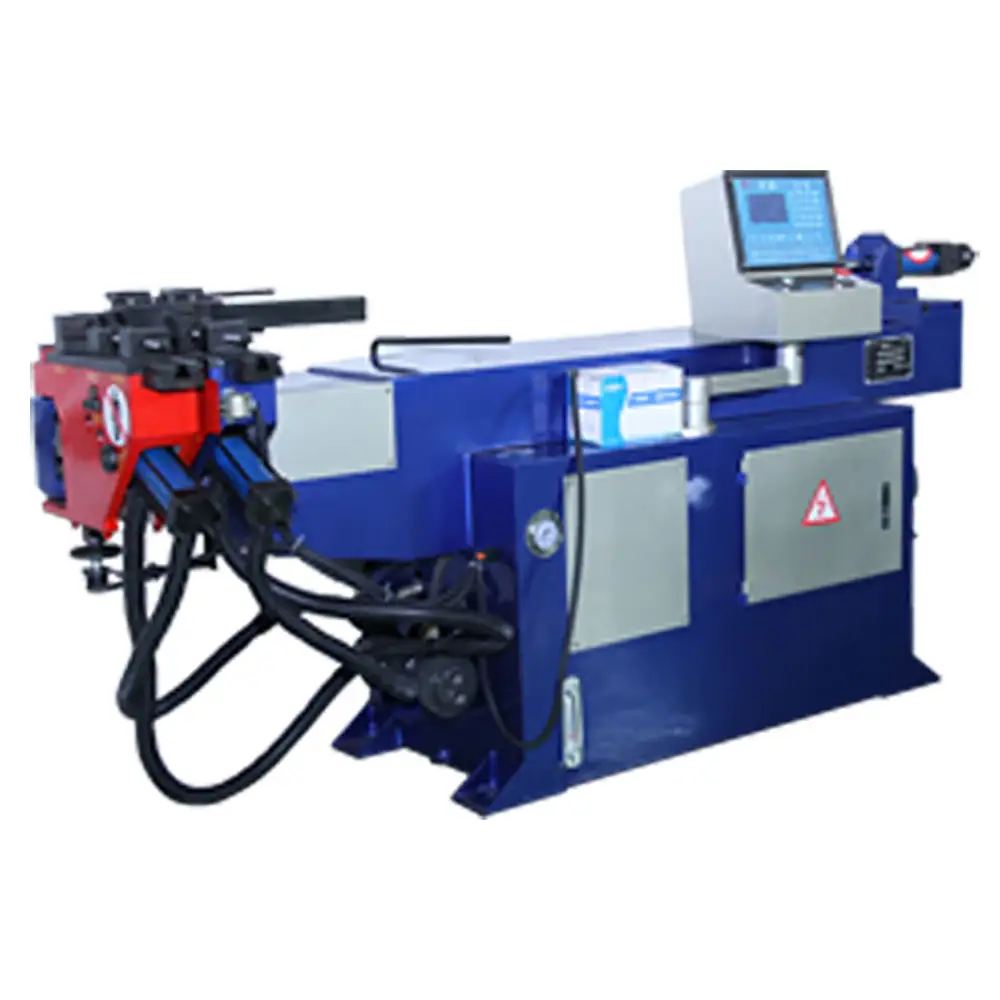
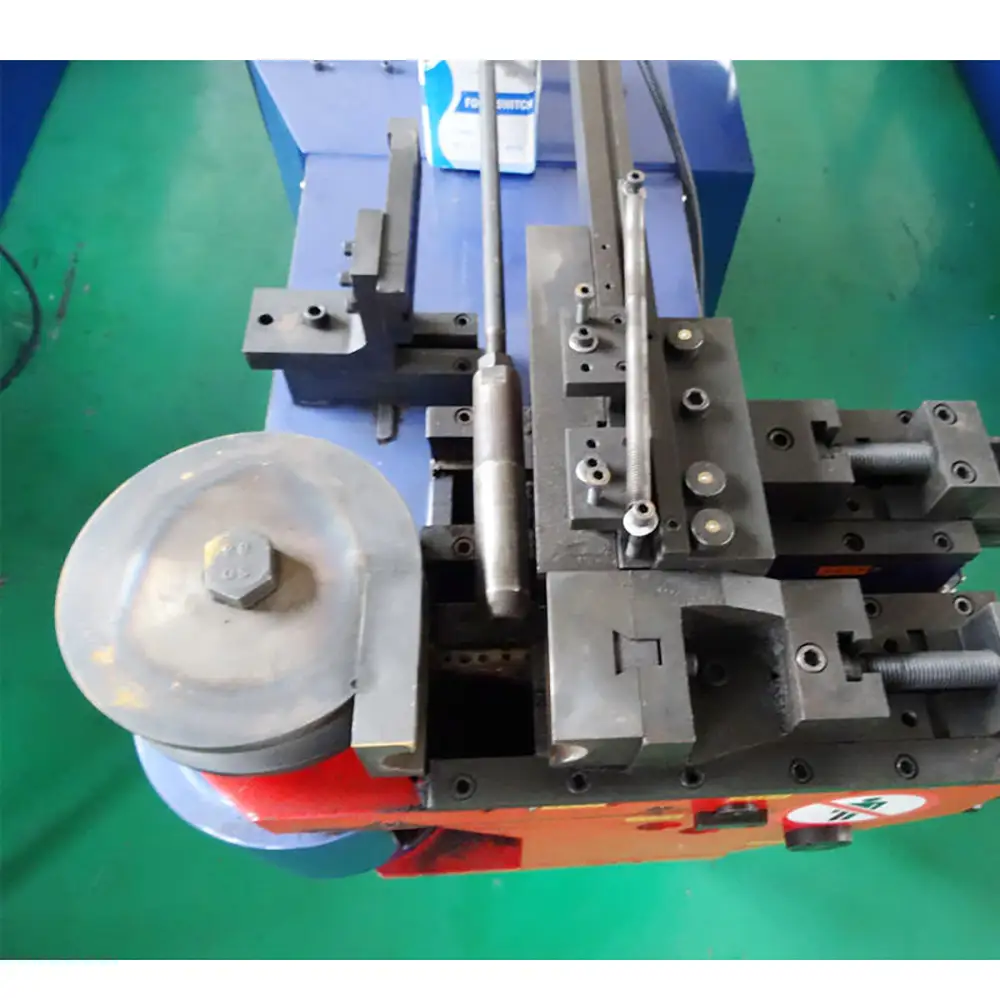
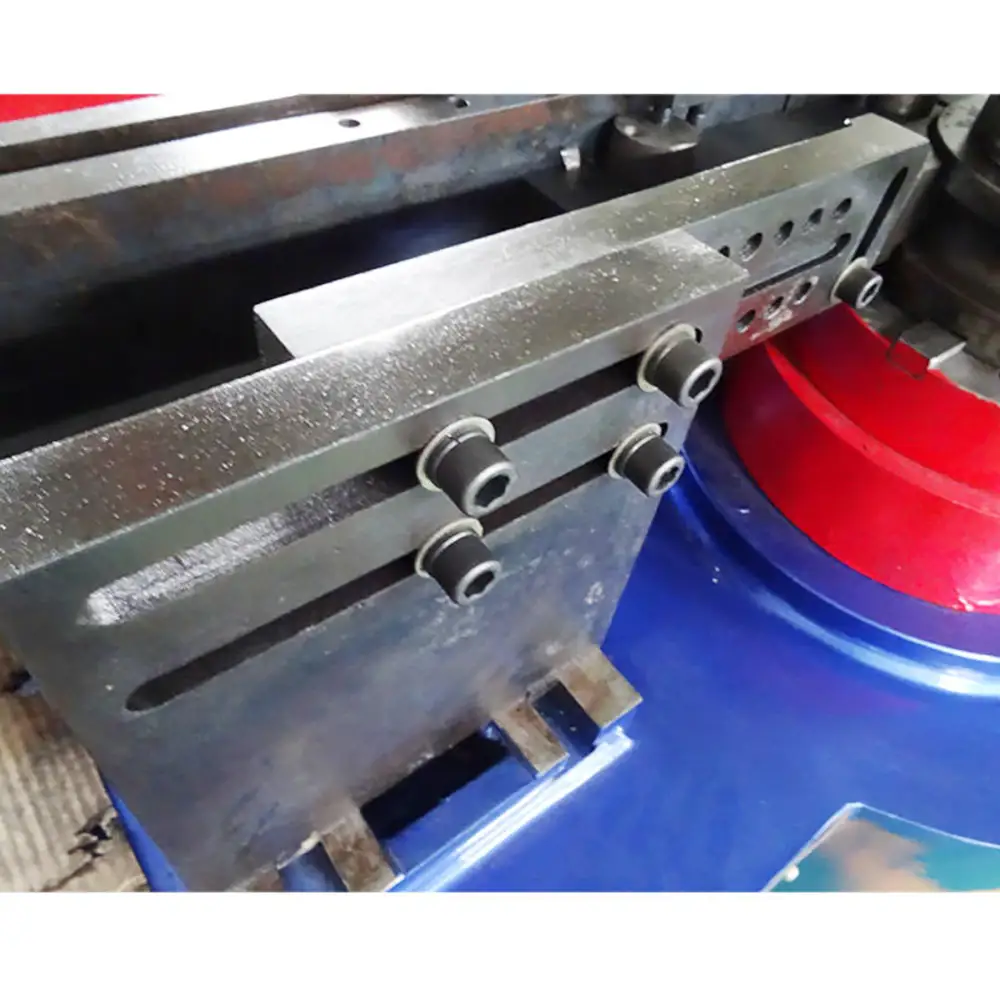
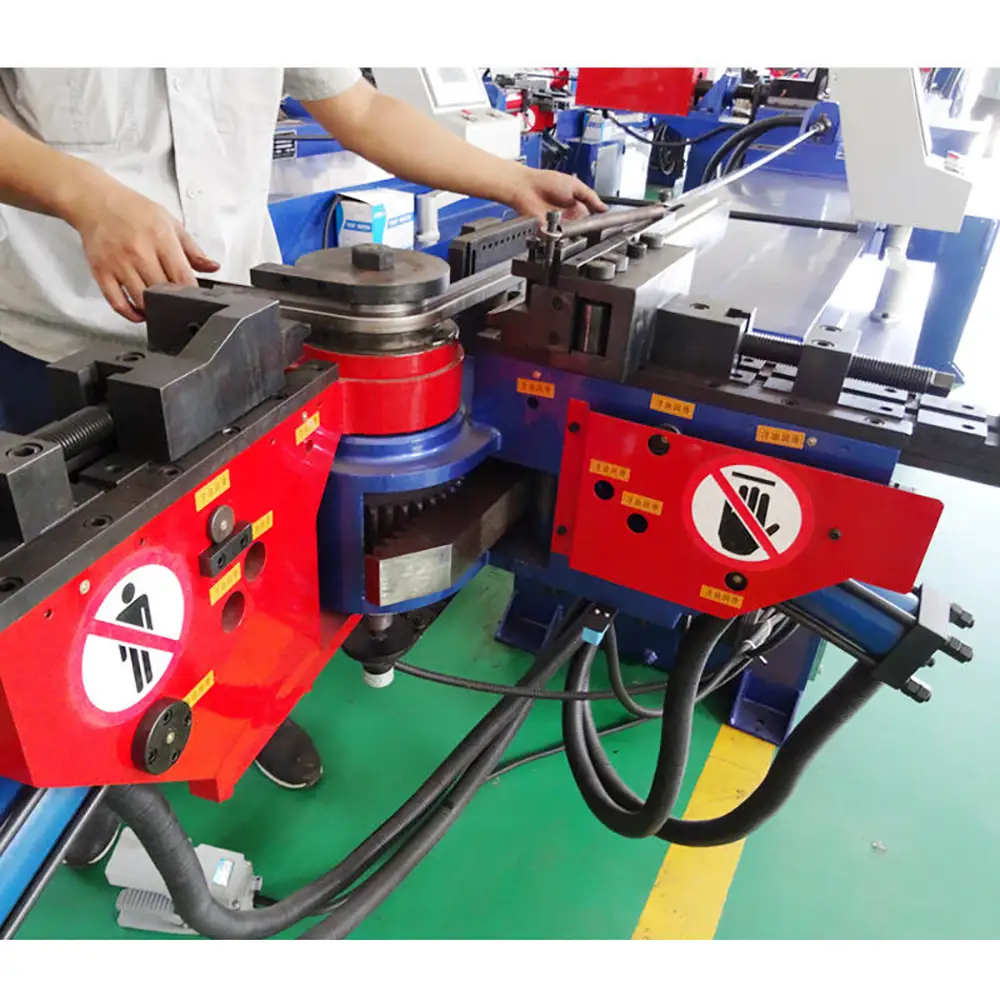
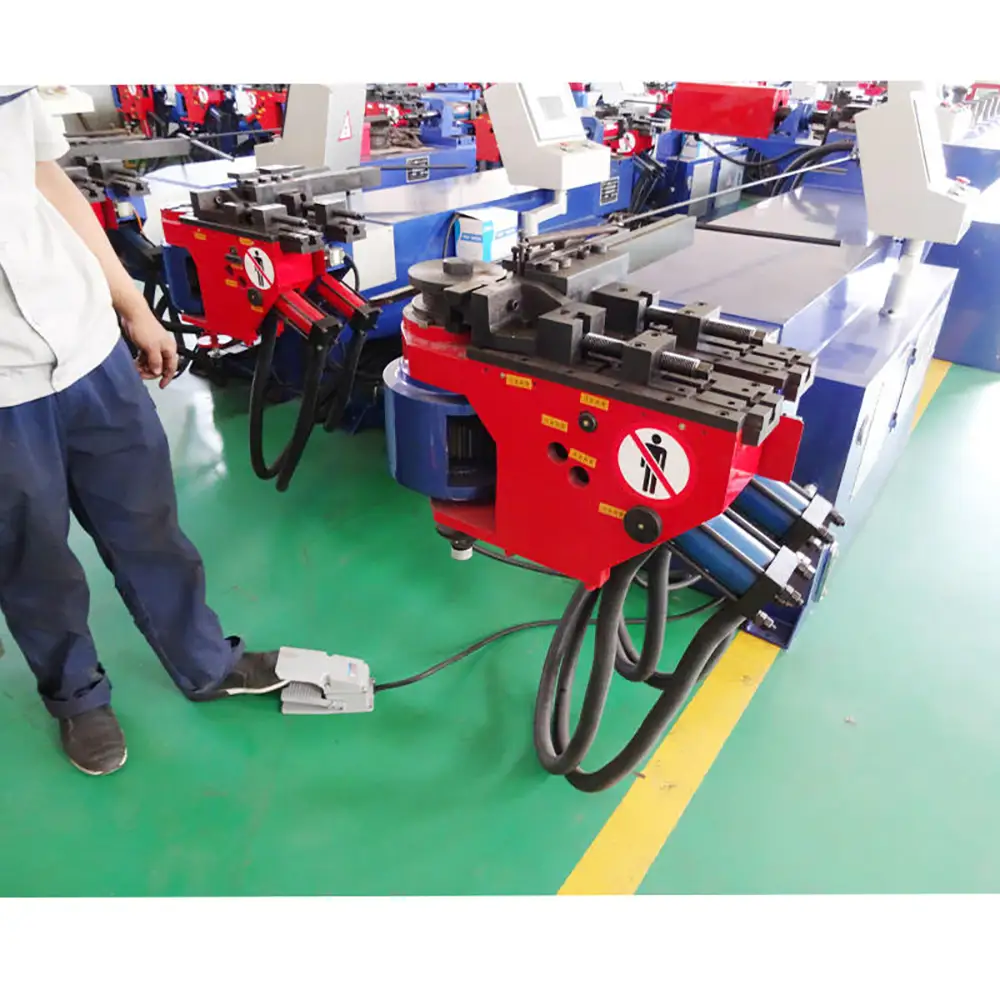
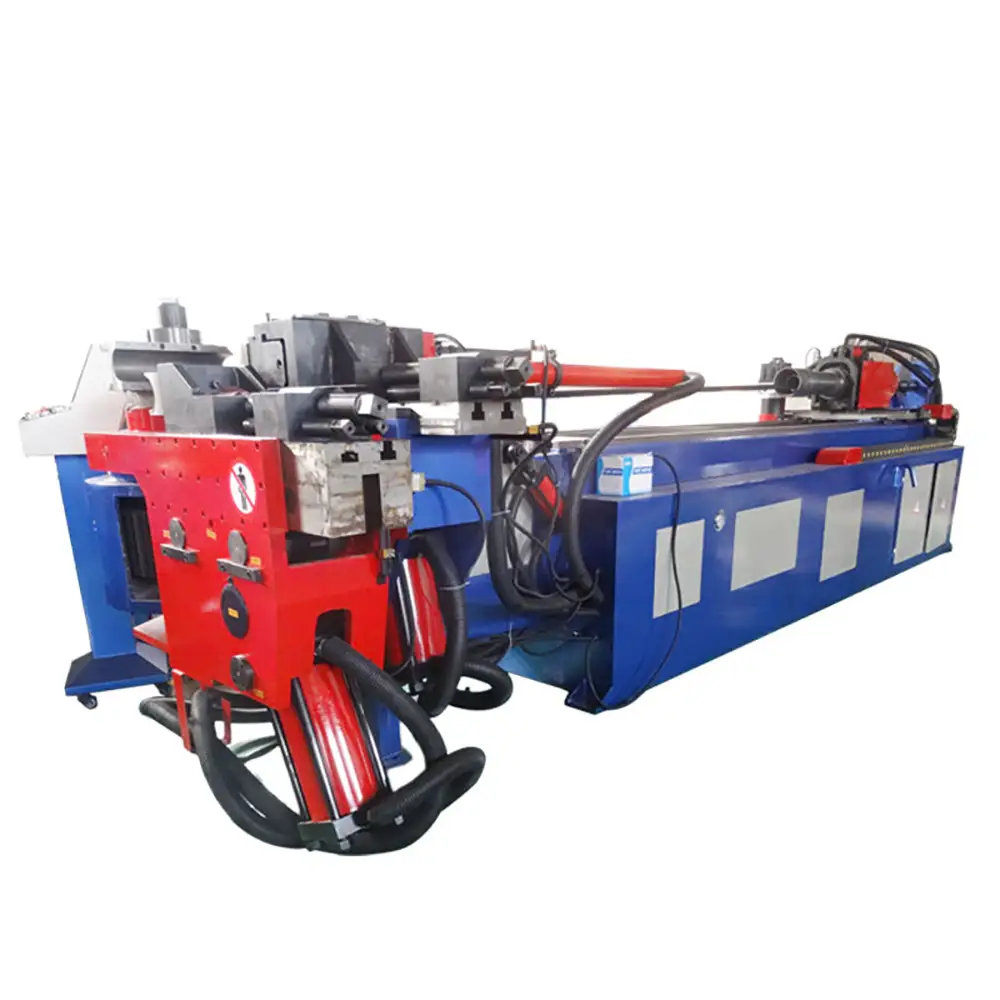
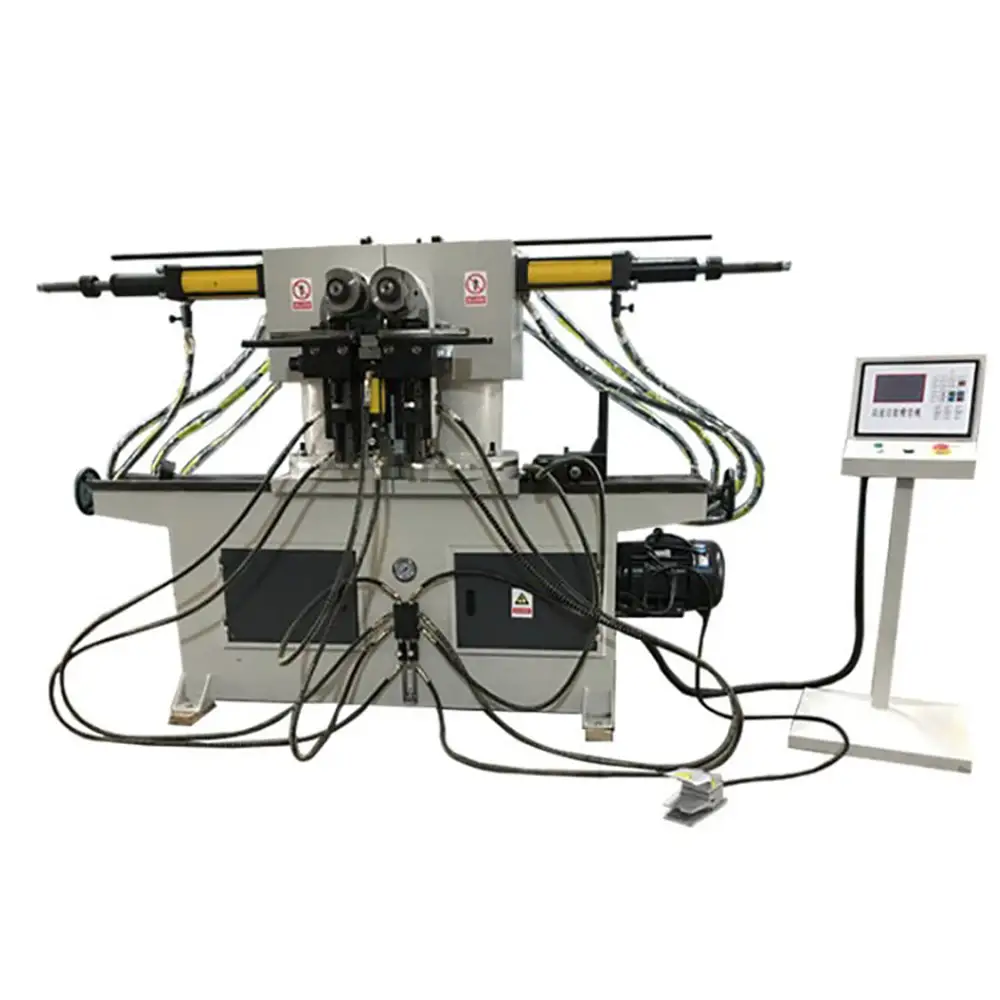
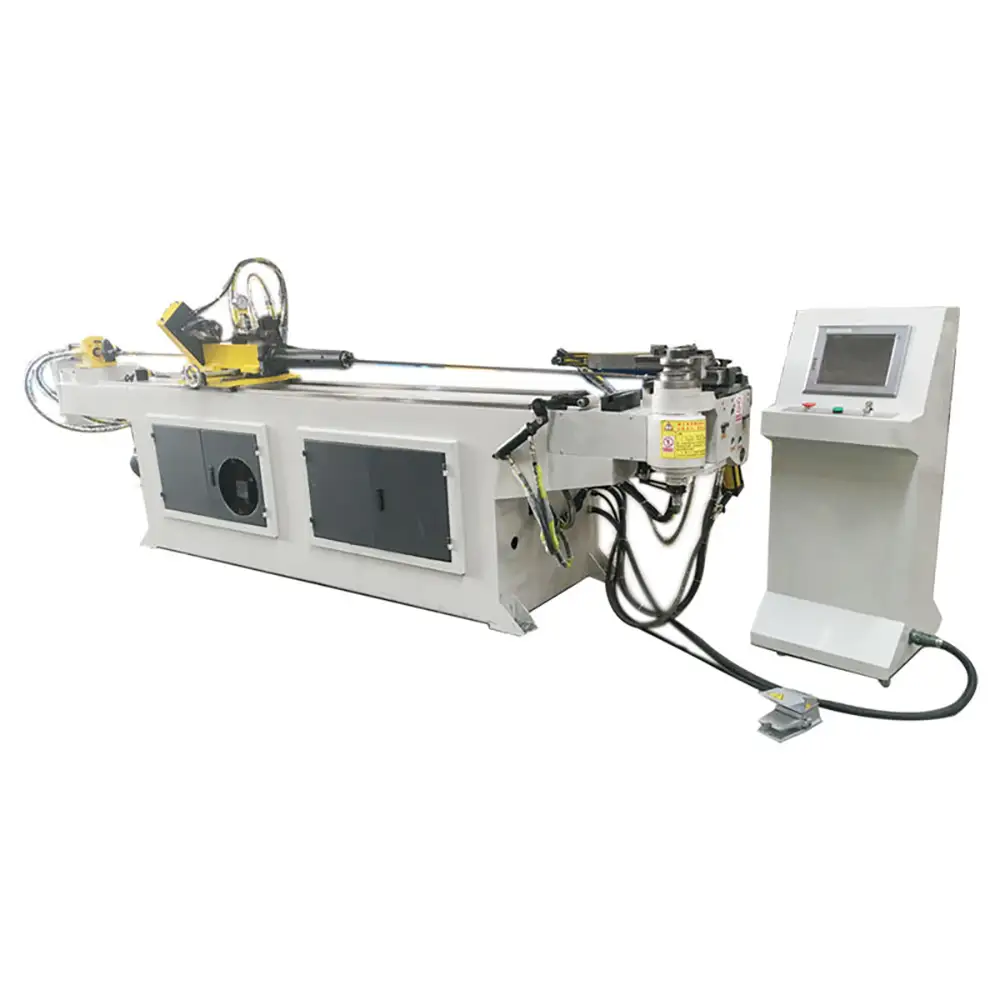
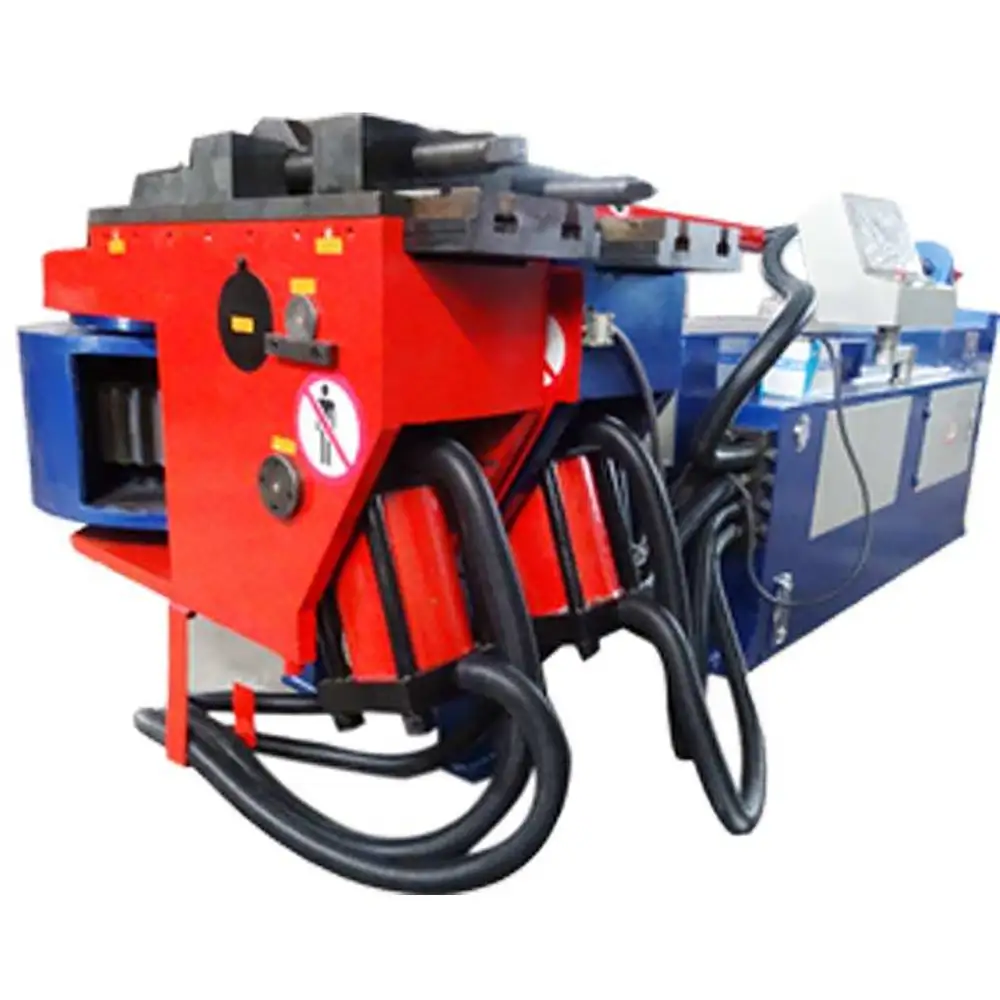
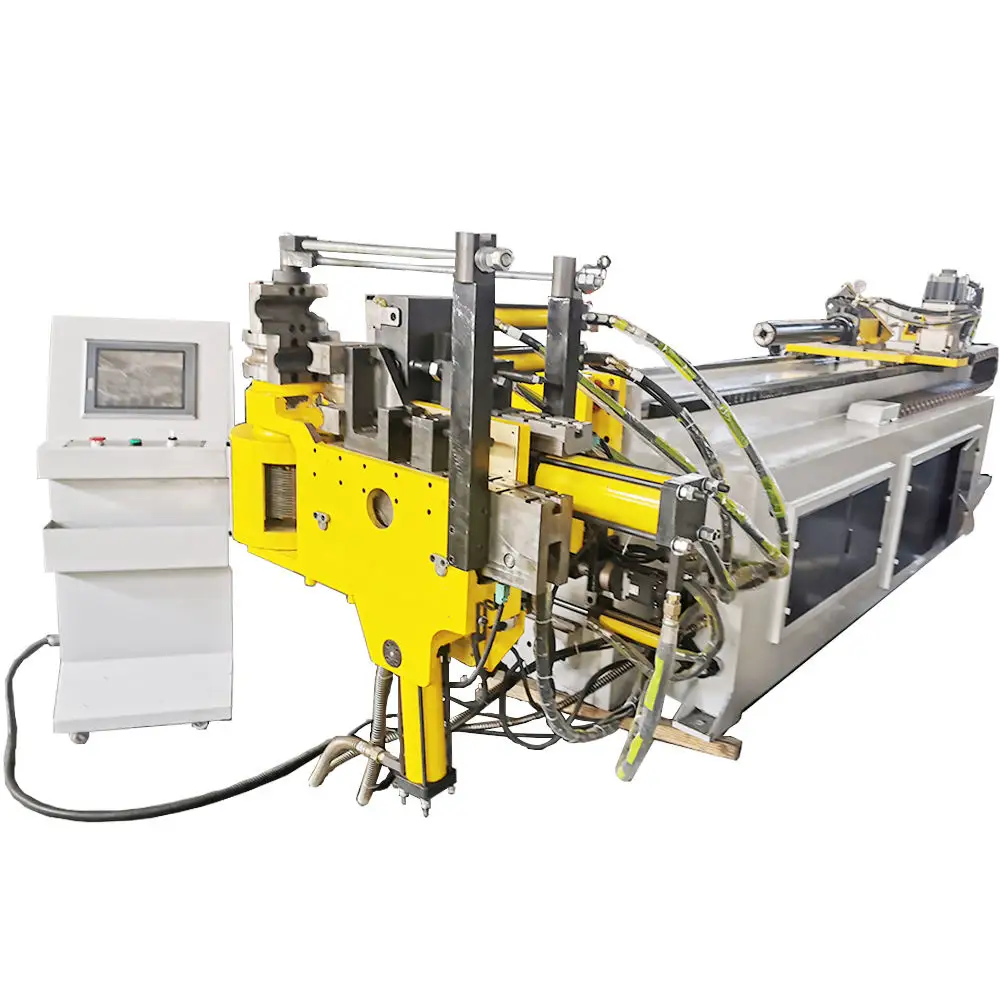
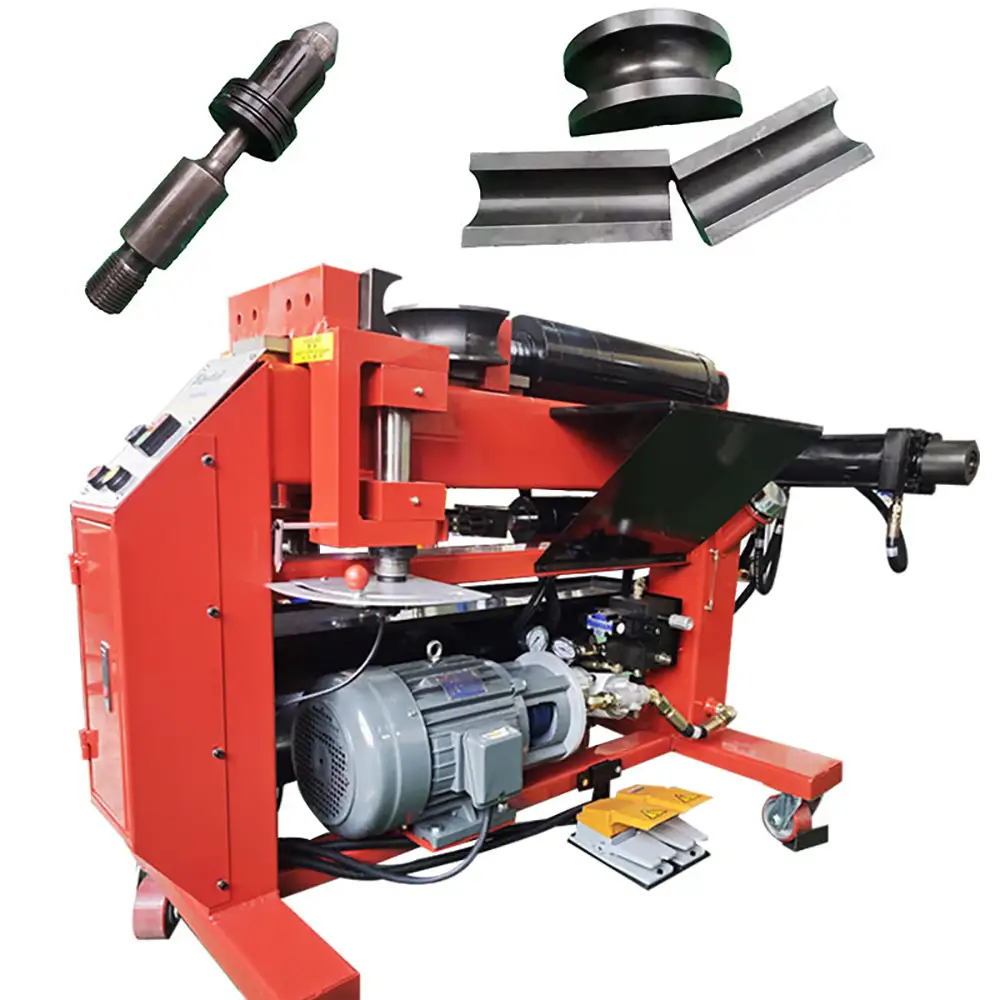
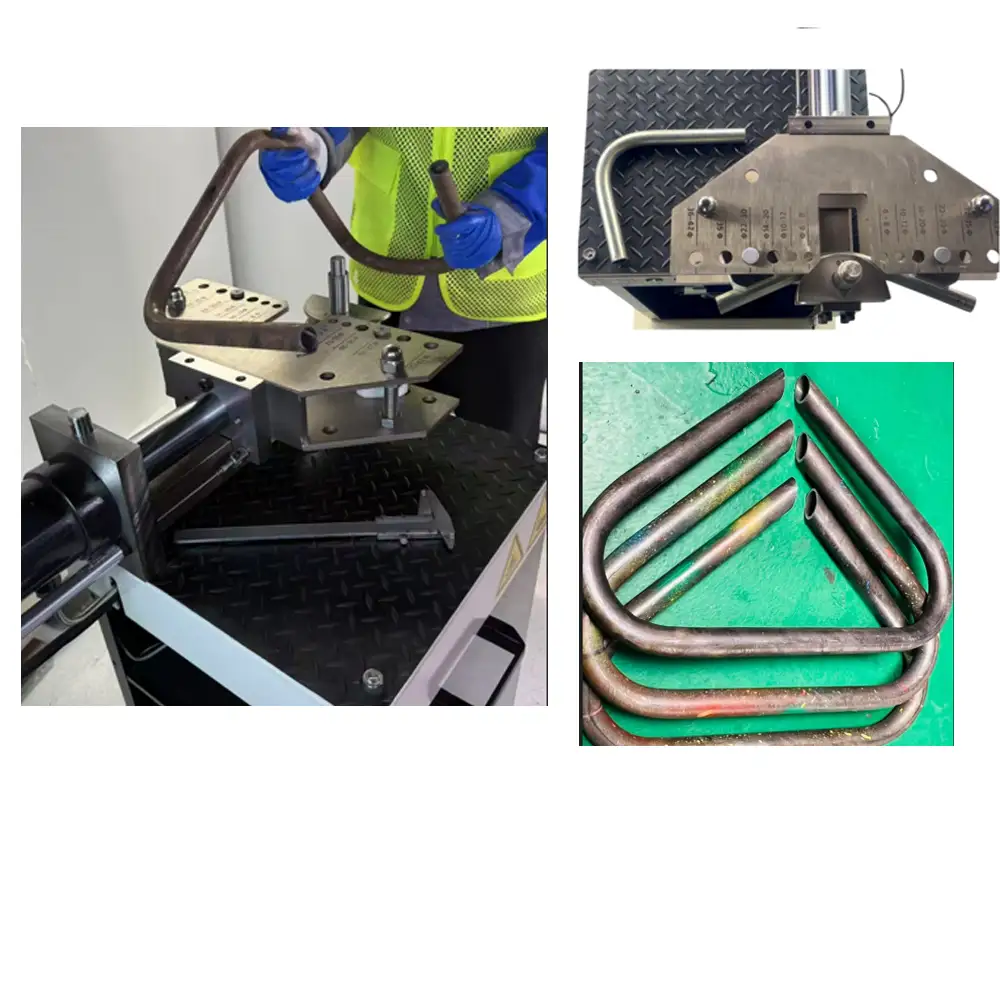
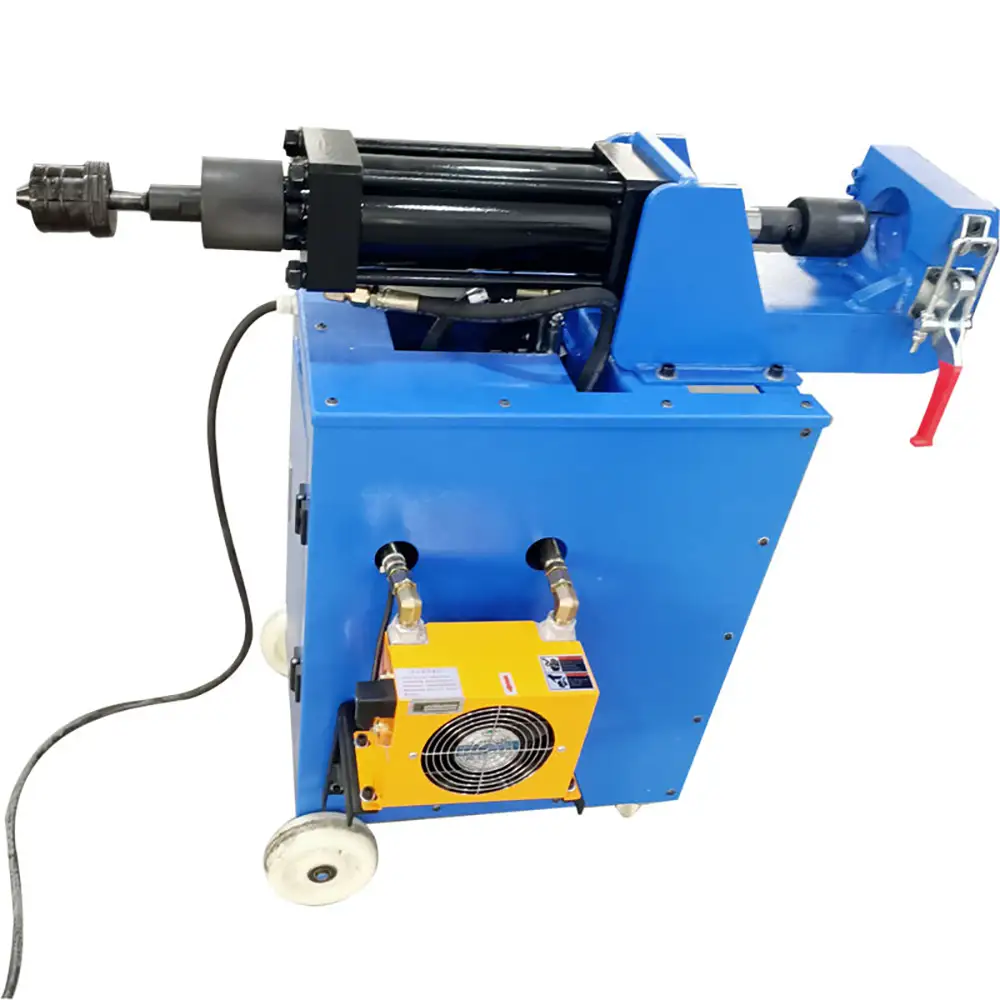
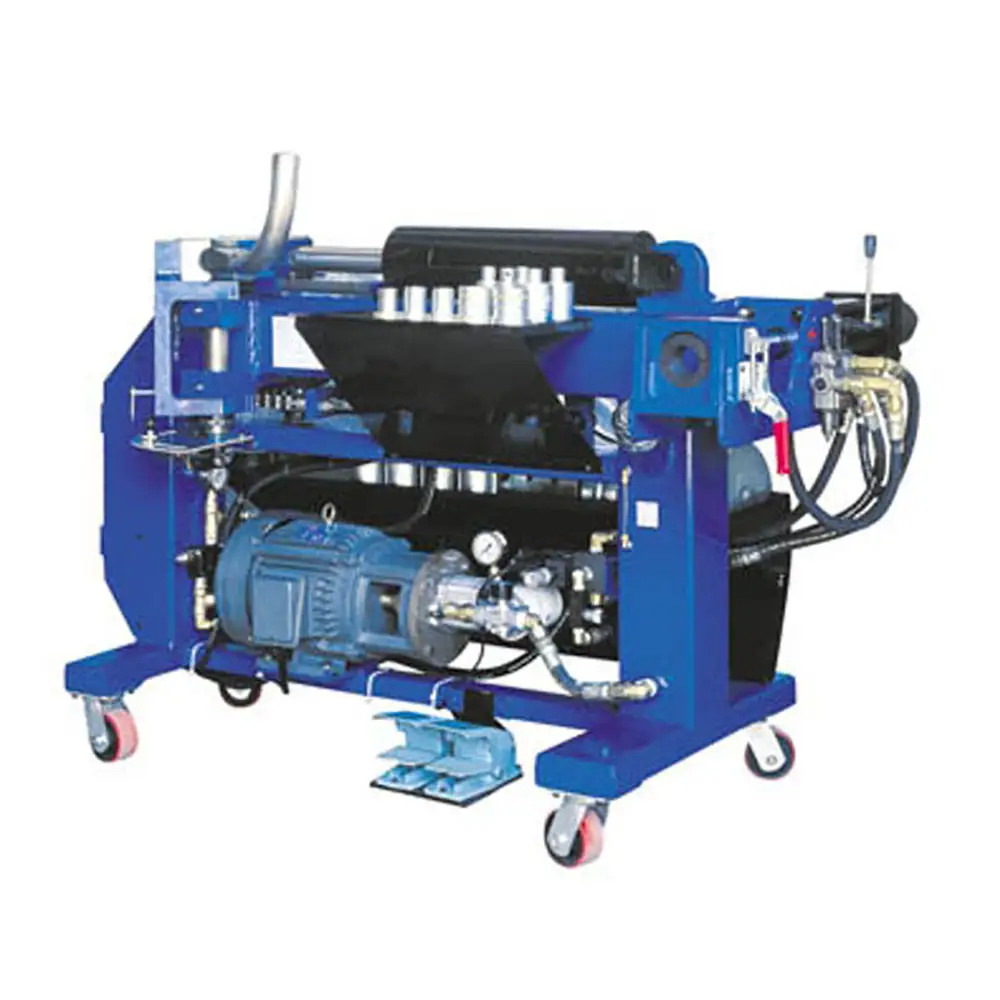
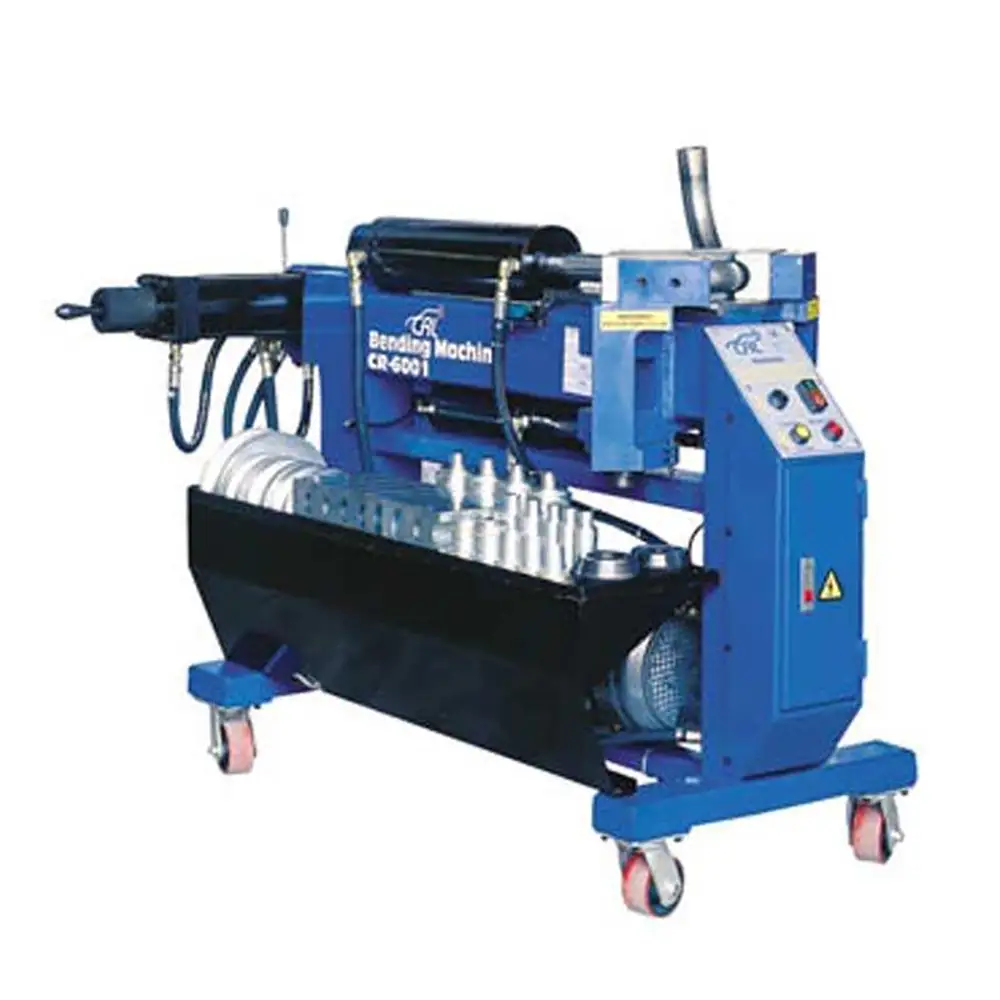
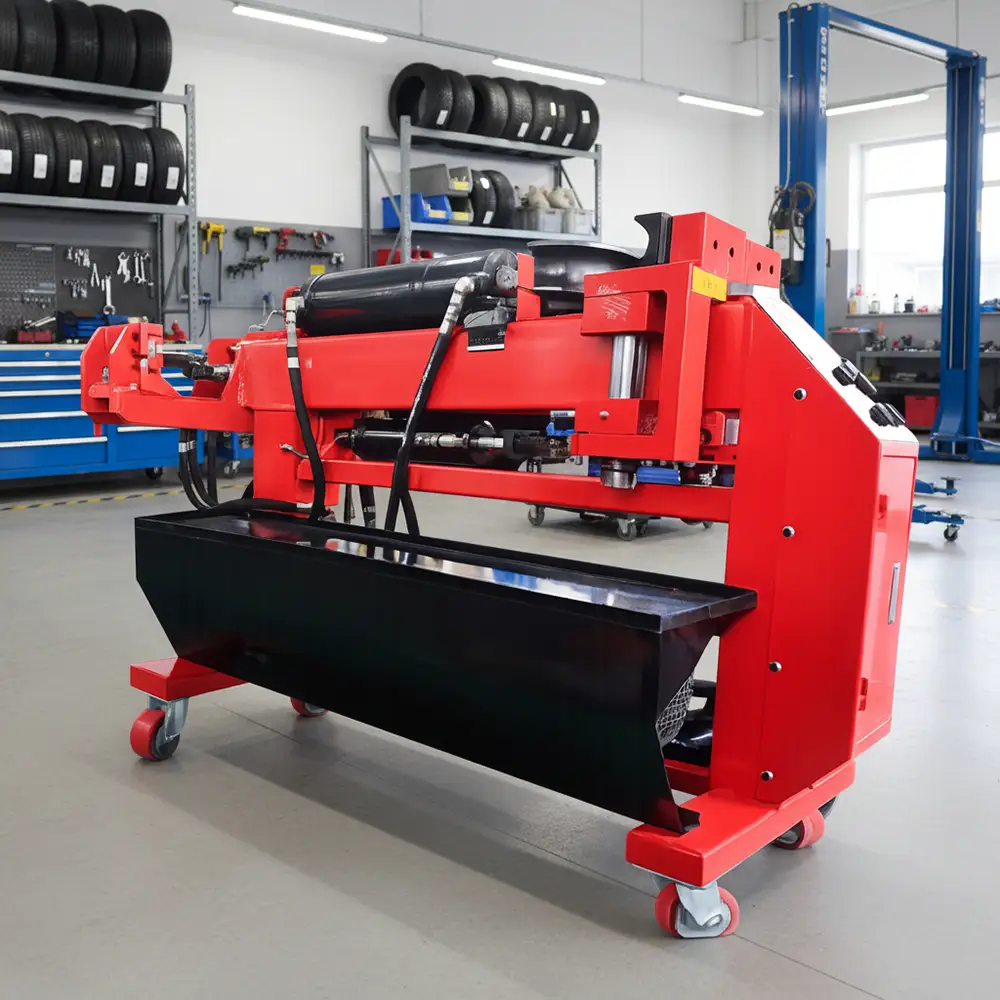
Features of Hydraulic Bender machine NC 38 1 1/2 INCH
1. Controlled by microcomputer, driven hydraulically
2.Touch screen offers easy access to auto and manual operating modes
3. Foot switches with functions of automatic start, emergency stop and resuming
4 .Cooling system control working temperature effectively
5 .Change mould simply and quickly
6. 100 sets of program storage, 32 bends for each program
7 .Electric: As required (3 phase 220V or 380V or 415V...)
8. Mandrel Rod devices
We provide Customized Service for Everyone's needs,tell us what your requirement on pipe processing,bending,punching, cutting, chamfering and so on
|
Model |
DW38nc(semi auto) |
Max. Bending Capacity |
round |
MS:φ38×3mm;SS: φ32×3mm |
|
Square |
30×30×2.5mm |
|
angle steel |
30 mm |
|
rectangle |
20×40mm |
|
rod |
φ20mm |
|
Square rod |
20×20mm |
|
Bending method |
Hydraulic |
|
Operate mode |
Manual, semi auto, |
|
Feeding, rotate and adjust angle |
manual |
|
Fit to Shapes |
Round tube, square tube, elliptical tube, plum blossom-shape tube, shaped tube, U-steel, angle steel, I-steel and flat steel, etc |
|
Adapted material |
steel pipe, stainless steel, copper pipe, aluminum pipe,and multiple-unit tube |
|
System language |
Chinese, English, Spanish, Russian, or as requirement |
|
range of bending radius |
R25-R200mm |
|
Max bending angle |
220° |
|
Bending precession |
±0.1° |
|
Bending speed |
70°/sec |
|
voltage |
380/415 or as requirement |
|
Total power |
4 KW |
|
Oil Tank Capacity |
100 KG |
|
Hydraulic oil |
antiwear hydraulic oil |
|
Standard Oil pressure |
16 MPA |
|
Max oil temperature |
60° |
|
cooling method |
Air-cooled or Water-cooled |
|
operating mode |
button , touch screen, footswitch |
|
Maximum number of stored bending programs |
200 set |
|
Max number of elbow pipe each program |
20 set |
|
Oversize |
2.6×0.85×1.2m |
|
weight |
1000 kg |
Pipe Processing Machines for Metal Tube Fabrication
Pipe Processing Machines are industrial metalworking machines designed to perform bending,forming,and other processing operations on pipes and tubes. The Pipe Bending Machine is one of the most widely used types of pipe processing equipment,helping manufacturers form straight metal tubes into controlled angles,curves,and complex geometries.
These machines are suitable for metal fabrication shops,automotive manufacturers,construction suppliers,furniture producers,agricultural machinery manufacturers,HVAC companies,and general industrial applications.
The term Maquinas De Procesamiento De Tubos refers to pipe and tube processing machines in Spanish. For international B2B buyers,the product category can include pipe benders,tube bending machines,pipe cutting equipment,end forming machines,punching machines,and other specialized tube processing equipment.
The actual machine configuration depends on the required pipe material,diameter,wall thickness,bending radius,production volume,and processing method.
Pipe Bending Machine
A pipe bending machine forms metal tubing into a desired curved shape without requiring the tube to be cut into multiple sections.
Depending on the machine design,the bending process may use hydraulic,electric,mechanical,or CNC-controlled systems.
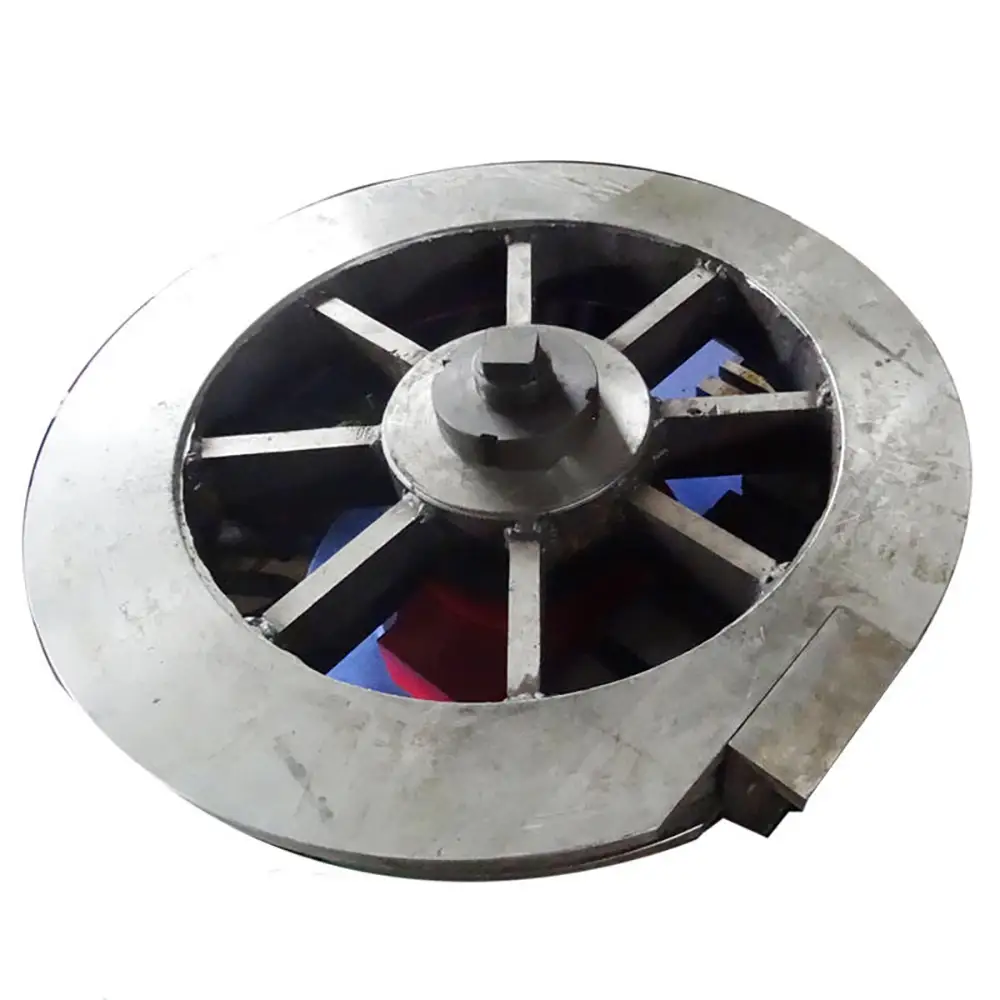
The bending machine generally uses dedicated tooling to support and form the tube. Common tooling components may include bending dies,clamping dies,pressure dies,guide components,and other workholding elements.
The correct tooling must be matched to the tube diameter,wall thickness,material,and required bend radius.
Metal Pipe Processing
Pipe processing covers a wide range of manufacturing operations. Depending on the production requirements,a complete pipe processing workflow may include:
Pipe Cutting
Tube Bending
Pipe End Forming
Tube Expanding
Tube Shrinking
Pipe Beading
Hole Punching
Tube Drilling
End Notching
Flanging
Tube Flattening
Pipe Welding Preparation
A manufacturer may use individual machines for each process or combine several operations into a larger production system.
For companies that process different tube products,the selection of suitable equipment can help improve production flexibility.
Steel Pipe and Tube Bending
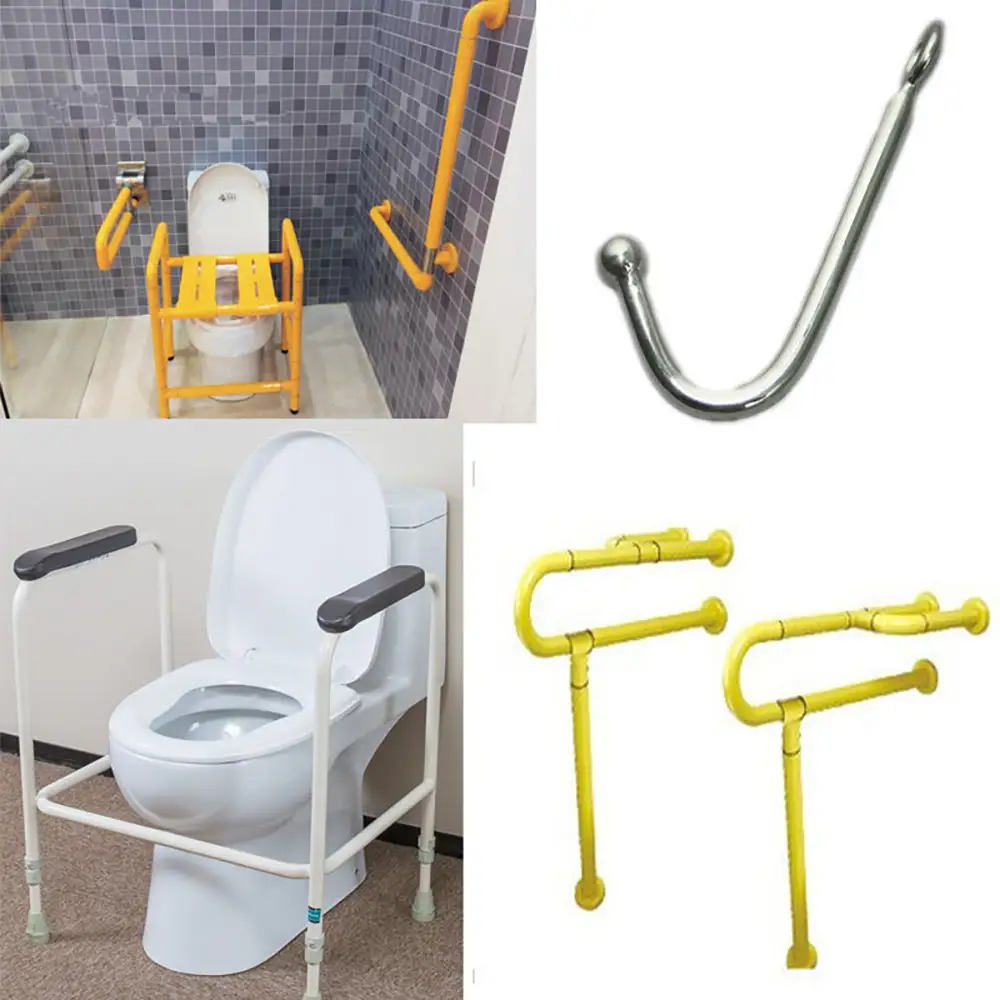
Steel pipe bending is one of the most common industrial tube forming applications. Carbon steel,mild steel,and stainless steel tubes are used in structural components,automotive products,furniture,construction equipment,and industrial machinery.
A suitable pipe bending machine can form these tubes into various angles and radii according to the tooling and machine configuration.
Material properties influence the bending process. High-strength steel may require greater forming force,while thin-wall tubing may require additional support to reduce flattening or wrinkling.
Customers should provide material grade,outer diameter,wall thickness,and bending requirements before selecting a machine.
Hydraulic Pipe Processing Machines
Hydraulic pipe bending machines use hydraulic power to generate the force required for forming suitable metal tubes.
Hydraulic systems can be useful for applications requiring controlled bending force,particularly when processing larger or heavier steel tubes.
The actual hydraulic pressure and bending capacity vary according to the machine model. Machine selection should therefore be based on the actual workpiece specifications rather than a general machine category.
Hydraulic tube bending equipment may be suitable for fabrication shops,industrial production,and applications where mechanical bending force is important.
Automatic and CNC Pipe Processing
For repetitive production,automatic or CNC pipe bending machines can provide programmed movement and improved process consistency.
Depending on the configuration,a CNC pipe bender may coordinate bending angle,rotation,positioning,and other machine movements.
This is useful for components containing multiple bends or requiring consistent dimensions across large production batches.
Automatic operation does not necessarily mean completely unmanned production. Operators may still be required for loading,unloading,setup,tool changes,and quality inspection.
The appropriate automation level depends on production volume,part complexity,and required cycle workflow.
Multiple Pipe Bending Applications
Pipe processing machines can be used in many industries.
Typical applications include:
Automotive Exhaust Systems
Automotive Chassis Components
Motorcycle Frames
Bicycle Frames
Metal Furniture
Handrails
Guardrails
Fences
Greenhouse Structures
Agricultural Machinery
Construction Equipment
HVAC Systems
Plumbing Components
Industrial Equipment
Steel Structures
For custom fabrication,the same pipe bending machine may be used for different products by changing the tooling and adjusting the bending parameters.
Tube Bending Radius and Geometry
The bending radius is an important consideration when selecting a pipe processing machine. The required radius depends on tube diameter,wall thickness,material,and product design.
Tighter bends generally place greater forming demands on the tube. Improper tooling or excessive bending force can cause flattening,wrinkling,cracking,or surface damage.
Springback is another factor that can affect the final bend angle. Different materials can return slightly toward their original shape after forming.
For precision applications,the machine should be evaluated using the actual tube material and required bend geometry.
Pipe Processing Tooling
Tooling determines how the tube is supported and shaped during processing.
Different pipe diameters and bending radii normally require different dies. Manufacturers producing multiple tube sizes may therefore need several tooling sets.
Depending on the application,the tooling system may include:
Bending Dies
Clamping Dies
Pressure Dies
Mandrels
Guides
Positioning Fixtures
End Forming Dies
Mandrel tooling may be considered for applications involving thin-wall tubing or tighter bend radii where internal deformation needs to be controlled.
Production Efficiency
Pipe processing machines can help reduce repetitive manual fabrication work. In production environments,the machine can provide a more consistent forming process than completely manual tube bending.
Actual productivity depends on pipe dimensions,number of bends,tooling changes,loading and unloading,material handling,machine cycle time,and quality inspection.
For high-volume production,the pipe bender can be integrated with automatic feeding,cutting,end forming,welding,and other processes where supported by the production line.
For custom fabrication and smaller production batches,a semi-automatic machine may provide a practical balance between flexibility and productivity.
Pipe Processing for Different Materials
Different metal tubes have different forming characteristics.
Common materials include:
Carbon Steel
Mild Steel
Stainless Steel
Aluminum
Copper
Galvanized Steel
Alloy Steel
Aluminum and copper are relatively formable but may require tooling that minimizes surface marking. Stainless steel can require careful control because of its strength and springback characteristics.
The selected machine and tooling should always be matched to the material and tube dimensions.
Quality Control
Finished tube quality depends on machine rigidity,tooling condition,material consistency,clamping,forming force,bending radius,and process parameters.
For products requiring repeatable dimensions,operators should verify the first production pieces against the engineering drawing.
Important inspection points may include:
Bend Angle
Bend Radius
Tube Diameter
Centerline Dimensions
Distance Between Bends
Surface Condition
Tube Flattening
Wrinkling
Overall Part Dimensions
A suitable inspection procedure can help identify process adjustments before a large production batch is completed.
Maintenance and Safety
Pipe processing machines contain moving components and may include hydraulic,electrical,and mechanical systems. Operators should follow the manufacturer's operating and maintenance instructions.
Depending on the machine configuration,safety features may include guards,emergency-stop controls,limit switches,and electrical protection.
Routine maintenance may include inspecting tooling,hydraulic lines,electrical connections,fasteners,and moving components. Damaged or worn tooling should be replaced or serviced to maintain forming quality.
Operators should keep hands away from the active bending and forming area during operation.
OEM and Custom Pipe Processing Solutions
Different industries require different tube processing operations. For this reason,pipe processing machines can be configured around specific production requirements.
Customers should provide:
Pipe Material
Pipe Outside Diameter
Wall Thickness
Tube Shape
Bend Radius
Bend Angle
Number of Bends
Production Volume
Required Tolerance
Processing Operations
CAD drawings,3D files,product samples,and photographs can help determine the appropriate machine and tooling.
OEM and ODM solutions may include customized bending dies,fixtures,feeding systems,control systems,and combined pipe processing equipment.
Why Choose Us
Complete Pipe Processing Solutions – Supports bending,forming,and other tube processing requirements according to the selected machine configuration.
Professional Pipe Bending Equipment – Suitable for steel,stainless steel,aluminum,copper,and other compatible metal tubes.
Flexible Machine Configurations – Hydraulic,electric,semi-automatic,and automatic solutions can be evaluated according to production needs.
Wide Industrial Applications – Suitable for automotive,construction,furniture,agriculture,HVAC,and general metal fabrication.
Multiple Tooling Options – Dies,mandrels,fixtures,and other tooling can be selected according to tube geometry.
Production Repeatability – Controlled bending processes can help improve consistency across repeated components.
B2B Manufacturing Support – Suitable for factories,distributors,wholesalers,engineering companies,and industrial equipment buyers.
OEM & ODM Service – Machine configurations and tooling can be customized according to drawings,samples,materials,and production requirements.
FAQs
1. What are pipe processing machines?
Pipe processing machines are industrial machines used for operations such as pipe bending,cutting,end forming,expanding,shrinking,punching,drilling,and other tube fabrication processes.
2. What is a pipe bending machine?
A pipe bending machine is equipment designed to form metal pipes or tubes into specific angles,curves,and radii using suitable tooling and mechanical force.
3. What materials can pipe bending machines process?
Depending on the machine configuration,suitable materials may include carbon steel,mild steel,stainless steel,aluminum,copper,galvanized steel,and alloy steel.
4. Can the machine bend stainless steel tubes?
Yes. Stainless steel tubing can be processed when the machine and tooling are correctly selected for the material,diameter,wall thickness,and required bend radius.
5. Can aluminum and copper tubes be bent?
Yes. Suitable aluminum and copper tubes can be bent with appropriate tooling and controlled forming parameters.
6. What is the difference between hydraulic and electric pipe benders?
Hydraulic machines use hydraulic force for forming,while electric systems use electric motors and mechanical transmission. The appropriate type depends on tube dimensions,production requirements,and machine design.
7. Can a pipe bender make multiple bends?
Yes. Automatic and CNC pipe bending machines can be configured for multiple bends,including different angles and positions within the machine's capabilities.
8. What is mandrel tube bending?
Mandrel tube bending uses an internal support inside the tube during forming. It can help control deformation in suitable thin-wall or tight-radius bending applications.
9. Are pipe processing machines suitable for automotive applications?
Yes. They are commonly used for exhaust components,chassis tubes,frames,and other automotive tubular components when the machine capacity and tooling are appropriate.
10. Can one machine process different pipe sizes?
Potentially. Different pipe sizes can often be processed by changing tooling and machine settings,subject to the machine's rated operating range.
11. Can pipe processing equipment be customized?
Yes. Custom dies,fixtures,feeding systems,controls,and combined processing functions can be considered according to the application.
12. What information is needed for a quotation?
Provide pipe material,outer diameter,wall thickness,tube shape,bend radius,bend angles,number of bends,production volume,and drawings or samples if available.
Prev:
Wheelbarrow Frame Bending Machine DW38NC
Next:
DW38CNC-2A-1S Full Automatic Pipe Bending Machine Bend by Hydraulic
TAG:
Metal Pipe Forming Machine,
Metal Tube Forming Machine,
Pipe Beading Machine,
Tube Beading Machine,
Pipe Shrinking Machine,
Tube Shrinking Machine,
Tube End Forming Machine,
Pipe End Forming Machine,
Pipe Expanding Machine,
Tube Expanding Machine,
Metal Tube Processing Machine,
Tube Processing Machine,
Pipe Forming Machine,
Tube Forming Machine,
Pipe Fabrication Machine,
Tube Fabrication Machine,
Tube Punching Machine,
Pipe Punching Machine,
Metal Pipe Processing Machine,
Pipe Processing Equipment,
Tube Processing Equipment,
Tube Notching Machine,
Exhaust Pipe Bending Machine,
Steel Tube Bending Machine,
Tube Fabrication Equipment,
Tube Processing Machinery,
Pipe Processing Machinery,
Pipe Bending Equipment,
Automatic Tube Bending Machine,
Hydraulic Pipe Bending Machine,
Related Category:
Pipe Processing Machines,Pipe Bending Machine,Pipe Processing Equipment,Metal Pipe Processing Machine,Tube Processing Ma China, suppliers, manufacturers, factory, customized, wholesale, quotation, made in China