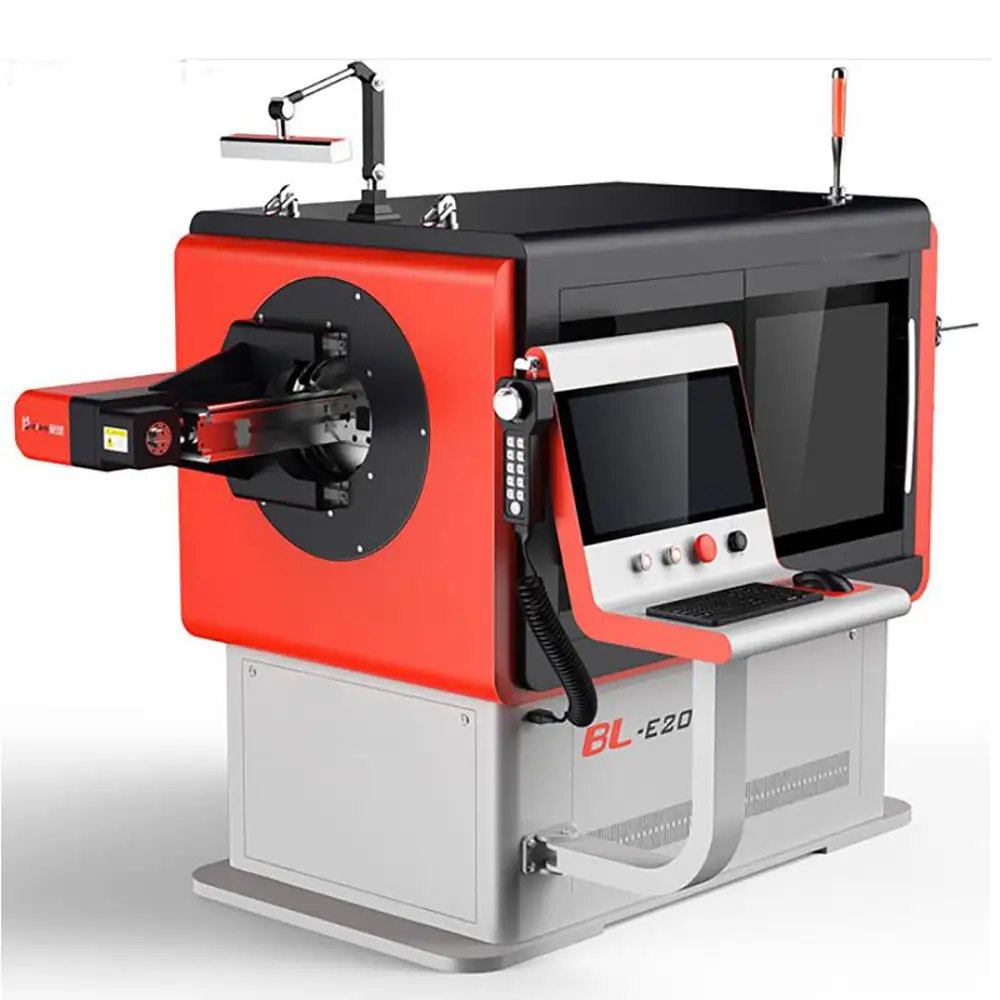
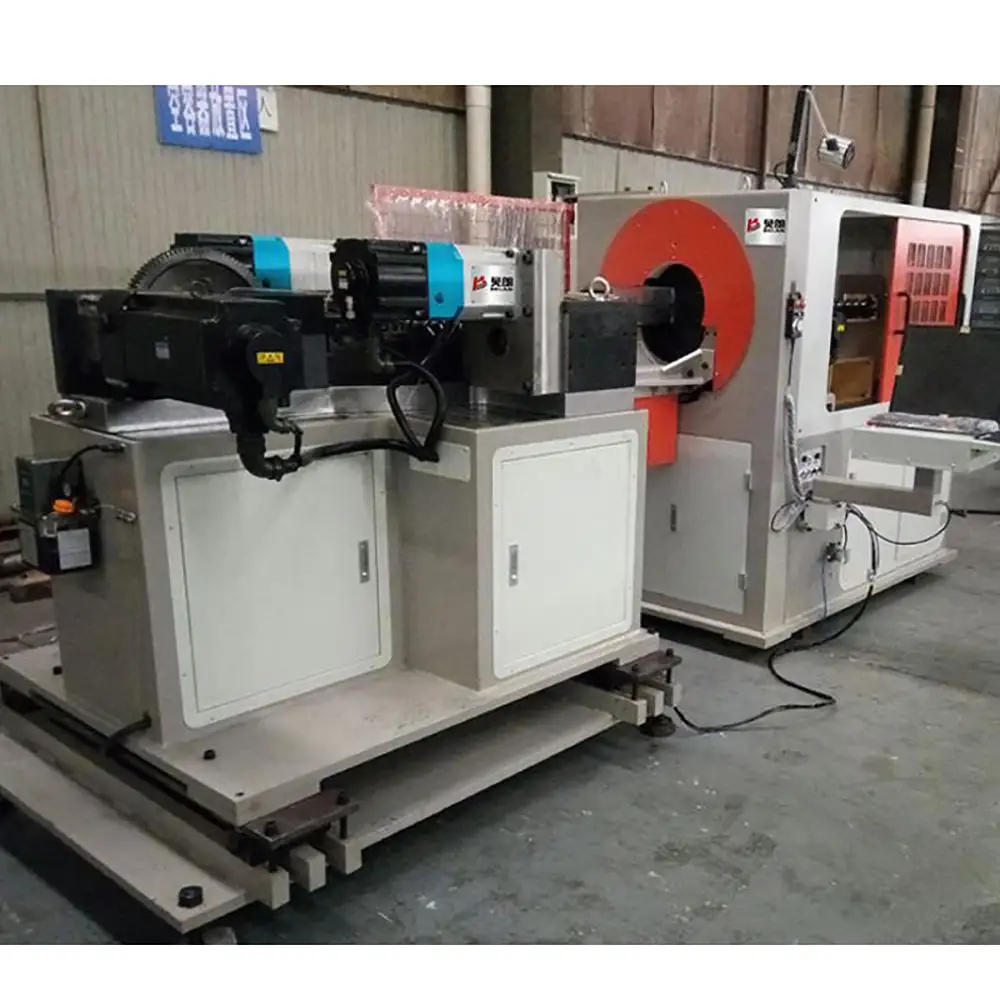
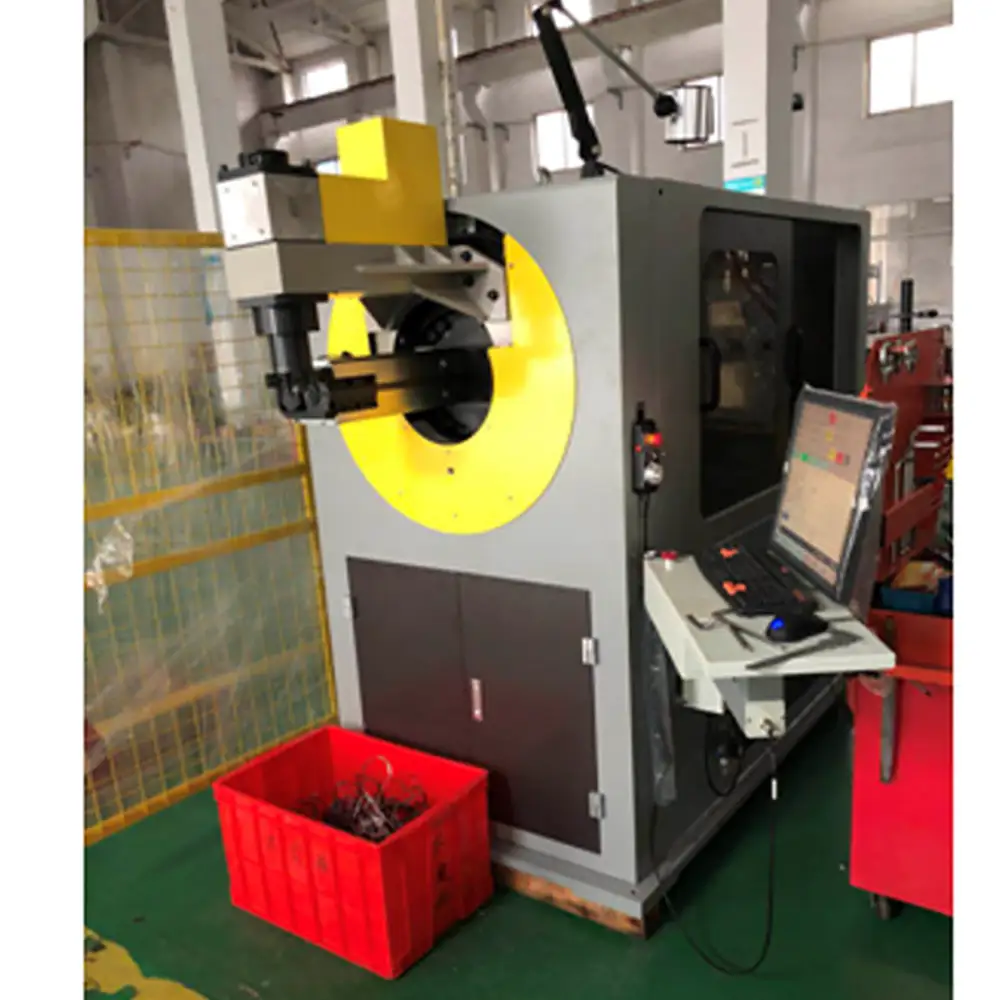
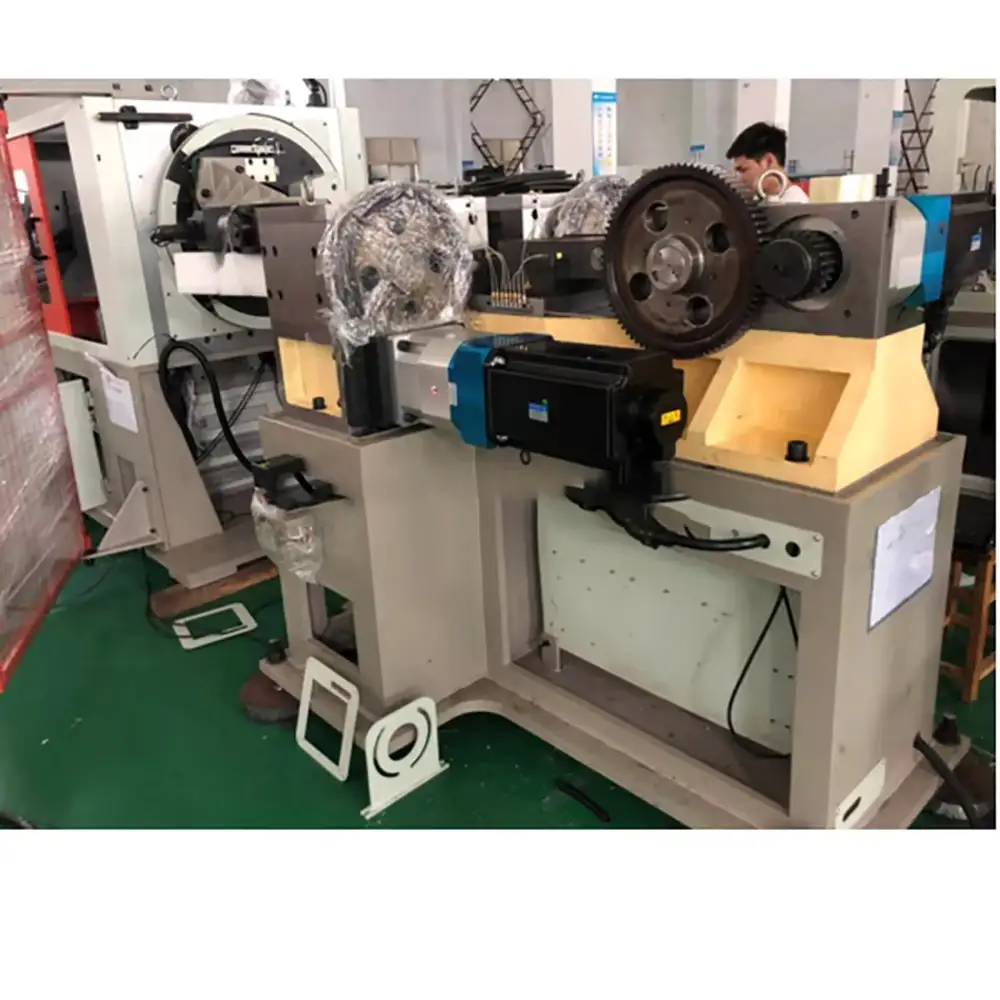
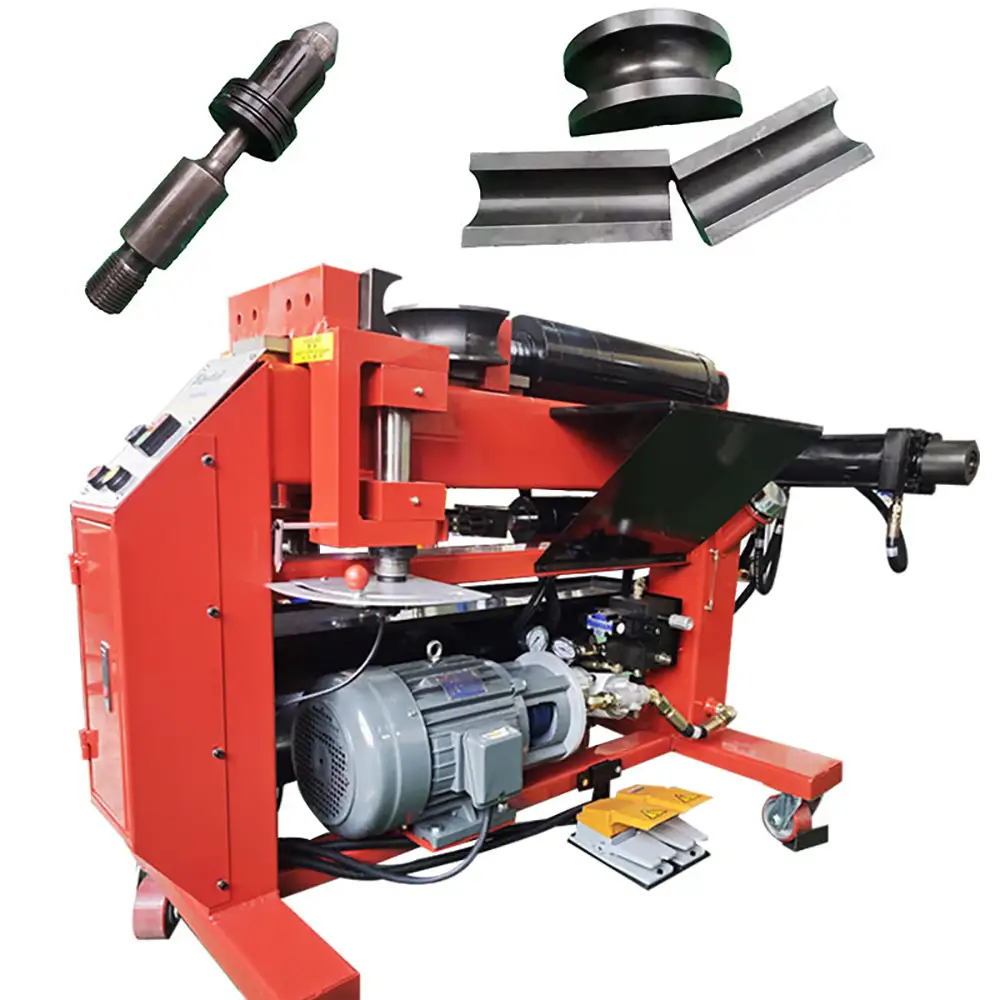
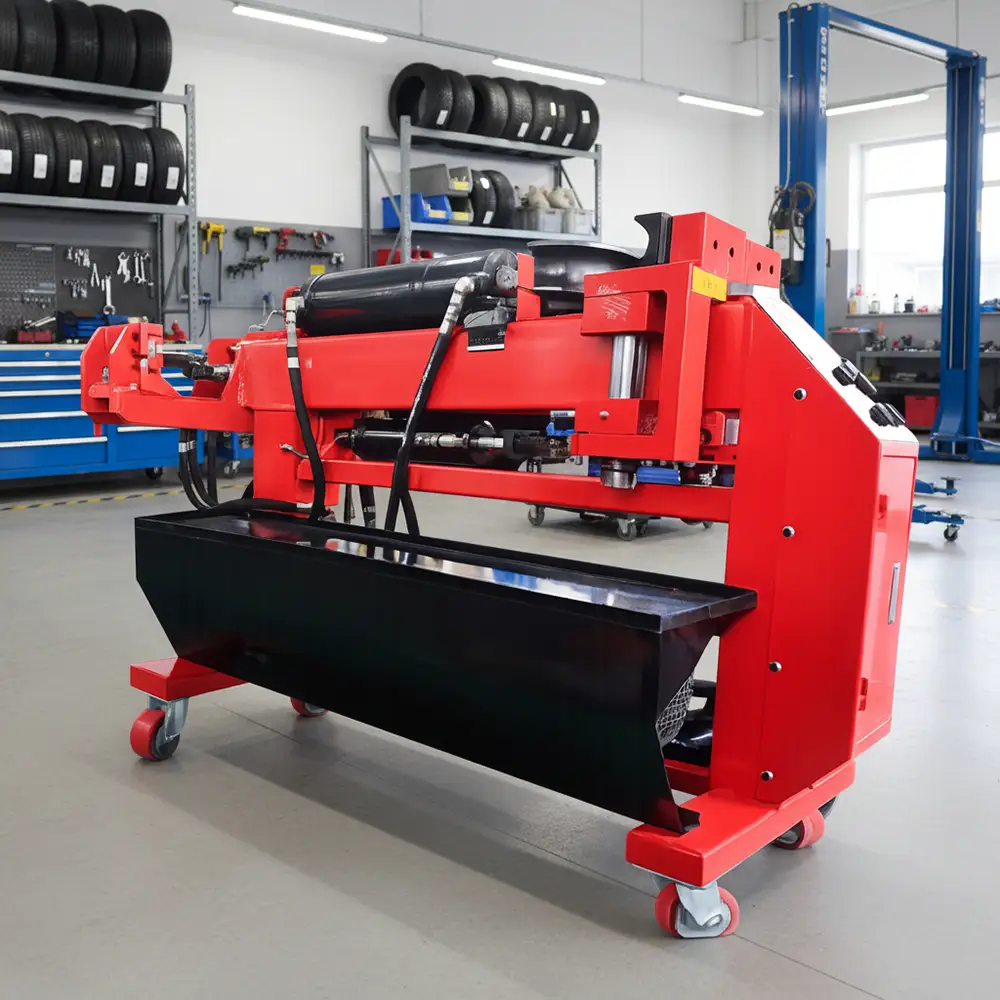
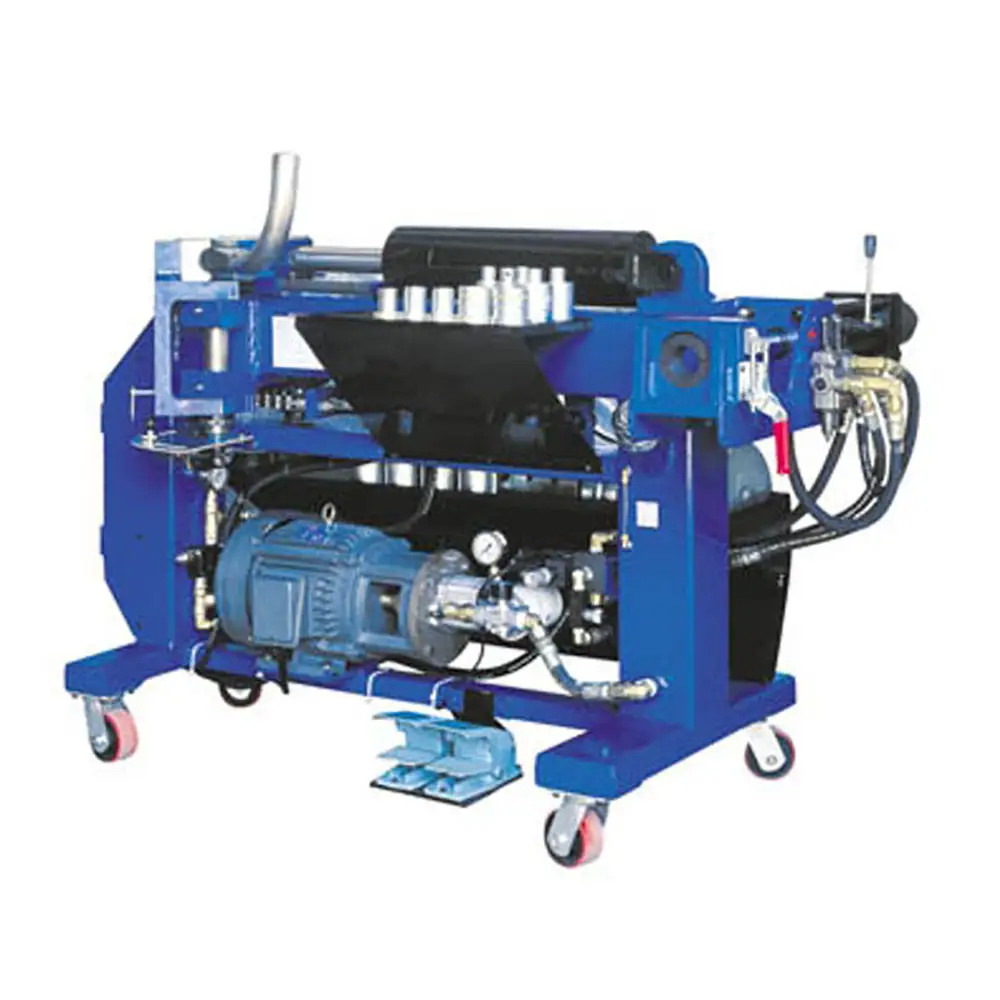
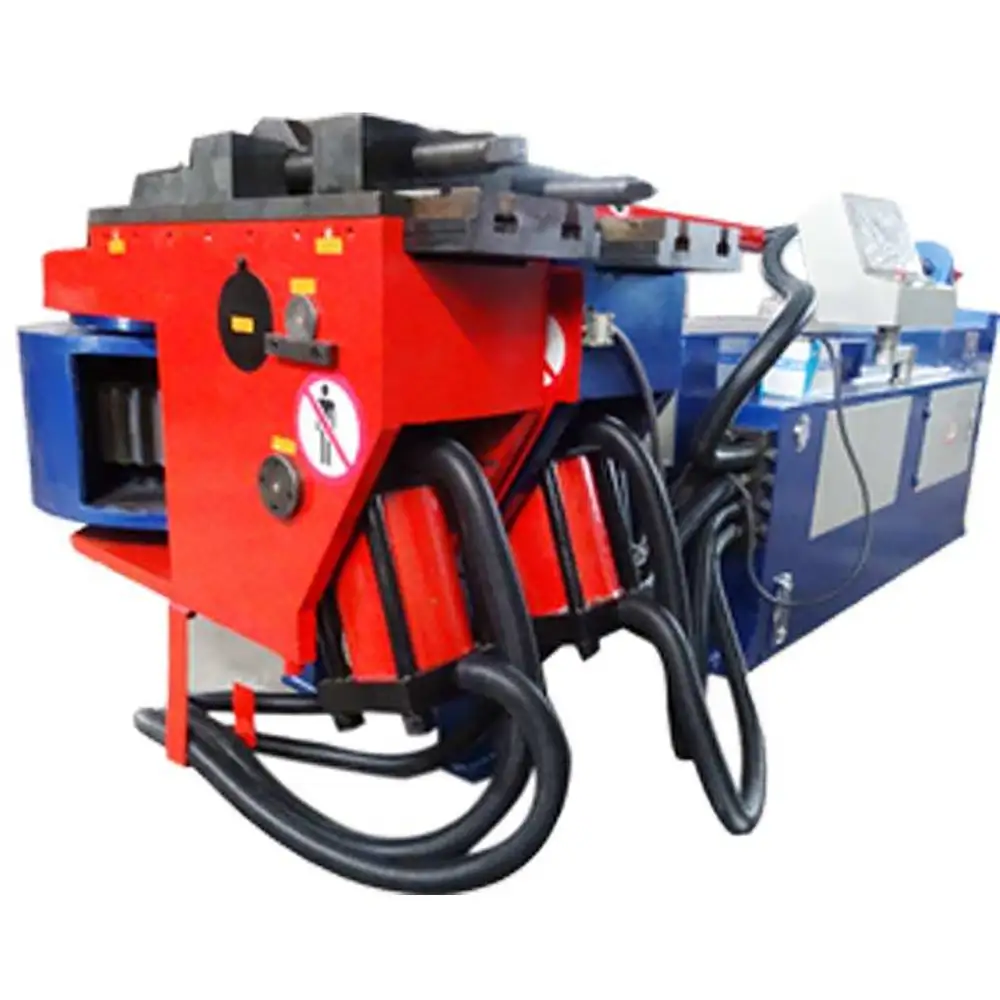
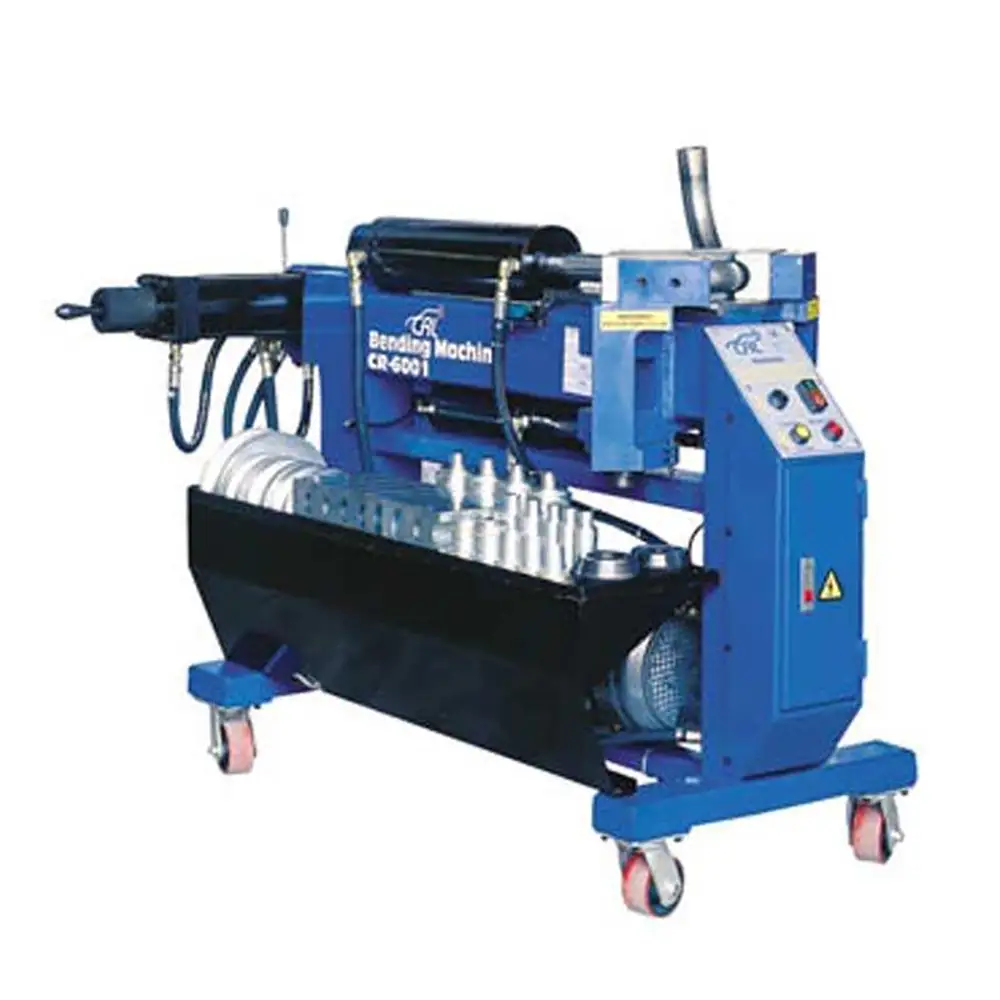
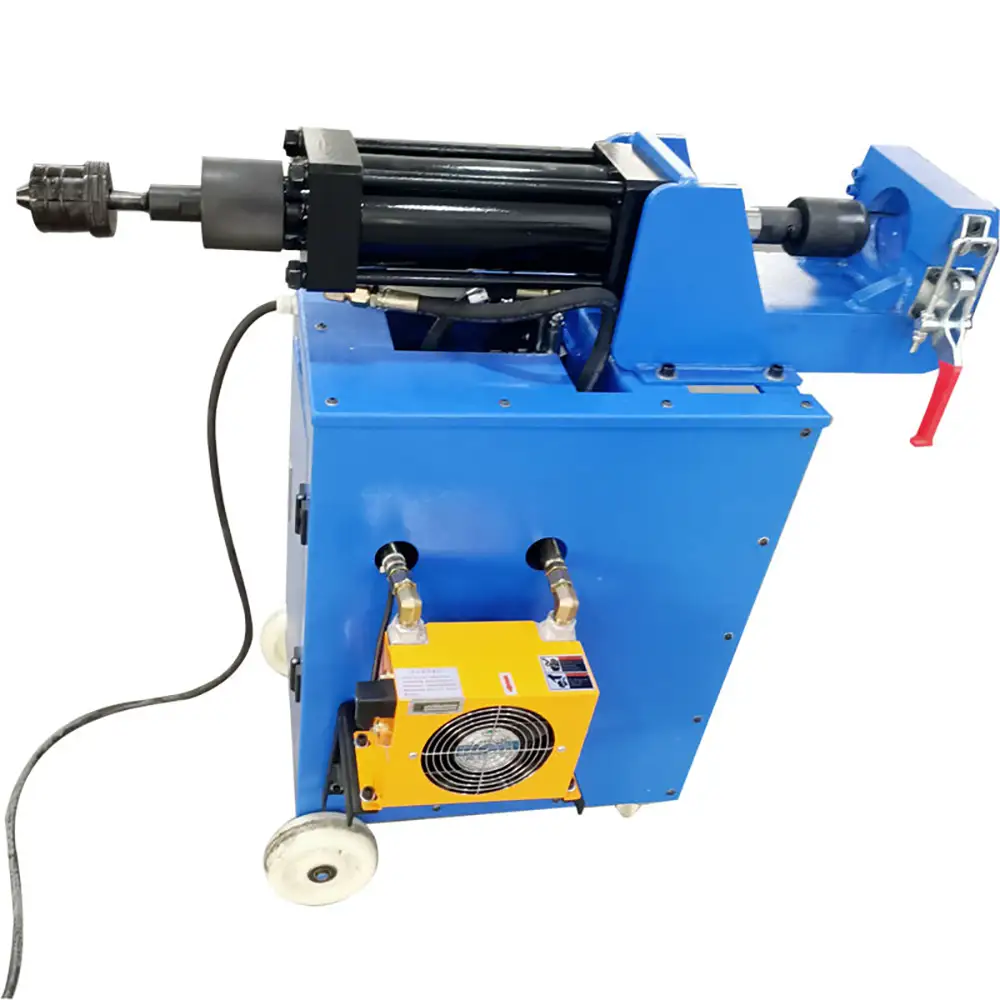
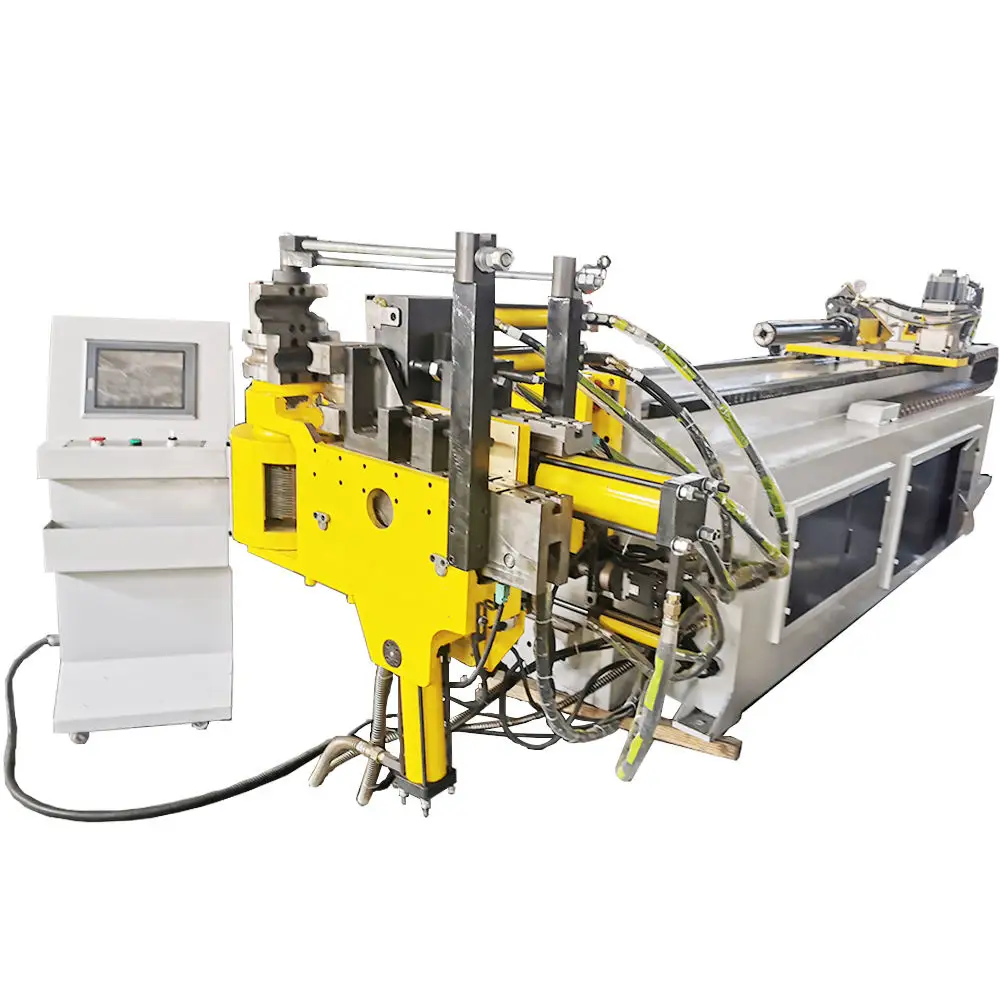
CNC Automatic Round Pipe Pier Head End Forming and Bending Machine
CNC Automatic Round Pipe End Forming and Bending Machine
The CNC Automatic Round Pipe End Forming and Bending Machine is a specialized tube processing solution designed for manufacturers that need controlled forming and bending of round metal pipes and tubes. By combining pipe end forming with bending operations in one production system,the machine can help reduce repeated manual handling and improve consistency across tubular components.
The machine is particularly suitable for applications involving pier head pipe forming,round tube end shaping,and other tubular components requiring a formed end followed by a controlled bend. Depending on the specific configuration,the equipment can process suitable carbon steel,stainless steel,aluminum,and other metal tubes.
CNC control provides programmable positioning and process control,while the automatic operating system can reduce repetitive manual operations. The exact level of automation depends on the machine configuration.
Round Pipe End Forming Technology
Pipe end forming changes the geometry of the end section of a tube or pipe. Instead of leaving the tube with a simple straight-cut end,the machine can form the end into a specified profile using dedicated tooling.
End forming may include operations such as:
Expanding
Reducing
Flaring
Swaging
Beading
Necking
Pier Head Forming
Custom End Shaping
The actual forming capability depends on the selected dies,forming method,pipe dimensions,and material characteristics.
For manufacturers producing components with a special head or end profile,custom tooling can be developed around the required geometry.
Pier Head Pipe Forming Application
The term pier head can refer to a specially shaped end or head section on a tubular component. In applications where the pipe end needs to be enlarged,reduced,shaped,or otherwise formed,the machine can provide a controlled forming process.
A suitable forming die supports the tube while mechanical or hydraulic force changes the end geometry.
The exact pier head shape should be evaluated from the customer's drawing or sample because different products can require significantly different end profiles.
For OEM production,the customer can provide CAD drawings,finished samples,pipe specifications,and required dimensional tolerances. These details help determine the forming tooling and machine configuration.
CNC Control for Repeatable Processing
CNC control allows the machine to manage programmed processing steps and positioning according to the selected configuration. This can be particularly useful for production environments where the same pipe component must be processed repeatedly.
Instead of manually determining every forming or bending position,the operator can use established process settings for regular production jobs.
CNC-controlled positioning can also help reduce variations caused by manual measurement and repositioning. However,actual dimensional accuracy depends on machine rigidity,tooling precision,material properties,fixture design,and process parameters.
Before mass production,the first workpieces should be inspected and process parameters adjusted when necessary.
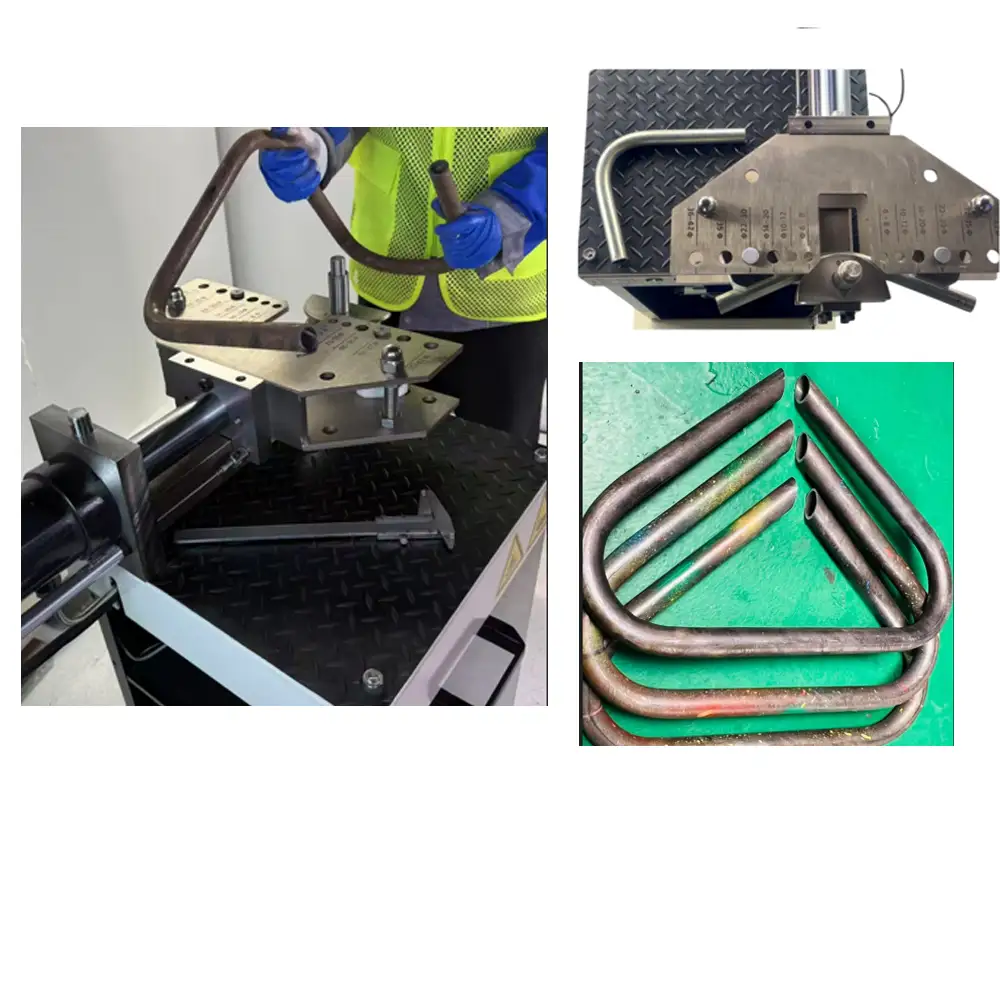
Automatic Pipe Bending Function
In addition to end forming,the machine can perform controlled bending of suitable round pipes or tubes.
Pipe bending changes a straight tube into the required curved or angled geometry. Depending on the machine configuration,the bending process may use rotary draw bending or another suitable forming method.
Important bending factors include:
Tube Outside Diameter
Wall Thickness
Material
Bending Radius
Bend Angle
Number Of Bends
Distance Between Bends
Required Dimensional Tolerance
The machine should be selected according to the actual tube specifications rather than relying only on a general machine category.
Combined End Forming and Bending
A major advantage of combining end forming and bending functions is reduced workpiece handling.
In a conventional production process,the tube may first be formed on one machine,removed,and then transferred to a separate bending machine. Each additional handling step can require positioning,measurement,and workpiece alignment.
A combined processing solution can integrate these operations within a coordinated workflow.
This can be especially useful when the formed end and bending position have a fixed relationship. Once the process has been properly established,the machine can help maintain consistent orientation between the pipe end and the bend.
Tooling and Dies
Tooling is one of the most important components of a pipe end forming machine. The die geometry determines the final shape of the formed tube end.
Depending on the application,tooling may include:
End Forming Dies
Expanding Dies
Reducing Dies
Swaging Dies
Flare Dies
Beading Dies
Clamping Fixtures
Bending Dies
Positioning Fixtures
Custom Forming Tools
Different tube sizes generally require corresponding tooling. When multiple products need to be manufactured,the machine can potentially be equipped with interchangeable tooling or dedicated fixtures depending on its design.
Customers should provide accurate tube dimensions and end-profile drawings before tooling production.
Suitable Metal Tube Applications
The machine can be applied to a variety of round tube processing applications.
Potential workpieces include:
Steel Pipes
Stainless Steel Tubes
Carbon Steel Tubes
Aluminum Tubes
Automotive Tubes
Furniture Tubes
Structural Tubes
Machinery Components
Construction Tubular Parts
Custom Fabricated Pipes
The appropriate material range depends on the machine's forming force,tooling,and bending system.
For stainless steel or high-strength tubing,the forming parameters may differ significantly from those used for mild steel or aluminum.
Production Efficiency
The CNC automatic design can help manufacturers reduce repetitive manual operations during tube processing.
For medium- and high-volume production,the machine can be integrated into a broader manufacturing workflow that may include tube cutting,cleaning,drilling,punching,welding,and final assembly.
Production efficiency depends on tube dimensions,number of forming operations,number of bends,loading method,tool changes,cycle time,and operator workflow.
Automatic operation should therefore be understood as controlled production automation rather than a guarantee of completely unmanned manufacturing.
Quality Control
Consistent tube processing requires proper control of both end-forming geometry and bend dimensions.
Operators should inspect important dimensions such as:
Formed End Diameter
End Length
Bend Angle
Bend Radius
Overall Tube Length
Bend Position
Surface Condition
Tube material properties can vary between batches and may influence forming behavior. Springback can also affect final bending dimensions,particularly with stronger materials.
Process testing and measurement are recommended when tight tolerances are required.
Surface Protection and Tube Deformation
During tube forming and bending,the workpiece may experience localized deformation. Proper tooling and process parameters can help minimize unwanted flattening,wrinkles,cracks,or surface marks.
For finished components that will be painted,powder coated,plated,or otherwise surface treated,maintaining acceptable surface quality is important.
The use of appropriate dies,clamping pressure,and lubrication where applicable can help improve forming conditions.
For demanding applications,sample testing should be performed before finalizing production tooling.
OEM and Custom Pipe Processing Solutions
Different industries require different tube end shapes,bending radii,and production methods. The machine can therefore be evaluated for customized OEM and ODM applications.
Customers should provide:
Pipe Material
Outside Diameter
Wall Thickness
Tube Length
End Form Profile
Required Bend Angle
Bending Radius
Number Of Bends
Production Volume
Finished Sample Or Drawing
Based on this information,the appropriate machine structure,forming system,bending system,tooling,and controls can be selected.
Custom solutions may include dedicated end-forming dies,automatic feeding,custom fixtures,positioning systems,and CNC control configurations.
Safety and Maintenance
Pipe forming and bending machines contain moving mechanical components and may use hydraulic,electrical,or mechanical power. Operators should receive appropriate training and follow the manufacturer's operating procedures.
Depending on the configuration,safety-oriented features may include emergency stops,protective guards,control interlocks,and electrical protection.
Routine maintenance should include checking hydraulic components where applicable,inspecting forming and bending dies,cleaning the machine,checking electrical connections,and lubricating moving parts according to manufacturer recommendations.
Worn tooling should be replaced or serviced because tooling condition can directly affect forming quality.
Why Choose Us
Combined End Forming And Bending
Integrates round pipe end forming and bending functions to reduce repeated workpiece handling.
CNC Controlled Processing
Programmable control supports repeatable positioning and processing for regular production jobs.
Automatic Production Options
Suitable automation configurations can reduce repetitive manual operations.
Pier Head Forming Application
Designed for tubular components requiring specially formed pipe or tube ends.
Custom Forming Tooling
End-forming and bending dies can be evaluated according to customer drawings and tube specifications.
Flexible Metal Tube Processing
Suitable configurations can be used for carbon steel,stainless steel,aluminum,and other appropriate tubing.
Industrial Production Capability
Suitable for automotive,furniture,construction,machinery,and general metal fabrication applications.
OEM And ODM Support
Machine configuration,tooling,fixtures,and control functions can be customized for specific production requirements.
FAQs
1. What is a CNC automatic pipe end forming machine?
It is a machine designed to reshape the end of a metal pipe or tube using dedicated forming dies and controlled mechanical,hydraulic,or other forming force.
2. What does pier head forming mean?
Pier head forming refers to shaping the end section of a tubular component into a specified head or end profile. The exact geometry depends on the product design.
3. Can the machine bend round pipes?
Yes. When equipped with a suitable bending system,it can bend compatible round pipes and tubes according to specified angles and radii.
4. Can end forming and bending be performed on the same machine?
Yes,when the machine is specifically configured with both functions. The exact processing sequence depends on the machine design.
5. What materials can be processed?
Depending on the configuration,the machine may process suitable carbon steel,stainless steel,aluminum,and other metal tubes.
6. Can it perform expanding and reducing?
Suitable tooling can allow pipe ends to be expanded,reduced,swaged,flared,or otherwise shaped according to the required profile.
7. Does CNC control improve repeatability?
CNC control can provide programmed positioning and process control,which can help improve repeatability. Actual accuracy also depends on tooling,machine rigidity,material,and setup.
8. Can custom dies be supplied?
Yes. Custom end-forming and bending dies can be developed according to tube dimensions,drawings,and required end geometry.
9. Is the machine fully automatic?
The automation level depends on the selected configuration. Automatic loading,positioning,forming,and bending functions may be available depending on the machine design.
10. Can it process stainless steel tubes?
Suitable stainless steel tubes can be processed when the machine has adequate forming force and appropriate tooling. Material grade and wall thickness should be confirmed before selection.
11. How can I avoid tube deformation during bending?
Correct bending dies,clamping,process parameters,and suitable support or mandrel systems can help control flattening and other unwanted deformation.
12. What information is needed for a quotation?
Provide tube material,outside diameter,wall thickness,length,end-form profile,bending radius,bend angle,number of bends,production volume,and drawings or samples if available.
Prev:
Double Heads Pipe Tube Bending Machine
Next:
Wheelbarrow Frame Bending Machine DW38NC
TAG:
Pipe End Processing Machine,
Automatic Tube End Forming Machine,
Tube End Processing Machine,
Metal Tube Forming Machine,
Tube End Forming Equipment,
Pipe Flaring Machine,
Pipe End Forming Equipment,
Pipe Beading Machine,
Tube Beading Machine,
Tube Flaring Machine,
Tube Swaging Machine,
Pipe Swaging Machine,
Pipe Necking Machine,
Tube Necking Machine,
Pipe Reducing Machine,
Tube Reducing Machine,
Tube End Forming Machine,
Pipe End Forming Machine,
Pipe Expanding Machine,
Tube Expanding Machine,
Pipe Processing Machine,
Tube Processing Machine,
Pipe Forming Machine,
Tube Forming Machine,
Pipe Fabrication Machine,
Tube Fabrication Machine,
Metal Pipe End Forming Machine,
Automatic Pipe End Forming Machine,
Pipe End Shaping Machine,
Tube End Shaping Machine,
Related Category:
CNC Automatic Round Pipe End Forming Machine,CNC Pipe End Forming Machine,Round Pipe End Forming Machine China, suppliers, manufacturers, factory, customized, wholesale, quotation, made in China