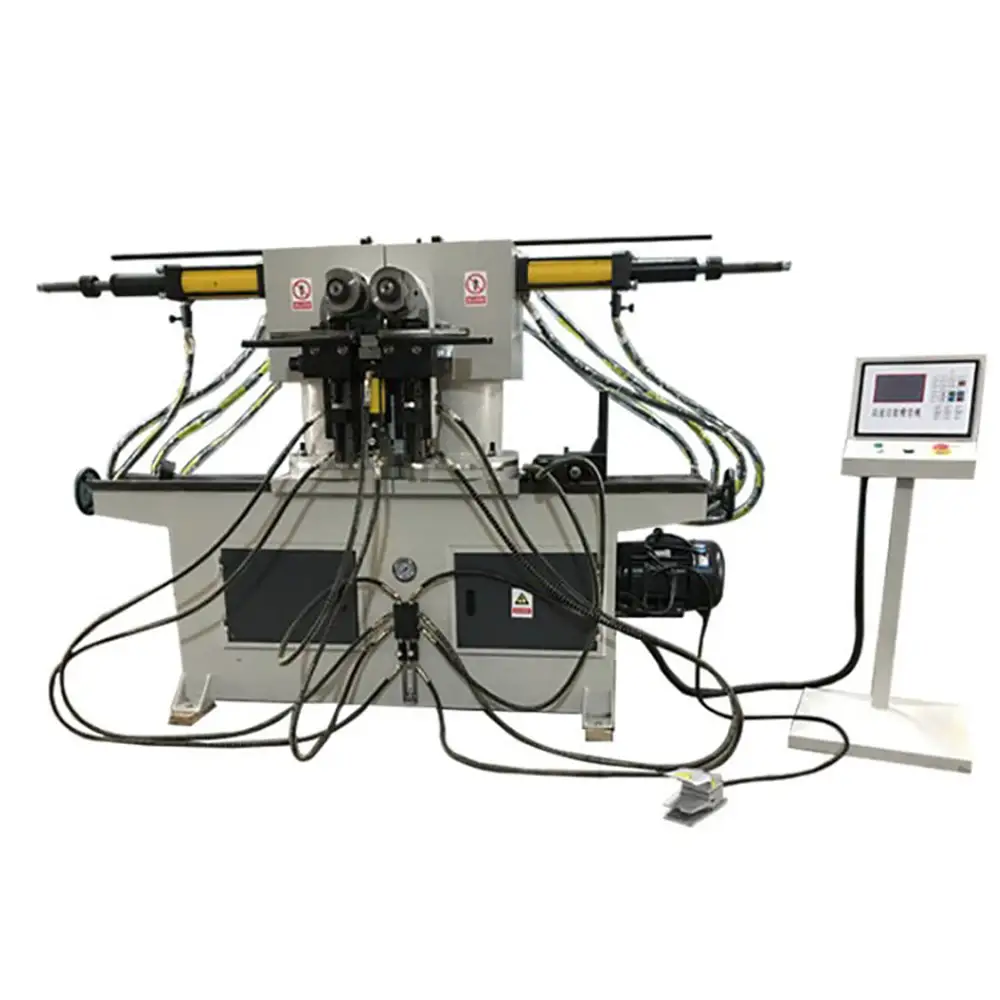
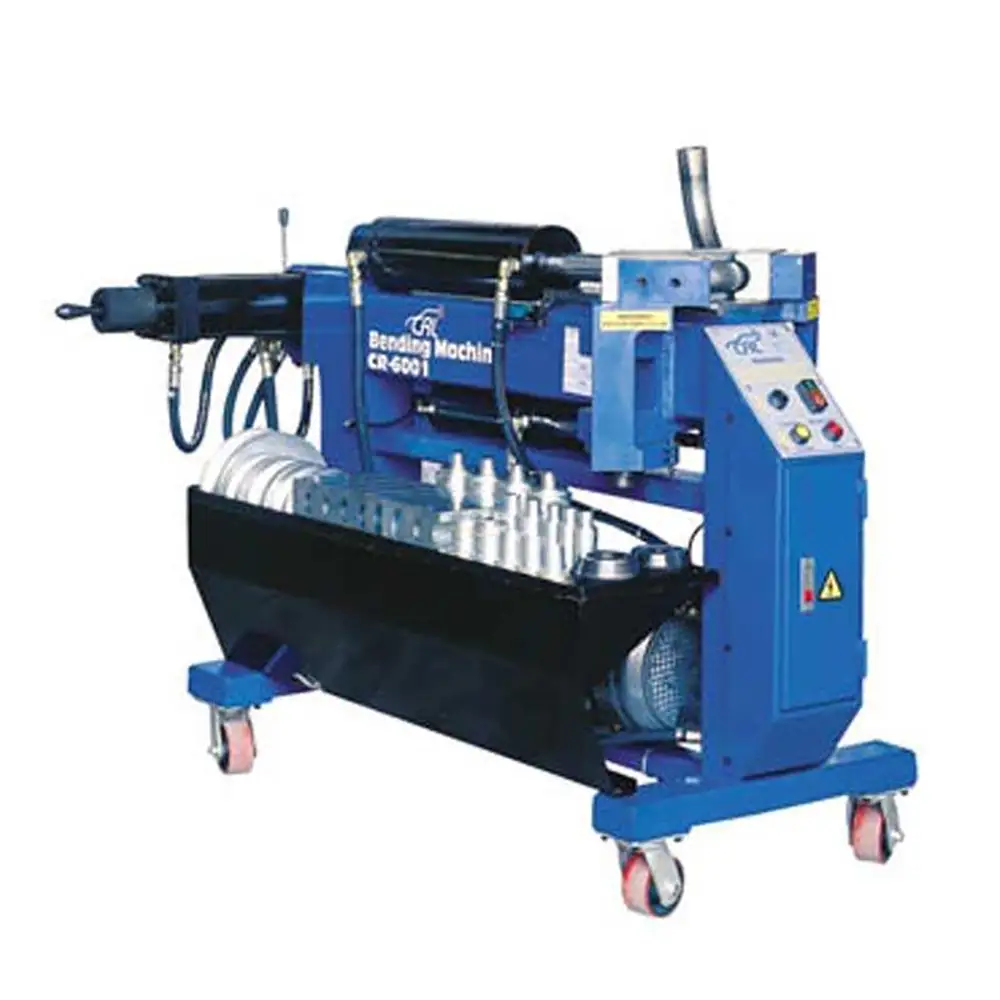
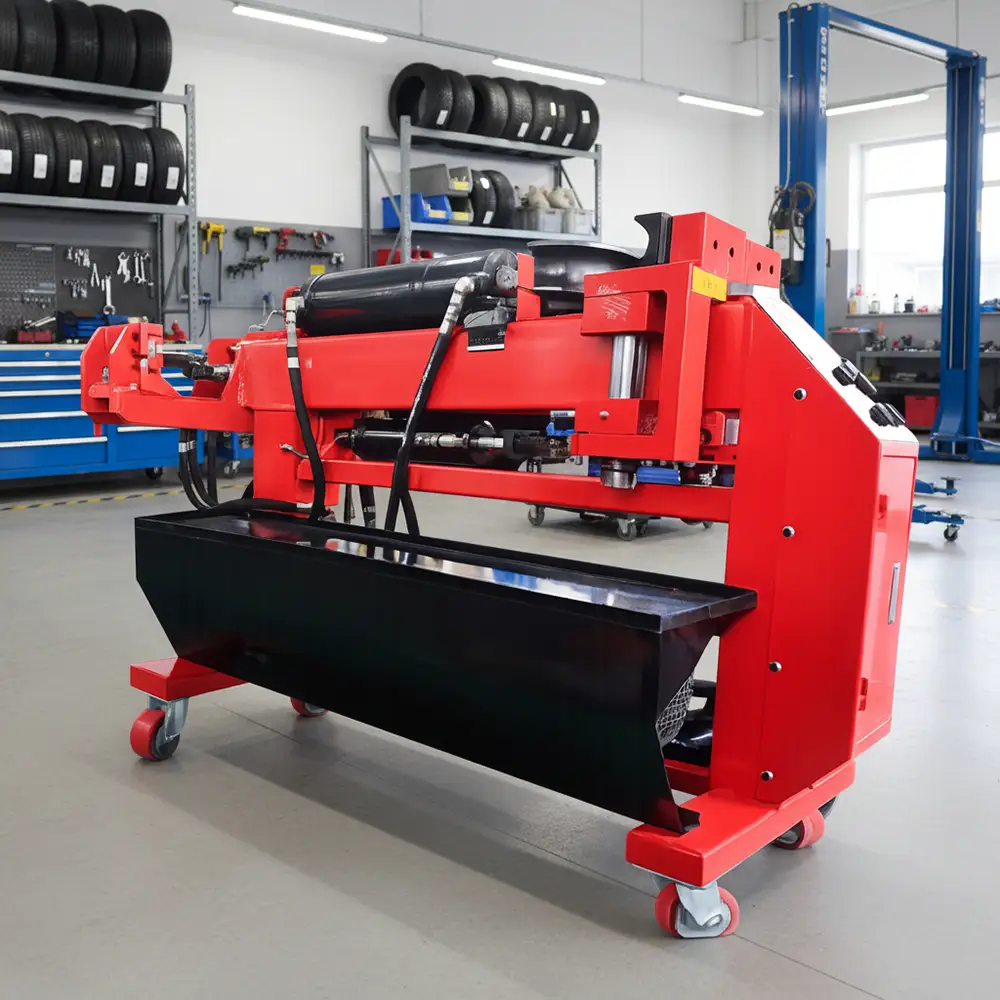
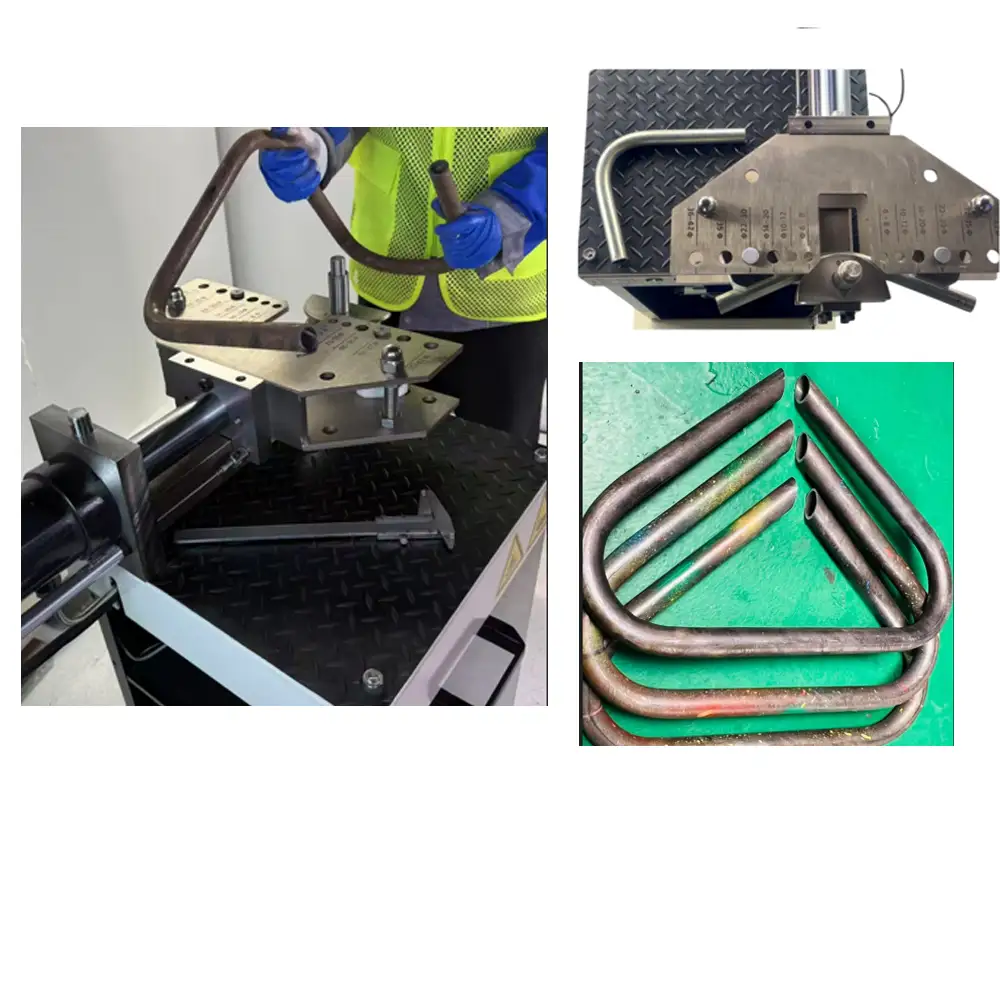
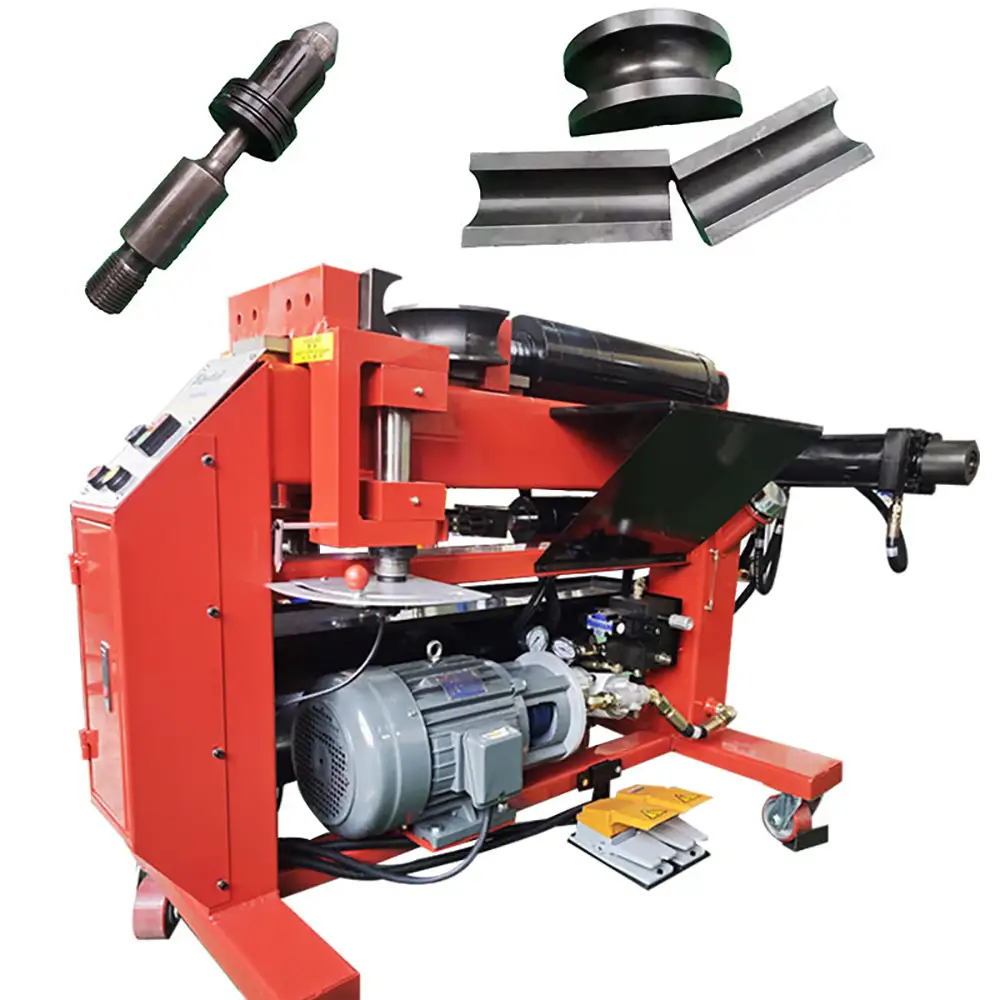
|
max bending capacity |
38*2mm |
|
max radius |
R200mm |
|
minimum radius |
1.5D |
|
Max bending angle |
190 degree |
|
double heads distance |
190-1500mm |
|
max pressure |
12mpa |
|
machine size |
2600x1200x1600mm |
|
weight |
1200kg |
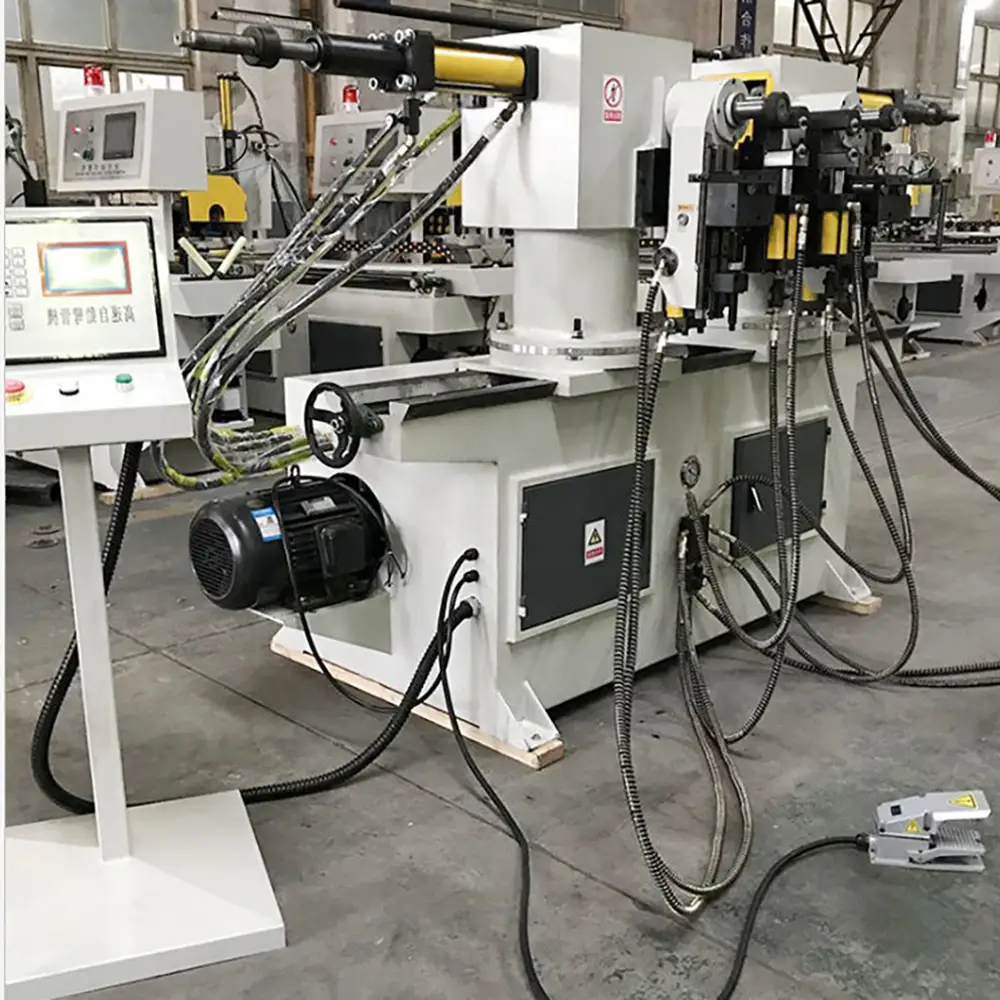
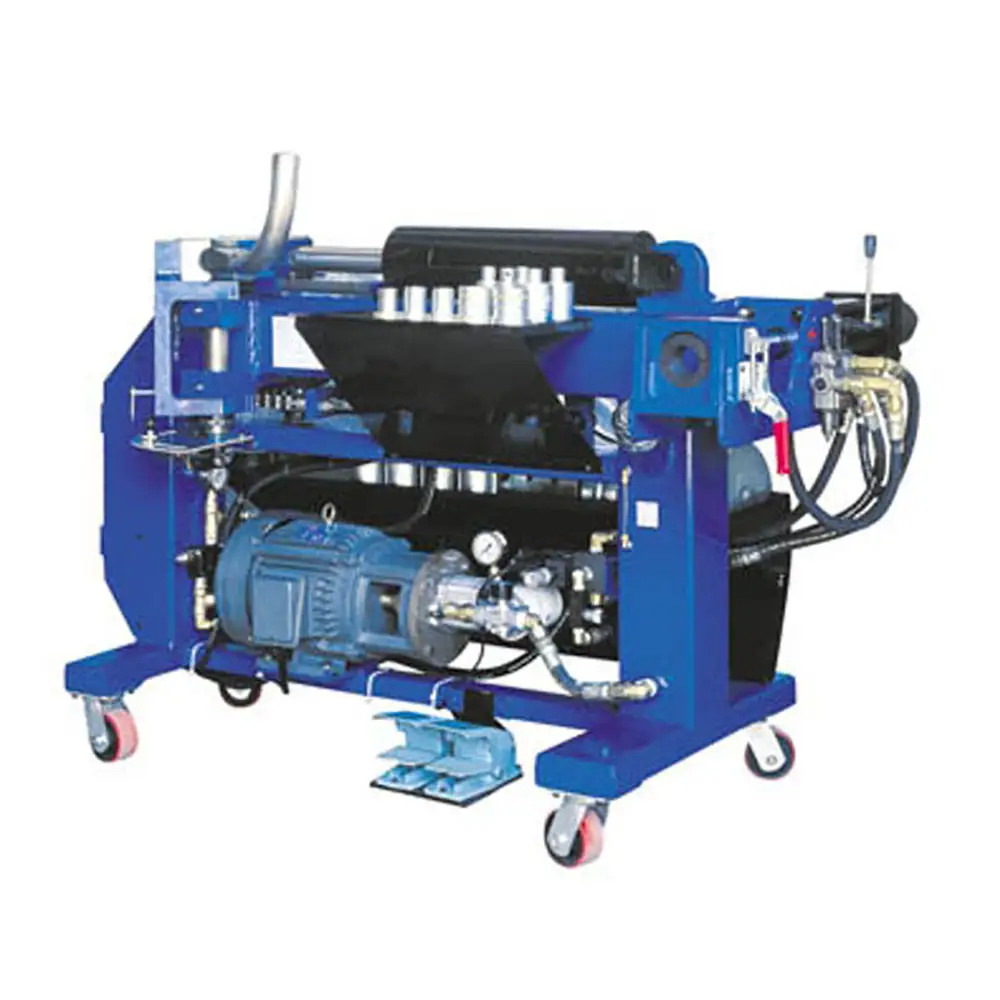
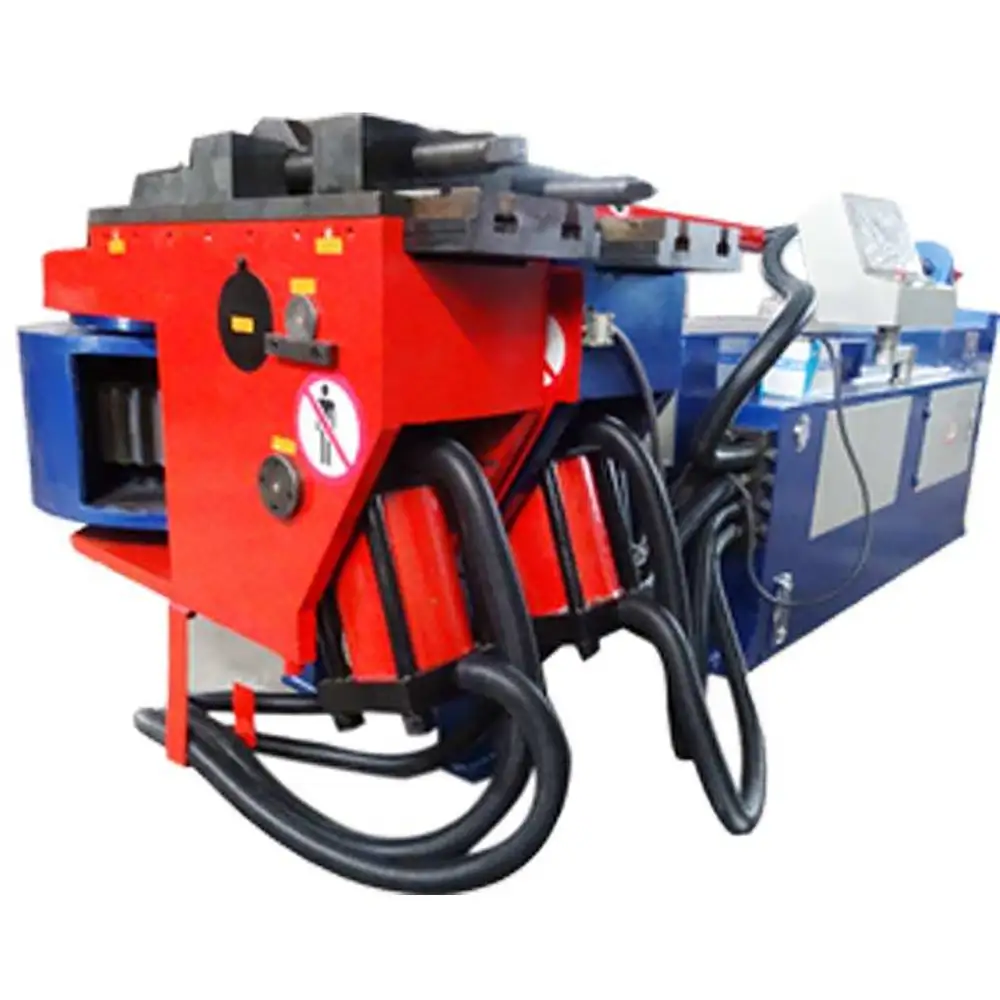
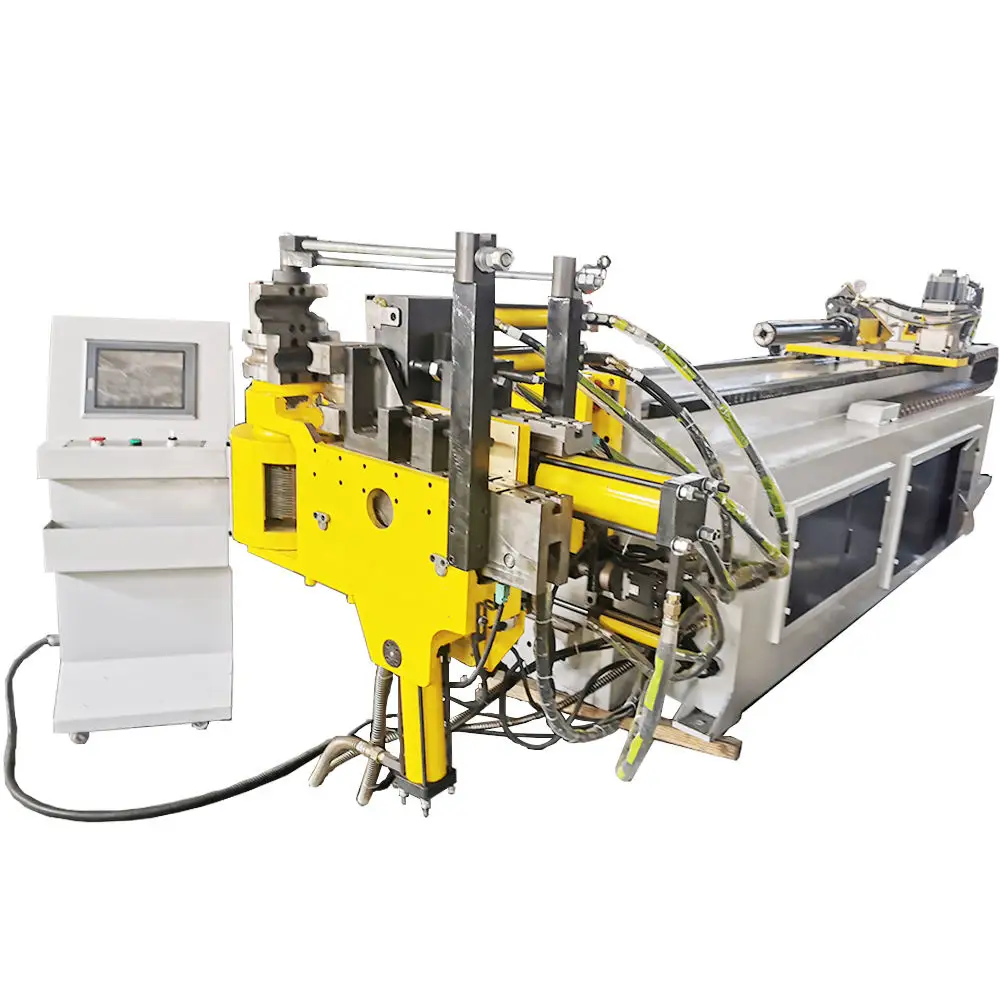
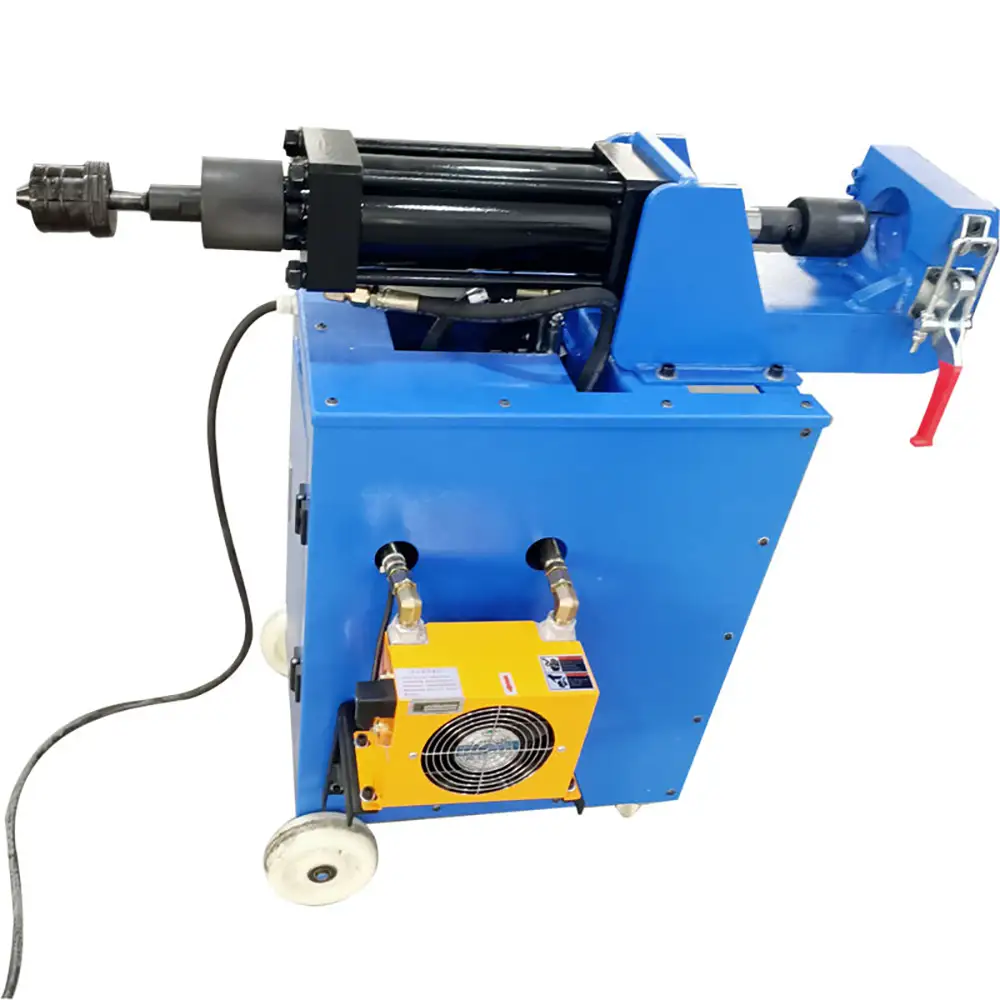
Double Heads Pipe Tube Bending Machine for Efficient Tube Forming
The Double Heads Pipe Tube Bending Machine is an industrial metal forming solution designed for bending suitable pipes and tubes into consistent shapes for fabrication and manufacturing applications. Featuring a double-head bending configuration,the machine is designed to support efficient processing of tubular components where multiple bending operations or two-sided processing are required.
Double-head technology can be particularly useful for tubular products with symmetrical or repeated geometries. Depending on the specific machine design,the two bending heads may support processing from different positions or perform designated bending operations within the same production cycle.
The exact functions of the double-head system depend on the machine configuration. Customers should provide tube dimensions,material,bending radius,bend angles,and product drawings when selecting the appropriate machine.
Double Head Tube Bending Design
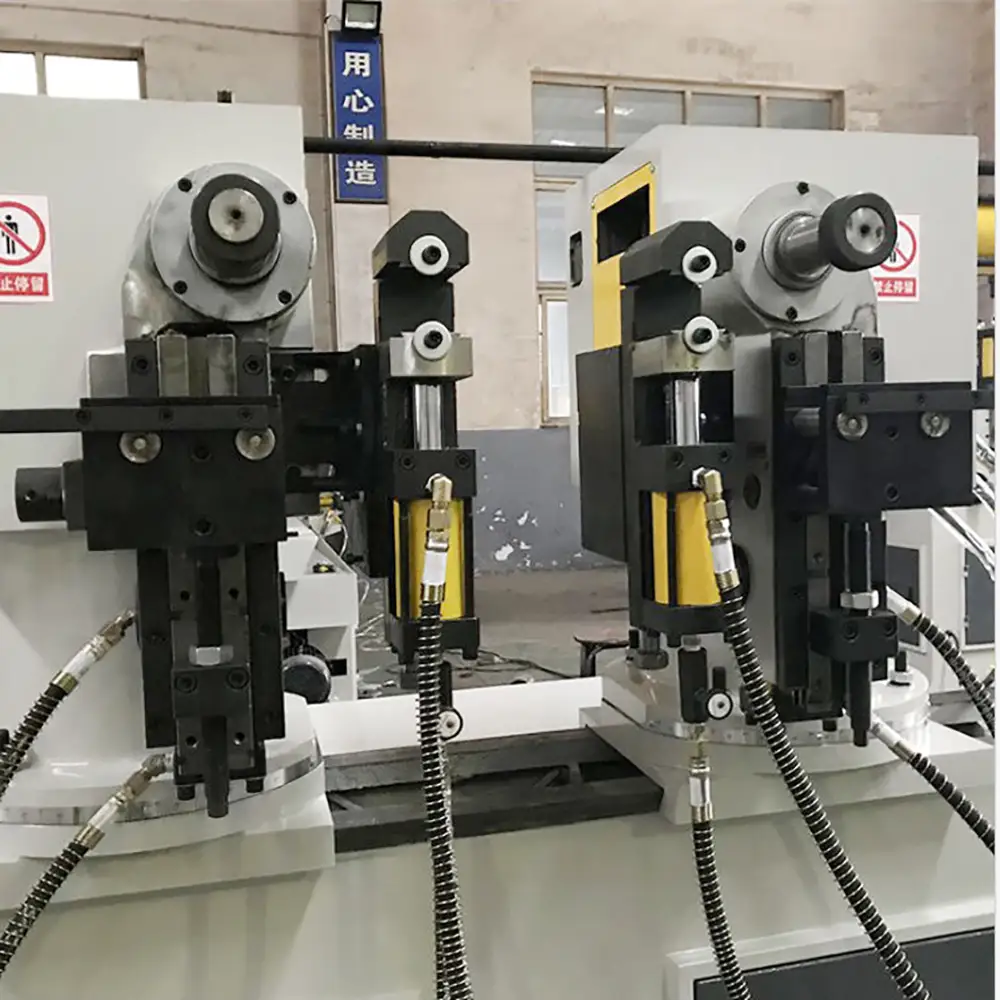
The defining characteristic of this machine is its double-head tube bending structure. Instead of relying on a single bending position,the machine incorporates two bending heads or processing stations according to its design.
This configuration can help reduce workpiece repositioning for certain applications. When a tubular component requires bends at different ends or symmetrical forming operations,the double-head structure may provide a more convenient production arrangement.
Potential applications include:
Symmetrical Tube Frames
Furniture Frames
Fitness Equipment Frames
Automotive Components
Motorcycle Components
Bicycle Frames
Handrails
Metal Structures
Agricultural Equipment
Custom Tubular Products
The actual bending sequence,whether the heads operate independently or in a coordinated manner,and the number of bends available depend on the machine's control and mechanical configuration.
Metal Pipe and Tube Bending
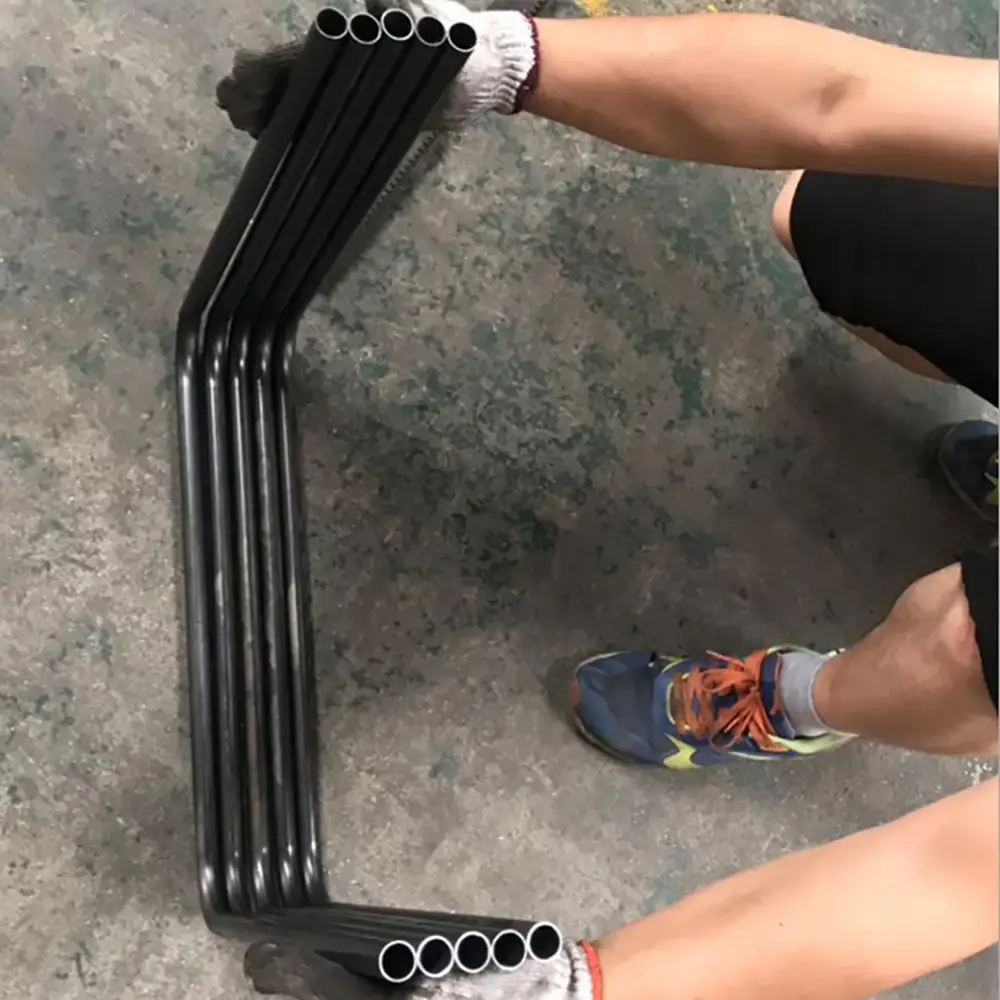
Pipe and tube bending is a controlled forming process used to transform straight tubular material into curved or angled components.
The machine can be configured for suitable metal tubes such as carbon steel,stainless steel,aluminum,and other materials,depending on the machine's bending force and tooling.
Important factors include:
Tube Outside Diameter
Tube Wall Thickness
Material Type
Bending Radius
Bend Angle
Number Of Bends
Distance Between Bends
Required Tolerance
These parameters determine the required bending force and tooling configuration.
For thin-wall tubes,proper support is particularly important because excessive deformation can result in flattening,wrinkles,or other defects. For heavier-wall tubing,the machine must provide sufficient forming force.
Automatic Tube Bending Applications
The Double Heads Pipe Tube Bending Machine can be configured for automatic or semi-automatic production according to the intended application.
Automatic functions may include controlled feeding,clamping,positioning,bending,and workpiece release. These functions can reduce repetitive manual operations and improve consistency during batch production.
Automation is especially useful when manufacturers produce large quantities of similar tubular components.
However,the term automatic does not necessarily mean completely unmanned operation. Actual automation level depends on the machine configuration,loading method,material handling system,and control system.
CNC Control and Positioning
A CNC-controlled configuration can provide programmable control of bending positions and process sequences.
For products with multiple bends,CNC control can help operators establish repeatable bending parameters. Once the process has been tested and optimized,the same program can be used for subsequent production batches.
This can reduce manual measurement and positioning during repetitive work.
CNC control may be particularly useful for products requiring:
Multiple Bending Angles
Repeated Bend Positions
Symmetrical Geometry
Consistent Bend Radii
Multiple Product Models
Actual positioning accuracy depends on machine rigidity,drive systems,tooling,material properties,and calibration.
Double-Head Processing Efficiency
One potential benefit of a double-head configuration is reduced workpiece handling for certain products.
With a conventional single-head machine,a component may need to be repositioned or reoriented to complete bends at different sections. A suitable double-head design may allow the machine to process different ends or positions more efficiently.
This can be valuable for high-volume production of components with repeated or symmetrical geometries.
Production efficiency depends on tube size,number of bends,loading method,bending sequence,tool changes,and machine cycle time.
The appropriate machine should therefore be selected based on the actual production workflow rather than relying solely on the number of bending heads.
Bending Tooling and Dies
Bending tooling directly affects the shape and quality of the finished tube.
Depending on the machine and application,tooling may include:
Bending Dies
Clamping Dies
Pressure Dies
Wiper Dies
Mandrels
Tube Supports
Positioning Fixtures
Custom Forming Tools
The required tooling depends on the tube diameter,wall thickness,bending radius,and material.
For tighter bending radii,a mandrel or additional support may be required to control tube deformation.
For customers producing several tube sizes,interchangeable tooling can be considered when supported by the machine design.
Applications in Furniture and Fitness Equipment
Double-head tube bending machines are useful for manufacturing products with repeated or symmetrical tubular structures.
In metal furniture production,the machine may process chair frames,table frames,bed frames,handrails,and other tubular components.
For fitness equipment,it can be used for suitable frames and structural tubes used in gym equipment,exercise machines,and sports products.
Other applications may include bicycle components,automotive tubular parts,shopping carts,display stands,metal racks,and general fabricated frames.
The exact application range depends on tube dimensions and available tooling.
Automotive and Exhaust Tube Processing
Automotive manufacturers often use bent tubes for exhaust systems,structural components,brackets,and other tubular assemblies.
A suitable double-head configuration can be evaluated for components requiring bends at multiple locations or both ends.
For exhaust applications,material type and tube wall thickness can vary significantly. Stainless steel and other heat-resistant materials may require specific tooling and process parameters.
Customers should provide tube drawings and required bend specifications to determine whether the machine configuration is suitable.
Tube Bending Accuracy and Quality
Bending quality depends on the interaction between the machine,tooling,and workpiece.
Important quality factors include:
Bend Angle
Bend Radius
Bend Position
Tube Ovality
Surface Condition
Springback
Overall Length
Metal springback can cause the finished angle to differ from the programmed bending angle. Process testing and compensation may therefore be required for certain materials.
Proper clamping and support can help maintain tube position during bending.
For products requiring tight dimensional tolerances,the first production samples should be inspected before continuing with larger batches.
Material Handling and Production Workflow
For higher production volumes,the bending machine can be integrated into a complete tube fabrication process.
A typical workflow may include:
Tube Cutting
Tube Cleaning
Loading
Positioning
Clamping
Bending
Inspection
Welding Or Assembly
Surface Finishing
Depending on the production line,the machine may work alongside tube cutting machines,end forming machines,punching equipment,welding systems,and other fabrication machinery.
This makes the double-head tube bender suitable for manufacturers seeking to improve overall tubular component production efficiency.
OEM and Custom Tube Bending Solutions
Tube products often have application-specific dimensions and bending requirements. OEM and ODM customers can therefore request customized machine configurations.
Useful information for machine selection includes:
Tube Material
Tube Diameter
Wall Thickness
Tube Length
Bend Angle
Bending Radius
Number Of Bends
Bend Position
Required Production Volume
Product Drawings Or Samples
Based on these details,the manufacturer can evaluate suitable bending heads,tooling,fixtures,controls,and automation functions.
Custom solutions may include dedicated dies,automatic feeding systems,custom positioning fixtures,and application-specific control programs.
Safety and Maintenance
Tube bending equipment contains moving mechanical parts and may use hydraulic,electrical,or servo-driven systems. Operators should receive proper training and follow the manufacturer's operating instructions.
Depending on the configuration,safety-oriented features may include emergency stops,protective guards,control interlocks,and electrical protection.
Routine maintenance should include checking mechanical connections,inspecting hydraulic or servo systems where applicable,cleaning the machine,checking tooling condition,and lubricating moving components according to manufacturer recommendations.
Proper tooling maintenance can help maintain bending quality and extend die service life.
Why Choose Us
Double-Head Bending Configuration
Provides a flexible processing arrangement for tubular products requiring multiple or two-sided bending operations.
Efficient Tube Processing
Can reduce workpiece repositioning for suitable double-ended or symmetrical components.
Automatic Production Options
Automatic feeding,positioning,clamping,and bending functions can be configured according to production requirements.
CNC Control Available
Programmable processing can support repeatable bending positions and sequences for batch production.
Flexible Material Applications
Suitable configurations can process carbon steel,stainless steel,aluminum,and other compatible metal tubes.
Wide Industrial Applications
Suitable for furniture,fitness equipment,automotive,bicycle,agricultural,and general metal fabrication.
Custom Bending Tooling
Bending dies,mandrels,fixtures,and other tooling can be selected according to tube specifications.
OEM And ODM Support
Machine configuration and automation can be evaluated according to customer drawings,samples,and production requirements.
FAQs
1. What is a Double Heads Pipe Tube Bending Machine?
It is a tube bending machine equipped with two bending heads or bending stations designed to support efficient processing of suitable tubular components.
2. What is the advantage of a double-head design?
For suitable products,the double-head structure can reduce repositioning and provide a more efficient arrangement for bending different ends or sections of a tube.
3. Can both bending heads work at the same time?
The operating method depends on the specific machine design. Some configurations may coordinate the two heads,while others use them for separate processing positions or sequences.
4. What materials can it bend?
Depending on the machine and tooling,it may process carbon steel,stainless steel,aluminum,copper,and other suitable metal tubes.
5. Can it bend round pipes?
Yes. The machine is primarily intended for suitable round pipes and tubes within its configured bending capacity.
6. Can it perform multiple bends?
Yes,depending on the machine control system and bending configuration. CNC systems can support programmed bending sequences for suitable products.
7. Is the machine fully automatic?
The automation level depends on the selected configuration. Automatic loading,positioning,and bending functions may be available,but not every machine is completely unmanned.
8. Can it be used for furniture production?
Yes. Suitable configurations can be used for chair frames,table frames,bed frames,handrails,and other tubular furniture components.
9. Can it bend tubes for fitness equipment?
Yes. The machine can be evaluated for suitable gym equipment frames,exercise equipment components,and other tubular structures.
10. Does it require custom bending dies?
Tooling requirements depend on tube size,bending radius,material,and product geometry. Custom dies may be required for dedicated products.
11. How can tube deformation be controlled?
Proper bending dies,clamping,support,mandrel selection,and process parameters can help control flattening,wrinkling,and other deformation.
12. What information should I provide for a quotation?
Provide tube material,diameter,wall thickness,length,bending radius,bend angles,number of bends,bend positions,production volume,and drawings or samples.
Prev:
Bending Dies Rolling Moulds on Pipe Bending and Rolling Machine
Next:
CNC Automatic Round Pipe Pier Head End Forming and Bending Machine
TAG:
Metal Tube Forming Machine,
Pipe Processing Machine,
Tube Processing Machine,
Pipe Forming Machine,
Tube Forming Machine,
Exhaust Tube Bending Machine,
Stainless Steel Tube Bending Machine,
Aluminum Tube Bending Machine,
Handrail Tube Bending Machine,
Steel Tube Bending Machine,
Pipe Bending Equipment,
Tube Bending Equipment,
Automatic Tube Bending Machine,
Hydraulic Pipe Bending Machine,
CNC Tube Bending Machine,
Industrial Pipe Bending Machine,
Industrial Tube Bending Machine,
Hydraulic Tube Bending Machine,
Metal Pipe Bending Machine,
Metal Tube Bending Machine,
Round Pipe Bending Machine,
Round Tube Bending Machine,
Automatic Pipe Bender,
Automatic Tube Bender,
Stainless Steel Tube Bender,
Steel Pipe Bending Machine,
Round Pipe Bender,
Round Tube Bender,
Automatic Pipe Bending Machine,
CNC Pipe Bending Machine,
Related Category:
Double Heads Pipe Tube Bending Machine,Double Head Pipe Bending Machine,Double Head Tube Bending Machine,Double Head Tub China, suppliers, manufacturers, factory, customized, wholesale, quotation, made in China