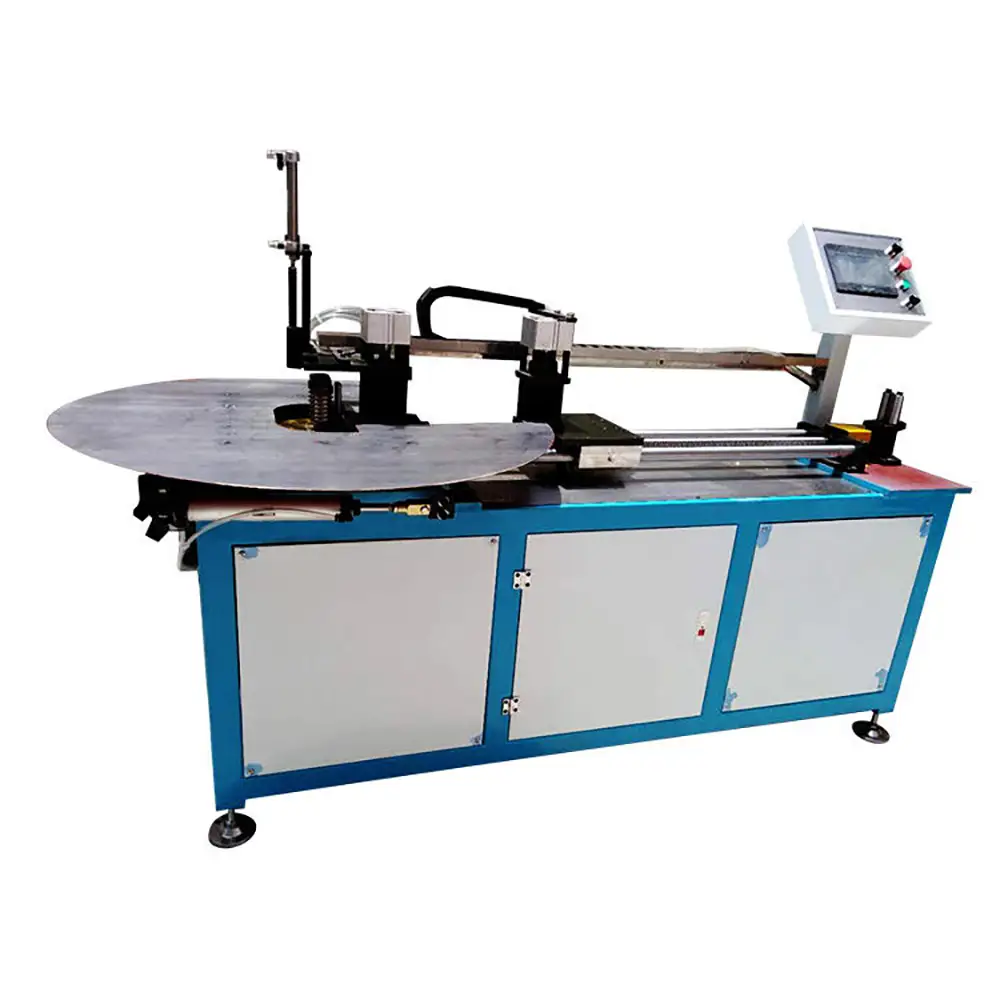
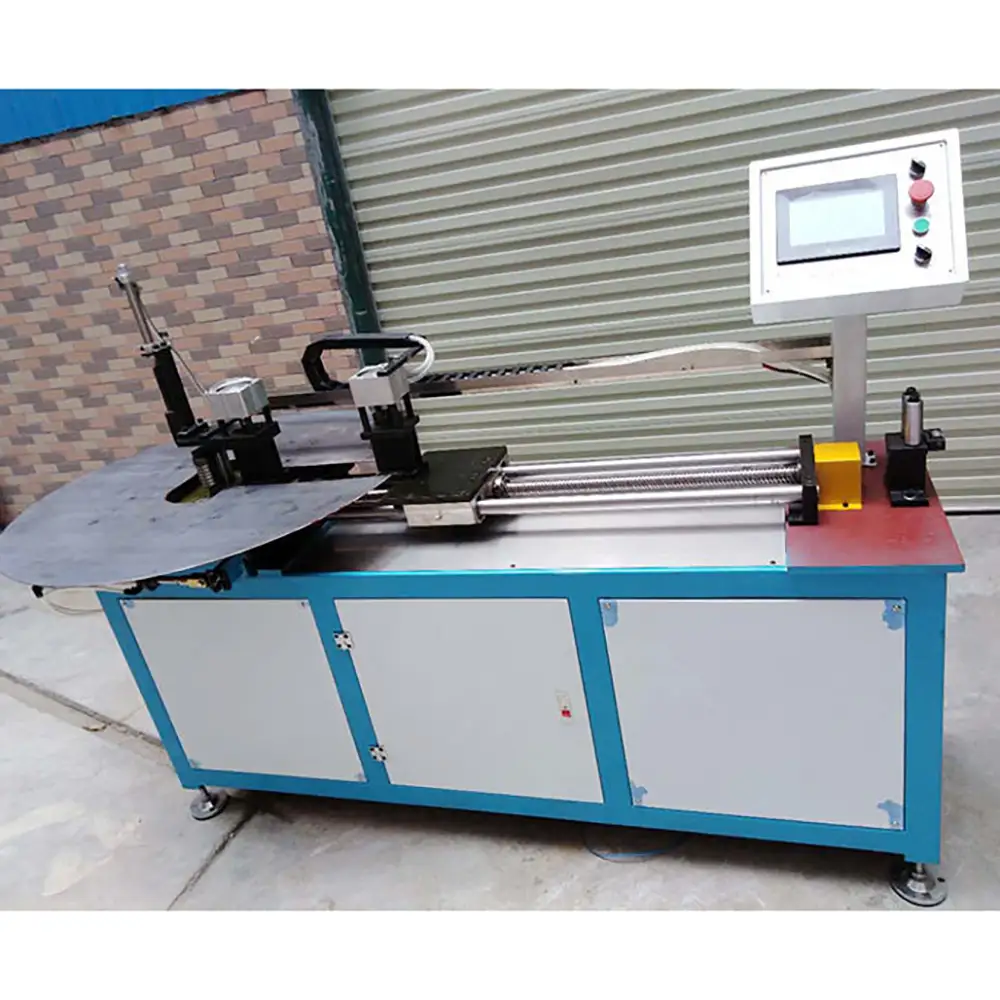
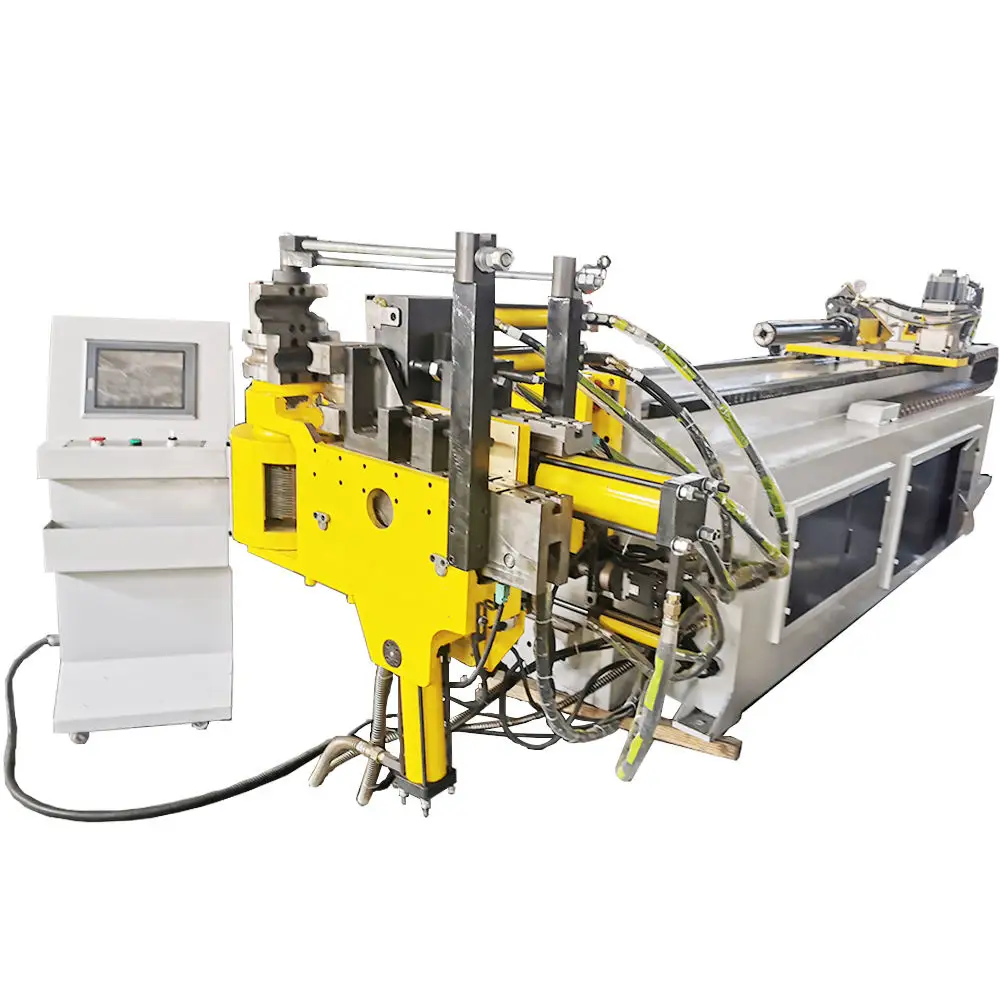
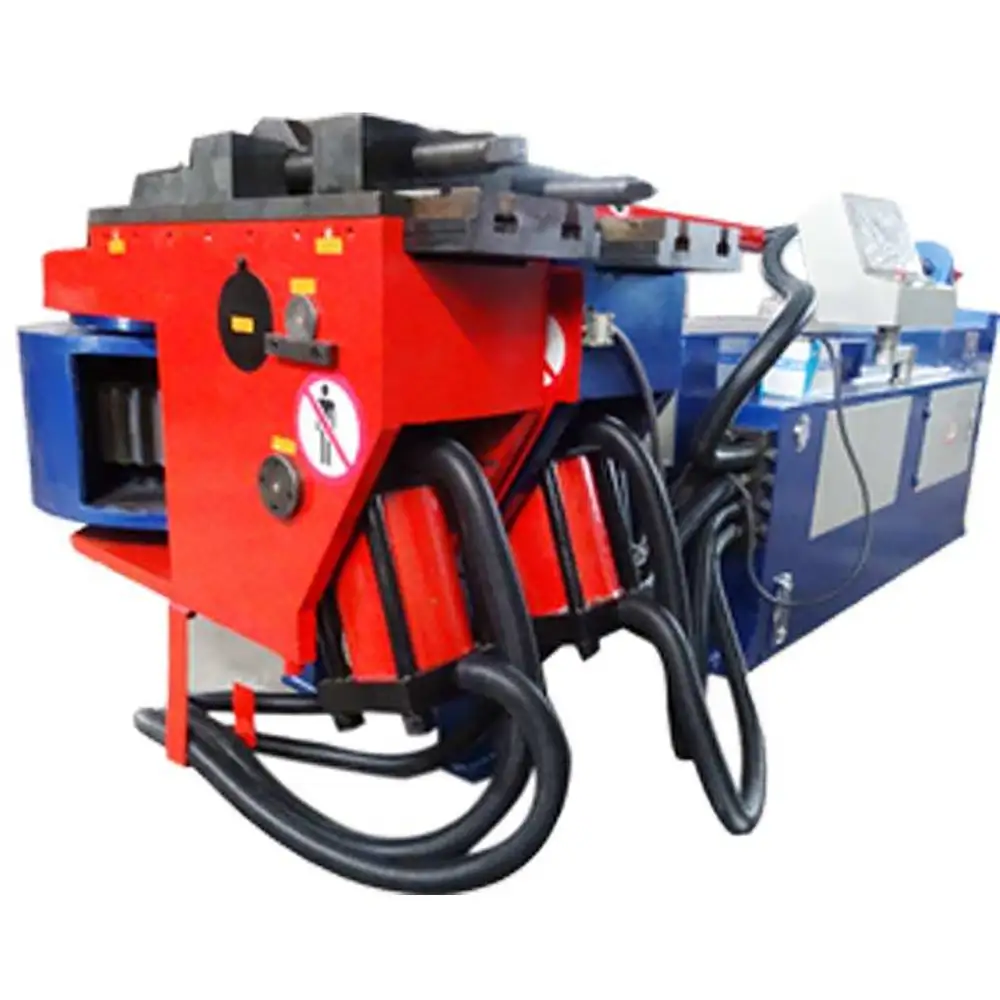
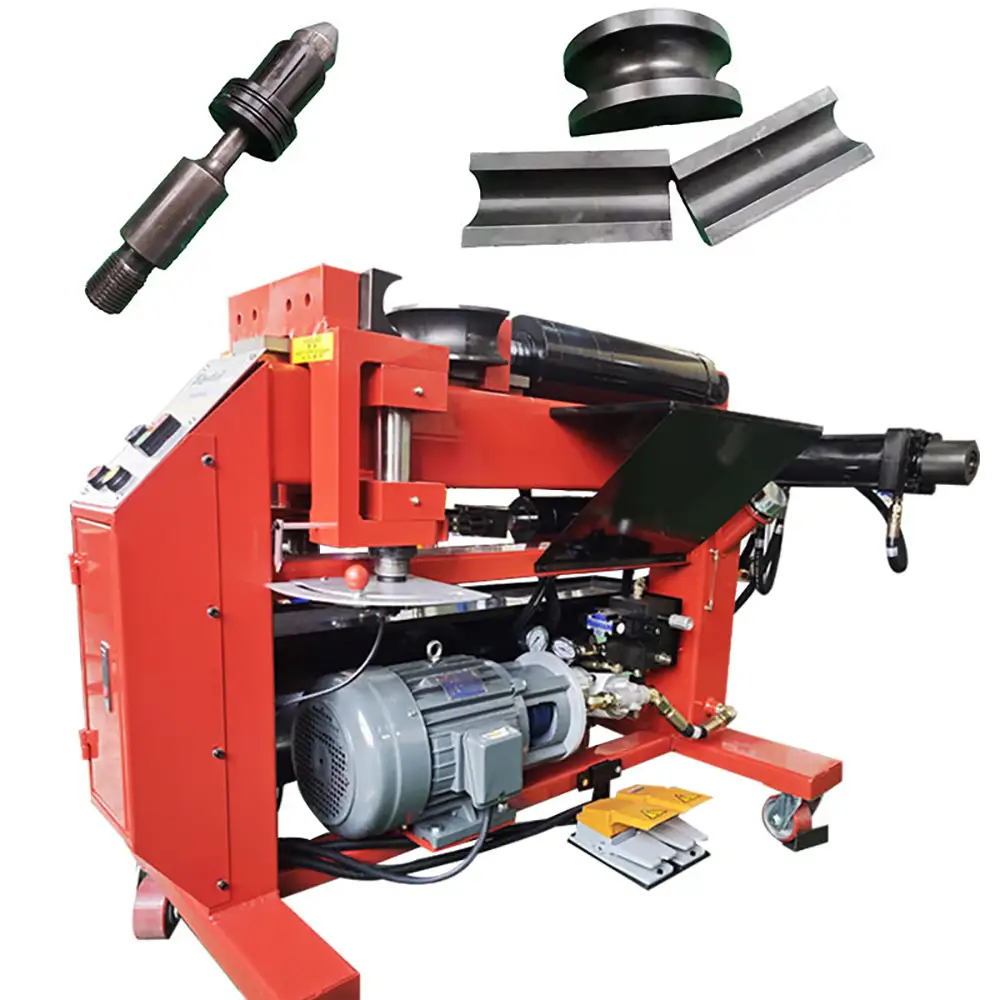
* Servo Motors & Drives: Powered by Xinje/Huada servo systems with precision reducers for smooth motion control.
* Transmission System: High-accuracy ball screw assembly and Zhuolan planetary reducer guarantee stable power output.
* Sensors & Components: Omron proximity switches, NSK bearings, YSC pneumatic parts, and Taiwan LSK linear guides enhance
durability and precision.
* Electrical Safety: Chint electrical components and circuit breakers ensure safe operation.
|
No. |
Item Name |
Specification |
Brand/Model |
|
1 |
System Control Unit |
|
PLC/Touch Screen |
|
2 |
Servo Motor & Servo Drive (with reducer) |
|
Xinje, Huada |
|
3 |
Precision Ball Screw Set |
1 set |
Domestic (China) |
|
4 |
Precision Planetary Reducer |
|
Zhuolan |
|
5 |
Proximity Sensor |
|
Omron |
|
6 |
Electrical Components |
|
CHINT |
|
7 |
Circuit Breaker |
|
CHINT |
|
8 |
Bearings |
|
NSK |
|
9 |
Pneumatic Components |
|
YSC |
|
10 |
Linear Guide Rail |
|
Taiwan LSK |
Electric Heating Tube Bending Machine for 16mm Copper and Aluminum Tubes
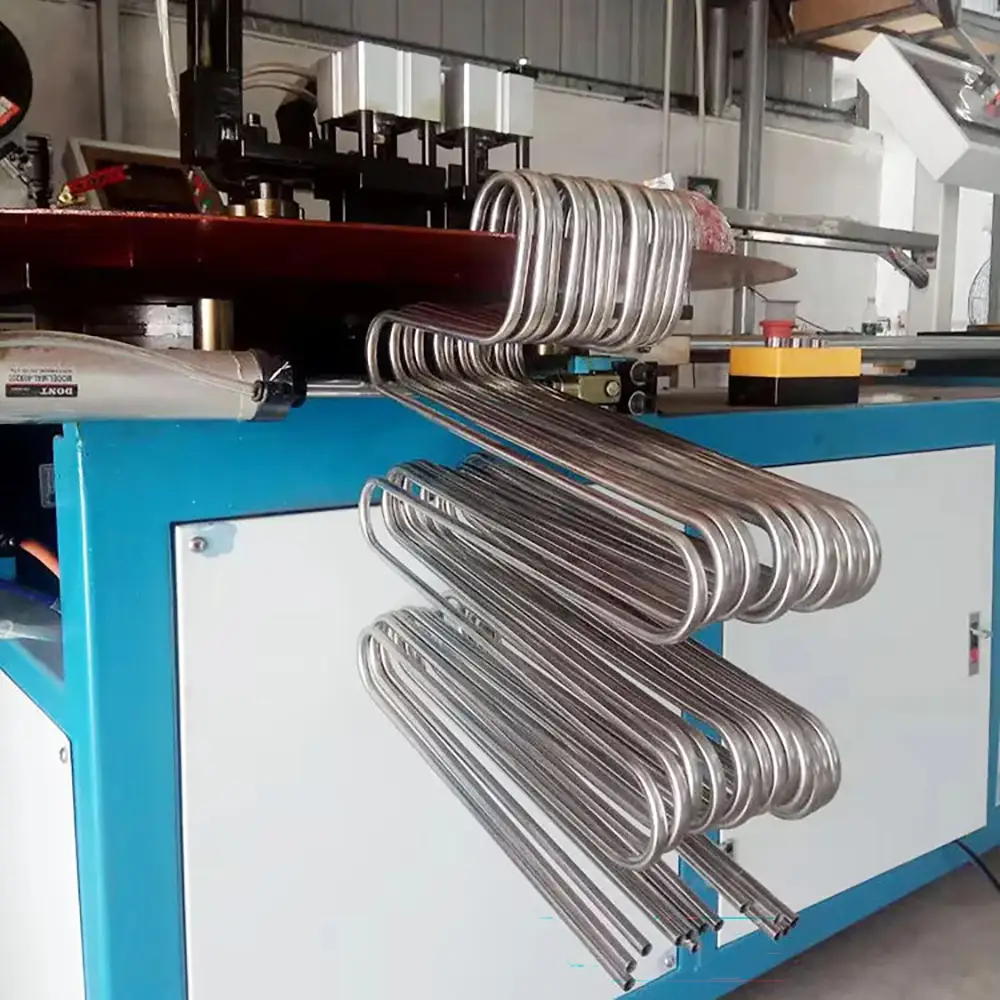
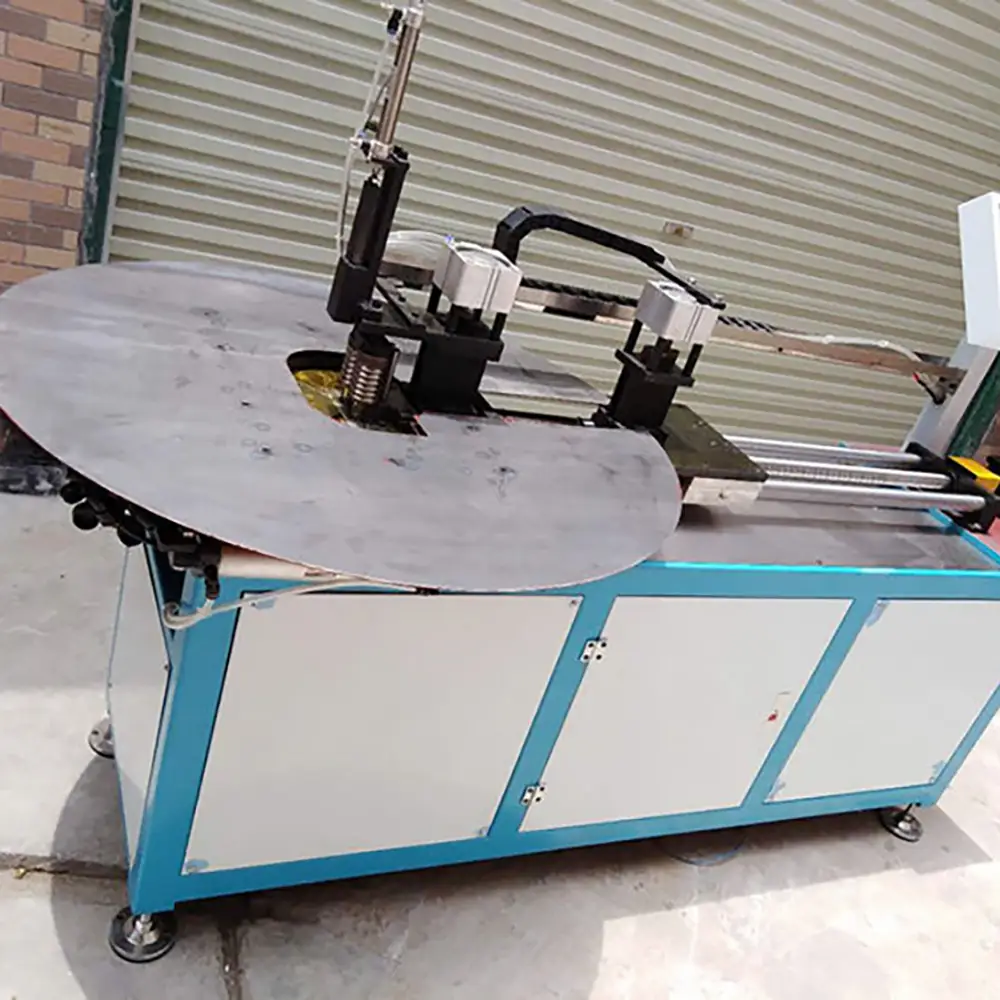
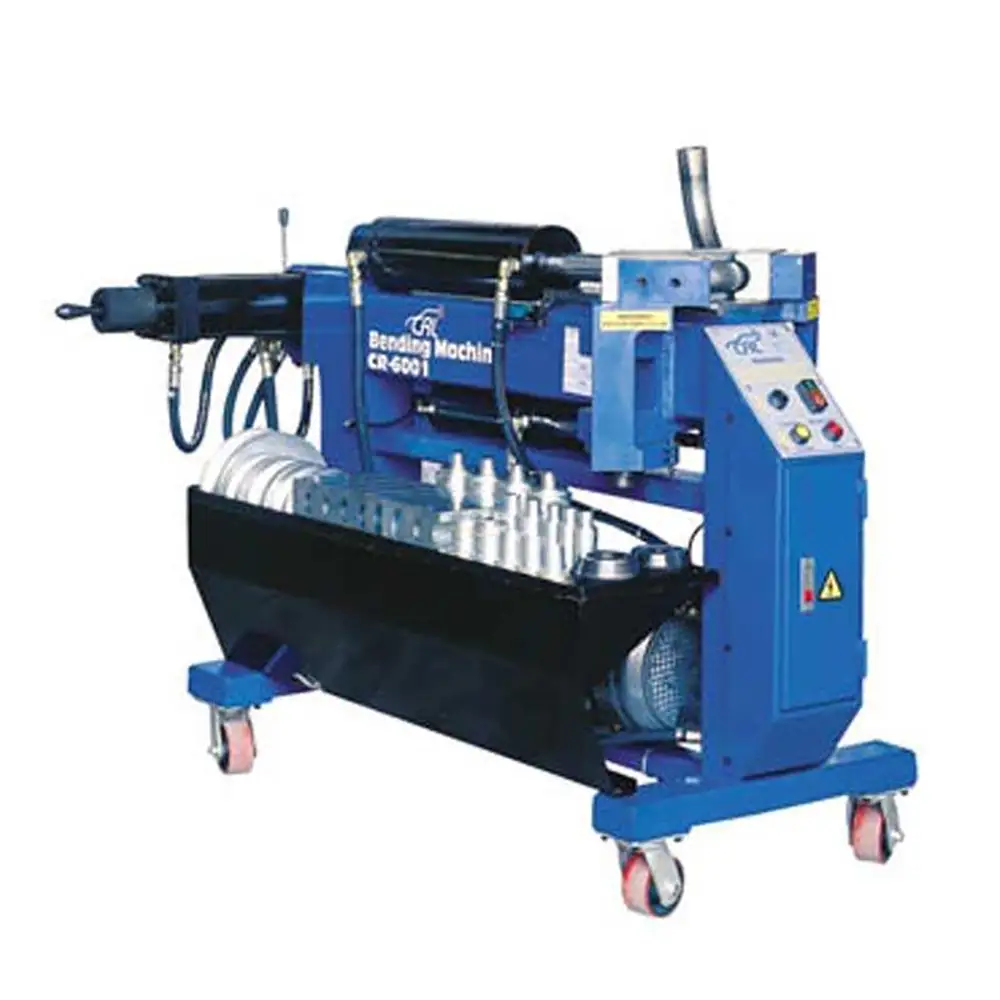
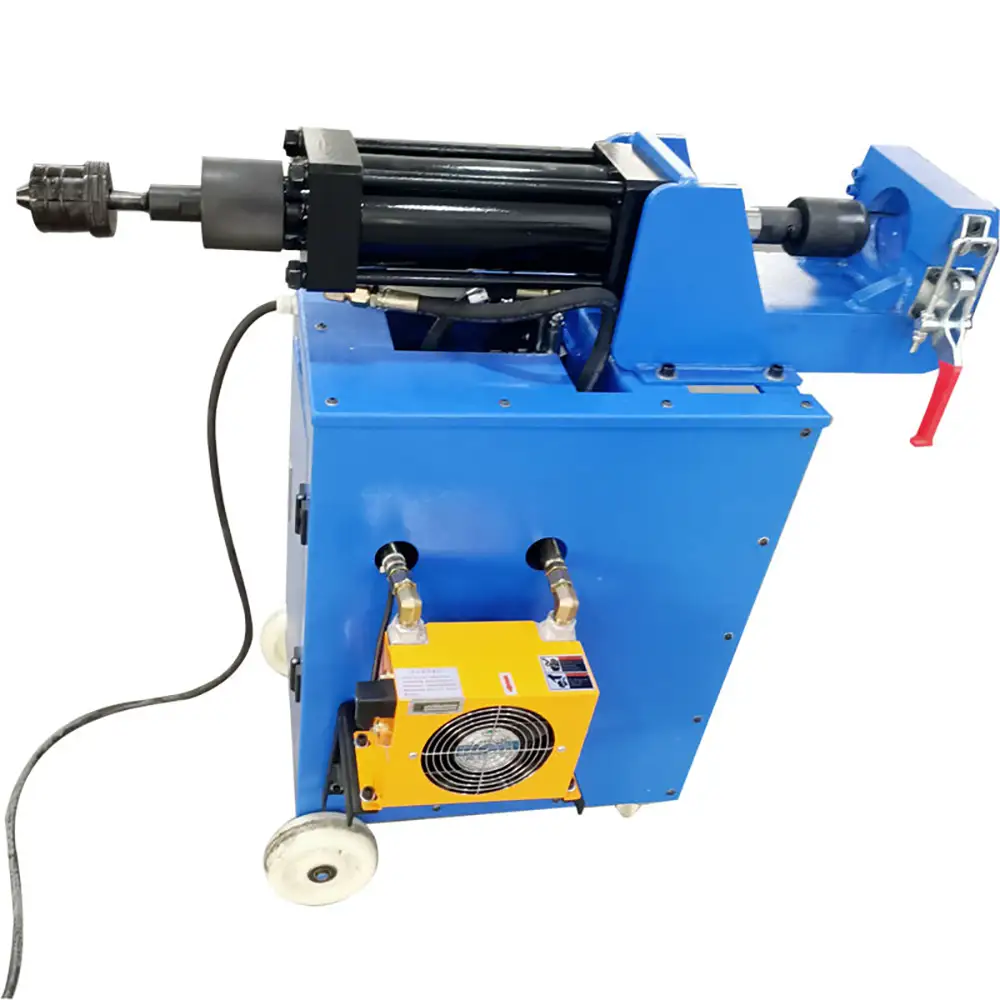
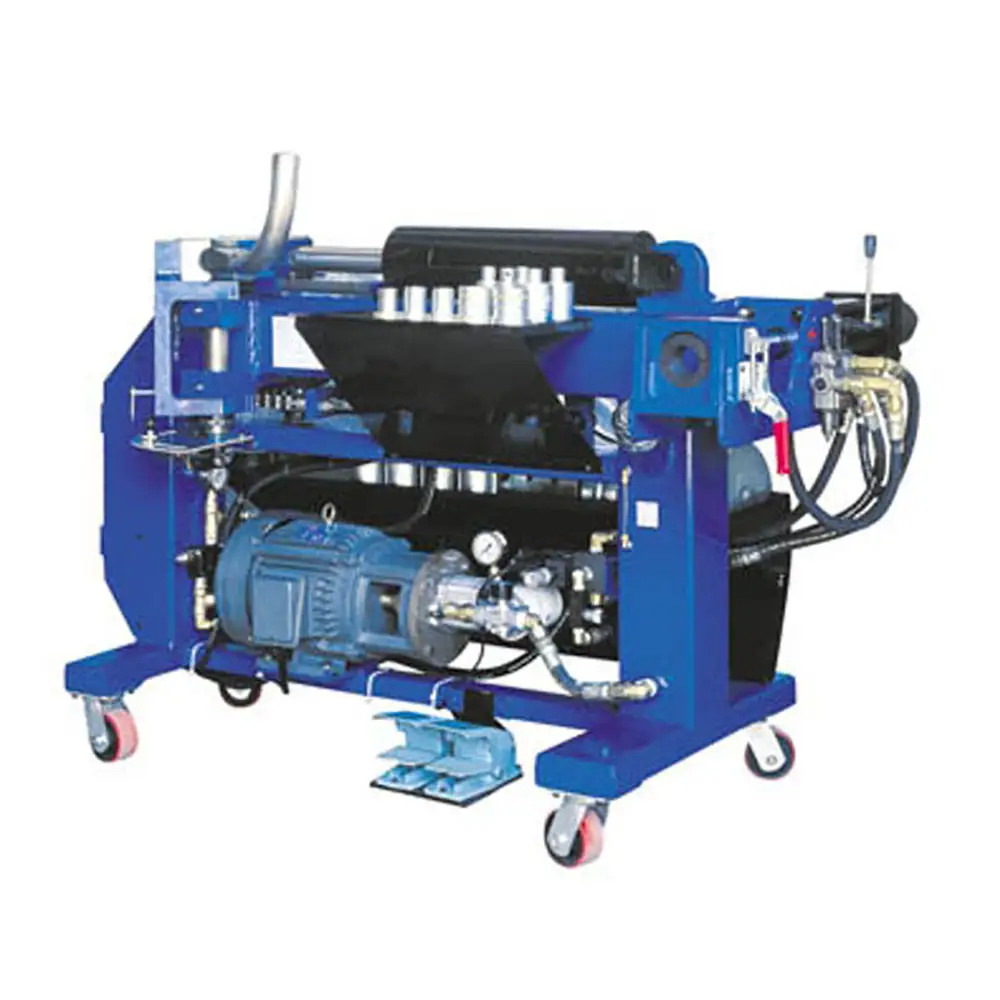
The Electric Heating Tube Bending Machine for 16mm Diameter Copper Aluminum Tubes is designed for controlled bending of suitable copper and aluminum tubing used in HVAC,refrigeration,heat exchanger,air conditioning,and general tube fabrication applications. The machine combines an electric heating function with tube bending to support forming operations where controlled heating may help improve the workability of suitable metal tubes.
With a nominal tube diameter of up to 16mm,the equipment is intended for appropriately sized copper and aluminum tubing. The actual bending range depends on tube wall thickness,material condition,bending radius,heating method,tooling,and machine configuration.
Electric heating can be useful for applications where the tube material or geometry requires controlled thermal assistance during forming. The appropriate heating temperature and process parameters should always be established according to the tube material and manufacturer's operating recommendations.
16mm Copper Tube Bending
Copper tubing is widely used in refrigeration,air conditioning,heat pump,and heat exchanger systems. Its combination of thermal conductivity and formability makes it suitable for many tube-processing applications.
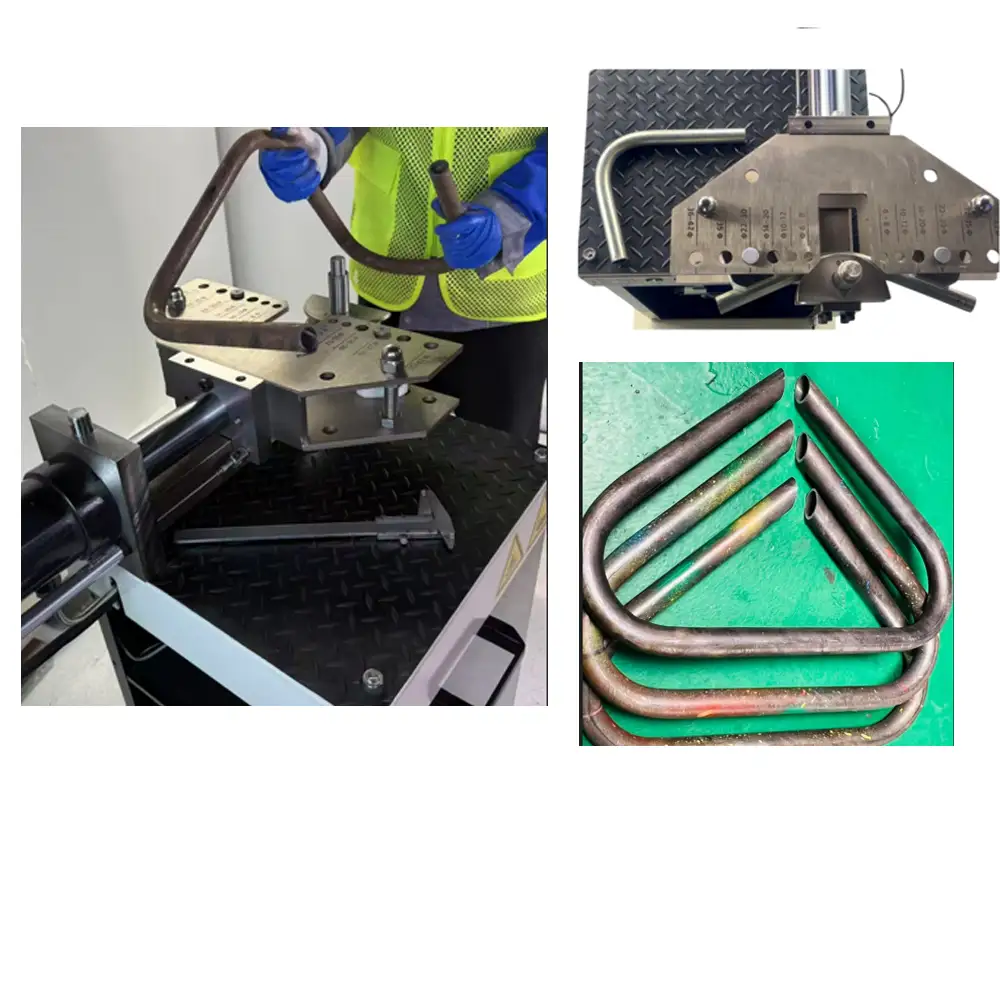
The machine can be configured for suitable 16mm copper tubes and related tube dimensions. During bending,the tube is positioned and supported by appropriate tooling while the forming system creates the required bend.
The final bend radius and geometry depend on the selected tooling. For applications requiring repeatable tube shapes,consistent positioning and proper clamping are important.
Copper tube can be available in different tempers and wall thicknesses. These characteristics affect how the tube responds to bending and heating.
16mm Aluminum Tube Bending
Aluminum tubing is also used in HVAC,heat transfer,automotive,and general fabrication applications. Aluminum has different mechanical and thermal characteristics from copper,so bending parameters may need to be adjusted accordingly.
The machine can be used for suitable aluminum tubes when the material diameter,wall thickness,and bending requirements fall within the machine's configured range.
Heating should be carefully controlled because excessive heat can affect the material and surface condition. Operators should use appropriate process parameters based on the specific aluminum alloy and tube specification.
Electric Heating Tube Forming
The electric heating system provides controlled thermal energy to the tube during the forming process when heating is required by the application.
Heating can potentially improve the workability of certain tube materials or forming conditions. However,the machine should not be assumed to require heating for every tube or every bending operation.
The actual heating method,temperature control,heating zone,and heating duration depend on the machine design. Customers should confirm these parameters when selecting equipment.
For production applications,temperature consistency is important. Excessive or uneven heating can affect tube quality,so appropriate control and monitoring should be used.
HVAC and Refrigeration Applications
One major application for copper and aluminum tube bending equipment is HVAC and refrigeration manufacturing.
Suitable applications may include:
Air conditioning tubing
Refrigeration tubing
Heat pump components
Condenser tubing
Evaporator tubing
Heat exchanger tubes
Cooling equipment
Refrigeration coils
HVAC assemblies
Custom tube connections
Bending allows manufacturers to route tubing through compact equipment layouts while reducing the number of separate joints.
For refrigeration systems,the finished tube must also be compatible with subsequent brazing,connection,and leak-testing procedures.
Heat Exchanger Tube Bending
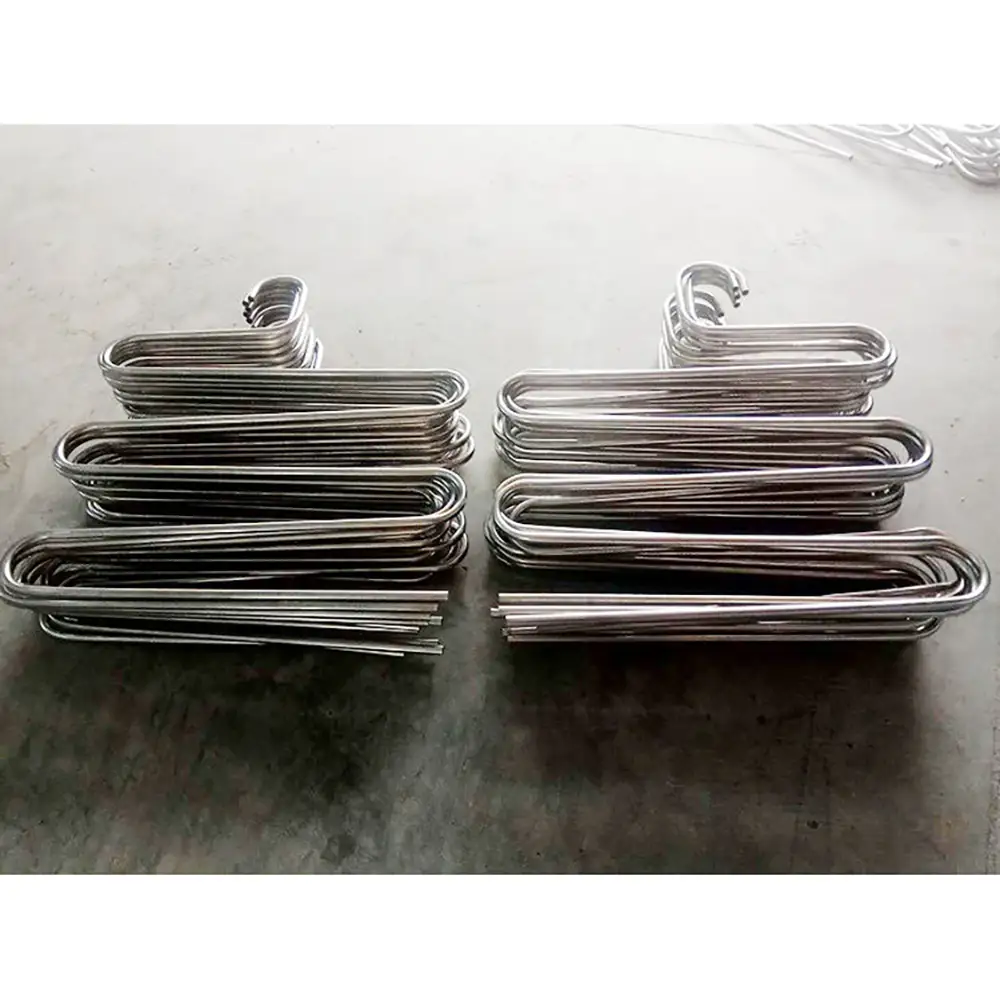
Heat exchangers often require tubes to follow specific layouts within a limited installation space. Bending equipment can help create repeatable tube paths for suitable heat transfer assemblies.
Copper and aluminum tubes may be used in different heat transfer products depending on the system design.
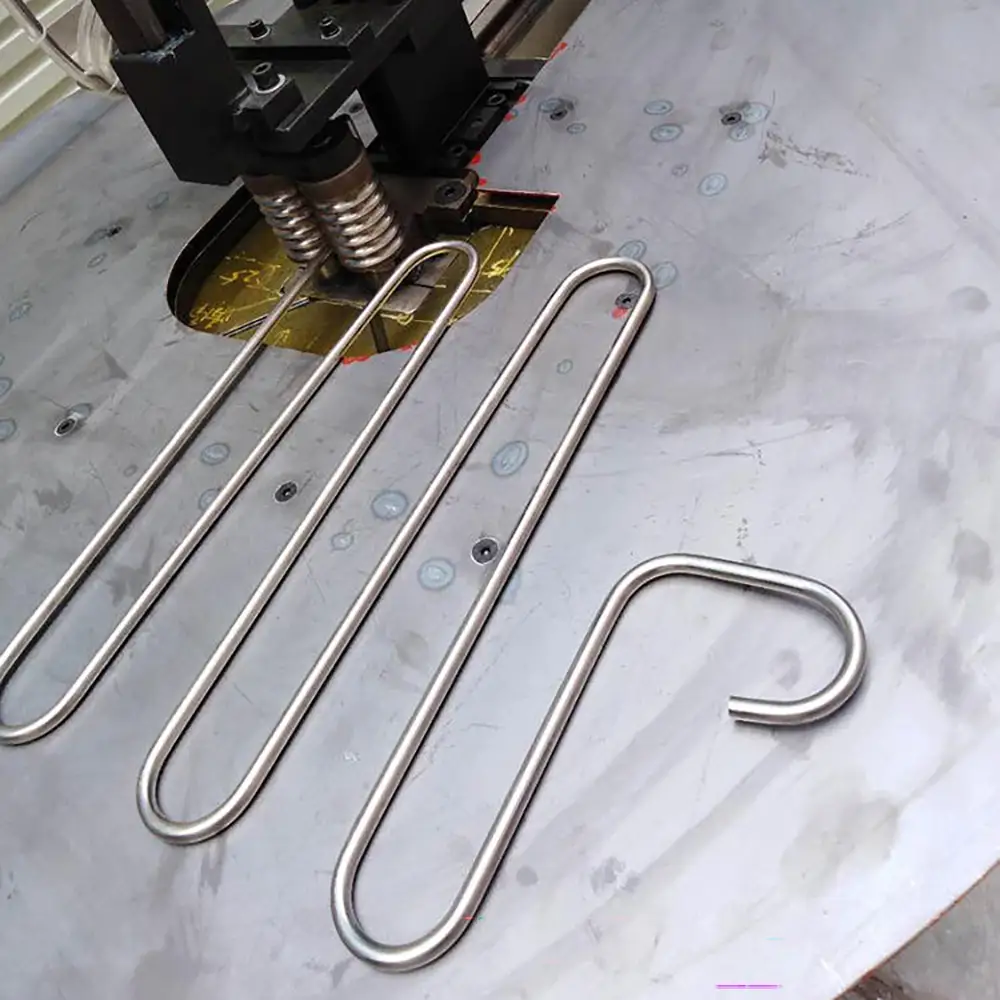
For serpentine,offset,or curved tube configurations,the machine can provide controlled forming according to the selected tooling.
The overall thermal performance of a heat exchanger depends on the complete system design,including tube material,flow arrangement,heat transfer area,fluid properties,and operating conditions. Tube bending is only one part of the manufacturing process.
Tube Bending Accuracy
Accurate tube bending is important when the finished tube must fit into brackets,heat exchanger assemblies,air conditioning units,or other components.
Bending accuracy can be influenced by:
Tube diameter
Wall thickness
Material condition
Heating temperature
Bending radius
Tooling design
Tube positioning
Clamping force
Machine rigidity
Operator settings
For repeat production,the first workpieces should be inspected against the required drawings or dimensional specifications.
Bending Radius and Tooling
Different tube diameters and bend radii may require different tooling. A 16mm tube does not necessarily use the same bending die for every application.
Tooling may include bending dies,clamps,guides,rollers,mandrels,and tube supports depending on the machine design.
For thin-wall copper or aluminum tubing,appropriate support may be particularly important to reduce flattening,kinking,or wrinkling.
Customers should provide the required tube diameter,wall thickness,material,bend angle,bend radius,and tube shape when requesting tooling recommendations.
Production Efficiency
For manufacturers processing large numbers of similar tubes,a dedicated bending machine can reduce repetitive manual forming work.
Electric heating and controlled bending can help standardize the forming process for suitable applications. Repeatable positioning can also reduce manual measurement between individual workpieces.
Production output depends on the tube material,bending geometry,number of bends,heating requirements,loading method,and machine configuration.
For high-volume manufacturing,customers should evaluate the complete cycle time rather than focusing only on bending speed.
Applications Beyond HVAC
Although HVAC and refrigeration are important applications,this type of tube bending machine can also be used in other industries.
Potential applications include:
Automotive tubing
Motorcycle components
Solar thermal equipment
Water heating systems
Heat transfer equipment
Industrial cooling systems
Electrical equipment
Furniture tubing
General metal fabrication
Custom copper and aluminum tube assemblies
Suitability should be evaluated based on the material,dimensions,and required forming geometry.
Maintenance and Safety
Routine maintenance helps maintain stable bending performance. Operators should inspect heating components,tooling,clamps,guides,and moving parts according to the manufacturer's maintenance schedule.
Because the machine uses electric heating,the heating system and electrical connections should be inspected regularly. Operators should avoid contact with heated surfaces and follow appropriate electrical and thermal safety procedures.
Guards,emergency stops,and other protective features may vary according to the machine configuration and applicable local requirements.
OEM and Custom Tube Bending Solutions
Different manufacturers may require different tube diameters,wall thicknesses,bending radii,and forming patterns.
OEM and ODM solutions can include customized bending dies,fixtures,heating systems,tube supports,positioning systems,and control configurations.
For machine selection,customers should provide the tube material,outer diameter,wall thickness,required bend radius,bending angle,overall tube length,production volume,and drawings or samples when available.
Why Choose Us
Electric Heating Function – Provides controlled thermal assistance for suitable copper and aluminum tube forming applications.
16mm Tube Capability – Designed for appropriately specified tubes around the 16mm diameter range.
Copper and Aluminum Processing – Suitable for compatible copper and aluminum tubing used in multiple industries.
HVAC and Refrigeration Applications – Designed for suitable air conditioning,refrigeration,and heat transfer tube processing.
Flexible Tube Forming – Supports different bending geometries according to tooling and machine configuration.
Controlled Production – Helps standardize tube positioning and bending for repeat production.
Custom Tooling Options – Dies,clamps,guides,and supports can be selected according to tube dimensions and bend requirements.
OEM & ODM Support – Machine configuration and tooling can be adapted to specific tube materials,dimensions,and production requirements.
FAQs
1. What is an electric heating tube bending machine?
It is a tube bending machine equipped with an electric heating function for suitable applications where controlled heating may assist the forming of metal tubes.
2. Can it bend 16mm copper tubes?
Yes. The machine is designed for suitable copper tubes around the 16mm diameter range,subject to the specified wall thickness,material condition,and tooling.
3. Can it bend aluminum tubes?
Yes. Suitable aluminum tubes can be processed when their dimensions and material properties are within the machine's configured range.
4. Why is heating used during tube bending?
Heating can improve the formability of certain materials or tube configurations. Whether heating is required depends on the material,wall thickness,bend geometry,and process requirements.
5. Is this machine suitable for HVAC tubing?
Yes. It can be used for suitable copper and aluminum tubing in HVAC,air conditioning,and refrigeration applications.
6. Can it be used for heat exchanger tubes?
Yes. Suitable tubes for heat exchanger assemblies can be bent when their dimensions and required geometry are within the machine's capabilities.
7. What tube diameter can the machine process?
The product is designed around a 16mm tube diameter specification. The exact working range should be confirmed according to the selected model and tooling.
8. What affects bending quality?
Material,diameter,wall thickness,bending radius,heating temperature,tooling,clamping,and tube positioning can all affect the final bending result.
9. Can thin-wall tubing be bent?
Potentially yes. Thin-wall tubing may require suitable tooling,support,and controlled process parameters to reduce deformation.
10. Can the machine make custom bend shapes?
Yes,depending on the machine configuration and tooling. Customers should provide drawings or samples for special tube geometries.
11. Can the machine be customized?
Depending on the manufacturer,custom dies,fixtures,heating systems,tube supports,and control configurations may be available.
12. What information should I provide for a quotation?
Provide the tube material,diameter,wall thickness,bend angle,bend radius,tube length,required shape,production volume,and drawings or samples if available.
Electric Heating Tube Bending Machine,16mm Tube Bending Machine,16mm Copper Tube Bending Machine,16mm Aluminum Tube Bend China, suppliers, manufacturers, factory, customized, wholesale, quotation, made in China