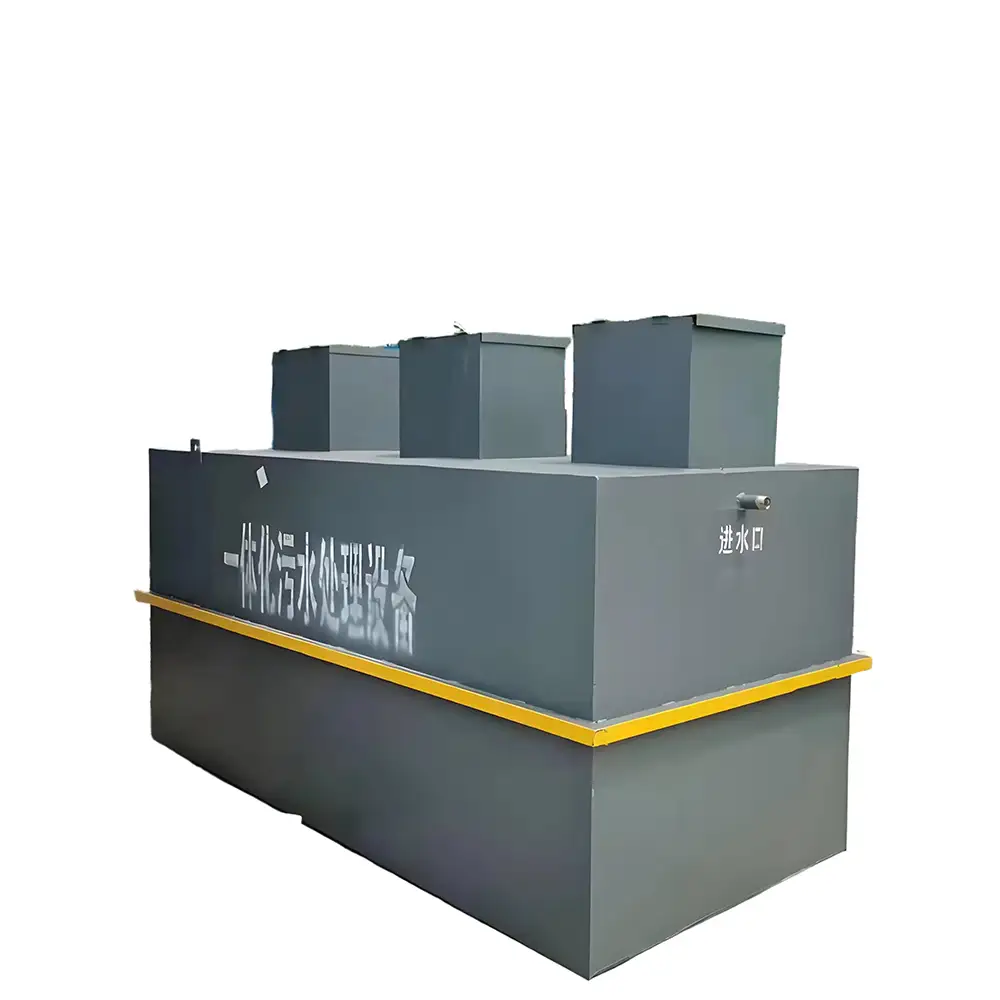
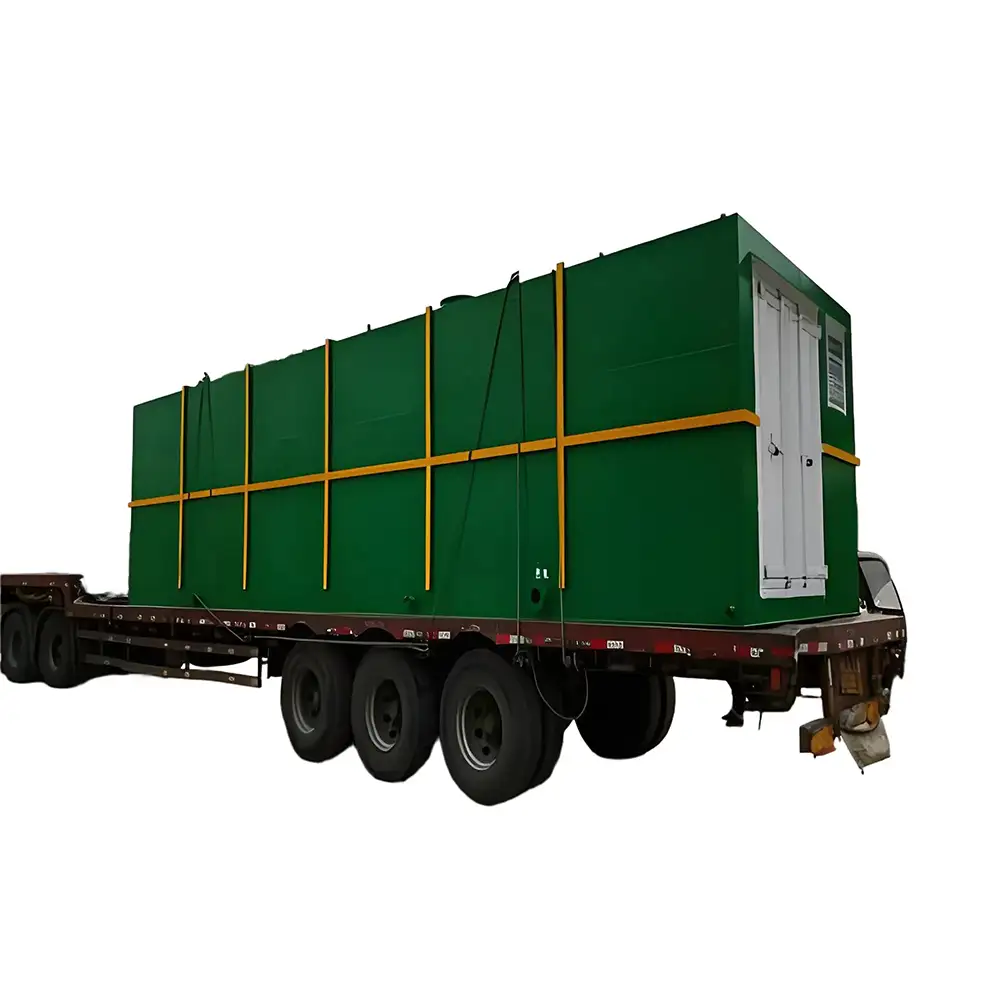
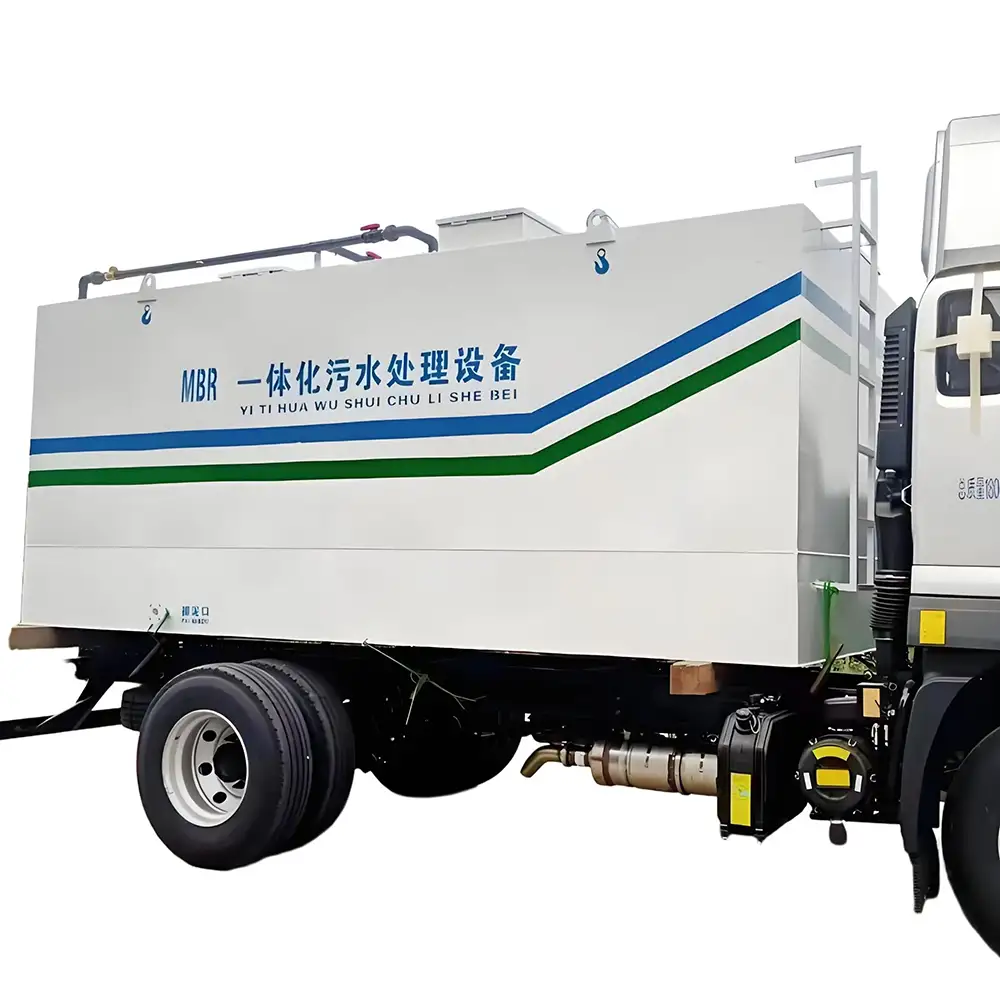
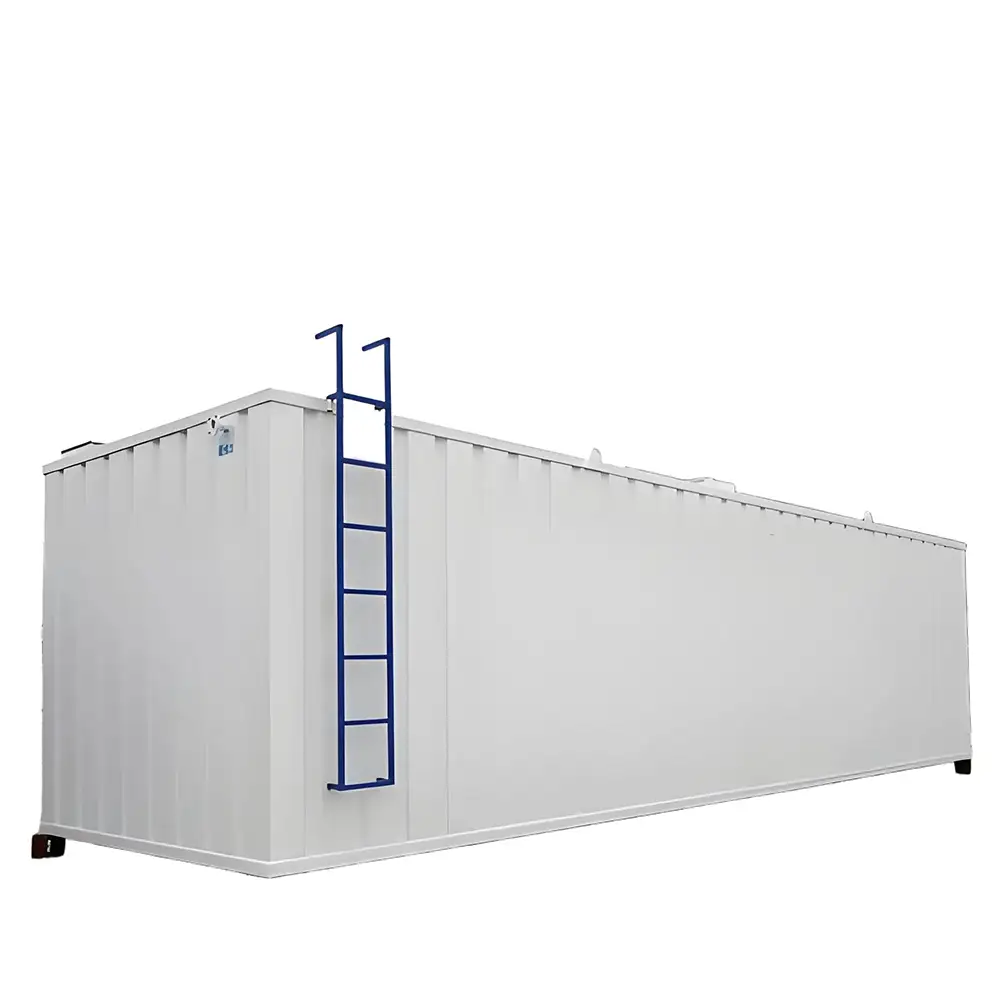
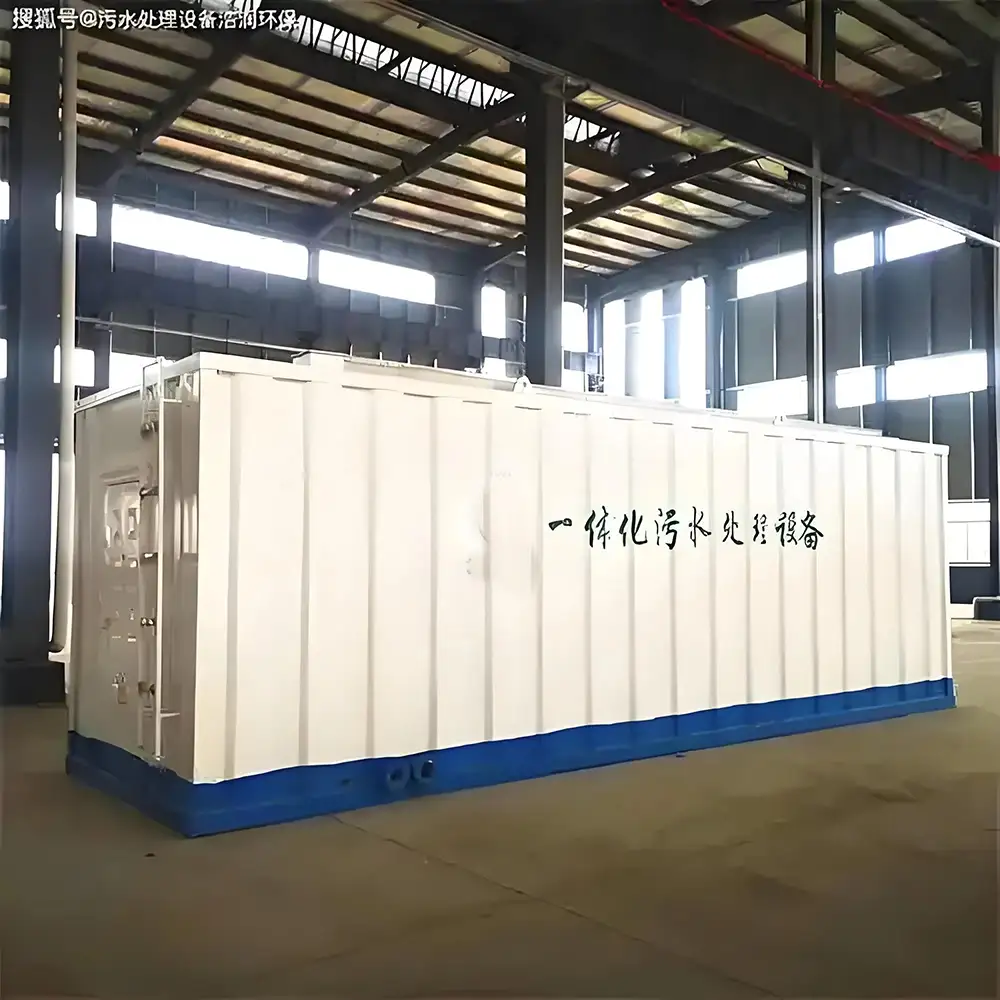
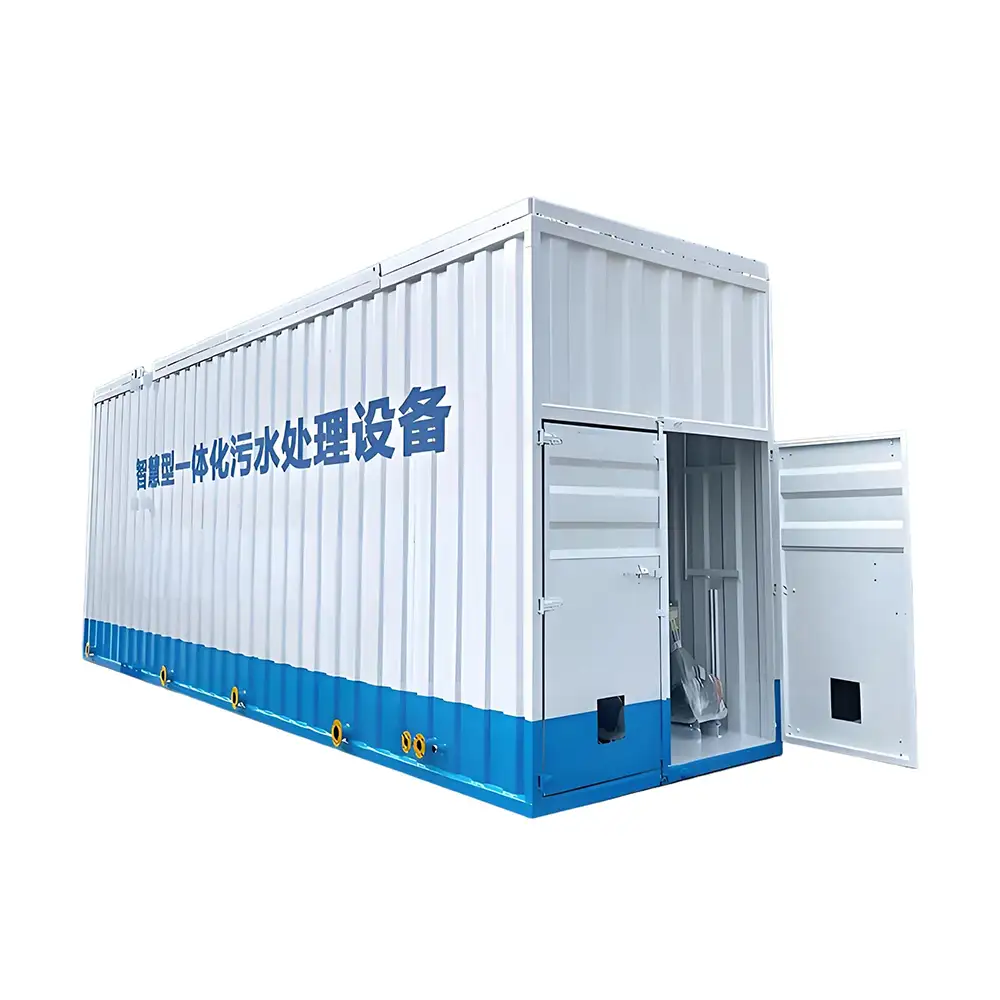
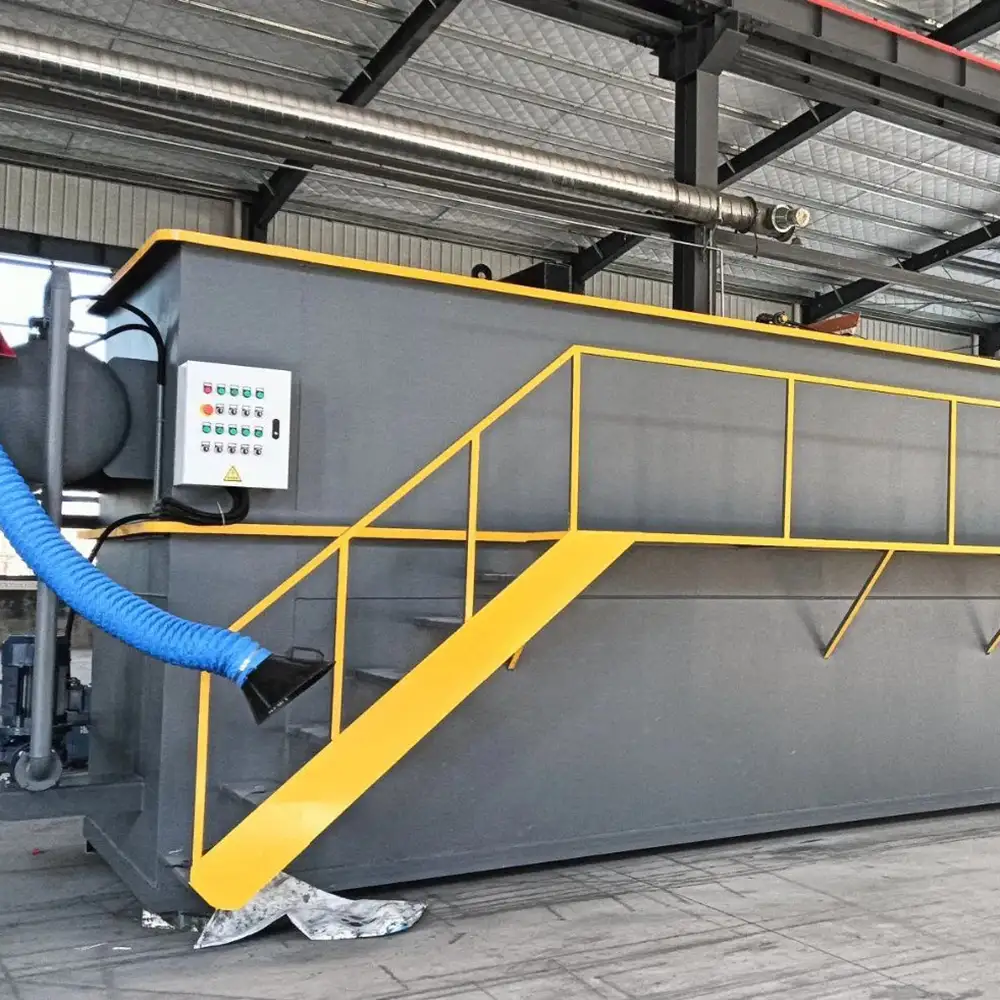
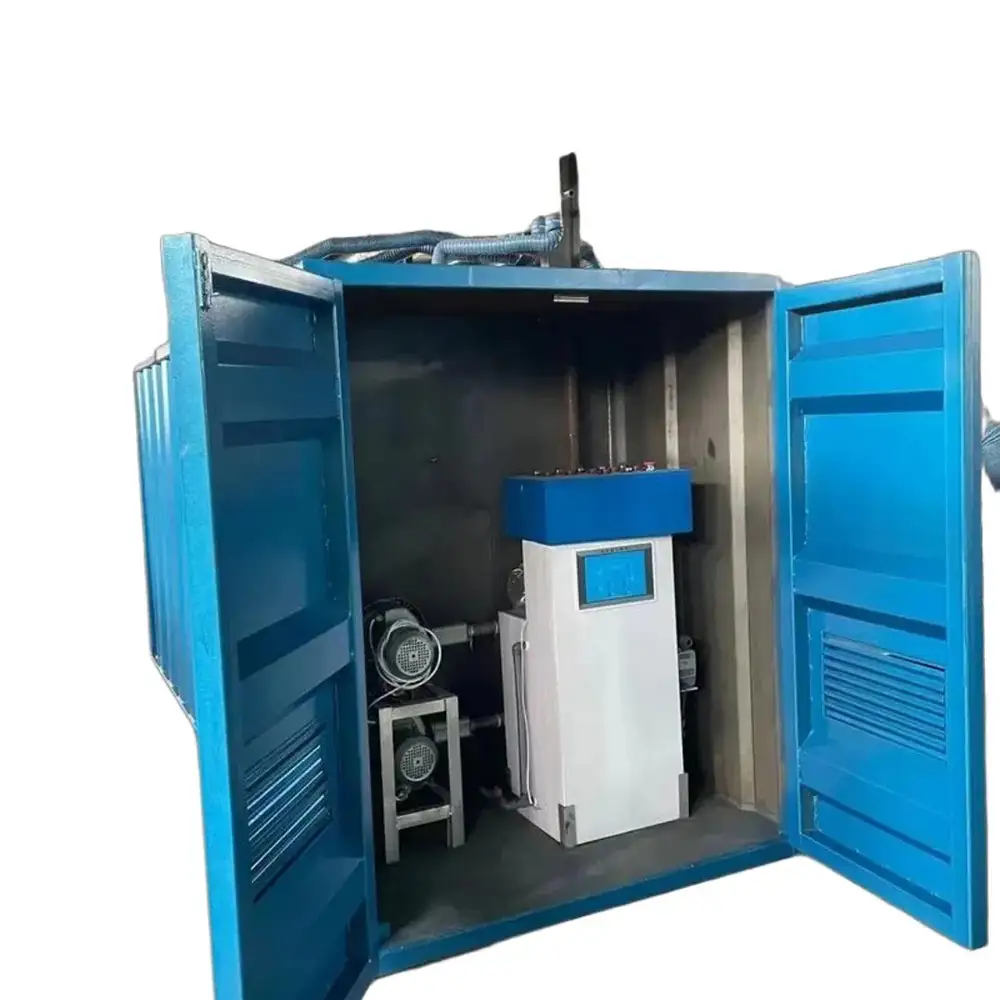
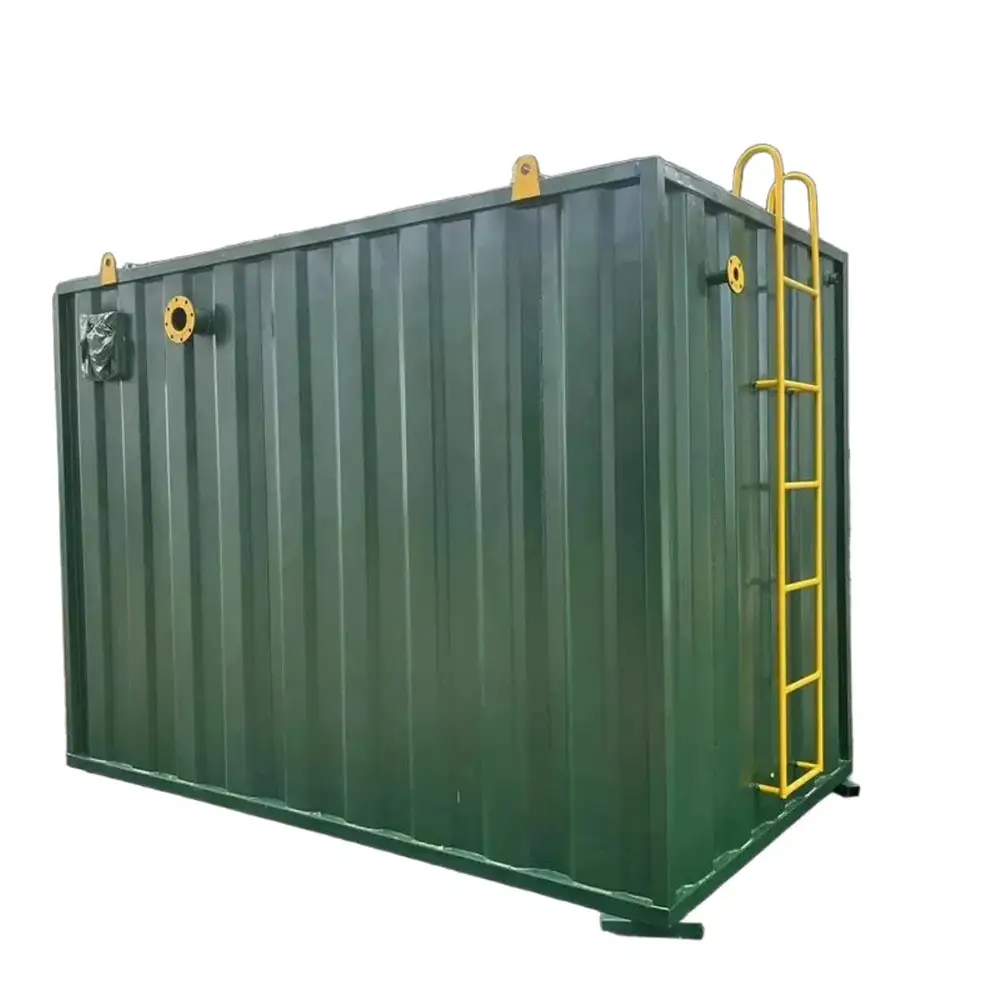
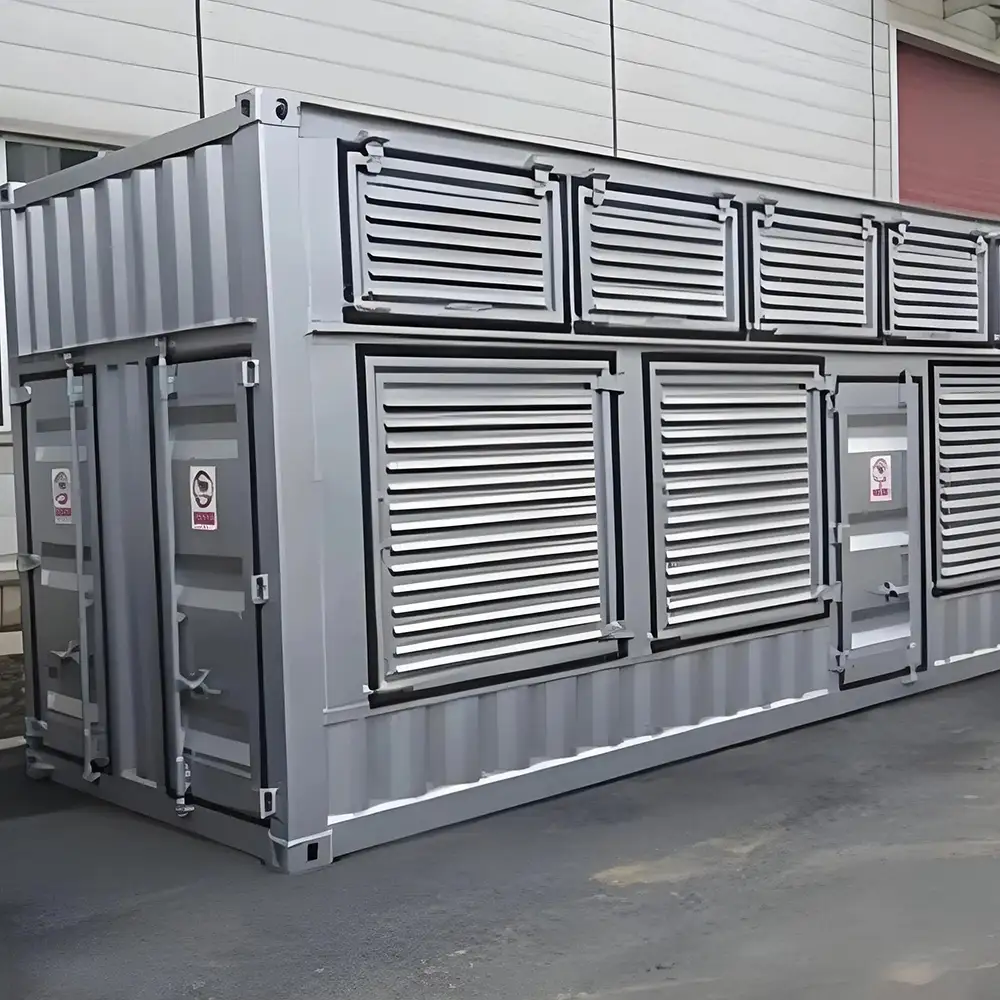
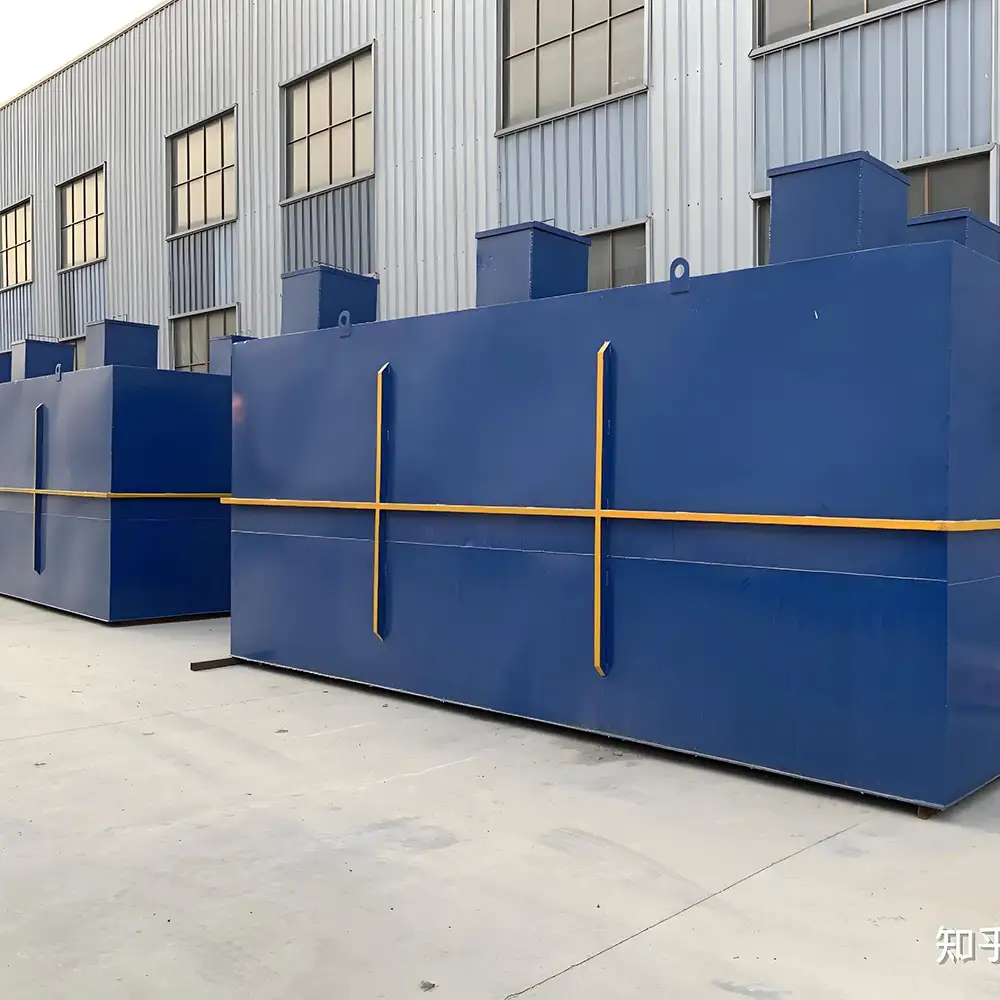
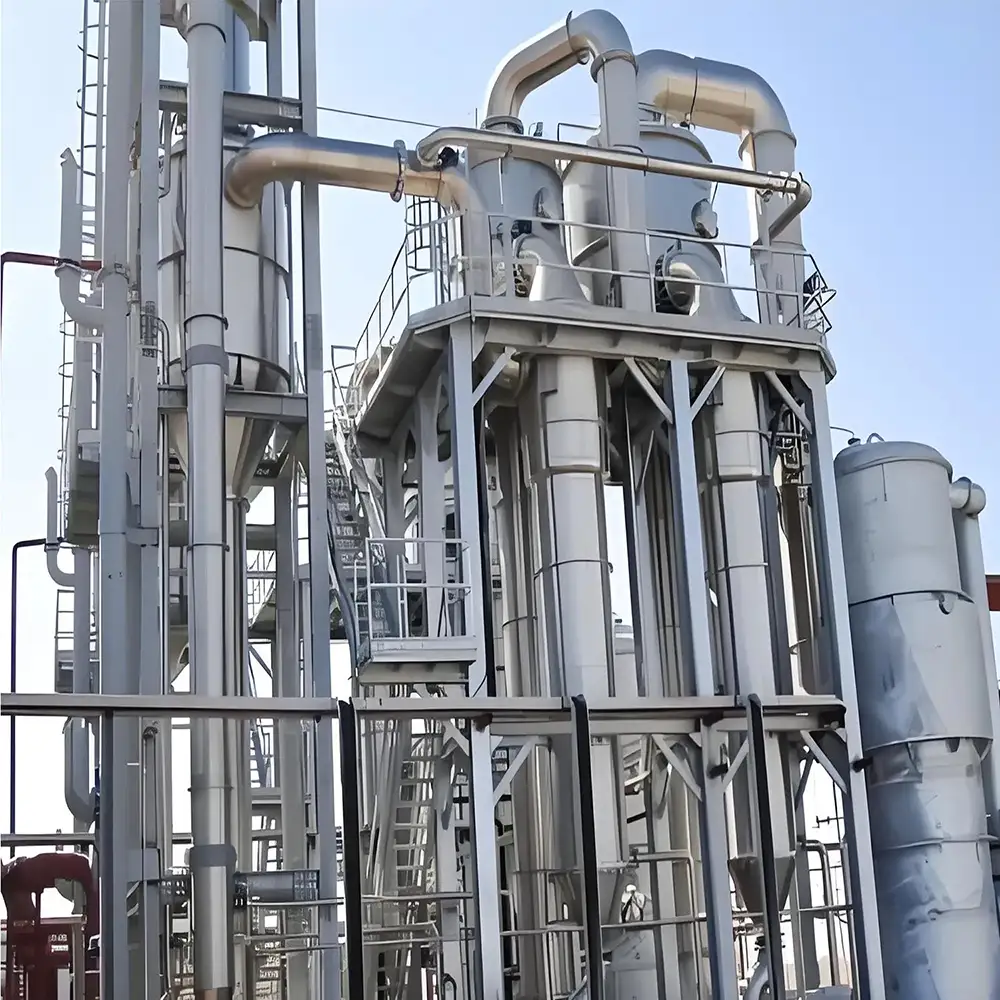
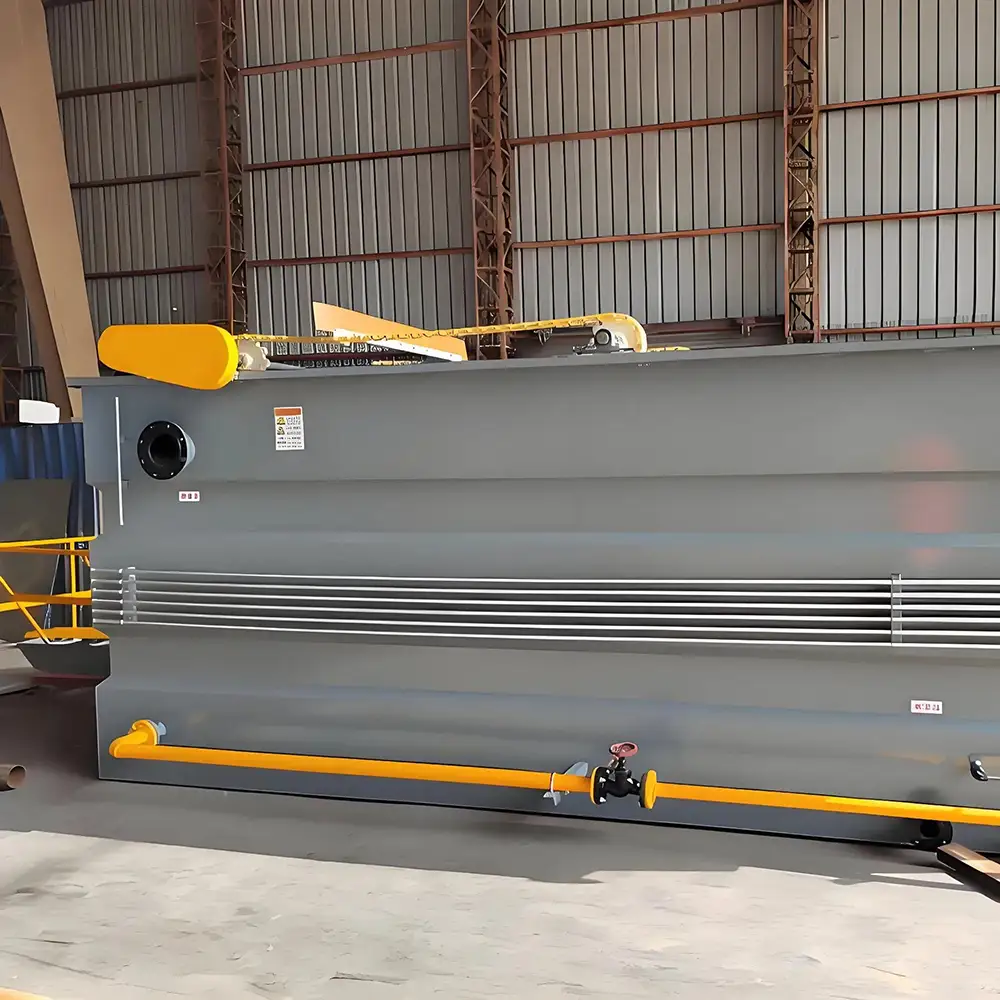
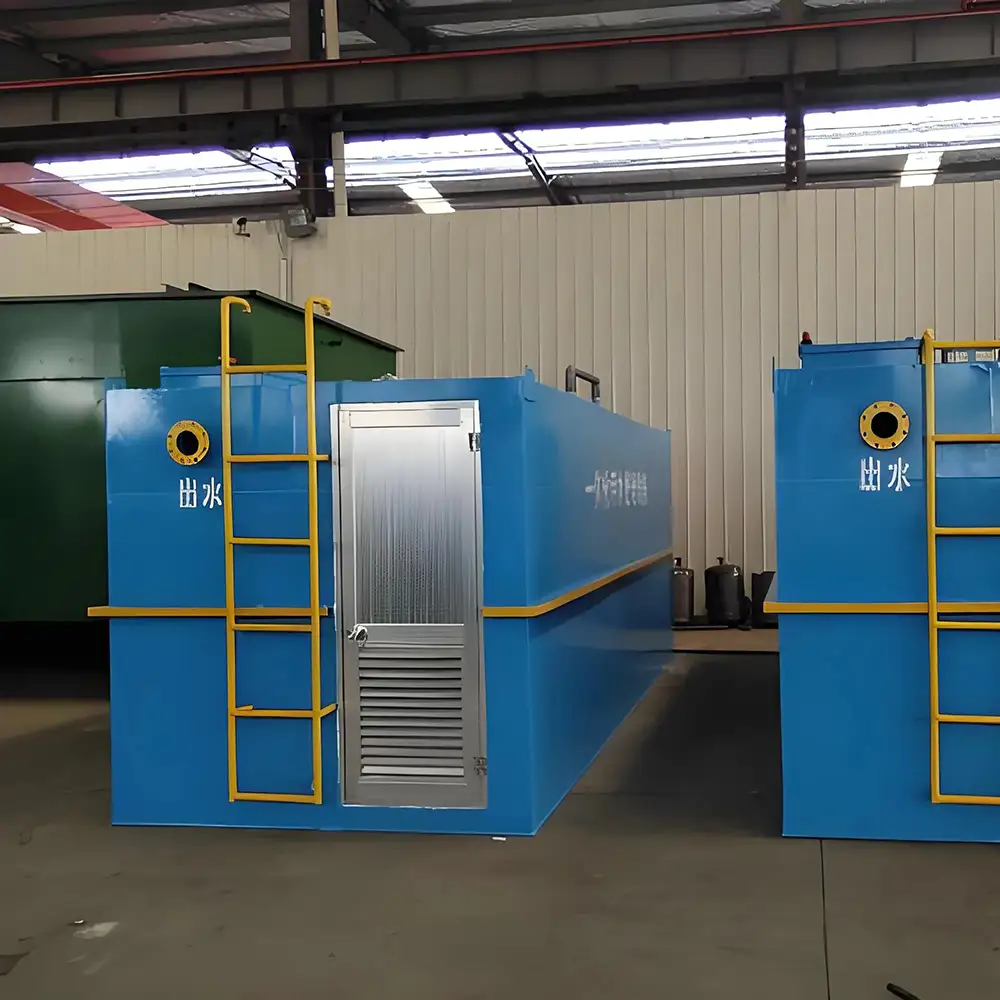
The integrated sewage treatment equipment produced by our company is currently a relatively excellent water treatment product, which is suitable for the treatment and reuse of domestic sewage and similar industrial organic wastewater. Can be buried under the surface, the surface above the equipment can be used as greening or other land, generally do not need to build houses and heating and insulation, automatic control, do not need personnel management, no sludge reflux, simple operation, easy maintenance, wide range of application, good treatment effect.
MBR MBBR Integrated Sewage Treatment Equipment for Printing and Dyeing Factories, Paper Mills and Slaughterhouses
The MBR MBBR Integrated Sewage Treatment Equipment is a combined biological and membrane treatment system designed for demanding industrial wastewater applications. It integrates Moving Bed Biofilm Reactor (MBBR) biological treatment with Membrane Bioreactor (MBR) technology to provide efficient organic matter degradation, biological nutrient treatment, and high-quality solid-liquid separation.
This integrated approach is particularly suitable for industries that generate wastewater with variable flow, high organic loading, suspended solids, color, fats, proteins, fibers, or other difficult-to-treat contaminants. Typical applications include printing and dyeing factories, paper mills, slaughterhouses, food processing plants, textile factories, and other industrial facilities.
MBBR uses buoyant biofilm carriers inside a biological reactor to retain microorganisms on protected surfaces. MBR uses low-pressure membranes, commonly microfiltration or ultrafiltration, to separate treated water from biological solids. EPA technical references identify both MBBR and MBR as established biological treatment technologies for industrial and municipal wastewater applications.
MBR MBBR Integrated Treatment Principle
The treatment process normally begins with preliminary treatment. Screening removes large solids and debris, while an equalization tank can balance fluctuations in wastewater flow and pollutant concentration.
The wastewater then enters the MBBR biological treatment section. Specially designed carrier media are suspended in the reactor and provide a large surface area for microorganisms to grow as biofilm.
In aerobic zones, aeration supplies oxygen and keeps the carriers moving. The microorganisms consume biodegradable organic compounds and can support nitrification when suitable operating conditions are maintained. In anoxic configurations, mixing and internal recycle can be incorporated to support biological nitrogen removal.
After biological treatment, the wastewater enters the MBR stage. Membranes provide solid-liquid separation, replacing or reducing the need for conventional secondary clarification. EPA describes MBR systems as biological treatment systems that use membranes for solids separation.
The resulting permeate can have low suspended solids and turbidity, making it suitable for further polishing or selected reuse applications when the required water quality is achieved.
Why Combine MBBR and MBR?
MBBR and MBR perform different but complementary functions.
MBBR provides biological treatment.
Biofilm carriers retain microorganisms inside the reactor and provide additional surface area for biological growth. This can help maintain biological treatment capacity in a relatively compact reactor. EPA notes that MBBR can provide higher biomass concentration and smaller reactor volumes compared with conventional activated sludge in suitable applications.
MBR provides membrane-based solid-liquid separation.
The membrane retains suspended solids and biomass while allowing treated water to pass through. This can produce a much clearer effluent than conventional sedimentation alone.
The combined process can therefore provide a strong biological treatment stage followed by high-quality membrane filtration.
Research has also examined hybrid MBBR-MBR configurations for wastewater treatment, including systems with carriers in aerobic and anoxic zones.
Printing and Dyeing Wastewater Treatment
Printing and dyeing wastewater can contain complex organic compounds, suspended solids, color, surfactants, auxiliaries, and other substances depending on the textile production process.
A combined MBBR-MBR system can provide biological treatment for biodegradable organic matter while the membrane stage provides effective retention of suspended biomass and fine particles.
For wastewater containing difficult-to-biodegrade color compounds or refractory organics, additional treatment such as coagulation, activated carbon, ozone, or other advanced oxidation processes may be incorporated.
Research has investigated MBBR-based combined processes for textile dyeing wastewater, including configurations incorporating ozonation to improve treatment of difficult industrial wastewater.
Paper Mill Wastewater Treatment
Paper and pulp production can generate wastewater containing suspended fibers, organic matter, color, chemicals, and other process-related pollutants.
Pretreatment is important because large fibers and coarse solids can interfere with biological and membrane equipment. Screening, primary clarification, dissolved air flotation, or other solids separation processes can therefore be installed upstream.
The MBBR stage then provides biological degradation of biodegradable organic compounds. The MBR stage can subsequently retain biomass and fine suspended solids, producing a high-quality treated effluent for downstream polishing or potential reuse.
Slaughterhouse Wastewater Treatment
Slaughterhouse wastewater typically contains high concentrations of suspended solids, blood, proteins, fats, oils, grease, and biodegradable organic matter.
A suitable pretreatment process may include screening, grease removal, equalization, coagulation, flocculation, or DAF before biological treatment.
MBBR can then reduce biodegradable organic loading, while MBR provides membrane separation of biological solids. EPA technical documentation for meat and poultry facilities identifies MBBR as an aerobic attached-growth treatment option and MBR as a membrane-based treatment technology.
Main System Components
A complete MBR MBBR Industrial Wastewater Treatment System can include:
Coarse and Fine Screening:
Removes large particles, fibers, hair, plastics, and other debris.
Equalization Tank:
Balances flow and pollutant concentration before biological treatment.
Pretreatment System:
DAF, coagulation, sedimentation, grease removal, or other equipment can be added according to wastewater characteristics.
MBBR Biological Reactor:
Contains moving biological carrier media for attached-growth treatment.
MBBR Carrier Media:
Provides protected surface area for microorganisms.
Aeration System:
Supplies oxygen and maintains carrier movement in aerobic zones.
Anoxic Mixing System:
Provides mixing where anoxic biological treatment is required.
MBR Membrane Module:
Provides membrane-based solid-liquid separation.
Membrane Air Scour System:
Helps control membrane fouling and maintain membrane performance.
Permeate Pump:
Transfers treated water from the membrane system.
Sludge Management System:
Handles excess biological solids and other concentrated waste streams.
PLC Control Cabinet:
Controls pumps, blowers, mixers, valves, membrane operation, alarms, and monitoring functions.
Key Advantages
High-Quality Effluent
The membrane stage provides fine solid-liquid separation and can produce a low-turbidity effluent suitable for additional treatment or selected reuse applications.
High Biological Capacity
MBBR carriers provide surfaces for attached biomass growth and can increase biological treatment capacity within a reactor.
Compact System
The combination of biological treatment and membrane separation can reduce the space required compared with some conventional multi-stage treatment layouts.
Flexible Industrial Application
The system can be configured for different industrial wastewater characteristics, including printing and dyeing, paper production, slaughterhouses, food processing, and other manufacturing sectors.
Wastewater Reuse Potential
Where appropriate treatment and polishing are provided, the treated water may be considered for non-potable reuse such as process water, equipment washing, cooling applications, or other approved uses.
Typical Treatment Process
A project may use the following process:
Screening → Equalization → pH Adjustment → Coagulation/Flocculation → Primary Separation → MBBR Biological Treatment → MBR Membrane Filtration → Disinfection → Reuse or Discharge
The actual process should be designed according to wastewater testing and the required final effluent quality.
System Design Considerations
Proper system design requires information about average and peak flow, COD, BOD, TSS, ammonia, total nitrogen, total phosphorus, pH, temperature, conductivity, oil and grease, color, salinity, and other industry-specific pollutants.
Printing and dyeing wastewater may require color and refractory-organic treatment. Paper mill wastewater may require effective fiber and suspended-solid removal. Slaughterhouse wastewater may require strong pretreatment for fats, oils, grease, blood, and high organic loading.
The MBBR carrier filling ratio, membrane flux, aeration rate, hydraulic retention time, biological loading, membrane cleaning strategy, and sludge management system should all be selected according to the actual project.
Operation and Maintenance
Regular monitoring is essential for stable operation.
Operators should monitor dissolved oxygen, pH, temperature, COD, ammonia, flow, MBBR carrier movement, membrane pressure, transmembrane pressure, permeate flow, and membrane cleaning requirements.
MBBR media retention screens should be checked regularly to ensure carriers remain inside the biological reactor.
MBR membranes require appropriate air scouring and periodic physical or chemical cleaning. Membrane operation should be controlled according to the manufacturer's recommended flux and cleaning procedures.
Pretreatment is also critical. Excessive fibers, grease, coarse solids, or toxic chemicals can negatively affect downstream biological and membrane processes.
Why Choose Us?
We provide integrated MBR MBBR Wastewater Treatment Equipment for demanding industrial wastewater applications. Our systems can be configured according to wastewater characteristics, treatment capacity, available footprint, membrane requirements, biological loading, automation level, and final discharge or reuse targets.
For printing and dyeing factories, paper mills, and slaughterhouses, the treatment process can incorporate suitable pretreatment before MBBR biological treatment and MBR membrane filtration.
We focus on practical process integration, compact equipment layout, stable biological treatment, effective membrane separation, convenient maintenance, and scalable industrial wastewater treatment solutions.
FAQs
1. What is an MBR MBBR integrated wastewater treatment system?
It is a combined treatment system that uses MBBR attached-growth biological treatment together with MBR membrane filtration.
2. What does MBBR do in the system?
MBBR provides biological treatment by allowing microorganisms to grow on moving carrier media.
3. What does MBR do?
MBR uses membranes for solid-liquid separation after or within the biological treatment process.
4. Can this system treat printing and dyeing wastewater?
Yes. It can be configured for textile and dyeing wastewater, although color and refractory compounds may require additional chemical or advanced treatment.
5. Can it treat paper mill wastewater?
Yes. Screening and other pretreatment should normally be considered for fibers and high suspended-solids loading before biological and membrane treatment.
6. Can it treat slaughterhouse wastewater?
Yes. Pretreatment such as screening, grease removal, DAF, or coagulation may be appropriate before MBBR-MBR treatment.
7. Does MBR remove suspended solids?
Yes. The membrane provides a physical barrier for suspended solids and biomass, replacing conventional clarification in many MBR configurations.
8. Can the system remove ammonia and nitrogen?
It can be configured for biological nitrification and nitrogen removal using aerobic and anoxic zones, depending on wastewater characteristics and design objectives.
9. Is DAF required before MBBR-MBR?
Not in every project. The need for DAF depends on the concentration of suspended solids, fats, oils, grease, fibers, and other contaminants in the influent.
10. Can treated wastewater be reused?
Potentially. After achieving the required water quality, additional disinfection or polishing can be added for specific reuse applications.
11. Does the MBR membrane require cleaning?
Yes. Membrane systems require routine air scouring and periodic physical or chemical cleaning to control fouling and maintain stable operation.
12. Can MBBR-MBR be used to upgrade an existing wastewater plant?
Yes. MBBR and MBR technologies can be incorporated into treatment plant upgrades where additional biological capacity or higher-quality solid-liquid separation is required.
Prev:
Efficient Interception of Sewage Impurities /Mbbr Membrane Biological Carrier Treatment System
Next:
Slaughter/Poultry/Breeding Wastewater/Agricultural Food Processing Plant Wastewater Treatment Equipment
TAG:
Industrial Water Treatment System,
Industrial Wastewater Treatment Equipment,
Integrated Wastewater Treatment System,
Food Industry Wastewater Treatment,
Meat Processing Wastewater Treatment,
Food Processing Wastewater Treatment,
Industrial Wastewater Treatment System,
Biological Wastewater Treatment System,
Industrial Wastewater Treatment,
Anaerobic Wastewater Treatment,
Sewage Treatment Plant,
Industrial Sewage Treatment,
Industrial Wastewater Treatment Plant,
Wastewater Treatment Equipment,
Wastewater Treatment Plant,
Textile Wastewater Treatment Equipment,
Printing And Dyeing Wastewater Treatment,
Industrial Wastewater Purification,
Industrial Water Treatment Plant,
Wastewater Treatment System,
Industrial Water Treatment Equipment,
Industrial Wastewater Recycling,
Wastewater Recycling System,
Industrial Effluent Treatment,
Industrial Sewage Treatment Plant,
Sewage Treatment Equipment,
Sewage Treatment System,
Advanced Wastewater Treatment,
Moving Bed Biofilm Reactor,
MBBR Wastewater Treatment,
Related Category:
MBR MBBR Integrated Sewage Treatment Equipment,MBR MBBR Wastewater Treatment System,Integrated MBR MBBR Sewage Treatment China, suppliers, manufacturers, factory, customized, wholesale, quotation, made in China