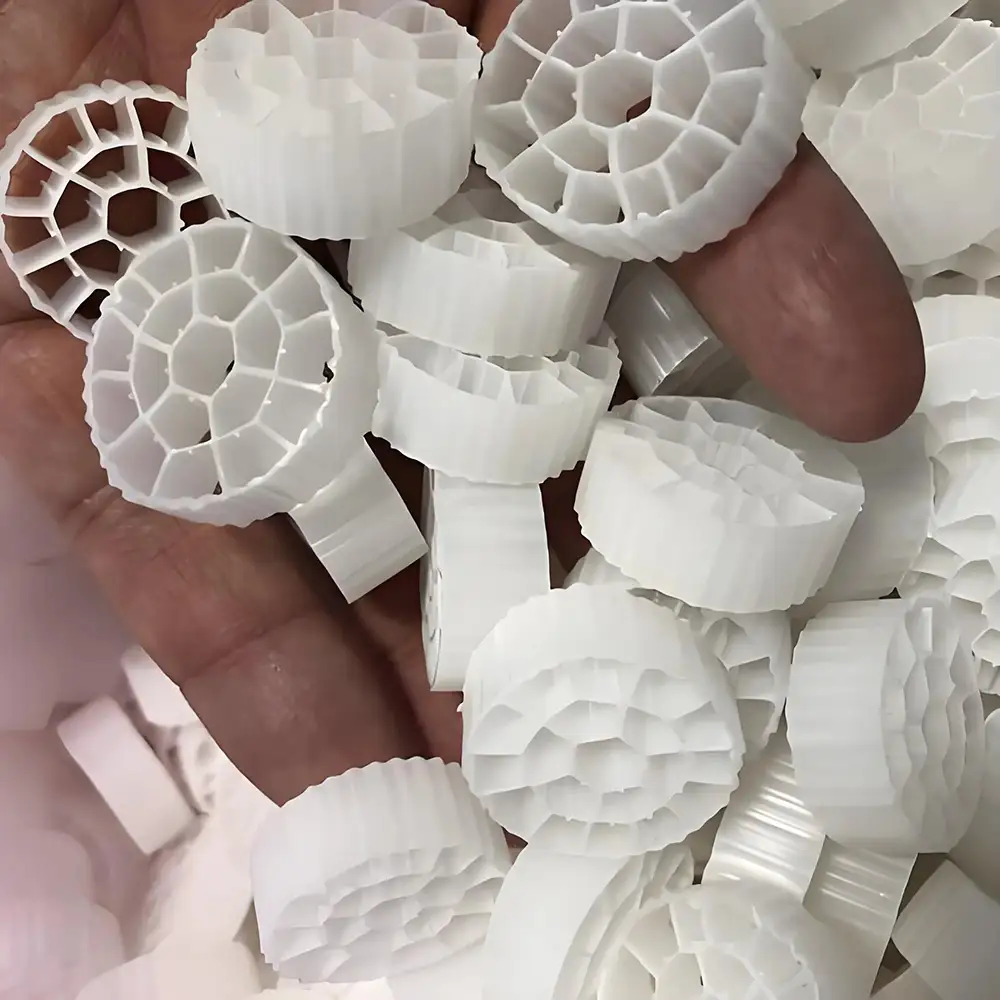
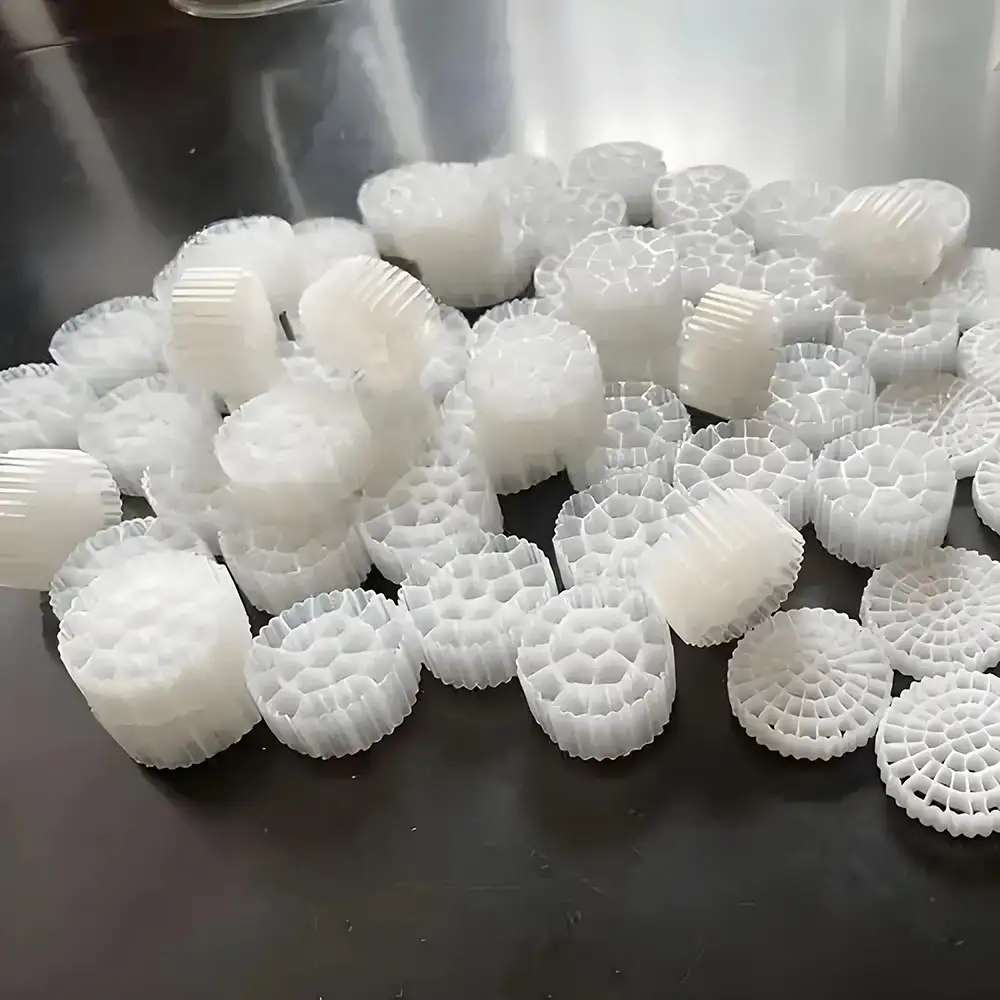
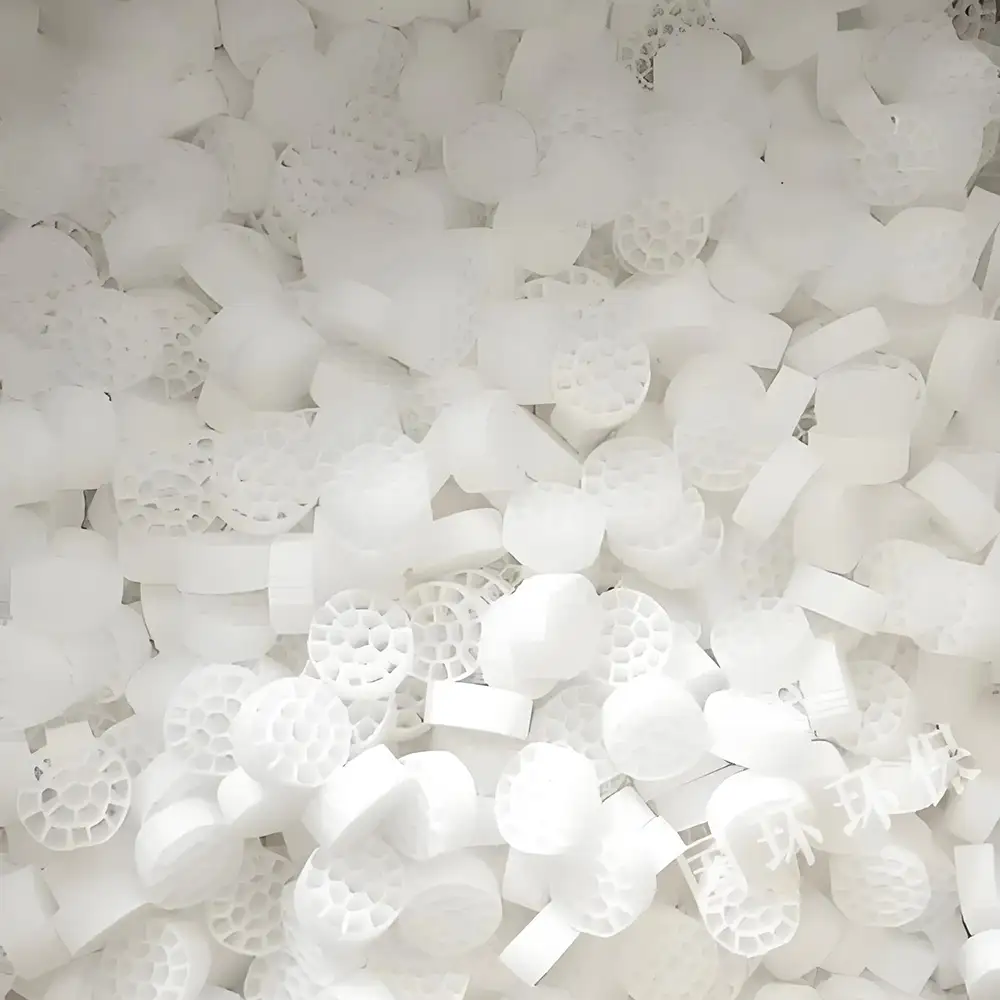
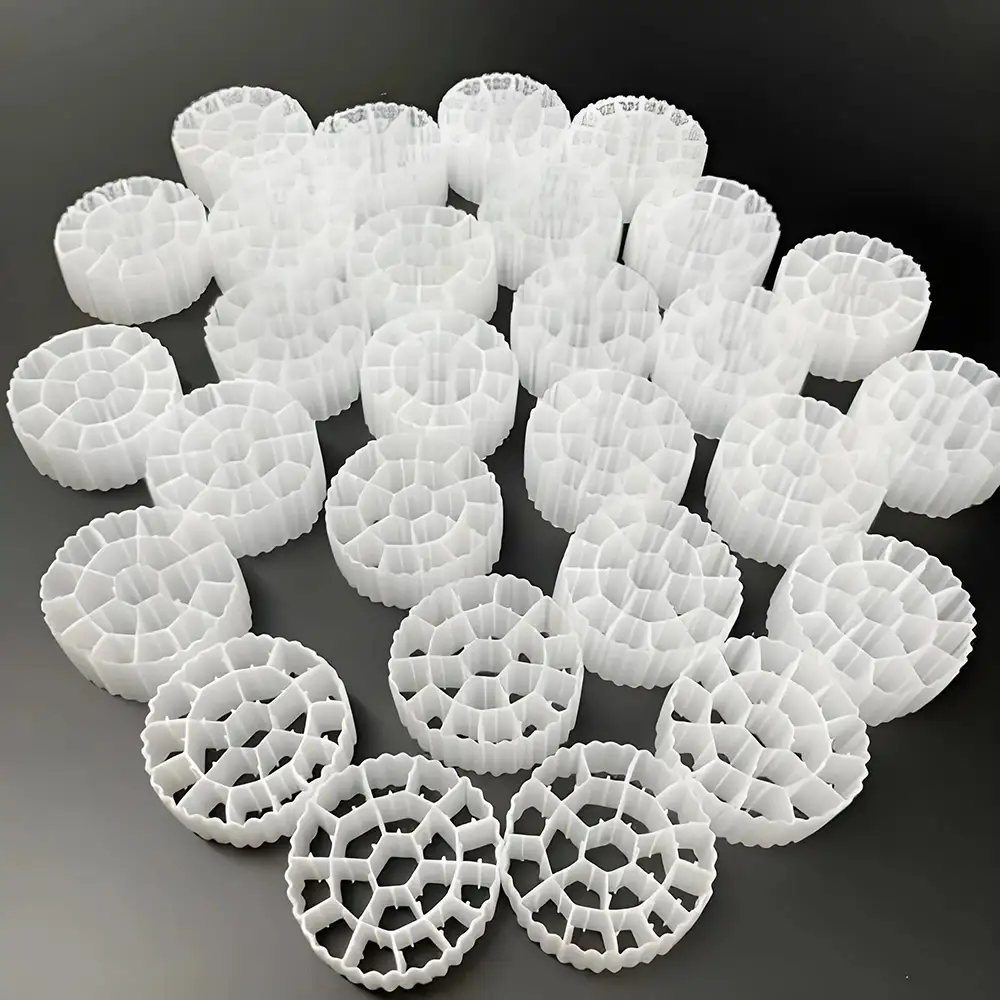
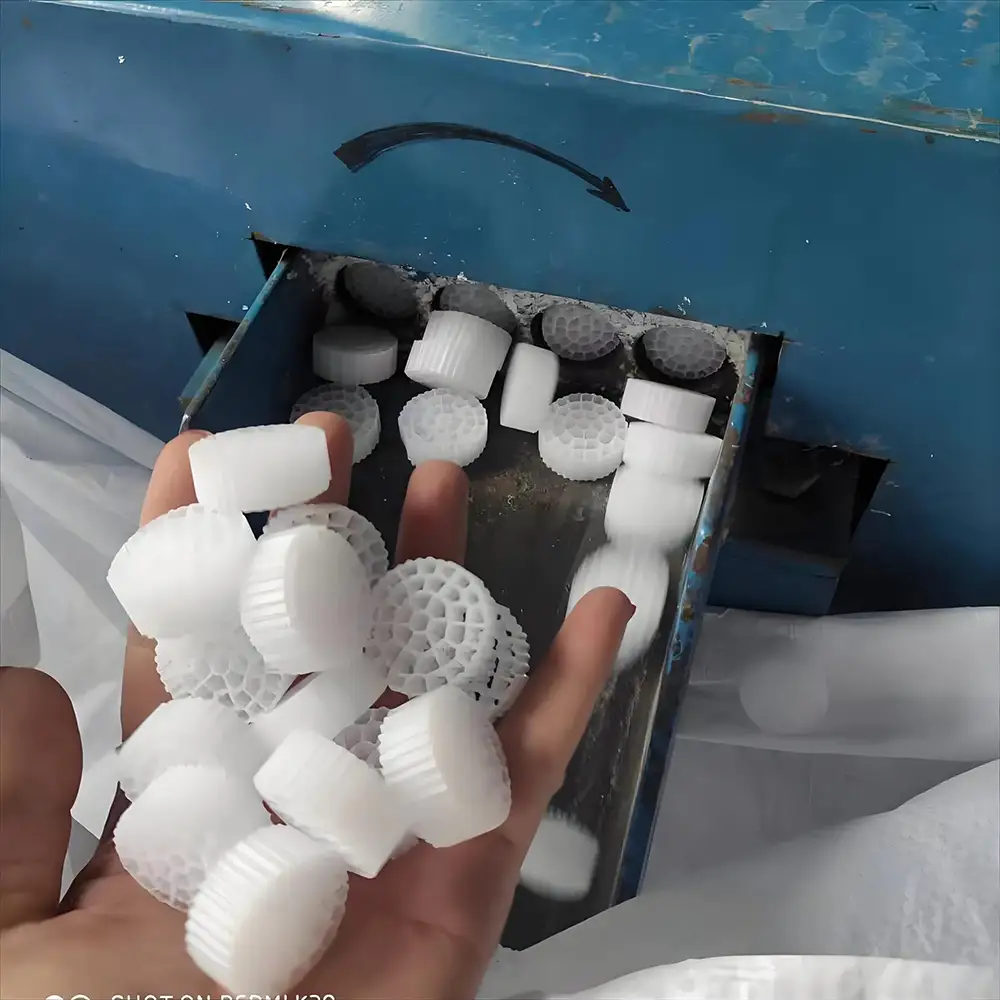
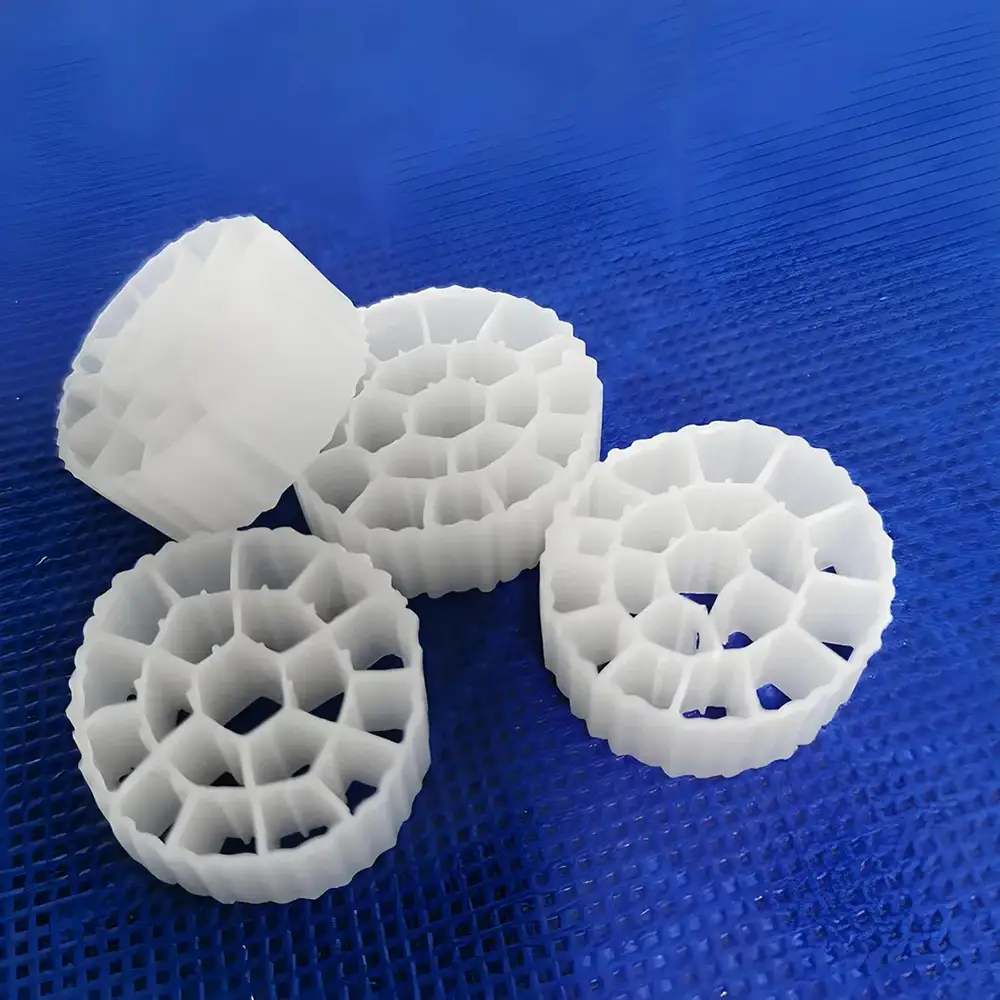
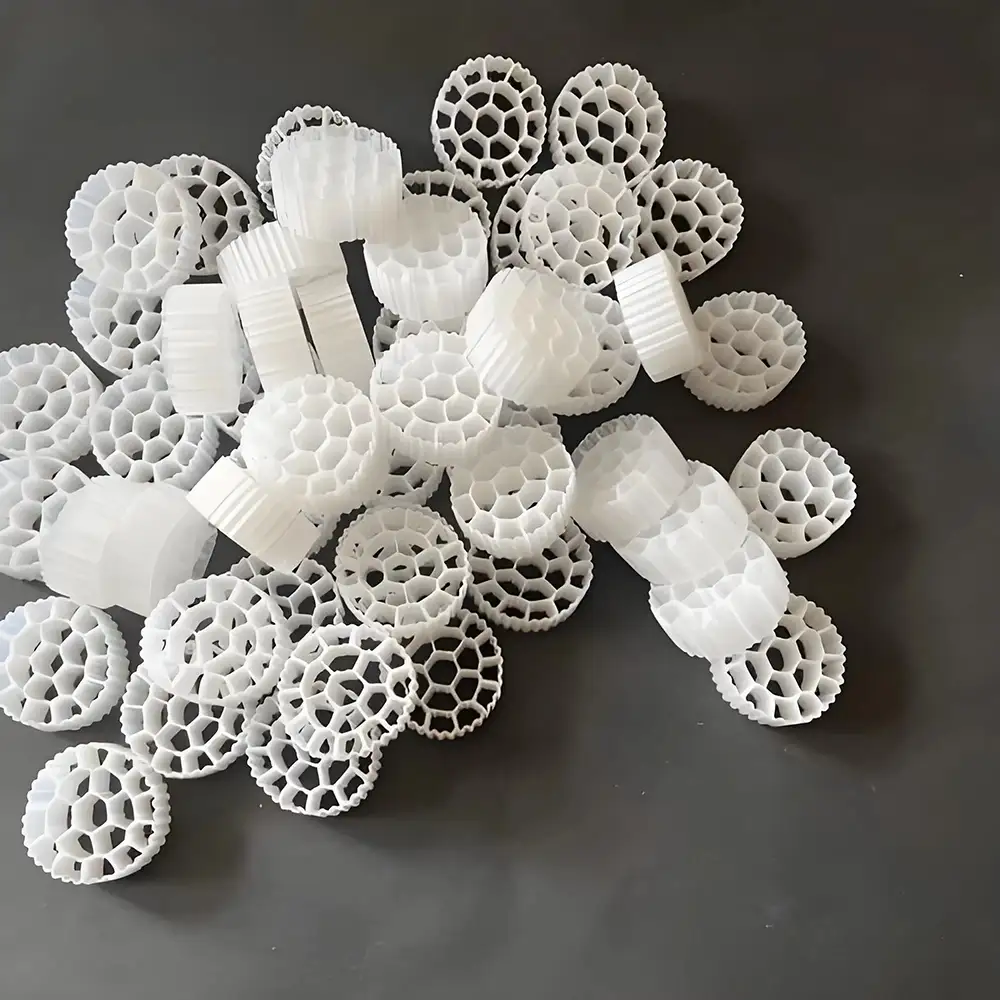
MBBR media, also referred to as MBBR bio media or MBBR carrier filter media, plays a crucial role in the Moving Bed Biofilm Reactor (MBBR) wastewater treatment process. Formulated with precision through a scientific approach, this media incorporates a diverse range of trace elements conducive to the swift attachment and growth of microorganisms, tailored to the specific characteristics of different types of sewage. Constructed through a specialized process, it undergoes modification within a polymer material.
|
parameter |
details |
explain |
|
texture of material |
HDPE/modified plastics, etc |
HDPE has good chemical corrosion resistance and mechanical properties, and modified plastics further enhance its specific properties such as hydrophilicity, strength, etc |
|
Specific surface area |
≥500m²/m³ |
The larger the specific surface area, the more microorganisms adhere, and the higher the treatment efficiency |
|
density |
Approximately 1 kg/m ³ |
Scientific density design ensures good fluidization performance of membrane media in water |
|
Fill rate |
10% -70% (adjustable according to demand) |
Flexibly adjust the filling rate according to the sewage quality and treatment requirements to achieve the best treatment effect |
service life |
≥ 5 years |
Long service life, reduced replacement costs, and improved system stability |
Applicable temperature |
10ºC - 40ºC |
Within this temperature range, the membrane medium can maintain stable performance, ensuring the normal operation of sewage treatment |
Acid and alkali resistance range |
PG 6.5-8.9 |
Has good acid and alkali resistance and can adapt to sewage environments with different pH levels |
|
porosity |
≥75% |
Reasonable porosity is beneficial for the attachment of microorganisms and the discharge of metabolic products |
|
Microbial fixation rate |
≥80% |
High microbial fixation rate ensures the effective functioning of microorganisms and improves treatment efficiency |
Product characteristics
High specific surface area: Through a special surface microhole design, the specific surface area of MBBR film media has reached an amazing ≥500 m²/m³, which is far more than similar products. Such a large specific surface area is like creating a super-large "skyscraper" for microorganisms, providing extremely sufficient space for microbes to attach, and the microbial load is greatly increased, making the sewage treatment efficiency increase geometrically, and the pollutants can be decomposed more thoroughly in a shorter time.
Strong hydrophilicity: The use of advanced surfactant coating technology for special hydrophilic treatment, MBBR membrane medium once in contact with sewage, it can be quickly integrated with sewage. This super hydrophilicity makes it easy for microorganisms to grow fixed on its surface, and the film hanging speed is 20% faster than the ordinary medium, greatly shortening the start-up time of the sewage treatment system, and the stability of the system operation has also been significantly improved, reducing the treatment efficiency fluctuations caused by start-up problems.
High mechanical strength: Select high-strength HDPE and modified plastics and other raw materials, through special crosslinking enhancement process, making the film medium has excellent wear resistance and impact resistance. Even in the complex hydraulic conditions of rapid flow and complex water quality, it can always maintain the structural integrity. After testing, its service life is ≥5 years, compared with the traditional medium, the replacement frequency is reduced by 30%, effectively reducing the operating cost of sewage treatment facilities.
Good fluidization performance: According to the principle of fluid mechanics, the unique shape and density are carefully designed. In the aeration tank, it can flow evenly like a smart fish and fully contact the sewage in all directions. This ensures a fuller reaction between microorganisms and contaminants, and the treatment effect can be maintained at a high level regardless of which corner of the aeration tank is located, avoiding the problem of poor local treatment.
MBBR Media for Moving Bed Biofilm Reactor Applications
MBBR media is one of the most important functional components in a moving bed biofilm reactor. Also known as MBBR carrier media, biofilm carrier, biomedia or bio-reactor media, it provides a surface where microorganisms can attach, grow and form an active biofilm. The carriers move freely within the biological reactor, creating an attached-growth treatment environment for sewage and wastewater treatment.
Moving bed biofilm reactor technology has been widely studied for municipal and industrial wastewater treatment because of its flexibility, compact configuration and ability to retain active biomass on carrier surfaces. Research reviews identify carrier shape, dimensions, material properties, surface characteristics, filling fraction and operating conditions as important factors affecting MBBR performance.
For wastewater treatment equipment, selecting suitable MBBR media is therefore an important part of biological process design.
What Is MBBR Media?
MBBR media consists of lightweight carrier elements placed inside a biological treatment reactor. Instead of allowing all microorganisms to remain suspended in the wastewater, the carrier provides a support surface for microorganisms to attach and develop into a biofilm.
During operation, the media remains in continuous motion. In aerobic MBBR reactors, air from the aeration system can provide both oxygen and mixing. Depending on reactor configuration, mechanical mixing or liquid circulation may also be used.
As wastewater passes around and through the moving carriers, organic compounds and nutrients can contact the microorganisms attached to the media. The resulting biological reactions can contribute to the treatment of biodegradable organic matter and nitrogen compounds.
MBBR carriers are therefore more than simple plastic filling material. Their geometry, surface structure, density and hydraulic behavior directly affect biofilm development and reactor operation.
How Moving Bed Biofilm Reactor Media Works
The operating principle of MBBR media is based on attached microbial growth.
When new carrier media is introduced into a biological reactor, microorganisms gradually attach to the carrier surface. Initial attachment is followed by biofilm development, microbial growth and maturation. Once the biofilm becomes established, different microbial populations can occupy different regions of the carrier.
The continuous movement of the carriers creates shear forces that influence biofilm thickness and structure. This movement can help prevent excessive accumulation of biomass and maintain contact between wastewater, microorganisms and oxygen.
In aerobic treatment, heterotrophic microorganisms can consume biodegradable organic matter, while suitable conditions can support nitrifying organisms for ammonia oxidation. In anoxic configurations, MBBR media can support denitrifying biofilms for nitrogen removal.
The actual biological reactions depend on wastewater composition, dissolved oxygen, temperature, pH, nutrient availability, loading, hydraulic retention time and other operating conditions.
High Surface Area MBBR Carrier
One of the most important characteristics of MBBR media is its available surface area for microbial attachment.
Modern carrier designs commonly include internal structures, channels, protected surfaces, fins or other geometric features. These structures can increase the area available for biofilm growth while maintaining sufficient water circulation through the carrier.
However, nominal surface area should not be considered the only selection criterion. Recent research indicates that carrier porosity, surface roughness, material, shape and specific surface area can all influence biofilm development and treatment performance. Higher surface area can also involve design compromises involving mechanical strength, hydraulic behavior and long-term durability.
For this reason, effective carrier performance should be evaluated together with reactor design and operating conditions.
MBBR Media for Sewage Treatment
MBBR media can be used in domestic sewage, municipal wastewater and decentralized wastewater treatment systems.
In domestic sewage treatment plants, MBBR carriers are commonly installed in aerobic biological treatment tanks to provide additional biofilm growth area. The technology can be incorporated into compact package treatment plants where biological treatment capacity needs to be provided within a limited reactor volume.
For municipal wastewater treatment, MBBR systems can be designed for carbon removal, nitrification and nitrogen removal depending on the process configuration.
MBBR media can also be used for upgrading existing wastewater treatment plants. Existing aeration tanks or biological reactors may be converted or supplemented with attached-growth media to increase biomass retention and improve treatment capacity, subject to hydraulic, aeration and downstream clarification limitations. MBBR and IFAS approaches have been specifically investigated for wastewater plant upgrades.
Bio-Reactor Media for Industrial Wastewater
Industrial wastewater can contain significantly different organic and nutrient loads depending on the industry. MBBR bio-reactor media may be considered for industrial wastewater streams where biological treatment is appropriate.
Potential applications include food processing, beverage production, pharmaceutical manufacturing, chemical production, textile wastewater, petrochemical wastewater and other biodegradable industrial effluents.
For difficult industrial wastewater, MBBR is often combined with other processes such as equalization, coagulation, dissolved air flotation, anaerobic treatment, advanced oxidation, filtration or membrane treatment.
The MBBR stage can provide biological treatment within a larger process train rather than functioning as a universal solution for every contaminant.
MBBR Media for Nitrification
MBBR media is particularly useful when the treatment objective includes biological nitrification.
Nitrifying microorganisms generally grow more slowly than many heterotrophic microorganisms. Providing a stable carrier surface can help retain nitrifying biomass inside the biological reactor.
Under suitable dissolved oxygen, temperature, alkalinity, pH and loading conditions, nitrifying biofilms can convert ammonia through biological oxidation processes.
For projects with strict ammonia or nitrogen treatment requirements, carrier selection should be based on the biological objective, effective surface area and reactor operating conditions rather than simply selecting the carrier with the largest advertised surface area.
Research reviews confirm that carrier characteristics and operating conditions interact strongly in determining ammonia and nitrogen treatment performance.
Aerobic and Anoxic MBBR Media
MBBR media can be applied in both aerobic and anoxic biological treatment zones.
In an aerobic MBBR reactor, air diffusers provide oxygen and mixing to keep the carrier elements moving. This configuration is suitable for applications such as organic matter removal and nitrification.
In an anoxic MBBR reactor, mechanical mixing or liquid circulation can maintain carrier movement while limiting oxygen transfer. This type of configuration can be used for denitrification when appropriate carbon availability and process conditions are provided.
Multiple MBBR stages can also be arranged in series, with different reactor zones designed for different biological functions.
MBBR Carrier Material and Structure
MBBR media is commonly manufactured from lightweight polymer materials selected for chemical resistance, mechanical durability and suitable buoyancy characteristics.
The carrier density should be compatible with the reactor's mixing and aeration conditions. The media must remain mobile enough to achieve effective circulation without excessive energy consumption or accumulation in specific areas of the reactor.
Carrier geometry is equally important. Internal channels and protected surfaces can provide locations for microorganisms to develop while allowing wastewater to pass through the carrier.
Recent MBBR research emphasizes the importance of media density, specific surface area, void ratio, porosity, shape, size and material when evaluating reactor hydrodynamics and biofilm development.
MBBR Media Filling Ratio
The amount of carrier installed inside an MBBR reactor is normally expressed as a media filling ratio or media fill fraction.
There is no single filling ratio suitable for every wastewater treatment project. The appropriate amount depends on reactor volume, carrier characteristics, treatment target, organic and nitrogen loading, oxygen transfer, mixing capacity and hydraulic conditions.
Too little media may provide insufficient biofilm area for the intended treatment objective, while excessive media loading can influence circulation, aeration demand and reactor hydrodynamics.
Therefore, media filling should be determined as part of the complete biological process design.
Advantages of MBBR Bio-Reactor Media
MBBR media can provide several practical benefits:
Provides surfaces for attached microbial growth
Increases biomass retention inside biological reactors
Supports compact biological treatment configurations
Can be used for organic matter removal
Can support nitrification and nitrogen removal
Suitable for aerobic and anoxic applications
Can be incorporated into existing treatment plant upgrades
Can operate continuously with moving carrier elements
Can be combined with activated sludge and other treatment technologies
Suitable for municipal, domestic and selected industrial wastewater applications
MBBR systems are also attractive because carrier-based biological treatment can provide high active biomass retention without relying exclusively on suspended-growth biomass.
MBBR Media in Wastewater Treatment Equipment
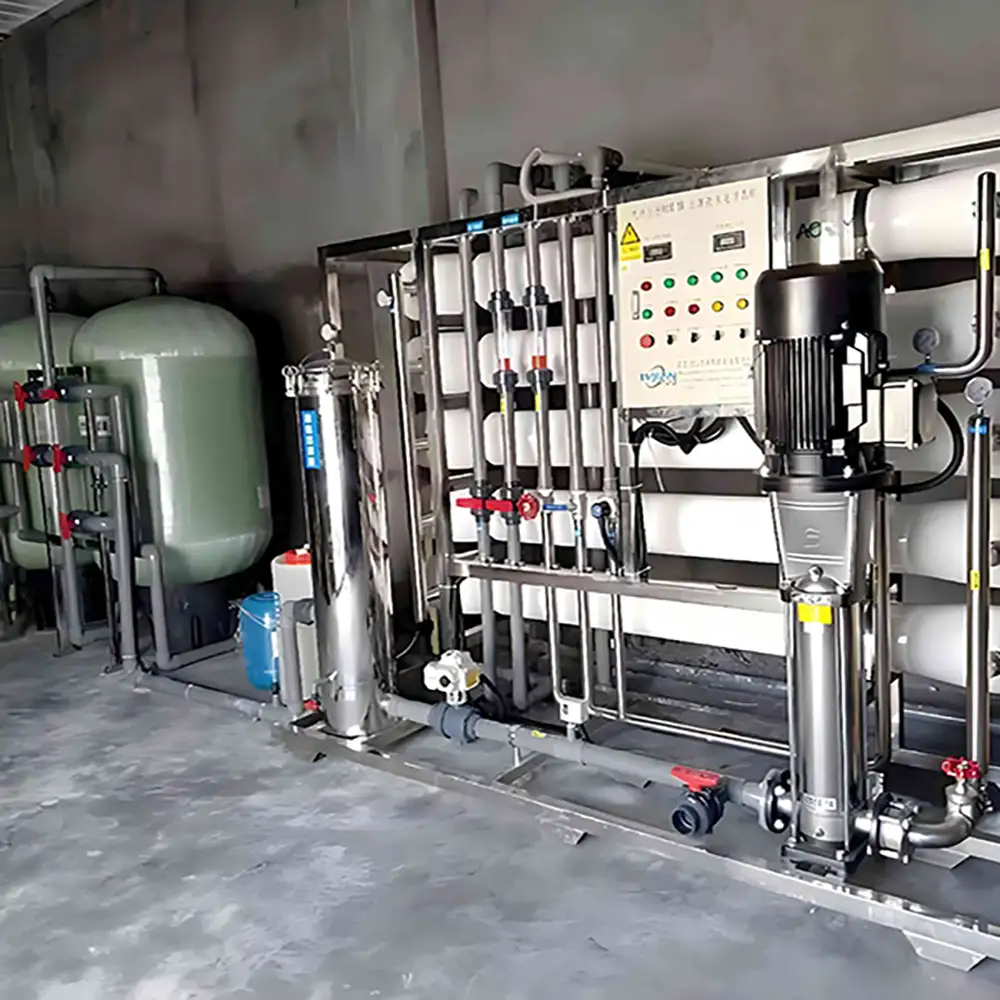
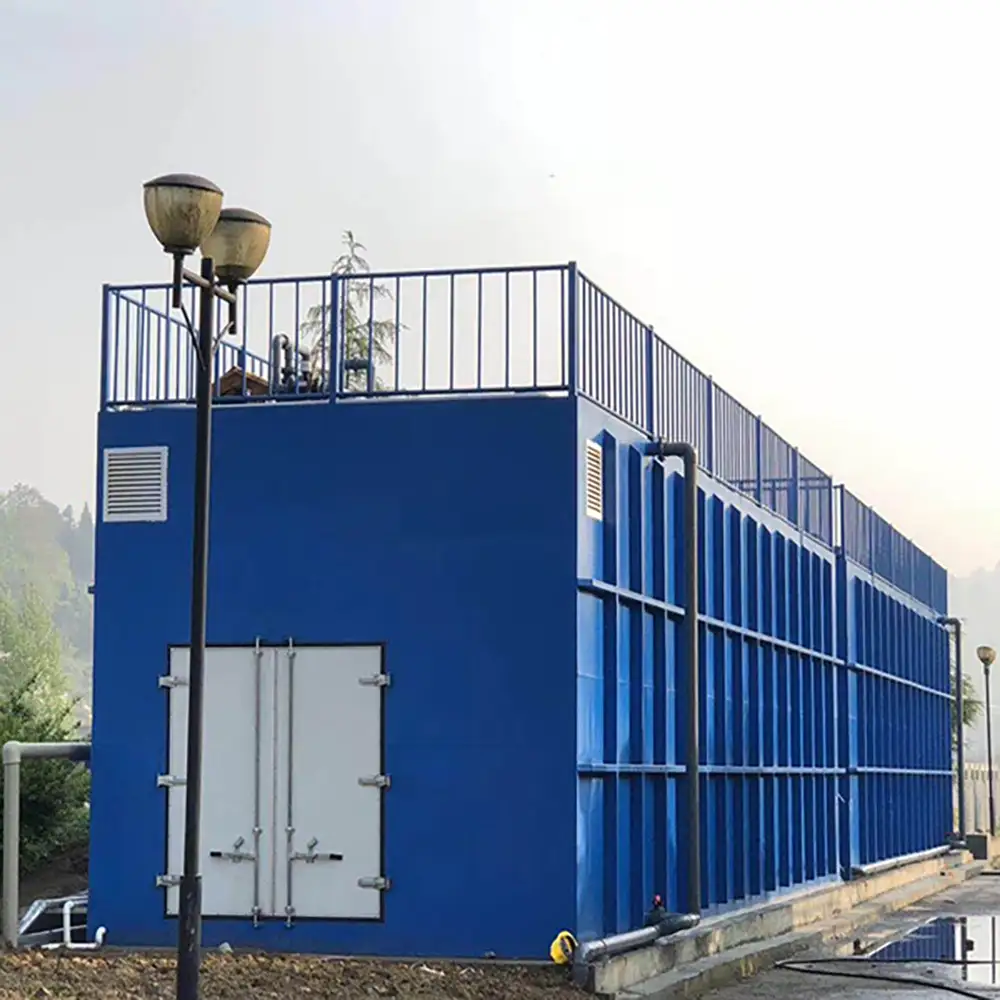
MBBR media can be integrated into complete sewage treatment equipment, package wastewater treatment plants, municipal treatment systems and industrial biological treatment equipment.
A complete MBBR system normally includes the biological reactor, carrier media, aeration or mixing equipment, media retention screens and associated pumps, piping and control components.
The outlet screen is particularly important because it allows treated water to leave the biological tank while retaining the carrier media inside the reactor.
Aeration equipment should also be selected according to both oxygen demand and media mixing requirements. Poor mixing can create dead zones or uneven media distribution, while excessive aeration can increase energy consumption. Recent research specifically identifies hydrodynamics and mixing as important considerations for MBBR performance.
Applications
MBBR media and bio-reactor media can be used for:
Municipal Wastewater Treatment
Domestic Sewage Treatment
Industrial Wastewater Treatment
Package Sewage Treatment Plants
Decentralized Wastewater Treatment
Commercial Wastewater Treatment
Food Processing Wastewater
Beverage Industry Wastewater
Pharmaceutical Wastewater
Chemical Industry Wastewater
Textile Wastewater Treatment
Petrochemical Wastewater Treatment
Biological Nitrogen Removal
Ammonia Removal
Nitrification Treatment
Existing WWTP Upgrades
Why Choose Us
Selecting MBBR media should be based on the complete treatment process rather than one specification alone.
We focus on MBBR carrier media and bio-reactor media suitable for sewage treatment equipment, biological wastewater treatment systems and customized engineering projects. Different carrier structures can be selected according to reactor configuration, wastewater characteristics and treatment objectives.
Our product approach considers carrier geometry, material, density, surface structure, effective surface area, filling ratio and reactor operating conditions. This helps B2B customers evaluate MBBR media as part of a complete wastewater treatment solution.
Whether the project involves a new package sewage treatment plant, municipal wastewater facility, industrial biological treatment system or existing WWTP upgrade, appropriate carrier selection can be coordinated with aeration, mixing, retention screens and process design.
Frequently Asked Questions
1. What Is MBBR Media?
MBBR media is a carrier material used inside a moving bed biofilm reactor. It provides surfaces where microorganisms attach and develop biofilms for biological wastewater treatment.
2. What Does MBBR Stand For?
MBBR stands for Moving Bed Biofilm Reactor, a biological wastewater treatment process using moving carrier media to support attached microbial growth.
3. Is MBBR Media the Same as Biofilm Carrier?
Generally, yes. MBBR media, MBBR carrier, biofilm carrier, biomedia and moving bed carrier are commonly used terms for the carrier elements used in MBBR systems.
4. What Is Bio-Reactor Media?
Bio-reactor media is a broader term for carrier material used to support microbial growth in biological reactors. MBBR media is one specific type of bio-reactor carrier.
5. What Does MBBR Media Remove?
Depending on the reactor design and operating conditions, MBBR systems can support biological removal of biodegradable organic matter and nitrogen compounds such as ammonia.
6. Can MBBR Media Be Used for Municipal Sewage?
Yes. MBBR technology is widely studied and applied for municipal wastewater treatment, including organic matter and nitrogen treatment.
7. Can MBBR Media Be Used for Industrial Wastewater?
Yes, when the wastewater is suitable for biological treatment. MBBR can be incorporated into treatment systems for various industrial wastewater streams.
8. Does MBBR Media Need Aeration?
Aerobic MBBR systems normally use aeration to provide oxygen and carrier movement. Anoxic MBBR systems may use mechanical mixing or liquid circulation instead.
9. What Is the MBBR Media Filling Ratio?
The filling ratio is the proportion of reactor volume occupied by carrier media. The appropriate ratio depends on carrier design, treatment objectives, loading and reactor operating conditions.
10. Can MBBR Media Be Used for Nitrification?
Yes. MBBR carriers can support nitrifying biofilms when appropriate dissolved oxygen, temperature, alkalinity, pH and loading conditions are maintained.
11. Can MBBR Media Be Added to an Existing Wastewater Plant?
Yes. MBBR or hybrid attached-growth approaches can be considered for upgrading existing biological reactors, depending on available tank volume, aeration capacity, hydraulics and downstream treatment.
12. How Should MBBR Media Be Selected?
Important factors include carrier material, shape, size, specific surface area, porosity, density, mechanical strength, filling ratio, wastewater characteristics and biological treatment target. Carrier selection should be integrated with the overall reactor design.
Prev:
Core Part of Sewage Treatment Equipment/Efficient Mbbr Media
Next:
Centrifugal Induced Dust Sawdust Force Draft Fan High Pressure Blower Industrial Air Suction Exhaust Blower
TAG:
Moving Bed Biofilm Reactor,
MBBR Wastewater Treatment,
MBBR Biological Treatment,
Biofilm Carrier For Sewage Treatment,
Sewage Treatment Carrier,
Wastewater Treatment Carrier,
Industrial Wastewater MBBR Media,
Municipal Wastewater MBBR Media,
Domestic Sewage MBBR Media,
Package Sewage Treatment Media,
Decentralized Wastewater Treatment Media,
Biological Reactor Media,
MBBR Denitrification Media,
Aerobic MBBR Media,
Anoxic MBBR Media,
MBBR Media For Nitrogen Removal,
MBBR Media For COD Removal,
MBBR Media For Ammonia Removal,
MBBR Biological Reactor,
Wastewater Biofilm Reactor,
MBBR Media For Nitrification,
MBBR Nitrification Media,
MBBR Sewage Treatment,
High Surface Area Biofilm Carrier,
Moving Bed Biofilm Media,
Plastic Biofilm Carrier,
Biofilm Media For Wastewater,
Microbial Carrier Media,
Microorganism Carrier Media,
Attached Growth Media,
Related Category:
MBBR Media,Moving Bed Biofilm Reactor Media,Bio-Reactor Media,MBBR Carrier Media,MBBR Biofilm Carrier China, suppliers, manufacturers, factory, customized, wholesale, quotation, made in China