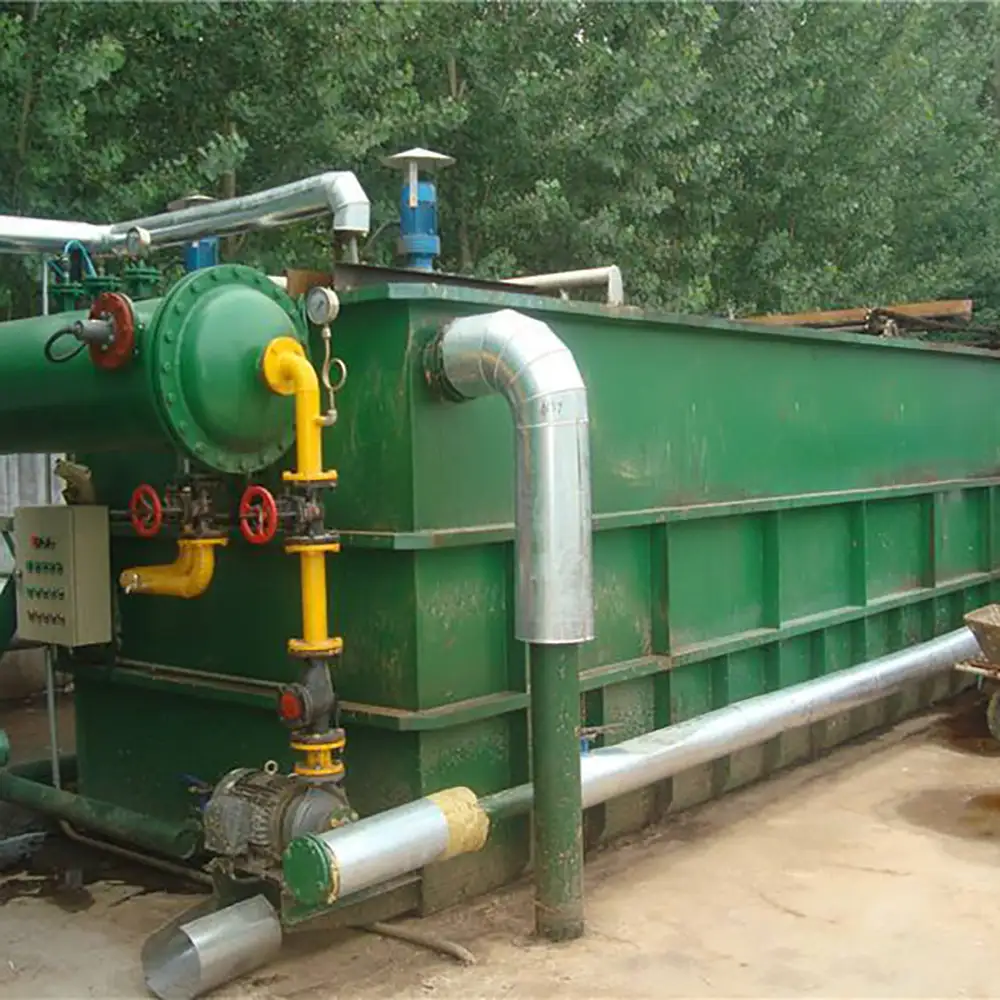
Low cost and High efficient removal BOD5,COD, and NH3-N.
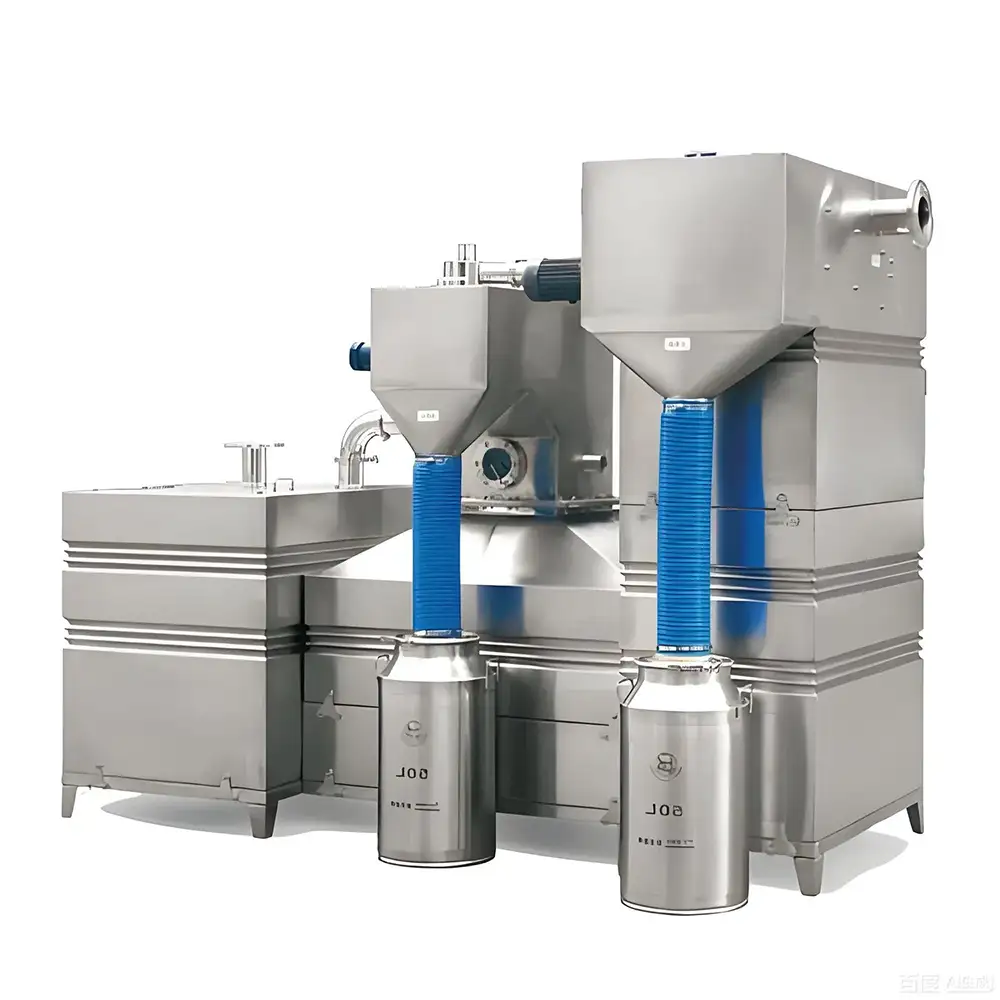
Air flotation machine is a machine that uses small bubbles or small bubbles to surface impurities in the medium. This air flotation device can be used for small particles with a specific gravity close to that of water, which are difficult to sink or float due to their own weight.
In terms of water supply and drainage, the pre-treatment water quality, except for some raw water bodies with high sand content and sewage with heavy mechanical impurities, is mostly composed of lightweight suspended particles. For example, algae in lakes, reservoirs, and some rivers; Plant residues and small colloidal impurities; Dye particles in the printing and dyeing industry; Short fibers in the papermaking and chemical fiber industries; Microdroplets of petroleum and organic solvents in the refining and chemical industries; Heavy metal ions in electroplating and pickling wastewater; Electrophoretic paint wastewater, etc; They are lightweight particles with a specific gravity very close to that of water. For these raw water, if traditional sedimentation methods are used, the effect will inevitably be poor, especially in low temperature winter conditions, where coagulation and hydraulic conditions deteriorate, making it more difficult to ensure the treatment effect. It can be imagined that if it is difficult to settle flocs, forcing them to sink will inevitably result in half the effort. Instead, it is better to use the situation to artificially introduce bubbles into the water body, making them adhere to the flocs, thereby greatly reducing the overall density of the flocs, and using the speed of bubble rise to force them to float up, thus achieving rapid solid-liquid separation. In this sense, the emergence of air flotation technology is a revolution in the gravity sedimentation method, which has opened up new fields of solid-liquid separation technology.
|
Model NO. |
WSZ |
Handling method |
Biological Treatment |
|
Usage |
Industrial, Home, Agriculture, Hospital, Urban |
Trademark |
|
|
Types |
Package, Compact, Small, Mini |
Applications |
Industrial, Municipal, Domestic, Medical, Ship |
|
Craft |
Mbr Membrane, Mbbr, Ao, Aao, Disinfect, Filtration |
Features |
Water Clarification, Filtration, Purification |
|
Service Life |
20 Years |
Operation |
Automatic |
|
Steel Plate Thickness |
>8mm |
Function |
Remove Cod BOD |
|
Voltage |
220V/ 380V/ Customerized |
Installation Type |
Underground / Onground |
|
Colour |
Grey/Silver/Blue/Balck/Customerized |
Use for |
Mineral, Printing, Chemical, Dyeing, Starch |
|
Material |
Carbon Steel, Stain Steel, FRP, PE, PP |
Certificate |
SGS, ISO |
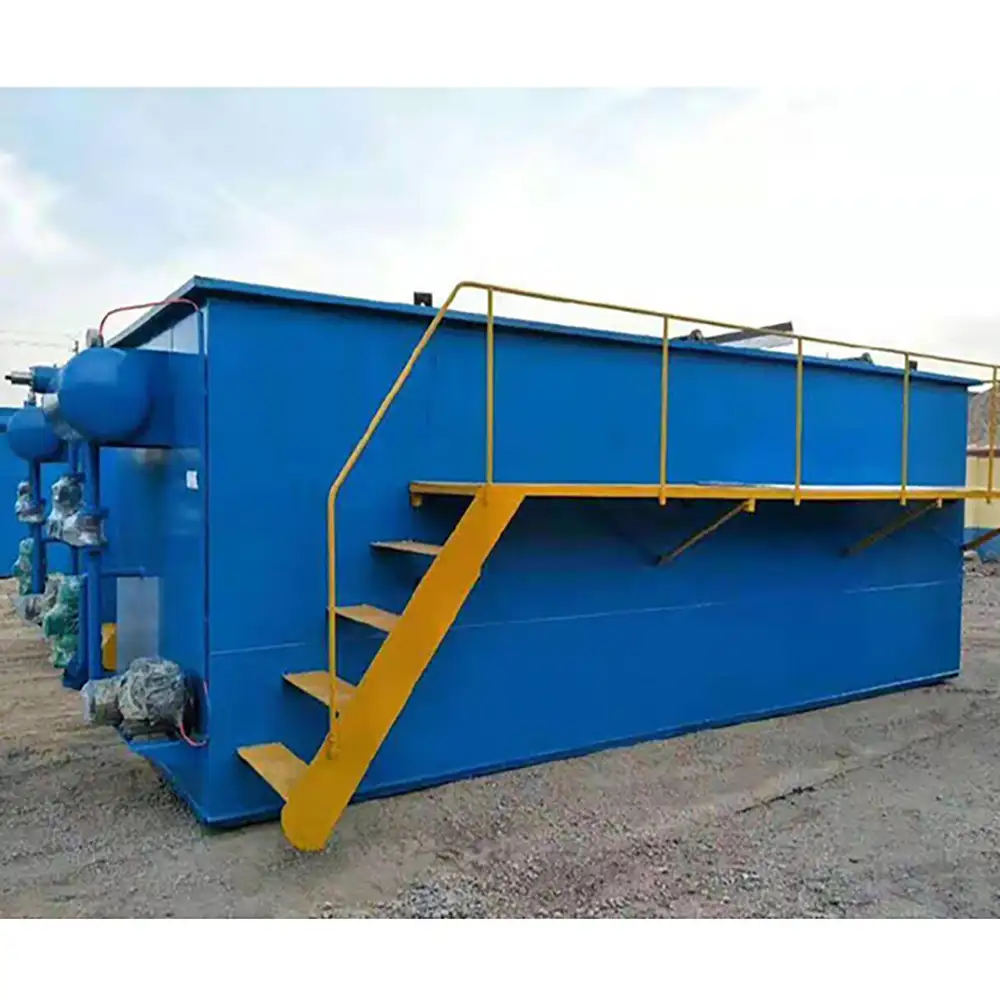
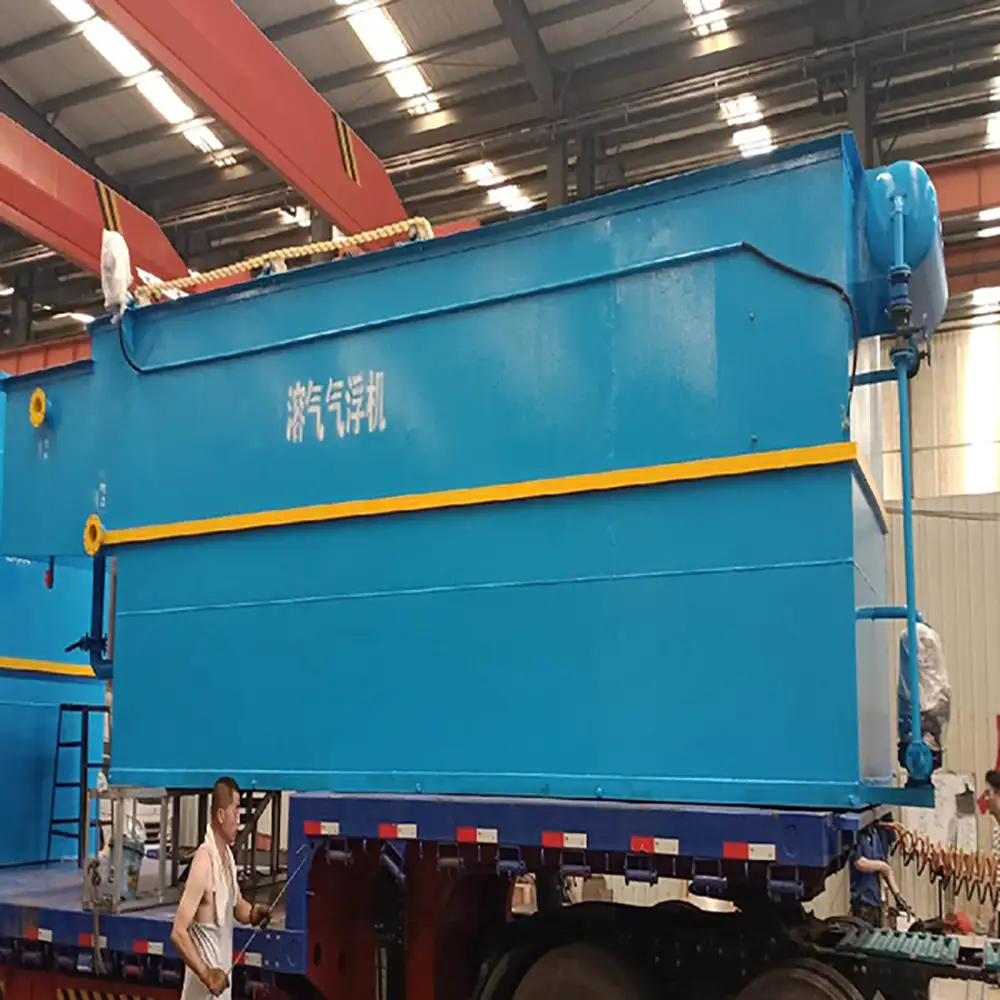
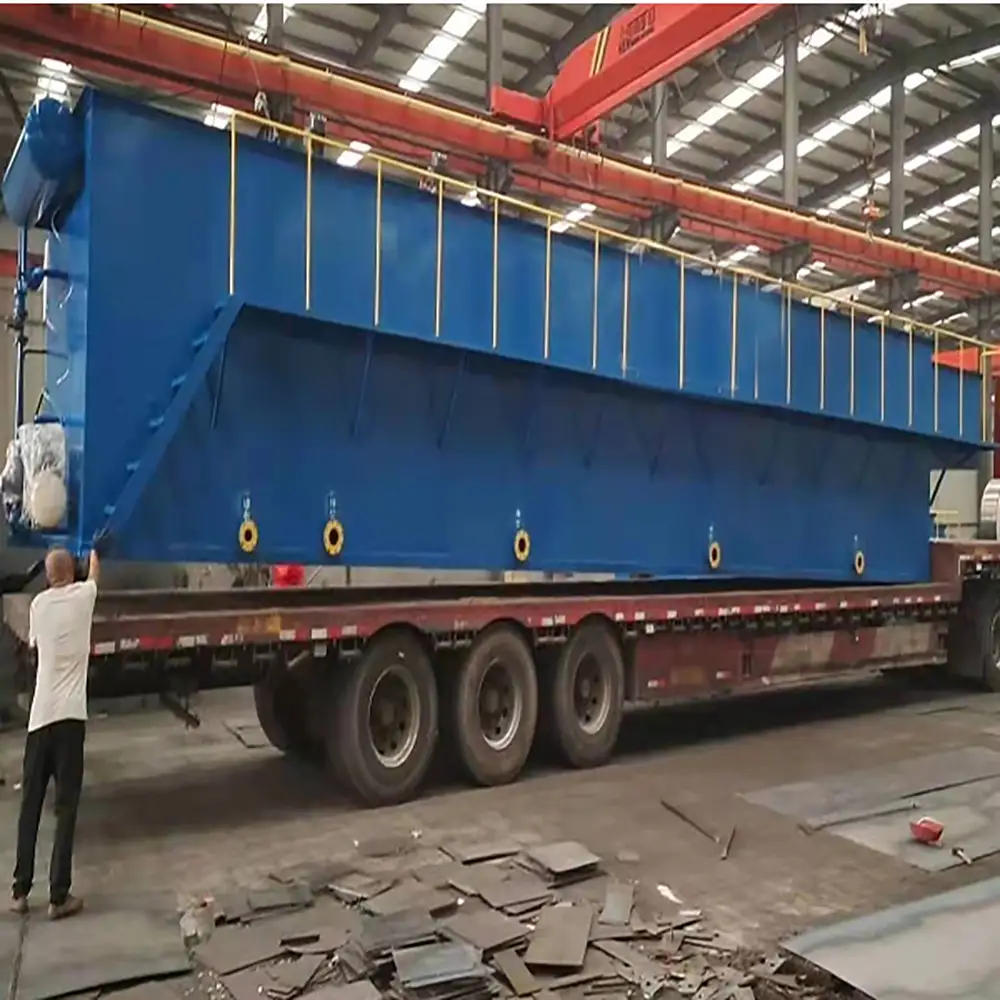
Horizontal Flow Dissolved Air Flotation Machine
A Horizontal Flow Dissolved Air Flotation Machine is an industrial wastewater treatment system designed to separate suspended solids, oil, grease, fats, fibers, colloids, and other flotation-friendly contaminants from wastewater. The equipment uses dissolved air microbubbles to attach to target particles and carry them upward, where a surface skimming mechanism removes the concentrated float material.
The horizontal-flow configuration uses a rectangular flotation tank and controlled water movement through different treatment zones. This arrangement provides a practical solution for industrial facilities requiring reliable clarification, oil-water separation, and solid-liquid separation. Horizontal or rectangular DAF designs are widely used for industrial wastewater applications because the flotation chamber can provide a defined separation surface and controlled hydraulic flow.
How Does a Horizontal Flow DAF Machine Work?
The working principle begins with wastewater entering the pretreatment or reaction section. Depending on wastewater characteristics, coagulation and flocculation may be used to convert fine particles, colloids, emulsified oil, and other contaminants into larger flocs that are easier to float.
A portion of clarified water can then be recycled and pressurized with air in a saturation system. Under pressure, air dissolves into the recycle stream. When the pressurized water is released into the flotation chamber, the pressure drop causes dissolved air to form numerous small bubbles.
These microbubbles attach to suspended particles and oil droplets. The combined bubble-particle aggregates become more buoyant and move upward toward the water surface. A mechanical scraper continuously or intermittently removes the floating scum, while clarified water exits through the treated-water collection section.
This pressure-release mechanism is the basic operating principle of dissolved air flotation. EPA technical documentation describes DAF as a process in which microscopic bubbles attach to suspended particles and oil, increasing their effective buoyancy and allowing them to be removed at the surface.
Horizontal Flow Design
The horizontal flow configuration is designed around controlled movement of wastewater through the flotation tank. Instead of relying on a compact circular tank with radial or vertical flow characteristics, a horizontal DAF normally uses a rectangular tank with defined inlet, contact, flotation, separation, and outlet areas.
A stable hydraulic profile is important because excessive turbulence can interfere with bubble-particle attachment and may disturb the floating sludge layer. Horizontal-flow DAF designs therefore emphasize even water distribution, adequate contact between microbubbles and flocs, and stable movement through the separation zone.
This configuration can also provide convenient access to the skimming mechanism, inspection points, chemical dosing equipment, and other operating components.
Suspended Solids Removal
One of the primary applications of a Horizontal Flow DAF Machine is suspended solids separation.
Fine suspended particles can sometimes settle slowly in conventional gravity clarifiers, particularly when their density is close to that of water. DAF changes the effective buoyancy of these particles by attaching air bubbles, allowing them to rise instead of depending entirely on gravity sedimentation.
This makes DAF particularly useful for wastewater containing fine solids, light particles, oil-wet solids, fibers, and other materials that are difficult to separate using conventional settling alone. EPA documents specifically identify DAF as useful for suspended solids and dispersed oil and grease, including particles with densities close to water.
Oil and Grease Removal
Horizontal Flow DAF is widely applicable to oily wastewater treatment.
Oil droplets, grease, fats, and emulsified materials can interact with microbubbles and rise toward the flotation surface. The resulting concentrated scum layer is removed using a surface scraper.
Typical applications include:
Food processing wastewater
Dairy wastewater
Meat and slaughterhouse wastewater
Poultry processing wastewater
Petrochemical wastewater
Machinery and metalworking wastewater
Pulp and paper wastewater
Chemical industry wastewater
Oily industrial wastewater
DAF is particularly useful when oil and grease are dispersed or associated with suspended solids and are therefore difficult to remove through simple gravity separation.
Coagulation and Flocculation Integration
Many industrial wastewater applications use chemical conditioning before the flotation stage.
Coagulation destabilizes colloidal particles and helps reduce the stability of fine suspended materials. Flocculation then promotes the formation of larger flocs. When these flocs enter the flotation contact zone, microbubbles can attach to them more effectively.
A typical process may therefore be:
Equalization → pH Adjustment → Coagulation → Flocculation → Dissolved Air Flotation → Biological Treatment or Filtration
The exact chemical program depends on wastewater characteristics. pH, temperature, TSS, oil and grease, colloidal content, particle size, and chemical dosage can all influence flotation performance. EPA technical material also notes that air flotation performance can vary with influent flow, suspended solids, oil and grease loading, temperature, and pH.
Main Components
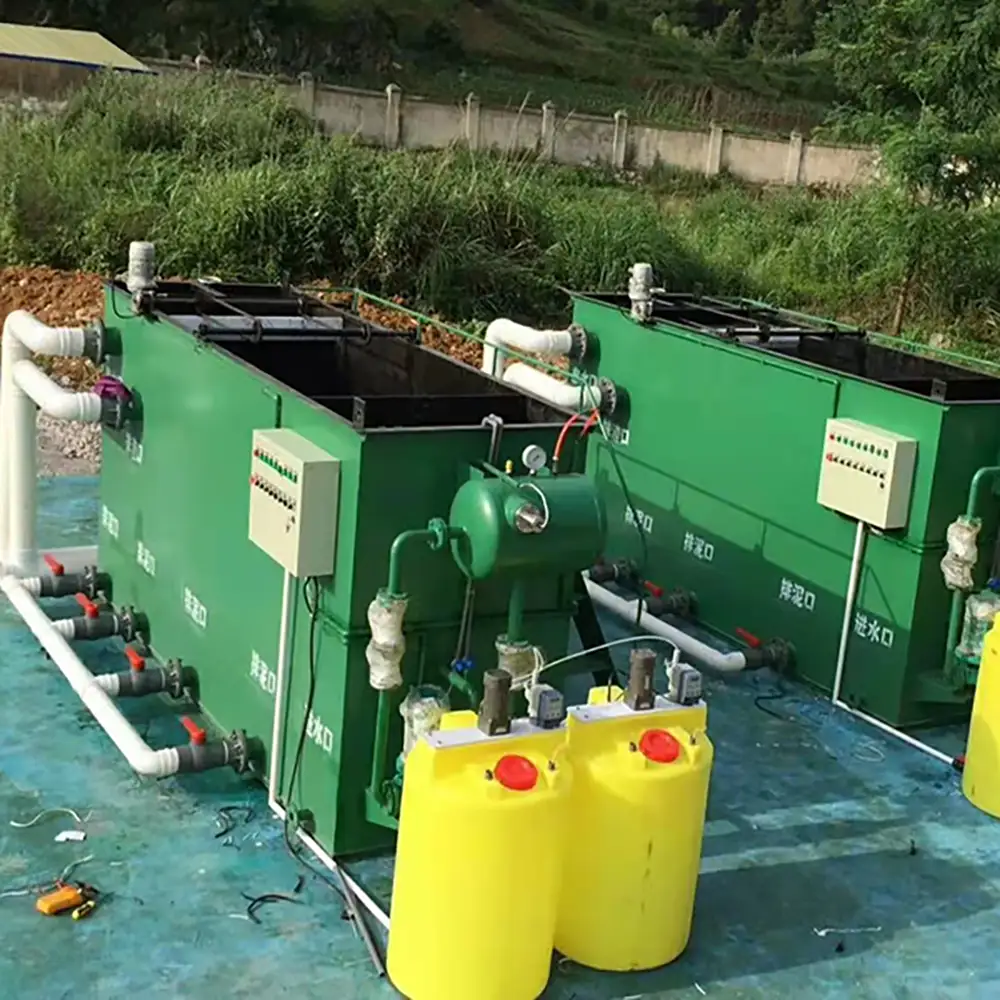
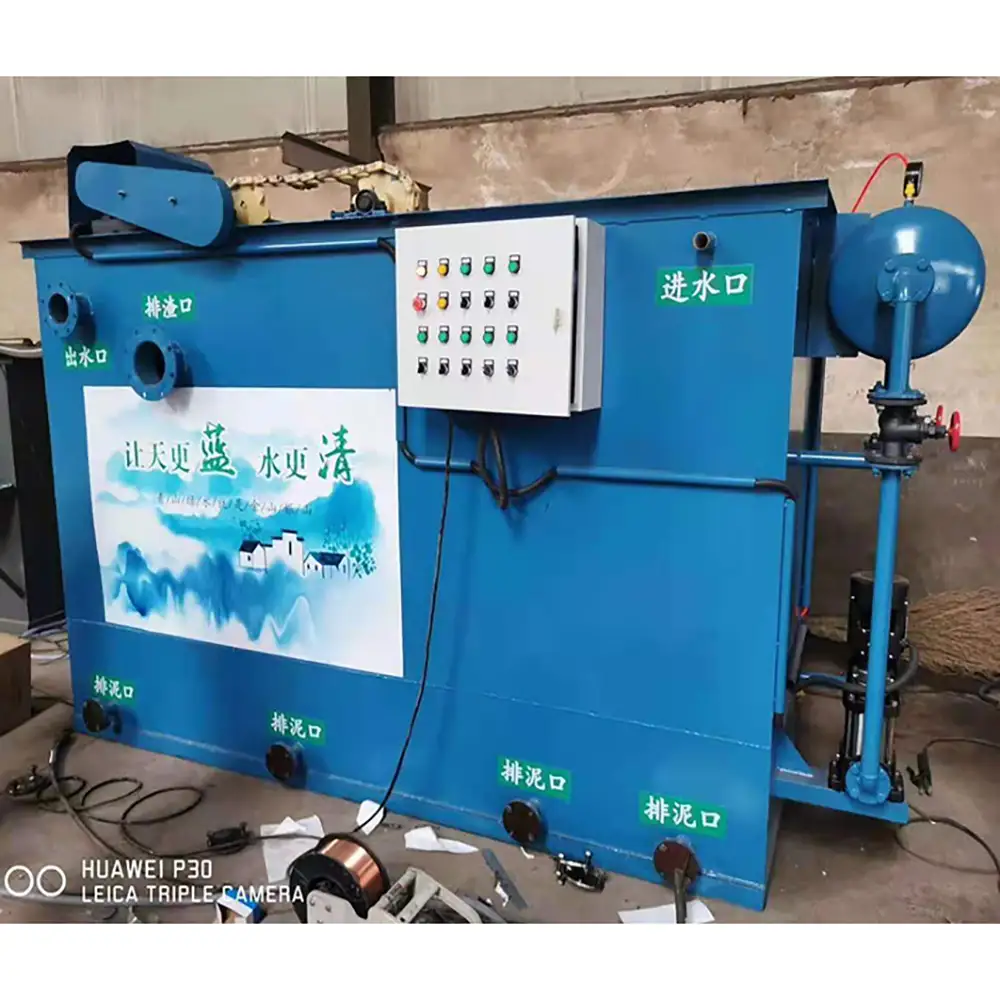
A Horizontal Flow Dissolved Air Flotation Machine can include:
Rectangular flotation tank
Dissolved air saturation system
Recycle water pump
Air compressor or air injection system
Pressure release device
Coagulation tank
Flocculation tank
Microbubble generation system
Surface sludge scraper
Float collection chamber
Treated-water outlet
Sludge discharge system
Electrical control cabinet
The exact configuration depends on the wastewater flow rate, pollutant characteristics, required treatment capacity, installation conditions, and downstream process.
DAF systems may use full-flow or recycle-flow pressurization. Recycle pressurization uses a portion of clarified water as the pressurized air-saturated stream, reducing the amount of wastewater that must be pressurized.
Advantages of Horizontal Flow DAF
A horizontal-flow design can offer several practical benefits for industrial wastewater treatment.
Stable Hydraulic Flow:
The rectangular tank can be engineered for controlled horizontal water movement through the flotation and separation zones.
Effective Solid-Liquid Separation:
Microbubbles help separate suspended solids and low-density contaminants that may not settle efficiently.
Oil-Water Separation:
The flotation mechanism is suitable for separating free and dispersed oil, grease, and other floatable contaminants.
Integrated Chemical Treatment:
Coagulation and flocculation can be incorporated before flotation when required.
Continuous Surface Skimming:
A mechanical scraper can continuously remove accumulated float material from the water surface.
Flexible Installation:
Horizontal DAF systems can be configured for different flow capacities and incorporated into complete wastewater treatment plants.
Industrial Wastewater Treatment Applications
Horizontal Flow Dissolved Air Flotation Machines are suitable for a broad range of industrial treatment applications.
In food and beverage plants, DAF can separate fats, oils, grease, proteins, suspended solids, and other organic-rich particles.
In dairy facilities, it can support the removal of milk solids, fats, and suspended matter before biological treatment.
In slaughterhouses and meat-processing facilities, DAF can be used to separate blood-related solids, fats, grease, and suspended organic material.
In petrochemical and machinery industries, it can support oil-water separation and removal of suspended particles.
For pulp and paper wastewater, flotation can assist in separating fibers and suspended solids.
For chemical and industrial wastewater, the DAF stage can function as pretreatment before biological treatment, membrane filtration, advanced oxidation, or other downstream processes.
Integration With Complete Treatment Systems
A Horizontal Flow DAF Machine can operate as a standalone separation unit or as one stage of a complete wastewater treatment system.
A typical industrial process may include:
Screening → Equalization → pH Adjustment → Coagulation → Flocculation → Horizontal Flow DAF → Biological Treatment → Filtration → Disinfection
For oily wastewater, DAF can reduce oil and suspended solids loading before downstream biological or membrane processes. For high-solids wastewater, it can provide primary clarification and reduce the hydraulic and solids burden on subsequent treatment units.
DAF should not be considered a universal replacement for biological or advanced treatment. Dissolved pollutants that do not readily attach to bubbles generally require additional treatment processes.
Operation and Maintenance
Regular inspection is important for stable DAF operation. Operators should monitor the recycle pump, saturation system, pressure controls, air supply, chemical dosing equipment, scraper, sludge discharge, and water-level controls.
The flotation surface should remain free of excessive accumulation. The scraper should operate smoothly without disturbing the water surface unnecessarily.
Chemical dosing should be adjusted according to actual wastewater conditions. For new applications, laboratory jar testing or pilot testing can help determine suitable coagulation, flocculation, recycle, and flotation conditions before full-scale equipment selection.
Why Choose Us?
Industrial DAF Experience: Designed for a wide range of industrial wastewater treatment applications.
Horizontal Flow Configuration: Rectangular flotation tanks provide a practical layout for controlled wastewater flow and surface skimming.
Flexible Process Integration: Can be combined with coagulation, flocculation, biological treatment, filtration, and sludge treatment.
Oil and Solids Separation: Suitable for wastewater containing suspended solids, oil, grease, fats, fibers, and flotation-friendly contaminants.
Customized Capacity: Equipment dimensions and process configuration can be selected according to hydraulic flow and wastewater characteristics.
Practical Maintenance: Pumps, skimmers, valves, chemical systems, and other major components can be arranged for convenient inspection and servicing.
Complete Treatment Solutions: The DAF unit can be integrated into a complete industrial wastewater treatment plant.
Application-Based Engineering: System configuration can be selected according to influent quality, treatment objectives, site conditions, and downstream requirements.
FAQs
1. What Is a Horizontal Flow Dissolved Air Flotation Machine?
It is a DAF wastewater treatment system using a rectangular flotation tank and controlled horizontal water flow to separate suspended solids, oil, grease, and other flotation-friendly contaminants.
2. How Does Horizontal Flow DAF Work?
Pressurized air-saturated water releases microbubbles into the flotation chamber. The bubbles attach to particles and oil droplets, causing them to rise to the surface for mechanical skimming.
3. What Is the Difference Between Horizontal Flow DAF and Vertical Flow DAF?
Horizontal Flow DAF generally uses a rectangular tank with horizontal wastewater movement, while vertical-flow designs use a different hydraulic configuration. Selection depends on flow rate, site layout, wastewater characteristics, and treatment requirements.
4. Can Horizontal DAF Remove Suspended Solids?
Yes. DAF is commonly used to separate suspended solids, particularly fine or low-density particles that may be difficult to remove through conventional gravity settling.
5. Can It Remove Oil and Grease?
Yes. Dissolved air flotation is widely used for removing free and dispersed oil, grease, fats, and oil-associated suspended solids from industrial wastewater.
6. Is Coagulation Required Before DAF?
Not for every application. However, coagulation and flocculation are frequently used when wastewater contains fine colloids, emulsified oil, or particles that need chemical conditioning before flotation.
7. What Industries Use Horizontal Flow DAF?
Common applications include food processing, dairy, meat processing, slaughterhouses, poultry processing, petrochemical, pulp and paper, chemical manufacturing, metalworking, and machinery wastewater treatment.
8. Can DAF Be Used Before Biological Treatment?
Yes. It can function as a pretreatment or primary clarification stage to reduce suspended solids, oil, grease, and other flotation-friendly contaminants before biological treatment.
9. Can Horizontal DAF Remove COD?
It can reduce COD associated with suspended, emulsified, or floatable materials. However, dissolved organic pollutants may require biological or advanced treatment.
10. How Is Floating Sludge Removed?
A mechanical surface scraper moves the accumulated float layer toward a collection area, where it is discharged for further sludge or waste treatment.
11. What Determines DAF Equipment Size?
Important factors include design flow, peak flow, TSS, oil and grease concentration, particle characteristics, chemical conditioning, surface loading, recycle rate, air supply, and required effluent quality.
12. Can the Horizontal Flow DAF System Be Customized?
Yes. Tank dimensions, flotation capacity, recycle system, chemical dosing, scraper arrangement, automation, materials, and auxiliary equipment can be configured according to project requirements.
Prev:
Air Flotation Machine
Next:
Purified Water And Softened Water
TAG:
Industrial Wastewater Treatment Equipment,
Suspended Solids Removal,
Dairy Wastewater Treatment,
Meat Processing Wastewater Treatment,
Food Processing Wastewater Treatment,
Industrial Wastewater Treatment System,
DAF Wastewater Treatment System,
Industrial Wastewater Treatment,
Industrial Sewage Treatment,
Solid Liquid Separation Equipment,
Chemical Wastewater Treatment,
Suspended Solids Removal Equipment,
Solid-Liquid Separation Equipment,
Oily Wastewater Treatment Equipment,
Wastewater Pretreatment Equipment,
Poultry Wastewater Treatment,
Slaughterhouse Wastewater Treatment,
Oil Removal Wastewater Treatment,
Oil Removal Equipment,
Oil Wastewater Treatment,
Industrial Sewage Treatment Equipment,
Solid-Liquid Separation System,
Solid-Liquid Separation,
Suspended Solids Separation,
Wastewater Pretreatment System,
Pulp And Paper Wastewater Treatment,
DAF Sludge Removal,
Flotation Sludge Removal,
Flotation Separation Equipment,
Wastewater Scum Removal,
Related Category:
Horizontal Flow Dissolved Air Flotation Machine,Horizontal Flow DAF Machine,Horizontal Flow DAF System China, suppliers, manufacturers, factory, customized, wholesale, quotation, made in China